Dot Dead: A Silicon Valley Mystery | Keith Raffel | Talks at Google
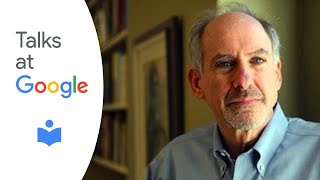
Keith Raffel, a former tech entrepreneur, wrote Dot Dead, a mystery set in Silicon Valley. He spent eight years writing it in episodes and is working on a sequel called Two Graves.
Questions this video answers
Dot Dead: A Silicon Valley Mystery
First person (narrated by protagonist Ian Michaels)
About eight years (episodic writing with long pauses)
About 19 months between acceptance and publication
Two Graves
Chapters
Today I'm Curtis with the authors at Google program and today we're pleased to welcome Keith Raffle. You have his book Dot Dead, which is Keith's first mystery. It's not surprising that he set his book in California's Silicon Valley, nor that he knows the culture so well. He spent 20 years working here for high tech companies big and small and actually grew up in Palo Alto where he watched local orchards and dairies being replaced by tilt up buildings filled with software engineers, kind of like this one.
Here we are.
He still lives in Palo Alto, around the corner from his parents house of 40 years, along with his wife Terry and their four children. And much of Dot Dead was written at the crack of dawn or while squeezed into coach seats on flights to and from the east coast. But encouraged by the success of Dead, Keith has left Oracle Corporation and is now writing full time. And if you go to his website, you can read his blog which is called the Dead Diary. So please welcome Keith Raffle.
Thanks, Curtis. You know, it was suggested to me that I should go up to YouTube and look at some of the other people who have come here and spoken. I want to warn those of you in the audience, I'm not here because I'm running for president. I didn't write a book that won a Pulitzer or a National Book Award, but I did write this book called Dot Dead which is subtitled A Silicon Valley Mystery. And here we are in Silicon Valley or in Santa Monica, I understand. I tried to infuse the book with what I knew because as Curtis just said, I grew up here in the Valley, I've worked here in the Valley and I live only eight houses away from from where my parents lived for 40 years. I think I'm going to indulge in a little bit of self interviewing now. People ask me all the time, oh well, of course, you always knew you wanted to be a writer. It must have been something burning a flame inside of you. No, not really. In fact, I tried a lot of things over my life and if I indulged in some self diagnosis, I'd say I have career add. I've been a carpenter, a history teacher, a US Senate staffer, a political candidate, a gambler, and let me just say that I did far better at the racetrack than I ever did on the campaign trail. A high tech marketer, an entrepreneur. I started up a software company. In fact, interestingly, the software company I started up is just a couple blocks from where I'm speaking right now, in a building that's of course been Absorbed into the Googleplex since we left. Now I'm an author, and that's important. People come up to me and say, what are you doing now that you're retired? What are you doing now that you don't have that? You're unemployed? I want to know if people go up to Stephen King and say, well, gee, since you left high school teaching, what are you doing? Why are you unemployed? I'm an author, and that's what I'm trying to do and fill up my days. On the other hand, when you go to parties here in Silicon Valley, it's kind of nice. I don't know what kind of parties you go to, but when I go to the parties I go to, I say, hey, what do you do? And they say, I write code. What do you do? Well, I'm in product management. I tell the people what code to write. What do you do? Oh, I'm a lawyer who protects the code that those people tell them what to do, and those people write. And then people say, what do I do? And I say, I'm an author. And it's sort of. People don't exactly know how to deal with you. And it's kind of fun. You're not a software engineer, Product management, IT or so, or the things that we. Or the jobs that are so popular around here. My daughter just applied to college this last year and she, given my career add, she called from upstairs and said, hey, dad, they want to know what occupation you are. What should I put? And so I told her to put down author and see how she did. And she did get into a college, so maybe it worked. Another question I'm oftentimes asked is just how long did it take me to write this book? Dot dead. I'm going to go off on a tangent for a moment. When I was working here in the Valley, I was telling my colleague Don, we were in an elevator car, and I said, hey, Don, I'm getting married. He says, gee, Keith, that's wonderful. You know, I've been married for 15 years. I said, don, we've been working together for several years. I didn't even know you were married. He says, yeah, 15 years, seven years the first time, four years the second time, et cetera. So when you asked me how long I wrote it, it was sort of sporadic, episodic. I would write for a while and then put it aside. I started writing dead. Well, let me tell you how it happened. I don't know if you all get this, but I would get a catalog each quarter from UC Berkeley extension. And I would look through it and I'd say to people, to colleagues, to people who are working for me, hey, hey, you could get a little bit better at Java programming. Why don't you take this course? Hey, you could use some help in business planning. Why don't you take this course? And I noticed that there was a mystery writing course. I said, hey, that sounds like fun. As we say in the Valley. I had spare cycles at the time, which is another way of saying my job wasn't 7 by 24. It wasn't taking up all the time as I expected it to do. Maybe I was a little bored. So I went and took this course and I started writing a little bit and I enjoyed it and I got positive feedback. But after a year, you know what? I still wasn't. I still had spare cycles. I'm sitting here in the Valley and I said, oh, what the heck? And I started a company. And once you start a company, once you found a company, then it's seven by 24. You're not doing anything. You're completely absorbed. And for three or four years, the manuscript of Dead was moldering in a desk drawer. One place or another, the company started doing better and better. I kicked myself upstairs to chairman and hired a president. And then I said, you know, I should go take this manuscript out, which I did. And then, of course, there was another crisis. So I kept taking it in and out, and it probably took eight years to finish off. One of the interesting things over those eight years is I had to keep increasing the price of houses in Silicon Valley each time. Not only that, once the book was accepted for publication, I still, and this was torturous, had to wait 19 months before the book appeared. Now, I started out by saying that I grew up around here and one of the fun things was talking about Silicon Valley the way it was, the way it is. Having started a company that gave me another flavor, and some of the reviewers kind of captured this. Stuart Kaminsky, a terrific mystery writer, a grandmaster of mystery Writers of America, said that he really enjoyed the way I dealt with the maze and madness of Silicon Valley. Sarah Weinman, who's sort of the queen of mystery bloggers, said that she liked the way I dealt with the underbelly of Silicon Valley, which, if you close your eyes and start thinking, is really repulsive, but so be it. Peter Abraham's, a thriller writer, said he didn't know Silicon Valley was such a scary place. But my favorite on this was John Orr and the San Jose Mercury and If you'll just indulge me for a minute or two, let me tell you what he wrote. This book is a pleasure and it was especially fun to read about Palo Alto. That's the next town over. About Palo Alto from the perspective of a person who grew up there, who can still remember it at its best before its charm began to erode under the unrelenting pressure of the big money MBAs who followed the scent of high tech money and who now tailgate each other at high speed down Oregon Expressway, hurrying, hurrying toward the next hoped for big deal. Yeah, that's my hometown. So despite looking somewhat askew at what's happened to my hometown over the last generation, I would still like to say that Silicon Valley is a great place for a mystery. When it was when Santa Clara county, the Santa Clara Valley, or as we used to know as Valley of Hearts Delight, was the center of the nation's canning industry, it might not have been a great place for mystery, but by God, it is Now. Look at what we're reading about in the newspapers right now. We've got the world's largest technology company and the members of its board of directors are busy spying on each other. Ooh, a little incorporate intrigue. We've got people who have tens, hundreds, hundreds of millions and even billions of dollars backdating stock options so they could have a couple million more dollars. So what are we really talking about here? What we're talking about is greed, ambition and money. And we put a little of each into a little dish and it forms a great culture for growing mysteries. I went online and I looked at what the 10 best selling mysteries and thrillers are today. And I have to say I was disappointed to discover that four of them are set in New York City, two were in Paris and one was in LA 50 years ago. If you could have done the same sort of survey, you probably would have found the same thing. Hey, what about us? We're here in Silicon Valley. We have greed, ambition and money here as much as anybody else. There should be more mysteries here and maybe there are. There's not only dad that I've written, my friend Mark Hoggins is writing a series, a mystery series set here, one of whose books is called Vulture Capital. And Matt Richtel from the New York Times has just written a book called Hooked. Takes place mostly in San Francisco, but it gives you a Silicon Valley flavor anyway. So I'm on a campaign right now. If any of you are aspiring mystery writers, set your mystery right here in Silicon Valley. We have the great ambition and money, that's required. Now, once you've written a mystery, everyone tries to guess who the characters really are. And the most popular character to guess is the hero of the book, whose name is Ian Michaels. And everybody says, in sort of an offhanded way, will, of course, Keith, Ian is you. And I thought about this for a while, and I think that the people who are saying that have it exactly backwards. It's not that Ian's me. The book is done in first person. So what I tried to do in writing the book is to become the character. It's not that Ian's me, it's that I try to become him. And who wouldn't want to? He's younger, better looking, richer, more attractive to women than I am. Yeah, let's be him. And that's kind of the fun of writing, is trying to be another person. And I thought about this for a minute. When you're writing, sometimes you start zoning, as you might when you're writing code or something. You go someplace else. You're in an alternative reality and you have voices speaking. And I thought this was great for a while, but then I started reading about schizophrenia and realizing, you know, maybe there's mental illness was part of the issue, but how much better that your mental illness shows up here in the book than other places it could show up. Something else that I noticed in getting a book published and also having started a company was that there are similarities between the two. And here's the number one similarity. Whether you're starting a company or getting a book published, what you're really doing is telling a story and trying to get people to buy into the story you're telling, to believe it, to be willing to invest their time, their money and their resources into the story that you're telling. Of course, when you're writing a book, the story you're telling is called a manuscript. And when you're starting a company, the story you're telling is called a business plan. Although now that I think about it, there might be a lot more fiction in the typical business plan than there is in the typical mystery manuscript. That was kind of a joke. Thank you. Another similarity was how thick skinned you have to be. You sort of put yourself out there, you do a business plan, you say, will you invest? And you'll have someone say, as someone once said to me, this is a terrific business plan. And I said, thank you, because I kind of did it. I said, thank you, but we would never want you to be CEO of such a company. I mean, don't take it personally. I'm still waiting to find out how else you can take it. Similarly, when you do a manuscript and you get things back from publishers who say things like, we hated the main character, the one I'm trying to be, how can you not take that person? So you need thick skin both ways. Another similarity between getting a book published and starting a company is how generous the people are who have already started companies or gotten books published. I think they realize how hard it is and they're willing to give you a helping hand. I mentioned Stuart Kaminsky a moment ago. He's a big shot. He's writing so many series. He's a wonderful guy. But he took the time and trouble to read the manuscript and give me a very nice blurb in the back, which of course helps sales, helps with publishing and all that sort of thing. When I was starting Upshot Corporation, the company I started, I said, gee, should we take money from this venture capitalist? And one CEO said, no, the guy who will end up on your board is an asshole. He'll ruin your company. And is that a generous thing to say? Yeah, it's especially generous because that asshole was on his board and he's telling me the truth. And of course it's understood that I probably wouldn't repeat it anywhere. Continuing with my self interview here. Another thing, when you've written a book, a question that you get asked a lot is, what books, what authors inspired you? So I sat around thinking about this for an afternoon and I finally decided, and this is probably not the right answer, that it wasn't another author, another book that inspired me. But being a product of the multimedia age we all live in, it was movies. So what movies? It was Alfred Hitchcock movies in particular. What's a typical Alfred Hitchcock movie? You've got this poor schmo who's leading this happy middle class life somewhere and something intervenes. It could be a series of murders, it could be a spy ring that the guy gets caught up in. And all of a sudden this person who's just been leading the kind of dull life, regular life, a happy life, but a dull one anyway, has to sort of raise his or her game and whether he or she knows it or not, become a hero. Now, normally the schmo, most often the schmo is probably played by Jimmy Stewart at least once by Cary Grant, although it's hard to think of him as a poor schmo. Theresa Wright was in shadow of a doubt when she finds herself caught up in a bunch of murders. So it could be a woman as well. But I find these sort of everyday people who get caught up in these great events and have to raise their game and become a hero. I find that a much interesting story arc than someone who's a police inspector or a private investigator who's just doing his or her job. And it's especially good because it could happen to any one of us. In writing this or in reading them myself, I wonder, gee, what would happen if this really happened to me? Could I do it? Would I know what to do? Would I do the stupid things? Would I go walk into the dark house without my cell phone turned on? Are you going to ask a question? Yeah. But then how do you turn it into a series if it's successful? So the question was, how do you turn it into a series if it's successful? You know, there's this. With an amateur detective, there's this. The problem which you're referring to is called in the business jfs, which is a tla, a three letter acronym for Jessica Fletcher Syndrome. Do you remember Murder, She Wrote? And Angela Lansbury would show up at someone's dinner party and you know, how could these people go to a dinner party with her? Someone at the table's gonna die in the next 10 minutes every week for years. And that's the problem. So how do you get someone to show up? And the answer is, I think that you probably. It's hard to have 20 book series, but I think it's okay to have series that lasts a few books. People can stumble over these things for a few books. And I'll get to this in a minute, but I'm planning on doing a sequel to this. But I think you're right, you can't end up with Sherlock Holmes Length 20 Book Oeuvres if you're writing about amateur detectives. Although some of my colleagues have tried. But just elaborating on that for a little bit about what I'm trying to do with the book. One of the things I'm not particularly trying to do is, is to write a great work of literature. I'm not trying to be Saul Bellow or Philip Roth. I'm trying to write what Graham Greene called an entertainment. In fact, in one of the first reviews of the book, which was in Ink magazine, who knew me as an entrepreneur and not a writer, they said that I'd written, and this was a little backhanded, a surprisingly gripping beach read. That's what I wanted to do. I wanted to write something that people would enjoy reading while in an Airplane seat or on the beach. At the same time, sort of following the advice of a movie. Again, a movie character, at least for me, a movie character again, Mary Poppins. I tried to follow her advice in that a spoonful of sugar helps the medicine go down. So I was trying to get across a couple little messages here. Now I have a friend who's very bright, went to Stanford, very successful in the high tech world, and I said that I was trying to get across some of these other messages and she said I didn't notice any of them, but I loved the book. Perfect, that's fine. But some of the messages that I did try to get across, and I'm a little worried sitting here in Silicon Valley, inside of Google, mentioning what some of these maybe subversive messages were. First of all, maybe the way to measure your worth, the way to measure happiness is not by the value of your stock options. Oh yeah, there's shock silence in here. Maybe there are things more important like love, family, community. Nah, maybe I just thought I'd plant the question right here. In addition, having grown up here, and I alluded to this a little bit before me, Silicon Valley has changed. It's a wonderful place. I'm an entrepreneur. There's no place I'd rather be. But a lot was lost. The story here isn't all of gain. It's not. When my parents moved here, their first house was $29,000. We never locked our doors. And I went to school with the children of school teachers, firefighters, police officers, custodians, in a different way than you do today. Curtis mentioned that right now I'm a full time writer and I have been since February. The company that I founded, Upshot Corporation, several years ago, we sold to Siebel, and then Siebel, of course, got swallowed by Oracle. It makes me think I'm sort of at the bottom of the Silicon Valley food chain. But I left Oracle in February. I told my wife in February I think I'm going to write full time. She didn't say anything to me, but I later found out within 10 minutes she was on Craigslist applying for jobs day jobs, which she now has. She had a job within three weeks of me telling her this. I don't know if that was. Well, it probably was. It probably shows her confidence in my ability to support the family as a writer. But it seems to be going okay. The first printing of the book is sold out. There have been some good reviews. Someone said that it was without doubt the mystery debut of the year. I like Reading that, I'm trying to convince my wife that I have a future in writing. I don't think I've convinced her completely yet. I'm working on another book now in my career. Add one of the jobs that I had was being Counsel to the U.S. senate Committee on Intelligence. And I worked on anti terrorism there. And given what's going on in the world right now, that's such a rich vein to mine that I'm writing my next book there. My next book right now. And of course, this just right now it could change, is called Two Graves. Why Two Graves? It's based on a Confucian saying. Confucius said, before starting on a journey of revenge, first dig two graves. So it's a story about terrorism, revenge, love, betrayal, all that kind of stuff. Now I want to be. I don't want to bore anybody by reading at length from my book, but maybe I'll read a couple pages. Is that all right? All right. In most companies, I'd say that's better than work, but everybody here seems to enjoy their work so much, I'm not sure it's true. So I'm reading right from the beginning of the book where Ian Michaels, our hero, is just been called for jury duty. He doesn't want to be on the jury because he thinks he's too important and he's got too much work to do back at the high tech company he's working for. And he I'll also tell you that he is the kind of person, he's working all the time. He's never home, but he's 35 years old, unmarried and a guy. And I think the women in the audience know that that means that he's kind of a slob. And so what he's done to remedy this problem is he's sent his key off to a maid service that comes in each week and cleans his place. So he kind of knows he has a maid. He's left notes for her, she's left notes back, but he's never met her. Mr. Michaels, you're dismissed. The judge winked at me. No hard feelings. Outside the courtroom, I blinked in the spring sunshine and checked my watch. Just after noon. I'd pick up some lunch on the way to the office. Wait. Rather than eating takeout, I could stop at home and eat leftovers from Tuesday night. I hadn't felt much like eating last night, and half a delicious Tony and Alva's mushroom pizza called to me. Ten minutes later, I pulled up in front of the house. A Toyota Corolla I had never seen before sat in my driveway. With a start, I realized I'd be meeting Gwendolyn. That's the maid. Face to face for the first time. After a light knock on the front door, I put my key in and swung it open. The aroma of freshly baked cookies wafted out to me. My upright vacuum stood before me. Gwendolyn, it's Ian. I called out several times. No response. My first thought was that I had indelicately walked in when she was in the bathroom. But three steps later, I saw the open bathroom door. I turned right and walked into my bedroom. The blinds were closed. It took a moment for my eyes to adjust to the gloom and then for my brain to adjust to what it saw. On my bed, face down, sprawled a woman with her hands reaching up toward the pillows over her head. Her long, lean body was clad in a short jean skirt and a green polo shirt. I shook her shoulder. No response. More shaking. I turned her over on her chest. Through a gash in her shirt spread a reddish brown stain. I put my hand on her neck, searching for a pulse. Nothing. I pushed the hair off her face. Her high cheekbones, dark brows, and wide mouth made an impression, but my gaze locked onto her vacant blue eyes. I staggered back and stumbled over my best German carving knife. Then I reached for the bedside phone. It rang before my hand touched the receiver. Hello? My voice sounded hollow to me. Mr. Michaels, this is Officer Fletcher. I'm glad I reached you. I couldn't tell from John's note which was your daytime number. Maid Dead, I rasped into the phone. Okay, so like in any mystery, we now have a dead body. So Ian sort of expects the police to start tracking down who killed this maid, who killed the maid and left her in his own room. And after a while, it becomes clear to him that they're not going to do much of anything because they thought that he killed him. And I mentioned before, in the Hitchcock movies, there has to come a point when you're going to come up out of the lethargy and do something. So let me read you that point in the book. Alone in my kitchen, I spread the paper on the table. But after some time I I realized my eyes were not transmitting anything to my brain. I was used to spending time alone. From childhood, reading was the wall I erected between me and the outside world. But now my mind wandered. If, as Freud said, satisfying work and love led to happiness, I was light years from bliss. Work. I had my chance at the board meeting but couldn't carry the day. Love well, there was Kathy, married to my best friend, and Gwendolyn, murdered in my own bed. Happiness had to wait. For now, self preservation was the name of the game. Next time the Palo Alto police arrested someone for Gwendolyn's murder, I wanted to make certain it was the murderer and not me. But more than saving my own skin was at stake. If events had been allowed to follow their natural course, what would have happened that Thursday when I met Gwendolyn face to face? Someone had stolen her life and my chance to find out. I looked down on my watch. Nine o'. Clock. I had been sitting at my kitchen table for almost an hour. What to do? Where to begin? I left the paper open, threw some clothes and toiletries in a bag, and strode out the front door. It's the beginning of the next chapter. I pulled into the Seawave Motel in San Clemente. My thigh muscles ached and my spine creaked as I stumbled out of the car. I managed to straighten out my hunch frame before entering the motel office. A grandmotherly, bespectacled woman pushed a registration card toward me. I started filling it out. How many nights? She asked in a hospitable voice. Just one. You on vacation? Sort of. You should stop by the Nixon Library. Open 10 to 5. It's only a 20 minute drive from here in Yoruba Linda. I looked up to see the smiling countenance of our 37th president jetting toward me 12 inches from my face. The woman's right breast sported a 1960 pick dick campaign button, big as a compact disc. No, no. Never saw eye to eye with him. As if I were old enough, I added to myself, looking at the button again. Lots of people feel that way, she clucked with a glance back at a framed picture on her desk of Nixon with his wife and two daughters. But a trip to the museum helps put all his accomplishments in perspective. He did more than flap his gums like Carter and Clinton. President Nixon opened up China, entered the Vietnam War. What? No mention of Watergates Bureau, Agnew, Kent, State and enemy lists? A good idea. I'll try to get over there. I handed over my American Express card as I headed toward room 121. She called after me, don't miss the Pat Nixon exhibit. Been there 30 times and it still makes me cry like a baby. I waved her through the office window without breaking stride. The room was clean. The shower was hot. The bed was hard. Nothing wrong with the motel if you ignored the politics of the proprietress. The lullaby of the surf had Me asleep seconds after climbing under the covers. Okay, I guess I could answer some questions now. Yes, sir. Oh, here comes a mic.
How much thought did you put into using first person as the narrative rather than third person say?
I'm not sure how much thought I put in. I just started writing in the first person, and I have friends who write in the third person, and they say to me, how do you write in the first person? And I just say, how do you write in the third person? For me, the magic of writing is. Is being the prote. Is being in the story myself. That's the sort of mild case of schizophrenia, or maybe not so mild that I was referring to. So for me, the magic of it is being there. There comes a point in the book where Gwendolyn, whom you've just heard dies, has left a voicemail message for Ian, and he picks it up after. She's dead. Now, I remember still writing this. So I'm going along and I said, my God, there's an. There's a message for me. And it's her. And tingling started down my scalp and went down my spine. It was as big a surprise to me as anyone. That's why I write in first person, because I feel like these things are really happening to me.
Generally, first person is used when you've got a particular voice. Generally first person is used when you've got a particular voice that you want to get across. Huck Finn from Mark Twain, for example, something like that, where there's something really special about the first person voice. The third person, of course, gives you plenty of room for doing, for showing the reader things that the protagonist doesn't want know. And so maybe in a mystery, having it remain a mystery is easier because in the first person, he can't tell you things that he doesn't know.
Well, I think that part of it is that in a first person, you want the reader to identify with the protagonist. I think that you can do things in third person. You can have an omniscient narrator who can tell you everything. You can have several narrators. You can have what's pretty close to first person, which a writing teacher of mine referred to is camera on the shoulder. Keith saw the man raise his hand to ask a question. So in that sense, it's no different. But for me, you're not into the story the same way. And finally, in mysteries themselves, there's a long tradition of first person narration that I'm not sure how far back it goes, but as you know, the Sherlock Holmes stories were narrated by Dr. Watson. And he writes in the first person and with good effect, because what Conan Doyle's trying to get across is in a way similar to what I'm trying to do. Dr. Watson is the everyman. And so you're watching what Sherlock Holmes is doing and not getting it until the end. And similarly, that's what I want to have happen here. You're watching what the protagonist is doing, doing, and looking at it from his point of view. Other questions.
I have a question, actually. So you mentioned consciously making a choice to set this mystery in Silicon Valley because that's where you grew up, you knew a lot about it. And also because there haven't been that many mysteries set in this area. I was wondering if you were at all concerned about tarnishing our reputation or giving Palo Alto a bad rap as a place where people get killed and murdered and all that stuff.
I lived in England for a couple years, and there's an expression there called taking the mickey out of somebody. And it's sort of deflating their balloon a little bit. I think it's a little. I think it's healthy. I mean, you know, I'm one of us. I'm an entrepreneur, I started a company. But at the same time, the self importance, the venture capitalists who sort of are the 21st century equivalents of the masters of the universe that Tom Wolfe wrote about. I think it's okay to take a little pin and prick a couple of those balloons and it's easy to make fun of. It's fun. And, you know, and I have to say, not only do I have friends, I even have a brother who's a venture capitalist and they think it's funny too. I just got a note from someone at Stanford who said that the stuff I did making fun of Stanford was right on as well. I think everybody has a sense of humor about these things. The book I'm writing now, which I mentioned before Two Graves, starts at Stanford, but then the hero goes back to Washington D.C. to go work on anti terrorism and that sort of thing. And that's hard. All of a sudden you have to start doing research. I lived in D.C. for five years, but I have to start wandering around. I have to start calling, I have to call people up and stuff. The great thing about writing about Silicon Valley was how much research was there. There's a little sort of. There's a little theft that goes on in Stanford Hospital. And I did go over there and make sure that the theft was possible. I called up, if you read the book, you'll see why the expert in the state Department of Fish and Game to ask questions about mountain lions. And I walked around Foothills park, which is sort of the secret park that Palo Altons only let Palo Altons into. It's sort of like Skull and Bones at Yale or something, I guess. But the amount of research I did in the book probably totaled three days. And it's nice to know something so well that no research is required. Anita, do you have any advice for those of us who might be aspiring writers and, you know, starting to write while we're still in our careers here or somewhere else? Yeah, I'm not sure. It depends on where you are. I don't think I ever really could have gotten started on this if I hadn't taken a writing class first. And there are plenty of them at UC Berkeley Extension or at UC Santa Cruz Extension, or if you're watching Santa Monica, I'm sure at UCLA Extension there are courses in novel writing. There are courses in mystery writing. Yeah, I think that's probably a good place to start. Another thing is that you shouldn't do what I do and take eight years to get something done. You should probably be writing regularly, a few days a week, every day, or whatever it is. And the other part, I would say, is just keep writing. There's a tendency to sort of try to polish things. I think what you want to do is start and get to the end as soon as possible. Now, something I wouldn't give you advice on. Well, yeah, I will. I'll give you advice on this. What the heck? You know, there's that old thing in the Peanuts cartoons where Lucy gives answers for a nickel and correct answers for a dime. Yeah, this is a nickel answer. It's okay. There are two ways to write a novel, and my mystery writing friends probably half write one way and half write the other way. One is you outline the book and then you write it. And the other is you start on page one and you just start writing. I'm in the latter class because, as I've confessed already, I like living the book along with my character, and I don't know where it is. I listened to a tape of Stephen King talking about how he writes, and that's how he writes, too. And he was sort of disparaging about my outlining colleagues. If you're going to put all your creativity in the outline, why don't you just try to sell the outline? But it's okay to outline, and that works for some people, and it's okay to write and that works for some people, too. It's ecumenical.
Hello.
Hello.
I wanted some advice for those that are at the beginning of our careers, and when you mentioned your career add, I want to get, if you can share some insight about kind of the benefits of going that route versus traditionally staying, let's say, in the IT industry for long and kind of just taking the risk of exploring other options that might not seem as enticing at the time.
So you want me to talk about career ADD and the pluses and minuses of it. Right.
Especially like I feel, for example, in my case, I could stay in Google or somewhere for some time. But I say maybe other paths that might not be as traditional. I don't know. What's your take on that?
I would say in terms of. I would say as long as what you're doing is fulfilling, fun, you look forward to coming to work each day. You're not bored. It's a good thing. If you're working at the same thing for 50 years and that's the way it is, that's fine. If you're not, you might want to look around. Now, I just had a discussion with a college classmate of mine on this question because he was saying. He was sort of saying, do your own thing, do whatever you want. And that that's the great thing. Now, if it's possible, I think that that's fine. And if you're bored and you want to do something else, that's fine. But if you're supporting a family, you might not have those options. But assuming that you don't and you aren't, because what I was saying is that the real heroes are the people who don't like their job and who are working hard to send their kids to college or something like that. But leaving that aside for a second, yeah, I think if you're bored at your job, you should look around for something else. The thing I've been impressed with, even in my short time at Google is how many different things there are to do here. So, I mean, that would probably be the first place you'd look around if you're getting bored with what you're doing. But, yeah, there's so many different things to do and what I found, and I've enjoyed them all, I think that the downside of them is you don't get to be probably at the top of your profession in any one of them. You know, I mean, it's occurred to me maybe I should go back to school and get a PhD or something. Well, if I did that I doubt that I'd become a world famous professor in the five years that I'll be a professor or something like that. But so what? I mean, I'll be able to support myself and et cetera. I'm giving this writing thing a time now. We'll see how that goes too. And as long as I enjoy it and I make some money at it, I'll do it, at least for a while. I mean, que sera, sera. I will say that heroes of mine are people who have been able to be very successful at a lot of different things. There was an ad a few years ago that had a picture of Winston Churchill. So he said, winston Churchill, artist, bricklayer, Nobel Prize winning writer. And it went on and on. Social commentator. And then it says in his spare time he saved the world. You know, that's not bad. I just went and saw Jersey Boys and the book of Jersey Boys was written by, I think I've got his name right, Marshall Brickman, who was in a musical group called the New Journeyman, which did okay. And when he left, it changed into the Mamas and Papas. So, you know, he had a career as a singer. From there he went and wrote Woody Allen's My Opinion. Best Move with Woody Allen. Wrote his best movies, like Annie hall among them. And now in his first time he's ever written a Broadway show, he's written this terrifically successful musical. Yeah, I mean, that kind of person really impresses me. And I think it's fun. And it's something I aspire to do too, is to be good at lots of different things. It's fun. Yes, sir.
Assuming you didn't sell it before you wrote it, how did you go about selling your book?
Chances are you cannot sell a work of fiction if it's your first book until you're done. So what do you do? The most important thing, it's not always done this way, but the most important and the best thing to do is to get an agent. Just like other professions, publishing is kind of outsourcing. And you know, we always read about the stories about these slush piles and new grads are reading through them all. That doesn't happen so much anymore. By and large, publishers will only. Most publishers will only give some a serious look at a manuscript that has an agent behind it. And that's because they've kind of outsourced it. Instead of looking through a slush pile, the agents can look through slush piles and decide which books are worthy of printing. So the first thing you do is you find an agent. And I asked lots of people to become my agent. I went through a lot of them. I'm very lucky. I have an agent now who's here in Northern California and affiliated with a New York firm. So I have the best of all possible worlds. Local agent, New York firm. She called me up and she said, I really like what you've written. Here are some changes I'd make. And I just said, yes, ma', am, and made those changes very quickly. And then after that, we started looking around for a publisher. Of course, you always start at the top. And we came kind of excruciating, excruciatingly close to several of them. And you tend to get a little discouraged. And then the way, this is the way things always work. Four publishers said it once, oh, yeah, we want to publish it. And there were smaller publishers, but Midnight Inc. Who published it, had just started and they've been terrific. One of the things that I had a choice, one of the things my agent recommended was that I get the book published. It was better to have the book published in what they call tpo, another three letter acronym, which is a trade paper original. So the retail price of this book is $13.95 instead of $24.95 or $25.95 as it would have been as a hardbound. Because she said in your first book, what really matters is how many copies you sell because you're not going to probably not make a ton of money on your.
Any other questions?
Well, I want to thank you all very much. If anybody. I see a couple people have copies of the book. If you'd like me to sign them, I'd be glad to. I understand more books are coming and it's been a pleasure being here in the Googleplex with you all today. Thanks very much.
More from Guy


Cheryl Strauss Einhorn | The Human Edge: Smarter Decisions in the Age of AI | Talks at Google



Rachel Glennerster | Innovation and the Center for Global Development | Talks at Google

Rebecca Winthrop | Rethinking the Purpose of Education in the Age of AI | Talks at Google

Dr. Robert Wachter | A Giant Leap: How AI Is Transforming Healthcare... | Talks at Google



