Earth: The Sequel | Fred Krupp & Miriam Horn | Talks at Google
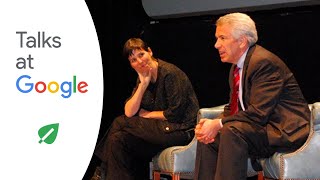
Transcript of an Authors at Google talk (video) featuring Fred Krupp and Miriam Horn discussing their book 'Earth: The Sequel' — a hopeful, market-oriented view of how policy (especially carbon cap-and-trade) plus private-sector innovation can drive a rapid transition to low-carbon energy. The talk interleaves authors' backgrounds, concrete clean‑energy and carbon‑capture technology examples (biotech fuels, solar PV and thermal, geothermal, CCS, biofuels, artificial trees), and an extended audience Q&A covering international policy, technology transfer, and environmental tradeoffs.
Chapters
Good afternoon and welcome to another edition of the Authors at Google series with a special welcome to our viewers on YouTube and C Span's Book TV. My name is Dan Reicher and I'm director of Climate and energy initiatives@google.org it's my pleasure today to introduce Fred Krupp and Miriam Horne, who will talk about their new book, the the Race to Reinvent Energy and Stop Global Warming. Miriam Horne is a journalist who has written for numerous newspapers and magazines, including Vanity Fair, the New York Times and the New Republic. And Fred Krupp has been the president of the Environmental Defense fund for over 20 years. Fred has been one of the country's foremost champions of harnessing market forces for environmental ends. He recognized early on the advantage of working with the private sector rather than against it. Among his many achievements, helping to develop the cap and trade program adopted as part of the 1990 Clean Air Act. The result was one of this country's most successful environmental programs. One thing that reduced acid rain pollution at a fraction of the anticipated cost. Second, working with Walmart to help them improve their environmental performance, including opening an office actually in Bentonville, Arkansas. And Third, working with McDonald's to green up their packaging. On a personal note, I spent seven years at the Natural Resources Defense Council, another one of the very large environmental groups, and I always admired Fred and his work to harness market forces for environmental change. And it is my great pleasure to introduce both Miriam and Fred today to talk about their book, three Housekeeping Items. First, both the presentation today and the question and answer session will be on C Span. Second, the microphone to use when asking questions is over to my right.
So hope. Hope is what the book is about. It is the story of the sequel. We have a lot of people now walking around depressed, a lot of the country in a state of semi paralysis because the problem seems so overwhelming as you begin to appreciate its magnitude. So the idea isn't to give unwarranted hope, but to put together a story that gives folks a glimpse of a future, a future that is so robust, with an abundance of alternatives that it's really something that can be embraced. I might just start out on a personal note. The idea of writing this book came to me in September of 2006 when I was sitting at a conference watching John Doar and some other entrepreneurs talk about the investments they were beginning to make. This was shortly after the European Union had imposed a carbon cap and as just as California was about to pass AB32. And these early price signals, this vision that government policy was going to change that we weren't going to allow continued dumping of global warming pollution into the atmosphere. Already had some money flowing and it just seemed to me that describing to people what is coming next, what happens when governments get serious about limiting the amount of dumping into the atmosphere, limiting the amount of global warming pollution would be something that would be really important to break people out of this stupor that they were walking around in. And so I approached Miriam and we talked and ultimately Miriam was persuaded, can I say, to write the book. You might just mention your initial reaction and we'll talk about some of the stories from the book before we open it up to questions.
Well, I was a bit skeptical when Fred first broached this book idea because I hadn't gotten the glimpse that he had of this new world that was being born sort of under the radar. And he has been out here a lot, participating in the Green Tech Innovation Network and traveling the world meeting people who are involved in things like cutting edge geothermal. And so he was able to, to start telling me these stories that were amazing stories and he was amazingly excited about them and that proved to be contagious. And so he persuaded me to work with him on it. And the first thing I did, of course, was come out here since as it has been for so many decades. This is the heartland of this newest innovation revolution. And the first place I went was a company called Amyris up in Emeryville. You saw Jack Newman from Amyris. They are a biotech company that re engineer yeast so that they can throw yeast into sugar and instead of getting an alcohol like beer or ethanol, which is a pretty inferior fuel, they can get the yeast to turn that sugar into chemicals that are virtually indistinguishable from the chemicals we get from petroleum. So they can make gasoline or diesel fuel or even jet fuel that can go right into all the existing infrastructure and doesn't require the huge energy inputs to to distill it from this big watery brew that ethanol comes out in. And they had already proven their chops because they had used these. They had engineered their yeast first to make a drug called artemisinin, which is the only known cure for malaria. And the Gates foundation had funded that research. And in a couple years, we just saw Kincaid, one of the founders, yesterday. And within two years that drug will be to distributed for free in Africa and will go a long way toward curing malaria and save the Gates Foundation a couple hundred million dollars a year in meeting their own targets for public health. So I came out of there just Buzzing with excitement. And I haven't really stopped buzzing for a year and a half since because I just kept meeting one after another person who was amazingly brilliant, often had a lot of money backing them, were doing things that often seem to verge almost on the science fiction to me. And we were just really able to map the tip of an iceberg and maybe the wrong tip, maybe we would map the bottom of the iceberg and it will be an entirely different group of companies that actually find the way forward. But I was saying that I'm sort of feeling in a state of withdrawal because I've been so busy the last couple weeks with getting this book out the door that I haven't been able to get my usual daily fix of the technology magazines coming out of MIT and Stanford and Caltech and just off the web. And this is moving so fast. And I feel really fortunate to have started this conversation with Google because to see you guys diving into it in the way that you are and to be able to learn from you and the things that you're mapping out there, this, to me, though we call it the sequel, it really feels like the beginning of a story that will, that will occupy me and EDF for a long time to come.
Yeah, I just want to add my own thoughts about Google because it's great to be here and it's great that Google, one of the early adopters, has already adopted this vision that clean technologies are the future. And several of your initiatives here at the Googleplex and investments that you're making around the world, I think are very encouraging. Let me just go back to a couple of key themes in the book. One is that profit and the profit motive which got us into this fix are going to help get us out of this fix. And that may seem counterintuitive, but the key here is that entrepreneurs have always been incredibly resourceful. And a key problem with pollution is it's what the economists call an external cost. So when you can just back a garbage truck up to a park and dump garbage, unfortunately all too many people do that. And right now that's exactly what our companies in America and we are all doing is we're all putting global warming pollution into the sky because there's no legal limit on how much can be put into the sky. Now we have an example in this country and now emerging around the world of when you create a green market completely going in and turning those incentives that are wrong headed and have failed the environment, turning them upside down. And the first use of this really in the United States was for sulfur dioxide first use anywhere in the world. And what happened is government said there needed to be a 50% reduction of sulfur emissions, and people predicted it would cost $2,000 to take a ton of sulfur out of the smokestacks. Turned out it cost $200. And just two years ago, the current administration actually ordered another 75% of sulfur reduction. Why? Because the controversy had been taken out of the issue. The scientists said we haven't taken enough out, and the costs had been ground down to an extent that it wasn't controversial. This is what we really need to do with carbon dioxide. Have, first of all, a mandatory legal limit for reducing CO2 in the air, reducing emissions. Because, in essence, this is an air pollution problem, and nowhere in the world have we ever solved an air pollution problem without a legal limit. So it's odd. I've just said profit is going to be what drives this race. But government is needed. And those two things, which may seem at odds, are actually both themes of the book. We need government to set up a market in carbon reductions and get rid of these external costs, get rid of the ability of people just to dump global warming pollution to the sky. And then it's as though the government fires a starting pistol, and this greatest race ever, which is really a race against time, begins. So this is, you know, the very first story we tell in the book is about the fellow you've just met via video, Bernie. Carl. Bernie is an Alaskan. He lives 60 miles northwest of Fairbanks, and he decided for profit that he'd like to get a lot more tourists coming to his resort. So what did he want to do? He wanted to build an ice hotel, as you just saw. But unfortunately, he decided to power it the way he was then powering his whole resort by burning diesel fuel. He was burning $1,000 of diesel fuel a day to generate electricity. The bill went up when he built the cooling system for the ice hotel. He built the hotel. Summer came and it melted. Forbes magazine called it the dumbest business idea of the year. But Bernie was a great American entrepreneur, and he kept at it. He rebuilt the hotel, but this time figured out a way to power the hotel using the geothermal energy. The warm spring water rebuilt the hotel another $20,000, and it worked. People are flocking to China now to line up to get into the ice palace. He's making a lot of money, but the story doesn't end there. Not only does Bernie have a real interest in recycling and the environment and global warming, but. But he wanted to get rid of the thousand dollar a day diesel fuel for generating electricity. So he partnered with United Technologies and became the first site anywhere in the world to use low temperature water from these hot springs to actually generate electricity. And now United Technologies has created a division to sell these generators and they're selling hundreds all over the world. These are the stories in the book, stories of things that are actually happening. And in this case, one that could have wide applicability.
I don't know.
Miriam, what are some of your favorite stories from the book besides Bernie and Amorous?
Well, let's see. With the first two chapters of the book, we sort of organized the book in terms of what the expectation is of what will take the biggest bite out of this presentation. And so the first two chapters are given over to solar. The first chapter is solar photovoltaics. That turns sunlight to electricity. And the second is solar thermal, that takes the sun's heat to boil water to make the steam you need to drive turbines. There's actually a company in there that you probably all know well because they built your solar roof Energy Innovations. Their division, EI Solutions, put your solar roof in there. And.
Which is in the book.
Which is in the book. They're one of the companies in the book. And as some of you know, they believe that the way to get to really low cost solar is to minimize the amount of expensive solar cell that you have to use and to maximize the use of cheap optics and cheap processors that can track the sun and keep those little precious solar cells pointed at the sun. So they have partnered with spectralab, which is the Boeing subsidiary that builds the best solar cells in the world. They power the Mars rover. It was really fun to go to spectralab and see those satellites and see the big sign pictures from the Jet Propulsion Lab thanking them for powering the Mars rover. And the Mars rover kept going. Way past the time anybody thought those solar cells were going to keep working. They kept going despite Martian dust and aliens and who knows what else they found up there. So they take these terrific solar cells that are grown. They're a compound of elements. They're very complicated to grow. They require a lot of money and tools to grow them, but they achieve more than 40% efficiency. And then they surround them with optics that concentrate the sun so that they put 800 suns effectively on this little solar cell. So that means in 1 square meter of cell you can get 800 square meters worth of solar energy. So they're working on their beta systems now, Dan, you may know whether they've actually put in a beta system. Yet the route that they installed for Google was actually conventional solar cells to start working on the experiments with plug in hybrid. But they're working on their beta installations now for these concentrating solar systems that will go on rooftops.
Yeah, beyond all the renewable energy solutions, the book advocates, as I've just said, really a market for anybody that can figure out ways to reduce global warming pollution or soak it up out of the air. So two other things we write about are using conventional coal, but taking the carbon dioxide out. And, and I met not far from here a fellow named Eli Gal, an Israeli who worked in GE to get sulfur out of scrubbers. And he believes he's figured out, and the large French company Alstom has licensed his technology. He believes he's figured out a way to take chilled ammonia and using that, capture CO2 from the actual effluent glass gas of smokestacks. Now you still need to figure out how to pump it underground, bury it, keep it there, and verify that it doesn't get out. Otherwise you have a big problem. But I think it is interesting and hopeful that there is at least the potential that coal too can be dealt with in a way that keeps us living on this planet. There's another entrepreneur from the medical profession, Michael Trachtenberg, Miriam, who we've both met, but maybe you want to talk about.
Michael Trachtenberg is actually a neurobiologist, not the likeliest person to be working in clean energy. He's been on the Harvard medical faculty. He now lives in Princeton. And he came to our attention through Steve Pacala, who runs the carbon mitigation project at Princeton. And he had worked for many years on the brain to determine the mechanism that the brain uses to get rid of carbon dioxide quickly before it can interfere with the functioning of neurons. And he had also worked on the International Space Station on mechanisms for getting the carbon out of the spaceships and throwing it out into outer space. And what he realized in his brain studies was that the mechanism that the brain uses is the same mechanism that's used by almost every living organism on Earth, which is an enzyme, carbonic anhydrase, that acts as a high speed CO2 shuttle. It converts it to bicarbonate that can be moved quickly through the bloodstream and out of our bodies. Plants use it to take carbon up. So he's now created a liquid membrane filter that would go on power plant smokestacks that would grab this CO2 and quickly move it into a pure stream for sequestration.
The other reason A carbon market has attractiveness, I think, to solve the problem at the lowest cost, and with gasoline and all energy prices going up, I think there's going to be a public demand for doing it at the lowest cost, is that there are some opportunities that a carbon market addresses that other sorts of policies don't. For example, around the world, it turns out 20% of our total emissions of greenhouse gases annually come from burning rainforests. So China and the United States are the largest two emitters of global warming pollution. But number three and four are Brazil and Indonesia, and most of their emissions come from burning the rainforest. So in a carbon market, not on the promise of stopping cutting, but using satellite verification systems, it's possible to construct a policy as now has been proposed in the international climate talks, most recently in Bali. A system where if countries actually demonstrate that they reduce the cutting and reduce the emissions, then they would be able to sell carbon credits into the atmosphere. Similarly, we interviewed maybe not so similarly, but there's a possibility of creating artificial trees, too. There's a scientist, Klaus Lochner, who is part of Columbia University. He's come up with a way to build an artificial tree that would capture carbon. Whether that will ever be cost effective. The amounts of energy required, I want to quickly say, seem to be very, very high. So I'm not saying this will happen. But the beauty of a green market being developed by a government policy that puts a global warming cap and creates a cap and trade system is that you offer this pot of gold to whoever can figure out how to take carbon out of the atmosphere or avoid its release. And why shouldn't the next billionaires on our planet be the one to figure out how to take carbon out of our atmosphere, be the one to figure out how to generate electricity without putting carbon into our atmosphere? I think that's the sort of future we need to create. And right now, I'm especially hopeful because every single presidential candidate that remains, the three major ones, John McCain, Hillary Clinton, Barack Obama, have all endorsed a carbon cap and trade system. So I would say to you, we're within two years of seeing national carbon cap and trade system enacted in our country. Maybe sooner, hopefully sooner. We're pressing to get a strong bill enacted as soon as possible. And that changes everything. The inventions we've talked about so far, which have some money coming to them, the success stories so far, like First Solar, which is now a $16 billion market cap company, those successes really start to pop up once you have this enormous cascade of investment money into these technologies. And that cascade in investment money happens when you put a carbon cap and trade system into place. So that's the book is the first glimpse of the future. We wanted to provide it because while we've all heard about individual puzzle pieces, this company or that company, we wanted to put those puzzle pieces together to see that the future is one we can all embrace. I would just say before we open it up for questions, that I think we do need the government to fire that starting pistol to start this race to put in place a cap and trade system. I do believe that that profit will, the profit motive will get us out of this problem, even though it got us into this problem. I think the race that we're about to see and participate in is going to be the most important and greatest race of our time, really of any time. And it will be a race against time. And it will be a race that not only generates vast world wealth, but also proves that we can save ourselves from ourselves. And with that I invite your questions or comments or suggestions. Yes, I think you need to use this mic. So because we're being recorded.
Should we.
Pass this around for now? Question. When you said the next billionaires are the ones that will take the carbon out of the environment, are you referring to somebody specific with that? Are you referring to like startups? The. I think that, you know, on the pages of the book you may find some of the next billionaires, but I'm not able to predict who they are. I am just saying that individual citizens around the world and governments around the world are in the process of demanding we create a whole new economy, an economy that will reward people who come up with these inventions, the opposite of the current economic incentives which have gotten us into this problem. And so once that changes, once you create a carbon market, a green market, you will create billionaires who will be the best people who figure out how on that new playing field, a level playing field where people that burn coal without capturing the emissions won't be able to continue to do that. People that figure out how to generate energy in that new environment will become billionaires. And when you're referring to that environment, are you referring specifically to the United States or places like Europe where they already have such thing in place? Well, the world Europe started with a mild form of cap and trade and unfortunately they over allocated the baseline. They didn't have good inventory statistics. In this country we've been keeping track of carbon emissions since the 1990 Clean Air act required it. So we have much better data. But these fortunes will be created in Many places, I think, because Silicon Valley right here has so many entrepreneurs, inventors, and the culture here is so unique that I am hoping, and it wouldn't surprise me if a disproportionate number of the future billionaires and the future jobs are generated right here in the United States. But to do that, we've got to get the policy right. We've got to be the finally be the last industrialized country to put in place a limit on global warming pollution. We haven't done it. Australia has a new government. They've now agreed to join. And then once we do it, we've got to naturally encourage and negotiate with the developing countries to also make commitments. Thank you.
My name is Yechiel Kimchi and my question is two phase. First, everything except geothermal energy comes from the sun. Crops, wind, waves in the ocean. So I wonder if some someone has calculated the total energy of the sun that our Earth get even with 100% utilization and how much it is compared to the energy that is consumed today or expected in 50 years.
Well, people have not actually done the calculation that I know that you're describing where you take the second and third order power supplies that the sun creates. People have calculated the first order, the solar resource that is delivered to the planet and are able to tell us that in an hour's time the sun delivers as much energy to the planet as all of human civilization uses. In a year. People who are working on solar thermal plants will tell you that a square of land in Nevada 100 miles on a side could provide enough electricity to power the whole United States.
States.
But you're right, winds, winds originate with the sun because of the temperature differentials on the planet. And winds in turn create waves. So that's a third order source. Wave energy advocates will tell you that in fact, each time that you go through, you go from the first order to the second order to the third order, that you concentrate the energy so that in a square meter of wave you have a lot more energy than you have in a square meter of solar radiation. And that's one of the reasons that people are that it gets, it's a factor an order of magnitude when you go to wind and another order of magnitude when you go into wave energy.
Now, I did not understand about this solar radiation. You said it supplies a year consumption of energy, but in one day or.
In one hour to the entire surface of the planet. Obviously we can't harvest the every bit of sunlight that hits the planet, but it gives you a sense of the pretty Small fraction of that total solar radiation that we do need to harvest in order to fulfill the world's energy needs.
10,000Th of one, I'm sorry, 1/10 of 1%. We only need to collect 1/10 of 1% for today. Yeah, not in 50 years.
Well, so we go up to 2/10 of 1%.
Right.
Okay. So the question, the continuation is of course we are not going to cover the Earth with solar cells. So the question is whether anyone thought of collecting solar radiation in space and then radiate it to.
That idea has been explored. And just in the Last year the U.S. department of Defense has jumped on board with it, which may suggest that it will actually get lots of money. It scares a lot of people because they have to beam that energy down to Earth. And everyone, they did this really razzmatazz visual presentation about it and freaked everybody out because there was this big blue beam being shot to Earth. They insist it actually couldn't be used as a weapon. But people have been exploring the idea. They actually did this kind of open source research effort online where they invited a lot of people to participate in what it would mean to launch these satellites and have them just follow the sun. So then of course you would have a 24 hour day as they circled the Earth. So people are looking at it. I wouldn't say it's right over the horizon.
Thank you others.
Hey, could you guys talk a little bit about how you would drive this transformation in China or other similar countries where dirty power is very cheap and there's no national cap and trade program in place?
Well, I think, you know, China is, has decided to limit the sulfur pollution in their society and they have a national cap on sulfur that they've established and they are putting a national cap and trade system for sulfur dioxide in place. So it's, you know, 15, 18 years after we did, but they are proceeding with that sort of policy. I think right now what's apparent is there's no reason in the world why China or India would talk about taking a carbon cap because we have the richest and one of the smartest and biggest economies on the planet which has not yet agreed to a limit. So I think the linchpin in all this is the United States. And before we're going to have real conversations with any other country, we have to take a limit. And I'm very encouraged that. I now believe within the next couple of years we will pass national policy that will put a cap, a mandatory legal limit on the emissions of global warming pollution into place. I Think that's the first step. And once that happens, I think the whole world's attention which is now trained on us will shift to the other big emitting nations. I think that's the second step world public opinion. Another step will be as these countries realize that there are a lot of economic benefits from manufacturing the products that the world increasingly is going to demand. There will be a negotiation in 2009 in Copenhagen when the world comes together to decide on the post Kyoto framework. And in that negotiation there will be have to be equitable answers. We can't hold people down, we can't say you can't produce electricity. And so that negotiation will undoubtedly produce incentives for China and India to make commitments on this issue. But the last thing is some Americans senators and it started out with the American Electric Power Co. Which is our biggest global warming emitter in the country, they've developed an idea which I think they first proposed with the International Brotherhood of Electrical Workers, that in addition to this negotiation and the inspiration and the leadership that America needs to show that there should be sticks as well. And they have proposed and it made its way into the current Senate bill, the Lieberman Warner bill that's just come out of the Senate Environment Committee and expected for a 4 vote in the Senate within the next couple of months. A provision which says if within X number of years, I think it's five or seven years, China and India don't take a cap. What this legislation now says is that then when they want to export steel or cars with steel in it, that you would figure out what the carbon content is, what the emissions were when they produced it, and because they manufactured not on a level playing field, they would have to buy a carbon reduction verified by the international community in order to export. And apparently at least the trade lawyers advising AEP and the Senators think this is WTO compliant. And it looks as though no matter what you may think of it, good or bad idea, it now looks to me as though this will end up in the legislation. So the legislation itself will also provide a stick of sorts.
One additional lever point is of course global corporations who import from China and one of our partners is Walmart. And Walmart is beginning to work on its entire supply chain and doing carbon accounting for its entire supply chain and starting to demand reduced carbon emissions from its suppliers. And that alone could have an enormous impact in China.
Thanks. Thank you. Yes. Yeah. I'm not sure this question is too.
Much different from the last one, but.
It seems to me that if this carbon market you propose is going to work, that it's going to have to be international? Yes.
How is something like that going to be administered?
Well, basically you have to have agreed upon standards. It turns out that carbon dioxide is relatively easy to measure. And so every country is going to have to set up a measuring system. You know, forget about carbon cap and trade and just think about any policy, international treaty that we're all going to respect each other and crank down our emissions. It turns out you need to have an inspection system, you need to have a verification system. And so once you agree that you need to have such a system, then having it for a cap and trade system isn't really that much more complicated. But it absolutely needs to be the international scientific authorities that are verifying these are what the emissions are. This is a good monitoring system, this is a good accounting system. And if someone is claiming an activity that subtracts carbon, like by afforestation, planting trees, there's got to be scientific certification that that really happens too. You might ask, well, what's the penalty if a country, country X doesn't set up that system? Well, the penalty is actually relatively easy in a market. You say you can't enter the market, you can't buy credits, you can't sell credits. So I think these problems of monitoring and tracking A have to be solved no matter what policy you put in place to make sure that we solve the problem. And B, because you won't let countries participate in trading unless they're, you know, up to a standard. It's, it's quite practical. Thank you.
Hi. So saw a documentary recently called who Killed the Electric Car? Which kind of put in layman's terms like what the market forces and organizations that were kind of against that movement where there was a government policy and then, and then it kind of hasn't worked real well. So can you talk a little bit about. And it's basically the idea being is that even though it's not a zero sum game, there's. When there's these green market innovation companies that are making billions of dollars, somebody's losing money and kind of doesn't want to see that happen. Can you talk a little bit about some of the challenges that you kind of see here and why government policy in this case and will be picked up by private innovation and how this would work when something, you know, 20 years ago didn't work along the same lines?
Well, you bring up two problems. One, it's going to be hard to get a strong cap, cap and trade system in place because There are entrenched organizations that benefit from the status quo. It turns out that that is true. But increasingly, many of these businesses and business leaders have figured out that there is no economy and no economic future unless we solve this problem. And so I've been gratified that GE and Caterpillar and John Deere and many other companies have joined US cap, the United States Climate Action Partnership, and have called for a pretty strong cap to be put in place both in the near term and the long term. But there still are resistors. There definitely are still companies that are going to try to keep legislation from being passed. And the answer to that is this is a democracy, people. And I think ultimately the fact that the public, both in the United States and around the world, isn't going to sit idly by unless we put in place mandatory limits to reduce global warming pollution, just as we've solved every other air pollution problem. I think the public ultimately will make it very painful for senators and congressmen not to vote for these policies. The second thing you allude to is that lobbyists are very skilled at playing the Washington game and creating loopholes and other things. And that's why it's so important that we have a performance metric built into this law. It should require global warming pollution to go down. It should reward people that can soak carbon pollution out of smokestacks or other greenhouse gases out of the air. But in my view, other than supporting the government supporting basic research at a much higher level than they do now, government shouldn't be picking winners and losers. We have around the world policies where wind turbines and even solar cells are being built in places that don't have much wind or much sunshine. If we pick winners and losers, I fear that the ones who win will be the ones who hire the best lobbyists. Whereas if we use a performance metric and create a real economic incentive that rewards reductions, we will get the best suite of technologies. I want to just mention that many of us, especially here in Silicon Valley, have heard of the use of prizes. Reed Hastings over at Netflix put out a million dollar prize to whatever software engineers could figure out how to predict what Netflix customers movies they would prefer based on their past selections. And well over a million dollars of engineering went into improving the algorithm a couple years ago and a team won the prize. Well, they didn't know who would win the prize beforehand. And that is what a carbon cap and trade system. The easiest way I can explain it, it's like creating a stream of megaprises for whoever can figure this out. So that is why I think we've got to get the economic incentives right to solve this problem. And I'm very hopeful we are about to.
Hi. Thank you for your book. I think if we analyze what has already been said here today, we have got the answer due to the gentleman with the maroon sherton, who basically was talking about energy from the sun. And you gave the response one hour's energy coming from the sun. If we harness that, we can create enough energy to take care of all our needs on Earth. So that, in a sense, is the answer. One of the tricks is to design systems that are not disruptive to the natural functioning of the Earth. I would think as we proceed. And the Earth is a volatile place and we must not add to that volatility. Thank you.
Thank you.
Hi. Thank you for speaking with us today. I was wondering, as we create these policies like cap and trade, do we account for historical emissions? And what type of resistance has the United States faced from other countries based on. Based on our historical emissions?
That's a great question. You know, many people don't know that the emissions from the Model Ts, the first Model Ts, are still up in the heavens. So while people talk about the United States current contributions, the fact that these greenhouse gases have half lives of 10, 20, 50, 100 years, in the case of carbon dioxide, means that the inventory of gases that's resident in the atmosphere, what forms the thermal blanket, is much more American emissions based on history than the current total, the current fraction of our emissions total. And so this is definitely being talked about. This is a reason why China, India, the developing world, wants to make sure the deal is equitable, allows them to develop. And this will be front and center in the negotiations in Copenhagen in December of 2009 as the World figures out a way that we can all come under the same tent, provide for the future, but do it in a way that's truly fair and equitable for everybody.
Thank you.
Are there any other questions? Can I just respond to the question about not disrupting other natural systems? I mean, we, as an environmental organization, climate is our top priority. But it's not the only thing we work on by any means. We have a huge oceans team, a big team that works on land and wildlife, another team that works on rivers, another team that works on health. And one of the roles that we see for EDF is to help a lot of this innovation happen without some of the destructive, unintended consequences. So we just convened a meeting, for instance, between our marine biologists and A number of the leading oceans conservation organizations in the country and some of the entrepreneurs developing wave energy to talk about how to move this forward without doing damage to marine habitats, without destroying sensitive bottoms or coral reefs. And there are partnerships developing that are really exciting between people whose primary goal is conservation, but who recognize that all of these conservation goals will be undermined by continued climate change, that the coral reefs are going to die with climate change, and that if you take a rigid stance against new transmission lines that might carry solar energy or marine energy systems, they all have to be judged by the same rigorous environmental standards as the old kind of energy systems. They need to be developed in a really careful way. But it's just been really interesting to see these new coalitions coming together to try to enable this innovation to move forward without doing damage to other environmental values.
Well, the idea that we all have to be constructive and create our own future, it's not good enough anymore just to say, no, you can't do that. No, you can't do that. We in the environmental community and everyone in the community has to be willing to be part of, okay, this is how we do build a pathway to the future.
Hi, I actually have two questions. So the first one is you talk a lot about economical incentive and mostly for us and a lot of talks about China. So if we look at history and how things are currently, the coal plants used in China are about 70, 80% less efficient than the one we have in us and the reason for it, because China has a policy that for strategic industries and something like this, unless it is produced in China, you don't use this. So if you, for example, take all the coal plants currently there and replace the technology use there with, let's say, what U.S. already has, that would be a significant impact. However, because US Companies refuse to pass this technology to China and China has this policy of not allowing that much foreign influence on their own economy. We have this situation. So even if there are new ways developed, there will still be a situation like that when most likely American companies are not going, are not willing to give up the control of this technology, the intellectual property. And there will be countries who will be afraid that if they commit to getting those technology from us, you know, some policy shifted, the White House decides, make some decision, and you know, they will be just cut off. And they already heavily depend on this. So how do you address something like that?
Well, we absolutely need to overcome the barriers to technology sharing to the extent that they are real and still exist. But I just want to point out that the average efficiency of America's coal fleet, thermal efficiency is about 31% conversion of the heat content of coal into electricity. We now have the capability of building plants right here in America with thermal efficiencies of 45%. So it's not just, you know, China, we can't just point our fingers. We could be doing a lot here to make our use of coal much better. Plus there's been a lot of justifiable focus on the building of new coal plants in China and the United States. EDF was in the middle of the battle against China CCXU which proposed 11 new coal fired plants. And ultimately when the new purchasers came along, TPG and kkr, they came to us and asked us and NRDC for our blessing for a whole different greenhouse gas strategy. But in spite of the fact that that focus on new coal generation is a very important focus, it's going to remain true all, all around the world for another decade or more that most of our emissions are from the existing coal fired fleet. So the extent we can figure out ways to reduce those emissions and offset them by stopping the burning of the rainforest or other valid ways to offset emissions, it is very important that we, we're never going to get where we need to go unless we deal with the, the current coal fired plant. So I agree with you. Technology needs to be shared and that needs to be part of the international negotiation to get rid of the barriers that are real and remain. But I just want to say the United States has a long way to go on the same issue, thermal efficiency.
And the second question is that, well, it's obvious where everybody said there is like, there is a lot of fascination with biofuels, especially in US like ethanol and pretty much everything that can be turned into it. And if you look at the statistics for the last three years, the prices of corn, grain, grains and any other foods rose up dramatically. In fact, if you take Brazil, you have coffee prices. So you know, how do you address something like that when you have almost a billion people hungry in the world?
1, 2, 3, 4, chapter 5. Right. Miriam, you want to talk about.
Well, we certainly are interested in not pitting food against fuel. And one of the chapters in the book is devoted to the efforts to move away from corn and soy and palm oil and toward cellulosic materials, the indigestible materials that make up everything else. So that would include grasses and wood chips, often waste materials. Probably my favorite innovator in that space is David Tillman out in Minnesota who's looking at the possibilities of restoring the native prairie grasses that used to cover the middle third of the United States, that create tremendous habitat and that sequester enormous amounts of of carbon in the soil through their root structures. They require almost no fertilizer inputs, no water inputs. Basically all you have to do is go in and pretend to be a buffalo and cut them down once every few years and then convert them to fuel and you actually can end up with a. If they can overcome the difficulties in converting a mixed grass feedstock into a fuel, you could end up actually with a carbon negative fuel without putting any pressure on food supplies. But you're absolutely right. Biofuels should not, should neither put pressures on food supplies nor should it put pressures on rainforests.
One of the other companies we profile in the book is Verinium and they've just merged with Diversa. They've had a team of biologists collecting organisms, extremophiles all around the world. These organisms that couldn't live anywhere else, that live in the most toxic environments that nothing else could live in and that eat things that nothing else can eat. And they've taken the enzymes out of these organisms and figured out which of those enzymes can help us digest some of these non edible materials, including going right into the guts of a termite and figuring out what is it that helps the termite break cellulose and work wood into food.
I'll try to keep this fairly quick since we're almost out of time. First, I wanted to thank both of you for coming here for writing the book, for the work you've been doing on this. We need more work like this. Fred, at the beginning I think you mentioned it's a race and in fact a race against time. And I think that is really apt. The issue is are we going to do enough, fast enough to reduce emissions to avoid potentially catastrophic consequences? More and more you hear people in the environmental and scientific community, I think making the point that we might not that things are accelerating faster than anyone had anticipated, that emissions continue to go up even with the beginnings of carbon regulation regimes. What can we do beyond just cap and trade that might really make renewables compete with non renewables, with coal, with other emitting sources fast enough to really make a difference?
Well, I think there's a lot of things we need to all participate in this race, whether it's as inventors or investors or as informed citizens. We need to be politically active and make sure the government increases its research budget. But. And we need to continue to have stronger and stricter appliance standards. People don't generally know that a plasma screen uses twice as much juice as an LCD screen. So there's a lot of things we need besides cap and trade. But the most basic thing to remember is that nowhere in the world have we solved an air pollution problem without a mandatory legal limit. And the most. The most important thing a citizen can do is keep their eye on this congressional legislation and make sure that the mandatory legal limit that the congressmen and senators are setting for this country is consistent with what the scientists tell us is necessary to solve the problem.
And that was our last question. Thank you very much for coming.
Thank you.
More from Guy


Cheryl Strauss Einhorn | The Human Edge: Smarter Decisions in the Age of AI | Talks at Google



Rachel Glennerster | Innovation and the Center for Global Development | Talks at Google

Rebecca Winthrop | Rethinking the Purpose of Education in the Age of AI | Talks at Google

Dr. Robert Wachter | A Giant Leap: How AI Is Transforming Healthcare... | Talks at Google



