Eat, Pray, Love | Elizabeth Gilbert | Talks at Google
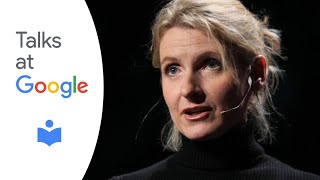
Elizabeth Gilbert talks about her year traveling to Italy, India, and Bali after divorce, seeking pleasure, devotion, and balance. She reads from the India section on meditation and existential anxiety, then answers questions about language learning, writing, and what came after.
Questions this video answers
Italy, India, and Indonesia (specifically Bali).
The India section (her nascent spiritual explorations and meditation).
Eustace Conway, a modern 'mountain man' in North Carolina.
Yes — she states she is getting remarried (discussed as an upcoming marriage).
Chapters
Anyway, thank you for taking time away from your day to come and be here. This is really cool. I didn't know that this place existed and certainly would never have known based on the clandestine outside appearance and just had a wonderful time at the cafeteria. I kind of wish that I worked here. It's really great. So this is my book and it's about a year that I spent traveling around the world after a very painful divorce. Divorce, which is probably redundant, but everybody thinks their divorce was particularly painful and I guess I'm no exception. And I also followed my divorce with the classic post divorce, rebound, disastrous relationship. So within a year of it all settling, I was pretty much, as they would say in Italian, distruta. And so I decided to start all over with my life and get rid of everything. And I went and traveled around the world for a year and I went to these three countries, to Italy, India and Indonesia. And in each place I was sort of seeking one part of myself that I felt I had lost. And I wanted to look for it against the backdrop of a culture that specializes in that, you know, so Italy, of course, was about pleasure. Where else would you go? And India was about devotion. And Indonesia, specifically Bali, was about trying to figure out how you can create a life that incorporates pleasure and devotion in equal measure. And the Balinese seem to have some sort of a lock on that. So I wanted to sort of study how they do it. And that's the book and that's the journey and I'm just going to read one little short piece of it for you today and then we can just have a conversation and take questions or do whatever you'd like, play telephone, whatever. But this is from the India section and it's just some of my thinking about my own nascent spiritual explorations. When I was 9 years old going on 10, I experienced a true metaphysical crisis. Maybe this seems young for such a thing, but I was always a precocious child. It all happened over the summer between fourth and fifth grade. I was going to be turning 10 years old in July. And there was something about this transition from 9 to 10, from single digit to double digit, that shocked me into a genuine existential panic usually reserved for people turning 50. I remember that life was passing me by so fast it seemed like only yesterday I was in kindergarten and here I was about to turn 10. Soon I would be a teenager and then middle aged and then elderly and then dead. And soon everybody else would be dead too. My parents would die, my friends would die, my cat would die, my Older sister was almost in high school already. I could remember her going off to first grade only moments ago, it seemed, in her little knee socks. And now she was in high school. Obviously it would not be long before she was dead. What was the point of all of this? The strangest thing about this crisis was that nothing in particular had spurred it. No friend or relative had died giving me my first taste of mortality. I had not even yet read Charlotte's Web. This panic I was feeling at the age of 10 was nothing less than a spontaneous and full out realization of mortality's inevitable march. And I had no spiritual vocabulary with which to help myself manage it. We were Protestants, and not even devout ones at that. We said grace only before Christmas and Thanksgiving dinner and went to church sporadically. My dad chose to stay home on Sunday mornings, finding his devotional practice in farming. I sang in the choir because I liked singing. My pretty sister was the angel in the Christmas pageant. My mother used the church as a headquarters from which to organize good works of volunteer service for the community. But even in that church, I don't remember there being a lot of talking about God. This was New England, after all, and the word God tends to make us Yankees very nervous. My sense of helplessness was overwhelming. What I wanted to do was pull some massive emergency break on the universe, like the breaks I'd seen on the subways during our school trip to New York City. I wanted to call a timeout and demand that everything just stop until I could understand it. I suppose this urge to force the entire universe to stop in its tracks until I could get a grip on my thoughts might have been the beginning of what dear friends of mine have called my control issues. Of course, my efforts and worry were futile. The closer I watched time, the faster it spun. And that summer went by so quickly that it made my head hurt. And at the end of every day I remember thinking, another one gone and bursting into tears. This sadness is one of the great trials of the human experiment. As far as we know, we're the only species on the planet who have been given the gift, or the curse perhaps, of awareness about our own mortality. Everything here eventually dies. We're the lucky ones who get to think about this fact every day. And how are you going to cope with this information? When I was nine, I couldn't do a thing about it except cry later. Over the years, my hypersensitive awareness of time speed led me to push myself to experience life at maximum pace. If I were going to have such a short visit on Earth, I had to do everything possible to experience it now. Hence all the traveling, all the romances, all the ambition, all the pasta. My sister had a friend who used to think that Catherine had two or three younger sisters because she was always hearing stories about the sister who was in Africa, the sister who was working on a ranch in Wyoming, the sister who was the bartender in New York, the sister who was writing a book, the sister who was getting married, the sister who was getting divorced. Surely this could not all be the same person. Indeed, if I could have split myself into many Liz Gilberts, I would willingly have done so in order to not miss a moment of life. What am I saying? I did split myself into many Liz Gilberts, all of whom simultaneously collapsed in exhaustion on a bathroom floor in the suburbs one night around the age of 30. I should say here that I'm aware not everyone goes through this kind of metaphysical crisis. Some of us are hardwired for anxiety about mortality, while others just seem comfortable with the whole deal. You meet a lot of apathetic people in this world, of course, but you also meet some people who seem to be able to gracefully accept the terms upon which the universe operates and who genuinely do not seem troubled by its paradoxes. I have a friend whose grandmother used to tell her, there's no trouble in this world so serious that it can't be cured with a hot bath, a glass of whiskey, and the Book of Common pray. For some people, that's enough. For others, more drastic measures are required. I have a friend I've met here at the ashram in India named Shaun. He's one of those people, like me, who was born with the itch, the mad and relentless urge to understand the workings of existence. His little parish in County Cork didn't seem to have any of the answers. So he left the farm in the 1980s to go traveling through India, looking for inner peace through yoga. A few years later, he returned home to the dairy farm in Ireland. He was sitting in the kitchen of the old stone house with his father, a lifelong farmer and a man of few words, and Shawn was telling him all about his spiritual discoveries in the exotic East. Sean's father listened with mild interest, watching the hearth and the fire, smoking his pipe. He didn't speak at all until Sean said with excitement, da. This meditation stuff, it's crucial for teaching serenity. It can really save your life. It teaches you how to quiet your mind. His father turned to him and said kindly, I have a quiet mind already, son, and then resumed his gaze on the fire. But I don't. Nor does Sean. Many of us don't. Many of us look into the fire and see only inferno. I need to actively learn how to do what Sean's father, it seems, was born knowing how to do. How to, as Walt Whitman once wrote, stand apart from the pulling and hauling, amused, complacent, compassionating, idle, unitary, both in and out of the game, watching and wondering at it all. Instead of being amused, though, I'm only anxious. Instead of watching, I'm always probing and interfering. The other day in prayer, I said to God, look, I understand that an unexamined life is not worth living, but do you think I could someday have an unexamined lunch? Buddhist lore has a story about the moments that followed the Buddha's transcendence into enlightenment, when, after 39 days of meditation, the veil of illusion finally fell away and the true workings of the universe were revealed to the great Master. He was reported to have opened his eyes and said, immediate, this cannot be taught. But then he changed his mind and decided he would go into the world after all and attempt to teach the practice of meditation to a small handful of students. He knew there would only be a meager percentage of people who would be served by or even interested in these teachings. Most of humanity, he said, have eyes that are so caked shut with the dust of deception that they will never see truth, no matter who tries to show it to them. A few others, like Shan's Da, perhaps, are so naturally clear eyed and calm already that they need no instruction or assistance. But then there are those whose eyes are just slightly caked with dust and who might, with the help of the right master, be taught to see more clearly someday. The Buddha decided he would become a teacher for the benefit of that minority. For those of little dust, I dearly hope that I am one of those mid level dust cake eye people. But I don't know. I only know that I have been driven to find inner peace with methods that might seem a bit drastic for the general populace. For instance, when I told one friend of mine back in New York City that I was going to India to live in an ashram and search for divinity, he sighed and said, oh, there's a part of me that so wishes that I wanted to do that, but I really have no desire for it whatsoever. And I don't know that I have much choice. Though I have searched frantically for contentment for so many years in so many ways, and all these acquisitions, they run you down in the end, life, if you keep chasing it so hard, will Drive you to death. Time, when pursued like a bandit, will behave like one, always remaining one county or one room ahead of you, changing its name and hair color to elude you. Slipping out the back door of the motel just as you're banging through the lobby with your newest search warrant, leaving only a burning cigarette in the ashtray to taunt you. At some point you have to stop, because it won't. You have to admit that you can't catch it, that you're not supposed to catch it. At some point you have to let go and sit still and allow contentment to approach you. Letting go, of course, is a scary enterprise for those of us who believe that the world revolves only because it has a handle on the top of it, which we ourselves personally turn. And that if we were to drop this handle for even one moment, well, that would be the end of the universe. But try dropping it. This is the message I'm getting in India. Sit quietly for now and cease your relentless participation and watch what happens. The birds do not crash dead out of the sky. After all, in mid flight, the trees do not wither and die. The rivers do not run red with blood. Life continues to go on. Even the Italian post office will keep limping along doing its own thing without you. Why are you so sure that your micromanagement of every moment in this whole world is so essential? Why don't you let it be? I hear this argument and it appeals to me. I believe in it intellectually, I really do. But then I wonder, with all my restless yearning and with all my hyped up fervor and this stupidly hungry nature of mine, what should I do with my energy instead? That answer is arriving too. Look for God. Look for God like a man with his head on fire looks for water. Thank you very much. So, does anybody have any questions? The other thing is if the microphone stepping is too complicated, if you want to say your question, I guess I could repeat it into here. Would that also work? Or is there some sort of super Google technological thing that I don't understand because I have a really old Motorola cell phone? Okay, anybody have any questions or comments about anything writing this book or other books or anything? Da da, da. Yes?
How did you pick the three countries? I know you had different ideas.
The question was, how did I pick the three countries and were there others that I was considering? I spent a. I think when you go on a quest, and that is what this is, as corny as that word might sound, the prospect of questing is something I believe in. Very much. And I believe that it's a universal human urgency that can be as strong in some people as the urge to procreate or protect your kin or build stuff. It can be a pretty mighty urgency. And I think you have to prepare for it with a lot of self study. And so I spent months kind of writing and writing and writing in my journal and asking myself over and over again in as many different forms as possible, what is it that you really, really. Because that's a kind of hard thing, I think, for us to admit at times. And then I went back and read those journals and saw what kept coming up again and again and sort of parboiled it down to that. And it appeared that I apparently really wanted to learn how to speak Italian for no logical reason. It showed up on every page. So I thought, well, that one's pretty evident. And I really wanted to focus on my meditation practice. And India seemed like a natural place to go for that. And then also I had a very special reason to go back to Bali, which is that I'd been there a few years ago for a magazine story and I'd had the privilege to meet this 9th generation Indonesian medicine man, this kind of amazing old Yoda like character. And he had dropped this line on me that said that it was my. Apparently it was my destiny to come back there and to teach him English and to live with his family. And I grabbed onto that like a life rope, you know, and he just tossed this thing out. And I spent the next almost three years just trying to figure out how to organize my life around manifesting that destiny and getting back there somehow. And. And of course I did. And of course he had no idea who I was when I showed up. As many quests turn out, there's always these. That's kind of perfect mythological structuring of how that should go. But it was still amazing to be around him. And in the end I did end up spending a lot of time with him. So I was invited to Indonesia and I felt I needed to go to India. And I really just wanted to go to Italy and eat a lot of food and learn how to speak Italian. And it was happy coincidence that they all began with I, which is good. On a journey of self discovery. But my friends in Indiana were like, just come here. I don't know why you got it. My friends in Islip were not too impressed because there's of course many other places that begin with I. But anyway, that seemed like the thing to do. Thanks.
Anybody else? No?
All right. Yeah. I'm writing a book about marriage, which is kind of like George Bush writing a book about diplomacy, because I haven't exactly excelled in that. But I am getting remarried. And so I thought that Joan Didion once said that she writes in order to find out how she feels about things. And so I'm going to use that book as a way to try to understand what indeed, that peculiar institution is all about. And hopefully knowing more about it might make it go a little better the next time. So that's what it's about.
Yeah. Well, I have a question. I think that's about the first book, but I've done long trips as well, and I think you talked a lot about meditation and all of these things that you did. How much of it had you been to able to carry into your normal life? It's so easy to dive into that on vacation, but then a year later, not right.
Yeah. The question is, how much of what I learned on the trip have I been able to incorporate back into my normal life, including meditation? I mean, I think madness would follow anybody who tried to keep an ashram schedule in a normal life in Northeastern United States. So I don't harangue myself too much for the fact that I don't meditate five hours a day anymore or chant for two hours a day or, you know, eat really good vegetarian food and all that kind of stuff. But something, you know, how can I explain this catharsis? No catharsis ever happened without somebody's participation. People talk about cathartic experiences. Somebody has a horrible accident or a horrible heartbreak, and it transforms them, but not without their assistance, not without them showing up for it. And I think travel can always seem like such a natural way for people to change their lives, but it can't impose change on you. You can only kind of will it in. And similarly, whatever beautiful treasures of selfhood that I found on this journey are mine to lose any day I feel like it, you know? And so I consider it kind of my obligation to hold onto as much of that as I can. Within reason. I would so love to tell you that I get up every day before dawn and meditate. And I'm half tempted to tell you that because how the hell would you guys ever know if it's true or not? But in fact, it's not true. But I do it more days than I don't. And I think that I have for that. I kind of base it on my writing practice as well. I would love to say that I write every day, but I don't But I write more days than I don't. And I think as long as in your life you're doing more of what's beneficial to you than not, then that's probably good enough for what we can do in our normal lives. Thanks for your question. Yeah.
What did you think about coming back to the U.S.
The question is, what did I think about coming back to the US at the end of my trip, I was excited because I had the journey of writing the book to look forward to. So that in itself is another kind of adventure, in a way. And also, I was just. I don't know. When I was at the ashram, I remember seeing people who kind of got addicted to exploration without ever coming home. You know, like they were on a spiritual journey kind of their whole lives for like 25 years in the same ashram. And they were. And I sort of thought, is that really the point of these teachings? You know, I mean, they weren't monks, they were civilians, but they were sort of stuck, I felt, in this cycle of constantly seeking, hiding. And I remember this one girl at the ashram coming back from having flown to Chicago to see her family. And she came back and she was like, you know, she was breathing ashram air like it was, you know, pure oxygen. She was like, I couldn't wait to get back here because the real world is so screwed up. And I couldn't relate to anybody. And I just wanted to be here with people who understand. And I just thought the point of this can it that all of these teachings and all of supposed to make reality harder for you. It seems like any sort of beneficial practice would be one that would make it easier for you to live in the world. And so I was excited to kind of try out my new self in my old life and see how things have changed. And indeed, I just feel more comfortable in the world and more comfortable in my skin than ever. So it's been lovely. It wasn't particularly jarring coming back. Then again, I didn't come back to a very normal life either. So if I'd had to go back, back to my marriage and my suburban house, I think it wouldn't have been quite as much to look forward to. Yeah.
Can I ask you a question about your last book about black American marriage? Did you have to spend time with Conway? And if so, how did that kind of relate to this long journey that you did for yourself?
Oh, the question is about my last book before this, which is the Last American man, where I spent a lot of time actually. With this guy named Eustace Conway, who is this sort of modern, latter day messianic mountain man guy who lives in the woods in North Carolina and left home at 17 and has been living in the woods and living off the land ever since and has this completely deranged messianic view of himself as somebody who can single handedly return America to being an agrarian society. And everybody's gonna follow him into the woods. And he's so captivating that you just might think that it was possible. But he's also sort of crazy in his way. And the question was, how did that, how did spending, I think your question was, how did spending time with him affect my own journey in two ways. One was that, did I tell him about this? Yeah, I told him I was going to do this and he was very encouraging. He's all about the quest. I spent a lot of time writing about men in my life. I worked for Spin, I worked for gq and, and my first book was a collection of short stories that seemed to be mostly about cowboys. And my second book was a novel about lobster fishermen. And my third book was this like quintessential American masculine figure. And I kind of was like, you know, just need a little time off from the fellas for a while. You know, writing about them being married to them, giving them all my money in divorce settlements, you know, like all. It's just this is just I'm a little overwhelmed with this, you know, and I thought that I really wanted to spend some time away from that energy. So in way it propelled me to want to go off on my own. And the other is that I was really impressed with his self honesty when I wrote that book. He gave me absolute, utter access to his life. He handed me at one point this giant box filled with all his journals and childhood diaries and love letters from girlfriends who now hated him. And you know, all this incredibly intimate stuff that he hadn't even looked at in years. And he just gave it to me and said use any of this. You know, he gave me telephone numbers of people that he knew despised him and said, you should talk to this guy because he hates me and he thinks I'm a fraud and you should talk to people who think I'm a fraud. And he looked at that question himself and he, you know, he just, he just doesn't do things halfway. And I was, I was really inspired by the fact that he sort of understood if you're going to, you know, if you're going to do biography or if you're going to do memoir. Like, do it, you know, don't try to turn it into some sort of vanity piece. And I think that helped me find the resolve to just tell this story as it occurred, rather than trying to manipulate it or make myself look, you know, good in any sort of way. So that was really. That was inspiring. He was both repellent and inspiring. And I think that's actually probably a very good general description of him in total. Yeah. In writing. What? Yeah. Oh, where do I do my writing? I used to be. Yeah. I mean, I've written all over the world at this point because I've done so much traveling. But my preferred. I mean, I've always been. I think, like most writers, I've always been seeking the kind of perfect womb, you know, in which to write and how. Have found different versions of it for different books, depending on where I was living and what I was doing. But my short story collection and my novel, I wrote almost entirely in the New York Public Library reading room. You know, that beautiful, big, quiet space, which is a really nice place to work because you're alone, but not alone. You're alone in silence, but you're not isolated because there's people around and there's this kind of river of work, of energy of people studying. And you would feel guilty to not be participating in it with them. Although many times I had this time sort of school. Marmish guard come and rap me on the head for falling asleep in my arm on top of my paperwork, which you're not supposed to do there. But now and then my last two books, this book and the Last American Man I wrote. I mean, when you write a book, there's years of sort of research and stuff and collecting and that I can do anywhere. But when it comes to the actual. The sort of holy act of sitting down and composing a book, I need a lot of silence for that. So I went to an artist's residency in Wyoming. There are these wonderful sort of retreats where you go and they take care of you and give you kind of a quiet place to work. And so I wrote those books there. And now I've just bought a house. And I'm hoping that I can create a quiet enough place in there that I can actually write in my own home for once, which I've never been able to do. But coffee shops would be out of the question for me, if only because of the availability of muffins constantly. It would be a big mistake. Anybody else? Is anybody a writer? Secrets I'm always curious about that.
Yep.
I've always. The question is, when studying in different language, do you take on a different personality? Yeah. Italian has a particular. I think everybody who studies Italian takes on this completely phantasmal. That's not even a word, but like, this completely romantic. I mean that in every definition of the word romantic identity, where you really do think that you're in a Fellini movie and you know that you're riding a moped around Rome with your dashing, swarthy boyfriend, or there's just something so incredibly sexy about that language. And that's partially why I think I was so attracted to it, because I just felt so dead after going through divorce and depression. And I would go. I was taking Italian at the new school, and I would just come home and lay in the bathtub and read the dictionary out loud and just put this big floor. I'd be in bubbles and I'd be like, ciao, parlo italiano. Just because you can't do it without waving your hands around and without starting to feel kind of invigorated. And there's reasons why, as I found out when I was researching the book, there's reasons why Italian is such a tantalizing language. It's not an accident that it's as beautiful as it is. There were decisions that were made in Italy around the 1600s about what was going to be the official language out of all the dialects. And there was a kind of council. I mean, I don't think any other language has this pedigree. There was a sort of council of intellectuals who got together and basically went around Italy looking for the most beautiful version of colloquial, bastardized Latin. And it turned out to be Florentine and the language of Dante. And so it's a language that was sort of. Sort of built by a poet. And I think that's why it's so appealing and seems to be universally so. And when I was in Rome studying, I found out that every single person in my class who was taking Italian had come for the same reason, because they had no practical justification whatsoever to learn this language. Like, nobody's boss said, you have to learn Italian so our business will thrive. You know, like, it's just not in the sort of vocabulary of commerce. But people just felt like it would make them feel good to have those words and sounds coming out of their mouths. And all these stiff German engineers visiting Rome and wanting to learn. Because this one guy said, I want to have the dolce vita, you know? And I was like, the Deutsche Vita. But so there's just something very alluring about it. And I think it helped. I think it helped change my. And I don't think it hurt either that my head, as anybody who's gone through really hard times knows you get stuck in these kind of ruts of thought. And I don't think it hurt to actually change the language and introduce new words into your head to try to escape the constant sort of runaround of the familiar repetition of destructive sentences. So, yeah, definitely. But nobody ever once mistook me for being Italian. After all, that never happened at all. Next life. Next life will be Italian.
So, yes, I was just wondering what would be the fourth verb after each meaning? What happened after the book? And specifically, are you still in contact.
With which man from Indonesia? With my sweetheart from Indonesia. Yeah. We're getting married in a years few weeks. So we're in pretty close contact, which is good. The question is, what would be the fourth verb? That's a really good question. Eat, pray, love. Well, it just somehow reminded me of what my Aunt Loanne said because she wished that I had stayed in Italy the whole time and just called the book Eat, Eat, Eat. But you know, actually I would say it would be repeat. That would be the. That would probably be the best way to continue your life. And it's nice because I just bought. I was just telling you in the elevator, I just bought a church in New Jersey. And over the top, it's a 1798 old church and I decided to have somebody write in gothic letters over the top, you know, eat, pray, love, because it seems to be a good location for it. So, yeah, eat, pray, love, repeat, and so on and so on. Or maybe remember, that would be good too. So thank you all so much. I appreciate your questions and your time and good luck on all your quests and enjoy your cool jobs. They seem to be from the outside and thanks for having me, I appreciate it.
More from Guy


Cheryl Strauss Einhorn | The Human Edge: Smarter Decisions in the Age of AI | Talks at Google



Rachel Glennerster | Innovation and the Center for Global Development | Talks at Google

Rebecca Winthrop | Rethinking the Purpose of Education in the Age of AI | Talks at Google

Dr. Robert Wachter | A Giant Leap: How AI Is Transforming Healthcare... | Talks at Google



