Ellen Langer: The Mother of Mindfulness
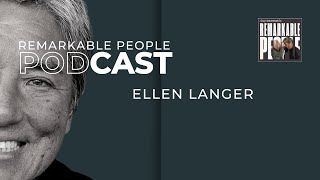
Interview (recorded Sept 27, 2023) on Guy Kawasaki's Remarkable People with Ellen Langer, summarizing Langer's 45 years of research on mindfulness (not meditation) and mind–body unity. Key points: the classic "because" Xerox study showing mindlessness; mindfulness as noticing uncertainty and variability; research evidence (counterclockwise study, chambermaids reframing work-as-exercise, perceived-time wound healing, placebo-like effects) that mindset can affect vision, hearing, strength, memory, weight, blood pressure, and healing rates; mindfulness improves relationships, charisma, decision-making ("don't try to make the right decision—make the decision right"), and may be socially contagious. Langer positions mindfulness as practical, learnable, and applicable in business, education, and health while cautioning it is not a substitute for necessary medical interventions.
Chapters
Foreign.
Kawasaki. And this is remarkable people. We're on a mission to make you remarkable. Helping me in this episode is the remarkable Ellen Langer. Ellen is the mother of mindfulness. She is one of America's most influential psychologists. She's been a professor at Harvard for over 35 years and has pioneered groundbreaking research on the psychology of possibility, mindful learning, and the mind body connection. Her trailblazing studies demonstrate how our thoughts and perspectives can profoundly shape our health, happiness, and well being. Her latest book, the mindful body is is a deep dive into this topic. If you've heard about the famous study where the word because seems to have special powers, this was Ellen's experiment. Ellen has proven we have more control over aging and illness than commonly assumed. Changing our mindset can improve vision, hearing, chronic symptoms, and with effort, people of any age can surpass presumed limits. This episode of Remarkable People is brought to you by merge 4. Merge and the number 4. I'm an investor in the company because they make the world's coolest socks. In fact, if you ever see me, ask me if I have merge 4 socks on and if I'm wearing any socks that are not Merge 4, I will give you a pair of Merge 4 socks. For those of you who don't encounter me and don't win this challenge, you can get a 30% discount by using the promo code FRIENDOFGUY. No capitalization. FRIENDOFGUY. Anyway, I'm Guy Kawasaki. This is remarkable people. And now here is the remarkable Ellen Langer.
We interviewed Carol Dweck a few weeks ago. So we had the mother of the growth mindset and now we have the mother of the mindful mindset. So now we got all the mindsets and stuff covered. So this is a big day for us. We recently had a guest named Jerry Silver and he is an expert in spinal cord injury recovery. He has license plates that say glia man, G L I a m a n because he deals with neurons and glia and stuff. So I want to know if your license plates say because.
No, but actually my license plate with without me having ordered it says mdf. And then I don't know what the number is. So I took that as mindful, but I didn't create it myself. You know, Ms. Jerry Silva should be a good driver because you don't want a license plate that's so easy to be remembered.
Yeah, that's true.
Leading by the policeman.
Well, people are wondering, why is guy asking her about? Because. And people have asked me about what's it like to Work for Steve Jobs or are you related to the motorcycle company? Thousands of times. So you may be sick of this question, but you got to explain your photocopy. And because study this was.
This was one of the first mindlessness studies that I did. And we had somebody go over to somebody at a Xerox machine when they still recalled that, and people use them and ask them if they could use the machine because they wanted to make copies. Now, that's an empty request, because what else are you going to do with a Xerox machine except make copies? What we found was when the person who is asking for the favor said because and then followed it by anything, people were likely to give in to the favor and say, yes. And the because followed by because I want to make copies is totally meaningless, you know. And so essentially, it was the first study that showed me that, gee, people may not be there much of the time. 45 years later, I can say with great confidence, almost all of us are not there virtually all of the time. What's the next question you're going to ask me? Or I'll just assume there's a question and answer it.
Has there been any more recent thinking about the power of because and why it works?
If so, I'm not aware of it. My purpose in doing the study was. Was essentially to show that most of us are not there, and we're not aware that we're not there. Because when you're not there, you're not there. To know you're not there and that this is ubiquitous. The because is a way of saying that there's some meaningful explanation that's going to follow. And so the person tunes out. They don't need to listen to it. Now, if I said to you, can I get ahead of you because I. I want to cut off your arm. I need an extra hand. Chances are you're not going to let me do it. They were better, more convincing tests of this mindlessness. But after 45 years, I tell you that what we find with just very little instruction for people as to how to be mindful, what we end up with is an increase in health, happiness. People who are mindful are seen as more charismatic. Relationships are better. It improves virtually everything. And when you perform mindfully, you actually leave your imprint on the product that you're making. So it's easy, it's fun, and it couldn't be better for you. So my assumption is, once somebody hears about it and how easy it is, they will do it. Now what happens, guy, you're going to ask me, well, why is it so easy? And because a lot of people confuse mindfulness as we study it with meditation. Meditation is an entirely different thing. Meditation isn't. Mindfulness meditation sets you up for post meditative mindfulness for mindfulness as we study it. It's just noticing, noticing new things about the things you think you knew. Then what happens is, you see, gee, you didn't know it as well as you thought you did, so then your attention naturally goes to it. So let me give an example. I start lots of my lectures this way. Guy, how much is 1 plus 1 2? Yeah. And you think, why is she asking me? This is there's some problem she has because we know our facts. Well, it turns out that one plus one, the thing we think we know better than anything else is not always two. If you add one watt of chewing gum plus one watt of chewing gum, one plus one is one. If you add one cloud plus one cloud, one plus one is one. If you add one pile of laundry plus one pile of laundry. In fact, in the real world, one plus one doesn't equal two, probably as or more often as it does. But we think we know now. Interestingly, if you just think about it now and let's say later today, somebody should ask you, it's unlikely, but somebody asks you, guy, how much is one plus one? You're not going to quickly say two. You're going to pay some attention to the context, all right? And so you see that when you don't know, you tune in. And you can tune in or learn that you don't know in two different ways. So the first way, as I told you, just notice new things. Notice three new things about your spouse, your boyfriend, your girlfriend, three new things when you open the door and look outside, and gee, you just didn't know it as well as you thought. The other is to adopt an understanding of uncertainty, a mindset for uncertainty. This is the only mindset I believe anybody should have. Everything is constantly changing. Everything looks different from different perspectives. So we can't know. And we tend to confuse the stability of what's on our mind with the underlying phenomena. So we think we know, and we do that in order to feel some control. But by doing that, we're actually giving up control. All right? So people are afraid not to know. You're talking to your boss and you pretend you know he's pretending he knows or she. That if we recognize that it's not that we alone don't know, we don't make a personal attribution for not knowing. Instead, we make a universal attribution. I don't know, you don't know, nobody knows. And then everything becomes potentially interesting. And the situations we've avoided now we might eagerly approach.
Okay? So I just want to point out to the listeners, because this is a world class example of how I asked her about the word because and she transitioned it to what she wanted to talk about, which is mindfulness and her book. And that was one of the smoothest transitions I have ever witnessed in my career. And I'm saying this because I want Ellen to know I noticed. Okay. Steve Jobs would have been proud of that transition. All right, so now hypothetical. Okay, Ellen.
Yeah.
Let's say that you and Mihaly Czechs at Mihai go into a bar and you talk about mindfulness and he talks about flow.
Yeah.
What comes out of that conversation? What's the difference between flow and mindfulness?
That's an interesting question. First of all, there's great overlap. Now I'm a social psychologist talking to one audience. And Mickey, as we call him because it's easier than pronouncing his last name was when he was alive, a personality theorist. So it's not unreasonable that there'd be similarities that we both came to at basically the same time. The major difference is he believes that flow is a very unusual event. I believe that becoming mindful is very easy. And when you're there, fully there, you're going to be experiencing more or less this flow state. Now, everything he says about flow is also true. When you're completely mindful and you're wonderfully creative, there's nothing standing in your way.
My at least superficial understanding of mindful is that I'm truly in touch with my feelings, my body, what's happening. But when I believe, believe I'm in a state of flow, particularly writing, I think I'm completely absent of perception of my body, my state, my environment. I only think about writing.
Yeah, no, no, no, no. That you're misunderstanding mindfulness. When you're mindful, you're totally engaged in whatever you're doing. It doesn't matter. It's the same writing. However, when you're writing and you start off as mindful, you have a soft, open awareness to your entire body. And so if you are having difficulty breathing, you would notice it sooner than before. You just passed out. Okay? So the more mindful we are, the more aware we are of wherever we put our attention. But when I put my attention, let's say to our discussion now, Guy, there's Still part of me that is not totally oblivious to everything around me, I'm not attending to it, but it wouldn't take me very long. For instance, if somebody in the other room screamed, where? For somebody else who's learned about the world mindlessly and assumes they know when they're doing one thing, they're blind to everything else. You can never attend to everything. But what you want when you're mindful is to be aware that you should be. Not be certain of anything. You should never be mindless. Okay? So you're either mindful, potentially mindful, or mindless. When you're mindless, you're not there. Now you're going to ask me, well, isn't there sometimes an advantage to being mindless? Another fast transition for you. And I'm going to say no, it's never to your advantage unless two conditions are met. The first is you found the very best way of doing something. And second, the situation doesn't change, which those two circumstances are never going to be met. You say, okay, you're in a park and you're with a little kid, and the little kid wanders into the road. Isn't it better to just mindlessly grab the child to get him out of harm's way? And I say, first of all, if you were mindful, the child wouldn't have been in the road. Second, that if you grab that child mindfully or mindlessly, the difference is only going to be the milliseconds at most. And if you're there, you might notice that the way the driver of the oncoming car is turning the wheel, so you take the child in the other direction. Right? You don't just randomly move the child and hope that you've guessed correctly which way the car is coming. And when I tell people they should be mindful all the time, another group of people shouted, oh, my gosh, it sounds so hard. Because they don't understand. They confuse mindfulness with thinking. And thinking has gotten a bad rap. Thinking is fun. What's not fun is worrying about making a mistake, worrying about not being able to solve the problem. If you came and visited me, so I know you're in California now. I'm on the East Coast. You've never been to my house here. It's lovely. If you came to visit me, you'd look around, everything would be new. You might notice different objects in the house. You wouldn't have to practice it. You would just naturally. Because you don't think, you know, if you're going to take a vacation, you're expecting to see new things. You see new things and you find people find vacations. Energy begetting, not consuming. When you're at play, you're being mindful. If you're not noticing new things, it's not fun. If you did a crossword puzzle and then did it again, we now know all the answers. There's no there there. Alright, so mindfulness is the essence of engagement. When you actively notice, that puts you in the present, makes you sensitive to context and perspective. You could have rules and routines, but they shouldn't tell you what to do. They should gently guide what you're doing. When you're mindful, you can take advantage of opportunities to which other people are blind and avoid the dangers not yet arisen.
I mean, Santa Cruz, I gotta ask you this question. Do you think mushrooms can enhance mindfulness?
You know, it's interesting. I think that if you ate an ordinary mushroom, but you ate it with the understanding, you ate it with the desire to actually taste it. And taste how each part of it, each bite is different from the last bite. Yes. The way I eat too often is I taste the first bite and then I just eat mindlessly, which is not good. Sure. In fact, that would be a fun study where we give people like you mushrooms to eat and we lead you to believe it's a special mushroom. And my guess is it would have an awakening effect on you.
So do you have any more tips for getting into the mindful state other than mushrooms?
It's very easy. Recognize that you don't know. If you don't know, you're going to pay attention. If you think you know, then when you're looking at the things you think you know, notice the ways they're different and then you'll see, gee, you didn't know it as well as you thought. And then you're on your way and you see it feels good. It's the way you are when you're engaged. And who doesn't want to be engaged. It is so easy that it almost defies belief. But after 45 years of research, I can say with as much confidence as one can say with anything that it extends one's life. Our injuries heal more quickly. People find us charismatic, our relationships improve, our memory, our strength. It's phenomenal. So ask me about mind, body, connection and unity and all of that.
So one of the consistent themes through your book is this question about when and if rules matter and how the mind can defy many rules and myths. What are the limits of that? If you've got a gunshot wound. You're not going to just think, oh, I'm going to be fine. I don't need to take the bullet out and get sutured. So what's the limit of mind body?
You asked two separate questions. First about rules and the second about health, healing and what have you. And they're the same and they're also separable. So first, with respect to rules in general, don't cross the street, that kind of rule, which has nothing to do with taking a bullet out of your arm. Once we recognize that rules were written by people. My favorite example, I'm a tennis player intermediate. And so I serve the ball, throw it up, hit it, I kill it. It doesn't go in. And then I have a worse follow up second serve. If I wrote the rules, you'd have three serves. The first one you kill it, the second one you also try to kill it, because now you've learned something and then you still have your baby follow up serve. All right, so it's only because somebody different from me wrote the rule that I'm not as good a tennis player as I otherwise would. All right, so the point is to recognize that most of the rules that we mindlessly follow weren't handed down from the heavens. It was somebody's view of how to do things. And this somebody existed at a different time. And it may or may not be to your advantage to continue. When I give talks, sometimes I look in the audience to see if there's some real big guy and I invite him up to the stage. So I'm five three. I try to find somebody over six three. We look silly next to each other. I ask him to put his hand up. I put my hand next to his hand, and you can see his hand is about 3 inches larger than mine. And then I raise the question, should we do anything the same way, physical? All right, so the point is, the more you're different from the one who created the rule, the more important it is for you to question the rule and to, instead of doing it their way to. To do it your own way. Now, as far as the healing goes. So can we back up a little bit so I can put this in context for people? All right, I dare you to say no. Okay, so what a lot of this book and a lot of my research is about is about mind body unity. And with mind body unity, what I'm suggesting is it's not that we have a mind, then we have a body, then we have to figure out how do you get from one to the other, see it as one thing. And when it's one thing, then wherever we put the mind, we're necessarily putting the body. And so we put the mind in unusual places, take our measurements from the body. Let me give you a little history first, because this book, the Mindful Body, started as a memoir and then became the book that it is. So I have lots of personal stories. I was married when I was very young, and we go to Paris on our honeymoon, and I order a mixed grill. And one of the items on that mixed grill is pancreas. I shudder at the thought of eating it. I asked my husband, which is the pancreas? He points to it. Okay, so I'm a big eater. I eat everything with gusto. Now comes the moment of truth. Can I now, a woman of the world, a married woman, eat this pancreas? And I'm getting sick while I'm eating it. And he starts to laugh. And I say, why are you laughing? And he said, because that's chicken. You ate the pancreas ages ago. That was my first experience, personal experience, with mind body unity. Let me just tell you one other quickly before I tell you about some of the research. This was a more important experience. My mother had breast cancer. It had metastasized to her pancreas. Oddly, both stories about the pancreas, when the cancer reaches your pancreas, that's the end game. So she was told she had very short time to still be alive. Then magically, it was totally gone. And the medical world couldn't explain it, but I could explain it with this idea of mind body unity. Okay, so now we do lots of tests. Do you want me to tell you about some of them?
Yes, absolutely.
The first one people might know about, because I've written about it before, is the counterclockwise study. I can call this a famous study guide, because if you turn on the Simpsons Go to Havana, they actually describe the study. What we did was we retrofitted a retreat to 20 years earlier, and we had old men live there as if they were their younger selves. So they spoke about past events in the present tense, for example, all right? And they spend just a week there in a period of time of one week. What we found was their vision improved their hearing improved their strength, their memory, and they looked noticeably younger without any medical intervention, without any face work, all right? Without any hearing aids. By putting themselves in their younger bodies, in their younger selves, their bodies cooperated. And most people know about placebos, which I think are basically Our strongest medicine, in some sense, we gave these people a social placebo. Okay, so now we have many studies. I'll just tell you about two to make sure people understand that the power of this. The next one we did in that series was several years later. We did this with chambermaids. So you ask chambermaids how much exercise they get, and oddly, they say they don't get any exercise because they see exercise as what you do after work. And after work, they're just too tired. All right? We teach them. One group of them that they work is exercise. Making a bed is like working on this machine at the gym and so on. So now we have one group sees their work as exercise. The other, it doesn't occur to them. We make sure. We take lots of measures. We make sure by the end that they're not eating any differently, they're not working any harder. Still, the differences we found were phenomenal. The group that now changed their minds saw their work as exercise, Lost weight. There was a decrease in waist to hip ratio and a decrease in body mass index. And their blood pressure came down, we believe, just from the change of mind. Now, let me just give you the. The very last one, the newest one. We have people. We inflict a wound. Okay? It'd be nice and dramatic if it were a big wound, but obviously I don't want to hurt people, and I doubt that the review board would let me. Okay, so it's a minor wound, but a wound nonetheless. People are sitting in front of a clock. For a third of the people, the clock is going twice as fast as real time. For a third of the people, the clock is going half as fast as real time. For a third of the people, it's real time. The question we're asking is, would that wound heal based on real time or perceived time, which is what the clock is telling him. And obviously, I wouldn't be telling you this if their wounds didn't heal based on their beliefs about how much time had passed. We have people in a sleep lab. You wake up, you think you got more sleep, less sleep, or the amount of sleep, and what happens, Your biological and physical functions follow your perceived amount of sleep. Well, all of this just says we have so much more control over our health than most of us realize. It's phenomenal. So now we go back to your question. The person who was wounded, should we take the bullet out or just tell him to change his mind about it? I'm still of this earth, although some people question it. So I say, sure, take the Bullet out. But I think his healing will depend on his state of mind and how mindful he is, number one. Number two, we really don't know that if the bullets stayed there, people don't realize it's scary. But the number of sponges that are left in people after surgery are. It's frightening. And yet these people, they don't know the sponge is there, and they live their regular long life. So maybe with the bullet, but if you ask me, should you take it out? Sure, take it out. Then your psychology counts. And now we have a study going on where we, rather than do what the medical world does, which will tell you how long it's going to take for you to heal. So. So you break your arm or wear that bullet has hit you, it's going to take six months to heal. We have a setting now where we find the very quickest healing time that anyone has done, and we're giving that to people as possibly how long it'll take. And I think that people will heal faster.
But people listening to this, and they just got a diagnosis for breast cancer, and they listen to this and they say, oh, I just heard about mindfulness. I'm not going to get chemo. I'm just going to focus my mind on this. So where do you draw the line? When do you listen to your oncologist versus your psychologist?
I don't think it's mutually exclusive. I think that if you're part of the medical world and your doctor and your family are all suggesting that you get chemo. I'm not telling you not to get chemo. I'm telling you that whether or not you get it, you can enhance your health. Cancer is an interesting thing. Remember, I started all of this with my mother, who had a spontaneous remission, which the medical world thinks is very rare. I don't. We don't know how many of us have had tumors that we don't know we have. And then we don't know that they're gone. They may not be that infrequent. And it's also the case that when we're diagnosed with something where we're told we have no cure for it, and I find that offensive because people often hear that as they should just be helpless. And there's always stuff you can do. You know, I showed this slide in some lecture. It was in my class or whatever during COVID when they didn't have a cure for Covid. We have one now, and I had an Olympic athlete, so she's running. You can see her Jumping over the hurdles and very strong. And you have somebody else who is in a bathrobe and sort of lazy, watching television, which I enjoy. Watching television, she's eating chocolate, which I also enjoy. But it's clear this is the way she's spending her afternoon, which I don't think is the best way. And I simply asked them, if they both were exposed to Covid, who do you think would suffer more from it? And I didn't do any research on it, but it just seems to me intuitively that world class athlete who's stronger. So if you have some disease where there's no cure, you certainly can do things to make the rest of your body stronger. And in doing that, I think we do ourselves a great service. And also, Guy, we have a lot of research that you know about, but your listeners don't on this psychological treatment that I call attention to symptom variability. And there's just a fancy way of talking about mindfulness, noticing change. That's what being mindful is, is noticing. And so we take people who have big diagnoses we haven't done with cancer, but we have multiple sclerosis, chronic pain, stroke, big things, right? And what we do is we call them periodically and simply ask them, how does it feel now? Is it better or worse than the last time we called and why? And we do this a few times a week in the course. Well, a few times a day in the course of a week and maybe two weeks, depending on the disorder. Now, three things happen with this. The first is, let's take pain. People who are in pain think they're in pain all the time. No one is anything all the time. So when we call them and they say, oh yeah, right now I'm not in as much pain, they instantly feel a little better. Second, by asking people, why now and not before, why are you a little better or a little worse? They're doing a mindful search. And as I've already told you, when we make people more mindful in this active noticing way, health improves and they actually live longer. The third is that I believe you're much more likely to find a solution if you're looking for one. So let's say, Guy, that you're one of these people who thinks you're stressed all the time. No one is stressed all the time. So now I call you and somebody else is calling you periodically to find out when are you more or less stressed? And you discover you're maximally stressed when you're talking to Ellen Langer. Okay? The Cure is simple. Don't talk to me. All right? It's good for you to go on this search. You don't feel helpless. You're actually noticing things. The neurons are firing, which I said is literally and figuratively enlivening. And across all these different diseases that we've looked at, we find a significant improvement there. There's something else that I talk about in the book that supports the mind body as one mind body unity idea. Do you remember the borderline effect? In the borderline effect, let's say, for argument's sake, Guy, you and I Both took an IQ test, and let's say you get a 70 and I get a 69. The way psychologists look at that is now I'm cognitively deficient, I have problems. Nobody in their right mind would think there's a meaningful difference between our scores. 69, 70. I could have sneezed and gotten the question wrong. But from that point forward, we go six months out, our lives will be enormously different. People will treat you. You'll treat yourself as if you're normal. I will treat myself and be treated by others as if I'm not. And it snowballs. So we did this with cancer, and we did it with diabetes, where we looked at people who were just a little bit above, just a little bit below the diagnosis, whatever the measurement was. So there's no difference. But yet over time, there is a difference. And the only way to explain that is by psychology, that there are ways we conspire against ourselves. And just by knowing that that doesn't have to be so may go a long way in helping us stay healthy.
One of the topics you brought up, and as a marketer and as an entrepreneur I found so interesting, is you talk about empathy. And to use business examples, Toyota has this concept of go and see, which is if your factory is not operating well, instead of just looking at reports, you actually go onto the factory four and look, okay. And then our friend Martin Lindstrom, he has a theory of go and be. So not just watch the factory, but be one of the workers, which is even better. So I think that's where we're crossing into radical empathy.
But then you. I take it a step further.
Okay, take it. Go from here.
I think that anything that leads us to understand each other better is obviously good and something I'd be in favor of. But this is something I learned a while ago. That is probably the one thing that's been more important to me than anything else over these 45 years of research on mindfulness and that is that behavior makes sense from the actor's perspective or else the actor wouldn't do it. What that means is that every time we're casting aspersions, putting somebody else down, belittling them, we're being mindless. Let's say, for example, guy, you might not like me because I'm so gullible, which I am, but that's because from my perspective, I'm trusting. I can't bear you because you're so inconsistent. From your perspective, you're flexible. So it turns out for every single negative ascription we have for people, there's an oppositely valence. So you say negative or positive that's equally strong. And then what happens is we don't want to change each other quite as much. And then this experience happened to me. That's okay. So I'm at the house here, and we have a big basement, and we're expecting a large load of furniture to be stored. And there's a guy here, remember? Now, I'm a genius. All these wonderful things, right? And he, by all accounts, he's uneducated, he's depressed. He. He doesn't think he's worth very much at all. All right? I am sure there's no way they're going to get all that furniture in the basement. He not only gets it all in, but gets it in so that every single piece there is available to be used. It's incredible. And then I thought, well, it's just not fair. And so then I wrote a little song that I'm not going to sing to you. I actually wrote it for my grandkids, but I have my Harvard students sing it, which is that everybody doesn't know something, but everybody knows something else. Everybody can't do something, but everyone can do something else. And that once we recognize that all these people that we see as less than or in a company, they don't have anything to offer, we can start to view them differently, value them, and then we all prosper. I was giving a talk to some group in South Africa, and I was staying in this very fancy hotel. So one afternoon I went down to the pool and I wanted to be separate from everybody. I don't know why. And I noticed that there was a tremendous amount of real estate, so to speak, that the hotel owned that was totally unused. It was only the cabana boy, the quote, lowly cabana boy, who had this information. And had he been respected enough, he would have had a way to give this information and increase the bottom line, which is what most businesses are always used to doing. But when we take ourselves apart, it's the same thing that we did what we did because it made sense when we did it, or else we wouldn't have done it. And rather than looking back at it and looking at myself as gullible, for instance, are you looking at yourself as inconsistent to recognize that you did it because of your being flexible or my being trusting? You end up with even more empathy than you would have just saying to yourself, well, gee, let me try to think kindly about this person. And sympathy is the worst because that says, boy, they really have this terrible thing. And what you're going to do is acknowledge that they have it and try to get past it, rather than recognize the virtue that it actually brings with it. You want me to give you a chance to talk?
I will have to mention that you are the first guest in 200 that got to the recording half an hour early. You've established a new record. No one ever has done that. Up next on Remarkable People.
Most people are making decisions pretty much the way they should, but they suffer terribly worrying about are they making the right decisions.
Become a little more remarkable with each episode of Remarkable People. It's found on Apple Podcasts or wherever you listen to your favorite shows. You're listening to Remarkable People with Guy Kawasaki.
I love the discussion of empathy and radical empathy, but you threw a wrench into the works when you discuss the prince and the pauper, which is to say the prince acts like a pauper, radical empathy and all that. But at the end of the day, the prince goes back to the palace, right. And the pauper is still a pauper. So now what do I do is Are you saying radical empathy is overrated?
No, I think what's called radical empathy is better than a little empathy. But I think that a mindful empathy is even better. That when the prince is putting on the clothes of a pauper and walking the streets. Yes. The main difference is that he knows he can stop being the pauper at any time. And this is the one thing the pauper can change. And so when Martin Lindstrom, it's wonderful, let him go be a worker. But he also knows that at any point, as the prince, he can say, okay, and so there's a limit to just how much information we can get by that. But certainly it's worth seeking if you.
Want another Martin Lindstrom story. He's been on this podcast and he told the story of being retained by a pharmaceutical company who wanted to quote unquote get closer to the customer. And so what he did, instead of hiring McKinsey or Arthur D. Little, what he did is he took those executives and he made them breathe through strength straws. And after they struggled, he said, this is what it's like to have asthma. But as you just pointed out, after that exercise, they threw away the straws and they went back to normal living.
Martin is terrific, and I think that's a wonderful exercise. But as we've just said that to notice its limits. He then, I assume, would discuss that with the drug makers, that while you suffered and couldn't breathe, at least you knew that you take out the straw and you're fine. People don't have that possibility. So it's saying you're getting some information, but don't for a minute think that now you know what it's like being in somebody else's shoes. And the whole idea of walking in somebody else's shoes, you know, if I've been walking in my shoes to speak for 70 years. 70. How old am I now? 76 years. And you're going to put my shoes on for five minutes? How dare you think you know what it's like. So there.
Now jumping back a little bit, because I feel like you're Hercules and you're diverting a river and I'm just trying to swim upstream and trying to not drown in this interview. So you talk about examining people's intentions and from their side, what they're doing is making sense. So how far can you push that? Can you look at January 6th and say, oh, I understand why those thousand people attacked the Capitol.
Sure, if you were taught, let's take some one step. Even worse, if there is, you know, which is Nazi Germany, if you grew up and you were taught that Jews are vermin and they carry disease and the only way to get rid of vermin is to kill it, and you're brought up this way for a short lifetime, then I think it makes sense that you would then, when face to face with a Jew, try to kill the person. Now, clearly as a Jew, I can say that, that I'm not suggesting that this is proper. I'm not suggesting with what people did in dc, that the law should look the other way. But I am suggesting that if you want to change a situation, the best way to change it is to find out why the person is engaged in it in the first place, which we often don't. You know that if you want me to stop being gullible, no matter how many times you persuade Me that people are gullible, seem weak and so on. Oh, yeah, I don't want to be gullible. But then I'm going to fall back into it. Why? Because I'm not being gullible. I'm being trusting. So you want me to stop being gullible? Get me to not value being trusting. If I want you to stop being inconsistent, I have you. Get you to not value being flexible. Or else what would more likely happen is we'd accept it, but we're not going to accept murder and murderous acts and transgressions that are costly to people.
How do you make mindful decisions?
Most people are making decisions pretty much the way they should, but they suffer terribly worrying about are they making the right decision. So I look more closely at decision making and realize several things. First, you can't possibly sensibly do a cost benefit analysis because there's an infinite regression. So how do you decide what's a cost and how do you decide but that's a cost and how do you decide that? And so on. That's the first thing. The second, and it's so important, especially when we're talking about stress, that events are neither positive or negative. We make them positive or negative. By the way, we understand them. So let's say, guy, to celebrate your birthday, you decide, the two of us are going to go out to eat and the food is wonderful. Yay, it's a hit. Now if the food is awful, yay, that's a hit for me because I'll eat less and that'll be better for my waistline if it's the case that in equal measure. Again, every positive is a negative. Every negative is a positive. You can't add them up to see what to do because it's going to add up to zero if it's equally positive and negative. So you can't be and shouldn't be doing that. So second, that even if you thought you could do that, nobody tells us. And there's no natural endpoint to the information you could bring in to make the decision. I can't decide whatever you've asked me because I have to take the next three years to think about it. When is enough enough? There's no rule for that. When you add all of us together, which is hard to do. But before I give you the bottom line, let's go back a half a step. You make decisions based on predictions. I predict that saying yes to being on your show is going to be a good thing. I say yes to your show. Rather than do something else with the time. Turns out that predictions are illusions in the mindful body. Remember I said to you that it started off as a memoir. So I had this story about my interaction with Hell's Angels, and I'm not going to give it away, but it was harrowing, to say the least, that at each moment in the book when I'm telling the story, I stop, I say, okay, what would you do after the fact? It's very easy to know what to do. And we all know the expression Monday morning quarterbacking, but we really don't realize that with respect to everything, you know, you see two people arguing at a party. If I asked you right then, are they going to get divorced? Who knows? People argue now, if I didn't ask you that, and the next day you find out, hey, they're getting divorced. You say, ah, I knew it. You should have seen them go at each other at the party. I use this example in the book with my graduate students in a seminar on decision making. I tell them, I have taught a version of this course for 40 years. I have never missed a class. Am I going to be here next week? Predict. So we go around the room, and these are Harvard students. So they say silly things like I say 97% because they know they're not supposed to say 100%, but so essentially they all say, yes, I'm going to be there. I say, okay, now let's go around the room and each of you give me a good reason why I won't be here. The first one always Sundays, well, for 40 years you've been here, you deserve time off. The next one says, your dog has to go to the vet. The next one says your car got a flat tire. And the next they give me 12, 15 good reasons why I won't be there. I said, okay, what is the likelihood I'm going to be there next week? And now that 100% drops to $0.50% going forward, we have no idea. Looking back, it's quite easy to make everything make sense. All right? So if you can't predict whether you're actually going to like this thing, you know, we're trying to decide which restaurant, all right? And one restaurant was a restaurant I've enjoyed in the past, but that doesn't mean I'm going to enjoy it now or anymore. My tastes have suddenly gotten more sophisticated or whatever. So if the way we think we should make decisions is that you know what's going to happen, what's good or bad about different outcomes, you Add them up in some complicated way, and then you do what that cost benefit analysis leads you to do. Wrong. Nobody does it. It doesn't make sense to do it. So what's the bottom line? Okay, Guy, you tell them. What's the bottom line?
This is a test. I'm getting tested by my Harvard professor. The bottom line is we go to this restaurant, it has terrible food, and we make the best of that decision, which is, oh, we won't stuff our faces. Oh, we won't oversleep. We won't get a hangover.
Isn't so good. We get more time to enjoy each other and to seriously think about what the other person is saying. So the upshot, since you can't make the right decision, is to make the decision right. You could flip a coin. And we did this. I had people spend a week not making any decision, Just the first option that comes to mind. Do it or flip a coin or roll dice, whatever it is you want to do. And at the end of the week, how was it? It was great. I didn't have to worry about making a decision. Then I had another group. I said, make everything a decision. And, you know, should I put my right sock on first or my left sock? My right shoe, My left shoe. And at the end of the week, they also had a fine time, because part of the stress that comes from decision making is that we don't make that many important decisions. So if I gave you an exam and you had one question that's a little scary because you get that question wrong, you fail. If you have 100 questions, you can make a few mistakes and it doesn't matter. And so that's why making a decision every minute also puts each decision in a different perspective. But people should try it. Just randomly choose whatever it is, because you can't know, because everything is changing. Everything looks different from different perspectives. Prediction is an illusion, and whatever it says do and make it right. And data for this comes from some other people, entirely different. On regret. That people tend to regret the party they didn't go to. The whatever it is that you're rejecting, because once you accept it, you make it work. Oh, gee, it was a good thing. I was there and Guy and I got together and we had wonderful conversation. You know, he's a surfer, and I learned all about him. And if I didn't go, I wouldn't have that information that I'm eventually going to use to tease you with.
I kid you not, when I read this sentence, don't try to make the Right decision, make decision. Right. I swear to God, Ellen, that was like the light went on. It was a turning point in my life this morning. I. I'm not exaggerating that that is humongous ramifications. One, one right in front of Madison and I right now is we're writing a book based on this podcast about how to be remarkable. And we have three names as the final candidate. The remarkable way. How to be remarkable. Think remarkable, like the Apple ad. And after I read your thing, I said, know what? We're just going to pick one. And rather worrying about whether the decision was optimal and right. We're going to make the decision that we made the right decision. Yes. Isn't that the application?
Yeah, that's right now. So if you like one liners, I have two others that are useful. The one that probably most useful, since people suffer stress, and I think stress, by the way, is the majority of cause of illness. But if we took people who all just found out they had cancer, any kind of cancer, now nobody's going to be happy about that. But let's say three weeks later, we start measuring their stress level over and above nutrition, genetics, everything. I think that stress would predict the course of the disease. Okay, so here's the one liner. Ask yourself, is it a tragedy or an inconvenience? It's almost never a tragedy. I missed the bus. The dog ate my homework. I couldn't finish the report. And once you ask that, you sort of just relax. And the other is that I don't think people will get as much out of this. But I think it's important that we have to stop using yesterday's solutions to solve today's problems.
Which means what?
Which means that everything we're doing, everything we decide to do, is based on what worked yesterday. And so what we need to do is sit up and pay attention now. So when you're hiring somebody in, I don't know, managers, okay, or anybody in business, everything you're doing is based on the world as it existed last week, not tomorrow. And so I think that what we need to do is, is hire people who are mindful or teach them to be mindful, because that's the only way we can take advantage of all of the positive changes.
So in a sense, you're saying hire the best athlete, not the proven athlete.
I'm not saying anything about an athlete. I'm saying even with an athlete, that if we had five athletes that we couldn't decide which was the best, I would hire the one that was most Mindful. Because they're changing their performance ever so subtly rather than saying, ah, now I've got it, and just keep performing in the same way.
My last question, and probably not your last answer, but my last question. After I read your book, I have come to the somewhat semi facetious conclusion that the best case is that I, or the listener or the reader, not have read the book, but my friends and family have. So my friends and family have read your book. They learned about placebo, they learned about variability, they learned about uncertainty, they learned all these great concepts, and now they apply it to me. Because now that I read your book, I know all these things. And I'm thinking, oh, is this the placebo effect? Is it real? Am I doing the decision wrong? So it would be better if people around me knew all this.
I know I write these books because of the deep belief that the world will be better, my life will be better, once everybody becomes more mindful. And an interesting part of the book is some of the new work. That's wild. I'll just take a minute to see talk about it. About mindfulness being contagious. If it turned out that your family and all the people around you are mindful, you would end up mindful whether you wanted to or not. So that's good. That means in our hiring, we don't have to make sure to the one the person is mindful. But I can see, given that when you're not mindful, you're not there. And my belief is if you're going to do it, you should be there for it. And being there for it should be fun. Why you would want just people you love to become more mindful. I don't know if you saw it. I think this is a great video. It's called Piano Stairs. And people who did this did it in Scandinavia. And I don't know just where, but they went down to subways. And in many places, as we have here in this country, you have an escalator and stairs. And they videotape this. And you see everybody's taking the escalator. Only a few young boys take the stairs. Then what they did was they put down a piano keyboard on the stair. As you're going up the stairs, you're making music. Okay? Now in almost no time at all, everybody gets off the elevator and they're taking the stairs. And what I say when asked if I'm talking to an audience or tell my students, why wait for somebody to put a keyboard down? Matt, we can make virtually everything fun and interesting. And meaningful. And again, I say, if you're going to do it, be there for it or don't do it. I tell my students, if you're going to write a paper, if they're not going to find it interesting, make it meaningful to them, don't write it. Life is too short. And they know this. We have now, different from when you and I were younger, we have all of these people like Jobs and Bill Gates who dropped out of school and did just fine. They know that if they're going to be in school, they don't need to be there. Make it matter. And I think now with AI, there's this big thing at Harvard, probably in schools around the country. Oh, my goodness, AI chat GPT 3, 4, 5 can write the paper for them. And so what if they all cheat? And I think that we don't want to prevent people from using technology that's extraordinary. What we want to do is to teach them how to use it so they prosper from it. And just letting somebody else write your reports, you'll get the A, but you'll never feel good about yourself. And the downside also with Chad, is they'll say something that's wrong and you'll have no idea and that will be the end of your career. But who am I to speak on?
Well, as an aside, I will tell you that ChatGPT and Bard and Claude, which is the big three that I use, there is no doubt in my mind that they have made me a better writer. And I don't tell it to write my book, I use it as a research assistant.
No, I think it's extraordinary. And so let's say you were hiring right before any of these came on market, and the person you're hiring would not necessarily be the same person you'd hire today, now that we have CHAT to do it, for example. And the same thing with tomorrow, things are always changing. And so I think that we want to hire the people who can accommodate, appreciate, be aware of all the change and facilitate that in other people.
And what if somebody says chat GPT and I is going to be the death of mindfulness? Because it's going to make people not have to pay attention and just put in a prompt and not even think about it.
Yeah, I can't imagine that that would be so. And people are ever so resourceful that if CHAT were able to do all of your work, hopefully I'm sure the people who are more mindful would then spend their time in other meaningful ways. So for me, I paint, I Play more tennis. I do lots of activities that, that I enjoy as well as I enjoy writing books and teaching. We had one where we were going to have. We didn't do this study, but I. Tell me what you think of it. We were going to have people who have learning disorders disabilities choose a person who they would like as their teacher. So Guy, you might want Jerry Seinfeld to teach you. And so Chat would take the lesson and teach you as if he's Jerry Seinfeld. And I think then you'd learn better that all of us are capable of learning once we put aside the diagnoses we've been given and our thoughts of ourselves as being less than we might otherwise be.
If we come to that, I'm gonna pick you and Carol Dweck and Phil Zimbardo as my teachers.
Okay, that's great. Carol and I went to graduate school together and Phil Zimbardo taught me psychology.
I. I was Phil Zimbardo's psych one proctor at Stanford.
Oh, okay. Yeah. And he is an incredible teacher.
Oh, he was the best. I think I got as much as my brain can handle. So now just picture book one last time.
This book is a culmination of my research over 45 years on mindfulness without meditation. That essentially shows through lots of research how everything is mutable, everything can be changed to make it work better for us that even our diseases, that once we put the mind and body back together, we have enormous control over our bodies and that sets us up for enormous control over our well being.
And may I just say that every parent needs to read this book. I'm being repetitious now, but I will tell you this sentence which I have bold faced on my notes is don't try to make the right decision. Make the decision right is an absolute game changer in life.
So there you have it. How your mind can impact many aspects of your life, including some that you would not have thought could be affected by mindfulness. This has been Ellen Langer, professor of psychology at Harvard University. Her latest book the Mindful Body. Check it out.
Now.
I would like to thank the remarkable team because there's that magical word because they make this podcast what it is. The team is Jeff C, Shannon Hernandez, Madison Knysmer, Louise Magana, Fallon Yates, Alexis Nishimura and Tessa Nismer. These are the people behind Remarkable People. And don't forget our sponsor remarks merge for the world's coolest socks promo code. Friendofguy. Until next time, don't just think different, think remarkable. What a great title that would make for a book. Mahalo and aloha. This is remarkable, people.
More from Guy


Cheryl Strauss Einhorn | The Human Edge: Smarter Decisions in the Age of AI | Talks at Google



Rachel Glennerster | Innovation and the Center for Global Development | Talks at Google

Rebecca Winthrop | Rethinking the Purpose of Education in the Age of AI | Talks at Google

Dr. Robert Wachter | A Giant Leap: How AI Is Transforming Healthcare... | Talks at Google



