Forces for Good | Heather McLeod Grant | Talks at Google
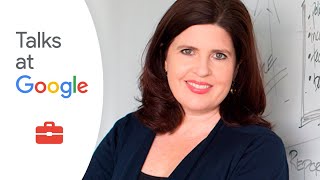
Heather McLeod Grant studied 12 high-impact nonprofits and found six practices they share: advocacy that changes policy, making markets work for social change, inspiring volunteers, building networks, adapting fast, and investing in leadership. She argues impact matters more than size, and return on investment beats overhead ratios.
Questions this video answers
Authors at Google talk (YouTube), recorded January 11, 2008.
Described as having a budget of $80 million, placing 5,000 teachers per year, and an alumni corps of about 15,000.
About $4 billion in loans provided; helped pass the first anti-predatory lending act in North Carolina and legislation in 23 states; influenced pending federal legislation.
Distributes more than 2 billion pounds of food per year and feeds more than 25 million Americans annually.
Reduced McDonald's packaging waste by about 150,000 metric tons; influenced FedEx to implement ~30,000 hybrid trucks; championed cap-and-trade concepts.
Chapters
Hello everyone and thanks for coming. We're thrilled to have Heather McLeod Grant as our guest today as part of the Authors at Google program. Heather is a published author, speaker, advisor, and consultant to many high impact organizations. She is the co author of Forces for the six Practices of High Impact Nonprofits, which was recently named a top 10 book of 2007 by the Economist. Additionally, she serves as an advisor to the center for Social Innovation at Stanford University's Graduate School of Business, the center for the Advancement of Social Entrepreneurship at Duke University School of Business, and a leading nonprofits and foundations. She is a former McKinsey & Co. Consultant and a co founder of who Cares? A national magazine for young social entrepreneurs. Heather has more than 15 years of experience in the social sector and consults with leading philanthropic and nonprofit institutions. She teaches at Stanford University and speaks and presents widely at industry conferences on Forces for Good Social Entrepreneurship, nonprofit leadership, and strategic philanthropy. She's also been published in the New York Times, the American Prospect, and Alliance, and has appeared on CNN and npr. We're very happy to have Heather here with us, especially someone with her long list of accomplishments and distinguished reputation. So that being said, let's please welcome Heather to Google.
Today. Thank you Tyler, for that introduction and thank you for all coming out on the first Monday. Back after the holidays. So I was only expecting about three people here today. It's particularly great to be back at Google. I first encountered Google about 10 years ago when I was a business school student at Stanford GSB just up the road. Any alums in the audience? One. And I was getting together with a couple college friends from undergraduate for brunch at a mutual friend's house in Menlo Park. And we were sort of catching up on what everybody was up to and doing. And the person whose house we were in said, well, I'm thinking of joining this startup with these two guys who are working out of my garage on a new search technology and of course the person with Susan Wojcicki. The two guys were Larry and Sergey and the rest, as they say, is history. So it has been very impressive to sort of see Google from afar and see how quickly you've grown and how much impact you are having globally, both through Google Corporation but also through google.org now starting to venture into the area of social impact. And like Google, there are a number of nonprofits in the social sector that in the last 15 to 20 years have grown very rapidly and have managed to have levels of national or international impact. They are sort of the equivalents of these fast Growth companies in the private sector. And my co author Leslie Crutchfield and I really wanted to understand what makes these great nonprofits great. There are obviously hundreds of business books that have been written about successful for profit companies. Books like Good to Great and Built to Last. But no book had really been written about great nonprofit organizations and gone out to identify those with the most impact and study what's making them so successful. So that's what we set out to do four years ago. And the result is the book Forces for Good, which I see some of you holding in your hands. Before I get into sharing with you what we learned on our journey, I'm just curious to know how many people here have worked in the nonprofit sector at some point in your life. Okay, pretty phenomenal. How many folks volunteer for a nonprofit or sit on a board? And what about donating to nonprofits through your philanthropy, writing checks? So we all are involved in the nonprofit sector in some capacity. And again, as an organization, I think what's so impressive about Google is the commitment up front that was made to putting 1% of profits and 1% of equity towards C solving social problems. And obviously with now google.org working on things like green technology and sustainable low emission cars, electric vehicles and so on, I think it's going to be very interesting to see how that plays out in the next 10 years for this organization. Let me start by telling you a story about a high impact nonprofit that we studied in our book and I think one that illustrates many of the themes and concepts that I'm going to be talking about with you here today. The story is of an organization called Teach for America. Anybody here Teach for America alum familiar with the organization though they've been pretty actively recruiting on college campuses. Not quite out competing Google, but certainly out competing Goldman Sachs and McKinsey on some Ivy League campuses these days. In terms of who they're recruiting, Teach for America I think is a very compelling story. Like Google, it started on a college campus with a big idea. Wendy Kopp in the late 1980s when she was a senior at Princeton University decided that she wanted to found a national teaching corps to transform public education in America. She saw a real need which was underserved schools that couldn't retain great teachers, students who were dropping out and failing in the classroom, schools that were falling apart. And she saw great talent and resources, Ivy League educated college students who wanted passionately to make a difference in their lives. So she had this vision of starting a national teaching corps that was modeled on things like the Peace Corps. She wrote her senior thesis on this at Princeton, and she shopped the idea around and a lot of people told her she was completely crazy. They said, there's no way you can get to scale with a program like this. You're far too young, you're a college senior. What do you know about running a non profit? It can't be done. Well, of course, Wendy persevered. She, she managed to raise some money, cobble together a staff that I think was paid 15, $20,000 a person for the first few years, and launch a national teaching corps. Well, like Google, Teach for America has gone on to be a phenomenal national force for social change in the country. Today they have a budget of $80 million. They've doubled in size in the last five years. They now place 5,000 teachers every year in underserved rural and urban schools in the country. And more importantly, they have an alumni Core of 15,000 alumni who may not have necessarily stayed in the classroom as teachers, but who have gone on to become phenomenal forces for good in their own right. You know, when critics looked at Teach for America and started to evaluate the program about 10 years ago, many of them said, well, look, only 60% of your teachers stay in the classroom. 40% leave and go into corporate sector or government or other areas. And Wendy was pretty agnostic about this. She said, it doesn't matter. They've had a transformative experience. These two years in the classroom have changed their lives, and they will go on to be forces for education reform. And while many people doubted her vision, in fact, she's been proven right. I mean, today Teach for America alumni have started some of the most impressive charter school organizations in the country, like kipp, the Knowledge Is Power program. They've started innovative foundations to fund the most entrepreneurial forces for education reform, like New Schools Venture Fund here in San Francisco, which was funded by a large grant from John Dorbett, which raises money and through a venture philanthropy model, invests in very innovative and entrepreneurial models of education reform. Their alumni are now running for school board elections around the country. They're running for state and local office. And their goal is to one day have a president of the United States who's an alumni of the program. And knowing Wendy, I wouldn't doubt that she could make it happen. But. But again, I think what's interesting about their story is that they really saw themselves as building a larger movement for education reform and training and educating top leaders who would go on to be advocates for education reform no matter where they worked. I think it illustrates many of the concepts we found in our book. So why should you care about this, beyond the fact that many of you have worked in or continue to volunteer or donate to nonprofits? I think we're at a really interesting point and time in history in the nonprofit sector. In the last 10 years, the nonprofit sector has doubled in size in the US Alone. And the rise of the global civil sector is one of the great untold stories of our time. If you look abroad and you look at what's happening in India with micro finance, what's happening in Asia, what's happening in Eastern Europe after the collapse of communism, the fall of the Wall, hundreds of thousands of nonprofit organizations are springing up from the grassroots level. There are a couple of trends driving this. One is the retrenchment of government. And again, I think with the collapse of communism, capitalism is won, markets are in, big government is out. Speaking in broad generalizations, but folks no longer want to look to just government to solve our social problems. And so in the US and in Europe, you've seen the social welfare state retrenching. Nonprofits are moving into that space to fill in the gaps, be through education, services, healthcare, or other social services that they're providing on the ground, often as outsourced providers to government. I think the second trend is really around business sector. You know, 15 years ago, corporate social responsibility. When I first started getting involved in this space, it was a real fringe movement. I mean, there were folks like Ben and Jerry with their ice cream and Anita Roddick with the Body shop, but they were mostly kind of leftist baby boomers who had sort of seen the light and decided that they could do well and do good through business. But if you look at what's happening in corporate America today, I think it's really fascinating. You know, somebody recently said to me that they think the business sector is actually now leading environmental sustainability. They are out in front of government. So you look at what google.org is doing again through the, you know, renewable energy and clean technology initiatives that it's supporting. And if you look at where John Doar and many of the VCs in Silicon Valley are putting their money, they see an enormous market opportunity in solving global climate change. And so business is really now moving to the forefront of this trend of doing well and doing good. And they've realized that profits and social responsibility don't have to be mutually exclusive. And in fact, one could even enhance the other. And then I think the third trend is that there's been a whole cadre of social entrepreneurs, people like Wendy Kopp that I've talked about, who have seen the gaps that are being left where markets don't always solve social problems and where government is no longer solving social problems. And they've been able to combine sort of the best of both worlds and operate in this space between markets and states. So they take the social mission of government, which is to care for people and provide basic services, with the entrepreneurialism of the private sector and the ability to harness market force for social change. And so you see folks like Muhammad Yunus, who was the founder of the Grameen bank, who won the Nobel Prize two years ago, who have started these incredibly innovative models of reform, and they're having global impact. So these are the kinds of groups we wanted to study. And this is why we felt like we were at a particularly important time in history, that we couldn't just ignore nonprofits and say, well, they're irrelevant, they're small, they didn't have smaller budgets. We wanted to really understand what makes the best nonprofits great. So when we set out to identify great nonprofits, our first challenge about four years ago was to identify which organizations had had the most impact. And one of the big challenges in the social sector is that there is no universal metric for measuring success. I don't know how many of you, again, who've worked in the social sector realize, but money in the nonprofit sector is only an input. It only fuels the activities of the organization, but it's not an output. You can't just measure profit because there is no profit, and you can't measure total return to shareholders. So a lot of the metrics that we have in the private sector to understand which organizations are phenomenally successful just don't exist in the social sector. So we came up with our own set of metrics looking at things like impact, whether they'd reached a level of national or international scale. And we, through a long and tedious process, which I'm not going to bore you with, we ended up selecting 12 organizations, which we then spent two years studying to uncover their secrets to success. And I'm just going to show you the list here because it's easier to have this up on a slide than read them all to you. But again, many of these organizations you might be familiar with, Habitat for Humanity, for example, has a brand name that's on par with that of Starbucks. They've done global branding survey, and they have more than 2,000 sites worldwide. Others, like Teach for America, are particularly well known among the younger generation And Exploratorium, you may have heard of being here in the Bay Area. And then there are some like YouthBuild USA or Self Help Credit Union out of North Carolina that many people have never heard of. And yet they are also having phenomenal impact in their particular sectors. And I think for us that was. Once we started actually studying these organizations, that was the really first big aha. When we got into the see what made them successful, a lot of our preconceptions about what we might find fell by the wayside. It wasn't just about having a big brand. Many of these organizations invest in marketing, but most of them do not. And in fact, it wasn't about perfect management techniques or tactics either. Some of these organizations, if you kind of used the MBA or McKinsey best practice checklist, a number of them will actually look quite chaotic and don't necessarily follow best management practices within their own organizations. It wasn't necessarily about having a phenomenal board or even about fundraising or size of budget. So we were like, hmm, so what is it that makes them so successful? And I think our big aha was that it wasn't. Ultimately what we found is that it's not just about building a great and well managed organization. What these groups do so well, and what I think we can all learn from is that they are able to find phenomenal leverage outside the walls of their four organizations. So they actually transform and influence government policy and practices, business practices. They engage and mobilize hundreds of thousands, if not millions of volunteers and create social movements. And this is how they're so successful, by working outside their four walls. So we found six practices which I'm going to talk to you about each one briefly and just share a few quick stories and then obviously I want to leave time for questions at the end end of the presentation. But the first practice we found was around advocacy and the importance of engaging and working with government to change policy practices. Many nonprofits start out doing direct service. So for example, Habitat for Humanity started out by building houses for the poor. America's Second Harvest started out by running soup kitchens and warehousing food so that they could effectively deliver food to the front lines to feed hungry people in America. But over time, what all of these nonprofits realized was that just by acting alone and by ignoring what was happening in Washington D.C. or in the state capitals, they were never going to be as successful as they could be if they worked at the policy level. So over time, all of these organizations moved into policy advocacy. And I think a great Story that illustrates this is the self help credit union out of North Carolina. This is an organization founded in the late 1970s by a fellow by the name of Martin Eakes, who, who was a civil rights activist. And he wanted to take the gains of the civil rights movement in terms of legal and social justice into the economic arena. Because his philosophy was, what does it matter if we have legal rights on paper if minorities in this country are still disproportionately poor? So he wanted to help build economic assets in low income communities. He started out doing lending and providing small loans to small businesses, minority owned businesses, and also home loans for people who were turned away by mainstream banks in the 1980s. And they found over time that in fact, a lot of the folks they were lending to had better or lower default rates than many middle class families. So they particularly focused on low income women of color who had children and who had every incentive to keep that house no matter what and keep paying those mortgage payments. So they were able to prove that this model worked and then expand this model to larger financial service companies like Citizens, Citigroup and major mainstream banks. But what was interesting, in the late 1990s, they discovered that there was another trend at force working against what they were trying to achieve through their lending practices. They had an African American bus driver came into their offices one day and he said, you know, I've got this loan and I can't understand, I'm falling behind on my mortgage payments. And I refinanced a couple years ago. Can you guys help me out? They looked at his loan. He had a $29,000 loan for his home. This is North Carolina, not the Bay Area. But what was interesting was a 14% interest. Even more interesting was that the lender had tacked on an additional 50% in things like credit, insurance and additional fees. So this man's mortgage had almost doubled. And he of course, didn't realize what he was getting into when he signed the paperwork. And of course, what self help stumbled on about 10 years ago was the tip of the iceberg in terms of the predatory lending movement that we've all seen playing out on the pages of newspapers today. So Martin Eats was outraged. He said, this is ridiculous. We can't keep giving people loans if down the street these predatory lenders are coming in and stripping away the assets that we're providing for low income communities. And they realized the only way to start to change this larger pattern was to regulate the industry. So they went to the North Carolina state legislature. They ended up passing the first anti predatory lending act in the country, this is about seven, eight years ago. They then set up the center for Responsible Lending, and they've gone on to pass legislation in 23 states to prevent predatory lending. And they've also just helped pass legislation in the House, which is now pending before the Senate. So they've gotten involved at a national level in terms of policy reform. And while in terms of their lending, they've been able to provide about $4 billion in loans, if you look at what they've achieved through their policy advocacy, they've actually protected hundreds of billions of dollars of economic assets for low income communities. So again, we think this is a compelling example of why nonprofits shouldn't just stick to their knitting, but they should actually get involved in the larger policy debate. I think the second practice we found was around making markets work for social change. And again, I think it was pretty common in the sort of old left to be very cynical and skeptical of capitalism and for profit markets. So a lot of nonprofits thought that business was the enemy. Why would you want to work with them? Well, this started to change in the 1980s, and one leader in harnessing market forces for social change is the group Environmental Defense, based out of New York City. When they were started in the late 60s, they were founded by a group of scientists who wanted to ban the use of DDT and pesticides. This was in the wake of Rachel Carson's Silent Spring and the beginning of the environmental movement. They wanted to ban use of pesticides. And so their informal motto for the first decade was sue the bastards. They went after corporations with a big stick and really regulated industry to prevent pollution. But over time, they realized that the environmental movement was on a crash course with capitalism and that American public and American voters wanted to have their cake and eat it too. They didn't want to have to trade off between economic growth and environmental sustainability. So Fred Krupp was confronted with this personally one day when he was sitting at a McDonald's with his children. There was a heap of trash on the table from all the Happy Meals. And he said, you know, I think we can help McDonald's do better. So he wrote a letter with his son to the CEO of McDonald's Corporation and said, look, let us come in and work with you to reduce your packaging waste. Well, that led to a breakthrough partnership, which at the time, you know, they were accused by other environmental groups, this is the late 1980s, so not that long ago, of doing a deal with the devil. In fact, even David Brower said You know what's happening to the environmental movement. The MBAs are taking over. And I think ultimately over time, environmental defense was proved right. They reduced McDonald's packaging waste by 150,000 metric tons. And they also were able to transform practices throughout the fast food industry as other restaurants copied them. They've gone on to work with FedEx on revolutionizing their mid sized truck fleet. FedEx is now implementing 30,000 hybrid trucks on streets in America because of this partnership. And they're now working with Walmart in terms of helping Walmart become a much more sustainable organization in terms of energy use and supply chain and packaging and so on. So I think environmental defense is a great example of harnessing market forces for social change. They also invented this concept, or they were one of the first organizations to implement a concept called, called Cap and trade, which has now become, of course, part of the Global Warming Solutions act here in California, part of the Kyoto Protocol, and part of national legislation that's pending around solving global warming. So the idea is that if you can create a market for tradable pollution permits, you can then create economic incentives for businesses that lower their emissions to be able to sell their permits on the market and actually create an incentive for them to pollute less. So again, I think another great example of how working with business and through business to transform business practices can help nonprofits have more impact. The third practice is around inspiring evangelists. Now again here in Silicon Valley, we're all familiar with Apple up the street, and they've done such a great job of inspiring evangelists for the ipod and now the iPhone. But I think nonprofits have actually been doing this for years. And the reason is that they're driven first and foremost by their missions and by values. And so what they've been able to do is create meaningful experiences for people to get engaged in the very act of social change. Habitat for Humanity is a great example. They give people a hammer, they go out, you go out, you build a house, you work side by side with the recipient of that home, and you yourself are transformed in the process. You get to be part of something larger than yourself. You get to actually see the tangible result of what you've done. You've helped build the house for this person, and you've gotten to know other people in that Habitat community. What's happened over time is that there's been this sort of what we call viral marketing at its finest. Habitat home builders have gone out and recruited other friends. They've taken the model back to their church congregation, back to their neighborhood, back to their company, and said, hey, let's get involved. Let's do a habitat build. So I think Habitat's a great example of how nonprofits can help people feel more connected, help them make a difference, help them be part of a larger community who values things like social change. I was talking to my husband about this the other night and I was saying, in fact, in many ways, I think it's probably part of the value of google.org and the fact that Google has this commitment to social responsibility and philanthropy and social change as well. And my husband joked, well, you could just call it the search for meaning. So given that you guys are in the search business, I'll leave that for you to chew on a little bit. The fourth practice we found was around nurturing nonprofit networks. And again, here we are in Silicon Valley. Networks are all the rage. Everybody's talking about Facebook and LinkedIn and Wikipedia and user contributing communities. But again, what was interesting to us is that as we looked at these nonprofits, we realized, you know what, nonprofits have been acting in this way for years. They have always had more of an open source or collaborative approach to social change because the incentives in this sector are very different than in the private sector. So in the private sector, the incentive is to compete and to capture value, right? In the nonprofit sector, many nonprofits are so small, with less than a million dollar, less than 10 million dollar budget, that they couldn't possibly have as much impact alone as they could collectively. And so they team up in coalitions and alliances and through network structures to have far more impact than they could operating as a single site. I think a good example of this is the Exploratorium, which is based here in San Francisco. And you know, when we tell people the Exploratorium is in our book, often we get these sort of surprise looks like, well, I thought your book was about scale and scaling nonprofits. And the Exploratorium is only in one site. But what many people don't know is that the Exploratorium really helped seed a whole movement around interactive science and technology museums. And they were really at the forefront of this. So when it was founded by Frank Oppenheimer again back in the late 1960s, he said, we're not going to compete with other science museums. We want to share our model. So he gave it away. It was the first real sort of open source movement, if you will. He brought other museum directors to, to the Bay Area to learn from the Exploratorium and take it back to their museums. They didn't require any brand affiliation. They didn't require any shared profits. They said, no, we're just going to give you the idea and let you take it back to your own community. This would be the equivalent of Starbucks coming into local community and saying, we're going to train the local mom and pop coffee shop on how to make better coffee and do espressos and lattes and macchiatos, but we're going to let you keep all the profit and we're not even going to require brand affiliation. So again, very different dynamics in the nonprofit sector than in the for profit sector. You know, today the Exploratorium is credited with having influenced more than 600 museums globally. So almost any museum of science and education, or even children's museums, which are sort of an offshoot of that movement, have been influenced by the Exploratorium's model and by their open source approach to giving it away rather than hoarding their intellectual property. The fifth practice we found was around adaptation and innovation. And while the missions of these organizations might stay the same, sort of their guiding star, if you will, in terms of what they're trying to achieve, their tactics and strategies change over time. So they're constantly looking for new ways to have impact. Again, we're talking about organizations that compared to Google, are minuscule in size. We're talking about organizations with budgets of 10, 15, 30, 40 million, staff of 200 or 300, and yet the impact they've been able to achieve is far greater than the size of their organization would suggest. In part, this is because they're constantly innovating and looking for new models and new ways of changing larger systems around them. So they remain adaptive and they continually respond to changes in their environment. I think Google, obviously, you guys are the masters of innovation. And so I'm not going to talk to you too much about innovation in the nonprofit sector. But I think what was interesting to us was to see that these organizations really have figured out how to balance systems and structure around their innovation, but managed to stay nimble enough to continue to respond to changes in their environment. One quick example of this is the group Share Our Strength, which is a hunger relief organization based in Washington, D.C. they started out doing direct mail, like many nonprofits trying to raise money for hunger relief about 20 years ago. And they happened to send a check to Alice Waters in Oakland. In Berkeley, she mailed back and said, well, I don't really want to write you guys a check, but what if I did a dinner in my restaurant and raised money for you that way. They said, great idea. So they abandoned their direct mail strategy and decided they were going to engage celebrity chefs in throwing dinners and raising money for hunger relief. So Taste of the Nation is now one of their largest known products or events around the country where they do get celebrity chefs engaged in raising money for hunger relief. They've also partnered with American Express and other folks in the restaurant and food industry to raise money for hunger relief. Along the way, they've had a few failures. They tried to transfer this model to the sports arena and they thought, well, let's get celebrity coaches to come out and coach little league games. But unfortunately, coaches really didn't have the same affinity for hunger issues as chefs. So the program was a flop. They shut it down. They moved on. So again, interesting to us how these successful nonprofits are really able to try new things, learn from their failures, and when it's not working, move on to new areas. And the last practice I'm going to talk to you about today is around sharing leadership. Rather than this image of the lone kind of heroic social entrepreneur who's at the top of the organization in a command and control style. What we found was actually teams and collectives of leaders. So quite often we found something very similar to here at Google with Larry and Sergey, we found co founders of organizations that worked together very effectively with complementary skills and who were able to share leadership at the very top of an organization, even if it was founded by one person. Over time, all of these Nonprofits brought in COOs to focus more on the internal operations. Again, this might be sort of standard best practice in the corporate sector, but I think nonprofits are just realizing the importance of bringing in a COO or somebody to manage operations so that the executive director is really freed up to focus more on external transformation, motivating, inspiring people, and raising money. We also found that these organizations built really deep bench strength among their senior leadership team, that they manage to keep and retain top talent over time. They do this in part by paying what in the nonprofit sector are very high salaries. Again, maybe not in comparison to the for profit sector, and they don't have equity. So these organizations have figured out how to retain and motivate people over time without all the same compensation tools that you see in the private sector. And part of that is, I think, because people are attracted to the mission of the organization and the ability to make a difference in their jobs. So we found that they had strong leadership teams. They also share leadership with their boards. Again, I think the boards in the nonprofit sector play a much more important and involved role than in the private sector in terms of actually helping out in many hands on ways with leadership of the organization, and they develop leadership throughout their networks. So what we discovered were organizations that have figured out how to share power, how to cultivate leaders throughout their larger network, and then turn these people loose to go become advocates for their cause. Again, going back to Teach for America, I think this is a great example of how leadership development can transform an entire field. The last chapter in the book talks a little bit about building capacity and the importance of investing in infrastructure. It's not really one of the practices, but we did feel that we would be remiss in saying that organizations only needed to focus externally and didn't need to do anything internally to sustain their impact. And what we found was that these nonprofits over time were very adept at investing in things like talent, top talent, paying their people well, figuring out career paths for their senior managers. They were also very adept at investing in systems and infrastructure. Now, this might seem like a statement of the blindingly obvious in business, but in the nonprofit sector, we have this completely fallacious notion that nonprofits should be able to run themselves without paying for things like computers or buildings or salaries. Right? If you look at the metrics that we use to evaluate nonprofits on websites very well known like Charity Navigator and Guidestar, everybody wants to invest in those nonprofits where 90% of their dollar goes to direct program or services. Nobody wants to pay for the overhead or infrastructure. And so we use metrics like overhead ratios to evaluate these organizations. And what Leslie and I are saying is that these are completely the wrong metrics. You need to be looking at the return on investment, how much impact you're getting for your dollar invested, not how much of that dollar goes to programs, as if programs can run themselves or how much goes to computers. I think it'd be the equivalent in the private sector if you were a shareholder and you said, I want to buy Google stock, but don't want to pay for that beautiful corporate campus or those nice free lunches, or pay for your servers or pay Eric Schmidt's salary. Right? Don't just want to pay for pure search. So clearly there's a real disconnect, I think, in the nonprofit sector around what really matters in terms of investment. And a good example of this is America's Second Harvest, the nation's food bank. This nonprofit manages to distribute. First of all, they work through a network of more than 200 food banks or warehouses around the country, which in turn work with 50,000 grassroots nonprofit organizations, which actually do the direct service providing the soup kitchens and the. The programs that work with children in schools and so on. But they manage to distribute more than 2 billion pounds of food a year in the country, and they feed more than 25 million hungry Americans every year. So they have more in common with Albertsons or Safeway than they do with just a grassroots local nonprofit. Not surprisingly, they got to a point where they had to invest in things like refrigerated trucks and warehouses so that they could move to fresh produce from point A to point B. Many funders didn't initially want to. No, no, we want to fund the Kids Cafe. We want to fund the Children's Backpack program, because that's more heartwarming. And they said we need trucks and warehouses and an IT system so we can make a market internally for figuring out how to ship the food. So eventually, America's Second Harvest was able to raise this money and invest in their capacity. And they've gone on to have phenomenal impact, but it wasn't without having to do a lot of re education of their donors along the way. So, in conclusion, let me just reiterate, sort of why I think this is an important time in our history. I mean, obviously, we, through the Internet, through global media, through search, we all know more than ever about the kinds of problems plaguing our world, right? Whether it's global warming, melting polar ice caps, AIDS in Africa, you know, conflict in Darfur, conflict in the Middle East, Iraq, Pakistan, hunger, poverty, and so on, there are a host of problems facing our world. And as the world's gotten smaller in terms of information and our knowledge of these problems, I think more than ever, it's important that we look to the social sector for new solutions. And I'll just leave you with a few parting thoughts and things that I hope that you will take away from today's presentation. One is that it's not just about the size of the organization or how well it's managed using kind of conventional metrics or conventional measurements. It's all about leverage. It's all about how do these organizations with budgets of 10 million or 40 million literally manage to leverage billions of dollars of federal aid, or manage to harness the power of corporations like Walmart and help them become more sustainable, or manage to engage millions of volunteers, as Habitat has done, helping them become advocates for the housing cause. So it's not just about size. It's really about this concept of leverage. Secondly, we need to move to measuring what matters and that is looking at impact, not input, not the money that's going into programs versus overhead, but really trying to look at what's the return you're getting on your investment. So if you're a volunteer, if you're a donor, if you're working through google.org, i would encourage you to start looking for which organizations are having the most impact in terms of using some of these practices or in terms of what they're able to achieve by changing larger systems rather than looking at things like budget size or overhead ratios. And lastly, I would just encourage all of you to continue to support these nonprofits again, because I think what we see is that in the social sector, it's a really interesting time in history where a lot of the most innovative models for social change are now coming out of this sector. But these nonprofits can't do it alone. They need the talent and the resources of the private sector. They need businesses to work with them to help solve these problems. And they need government to work with them as well, the resources of government. So no one of these sectors can solve the problems alone. But I think, you know, again, going back to Google, your motto here is don't be evil. And we would argue that in the nonprofit sector, what we're seeing is these organizations that have truly become forces for good and can show us a new way to solving some of the biggest problems plaguing our planet. So with that, I'll pause and I'll open it up for.
Questions. I'm.
Curious what I would call.
The for profit nonprofits like universities, hospitals that seem to generate tremendous revenue. Would you consider this model as well and you feel they are high.
Impact? It doesn't. It doesn't. I mean, some of them are much more. We initially excluded organizations like universities and hospitals because we were interested in groups that were having large social change. And most of them tend to be single site. So sort of how we set up the parameters of our research early on, and there's more about this in the book, we kind of excluded those groups because we're like, well, universities are really just focused on the students in their campus and so on, or hospitals are focused on not necessarily transforming the system. But I think if you look at networks like Kaiser, what they're doing, I think that is a very interesting model that probably follows many of the practices here. Or if you look at online universities, and again, they've managed to scale up beyond just a single site to distribute education much more globally. So, you know, again, they weren't directly part of our sample. But I do think that hospitals and universities could probably learn from some of these findings. Other questions, what strategies did the nonprofits find effective in educating their donor base with regard to the cost ratio issue and how to mitigate that as they grew? Yeah, I think a lot of them were actually very strategic about. I mean, most often they started with large donors or foundations who could put a significant chunk of money towards a capital campaign or something of that nature. So often what they did is they would put together a business plan saying, look, here's the kinds of investments we need to make in order to continue to sustain our impact because we've grown over time. We need to buy things like computers, we need to invest in infrastructure. Great example of this is the nonprofit City Year Youth Corps based out of Boston. And they raised a $30 million growth campaign. And we saw this several times among the organizations we studied where they would actually put together a business plan. Say, here's the six things specifically we want to fund. Here's why we need to fund them in order to be able to sustain our impact. And then they would shop that around and usually by virtue of getting a lead grant of 5 million or 10 million, that sort of early money principle, right, that once you got a large donor to kind of invest in the plan, they were then able to bring smaller donors along. I think with respect to the individual donor kind of over the Internet, it's a little bit harder to make that argument because I think again, we still have a lot of misconceptions in society about how charity should work and that somehow nonprofits should all be volunteer run and that they shouldn't be professional and that they don't need infrastructure and technology. So that I think is a little bit of a harder value proposition. I think it's easier to make with the large donors and foundations, but we're seeing it start to change over time. There are a few organizations starting to move into this space. One is Give. Well, there are some. For example, there's another great one that comes to mind that's the Acumen Fund, but it's not really a public watchdog group. I know google.org has invested in Acumen Fund, but they're using a lot of these criteria and figuring out metrics around measuring impact for their portfolio of grantees. As far as sort of public watchdog groups, there's an organization just started out of San francisco called great nonprofits.org and then givewell is the other one I look at. So certainly you're seeing a lot of movement into this space. But there's nobody who's really gotten to scale yet or become kind of the dominant standard, if you will. Right now, that space is mostly occupied by GuideStar and Charity Navigator. There's another group actually through the. I think it's through the chambers of commerce that is actually starting to look at using different metrics for measurement. We're hoping to see is that guidestar and Charity Navigator and some of the sites that already have that kind of scale and influence will start to actually change what they're looking at and what they're.
Measuring. Yeah, A little unclear how you quantify effectiveness, because it's very easy to say only 5% is spent on the metric of.
Costs.
Right. But how, like, how do you put it in terms of the number if this organization is effective or not.
Otherwise? Well, that's one of the big challenges, and I think that's been one of the biggest barriers to why it hasn't been done before, is that it's not as easy to measure impact in the social sector. There are a couple reasons for this. One, the things that you're measuring tend to be pretty fuzzy and not necessarily quantifiable. I mean, you can look things like how many people served, how many lives touched, et cetera. But how do you value the impact of education on a child's life, for example? Right. It becomes really difficult to evaluate and study. I think the second problem is just apples to apples, that what constitutes impact in the environmental movement or for environmental defense might be things like models that lower emissions globally, or number of trees saved or parcels of land that have been preserved or protected. That's very different from the metrics you would use in health care or in education. And so there is this problem of relativism within each of the fields. Again, there is no kind of standard metric like profit or total return to shareholders in the nonprofit sector. And that's one of the challenges. And a lot of these things take a long time to see the impact. And, you know, it's not always easy to assign causality. For example, Teach for America, I think, illustrates the point really well that if you just look at test scores or years spent in the classroom, you. You might say, well, they haven't been all that effective vis a vis other models. But if you actually look at this movement they've built for education reform over 15 or 20 years, they've been phenomenally effective. So it's going to require some creativity. And we were able to come up with some, you know, what we felt were pretty valid ways of measuring impact within each of these organizations. I mean, a lot of times we looked at how do they measure it, how do they think about it, how do they evaluate whether or not they're successful, succeeding legislation passed, corporate practices changed, volunteers engaged, et cetera. So it's not easy, but it doesn't mean that we shouldn't solve it as a problem. You guys have very smart people here, so maybe some of you can spend your 10% time working on that. Any folks here from google.org? i don't know if I asked that earlier, but I know they're up in the city now, so they might be at their own campus. So I guess I'll take any final questions and then I'm happy to stick around afterward and go to lunch with anybody who wants to or sign books. Yeah, go.
On. I'm curious how things are changing in terms of sensibilities. You said in the 70s, business and partnering with business was viewed as evil. Now more MBAs and such are going into these nonprofits and helping them figure out strategies and what have you. But at the same time you have this infrastructure, called it like operational support. The ratios that they're being evaluated on, which is a false metric.
But.
At the same time their salaries are so much lower. Do you think that there's a time in which these MBAs coming in the input and the output, meaning their salaries are going to be on par with, with regular.
Industries. They'll probably never be on par with the for profit sector. And I think the main reason is that, well, the bottom line is this. If there was money to be made in solving intractable social problems, somebody would have done it. Right? And the whole point is these nonprofits exist to solve problems that are not solved through free markets. So because of that, there isn't the same profit mechanism, There isn't the same incentive for investment in terms of financial return on investment. You don't have capital markets that are anywhere near as sophisticated in the social sector. It takes organizations much longer to get to scale. You don't have VCs. I mean, you have philanthropists, you have foundations, you have individual donors. But the organization never generates a profit or operating capital to keep reinvesting the way it happens in a for profit business. So year on year, these organizations have to go out and raise that much money or more if they're growing. So it becomes much more difficult to get to scale. And you don't have things like equity for compensation. Now that being said, I think the most savvy nonprofits are learning from business sector best practices. They're realizing that, okay, maybe we can't pay a couple hundred thousand plus x percent of stock, but we can pay 150 or 200,000. We can actually pay a living wage in expensive areas like the Bay Area or so on. And so you've seen salaries in some of these higher performing nonprofits go up. You've also seen them adopting some of the best practices around management. But I think what's interesting to us in terms of trends is that it's not just about nonprofits learning from business. I think there's been a lot of sort of preaching to the sector over the last 10 years saying nonprofits need to be more efficient, they need to be more effective, they need to be more like business. And what we really are saying in our research is that maybe business can actually learn from nonprofits as well. And that the learning, I think, goes both ways. There are things that nonprofits know how to do really well, which is how to motivate people without compensation. Right. Through intrinsic motivation, through tapping into their passion, or how to work in network forums with much flatter structures where you're sharing intellectual property rather than competing. So I think it's just the beginning of a very interesting dialogue and I think you're starting to see these sector boundaries blurring. The center for Social Innovation, which I work with at Stanford Business School, is all about this kind of cross sector space. And I think acumen and google.org great examples of this. Right. The fact that you guys set up not just a traditional corporate foundation, but you actually set up an investing mechanism that's a hybrid. It's sort of half for profit, half nonprofit. Right. And it's going to invest in both. Similarly, with Pierre Omidyar's foundation, the Omidyar Network, I think you're seeing more and more organizations that are kind of somewhere between a business and a nonprofit. They're not purely one or the other. Great. Well, thank you very much for coming out today. And like I said, I'll be happy to stick around and sign books or chat to people one on one.
Afterwards. Just as Heather mentioned. If anyone wants to join Heather for lunch, we'll be probably meeting at no Name, I think around 1pm does that sound.
Good?
Yep. Okay, great.
More from Guy


Cheryl Strauss Einhorn | The Human Edge: Smarter Decisions in the Age of AI | Talks at Google



Rachel Glennerster | Innovation and the Center for Global Development | Talks at Google

Rebecca Winthrop | Rethinking the Purpose of Education in the Age of AI | Talks at Google

Dr. Robert Wachter | A Giant Leap: How AI Is Transforming Healthcare... | Talks at Google



