Fragile Things | Neil Gaiman | Talks at Google
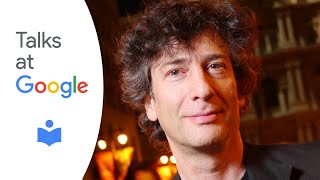
Neil Gaiman talks about writing, storytelling, and his works across novels, comics, and film. He discusses his influences, how different media gain cultural acceptance, and what he might write next.
Chapters
I am possibly the luckiest author in the world because I know exactly how hard it is to get published, to get a volume of short stories published. Publishers don't like them. If you want to watch fear creep onto an editor's face, just try walking up to. You don't even have to be an author. You can just try walking up to them and say, I, I have a collection of short stories I'd like published. And watch how fast they find an excuse to leave the room. I'm sorry, my cat needs to be put down and they'll vanish. So I am incredibly fortunate and I thought I'd begin by just reading a couple of things and then answering questions and then just burbling really, because that's what we did last time and it worked really well then. And we have a. Actually it doesn't really matter because this is going to show. I was going to ask for a show of hands on anybody was at the Cody's thing last night. Okay, there's three of you. Good. Not enough to worry about really. So I'm going to read something I read at Cody's last night. And this is, this is one of the poems in the book. Mostly it's short stories. There are a few poems for which I make no apology. Actually, I suppose the fact that I was preface reading any of the poems with a long speech about how I make no apology for them is in itself really a kind of apology. Mostly because when smoke and mirrors came out, people would come up to me and say, we love the book, it's great. Yeah, short stories. Don't know about the poems. And I'd say, didn't you like them? They said we didn't read them. They're poems. So this is called the Day the Sources came. That day the saucers landed, hundreds of them, golden, silent, coming down from the sky like great snowflakes. And the people of earth stood and stared as they descended, waiting dry mouthed to find what waited inside for us. And none of us knowing if we would be here tomorrow. But you didn't notice it, because that day, the day the sources came by some coincidence, was the day that the graves gave up their dead. And the zombies pushed up through soft earth or erupted shambling and dull eyed, unstoppable, came towards us, the living. And we screamed and ran. But you did not notice this because on the saucer day, which was the zombie day, it was Ragnarok also. And the television screens showed us a ship built of dead men's nails, a serpent, a wolf, all bigger than the mind could hold and the cameraman could not get far enough away. And then the gods came out. But you did not see them coming. Because on the saucer zombie battle in God's day, the floodgates broke and each of us was engulfed by genies and sprites offering us wishes and wonders and eternities and charm and cleverness and true brave hearts and pots of gold while giants fee fo fumed across the land and killer bees. But you had no idea of any of this. Because that day, the saucer day, the zombie day, the Ragnarok and fairies day, the day the great winds came and snows and the cities turned to crystal. The day all plants died, plastics dissolved. The day the computers turned the screens telling us we would obey. The day angels drunk and muddled star from the bars and all the bells of London were sounded. The day animals spoke to us in Assyrian, the yeti day, the fluttering capes and arrival of the time machine day. You didn't notice any of this because you were sitting in your room not doing anything, not even reading, not really, just looking at your telephone wondering if I was going to call. And. The next thing I wanted to read is another one of the poems. And this is called Inventing Aladdin. And it's sort of. It's about being a writer, which is, if you think of it, an incredibly odd profession to have if you're a grown up just sort of making things up and writing them down. Of course, as any of you who knows anything at all about the Arabian Nights knows, it didn't happen like this. In bed with him that night, like every night, her sister at her feet, she ends her tail, then whites. Her sister quickly takes her cue and says, I cannot sleep. Another, please. Scheherazade takes one small nervous breath and she begins. In faraway Peking there lived a lazy youth with his mama. His name Aladdin. His papa was dead. She tells them how a dark magician came claiming to be his uncle with a plan. He took the boy out to a lonely place, gave him a ring he said would keep him safe, Dropped in a cavern filled with precious stones. Bring me the lamp. And when Aladdin won't in darkness he's abandoned and entombed There now, Aladdin, locked beneath the earth, she stops her husband hooked for one more night. Next day she cooks, she feeds her kids. She dreams knowing Aladdin's trapped and that her tale has brought her just one day. What happens now? She wishes that she knew. It's only when that evening comes around and husband says Just as he always says. Tomorrow morning I shall have your head. When Dunyazad, her sister asks, but please, what of Aladdin? Only then she knows. And in a cavern hung about with jewels, Aladdin rubs his lamp. The genie comes. The story tumbles on. Aladdin gets the princess in a palace made of pearls. Watch now. The dark magician's coming back. New lamps for old. He's singing in the street. Just when Aladdin has lost everything, she stops. He'll let her live another night. Her sister and her husband fall asleep. She lies awake and stares up in the dark, playing the variations in her mind and the ways to give Aladdin back his world, his palace, his princess, his everything. And then she sleeps. The tale will need an end, but now it melts to dreams inside her head. She wakes. She feeds the kids. She combs her hair. She goes down to the market, buys some oil. The oil seller pours it out for her, decanting it from an enormous jar. She thinks, what if you hid a man in there? She buys some sesame as well. That day, her sister says, he hasn't killed you yet. Not yet. Unspoken waits the phrase he will. In bed, she tells them of the magic ring. Aladdin rubs slave of the ring, appears, magician dead. Aladdin saved. She stops. But once the story's done, the teller's dead. Her only hope's to start another tale. Scheherazade inspects her store of words, half built, half baked. Ideas and dreams combined with jars just big enough to hide a man. And she thinks, open sesame. And smiles. Now, Ali Baba was a righteous man, but he was poor. She starts. And she's away. And so her life is safe for one more night until she bores him or invention fails. She does not know where any tale waits before it's told. No more do I. But 40 thieves sounds good. So 40 thieves it is. She prays she's bought another clutch of days. We save our lives in such unlikely ways. So, two poems, one composed of stories and one all about stories. And I suppose that mostly, if asked, I tend to think of myself as a storyteller. It's what I do. It's what I do best. And it's what I've been doing now for over 20 years, telling stories in comics form, as they like to call them these days, graphic novels. But they were comics when I started, damn it. I remember once, I may have mentioned this. Last year I was actually at a literary party in London. It was a very sort of posh end of year literary view. And I found myself in conversation with the literary editor of the Daily Telegraph, this was some years ago. And he said, so, what do you do? And I said, I write comic books. And he looked very, very upset very suddenly, and looked like I told him that I molest corpses for a living. But he couldn't really just sort of leave. So he said, oh, well, what kind of comics? And I said, well, I'm doing this thing called Sandman. I've just done Signal to Noise for the Face. The next book I'm doing is called Mr. Punch. He said, hang on, you're Neil Gaiman. And I said, yes, I am. And he said, my dear fellow, you don't write comics, you write graphic novels. And I felt very much like a hooker who had just been told she was a lady of the evening. So I wrote comics and that they tended to get collected, and some of them got to win some awards, including some awards that you weren't allowed to win for writing comics. Actually, the ones that I won that you weren't allowed to win for writing comics. I only won for writing comics because they hadn't actually made a rule that you weren't allowed to win them for writing comics. They just assumed that you weren't. So I actually got one award. We got the World Fantasy Award for Best short story for an episode of Sandman on the Saturday night. And by Sunday morning, they had a rule making sure it would never happen again. And after finishing Sandman, which took about 10 years of my life and was enormously fun and very, very big and won all these awards, I decided it would be interesting to try and write some novels. So I started writing novels. And I did one called Neverwhere, and also one called Stardust, which sort of began life, which was an illustrated novel published by DC Comics. And then we realized that they'd actually left us the rights to just the text, sort of absentmindedly. So we published it as an unillustrated novel. And so you can actually get it in both forms. And people get very confused about which is the real Stardust. And they both are. Actually. People will, of course, be a lot more confused come March of next year when the movie comes out, which is kind of fun, actually. Movies. I've been doing that thing where you sort of waste time for enormous amounts of money in Hollywood for about a decade. You know, in fairy tales, there's that bit where you do work for the fairies. You may not, but trust me, in fairy tales there's always a bit where you do work for the fairies and they pay you in gold and you work very, very hard and you wake up the next day and the gold has turned into leaves and it blows away. And it's a bit like that, only upside down in Hollywood because you go out there and you work very hard and they give you masses of gold and then in the morning the work turns into leaves and blows away, Just leaving you with enormous quantities of gold and say thank you. But peculiarly, over the last few years, a few things haven't turned into leaves and blown away. And the first of them to come out, although not the first I started working on, is Stardust. And that will be coming out in March. It stars Robert De Niro, Michelle Pfeiffer, Claire Danes plays the star, Peter o' Toole is in it, Ricky Gervais, and it's directed by a very nice man named Matthew Vaughan, who did. He was the producer on things like Lock, Stock and Two Smoking Barrels and Snatch, and then directed a film called Layer Cake. So having made three films set in the London underworld filled with small time criminals who call each other Muppet and beat each other up, he decided, right, it's time for a fairy story. And I of course was quite terrified that it would turn into Lock, Stock and Two Smoking Fairies. But as far as I can tell, so far it hasn't. And it seems to be very funny watching scenes of Robert De Niro being out, improvised by Ricky Gervais, terribly fun. And they're just sort of cutting that together now. That comes out next spring. That will be followed movie wise by Beowulf, which will now, Beowulf, you probably know this, being educated people, but actually I didn't write, I didn't come up with it. The Beowulf project began in 98 when Roger Avery, who is a film director and writer best known probably for co writing Pulp Fiction and embarrassing himself at the Oscars, and then for films like Killing Zoe and Rules of Attraction. And he had been working very briefly on one of the many ill fated Sandman adaptations. They failed to happen over the years, which always leaves me very happy when an ill fated Sandman adaptation fails to happen, because I would much rather see no Sandman movie ever made than a bad one. So he'd worked on one and wound up walking away from it. And we were talking on the phone and he said, you know, I've always wanted to make Beowulf. And I said, that would be a really cool movie. He said, yeah, but I've never been able to figure out how you get from the first half of Beowulf which is the whole, you know, Grendel fighting Grendel and fighting Grendel's mother, and then 50 years later having a big battle with the dragon. And he said, I never really figured how you could do that as a movie. And I said, oh, well, this is how I would do it. Blah, blah, blah, blah, blah, blah, blah. Which is the kind of thing you do when you're a writer. You just burble at people over the phone, never expecting them to take you seriously. Unfortunately, he said, that would work. When are you free? So I said, may. He said, all right, we'll go to Mexico. So we went off to Mexico and wrote a script for Beowulf. And we did it in that sort of thing where you sit by the pool. I mean, the ultimate cliche. You sit by the pool, you drink a lot of beer, and you write Beowulf. And we came back, we sold it to Hollywood within two weeks. It was meant to go into production. It officially had a green light, and then the green light got turned off, which I didn't know they could do, but they can. It went back to red. And I thought, oh, well, that was a Hollywood experience. That was nice. The work went away. I had the money. It was fun. We drank beer, and I didn't really think anything more of it. And every now and then I'd run into Roger and I'd say, is anything happening on Beowulf? And he'd say, no, but maybe I have hopes. And then slowly he got to the point where he finally thought that maybe it could happen again. He had a French producer interested. He got the rights back, and it was at that point that his telephone rang, and Robert Zemeckis, who had been the producer on it the first time, phoned up and said, look, I can't get that Beowulf script you guys did that I read all those years ago out of my head. Can I buy it from you? And do it as a motion capture film like Polar Express and Monster House? But we really think we got the bugs out of the technology. Now we have little computers that record eye muscle control movements and everything like that. And I want to do an animated film. I want to do one of these films for adults. So Roger said, absolutely not. No. We wrote this for me to direct. I'm putting it together. French director, a French producer. We will do it. But thank you. Thank you very much. No. So then they started. It was actually very, very unfair because then they started offering money and they said, we'll give you a wheelbarrow full of money. And Roger said, no, absolutely not. And they said, two wheelbarrows full of money. And Roger said, no, no, no. And they said, a wheelbarrow of money for you and one for Neil and you get an extra wheelbarrow of money for walk your way as the director. And Roger said, oh, okay. So we went off to Santa Barbara. We rewrote it last November when I finished the book tour that landed me here briefly, I stumbled onto a set in Los Angeles and watched Ray Winstone as Beowulf, Crispin Glover as Grendel, and Typecast in the role of Grendel's mother, Angelina Jolie, with dots all over their suits and tiny little glass light reflected dots all over their faces acting in this giant sort of 25 foot by 25 foot space with infrared cameras all around, feeding what they were doing into giant computers. And it was really interesting. It was like watching the cast of Tron performing bad Shakespeare, But really cool. And about three or four months ago, I got to go down to Santa Barbara and see what they turned that into. And the current version of it, the version they're sort of directing, the camera movements, the cutting version, it now looks like a David Lean movie made on, made of sort of Sony Xbox characters. It's not Sony PlayStation characters. They're not yet at the form where the computers rendered them, but they're still sort of moving around with the body motions of Anthony Hopkins or John Malkovich, whatever, very peculiar. And in about three weeks I go back down there, we'll watch a complete cut of the movie with Roger and we will add any lines of dialogue. If we actually feel it's missing a scene or something needs rewriting, we can do it then. At that stage, additional material will be added and then it will get rendered and there will be a year of rendering and November 22, 2007, the movie will come out. And I'm really fascinated by it because I have no idea what it's going to be like, which is really odd. As a writer and even a writer who's been on set, it's going to be something interesting. It could be amazing. It could be one of these mighty world class disasters that people talk about in hushed tones for years. And honestly, that would be cool too. I just realized I've said this on Google Video, having signed the little release saying, this can go out, the people at Paramount will hunt me down and kill me. Now if anyone from Paramount is watching this as a video at some point on Google Video, that was a joke. And Obviously, please don't hunt me down and kill me. And I would like the children back. So let's Beowulf, which should be really interesting. So, yes, so I did novels, including a very large one then called American Gods, which was really, I guess, my reaction to being in America I'd been living over. From my accent, you probably can't tell this, but I'm actually English. And I had been over here at this point about eight years. And I thought it would be really interesting to try and write about the America that I kept noticing, which I didn't recall having seen very much in fiction. And it was this odd sort of America in which people would drive cars out onto the ice in the winter and take bets on when the ice would melt and the car would fall in. And I was trying to think of a way to write about it, and I decided that actually gods were the perfect metaphor for me. Actually, I find gods can be the perfect metaphor for practically anything. They're like one of those really sort of cool tools. They are the Swiss army knife, really, of metaphors, Gods, not a lot you can't do with them, but I thought gods would be the perfect metaphor. And the idea of people coming to America and abandoning their gods and doing a story about old gods wandering America and the sort of last stand of these old gods against the new gods of credit card and Internet and cars and things like that, media. So that was fun. And it won many, many awards, which was really cool, but did not win any awards. It was not meant to win. I mean, you know, they didn't have to change any of the awards. And then I did a very funny novel last year called Anansi Boys, which is sort of set in the American Gods milieu, but really was my opportunity to try and write a PG Wodehouse or a Thorn Smith kind of funny novel. Somewhere in the middle of that, I became a children's author, more or less accidentally. It was not a career move, actually. I'm not sure I've ever had a career move, but if I ever had a career move that wasn't one, it was incredibly fortuitous. It was one of those lovely things that I actually got. Coraline, which was the name of the children's book that I wrote, came out in the summer of 2002, which was the perfect time to bring out a book because we were still in the middle of Harry Potter hype. Oh, my God. Children's books are the new black kind of period. But it was the year that nice Mrs. Rowling had missed a year. So there wasn't anything for all the people gearing up to write about Harry Potter to write about. So they wrote about whatever they could find, a lot of which was my book Coraline, which I'd started about 10 years earlier and had been convinced that there was no way that anybody really would want to publish a really scary book aimed at children and really at adults too. And I think the publisher actually, who tried to talk me out of it had been completely right. But the world had changed and people like J.K. rowling and Lemony Snicket and Philip Pullman had changed it. And by the time I finished this book, I suddenly discovered there was actually a market for it. So it came out and has been scaring adults silly ever since. Kids mostly have no problem with it. I don't know why this is. I think kids seem to read it as like a James Bond adventure. It's a story about a little girl who goes through a door that shouldn't be there normally. It's bricked up. And one day she opens the door and it's not bricked up, and she goes through. And she finds herself in an apartment much like the one that she's just left. And waiting for her is somebody who looks almost exactly like her mother, only she has long fingers that are always moving with really sharp nails, and she has big black buttons for eyes. And she explains that she is Coraline's other mother and she wants Coraline to stay there. And like I say, kids seem to enjoy it. Adults come up to me and say, I finished that novel at three o' clock in the morning. I walked around the house turning on all of the lights. You're dangerous. You should be locked away. And also wound up. Some Years before, Dave McKean and I had done a children's picture book called the Day I Swapped My Dad For Two Goldfish. And now we did another children's picture book called the Wolves in the Wolves, which, as Tom mentioned, has just been turned into an opera by the National Theatre of Scotland, although we thought that calling something a children's opera would put people off from coming because it sounds really, really boring and dull and respectable. So we called it a musical Pandemonium. And nobody seems to mind coming to that. It has giant pictures, puppets of wolves. It's enormously fun. And Coraline is also turning into a movie. Henry Selick, the stop motion genius behind the Nightmare Before Christmas, he directed that. And James and the Giant Peach, is doing his own Coraline. He has Terry Hatcher as the Mum. Dakota Fanning as Corey, Coraline, French and Saunders as two little old ladies. And John Hodgman, who interviewed me four days ago in New York, is playing the father and the other father. So I think at least in Henry Selick's head, the father is somehow a personal computer. That's the kind of reference they're going to have to annotate. If anybody watches this 10 years from now you'll need a little Google annotation thing which you'll then click on and it will say John Hodgman was playing the personal computer in the PC versus Apple ads. He was. Everyone go, oh. Then you'll be able to link to one of the PC Apple ads of 2006, which will be of historical interest. Right. I'm so that's teaching my grandmother how to suck eggs, isn't it? You're all going, we know that we're Google. So what would you like to know? I've been talking. Yes. Oh, there's a mic over there. I'll repeat your question, but if people want to. Anyone who wants to sort of ask a question, head for that mic in the middle. Oh yeah, you may as well do the mic. I'll busk while you head for the mic. Fragile Things available from Morrow right now in hardcover. Really cool cover. It's translucent, look. There you go. Translucent cover. Thank you. So I. Oh, a question. Yes.
Shockingly enough, I have two questions. One is a really short question.
Ask me both of them.
I will.
Is there any sort of reasonable chance that you would do a Doctor who in the future?
Oh, is there any reasonable chance I'd do a Doctor who in the future? For years people would say to me, will you do a Doctor who novel? Including a number of publishers with the Doctor who writes. And I would always say no, but I'd write a Doctor who. I don't know. I would very much. I love Doctor who. I think right now Doctor who is far and away my favorite TV show. Partly because I think the genius involved in them creating a show that is my favorite show and my 12 year old daughter's favorite show and that we can watch together is quite wonderful. I don't have an awful lot of time. If they asked, I would probably try and make it. On the other hand, the BBC. Many years ago I did a TV series version. I did neverwhere my TV series was first done as my novel was first done as a TV series and it wasn't enormously successful mostly because at that time, with the kind of ideas they had of what fantasy and science fiction had to be. They really did try and turn it into Doctor who with shooting it on video and 28 minute episodes and things, and it went rather wonky. And right now the BBC and a number of people there have started approaching me and saying, you know, that really was really good and it wasn't really your fault, it was ours, that it didn't turn out like it should have done and would you like to come back and do another TV series for us? So. And of course this time you'd be God. So that's very, very tempting too. So we'll see.
I think that everyone would love to see that. Obviously, the other question I had, I've just read Dimension of Miracles, Robert Sheckley's book, and I opened up this book and I. All of a sudden the first page is a tribute to Robert Sheckley and probably a lot of people here haven't read any of that. And so I was wondering if you could comment on his influence on you and maybe his. I don't know if he actually had an influence on Douglas Adams. That seems a little bit.
Oh, I think Douglas Adams. I think Douglas Adams said to me that he wrote Dimension of Miracles. He wrote Hitchhiker's Guide before reading Dimension of Miracles. And once it started being broadcast on the radio, people kept coming up to him and saying, you should read. Have you read Dimension of Miracles? And so he did, and he found it very, very disturbingly close.
Yeah, it's rather.
And it really is. I mean, you know, Dimension of Miracles was the prototype. The sequence with Maudsley, the Planet Builder particularly could have been straight out of Douglas Adams. And years later, I think, feeling slightly guilty, Douglas actually approached Robert Sheckley. He got in touch with me to find Robert Sheckley's email address so he could ask Sheckley to write the Starship Titanic adaptation, which then for some reason didn't work out and Terry Jones wound up doing it instead. And I have no idea why it didn't work out. And now all the principles involved are dead, so we shall never know.
Did you. Yeah, okay.
But I loved. I think Sheckley was. Well, about 15 years ago, my editor at Sandman was a young lady named Elisa Quitney. And Elisa was on the phone to me from America and I was back in England at that time. And she said, tell me, she said, have you ever read anything by a guy called Robert Sheckley? And I said, yes. And she said, what do you think of Sheckley? And I said, well, I think that from the late 50s to the mid-60s, he was probably the finest short story writer actually writing in pretty much any field. And that it's a terrible pity that he burned out his brain on recreational pharmaceuticals and sort of lost it. Why? And she said, oh, I'm his daughter. And I said, oh, my God, I'm terribly sorry. She said, no, that's what I think, too, Anyway. And Bob, I got to meet him over the last sort of five years before his death. Tremendously sweet man. Just terribly nice, terribly kind, and actually, you know, never really lost it as a short story writer and started getting it a lot back before his death. Thank you. You're very welcome.
Any chance that you'll play Doctor who?
I am personally convinced that the look of David Tennant in that changeover thing was completely me. Because once you put David Tennant in Christopher Ecclestone's clothes.
Yes, exactly.
It was. And I'm going, they bloody nick that. They nick that. I should patent it. If you put on dark glasses, I would have sued.
Thanks for coming back. I originally knew you as a comic book writer, not a graphic novel writer. And Sandman was one of the best stories I ever read. I loved it.
Thank you.
I was wondering how it is different for you as an author, as a writer, when you write things where you invent most of the characters in the setting from the ground up. It may have some familiar elements, but it's all yours. As opposed to when you write something like the Eternals or 1601, where a lot of the template already exists. How does that feel?
To be honest, you're always playing inside somebody's sandbox, whether it depends how recognizable you're making your universes and so forth. It is one of the things I love about getting to write comics and getting to write recently, the work I've done over the last few years with Marvel. Part of the fun with 1602 was bringing in every character that I'd ever liked when I was a kid reading Marvel and putting them back in ways that I liked and ways that I hadn't seen them. And I got to put pretty much everybody into 1602, except for iron man, mostly because every time I started working out how you could create a functioning Iron man costume using Elizabethan technology, he would be cooked, the person inside would cook, and it was like, no, that wouldn't work. And I never got the Wasp and Hank Pym and Hank and Janet. I didn't get them in. So actually, in the Eternals, I've snuck in Iron man and the Wasp, and I think he's Yellowjacket this week. So I put them in just to sort of go, aha. Now I got everybody, you know, tick, tick, tick. All the ones from when I was a kid are now in there. But it's really fun, and you sort of feel that you owe something to all of the people who came before in comics. My friend Ros Caveney recently pointed out to me that Marvel Comics and DC Comics continuities probably now constitute the largest storytelling, sustained body of storytelling in a single universe on this planet in history. I mean, they're now 60 each. You've got about 60, 70 years in one case and about 50 years in the other of interconnected story. And it's really fun to go in there and at least in the case of the Eternals, try and take something that was a bit broken, that Jack Kirby had created, that that hadn't really been treated terribly well. And just really, most of what I'm trying to do in that is just sort of buff it off and leave it looking a lot nicer for the next people who come by.
So I was recently at a video store and they had a fantasy bundle of DVDs that was Labyrinth, Dark Crystal and Miramask. And I wondered just what your thoughts were on how Miramask fit in with movies like that and what kind of things it was similar to and how your stories in general fit in. Are they that kind of crazy?
Well, Mirror Mask was actually, in many ways, kind of created initially to be in that bunch, to be in that box set. Most movies, most stories, begin with the idea Mirror Mask didn't. Mirror Mask began with a budget. Mirror Mask began with a phone call from the Jim Henson Company saying, we just had a call from Sony Home Video and Sony Home Video. I've just noticed that Labyrinth and the Dark Crystal, the two fantasy movies we made in the 80s, which at the time were regarded as flops, have become these amazing perennial bestsellers, first in video and then on DVD. And each of those films cost about $40 million to make back in the 80s. So they'll give us $4 million to make one like that now. And so that was the brief was could, you know. And it really was Dave McKean's challenge, not mine, as the director was. They said to him, could you make a fantasy movie kind of in the vein, particularly of Labyrinth for $4 million? And Dave said, yes, because he was mad. And then Dave and I. Dave had a plot, and he and I sat down and we tried to figure out how the script was going to go. And these script meetings were incredibly frustrating for me because every time I'd say, oh, and we could do this. And we could do this, Dave would say, no, we can't. I'd say, why not? He'd say, we can't afford it. I'd say, can we have a scene in a school? Then he'd say, no. I'd say, why not? He'd say, well, we'd need school building, external shop. We'd need a class. That's location. We'd need at least seven kids, plus we'd need a teacher. And he would list for me exactly what it would cost. And then he'd see the expression on my face and say, look, but if you need a city to crumple up like a piece of paper and then reform into a flower, I could do that for nothing. So it was a very strange plotting experience. And really, I didn't know what we were going to get until it was finished. And I got to see it because up until that point, it had just been actors movie against blue screen. And sort of superimposed some of Dave's story storyboards, which only made sense today. They all made sense in retrospect. Once you saw the film, you go, oh, I get what that storyboard was. But up until that point, it's sort of like, okay, so this is. So run this by me again. You're talking about two giants made of stone, and one has a gravitational pull pulling it upwards, and one pushes downward, and they're sort of floating around like that. And Dave's going, yeah. And then Dave would see the expression on my face. He'd say, I'll do the first draft of that scene. You can tidy it up. And I'd say, okay. So it was, as I say, what we didn't expect, actually, was that it would be theatrically released. That was only because it got picked for Sundance, which was a thrill. And then it actually got this sort of limited art house release, which was cool. And now it's getting the life that it was meant to have out there in DVD land. And you know, that it's being packaged in that package with Labyrinth and Dark Crystal. Makes complete sense, because that was what it was designed to do and where it was designed to go. Thank you. You're very welcome.
Did you know there's a Christian fundamentalist website that says that Beowulf is not only literally true, but is, in fact, history?
I did. I did. I think it's terrific. But what I like best about that is that it doesn't actually do it in the ways that anybody who had, like, read the Bible would have done it. Because when you read the Bible, you go, okay, so Grendel is of the tribe of Cain. Cool. You can actually. You can work out a lineage for Grendel going all the way back to Cain. You'd think that fundamentalists would want to do that.
Yes.
No, it's not prove that he's a Tyrannosaurus rex, which they do. It is. It's the evolution thing. They need to prove that Grendel was a Tyrannosaurus rex. And that means that dinosaurs and people were both around together in the 8th century, which I think they would have been better off for the whole Kane thing. They are in the text. Yes. Do either you or Roger read Old English? And if not, what translations did you use? This is kind of. We used about a dozen translations. We each rounded up every single copy we could in all the different translations. And a lot of those ones which had the Old English on one page, and it looks like someone took a chicken and kind of. It was enormously fun. And Roger actually was the one who was much more into Old English than I am. He would walk around declaiming in Old English. It might have been the beer, but he did declaim, actually, in the film. I don't know if I'm allowed to tell you this, but I will. Well, don't ruin the story. I won't ruin the story. But in the film, there is actually one character which is Grendel, who actually speaks in Old English the entire way through, and then his mother speaks in. We had a lovely Anglo Saxon, our professor. You know, the kind with the proper tweed thing. You know, the leather things on his tweed. He was there on the set the whole time correcting their pronunciation. And Angelina Jolie speaks in something that is sort of modified Old English. The accents are Old English, but there's a lot of sort of modern words in. But Crispin Glover did his entire performance in Old English, which was really bizarre because, you know, he'd actually. I'd watch him getting notes after each take from the Old English professor, who would sidle over to him and say, look, it's not whit, it's whit. And Crispin would go, okay, whit. No whit. And so I'm pretty much hoping that the Anglo Saxon nerds will be happy. And I know they won't. And I've known they won't, because from the moment it was announced that we were doing Beowulf I would get letters in which were worse than any I've ever seen from any comics fan. And comics fans are famously obsessive about tiny details. But these would be from normally from English professors at very minor colleges writing in to let me know that their version that I should read their paper on such and such a battle, which is alluded to in Beowulf, and make sure that the portrayal of that battle matched their account of it. And you sort of look at it going, you know, that isn't actually going to be in there. And then you think, I can't write back and tell him that it will ruin his day. Yes, hello.
Hi there. So this is a culture question, and it's something you allude to a lot when you talk about how they used to be called comic books and now they're called graphic novels. And you could tilt that down, probably.
Yeah, there we go.
And also about sort of how children's fantasy has taken off as a mainstream thing for adults to read as well. I was wondering if you could comment on, as someone who's part of that phenomenon of sort of a cultural shift of the acceptance of these different media, why you think that's happening now and if that has to do with the place we're at in our culture in any way.
I think that the most interesting thing about the culture we're in right now is that it seems all about confluence, seems all about various streams coming together. It seems more and more the I run into fewer people who only read one thing or only watch one thing. People. You definitely wind up with people taking input from more and more places. I think one of the most interesting things about that now is that what one of the engines that definitely drives that is the web. And the fact that the biggest influence on anybody for what they go and see, what they watch and what they read has always been personal recommendation. It's somebody saying, do you watch so and so? It's great. It's somebody saying, I read this book. How have you heard of this author? He's wonderful. And it's always been personal recommendation. And the web just takes that personal recommendation, not from that sort of faintly pathetic. Amazon.com Other people who bought Anansi Boys also bought books on higher mathematics kind of level, but just on blogs, on life journals, on MySpace, people tell each other what they're reading and actually enjoying and what they're seeing and enjoying and what they're running into. And I think that is definitely changing things. People are running into more. And people actually, you know, take More note and give more weight to personal recommendations than they ever do to reviews.
This is kind of more of a general literature question. I've noticed a class of stories, movies and books and whatnot where they have this theme of, you can go back to the Masonic Temple rites and the ancient Hebrew temple rites and stuff of the idea of the pilgrim that goes out into the desert and he goes through all these trials. A prince of Egypt did this. And he goes. And he has these help from on high. And he. This rebirth. And it comes back. And I actually was at a. A Passover with a bunch of religion professors and said, well, what did you think about how they portrayed this story in the Matrix movies? And they're like, what are you talking about? And yet I see it just all over the place. The oh, brother, where art Thou? A bunch of the Jim Carrey movies do this. And I've never heard it discussed among biblical scholars, among English classes.
Really. The person who really did discuss it at length and to the point where I got halfway through the book and went, as an author, I shouldn't be reading this. This is bad. Was Joseph Campbell. His book Hero with a Thousand Faces is really breaking down the hero's journey. And it is that journey over and over again, from leaving, you know, being forced out of the town that you're in and going off to seek your fortune and your encounter with the father figure and the dragons and so on and so forth. So it really is Campbell. Hero with a Thousand Faces is the book you want to go and pick up. As I say, I got halfway through and went, I don't need to know this stuff. I should be making it up. If I do it on instinct, I should be getting it right. And I would hate to have this sitting in the back of my head.
Yeah, I kind of get upset when I'm watching a movie and it kind of breaks out of that for a minute, I'm like, you did it wrong. That's not how the story goes.
Yeah, that's normally just because somebody was sitting around a table in a Hollywood meeting and saying, we can't afford that.
All right, thanks.
Hi. Hello.
Success is sometimes self sustaining. Have you ever reached stage in your career, or do you think you. You will, where you're writing only because you know that it'll bring in another wheelbarrow full of gold, and if so, what would you do? Would you still write or would you do something else?
There's a whole load of yeses and nos to that, and some of them are good and some of them are bad. So far, I've not yet got to the point where I've ever written anything in the last 20 something years for money. And that's only because the very, very first book I did, published in October 1984, a biography of Duran Duran, was done entirely for money. I was very young and very hungry, and it brought me an electric typewriter which sort of dates it. And at the end of it, it came out and I looked at this book and I thought, you know, I spent five months of my life working on this book and I don't want to read it. I've actually written a book I wouldn't have wanted to read. And I thought, and then immediately after it came out and was an enormous success, the publisher went bankrupt, like within two weeks. And that was that. So I only ever had my initial advance. And I thought, right, that was an interesting lesson. You do stuff just for the money. You don't even necessarily get the money, and then you don't have anything because you don't have a book you're proud of. And it was a really good lesson. So from that point on, I've always done stuff that I enjoyed and always done stuff that I thought would be fun, always done stuff that I wanted to read, and sometimes successfully and sometimes not. It's like cooking. Sometimes the cake just doesn't rise, and sometimes you make something that tastes a lot better than you expected it to, but you do it because you want to tell the story. So that's half of things. The other part, though, that is occasionally worrying is that you reach a sort of level of success where if you write something, somebody will publish it. And I definitely miss the days of sending something out and knowing that it might come back with a sorry, not quite good enough. Because now I know that if I write something and it's not quite good enough, it's still not going to come back. Because they go, oh, we can put Neil's name on the COVID and it will sell copies. And that makes you ever so slightly more paranoid. And it means that I wind up sending things that I write out to more friends to read, and before I would let them go to an editor.
Thank you.
Second question. Other than transient things like your blog or editorial columns, how many pieces of work do you work on concurrently?
All of them. There's never any rule. It's however many. Whatever I'm working on. When I'm trying to do a novel, that's normally all I'm doing. But right now, like, right now, I'm working on a short story and about four different introductions, including an introduction of the Short stories of H.G. wells for Penguin Modern Classics and putting a review together for the Washington Post of the New. I can't say before it's published of a book. Good. I caught myself in Time could have Been Trouble, and lots of things. And to be honest, I tend not to think of the blog as transient, as a transient thing. Now it's been going for five and a half years. It has well over a million people stopping in and reading it every month. People come up to me and they say, how do I create a blog with as many readers and as much influence as yours? And I say, it's really easy. You just start in February 2001 and blog every day. And so now it's a big, huge thing on its own.
Thank you.
You're welcome. And the one behind you. And then I think we're done.
Firstly, I wanted to say thank you for writing.
Marvelous.
You're very welcome. I like doing it.
And secondly, something that I've often wondered about you is what your thoughts are on the divinatory power of the tarot through its pictorial symbols and if you know how to read it.
I love tarot. I got to spend a wonderful four or five days once working with an author called Rachel Pollock, who is a tarot lady par excellence, and a couple of other people, including Dave McKean, building the Vertigo tarot, which I loved. Although right now my very favorite tarot is the thing I saw on the web, which John Couth Thart has done of reducing the tarot to absolute symbolhood. Just like the man and the woman that you see on toilets as the sign. He does the same for every one of the major arcana. And it's absolutely magical. Although how you want to define magical is probably up to you. Not. I've never actually felt the urge to sit and try and do a tarot reading and have got, when we were putting the Vertigo tarot together, got a wonderful tarot reading from Rachel Pollock, just sort of showing how it would work and. Which was a wonderful, lovely thing. But I think as an author, I tend to. To be not suspicious of because I think it's really cool. But I tend to be very aware of the ability of the mind to construct patterns, because we're people and we construct patterns and we construct meaning and we construct stories out of what we're given. Which means that. I suppose I tend to feel that when given a set of images like tarot, it's very easy to Go in there and construct meaning and that that meaning is no less valid for having been constructed.
Thank you.
You're very welcome.
Just wanted to check, since I was at Cody's last night, if you want to tell people a little bit about the Coraline the musical and about the unspecified. Except I do know Penn Jillette project.
Sure. How long have we got still to go?
Let's wrap it up.
Okay. Yes, why not? That was very good. Things I never mentioned the unspecified and secret Pendulette project, which won't be very unspecified or secret if it goes out on Google Video. But then again, nobody's going to get to this point in the thing. They will all have watched the first 15 minutes unless somebody says oh, and skipped 2 minute 51. And you'll see. The Penn Jillette project is a movie that I'm writing with Pen called the Road to Endor, which is our. It's a true story of how in 1917 a Welshman and an Australian made a prison escape remarkable bid for freedom based on using things like the Ouija board and telepathy and all of the scams of fake spiritualism and so on and so forth, which these guys used for good in that they were using them to escape from a Turkish prisoner of war camp in the middle of toward the end of World War I. And it's an astonishingly unlikely and wonderful story and it's all the more cool and unlikely because it's true. So we're working on that. Coraline. Yes, the other incarnation of Coraline that's happening. Actually there are a couple over in Dublin. It's a puppet show with life size puppets which I very much want to see because I think it must be incredibly disturbing. And currently over in New York, Steven Merritt, the driving force, the unifying factor behind the magnetic fields, the sixth, the future Bible heroes and the Gothic Archies, is working on a musical of Coraline and he's turning it into a stage play and his written songs for it, none of which the bastard has yet played me. I'm not bitter, but I'm very much looking forward to the day when he actually does.
Anne, thank you very much for coming.
Do I go over there and start scribbling on things for people? Yep, I thought I did.
More from Guy


Cheryl Strauss Einhorn | The Human Edge: Smarter Decisions in the Age of AI | Talks at Google



Rachel Glennerster | Innovation and the Center for Global Development | Talks at Google

Rebecca Winthrop | Rethinking the Purpose of Education in the Age of AI | Talks at Google

Dr. Robert Wachter | A Giant Leap: How AI Is Transforming Healthcare... | Talks at Google



