Gary and Guy Talk About Their New Books
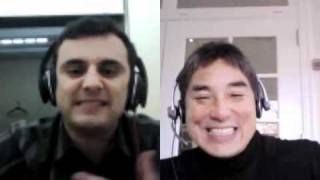
Gary Vaynerchuk and Guy Kawasaki discuss their new books: Gary's The Thank You Economy, about social media engagement and business humanization, and Guy's Enchantment, exploring influence and connection in the digital age.
Chapters
Sam.
So, Gary, first of all, for the audience, how about you just give us the gist of your book?
Thanks, Guy. This is so fun. It's called the thank you Economy. I could have called it things like manners, marketing or guilt selling. I thought about as a fun little thing, or what I really thought about naming it for a while was the humanization of business. What really it talks about, Guy, is I understand what I did to build my personal brand, which was enormous engagement and scaling one on one. Right. What a lot of people know about me is I do answer my email. I do reply, just an ungodly percentage of the people that are looking for me. And I started thinking, like, wow, that's really hard for me. Or for Guy, or for Lady Gaga or Justin Bieber or anybody who's got even 10,000 contacts or 5,000 contacts. It's a lot of volume. And what do you do when you're doing your real job? But what I started thinking and believing was, wait a minute, this could work for Wine Library, because I can hire four or five people to jump in and act as the brand. And I believe that we are living through the biggest culture shift of our time with the Internet. Forget about Facebook and Twitter and Tumblr and Quora. I'm talking about the Internet that it's only 17 years old. It's just starting. And this is the maturation process. And I really start tackling what is the ROI of social engagement and more importantly, what. Why do you have to do it so you don't end up looking like Barnes and Nobles and you don't look up like Borders. Excuse me, Not Barnes and Noble or Netflix. Right. How do you end up not letting innovation put you out of business? Right. And so I really talk about the difference between the thank you economy and a good social media campaign. So, you know, cut off for a second. So, you know, it's really tackling. What are these trends and how do I make them real business? Because, Guy, you know this about me. I'm not a jerk journalist. I'm not a developer. I come from a very heavy business background. I built a $60 million business, bricks and mortar, before I started learning this world and talking to it. So my sensibility comes into, how does a PepsiCo or a Ford or Nike use this world properly in their corporate structure or an entrepreneur use it in this new economy we live in.
All right, great, great.
And how about you? What is the life size quick capsule of what Enchantment is?
Well, you know, I've been enchanting people now that I look back on it, for about 30 years now, starting with the jewelry business. You know, jewelry to me is what wine was to you or is to you.
Yeah.
So I started the jewelry business. I became a Macintosh evangelist, and so I've been enchanting people and evangelizing people with products and services for about 30 years. I became a student of influen and persuasion. I love the work of Robert Cialdini and Dale Carnegie, and so I wanted to leave my mark in this genre. And I think that Dale Carnegie obviously wrote the book in 1930, and a few things have happened since then. And Robert Cialdini has a particularly great academic perspective on social psychology. What I wanted to do was take it into the trenches. How do you use influence and persuasion and wooing in real business? So, in a sense, I may have a larger view of the world. Your book is about social media to probably do the same thing. And I'm trying to talk about the general picture of how without having a Twitter or a Facebook account, without even having a computer, how do you enchant people? How do you delight them? The juxtaposition I like is HP may convince you, persuade you, or influence you to buy an HP laptop. Apple enchants you, and Apple enchants you, and you buy a Mac Macintosh, and then you buy an iPhone, and then an iPad, and then iPad2, and then iBooks and itunes.
And then even when you hear that an iPad is coming out, you don't have Apple convince you to buy one. I remember when the iPad was announced, people were convinced they were selling themselves as people that have been enchanted by that brand. I'm gonna use the iPad. They would say things like, well, I don't know. I'll use it when I'm taking a crap or on the plane. I mean, they were making things up because they knew they were gonna support the product. And it's funny, I actually talk a lot about, in my book Internal Culture, to create a scenario on how do you get people to feel that way about your brand? How do you humanize it to a level? For example, guy, I guarantee that you're buying your ice cream or getting your hair cut or refilling your gas. And it may be some other thing, but there is something you do today that is not based on dollars. It's based on the personal relationship. Your uncle used to work there, your brother, sister, your aun, your nephew works at the Gap. So you'll go pick up gloves at the Gap. And what I think brands need to do is Start building those personal relationships themselves to create that kind of level of engagement.
Yeah, you would think it's a no brainer, right? I mean, before I got here for this interview, I was walking past an Apple store and I thought, well, maybe I'll go see what an iPad2 is all about. So I see a guy who knows me from the store. He pulls me in and 15 minutes later, to my utter amazement, I'm walking out. I just bought a thousand dollar 27 inch monitor.
Do you even know why you need it?
Well, you know that's the test for Enchantment, Right. If you only buy stuff you need, that's not Enchantment.
No, that's just food.
Yeah. So now I have a thousand dollar monitor and I had to give him my last copy of the book.
Good sales, guy.
So, yeah, I just, I'm out $1,020 right now.
Guy, let me ask you a question. Did you go into case studies into the book? As you know, I'm going to see you in Canada, so I'm planning on reading it on the way there and then watch your presentation. I hope it's going to be on Enchantment or.
Yeah, I'm heavy into case studies. I love case studies because I like these little snippets. Yeah. And that's one of the reasons why I love Malcolm Gladwell's books. You know, like he's really the thinking man's business person.
Right.
And sure, yeah, I love his stuff. Although, you know, his stuff never teaches you how to achieve tipping. He just tells you you need to tip.
So yeah, I mean, I mean, I mean that's my point with business books. You know, I've actually used you as an example with the jewelry stuff because I think it's an important. I look at somebody like Jason Freed, who I'm a fan of. I don't know if you know Jason, but what I love about Jason is he's doing it, he's building it. I love that. And I love journalists and bloggers and I have no disrespect for that. But when you talk about books, it's nice when it's coming from actual execution. Because I talk as big of a game as anybody. Right. I probably talk too much and I apologize for that. But I like to set up the challenge because then I like to execute. Right. You know, I remember when Crush it was coming out, there'd been a lot of social media books out that didn't do so well and everybody was starting to question, well, all these social, you know, Does Twitter followers mean sales and all that kind of stuff? And I remember being excited because I knew that Crush, it was gonna do well because my fans and my community were gonna. As a thank you. Right. The whole thank you economy concept came a little bit from Crush's success. I didn't try to monetize. I never pushed wine on my show. Right. I never had a product or anything. And so Here was a $13 item. Will you support it? Since I've given so much back, the answer was yes. Leading me to the next thesis of.
My career, which, you know, I think you're proving the power of reciprocation.
I think so. You know, I try. I mean, I think I'm obsessed with context. Like, you're, you know, some of the things that you're, you know, excited about, I'm obsessed with. There's a bunch of people that are gonna watch this video they're gonna watch on GaryVaynerchuk.com and a lot of them, probably more of the Gary Vaynerchuk fans are gonna know who Guy is than the Guy fans are gonna know who Gary is. But what I think is interesting is after this interview, every person that watches it from the cross pollination of community is gonna have a different context about each other.
Right.
About us. And I'm blown away by that fascination. I'm curious how many Guy fans who thought I was a huckster or, you know, and I mean, that Guy. I know, listen, you know, I know my DNA. I know that I'm an extrovert. I know that I'm loud. And I know that some people might not think the best of me in the beginning, but I think when people get to know me, and that's why I work so hard for that engagement. Because I know once people get to go over the layer of the crazy that I can be because I get excited and I curse on stage that they see that there's more substance.
You know, guys, you know what you mentioned about your book? Not only is it reciprocation, I think you're exhibiting another important principle, which is you're paying it forward.
Right?
I mean, you put in the time and you gave people all this information before you asked for something. And that's not something that a lot of people do.
I wanted to call it. I almost called it parent marketing, because I think the reason we love our parents so much is they did it first. Right? I want every brand that VaynerMedia, whether it's PepsiCo or the jets or the NHL or Green Mountain Coffee to love their community and customers first, so then they will reciprocate. You're absolutely right.
Well, like Zappos. Zappos trusted women before women trusted Zappos.
It's true.
Clearly.
Right. Tell me a silver bullet in your book for all the fans that are watching on my blog that have heard of you. You're a big name, well respected guy, but maybe aren't as up to date. Give me a silver bullet that will get them enchanted to check out the book.
Well, how about I give you a power tip that Robert Cialdini taught me?
Please.
Okay. So I once had lunch with Robert Cialdini and I asked him, what do you say when you've done someone a favor? You've paid it in advance. And so the guy says, thank you.
All right?
Now what do you say back to him? Most people just say, you're welcome. And he told me the optimal thing to say is, I know you would do the same for me.
Interesting.
And by doing that, you're planting a seed. You're planting a seed. But also, just as important, you are telling the person, I think you are an honorable person.
Right.
I think you're honorable. I think you understand the exchange here. I trust you. And I'm also planting a seed that, you know, I really did do you something. So someday maybe you'll do something for me. And I think that's a very powerful tip.
Interesting. You know, it's funny, guy. I'm just veering off because that's how I roll. My wife and I are buying a co op in New York City right now. And you know, these boards are incredibly difficult, right? I'm like, yeah. I'm like, you don't know who I am. I'm gonna be the greatest. You gotta accept me. And if that doesn't work, I show them a picture. Where is it? I show them. I show them a picture. Hold on. We're gonna go real time here. I show them a picture of little Misha, right? Okay. And I'm like, you don't want this beautiful girl in your building. But the funny thing is, you need to get these letters, right?
Recommendation, recommendations.
And you could not believe how difficult it was for me to hit up, you know, Fred Wilson or the CEO of the Nets. These people, because you got to get names. And I hated it. It's funny. I'm such a rah rah, intense guy. And I'm a sales guy, but my sales style. And back to the point that you just said, I'm very interested in giving. First, I feel like I want social equity. I want to start the relationship with, you know, here, you know? And you know what's funny? I don't even care if people reciprocate because when they say no, I mean, I've had situations, I'm sure you have too, where I've given eight points and I've asked for two and they couldn't give it to me. I find that like the old Bronx tale movie where the guy says you're lucky you found out he was a jerk for 20 bucks. I'm serious. I don't mind when people don't reciprocate because then I can understand where they're, you know, they don't get it. Back to your point. You said you get it. I believe in you. Okay? Great guy, fun to hang out with, but doesn't get what's going on here and I can move on and I find. Sam.
More from Guy


Cheryl Strauss Einhorn | The Human Edge: Smarter Decisions in the Age of AI | Talks at Google



Rachel Glennerster | Innovation and the Center for Global Development | Talks at Google

Rebecca Winthrop | Rethinking the Purpose of Education in the Age of AI | Talks at Google

Dr. Robert Wachter | A Giant Leap: How AI Is Transforming Healthcare... | Talks at Google



