Global Warming: Answering the Call | Anne Vick | Talks at Google
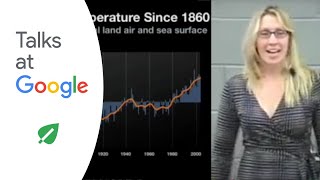
Transcript of a Talks at Google presentation by Anne Vick (hosted by Zach) in which Vick—drawing on years in the Arctic and Antarctic—reviews climate science, presents observational evidence (ice cores, glacier/sea-ice retreat, temperature records, extreme weather, disease spread), explains human causes (greenhouse gases, deforestation, fossil-fuel emissions, population/technology drivers), describes consequences (sea-level rise, ecosystem collapse, storms, drought, humanitarian conflicts), calls out misinformation campaigns, and outlines solutions ranging from individual and corporate actions to policy (Kyoto). The session ends with audience Q&A on attribution studies, carbon credits, measurement uncertainty, per-capita emissions, and office-level actions.
Chapters
All right. Good afternoon. Welcome to our talk this afternoon. I'm very pleased to have Ann Vick speaking to us today. I got an email from Megan, who runs the authorsoogle program, asking me if I'd like to host Ann, and I was really happy to be able to do so. As you probably read in Ann's little bio that I sent out, since you're here, she has a really interesting wealth of experience in environmental studies and policy as well. And I think the most striking stat that I saw about Ann was six years total in the Arctic and Antarctic. But when I inquired, I was happy to hear that it wasn't consecutive. So it's just over time. She wasn't away for that long. And just in talking for the last hour, a really cool thing that I learned was Ann was in a different sector when Al Gore's movie came out. And that sort of brought her back into this, which was an interest of hers. And now it's her career again. So I think that's really cool and I'm really happy to have her speak today and really psyched about the crowd that's here. So I won't take up any more of her time. And please welcome Ann Vic to Google. Thanks.
Well, thanks, Zach, and thanks, Megan, and thanks for having me. And I guess you probably read I'm one of Al Gore's volunteer presenters on climate change, and I have spent a lot of time in the Arctic and Antarctic, and that's what's gotten me interested in climate change and what's happening. My guess is you're interested in it. If you're here, probably want to know, is it real, what's happening, how it's happening, why it's happening, and what you can do about it. So I'm going to go over a little bit of the science. What's causing climate change? Yes, it's a reality and what we can all do about it. So we're going to start here, home, planet Earth. The first picture of Earth taken from space from one of the Apollo missions in 1968. This is a composition of over 3,000 satellite images. This shows what Earth would look like when with no cloud cover. And when you look at it this way, you can see, hey, maybe it looks like a couple of these continents actually fit together. But if you had been in a science class 50 years ago, they would have said, that is not possible. These continents never fit together. But as we know now, they do. And I point this out to you to show that assumptions that we may have can be wrong and they can cause us troubles. And we. Mark Twain said it best when he said, what gets us into trouble is not what we don't know, it's what we know for sure. That just ain't so. And when it comes to climate change, we're finding that is a very appropriate statement. So here I've got another image. This is the Earth at sunrise. You'll see the sun there, the little ball, this dark part underneath is the Earth. And the thin blue line above is the atmosphere. So you can see how thin the atmosphere is in relation to the sides of the globe. But you probably guys already know all that. And this is a little bit. You're probably going to know some of this stuff as well. It's a little bit of basic science, but I've got to go over it. Sun, Earth, solar radiation comes down in the form of light waves, passes through the atmosphere, keeps the Earth at an average temperature of 59 degrees. Some of that heat is radiated back in the form of infrared rays, and some of it is trapped again, keeping the Earth warm at a very livable climate for all of us. But what we're seeing as we continue to burn fossil fuels, adding tons of greenhouse gases to the atmosphere. From some of these photos that you probably look familiar here in New York City, what's happening is the atmosphere is thickening. You can see it thicken there. And then the result is more heat is being trapped. So that's kind of the basics on how the Earth is warming up and why it's warming up. And we're beginning to see the results of this warming all over the globe. So I'm going to take you on a little bit world tour here of some of the consequences of this warming. Kilimanjaro in Africa, 1970, and here in 2000. By 2015, scientists say there will be no more snows of Kilimanjaro. Here we've got Glacier National Park, Glacier national park in Montana, 1932 and 1988. By 2012, there will be no more glaciers in Glacier National Park. So we'll probably have to rename it would be my guess. Another thing we're seeing happening, it's not just sort of glaciers on land, but glaciers feeding into water as well, melting. I'll touch on this a little bit later. Some of the consequences that we can expect from continued glacial melt. Here we're up to Alaska, the Columbia glacier before 1980 and up to 2000, one of the thousand largest glaciers in the world, 997 are melting at unprecedented rates that have Never been seen before. As long as we can keep track of it here, we're going to go to Peru. This was 1970, and same glacier 2002. We're in Italy now, 1890 and 2003. We're going to go on a glacier now here and find out a little bit about how they're keeping track of these glaciers and the melt. And this is Professor Lonnie Thompson. He studies core samples from glacier, which is how we get a lot of information on climate change. So basically what happens every year is the snow accumulates, it's compressed into ice and it keeps these annual rings here, much like a tree. And in those annual rings of ice, they trap the carbon content on the globe. And by tracing the carbon content, they could tell how much fossil fuel, how much methane gases, how many greenhouse gases were in the atmosphere going back all these years. So if you go back 1000 years, here you have the temperature in the Northern Hemisphere. You can see it starting to really go up the last hundred years or so. And the CO2 concentrations there is a direct correlation with temperature and CO2 concentrations. The more CO2, the warmer the temperature. From these ice core samples, they've now actually drilled down all the way to bedrock in Greenland and Antarctica. Two miles of ice, that takes us back about 650,000 years. So here we have a graph of the CO2 concentration 650,000 years back. Yes, there is natural fluctuation. You can see up and down the levels. And here we have the temperature in Fahrenheit as well, directly correlating with the CO2 levels. There is a natural fluctuation in this, but today we are at about 370 parts per million in our CO2 concentration levels. This is the highest it's been in the past 650,000 years. If we continue at the rate we're going of putting carbon dioxide and other greenhouse gases into the air, we will be at over 600 parts per million. This is really uncharted territory. We don't know what's going to happen. It doesn't look like it's going to be good. And really sort of as you look, as I show you more, you'll see we're really putting ourselves and our planet in jeopardy again. This temperature change is affecting our oceans as well. You can start to see we're on an upward trend in air, land and sea. Sea temperatures, the 10 hottest years in record. Actually, the 11 hottest records, 11 hottest years on records have occurred in the last 15 years. This is an old slide I'm probably not as technologically advanced as most of you in the room. This should say 2006. The latest data has been the hottest year on record. Again, here's what this looks like translates into the real world. Munich Zoo August 2003. Heat wave in Europe. 2003, 15,000 dead in France, Italy, 20,000 India. Doesn't get quite as much play in our media here, but again, record temperature is 122 degrees Fahrenheit. More than 1400 people died. The U.S. we're also seeing increased heat, crazy weather patterns. You can see that here. Ocean temperatures here. We have predicted natural variability, expected variation, and then the actual here up since the 1950s, we've seen an increase in ocean temperatures and it continues to increase. And that is also affecting storms, hurricanes. This is a picture of storms form out in the oceans. Obviously this is a picture of a cyclonic hurricane. And the past few years, as we all know, have really been devastating in terms of hurricanes, typhoons. We've got Hurricane Jean, September 2004 approaching Florida. Ivan, September 04 again right in the Gulf of Mexico. Japan has also been having record typhoons. 10, 2004, Brazil. If you have been taking a science class anytime in the last 50 or 100 years, they'd say a hurricane could never happen in the South Atlantic. For the first time ever in 2004, there was a hurricane in the South Atlantic. Tornadoes, new record. 17 in the U.S. here we have three hurricanes. Cindy, Emily and Dennis. Summer of 2005. Hurricane Dennis, 2005. This is the largest oil drill rig platform in the world. This is in the Gulf of Mexico. Hurricane Dennis tipped it over on its side. Here's a bunch of people in Mobile, Alabama again looking at this big oil rig structure saying this is not supposed to be here. It's been pushed into a bridge by Hurricane Dennis. An MIT study in 2005. Major storms spinning in both the Atlantic and Pacific since the 1970s have increased in duration and intensity by about 50%. And a large reason for that is as the water temperature increases, it enables the storm to pick up more moisture and to drop heavier rainfall and become stronger and more powerful. And this will tell you a little how this works, how hurricane intensity grows as oceans heat up. Here you go. Your water temperature goes up, your wind velocity goes up. As that goes up, it is able to draw more moisture into the storm. Which brings us to Hurricane Katrina. You can see it forming here as it hits the warmer Gulf waters there it grows in intensity and strength. And here it is making landfall. And I'm not going to say much about this. I think we all know what a devastating event that was. It was literally the most devastating storm in America's history and was really an unprecedented event. And Churchill had said in the 30s leading up to World War II that there is a gathering storm. We are entering a period of consequences. And I think that's a very appropriate statement in relation to climate change. And I think, as Hurricane Katrina has shown us, we are entering a period of consequences. It's unprecedented events and we are having sort of unprecedented consequences. But it didn't stop at Hurricane Katrina. We ended up with Rita a month later. Wilma in October.05. Strongest Atlantic hurricane ever observed. And then we got into the tropical storms. For the first time in its history, the World Meteorological Organization ran out of names. So then they went to the Greek Alphabet and they went all the way from Alpha to Zeta and again used, used up all the letters for tropical storms. Of course, the insurance industry is noticing this. Millions and billions of dollars in losses. And part of that is because the storms are stronger. They are creating more rainfall and more damage. Again, Japan also, screwy weather patterns. Between 1976-85, 209 average downpour, heavy downpour events. By 2004, that's nearly doubled. 409. You can see a picture here. Europe, same thing. We just saw a picture of that before. Again, literally here from less than 25 to over 100. Asia, same thing. The weather patterns are getting screwy all over. Here's Mumbai, India, and rush hour. They had record rainfall here in 2004, over 37 inches in 24 hours. Over a thousand people died because of this flooding. Sichuan Province, China. 2005 Again, flooding. And in the neighboring province and we drought. This is not how the weather patterns here have always been. And that's one of the problems of climate change is shifting entire patterns of weather and rainfall. Here we have Lake Chad, used to be the sixth largest lake in the world. The size of Lake Erie over the past 40 years has shrunk to almost nothing. And I'm sure you're all aware of the situation in Darfur. This sort of climate change is also affecting humanitarian causes. People fight over resources. It complicates these sorts of issues. And this desertification is also. It's one of the ironies of all of this heavy rainfall. You don't think, well, how's it going to dry things up? But as the temperature increases, more rain evaporates from the ocean, resulting in heavier rainfall and more moisture evaporates from the land. And here you have a dried reservoir, which, if you think about at least the US and all over the world, this could be devastating to our ability to produce crops, our agricultural business. So I'm going to take you. I know you've all heard the expression canaries in a coal mine. We have two. They are the Arctic and Antarctic. I've spent a lot of time there, and I'm going to take you first up to the Arctic. Here you can see Greenland on the right and then the North Pole there. The basin covered with ice for the first time ever observed on the Ward Hunt Ice shelf in the Arctic. There is a huge crack in it. This has never existed there before. And there's fairly reliable data from the.
Navy.
On the North Pole and the sea ice coverage up there for about the past 7,500 years. Another thing we're noticing up in the Arctic, here's a bunch of drunken trees, not from alcohol or wind. The permafrost is melting. As it melts, the trees are losing their rooting system and falling over. We're also having travel problems up in the Arctic. Normally, you can travel most of the year because on the roads, because they stay frozen. But as the permafrost melts, the number of travel days available in the Arctic is diminishing. We've gone from about 220 in 1970 to less than 80 in 2000. Sea ice again. We've seen a dramatic shrinkage in the sea ice from 13.5 million kilometers to about 12. And what happens is that sea ice up in the Arctic acts as a mirror. It reflects back the sun and solar radiation. About 90% of the Sun's rays will be reflected back. But as that melts, 80% of the rays are absorbed by the darker water, which intensifies and accelerates the melting on the existing ice. So some of you may have noticed in January of this year, the polar bears were put on the endangered species list. Why? They are having an unprecedented number of drownings. As the ice shrinks and the water distance between ice floes becomes larger, their swims have to become longer and they aren't making it. And it's terrible for them, but it is probably going to be a lot worse for us as we see a decrease in the number of frost days. From 1900 to 2000, we are seeing an increase in the number of invasive species here. We have pine beetle damage, Montana. We are jeopardizing and endangering all sorts of different frogs and toads, amphibians, animals, creatures, you name it. We are Changing the PH balance of the oceans as they become more acidic. Here's a healthy coral reef, Marshall Islands. Here is a dead coral reef in Polynesia. We have also seen 30 new diseases that have emerged since 1976. All sorts of pleasantries. Ebola, Hantavirus, SARS. These microbes can survive in warmer weather where normally more frost, colder winters kills them. Another thing, you guys, I'm sure I know there's been a lot about this, or there was, at least in New York. West Nile virus came here from a warmer climate and has continued to spread and be able to live in our warmer climates across the US. So now I'm going to take you to the other end of the globe. We're going to go to Antarctica, coldest place on Earth. We have some penguins on an ice floe here. Another again, here's our second canary in a coal mine. Antarctica, where we're seeing a lot of the changes happening very quickly. 1978 Nature magazine wrote that a breakup of the ice shelves would signify a huge change and a huge problem. And that happened down in Antarctica not all that long ago. This is the Palmer Peninsula here. And here's a map of the Larsen Ice Shelf on the Palmer Peninsula and a satellite image of that same area. Notice the black spots here on this satellite image. Those are melt pools. Some of those are normal, but there were a lot more here. And scientists I think were very surprised that within the space of about a month, here's January 31, February 23 and March 5, that this entire ice shelf caved into the ocean. This ice shelf was about the size of Rhode Island. This is a particularly alarming event. When these large ice shelves cave into the water a bag, they run the risk of raising ocean levels across the globe. And B, they hold back parts of that ice shelf and keep it land based. So as they come into the ocean, there is the danger of more ice coming into the ocean, raising sea levels, which of course would be devastating for low lying islands or low lying areas anywhere. Here's Polynesia, high tide 2004. The Maldives would be in big trouble if the ocean levels were. The ocean level went up. So here we have the West Antarctic ice sheet and we have Greenland. They're about the same size. If all of Greenland or all of the West Antarctic ice sheet or half of each were to melt, global sea levels would rise by about 20ft. And what we're seeing in Greenland again here are these melt pools that we saw in the satellite image of the Larsen Ice Shelf. Some of these are normal you would see these if you look back in history. There are an unprecedented number of them and they are larger in size than they have ever been. Satellite imagery for the past 15 years or so support this. 1992. You can see the seasonal ice melt in Greenland, 2002 and 2005. And should this continue melting, should these ice caps continue melting as they are, the maps of the world will need to be redrawn. And this is what some of them would look like. Here would be the Netherlands with 20 if the ocean levels rose 20ft. Beijing, 20 million people here, And Calcutta, 60 million people. Your very own new york city. Google offices are probably on here. I'm sure you have a good Google map of where it is, but. Pretty dramatic. So what's happening? We are witnessing a collision between our civilization and the Earth. And these are three factors that are causing it. A population explosion. You can see here it took about 10,000 generations for the population to reach about 2 billion. And in the past 70 years that has just about tripled. So naturally, more people creates more stress on resources. Increased deforestation. Here's Brazil pictures of the Amazon. Satellite imagery, 1975 and 2001. Flash and Burn is a contributor for about 30% of the carbon emitted into the atmosphere. And you can also see a map of the world here. The red represents fires, cooking fires. Flash and burn. White is electricity and yellow are gas flares. You can see a lot up in Siberia there. And I think, you know, this picture really points out we are a force of nature now. We have incredible power and technology. So second factor, scientific and technological revolution. There's a lot of great things. Better health care, better communications. There's Google. We love it. Lots of good things. But old habits and old technology equal predictable consequences. Old habits and new technology, dramatically altered consequences, some of which we don't even know. The final outcome of war. Here's how we used to fight war. And today we have so much power and capabilities and I think not always with the wisdom of how to use it. And we don't always know what the consequences will be, but we clearly have the ability to make dramatic changes on our planet. Shoveled old fashioned new shovels. Bigger consequences. Old fishing nets, modern drift nets. Irrigation. Another example, modern day irrigation. We really can literally change our landscape. Colorado River. This is the Aral Sea in Kazakhstan. Waters feeding the Aral Sea were diverted and it dried up. This is it. This is a fishing fleet left stranded there in what is now a desert which was once the Aral Sea. And we all are contributing to this in particular in the US you will see by this map 30.3% of global warming gases right here coming from us. Carbon emissions per person. Africa, India, China, Japan, EU, Russia and US. We're winning this game, but this is not a game we want to win. Here's the world average and we are far above it. Carbon emissions per country and region again. Africa, India, China. And there we are far ahead. Last factor, our thinking. So, three misconceptions. Isn't there disagreement among scientists about whether the problem is real or not? Consensus as strong as the one that is developed around this topic is rare in science. I don't know if any of you saw. Also the IPCC came out in January. It's a group of UN scientists. There's about 982 of them. They are at a 90% consensus that humans are causing global warming in the scientific community to get a nine. Trust me, I worked with all these scientists. To get a 90% consensus is really remarkable. Folks, we are doing this. James Baker NOAA also came out supporting that yes, climate change is real and yes, we are causing it. Now, the number of scientific studies dealing with climate change published in scientific journals during the previous 10 years, 928. Of those, how many disagreed with the consensus on climate change? Zero. Peer reviewed scientific journals. There is no disagreement on climate change. Popular press Oops, sorry, that one's next. The misconception about the science is an illusion deliberately created. You can see this here. And this shows up in the popular press. It's not the first time it's happened either. Cigarettes More doctors smoke Camels. Has this misinformation campaign succeeded again? Here we go. Peer reviewed scientific articles Percentage in doubt as to cause 0% articles in the popular press 636 percentage in doubt 53% so of course people are confused. So then you have to ask, alright, it's real. But then do we have to choose between the environment and the economy? Duh. I mean it seems like not a whole lot of choice there. This is really playing out in the auto industry. Toyota and Honda market share is both up. They're making the most fuel efficient cars on the market right now. GM and Ford market share is down. Least fuel efficient cars on the market and we're seeing a shift in industry here. The chairman and CEO of ge Green means green profitability. Less waste equals more profitability. Linda Fisher Dupont, CEO of Walmart this used to be controversial, but the science is in and it is overwhelming. Walmart doing all sorts of things, trying to green their stores, corporate responsibility we are seeing some large corporations stepping up to the plate. So that brings us to the last thing. If we accept it's real and we're causing it, isn't this problem so big that we can't possibly fix it? Absolutely not. It's easier to go into denial or despair or whatever, wherever you want to go, and to convince yourself not to do anything. But we can fix it. We already have the technology to do this. We created this problem. We can fix it. But it's going to take all of us. We have loads of new hybrid cars coming out, more fuel, alternative cars coming out, transportation, wind power, solar power. There's not one magic cure for climate change. There's not a silver bullet. There's silver buckshot, probably is a better way to put it. If we are to take a little bit of each different fuel, cars, carbon caption storage, renewables, different forms of transportation, by taking a little piece of each of those, we can bring our emissions down to where they were in about 1970. And a lot of places are doing that already. The Kyoto Protocol you've probably all heard about, it's been ratified by most nations except the United States and Australia. A lot of states, though, aren't waiting. They have ratified the Kyoto Protocol themselves. And Kyoto Protocol is basically an agreement to bring emissions back down to a pre1970 level. And US cities supporting Kyoto. New York is on there, by the way. But we all still have to do something, and we can do it. We have signed the Declaration of Independence. We have abolished slavery. We've given everyone the right to vote, cured polio. We have even put people on the moon. We have reduced the hole in the ozone layer by cutting cfc, which are the chlorofluorocarbons. Never say that one. Well. And we have sent satellites so far into space that we can take a picture of Earth as this little, little tiny speck over there. The point is, we can do things. And there are so many things. I have handouts here I will leave for people. You can send me an email if you like. I have lists of stuff, tons of websites. We can do something, and we must. This is our home and we need to take care of it. So thank you all for coming. I have tons of solutions if people are looking for them. I can answer questions if you have any. I know it's a lot of information, but the point is we can do something and we must do something. So, questions?
Hi. Maybe you're exactly the wrong person to ask this question, but where is all the vitriol on the other side coming from the example I think of is the meteorologist on the Weather Channel who had maybe controversial blog saying, you know what, the AMS says global warming is real. If you don't think it's real, maybe you should stop be calling yourself a meteorologist. And on the one side the blog comments said well this is just someone trying to bring in Al Gore and the black helicopters from the world government. Well that's the Internet unfortunately. But on the other hand you had other meteorologists who said such outstanding questions as well, well I'm not an expert on the subject. It's always a great start but the evidence isn't clear and I think she should just shut up. I can understand that there's strong feelings on both sides, I can understand there's doubt, but why is it that some people have this knee jerk word chosen carefully reaction to this whole thing?
I think, I don't know if oops if anyone saw. There was a story in the BBC and the Guardian that ran in about March of this past year. Exxon had spent almost 24 million doll on a campaign of misinformation. They also had a team of scientists on their payroll who they were paying to dispute or refute climate change. So as I showed in here, there has been a campaign literally of misinformation mainly by some of the larger oil and energy companies. And I think.
But that response seems to be more broadly spread from that. And that's I guess what really confuses.
Me in terms for these sort of particular meteorologists. I mean I think it's you can find information refuting global warming. I'm sure if you plug it in online you'll see it. But if you really look at the scientific journals, sort of the peer reviewed scientific journals, there is no doubt as to what's causing it and why and that humans are responsible. This is past any sort of natural warming trends that we've ever seen. So I think, you know, for some reason people want to be ignorant, they want to be controversial. I don't know about these meteorologists. I mean the science is there. So yeah. Anybody else?
I'll take a question. This is a huge topic that you could probably talk about for a long time and I know it's what you're going into for your work now, but off the top of your head when you see 1100 people working in a big office like this, what things come to mind that we can do our part in our office environment and then there's a whole list of personal things you can do in your home life, but what about in your work?
Sure. Little drama over there. All sorts of things. I mean, I think Google has been doing some great things. Obviously recycling, maybe not using the water bottle every time. Refilling a water bottle or using tap water, a glass instead of a paper cup. That stuff adds up like crazy. Motion sensor lights, adjusting thermostats at night or you guys probably work all the time, but whenever that is, if that's possible. Compact fluorescent light bulbs. Those are a few of the big ones. But see tons of stuff. Not taking paper, plastic bags and you run down and get your lunch. Although I think maybe you have lunch here a lot. But those are some of the things that come to mind. Green detergents and things in your sinks. You can seventh generation, you can go to Whole Foods, there's a ton of them. You can look online. All sorts of good stuff for that. Those would be the big things.
Yeah, thanks for all those suggestions. I was just curious regarding the data on per capita carbon emissions. You know, you showed the United States being up there and then China and the other countries being down there. I was just curious as to how that was measured in particular. You know, we consume a lot of products from China and you know, they're obviously being built in some factory out there and carbon is being emitted there. So was that carbon emission counted as a part of China or as a part of the United States? Because if we, if it's counted as a part of the United. If it's counted as part of China, we actually, you know, emitting more carbon into the atmosphere by living here. Right. Then the figures that you mentioned or. Yeah, I would like to know more about that.
Sure. I don't know exactly how it was calculated, but my guess is it took into account if something was actually produced in China that would count as sort of a check mark against China. My guess is though, the transportation emissions to bring those goods here were counted towards the United States and not China. And I don't know exactly how they calculate that. I can try and find out for you and send you an email. It is projected that China and India will probably surpass the US in the next 25 in emissions if things keep going as they are. But we are still in the US the largest contributors by far. So I know that didn't really answer your question, but if you see me afterwards, give me your email and I'll try and find out for you. Yes, biggest single source of recognition US corporate. Is it like company factories or is it where legislation or like. Transportation is. What's that?
Just repeat the question.
Oh, yeah, he wanted to know what the largest. Sorry, I've had this. He want to know what the largest. What the largest single thing contributing to greenhouse gases is in the US and what we can do in terms of that. And transportation is sort of the largest contributor. And yes. Hybrid cars, biodiesel, they're having electric cars coming out. Tesla just launched their first sports car in August. They should be bringing out sedans by 2010. Mass transportation, walking bicycles. You know, it's not so much an issue here in New York. You can walk and subway just about everywhere. But that is a big one. And in terms. You want to know if we should wait for legislation. Absolutely not. Yes, write your senators, support environmental defense, National Resources, Defense Council, all those things are great. But it takes all of us doing things. And not just transportation. It's everything. It's our consuming habits, buying green things, buying more sustainable products. We have to buy things. But buying smartly, I think, and being conscious. Turning off your lights, turning off. Here's a good one. Turning off your computers. If you leave at night or if you go out to lunch, all of that takes energy. So that answer your question? Yeah. Anybody else?
Yeah, I was just kind of curious, just generally speaking, what kind of studies can be done to sort of, to combat, like skeptics, how can you determine whether the warming is caused by human emissions or how do you separate it out? How can you say, well, this warming is caused by human emissions as opposed to natural changes in climate?
Right. In one of the graphs I showed you, you can see that the natural fluctuations stay within a range. And that range usually being about 240 parts per million, we are now, after 650,000 years of data, we are higher than we have ever been in those 650,000 years. And actually it's not out yet, but they have data back to 800,000 years and they're still calculating the fluctuations. I think they're going to come out exactly the same as these natural patterns. So we now know we are at a place we have never been before and that also that terms of carbon in the atmosphere, greenhouse gases, that also coincides with the Industrial revolution, the last 150 years or so, really, in particular, with the numbers going way up.
So, I mean, sort of. Well, how. Okay, so there's more CO2 in the air, but what's the study, how do you say more CO2 in the air leads to unnatural warming?
Because if you look at the, the temperature grids also, they directly correspond with the CO2 levels. It's really, if the CO2 levels are up, they can trace it back. The temperature levels are also up and so our temperatures are getting hotter and hotter and our CO2 levels are going higher and higher.
Well, okay, what would be the. I'm trying to get like more scientific. What would be the. How would you show that that's a causative effect rather than a correlation correlative effect?
I think, you know, that's a good question. How they actually show. I think because it is because the CO2 levels are so high and temperatures are so high. I think they're just going off the fact that if you look back for all These years when one, when the CO2 is at the temperature, for example.
Maybe like warmer temperatures leads to more trees growing more, leads to, leads to more CO2 being released. So they correlate, but they don't. You know what I'm saying? I'm just curious that the science behind making that determination on what's causing what.
I don't know if I can answer that exactly scientifically, but what I can tell. Again, if you see me afterwards, give me your email and I'll find out. But I think to sort of answer your question, if you, I mean, I don't. There is no disagreement within the scientific community that we are causing this. And I realize that's not the exact scientific explanation you're looking for, but I think for people who really study the minutiae of this day to day from all sorts of different sources, to them it's really irrefutable that we are causing this. Which doesn't answer your question, but I'll get you an answer.
Okay.
Yeah, hi, I just wanted to ask how you feel about the companies that will sell carbon credits. Rather than making a physical change yourself, you pay someone else to do it for you. I just wondered how you feel about that. Actually, I'm going to start working for one of those companies in September. So purchasing the carbon credits is a great thing. It is a step in the right direction. But often what happens is say a CEO, HSBC is a great example, says we are going to try and minimize our carbon footprint. That CEO just went and spent millions and millions of dollars and bought a whole bunch of carbon credits. Chances are if you went to an employee at HSBC and said what's HSBC doing to lower their carbon footprint? They're not going to know. They probably won't even know what it is. So it's a step in the right direction. It's mandatory in parts of Europe who signed the Kyoto Protocol, monitored by the U.N. the U.S. is still a voluntary system. I think that will change whenever the next administration comes in and ratifies Kyoto. But taking that one step further, I think, for example, this company I will work for does more than just sell credits. That's their secondary business. Their first business, and this is kind of emerging, is to find solutions for each company on how they can sort of educate and engage their employees in being more carbon neutral. So I think it's a step in the right direction. I don't think it's the end all answer. It's going to take more. It's going to take these companies sort of reaching out to their people.
My question concerns the measurement of temperature from, let's say 600,000 years ago. I'm curious first of all how it's done. I mean, I assume it has to be indirect somehow. And then like, can this measurement be done with the precision of a tenth of a degree? I mean, on the charts it was shown with the precision of a tenth of a degree. I'm curious what the error margin is there?
I don't know. It's a very good question. You guys have great questions. I'm so impressed. Margin of error? I don't know. But again, if you give me your email, I can email the sign to and say what is the margin of error? My guess is it's very small. No, no, no. And the fact is, even if there is a small margin of error, the fact is it's still all going up even if it's a. I don't disagree, I don't disagree. I'm just curious. But I can't tell you the margin error. But again, give me your email, I'll try and find out. It's a good question. Anybody else? Great.
So thanks again.
Thank you guys so much. If you want, here are like a million things you can do if anybody wants an unrecycled paper and you can recycle it when you're done.
More from Guy


Cheryl Strauss Einhorn | The Human Edge: Smarter Decisions in the Age of AI | Talks at Google



Rachel Glennerster | Innovation and the Center for Global Development | Talks at Google

Rebecca Winthrop | Rethinking the Purpose of Education in the Age of AI | Talks at Google

Dr. Robert Wachter | A Giant Leap: How AI Is Transforming Healthcare... | Talks at Google



