Guy Kawasaki | Think Remarkable | Talks at Google
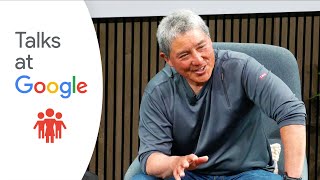
Guy Kawasaki discusses his book Think Remarkable, distilled from 250 episodes of his podcast into 170 pages and 88 tactics organized around Growth, Grit, and Grace. He shares why Kodak and Blockbuster failed, how he uses AI and LLMs in his work, and personal stories like taking up hockey at 44 and getting a cochlear implant at 69.
Questions this video answers
April 28, 2024.
His 16th book.
170 pages and 88 tactics.
About 225–250 episodes, roughly 4,000–5,000 printed pages of transcripts.
69 years old.
Chapters
Welcome everyone. My name is Aparajita Jain. I'm the chief brand marketing evangelist at Google. And more importantly than that, I am a passionate chaser of wisdom. I love experimenting with thoughts and I'm a huge fan girl of my fellow evangelist Guy Kawasaki. Now all of us at Google love to work on products that touch billions of lives. Could be search, Chrome, Gmail, YouTube. And most of the time it requires hundreds and thousands of people to make those products tick. Today I'm very honored and privileged to invite someone who single handedly has made some of the world's most loved and used products, products very popular, whether that be the Macintosh computers, the Canvas suite of products. So please join me in welcoming Guy Kawasaki.
Thank you. All right, you know, first of all, just to correct you, there is no way you can give me single handed credit for Macintosh or Canva. Not at all.
You have been the face of it. You cannot deny that.
Well, I mean maybe to some extent, but Macintosh division, that was really Steve Jobs and you know, like 60 really great people in Canva. Canva is. You got to credit Canva to Melanie Perkins and Cameron Adams and Cliff Olbrich. It's just about my 10th anniversary with Canva. But no, no, no, no. You know, I mean one lesson that we learned from this book is that there's a lot of people who are behind any success. It's not one person. Never is. Never is.
Absolutely. And that's case in point, the kindness and humility that Guy brings to everything. You know, giving credit to everyone, not everything. Well also just to remind you, we will be taking live questions in the room for Q and A later as well as over the dory that is linked to all of your calendars on Live. So please feel free to come up with your thoughts and questions and we will get to that. Towards the end, Guy, as you can see there's quite a few people here in the room and there's a lot of people joining us over livestream as well. And we will be recording this to share on our talks at Google Channel later on. So let's dive straight into it. First of all, I really wanted to thank you for first of all just the way we met. I still pinch myself every day and I'm happy to recount that story at some other point.
No, tell him now.
So one night I'm sitting in my living room and I noticed this LinkedIn notification that says Guy Kawasaki just checked out your LinkedIn profile. I'm like, Guy Kawasaki checked out my LinkedIn profile. So in one of Those moments I'm like, I'll just shoot my shot. I sent him a note and I'm like, oh, Guy, I noticed you were on my LinkedIn profile. Would you be up for a coffee? And he immediately said yes. We met within three days. And ever since I've been following him around and learning more and more from him. He's made some incredible connections for me. So very, very grateful for your kindness and the time you have given me. Thank you.
Now, just to give a little bit more background, okay. I don't want you to think I'm a predator or something, but the reason why I clicked on her profile is because it said chief evangelists, googoists. Who's the chief evangelist of Google? I gotta track down this person. And so that's what led me to click on your profile.
Well, thank you. That title did help some ways.
Great.
Now you have written your 16th book.
Yes.
And we will talk a lot about it today. Plus there's books here for those of you present in this room for later that are signed by Guy and Madison. And Madison, yes. The co author of the book over there, he's right here. Now my most favorite, my most favorite of your books so far had been Wise Guy for many reasons, which I'll get into. But I am also saying so far because it has been overtaken by Think Remarkable. Have you read Wise Guy? Anybody in the audience here? Yes, I see a few and you probably loved it as much as I did. But Guy, what is your favorite book out of all the ones you have written? Minus Think Remarkable, of course.
Oh my goodness. You know, that is like asking a parent which one is your favorite child. I would have to say for pure utility and if you only needed, if you only wanted to read one book to cover a subject, that book would be the Art of the start 2.0. Because the art of the star 2.0 handles every subject you need to start a company. And it does that in paragraphs. I mean not paragraphs, chapters. And in these chapters, many of the chapters in the Art of the Star 2.0 would be an entire book by other people. And that's a theme we've carried along in this book, which is this book is 170 pages and it has 88 tactics in it. So it's two pages per tactic. And many of those tactics could be a book, except it would be a 200 page book. And I don't believe that Gen z will read 200 pages to understand one concept anymore.
I was reading through the book and I Realized how condensed the wisdom is in there. And then I went back and I noticed you dedicated this book to Gen Z and it all made sense. I'm like, Gen Z doesn't have the time to read through a chapter for every single one of these pieces of wisdom. So I understand that now, talking about think remarkable, you took what you did in Wise Guy, which was you took your life stories, you took a learning out of that, summarized that at the end of every chapter. And in this book, you just put that on steroids. I mean, not only is it your own wisdom, but you took wisdom from all the people you had on your podcast, Remarkable People, and found stories that demonstrate that piece of wisdom. So how did you one pick those people and what made them really remarkable?
Okay, so a little bit of background. So Madison and I have a podcast called Remarkable People and duh, we interview remarkable people. And we've been doing it for about five years now. So there's about 225 or 250 episodes. And we have people like Jane Goodall, Neil DeGrasse Tyson, Steve Wolfram, Carol Dweck, Phil Zimbardo. If you like athletics, we have Ronnie Lott, Brandi Chastain, Kerry. Kerry Walsh Jennings, or Kerry Jennings Walsh. I keep forgetting the order there. And so we interviewed all these remarkable people and then we figured out that now we have about 250 hours and 5,000 pages and nobody's going to listen to all that or read all that. So we decided to write a book that's the genesis of the book and how we decided about what story gets in. Basically, we took all 4,000 or 5,000 pages. We literally printed them out and we read them, and we read them with a highlighter and a stack of post it notes. And whenever we found a concept that we thought could help people make a difference and be remarkable, we put a little sticky and we highlighted it. And then we took all of that and we put it together. So, you know, many books that were based on a podcast, the natural inclination is to make it organized by person. So this is Jane's interview, this is Wolfram's interview. This is Angela Duckworth's interview. This is Carol Dweck's interview. The problem with that concept is that if Carol Dweck talks about the growth mindset and Angela Duckworth talks about the growth mindset, and Neil DeGrasse Tyson talks about the growth mindset. Well, if you're interested in the growth mindset, you want to read about the growth mindset. And how would you know that it's in five different chapters. How would you like know to skip to that part of those interviews? So we couldn't organize it by interviews, we had to organize it by subject. And so it was just kind of analog brute force, you know, digging for gold. That's what we did.
And you found some really good nuggets, I have to say. So as you mentioned, the book is organized by three major topics. Growth, grit, and grace.
Yes.
Or as I think Stacey Abrams, she called it, be curious, solve problems and do good. In simple terminology. Now let me ask you, in and of themselves, they're obviously great things to aspire for, great qualities to have. But do you feel feel they are somehow interconnected? Like, for example, would you say that having a growth mindset makes you more of a gritty person? Or does having the two others allow you to have a more expanded growth mindset? How are they interrelated?
I would say that to truly be remarkable, you need all three. So you need a growth mindset to understand that you can grow, you can learn new skills, you can do new things. So that's the starting point. That's the work of Carol Dweck. And then the flip side of the growth mindset is a grit mindset. Because when you have a growth mindset and you're willing to try something new, when you try something new, most likely you're not going to immediately succeed. So you need to have a gritty attitude. And you know, the example I use in the book is, is I took up ice hockey at the age of 44. I play hockey over Redwood City, and I also took up surfing at 60. And let's just say hockey at 44 is about 34 years too late, and surfing at 60 is 50 years too late. But I have a growth mindset, so I'm willing to take that on. And let me tell you something. The only reason why I had achieved any modicum of success in hockey or surfing is grit. It ain't natural talent, it's just grit. So I think those two things lead you to success. Now, the third part, grace. I think that's where you separate, you know, people who really are going to have a lasting impact. People that you would want your children or grandchildren to grow up and be like people that you want to hold out as role models. And, and this grace step is when you figured out that you are successful. You're probably successful because you had a growth mindset and you had a grit mindset. But it also takes a lot of other things, not the least of which is luck. But also there's a teacher, there's a coach, there's a boss, there's somebody who paved the way for you. So in the third part of your life, you really realize that it's time to pay back. And I'll give you a great negative example. Until about three years ago, I would have said that Elon Musk is the closest thing to Steve Jobs, right? I mean, think of the innovation he has introduced, like electric cars, solar panels, tunneling, space travel, satellite Internet access, all these great things they single handedly made people embrace electric cars. So clearly he had growth mindset, he had grit, because you don't make those things successful without grit. But he's a total lack of grace, right? There's not an ounce of grace in that record now. Yeah, yeah, this is Google, right? We're not a Tesla. Right. So total lack of grace. And I mean, it'd be an interesting theoretical question, but you know, if he, if he called Madison or I up and said I'd like to be in your podcast, what would we say? I would say no. What would you say? Well, Elon, if you're out there listening, don't call me. And so I think that that's important. I also, I'm quite proud of the fact that I love tricolons, right? I came, I saw, I conquered. I love tricolons and I love alliteration. So growth, grit, grace, and I love alliterations. That's not one letter, but two letters. So nobody in the history of printed books has achieved the tricolon with two letter alliterations.
You should absolutely trademark that, believe me.
And I figured out, listen, when I die, it's going to be growth, grit and grave. I got that figured out already.
Planning ahead.
I am, I am.
Well, then let's dive deeper into each one of these. Because when I was reading through your book, there were certain ones that really sparked my interest and I went deeper thinking about it, how it relates to me. So I have some questions for you. First, one, being around growth. So you mentioned in one of your chapters that whenever you hear some guru or coach talking about pursuing one's passions, he you throw up a little bit and instead you recommend pursuing your interests and then see what sticks and then cultivate your passion around those things. So what? One, is the success rate you think between the interests you pursue, and then what of that turns into passions? And two, the reason I ask is because in today's day and age, I feel we don't give ourselves enough permission to fail because Especially Gen Z. I'm generalizing, I know, but still we want to go after the one thing that we can be absolutely passionate about and we don't give ourselves that room to play around with just interests.
And I think that's an absolute total mistake that people have been built up to think that people find their passion and it's like an instant fall in love and you dedicate the rest of your life to it. And what happens is people sort of draw that conclusion by looking at older people who have found their passion. But if you're 60 or 70 and you found your passion and you tell an 18 year old kid you need to find your passion, well, there's a little bit of problem here because the 60 year old had 60 years to figure out his passion and the 18 year old has had 18 years. And of that 18 years, you know, how much could he really, or she could really be searching for passion? And especially in Silicon Valley, I think there's such a pressure that, you know, you're 18 years old, you're going into your senior year in high school, what's wrong with you? You haven't found your passion yet. You haven't started a not for profit in Africa, you don't have a 4.2 GPA, you don't have 1600 in your SAT. I just described all the Google employees. And so how can you not have your passion yet? What are you going to write for your college essay? Oh my God, you won't be able to get into Dartmouth or Harvard or Stanford or Yale. Your life is over. And I think that that is a humongous disservice.
You know what, that reminds me, I believe at least a few years ago one of the big essay questions in Stanford's MBA admission was what are you passionate about and why? That was literally the question.
Well, just FYI, I did not get into Stanford Business School and that's why I don't donate money to Stanford. But anyway, that's a different discussion. So I think that the way it really works in the world is that if you have a growth mindset and you have an open mind and you have open ears and open eyes, that you'll come across things that interest you. And so don't try to establish that it has to be your instant passion that you fall in love with and dedicate the rest of your life to just do a lot of sampling and it could be, you know, it could be surfing, God help you, it could be foiling, it could be, you know, tennis, it could be art, it could be photography, it could be, you know, SEO. I don't know. I mean, you know, so have a lot of interest and then just do a lot of sampling. And over time, I think you'll find that you may find a passion or two, I would say, in my life, and I'm 69 years old, I have found about three or four true passions, you know, writing, podcasting, surfing. So, you know, I'm averaging one every 15 years. I mean, it's not, it's not something that's instant in a lot of ways. I think there's a lot of parallels to dating. Right. So if you guys are too young, but I mean, trust me, you are not going to tell your kids you're 18 years old. How come you haven't found the person you want to spend the rest of your life with? What's wrong with you? You need to find your passion in life. I mean, that's a flawed way of thinking.
Yeah, I completely agree. Thank you for sharing that perspective. And I think the thing you mentioned about age and it takes time to discover what you're really passionate about is so important because we want to front load everything when it makes more sense to just let it unfold.
Yeah, you really should let it unfold. And arguably you may not be ready to find your passion. Yeah, I mean, you need, you know, you need to experience life first.
Exactly. Well, thank you for sharing that.
Don't tell my kids that. I want them to like.
Well, I think one of your kids is in the audience. You've already told it to him. Now the second question I have is about the grit mindset or developing that grit. So there's one section where you mentioned thinking backwards.
Yes.
And what you said there is address someone's pain and then work backwards to solve for that instead of coming up with, let's say, a product or service and then hoping that somebody will use it, which also happens sometimes. But in a world where today we exist, whether it be your own existence, your own life, or generally what you see in the world, what do you think are two or three problems, big problems right now that require that type of backward solving?
Well, I would say, I mean, I'm like, I'm in the beast of the. I'm in the belly of the beast right now. Right. I'm in Google. Right. So if pretend it's two years ago and all of you are thinking, search engine, search engine, search engine, optimized search engine, you know, we got to provide links, pages and pages of links, we can sell ads on the side links. Links. Links, you know, and guess what? If you work back from customers, let's take an example. Like, you know, how do I add an HP printer to a Macintosh WI FI network? Okay? So now if you search for that in Google, you get 250,000 links and, you know, like 50,000 YouTube videos. But if you're working backwards, you would say to yourself, are people who do. They wake up in the morning saying, I wish I could find links. They wake up in the morning, they just want to put their HP printer on their network. They're not looking for links. They're not looking for multiple paths to get this printer on the network. So working backwards, you'd have to conclude, as I would today, that you know what the Gemini search engine, the way search engines, if you ask, how do you put an HP printer on an Apple WI FI network, it writes out three paragraphs about what you do, what setting you go to. You know, how you do that? That's what people want. They want. This is. Just give me the three steps. I don't want 750,000 links about how to do that. And so working backwards in your business, I think AI is a much better solution than links.
You're saying we have finally arrived?
Well, until something changes again. But yeah, I mean, great.
That's a good example. Thank you.
That's a little bit of blasphemy, I would think. But, you know, I mean, listen, I don't know why, if you do Gemini search and it gives you three paragraphs about how to add a HP printer to a WI FI network, you know, more power to you cell ads in the sidebar for cartridges and ink and Canon printers, and you know what? What's the difference? What's the difference?
Yeah, that's a fantastic example to solve backwards. And I hope more people think like that.
Well, can I give you a negative example? Okay, so a negative example is Kodak. So in 1975, Kodak invented digital photography, Right? So let's just take a moment of silence and think about that. Kodak in the mid-70s, invented digital photography. So how many of you out there use a Kodak digital camera today? Zero. And why is that? Well, I think that Kodak was always thinking forward. So Kodak, we're a chemical company, put chemicals on paper, chemicals on film. People take those products, they expose them to light, they take them back to someplace and more chemicals. And finally you get a negative or a slide or a print. Right? So we're in the chemicals business. They're thinking forward. This is what we do. This is what we know what to do. This is what we like to do. This is what we're making boatloads of money doing. Now, if Kodak were thinking backwards, they would say, you know what? People don't wake up in the morning saying, God damn, if I could just get some chemicals on film, my life would be complete. They wake up in the morning and they want to preserve memories. So fundamentally, what Kodak does is it helps people preserve memories. And so if you think about it, working backwards from the customer, preserving memories using digital photography is far superior than chemicals on film or paper. So if Kodak were working backwards, they say, you know, our customers want to preserve memories. Right now we're helping them preserve memories with chemicals. We could help them preserve memories with digital sensors. And then they would instantly see if they got the photo, not two weeks later when they take it to Bay photo or they take it to CVS or Walgreens. And then Kodak hopefully would have said, you know what? We need to jump on this thing called digital photography, because it's far superior for working backwards for a customer.
Yeah, believe me, I've worked with some 1200 brands and there are some that have survived with that thinking and some that have not survived.
Yeah, well, I mean, you know, how many of you have gone to a block recently to get a dvd, right? I mean, because Blockbuster said, oh, we're in a brick and mortar business. People come and they rent DVDs from us. But Blockbusters, dumbasses that they were, they should have figured out that they're in the business of convenience. People want to watch movies at home. They don't necessarily want to come to a brick and mortar place to rent a dvd. So why isn't Blockbuster Netflix? Because the stupidity. They were working forward and the rest.
Is history with Netflix, as we know. Great. So one of the moments that really made me sit back and probably my most favorite takeaway from your book was what you heard from Ellen Langer in the podcast that you did. And that piece of advice was make instead of make decisions. Oh, no. Instead of make the right decisions. Make decisions, right.
Yes.
So again, I'm going to repeat this. Instead of making the right decisions, make decisions. Right?
Yes.
And I'm going to paraphrase what that means, and I want your opinion on this. So what you're saying is instead of. Sometimes we just don't have full information and we have a really hard time making a decision. So instead of just pondering on that, make a decision and then focus your energies more on making whatever decision you made the right one by just finding the best thing you can do with that decision.
You should write a book.
I should write a book one day, hopefully. So can you give us an example of where you have used that mindset? And also the second part, which made me think, at what point if your decision is so bad that you have to salvage yourself out of that situation, do you pull the plug on something like that?
That's a harder part. So this was one of my most favorite moments in my podcast, where we interviewed Ellen Langer. Ellen Langer. There's a lot of mothers in our podcast and book. We have the mother of grit, which is Angela Duckworth. We have the mother of the growth mindset, which is Carol Dweck. We have the mother of creativity, which is Julia Cameron. And we have Ellen Langer. She's the mother of mindfulness. She's the Harvard professor who came up with the concept of mindfulness. And you explained it perfectly. So I don't need to re explain it. But again, I'm in the beast of the belly here at Google because in a sense, your whole company is built on this concept that with enough data and intelligence and PhDs, we can figure out the exact right perfect answer. And Ellen Langer's thing is like, listen, you take your best shot, you make a decision, and from then on, you focus on making your decision. Right. So if I can use a surfing analogy, do any of you surf in this audience? That's a helpful. Yeah. So, well, I'll explain surfing to you to the extent that I can. So. So about 90% of surfing, you're in the water and you're looking out to sea, and you're looking for that perfect wave. You're trying to pick the right wave, coming in at the right speed, at the right angle, at the right height. You're going to turn in the right direction, you're going to paddle at the right speed, you're going to take off at the right angle, and everything is going to be perfect. Right? So that's the theory of surfing in practice. You often sit in the wrong place, you go for the wrong wave, you take off in the wrong direction. You take off with other people crowding you like so many, your fin can hit kelp. There's so many things that can go wrong. But I'm telling you, one of the ways you can separate the good surfers from the bad surfers is good surfers can make those kinds of mistakes and still catch the wave. And that's the point that yes, Take your best shot. Take your absolute best shot. But then once you've taken that shot, then just focus on making that ride, right? Compensate, change. Do whatever it takes to make the best you can out of that ride. Now, your second question about when do you know it's time to quit and pivot and all that good stuff, I will tell you. I think in a rare moment of humility, I would say that the times when people like me who write books and we cite examples of, oh, yeah, it was so obvious, they should have pivoted. Like Kodak should have pivoted. Blockbuster should have pivoted. On the other hand, Tesla should have stuck it out and stuck to electric cars, right? Or Apple never gave up. Apple never became a Windows company. It stuck to Macintosh even when Michael Dell was saying, give back all the money and close Apple, right? So we have two absolutely different kinds of advice. One is pivot. Change your business model. The other is stick it out. If you believe. Now, I think one thing I learned about remarkable people is remarkable people can keep two conflicting thoughts in their brain. And those are two things that absolutely conflict. So this is a long way of me telling you I don't know the answer to that question. I mean, and I think that, you know, when people say that they know, it's only because of hindsight. Like, with hindsight, I can tell you Blockbuster, what dumbasses they were to stick with their brick and mortar. And Kodak, what a dumbass company to stick with chemicals. That's fine, guy. But, you know, like, I can tell you that now, but could I have told that then? That's an interesting question. And, you know, like, right now, I'll tell you, I think you guys are very smart to pivot to AI, but who knows, right? I mean, and maybe, I don't know, DuckDuckGo is going to stick to search engine and optimizing links and they're going to succeed. Who knows? But, so that's why I'm telling you it's much easier to be an author than an entrepreneur because I can just like weave bullshit up here and I can cherry pick. There's actually a very good principle for this for you in this, which is you should always, when you hear these kind of stories, you should ask what's missing? And let me give you a great example. So often you may hear people say, oh, you don't need to get a college degree to succeed in tech. Bill Gates, Steve Jobs, Mark Zuckerberg, three extremely successful people, never finished college. And. And they use those three Examples to justify the thought that you don't need to finish college. But when you hear something like that, you need to ask what's missing? So you just told me about three people who don't have college degrees who are successful. Let's look at the people who had college degrees and were successful. And if you looked in like the class of 2005, whenever they did this study, 100% of the CEOs of unicorns had college degrees. 100%. Now you need to also ask, so what about the people without college degrees who failed? Oh my God, what if that's 99.9%. I'm not saying it is, but what if it is? So you need, it's a two by two matrix and you need to look in all corners. And if you think about it for a second, you know when people say, well, there's Jobs, Zuckerberg and Gates. So let's say that that's from like, I don't know, 1975 to 2025. So over 50 years they can come up with three examples of people who succeeded without a college degree. That should tell you something, right? It's three people in 50 years you can come up with. So I'm just extolling this concept that whenever you hear like what seems perfectly logical and dogmatic and you know, this is the way you should always ask what's missing? What other in this two by two matrix? What are we not hearing about?
That's a really solid approach because oftentimes we hear and see data and we start believing it, not knowing what other data was suppressed to make this come out. So having that holistic view I think is very valuable.
Yeah, really, it can save you a lot of harm.
Yeah, that's a great point to keep in mind. Now the next concept, which is from the concept of grace is around a term you learned very early on in your childhood. Your father explained to you once the concept of success, noblesse, which in French is the obligation of the royalty to do good things. But you didn't like that royalty part of it, so you changed it for yourself to successful noblesse obligee.
Yes. So the French term is noblesse oblige, which roughly translates into the obligations of the nobility. And I came to dislike that term because I dislike the term nobility. Because nobility, when I hear the word nobility, I think of Meghan Markle and Prince Harry and you know, and how they're like hanging around Santa Barbara and you know, they're like going to Coachella and whatever and like shit, they're such big deals. But so I wanted to change that term from noblesse oblige to success oblige, which means that when you are successful, it's not just you, okay? It's because of your parents and teachers and coaches and mentors and, you know, who knows, somebody who fought for freedom in the United States. I mean, someone who changed immigration laws, someone who. Someone who put work visas in place. You know, it's not just because you're a total badass, wonderful person. You know, other people had to go before you. So because other people helped you and opened a door, you have a moral obligation to leave that door open, or even better, open the door even more. And that's what I mean by success oblige. Now, fast forward to last week, and I interviewed Madison, and I interviewed a woman named Milen Delbo Delfice. And she has written a book called Beyond Eureka. And she is one of the smartest people I know. She's a French PhD philosophy kind of guru person. And, you know, let's just say that if you really want to get to the bottom of some French concept, you got to ask a French person, right? So I took this rare opportunity. I said, so, Marilyn, can you just tell me, first of all, when I say noblesse oblige, am I saying it right? Because, you know, what could be worse than some dumbass American saying noblesse oblige or something? And it's wrong. How embarrassing. All the people in France are laughing at me. So anyway, it is correct. Noblesse oblige. And I said, but, you know, Marilyn, I just. I dislike the term nobility. And she said, in the way it's used in France. And the blessed oblige is completely positive. It's like saying that you're a gentleman, you understand the obligations of being a gentleman or a gentlewoman. You have class and all that. So despite my diatribe on the word noblesse, it apparently is completely positive. But I found that out after we wrote the book. If I were smart, I would have asked her before. But then, I mean, I'm ever an optimist, because I had such a guttural negative reaction to nobility, it forced me to come up with a better term, which I think success oblige is better than noblesse oblige. No question. So not only am I proud of my tricolon with alliteration, I'm success of. I'm proud of success of Lee.
Yeah, it's a very sticky concept. And the one way you described it was also very interesting. You said in the first third of our lives, we are underpaid. In the second third of our lives, we are overpaid. And in the third of our lives, we should pay it forward. So what are some ways that, other than mentorship that you like to pay forward?
Well, I gotta tell you that you said other than mentorship, but let's just. Just address that I am not a good mentor because. Well, there's a lot of reasons. Like, one reason is, believe it or not, I am deaf. And I am deaf, and I'm using a cochlear implant. So the fact that we can have this conversation is because of a cochlear implant and she's wearing a mic that transmits directly from her to me. If I were trying to take questions from the audience, be much more difficult. So, you know, being a deaf mentor, that's not exactly a easy experience. And then the other thing is, I just lack the patience and the, you know, sort of father knows best, kind, gentle spirit of, yes, you know, you're doing well. You know, we need to revisit this situation. And ask Madison. She works with me. Like, I have, you know, like, it's not like I'm like, you know, her, like, mentor and best friend. I was, like, mad.
She's holding up pretty well.
She's secretly agreeing. Okay, so ways to pay back. That's what you asked. Okay, so one way is mentoring, that you help other people. I think another way is you can vote with your dollars. You can support organizations that help young people and help disadvantaged people. Another very simple way is, for crying out loud, at least vote. I mean, if you work for Google and you don't vote, you should be fired. You should be absolutely fired. I mean, I just. I cannot even understand that. And if you don't think that democracy is at risk, I want you. I will give you the money. Oh, you don't need money. You work for Google. But I would give you the money to go see this movie called Civil War. Go see this movie called Civil War. If you think you don't need to vote, go see Civil War. How did we get off on that tangent? But anyway, I really feel that. Go visit schools in your area. Go help them. Go donate your used MacBook Pro, Pros, whatever it is you can help. I mean, and I want to address in this book, I don't want you to think that I'm setting a standard for being remarkable, that you have to be Steve Jobs or you have to be Jane Goodall. That's not true. You can help one person. You can help one team, one classroom. You can clean up one stream, you can clean up the mountain view dump. I don't care what it is. You don't need to be Jane Goodall or Steve Jobs. It just takes a lot of people doing a lot of little things. And at the end of the day, you look around and say, my God, the world is a better place after all.
Great. Well, thank you. There's one more kind of dichotomy that I noticed in my thinking when I read your book. The first recommendation that you give is to make yourself indispensable.
Yes.
And you say by doing all the things that everybody else says no to. The more you say yes to those things, the more indispensable you make yourselves, and the more opportunities will come your way, which in theory sounds very right. But then on the other hand, there's this sentiment, especially these days, around the hustle culture being bad for people because it impacts us physically, it impacts us mentally. It also sets bad precedent for other people to always be on this, on mode, which harms us. So how do you combine those two? By getting more opportunities. When you say yes, but also make sure you're not propagating hustle.
Well, this is where I'm going to lose my audience at Google. I think there's a fundamental generation gap here. That. My observation is that the people in this book, they all had grit. They. They all worked very, very hard for a long time. And we interviewed Jane Goodall twice, and I don't ever remember Jane Goodall saying to us, well, you know, Guy, it was very important for me to achieve work, life balance. Let's just say, okay, Steve Wolfram didn't say that. Neil DeGrasse Tyson didn't say that. Angela Duckworth didn't say that. And so I. Well, one justification I have is that, you know, life is divided in thirds. And I think that the concept that you can constantly live a life that's 50% work, 50%, you know, the other stuff, the stuff you want to do, I think that's a flawed concept. I think there are going to be times in your life where you're just going to have to pay the price. And then there's going to be other times in your life where you're just going to be reaping and not sowing, and over the course of your life, it's going to even out. But to think that at all times you're going to have work, life, balance, I think you're setting yourself up for failure. And listen, you know, I Don't know what your return to work policy is, but, you know, God bless you if you can work two hours a day from Cancun or you can work two hours a day from Bali for the rest of your careers at Apple. I'm not Apple. At Google. God bless you. I mean, okay, But I think if you really want to make a difference, it's going to take sacrifice. And I view the term hustle culture as a negative because I think that it is. The hustle culture is more about hustling, for sure, as opposed to really, really dedicating yourself.
Right.
Again, to use an extreme example, okay? Jane Goodall wrote the ford for this book. And let me just say, getting Jane Goodall to write the ford for your book is a non trivial task. And Jane Goodall, I found out, I went to her birthday party two weeks ago. She's 90 years old, okay? 90 years old. She travels 300 days a year. And I don't mean she's in Bali connecting for two hours a day, Okay? I mean, when she travels, she's meeting donors, she's meeting kids, she's meeting administrators, she's meeting, you know, like people who run bio preserves and all that. Her day is. Her day is absolutely insane. Now, after her birthday party where I thought she looked tired, I sent her an email. I said, jane, you know what? You deserve to relax. And so just come to our house in Santa Cruz and we're not going to ask you for selfies, we're not going to ask you for autographs, we're not going to introduce you to anybody. We're not going to just come stay in our guest house and just chill, okay? And she sends me back an email that says, guy, there's too much to do. I cannot do that. So now that's why Jane Goodall is Jane Goodall and I'm Guy Kawasaki. And so you know my reaction to that as well. Would you say that Jane Goodall is the hustle culture?
Yeah, it's a.
Not at all.
Everybody defines it in their own way. But I really love your perspective that you can be opinionated about things. Right. Somebody has the right to say this is for too much for me. This is too much hustling.
God bless you.
And I love the perspective that you have that the people, especially the remarkable ones that you've had in your podcast all came with the mindset that this is not hustling for me. This is what makes me me.
Well, okay, so here's a great story along those lines. So we interviewed Mark Manson Mark Manson wrote the book the Subtle Art of Not Giving a you know what, okay? And in the middle of the interview, he says, you know, guy, you will know that you've discovered your true life, your true reason for living, the reason why you want to get up in the morning, your ikigai, which is a Japanese word for that, right? That you will know you found it when it involves a shit sandwich that you love to do. So that's the test. So if you're a writer, you will know that you found your calling as writing. When you realize that writing has a shit sandwich, that many people from the outside looking in, they say, why would you possibly do that, right? Like that is a shit sandwich. Because I think many people think when you write a book, it's like you're sitting on your veranda and it's a sunny day and your house is perfectly clean and dinner is already made. And you have two perfect kids with 4.2 GPAs, 1600 SATs, and you're going to pick between Dartmouth, Harvard and Yale. And you're sitting in your windswept veranda and you have this Mont Blanc fountain pen, and it has an 18 carat nib. And you're writing on parchment made by Tibetan monks. And the words just flow from your arm through your fingers to the nib, and it's on your parchment. And you send your parchment to your editor in New York, and your editor in New York sends you an email that says, oh, my God, in my 60 years of being editing, I have never had a manuscript that's perfect to publish, right? And if you think that's what writing is like, I got a lot of. I hate to tell you what it's.
Like, but how else did you write 16 books?
Yeah, right. So I'm telling you the shit sandwich in writing is editing. Editing. I'm not a programmer, but I would say if you're a programmer and God forbid you figure out you love to debug editing for me, my manuscript is probably like debugging programming for you. And if you love debugging and I love editing, I mean, Madison, we probably made 10,000 edits, right? I mean, literally 10,000 edits and people on the outside looking, what the hell are you. That is a shit sandwich. So I'm telling you that. Did I ever tell you, Madison, I need work life balance away from editing? I mean, when you discover what you love and it's gonna be a shit sandwich, you're not gonna mind, you're not gonna be talking about work life balance, fair Enough. You just want to make a difference and do something great?
Absolutely. Well, thank you for sharing all your wisdom so far. Now we're gonna move to our audience question questions, and we have some on dory that our livestream viewers have submitted. But in the meanwhile, while I start with that first, why don't we have people line up in the room, too? If you have questions? We have mics in the room, so please feel free to use those. But until then, I will read out our first question that have been submitted from the live stream. So the first question comes from Jay in Sand. Bruno. For some who are down on their luck for a long time, for example long unemployment, chronic health issues, etc. It can get harder and harder to tap into growth, grit, and grace. They may not already have that strong foundation, may be struggling to see a positive future. Any advice to shift that?
Oh, my God. See, listen, if any of you are ever authors, and if any of you ever do this kind of thing, I have one solid piece of advice for you. Do not take Q and A. Because Q and A, it's much more likely that you're gonna screw up in Q and A than if you just give a speech and you leave, right? Because now I have no idea. Jay. You know, like, Jay, come on, Jay, give me a. Like. You got any hard questions for me, Jay? So I will tell you that one of the things that I learned is that, well, it's easier to be an author than to be this person who's down on their luck. Unemployment, chronic health issues, etc. But I hope that you can just look at other people and draw strength from them. And I'll give you an example. In my own case, we interviewed a woman named Andrea LYTO Pete. And 10 years ago, she was diagnosed with ALS. And those of you not familiar with ALS, typically after you get diagnosed with the ALS, you die within three years. She's lived 10 years. And when she got diagnosed, she decided that what she was going to do to make a difference was to increase awareness of ALS and raise funds for R and D by running in or completing 50 marathons in 50 states. Right? So a marathon in every state. So you know when you hear a story like that and you say, okay, so guys, she's like, als, this is an incurable, fatal disease. And her reaction is, she's going to go complete 50 marathons. You know, it kind of puts things into perspective for you. So I hope you can draw inspiration from people like that. And I don't know what else to say. I Mean, it's not that easy.
Yeah, it's not easy. And you look at those people and you ask yourselves, is every day that day that they push themselves or do they have days in between where they are asking themselves a question like this?
Oh, yeah, everybody asked that question. I asked that question.
Absolutely 100%. Well, thank you for answering that. We have a live audience question.
Hello, guy. Thank you for coming to Google. My name is Mikhail. I'm working for Google Ads. I have a question for you. You described the process of writing this book when you looked at all the printouts and highlighted. So this is something that large language models could be excellent at. Yes. So my question is, what is your relationship to this new technology? Technology and how this is going to affect the growth, grit and grace for people? And also how is it going to help new three words, alterations. I think AI is an existential threat to creativity and we should ban it. Not true.
That's not his opinion.
No, absolutely not. I can tell you that there is no bigger believer in artificial intelligence than I. I love AI. I actually think that AI may be the only thing that can save mankind from itself. And as a writer, there are many writers who like to hide the fact that they use AI. I am loud and proud. I use AI every fricking day. I would use it as much as I can. And I'll give you some cases. So when I was writing the book with Madison, we wanted examples of more people who had a growth mindset and had such a growth mindset. They changed careers, they did really big shifts. And so I went to ChatGPT and I said, give me examples of people who have changed careers and been successful and out comes pops an example Julia Child. So I say to myself, julia Child, the French chef, how is that an example of growth mindset? Well, come to find out, Julia child, until her mid-30s, worked for the OSS, which is the precursor organization to the CIA. So Julia Child was a spook. She was a spy until her mid-30s when she moved to Paris and she fell in love with French cooking. I can honestly tell you, I would not have that example in my head were it not for ChatGPT. Now, ChatGPT and you know, all LLMs, they make shit up. So then, you know, then that's why there's also Madison GPT. Because then I say to Madison, you know, go find out if this is true, that Julia Child really was a spook or did this. Chat GPT is just making up because we don't want to put in our book so that's one example. Another example is at the end of every section of the book is a one paragraph summary of what happened in that section. And I used Chat GPT or Claude to basically draft that summary. I wanted four fresh eyes on the section to draft the summary. I also use something called Quillbot to check my grammar and to tighten up my drafting. And I'll tell you what, I love AI so much that we actually created Kawasaki GPT. And the data set of Kawasaki GPT is all our books, all our articles, all the transcripts of the podcast, all my writing. It's like everything we could find that we generated, we put into Kawasaki GPT. And so you can go to Kawasaki GPT and you can ask a question as if you're asking it of me. And I promise you with total certainty, Kawasaki GPT will answer you better than I will.
Next talks at Google with Kawasaki.
Yeah, you don't even need me. And I'll tell you something, I mean, just to show you the degree to which I believe in it. Like, I don't know if I should admit this, but you know, times, there are times like Investors, Business Daily or Wall Street Journal, Harvard Business Review, just to drop all the big names I can, to impress you, they want guests essays, right? So guess what I do. I go to Kawasaki GPT and I say, give me a 500 word story about how to make a remarkable pitch and give me four bullet items. Start every bullet item with an active verb and 30 seconds later I have a draft from myself. And then I spent a few hours editing that. But I'm telling you, I use it all the time, all the time, and I absolutely love it. Like I said, I listen. I think that basically men have been blowing it for 2,000 years. So I think step, the next step is we should let women run the world. You know, that would single handedly probably make the world a better place. And then if women can't do it, then we should let AI run the world. Because now you're thinking, guy, what about all these dangers about AI and they make shit. And you know, what if the Russian LLM hates the American LLM, so the Russian LLM launches nuclear missiles, the American LLM launches missiles back and next thing you know we have Armageddon and there's a nuclear war and humanity ends, right? So that's like the fear, that's the Wired and the Fast Company article, Wall Street Journal article. Well, I got to tell you something, and I ask this at many places where I'm discussing AI, which is, let's just say that nuclear weapons are a reality, right? They're not going to go away. Maybe we can control them, but they're not going to go away. So somebody has to have the ability to launch nuclear weapons. Otherwise, why have them? So somebody's going to squeeze the trigger and it's going to launch. I give you a multiple choice test. Okay? These are the choices you have for who can launch a nuclear attack. Vladimir Putin, Kim Jong Un, Donald Trump, or ChatGPT? Me, I would pick ChatGPT all day long. All day long. So that's a very long answer to. I love AI. I think it's a great tool and it has offered me immortality. So when I die, just keep asking me questions at Kawasaki GPT and I live on forever.
We just got a recommendation to use Gemini next time.
Okay, well, you know, at the time that I built Kawasaki GPT, there was no way to use Gemini to build your own LLM. So, I mean, if that's possible now. I mean, great.
Well, we are. Unfortunately, at the end, we do have questions from the audience and a lot more on the dory.
We should answer that.
Yeah, absolutely.
Absolutely.
Let's go for one more.
Okay.
How does your experience with hearing loss impact how you view technology?
So about a year ago, I lost my hearing. And I'll tell you how I. My theory of how I lost my hearing is that for years I was a venture capitalist in the area and I listened to literally thousands of pitches. Thousands, freaking thousands of pitches to. Pitches to build a dirigible hotel over San Francisco. Pitches to build, you know, just the craziest. I could tell you some stories anyway, so I believe that I've been listening to these thousands of shitty pitches, and that's why I'm deaf. It's an occupational hazard. So, anyway, so I'm deaf and like, you know, if you said, okay, guy, like, you know, you're deaf, what are the. What are the fields you could go into? You would not list podcasting as number one if you're deaf anyway. But I had already fallen in love with podcasting. So thank you, Chrome, because Chrome has live transcription. So I was trying to do. I was trying to do podcasting with Chrome's live transcription. And I remember one episode in particular, I was interviewing Neil DeGrasse Tyson, and I was interfering with Neil DeGrasse Tyson without really being able to hear him. I was really depending on the Chrome live transcription. And God bless you, Chrome transcription is pretty good. But Neil DeGrasse Tyson, let's just say that he has a very fast chip in his head, and his conversation was flowing faster than poor little Chrome could keep up. And so I'm dependent on Chrome to see what to hear what Neil DeGrasse Tyson is saying. And I was not doing well. It was the most difficult interview that I've ever done. But now, you know, a cochlear implant. So what? A cochlear implant is because the hearing cells are dead in this ear. Cochlear implant takes the sound waves translated into a digital signal, skips the mechanics of my ear, and goes straight to the auditory nerve. So, like, in a sense, like, I'm skipping that. So step, I'm going straight to the brain, right? But as I said, you know, cochlear implant, it makes you hear lousy. Everything is tinny, everything is difficult to hear, but it's better than being deaf. So this has really impacted me. I think it's created a lot of understanding for what people are dealing with. And I also tell you that I have come to a realization. So I needed heroes just like anybody else. So the first hero I said was like, if Beethoven can compose the fifth Guy, surely you should be able to interview people on podcasts, right? Because he's deaf and he can compose music, Guy. I mean, you're no Beethoven, but maybe you can have a podcast. So that was number one. And then, you know, if you think about it, honestly, nobody ever died from being deaf, right? So if God said to me, okay, God, listen, I'll give you a choice. You can either be deaf or you can have pancreatic cancer. Guess what? I would pick, right? I mean, I guarantee you Steve Jobs would say, yeah, I pick deaf. I don't want pancreatic cancer. So I've come to realize that, you know, everybody has problems, and on the scale of things being deaf, if. If that's the worst thing that happens to me before I die, I mean, okay, hallelujah, I'll sign that deal right now. I mean, that's just the way it is.
You just demonstrated growth, grit, and grace.
With this right before the grave. Beautiful.
Thank you for leaving us with this. Well, Guy, it has been an absolute honor and pleasure to have you here today.
Thank you.
Big round of applause for Guy.
Thank you. Thank you.
Sa.
More from Guy


Cheryl Strauss Einhorn | The Human Edge: Smarter Decisions in the Age of AI | Talks at Google



Rachel Glennerster | Innovation and the Center for Global Development | Talks at Google

Rebecca Winthrop | Rethinking the Purpose of Education in the Age of AI | Talks at Google

Dr. Robert Wachter | A Giant Leap: How AI Is Transforming Healthcare... | Talks at Google



