Hannah Shaw & Andrew Marttila | Cats of the World | Talks at Google
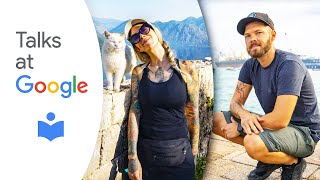
Recorded as part of Talks at Google (October 14, 2024), this interview with authors Hannah Shaw (humane educator, founder of Orphan Kitten Club) and Andrew Marttila (animal photographer) explores their book Cats of the World — a photo-driven, interview-rich project documenting cat welfare and culture across about 30 countries. The conversation covers how the project began, examples of local advocates and solutions (e.g., Los Cabos Humane Society transformation; community sterilization programs), photographic methods for capturing cats, and practical actions readers/travelers can take to help cats locally and abroad.
Questions this video answers
October 14, 2024.
About 30 countries.
Orphan Kitten Club.
Over 4,000.
Chapters
Everyone, welcome to Talks at Google. My name is Jacob Merriman. I'm a global learning specialist on the mastery team at Google and today my guests are Hannah Shaw and Andrew Martola. Hannah is a humane educator, author and animal advocate. She's the New York Times bestselling author of several books including Tiny but Mighty Kitten Lady's Big Book of Little Kittens and Kitten Lady's Cat Tivity Book, which I just got from my 3 year old. Super excited about that. Hannah is also the founder of Orphan Kitten Club, a nonprofit organization saving the lives of neonatal kittens. Andrew is a professional animal photographer specializing in cats. He's taken millions of photos which have been featured worldwide from the COVID of National Geographic to Good Morning America. Andrew is the creator of books including Cats on Catnip, how to Take awesome Photos of Cats, and likely my personal favorite Shop Cats of New York. He's also a board member of Orphan Kitten Club. What a power couple, you guys. They live together in California with their cats and an endless rotation of foster kittens together. They are the authors of Cats of the World, a journey across 30 countries exploring feline welfare and cat culture around the globe. The stories are powerful, the photography is breathtaking and I'm thrilled to talk to them about all of it. Everyone, I give you Hannah Shaw and Andrew Martella. Thanks to both of you for joining us today on Toxic Google.
Thanks so much for having us. This is so fun.
Andrew, when you connected with Hannah eight years ago, you told her it was your dream to be a stay at home cat. Dad is traveling to 100 cities around the globe. What you had in mind when you told her that?
Yeah, not technically, but I wouldn't have it any other way. I think Hannah does a lot of talks all across the country and it's very important that someone stays home and takes care of all the animals while she's away. So I still fulfill that role, but no, I'm a world traveler, baby.
I love it. I was wondering that actually like as I'm reading the book, I think later you talk about your cat sitter in the book, but I'm like, who's taking care of all the cats while they're out there? Like globetrotting? That is so cool. I'm glad that you did. My wife, daughter and I belong to a 15 year old Siamese named Button who's a rescue and all four of us really enjoyed Cats of the World and we can't wait to have it on our coffee table proudly displayed. So super excited to talk to you about it. I think the book is a special example of how the two of you compliment each other. You've been collaborating for years now, and I wonder if you could take us back to those early days reflecting on what you've learned from each other and how you've grown as a team.
Oh, my gosh, I love that question. Well, when I met Andrew, I was already years and years into being a kitten rescuer, doing some of my humane education and advocacy work. But I remember that Andrew, when I met him, he had his first book shop, Cats of New York, coming out. And I was like, what's that like to do a book? I've never, like, thought that I could do a book. And here's this person who got. Got to really do it. And he encouraged me so much when we first met, and he like, only through kind of learning from him about how the literary world works was I able to take some of my foundational concepts I was working on through talks I was giving and things like that, and turn it into my first book. So I think that we've complimented each other quite a lot. Andrew, I don't know if you want to talk about kind of, I don't know, the way that I've whipped you into this whole cat rescue frenzy.
Yeah, yeah. So I had. I had been taking photos of cats for many years before I met Hannah. And it was not just cats, but we have a lot of things in common, like the, Our world views, our. Our morals, all that stuff. Cats were just kind of like the cherry on top. But when we got together, I had been really involved in taking photos of cats, but not so much on the other side of it, which is really needed. It's just the animal welfare aspect of that. I had taken photos at shelters, but had never fostered or anything like, anything like that. And, and Hannah, that's her bread and butter, you know, that is what she does day in, day out. She misses sleep almost every single day in order to take care of kittens. So she, she taught me a lot. My work ethic is. Is very different than it used to be. Cause she's a very hard worker, but she gives so much also. And it's really inspiring to be in collaboration with. She's my wife now, but she has really inspired me to be a better person.
Aw, thanks, Andrew.
Yeah, that's so cool. No, you can really tell that you complement each other both really well as both partners and as animal advocates. So I know that's a lot of work, though. And Hannah, you write in the Book to decompress from the constant demands of animal resc. And creative work as well. We've always loved to travel together and that the idea for the book came as you were meeting cats at a meat market in Malaysia. So I wonder what you can share about that trip and how the project evolved over time.
Yeah, so we would kind of say, like, okay, we're gonna travel to, like, get away from all this cat work, give ourselves a break. And then we would travel and end up wanting to just be around cats wherever we would go. Because, you know, I think a part of traveling is you become naturally curious about, like, you know, if you are into architecture, you travel and you go, I want to learn about the architecture here. Like, what is. What is this building? Like, how can I learn about this? The same thing goes for us. I mean, when we would travel, we would want to meet the people who are doing cat welfare work. And we kind of naturally found ourselves drawn towards spaces with cats. And of course, with Andrew always having his camera with him, we were capturing a lot of that. I think the idea for the book really was born out of wanting to share what we were seeing and what we were learning, because it was so eye opening for me. You know, I. I'm an American cat rescuer. I know the American shelter system very well. I. I know the way that we do things here. But other communities face really different issues. There's, you know, this intersection of kind of the. The culture and the history and the climate even that all of that kind of intersects to have different impacts on people and on cats. And that means that the way that cat welfare looks and the solutions for cat welfare look different around the world. I found that super inspiring and thought it was such a cool idea for a book. And you're right, it was. We were in Malaysia, and I remember we just. I sat down on the ground and was like, I need to write right now. Like, I need to start taking notes right now. And I think Andrew was like, aren't we supposed to go for a hike? And I was like, I need a minute. And I started just writing because I was. I felt so inspired by how kind of there's all these differences in the ways that we care for animals, but then there's this kind of singular thread that goes through everywhere we go, which is no matter where you are in the world, there is somebody there helping cats, there's somebody showing compassion to cats. And that's how the project was born.
Hmm. And so it sounds like it was very organic at first, you know, Andrew, you're taking photos. Hannah, you're kind of writing down thoughts. Did it. Did the idea kind of come in that moment, or did it. Did it change from what you thought it would be originally?
Yeah, I think that we had about six countries already that we had visited and. And captured these photos and some of the stories and, you know, built relationships with other cat advocates. When we pitched the book to our publisher and kind of said, like, here's what we think it is, them saying yes allowed us to kind of blow this out of the water and go, like, okay, like, what can we do if we can visit. Like, if we can visit every continent on earth that has cats and really, like, do justice to this project? Like, what do we want to show? And so I think the way that it changed over time was in the beginning, we were just kind of spectators, right? And naturally, we ended up wanting to not just, like, immerse ourselves through volunteering and things like that, but really to center the people in that community who are doing the work. So my writing ended up being very, like, interview heavy, because I think nobody can speak to their community better than somebody who lives there who's doing that work. So I think that that was like a. A big kind of transformation as the. The work evolved was finding those local people, building relationship with them, supporting them, how we can kind of, like, immersing ourselves enough that I felt I had a good enough understanding to do justice through writing and then really giving the opportunity to center their voices in the book.
Well, people have to buy it, so I don't want to give away too many of those stories. I would like to talk about one or two, but maybe before we do that, Andrea, I'd like to hear from you. I feel like your work is really timeless in how it draws out the natural beauty of the surroundings, the people and cast that you see from behind the camera. That one shot of Oreo in front of the Annapurna Mountains was just breathtaking. Thank you. I've heard you describe cats as really uninhibited and just unapologetically themselves at all times while traveling. I'd love to hear how did you get their attention, number one. But then number two, how did you draw out their unique individual personalities?
Sure. So this project was. Was very difficult. By far the most challenging project of my career. Probably Hannah's also. It is. I don't know if you have cats, but probably some of the viewers have cats, and they know the difficulties inherent to trying to take a picture of your cat. I think one of the things that we did really well is we primarily like, we love cats, so we understand cat behavior and cat psychology, and we. I don't want to say we leverage that in order to fast track a relationship with these cats. So in many instances, you know, the cat may be standoffish, and then we present handfuls of treats or food or just, you know, a soft voice. And they approach us because they understand that we're not there to hurt them. We're an ally. So throughout this book, we probably went through, like 200 pounds of treats and toys and catnip and all that kind of stuff in order to, you know, unlock their personality. Because I find that when cats are comfortable, that's when they are the most uninhibited. That's when they can really show who they are. And so virtually every picture in this book is of a cat who is comfortable being around us and showing us who they are. And then being able to capture that was just. It was a remarkable project.
Yeah, yeah. And just the way that you got the settings, too, you feel like you're getting to know them as individuals, but also the context in which they exist.
Yeah, I think a lot of that is what you don't see off camera. So you see the cat in frame. You don't see Hannah with her hand with treats, luring them, you know, directing them a little bit. So, yeah, we definitely employed so many different strategies, but I think, like I said, primarily, like, we love cats. We know cats, we know what works with them. We've. We take photos. I take photos of them every day. Hannah takes photos of them. You know, we have so many here at all times. We just. We're cat people. And so cats gravitate to that.
I think, too. Like, as a. A person who was kind of crafting the story, I would be like, pre planning some of what I thought would happen, but then I would, in the moment be like, oh, like, this is the story I want to write. So I would know, like, the photo that I hoped to get, because I'm like, if we get this photo, it's going to make it easier for me to tell this story. Right. So I think Andrew did a great job with the photos of kind of like, easing the cat into whatever we were doing and, like, being patient with them. But then once that rapport is built, if we can, like, scoot them a little bit to the right so that we get, like, the amazing castle behind them or whatever it is, then we were able to get that. So some of the shots, they look like, how could you. How did you get this cat in this exact space? But it was sometimes, like, a quite a process. Bribery, trust building and. Yeah, a little bit of bribery.
Kibbles help with that, I would imagine. Yeah, no, the settings are incredible. You know, I'm thinking about how in Istanbul, readers meet a mama cat and her babies that are making their home behind some prayer mats at a mosque. And then in London, you meet Hodge, who's resting on the bishop's throne at one of the oldest cathedrals in London. Pretty cool. You befriended cats and caretakers who represent diverse faith, traditions, geographies and cultures. Through that experience, what did you discover that all of us and all of these cats share in common?
Yeah, I love that question. I think that, you know, we might have very different languages, different cultures, different beliefs, different histories, but every single community has some way that they're showing compassion to cats. And I think, like, sometimes it even, like, the love of cats transcends language. We had full, like, conversations that were not verbal with people, you know, where we're just, like, pointing to pictures of cats or, like, we have cat tattoos. I was, like, pointing to my hand of my cat tattoo to a woman in France who spoke, like, almost no English and I speak almost no French. And. But we're like, we love each other and the love is there, and we're giving each other hugs, going, like, we do the same thing. Like, we're. We're ultimately very similar, even if we're different in the ways that we are. So I think, like, that's kind of a side quest of this book, is to help people understand that, like, even if someone maybe speaks a different language from you, they maybe look different than you, they have different beliefs than you. Like, we're all, ultimately, we have the same core, right? That compassion transcends everything. And I hope that. That. I hope that comes through in the stories that we tell in this book.
Oh, it absolutely does. I mean, I think about the one where you spent time, I can't remember her name, but with a woman in Greece and you're enjoying tea together. And at the end, I think she uses Google Translate and she says, thank you for loving animals.
Just a moment. She made me cry. Because we both miss our grandmas so much. Our grandmas have passed away and we didn't plan to be in this, like, really motherly type woman's home. It just happened that we were taking photos in Lefke's village on the island of Paros in the Greek islands, and somebody said, oh, you need to meet Mrs. Caparu. She's this like 90 year old woman who lives at the top of this mountain overlooking the village of Lefkies. And she's like the grandmother of cats. And we, she. Not only did she like invite us to take photos of her cats, but she was like, making us little plates of like, the cherry tomatoes she grows in her garden, making us coffee and sitting and we, we like sat with coffee and just looked at each other and just like, Andrew took photos and I just held her hand and it made us. We both left, like in tears. It was so profound because, yeah, we share, we share connection, even if we don't share language.
That's so special. Family members and I have rescued cats my whole life at different periods. Nonetheless, as someone that's relatively unfamiliar with animal advocacy, cat advocacy in general, I learned a whole lot from your book about how each country's history, culture, economics, and natural environment climate affects our feline friends. How did this project change your own perspective on animal advocacy? As folks who are really experienced in.
This space, I think the biggest take home for me. I do a lot of work with animal shelters in the United States. And I think in the US we have the most robust shelter system in the world. You know, we have over 4,000 brick and mortar animal shelters in the United States. And so that can feel like, oh, we must have it all going on, right? We got it all right here. When actually a lot of communities that have fewer, like, municipal resources to, you know, impound animals into cages, they actually have much higher rates of community empowerment to take care of animals. So, like, you know, for instance, you take a place like Lamu island in Kenya, I mean, it is like a tiny, remote island and they have one vet clinic and there's no animal shelter. But the community members who live in Lamu, it's a fishing island, they take care of the cats there. And these caring advocates, just a couple people from this vet clinic, they go out there. There's not even cars in Lamu Island. They have no cars. They travel by donkey and by foot. And they are going out there with a rolling cart and taking cats from the community who need to be sterilized, bringing them in and doing that. And so I think the way that people care for community animals in areas where there's, it's maybe like, less easy to just say, like, not my problem. Put them in an animal shelter, right? Like in America, it's like almost too easy to just say, like, oh, this cat's on my lawn. Like, bring them to the Animal shelter. That actually isn't the best thing for cats. What's the best thing for cats is when we realize we're in community with animals all around the world. We're in community with cats. And I think, like, I guess my takeaway coming home is to empower people who are part of the community to like, be a part of the solution for them. Maybe that's that you're taking your neighborhood cats to get sterilized. Maybe that's that you're caring for animals in your. In your neighborhood, you know, but like, I think we have a little bit of an over reliance on institutionalization in America that has unfortunately led to pretty high rates of euthanasia here. So there's different ways of doing things, and I think we can learn a lot from that.
Yeah, no, I think about how you write that, you know, folks see cats as autonomous communities in these countries. Right. And it's almost like we are a community living alongside of them, and we're all a community together. I wonder how, you know, what are some practical ways that you think we in the United States can, you know, start to action, some of those lessons learned and make a difference in our own municipalities, in our own communities?
Yeah, I mean, I think the biggest thing is just like transforming the way we think about animal shelters. Like, an animal shelter is not just like a facility that should receive and deal with animals, whether that's through adoption or euthanasia. I really like when people think of a shelter as like a resource where if you find a kitten outside, for instance, you know, you don't have to bring that kitten to the shelter and leave them there. You can go to the shelter and say, like, you know, can you help me with the spay and neuter for this animal I'm willing to foster? Can you help me with supplies, things like that? I think that when we kind of offer what we can give, maybe we can't all give the same thing, but fostering is certainly a really, really big way that we can have more empowerment as community members. And then, yeah, I think the other is just like, it's okay that we live in community with cats. You know, we don't. Every cat is not a problem. They're not a pest. We don't need to institutionalize and euthanize cats just for existing. Right. You know, there are other ways to manage that. And certainly sterilization and trap, neuter return is a huge one. It's globally very effect. You know, it was interesting going to places like in India, there's like A history of so many community dogs. They share a lot of community with dogs on the street. And because that can be perceived as more of, like, a public safety issue, the governments of India have put a lot of funding into sterilizing community dog populations rather than euthanizing them. So you see, like, all over Delhi, you see these, like, dogs that are sterilized that live in the community. And now advocates there are taking those same lessons and applying them to cats. And it's just a really beautiful, like, different way of doing it. But you see the impact. I mean, the impact is huge. Like, especially, like, we went to Mumbai. They're a little bit further ahead on, like, having this really, really big impact in their community. You don't really see as many community dogs there. And you see tons of the cats who are in the community now are sterilized. And that's because of individual community members, like, you know, without the help of their local shelter, like, they're just going out and making a difference. It's really cool.
Andrew, I know you. You've said that you've learned so much about, like, animal advocacy on this dream team, right, that you and Hannah have. And I also know, you know, you. You've talked about how photography is a big part of, you know, helping cats live better lives in any of these contexts, just so that folks can get to know them and meet them. And I wonder if you felt the same way about the people that you met that are doing this work in other countries. How did you go about kind of getting to know them and capture some of these great moments that we see in cats of the world?
Yeah, absolutely. I think when you put a real face, whether it be a cat or a human, in front of the audience, you can connect so much more readily with that person or that animal and being able to showcase people who might not have the Internet or might not have had any visibility, especially on a global scale. Like, we're able to, you know, highlight these people on our social media. It really does make a difference to them. It really empowers them. And they. They don't feel alone because in some of these small villages, they might be the only one doing this work when we come and we say thank you. So everything you're doing, we want to highlight what. What your great efforts are. We want to see if there's any way we can, you know, do a GoFundMe or fundraise help you, but also just showcase the good work that you're doing, because maybe you've never been recognized for this before, and it is profound, the response that we've gotten when I show the photos in real time of the people maybe they've never seen, you know, what. What they look like doing their work. So I think it's been remarkable, not just to capture the cats, but also the people who are doing all this great work.
I love that. There's one story in particular that stands out to me, and it's about Armando Martinez in Mexico. And so he's the director of Los Cabos Humane Society. And Andrew captured Armando against this, like, bright backdrop with perches and towers and ladders for cats. And he explains that the walls, the. The built in cubbies in the walls used to help hold kennels where cats would wait until they were euthanized and. Oh, you got a buddy. This is awesome.
Yes.
Sorry. Is this Harun?
This is Harun.
Okay.
I heard him coming. I heard him coming. I heard the meow. I said, oh, he's gonna pop.
I can put him down. You want to come to my lap? Come here, buddy.
Okay.
We'll just hang out here.
Yeah, I'll just circle back, but yeah. Armando talks about how there's this space with cubbies, and the cubbies used to hold kennels where cats would await euthanization. And he's taken that space and made it this really bright, beautiful place where cats can play. They have towers to perch on, ladders to climb. And, Hannah, you captured this great quote. He says, we just have to change the mindset. This. This area is not for sacrificing. It's for playing.
Oh, my gosh. I have goosebumps just hearing it again, because talking with Armando was so profound for me. He came in and he kind of just said, like, the way we've been doing this, we're not going to do it anymore. And, like, everybody told him, like, I don't know, we've done it this way forever. You know, they were taking in cats and euthanizing. He said, no, we're going to change this room, and we're going to. We're going to do things differently. And you would never know. I mean, this room, this cat room they have at Los Cabos Humane Society is, like, so beautiful. It looks like a big catio with all this enrichment and. Yeah, I would hang out there. Yeah. Hearing him tell what that room used to be, it's like you can see the profound impact that one person who just thinks a little bit differently, who just sees a potential future there just through that belief that things can be better. Like, he Made that happen. And I love that photo of him. He's like holding a cat and kind of looking off into the distance. And I was like, he's got my vote. I love that guy. He's awesome.
Yeah. Such a cool story. Yeah. Gave me goosebumps too. And then, you know, I think a little bit earlier, but in your chapter on Puerto Rico, there's another advocate, Irma Podesta, I believe is her name. And she says everyone can be a rescuer. You just have to act when a cat needs you. So I wonder if you can both, you know, share, you know, whether we're at home or abroad, you know, folks who like to travel as well. What are some things that we can all be doing to act to make a difference?
Yeah, I think one of the simplest ways, as if you are traveling, if you know exactly where you're going, you can reach out to rescue groups at the destination and see are there any supplies that you need that I could bring you? Because sometimes it's just a question of not being able to get certain products. And then on the way back, it is quite simple in many countries to be able to bring a cat back to the United States where they might have a better outcome. So in Puerto Rico, for instance, it is part of America, but we brought back four cats from Sevagato and we've done that with a couple of other countries and yeah, it's just a very easy way to get involved at that destination.
Yeah, I love that, Andrew. I think people, when they're traveling or when you're at home, you have to remember if you have love for cats, for first of all, you can take that love out of your heart and like put it into your hands and do something with it. Whether that's like through fostering or through donating or what, even if it's through just promoting the work that other people are doing. But like in your community and in any community you visit, there's somebody who will benefit from you reaching out and saying, how can I help? You know, that's what we did. We reached out in the pre planning for all of these and we, we would say like, what can we bring you? Can we bring you kitten formula? You know, a remote island probably doesn't have kitten formula and can we bring that for them? Sometimes it's like you can even volunteer while traveling. We were in, we volunteered in many places. Puerto Rico, like you say, I mean, we on the island of Vieques, we volunteered with a spay and neuter effort. And that's like It's a really cool way to travel and do something a little bit different. You're not just like doing the regular tourists stuff. You can go there and actually like engage with people in that community. Learn something that you would never learn just as a tourist. We were like out trapping cats with humane traps, like late into the night. And I think I write about in the Puerto Rico chapter, like just the sounds of the ki. Frogs which like are. It's like this really beautiful sound that you would only hear if you were out at 2 in the morning trapping cats on the island of Vieques and like getting to have that experience, it is like fulfilling for you, but it's a way to like give back to the community that you're working in and that you're visiting and understand something about where you're traveling. So there's lots of different ways to help animals both abroad and certainly in your community. Just like reach out and find out who's doing work and how you can help them.
Well, we could go on. This book is dense with wonderful stories, vivid photos. I hope everyone will pick up their own copies of Cats of the World wherever books are sold. But now, Hannah, Andrew, before we go, what's one place you would like to visit next that we didn't hear about in the book or that you didn't get to visit?
Oh, we have so many places that we would love to visit, honestly, dream destinations. I mean, I, there's a, you know what I loved was I loved like the, the Balkan states that we visited and I'd love to like spend more time in that part of the world. You know, when you travel, you about other places like we would travel to, we traveled to Croatia or Montenegro and people go, you're not going to Albania. You know, Albania is the most beautiful country in the world. I'm like, I didn't, I didn't know that. And they're like, well, you're an idiot if you come all the way here. You don't go to Albania or you didn't go to Romania. Like they have the most beautiful castles in the world. And I'm like, I didn't know that. We gotta come back. So I'm really interested in that part of the world for sure. There's so many places we'd like to go and so many stories we wish we could have told. You know, it's page limits are my enemy. I would, I would have loved for this to be a, a 4,000 page book, but I don't think anybody would probably buy a 4,000 page book.
Well, next, Cats of the rest of the world, right?
Yeah. Andrew, what about you? Where would you like to go next? Andrew?
I still want to go to Taiwan. There is apparently a cat village in Taiwan and who knows if it's really populated by all the cats that it looks like on the Internet. But I know that if this happened many times during our project, this book, we'd go to a place and it was not at all what we thought it was going to be, but we invariably find something else that's connected to that. That may have been way cooler than the initial thing that we attempted to go to. But yeah, Taiwan also.
I don't know if she's still the president of Taiwan, but at the time we were like planning this book, the president of Taiwan was like a huge cat lady. And I think her cats had social media. And I was like, we gotta go there. We gotta, like, make this work. But it unfortunately, with like some of the pandemic restrictions, it was like, not possible for us to go there. So that's definitely on the bucket list for the future.
Amazing. Next time. Well, Andrew, Hannah, thank you for joining us today. It's been an absolute pleasure talking to you. Thank you for the work that you do for cats and then for the communities that they live in. We appreciate you.
Thanks so much for having us.
Thank you. Really appreciate this opportunity.
Thank you and thanks to our audience for joining us here at Talks at Google. We look forward to seeing you on the next Talks at Google. Take care of.
More from Guy


Cheryl Strauss Einhorn | The Human Edge: Smarter Decisions in the Age of AI | Talks at Google



Rachel Glennerster | Innovation and the Center for Global Development | Talks at Google

Rebecca Winthrop | Rethinking the Purpose of Education in the Age of AI | Talks at Google

Dr. Robert Wachter | A Giant Leap: How AI Is Transforming Healthcare... | Talks at Google



