Harper Steele | Will & Harper | Talks at Google
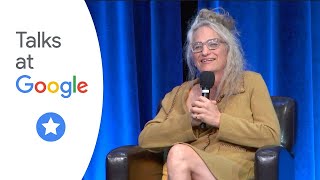
Emmy-winning SNL writer Harper Steele discusses Will & Harper, a road-trip documentary with Will Ferrell shot over 250 hours. She talks about why she participated, how the trip deepened their friendship, and what she learned meeting people across America. The conversation covers comedy-room culture, parenting a trans child, and her upcoming Netflix show with Will.
Questions this video answers
Trans Awareness Week talk — Nov 19, 2024 (Talks at Google session).
About 250 hours of raw footage.
A little over two hours (final theatrical cut).
Josh (identified in transcript as the film's director).
Kristen Wiig (performed the song at the end of the film).
Chapters
Foreign.
Good afternoon everybody here. I heard there's a lot of people online, so good afternoon to everybody online. I have the pleasure of introducing today's speaker for Trans Awareness Week here at Google, Harper Steele. Y' all know I gotta say Harper stuff. I gotta build her up, right? So, as you all know or may not know, Harper is an Emmy award winning comedy writer as well as producer. She's probably most well known for her 13 years at Saturday Night Live where she became the head writer. After she left there, she took over the job of creative head at Funny or Die, where she wrote films such as Casa de Mi Padre, as well as Eurovision contestants, A Story of Fire Saga. And then obviously she was kind of the subject of this documentary that came out recently called Will and Harper. We might be talking a little bit about that, but yeah, it is my pleasure to introduce to you all Harper Steele.
Come on, we need a bigger turnout and let's go raid the offices. Let's get them out. What are they doing?
Harper.
Hi.
How are you?
I'm amazing.
Oh, my goodness. So, you know, we have some questions about the documentary. We have questions from the audience as well here. If you all have a question, let me, you know, let me know and then just go talk about, like friendships and stuff like that. But before we get into it, you bet you, you have like a little. You have an affinity for a certain type of clothing.
Thrift stores.
Yes, thrift stores.
This dress, I like to say was. Personally, this dress was made for me. This is a. This. By someone else. For someone else. Then I found it and it's my dress now and it was made for me. So I think about that when I go to thrift stores all the time. This, I do think that this dress was handmade, which is something that I always look for. And so I'm very proud of that. I'm very proud of that as my style. Right now I'm doing all these events and people go, well, do you want to wear this brand or do you want to wear this brand? And I am a woman, a trans woman, so the answer is always yes, give me something for free. But I will say that I prefer to find little gems like this.
Well, there you go. I think that's like all thrift store aficionados, it's like that little gym that they find. So thank you for that. So, you know, but we're here. You were in a documentary.
I was.
And so. And it's with. I forget, like Will or Will Ferrell. Will. Fat guy.
Yeah, yeah.
You're A documentary with Will Ferrell.
Yes.
And in the documentary, it is told to the audience that it was Will's idea.
Yes.
So can you walk us through what that was like when he asked you about, like, hey, I have this idea of this documentary. You know, knowing that a lot of times a lot of trans people just kind of just want to go about their day, not be in the spotlight. So can you talk to us about your thought process to actually be part of the documentary?
I especially did not want to be in the spotlight. I, I, it's my nature to not be on camera. When Josh, the director, was looking for archival footage back in the days of SNL, he jokes, but I think it's true. He found two pictures. And I was there for 13 years, so I do, I avoided cameras. I didn't like it. I'm not sure why or what that was for. If I was a pop psychologist, maybe I was, you know, just in hiding always. But so when Will asked me, he. We were sitting in his backyard, and he hadn't seen me for a long time. It was through Covid, and we were sitting respectfully six feet apart. And he said, I have this idea. I don't want it to sound too virtuous, signally, or I don't want to be opportunistic, but would you want to go back and do a road trip like you like to do? Because I do. And would you like to film it? And I was shocked, and I said no. And, and I left it there. And then I went back to New York and sat in my house for another three months watching. It sounds very altruistic, but I'm not sure that was the entire motive. But I was watching a lot of trans bills, anti trans bills being put before a lot of state houses across the country. 531, as I'm speaking now. So I said, wait, Will, he was very worried about virtue signaling or being opportunistic. I saw this amazing opportunity to take Ricky Bobby and Ron Burgundy out across the country with a trans person. And I didn't think that there would really. I didn't think there was any other person who sort of connected in that way. And I still, to this day, I can't think of who that was. Maybe 30 years ago, it was Bill Murray or something, but, but I don't, you know, that bros like that everyone likes. And I've been out there with him many times before I transitioned. And everyone likes Will. And so it was, yeah, I just thought that was a good idea. The other sort of more Fun and silly reason for doing it is that Will and I, I think our whole career, more than some other people who've worked with Will, we do like to make projects that people go, why? Why did you do that? And I think that's just been our sense of humor that we share. I know why he makes some of his bad movies because he gets paid a lot of money. But, yeah, for me, it was just like, oh, yeah, this sounds kind of weird. Let's do this.
No, that's so the film. So I think everybody here has seen it, so this is not gonna come as like a spoiler, but it's a road trip across America, right? I think we've said that, yes. And a road trip is a very. I don't think there's ever a road trip that goes like it's supposed to go, you know.
Yeah, yeah.
So how is that, like, going on a road trip? How did that shape the narrative for the documentary?
Yeah, there's no shape. In fact, when Will and I got to the other side, we got to the beach here, right up the road here. We looked at Josh and said, well, good luck. There's nothing there. So. And it's true, there was 250 hours of footage. And we were not dock makers, so we didn't know what was there. You don't know what you're going to encounter on the road, which is great. But that's why I always like a road trip, is because the surprise or the joy that you might find out there and sometimes the danger, and certainly as a trans woman, the danger is much more real. But, yeah, I just think it opens up possibilities for all kinds of things. And Josh made sure to have a very tight, small crew that allowed him to be very facile and run around with us if we had some crazy idea.
Well, it was definitely 250 hours.
250 hours of footage. Josh claims that there was a five and a half hour version that he thought was really good. I'm glad he spared us all that, but, yeah, we will. And I finally saw that. About two hours, a little over two hours. And I suggested some cuts based purely on vanity. I don't want to see me at this angle.
And.
And Will had actually a little ad that he wanted to do. Josh had forgotten that he yelled at these dogs in a balloon from the balloon. And Will was like, I thought that was pretty funny. And none of us were that. It wasn't our movie, really, in that sense, it is the filmmaker's movie. And I just thought he did a masterful job. And we were talking about it earlier, the Kristen Wiig song at the end, Will and I, we got on the beach and thought, well, she's not going to do it. And then I would call Josh or just have conversations with him throughout the summer and say, did Kristen end up doing the song? And to go, I don't know. It doesn't seem like she's doing it. And then he surprised us with the song, which was very sweet.
No, I love this. I actually, I think I. I think we all cried when we heard the Kristen Wick song.
I hope so.
Pretty sure so. So, you know, you're in this car, Will Ferrell, you're traveling across America. How would you say did your relationship with Will change? Obviously you all chronicle, like, the evolution of the relationship in the film, but as you did this road trip, did that, like, change the relationship? Did it evolve at all?
Oh, 100%, yeah.
Sixteen days.
It evolved the way that relationships with people who are going through change should evolve. It's not entirely. It's not just a film about sort of my trans experience. It is a. It's a film about his experience to negotiating change. And I do think that the two of us, we were very close. We've had many, you know, heart to heart conversations over the years, but this took it to a different level. I personally had never seen him cry, so that was funny. But that was very nice, actually. Sorry, I couldn't help myself. But also. Yeah, so I think what evolved, what was the most magical moment for me, and it's the magical moment I experience quite often with close friends. There is a moment when I can tell a CIS person has recognized me the way I want to be recognized. I have lots of friends who I think are very good with pronouns, very good with the way they see me and are very respectful. But there's a kind of another level when you can see your friend the way that they want you to see them, and we'll reach that level around Vegas. I can feel it. I could feel it. I knew what it was. And it's been that way ever since. So it was very special.
I think that's pretty unique that you felt like maybe in the beginning it wasn't there, but towards the end it definitely was the other relationship. I want to talk. You know, obviously it's a road trip with you and Will Ferrell across America. Do you think your relationship with America changed at all during this road trip?
My confidence in my own ability to navigate it post transition changed my confidence Deepened. But, you know, we've had an interesting week. How will I put that? You know, I feel the right to be a little angry. This is Transgender Awareness Week. Bad timing, guys. But, yeah, my. I'm from Iowa. I've been traveling across the country for 40 years. I have talked to every kind of person, safe and dangerous and good. Good and bad and whatever. And it's. I don't think people care as much about trans people as our politicians and our press think. Think they do. Maybe all those political ads against transgender kids in sports or health care, maybe all those ads were effective. I don't think so. I still don't think so. I think that, in general, Americans are either, I don't give a F what you do, or I want to meet you on a human level, and let's be kind to each other. And I genuinely believe that, although I'm saddened and angered by what's happened this last week.
Thank you. Also, as you say that, though, as you're going across the country, I think a lot of our anxieties went up in certain instances where you. You and Will found yourself, you know, right off the bat, we think of the Texas Steakhouse, right? Were there any, like, highs and lows in the. In the doc or highs and lows in your trip that did not make the documentary that you want to talk about?
I had an interesting high point for me. We went to my high school, and there was a sort of express yourself kind of group. I don't want to say it was a queer group, but it was. Was a group that met after school, not on school time, bad people. And we talked to these kids, and this was my high school. This group would have never existed in 78, 77, walking through my halls. I hadn't been in my high school. It was super powerful. It was really a great experience. If you visibly show support for transgender youth in a high school, you're going to get bomb threats. That's what's going to happen. And, you know, Josh had already decided to cut it. He thought it was boring. I'm just so happy he cut it. I just. I didn't want that for my school. I didn't want that for those kids. I just. It's just. It's an unfortunate reality, but it is a reality that school would have been. People would have called up bomb threats for years to come. So we've left it alone. And, you know, I've now just broadcast it on Google to 200 million people. But we'll see how that works out but that was a very special moment for me. There were more, but mainly it's just Will and I talking and making each other laugh in a car. So there's a lot of useless crap in there. So.
So thinking a little bit more about just using humor, Right. And I think we can kind of see some of your humor now coming through. How would you say your humor has really influenced how you went about this road trip, knowing that traditionally humor is used in a way that's somewhat negative when it comes to trans people. So how do you think about that with yourself in humor?
Well, there's a few things here. One is, one is, I always like to point out crossing the country as a trans woman is a lot different than crossing the country as a trans woman. With Will Ferrell, that's just a different experience. Again, he is beloved. And crossing it with a camera crew is a different experience. It's not as safe. And my privilege and sort of my ability to kind of do that that way is not an average person's experience. Going across humor, though, is, as my director likes to say, it's the shortest distance between people. It's a great way to sort of allow people in and get conversations started. It's what I've used my whole life. So it wasn't anything planned. It was just what's natural for Will and I.
What advice would you have for others who are like. What advice would you have for others who are navigating their own journey of self discovery, potentially transition, just self actualization.
I mean, I can only speak to my own experience here because everyone is in a different environment too. Safe, unsafe, you know, whatever the background is. Repressing who you are sucks big time. And coming into who you feel you need to be or are is pure joy for a long time. Again, there's life has. You still have to go make money and pay rent and stuff. But the joy you might feel or could feel by allowing yourself to be who you need to be is the most important thing to me. I think it's where a particularly strong amount of cruelty is coming from, from people when. And this is not a Republican, Democrat thing, this is just a human being thing. When they, especially with trans youth, try to stop that person from being who they need to be, it twists and kills and hurts that person the rest of their life. And I know this because I felt it. So to be able to fight that off and work through it and find your own way in life and be who you need to be, it's essential. Every person should have this. Right. Which I thought we did, so I can advocate for that the rest of my life.
Love that. And so thinking about, like, just kind of along the same lines, you know, what is your hope for trans representation? I guess we could maybe broaden even just representation as a whole in media going forward.
My dumb and simple answer is more. You know, it's like, you know, it took Will Ferrell maybe to. For some people to meet their first trans person. And that's sad, really. I mean, glad they're watching it and Will's a good guy. I'm just saying it's like, if I'd done this movie with another trans person, it would have been an indie film at Sundance, got bought by no outlet. Nobody would have seen it. You know, it's. It's. So I think we need to see more trans people represented in bigger, brighter, funner projects. It's happening a little bit, maybe here and there, but it could be more. I also don't worry about Hollywood representation as much as what I know is happening. Queer people are in everyone's families in America at this point, whether they like it or not. And trans people will be a part of their lives moving forward whether they like it or not. And you can show care and love for your family members or not. And I think we all know what that should be. So I'm. And again, this is not a trendy thing that's happening or an uptick in any of this. There's been trans people and queer people here on this planet for as long as there's been any other kind of human being. And. And because now maybe they feel like they can come out, there's more people coming out. Maybe. I don't even know if that's true. But you're going to have. If you're out there and you're angry at trans people, you're going to have someone, you know that's trans at some point, unless you're very old. And I think the only path forward there is to respect that person like you would any family member.
I want to dig a little bit deeper in that nuance. And then I only have one or two more questions. If you have questions that you're thinking of, whether it's we have the dory here or here in the audience, feel free to start prepping those. But backstage, we had talked a little bit about representation. Right now you said simple answer is more. But I think there's a more nuanced answer you gave me backstage around representation. Do you mind sharing that?
It's Difficult, because the history of trans representation, and I was a grad student before, so I'm pretty smart. No, the history of trans representation is white and trans, feminine and female. So it's Christine Jorgensen. It's all the way up to Caitlyn Jenner on the COVID of Vanity Fair. That's obviously not the history of trans people in any way. It is the fascination by male media to heighten this sort of version. And that representation exposes a kind of hysteria and hatred that also then affects other trans communities that don't have my privilege, that don't have my kind of way of accessing my safety. So representation. There's always a good and a bad to it. I'm still for it. I work in. This is my job. I work, I write. So I can't not be a representative in some way. I didn't necessarily want to. But when you're trans and you're out front and suddenly you are. But then there's also a legal side here that is so vitally important. Groups like the HRC and ACLU and any group out there helping sort of the legal side. There's two. There's really two wings of any kind of movement for any kind of queer politics and its representation. And then it's the sort of political side or the legal side. And so the two have to work hand in hand. Hand. But, yeah, representation comes with different kinds of issues. But what can I say? I'm a ham.
I did not think that's how that was going to end, by the way. Okay, so. And then I'm going to get Rachel. Don't worry if you're out there. We got your question. It's the first one, but the last thing is, what projects are you working on now? Can you tell us or no, it's one of those.
Yeah, you got to be careful with writers. I am writing a sort of comedy memoir, ish thing that's been joyful for me to play around with. I wanted to write it. I've wanted to write it for the last year. I have a lot of thoughts on being trans that are not serious. And. And then I got the opportunity because of the film, so that's been a plus for me. And then there's a Netflix show that Will and I are working on and start writing again on in December. And I'm not going to tell you anything about it, so screw you.
I love how you just like drop these names. You're just like name dropping. But it's like your friends and your colleagues. It's super cool to hear. All right, so first question we have from the audience.
Oh, okay. There we go. Good. Oh, okay. You're just waving. Hi.
Okay. So watching back TV from the 90s is hard, with so many jokes being deeply rooted in misogyny and homophobia. What was it like to be a writer in that environment? And also your personal sense of humor evolved throughout your transition. Has it deepened, shifted, or faded? Found new expressions?
This is a great question. I'm going to answer it a little bit obscurely because I'm literally writing about this, and my publishers would be super angry if it was on video. One answer very quickly is, I began to change before I transitioned. I have a trans kid, so I became aware of what comedy was doing. But I did start in the 90s, and the rooms were. I don't think there's a higher percentage than 99%, but we're all white guys. We had one woman at the Jon Stewart show, and the idea of having a trans person would have been crazy. So, yeah, I grew up in a very sort of misogynistic comedy world, and that was the world. It still is to some extent, and I took part in it, too. I'd love to say something like, I took part in it because I was afraid, and I wanted to make sure everyone knew I was a guy when I was trying to pass as a guy. But I don't know what the answer is there. I took part in it in ways that I probably shouldn't, and I'm not talking about intensely. My humor is silly and goofy. Generally. I hate punching down. I always hated punching down, so. But I'm sure I did things. I put people in dresses, I put men in dresses. I put women in suits and stuff and, you know, things I wouldn't. I definitely wouldn't write today. So I've evolved and I'm happy to evolve, but comedy evolves. Comedy is sort of ruled by culture and society, and it generally evolves. I'm not saying there's not a lot of retrograde and regressive comedy happening right now, but, yeah, I think culture evolves. I hope.
Any new expressions? What's that Found any new expressions in your own comedy?
I don't know. I mean, you know, I mean, yeah, I don't know. My comedy has, again, is always sort of veered into the. Just the silly. And, you know, my humor was probably started when I was 6 or something. I don't know. Carol Burnett, so it's hard to say. Both Will and I have been asked this question again. It's just, who do we want to make fun of? Which I never really did anyway. So, you know, I wrote a sketch with my friend Tim Meadows, the ladies man that became a movie, and I'm not going to write that movie now. That's an interesting movie. Tim does the character still on stage, and he's designed it so that it's not as abrasive or mean to women. But, yeah, I think you just grow.
Now, you mentioned earlier, obviously kind of bad timing what's happened over the last week, especially for the queer community as well as many other communities. And we find that specifically when you think about the LGBTQ community, lots of feelings of shock and unsafe. Right. What messages of hope, if any, can we take away from your and Will's cross country adventure? You know, like we obviously saw, there's certain times you stopped along the way, but is there anything particularly that you're like, you know what, because of this? This is the shining beacon of hope.
Well, the beacon of hope in that film to me is about friendship and it's about caring. And so I don't give up on that. I don't know why I would. So I don't think it necessarily was a, you know, a story about Transamerica as much as it is about how allyship works and how love works. That's, to me, what that film is about. So I'm not losing hope on that. I heard the corniest phrase come out of the election that I think is generally true about artists and creative people and the queer community in general. And it was, they buried us, but they didn't know that we were seeds. And I just think that when queer people are buried, which they've been buried forever, they find. They find their own way. So that's my hope. I think the community's going to be stronger and I think we'll fight stronger. We'll be a little more resolute. So, you know, that's very hopeful to me.
I love that. I like that a lot. I never heard that before, but thanks for sharing. And for you specifically, are there any things, you know, that you're going to do to address any upcoming threats or like, any type of.
I mean, I'm running for president. Oh, my. I would. Yes. No, I'm going to keep writing. I mean, really desperately for me, that's what it is. I would love to be of service. I don't feel like I'm a spokesperson for the trans community or the queer community. They have allowed me into their community and I am humbled by that. And I feel welcomed. I will do what they want me to. I feel like, privileged to be asked, to be allowed in. And I've been queer my whole life, so I feel like I'm home. But, yeah, I just. Whatever I can do of service, I would love to do that.
Next one really kind of dives back into. If we go back to your career at Saturday Night Live, was there ever a joker skit or character you wanted to pitch that you didn't because you were not out, or you didn't feel comfortable or were worried that it would land with the writers room or. Or that it wouldn't land with them, even though you thought it was really funny?
Kind of. Yes. No on that question. When I left SNL, I was, for, I don't know, 2008, for the next. Whatever those years I was at Funny or Die, and I was doing a lot of projects on the side, and I noticed that my writing was starting to out me more than it did. I allowed it at snl. SNL is a very competitive. Again, Tina Fey had been the head writer at SNL for a lot of the time there, so there was a very strong female presence at SNL by the time I left. Some would say not strong enough, but I thought it was great. But I still. The environment to me was I was around a lot of broly people, and so I was very afraid to express myself. Once I left snl, I wrote lots of things in my scripts and in comedy that revealed things about myself and hesitatingly would give them over to other people and say, yeah, this is the script I wrote. What do you think? You know, and that. That sort of joy that I was getting out of, like, letting this voice come out in the most hidden ways, which I think is the history of queer art. Like, if you go back into the 50s and 60s, a lot of playwrights were writing about queer subjects, but using CIS people to talk about it. So, yeah, not necessarily a joke I wish I'd told or gotten on at snl, especially.
In the film. Particularly when you all go through Indiana, right? You go to a Pacers game, and the next day, you know, you see, like, Will Ferrell is visibly upset that he did not, you know, maybe talk to the governor. You know, he has these reflections like, hey, if I realized this at the time, you kind of also had hinted at that. But was there anything between you and Will that you wish you had explored more thoroughly during the film?
That area there could have used a little more exploration. It's not contingent upon people to stand up for their trans people. They don't. They're friends. They don't. There's no have to's in this world. Will has become a wonderful jerk in that regard now. He's like a top advocate. He will correct anyone. So I think we were watching a bit of a process there and I think that that's very important in this film is that you've got someone bumbling along with good intentions who fails but then sees the failure and succeeds later. I mean, that's just humanity, understanding what's necessary for each other and my ability to let that failure happen. I'm not as frightened human being. And also if there's good intentions, I'm going to be kind towards that person. So I don't know if it was a failure to explore something as much as I'm glad that we explored it in that way, kind of as a mess, because that's what it is.
Thank you. And just for anybody in the audience who's here. So we still have all the questions here from the dory, but if there's anybody in the audience, there's the mic to the side. And if you. I'll be more than welcome.
Don't be afraid. I'm very nice.
So with that, this is coming from Rachel. Again, my favorite scene was in this. I always want to say salon, but saloon, Saloon, Oklahoma. Saloon in Oklahoma.
Don't say salon. Was not 1920s artistic salon that we walked into with F. Biden and Trump posters.
But I always wanted. So it seemed unsafe. But you generally connected with people. The kid with the bisexual friend, the Native American man singing and singing. How did that experience feel? And have your dive bar interactions. Have you. How have your diver interactions like those at the saloon shaped your view of America?
Well, yeah, that's a difficult question right this second because again, we were there with. First I was there with the camera crew. Then Will came in and they did not know Will was there, but the camera crew was there. So there may have been a little less hatred in the air. I'm not sure how to read that whole experience. And then of course, Will comes in and everyone's our friend. And that was typical of the road. So it's a little bit unreal. That said, I've been in a million of those bars. I know what I feel. I know what was there. When I walked in, I was quite nervous. I was quite afraid. There's a lot of anxiety. There's a lot of footage of film of me not interacting with people, not knowing how to advance. Yeah. Josh could have left footage of there. Just me sort of standing there, kind of looking lost, but I don't know. I just have faith again, despite what we've just seen, I have faith that people. Their resting place is generally kindness. The Native American people. It's interesting, I just have to say it, because I think one of the people singing this song, the way he says Native American, and this may not be true, but he says Native American a little bit ironically, and it did make me sort of think. It's like, well, they're. They were Native. Maybe they. Why are we calling them Americans? Maybe they don't want to be called Americans. I don't know. So I felt. So now I'm kind of a little. I don't know what the word is. But these people, these wonderful people, and I'm forgetting the tribe sang this beautiful song to us and. Are you kidding me? That's. It's just. It's just. It was touching beyond belief. I mean, it was. I mean, I think Josh maybe pulled away, but I definitely cried. Definitely.
And indigenous peoples, if you want.
Indigenous people. I don't know. I mean, they were here long before us. It's their country, so I don't know.
Hey, Harper, My name's Victoria. I had a question. So now you've put this out into the world, and, you know, probably a lot of people from your past weren't aware of a lot of the things that you said. So did anyone come out of the woodwork, like old acquaintances or friends or colleagues or whatever, and did any of their reactions surprise you? Or did they, like. Did any of them, I guess, respond in a way that you were hoping or weren't hoping?
After learning all that, I've had very few negative responses, but, yes, quite a bit, actually. You know, old high school friends, people that I hadn't stayed in touch with for 40 years longer, people that I would have thought I would have been more afraid of, have reached out. The number of people. This is why I made that argument. The number of people who have queer people in their family, but even someone they know who has a trans person or they have a trans person in their family. It's astounding and it's very heartening to me. I just think that that's beautiful. So, yeah, so many people have come out of the woodwork for me, and I just. I love it. It's not because I love the attention. Stop. It's that I just. I just. I just love hearing from these people who probably didn't know where to direct that. That joy that there's. That someone they knew is trans. I don't know. I just feel privileged again to have that opportunity.
This next question is coming from Jamie, and I fully agree with this. So I keep thinking. They keep thinking back about the Vegas fine dining experience. Will's disguise was overly obvious, reminding them on the Sherlock stunt in Texas, which obviously Will kind of felt some regret. You've kind of hurt you a little bit. Jamie's saying they feel like they could have done something more low key. Were you okay with this disguise initially?
So it's funny. That's a really smart question, by the way. I love that question because I think some people think that these sort of prearranged things were little games we were going to play with people. Those are games we play with each other. Will and I used to do this. We used to meet in restaurants here in la and you had to be in disguise. And so this is a thing that we just do. So when he showed up at Sherlock Holmes, I was like, ugh, okay. I was not told this was going to happen. That turned out to be kind of bad. I think that just was not the right environment for it. But neither of us knew that. We didn't know really what we were getting into. It was going to be goofy and silly, and it turned out to be slightly different. But it's a very interesting question about the disguise in Vegas. I think there was some intent from Will's perspective to actually try not to be Will Ferrell so that we could have, let's say, a slash. Because you can't when you're with Will. There's no normal outing. And I think that was the intent. Pretty stupid. I don't think it works, and I didn't think. However, the joy of seeing Will dressed as this ridiculous character was also just fun. It's like, oh, yeah, this is what we do. I'm only sad that I didn't pick out a more ridiculous outfit, quite honestly. But, no, I was trying to look my best. I didn't love the dress, let's just be honest. But yeah, it's a great little area to explore. I think it's probably a college term paper or at the very. Maybe even more. Maybe it's a dissertation and I don't have the time. But I really do feel like that's an interesting area around what we are trying to accomplish with that second disguise. Because he's dressing up. I'm not. Are people thinking I'm dressing up? This is where, again, this is I'm getting into a lot of gender therapy here, but I mean, gender theory, and I don't want to, but I do think that's a fascinating little thing to explore.
Thank you. Hi. You mentioned that you also have a trans kid briefly. And I'm curious how each of your transitions have sort of affected your relationship together.
I have great relationships with all my kids. But without a doubt, watching my middle child transition was something that I felt an inner kind of pride in, and I felt it didn't necessarily help me transition in some ways, because suddenly I had to sort of think about protecting this kid and supporting this kid and my. And I think I sort of aimed a lot of my purpose at that along with my other children, obviously, and just working and making money for everyone and myself. But having a trans kid, knowing that we both have this feeling that CIS people don't. Will never understand, please take that to heart. There's a difference between interrogating and questioning. In some ways, I'm guaranteeing you, if you are not trans, you won't know what it feels like. But I have a child who does know what it feels like, and I think that's super cool.
And as you can see, there's over 300 people on the live stream, so.
All right, good. Yeah.
Thanks, everyone. Huh?
400. Let's get that numbers up. Come on. You notice I'm not on social media, though, so let's don't get them up too much.
Did you film experiences in other communities that weren't shown in the film? And were these more or were there more positive than negative? So.
We actually went to a wonderful Navajo, and I'm going to say this word, hogan. It's a hut that is used for celebrations. And we spent the night in this hogan. And just Will and I, the camera crew left, and we were there by ourselves. The woman who sort of allows you to experience this night came with her grandmother. And I was nervous because it's a male space. And so I said, in fact, she pointed to where the females stay when the men are in these hogans. And I was like, that makes sense. That's pretty shitty over there. I'm not staying there. But then she went on about her culture and two spirit, which I knew about, but it was very. It just. Again, it was a very open experience to be with these people. And I don't think they knew that we were showing up and that I was trans. I don't think there was any. But the old. The old woman that was with her, her mother talked about different people in their tradition and people they knew who were two spirits. So it was a very welcoming experience. But the filmmakers weren't there for a lot of that. So it probably just didn't make the movie for that reason.
All right, so we got a couple more questions. I'm going to try to do some, I don't know, trying to rapid fire here. And we kind of already hit this. Were there any standout questions or topics that either of you brought up to one another following the film? And this is kind of following on towards the end of the film how you, you mentioned like, hey, there's something. And y' all are like, that's it.
Yeah, I mean, it's been an ongoing conversation because Will and I get together often and. And so I don't know if there's any outstanding question that it's like, what, what is, you know, what is the thing that we missed? Because again, the movie, I think, hopefully demonstrates a kind of grace in the soppiness of relationships. In the mess of it, you can't get them perfect. You can only try. And I think that's what's there in the documentary. So, yeah, I don't know what more we've explored since that is more important or less important. I'm sure as soon as I leave this stage here, I'll go, oh, yeah, that was a big question. I wish we had, we talked about. But no, I think it's been, yeah.
Okay, and I think you hit this. But I just want to reiterate a little bit more on the nail on the head here. What advice would you have for parents of non binary kids to make a safe space for them?
I get so. This is just so. I get so passionate about this stuff. Just so I just have to think about my own childhood when I think about this. And again, I don't blame my parents. In the 70s, there just wasn't language for this. No one would have known what to do. But to talk to your child about what they feel and respect feelings, it's kind of simple really. We overlay parenting theories and ideas on them either from very restrictive environments or even from our sort of liberal intellectual environments. And we're not listening to feelings. And feelings are wildly important. And when children say things, I do believe this. When someone says, this is not necessarily just about. When someone says they don't feel comfortable. When you say, I've got a little boy, I've got a little girl, when they say, I don't feel comfortable with that, that's not a trend. It doesn't happen. It just doesn't happen. People think, oh, it's becoming a trend. Kids are saying it now. If you say it over and over again, there's a reason, and you need to listen to that. So I would say give them the space to have those feelings. It doesn't mean that that kid's going to be trans. Doesn't mean the kids. It's just allowing for the space in the conversation.
And I think this will be the last one. Or do we have more time?
Oh, wrap it up. I could talk all day.
All right, so what type of queer stories do you want to see more of in the industry? On that note, how do you see queer filmmakers empowering themselves?
Well, we definitely need to see more queer and trans directors out there, because in this town, directors have all the power. There's some really good queer directors. Sydney Freeland, I was on a. She's wonderful. A really good trans director. So we need more of them. I think there's been a history of telling the trans story in terms of suffering or, you know, sort of the person who gets killed, you know, And I think as soon as people realize that trans people are better than other people, we will be able to represent ourselves and film that way. And, you know, right now, I don't think Marvel's gonna allow us to be a superhero, but we are, so, you know, that's how we should be represented.
I love it. Well, thank you so much, Harper, for this conversation. Thank you all for the.
Thank you for showing up, everyone here.
Thank you.
Thank you.
More from Guy


Cheryl Strauss Einhorn | The Human Edge: Smarter Decisions in the Age of AI | Talks at Google



Rachel Glennerster | Innovation and the Center for Global Development | Talks at Google

Rebecca Winthrop | Rethinking the Purpose of Education in the Age of AI | Talks at Google

Dr. Robert Wachter | A Giant Leap: How AI Is Transforming Healthcare... | Talks at Google



