How To Murder Your Mediocrity | Guy Kawasaki | TEDxSonomaCounty
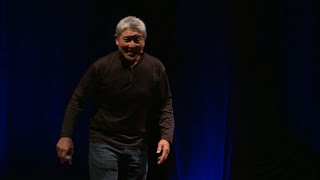
Guy Kawasaki shares ten principles for becoming remarkable, drawing on stories from Jane Goodall and Andrew Zimmern. He emphasizes doing high-quality work, making yourself indispensable, and deciding fast instead of overthinking.
Chapters
Listen, when I die, I want you to say that I helped you make a difference. Every one of you. I want Larry in the back to say I helped him fight racial injustice and brook the social divide. And Jess mass incarceration. I want Daniela sitting with her mother backstage to understand that she's important and she can make a difference. And I want Luz, that first generation college student, to also make a difference. So I've been very fortunate. I have a podcast. And this podcast, I have very remarkable people on it. People like Jane Goodall, Stacy Abrams, Angela Duckworth, Stephen Wolfram, Stephen Wozniak. And now over the past five years, I've had 250 of these people. And now, now I have 250 hours and 5,000 pages. And I looked at that and I said, this is too much for people. So now I've distilled this into this presentation. And the people running TEDx Sonoma think I'm going to pay attention to that clock. That clock is guidance. So I'm going to use a top 10 format to explain to you the best techniques to make a difference, to change the world, to dent the universe, to become a remarkable person. Listen, I use a top 10 format because I'm from the tech business and I've watched so many tech CEOs speak. And I'll tell you two things about them. First, they suck. And second, they go long. That's a bad combination. That's like being stupid and arrogant. So I use the top 10 format so you can track progress through my speech. I hope you don't think I suck. Now, my 10 ways to make a difference and be remarkable. So the first way is something that many people blow past. They don't take care of the small details. And I'm imploring you. People make judgments about you all the time, every one of you. And you make judgments too. And it's the small things. For example, if your email address is ol.com or if your email address isahoo.com, it's the time to put on the big boy pants and the big girl pants. People are judging you. If your avatar, if your avatar is clipped out of a wedding reception or a sorority get together or a fraternity party, you're doing yourself a disservice. People are not going to take you seriously. So sweat the small details. That's step number one. Step number two. All of you should read the book by Carol Dweck called Mindset. Carol Dweck is the mother of the growth mindset. And the growth mindset means that you are not static. You can learn new skills, you can become a better person. The fixed mindset means you think you are what you are and you cannot be any better. It also means many people think they are what they are and they cannot get any worse. Arguably, that's more dangerous. Listen, at 44, I took up ice hockey. 44 is 40 years too late to learn ice hockey. I even played in the Santa Rosa rink, right, the Snoopy tournament. Oh my God, what an experience. Speaking of local experiences, I gotta tell you, I went to Willowwood this morning. That is a life changing restaurant. Oh my God. Yeah, I love that restaurant. I'm coming back. The polenta and eggs I highly recommend. Yes, yes. So now that's the growth mindset. Embrace that growth mindset and I'll give you a power tip never before heard at TEDx. Carol Dweck is the mother of the growth mindset. A woman named Mary Murphy is the daughter of the growth mindset. She's Carol Dweck's protege, and she came up with this brilliant idea. Carol Dweck, the growth mindset is in your head, right? You believe you can grow or not. Mary Murphy came up with this idea that it's not just what's in your head, it's the environment that you're in. So you need to be in an organization that supports the growth mindset and doesn't believe that you're a genius or a bozo and you cannot be any different. Embrace the growth mindset. The next point is embracing vulnerability. This is the flip side of the growth mindset. Embracing vulnerability means that. Well, vulnerability comes from a Latin word, vulness, meaning wound. So you're willing to embrace a wound if you. Believe me, if you start hockey at 44, you embrace wounds. I started surfing at 60. That's 55 years too late. I've embraced many wounds. You have to learn to embrace vulnerability. That's the flip side of growth. The positive side of vulnerability is growth. If you're not being vulnerable, you're not growing. Embrace vulnerability. The fourth thing is to make yourself indispensable. This I learned from Andrew Zimmern. Andrew Zimmern of Bizarre Foods. Gotta tell you a funny story. So a long time ago, you know, the mark of a good TEDX speaker is you never get off track. The mark of a great ted. Tedx speakers. You can get off track and come back. I'm gonna show you that one of the pressure points of TEDx is you're in this red dot and this light is on you. And I see sometimes, every time I get really excited, I see like spittle flying out, right? So I just want you to know I'm conscious of that. I've been tested recently. But, you know, a very good rule of thumb is the more spittle, the better the speaker. Because I saw Tom Peters speak once and he is the freaking Niagara Falls of spittle. All right? So. Andrew Zimmerman. Bizarre foods. Make yourself indispensable. You want to get ahead in the world. You want to make a difference. You want to dent the universe. You want to be remarkable. Make. Make yourself indispensable. Luz, I hope you're listening to this because this is especially true for young people. You know, you may think, oh my God, I gotta get work. Life, balance. I don't want people to take advantage of me. You know, I have to have this arm's length. I'm telling you, that's not how the world works. You make yourself indispensable, you do whatever it takes, because indispensable people get more opportunities. Andrew Zimmern, 30 year old intern for a TV station in Minnesota. The station manager says we have to lay cable. Who can help? Andrew Zimmern. I'll go. The station manager says I need someone to help with the lighting of an interview. Andrew Zimmerman. I'll go. We need somebody to edit the video. Andrew Zimmerman. I'll go. That's why Andrew Zimmerman is a James Beard award winner. That's why he has bizarre foods. That. That's why we know who Andrew Zimmern is. That's how Andrew Zimmerman began making a difference. So think in your mind. Make myself indispensable. Do whatever it takes. Do what people refuse to do and keep showing up. That's number four. Number five. Never before seen a TedX. Number five is really simple. You want to make a difference. You want to be remarkable. Do good shit. It's that simple. Remarkable people, people who make a difference, they do good shit. Steve Jobs makes a great computer, a great phone, a great tablet, a great retail experience. Jane Goodall. Look at all the good shit that Jane Goodall has done in her career. So, you know, you have to have a high bar for yourself. Do good shit. Many people associate me with evangelism, secular evangelism, basically. There was Jesus and then there was guy. It was 2000 year gap. My evangelism was for Macintosh. And many people ask me, guy, what's the key to evangelizing a product or a service? And I'll give you the answer. The answer is called Guy's golden touch. And guy's golden touch is not whatever I touch turns to gold. Guy's golden touch is whatever is gold guy touches. So what I'm trying to tell you is if you do good shit, it's really easy to be an evangelist because it's easy to evangelize good shit. And it's hard to evangelize crap. Number six. Number six is many people believe that the idea is the hard part. You know, Eureka, I thought of this. Now it's easy. It's just implementation. My experience is it's just the opposite. Good ideas are easy, Implementation is hard. You need to get beyond the Eureka stage and actually make a prototype, ship it, get it out there. You got to get beyond Eureka if you want to make a difference. Ideas are easy. Implementation is hard. Number seven. Number seven is many people are concerned about their motives, right? I want to end climate change. I want to redo the universe. I want to do all these great things. And then when other people hear them express that at TEDx, you get intimidated. Like, oh, my God, you know, I don't have such a highfalutin, wonderful motive. And I'm telling you, don't sweat your motives. What's more important is that you are motivated, not what motivates you. So let me tell you a story. It's about 20 years ago, and I was in Menlo park, and I was driving a Porsche 911. And as anybody who drives a Porsche will tell you, you're basically a smug asshole driving this car, right? So I pull up to this intersection, and I look to my left, and I see this car with four teenage girls. And they're making eye contact, and they're laughing and they're giggling and having this great time. And I'm sitting there, smug, and I'm thinking, God, you have truly arrived. They know you because of Apple. They know you because of your startups and your speaking and your books. So the girl in the front seat of the car, she says, roll down your window. Clearly, she doesn't own a Porsche. You don't roll down a window. You press the button. But anyway, so I press the button, the window goes down, she sticks her head out and she says, are you Jackie Chan? So now you might be wondering, what does this have to do with motivation? Well, I'm telling you, from that day forward, it's been my goal in life that someday, Jackie Chan, he's in his S class or his Rolls or his Bentley, and he's in Hong Kong, and there's four teenage girls in A car at an intersection and they ask him to roll down his window. And the girl in the front seat says, are you Guy Kawasaki? Don't say sweat your motives. Number eight. Number eight is take the high road if you want to make a difference. Give people the benefit of the doubt. The rising tide floats all boats. Take the high road. The high road is not crowded. The high road never has a traffic jam. Give people the benefit of the doubt. Assume good until proven. You know, even if you disagree with people, don't ask people why you disagree, why you came to this conclusion that you disagree about. Instead, ask them how. How did you come to believe that this is true? Because you may find something that will educate you and create empathy in you. Let's take an extreme example. Let's say that you find somebody who's totally anti vaccination and you're thinking, how can this person believe that? Right? Well, ask her or him how and maybe he or she will tell you. My grandfather was in the army and they put him in this experiment and they gave him this vaccination and they didn't tell him what it was for and it killed him. So now I don't trust vaccination. That's how I came to believe that. That's important data to understand people. Ask people how. Number nine. My father, when I was in high school, he told me about this concept called noblesse oblige. Noblesse oblige means the obligation of the nobility, right? And I have come to not like that term because it's kind of hoity toity, right? That you know, I'm Prince Harry. I'm Meghan Markle. I'm nobility, you peons. I'm going to help you because I'm so noble. It's total bullshit. So my term is success oblige. Success oblige is that when you are successful, you have an obligation to society. The fact that you're successful is not just because of your wonderfulness. You are probably successful because an elementary school teacher helped you, a high school coach helped you, your mom and dad sacrificed somebody, took a shot with you as an intern. So when you go through that door, you have a moral obligation to keep that door open, if not make it even bigger. That is your success oblige. Did I just skip number nine? Number ten? Number ten is this. @ some point, after all this discussion, you just need to turn and burn. Let me explain that concept. If any of you have ever surfed in. It's a concept from surfing. Much of surfing you spend looking out at the Ocean looking for that right wave. And when you see that right wave, you turn and you burn and you paddle to catch that wave. That's what it takes if you want to make a difference. If you want to be remarkable, you've got to turn and burn because you will not catch 100% of the waves that you don't try to catch. You have to turn and burn. Now, even though I'm already 1 minute and 26 seconds longer than I should be, but if you think about it, what are they gonna do to me, right? I think I'll slow it down even more. What? They're gonna not invite me for TEDx 2025. Okay, okay. This is a plus one. This is a plus one. And the plus one is this. I have noticed that many people, when they want to make a difference, when they want to be remarkable, they focus so much on the decision. Let's use big data, let's use ChatGPT, let's use all this great stuff and analysis because we're going to make the, the perfect decision, the optimal decision, the right decision. And my observation is that the people who change the world and make a difference and are remarkable, they don't focus on making the right decision, they focus on making the decision right. Because in life it's so hard to pick the perfect solution. You can make yourself crazy trying to do this. So rather than that, take your best shot and then make that decision right? I'm going to show you a little video now. It's only 26 seconds, so I'm only going to be, I'm going to be roughly three minutes old. Watch this video. Okay, let me explain what you just saw. Maybe they could run it again after. I'm going to explain it and maybe, maybe there's four guys back there, maybe they can run it again. I'll explain what you just saw. This is a surfing competition. That woman is looking out, trying to make the right decision, find the right wave, turn at the right time, paddle in the right decision. She sat in the wrong place. That wave was about to smash her. But she turned and she burned. And she took a terrible wave that was going to just implode upon her. And she caught that wave and she even stood up on the board and she even cross stepped. That is a real world example of making your decision right. The wrong decision was made. The wrong decision was made, arguably even for her. She had no choice, but she made the decision right. And that's the last thing I want to tell you about how to make a difference. Be remarkable. So now, all of you, I want you to go out there and turn and burn and make your decisions right. Thank you.
More from Guy


Cheryl Strauss Einhorn | The Human Edge: Smarter Decisions in the Age of AI | Talks at Google



Rachel Glennerster | Innovation and the Center for Global Development | Talks at Google

Rebecca Winthrop | Rethinking the Purpose of Education in the Age of AI | Talks at Google

Dr. Robert Wachter | A Giant Leap: How AI Is Transforming Healthcare... | Talks at Google



