Inventing the Computer Mouse | Douglas Engelbart | Talks at Google
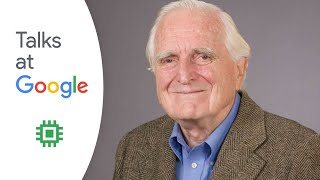
Douglas Engelbart discusses his vision for computers as tools to augment human thinking through structured, linked documents with multiple views and fine-grained addressability. He explores bootstrapping better tools through networked communities and the practical barriers, like page-centric thinking, that prevent dynamic knowledge systems from taking hold.
Chapters
Hi, I'm Jeff Roelofson and I met Doug in 1965 at the fall Joint Computer Conference. Walked by, met him, listened to him. I lived in Seattle at the time, went, didn't go home, went to sri, got accepted for a job, went up and announced to my wife I was moving to Menlo park, and been working with Doug ever since, off and on. So you're going to do the slides, is that right? Okay, so let's start out. I'm just going to ask him some questions.
Well, first is whenever I talk about the technology we did, he was really a key guy coming to me in the late 60s and really part of how we built the whole system. So he was the key there.
So let's talk about the original Dream sun. As I remember you telling me about it, back even in the early 50s, you had this vision that computers were going to be the media. Is that right?
Well, it started out I got engaged, and the next Monday of driving to work, I was working at Ames Laboratory at Moffett Field and suddenly started thinking, boy, now that I'm going to get engaged, I better start thinking about my career. And I realized I had no real goal in my career, just interesting job. Oh. So for the next few weeks I started thinking about. Oh. And somehow it turned in to say, how could you contribute something that would be the most meaningful to the world? Oh, wow. Okay. That took me like four months. And then it came out to finally realizing that the world's problems were just really, really very complex. And what would be very, very valuable is if we got better, better ways for us collectively to understand the scope and nature of the problems and the potentials for the solution. Oh, okay.
So.
So that's what started this whole thing. And I decided to go and use computers. And so I quit my job and went up to Berkeley where they had a research project to build a computer. And it had been underway for like three years. And I was there five years and it still wasn't finished by that time. It was a great big room full of stuff. But anyway, so I got in the computer field very early, and to talk in those days about interacting with a computer was just so laughable.
Another question? Yes, let's stay on the same theme. So as I understand it, your idea about getting information, documents, media into the computers was not so much about making them look better or look prettier or fancier, but to put in structure for accessing, to do things to them so that you could access the information. Is that right?
That got there the hyperlink is one thing to be able to be able to point to things specifically, but then you like to point to them so specifically that it's this particular passage, not just this document. So we got the addressability down like that.
So it's putting structure into the documents so that you could link accurately. Accurately.
Also, the viewing that I realized that one thing the computer offered you is, hey, you don't have to just look like a page of a book. The computer could give you all sorts of optional views of the same material. And for some of your purposes of looking at it, one view would be better than another.
So link had two parts. It said where to go and it said how to transform stuff when you get there.
How to produce the view.
How to produce the view.
We call it the view spec view specification. And that's been missing since then, which seems to me it's kind of like too bad because it added a certain amount of power.
How to transform part has been missing.
Go there and look. While you could say, go there and look, I want to see the first line of the next five paragraphs like that. And then when you were there, the mobility of jumping and moving around lets you also change views with every jump. So it just made a really different environment about how you use something online to study. And I used to tell people, hey, this, this is what's going to make books become obsolete, because you can so much more mobile and moving around and looking and different ways of viewing. Only show me the first two lines of the paragraphs from here on that contain this phrase or this word or something like this. So that just became a standard.
So your emphasis was sort of much more on stepping away from a classic page view to a dynamic, structured, linkable, viewable kind of object.
Exactly.
Okay, let's switch gears a little bit. So we had to build a lot of stuff to do that, a lot of computer tools to make that happen.
We.
Because he was the key and you had this, or have this idea of bootstrapping. And do you want to talk a little bit about the tools and bootstrapping and. And how that fits together?
Sure. The basic idea I started talking about back in the 50s was augmenting, augmenting our human intellect and later augmenting our collective iq. And by augmenting, it's just how do you facilitate the increased capability of doing that? And this gave me a whole picture about how since the beginning of recorded history, the records and everything like that, hey, we got to start doing writing and more and more things. We started doing that were really augmenting our capability to think, communicate and reason. And hey, the computer seemed to me, instead of automating what we used to do, could augment us further. And this did go over very well in the early days. Like, that's why I went to Berkeley to get a PhD. They were the only ones in the area doing any research in computers. But by the time I got my PhD and was trying to talk about this, I got laughed. One friendly professor in a different kind of department listened to me one day and said, if you keep talking like this, you'll be an acting assistant professor forever. I believed him because how kooky can you sound? And I even tried Stanford and made it clear that computers were never going to be an academic thing, that they were only a service activity and that would be the way they'd be treated in the university.
Yeah, so I have a real story there too. I was a graduate student at the time and I was not allowed to do a PhD about this stuff because it wasn't theoretical enough. So let's just stress a little bit more on bootstrapping. So bootstrapping is when I'm building tools to structure these documents and view them in different ways. I'm using the tools that I'm building to continue building better tools. Is that right?
There's an old fable about some guy that learned how that he could by seeing farther, wanting to dad, he'd grab the straps of his boots and lift himself up in the air. So that was an old fable that really rang in my head. So I just got to saying that, hey, if we start being able to augment our reasoning and our memory, etcetera, More capably, hey, the better we get at that. If we start using it ourselves to get better, the better we get, the better we'll get at getting better. And so it was just like bootstrapping.
And so this idea of network improvement communities is groups, individual groups, bootstrapping, somehow networking together to get a more collective bootstrapping.
Yeah, and that's just the way it'd be like assuming Google's products are something that augmented Google's product developers, all the better. And the marketing people, hey, the better they get at their product, the better they're going to get at getting new product. And it'd be fun to look at it a little bit. There are things about studying documents that we did by the partitioning and their different viewing and moving around flexibly within the documents that it'd be really fun to see Google get turned by, hey, let's really focus on capability in a rather specific sense. And how is it that people can read, not only just find relevant documents, but then study and read and integrate them into a composite whole document that what they're trying to do.
Okay, Google.
Okay, I guess Doug has asked me to give the Google response to some of his ideas. And so these are his slides that I'll be talking to and reacting to. You can read them as they come up and I'll give our reaction. Okay, so he's talked about this idea of augmentation, and I like this distinction of the human systems and the tool systems. And I think, you know, some people make the error of concentrating too much in one area of saying, well, we can solve everything by building a tool, or, well, people can do it all on their own. And it's really when you put them together in the right way that I think is the most powerful. And here we see that there is a science behind it, the science of sensory, perceptual, motor, mental and so on. So don't worry, there is room to do one or more PhDs here. There's a lot going on, but it's putting it all together that's the hard part. Okay, so this slide talks about this idea of improvement. So it's one thing to have the right tools to build a static model of some knowledge or a community that works together. But what Doug's trying to get at here is this notion of a continually improving community. And, you know, you see this a lot as one of these business fads of continual improvement. And you see it in the way we do debugging. And I think that's really the right model to look at. So when we find a bug, well, the first thing you do is fix it. But if you stop there, you're never going to get rid of your bugs. Instead, the next thing you have to say is, well, where did this bug come from? And are there others like it? And then you search throughout the code base and try to find others in a preemptive fashion rather than waiting for them to bite you again. And then the third thing you do is say, well, how could I have avoided this in the first place? Could I have been using different tools, different methodologies, different programming languages or whatever so that these bugs hadn't come up in the first place? And so it's this, this ABC model of trying to do this improvement at each level. And this applies to various organizations. And in order to have an effective organization, you need this. You need to inbreed this idea. Of continual improvement. Okay. And here he's talking about the idea of a dynamic knowledge repository to store this. So it's one thing to have the notion that we're expected to make improvements, but it's another to write that down in such a way that that can be shared. So not only am I continually improving, but everybody else in the organization can do that as well. And we can talk about this at a horizontal level. So not only at this vertical level within a company, but also at a horizontal level of saying, you know, there are things that are pretty competitive that you can share with other companies, with academics, with interested individuals. And if you're all trying to improve on the same problem, there's no reason you can't share that kind of knowledge. Obviously, there'll always be individual organizations that have parts they want to keep secret that won't be part of the shared knowledge repository. But there are other parts that people are willing to share. If we can build them up, we can all improve faster.
Just a bit more on the.
Yeah, so just more on that then. Why don't I hand it back to you guys?
Okay.
So let's see. That's different than the slide I have.
It's the same.
It's the same slide. It just looks different. Okay, so, Doug, how are we going to explain Kodiak briefly? Well, what's a knowledge repository?
Yeah, we moved a little fast here, but just assuming that if any sizable group is going to try to build its collective understanding, you probably have to get some common way in which you've done the best you can to aggregate the knowledge about it, resolve the conflicts of it, et cetera, like this. So the dynamic term means that, generally speaking, it's always evolving and growing. And so to me, it's the core, if you're going to get collectively smarter, is it's sort of like the understanding in your head isn't a whole bunch of fragments. It's got to be some coherent.
So we could build knowledge repositories about lots of stuff. The world could. Global warming.
Absolutely.
Genetics. What in your mind is the most fundamental knowledge repository?
The one that describes how you build knowledge repositories? That's the term when it comes out of bootstrapping, you know, the better you get at building repositories, that probably going to be. The better you get at improving your ability.
So your vision would be groups of people bootstrapping collaboratively, building knowledge repositories. About building knowledge repositories.
Well, core, if you look at the whole society out there, Going a core part of that should be working on, hey, repositories, about how you do better repositories with the rest of them, putting them to work. And some of them are like saying, well, global warming, oh, well, hey, how do you build a repository that gives you the best coherent picture of the status of that, including the potentials for correcting the procedures and changing our world?
So we get rid of that in a sense. The brute, the very fundamental one is a generic one about how to build knowledge repositories in general and that. And if you had groups of people participating in that, that's really an improvement community.
Yeah. And then I said, there are lots of improvement communities already working in the world, every professional society and so on. I call it a networked one in which they're adopting these new networking ways of augmenting our capability to do that.
So I think we're back to Peter.
Okay, so how do you do bootstrapping? And I think it's this simple feedback loop. You start with what you know, you put it into a format that can be easily shared and improved on and then you work to make it better and you make part of that format be the improvements in the process of making it better. And of course, you can do this across lots of different capabilities. Doug said the most important one is how you make improvements in the process itself. But then there's all these other application areas and there could be sharing between them as well. Where should your organization head by what route? You know, I think that's a problem that everybody faces and we don't know. We have to figure out how to explore, how to go in the right.
Direction and get together.
And so I guess part of the point is sharing as much as you can, and more people you have looking at it, maybe the better results you can have if you have the right tools.
And Google might be proudly say, okay, we're doing a lot to help people find things out on that frontier. Okay, but then who's doing the job of ready management, making better maps, understanding the frontier, et cetera?
Yeah, so I think that's right. In fact, that's one of the things that Google is looking at now is trying to change from a model where every query is sort of independent. You do a search, you get the results, but that's something only you've done to one where we can share some of that. And so we have some of these products now that we're just starting to put together for bookmarks and notebooks and so on, where you can Share some of your search experience and republish that in a way that other people can find it. And I think we need to do more of that.
Back to Jeff.
Okay, so we're going to talk a little bit about human and tool systems together. So what are some of the human systems in here? What would be an example?
Well, human system is just what organizes these people, brings them together, the conventions and the rules and the very language we use to work together, etc. So all of that is there. And then tool system, well, hey, we've got this projector and the chairs and a lot of things like this that facilitate what we're trying to do and the co evolution of all of those things.
So let's talk about the co evolution a little bit. I think the idea is that maybe you get some new computer tools and that changes your human tools a little bit and then that changes your computer tools.
The human processes and methods and language and all of that are part of.
The human system and they change interactively with the tool system.
So then you say, well those things together represent what augments the basic capability. You start out with a naked person that has no education at all. Wow, what does it take to turn it into some very efficient contributor to society like you people?
So we'd expect a bootstrapping community to actually have very different organization and even language, words and ways of working that are substantially different from the non bootstrapping community.
Well, that's a really good candidate place to get. But just because they're bootstrapping, they may just haven't even gotten off the ground yet. So the process is more important right now to think about than the actual state that they'd be in. But how do you get so that you really can pick up knowledge and integrate it? So what did you say? If we take all the knowledge that's existing in this room and integrate it so that it was available and usable, high quality by everybody. Is there any known process you can think of that could do it? But what would be the value? There'd just be huge value in that. And so to me that was what the potential that the computer and the hypermedia and the web etc. Were there to offer us start really building knowledge repositories that were really significantly growing, coherent, you know, that already been verified. All the things in there, or some of the things that hadn't been verified yet, but were hypotheses were clearly there anyway online. So that's what I.
And I think the next slide goes back to the point we were making about open Hyper document. Let's just re emphasize the point that you, you had, you have really stressed putting structure into the documents so that they're more finely, accurately accessible and also viewable. Maybe you could just say a little bit more about viewing dynamics rather than thinking of things as pages.
Sure, you know, page is totally artificial, but you've got a screen. One thing.
Well, if you have to carve it on a stone.
Yeah. So just to try to think of, you know, we have our visual machinery here and behind that is what they call a perceptual machinery in your head and then tying to all of the things we're understanding built into different parts of your heads. But when you realize what happens if you just look at something like this sheet, this projection or something, the beautiful machinery that just grabs it and puts it in some kind of conceptual framework in your mind and you say, boy, that's really great. Well, that machinery evolved way, way, way back. And so we think we're very proud about what we do. But have we really built ways to portray material for ourselves, et cetera, that make best use of the machinery that's there? The book came out after printing and writing, which were marvelous things to be able to use in this perceptual machinery that can scan along a line and the words pop right out to it. So we got books and all of that. But now with this new technology, what is it we could do to feed that kind of machinery we've got there and not just emulate the old paper stuff.
So in fact, in the NLS documents, everything is organized as a tree rather than a page. And I can zoom in and out on the document and zoom how much of each node in the tree I see and collapse it and actually in fact link together streams of nodes in different orders, not necessarily sort of a natural unwinding order. So there's lots of different organizations to the same set of text.
So we had those things working in the, I guess, late 60s. And then when the people like Xerox PARC crew came out and were really ready to go and had a lot of PR behind them and such, and then the people at Stanford and human, human computer interaction and the people all over the country in that form like this, somehow the mantra saying it's got to be simple to use and easy to learn, the real users of Secretary is what really got me. Instead of like this, like this. And so they turned and looked at the things we were doing with all this optional viewing and jumping mobility that I would just love to see some real study going about the increased capabilities that gave people to study and communicate. But it just got pushed right off the table because it violated the prevailing perceptions about things that got to be easy to learn and natural to use. And I'd ask them, well, let's see, you still ride a tricycle and what do you mean? I say, well, that's easy to learn. And a bicycle is actually very hard to learn. In fact, I used to do so many bicycle tricks and such when we grew up out in the country. I could ride backwards and I could stand up. Here's the handlebars here and the bars coming back and a seat up there. And I could stand up and cross my heels underneath the seat, knock my calves against the seat and stand up and coast down hills and stir like this, see? So how do you do that? See, well, it's something a human can learn how to do. And most people don't know how. You ride a bicycle without any hands sometimes it'd be fun to tell you. But anyway, there are things humans can do that if you don't back up a little ways and say, hey, if you realize what it is that you're learning machinery and had to do to get you this far and how really marvelous it is from learning to read and write and all the other things that go on, you do naturally. If we were without that, it'd be. The whole society would crash. So we expect children to learn it. And yet this business about things being they have to be easy to learn and naturally use.
You've also had some frustration with wysiwyg, right?
Like how?
Go ahead, say it.
What you see is what you get, huh?
This was the emphasis on making things look like they're pages in a book, rather than building in the structure necessary to index them and link them.
So anyway, let's go on. But there's a really basic thing about paradigms. What are the prevailing ways in which people view different aspects of our society and our life, et cetera? They get set into a paradigm. And if it's something that's different from that, that's really a strong habit comes up of repelling it, pushing away. And I could tell you that the things you take for granted and work, interacting with your computer every day would have been rejected like that in the 60s. Just no 211. So anyway, times that has to change. And so how do you help cultivate a change which brings about more capability into our world?
Okay, so here Doug's talking about the Open Hyper Document system, which is an idea he's had for many years in different names and forms. I guess one of the questions is to ask how does this compare to what we have as the web today, which has some of these attributes but not all of them, talking about how to stop, how to get this going, you know, what are the parts that we're missing? And it seems like the, the main part is the, that we want to add is the sub addressability of structured pieces of documents. So right now we have URLs, but you can't really pick out a piece of a document. And we're already seeing places where this is a limitation. And so, you know, Google hasn't found a way to go beyond that in terms of linking into a paragraph, but in the types of media that we have some control over, you see that we are going in that direction. So you can now put on your webpage a map where you get to link to sub parts of it, or a video where you can figure out starting point for the frame. So in these sorts of rich media there is a need for, for sub addressing them. And we worked out controls for that somehow it's never happened for URLs for some reason I can't understand. And I remember back in 1991 I had an intern, Mark Torrance, who came up with a proposal for saying, well, let's use the question mark after the end of the URL to be able to address into a paragraph or substring or something. And he proposed that to the W3C and here we are 15 years later and it hasn't been adopted. I can't understand why. That certainly seems like one thing that we need. The other part of it that Doug has talked about is the need for links. Going back and forth for this kind of central repository for links. I'm not as convinced that that's as crucial. It seems like the web works okay, even though links occasionally break and people seem to route around that kind of a problem. And here he's talking about the capability to see different sorts of views on a file, to be able to share the responsibility between the author of the file for presenting it one way and the reader to consume it in the way that they want. We have some of that capability today with css. So you have the capability to override the author CSS in the way you want to. In Grease Monkey, you could do a lot of the things that Doug wants to be able to do, although that hasn't widely been adopted yet. Here we're talking about the link Database. Having that be more of a database than it is now, where things are constantly breaking.
Well, for instance, why can't you look at a document and ask, hey, from a given community, who's pointing, has any links pointing into this? And oh, when I see a link pointing into it, I'd like to be able to see where the source is or backlink on it. Those kind of extended capabilities are just sitting there waiting.
Yeah. So again, this is something where you see happening in restricted types of domains, but not in general. So in blog posts, the various blog mechanisms have easy ways for you to say here are others that are linking to this blog, but you don't have an easy generalized way of doing that for web content in general.
Well, I'm not sure how to go through these. Let's. We're also running out of time for questions, so let's. Let's. Doug, what would you like Google to do? What do you want him to. If you had a magic wand and you could get them working on a project, what kind of thing would you have them working on?
I'd like to get them to sort of see how in some sensible, progressive way they could start extending the capabilities that they offer to their users. They would start including these things.
So it'd break away from books and pages and stuff like that and have dynamic structures. It would have all of the linking stuff, right. All the viewing, but it would also have a dynamic knowledge repository.
Well, there are ways that a little hard to describe. Waving our hands about how you could put together new kind of knowledge repositories with the structures we're talking about, the link parts.
Right. Because until you have those structures, until you're starting the bootstrap process, you can't really do one without the other. And they just build and bootstrap. Would they get other people going along with them?
Well, it seemed to me that certainly would be a reasonable thing to do is just start offering extensions to what they now have. And first part could be some that would be very useful to their own internal activities, but as an extra sort of service outside, I could really grow. For instance, how about supporting some research in how the studying could increase in efficiency if you have all these optional views to shift between. And there's one view I know that Google would be very good at, because I'm assuming that they've got some very powerful syntactic analyzers out there going. But I've been dreaming for 20 some years about saying how could one way of reading it be like this, that the different syntactic parts of speech would be in different colors. And then you could say, oh, I only want to see these three parts of speech at all. Because that let me scan for where I know this article could begin doing serious talk about again an issue or something they've got all the machinery to analyze, I'm assuming because of the way they do their searches. But. And there's more from there.
Okay, so where do you want to go from here?
Questions?
You want to do questions? Okay.
Okay. I'm Meilin Fung, I've been working with Doug for a while. We are really, really interested in engaging ask questions. We've got mics, we've exposed you to a lot of material. The background behind it is in the papers and their links got the PowerPoint downloaded. You have all the references. We are so interested to hear what you have to say in response to this call to action. Any comments, questions?
One thing that went by in passing that I thought was really crucial, I was wondering if you could discuss is that right now the collaborative knowledge accumulation media that we've been evolving on the web is very good at capturing consensus knowledge. Like Wikipedia, when people agree on things, it's very good at collaboratively capturing the state of agreement. But it seems like a lot of the important knowledge to capture represent well and think about is the state of disagreement is the knowledge in live controversies. And one thing that went by very quickly right there. Yeah. Are argument structuring and graphical portrayal of arguments in reference to the issue based information system. I think that that's a wide open area. I think that the web is poised in a good position to be able to evolve towards taking on this problem. But I think it's an important problem. So your thoughts on that would be good.
Are you acquainted with things that have been going on for almost 20 years on that issue based and structured argumentation Anyway, it's sitting there to support and help and I don't know how relevant it is to any of the majors hopes for Google to be in the future business. But anyway supporting that would just be marvelous because the way it could be to say I want to see the most relevant argument not it was data, but the data coming from the most relevant argument anyway. So that's what the linking and such and then different viewing where you can actually see a structure, graphical structure.
So could you envision if things weren't in sort of page orientation but were in a more. How in a more structured orientation would you capture arguments about things?
Well, you can all you can be by pointing to different places. And if there were a way to say I'm talking about this part of that document more accurately, but even just pointing to the key statement or something adds a lot to it. But building really coherent argument structuring that people can follow through seems to me just to be a hugely critical, high potential thing. And Google would have the resources to do it, struggle with its evolution and it would just add a huge amount to social value it could contribute.
Now there are questions all over.
Yeah.
To what degree do you think Wikipedia solves some of the. To what degree do you think Wikipedia provides some of the functionality that you've been saying there's a need for? And to what degree do you think that it might have some near misses or some things that it doesn't do, but easily could to address the needs that you talked about?
Somehow I had difficulty in understanding.
He's asking how much Wikipedia meets what you want.
Well, it's a really interesting start, that's all.
It doesn't really offer you dynamic views.
Right.
You know, if the way it's put out it could be structured in ways that help you look at that and study and then. I don't really follow it enough to be able to be critical, too critical about. I mean, have two definite ways what I'd say could do it. But it's certainly an impressive start.
There's another aspect to things like Wikipedia that go back in Doug's history a long time and all of these things you're still, you know, when you edit in Wikipedia, you're editing a text file and then somehow you generate a display out of that. And NLS and the systems Doug is proposing, you edit the structure directly and the different views that you get are generated out of the structure. So in fact, when we had all the programming languages that were in nls, there was no text file for the programs. They were in the dynamic structure where the dynamic structure of the programming language was the dynamic structure of the document. And it's just a different world.
He had to struggle with getting the programming language evolved and adapted into the that so he knows.
May I say something? I'd like to go back to that question. So I think there's this concept that I get from working with Doug that the ultimate representation is how it is in our minds. What we're really trying to have is something which provides the links and the arguments. What's my claim? What's the warrant for the claim to be able to show that. And then the text display is just a text is a presentation of the underlying Argument. And I think Wikipedia is a display mechanism, whereas Doug is really talking about some of the logic, but not just straight formal logic, but how people make arguments.
Yes, actually. Okay, go ahead.
So if this, these concepts are really useful, why haven't cnn, New York Times, Nature. I mean, there are plenty of media content providers out there, and they should have a huge competitive advantage, I would think, if they started delivering content differently. So what are some of the barriers that have determined the state of affairs now?
Oh, I'm. He says I'm okay. Well, this is a place where I get very foggy, fuzzy because I haven't been able to understand why people have rejected it so consistently all through these years. These different ways of portraying our knowledge and using it. And, you know, I hate to think if I've given up, but in a sense, I haven't been out there trying to sell it.
I want to say a little bit, because I was a part of this, actually. So having implemented nls, I went up to Xerox PARC and actually did part of Bravo with Simone. And I don't want to say it was because of parc, but the world became fixated on pages, and all these ideas were very alive and dynamic in 1970, 1971. And then when the Altos started and we got the laser printers going, we just took a giant leap back onto pages and stayed there. In my sense, we're still stuck. We've never come out of it.
I think when Doug says, let us fly, let's fly off the page, really, because we're stuck there in an old paradigm. Think about it. Before there was writing and reading, it's hard to learn to read. It's a struggle. What Doug is saying is that it's worth the effort to go off the page. But we've been stuck on the page, and it's a natural thing. It took time before reading and writing went out into the culture. At first, only the priest did it. Now everybody gets to learn to read and write. Doug would like to have everyone learn to fly in this way, please.
I'd like to go back to the Wikipedia question. Wikipedia right now has some movements toward adding semantic constructs into the pages. So that means, for example, if you describe a book, then you have a way to describe the author of the book, title of the book, and so on. So is that a closer, I mean, a step closer to what you are dreaming of?
Well, I haven't been keeping keeping up with that, so I don't know exactly what it is, but it sounds like a move in the Right direction. I'll go home and look at it. Thank you.
Jeff or Peter. Any comment on that next question?
We passed over a slide at the very end that I thought was kind of interesting. That seemed to mark a difference between how the Internet organizes information and how we actually organize information, like on our desk and in our life. Yes. So are you saying there is a difference between the way we actually interact with. With content on the Internet as opposed to the way that we naturally would best interact with the Internet? So is there, I mean, we talk about, or you're talking about jumping away from the webpage. Do you feel like there's actually like a different structure that we should be taking in or a different way that we should be taking in information that, you know, we've imposed this very unnatural structure on the Internet due to commerce or laziness or resources at the time. And it's just hard to imagine. What do you mean by getting away from the web page? Is there actually a different visual format that we could take in information or is it mainly explicit reference?
Well, the first thing on my is getting the book out of our ancient ties to book orientation. Get rid of them. And Jeff just had a comment.
Explicit references, embedding documents inside documents.
Yeah, the much more flexible way that you can actually get aggregations of knowledge put together like this. And the way if you're, if you've got some kind of argument about something, you can actually grab these phrases from that one and put them here. And then when people read, can be shown that this does come from there and they can go back and look at it if they want to. And there's a whole movement for the last 20 years called structured argument interpretation that is extremely significant kind of thing that you know this phrase and to this thing they together make an allegation about this and this is countered by this, and this is unsupported. You know.
Let me just add a bit. So one of the ideas here is if a link can point to us from fine chunk of stuff in the middle of something rather than a whole thing, then you can have the idea of having that link displayed in context in the thing that you're looking at, rather than being a link, right. And then inside that kind, then if you make up some rules for yourself about these argument kinds of structures and how you're going to use a tree structure, for example, to represent various parts of an argument. Then then I construct my page that somebody reads out of the pages of other people, but the reader doesn't do any link following Just for example, we.
Had a function inside of this augment system called include. And it would say include, you know, this paragraph or something and a set of these things and you could see what they include. You could jump on the link, go look. But then one view specifically here, I'm going to just show it with all the inclusions included. And this guy, we just were exploring this in the last days of the activity. But there's a lot one can do about that.
And these are just examples. I mean, if you sit and brainstorm with yourself, you'll think of other things instantly.
Let me give a business example. Doug's ideas about open Hyper documents to some degree were inspired by his looks. He was with McDonnell Douglas for a while where there sort of 6,000 suppliers, a lot of people involved in manufacturing aircraft. So if you think of the idea of a purchase order, purchase order, there's an accounting view of it, who approved it, how much it was, and so on. There's also the engineering spec view of it, which is where does it fit? Where does the component fit? When are things going to be shipped? When are we going to run out? There's many views of the concept of purchase order. Different people need to see that in different ways. More questions.
Perhaps one of the challenges related to this has to do with authoring of information. I can understand how a reader of information, if you just have abstract information, there's no way for someone to read it. There's got to be some kind of a representation. It's got to be rendered or displayed somehow so that someone can consume it. Okay, that's obvious. But let's look about the challenge of authoring information. Someone can't take a piece of knowledge from their head and put it into a form that other people can access it without creating a representation of it, without. And the easiest way to do this is to slap it on a page. And once you've done that, it's no longer abstract. So is authoring one of the particular challenges of coming up with this sort of representationless abstract information?
Well, when you talk about augmenting different capabilities, that's definitely a capability that deserves augmentations and sort of the agreements and the conventions and the actual practices and the tools, all of these things augment. And so I think that the whole business of generating information, having containing arguments that shift and grow and stuff until after they've gone through this stuff, you'd never recognize it from the first what was there. But then somebody comes up with something new and you got to be able to reconstruct go back and see what it was at any given stage. So all this computer support thing offers just huge new ways of having that happen. You know, what was actually the sort of stages of the evolution of the concepts and the arguments, et cetera. And suddenly they find some place in the middle. That's a question. Boy. It's something like where you could grab it from there and grow. Anyway, this is the kind of dreams I've been floating with.
So many years ago I actually worked hard to author documents which had multiple use. And it's hard, but it's really a mental struggle. But. But maybe I was sort of the first person in the world to do this right. And by the time you get to the 2 millionth one and we've had a lot of experience in society and we're teaching it, it would be easy. So I think the issue here is to start the evolutionary process and then I'll bet it's not so hard.
As companies are trying to get more customer centric in understanding the perspective of a customer, different customer views, these ideas are coming forward. The idea that Doug had is that within an improvement community there's a knowledge architect who kind of works out some of the rules of how this works in which knowledge products are created which then are reusable by other people within the community. Think about issues where you know that one part of the company knows this, but the other part of the company doesn't know it. They design something, they roll it out and they say why didn't you ask us for there to be a way to show what is going on for people to author and insert comment before the full launch is done? These are intelligent collection. Being able to record dialogue. Today the way we record dialogue is with audio tape, with transcripts. It's very slow. How do we allow people to say okay, we're launching this? Any comments, come and make the comment right at the place that it's relevant to in context. More questions.
Hi.
It was mentioned here that some time ago only priests could read and write. And now we have special cast of people, computer programmers. So are you saying that if not necessarily professional class programmers could add to the knowledge of a software process, it would be a step forward talking about relevant argument within the software process.
So he's saying I couldn't understand that.
So it's about whether it moves beyond professional programmers to more people being involved in structuring knowledge, using knowledge.
I guess the question is when we spoke about relevant argument and common iq, if not necessarily professional programmers would be able to add to the knowledge and coded in the software process analogy was a long time ago only priests would read and write. Now we have a special cast computer software programmers.
You want to try and see if you can.
Guessing wildly I think. I think Doug, I think you're very much in favor of as democratic a process in building dynamic knowledge repositories as possible. Right?
Yeah.
It's not just those system programmers that built it.
Oh, absolutely. Nothing personal it. No.
Any last questions? Would you like to say any last words?
Well, if within Google there got to be any kind of a group that said and we'd like to struggle a little bit more and see whether this would have any relevance to what Google could do. And it would be really interesting because Google's made a position for itself in the world that if it really started trying to push for saying here are ways with links and vectors and whatever, we can actually build arguments structures that are sound and that can be challenged explicitly and the challenge can be challenged, etc. And all of this structure of an ongoing argument be really managed well. And this could be a huge tribute to society.
So would you come and talk with them? Do you like to talk to people doing that kind of stuff?
Boy, I sure would because there are several. Well, let's see.
Actually. Go ahead. We are having lunch at the Casablanca room. Is that right? And so if anybody would actually like to follow up and discuss this more, this is why we're here, really. To a dialogue lunch will be.
Season 10.
But.
Thank you for having us.
More from Guy


Cheryl Strauss Einhorn | The Human Edge: Smarter Decisions in the Age of AI | Talks at Google



Rachel Glennerster | Innovation and the Center for Global Development | Talks at Google

Rebecca Winthrop | Rethinking the Purpose of Education in the Age of AI | Talks at Google

Dr. Robert Wachter | A Giant Leap: How AI Is Transforming Healthcare... | Talks at Google



