Jay Foreman & Mark Cooper-Jones | Map Men: This Way Up | Talks at Google
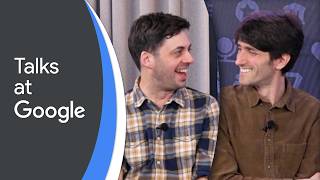
Jay Foreman and Mark Cooper-Jones created Map Men by merging comedy with geography obsession. They wrote a 90,000-word book, designed an experimental audiobook with sound design, and discovered how maps shape reality, from the London Tube map to a borough logo redesign influenced by their videos.
Chapters
Please join me in a massive round of applause for Mark Cooper Jones and Jay Foreman. Matt, Ben, Mark, Jay, welcome to Google.
Hello.
Thank you for having us. I think this is the swankiest building we've ever been in.
Yes.
Have you seen the view out the window?
It's lovely from the 11th floor. And then our new one over there hopefully soon.
Feel I've got people behind me and I can't sit like this. It's weird. Stagecraft. Stagecraft.
The event production team are having a slight panic attack. So is everyone still happy over there? Mark's Move the chair. Great. Thumbs up, anybody?
Anybody on fire? No, we're good.
Okay, for those who don't know and have perhaps come with someone who doesn't know who Mat Men are. Who are Mat Men? How did you get together? What is the YouTube channel so.
Well, who's answering, me or you?
You go first. You're closer.
That's true. I heard the question ever so slightly before you did. So Mat Men is a series on YouTube. It's sort of halfway between an educational series all about maps and geography and a silly sketch show where we get to put on silly outfits and act out the stories. Each episode is usually about 10ish minutes long. And it got turned into a book last year, which I think is why we're here.
Yeah, this is the new book, Mat Ben.
Yeah.
Also this one.
There were three parts to that question though, weren't there? Because it was also.
Yeah. How did you get together? How did it start?
Oh, we don't know, you know, like if you've been friends with someone for a long time but you don't actually remember the day you met, you don't know when the first meeting was. Like, I don't know when I met you. It was sometime in 2009. 10 maybe.
No, I haven't got a clue. I saw you on stage doing musical comedy. Jay would stand there with a guitar and do very silly songs and I was doing stand up. I mean, actually should probably address the. It's not actually an elephant in the room, but a small elephant for us, which is. I was doing comedy with you, Rob.
Yes, we know. We. Yes.
So the second half of this talk, Rob sits here and Jay asks us the questions about the Durham Student review years.
That was 20, 20 odd years ago. But yeah, so I've known Mark for the best part of a couple of decades and Jay for the best part of 20 minutes, I suppose.
Yeah.
So, yeah, we don't really. Yeah, we don't really. I think when you're sort of all on a similar level on the live comedy circuit. You will bump into each other and you do Edinburgh festivals and you share gig lists or whatever. And I don't know, we don't know when we met, but we were sort of probably for quite a few years on the sort of terms where if we passed each other in the street, we would go, all right, yeah, yeah, not stop. Or you'd go, how are you? And you wouldn't know whether to stop.
I do remember nodding at you on the mile in Edinburgh.
We used to nod. We were on good nodding terms and. But I think then we became aware probably that we both had slightly geeky interests. I mean, Jay had started his YouTube channel and was making the Unfinished London series that some of you may have seen, kind of really about, like really geeky side of London infrastructure projects and why they were finished the way they were or unfinished. And I was doing sort of very niche stand up about being a geography teacher, which is something I used to be. And I sort of wore elbow patches and treated the audience a bit like they were in my classroom. And. And then basically saw that Jay had, well, thousands of subscribers on YouTube and was like, well, why am I talking to 100 people above a pub? This would be so much better a way of being seen. Thousands of people. And so I sort of pitched, I think, to you, really, I came to Jay and sort of pitched the idea of Mad Men, which wasn't fully formed. It was just a title, really.
Very good title, though.
A good title.
Took me years to get the pun.
Yeah, I know, yeah. Mad Men was big at the time and. Yeah, and then it's gone from there. And I think there was a third part of the question, but I can't remember what that was either.
Yeah.
Was it. How are you?
Oh, yes, I'm good.
Well, the map Men. The title of the series was your idea and the catchphrase at the beginning, welcome to Mat Men. We're the men. And here's the map. That was you as well, was it? Yeah, that was you.
That was good. What have you brought? Oh, the.
The theme tune. So this is true. Like you didn't know until we uploaded the first episode that we had a theme tune because it just said in the script some important sounding music plays and then like just before the upload, I said, I hope you don't mind, I've come up with a theme tune. Do you think this is funny? And you had no option but to say, yeah, sure, because people don't know. Maybe but you don't sing the theme tune.
Yeah, well, I didn't know that. I thought I had sung the theme tune. I think. I think I did sing the theme tune and sent it to you. Or we recorded it and then. You didn't. You didn't. Decided not to use.
Well, we've done a few versions. So, like it's. The lyrics to the theme tune are Mat men. Mat men. Mat men. But we've done a few variations on it. Whether the number of men changes or like the.
And I have to remind myself that it doesn't. It should just end on one Men. But the two men is weird. But now that we've obviously played that so many times, the two men feels like a normal end to a song. Do you know what? Am I making sense?
Yeah.
It's like when you hear a noise over and over again, it's not normal.
That is right, isn't it? You should musically just end on one Men. You'd expect that, wouldn't you?
Yeah.
Map men.
I added the extra men at the end just to piss you off. But it's become normal now.
And now that feels normal. Yes, exactly.
So what was the code?
Yeah, no, it's good.
Tell me about the book.
We don't need you.
No, tell me about the book. We didn't.
No, shut up. We did a little. We did a little book tour around the time of release and we. But we didn't have anyone to ask us the questions, so we were just asking each other questions. And so we had to get used to you being here.
We just slipped into our old habit of interviewing. I forgot you were here.
Yeah, I can prompt you.
The book. The book? Yeah, the book.
Is that your question? The book.
So you went. So Harper Kant approached you writing a book. How did you go from 10 minute sketches that you've been doing for a decade through to 90,000 word book? What was kind of the process to the book?
Well, that was a difficult question because that's what they said to us. They're like, what's your idea? How would you turn your 10 minute sketches into a very long book? Like, oh, don't know, should it be like a picture book or should it just be one very, very, very long episode script?
What were you most worried about then? When we started the words. Words we had to write, I think. I guess obviously what we were doing was very visual and maps are incredibly visual and we in the YouTube videos are falling back all the time on graphics and throwing things in front of you and little blink and you miss it. Jokes and all this stuff. Obviously, there's a script, but it doesn't come to life until we visualize that. And of course, there's some maps in the book to help that. But I think we were just worried how would we make it not just feel like a boring block of text in the end of the day? Because the visual element to what we do on YouTube is probably what sometimes makes it interesting and varied and like, yes, we suddenly dress up as this, or we can use graphics in this way or do something different. So I think that was probably the first thing that we were worried about. How do we make it feel varied and fun and a bit eclectic and like you're watching a YouTube episode in that way. And that was a challenge that I think, you know, we were constantly thinking about that, weren't they? So obviously there were some footnotes in the book that we used quite heavily. Not obviously, but there are, for those of you who haven't read it, and we do include doodles and things like that, but then we just wanted there to be no hiding places for jokes. So I think, you know, I think it was your idea to mess with the. What would you call it? Like, the front page legal.
You think by now we'd know what that thing is called. But, like, on page. Like page zero, like right at the very start where you've got the All
Rights reserved copyright stuff. Like, we wrote our own one of them.
We asked the people at HarperCollins, like, are we allowed to mess with that? Like, can we put gags in there? And they said, oh, yeah, go for it. Like, knock yourselves out. So like, even that's full of silly things, and there's like, footnotes within footnotes. There's silly stuff in the bibliography.
Yeah, there's like a playlist as well. Oh, yeah. With a link to a Spotify playlist that we recommend you listen to. You read a chapter listening to this playlist. So we've pulled some things out as well, but that was. Yeah, we wanted to include as much of that sort of, I don't know, silly all over the place.
Yeah. The idea was we wanted to do the same thing that we've been doing on YouTube, which is to push the form as much as possible and just make it silly. And the book was really interesting because it gave us opportunities to do that in ways we hadn't done before, like you said, with footnotes and the bibliography and stuff. And there's all sorts of things that wouldn't work in a video that do work In a book. Like, there's one bit we said towards the end of one of the chapters. What happened next was quite complicated and convoluted. So in the interest of brevity, we'll keep it to one sentence. And then that sentence goes on for four pages. And there's a bit where, you know, we tell a story where it's, you know, possibly sensitive information about Soviet mapping. So we made it look like it had been redacted, but then we had one bit where the redactions go on for two pages with only the word van exposed. So just fun to be had.
Exactly.
Fun to be had. That you can't do in YouTube videos.
So that was, like a fun challenge.
Yeah. What was the question again?
No, that was exactly that.
I think it was that.
What I thought was. In a couple of other interviews you've done, you talk about your approach where Jay, you thought about the audiobook whilst you were writing the physical book, whereas, Mark, you thought about the written word. How did that approach each of your.
It totally informed the beginning of. Of writing the book. Because Jay doesn't read books. I'm just gonna say that Jay's not a book. He's a book listener. You do listen to books, whereas I've never consumed.
Do bath books count? Like those big spongy ones, but the bath. Oh, yes, I've read those. No, but. No, genuinely, I am a big consumer of audio books because I think they're a great way to sort of keep yourself distracted while you're driving or cycling or operating heavy machinery. And it was a huge difference in
our approach because I. Yeah, the audiobook, to me, was almost a nuisance, really. Has any. Can I ask, has anybody here listened to the audiobook of this? Okay.
Oh, there's one.
There is somebody. Well, because. Yeah, you were constantly saying, how is this going to work in the audiobook? And in fact, the first. Probably fair to say, the first drafts of some chapters you wrote, you actually didn't include any images, like any maps or anything like that, did you really?
Because.
Because you were just like.
Well, I forgot they were a thing
because you were thinking about the audiobook. And you always think about how we were almost gonna perform it when we came to record it. And we. I remember getting quite testy with you being like, it doesn't matter. It doesn't matter. Book as good as possible. And then we'll worry about that later. Which was generally fine until. Until we came to record the audiobook
and we tell them about chapter 10.
Yeah. At which point Some of the problems that I'd been ignoring did rear their head somewhat. I'm sorry about chapter 10.
So chap 10. Basically, Mark wrote this chapter. So basically Mark and I wrote our chapters separately and then came back and edited each other's work. But in general, you could go through each chapter and I could tell you whether it was my one or Mark's one and one of Mark's. He brought it to the table and it was, I think it was very, very funny. It was a brilliant satire of podcasts, but a very specific type of podcast, like the NPR serial, I request that kind of thing.
That was the end.
And he'd written this story about a bad map in the style of one of those podcasts, as if it was a transcript. And it was these brilliant descriptions of exactly what this person's voice sounds like and where the music fades and stuff. And I think this is great. And I was like, but wait a minute, wait a minute. How are we going to do this in the audiobook? Like, are we going to actually recreate the podcast? And every time I asked this question, you said, it doesn't matter, we'll deal with it at the time. And the time we came to deal with it was about five minutes before we were recording the chapter. And you went, no, I've just realized I've got to do the voice for an hour.
It was about five days before when I started listening exclusively to NPR everywhere I went. And I was just trying to listen to Ira Glass as much as possible because I can't do an American accent.
Really.
And it was clearly stipulated that it must be a good vocal fry American accent in that style. So it would have been worse had I not done those five days. But again, anybody who wants to know how bad it was can just speak to this gentleman over here.
I thought you pulled it off. I mean, I got a raw deal because while you were doing the American voice, I had to do all the sound effects.
Yeah. We decided that rather than try to actually make the podcast, which just would have been underwhelming and weird, that you would just have to do things like make the sound of an ox wailing or marching footsteps and things like that. Yeah. And also the problem is it's the longest chapter.
Have you thought about a Mat Men podcast separately?
No. They are words that have come up, but we don't have an idea.
No. I mean, we do try to think about ways to expand the Mat Men cinematic universe beyond just the 10 minute YouTube videos and book. You know, there's all Sorts of other media that maybe we could try out, such as potentially a podcast, potentially a live show, potentially a lawsuit. We need to see what options are there. But we haven't thought about a podcast really, because a lot of our videos tend to be very, very tightly scripted, whereas a podcast, we have to know stuff about maps.
That's the problem. We don't really know anything about maps. I think.
Although, no, we should say, like, Mark, you did do a degree.
I do have a BA on 2. One in geography from Durham University.
And you were a geography teacher.
And I'm a geography. In fact, we say it's an introduction book, but we just. We're not cartographers. There are people who could have, you know, a podcast where they could just sort of riff about maps without having to sit down and do research beforehand, because they know the whole world of maps. Whereas for us, we just take topics that we think we're interested in. We might know something about it, but we are always fleshing out that research for each video. We're always just one. One Wikipedia article ahead, basically. So, you know, we. Yeah, it's. I don't know. But also not. Not know, but I mean, not. Yes.
Does this count as a podcast? Because, you know, we're laughing at each other.
Yeah, I think there is a talks. Podcast version.
So we'll just do one with Rob then.
Great.
Yeah.
What in the book, what's your. What are your favorite. What are the favorite things you discovered whilst writing the book? What's kind of the favorite discovered?
Like, in terms of research?
Yeah. And what's your favorite chapter?
Okay, who wants to go first? Well, you look like you need thinking time. Okay, so my favorite one to. In terms of what. What was uncovered, if you like, was 11 or 12.
The.
Columbus's brother. The one where we have the word brother appear 94 times.
Yes. What. Which.
Which.
Anyway, it's.
There was.
There was a story that. I like it because I'd never come across this story before. And it just sort of popped out of some research I was doing on another chapter. There was something that briefly mentioned that Columbus's brother was a cartographer who had made these world maps that massively distort the known shape of the world in two places in particular, the African peninsula, the Cape of Good Hope, and over in East Asia as well. And he had done this to make the world look more. To make it look more appealing, to take the western route to the spices of India and China and all this kind of thing, which is what Columbus was obviously trying to achieve before he discovered South America. And I just never heard of Columbus's brother. And so little was written about him that it felt like not many people would ever know that story. In fact, there were only like two or three papers out there which we sort of used to cobble stuff together. And you had to sort of do a bit of detective work to figure out what the story was. And that was really satisfying because I really liked the story. It was definitely a map that had gone wrong and obviously kind of a different perspective on a story that we all do know really well. And we just really enjoyed writing. We refused to use his real name. We just thought Columbus brother was a funnier way to constantly describe, which is why the word brother comes up 94 times in that chapter.
So it's just such fun to finally bring this guy's story to light, but to also completely undermine him by referring to him every time as Columbus's brother,
which of course still hasn't called him
by his actual first name, something, something Columbus. It's either Bartholomew or Bartolomeo, depending which part of the world you're in.
St. Barth's was named after him.
It was, yes.
Did you learn that from the beginning? You made it sound like you just.
Oh, you've read it.
One of the things I think I away from the book was you talk about the power for maps to kind of shape reality. They are, on one level, objective facts. This is what the world looks like. But also they overlay how we view the world ourselves. I think if birds drew a map, they would look very different. Or if different animals, they have a different view. What is your opinion on how maps shape reality and how that affects our use of them?
Well, they're just very sneaky maps, I think, you know, they do just present you. You look at a map and you are, I think, or most people are just tempted to think, ah, well, the map shows this and therefore that is true. And I think a lot of us have got a lot more savvy and knowing how to read between the lines of media articles and understand bias in certain spheres. But I don't think most people are particularly clued into how maps always have bias built into them as well. I think it's this area where we just go, oh, maps are. Maps are truth. And sort of forget that they are editorialized, that they're produced by somebody with an agenda, including the good people here. Right. I mean, but like every map ever made, you can't avoid it. I mean, there's a famous quote by An American geographer, which is that. Actually, I can't quote it exactly, can I? But it's basically just like all maps lie. I mean, all maps are a lie to begin with because they're just representations.
Yeah.
Every map necessarily has to have some kind of distortion because the only possible map that doesn't lie, that doesn't have any kind of distortion, is a photograph of the world at a scale of one to one, which is a very limited use. But even a simple street map where you're showing something that surely doesn't have an agenda, it's just where the streets are and what their names are like. Yes. That's an agenda because it's designed for humans that want to find their way around. Like you said, if you could have, you could have a map of exactly the same area designed for birds, which would show, instead of the names of the streets, it would show, like, what kind of trees there are, how tall the trees are, how close together they are and what direction south is, because that matters more to birds. And you wouldn't need to distort it by showing the streets much wider to squeeze in the human pronounceable names.
Yeah. I think the Tube map's a good example, which I know you've done other videos on, whereby it helps us get around the Tube, but isn't a representation of actual reality of where stations are and how close they are to each other. Yeah.
But to answer your question, that then becomes how a lot of people imagine London. You know, for instance, a lot of tourists, it will imagine London because they probably have seen tourists, the Tube map, more than they might have seen a map of London as a whole or whatever. So that becomes their imagination. And that's the. That's where it can be dangerous. But that's kind of the interesting part about that you asked the question about how they shape the world is that they become a shortcut to how we think of places. And therefore the things that are omitted or included are how you imagine those places. And that's where their power lies, I guess.
Yeah. And that's even more true now that with so many people using Google Maps as if it's like the official default standard map of the world. That's how people, they look at their phones and go, that's what the world actually looks like. Incidentally, is there anyone here that's working on Google Maps?
Hi.
Thank you. Yeah, you get mentioned in the book quite a lot.
You've worked together for a decade. I'd love to talk about how you have a Creative partnership and a business partnership. How is kind of that evolved over time, that creative side to the finished book, the finished video, versus building a business together, which is. Which is its own set of channels.
That's an admin question.
And you're looking at me.
Yeah. Mark does the emails.
Yeah. I mean, I think it is interesting because, like, if what we did was telly, first of all, it would look a lot better than what it does. But I mean, if it was telly, we would be two presenters who maybe did some of the writing and then there would be quite an enormous team of people. You would have, you know, a production company with accountants within it, production coordinators within it, producers, exact producers, obviously commissioners, you know, all sorts of people, obviously. Then you've got the camera team and the audio team and all this. But actually, we do do every single thing. And it is getting to the point now where it's really hard. And I think the. You can see that in the. Probably the infrequency of posts. There's just so much to do to get a Mat Men episode together. And we are sort of doing all of it, which we like. And it's obviously the great thing about YouTube and has been the thing, the big sell about YouTube is, you know, having that complete license to what we want and not having to answer to commissioners and exec producers and people like that. But also now, you know, we probably need a bit of help with that because I think doing the book as well, it's sort of. And, you know, you mentioned in Joker Cinematic Universe, but there is the opportunity for us to do more things than, you know, six YouTube videos a year, which is roughly what it is. But to do that, we've sort of got to think about, you know, how. How we do it practically and who can maybe help us with that. And.
Yeah, but I also. I also think it's part of our look is that everything looks just a little bit shit because we've done it all ourselves. Like, the props are normally made in a lot more of a rush than we'd like them to. And I kind of want people to watch it go, why didn't I think of that? That looks like it took them seconds.
Yeah, yeah. I mean, my cousin said to me the other day when I sort of told her how long it took us to write an episode, which is probably about, what, three weeks at least or maybe more to write an episode.
Depends if there's words in.
She said.
She said, oh, I thought you just improvised to them. And I was like, wow, God, it takes so long to structure these things. It was painful.
Three weeks of writing. How, what's the whole end to end process for an episode? Like, how long does it take you to.
Well, it depends because a few years ago we attempted making. Because we make them in batches in series to sort of like try to achieve some economies of scale. So like the bit where we sit behind our desk with maps on the wall, the bit that we called mapHQ, we try and get as many episodes of those done in an afternoon. There was one time when I think we bit off more than we could chew and we tried 11 episodes in one batch. And what that meant was we were editing them one at a time. Like after a month of getting an episode out, I'd then start editing the next one. And then by the time it came to doing episode 11 from that series, I was watching footage that we'd filmed a year and a half ago. I was like, I've aged since then. Oh, I don't remember that line.
Yeah, yeah. But I mean, so we have recently, I think the quickest we've ever done an episode, to answer your question, is six weeks. And that was the last one we did. So beginning to end, did it on its own because we didn't film anything in a batch there and did it in six weeks. And yeah, I don't know that we can do that back to back every time.
We're still, we're still experimenting with finding the sweet spot for what's the best way to get all the episodes out. Because for the longest time Mat Men was on. It was just my channel for a while and I was working on it full time. And then Mark was like, whenever he'd get a spare moment between his proper job and that's when we'd get our episodes out. But Mark has now finally done the right thing and quit his job and become a full time mat man. But we still don't know how many
episodes got made redundant, actually.
Oh yeah, And I was here, reinforced my hand. But then, you know, we thought, oh great, now we can both work on it. We could do like, you know, five episodes a day. But that hasn't actually happened. We are still trying to find out how much we can put out. Because the book, it turns out when the publishers came to us and said, could you write a book in the background whilst you're doing episodes? And we said, yeah, we'll give it a go. I reckon we could take about three months off making episodes on YouTube. Yeah, three months. That should be Enough time to write a book? No, it took a year. And we had to stop making episodes on YouTube because writing took a really long time. But we're now, only just now, finally dipping our toes into the exciting world of doing nothing but mat men. And time will tell, I guess.
Have you considered making an episode on either the Human genome Map or the Map of the Brain, sort of other maps that take a step away from cartography?
We haven't gone that far away yet, but who knows? I mean, sort of what we realized about mat men after maybe one series of it was that I think when we started it, we. We chose stories that were very cartographical. It was almost like, this is the story of a. Of a map. It's like how this map was made. Isn't this interesting? The cartographer who made it. This is what it told us about the world at the time.
That's why the title sequence involves us going, here's the map. And we unveil something that we're going to discuss. Very quickly made that redundant and weird.
Well, yeah, we still do it, but, yeah, quickly it became, oh, actually there's stories that are geographical in their nature or have something geographical in their nature, where obviously you can map it, but the map is not necessarily the story, it's something else that's the story. And the map is the aid to telling it at the end of the day. So we've already loosened the rules considerably from where we began. It's not really a cartography thing show, but we haven't got as far away as sort of any information that can be mapped in a really kind of abstract or conceptual way.
But I don't know if we ever. I mean, if we ever completely run out of maps, which, you know, there are only a finite number of maps in the world technically, so maybe one day we could do that. But what we discovered is that a map can be used to tell almost any story you can think of. Like even Goldilocks and the Three Bears. You could have chapter one be a big picture of the forest and where the bear's house is. And so we've used very often a map as a window into any story we feel like telling, whether it's about geography or history or politics or onions or whatever we fancy.
As I said 100 times, I am vetoing that particular. Yeah, because, I mean, there were some free bears.
All right.
There was a relatively recent one we did, which was about twin towns. And kind of, we. We talked about it. We're like, twin towns feels like a Sort of interesting, sort of quirk of geography that we could talk about. You know, how did they form? What are they about? Where are some of the more interesting places that are twinned with where? And we pretty much. We'd finished writing the episode, we were saying, like, oh, my God, we don't have a map. And we realized that a map had not been made of Britain's twin towns. And so I had to make one to make the episode work, which took me absolutely ages.
But did you love it? It's your dream come true, though, isn't it?
Yeah, the process, the spreadsheet part of the process was not up my street. Yeah.
Don't forget who's here in the audience.
Yeah, we do, love.
Well, I mean, come and work for us. Love you.
One thing I will say is that I don't think there's such thing as a topic for us that's too boring. I think one of my favorite challenges.
Oh, that's true. Yeah.
No, I do love the idea of, like, a topic that looks on the face of it, like, this is incredibly dull and boring.
Well, chapter five, for instance, we did
a chapter all about the story of why it's in the book in the first place, but there's an entire chapter about the broadcast areas for the ITV regions in the uk. But what I like is finding a niche topic that's so niche and so dull that we have the challenge of making it interesting. And I mean, by actually trying to make the facts interesting themselves rather than just, like, you know, put it in a funny box and declare it's boring. I think one of my favourite challenges is taking something that no one is interested in and then making it interesting. And I want people to get to the end of either an episode on YouTube or a very dull chapter about ITV in the book and go, oh, I had no idea I was interested in this until I got to the end of it.
Have you got something you're proudest of that has achieved that?
We did an episode of Unfinished London all about, why Does London have 32 boroughs? Which is incredibly dull. But I think we managed to make it interesting.
How would you improve the Tube map of London?
Well, a while ago I did a video all about the history of the Tube map, and it very nearly was a Map Men episode, by the way, because it's all about maps. But then we decided at the last minute, actually, I can do this without Mark. Let's make it Unfinished London. But I had a whole section in there, this is a few years ago where I said, do you know what I think they should do? They should change the overground. Instead of having all the lines orange, they should make them different names and colors. And then they did it. And I'm not saying that I'm entirely responsible for that, but there genuinely was one thing that happened in London that I might have been responsible for, because a couple of years ago, the London Borough of Harrow, which used to have a very dull logo, changed their logo. And then the person who tweeted about it on Twitter, back when it was Twitter mentioned, and said, I hope this is an improvement over rubbish, or however it was phrased in my episode. Now, I'm not saying that I am responsible for the London Borough of Harrow changing its logo, but I might be there's a paper trail to maybe it was my fault.
That's very good. That's really good.
You should be very proud.
The new logo is much worse.
Wonderful. All right, team, thank you so much for coming in today.
Thank you.
More from Guy


Cheryl Strauss Einhorn | The Human Edge: Smarter Decisions in the Age of AI | Talks at Google



Rachel Glennerster | Innovation and the Center for Global Development | Talks at Google

Rebecca Winthrop | Rethinking the Purpose of Education in the Age of AI | Talks at Google

Dr. Robert Wachter | A Giant Leap: How AI Is Transforming Healthcare... | Talks at Google



