Joanna “JoJo” Levesque | Over the Influence: A Memoir | Talks at Google
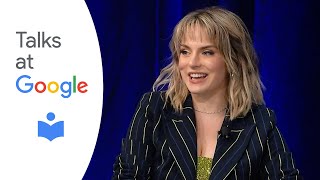
JoJo Levesque discusses her memoir Over the Influence, which traces her rise from Foxborough to a 2004 hit with Leave (Get Out), the label disputes that blocked her releases for years, and her recent return through Broadway and new music. She talks about growing up around AA, the Free JoJo movement that fought her contract, and what it took to write the book.
Chapters
How's everybody feeling?
Good.
Welcome, welcome, welcome to everyone joining us virtually and everyone who is here with us in person for another special, special moment with talks at Google. Give it up for yourselves. You all look amazing. I am Rachel Jackson representing the artist partnerships team at YouTube. And I am so thrilled, elated, like, the adjectives are just overflowing right now. And how excited I am to lead a conversation with none other than Joanna Jojo Levesque. Are we excited? Yes, indeed. So today we will talk to JoJo about her memoir, over the Influence. Everyone has a copy. If you have a copy, hold it up. Okay. Keep it in hand because we will be getting into some things. And this will be an interactive talk. So when I say turn to page XYZ 1, 2, 3, flip those pages. Okay. So we will also end our talk today with Q and A from the room. And also, if you're joining us virtually, you see the dory. It's available. Click the link, submit your questions, and thumbs it up. Arrow it up if you want it to be red or if you like it. Okay. All right, so let's get into it. Jojo, join me. Thank you guys so much. Yes. The lights are so bright. I'm, like, very interesting.
I'm sorry.
I didn't know what to come.
Hi, guys.
Thank you. Oh, my gosh. We are joined by the icon, singer, songwriter, actress. Oh, my gosh. Was the traffic too bad?
No, it is wonderful. Ok. Breezing through.
Oh, great. Great.
New York is crazy, but I love it.
I love it, and I love the look.
The look. Thank you.
One time for the look, y'.
All.
One time for the luck.
Thank you. She had to do a little something for Google.
Oh, yes, you did. You definitely did. So we're gonna start with the intro of your book.
Okay.
I enjoyed reading this so much because you talked to us. I felt that it was so much of a conversation, and I was in it with you. I was there.
I love that. Oh, and I'm so excited to hear it in your voice. Cause I read my audiobook, so it's cool to have someone else like to hear my words be read by someone else. I'm excited.
Okay, so let me get comfortable. I want to impress you.
All right.
Book of JoJo intro, if you want to read along. So you opened it with the Serenity Prayer.
Yes.
This is something so special, so intimate, and it was so interesting to know that you had it incorporated in your life so early.
Yeah. It's one of my first tattoos as well. It's wrapped around my Wrist. So the Serenity Prayer next to like the Lord's Prayer is probably the one that comes to mind at first, always.
Indeed. God grant me the serenity to accept the things I cannot change, the courage to change the things that I can, and the wisdom to know the difference. Some people learn the Serenity Prayer through talk therapy or while reading self help books. But as someone who was born and raised inside of the smoky fluorescent lit halls of Alcoholics Anonymous, I honestly can't remember a time when I didn't know the prayer word for word. It's always been echoing around to me, within me, from me now tattooed in black and green around my right wrist. Somehow nostalgic and aspirational at the same time. It's not that I spent a lot of time in AA meetings as a kid. My parents met in aa. Romantic, we know. So I literally wouldn't exist if it weren't for that program. Do I feel a little guilty telling you that, you know. Cause the whole point of AA is that it's Anonymous. Yes. But I'm no stranger to guilt. And I know now, as I've always known, that addiction isn't just any old part of my story. It's the foundation that everything else in my life, well, everything else in my life was built upon.
That was beautiful. Thank you. That was so cool to hear that in your voice.
Now this. That was quite the intro. So the first time, do you remember what's your earliest memory of aa?
Oh, I can see the building that it's in because they still hold meetings there actually. And just like you never know who's going to walk through the door and you know, you're going to see some characters particularly like, you know, in. I grew up in New England, south of Boston, in a town called Massachusetts called Foxborough. And so like, you know, older Irish American guys, like you know, rough, rough and tumble people and just hearing like the wildest stories. And really what I remember is eating like the donut holes, you know. Cause they would like there'd always be coffee and donuts there and stuff. And I would busy myself with like getting the jelly munchkins from Duncan and stuff. But I remember the overall feeling there. And of course now in retrospect I can look back and be like, how it just must have been. I really respect my mom for being like, this is a priority. Her sobriety was a priority in her life. And of course she had different a journey with it. But at that point she was like, this is a priority for me. I don't have Childcare. My daughter's gonna come with me because I need to get this. I need to get these messages.
She's so real for that.
Yeah, so real. Yeah.
So real. She put her sobriety first, and you were right there with it.
Yes.
And that's iconic in it, so.
It is iconic. Yeah. So, you know, I remember. Yeah, I remember the smells, the stories, all those things. And it was definitely formative to see. And I think it inspired even the way that I wrote this book, because I am kind of gross, transparent. And I think I learned how to be that way through hearing people share, you know, a warts and all type of approach in AA from a young age.
Yes. You were such a sponge then, and it's obvious in the way that you wrote the book. And before we continue through the book, let's talk about your process. What was it like telling your business? How did you prepare for that?
I probably would have not put this out had I not signed a publishing deal, because, like, knowing that there was a. I just mean that I was so scared. I was so scared of getting other people's stories wrong. Meaning, like, no one exists in a vacuum. And, like, there's been so many people that are a part of my life and my story, obviously, that I didn't want to hurt anyone. I didn't want to be incorrect or inappropriate. I wanted to be accurate. So thoughtful, and I just really care about. So I was like, oh, my God, almost to the point of paralysis. But then when I knew, like, I have these delivery dates, I'm like, well, I am a teacher's pet. I am going to deliver. That's still in me. Like, if I say I'm going to do something, I'm going to do it. So having my incredible editor, Carrie Napolitano, at Hachette, she really held my hand through the process and talked me off of so many ledges where I was like, maybe I do need to bring in a ghostwriter.
I don't know what I'm doing.
I'm an idiot. Why do I think I can do this? Nobody cares. And I'm like, but you know what? At a certain point, I care. I actually do care about sharing my experiences, and I need to give myself a shot that I haven't given myself in so many years. So it was just a really. The process was very healing and also taught me a lot about consistency and discipline, because I don't know if there's any writers here, but resistance comes up all the time. And you really need to, like, sometimes just sit your Ass down period. And just see what happens. And just give yourself, you know, those two hours or those five hours or those 25 minute Pomodoro method increments or whatever it is that you're doing. And you just need to be committed to the process. So I learned about a lot about commitment, process, blah, blah, blah.
Yes.
And. But yeah, like, I didn't write in chronological order all the time.
Okay.
I started with a chapter about my dad and his passing. Because that was the most, like, visceral. That was something that I could really. I can always feel into that moment. Cause it was such a hinge point in my life, right. And I started from there. And I was like, okay, I can do this, but if I started from the beginning, it would have never gotten done. Because I'm like, where do I start?
Now that's very, very interesting. I've never written or authored a book myself, but I would think that you would need to start at the beginning. Like, you have the intro, you have your author's. Not go into chapter 1, 2, 3, 4.
So well as an exercise. Like when, when I was shopping, shopping around at different publishing houses and stuff, I, you know, did like a. A few paragraphs of like, what my life has been so far. And I also came up, didn't share it with them, but I came up with 100 stories. My life in 100 stories. I started in chronological order and I just saw what I could remember, my earliest memories all the way to, like, my, you know, more recent memories and to break it down, like, that was helpful. And then from there I used that as a jumping off point. So I did a lot of like, organizational things that were.
Yeah, class is in session. Who just learned how to write their first book? I know I did.
I just learned on the fly. Like I was asking so many questions. I have. My uncle Scott Blagdon is a published author and he is so amazing. He wrote this book called Dear Life youe Suck. And I'm just so, so, so grateful that I got to, you know, he's spent so much time and money learning about how to be a great writer. And I'm like, can you download all that into my head? I don't know what I'm doing. I'm gonna embarrass myself. But so he held my hand and was like a coach, like a real team member to me in this. And I'd send him all my drafts and, you know, he'd mark them up and, you know, I'm grateful for that.
That is excellent. Shout out To Uncle Scott.
Yes.
So let's talk about baby JoJo. Single aged JoJo.
Single digit. You're saying like, okay, yeah. Yes. Zero to nine.
Under 11?
Yes.
OK, well, under 10. 10. So the double digits are a big. This is not a math class. It's not a math class, everybody. I can be wrong about this. It's okay. So she, in this book is characterized as an impressive child. And you were able to latch on to something that I find just so emotionally intelligent at such a young age. You knew that when you sang. You knew that when you just decided to do something amazing that adults watched. How do you remember exactly what you were tapping into when you were doing that?
I think I was tapping into joy and the pleasure of innocent pleasure, obviously, of just like. This feels so good to like to sing and to connect and to elicit a response, particularly from adults, because I'm an only child and I was an old soul and, you know, I just wanted the validation. Not even in a bad way, but like, just like, aren't I impressive? Like, I don't know, you know, I was a ham. I was like. I loved theater. I loved performing. I loved singing and acting and dancing, and I really loved it. It came very naturally to me. I think there are a lot of conversations around child stars and how they were forced into it. And that breaks my heart. It's such an awful thing to not be doing what you want to do and to be forced into anything. That was not my experience. Like, I was having the time of my life.
And we love to hear it.
I was having the time of my life because I really feel that I was given a gift and that it felt great to be in communion with that gift and to explore it. And so that's what it felt like. Just like, just pleasurable to sing and to the point where, you know, kids my age thought I was just the biggest loser ever, because I just couldn't. I just loved to sing. I'd be in the hallways. I'd be in the hallways. I'd be walking home from school. People would be heckling me out from the bus. Like, shut up. You know, and I just. I was in my own world. I was in my own world. A doctor, you know, told my mom, like, your daughter should probably be on, like, ADD medication or whatever. Like, you know, and I'm glad she didn't, because she was like, no, my daughter is special. And, you know, I'm grateful for that.
She saw that. She saw a light in you and she. It seemed like she really was Very, very supportive of you. She accompanied you to audition. She put you in positions to win.
Yeah.
So let's advance to the first time that you were in a studio.
First time I was in a studio, I mean, I think I won an opportunity doing, like, the Maury Povich Show. We, you know, took a bus from Boston or Providence and came into the city, and we did the Maury Povich show before. It was like, you know, you are not the father vibe. It was like, still, talent hurts. Yeah. And I think I won the opportunity to be in a studio, so I recorded a song there, and I learned about that stuff, and. But then by the time I had signed my deal and everything, that's when I really learned my way around the studio. And it's very full circle, because 20 years ago, I was living in New Jersey. The record label I had signed to moved us to Edgewater, New Jersey. I was in middle school there, and we would take the ferry into Hell's Kitchen. I think Sony Studios was around there. And that's where I recorded a lot of my first album. So now I'm like, opposite. Living in Manhattan looking, you know, being near the water, overlooking Bergen county, and I'm just like, woo. Life is so full circle right now. It's really cool.
That is amazing. Can I set a vibe really quick, y'? All, down to vibe with me. Okay, Just snap with me quickly. Come. Yeah. Okay. Close your eyes. Right?
Serenade me.
Hopefully you sing it. I don't want to.
Where are we going?
So just roll with me, everybody. Come on. All right, so you're in the studio.
Okay.
Are we in the studio, y'?
All?
All right, we're in the studio. You take your first breath. Here we go. You sing those two words that changed your life. The person I'm in your life. This is how I read it, y'.
All.
It was really going like this in my head when I read this.
Okay, So I go sing.
Get out.
Yeah.
Right now. It's the end of you and me.
Come on, y'.
All.
It's too late.
And I can't wait for you to be gone. Yeah.
For the first time.
Yeah.
Ever.
Get out. Leave. So crazy.
You shook the earth with that studio session. I will never forget. I was watching 106 in park.
Hey.
And it was the first time that your video was shown. It was like the new joint. Y' all remember that? The new joint of the day.
Who was hosting at the time? Was it.
It was AJ and Free.
AJ and Free.
It was AJ and Free. I'm like, still them. It had to be. You walked down that hallway in that video.
Baby, baby, turned it.
And I was like, wait a minute.
Wait a minute, wait a minute.
I was, like, this close to the tv. I loved your style. I loved everything about the video. And I don't know about anybody else, but I know for me, like, as a millennial girlie, I remember key moments in videos, like, it's nobody's business. Like, I kind of need to get paid for that in a way. But I remember at the end.
Lorianne Gibson, my choreographer, really did her big one with me. She did. Because I know your capabilities, and you can shimmy that.
Yes. It was so good. Okay. Cause your heart was breaking with every word you were saying. Breaking, I'm telling you. And that video, that moment, that kick started your career, just off into a place that I don't think anybody was prepared for. So describe that moment. I know it was fast. I know it was quick, but just if you could slow it down and describe to us what you were feeling in that moment when you were thinking in that entire era, get out.
Well, I mean, shooting that video was my first time in a high school ever, because I was still in, like, eighth grade, I think, So I was like, oh, my God, I already feel so weird and other. And I've already, like, you know, I was bullied a lot before that, and now people are, like, kissing my ass, and they're like, you know, all the kids are, like, wanting to be my friend, and I'm like, really? Yeah. So. And, like, all the people that were playing, my friends in the music video and stuff, they were grown. They were 18, because, you know.
Wow.
Yeah, so that was cool. But I was 13 and, you know, I was wearing heels, and I was. I had, like. I stuffed my bra because I didn't want to be memorialized. Is that the correct word? Whatever. Like, with a flat chest. I was just like, you know, at 13, I could not handle that.
And.
But it was. It was a really exciting time. I had gone from interpreting other people's songs and really considering myself a soul singer, never really knowing that much about pop, like, as much as I was about to learn. I really. Cause I'm such a student, and I love. Like, I can really get immersed and obsessed in things, so I didn't really understand. Leave. Get out. That's not to say that I don't love it now. Like, I do. I understood it pretty fast when people. When it started doing really well. But that song was so different from the rest of the Songs on my album, which were very much inspired by hip hop and R and B. The rest of the project is really that. And so I was just confused. And it really definitely planted a seed of confusion where I was like, wait. I identified as, like, a soul singer, but now everyone's like, the new pop star. I'm like, word, I don't know, me.
So.
Oh, it was you.
It was me.
And you told me to break up with all of our middle school boyfriends at that time. Get out.
So I. Yeah, you know, I had never been kissed. I was not experienced at all, of course, and so it was interesting. Oh. But that's why I was saying, like, I interpreted other people's songs always. Yes. So I was just interpreting this song. You know what I mean? And it really took on a life of its own. You know, we were at TRL and, you know, people were holding signs and calling me by my new name, JoJo. I was no longer Joanna. And that was. It was a whirlwind. I opened for Usher on his Confessions tour in Europe, so I was seeing the world for the first time. I was. I had a tutor. We were doing private distance learning, and, you know, we'd be in London, or we'd go to France and get to explore the catacombs, and then she'd, you know, tailor our lessons to that. It was an unbelievable education in life. And just across the board.
Where were you in your career when you decided to disconnect from us?
What?
What do you mean, when I decided to disconnect?
No, not disconnect. Just in terms of. Not, like, introverting. But when. What switched? What switched? Where were you mentally? What was going on around you when you were like, okay, I need to take a break from this. Ooh.
That's not what happened.
Okay.
Yeah. So what had happened was straighten it.
Straighten it.
My label that I was signed to and I put my first two albums out through Lost their distribution. They were no longer a functioning label. I was ready to put out a third album. I recorded hundreds of songs, but it became a very impossible situation. And I was kind of. When you sign a contract, then you're beholden to. You know, I didn't own my voice, and they wouldn't approve me to do things that were. They wouldn't approve anything. And so I could. No, My career was kind of stalled there. They wouldn't release me. I needed to. I felt the pressure to. I was told I basically needed to, like, just. Just wait. And so I was going to go to Northeastern University for Cultural anthropology. And. But then, then it looked like a glimmer of hope with my label. Like, oh, they were going to get distribution so we can put out a project and blah, blah, blah. So I moved to LA and, you know, made even more music. It didn't come out. It was just all this, like, hurry up and wait and like. And by the way, like, you know, you need to look better to sell the music now that you're grown. You know what I mean? So, like, get skinny. And so I was like, okay, like, I must be the problem of why this. So, like, sure, like, put me with a dietician, I'll eat 500 calories a day. Like, whatever you need. You know what I mean? Because I'm so. I'm so embarrassed that it's been so long that I put out music. My last album came out when I was 15. Now I'm 18, now I'm 22. What the fuck? So I'm just, you know, was really trying to make things work with my label for a long time. I ended up, thank God for the Internet. I ended up putting out music for free because I couldn't do anything commercially because I didn't own my voice. So I put out mixtapes. I was inspired by what people in hip hop had been doing forever. And I said, well, maybe I'll take a page out of that book and, and just do it through the Internet. I'll ask producers and co writers if they mind if we just put this out as an offering because they've invested their time and money into this too. And I just made an investment into creating stuff directly with my fans. They created a Free JoJo movement. I had to sue and get off of that label. It was a very, very confusing and dark time for me. My family was worried about me. That's when I started, you know, really, really getting depressed and really anxious and just being like, what is happening? And so that is what happened.
Yes, it was circumstantial.
It was circumstantial.
Yet you rose above all of that. And the beautiful butterfly that you are today is just amazing. And that is another point of over the influence. Make sure you read it. Cause she's clearing it up, making sure that you all knew it was not her and she's not a victim of her circumstances. She used them to her advantage and won with it.
That's what we're tasked to do, I think. You know, I really believe that. Yeah. In my story, I don't see it as, you know, there's victims or Villains. I think we all contain multitudes. I mean, in some people's story, they haven't written a book about it yet. But in some people's story, I'm the worst person in the world. You know what I mean? I've been. I've been many people. And that's because hurt people hurt people. And in my story, I do share a lot of personal things. And it's because it all relates to music. It all relates to why we do, why we make certain choices. And I feel better about sharing some of the imperfections or some of the things that I'm even that I carried so much shame with holding onto. I just think it feels more liberating to just put it into the light and whoever takes a peek at it. Cool. But like, the light acts as an antiseptic to the wound that was like, infected. That's kind of how I think about it. Yeah.
And you mentioned that early. That was like one of the first few pages, you know, to those I've loved those that view me as the villain. It was so transparent. You were so transparent here. So kudos. And speaking of Transparency, Book of JoJo, everyone. Page one, 176 and 177. This is my favorite part because you gave us vintage yearbook vibes here.
Had to do it. Yeah.
So I just want everybody to just take a peek really quick. We see baby Jojo here, we see JoJo with her friends.
It was so hard to decide what pictures to put in there.
I was gonna ask you how you landed on these photos.
I mean, it's. Yeah, we only had so much space, like in, in this process. They were like, okay, you get this many pages for pictures. And I'm like, ah, what am I going to do? So, yeah, I mean, I think there's some. Some cool ones in there. I just wanted to give a little taste of different moments.
Definitely some special moments here. And again, the fit was fitting. The girl was fly.
Ok. My little faux leather, my baby fat necklace.
Yes.
What a time. I love it.
I love it. And what was your favorite part about either your process or your favorite part that you put into the book itself?
Hmm.
Man.
My favorite part was starting to see patterns, like recurring patterns that I could not see at the time and just starting to see more clearly the blind spots in my professional life and also my personal life that only time can reveal. And that's why I really do think that if anybody here is wondering, like is thinking about writing their own memoir or, you know, a part of your life story, or whatever it is, do it. It's a really, really interesting experience to see your life in black and white and to take the time to think about things from different vantage points. It's just a really. I don't know, I feel expanded by it. And I think. I don't know. I love introspection. And also, it's not like, all about being inside or just thinking about myself. It also is like, how does this relate to things that other. You know, how does this connect us? And I think it's. I had more compassion for myself as a younger person. I was really, really mad at a lot of the choices that I made in my 20s. And now I'm like, I totally understand why I did a lot of things.
Right. So did you find yourself forgiving yourself multiple times as you went through the process of creating this?
Yeah, I mean, I didn't want this book to be like a therapeutic exercise. Like, I've spent a lot of money in therapy already, so that's been an investment for sure. So it's not like I was thinking about these things for the first time. I've been mulling them over with Dr. Janice or Dr. Kaufman, like, you know, and so we've excavated these things. So now I have, I think, probably a different perspective than I would have if I wrote this any other time than right now. But, yes, like, I thought I had forgiven myself for some things, but it actually. It allowed me to have more understanding and compassion, I think.
For sure, for sure. And that is beautifully written as well. And let's talk about the title quickly. Over the Influence. I just pull so many entendres out of this. Just naturally, it's like, I'm over the influence. Then it's like, actually, I'm over the influence. There's so many. So many different ways that you can just say these exact words and they just mean something so different. What do these three words mean to you?
Well, I spent so much of my life being under the influence. Sometimes of substances, sometimes of literally the influence that systems, people, society, obviously has on all of us. And it's not that I'm above it or I'm over it. It's that I'm like, over it. I just no longer wanna subscribe to the things that I was conditioned to be told that I need to. And it's such a cool time, I think, to be a musician, to be an artist in general, but because there's not one way to do things. And actually, a more empowered approach really, is to take a independent mindset. And I'm really just reconnecting with how I felt as a little girl, which is, like, excited and alive and curious. And I really lost that for the middle chunk of my life. And hopefully this is still like, the first third of my life. Hopefully. Like, God willing, life is long. But, like, the middle of the first third of my life was just like being lost in the woods and not being able to see. What's that phrase? You can't see the forest through the trees.
Yeah. So you can't see the picture when you're in it. Yes.
And so. And landing on this title was the last thing that happened in the book process. Like, we already had a. Wow. I was just like. I was thinking of calling it under the Influence, and I'm like. But that has a terrible connotation. Like, that's not what my story is. It's not a depressing story. It's a redemptive arc, not just for myself, but for the other people in my life. You know, my mom and I's relationship. That's a big arc through the book. And so I was just saying it out loud. I'm like, under the influence, blah, blah, blah. And then it just felt like. And then I just couldn't think about it anymore. I'm just like, guys, this is what we're going with. So here we go.
Yeah, let's do it, and let's do it live.
Oh, my gosh.
Show Jojo some love. Just.
Yes.
I just want to say thank you, guys. Thank you.
Yes. And just give me your flowers and just show you gratitude for not only being here with us, but just sharing this with the world. Because it's at a time where we all need it. And we can learn so much from you through the words that you put in this book. Because I know I'm learning so much not only about you right now, but even about writing my own memoir.
Yes. I love that. Well, I'm honored that people are interested in my silly little story, honestly. But I think that. I mean, I love reading memoirs. I love autobiographies, biographies. I'm so interested in people. I think people are fascinating. So I feel very, very honored that people want to spend the time to just go through this experience. And I will say that this being a New York Times bestseller is something that I could have never, ever externally. And now I'm currently doing my last week at Moulin Rouge, the Musical, and they're selling it there. So, like, people, I'm like, woo, that's great. And so I'm signing at stage door after the show. And people are coming up to me and they're telling me what they've taken away from it. And some people are like, I read it in a day. And I'm like, what type of speed reader are you? It takes me so long to read a book, so I'm just. I'm, like, really moved and really tickled, and I'm glad I did this. I was so scared, and I'm just. I'm glad.
Yes. You should be so proud of it, because it is a great, great read.
Thank you.
Yeah. So at this time, we're gonna move over to Q and A. If you're in the room with us presently, there are two mics here and here. Feel free to rise and shine.
Rise and shine.
And we're gonna start with the dory, and we'll go back and forth between in the room and everyone that's joining us virtually.
This is so cool.
So let's get into a question from Nisha Adams.
Okay.
Nisha asks. Love your music and high notes.
Me too, girl.
Many kids today have goals and dreams of becoming the next big influencer or it thing. As social media increases its grasp on their reality, what insights do you have for them on the fleeting nature of fame and recognizing or celebrating their existing greatness?
What a beautiful, very well written, beautifully crafted question. What insights do you have for them on the fleeting nature of fame and recognizing, celebrating their existing greatness? I mean, I couldn't have put that any better. Yeah, fame is fleeting. So I. And so is. I mean, like the music industry, the public, the way the algorithm works, like, it's shiny object phenomena, you know, where it's like, all about. I mean, my attention span is suffering. Like, you know what I mean? I don't know if it's just me, but. So I would say the thing that I would encourage people to do is to. If you want to be, like, committed to a creative life, then be committed to a creative life and honing your craft and finding community and creating things that you enjoy and believe in and have that be the focus and let that fill you up. Because chasing validation and likes and look, I know we need to make money. I know we need to survive, especially those of us who live in New York.
It's.
We're fighting for our lives every day.
It's treacherous. So I'm not saying, like, you know, just like, wee. Just like, I don't know. But find a way to not compromise your soul in the pursuit of success. And I don't know how you do that, it's gonna look different for everybody. You know, I can only speak for myself, but exactly what you said, Nisha. Fame is fleeting, but, you know, integrity and work that you believe in can last forever.
Mm, poetic. So poetic.
Thank you.
Please.
Hi, Jojo. Thank you so much for being here.
Oh, thank you for being here.
I'm super psyched to read your book later tonight, and I'm gonna aim to finish it tonight.
Good girl. You are correct.
High achieving people. We are agrin.
Yes.
What's your name?
Oh, my name is Sarni.
Hi, Sarni.
Hi.
So, yeah, so thank you for being here. I would love to ask you about your work ethic, especially in the past few years, because I can only imagine there's a lot that goes into being on Broadway, especially in a leading role with Porcelain out the book and everything. And I can only imagine you're putting in your heart and soul into it. So I'd just love to hear what drives you to, like, keep going through all of that and like, how do you prioritize all of that all at once?
Thank you for that question. You know, I just feel really excited about life right now and I'm kind of just like, just exploring that and being curious about it because I, like, I've said I felt so. I felt really energetically dead and, like, apathetic. And I just, like, was not connected to my spirit, the source from which all things come. I just, like, wasn't there. I was just trying to achieve and just trying to, like, hold on to dear life for, you know, being accepted in this, in the major label system and just trying to, like, you know, please like me and please, like, give me budgets and priority and stuff. And I'm just. That really sucked my soul out of my body. And so in having opportunities to be a part of a community here on Broadway, I just like, that opportunity meant so much to me because I got my start in musical theater. I played a six year old Tommy in the who's Tommy? In our local production in Massachusetts. And then that bug really bit me. And so I just wanted to be a good steward of these opportunities. And I think because I've experienced such high highs and such low lows, it gives me the perspective to be like, when you get a great opportunity, you better show up. Because there are so many people that would kill for this, to be in this position for real, especially on Broadway. Like, everybody's so talented. It's sick. Everybody's so hot, so hardworking, so talented. I'm like, I better bring My A game. Because I don't take it for granted. I'm like, I did not want to come in and be like, oh, well, I'm JoJo. Like, who fucking cares? Like, everybody's so good.
She know that girl, though.
I did.
Okay, be clear. She's that girl.
I didn't want people to be like, that was a weird stunt cast. You know, I really wanted to be, like, good at this and feel good about myself. And that's what it's about, I think, is about doing work that you feel good about. You can look yourself in the mirror and. And have that sense of integrity. I will say that in the past, like, six months, I'm probably the busiest I've ever been. Maybe even, like, earlier, I was starring in this musical. I was workshopping another musical. So I was from 10am to 6pm at one workshop thing, then running over to the theater, doing my makeup, putting on the wig, being Satine, coming down from the ceiling and promoting the book and finishing that and then preparing to put out a new single, Porcelain. And then the EP that follows and routing A for next year. And also, like, you know, trying to be like a person and, like, you know, work out, do Pilates, meditate, you know, take my dog out and, like, eat food and be a human. Yeah, it's hard, but there's just a lot of enjoyment. And I'm really grateful for that because it's not always like that. So I'm riding the wave.
Amazing.
Thank you so much.
Thank you. So we'll go to the Google verse, and then we'll come to you. Okay. Oh, did you want. Actually, you were so ready. I don't even want to step on your question like that.
I love the spotlight on it.
Go for it.
Hi, my name is Jordan.
Hey, Jordan.
How's it going? So my question is quite simple. What are Your favorite top three 2000s R&B tracks?
Oh, good question.
That is such a great question. Damn, I'm going to falter so hard. I'm just like. When I get asked something like an important question like that on the spot, I'm like, every song I've ever heard goes out the window. But let me. What about, like, Just Friends, Music, Soul Child? What about, like, you don't have to call Usher and maybe. Okay, 2000s. I want to be real accurate here, because Those are both 2000s, I think, right? Hmm. I need to say like a female or a group.
I've heard you saying weak before.
Yes.
I mean, I was gonna say some SWV, but I think they're 90s, so I want to be real in the 2000s, right before that era. What about, like, hmm, I don't know, Just to be random, just cause it comes to mind. And I Hope this is 2000s, but what about, like. Oh, damn. I was gonna say where my girl's at from the front to back? Are you feeling that? But it's not that.
Yes.
Dang.
Great music. Great music. Undeniably, yes.
Yeah. What's one of yours? Or what are some of yours?
Oh, me?
Yeah. Yeah, Jordan, you.
Okay, let me think. One that I listen to pretty much, I guess every single week is Southside by Lloyd.
Oh, and I'm from Atlanta, so I love that. I'm from Louisiana. We're both from Decatur, where it's greater, actually, so I'm appreciating that one.
Oh, I love Lloyd. Yeah, that's a good one. Okay, well, period.
Thank you.
Yes. You shook it up. Yeah, you really did shake it up.
Okay, so we'll go back to the dory. So this question is from Anne Booth.
Anne Booth.
Yes.
Hi, Anne Booth.
In today's world, where everything is online and artists are often expected to be perfect influencers, how have you found the courage to be open and vulnerable about your struggles? Did that vulnerability ever backfire, or did it ultimately help you connect with your fans and your music?
It is a weird time. I mean, it's a great time to be an artist, but it's so cringey as well. It's so weird because. And I love that, you know, artists like Kendrick Lamar and Adele say, no, I'm not doing content. You know, that's really cool. But for the most of us, it does feel like you need to really, like, you know, get out there and be an influencer as well. Have you found the courage to be open and vulnerable about your struggles? I will say I don't feel a lot of like that. It takes courage. For me, I would say that I'm just, like, out here vibing.
You're a natural.
I'm kind of just. I just feel more comfortable being transparent. I'd rather say the things before other people can say them. I'm like, oh, are you gonna try to use this against me?
You can't.
I already said it. You know, it's all in the book. Like, yeah, I did some weird things and it's fine. Like, you wanna talk about it? We can, you know, So I think that I just feel more empowered by that. And maybe it is growing up in AA meetings that made me feel that way. Did the vulnerability ever backfire? I don't know. I just don't think about things like that. I was. And maybe I will. I hope not. I hope it doesn't turn into a bad thing, But I'm just kind of. I'm trying to be present and in the moment.
It's the best place and the best way to be trying.
Yeah.
Hi, I'm Crystal.
Hi, Crystal.
Big fan.
Grew up on Aquamarine Sweet.
I thought it's right, girl.
Yes.
Saw you at Moulin Rouge last year before I even moved here. And then I moved here, so you guys should all go see it. But my question is, did you go and talk to people about how they remembered things you were going to write about and kind of, like, reflect and see if maybe you guys had different perspectives, and if you did, did that influence how you were going to continue to write about it?
Great question. I did interview people in my life that have been there for a long time, including my mom, who I shared some very low points in her life that were also very low points in mine. And she was willing to go back there with me and to recall, you know, give me her remembrance, her memory of that. And also I interviewed, like, my publicist from back in the day, Felicia Fant, who's, you know, there with me from the very beginning. And I interviewed Katie, my longtime manager, who used to work at my former label. I interviewed the radio rep, Eli McCoy, who was independent radio rep that worked at Blackground. I interviewed some people from Universal, blah, blah, blah, and family members and things like that. Like, how do you. Because again, it was really important to me that I wasn't just, like. A memory is so interesting, you know, the things that we forget, the things that we remember, how we compartmentalize. So I just wanted to, like, bring in other people's vantage points and then infuse them into my own while still being like, well, this is still my. How I viewed it. So, yeah, I did. I did do that. Thank you. Thank you.
I want to talk about that a little bit before we move on with further questions. What were those interviews? Like?
I had a little voice note out.
Okay.
And I were, like, conversational. They were conversational. And I had my computer, and I was like, sorry, I'm gonna be weird, but I was just, like, making notes, and I had so many, you know, Word documents open of, like, interview with Eli, interview with Katie and Mom. Mom notes and things like that. And I just wanted to. I mean, if I wasn't gonna bring on a ghostwriter, I was like, I really gotta try. Like, I really need to try to make this into a thing that's really dope.
Really, really dope.
Hi, I'm Miranda. And apologies in advance if this is in your book. I'm only on chapter three.
Oh, it's fine. Thanks for reading it.
Only on chapter 13.
You're making a lot of.
You're definitely getting through the way.
I was very excited, but I wanted to know, as a fellow millennial growing up in the age of comparison, like, you read about, like, the teen pop magazines and, like, growing up here, I know that, like, the coolest thing to do was, like, find out how to get a thigh gap and, like, stuff like that. Do you have any songs or mantras that you lean on to remind you or ground you in your journey of being over the influence?
Oh, great question. Do I have any mantras or songs.
Remind you and keep you in that headspace?
Yeah, I mean, I could share a playlist with you. I should. I would welcome that. I mean, I'm trying to think if specifically. I mean, I wrote a whole ep trying not to think about it, about my wanting to get outside my head because I'm, like, such a. What is that called, when you're in your head? Whatever that thing is, you know, I'm just like. That's where I am a lot. So I have a interlude on there called, like, Good Enough. I have a song called B I D, which is breaking it down. I think that turning our phones off, getting off of social media for periods of time is really important. Trying to think if there's a particular song. I mean, it's kind of weird that I'm naming all my songs, but they're just. What. What comes to mind. I have a song called I Am, which is just an affirmation. They're really all affirmations in there. I am worthy of love. I am strong enough. I am beautiful. It feels like sometimes it feels like I'm not anything at all, but I am whatever I say, you know? I am beautiful. Yeah, I listen to a lot of. I listen to what's. What's that guy's name? Deepak Chopra sometimes. And he has, like, good meditations and affirmations and stuff like that. I do not discriminate when it comes to positive things that I'm taking in. I listen to sounds at night. I listen to, like, healing frequencies. I. I just try to really be responsible with my intake, you know what I mean? Because we're so influenced by all the things that we interface with, and everything is Bidding for our attention and bidding to influence us. So I try to be like a good. Try to be the. I try to reparent myself in those ways. Thank you.
Another question from the Dory. From er.
Wait.
Okay. Okay.
Yes.
From Ernest Petty. Ernest Petty. I. Oh, this. I can't wait to read this. Okay. Your music videos were played during almost every third commercial break on the inn known now as T. It's called the N now, girl.
It's so old.
They will never know. The kids will never know what it looked like. Okay. They weren't there.
Okay. Whoa.
I'm curious whether you ever encountered your videos in that context, and if so, what was that like? Like, did you just ever walk into a store or a salon and see your music videos or just hear your music?
Yeah, for me it was the Footlocker.
Okay. Yeah.
Walk into the Foot Locker. I was like, I've made it. Like, you can get Air Force Ones and see my face.
And Jojo.
Yeah.
Like, wow.
Yeah. So I definitely would see it places. And that was pretty cool.
That was cool. It's really, really interesting to just be the star, you know, you are her. You are she. She has all of this creativity, all this talent, and then you're just normally walking in Foot Locker and it's like, that's me, girl.
I had to stay crispy. I had to get my fresh forces.
And I still wear white Air Force One to date.
Well, it's crazy how everything comes together back in 20 year cycles. So we're very much in the early 2000s now.
We are.
And when people in, like, stylists want to dress me in, like, not. Not right now, but they really be trying it where they're like, oh, like, we should do like, you know, homage to 2004. I'm like, no, I don't need to. Like, that was. I was there.
I lived it.
I'll leave that to the kids.
Right? Like, they owe me homage. Like, I don't need to give it. I lived it. Please. Hi, Jojo.
Thank you so much for being here. My name's Yarden. I'm going to expose myself a little bit here. I've seen Moulin Rouge seven times with various casts. And I wanted to say I love your Satine.
Thank you.
So I wanted to hear from you, I guess, first of all, what made you realize that, like, now is the right time to explore Broadway? You said musical theater was in your life when you're young, so. Because you also did it and then left and then came back again. So wanted to hear about kind of that Broadway journey. And then also, did you see in Satine the character. Right. Something special that kind of particularly drew you to that show? And what did you kind of take from Satine as a character or then maybe what did you, like, bring to her from your experience?
Well, I love it. Thank you. I was super heartbroken a couple years ago. I had really gotten deep into musical theater. Like, me and my ex loved to go see shows together, and that was. So I, like, saw Adrienne Warren when she was playing Tina and, like, her last week of performances. I'm so glad I got to see that. Saw a lot of different shows, like national touring productions and also, like, Broadway stuff and West End stuff. I got to see Nicole in Sunset Boulevard on the West End. And so I was just, like, so excited. I was so inspired, and I was like, you know, one day I would really love to have the opportunity to originate a role, to even be a producer on something, to write music or, you know, and to star in something. So after I ended my engagement, I was just not ready to make new music. I was just like, I don't know what the hell is going on. Like, life is just so mysterious to me. And so I told Katie, my manager, you know, I was like, I just. I think I would really love to do some theater. You know, whether it's a workshop or something. Can we. Can we see. Can we tell my agency? Like, can I meet with the theater department of the agency? And can I. Can we let them know that this was something I'm interested in? I had no expectation that I would get to be a leading lady on a expensive, killin ass musical like Moulin Rouge. I just didn't think that I'm like, I don't always go to, like, from 0 to 100. But then the opportunity came that they were looking for somebody. I had just seen the touring production at the Pantages in la, and I was really moved by the spectacle of it all, and I thought, oh, this is kind of a natural progression. It's all pop songs from over the past few decades. I was like, I think I could really eat, actually. I really think I could kind of go crazy in this role.
So.
So. And I don't normally. I am. I am. It feels weird to say, but, like, I am humble. I'm not, like, I'm normally not thinking, like, I'm about to eat. I'm just like. But I felt, like, kind of turned up, and I was like, I should follow this feeling because I don't always Feel like this. So I auditioned for it. That was a humbling experience, too. They asked me to prepare two songs. I learned a whole soundtrack. I'm like, whatever y' all want. You know, I got this. And I just walked. I went in there, and I was like, even if I did my thing, I left. I threw the sides out. I was like, I did what I was supposed to do. I feel good about myself, even if nothing comes of it. But it did happen, and it's been one of the most enlivening experiences that I've had. Again, that sense of community, the discipline that I've learned, all the tricks and tools that you need. I mean, people that perform on Broadway, years, years in and out, I have. I've always looked up to them. Because you are. This is not for the faint of heart. It is. It's hard work. It's a 9 to 5. Like, I didn't understand. I was like, oh, my God, these people are so good. All the shows I've enjoyed over the years, and now that I'm in it, I'm like, whoa. It's. But I love it. I really, really love it. That was a long and winded answer, but I hope I answered your question. Thank you so much. Thank you. Oh, about Satine and what I related to about her. I mean, I, too, am a dying whore.
Me.
No, there were a lot of things. I mean, they.
That's why she's a memoir author, everybody. She keeps it real.
I mean, she put a lot of weight on her shoulders, and she did have a lot of pressure on her. She was the. Her father had her turning tricks at 13. I was like, well, I was turning tricks in my own way. And so there were some things that I related to, and also her hopeless romanticness, her wanting to protect those in her life, needing to be different people, and not really being integrated until the end. And there were a lot of things that I related to about her, and I have enjoyed inhabiting her so much. I've enjoyed not thinking about myself and thinking about this woman and her journey, and I've loved every second of it, even when it's hard.
I loved watching you in it.
Thank you so much. It means a lot.
Hi, JoJo. My name is Tiffany.
Hi, Tiffany.
You talked a bit about your experience. Experience on your previous label, the Free Jojo Call to action on social media, which I think really amped up after your cover of Marvin's Room. My favorite cover, by the way.
Aw.
Thank you.
Journey to being released from your label after looking back and Writing your memoir and moving on, releasing more music, shifting into Broadway and going on tour potentially next year. What are some key lessons that you learned about business and contracts, management, and people that you put your trust in to ensure that you can thrive as a creative?
Another great question. Thank you for that. I will say that, like, alignment is so important, and no one is going to care more about your artistry or what you're putting out or your life than you. But because I was. I started so young and I really thought that everybody else knew better than me because they probably did for a long time, like I didn't know anything. But at a certain point, then you do become equipped. And I had to trust in myself that even if other people didn't understand that I needed to make decisions that made sense for me, even if they don't make sense to any outsider or whatever. So just because a manager might be capable or care or whatever, if your visions or if your worldviews are not the same, it's very difficult to untether. But it might be in your best interest to give yourself a shot to find somebody who's more in alignment. So I've learned how difficult work breakups can be, friendship breakups can be, label breakups can be. Another thing that I've learned and that I would say to any new or younger artist is these labels are not your family. You know what I mean? These people that work for you, they can feel like family and stuff, but like it's musical chairs there, you know what I mean? It's an ever rotating thing where people, everybody's gonna do what's best for them and you need to do what's best for you, too. And I will say that I've definitely learned that ownership is extremely important. If you're in a position where you can own your intellectual property and you can hold onto your masters or you can negotiate, creating leverage is really important. That's why I would not suggest that an artist signed to a major label, I would suggest that they build their own leverage through engaging with, you know, their fan base. They say, what fan base? Well, okay, you know, if you have two people that are listening, how can we grow that into four? How can we continue to expand? And then. Because that's what a label is going to be looking for anyway. So if you're really. If you are going to get in bed with a label, then you need to. They're not going to sign you if you don't have leverage. So be in a position where you can negotiate. Otherwise, just Continue to build it, and then other. Others will come. Maybe I'm simplifying it or making it sound easier than it is, but that is how it is right now, I think. So. I've learned so much along the way, and I think it's really cool to still be, you know, to be 20 years into this and to have a perspective that I want to share with younger people.
Thank you.
Thank you.
She is so eloquent, isn't she? You're learning so much. We have time for one more question.
Hey, how's it going?
Going you.
My name is Vivek. So I actually had a question for you that kind of tags off the last one, which was when I was in middle school. You were. You had that song Leave, Get Out. Super popular.
Yes.
And then in college, you put out your cover of Marvin's Room, and it was really cool to see you have, like, this. We. We didn't see you for a bit because you were being held back by your label. And then there was this resurgence in your career. So what was that. What was that moment like to experience that, like, that cover of a really, like, popular song at the time? And number two, are there any artists that you're really looking forward to working with in the future or that you want to work with in the future?
It was really unexpected to have that response to my cover of Marvin's Room, and that kind of started, like, a trend also that I didn't expect. It was just so neat to see the way that social media worked then and works now and how things that you just. You just never know, really. So it was cool to be accepted as the more, like, raw, you know, rough and tumble chick that I was and still am. I a little reformed, a little more demure these days, but it was just cool that I was, like, saying fuck on the track and people were like, yeah. I was like, cool. I can be myself now.
We are okay with it.
Yeah, so that was neat. And as far as artists I want to work with, there are so many amazing people across so many genres that I can't. I don't even know where to begin. I mean, I'll just say the artists that I'm loving listening to right now, I love Sabrina Carpenter. I love Chapel Rowan. I love Billie Eilish. This artist that I'm listening to right now, if y' all don't know him, his name is Sonny Colon. He's my favorite to listen to. Victoria Monet. Lucky day. I mean, it's very, very exciting time for music. Bruno Mars. People are really out here doing cool things. So, yeah, I'm loving it. Kendrick, thank you so much. Thank you.
Appreciate it.
Thank you so much for your questions in person and in the Googleverse. Jojo, thank you so much for being here with us.
You are so great. Our love.
This has been another amazing talk at Google moment. Singer, songwriter, Broadway maven, New York Times best selling author, Joanna Jojo Levesque, everyone.
Thank you guys so much for having me.
More from Guy


Cheryl Strauss Einhorn | The Human Edge: Smarter Decisions in the Age of AI | Talks at Google



Rachel Glennerster | Innovation and the Center for Global Development | Talks at Google

Rebecca Winthrop | Rethinking the Purpose of Education in the Age of AI | Talks at Google

Dr. Robert Wachter | A Giant Leap: How AI Is Transforming Healthcare... | Talks at Google



