Kremlin Rising | Susan Glasser & Peter Baker | Talks at Google
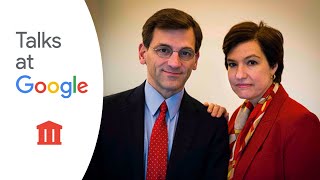
Former Washington Post Moscow bureau chiefs Susan Glasser and Peter Baker discuss their book Kremlin Rising, covering Putin's control of media and history, rising Internet use from 3% to 25%, and how Russians increasingly preferred material stability over democratic risk. They share on-the-ground stories from high schools to oil companies showing the Kremlin's grip on memory and institutions.
Questions this video answers
January 2001 to November 2004
About 3% when they arrived vs. about 25% later (during their tenure/observations)
Chapters
Thanks so much for coming to today's authorsoogle event. I have the pleasure of introducing Susan Glaser and Peter Baker. Peter and Susan were Moscow bureau chiefs for the Washington Post from January 2001 to November 2004. They'll be discussing their book, Kremlin, Vladimir Putin's Russia, and the End of the Revolution. Strobe Talbot, president of the Brookings Institution, calls Kremlin Rising a superb portrait of Putin's Russia by two reporters with an eye for the telling detail, an ear for the subtext of Russian life, and balanced, probing judgments about one of the most important dramas of our time. Please join me in welcoming Susan Glaser and Peter Baker. Well, thank you guys very much for having us. Can everybody hear me okay? Yeah. Okay. This is a real thrill for us to be here as Susan right now is the assistant managing editor for national news at the Washington Post. I'm in Washington as the White House correspondent, and we feel a little like, you know, the Flintstones coming to meet the Jetsons. We're very old world media, you know, ink and paper, trying to adapt to a new world. So it's for us a great thrill to be able to come here and sort of see how the future looks and to think about ways that we'll be able to adapt what we do to what you do as we go down the road. Now, we're here today to talk about Russia specifically. That's our book, Kremlin Rising. And I can tell you after four years in Russia, the one thing I know absolutely, without a doubt, is that Vladimir Putin is scared of you. He's absolutely petrified of you. He's absolutely petrified of what this place represents. What it represents, of course, is information. What it represents, of course, is knowledge. What it represents, of course, is openness and transparency, all of which are the enemies of Putin's Russia. Now, we left at the end of 2004, but you've seen even since then the continuation of a real trend in Russia today. The most recent trend has been to look at the Internet. Putin's Russia has taken over the mass media. Broadcast television has intimidated or taken over most of the newspapers, and until recently, it had left the Internet alone. But now it's recognizing that the Internet is. Is a force even in a place like Russia, not just in the United States and elsewhere in Europe. When we got to Russia, I think about 3% of Russians were regular Internet users. Today, it's about 25%. That's a pittance, obviously, compared to what you're used to. But in Russia, that's a huge segment of the population. And the 25% represents Moscow and St. Petersburg, the main cities, the places where politics really happen, in a place where there's still rural fiefdoms out of the Middle Ages, you know, that's the rest of 75%. So, in fact, today, most of the educated elite of Russia is online, which was not true just a few years ago. And what does this mean? This means freedom. This means the ability to understand things that state television isn't telling you. This means the ability to communicate with people, particularly on the outside, in a way that they never could in the old days. And so this is a threat. This is a threat to Vladimir Putin's Russia. And so now they're talking about creating their own Russian Internet, their own Russian World Wide Web, because, in fact, the one that you guys have mastered so well, you know, in some ways is threatening to them. In a way, they'd like to create their own system absent exterior forces. They're talking about. They've created their own Internet websites. They've actually bought up a lot of the most popular Internet websites or intimidated them into sharing their point of view politically. And they are threatened by, particularly, things like Google Earth, which tells people, you know, where things actually are, which is an anathema to Russian history. Even today I had lunch, I remember, with the president of an oil company, TNKBP, in Russia. TNKBP is a 50:50 partnership of a Russian oil company and British Petroleum, BP. None of the British managers who own half the company were allowed to look at the maps of where the oil fields were, state secret still. So they had to hire Russians who were allowed to decode the false maps into true locations. How do you dig for oil? How do you drill for oil if you don't know where the oil is? Well, they're not allowed to in Russia unless the Russians give them that information under classified system. That's very onerous and burdensome. So what do these guys do? They use Google Earth. You know, information age cannot be held back in Russia day. They're trying to find a way to hold back that tidal wave. You know, when we arrived in Russia, we thought it was going to be a very, you know, almost sedate period. We came after Boris Yeltsin. We came, you know, at the very beginning of Putin. Who was this guy Putin? He was going to be, you know, a stabilizing force after a decade of tumult in the post Soviet era. What we found actually is that the time that we were there. And the time since we've left has really been every bit as profound for Russia as the period of the 90s. They're not tanks in the streets, they're not firing shells at parliament. But the changes have been deep and meaningful and, you know, in a very troubling way, I think, for those who want to see a Russia that is open and free and transparent, as we all hoped, I think about 15, 16 years ago, you know, last Christmas, of course, was the 15th anniversary of the fall of the Soviet Union. The 15th anniversary of when Mikhail Goes. Gorbachev walked out of the Kremlin for the last time. They hauled down the Soviet flag, the hammer and sickle for the last time, and this new Russia was born. And what do we see during this 15th anniversary? We didn't see celebrations, we didn't see fireworks, we didn't see television talk shows talking about what a great moment this was in Russian history. Instead, actually, at that very same time, by coincidence, it was the 100th anniversary of the birth of Leonid Brezhnev. Remember Brezhnev? He was the stolid, bushy eyebrowed, you know, apparatchik who was sort of the last of the longtime real Soviet gerontocracy. You know, he led a period that we call stagflation or stagnation and so forth. Russia literally began to fall down. And despite that, you would think Brezhnev is sort of not the most popular figure in Russia today. But instead, his birthday touched off this wave of nostalgia. You know, they had wreaths and flowers laid at his tomb in Red Square, and they had conferences on his legacy, and a street and a park were renamed for him. State television correspondent actually got on television and said how he was really quite a hit for the ladies, you know, and one poll showed that more than 60% of Russians today, 60%, 6 0, saw the Brezhnev era in a positive light, compared with only 17% who didn't. So what do we make of Russia today? What do we make of a country that grows misty eyed over a period of tyranny and stagnation while growling that the breakup of the Soviet Union, which most of us consider to be, you know, a pretty amazing moment in history, was actually the greatest geopolitical catastrophe of the 20th century. That's what Vladimir Putin called it, the greatest geopolitical catastrophe of the 20th century. Think about that. And is Putin out of line? Is he a radical in Russia today? No, no, he's not. He says that because in fact, that taps into a Very deep vein of thinking in Russia today that they actually do believe that the breakup of the Soviet Union was. Was a geopolitical catastrophe because it cost them their super power. It cost them their sense of order in the world, their sense that they understood where their place was, their sense of stability, how they call it, you know, so Vladimir Putin then takes power back through the Kremlin, through all the different ways that we write about in this book. He's not going against the Russian people in a lot of ways. He's, in fact, channeling them. They want a strong leader. We asked at one point, Valentyna Matveyenko, who is governor of St. Petersburg and a Putin lieutenant. We asked her, not we personally, but reporters, asked her, you know, what about a parliamentary democracy here? And she said, you know, we're not ready for that. The Russian mentality needs a baron, a czar, a president, in one word, a boss. And that's what they've got right now. And where does Vladimir Putin come from? Who is Vladimir Putin? We have a whole chapter in there that gives you a little bit about his bio. He's really just nothing more than a street hooligan turned KGB officer by his own description. You know, he in fact, uses the word hooligan to describe himself as a kid. He was a small kid. He's like me, you know, slight, not very big. So he would go around challenging the bigger kids to fights to prove that he was tough. You know, he lived in this terrible commonalka. You have to understand where the guy comes from to understand where he is today. He lived in this terrible commonalka in his communal apartment with other families with rats in the. In the stairway. And, you know, they used to literally chase the rats around as kids to play. No hot water. His mother was taken for dead during the siege of Leningrad because she was so starved and so sick that she seemed to have gone into a coma. And this sort of street kid who, you know, was bad at school and bad in the playground, suddenly became enthralled with the romanticism of spy serials. There's one in particular called the Sword and the Shield. It recounted the exploits of Soviet agents in World War II. And this really appealed to him. This was an extraordinary thing. This is our hero, Johan Weiss. He's the hero of the Sword and the Shield. And at one point, Johan Weiss ends up saying in the serial, my ambition is to have as few people as possible to order me around and to have the right to command as many people as I can. Well, that must have stuck with him that must have stuck with him because Putin then went to the kgb. He became a member of the kgb, officer in the kgb, went to Dresden, East Germany. Not exactly the, you know, top of the line assignment for a KGB officer. Never rose above colonel in an agency that was filled with a lot of mediocre generals. But when he finally, through a series of political moves that placed him in the, you know, the loyal camp of the right people at the right time, he finally found himself through no election as the President of Russia, left there by Boris Yeltsin as his hand picked successor before eventually ratified in a tainted election. And he was asked, what's it like to be president of Russia? What's it like to be in charge of the Kremlin? He says, you know what, I like this. He says, no one controls me here. I control everybody myself. Sounds familiar, right? And that's what the Putin era has been about. It's been about control. It's been about being in charge. It's been about not allowing people like you and people like us to do things that he doesn't want you to do, to say things he doesn't want you to say, to create a country he doesn't want you to create. And it's been a fascinating time and one that's very, very important, I think, for us, for the United States, for the rest of the world to pay attention to. In the tumult of the last few years with Iraq and Afghanistan and 911 and Osama bin Laden, we haven't really paid that much attention to what's happened in Russia. And I think that we're all worse off with it because under our noses, while we haven't been paying attention, while we've been trying to bring democracy to the Middle east, democracy has been dying in Russia. And I don't know what that means for the next president, but it's going to be, I think, a big challenge. I think Susan will talk to him.
Thanks. Well, I guess I'll start, as most speeches, at least in Russia do, with an anecdote, a joke. We were at a conference a few years ago where Grigory Yavlinsky, who was sort of a leading figure in the kind of Western oriented political process, which is to say that he was very unpopular with most Russians and he was at a conference and he was asked, well, what do you think about the future of democracy in Russia? Is it dead yet? And Yavlinsky thought for a second and he turned to the audience and he said, well, I'm sure most of you here remember the old Soviet story about the ambulance driver? And he picks up the guy and he says, okay, we're on the way to the morgue. And the guy sits up and he says, excuse me. Excuse me, Mr. Ambulance Driver. Why are you taking me to the morgue? I'm not dead. And the guy turns around and he says, yeah, but we're not there yet. And at times, over the course of Peter and my four years, I think we had a feeling that we were watching that ambulance ride that, you know, this was an experiment that was in the middle of being abandoned in some way. And also, I think probably from day one, what Peter and I experienced of Putin's Russia was a real sense of how the west, and the United States in particular, but not exclusively, had misread what was happening in Russia ever since the time, really, of the Soviet collapse. I'm sure some of you here remember a really striking thing that Vladimir Putin said a couple years ago. He called the breakup of the Soviet Union the greatest geopolitical catastrophe of the 20th century. You know, forget World War I, forget World War II, forget the terrible purges and massacres inside his own country by Stalin. No, the breakup of the Soviet Union, which was an event that I don't know about you, but certainly that we experienced here in the US as, you know, as a real victory for freedom, regardless of what your partisan political affiliation was here in the United States, I think there was a really broad consensus that by the time the Soviet Union sort of eked out its final days in 1991, that the world was changing for the better. There were 15 new countries where there had been one great empire. We just had no sense whatsoever of this alternate narrative. And I think therein lies a lot of the roots of how dramatically the United States, from President Bush on down, has continued to misread everything that has happened in Putin's Russia. When Putin came to power, the wrongs that they were interested in stopping, the revolution referred to in our subtitle was the revolution of what they perceived as the breakup of one of the world's great superpowers. And that was the revolution that they were interested in ending. There was no new ideology. You know, they're not restoring communism today in Russia. They don't have little kids marching around with red banners saying slogans of, you know, sort of peace to the people and that sort of thing. But what they do have is a resurgent nationalism that Putin and a small inner circle of, really KGB loyalists like himself have used to great effect over the last Few years, they're preaching Russia reawakened. And what they're also doing is very aggressively presenting themselves as the alternative. You know, in Russia today, the word democracy itself is a dirty word. It is not used in the sense that we use it here. It is used as a foreign import. It is used as an effort by the west to keep us down. And, you know, this misreading or this new narrative of Russian history was one that greeted us almost from the start. I think that we're used here in the US to equating democratization with a form of capitalism itself, with a form of, you know, our Western way of life. And what we saw was a Russia that was eagerly embracing many forms of Westernization, many forms of global capitalism. Consumer society amongst those people who have been lucky enough to have new money in Russia has been very eagerly embraced. You won't find a home for name brands better than in Moscow today, as you know, with oil creeping ever upward and Russia's very main resource being oil. These are boom times in Moscow. We called one of the chapters in our book boom time actually, and we saw dramatic transformation. So when we talk about, you know, the march away from democracy in Russia, we're not talking about the march away from capitalism itself. In fact, it was only about a month or two into our stay that we were in our apartment. The Washington Post has had the same apartment since Soviet times, right on one of the grand avenues built by the Soviet central planners right in Moscow. And instead of the old little kiosks that had grown up in the 1990s with old ladies selling you newspapers and flowers and that sort of thing, a Porsche dealership opened right on our corner two months into our stay. And it went on from there. And there was, you know, Prada and so many high end, you know, shoppers that actually the Bentley dealership in Moscow is the only Bentley dealership in the world where they have to keep the cars in stock. Because when you're a Russian oligarch and you feel like buying a Bentley, you need to drive it out that very same day. So these are capitalists. And I think it's important to understand that, you know, there's. There's a very aggressive form of capitalism taking place in Russia today with a lot of unfettered excesses in the market, which you wouldn't see here or in Western Europe. But at the same time, they have managed so successfully to decouple the idea that, you know, this stable middle class will bring forward democratization, it will create civil society. These are absolutely still alien concepts in Russia today. And I think this was most brought home to me. I decided to spend a year in a high school classroom on the outskirts of Moscow in a very working class area of the city, very far, about an hour and a half really from the city center. And I wanted to go to their high school history class because I figured, well, if there was anywhere we are really going to get a sense of, you know, what's the new generation thinking and to test many of our assumptions about the process of change and how long it takes to recover from something as monumental as 70 years of Soviet totalitarian rule. I figured, you know, it would be in the history classroom. There was an old Soviet saying after all that many people are still fond of quoting, which they used to well, the future is assured because that was one of the great Soviet slogans. It's the history that's still up for grabs. Because of course they were always busy rewriting their textbooks and going back to the very beginning of the communist revolution. In fact, there was such a fight over history, they threw out all the old czarist era textbooks and it took until the 1930s for them even to come up with a Soviet history textbook. They just didn't teach history history in Russian schools from 1917 all the way until I think it was about 1930, 1931, when they finally got around to writing the first Central Soviet history textbook. So history has always been one of the most lightning rod subjects. And I went into this with certain assumptions. I thought teaching, it's a very low paid job in Russia today. Teachers, even in the big expensive city like Moscow, earned somewhere between 100 and $200 a month. So I figured, well, I was very likely to get sort of a Soviet holdover kind of a teacher, since that would be the only person who would still be willing to work for wages like that, you know. And I figured you'd get a young new generation. After all, back in the 1990s, this was one of our great assumptions that, you know, the internal colonization of the mind of the Soviet Union would take about a generation or so to wear off. Well, 15 years into the experiment, these kids were the very first generation to come of age with no memory whatsoever of the Soviet Union. They had been toddlers, the age of our little son Theo, when the Soviet Union had collapsed. So the only memory that they would have would be their parents memory and that memory that they absorbed from Russian culture. Well, basically on the very first day of this year long history class, I figured out just how wrong I had Been in thinking about this. I got there and the teacher told me, don't worry, I'm going to make them all little Democrats and Republicans, just like in America. And she was a wonderful woman. She was a great optimist, which is a hard thing to be in Russia, because even Russia today, with all its oil wealth, it's a hard place to live. But she was a great optimist. But then we sat down and we had an exercise in which we talked about the Russian Revolution of 1917. And then she divided the class into groups to discuss it. And then she said, well, we're going to vote since we're democratic now, and we're going to see how many of you, you know, whose side would you have been on. And everybody wrote down their little things. And then she counted the votes. And actually it turned out that the Bolsheviks were the winner there on day one of the class. And in fact, even the idea of parliamentary democrats, which would have been the sort of opposition at the time, they were third place. So I think that was a very revealing notion. These kids were absolutely modern kids. They all had cell phones. If you ask them, what did you want to do, you know, when you grew up? They all were planning to go and major in economics at the local business university. Even Tanya Levena, who was the smartest girl in the class. She was also the daughter of a high ranking official in the fsb, which is the modern day successor to the kgb. She was a very articulate proponent of Lenin and Stalin in every class discussion. She also wanted to go and major in economics at the local business university. The boys brought their boombox to class and on the breaks they would listen to rap music. The girls would listen, would sit there and they would flip through the pages of the Russian edition of Cosmo magazine. So this was a completely westernized class, but these kids had been exposed to a hazily nostalgic view of the Soviet Union that bore little resemblance to the one that we read about in history books. It bore little resemblance to the one that I'm sure exists in your collective imagination. Their parents didn't talk to them about waiting online to get bread or toilet paper. They never told them about the indignities of life in the Soviet Union, one that women of an older generation still carry with them very powerfully. Early on in our tour in Moscow, I went to an exhibit that was a fascinating exhibit of so Soviet underwear. And this was just. It was a brilliant, brilliant way of sort of like using these incredibly humble objects of everyday life to tell the story of a totalitarian regime. Right. You know, there's nothing more. There's no bigger indignity than, you know, not having even basic control over your personal life. Right. And, you know, in the Soviet times, you know, you took what you could get. And even women, for many decades of the Soviet dictatorship, were basically forced to live with you know, sort of long, scratchy, woolen men's underwear. And, you know, many women in the 1970s, there are whole movies about this in Soviet culture, would. Their fondest dream was to own a pair of underwear, you know, made in Czechoslovakia, which was considered as close to the west as you could get. So this was this incredible exhibit, and we brought with us Irina, who was a translator, who worked with us in our bureau, and she was practically crying because this is brought back to her in this most visceral way, you know, the way that she had been forced to live in this tiny, cramped apartment, you know, with her husband and her mother and her young daughter. One day, Ira recalled being on the way out to their country dacha, you know, in the summer, and they were. She was taking her little daughter to the train to go for the weekend to the country. But she saw a big line. So, of course, she did what a good Russian woman would do when she got on the line. And then she figured out, well, what's the line for? Well, the line was for toilet paper. And, you know, she really did. She waited on this line for an hour. She got, you know, a bonanza. It was. It was gold. She acquired, you know, I don't know, enough toilet paper rolls that she didn't know how she would carry them, along with all their other things out to the weekend out in the country. So she made a necklace of toilet paper rolls, she hung it around her neck, and she carried her daughter and she carried her weekend bag, and they got on the train, and she thought, you know, I lived in a society where I had to walk around without toilet paper necklace, so you can't understand that. And yet these kids in this high school classroom, their parents didn't tell them about the toilet paper necklaces, and they didn't tell them about standing on line, and they didn't tell them about a supermarket that carried one kind of cheese and one kind of meat and one kind of oil, and you were lucky if you could get it. Instead, these kids had come to associate the Soviet Union with a sort of proud nationalism, the kind that is on television today, and that is the consequence of Putin's campaign to restore central control effectively over the kinds of information and ideas that the young people in Russia today are being exposed to. They had no concept of a world in which the state could police even their jokes. You know, they felt very free to say what they wanted to their friends, to their teacher, to their parents. And they certainly couldn't even begin to imagine a neighbor informing on them because they told a bad joke about Putin, for example. And yet their parents hadn't told them all these negative facts of the life and the system that they grew up with. And in the end, however, many nine months later, at the very end of the history class, the students were still not convinced that Lenin had been wrong. And Tanya Levina was still a very ardent proponent of Stalin as having imposed the greater system on Russia. But the teacher, you know, she was still an optimist in the way that I guess you have to be to teach generation after generation of Russian children. And she said to me often, all right, so I didn't convert them. They're not Democrats, they're not Republicans. But in the end, maybe they're lucky that their parents have given them not the true story, but at least this nostalgia thing, because at least these children never had to experience what I had to experience. And that means that they will be different, if just not as different as all you Americans want them to be. So I guess I'll leave you with those thoughts, and Peter and I would love to take your questions and really get a sense of your own experience with Russia and interest in it. So thank you again for having us today.
How many people have been to Russia? Yeah. From Russia. Yeah. When were you. When were you there last? 10 years ago. Changed a little bit.
Yeah. Why is it, do you think parents aren't sharing these stories with their children? Well, that's a really good question. In part, I think it has to do with the legacy of Soviet rule. I mean, there are probably people here who know better than we do about that, but there are instincts of self preservation that took hold over decades of Soviet life. One of the most painful subjects, of course, in Russia is the subject of Stalin's repressions and purges. And of course, this was on a mass scale. Millions and millions of people were affected. And yet, if you go to any Russian family and you say, well, tell us about this period in your own family's life. You know, your great grandparents, your grandparents, they must have had something terrible. In many cases, even. Even the children today don't know their own family history, never mind their country's history. And in this classroom, when they got to the subject of the purges and the repressions. We found that to be the case. There was one boy, Anton, a very bright boy. He was not quite as extreme as this girl Tania, in her views, you know, but he was sort of veering between western oriented thinking one day and kind of, no, that's not right for Russia. Then I. And then when they got around to talking about this, he said, well, I think my grandmother was in the purges. And that was his most that his family had told him. They had not told him. He had not asked. They don't have any class projects to do a report on, you know, how your grandmother was sent to Siberia. Unlike the projects for Holocaust survivors, say in this country, you know, where they have programs and Holocaust survivors go to classrooms and they talk to, like, fifth and sixth graders about their experience, and you're transmitting that information to a new generation. There's no program like that in Russia. One of the most courageous human rights groups in Russia today is called Memorial, and it's dedicated to, you know, keeping alive this history and to uncovering it from secret archives. But part of the process of what Putin is doing to the government is retaking control even of that history. So, for example, archives that opened up in the immediate aftermath of the Soviet collapse are now being closed again at a dramatic rate. And so scholars in many cases have never had access to vital documents or documents that could be decoded while some people still are alive. But of course, that generation is rapidly dying off now. So it's a society that has never really come to terms with its past in a lot of ways.
See, your experience communicating with these people seems like it's based on Moscow. And Moscow is a kind of very special city. If you go to Vorkuta or whatever, like where there are lots of people.
That experienced all this and their parents did, and so they remember, so that could be different.
Right. So did you go anywhere?
Yes, we did. We traveled all over Russia, as well as to, I guess, 14 of the 15 former Soviet republics. I'll let Peter answer this, but I would say that the most powerful trip I took as a correspondent, I flew all the way across the country to Magadan, which is right closer to Alaska than it is to Moscow. And it was really the center of some of the most horrible camps in. In Stalin's Gulag. And I went all the way from Magadan up into Kolyma, which was literally had not been inhabited by any people. And it was built by prisoners of war working outside in temperatures that got as cold as negative 60 degrees. And yet even there, I found a bizarre form of Soviet nostalgia had taken place in some of these places. Many of the people who live there today had actually come there, like in the 1970s, and they had come from places like Ukraine and they were farm workers that the Soviet government had given a certain benefit to. They agreed to pay them slightly bigger wages and sent them all the way to this desolate Arctic place where really no people should be living. And now they were stuck there, marooned, as they saw it, by the collapse of the Soviet, Soviet Union. And so they didn't have the reminder of that earlier period of why this place even came to being, which was basically a giant open air prison camp. But I did find people there, including one old woman who had been a survivor herself of the camps and was still living there. And she very openly, of course, talked about all these things. And we met many wonderful Russian people who talked very openly about their experiences, but we found them to be a real minority in the people that we encountered, I would say. Would you agree?
Yeah.
What do you think is the center of the force that allows Putin and current Russian, well, siloviks really, to retain the control? Because if you look into the fabric of the society in Siberia, they're not Moscowized. In fact, most Siberians would probably be even happier had the Siberia been a separate republic altogether or something. Same thing goes for. I'm from Central Asia, you see that there is enough element of nostalgia, but.
Only far enough to just brag about.
It at the table and make a social argument. But I mean, I think a lot of it. When were you there last? Are you Russian?
Two years.
Yeah, two years ago. Okay. I mean, it seems to me, and again, you may know better than I or we do, but it seemed to us, we experienced, when we saw there was this great resentment at what had happened in the 90s, you know, in the 90s, for Russians, you know, we thought maybe that was this flowering of a new society, capitalism, democracy, blah, blah, blah. What they saw was crony capitalism. What they saw was, you know, corrupt, crooked insiders taking away billion dollar companies, in effect from the state, from the people, you know, And I think that they saw, they saw the economic collapse of 1998, when many of them lost their life savings in a matter of days. They saw political tumult. They saw people who seemed to be out for themselves. They saw banditry and mob style hits on the street. And I think that they were sort of, I think that they looked at the 1990s and said, Enough of this we can't take more of this. If this is democracy, we don't want it. We want somebody to come in and put an order to this thing. And what Putin has done is he's not re establish the Soviet Union. You know, we want to be careful about overstating the case because as Susan said, you can make jokes, you can live your life. If you don't, if you don't get into certain areas, you can create a business, you can travel overseas, you can read, you know, the Washington Post on the Internet. You can read Google on the, you know, Google News on the Internet. You can live a fairly European lifestyle today and never have any problems from the state. So it's not like the old system in that sense. It's only when you stick your head up through NGOs, human rights groups, journalism, maybe business. If you challenge the wrong people in the wrong places, you know, legal system, you know, politics, if you get involved in something that the Kremlin perceives to be a threat, that's when the hammer can come down. So for many Russians, they don't see anything wrong with what's happening because they don't care enough. They've got their own lives to build. They're trying to build a new life in the wreckage of this old country and trying to figure out a new order of things. And so they don't have time for politics, don't care about politics, and they don't therefore see a threat to their lives. They see a more economically vibrant country today. It hasn't reached a lot of the places like Mokschan and other places that we visited. You know, it's still a country of very vast different economic orders. Moscow, St. Petersburg and to some extent the mid level cities, Nizhniy Nogorod and Ikadaninburg on one level, and then these villages throughout 11 time zones. Imagine this is a country for those who haven't been there 11 time zones across. Literally there are villages that haven't changed in centuries in a lot of ways. And so economically they haven't even changed that much. But they at least perceive things to be less tumultuous, less chaotic. And they appreciate that, I think, and that's what has given Putin. Look, it's relatively easy to be at 70% in the polls if you control television. Right? But I also think that that genuinely does reflect a certain desire in society for somebody who will just, you know, put things right in their view. And that's, you know, that's a hard thing for Americans, I think, to contemplate because we see that and say, well, how can you think that? But you have to understand, I think, and you do. I mean, I think a lot of people have to understand, of course, how, how they've lived the last 20 years. I think we had some. Yeah. How do you think international community, apart from North America and Western Europe specifically perceive Mr. Putin?
Because at least in some parts of the world, there is a feeling that.
US administration is very arrogant one. And Mr. Putin is one of those.
Few leaders who can really stand up to it. And like, so there are different perceptions.
What do you think is different? Yeah, he's, I mean, he's rather adeptly, I think, played off of that. In fact, he's very smartly set himself up to say, okay, I hate those guys too. So I'm your friend. I'm your friend Hugo Chavez in Venezuela, I'm your friend, you know, in the Arab world. I'm your friend in Iran right now in terms of Ahmadi nature and even the issue of the nuclear weapons, you know, he's reestablished ties with China in a stronger way than they had been in the past economically and in terms of arms sales and so forth. And he is creating, you know, what the Russians often call, they object to a unipolar world. Unipolar world, meaning Washington is the main pole, United States. They want a multipolar world and they set themselves up as the leaders of that opposition, if you will. And they've been a fan, effective at it. They have a Security Council vote, they have money, they have industry, they have oil to dispense to, you know, to bring people along. And they have resentment that we have created ourselves, you know, to take advantage of.
Well, they also have decades of experience as the Soviet Union. And this is actually very consistent with a sort of Soviet diplomacy, at least of the late Cold War. And so part of what you see in Putin's kind of skillful playing of the US against other leaders in the world is a reversion to a sort of Soviet style diplomacy. In fact, the rhetoric about the unipolar world disappeared almost immediately in Russian foreign affairs communiques, even back in the 1990s. And what simply happened is that Putin has become more personally involved in making this kind of claim. And he seems to at times really even delight in skewering President Bush, Tony Blair. I remember it was Putin who, when Blair came to Russia, it was to St. Petersburg not long after the invasion of Iraq. You know, he just, absolutely, he was taunting him on the stage at a joint press conference that they were Holding. Where are these weapons anyway, these weapons of mass destruction? And, you know, this is most unusual behavior. Blair, like George W. Bush, had been an early supporter, really, of Vladimir Putin. He had encouraged him, he had given him, lavished him with attention. Putin was invited and honored in Britain with a state visit, including a visit with the Queen. So both Bush and Blair, I think, have found that their efforts to sort of turn Putin into a more reliable ally as opposed to simply an occasional friend of convenience or where they have mutual interests, not only has that not worked, but in many ways, Putin has quite skillfully turned that against them.
So you talked about two different things. One was the fact that the Russian public, in some sense is oblivious to the past and has sort of disavowed it, and children are not conscious of it. And this is a phenomenon you see in lots of places. I mean, you see it in Turkey, for example, with that recent issue. You see it in Japan, in some sense with World War II. And this is not incompatible with a country moving to democracy. I mean, this is just a country having to deal with its past. So regardless, I think they could have moved to democracy. But it seems like there are these two stable forms of government that seem to have emerged today. One is democracy, and other. One is the kind of thing that you see in Singapore, you see in China, where you have totalitarian regime running a very capitalistic society where people's basic needs are met, they feel prosperous compared to what they were earlier, they're happy to do without certain personal freedoms. And I think Russia had the choice of sort of walking down from the totalitarian hill, where they had a train wreck suffering through it, and then climbing up the other hill of democracy. Or they could have clambered up the. They decided to go up the totalitarian hill where they could get to another stable point where they were actually happy and they didn't have to wear toilet paper necklaces and they could actually get food on the table and boom boxes and Prada. So it seemed like they made a choice. Now, now, do you think they're ever going to come down this hill and go up democracy? Because there is definitely a bit of suffering that they have to go through if they want to change the model completely.
I mean, look, you know, predictions are obviously, you know, worth what you're paying for them here today. You know, I mean, but I think that it's fair to say that you heard a lot of people say for a long time that, well, the Japanese could never be democratic, right? And Arabs can't be democratic. And Indians can't be democratic and Pakistanis can't be democratic. I'm not sure, I'm not sure, you know, that I would say that therefore Russians can't be democrat or that we won't head down that road at some point in the future. You know, President Bush, though, he was so frustrated by this. We asked him the other day at a press conference, you know, well, you know, you're the great promoter of democracy. What happened with Russia, Basically he says, you know what, it may not be in their, in the Russian DNA, which is really interesting because in fact, A, it's insulting, obviously, but B, I think it reflects, I don't think he meant to be insulting. I think he was, he was frustrated because in fact, President Bush says more than anybody that, that he doesn't think that democracy is unique to white, English speaking, European born, you know, countries. But I think he's seen the frustration of the last few years and he's beginning to think, well, maybe, you know, blah, blah, blah. Is there something unique in the Russian culture? There are obviously things that are different about the Russian culture. It doesn't have to be a democracy that would be like ours. It could be a democracy that's very uniquely Russian. And that's what Putin's argument is, I am built a Russian style democracy. You just don't recognize it as such.
Well, I mean, I would say that in fact, that's really what is so striking about what's happening in the Kremlin today is that Putin and the Kremlin itself are very aggressively promoting the idea, frankly, that democracy is not in the Russian DNA. And one of the reasons I think that President Bush would say something like that is because he's been the recipient of dozens of lectures at this point to him, to his most senior officials, saying over and over again, you know, don't you tell us what democracy is, you know, and not surprisingly, their definition of democracy looks like an awful lot like our definition of an authoritarian state. And so I think that this to me also is a reversion to a real Soviet archetype, which is the idea that, you know, things are what we say they are. And if you look at the rhetoric of the Soviet times, in fact, you know, the Soviet Union had elections and they had many of the external forms and institutions that we would, you know, call democracy. And therefore they would simply say, you know, even in 1965, you know, that would have been their retort to an American president. I think the thing is that we haven't really talked about today is that there is a very thin level of support for Putin or for any Russian leader, regardless of the opinion polls. And it's really hard to get at that because as Peter pointed out, when you control television, you know, you can pretty effectively create a situation in which your popularity numbers are astronomical. At the same time, what we found as we traveled all across Russia was a really deep rooted cynicism among people about any form of politics and any form of politician. And that in particular, it explains why there's been a failure of a party system to take hold in the new Russia today. After seven decades of domination by a one party state. The word party is very discredited in Russia today and no one wants to be joining up with that. Are there new institutions of civil society being created outside of the context of the government and the state? Absolutely. There are many, you know, brilliant young people that we met, engaged in all sorts of important work, working with NGOs, trying to think about the environment even in small provincial cities. People in St. Petersburg trying to figure out ways to restore this grand and completely collapsing city outside of the framework of the government. Corrosive corruption as much as anything else, is what many people, especially I would say sort of the smartest, most educated young people in Russia, would equate with government and with politics. So that support for Putin has to also be viewed in this context. And that means that there is the possibility of a genuine alternative emerging and taking root over time in some non governmental and non political institutions in Russia. You know, again, I wouldn't want to paint, you know, the sort of rosily optimistic scenario for Russia because that usually turns out not to be the case. But I think that there's such an investment on the part of Putin, Putin and the Kremlin in portraying it is two alternatives. You have this mountain, the mountain, you know, the one which your parents say, well, it wasn't so bad after all. Or you have this mountain which you know, was responsible for what everybody in your life says was all the turmoil and all the troubles and all the modern disruptions. And so I think part of what's happened is that the public surround sound has given Russians far too few options as they consider taking the next step for them. And so that's going to be a long process, I think. But I wouldn't underestimate the level of resentment toward capitalism still in Russia, the level of resentment toward the gross inequities of an oil fueled boom economy in which people are benefiting, but at a far smaller rate than the people who really have Some ownership stake in this new oil economy. So.
Were you able to interview college seniors, especially ones that majored in economics or finance?
We didn't talk to a lot of economics majors. We did have some interesting experience with some, you know, foreign affairs and, you know, students at elite universities. But one thing that we found in Russia is that, you know, even the universities, or arguably especially the universities, had become very much a part of this everything for sale culture in Russia today. And so, you know, places at the most highly prestigious faculties in Moscow, for example, or St. Petersburg were for sale, grades were for sale, titles were for sale. And, you know, again, this, this was part of the cynicism that we saw taking hold with people. Was there a particular interest that you had in sort of just what their worldview is or.
Yeah.
Hi.
Thank you for coming. I thought the stories were really interesting and definitely shed some light on what's going on in Russia. I mean, one thing I think is interesting is actually your last response to the question, which was that you thought Bush's, Bush's thinking that, like, it's not in their DNA was insulting. You know, that's almost like an American bias that, like, if you don't believe what we believe and you don't believe that other people want what we believe, then that's insulting. Because actually, Russia, as far as I know, has never had any kind of like democracy or freedom. They've had czars right to communism to, you know, Yeltsin, which it's barely democracy, right? So it's like, maybe that's not what they want. Maybe they want security, maybe they want material goods, which I think everybody wants in all parts of the world. And they're getting that now partly because the oil fuel boom, like you said. So what do you think the United States should be, how should they be engaging Russia? Do you think we should be continuing to promote democracy efforts, or should we just be trying to reach some sort of detente and good relations with them so we can trade, get resources, you know, open up the markets, you know, prevent conflicts across borders, but not really worry about what's going on inside?
Right. Let me. When you say insulting, I don't think that it's insulting to say that Russians don't want democracy necessarily. If they don't want democracy, that's their choice. What I mean is the idea that it's not, they're not capable of it. I think that's insulting. I think it's insulting to say that any people are not capable of building something if that's what they want to build. I think, I think we've seen many sides around the world, world where we thought that wasn't really what they could do. I mean, you know, Germans had no, you know, Germans had a lot of history of totalitarianism until 1945. I think you're right, though. A lot of Russians do not place a premium on this idea of democracy. They don't think that's really, you know, so they themselves will say this, not just Putin at the Kremlin, that Russia, that democracy is not part of the Russian DNA, that we like a strong leader, we like a vozh. We like somebody to really kind of lead us through there. And there is certainly a cultural history of that. There is no history, as you say, of genuine democracy in Russia. So if it ever does flower there, it will be, you know, it will be a very difficult transition. And they do want material goods. They do, of course, they want to live better than they have. As, you know, nobody wants to walk around with a toilet paper necklace. And so I didn't mean to say that it was insulting that they should want democracy. I only mean that I think that, that they are as capable as anybody else. Again, there's people Susan met who, and talks about who are out there trying to build civil society in their own fashion. The Morial, the young kids who are fighting for the environment, kids who are trying to fight police brutality with actual following the law, rule of law. These kids are Russian, too, and it's in their DNA, too, to try to build something better. So that's what I meant by that, if that makes any sense.
What about the second part of it?
What should the United States do? You know, I'm not going to give any policy advice to policymakers. I'm a journalist. It's really not my job. But I sympathize, by the way. You know, we write fairly, you know, critically in some ways in there of the Bush administration's failure to see Putin early on because he did sort of misjudge him. But having said that, given all the different things that the United States has on his plate today, can it afford a true rupture with Russia by lecturing it over democracy and by, you know, going further? That's a very hard choice. I mean, you know, they can make our lives very, very difficult and already do in some ways when it comes to issues like Iran and other things that go before the UN Security Council. So I don't pretend to have the answer. I don't pretend to know what policymakers should do in Washington what we do try to do with this book is say at least have your eyes open, at least let's not pretend that Russia is something that is not. Let's not pretend that the Russian government or Vladimir Putin are things that they are not.
So actually the thing about democracy is not true that Russia has a democracy about 900 years ago, but it was a long time, it was a Novgorod veteran. I want to share my experience, which I think lots of people who are currently in Russia experience the same thing. So when I was in 90s, I graduated from university and then start working, working, making barely like 100 or $200 a month. And in 1998 when the whole thing collapsed, lost all the savings and didn't have a salary for about like three, four months. So. And I have to feed my family, my kid. So it was terrible. So now the friends, my friends who still live in Russia, they have a stability. They salaries like increase gradually. Some of them migrate to went to Moscow and now making pretty good living. So they can afford cars, they can afford buying houses. And I think this is a part of the foundation that the current regime is based on, because these people at least like majority of them is pretty loyal to the current government. That gives them the stability, that gives them the current salaries. And they still have memories of 90s when you know, like you can wake up next morning and can find out that the whole thing collapsed or your savings worth nothing now. And so it's not just working on the mass media to form this opinion. I really think this opinion currently exists in Russia. And while here looking at this, this is not something I really like because I understand that there is a better system that we can go to. So what do you think can happen in Russia so that make these people want to change? Because every change is a risk, of course, right. And the people who once experience the time of changes in not very pleasant manner might not want to try changes again.
I think a lot. I mean, what's unfortunate in Russia today is that this period of prosperity, which is built in large part on oil prices, has coincided with this period of autocracy. And so people make the connection as if one had something to do with the other. And I'm not sure that they do. Now, I'm not a social scientist or political scientist, maybe they, maybe there's something to it. But I think that Putin has benefited by chance and therefore people associate and give him credit for things that have happened and may have happened anyway, whether it had been a different type of government or not. I Don't know. It's a good question. The other part of your question was what has to happen? I think, you know, it's possible for Putin to overstep. It's possible for his successor or his government to overstep at some point. There is a growing middle class in Russia today that does expect it live better and does expect to have access to foreign travel, to the Internet, to Google, you know, so you can easily see it. A point at which a government, either Putin's government or his successor, goes too far and then pushes people in the area where they have become, you know, comfortable. They want to live like Europeans. That's the thing, right? They say yevromont is the high class renovation of your apartment. You want to live like a European. And so if they were to go too far and to get people where they live, I think that's something where you might see some reaction. But right now there is an apathy and there is a sense that things are going well. Why rock the boat?
No, I think that was a very powerful description of exactly what we encountered in Russia was many, many people talking to us over the course of years about not wanting to live in a time of troubles, in a time of change. And that is a very powerful sort of trope in Russian history. You know, people don't want stability, even at the cost of missing an opportunity, I think is what we heard over and over again. I once met a woman who was a doctor in a small town, Ivanova, where they used to make all the textiles in Soviet times was famous as the town where they were only women. That's not so much the case now, but she was a doctor, you know, and she was paid so poorly at the state run facility where she worked that she needed to have a second job. Well, there was new kinds of opportunities had come to Ivanova, including she could have gone door to door and been an Avon woman and she could have sold cosmetics, you know, Western style cosmetics to her friends and, you know, done things on her own terms. It's the kind of thing that an American woman might do if she was looking for more cash. Right. Well, this woman had chosen to be a night cleaning lady at the local newspaper, which is how I found her, for wages that were half as much, but they were steady, they were stable. She could count on it that at the end of the month the newspaper would pay her, you know, the pathetically small amount, you know, that they were paying her to be a cleaning lady in addition to being a D doctor. And so she chose that over the possibility of making a lot more money. And I think to me, that was always sort of a sad but good parable about some of the choices that people make in Russia.
Thank you so much for coming today. Thank you, guys. Thank you for having us.
Thank you.
More from Guy


Cheryl Strauss Einhorn | The Human Edge: Smarter Decisions in the Age of AI | Talks at Google



Rachel Glennerster | Innovation and the Center for Global Development | Talks at Google

Rebecca Winthrop | Rethinking the Purpose of Education in the Age of AI | Talks at Google

Dr. Robert Wachter | A Giant Leap: How AI Is Transforming Healthcare... | Talks at Google



