London Is the Best City in America | Laura Dave | Talks at Google
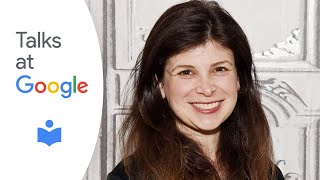
A Talks at Google recording featuring author Laura Dave discussing her debut novel London Is the Best City in America. The event includes a short live reading of the book's opening pages and an extended Q&A where Dave covers her education and awards, the book's origins (including a lost first draft), the meaning of the title, autobiographical influences, ongoing writing projects, and details about a film adaptation (Reese Witherspoon attached; screenplay completed). The talk also mentions foreign rights (Italian edition) and Dave's forthcoming work set in Montauk (opening with the 1938 hurricane).
Questions this video answers
Henry Hoynes Fellowship; Tennessee Williams Scholarship; AWP Intro Award in Short Fiction.
Reese Witherspoon (producer and attached to star).
Gwen Laurie.
Mandalay Pictures and Universal Studios.
Italian rights sold; edition due in Italy in December (year implied by talk).
Chapters
Laura is a graduate of the University of Pennsylvania and received her MFA from the University of Virginia. Her excellent writing has led to her receipt of numerous awards, including a Henry Hoynes Fellowship, a Tennessee Williams Scholarship, and an AWP Intro Award in Short fiction this week. She's also a guest blogger@powells.com, which is a pretty cool site if any of you haven't checked it out. So if you enjoy her today, you can read more about her later. London Is the Best City in America is Laura's first novel, and for those of you who've already read it, pretty hard to put down. The movie rights for her book have been optioned by Reese Witherspoon. It's pretty much a hit all around so far, and Reese is attached to star in the film, so keep your fingers crossed. This project goes through anyway, so I hope you all enjoy talking with Laura as much as I do. Sometimes I'm sitting with her and she says things to me and I'm like, did you write that down? So it's great to have you here today, Laura, and we're psyched to have you.
Thank you for that nice introduction, Courtney. I would take offense to the ESPN thing, but it's really true. I was just in New Mexico giving a reading, and I walked into a bar and the World cup was on. I'm like, what's this? I have no idea what's going on until I found out that apparently the Italy coach picks his players based on their astrological signs. So he had no Scorpios in the lineup, only one Leo, who he was skeptical of. Then I'm like, I want to watch. I want to see what happens. I'm just going to read a little bit from the beginning of the book and then answer any questions you all have. Let's see what you might need to know. Okay, I'm going to Our narrator, Emmy, has left her fiance in a hotel room three years before and is coming home for the first time for her brother Josh's wedding. And that's where we pick up with her. She's home for this first trip in three years, and they're watching the fireworks. Here's the thing about going home again. You don't always know what you'll remember. And still, it was starting to seem to me that if you paid close enough attention, you could sometimes predict the moments that were going to turn out to be important, the moments that would stay with you. There had been a dozen times over my childhood that I had gone with my brother Josh to the Scarsdale pool to watch the fireworks on July 4th. If you wanted to watch Independence Day fireworks in my hometown, there weren't a whole lot of other options. But tonight, from the moment we arrived, it just felt different. We were sitting in our usual spot on the hillside, looking down over the main pool, a little outside of the main crowd, when everything started moving into this bizarrely sharp, almost etched focus, and suddenly I felt oddly aware of how clear the sky was, how blonde and happy the family on the blanket next to us was, how everything was bright and fluid even while it was happening already, existing closer to memory than to reality. It was like a warning shot that something intense was coming, and even though I had been the one to suggest going to the fireworks, part of me wanted to suggest we leave, get out early and beat the crowds to the parking lot, that we head home. Because given the right set of circumstances, given an intense moment, those things can mess with you. Fireworks and clear air and happiness can make you think the world is the way it isn't, can make you say things that on another night you wouldn't say, that my brother Josh would never say, such as, I'm not sure I'm doing the right thing. You know, getting married this weekend. I turned and looked at him in disbelief. He was staring straight ahead, taking a bite of his hot dog. It was enough to make me think I'd imagine what I heard, that I'd made it up. I mean, who would eat a bite of hot dog right after saying something like that? A crazy person. My brother wasn't crazy. At least I hadn't thought so. But then it happened again. Emmy, he said, using my name this time, emphasizing the M sound the way he liked to do, turning my name into one small letter. Are you gonna just pretend you didn't hear me? You were chewing, I said. Not until after. Don't ignore me. One of the first things my brother ever taught me was that you had to ignore everything you weren't ready to deal with. It was your only shot of keeping it at bay. Like the first day of school, for instance. This was his favorite example. If no one talked about the first day, if no one planned it or agreed to it or worked toward it, he'd say, it couldn't happen. How could it happen? What a little genius he'd been. If everyone had just shut up about school starting, it could have stayed summer forever. I put my hot dog down, wiping my hands on my jeans. I'm not ignoring you, Josh, I said. I'm listening. Because there might be a Problem here, he said. I love Meryl and everything, but there might be a big problem in demonstration, Josh made a big rectangle sign with his hand, his hot dog in one of them, a large Coke cup in the other. The little girl from the blonde family was staring at him. I wondered what she thought she saw. This child. Man in his dirty baseball cap, white button down shirt, bare feet. My big brother. Best friend since birth, childhood hero. Huge baby. He was going to be 31 next month, in less than 72 hours. He was supposed to be someone's husband, someone who I really loved. Does this problem have a name, Josh? I asked. He was quiet for a long minute, in which I got to imagine that my instinct was wrong. Maybe this had nothing to do with another woman. It would be easier if it didn't. I figured he'd be more likely to get married this weekend if it didn't have something to do with that. Elizabeth, he said, and my heart dropped. I could feel it, the hollowing out of it, until it filled my whole stomach like a drum. Elizabeth, I said. Elizabeth? Yes, Elizabeth. I couldn't look at him, not when he wasn't looking back at me. I stared at the main pool instead, blocked off with a fat orange rope so that nobody could fall in or jump. One of the first times Josh brought Meryl home with him, we swam in this pool, all three of us together. She was wearing this backless green bathing suit that revealed a thin line of freckles right along her spine. I was only 16 years old. I'd never seen anything like that. She has no idea, does she? I said. Meryl? He shook his head. No, I don't think so. Are you sure, Josh? I'm pretty sure, he said. I didn't know what to say then. It all felt too crazy. I was supposed to be Meryl's maid of honor on Sunday. I had a long blue dress with thin straps. I had a pearl necklace I never would wear otherwise. I had white lily hair pins. Josh was the one that had encouraged all of this. You want pizza? He said. I want to get a slice of pizza before we leave. And another soda. I looked at him like he was crazy. Do you think the snack bar is even open still? I think it could be. Then he stood up. I shielded my eyes against the night sky, staring at him. I had a million questions to ask, but none that I wanted to hear the answers to. What, Emmy? He said. I just want to know how you can be so sure that Meryl doesn't know. How can you know that didn't we just cover this? He asked. There was an edge to his voice. My brother wasn't good at disappointing people, which I could already guess was at least part of the reason that he was in the position he was in now. He couldn't tell anyone no, even when that was exactly what was needed. I'm just trying to understand, I said as he sat back down. Which part? How you got here. He didn't say anything but lay all the way back on the grass, covering his eyes. Come on, I said, swatting at him. Go get your pizza before the thing closes. He shook his head. I don't want it anymore. You don't want it anymore, Josh? No, he said. What do you want? I asked him. He wouldn't look at me. Something else. So that's the beginning. I only read for very short because whenever I go to readings and people read for long, I'm like, really? Oh my gosh. I really not only don't want to read the book now, I don't ever want to see you again. So that's just the first couple of pages, and I'm happy to answer any questions, though, about writing the book or the movie stuff or anything else. What made you decide to write it? I actually started working on this book in grad school, the first four pages, which I didn't read. When we watched Emmy leave the hotel room, I was very interested in watching someone make a decision and then make such a big decision and make the alternative decision at the same time. She leaves her fiance behind and then she stays in the exact town where she left him, kind of putting her life on hold. So my last year of grad school I started working on this book and I wrote 200 pages of it and I finished graduate school and I moved back to New York that next week and I spilled water on my computer and I lost all 200 pages. So that wasn't a great day. But that weekend I actually I was really sad. I had a couple of printouts of different chapters, but I went out to the Hamptons with friends for July 4th weekend and I was sitting there watching the fireworks and this image came to me of a brother and a sister, both in a predicament like that, both feeling like the choices they made were the wrong choices and not really being able to see their way out of it. And I thought, this is where the book is supposed to start. And so I started again and the only thing that lasted from that first draft was the first three pages, four pages, and then the rest really became a meditation on people trying to make decisions, especially in our 20s and 30s, where each decision feels like it's leading us to one life as opposed to the others, which we still might be interested in living. What's the inspiration for the title of the book? The title of the book, I think often confuses is confusing. People often say to me, does London take place in London, England? Which I understand. But what surprises me is people also ask, does it take place in London, Kentucky? And I think it's amazing how people absolutely love London, Kentucky, and have spent time there and want to move there. Apparently London, Kentucky, has this beautiful rainbow moonbow that comes out on top of it, which comes from the moon, which is one of the only places in the country. Country that has that, which I did not know. But the title actually comes from this sort of desire the narrator has to start making better decisions. When she was a little girl, every year her family would go somewhere in America for a road trip. And whenever she had a chance to pick, she would say, I want to go to London. And her mom would have to explain to her, that's not your option. We're taking a road trip somewhere in America. So it really becomes a metaphor for Emmy to make the choices that she's actually given, not the choices she's making up for herself, which is explained sort of in the midway through the book. But it doesn't really ruin anything to know that. Other questions? Yes, How much of myself is reflected in my own experiences as references reflected in the writing? I say a great deal. In fairness, it's definitely not an autobiographical book. My poor older brother did not almost get married, bless his heart. I've gotten emails from, like three of his ex girlfriends, like, is this true? I saw this coming. So he it's not based on him, and we never had a weekend like that. But it definitely came from my experiences of having trouble making decisions decisions, and from people I really cared about, leaving themselves in situations that looked really uncomfortable to me, Staying with someone they really didn't love, staying in a job that really wasn't the right fit for them because it's really scary to make big changes. And it also feels impossible to make big changes if you don't know what you want. So the book started with sort of thinking about that stuff and also trying to figure out for myself how to be a little bit more decisive. And yeah, so there is definitely me in there. And I think people who read it and know me definitely hear my voice in the narrator. But most of the actual plot points are fictionalized. It's funny, though, because I've noticed this too, that people often say, see themselves in characters that don't exist and don't see themselves in the characters that might be most like them. Not so much even for this, but I wrote a story called London is the Best City in America before this came out. Apparently. I just put that title on everything. But when that story came out, an ex boyfriend contacted me and was like, this is such a great story, but that guy's such an asshole. I'm like, it's you. So people don't seem to really see themselves the way that they are. Yes. Are you writing more right now? And what kind of things do you see yourself writing? I am. I'm working on my next book right now. It's supposed to be done by December. We'll see if that happens. It takes place in Montauk, New York, and it starts with the hurricane of 1938, which separated Montauk from the rest of Long Island. But it takes place primarily in present day. But we. We open there. And again, it focuses on relationships and family. I'm really interested in the idea of how we frame things in our lives. And watching the little cracks that make those things fall apart, that seems so sturdy. So it kind of takes a look at that again. Whereas this next book isn't really about choices. It is sort of about. It takes a hard look at independence in a different way. So I like the next book that I'm working on. I'm also writing a lot right now of, like, personal essays. I have one coming out in the New York observer next week or the week after. And I have one coming out in Self magazine, actually about having my author photo taken, which I hated, if you like the way it looks. I'm a little bit drunk as an inside note, because I was so nervous sitting there that it was 11 in the morning. And she was like, how about a drink? I'm like, how about two? So the story behind that. So I'm writing a lot of personal essays right now, too, and working on that next book. Yeah. Are you working on the screenplay? I'm not working on the screenplay. The screenplay is actually completed. It was written by a woman named Gwen Laurie, who wrote Charlie and the Chocolate Factory and the man who ate a 747, which is coming out. She's really smart. And I really. People keep saying to me, aren't you nervous what they're going to do with your book? I'm like, bring it. Bring the movie. That sounds really fun. She was really it's sort of a weird thing to read, your book being adapted, because in some scenes, the scenes that were weirder for me to read were the ones that seem very similar because I'm like, whoa, those are. I know those words. But she did a great job, and everything seems to be moving ahead, and it's exciting to have a star attached who wants to play the lead. And so we'll see. Right now, they're in the middle of finding directors. Where did the movie come from? Is that. Yeah, we sold the publishing rights in last October, and shortly thereafter, my film agent said. I mean, sorry, my literary agent said, I'm going to be partnering with a film agent out in la. I think that we could sell the film rights. And I said, okay. And so she did that. And the film agent out there right away got some interest from different people, and that created a situation where different studios were bidding on. Were bidding on the book and very interested. And I'm not exactly sure when people got it or how it happened, but someone gave the book to Reese Witherspoon, and she signed on and said she wanted to produce it and star in it. So when my film agent called me and said that, she's like, would you want to take that offer? And I said, no, let's wait for that guy back in New York who wants to give us $3,000. But so anyway, we gave her the book very gladly, and now it's in development at her production company. And a production company called Mandalay Pictures and Universal Studios is producing it as well. As of right now, the movie has the same title as the book. I was really. I thought they would change that, and maybe they will. But right now, the working draft of the movie does have the same title. What does it feel like to have something sort of take off, like, you wrote this book? And then it was huge. You know, it's really interesting because when I finished writing the book, I had, like, a great day of. And I didn't lose it this time. It didn't fall off my computer. I still don't back up, by the way, which is just absolutely unbelievable. I have a Gmail account. I love Gmail sometimes. Now I'll save something on Gmail. I'll mail it to myself, but there's really no excuse for it now. I could save my whole hard drive on Gmail every day. I'm, like, superstitious about saving it or something. But I had a really great moment when I finished the book, and that was sort of my moment of feeling really good And I always feel best when I'm writing and working on something. So that was a really nice moment. The stuff with the book being published and the film rights, that's all sort of exciting, but I can't feel it in the same way, if that makes sense, like, if it's happened. Like, my friend just sold her book last week and I was so excited for her and I baked her a cake and I was really excited. And I was thinking, I don't think I was this excited for myself, but I think that that's probably a good thing because if my. My favorite moment is finishing something I'm writing, I'll keep writing and I'll stay really devoted to that. Are they translating into other languages? Yeah. So far we just sold the Italian rights, so it's going to be coming out in Italy in December. And I don't know if they've sold anything else yet. I don't think so, but I'm going to go to Italy in December.
What's a typical day like for you?
How much writing do you get done? I write, and I'm going to tell you because it's such a great coffee shop. They have the worst food, but it's okay. I write at a place called 71 Irving, which is on Irving between 17th and 18th. So if anyone's down there at 8am Want to say hi. I'm always looking for a distraction, and I write from about eight in the morning till one in the afternoon most days, sometimes two in the afternoon. I feel really bad that I just said their food's really bad. It's not. It's just so expensive. Like their cupcakes, and I'm not kidding, are $3.90. That's just the. That's like. It turns a cupcake into something else, something it's not supposed to be. So I write there from about 8am to 1pm and sometimes, if the day's going really well, I'll take a break and come back at night. I do most of my writing there. I also belong to something called the Writers Room on Astroplace, which is a collective of screenwriters and fiction writers. And I have office space there, but whenever I'm there, I end up checking email. I don't end up doing. There's no email access at 71, so that's what I try to do. When I was working on my first book, I had 13 jobs, so it was really hard to find writing time, which is why I ended up with a job like espn, because I could do it at night. But now I'm writing full time. So when I don't go, I only have myself to blame. So what do you do for credit? To write for espn? Yeah, I still do write for espn. Disturbingly, for those of you that probably read it, I write, you know, they don't give me the very important assignments. It's more like, hey, a girl got married in a Yankee ball gown. Find out why. So things like that. Or, you know, they send me to the equivalent of their page 6 is something called Play Action. So they'll send me, if Johnny Damon is going to be at like some sort of fundraiser that night, they'll have me go and ask him, like what CDs he's listening to that week. So I do things like that. Yeah. Are there any classic or modern authors? Classic or modern authors? I love this question, but you're going to be sorry because it's a long. So many answers now. I'll just say a couple. I really love Joan Didion, who wrote her book your Magical Thinking just came out. But her collection of essays called Slouching Toward Bethlehem, I think I must have read it literally a hundred times. I love that book. I get a lot of inspiration from weird places like essays such as that one. I love Charles Baxter's the Feast of Love and his essay collection Burning down the House. I love why Did I Ever by Mary Robeson. And you know, the Great Gatsby is my favorite older time novel, classic novel. And I love Jane Austen. So those are a few. I also get a lot of inspiration from music. I listened to the same song on repeat the entire time I was writing the first book, which makes me sound nutty, but it's a great song. It's called Call Me on youn Way Back Home by Ryan Adams, not Bryan Adams. And for the second book so far, I've been listening on repeat to Carolina by M. Ward. But there's a reason for it beyond the fact that I love music so much, which is that it keeps me rhythmically in the same mind frame each time I sit down. Especially with a book that takes place over a weekend. It took me a year to write it. I wanted her to always. To always feel like we were moving from moment to moment. There was never a lapse in time. And staying with the same song always got me back into that same space. So I do. I listen to a lot of music often when I'm working and before I'm working and all the time, pretty much. I was like in college, like far before the ipod was a cool thing I had, like, that clunky Walkman that I carried along with me everywhere I went. I don't know why I'm so proud of that. I always say that, like, everywhere I go, and everyone's always like, great, congratulations. Maybe there's one or two last questions. What do you do when you get stuck on the plot? You know, I think for me, the hardest part of the plot comes at the beginning in the commitment, and then about 3/4 of the way through of any story or of this book, because it's like. I equate it to, like, running a marathon, even though I've never even run three miles, because at mile 18, you can't really see the end yet, but you're so. It's really hard to keep motivating and keep going. Something that really helps me is I never know what's going to happen. So it's always a sense of discovery for me. I'm always just trying on new things. So I let myself have some freedom to try something that I know the character's not going to end up doing. Just writing a couple of scenes that way. And sometimes it will free something up. It will, like, set something loose, so I do know where the character needs to go. I often don't have a lot of trouble with getting stuck in sort of the traditional way of, like, I have nothing to write today day. I get stuck in that. I don't go, like, I won't show up for work because I'll sense that it's going to be a bad writing day. When I actually commit and make myself go and sit down and put in the time, it tends to come after a while. I think I got really good writing advice in grad school, which is that your only responsibility is to show up and sit there. And if you do that every day, the work, work will keep coming. So how many rewrites did you do? Do you feel like you did it once and you felt good about it, or how often were you rewriting? I rewrote it. I probably rewrote this book. I mean, I couldn't even wager a guess. So many times. I wrote the first draft straight through, and that took about those. After I lost the 200 pages, that took six months to write the draft straight through. And then in the next six months, I rewrote huge, huge parts. Just as an example, the narrator is a documentary filmmaker. I didn't realize that until I finished the first draft. In the first draft, she was something else. And so I realized that by the way she gathered facts and the way she talked about things and how visual she was. That involved me going back in and revisiting the intention book with that consideration in mind. So a lot, A lot, A lot of drafts. I always think the first draft you just have to get out so you know you can do it. Rick Moody, who I also really love, has this great quote about writing, which is that if you can't get to the end, you have no business being here, which I have over my desk. And so I always think, just with the first draft, you just got to get to the end of whatever you're working on. And then you can go back and see how things come together, see how the last sentence informs the first, and so on. I really believe that a good book, the whole book, can be encapsulated in that first sentence. And any sentence within the book can really hold something that resembles the rest of it. From Edit, from my editor. I speak to my editor very often now. She probably did two major revisions of the manuscript. And by major I mean she was very cool. I always wanted to work with her in that since I was younger because I admire so many of her writers. But she doesn't make you do anything. She asks questions. So she didn't come back to me with like a whole manuscript with red pen, which I was worried about. She more said said, these are some questions I have. Let's think together about how to answer them. I would like to see more of Matt here or more of Behringer here. What do you think? And so it really let me go back and do another draft. So we did that two times and then she went away. She went on sabbatical to England. So they gave me a new editor who's like our age and is really cool and fun. So we talk all the time. But like, sort of about, like Tom Cruise know, like, nothing. Where's that baby? So anyway, so yes, I talk to her a lot. So I have different relationships with both my editors, but we talk all the time. She's a wonderful editor too, so we talk all the time. How did you go through the process of getting an editor? Getting an editor and agent was okay, actually, I think I had a good experience with it. I published some stories and so some different agents come contacted me. None of whom I felt really crazy about for whatever reason. I felt like they were trying to sell me or something. And I was like, this is weird. And then I went to. I had a fellowship in Tennessee and a bunch of editors and agents come down there to meet with the writing fellows. Suwannee, Tennessee. And my agent, my now agent came. And as soon as I met her, I really liked her. The first thing I said to her was, oh, how was your day going? She's like, well, my son's 16. He got up and had breakfast with me. Me. It's a good day. And I thought, she's nice. So I signed with her right away, and she's fantastic. And she sent the book out, and we sold it the next week, so the book sold really quickly.
More from Guy


Cheryl Strauss Einhorn | The Human Edge: Smarter Decisions in the Age of AI | Talks at Google



Rachel Glennerster | Innovation and the Center for Global Development | Talks at Google

Rebecca Winthrop | Rethinking the Purpose of Education in the Age of AI | Talks at Google

Dr. Robert Wachter | A Giant Leap: How AI Is Transforming Healthcare... | Talks at Google



