Marc Chagall | Jonathan Wilson | Talks at Google
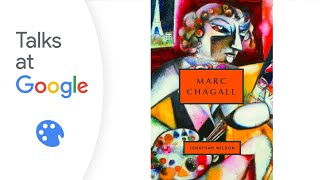
Lecture by Jonathan Wilson (Talks at Google) surveying Marc Chagall’s life, major works, themes, and biographical context. Covers Chagall’s upbringing in Vitebsk (Hasidic/Jewish background), early training, Paris years and influences (Cubism, Picasso, Apollinaire), signature motifs (flying figures, fiddler, village, crucifixions), career arc through WWI, the Russian Revolution, return to Europe, rise in the 1920s, responses to Nazism (Degenerate Art) and WWII, late works and death. Includes anecdotes about Chagall’s personal life (marriage to Bella, possible homoerotic relationship with Victor Meckler, affair with Virginia Haggard), and a brief audience Q&A with the speaker’s research notes and travels.
Chapters
This is a painting Chagall did when he was 21. So here you can see it's called the Dead Man. Here you can see an actual fiddler on the roof. It wasn't uncommon in the village, or the shtetl, as this Jewish village was called, where Chagall's grandmother lived, for people actually to go up on the roof and play music, play the fiddle in exactly the same way that if you were at a party in New York City, you know, if you were living in New York City and it was a hot summer night, you might want to go up on the roof and play music. So it had nothing to do with the sort of sentimentality and whimsicality of the musical, the Sholem Aleichem story that got turned into a musical. But the other interesting thing about this painting is that Chagall talks about the memory that inspired it in his memoir, a modal memoir called My Life, when he was 35 years old. And he wrote it early because at that point he was living in the Soviet Union. Things were going very badly for him. A lot of writers and artists were being taken off and disappearing, and he wasn't sure how he was going to come out of it. So he thought, I'd better get my life down now, at 35. And he remembers, as a child in the village where his grandmother lived, when he was visiting a woman crying because her husband had died and everybody ran out into her house. But of course, he does an interesting thing. He moves the body outside into the street. It was in reality, inside, which is, of course, if you think about it symbolically, what artists do, they move what is inside us into the outside, you know, which is why, when you're 15 and reading certain books for the first time, you write, yes, me, exactly in the margin with a big exclamation mark, you know, this is the first time you realize that actually you are not alone in your thoughts and feelings, that there are other people out there who can articulate them for you. So here he is with this. And I think it's also got something to do with the sort of. The fiddler, I think, was, you know, was probably the first artist, the musician, who Chagall ever had anything to do with as a child. And as you see, there are these sort of figures who are somewhat indifferent to the grief of the woman, the sort of street sweeper, grim reaper in the background, and the artist who observes, but who doesn't participate, which is maybe an interesting model for him. And also notice how huge the figures are. He was partly imitating Sort of Neo primitivism that was in fashion in Russian art at that point. But also, I think it's partly because the images we recollect from our childhood are generally larger than life and live with us for a long time. This is a very famous painting of Chagall Eye in the Village. It's in the Museum of Modern Art in New York, if you want to see the actual painting. Chagall when he was 13. Chagall grew up in a Hasidic family. His father. But it was a. It was. They were. In other words, they were ultra Orthodox Jews. But his father was very poor, impoverished. His father moved herring barrels for a living. And of course, his parents weren't, you know, interested in having him become an artist. Barely knew what it was, but there was. But they were elastic enough in their beliefs to allow Chagall, at the age of 13, to attend a local art school run by a guy called Yehuda Penn. And Chagall, in his memoir, says that he was in Penn's art school for about four weeks. Actually, he was there for about four years. But he never liked to admit that anybody had taught him anything. So he was always. So his memoir, My Life, which is a lovely poetic book, is utterly dubious as history. But from Penn School, he went on to art school in St Petersburg, where he didn't get into the one he wanted to. He got into, like, the second art school, where. And then he met a guy called Leon Bakst, who was the teacher there, who also did the designs for the Russian ballet and was having an affair. Leon Baks with Nijinsky. Nijinsky was actually in school with Chagall. They studied together. Nijinsky was apparently a terrible artist, but then Chagall was a terrible dancer. So it doesn't really, you know, so it evens out. From Russia he arrived. He went to Paris. Paris, as you know, at the beginning of the 20th century, huge explosion, the most profound revolutionary explosion in art that we're still sort of trying to digest now. Right. In other words, you know, Picasso painted his famous painting, Les Demoiselles d', Avignon, you know, whores in a whorehouse in Avignon, in a cubist style, 100 years ago, 100 years ago, and there are still people walking around art galleries going, my kid could do it. My kid could have done it. So we haven't really come to terms yet with the sort of modernist explosion in art and what it did with perspective and perception and so on. But Chagall, as you can see, he arrived in Paris and like everyone else, he was very heavily Influenced by Picasso and by Cubism. In fact, he wanted to meet Picasso, as all artists did when they arrived. And he became friends with a French poet, Apollinaire, and he said to him, can you take me to meet Picasso? And Apollinaire said, no, you're not ready. And everyone who meets Picasso commits suicide. By which he meant, you know, you're not powerful enough that he'll destroy you as an artist, you know, he's too strong. And I think of, like Picasso as the sort of bull of the Corydatu, the shtetl, the cow of the little village in Russia that is Chagall, and was one of Chagall's permanent images. So he didn't meet Picasso at this point, although he did paint two famous. Well, no, not famous, but two very interesting paintings. One called Thinking about Picasso and one about 10 years later called Tired of Picasso, by which time he had met him. They had a complex relationship. And I'll go further. So what Chagall did and what is unique to Chagall and I think fascinating, is that he took the world of his upbringing, which is central medieval, ultra Orthodox, Jewish, Hasidic world that had been replete with mystical tales rather like. I don't know if any of you have read Gabriel Garcia Marquez's great novel One Hundred Years of Solitude. So if you think of Chagall's relation to the village he grew up with in the same way as Marquez's relationship to Macondo, the village in Colombia, sorry, where folk culture, where he take the culture of the place as your subject and harness it to a sort of radical, in Marques's case, literary form, in Chagall's case, form of painting. So it's a kind of strange combination of Cubism and Hasidism. Not that he's a Hasid, but that he's taking the world of Eastern European Jewry at the turn of the century, which is more or less unchanged for a couple of hundred years. And using these sort of Cubist or Orphic. There was a, you know, there was a painter called Robert Delaunay. You may have seen his Orphic, his paintings of the Eiffel Tower, you know, with these swirls and ovals. And Picasso, of course, taking, you know, cubes and breaking the painting up in this way. So here's Chagall, and here is the vitetsk of his childhood, which always appears, and the figures from his childhood and a cow dreaming of being milked, and this strange figure on the right hand side, the village. So it's the village rendered not in any realistic way but in this sort of surreal, cubist, Orphic fashion. Interestingly, for Chagall, the. This is the first painting he ever sold. It's a painting of Calvary. It's a painting of the crucifixion. Chagall is, of course, probably the most famous and emblematic Jewish painter of the 20th century. What a lot of people don't know about him is that from a very early age he was obsessed with images of the crucifixion, which he proceeded to paint throughout his life in different forms and with different meanings, as we'll see. But here he is again, taking, you know, playing with, undermining classical art, taking the central subject of Western art for more than 2,000 years and turning it into, in this case, sort of these Orphic swirls and Cubist forms and experiment, taking the subject matter and utterly transforming it in the way in which he rendered it. This is a rabbi smoking a joint. No, it isn't. It just looks like a rabbi smoking a joint. It's a rabbi taking a pinch of snuff. And Chagall, if you like, fascinatingly, was all his life sort of veered between. If he painted crucifixion scenes. While he was certainly not a Christian, he was also constantly at pains to attempt to render and recoup and represent the Jewish world that he had left behind. He left behind this Jewish world and moved to the vastly bohemian and secular and exciting art world of Paris. But nevertheless, this remained his. His subject matter. Actually, when he was back in vitets, he would not use actual rabbis as his models, because, of course, they would not model. He would find street people, partly because he hardly had to pay them any money. And at this point he didn't have much money. And he would dress them up in a rabbi's outfit or use his father's phylacteries or something, give them a book and use them as his son. Actually, there's a lovely story about the great painter Soutine, who also lived in Paris, who had a great talent as a young man and who was caught in his local town sketching the rabbi, which he wasn't supposed to do. And the rabbi's sons beat him up. And Sutine's mother went to the rabbi and said, you sons beat up my son. You know, I need some compensation. And the rabbi paid her off. And with the money that he got, she was able to give Soutine enough money to go to art school. So, in fact, it was lucky he got beaten up. We wouldn't have Soutine if he hadn't been beaten up by the rabbi's sons. The other interesting thing about this painting is that it was shown by the Nazis in 1937 in their infamous exhibition that they had of Degenerate Art, where they showed works by Jews and others who they considered degenerate, like Picasso, anybody who was doing anything other than sort of realistic what they considered Aryan art. And this was displayed with a sign underneath it that said, this is where your taxpayer's money goes. This is an interesting painting because it's one of the few times that Chagall got into trouble as an artist. I mean, he's generally thought of as a kind of crowd pleaser. This was a painting that he submitted to the Salon des indes pendants in 1912, and it was kicked out of the exhibition because it was regarded as pornographic. Not because this sort of Queen of Hearts, upside down Queen of Hearts figure here appears to be spitting semen in the face of the bull, but actually because of this oil lamp type thing, which was considered to be sort of. It was actually an opium pipe, or at least the judges thought it was. And they thought it would look too much like a penis and an opium pipe. And this is how things were in 1912, you know, wouldn't be huge on a web porn site today. You know, not a lot of hits for the opium pipe down in the right hand corner. But it is more like a Picasso in a way, in the sense of this sort of horny horned creature and the female figure. And I don't know what his fiance thought about it. But the interesting thing about Chagalli, he was not a party animal. He was not in Paris in 1912. The Modigliani in Pascal and Soutine, these guys were the wild ones. Chagall, although he did paint in the nude, his erotic relationship was with his own paintings. He had a woman who he was attached to Bela, back in Vitebsk, and he didn't go out to play. So this is the painting where it seems he's trying to be one of the boys. This painting is an interesting. By the way, I'm showing you a lot of early paintings because most people, including myself, think that the early years in Paris, when Chagall was sort of 23, 24, 25, was when he did his greatest work. Like, you guys, you're done by the time you're 29, right? It's like over at Google, it's like working for. You have to move to the equivalent of VH1. You got a few years and then it's over. For you. So a lot of the really wild experimental work he did was in this period. And one of the things that Chagall did was, I say in my book, was that he painted in Yiddish. Well, what I mean by that was that he took Yiddish phrases and he literalized them that were metaphoric and literalized them in an interesting way. So in Yiddish, there's a phrase where to do something with seven fingers is to do something deftly or. Well, so Chagall simply painted seven fingers on the hand of the artist. Or in Yiddish there's a phrase lufmench, which means. Which metaphorically means somebody who is an intellectual, who spends a lot of time with their head in the books, but which literally means in German, in Yiddish, man of the air. So he would take these figures and stick them up in the air, those flying figures that you're so aware of in Chagall. Also here you'll see how he's constantly. His life is between these two worlds. The world of the village that he's left behind, or of Vitebsk of Eastern Europe and the world of Paris and everything. All the seductions of that great city. This is a self portrait of a narcissistic Chagall in 1914. He was 27. One of the fascinating things about Chagall that's been uncovered recently is a relationship, a very homoerotically charged relationship that he had with a young man called Victor Meckler. If you read in Chagall's memoir, Again My Life, there's a very interesting moment where Chagall is talking about how he used to ruch his cheeks and wear eyeshadow. And at the time, he was courting Bella, and Bella's mother got a little nervous about it. You know, why are you going out with a guy who rouges his cheeks and wears eye shadow? And in his memoir, Chagall says, well, you know, I rouged my cheeks and wore eyeshadow because I was trying to attract the girls, you know, And I thought, yeah, you know, back In Belarusia in 1909, you know, the girls couldn't wait for a guy to come out with the rouge cheeks and the eyeshadows, like, he's so hot, you know, it's like. But the interesting thing is that actually there are a few explanations. One is that there was no surface that he could resist painting, that he painted even his own face. And when in the 1920s, he was working for the Yiddish theater in Moscow, where he painted everything, he painted the set, he painted the walls of the theater, he painted the car curtains, he painted the costumes of the actors. And sometimes, as with his own face, he would stand in the wings and daub the faces of the actors before they went on stage. So he regarded the plays as his compositions. And when the director would try to put like a regular prop, like a bottle or something on a table, Chagall would go nuts because it was like sticking something on his painting, you know, so there's that aspect, there's the painting of the face, but also that professor at Yale, Benjamin Harshav, discovered two letters a few years ago that Chagall wrote while he was in Paris, when he just arrived, to Victor Meckler, who he'd known in Vitebsk, One of which says, I can't forget our last smoke filled kiss at the railway station. And the other says, you know, you have the feminine in me, just as I in you, just as I have it in me. And I hear you've been going around Paris saying you chucked so and so, just like you chucked poor Moishe, who is Chagall. So it's clear they had a homoerotically charged relationship. Whether they had a homosexual affair or not, nobody knows. And in fact, there is a four year period where Chagall was engaged to Bella while he was in Paris and he didn't see her. Where nobody really knows what his social or sexual life consisted of. Chagall went back to Russia at the beginning of the First World War in 1914. He had a show in Germany shortly before the outbreak of war, then went back to Russia, imagining he would very soon return to Paris. But he got stuck there. The borders closed. He got stuck in Russia. He married Bella in 1915. They went on a honeymoon. They went on their honeymoon to a place called Zaoshi, not far from. From the city. And he painted this painting, which is full of, I think, a sense of anxiety that originally there was a female figure here. You can barely make it out that he erased. That was probably her version of her. But I think the relationship between the two of them is probably expressed in the rather coy relationship of the two animals in the back. Chagall had gone originally to this place a few years earlier to see a rabbi, the Lubavitcher rabbi, because he had a question for him. Chagall, as I said, was not religious, a religious Jew, not an observant Jew in any way. He didn't attend temple from the age of 13 on. He didn't eat kosher food and so on. Nevertheless, when he had big decisions to make, he sometimes would go, he went to see the big rabbi and he went to see him, to ask him he'd been drafted into the army, what he should do. And he said, you know, he got in to see him, he said, you know, should I go to Petrograd? And the rabbi said, you want to go to Petrograd, go to Petrograd. He said, well, maybe I should go to Moscow. And the rabbi said, okay, you want to go to Moscow, go to Moscow. And he said, well, what about, maybe I should stay in Vitebs? He said, fine, stay in Vitebs. You want to stay in Vitebs. And Chagal writes, he said, I never listened to anything a rabbi had to say ever again. Now, the interesting thing is that the rabbi himself, who had been depressed, had actually gone to be analyzed by Freud 10 years earlier in a situation one couldn't imagine now, where a leading religious figure had put himself in the hands of the man who had just decided that religion was an illusion. But nevertheless, he did. It was a three week analysis which was 25 years shorter than my own and a lot cheaper. What happened to the three week analysis? You're in, you're out, it's finished, it's your mother, done deal. But anyway, so here is Chagall. He's in Russia. This is one of his most famous paintings. This beautiful painting, the sort of thing that we associate with Chagall. A representation of romantic persistence in the face of a world gone mad. The lovely elevated figures here representing simply a symbol of passion and of love. And the representation of his wife Bella, as he usually portrays her, in this dress and with that collar and with a bouquet of flowers. She was a pretty good writer herself, much better than Chagall, who also wrote a lot of poetry. And Bella has two books that she wrote, Burning Lights and First Encounter. And in one of them she talks about this scene where Chagall came in on her birthday and painted her. I'm going to skip that one. So after, I'm going to go through a few years first here. So Chagall is in Russia, first World War is going on and then the Russian Revolution. Russian Revolution looks like very good news for Jews. You know, when Chagall was a young man, he could not, he was not allowed, as he was a Jew, to live in St. Petersburg or to live in Moscow. He had to get permission to live in either of those cities. So along with most other Jews, he embraces the revolution. Bolshevik revolution looks like great news. Equality for everybody. You know, you can live wherever you want. You can walk down the street wherever you want, you can paint whatever you want. You know, censorship has gone the 25 year service in the Czar's army has gone, and so on and so on, but. And Chagall embraces the revolution and the revolution embraces. They set him up as a Soviet Plenipotentiary for the arts in his hometown of Vitebsk. And he goes back there and he sets up an art school. And on the first anniversary of the revolution, he gets every sign painter in town and they paint the town a la Chagall with flying figures and flying animals and blues and so on. And back in Moscow Central, they hear about this and get a little worried. It's like, you know, we better get some really boring busts of Lenin down there fast. This guy's out of control. And sure enough, Chagall goes away one day to try to raise money in Moscow. And when he comes back, he has been usurped as the head of the art school by the great painter Malevich, who naively thought that the Soviet authorities would like white on white paintings more than they like flying cows. You know, he didn't last long either. But Chagall finds himself out of a job and then he's back. He's demoted to like, you know, artist level number three, Soviet authority. And he winds up teaching orphans in a small village, you know, some 40 or 50 miles out of Moscow. He manages to get out of Russia and back in Germany in the early 1920s to find that his dealer there, Hervath Walden, has sold everything that he left behind. But he has no money for Chagall. He finds that he goes back to Germany to find that he's famous, but he's not rich. His reputation has burgeoned. Everybody, apparently in the west thinks that he has died. At least that's what his dealer claimed he thought, oh, I thought you were dead. You know, I sold everything. Inflation in Germany has got so high that it turns out Chagall, the money that's left for Chagall is nothing. And this happened to him frequently throughout his early career, by the way, when he first moved to St. Petersburg, he took 200 paintings to a framer to be framed. And when he went back to get them a few weeks later, the guy said, you never brought me any paintings. I don't have them. And as a Jew living illegally in St. Petersburg, he had no redress. He lost them. So he arrives back in Germany, then he makes his way back to Paris and begins to paint again. And the 1920s becomes a very sort of successful decade for him. He's starting to have a real big international reputation. He's not the number One guy, the number one guy is Picasso or Matisse, but he's maybe the number three guy and his reputation's really starting to burn and he's doing very well. Then, of course, in the 1930s, things in Europe start to get ugly and Chagall makes a trip back to Eastern Europe. He has a daughter now, by the way, Ida, and he paints this painting using his daughter as a model. And this painting is full of sort of foreboding, something in Eastern Europe. He visits Vilna, the beginnings of Nazism. Already by 1928, the Nazis have 12 members of parliament in the Reichstag. So things in Europe are beginning to get ugly. And this is a painting, I think, full of sort of strangeness and foreboding of what is to come. When this is one of Chagall's most famous paintings, White Crucifixion. You can see it in the Art Institute in Chicago, if you're ever there. When news of what is happening in Eastern Europe, and this is before the camps, but when the destruction of the Eastern European Jewish world is already in Europe, you know, going strong begins to filter through. Chagall takes this in and turns fascinatingly to images of Jesus as his representation of martyred as a symbol of the sort of Jewish martyrdom during the Holocaust, before the Holocaust. Here he paints Jesus as wearing a prayer shawl, talit, as a crucified Jew, which of course he was. In the background, the Jewish village is in flames, and in the bottom left hand corner is an old Jew wearing a placard that originally had the German Jude the Jew written on it, but which he later erased, maybe for compositional reasons. Throughout the years of the Second World War, Chagall painted something like 50, 15 crucifixion scenes. Just strange choice for a Jewish painter, but nevertheless, that was where his imagination took him. And he wasn't alone. In some way, you might want to say, in some way he was sort of ahead of his time. If you think of a writer now like Harold Bloom, who just wrote a book called Jesus and the Names Divine, where Bloom argues, as others have look, here's this historical Jesus who never imagined himself as living any way outside normative Judaism and would have been shocked to learn he was something called a Christian had he come back 200 years later, In other words, that Jesus is a figure from his point of view who's been in some way usurped by Christianity. The other thing I think is that he thought, you know, well, you know, where has there been a catastrophe on the same level of what is happening now, historically, and this is where his mind went, he wasn't alone, as I said. Funnily enough, in New York, in, like, 1941, there was an exhibition called Modern Christs. And I think 17 of the 20 artists who showed were Jewish artists. Here's another version, the martyr from 19. But just in case we. We thought that that was all Chagall did with crucifixions sometimes. And this is a painting he did when he was 81. He painted somebody on the cross who looked not like Jesus, but remarkably like a young Marc Chagall. And in case we were any doubt as to who it was, where you would expect to see the letters I N, R, I at the top, Jesus of Nazareth, King of the Jews. He would frequently paint the letters M A, R, C, ch. So then you understood that he's actually talking about the sort of martyrdom of the artist or his own sense of martyrdom. At other times, when asked why he painted so many crucifixion scenes, he said, because the cross was an irresistible way to divide up the canvas. You know, which is an artist's response, you know, because most paintings begin either with a circle or with a cross. You know, that's. So this is the very last work that Chagall ever did, which he did on the night before he died when he was 97. And it's. I don't know if it was named afterwards. It was turned into a lithograph. But you can see he obviously had a premonition of his own death. He's got wings, angels, wings. And already an angel is descending to take him off. And he's at work on one of his own paintings. And the painting that he's at work at is a version of the painting that I showed you at the beginning of the double portrait with wine glass with one person on top of the other. Only here, in a rather sort of poignant moment, the figure on the bottom is breaking the frame of the canvas and reaching out to give a bouquet to the painter, to the artist, to Chagall, as if on the very last day of his life, the painting gave something back to him after he had given us all the paintings. Okay, I'll stop there. I know it was a great rush through, but. But I'll take any questions that you have and maybe can fill in some of the gaps. And did you find the people there as rude as I did? Well, they're French, aren't they? No, I'm just kidding. The Chagall Museum in Nice is an interesting thing because it's called the Museum of the Biblical Message and where most other artists have the Picasso Museum or the Matisse Museum. Chagall, towards the end of his life, increasingly took a very universalist view of religion. And so he was not an intellectual. And for him, the Hebrew Bible and also the New Testament were these sort of wonderful poetic books. There's a great quote of his when he first visited Jerusalem, when it was still part of Palestine before 1948. And he was asked what was the most valuable thing for him about being there. He said, to walk in the footsteps of the great Jewish poet and prophet, Jesus Christ. So, you know, it's a fascinating response. For him, it was poetry. So that museum, which is full of sort of his renditions of the Song of Songs and of other things, is fantastic in terms of the rudeness. No, I had a nice time. It was windy. I sat outside. There was a nice restaurant there. I think I had wine, you know, it was good. I'm sorry you had a bad time there. Yes. Besides the poster, can you talk a little bit about what drew you to Marcial as opposed to any other painters? And then also, did you do any painting? Sure. I had written a novel called the Palestine affair, set in 1924, which was based on a British painter called David Bombach, who was a contemporary of Chagall. And I was interested in that. I got interested in that sort of period. And I was thinking of writing something fictional about Chagall and Modigliani or, you know. And then it so happened, then I got interested in something else. And then the guy who was editing the series that this book is in, Jonathan Rosen, asked me if I'd write a book in the series. And I, you know, and I thought, well, you know, there's this Gall museum in Nice. Somebody's got to go to Nice, you know, somebody has to do this research in the south of France. Somebody has to spend a whole load of time in Paris, you know, might as well be me. But I've been interested. No, but I was interested in his. I was perhaps more. I have to admit, Chagall is not my favorite painter, but I am interested. But his life was fascinating to me because his life took him through the Russian Revolution, through the Second World War, and he was a player. One of the things I didn't mention was that when he went back to France, he was actually stayed much too long in Vichy, France, and was arrested by the French police and put in prison. And they were about to hand him over to the Nazis. And where Varian Fry, a wonderful American philanthropist and helper Intervened and got him released and made his way to America. But. So I'm not a painter. No, but my wife is a painter interesting enough. And I've had. In fact, I hate to admit it, but I'm actually colorblind. So I had to check in with her about every description of every painting that I. That I wrote. But I was interested in life and I've written about art. I write about a lot of different things, and art is one of the things I write about. I mean, I covered the World cup in 1994 for the new Yorker. So soccer is something else I write about and that I'd be happy to talk about. Happy, yeah. Were there other places you have to go to do the research? Any in Russia or Germany? Yeah, yeah, I traveled in Europe. The only place I have to admit I didn't go was Vitebsk in Belarusia. And there is a little Chagall museum there. But. And I probably should have gone, but I didn't get it together, so I faked that. No, I didn't say. I never said I'd gone there. But, yeah, I traveled all over Europe and places he'd gone. Tel Aviv, Jerusalem and France. Of course, I have been to Russia before, but I didn't go this. This particular occasion. Now, the soccer questions. No. Anything else? Do you have any other questions? Yeah, this is not related to shit all, but do you have any amusing Salbello anecdotes? Do I have any amusing, what? Salbello anecdotes? Saw Bello. Yeah. Yeah. That's an interesting question. Yeah, I knew Saul Bellow very well. I wrote two books about him when I was young. And actually, it's interesting in terms of this Russian stuff. I'll tell you a good Saul Bellow story that I was once having a dinner with Saul Bellow and David Mamet, the playwright, and they release two know Chicago guys and they were talking a lot about Chicago. And Bellow started telling a story about how he had been the first person to see Trotsky's body after Trotsky had been murdered. The day that Trotsky was murdered, Saul Bellow had an interview set up with Trotsky. And he was in Mexico, and he arrived. He was a young man. It was 1953. Well, he was 38. And he arrived to go and see Trotsky, went to the house and there were these local Mayan guys. They said, no, he's not here. He's down at the morgue. And he went down. Bello went down to the morgue and There was nobody around. And there he saw the hole that the ice pick had made in Trotsky's head. And this story he was telling was at a dinner party a few years ago. You know, Bella was in his 80s, and those of us who were listening to it, it somehow seemed, how could it be? You know, like sometimes you think, you know, Trotsky, didn't he live 300 years ago? You know, and, you know, as we were leaving, David Mamet said to me, it was like being with someone who said, oh, did I tell you about lunch I had with Napoleon once? You know, so there you go. That's your Saul Bellow anecdote. Yeah. So is David Mammoth pleasant dinner party, is he? What? Is he Pleasant conversation at a dinner party. Ah, I see the vectors of your imagination of rudeness and pleasantness. That's mainly your question. Were they rude? Were they pleasant? You know, I don't think people are. You know, I don't think people are actually one thing all the time, you know, like, I bet, yeah, sometimes at that museum, they're rude, sometimes they're pleasant. You know, it's like Mamet, yes, he's very pleasant. Can be very pleasant at a dinner party or very rude. I mean, you know, I don't know how he'd be with you. You know, he might be pleasant, he might be rude. I don't know. That's an interesting question. Yeah. Chagall, by the way, which I forgot to tell you, was married twice and had a lover as well, a woman called Virginia Haggard, who, after his first wife died, who he took up with when he was living in the United States, and who he was embarrassed about because he'd knocked her up within a few months of his wife dying. So he hid her, hid her away in upstate New York in High Falls, and didn't allow her to attend any of his openings. He treated her very badly, although she didn't seem to think so. And afterwards she wrote a book about her relationship with Chagall called My Life With Seven Years of Plenty with the Master, which no American woman has subtitled a book for 300 years and never will. It will never happen again. It's the last book. It's the last book, subtitled Seven Years of Plenty with the Master, about a love affair and they had a son, David, who, when Virginia Haggard left Chagall, which she did for a man who was older and sicker than Chagall, and he was considerably older than her, so you know what she was into. She wanted to play nurse. And the son he cut off the son. And it took a while before he allowed the son back into his life. And his son David went on to become a French pop star. And in another sort of bizarre thing, rather like the Trotsky once his son once brought Bill Wyman from the Rolling Stones down to visit Chagall. Doesn't seem possible, but it happened. If that was on Wikipedia, people would question it. Not true. Citation needed. Exactly. Citation needed. Okay, cool. Well, if there are any other questions, Jonathan's great designs and books. Thank you very much.
More from Guy


Cheryl Strauss Einhorn | The Human Edge: Smarter Decisions in the Age of AI | Talks at Google



Rachel Glennerster | Innovation and the Center for Global Development | Talks at Google

Rebecca Winthrop | Rethinking the Purpose of Education in the Age of AI | Talks at Google

Dr. Robert Wachter | A Giant Leap: How AI Is Transforming Healthcare... | Talks at Google



