Marci Alboher & Tim Ferriss | Talks at Google
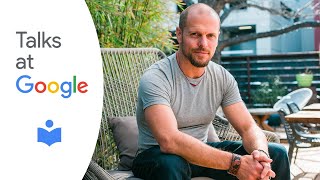
A Google Talks event featuring Marci Alboher (author of One Person, Multiple Careers) and Tim Ferriss (author of The 4-Hour Workweek). Marci presents findings from interviews with dozens of "slash" professionals who combine multiple careers or identities (anchor/orbiter model, sequencing, adult internships). Tim explains tactics to reclaim time and increase per-hour effectiveness—examples include strict email limits (once/week detox; twice/day autoresponders), 80/20 focus, outsourcing/automation, and micro-testing new pursuits. Both stress separating being busy from being productive, testing assumptions, and integrating varied pursuits into a coherent life. The session includes audience Q&A on parenting, demographics, and risk management.
Chapters
Good afternoon everyone. It's my pleasure to welcome you to AuthorSoogle with Marcy Albaher and Timothy Ferris. They're the writers of two very, very interesting books. One is. Let me read the entire title. One person, multiple careers, a new model for work, life, success and also the four hour work week which allows you to get rid of commitments and join the new rich. We have two very interesting authors. Marcy is a slash herself. And I know that many people here at Google can identify with being a slash. Before starting Google, I know I was a student, blogger, entrepreneur, mvp, too many other things. And I know at Google we are encouraged to have many different pursuits and many different activities. And so I think we are all slashes and we can all really speak to that. Timothy Farris is a guest lecturer at Princeton University. He is a world champion kickboxer. He is a Guinness World record holder in tango. He is also many things. They're here today just to talk about lifestyles and careers and their books. And I'd like you all to give a big round of applause for Tim and Marcy.
Hi. Well, thanks for having us here today. I wish my friend Ricky o' Paterny was here because he's the way I became introduced to Google my first time. But I want to just say thanks from Tim and I for having us here and what we thought we would do for format is we're each going to just give you a little opening about kind of why we wrote our books and what it's about. But before we, before we do that, I just wanted to say how Tim and I came to be because I think that's always a neat thing to know. So months from now, my book came out in February and Tim's book's like out last week, right?
Last Tuesday.
Last Tuesday. And I get an email from this stranger, Tim Ferriss, saying we should meet because our books have a lot in common. And he's working on a book that's coming out and we have a mutual friend that went to Princeton with Tim. And so we had this meeting and before we even sat down, I immediately went to Tim's website and I saw all these amazing things about Tim. He is a record. Holding records in many, many things is how I described him. And speaks multiple languages and tango dances and kickboxes and world traveler. It was really clear to me that Tim was a slash, which is what my whole book is about. So it was really fun. We then had a drink and we were convinced that we had to figure out a way to bring our books Together and talk because our books have a ton of synergy. So in a nutshell, my book is all about, as Trevor explained, finding ways to be all the many people you are in your life. So it's really cool to speak to a place like Google where celebrates people having many identities. A lot of times when I go out and I speak in a workplace, it's a place where people are not encouraged to have multiple identities. And the fact that you even have people who work in multiple parts of Google at the same time. Same time is a really slashy concept. That you could be a programmer but also spend some of your time on something else is a really cool way to let yourself expand. So I went around the country and I interviewed hundreds of people who have really diverse slash combinations. Longshoreman, slash filmmaker, a programmer, slash theater director. I mean I could just go on a lawyer, minister is one of the people who inspired me to write the book. A rabbi, stand up comic. So I've just got scores of them and they really showed me how do you figure out how to make room for all the stuff you want to do in your life? And that's a really cool way to introduce Tim because he's all about the tricks and tips for making the room and figuring out time management and tricks. Lots of me using technology. So how did you come to yours?
Oh, thanks for handling the the intros. That's always the hardest part. So thanks for getting us moving. So my story is one of self implosion really. So I left Princeton in 2000. I came out to Silicon Valley because a friend of mine sold bluemountain.com for about $480 million. Seemed like a good adventure to Chase. Came out, worked as an employee at a data storage storage area networking company at first for about a year until that imploded because it was vaporware and then started my own company and was CEO of that company still. M. But in June of 2004 really reached a point of reckoning where I realized that my hours in income out model wasn't scalable. In other words, I couldn't scale an income while having an extracurricular life at the same time. And I was working from 7am to 9pm I had and still do have product distribution in more than 15 countries. So I would wake up at seven, make phone calls to the UK and Europe, then do the normal business day for east coast and then the west coast and then make calls to Japan and Australia and so forth. And it was completely unsustainable. And I was part of for quite some time. What I call an overwork ethic in the United States, and it's extremely prevalent here. It's becoming more common in other countries. But if you look at, let's say, Forbes magazine recently announced that based on their research and research of a few other groups like the Work Family Institute, the standard work week is now 70 hours. And even though the work week is growing, we're making the same amount of income adjusted for inflation. So people are actually getting poorer and there's an epidemic of time famine. So in my personal case, I reached the melting point in June of 2004, and I went to London for four weeks, ostensibly to take a step back and reassess where I was going and what my real objectives were, what I wanted my lifestyle to be. In other words, how I wanted to spend my time from when I woke up to when I went to SL Sleep. And I had been checking email 100 to 200 times per day, send, receive, send, receive, like a rat with a cocaine pellet dispenser. I'm sure some of us might feel that way. First thing when I woke up, first thing before I go to bed. And I set a rule for myself when I arrived in London, and that was that I would check email once per week for those four weeks, for two hours each Monday. And that I had to redesign my life and business to accommodate that. And it was a very painful detox process. I expect the hierarchy of addiction is something like cocaine, nicotine, heroin, and then email. And miraculously, as I saw it at the time, my company profit went up close to 30% in that four week period, which was depressing and enlightening at the same time. But it made it very clear to me that most of the assumptions we make about what is necessary to be financially successful to have a successful career, most of these assumptions are completely unfounded. And so Rather than spending four weeks in London, I spent 15 months traveling around the world, outsourcing and automating my life and seeing just how far I could push the effectiveness of my life and work as opposed to the efficiency. So focusing on the what of doing as opposed to the how. And in the process of doing that, met some very interesting people. This is all from my own personal growth at the time, but I met remote control CEOs, people who had publicly traded companies, who had worked from home from the beginning for 17 years. I met people who had sold companies for hundreds of millions of dollars and now were depressed because their identities had been based on work and they didn't have alternative activities. This is very common, very common. And it just made me realize that the deferred life plan, so to speak. And that's. I'm coining or mentioning a term that Randy Comisar uses. He's a general partner of Kleiner Perkins, where you spend 20 to 30, 40 years doing something that maybe isn't unpleasant, but it's tolerably boring, tolerably mediocre in exchange for this pot of gold, which is retirement, is a very flawed model. What I attempted to do in this 15 months was take retirement and redistribute it throughout my life and throughout that 15 months. And that's how I ended up in Berlin doing cage fighting in Japan, doing sword fighting in Brazil, learning how to surf and so forth. And my profit didn't suffer. My profit increased for my company. And the book came about because I was teaching my Princeton class via phone from Buenos Aires where I was training for the world championships in tango. I was doing that eight hours a day and one of the students said, well, why don't you just put this all in a book? Ha ha ha. And it just kind of stuck in my head and I couldn't get rid of it. And here we are about a year and a half later. So the book, I'd say about 50% of the case studies are employees. So for example, there's an employee, he's 40 something, has a family, he's at one of the largest computer manufacturers in the world, publicly traded company, very well known, and he travels two years out of the, two months out of the year internationally freely because he's negotiated that ability within his company. And so you all have a lot more options and leverage than you realize. And fortunately you're in a pretty cool environment where that type of questioning is encouraged. So long intro. But I'm excited to be here, so hopefully we'll have some fun.
So I think also actually a good segue from that is, I think I should tell you a little bit about my personal story. I didn't come from the technology world at all. I was a lawyer for nearly 10 years. Right out of school I went to law school and I was a corporate lawyer. I have one of my old clients actually sitting here in the audience. And like many lawyers, I had a career path that I went to because it was, was kind of the smart and conservative and risk averse thing to do and I was building up security and I was intellectually stimulated in my work and I liked what I did, but it was very separate from the rest of my identity. So I had this like work self and my non work self and it wasn't very integrated. So I would get to work every day and I would do my work and I would have my colleagues and then I would go live my life. And I really looked forward to my vacations and all the hobbies I had and anything I did outside of work. But I was very disintegrated and I had an awakening and we all have this kind of epiphany story. And mine happened when I was living overseas in Hong Kong and I was working at that time as an in house lawyer for Reader's Digest. And I negotiated a flexible arrangement to work three days a week while I was living in Hong Kong. And they had never, no lawyer had ever worked part time before in the legal department. And, and you'd think that the first person to negotiate a flex time arrangement would do it to be a parent. And I did it because I wanted to travel and I wanted to have these long weekends so that I could travel more. And I made some very interesting negotiations with my boss. And my boss said as long as you could get your work done and your clients know what to expect from you, I think we're going to give this a try. And the reason they gave it a try is because I was really good at what I did and they needed me. But I also was really willing to work in unusual ways. I was willing to work in the middle of the night sometimes to compensate for the time difference and to have conference calls with clients because they all worked on Eastern Standard time. So for a year and a half I lived like that and I worked in this very unusual way. But it gave me a taste of seeing what it would look like if I shook up my life just a little bit. And then when I got home from Hong Kong, I decided to take the next step and shake it up even further. And I started taking some writing classes at. And I was working for a new firm and I was again in house lawyer and I was in a pretty senior position and again I asked for a three day a week schedule and again they said yes. And then I took my free time and I studied writing and I took writing classes. And in my first class in freelance journalism I placed a story in the New York Times and it was a simple story. It was in what was then the circuit section, which some of you might remember, the old technology section. And it was a story about doing leaves legal research online if you're a lay person, like if you get in a Car accident, what do you need to know? And I did this funny little story for them. But I got such a high from doing that story and getting that first clip that I decided that this is really something I wanted to make room for in my life. And I wanted to be a freelance journalist. So I stayed in the law for about another year, trying to make it work and kind of figuring out how I was going to make this transition. And I started writing, writing more and more stories and I started realizing that I was really interested in career change and it was happening all around me, this career reinvention, all these people, we're living longer, we're working longer. It's the ability to learn things is such that you can take on a new career and a new pursuit much, much easier than you ever could before. So I quit my job and I became a full time writer. And within a year of becoming a full time writer, I was teaching other people how to do this. I started teaching classes first using a borrowed conference room of a friend's law firm. And I got all these lawyers who wanted to be writers and then I got all these other. They are the most disenchanted of the professionals, so they always find their way to me. But then I found all these other mid career professionals who wanted to add writing to their lives and I started coaching them and teaching them. And that's how I met Ricky from Google who took my writing class in New York. And I just realized that I had gotten to this point where I was doing many different things. Now I was writing, I was teaching other writers and I was starting to publicly speak about writing and career change. And I had all these dimensions to my life, but they were all me. Everywhere I went I felt like I was authentically Marcy. And I had this email address, it's very easy to find. Heymarcymail. And it's so my personality, like people can find me, I'm very approachable. And my whole life was starting to kind of fit into that whole mode much, much more when I was this lawyer and I had this one life at work and one life outside of work. So I was at a conference I used to go to a lot of, I was writing really a lot about career paths for lawyers. And I was at this conference for women, corporate lawyers. And this is where I got the idea for the book. The keynote speaker was this woman, Angela Williams. And she got up to the podium and it was a room just like this. And she was standing there at the podium getting ready to give her speech and she looked at the audience and said, you all have a bio in your binder on the table about me. Open the binder, look at the bio, and please throw it away. We all look down and there's this bio. And the bio says, the Reverend Angela Williams. And she said, my secretary made a mistake. I am a reverend. And if you all have problems in your lives or spiritual searching that you want to do, I'll come talk to you at the break. But here today I'm here to talk to you about as a corporate lawyer, I have another life and that's my identity today. And I thought this was really interesting, the way she had had this kind of dual life that she was introducing. So at the break, I went over and I talked to her and what she. And I asked her, you know, what does it mean that you're a lawyer and a minister? How do you run your life? How do you live your schedule? And she said, it's actually not very hard. I actually think of myself as a very integrated person. I'm the same authentic person whether I'm practicing law or being a minister. She said, I sometimes joke that I'm the one who puts them away during the week and prays for them on the weekend. Because at that time she was a federal prosecutor and a preacher in a church on the weekends. But what we got to when I started talking to Angela is that we don't have to be caught up on having one label and one identity. And life is long and you have a lot of time to kind of evolve and kind of incarnate all the different things that you're interested in, if you can figure out how. So I got back to New York and I pitched a story to the New York Times about these slash people, about Angela and people like her. And I wrote that story. And I had one of like the journalist fantasy, which is everybody in the world started contacting me, me after that story came out, saying, I'm a slash too. Why don't you write about me? I had a high school teacher, fashion model, and the stand up comic rabbi, and a home builder slash hairstylist. And all these people were contacting me and people were telling me about their friends and people I should go interview. So I rushed and put a book proposal together and I sold a book proposal and then I went on what I call the slide. And I went around the country finding these slashes interview. I was collecting people in magazine articles I would read. Anytime I saw somebody described with a slash, I googled them, I looked them up I found them in the age of Google. It's very easy to find people you want to interview. And I interviewed hundreds of people and the book basically became 65 stories of the slashes that really hit me the most and tips on what I learned from them on. And it's everything from people who had like a left brain and right brain split, like they wanted to do something analytical and something creative. There was a mind body thing. One of my best friends is an art dealer and a Pilates instructor. And for her it's all about, well, part of the day is really intellectual and part of it's really physical. And then there was the money and passion split. Something you do for money, something you do for passion. But as to Kim was saying, my whole feeling on this is I'm not writing about moonlighters. I'm not writing about people who do one thing to pay the bills to fuel their passion. Today's work, there's like a new kind of moonlighting where moonlighting was this thing you did in the COVID of darkness. Slashing has cachet. So who's the biggest slash of all time is Bono, right? Who doesn't want to have a life like that where you can't even say what he is anymore. He's just followed his dreams and, and that allows him to do whatever he wants. So to be a slash is to kind of allow yourself to inhabit all the roles that you want to play. And the people I found in this book just kind of inspired me time and again. And I learned from them. So that's really kind of what the book felt like to me. And the way you were collecting people really reminded me of the same kind of process. Like you knew what you wanted to explain. And then you seemed to find these people who embodied living like that and told their stories. Because your book is filled with great narratives.
No, it's true. And it was funny because the entrepreneurs were easy to find, but the employees didn't necessarily want to blow their cover if they were negotiating two, three months off or taking year long sabbaticals. So they were harder to find.
They have slash friendly work environments.
They do. But they also realized something, and that is that it's not so much the system that imprisons you, it's how you navigate that system that. So one very simple principle that enables you to live a very fulfilling, whether it's a slash lifestyle or assuming multiple identities that are part of this holistic whole, is separating being busy from being productive. So what I realized as an entrepreneur, and this is very True as an employee as well, that since I feel confident find in a 9 to 5 office environment, or if that's an artifact of my previous life, I create activities to fill that space. And the key to really cutting back, for example, as one illustration, cutting back on work hours but increasing profit or productivity, is asking yourself consistently, am I being productive or am I just being busy? And what I found is that, like Marcy's alluded to, if somebody asks me, for example, oh, so what do you do? It's like the first question you get at parties. It's so irritating. And especially because people, they won't even necessarily ask your name. It's like they want to assess what value you have to them before they even ask your name. And for me it's difficult because at this point, what I do for income and what I do with my time are very different things. But. And some people would say, oh, well, you're jack of all trades, master of none. And I think that in a digital world it's possible to be a jack of all trades, master of many.
Yeah, I agree. I mean, that's.
Well, let me just finish my thoughts. So, for example, there are a lot of assumptions that people have about what they can and cannot do, whether that's as an employee or as ex. And, you know, stories in Marcy's book illustrate how unfounded most of them are. And also my book just give you an example. So it takes a lifetime to learn a language that's complete and utter garbage. I was taught that all the way up until about age 16 when I was effectively sent to Japan, which is my first trip out of the United States as an exchange student. And I'd been told, oh, you're going to have Japanese classes, don't worry, you'll have Japanese classes. And I was very worried because I couldn't read a damn thing. And. And I arrived in Japan and I had my first day of school. I was in my uniform, it's me and 5,000 Japanese students. And I was essentially the pet of the English department. And I walked in and this Japanese man walked up to me and I mean, very stereotypical, slicked over, comb over, glasses, comes up, gives me a piece of paper and he goes, and I pick it up and it's just nothing. This is. What is this? Hieroglyphics? And he says, oh, okay, okay. And he goes, warudo histori kalkurasu. And Japanese classes ended up being classes in Japanese for like calculus and traditional Japanese and calligraphy. And I went from zero Japanese to being able to read and write Japanese, read the Asahi newspaper and economics in about 11 months. And since that point when I focused on what to do, the material versus the method, so picking the highest frequency words, doing an analysis of the characters, I've been able to learn most languages in six months, then three months, then all the way down to two months if you're looking at something like Spanish, and it's something I've taught other people to do. So when you start doing an 8020 analysis, meaning what are the 20% of inputs that create 80% of my desired outputs, you can accomplish some amazing things in a very short period of time. I went from zero tango to making it to the semifinals of the world championships and then setting a world record in six months. And it was just because I did that ruthless removal of the trivial many to focus on the critical few. And so this is a story that Trevor thought was pretty funny, so I'll mention it. So how did I become national champion in Chinese kickboxing? All right, I'm terrible at kickboxing. Awful. Really bad. First of all, I have sort of Tyrannosaurus rex arms and I'm pretty heavy for my height. It's just a terrible body for kickboxing. It's awful. But a friend of mine contacted me in 19, I guess 99. I'd taken a year off of Princeton because I was getting pushed towards management consulting or I banking, and I didn't want to do either one. So I tried a few different jobs and a friend of mine called me up and said, yeah, you know, in a few weeks I'm going to be competing in the national championship. Tips for Chinese kickboxing. Yeah, maybe you should do it. Ha ha ha. And you can sort of see a pattern in how I respond to that type of suggestion. And I said, really? Why don't you send me an application? And he sent me the application and I looked at it really closely and it turned out in Chinese kickboxing, the way that this differs from. So it's called sanshou. So sansho or sanda, that's usually what it's called in China. It's on a platform. Platform. It's not in a ring. And you can throw them off the platform like in bloodsport. And if you throw them off the platform three times in any round, you win by default. So this is just a oh, well, what if scenario in the rules. But I found that and I said, okay, that's my single strategy. I'm just going to push people off the platform. And I need to get good enough at punching or I should say mediocre enough that I don't get my head punched in or knocked out because I have a big, big head. You might be too far away, but it's a big head. And then the second loophole I found was that weigh ins were the day before and most people don't know how to cut weight. But I did competitive wrestling for four years and even though I only have effectively one lung, I was born prematurely. I became very good at cutting weight. So I dropped down to 165 pounds. I weighed in. The people weighing me in said, dude, if you had one more drop of water on you, you wouldn't make it. And I said, yeah, but I don't. So I'm good. And they said, yes, you're good. 165 pounds. The next day I step onto the platform at 193 pounds and it was hysterical because I get on the platform and my opponent gets up, they call the names, we stand and he looks at me, he kind of looks around, looks behind him to look for another platform. And no, it was the right platform, but it was like me against 12 year olds. It was awful. I mean, these poor guys. But that's how I won. It's not because I was the best at what I did. It's because I understand the rules, I looked at the loopholes and I worked within the system to the best of my advantage. And you can do this in almost any different area. So really being ruthless about taking a step back. Stop reacting for a minute and stop checking email five stop times a minute. Stop reacting, start thinking and really look at what am I getting paid to do here. What is my output that is measured. So what gets measured gets managed. That's a quote from Peter Drucker. And really look at how you can increase that output. Focus on the few activities, the 20% that are really getting your job done. When they do a performance review, what are they looking at? Forget about all the other crap and you'll realize that there's a lot of flexibility within even this environment to optimize your experience and your output. And so one little tip I'm going to give you guys and then we'll jump back to our dialogue. Is, and this is something I presented at south by Southwest, which got a lot of pushback, but it's surprisingly effective is you can create an autoresponder and that autoresponder says in an effort to escape the inbox and get actual work done, or you could Frame it as do to pending deadlines or increased workload. I'm checking email twice per day at 11am and 4pm, whatever your time zone is, if you need something before that time, please call me on my cell phone or whichever phone you provide. And I recognize in a company if everyone does that, then you have this endless loop of autoresponders. But there are some companies that after south by Southwest implemented this as policy. And I remember one gentleman in particular, he was the manager of a radio station and he came up to me and he's like, yeah, sounds great, but this is south by Southwest, the busiest time of year. I'm managing people, we need immediate turnout. And I said, well, that's fine. And he said, it'll never work, my boss will hate it. I said, well again, that's an assumption. You might be right, but just test your assumption, set it up, you can take it down two hours later if it doesn't work. And he sent me an email two days later and he said, I thought you'd like this response from my boss. So his boss, who manages five radio stations, responded back to his autoresponder, cc'd everyone and said, awesome time management approach. Awesome in caps with three exclamation points. I wish more people would implement this policy. And so be very careful of separating fact from assumption. If you haven't tested it, it's probably not fact. And that immediately gives you the breathing room to focus on output as opposed to digesting sort of the potato chip information diet. So that's just one example. And actually this is just as a parting note. A guy from Switzerland came up to me after that presentation and the Swiss kick our asses in per hour productivity badly, really badly. And he said, you know, in Zurich, it's really funny you made that recommendation because I work for ubs, the investment bank in Zurich and their rule is that we can't check email more than twice a day. So anyway, what I wanted to ask you because this is something I fought with and it was so hard. I had all these stories and some of them inevitably ended up sort of on the cutting room floor. And I'm kind of wondering if you have any particular stories that you wanted to share with the world but weren't able to? Any compelling stories that you just couldn't get into the book?
Well, I had the opposite problem. Well, I had the same problem in that I just found more and more people that were worthy of being included in my book. And I ended up trying to include include people based on what lesson we could learn from them. So it became, well, if another person had a really good example of this left brain, right brain split and how they made it work, I kind of didn't go for another example like that. But the thing that had happened to me afterwards is after the book closed and people started reading it, I started hearing from readers. And now I have a new online career column for the New York Times. And every. I'm getting more and more slashes coming to me saying, this is my slash combination, or I'm trying to tweak this, and I want to try to make it better. So I find that after the book closed down, I got many, many more people finding me and realizing that they were feeling excited that, as you said, everybody's worried I'm going to be labeled a dilettante. That's kind of really. But who's to say you're a dilettante versus a Renaissance person? There's some language that's really negative about having many interests and. And there's other ways to spin it that are really positive. So a lot of people were writing to me saying, oh, my God, you put a name to something that I've been struggling with all my life. And now I can kind of say it proudly rather than hanging my head in shame that I'm not as single, focused and preoccupied on one thing. You know, we're a country of specialists, and, you know, there's so many people who work so, so hard. And when I was a lawyer, I fell down this path where first I was a generalist lawyer, then it became an advertising lawyer. Then. Then I became a direct marketing lawyer, then I kind of became a direct mail and sweepstakes lawyer. And I became narrow and narrow and narrow until they had me in such a little box. And when I was in that little box, I was really well paid. I was so, you know, I was one of the top three people in the country that did this because it was a really arcane thing that I did. But walking around with blinders is not that interesting. So I had to take a step back and realize that now, you know, as a writer, I could write about anything that I feel like, you know, it's all so open. And the person who really kind of gave me the most wisdom on this was I interviewed Sanjay Gupta for the book, who's the CNN medical correspondent and journalist who has a big book out now. And he's a surgeon, and he still practices surgery even as he's globetrotting, talking to us about medicine and what he said. To me is that it used to be that doctors were well educated, so citizens of the world, they could talk to you about politics, they could talk to you about literature. They were interested in everything. And the way that medicine has gone, the way so many fields have become, is that people go down, down, down the path until they look at you with blinders. And that's not really even good for medicine. Because the whole movement of holistic medicine and natural medicine, which is all about understanding the whole body, is where you might be able to actually get more relief than you know. If you have something wrong with your ears and your internist can't help you with it, you're really not even getting out of your physician's way. You want it. So what he decided to do was in the work that he does now as a journalist, he gets to roam the world and cover any medical issue that's interesting under the sun. And then once a week he goes back to Atlanta and he does surgery. And he's used some time management tricks ala Tim to make himself able to do that because obviously he can't keep up with the literature the way he used to. So. So he gets briefed by interns and residents every time he comes home. And he's found ways to make himself able to do both the things he wants in life. And you know what was fascinating when I heard the title of Tim's book, the four Hour Workweek. It was interesting because I felt like, well, people hear my book and the first thing they're thinking is, oh my God, what is she encouraging? The 90 hour work week. You know, people are going to have more than one career. How much are they going to work? And I think we're both coming at the same concept from kind of two different angles. I mean, Tim phrases it as the four hour workweek. And that's really ideal. If you're the kind of person like Tim, where you put your kind of income generating pot into some activity that you have figured out how to automate and how to manage and how to delegate property and how to maximize its efficiency. And then you're free to do all kinds of pursuits that may not earn you any money, but may just fill you up. I kind of found people who went in a slightly different direction. The people I found were so passionate about all the things they did. Kind of like how I feel about my writing life now, that they actually don't really count the hours that they work so much as work. So when you can't tell if you're working or playing or when I'm not working, I kind of do the same things I do when I work. I read a lot, I write a lot, I talk to people. I mean, this is what I do, whether I'm working or non working. Sometimes get paid to do those things. Sometimes I'm on deadline to do those things. And when I'm not paid or on deadline, I'm still doing often the same thing. So. So I can't tell you how many hours I work in the week because when I'm sitting here reading a book, I don't know if that's work or pleasure. I can't tell the difference. And I think that's like the different ways of looking at this. So the people that I found that found these ways for the kind of multiplicity of careers in their life. One career is usually, you know, there's always an interesting. It's always great. And I gave a lot of this in the book to get the financial backstory, which is the one that's paying the bills, which is the one. One that allows them their freedom. And then they set up their life so that they've got all those different pieces and it's two different techniques to getting to the same end place. And I have a few techie people in the book. And I think the fascinating thing about technology is anybody who works in technology, you already have half the things that most of the world doesn't have, which is you do have work that all often can be done remotely that's virtual, that's portable, that doesn't restrict you to a time of day that you work or a physical location that you work. And that lets you work globally if you wanted to. And when you have any part of your life that's virtual and portable and flexible, well then you're free to do things that require physical presence in other parts of your life. So you've got this amazing formula. I have this formula in my book called the Anchor and the Orbiter. So here's an example. There's this guy who's a fashion model and a high school social studies teacher. And he loves both of the things that he does. He teaches. He's a very prominent fashion model. He's been on the COVID of GQ magazine and every other magazine under the sun. And he teaches at Scarsdale High School outside New York, one of the top high schools in the country. Both are very important to him. He could not tell you which is more meaningful. But teaching the high school is not flexible. It's a physical location job. It has to be his anchor so he fit in the modeling all around, that the high school teaching came first. It's also his steady gig. It's where his pension comes from. It's where his steady income comes from. It gives his life structure. And the modeling he does all around that he sets some limits. And what he said, which I loved, is that because he wasn't available all the time, everybody wanted him more. He used to say, I'm only available in the summers and I'm available after 3 o'. Clock. So what did they do? The company sent him limos and they picked him up at school and he'd get a massage on the way to the city when he was going to a modeling shoot. And people worked around it because they thought it was intriguing that he had this dual life. And I think that's another big lesson that I got, which is when you reveal different parts of yourself and you let yourself explore different things, people are going to be intrigued and it's going to attract attention about you. There's a reason Tim, you know, his book is really amazing. But one of the reasons that Tim is getting all this media attention is he's a kickbacking champion and he's a tango champion. And you know what? The media loves hearing things like that. It makes you colorful. He speaks all these languages. The media wants interesting things like that, and the world finds those kinds of things interesting. So you make an impression out in the world if you're revealing the stuff that you're interested in and have pursued it. And it sounds like we're getting some questions, so I say we open it up.
Yeah, sure. Just open it up to questions.
Good question. Do you mind if I talk about that? I want to also. Yeah.
So let me just jump into that. Okay. So the question was, I take it neither of you are parents. I am not a parent. I'm ready for it, but I'm missing some of the preliminary steps.
Right.
So in Argentina, they say you need to plant a tree, you need to write a book, and you need to have a son or a child. So I got the tree, I got the book, but I'm working on that part. But let me just take a step back because I want to bring this into context. So in a digital world, you have the possibility of infinite interruption and infinite minutia. And what you realize is that there are actually, in a flat world as well, there are three currencies that you really need to keep in mind. And in descending order of importance, those are time, income, and mobility. So my assertion is that income has no practical value at that time. And that you want to look at, and this will tie back into the parenting, I'll get back to it in a second, is you want to look at what I call your relative income, your per hourly earnings as opposed to your yearly income, because yearly income is a very deceptive figure to use. And you find people who get what I call phantom raises where they'll say, oh, well, I was making 50 grand a year, now I'm making 75. Well, guess what, you're putting in 30% more hours, you're making less money. If you look at the per unit earnings and everybody in this audience, I'm looking at everybody here, you're really at the peak of your physical capabilities. And so to postpone what it is that you want to do for questionable reward in your least capable years is a very dangerous gamble. And I just want to mention one thing, and this is all tie back to what you were mentioning, is that the dream existence that many of us have in this postponed category for later does not cost that much money. Once you control time and mobility, you can really multiply the outcome of your income. So if you want, let's say an Aston Martin DB9, nice car, right? James Bond, if you want to go to Fiji once a year, you want to have nice clothing, et cetera. So you really define and calculate the average monthly cost. I call it a target monthly income of your having and doing. Almost always you can satisfy for less than $50,000 a year. For less than 50 grand, you can have an Aston Martin, you can live in a nice house, you can travel internationally once or twice a year. So the deciding factor, the linchpin in all this is time and what I found. So about half the people I interviewed and ended up using in the book were parents. And having children for many people is similar to being an employee. And I mean that in the sense that. And these aren't my words, these are from my interviewees that having a boss or having children is often used as an excuse to keep ourselves within our comfort zones. So I say, well, you know, I'd love to do that, but I have a boss. Not going to happen. I'd love to do this, but I have kids. You know what, I have responsibilities. Sorry, I can't do that. And what I found is every single person I had a single mother with two children and she took them around the world for a year and came back to her job. She negotiated before she left that she would come back to her job and had support the entire time from her employer. Every one of them said that far from being a reason not to embrace time and mobility and to create that flexibility, children were the best reason to take those steps now as opposed to later. And I just spoke yesterday at an event, and this guy came up to me afterwards. He said, you know, he said, I really hope you get to speak to more people because I had dinner with my son just a few years ago, and this is when I changed direction. He was in his mid-60s, and he said, his son's graduating from college, and of course he's having the holy crap, what do I do with my life moment. The existential moment that usually happens at the quarter life crisis and then again at the midlife crisis and then again at retirement. Same questions. And he said, well, what do you want to do? And he said, well, dad, you know, for as long as I remember, you've been an attorney. And he said, for as long as I remember, you've disliked your job. And he said to me, I do not want more people to have that conversation with their son or their daughter.
So can I just add something, too? Because I have a whole chapter in my book, when parent is one of your slashes. Because as I was going around, as I was going around interview interviewing people, I found. And this did come up with women more than with men. But an increasing number of men are asking the same kind of questions. Women would all say to me, well, you're writing this great book about slashes. Well, what about mothers? Like, aren't all mothers slashing? And aren't all parents slashing in a way? And I said, of course. And I think we really need to get to that. But this whole how parent fits in when it's one of your slashes. Parenting is fundamentally different than any other slash you can have. It's permanent, it changes. It's different at every stage of your life. It's 24 7. And it cannot be delegated in the same kind of ways that other things can be delegated. That said, I just gave a talk to a group called Flextime Lawyers, which is all working mothers balancing being a lawyer with being a mother. And the point of the talk was the organizer, who's one of the featured profiles in the book, she asked me to come and talk and say, what can working parents learn from this slash management. And the main lessons that we came up with were this whole. I mean, it's a little trite, but it is so true. But it's true for all the slashes, too. Which is, life is long. And if you have many interests and you have many things you want to pursue, you cannot pursue them all at once. And you can pursue them all with the same intensity at once. And I think parents feel this even more than anyone else. And. And if, you know, I always tell people, let's say you wanted to go to medical school and you wanted to be a doctor. I would not suggest you get pregnant in your first year of medical school. That's probably the worst slash clash you could create. That doesn't mean you shouldn't be a doctor and you shouldn't be a mother. But you have to pace things and you have to have. The levels of. All this stuff about building slashes is all about having times in your life where you intensely focus and commit to things that you're interested in doing and that you want to be part of your life and, and part of your identity. And then you're going to get to a place where you can coast a little. Once you've gotten that identity firmly in place, then it's a good time to think about adding another identity. But it's not a good idea to kind of go for your PhD at the same time as you're trying to be a mother to young children, if that's feeling too, like, too intense. Focuses. But it's possible to have parts of your life that you could put on autopilot a little bit or that you could say, you know what? I'm actually not going to challenge myself in this part of my life. I can settle in, in a place for a little while. I'm going to have so many friends. Now I don't have children, but I have many, many friends who are at this point where they suddenly have a child in school or two children in school. And suddenly it's mothers who say, you know what? I'm amping up my career again. And it's this next stage of I'm ready to give in another part of my life that I kind of let plateau for a little while. And I think it's about this in all of it. And I do think parenting different. It has different kinds of pressures, but it is no different in terms of when you're pursuing multiple things that you want to be really committed to and really good at. You have to have some times where you give yourself a break.
So, other question.
I actually have two. In the case studies that both of you found, did you pull statistics on the demographics? Because I'm thinking. Good question. Okay, should I start on that?
Yeah, go Ahead.
So the question, okay, the question was, did either of us work on statistics or demographics of the kind of people we were profiling? I was really, really committed to having people from all different ages and all different kinds of jobs in all different parts of the country represented in my book. So I had people from 22 to probably about 70 represented in the book. That said, I saw there were some fundamental differences between how people at different ages looked at this last concept. I think people who were kind of 35 and above needed a lot of convincing that this kind of a life made sense to them. They really were having a hard time distancing themselves from the idea that specialization is the way to go and that you have one career and possibly a career change. And even as they went through their own career reinvention conventions, which so many people are doing, I mean, the average person has three careers today. It was still taking a little while to get used to and needed some convincing. And they were happy to hear that it was being celebrated. When I talk to people in their 20s, they do not expect to have a linear career at all. They expect to sample a lot of things, to take detours, to travel on curvy roads. So I saw a lot of differences among the ages.
What was your second question? Just so maybe I can give a.
Sound bite for, I think a prominent dissuasion from pursuing a slash type. Life is losing security. Yeah, yeah. And I don't hear anything about taking the gamble.
Sure. Okay, so I'll give. Try to give a sound bite for both of those. So demographic wise, it's been a very broad spectrum. So all the way from like a 21 year old gold medal winner who drives a Lamborghini, who can identify with this guy. But still an interesting story to the older middle class single mother. But what I set out to do with this book largely was not to show people how to get out of debt, not to do everything that's already been done, but to say, okay, for me, the gray area, the most depressing middle ground that I see, is this huge demographic of people who are well educated, intelligent, hard working, are doing everything right. But they're bored. It's not that they're miserable, it's that they're bored and they're not quite miserable enough to make a change. So they continue along that track for 20, 30 years and then find that retirement isn't the redemption they thought it would be. And I have a lot of friends in that position. And so, so I have a friend, for example, just left business school Decided he's going to go back to an investment bank. And I asked him, I said, well, I thought you hated investment banking, why are you going back to it? And he said, this is a former roommate of mine. He said, well, you know, I hate coming home at midnight, but if I put in five to six years, put in my time, I could be making three to $10 million a year. And I looked at him and I said, do you, dude, they're having drinks in San Francisco. What the hell are you going to do with 3 to 10 million dollars a year? And he looked at the sky and he thought for a second and so point number one, he didn't have an answer. And he says, I take a really long trip to Thailand and guys, you can do that for less than $1,000. I rented a private plane and flew over the Andes in wine country, Mendoza and Argentina with a private guide for how much? $150. There's a world of opportunity out there. Let me just quickly answer the second. So the second one is about risk taking. So I actually don't view myself as a risk taker at all. I'm very fond of micro testing, testing concepts very quickly in a reversible manner. There's actually almost an entire chapter that talks about Google AdWords in my book. It's pretty interesting as a means for testing. So for example, a lot of authors, they'll say I just like that title. They'll go with that title. I didn't do that. I don't like guessing, I like numbers. So I actually used headlines in Google AdWords that were different potential titles and I had all the URLs. That's how I ended up with the four hour workweek, had the most click through. And I'm very, very analytical. I am very risk averse in the sense that I don't gamble, I don't make decisions with lack of information or in spite of information.
There's one other point I think on the risk part. Quite a lot of the people in my book, one of the reasons they led a slash life is rather than have a career change, they figured something that they do really well and they were at a point where they'd done something for, you know, more than five years, they had some expertise, they knew where the jobs were, they knew how to make some money at it. So instead of leaving that behind, that became their bridge to the next thing. And that was kind of the how you manage the risk, which is. So let's say my example as a lawyer, what a lot of lawyers did was they would say, you know what, rather than practice, you know, 40 or 50 hours a week, I'm going to go be a contract lawyer somewhere. I'm going to do it for 20 weeks. I'm going to kind of make my bottom line, I'm going to free myself up to work on something else or I'm going to figure out a way to do this thing in a definition find way. And that's my safety move that I can then be risky from. So I'm not being completely throw it out to the wind, but I'm actually kind of having a plan. And I think for anybody who's looking for a little security, having what I call start a profession where you kind of know something. And engineers and programmers are in a fantastic way to do that. I know so many programmers who say, rather than program full time, what if I did this 20 hours a week? What could it make me that make me that would let me free myself up to explore something else.
Let me also add one thing because in addition to the busy versus productive point, one thing I would really like you guys to take away from today, if nothing else, is a quote that I heard. It's actually almost identical between two different people, Bob Hope and then Bill Cosby. And it really changed how I looked at the world a few years ago. And the quote was, I don't know the sure path to success, but the sure path to failure is trying to make everyone happy. All right, it's impossible to make everyone happy. That includes colleagues, that includes bosses. You need to decide what it is that you want and then design around that and expect that there are going to be people who are either going to be jealous, resentful, or simply lazy or what have you who are going to want to somehow interfere with that. And so, for example, security. Most of us think of retirement, retirement savings. I'm not an enemy of retirement savings. I have maxed out IRAs and 401ks, but that's my insurance policy. It's not my objective. And so I think that just to throw this out there, retirement's flawed, fundamentally flawed in a number of ways. First of all, it's an artifact of depression era thinking. It actually came about because they were taking people out of the workforce to bring in younger workers. But everyone here is too smart and too hardworking to be satisfied sitting on a beach rubbing cocoa butter on their belly for more than about three days. That's number one. And then so the goal really isn't being idle. It's it's creating time and then using it in the way that you want to use it, that gives you the most excitement and the most fulfillment. Do we have time for any more questions? We've done one more question. Ok.
I think that's really key. That's actually what I was going to ask you about.
So both of you were sort of.
Talking about how to manage your life.
Your major schedules, to sort of do what you really want to do, but.
You'Re not really addressing how to figure that out. I was waiting for that question.
A lot of people who think that they know some things that they might want to do, like.
I can give you three quick tips on that and then, then I'll do.
The same and then repeat the question. Okay, sure.
The question is, so all this is great, but what if you don't know what it is you want to explore? Which I was waiting for that question. So I would tell you like a few, just quick things you can do. Just go back to your childhood. What did you do when nobody paid you to do anything? I walked around with a notebook all the time. You know, that was kind of a symbol of something that I wanted to do. I was always writing stories. We all have these things that we were drawn to when we weren't told that you had to do something in life. So go back and interview your parents on that one. And then second, I would say craft some experiments, go out there and try things and don't be apologetic if you try a few things that aren't interesting to you. So take a class. Take an adult education class. You know, you know, people are changing careers all the time through taking one adult education class. Like I took a class in journalism. Take any adult education, any, you know, go to the Stanford Extension School and see what's on offer and see if there's one class you can take that's really, really speaking to you. There's a company actually called Vocation Vacations where you can test drive your sample career. You could go, you know, be a chef's assistant or it's kind of like a Habitat to Humanity concept where you can, you know, go work, traveling for somebody, you know, traveling behind somebody for two or three days, see if you like it. You can do that for no money. You can create what I call an adult internship. If you're interested in wine making, find a winery. Ask if you can follow the wine, you know, the wine maker around for a couple of days and you'll learn what that's like. And don't apologize if you do a Few of those or many of those and see what hits you.
Okay, so I'll hit on both. So how do you know what's. How do you know what you want? How do you identify that? I do agree it's completely a process of testing, but I have real issues with the concept of happiness. I think it's very imprecise. I think that it's so overused as to be inactionable to a large extent. So rather than chasing this vague happiness, stumbling on Happiness is a good book to read if you want to have an idea of just how deceptive that concept is. I pursue excitement. So if you have an idea in your head and you're sitting there at night staring at the ceiling and you're just like, damn it, I cannot get to sleep, and you have that bug in your brain that you just cannot get rid of, I think that's a pretty good indicator of something you should test. And okay, granted that's not very scientific, but honestly, all of the coolest experience experiences I've had have been from some type of experience like that and then just related to the testing idea. Two things I'd point out, chasing passion. There is a danger to it in the sense that you can do it very effectively. But if you surf, let's say two hours on Sundays and you decide, you know what? I think this is awesome. I want to be a full time surfer. Surfing two hours a week and surfing 40 hours a week are two very different things. So just as an example, though, and this is something everybody can do as an employee. So I spent one weekend in Saratoga with a chocolatier learning how to make truffles. Cost me $50 and it was awesome. It was really fun. But do I want to be a chocolatier? Probably not, but it was fun. And now I can make truffles and spend way too much money on all sorts of silly gadgets. And then a few weekends ago, I went to Kentucky to hang out with a guy named Drew Curtis, who does FARC.com which is a great site. And I wanted to learn how to be a horse race better. So I never gambled, but I decided I'm going to learn how to gamble on horses and won money on every race I bet on, but that's another story. And then so, for example, I have this monkey issue, like this monkey fetish of sorts. I don't know what it is. Indiana Jones, I think, put the Confucian monkey in my brain. And a few weeks ago I was like, I have to find some monkeys. I Have to find some monkeys. And so I called up the San Francisco Zoo and I was like, do you have capuchins? Can I come and play with them? And they were like, no and no, even if we did. And so I found the top monkey trainer in Napa and he was like, yeah, come on by. Spend an entire afternoon hanging out with monkeys. It was awesome. Ate some monkey chow, which is like a dog biscuit made from monkeys. It was sweet. But anyway, these options are open to you. That cost me nothing.
And I just want to add one other thing. You have a program at Google that allows you to sample some other stuff within your company that is extraordinary. I remember when I was a lawyer in one area of my legal department, I was an advertising lawyer, and I wanted to try my hand at being a libel lawyer. That was not an easy shift to make within the same department. And the fact that within your company there is movement that people are splitting their jobs, you can actually learn stuff and test stuff out right here. That is something you should all. I would encourage you to all kind of consider it and talk to some of your colleagues about what they're doing.
Closing point, 10 seconds. There's a party tonight in San Francisco for the book. You guys are all invited. Just go to upcoming.org and put in Red Bull two words. Because they're going to be providing free Red Bull to Everybody. Starts at 9:00pm this is news. Just quickly, guys. So this is to show you testing assumptions. I did no offline advertising, no offline pr. My book actually just hit the extended list of the New York Times, and that was with four days of sales and only one third of the Amazon sales reporting. And I did none of the traditional things that anyone's done. So we're having a big party tonight. Everybody come on out. And if you're not too busy watching Spider Man, I hope you can make it. Thanks very much.
Thank you for having us.
I'd like to thank everyone for coming. Marcy.
More from Guy


Cheryl Strauss Einhorn | The Human Edge: Smarter Decisions in the Age of AI | Talks at Google



Rachel Glennerster | Innovation and the Center for Global Development | Talks at Google

Rebecca Winthrop | Rethinking the Purpose of Education in the Age of AI | Talks at Google

Dr. Robert Wachter | A Giant Leap: How AI Is Transforming Healthcare... | Talks at Google



