Masatoshi Ohno & Jérôme Guth | Turning Fear into Excitement | Talks at Google
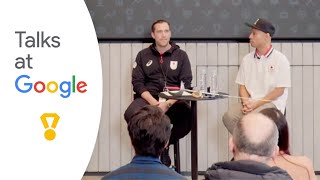
Japanese surfer Masatoshi Ohno and fencing coach Jérôme Guth discuss how they turn fear into excitement through preparation. Ohno won seven consecutive JPSA titles in 2013 and helped get surfing into the Olympics. Guth led Japan's saber team to a historic bronze at Paris 2024.
Questions this video answers
2017
Seven consecutive wins (record in Japan)
Three-time JPSA (Japan Pro Surfing Association) / SV Grand Champion
After the Tokyo Olympics; he began his mandate in January 2022
March 2023 to March 2024
Chapters
Hi Googlers, really good to see you today and thank you for joining the event. My name is Michael Lee, I'm a senior Partner manager on the Global Partnership team and you know, as part of our talks at Google event we have. We're extremely happy to welcome two.
Very.
Special speakers today, Masatoshi Ono and Jerome Guth to Google. So please give them an enormous welcome and let's welcome them on stage. Thank you. Take a seat. Thanks. Thank you again. I'm just gonna give a quick introduction of both our speakers today. So starting with Matt, we've made a little intro video of him as well. Let me just play for everyone while I go through his profile. So Masatoshi Maono is a three time JPSA Japan Pro Surfing association now known as SV Grand Champion surfer whose most significant contribution to the surf industry has been his participation in the mission to get surfing added to the Olympic Games. He holds the record for most consecutive wins in a single year with seven goals in 2013 has never been done before in Japan. He's also been instrumental in promoting surfing in Japan, leading the national surfing team to multiple victories and serving as the captain and coach at the Tokyo 2020 and Paris 2024 Olympics. He currently also served as the Chairman of the S League. On top of all these incredible achievements, Ma also created the revolutionary surf festival called Fundamental, which we'll talk about later on in the talks in 2017. I'm so well received that he has grown by popular demand into a much anticipated yearly event. Please give a huge welcome to Ma. Jack, say a few words to the audience.
Hello everyone. Thank you for coming and I hope you understand my broken English and do my best to explain how I feel and I'm very excited to be here. Thank you.
Thank you. Welcome to Google and Jerome, it's such an honor to have you with us today. We have an intro video of you as well. A French. Do my best here. Master of arms. Not bad. We'll work on that later on. Specialized in saber, he is the current head coach of the Japanese Fencing Olympic team and he started his position after the Tokyo Olympics. Since then his team has broken all sorts of records. Jerome has the particularity of being in charge of the women's and men's programs. That makes him the youngest in the world with this kind of responsibility. At only 39, it's incredible. Jerome is also coaching the current back to back individual women's Saber World Championship as you are not aware of. Like Emirabi Saki San, the athlete who was the black owner for Olympic team in Paris has been ranked number one in the world for over six months now. Under Jerome's leadership, the Japanese women's saber team qualified for the first time in history for the Paris 24 Olympics. They even beat the odds and clinched a historical bronze medal at the Olympic team event. So everybody would get a feel of that medal later on. Please give a big round of applause to Jerome.
Hello, everyone. It's an honor and a pleasure to be here. Thank you very much for coming, so many of you. And I'm looking forward to talking about all these experiences with you and showing you the medal and saber here that I brought. So let's have fun and let's have this discussion going. Thank you very much for coming.
Thank you. So we look forward to hearing some great stories from our captains today. Also, we want to just make this as interactive as possible, so if you have any questions, feel free to enter it into Dory. And we also take on, you know, questions on the floor later on. So we'll do that after the end of the talks. And with that, we'd like to get right into it. To start off right, tell us about your sport. I think surfing, fencing is very different. Not all of us do it. We'd love to learn more. What ignited your love for the sport? I'm starting with Jerome.
For me, it was very simple. I just, you know, so I'm French, and the fencing is a French sport. I wouldn't say very common, but it's quite easy to find a fencing club around you, around you, like in France. So I just started when I was 6, and I immediately fell in love with the sport. And still today, so it's my job. I consider it more as a passion. It's really. That's. I think about fencing all the time.
It's.
For me, it's everything. And I am blessed. I'm very, very happy that it can be my job and I can do that. I can do that on a daily. So right now, I'm the Olympic head coach for the Japanese men and women's saber team. So I specialize in saber, this weapon here. And, yeah, it's a huge, huge privilege to be here in Japan. Like, I have a young team and we have crazy infrastructure that were built for the Tokyo 2020 Olympics. I arrived right after the Tokyo 2020 Olympics. And, yeah, just doing this sport as my job, it's a passion, and it's something that I invite you all to try. It's fantastic.
So it's like a lifestyle, right? It's a lifestyle completely yeah, it's a sport anymore.
Like I said, it's a sport. It's a passion. I think about it all the time. It's very fun for me to watch fencing videos. So.
Yeah.
So it doesn't feel, once again, as a job, beautiful.
And Thomas, what's surfing like for you?
For me, my parents, both surfers, and I grew up this small little town called Izu Shimoda. And it's basically mountain and the ocean and the river. Since I was zero, I was at the ocean and I started surfing around five, I think. And since then I can't remember the first wave. I got on the wave, but the excitement is still in my body. Still, I can feel the excitement. And to me, surfing is a way of life. Basically I learn and I meet people surfing everything through surfing. I hardly ever went to school, so I just. Just ocean was my school. Surfing brought me to overseas. Yeah, it's basically way of. Way of life.
Yeah.
As you said, you know, it's a way of life for me too. Like we. I just traveled the world like when I was a competitor and I was a coach and I have so many friends for so many countries. Like I'm. I go to amazing places. Maybe places you wouldn't go as a. As a tourist, maybe. You know, like when you travel to some countries just for a competition and you just meet amazing people, discovered so many cultures and it. It's. Yeah, it's a bl.
I think it's awesome, man, what a journey. And on the way of life part, right, Ma, I remember we had this conversation before and you said sometimes surfing is your philosophy. It teaches you every wave is different. There's always timing to things. You don't force things in life. Do you want to elaborate on that? What do you mean by that?
I mean, when I'm on the land, I tendency to forget. But when I back in the ocean and be in the. Nature always teaches me flow with the flow with the nature. Because the swell, the wave created it miles and miles away, thousands and whatever. Miles away. And we're riding at the last bit of the energy. And if you, you know, when you try to catch a wave, it's called paddling. And there's no waves. If you try to. Even when there's no wave you paddle, it's a waste of energy. So it learns. It teaches me to wait. And when the wave wait and while you're waiting, you get ready when. Get ready for when the waves come so that you're ready to go. I mean, not just this but it just teaches me a lot of things. Yeah, applies to life.
When he told me the story, I was thinking, this is actually very applicable to what's happening to us, you know, on a daily basis. You know, when we think about, like, sometimes we talk about career development and all that. You go through stages. Sometimes the opportunity is not there. There's no opportune moment. But let me say, there's things you can control. You can prepare, paddling, reading the waves. So, yeah, I actually learned a lot just through these kind of conversations. And so I really wanted him to kind of share about that in today's talk as well. And on that note, I think you both started at such a young age. Five, six, and you started going to the ocean when you were like, zero years old. So that's incredible. Like, how has this passion evolved over time? Right? I mean, obviously, it's been decades now. How do you maintain this drive and enthusiasm in the highest level of competition?
In my discipline in fencing, I'm lucky enough to see the sport change a lot. The sport changing. Crazy. If you look at footage from The Olympics, even 20, 20, 2016, it's totally different. So I am in a constant evolving sport. And it's just. It's fascinating. It's passionate. It is really passionate. It makes it very passionate for me to try to stay on top of the trend, try to understand what makes fencing go round and how to be excellent and excel at it. And also actually even further than that. Yeah, staying on top of the trend is good, but, like, trying to actually make trends, create our own trend. And that's what we're trying to do with Team Japan, be disruptive.
Right. In a way.
And then sometimes we're trying. We have our own Japanese style. And then when you see other countries or whether it's an athlete or referee or another coach, like, oh, okay, that's nice, that's new. And then trying to do it, and this is very satisfying. This is trying to. The sport is evolving so much, so much, so much. And staying on top of it. It's actually taking a lot of time and a lot of work and studying, and that's what makes my sport so fascinating.
Amazing. So it's not static, right? It's actually evolving all the time. And it's always. It's a learning for you as well, even at this stage of your career. And, Ma, what's your take on that? You know, like, how do you keep that drive going?
To me, there's two faces to surfing. I feel there's one side. It's artistic side of surfing and also competition side of surfing. To me, to balance these two is very key for me to striving a competition as an athlete. And it's purely just to get on the wave and just express how you feel on the wave is very much that gets me when I first started surfing that part that's the artistic side of it, of surfing. I mean, there's no rules. You just get on the wave and you just do whatever you like. And you can see the style when you see the surfer riding on the wave. You can see, you kind of feel how. I don't know how to explain it, but it's just a feeling you get from watching, I guess. The fencing is the same, right? There's a different style.
And actually what you said before, Mar talked about the timing and yeah, for us too, we have to do. I'm training top level athletes, world level athlete. And it's all about repetition, repetition, repetition. And they are excellent at what they do. But you can be excellent at this and execute it perfectly. But it's all about the moment, at what moment you're going to do it. It could be part of your strategy. So that's a tactical aspect. But also, yeah, you have the nicest attack in the world, you have the nicest footwork in the world. But when are you going to do it? At which moment you're going to do it. And yeah, so it's a moment, timing moment. And very, very importantly, it's a feeling like, yeah, you cannot explain what you feel when you step on these podiums, on these trips. We call that a fencing strip. And you're right there and you feel it's the right moment. You feel it and then you go for it. So, yeah, the moment is key.
I feel like sometimes it's like that feeling side of things when you really enjoy the sports and the competitive side of things could be contradictory, right? Because in actual professional sports, in surfing you need to win points. But that might not be the best way to do it. But in order to win, you have to do certain things. How do you. What's your feeling of that? Right. And when you said there's two sides of, you know, like the more autistic side and the part where there's rules that governs it. As in like it's a game, right?
For me, the game, the competitive side for me is to explore how good you can play the game. That part I really love it. And I still explore and I think I do that until I die of still exploring and that side of surfing also there's millions and there's no count up. You can't even count. It's just non countable ways of expressing the feeling. So it's just. And also traveling around and finding new waves, exploring and going surf trip with friends. This is just balance for me. It's the balance, finding that balance, finding the balance, like a good balance that keeps me going.
And for us, very similar to what Mars said before. You have the fencing also could be considered as an art. The art of fencing. And when you're at practice every day you're trying to do pretty fencing. You try to do something that looks very good and be very aesthetic. But then when you go to competition, you're here to win. So whenever you were, whatever you were saying Michael before, like the. Could lead to overthinking. Oh wow. Like I need to win, but I need to do something that looks good. Like if you start thinking like that, you're going to fail. So really like relying on the. You need to be well prepared, well trained to be able to do that. But relying on the feeling on the day of the event and when you're here to actually win, your intuition, right? Still having intuition, the feeling, it's key. Definitely key.
That's really good learning. There's a lot that I could take away from that also. You both started as like, I mean ma, you're still a professional surfer, like individual, what we hear called individual contributors. But now you're coach captain which is more like a managerial role. Like how do you like what's that mind shift for you when it comes to like how you see your career?
I mean, yeah, I've been doing. There is not a big gap for me. Like I've been fencing my whole life. Like Mar has been surfing his whole life. He still surface and I still hold a saber and I wear a jacket every day. Yeah, the trickiest part for me right now is that I have to do that in Japan and I don't speak Japanese. But yeah, managing that group is amazing. I have a great group of young fencers and boys and girls and they're just amazing. We are very close connection and we developed a strong bond. And switching from being a fencer to being a coach was natural for me. Like I didn't really overthink it and it was just like continued motion like through my fencing career. And I coach at a very, very young age immediately. So was kind of a calling for me.
That's good to learn when it's organic. Right. That transition is Natural. Just want to go a little deeper on that because I think my image of both surfing and fencing is more of an individual sport. And you know, the Olympics focus a lot on the team aspect of these sports as well. And winning as a team. Right. So can you tell us more about your approaches to captaincy? Let me start with you, Ma.
I don't really see myself as a coach. I like to call myself a sparring partner.
Okay, sparring partner.
Yes. And the always ocean is changing you. Every morning, every day, every session. I always go with the athlete to serve together. And I want to serve better than the athletes so that they get inspired competing with them and there's a mutual respect. So yes, to me it's a sparring partner. And I always want to get better at surfing and as a human. I want to get better as a human being.
I think just now, Jerome, when you talked about intuition, right. I think when you go out there in the water, you're not there with them, right. And this time in Tahiti, it was a huge wave. I think one of the key things you talked about is to be able to help them shape that intuition. So they can only depend on themselves when they're out there. Right. Do you want to talk a little bit more on that?
I mean any kind of sports, even the fencing, all the sports coaches cannot be right next to you and telling you what to do as much as you want. You can shout all you want, but it's just basically when they get on the stage, it's all them. And to. To sharpen the instincts is very key. And by doing, sharpening, by sharpening the instincts is to. I mean of course from training and also getting the self awareness I feel is everyday life you self aware what you feel and what you think and why you say this to your. When you talk to people, why you said this, because it's all self awareness.
I feel basically your senses, your awareness. And that all ties to intuition, right?
Yes.
Nicely done.
To go back to your initial question about the team sport and the individual sport, yeah, fencing is an individual sport, but you stand alone on that piece. But in fencing at the Olympics or any competition, you have individual events and you have team events. And the actual team event is the way we qualify for the Olympics. That's the way a nation qualifies to the Olympics. So the, the team events. Whenever I started my contract with Japan, the first thing I told them, we are going to emphasize on this. We are going to work as a team, move as a unit. And yes, you have Your individual competition, but that grants you access to be part of the team for the team event. And I think not seeing that sport as an individual sport helps us a lot. And I actually don't even differentiate the men's and the women's team. We all. All practice together at all times. And I know I have some colleagues around the world, and there's, like, different schools of that they like to separate a lot. And I'm just, like, trying to have my whole group, men's and women's group, like, moving as a unit. And that makes also. That makes it unique. That makes our style amazing.
But how did you foster that camaraderie, that bond? Now we have what we call Kizuna Week. And so like that Kizuna, to have a shared vision. What was the challenge that you've experienced? And at the same time, I think everybody, even though it's a team sport, they have their individual aspiration. Everybody wants to win gold. There's only one gold. So how do you do that within the team setting?
So, again, for me, the first challenge when I first came here was the language. The language, because I don't speak Japanese, but also knowing the culture, we are completely, drastically different culture. I'm French, Japanese culture. So trying to learn them, learn their culture, like how they work, what they think, and they also need to try to understand me. It's not just one way thing. So that was very important. And also when I started my mandate with Japan, we were in the middle of COVID So we spent the first three months just living together. We were a whole group living together. And actually we're living together in France. Yeah. Because I couldn't come here because the country was locked because of COVID And even, like, with the Ministry of Sport, it was very complicated to get me here at the beginning. So the whole team came to France and to my home city in Strasbourg. And so we lived there. So the adaptation was easy. And yeah, so. And then this whole camaraderie is like, on a daily basis, like, we have to make the practice not being too much of a routine. Try to have fun. It's really. That's an aspect they didn't really have before. Like having a lot of fun, trying to do what we love, but having fun doing it. And yeah, yeah, it's hard, but we have, you know, whenever it's deserved, we have parties, celebration. And we are trying to break the routine by going to camps to changing.
The location, to kind of unwind as well. Right.
Like, no being every day to the same Gym in Tokyo. In Tokyo. In Tokyo. And we love being here and gym's amazing, but it's hard. It's good to break the routine. And so yeah, we have all that. And I'm lucky enough to have amazing staff and amazing team. We are big. Everybody among the team is friends. And it's also very important to understand that yes, we are very friendly with the coaching staff, but we are actually not friends. That's also a thing like yes, we are very friendly, but we are not friends. So trying to have all that and being strict, but at the same time.
Being cool, trying to find the balance.
And that's what we do with my stuff. Stuff. And I guess so far it's working good.
Nice.
I mean, what about, I mean in Paris, right. I think surfing that took place in Tahiti this time and it's a very different vibe and very different. Very different compared to what Jerome just described or what you've experienced in Tokyo 2020 or 21. This time in Tahiti. How did you build this bond with the team?
We, we basically doing everything together. We surf together in the morning and eat together and play together. And at the end of the night we always recap and how you, how your day went and that starts to build the bond. But at the same time, like what Jerome said, it's a competition basically. And especially in surfing, there's no team gold. So we're going into the competition as a team Japan. But then. And it's awkward, it's a conflict.
Yeah, that's true.
They all need each other to get better.
Yeah.
Yes.
That's what they need to understand in.
The event you meet each other in the competition.
So you talked in the introduction about. Emura Misaki was the flag bearer for Japan. She's two time world champion, number one in the world. But she needs her teammate and her teammate want to get close to her and want to even beat her. But without them she cannot do anything.
I want to dive a little deeper into that, but I also want to talk about the unwinding, the relaxation part. I think Ma, you shared a pretty fun video of how you guys relax in Tahiti. So I just want to share that with the crowd and maybe to talk through what you guys are doing here.
He is the world championship surfer, Kanoa Igarashi. The one of the most impressive and surfing Japan. And basically we got coconut. All we got was coconut. So we were just who could throw the coconut the farthest? And this is how we bomb. And this part of the, part of the.
That's a big road.
That look like Paris.
All these things all together at the same time. You know, we as a human, we feel envy, we feel jealous. But to, to acknowledge that it's very important to every single partner, every single market and even the coaches to acknowledge that is very first step.
Yeah. So like, like you said, right. There's, it's, there's no, it's a team. It's team Japan. But there's only one gold medal. There's no team medal, right. For, for surfing. I mean fencing actually there's a team metal. Yeah, it's. It's kind of a weird setup because you still only win individual medals for surfing.
Right.
And like you said, every athlete, professional athlete wants to win. Now how do you kind of balance that out?
I mean it's easy to say, but to create the healthy competitive environment for me is very important. You do better. One better and I want to do one better and it's that the healthy.
Competitive environment, healthy working environment is there healthy, competitive, healthy working whether it's at a company, it's a team sport, anything. Working in a healthy situation, healthy environment. It's key.
How do you, how do you like, you know, any tips on how you can build that healthy like work environment so that you know, it's like a healthy competition where people can try to push each other further, higher thing is.
Done through, through mutual respect to. Of course we have different, different level of fencers and in my team you have someone that is better than the other. But like there is no looking down on anyone. And, and what I said before, trying to have everybody move as a whole unit and trying to make sure everybody understands that it's for the greater good. And we are here for team Japan and we are here to reach that goal. And yes, in my case, there's only four girls standing on that podium, but it's a group of 20 girls and 20 boys working every day together. And without them, that's not possible.
To me acknowledge that we're all human. And I feel when you do, when you, when you win the heat, when you win the competition, of course I feel maybe because I want to get the gold, same gold. I feel envy, I feel jealous, whatever. But it's to acknowledge that is the first step and then it's okay. Everybody feels that way. Everybody. We're humans and acknowledge that. And then to empowerment comes from that. I feel to acknowledge it. It's okay to feel this way. It's okay to feel any kind of emotion. It's normal. And by doing that I feel everybody in the. Everybody hope.
Hope everybody can bring out the best of themselves.
Bring the best. Exactly. Yes.
Okay. Yeah. Because I remember you telling me like if you don't like everybody has emotions, right. Especially when you're a pro athlete, you're very competitive. But if you don't acknowledge that and know that it's okay to have that feeling, it kind of festers inside and then you hold back and you go to really dark places. So like how do you like approach them to kind of be able to create that safe environment? We can actually let it out.
Yeah.
Conversation. Communication. Conversation. As you say, professional athlete. They work so hard. They work every day and it's nothing to lose.
Right. They gotta win.
And. And you know, like there's so many lows and such, only a few highs of emotion. And during these lows, like during this bad result or a bad time or just all these things like you. There's some bursts of emotion, there's some. Sometimes stuff that are being said that are not meant or just during the moment, the heat of the moment. And yeah, just talking about it, letting time to cool down. Talking about it after having a conversation, whether it's private or in front of the whole group is. It's helpful, Very helpful.
Ma. You also do like one on one.
Time where there's time and the space. And I find yes, we talk and just let it out. Whether the group setting or one to one, it's very healthy to talk about it and just let it out and just open about it because it's normal, it's natural to have that feeling.
And I think you also said before that you wanted like to you health, like a healthy, competitive team environment is when, when you lose to somebody, you don't take it personally or something.
Leave everything in the ocean. That's what we say. Just it's battle it, battle it out. Just leave it on the stage.
Leave everything on the street.
It's not personal. It's not personal. We're there to play the game that we dare to win.
Right.
And just leave everything in the ocean or stay on the stage. And when you come out from the ocean, it's overall.
Yeah. And also whoever wins. Right. Kind of my personal experience, I feel like they light the path for you. They show you where you could go, you know, like if you just work a little harder, it's right in front of you, you can get there. Right. And so I actually feel it makes it easier when you lose to somebody who are better than you and you look at it and you Go, hey.
You know, as a model.
That's a model, you know, it's a benchmark. I can get there, I can exceed that. So that's how I see it. I don't know if that's.
You're totally right. And it's very important that right now we talk. We're using the word health a lot, speaking about health, being healthy. But the mental health of an athlete is kind of trendy right now. It's not something that has been talked about for. Is very. For a while. It's only recent that people are worrying about the mental health of an athlete. Before, we're just talking like an athlete was almost a robot that has to be performing, performing, performing and being like a superhuman somehow, somewhere, somehow and strong at what they do. But the mental health of an athlete or mental health of any working in any kind of line of work is so helpful to get you where you want to be. Without your brain functioning properly, you cannot go where you want to be. So it's very important to maintain that, to check on that, and to have professional people that are better qualified than me helping my team to be performant like that.
I think you started your project Fundamental just because of that. Right. Which I think we'll talk about later as well. Exactly on the point that Jerome just mentioned.
To know yourself, I mean, to fund the mental is like fun. To know the mental and.
Fun, it's fundamental and then it's fundamental. Right. The way you put it. Yeah, we'll touch on that later. But I want to go in a little bit more on the Olympic experiences. Do you have any stories on how you became part of this incredible journey? I'll start with you, Ma. How did you become an Olympic captain?
Basically, the guy in front, right in the center, isa, the president of the AGRIA called me and are you interested in doing the presentation to the ISA to put the surfing in the Olympic. And I was very excited. So I. I hop on a team and we did the presentation and surfing became the Olympic. That was pretty much the first time I've ever experienced a team effort. And it was very fun. And I've been surfing and surfing is very individual, but this experience just got me into the team effort and the excitement that you feel. All the strong people and all the lions come together and doing what you're good at. Everyone does your part and the result comes. That actually made it so much funner than you're getting your own goal.
Right. And you actually got one for Tokyo, right? A silver and a bronze, right?
Yes. After this. Yes, 2020.
Regarding me, it was. So I got appointed as the Japanese head coach after the Tokyo Olympics. So pretty much January 2022, I started. And so I am not an Olympic coach right there. Like, we have to qualify. I have to take my team. I'm not an Olympic coach. As long as I haven't set a foot on the Olympic stage, I am not an Olympic coach. And it's not. I don't know any other sports. But, like, for us in fencing, it's very exclusive. It's very hard to qualify. And the Japanese team has never qualified before. So I was 36 back then, and it was a huge responsibility to lead that group and men's women and the senior team, the professional team, but also the under 20 and the under 17. So I'm handling the whole program. And it was a big, big responsibility. And then the qualifying period is a year. It's from March 2023 to March 2024. So we only know a few months before the Olympics if we do get to go or not. And this whole year, so that's from March 2023 to March 2024, was by far the most intense year I've lived with, like a roller coaster of emotions. It was sort of good results, bad results. But you got to keep going. Even if there is a bad result. You got to keep looking forward and to the next qualification event and the next one, and lots of doubts, but, yeah, reaching March 2024 and getting the ticket to go to the Olymp, a huge relief. And only then you can qualify. You can think about, okay, like, now I'm going to Paris. So we have like three, four months.
To get a big event.
And. And then, like, then, yeah, I became an Olympic coach. My fencer became Olympians and even Olympian Olympic medalists. And that was. Yeah, when you look at the whole pattern, the whole working, the whole work that has been done for the past three years, the step and the steps that led us there, it's really humbling. Every little thing counts. And it was long and it was dreadful, but it was all worth it.
It's worthwhile. I mean, the metal is right there, so everybody get a feel of it.
Later on so we can pass it around.
Yeah, we'll pass it around later. Thank you for sharing these amazing stories. I want to pivot a little bit to touch on the main theme of our talks today, which is turning fear into excitement and conquering challenges. Right? So, like Tamar, right. Surfing is inherently risky. If you look at the Tahiti waves, right? It's like 20ft, you could die. So how do you approach fear and manage risk? What's going on through your mind when you see that wall coming at you?
It's all about getting ready. When you face 20ft away right in front of you, there's nothing you can do. All you have is what you the best. It's only thing that can rely on is what you have, how hard you trained until that point. And that's the only insurance you have. And it's all instinct when it comes to 20ft. And we go back to instincts, you know.
Yeah, go back to instincts.
I don't think you can't. You can turn anything into anything. It's just fear is fear and excitement. Excitement.
You still need the fear. Right. The element of fear is important.
You have to have a fear because you could just walk in straight into the car and you can die if you don't have a fear. But when you're facing 20ft, wave. If you overcome by only the fear, I don't go out. But if you have excitement and the fear at same time, and that's when you feel.
That you're ready.
But same time, the excitement is, you have to have the danger on the other side to feel the excitement. And you can excite it. Licking the ice cream. You can feel high licking the ice cream, but there's no danger. That's not excitement. You have to have a danger, live or die kind of excitement situation.
Yeah. Because I think in our rehearsal he mentioned a very interesting point. He said the fear is a. What is it like you're aware of the fear but you're, you're anticipating excitement. Right. So the anticipation, the excitement overweighs like the awareness of fear because you know it's there. But you're not expecting to get hurt. Yeah, yeah. You are expecting to come out of.
That too, if you are ready.
Yeah, if you're ready. So yeah, I think it's almost like a risk and return balance that he always has in his head, which is a very interesting approach. How do you see that?
It's very contradictory because surfing is very, very dangerous and I'm the one using a weapon. But it's actually less dangerous because that weapon is completely safe. Like it's not sharp or not pointy, but it still remains a combat sport. Fencing is a non contact combat sport. So you're not going to, to hit each other like physically, but you still get hurt and it still can leave a lot of bruises. So you gotta come on the piste and overcome all that and trying to tame your fear. And there's so many different sources of fear you can fear.
Yeah. I actually think because fencing is so fast, right. We can't even see it live. It's just too fast to catch and. But you train so hard, so long, but it's finished, it's over in such a short period of time.
It's a burst of energy, physical energy, but also mental. So what more say I was like.
The mental fear is massive, right?
So the only way to overcome it is to come very prepared. But then there's so many, many kind of fears. Like the. You can have the fear of losing, which is natural, but you also have the fear of winning. When you're reaching the last point, say, oh, my God, one more point. And I'm going to. And my opponent is supposed to be stronger than me, but I'm about to beat him or beat her. And then you lose. So overthink, overthinking. Or you have the fear of being injured, the fear of disappointing, fear of looking stupid, that exists too, you know, like you're going to piss. Like, you have all the cameras in the world filming you at the Olympics, you don't want to look stupid. Or fear of being not ready. Like, there are so many fears, but all that, you can beat that. You can never completely beat it. You're going to have that fear. You're going to feel this, these. These butterflies in your stomach, like, going there. But yeah, through preparation. So physical preparation, of course, and the technical preparation, which is fencing. But the mental part, the mental preparation is going to help you overcome all that. Yeah, I guess.
You have to love it, right?
You have to.
You have to love.
You have to love it.
Yeah, like, even that feeling, it'll make it or break it.
That's why you do it. Like you're having these goosebumps. You're having, like, these. Some people are vomiting, something like that. Or it could be an artist, Garba. To perform at a big concert. Could be anything. It could be, you have a big presentation, you have a job interview that's going to change your life, stuff like that. You have to own it. You have to own it. And you have to look at the bad experiences you had, the negative experiences you have. Learn from it. Own your own mistakes, too. Like, oh, I messed up. I shouldn't have done that. And try to understand what happened. And as we said before, like having conversations, something. Turning a negative experience into something positive and trying to move forward. And. Yeah, but again, again, as you said, fencing is very Very, very fast. So there's gonna be a lot of instincts and reflexes that are built through training, muscle memory and.
Yeah, so that's still. Right. It's easier said than done. If I, for example, right. If I look at this picture, I don't know if my excitement would ever overwhelmed fear. But that's like, the mental preparation is definitely important and like, whatever the work you put in.
And there's another thing I'm using, so it's called sop. Standard operation procedures is like, throughout our training, we have a solution for any situation. So that happens, you have to answer by that. That happens, you have to answer by that. And doing that on a daily basis when, of course, you cannot cover everything. And as you said, it's going so fast and you don't know what the opponent is going to do. And you can never recreate the atmosphere that was here at the Grand Palais in Paris or the stress you're going to feel for the Olympics. But you're trying through these SOPs, these standard operation procedures, you try to cover all bases as much as possible, and then whatever is left is going to be your instinct, like your reaction at the moment and owning your fears as many as can.
But even if you do all that, there's still obviously setbacks. And I mean, like, how do you, you know, you know, like, this is a very emotional picture and I put it up here. Like, how do you bounce back from these situations?
Oh, this is, this is the toughest part. You. I said before, you have so many lows, so many lows, and just only a few highs. The few highs are all worth it. But. But, yeah, there's a lot of moments of doubts. You trying to understand what happened. You cannot even point it out. Yeah, that part. Like I did at the Olympics. So five days before the team event was like the pinnacle of these athletes of my career so far. Five days before we had the individual event, and that was a complete bust. Yeah, we complete. But how can we be that bad five days before and so good five days after? We didn't do anything much in between. The preparation come for years and years and years back. So since we got the medal, it meant we were ready. But what happened five days before and just a month before we had the Asian Championship. That went well. Very well. She won the Asian Championships. So how can you be so ready? But like, being just that day, it's not working. And then you say, oh, all right, so we are not ready for the Olympics. So I started thinking myself, like, okay, maybe the Olympic Preparation like we did a camp before and maybe it was all wrong and you start questioning yourself, maybe what I did was all wrong. And then we have this. So my whole Olympic period, like being in the village for me was very, very, very difficult because the first day of the events were at the very beginning in fencing, the individual events. And I was so sad. I was so. I lost, I lost everything. And I stay one day in my room, I stay one day in my room in the village, in go out and then we have to go back to practice, we have to go back to training, find the right words to put the athlete back on track. It's a very weird atmosphere at practice. We go there, we expect to get medals, we get nothing but get to refocus for the last day. And then the last day of the Olympics were just one of the most amazing day in my life. So sports is cruel, especially high level sport or any situation you can have in a work and environment could be very, very cruel. You just got to believe in yourself and if you did the right thing months and months and weeks before in the preparation, if you work hard, if everything has been done properly, everything should be fine at the end for all.
Out there should be.
Yeah.
That's like. I think resilience is a big factor. I mean Ma, you talked about resilience in sports and how that ties to like actual like real life. Right. Do you want to comment on that?
To me what pushes me is what is love for surfing. I want to be, I want to surfing forever until 100, 120, I don't know how long, but I just want to go on forever and I want to explore how, how could I serve better or how could I better at what I do. And in sports I feel it's out in the ocean, out in the public when you lose your face bashed or you lost by the other person. It's all in public. And you feel the shame you feel the what you feel whatever you feel. But that gives you a chance to look at yourself and hope every dark corner subconsciously maybe hidden, whatever dark things comes out by losing and facing yourself.
And.
It'S that self awareness, interesting self awareness. Hopefully one day I don't think the day will come, but it's just every day my shoulder get lighter and lighter. Hopefully that gets me going.
Yeah. But it teaches you a lot, right. So like you know, the spotlight is all on you and you can handle that pressure in life it feels lighter to some extent. Right.
Trying to understand what happened. You know, you can take A lot of positive stuff from losing, from a setback. Just need to be open minded enough and accept self criticism or criticism. You just got to be strong enough to accept that, to see through that. And then you can transform something negative into positive.
Yeah, that's so much learning. There's a lot of takeaways from that. Hopefully I can apply to my own life as well. Yeah. And I want to kind of follow up on that. I think being a captain is about growing the next generation. I mean here we have like Kanoa. I think he won the silver medal.
Right.
For Tokyo 2020. So to Ma, how are you pushing the boundaries of surfing right now? Whether it's through your own writing style or your vision of S League, now that you're the chairman or any other project that you're currently working on. I think Fundamental is one of it that you touched on. Do you want to tell us more about that?
For the Fundamental competition is all about the difficulty, how you get your score and how judges judges you. So it's basically you have to fit in to this criteria. But I like to explore more on the fun side of surfing, which is the creative side of surfing. You ride the wave with body surfing, which is just right away with the body just using your body to ride the wave. Or just a long board, short board, whatever.
Sideboards you artistic aspect of surfing.
Earlier and who had the most fun is the. I wouldn't want to call a winner, but the fundamental of the day and it's not about how good you are, but how fun you had, how much fun you had. This was the base idea created for the Fundamental.
Yeah, there's definitely a lot of events. Right. It's not just surfing but enjoying the ocean. But through surfing you learn, you know how to take mental care, how to be more resilient. Is that the concept of like fundamental?
Yes. And the workshop and all the kids and the young to elder come and see you meet the professional, not just surfers, but the musician, any kind of profession. I would like to invite every single event and hopefully the kids, you find the dream. I like find the dream to be the musician or the surfer or the carpenter or whatever and like to create that space.
Creating a space for them to get.
Together to because it's way of life. Surfing taught me a lot. And explore basically the exploration of yourself. Exploration.
Yeah. I feel like Google is the bigger version of that. It's like a platform. Right. So you have YouTubers, you have a lot of people, people who share knowledge and exchange ideas. And through that we Come up with new technologies and new ways to help the world. And so I think fundamentally the concept is pretty similar. We need a platform for people to interact. We're all social animals. So, yeah, I really respect that project that you're running, Jerome.
One of the thing I told my team when I took over in January 2022 is like I told him, literally, let's try to have fun together on a daily basis. And yeah, of course, there's good days, there's bad days, there's days you don't want to go to practice. But these athletes, they go to practice morning, afternoon, morning, afternoon every day. They travel the world, they have competition. There's so many hard thing goals to do. Like any other profession, if you try, if you can implement some fun in it, if you try having like a good time altogether, it's just gonna make you swallow the pill easier. It's gonna be. You can work even more and even. And push yourself deeper if you finding some fun in it.
That's awesome. Yeah. So we're kind of running out of time, but this has been such an engaging conversation. I'll open the floor up for questions now. Let's take up as many questions as we can from the audience while we have time. I'll also show the dory later, but any live.
Go ahead. Hey, thanks. Thanks, Ma and Jerome for that conversation. Yeah, I mean, I've got a quick question. As a parent, when you have your kids do different activities, whether it be sports or anything else.
And I guess.
You both started your prospective careers five or six. My kid's five. As a parent, how do you. Any advice for parents kind of encouraging their kids to follow their passions in their respective sports or whatever? For example, I think especially when you first start out, it's pure fun. But I think as you get older, you start to enter a competition, and that's when you start to. It's great if you win, but you also start losing, which sometimes takes the fun out of the sport. As a parent, you know, or you had parents, you know, I think that were surfers as well. Like, how involved were they in, you know, pushing you through some of the times? Maybe when you wanted to. Were there times when you wanted to quit or wanted to stop or didn't enjoy it as much? How involved were they and how involved do you think the parents should be in kind of the.
The kids, they were very involved. It was almost like their dream. I mean.
Yeah, yeah, Sometimes I feel I'm more passionate about what he's doing than he is.
So as a parent, you pretty much going to choose the sport of your kid right now. You're going to take him to the sport, take him, take care, take your kid to the sport. But yeah, what's the first thing you say? Like, it's very important that the kid has fun. If the kid has fun doing whichever sport it is and the two words are put together is fun and this, you got to be disciplined in what you do. Then if you're disciplined, yeah, you're going to win, you're going to lose. If you're still losing and having fun doing it, you're still going to learn a lot of stuff from it. And if you find an inner satisfaction doing it, and if you can all enjoy that as a family, parents and kids going through that motion, that sport, that journey together, there could be a lot of very cool family stories as well. And then, yeah, then you have also, like I was working with younger kids, I was working in USA for 10 years before and I was having a club and academy with younger kids. So yeah, you do have, you do have parents that are getting very involved. You have sometimes parents are getting too involved and yeah, it's true. But do not try to replace the coach. That's just the only advice I would give to a parent, unless you're an expert in the discipline. So let's say if I have a parent that is coming to the club with a young fencer, he was a fencer himself before herself, before could be. Which kind of fencer were you before you were a recreational fencer or you were a top, top, top level fencer. But I think leaving your kid to do the sport with the coach, with the teammates, without being present would also help the kids develop into its own person, shape his own journey, his own destiny in that sport and try not to make the kid do something he doesn't want to do. And yeah, like just trying to find the limit, the boundaries between being a dad, being a coach, being a supporter, supporting them, like with your time, with your money, with everything. But they tried to find to separate yourself from the sport and try to let the kid do the sport and try not to do it with the kid. Like try just to support the kid. And yeah, I had situations like that in the US Mostly right now in the national team, you don't really have contact with the parent and the athlete I'm training are older than that. But yeah, when they're young, it's all about having fun, all about teaching them discipline. And as long as they enjoy it, especially At a young age, winning, losing is not that important. When they're 5, 6, 7, as long as they enjoy it, they're beating it for the future. If you're looking at the sport for a long term thing, just get the experience, just get the fun out of it. And we will see later when the kid is starting to get 12, 13, 14. These are pivotal moments in a sporting career when you have to make the decision pretty much are you going to be serious about it or not? And yeah, as a dad, just support them as much as you can with all the love and the time you can. That's it.
Same full support.
But you had parents that are surfers. So this is very similar to what I just said. You have parents that are surfers. So you can look, my parents were not fencing but you can look up to your parents and you cannot have literally surfing conversation at dinner at night. I cannot have a fencing discussion with my parents. And fencing is very hard to understand after they still don't understand anything. But yeah, you need to find the right balance. If dad was a soccer player, you want the kid to play soccer, but actually maybe the kid preferred to do tennis. So let him do tennis, stuff like that. Oh, fencing. Fencing is fun.
We have a few online questions as well. So this is from Mariko san. If you just read them out. What do you advise Japanese people to be competitive in the world class competition? Japanese is known for quite humble discipline, not sharing their opinions in front of other people. However, some people may struggle to have what they want because of it. Any advices from your experiences?
To practice with the best of the best, to put yourself in the position where you can. For me it was a surfing. So parents cost you a lot of money. But put, put yourself in the position where you can, you can play with the best if you want to be the best and hang with the best.
So just be with the best. You learn through.
That's what I feel in fencing case like it's, it's a European sport, it's a French sport. And I always tell my team Japanese, your Japanese people trying to do a European sport, a French sport. If we were doing judo right now like you're trying to do it the Japanese way, but like now we're trying to do a French sport so you got to try to do it. So I think the sport brings you, brings you just like an open mind in as long as soon as you start traveling. And fencing is a very confidential sport so you get to travel a lot very quickly as you get to A certain level and I just brightens your horizons. Just like have you meet a lot of people. And so the Japanese people are going to do that sport in a very Japanese way. But try to be still as open minded as possible because you don't want to lose insight that it's not a Japanese sport at the beginning. So use your Japanese qualities like your physical qualities or your hard working qualities or so many.
Take the best of, take the best.
Of your culture and try to apply it to that sport you're doing.
Thank you. We're out of time so we can take one more live question, please. Oh, sorry. Okay, two, go ahead. Yeah.
Thank you so much. I work in social media and I've been looking at the Paris Olympics and how exciting it was like following the Muffin man and there's so many backstories that you got to see from the Olympic village. And then on the flip side there's athletes like Osaka, Naomi and Simone Biles who's really open and sharing their mental health state. And so it was kind of interesting seeing the backstories and behind the scenes of how athletes feel and being very open and candid about it. And social media can have its good sides, but also its negative sides and especially with comments and negativity in such heightened times during competition. What advice do you give to your athletes on approaching social media considering the pros and cons?
Naomi Osaka and Simon Biles are superstars. Like they're really part of the media and they're followed by hundreds and hundreds of reporters all day, all the time. And they have to shine at that moment. But this is the same for any other athlete. These athletes are very famous. But in my sport, which is not a very famous, there's not many superstars in fencing, but the mental health issues are the same. They're exactly the same whether you are the world class fencer. I mean all of them at the Olympics are world class fencer. But there is better ones. But even if you're in the middle of the pack, you have to battle with your mental issues and you have to find the better inside yourselves. And the advice I would give. So there's many signs they'll start that shows that you're having a problem because it is a problem, that it could even lead to being a sickness, which is bad at that point. But the signs you can see very early, as soon as you start feeling it. My advice again would be communication. Try to talk about it with your coach, with your family, with your loved ones, with your closest friends and try to try to overcome it as fast as possible. Try to reach out for help not only within your federation in your sport, but like maybe outside help. Someone that doesn't have close minded vision of the sport, but like something a little bit broader and being proactive about it. Being proactive about it. We talked about it an hour ago, like as the mental health of an athlete is something quite new in the world of sports, only people start caring about this like for one or two decades, but that's it. And so I assume it's been the same for athletes like a century ago too, but nobody were talking about it. And as a parent too, if a parent see their kid being sad, being depressed, try to keep in mind that you're doing that. Sport is something that you love. At the beginning you were doing that as passion, you were doing that. And then you have also the professional sport aspect, like you have some athletes that doing their sports for the wrong reason. Some of them are doing a sport just to make a living out of it. And this is not the case in fencing. We're not tennis players, they're making millions of dollars. But in fencing, if you do that kind of sport, you're doing it for pure passion. But maybe the people that are having like mental problem during their sport need to get back to the roots. And I always tell my athlete, remember the little boy, the little girl, you know, were back in the days and when you started fencing at 10 and you know, like even if you need, I could ask your parents to show you a picture with a big smile on your face and holding the saber and like going to competition and looking all goofy and all like this is the roots of this is when you started. And if you can try to fuel that into the present and try to battle your demons with that, maybe it could help. Every case is particular. But yeah, seeking, reaching for help is always the first step for sure.
I mean nowadays you have to have an Instagram to promote yourself, right?
But.
Me personally, I don't really like it. So I just don't do it. Whenever I feel like, I just do it. But then if you love it and if it depends on the athlete or person, you just got to know you yourself, how you just, you, you don't push to the point where I'm doing it, but I'm depressed. You just gotta be aware of how you feel, why you're doing it. As long as you know why you're doing it, you're promoting yourself and you're doing it to promote yourself. It's nobody's fault. It's nobody asking you to do it. It's on you. It's on me whether I want to do it or not. I mean, it's a responsibility. It's all on me. So it's up to the athlete or the individuals to decide whether you want to go on or you want to stop or you want to. Just want to. But it's good to see. When I see Osakanami talking about her health, it's okay to feel this way. We're human and it gives me comfort. It gives me, oh, Osaka Naomi feels she's a human. I'm okay to feel this way. It's really encouraging. So I hope, I mean, not hope.
I.
Arigato for that. Thankful for that.
I mean, you know, you can rely.
Okay. Yeah. Last super quick question.
This is a question for Mar actually.
Because I. I love surfing amateur, you know, Shakajing surfer. So please keep that in mind. But what are your favorite surf breaks or surf points?
Maybe one in Japan and one like you know, in the world.
And also no 20 foot places please. No, no 20 foot. No Nazare please. Indonesia, one of the best Tahiti in Japan.
You gotta talk about home, right?
My home, Izushimoda. It's a clean, clean water and cleanest water you can find in the mainland of Japan. And white sand and the wave wise it's a beach break. So it's not really a perfect point break, but it's come to my hometown and surf. What about where in Indonesia? And Okinawa is good too. Where in Indonesia? Way in Indonesia. It's basically the whole Obiji you can explore. The whole of Indonesia is the Indonesian Indian Ocean. If you're facing an Indian Ocean, you can find any kind of wave if you have a boat or you just explore the jungle by yourself. But Indonesia, one of the top for me is the top. Top of the top. Nice. Thank you.
Thank you very much Ma and Jerome for being with us today. Thank you. I hope everyone enjoyed this as well. And I mean this was a real pleasure and a real. And I really appreciate it. So you know, can I ask everybody just to say a huge thank you to our wonderful guest.
More from Guy


Cheryl Strauss Einhorn | The Human Edge: Smarter Decisions in the Age of AI | Talks at Google



Rachel Glennerster | Innovation and the Center for Global Development | Talks at Google

Rebecca Winthrop | Rethinking the Purpose of Education in the Age of AI | Talks at Google

Dr. Robert Wachter | A Giant Leap: How AI Is Transforming Healthcare... | Talks at Google



