Michael Tolliver Lives | Armistead Maupin | Talks at Google
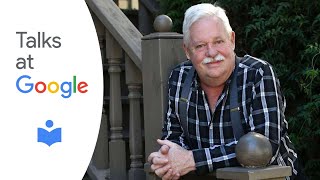
This content was created by Guy Kawasaki. This content was uploaded by Guy Kawasaki. This is a YouTube video titled "Michael Tolliver Lives | Armistead Maupin | Talks at Google" from February 11, 2008. It features a talk by Armistead Maupin, introduced by Bennett Marks, discussing his literary work, particularly the 'Tales of the City' series, and its impact on LGBTQ+ representation. Maupin shares personal anecdotes, the blending of fact and fiction in his writing, and interactions with the audience about his experiences and inspirations. The talk also touches on the challenges faced in publishing and adapting his work.
Chapters
Bennett.
I'm Bennett Marks. I'm a technical writer in site reliability here at Google, and it's my pleasure to be able to introduce Armistead Maupin today. I'd like to start with a brief personal story. When I was a Stanford graduate student and a heterosexual, or so I, so I kept telling myself, I read Armistead's first Tales of the City stories, serialized in San Francisco Chronicle. The stories were funny and intelligent and clever, and you couldn't read them without falling in love with San Francisco. The stories also included several gay and transgender characters, not as problems to be solved, but just as people living their lives. They presented a gay community that, while it was not perfect, was a place where you could find friendship and sex and love. And who knew? Those of you who are around the average Googler age may not remember just how rare this was at the time. The story suggested that there might be something wonderful on the other side of the closet door. And as I struggled with coming out, that was something that I desperately needed to hear. And Armistead Maupin was the first person to tell me today, as an openly gay man for more than 25 years, I'm still grateful. Amistad Maupin served in the US Navy in Vietnam, and as a very young man, worked for Jesse Helms. He found his voice and his audience when he wrote his first Tales of the city novel in 1976. He wrote six of them, three of which were adapted into popular and groundbreaking television shows. He wrote two other novels, one of which, the Night Listener, was made into a movie starring Robin Williams, which you really ought to see if you haven't seen it. And now he's given us the new Tales of the City novel. Michael Tolliver lives. His books are immensely popular in many countries. They've been translated into 10 languages and have sold more than 6 million copies. He is the greatest literary ambassador the city of San Francisco has ever had. His work has entertained countless people, and it's also helped the world to see gays, lesbians, bisexuals, and transgendered people as human beings instead of the scary monsters hiding under the bed or in the bed. He's the man I want to be when I grow up. And we're very lucky to have him here today, along with his delightful husband, Chris Turner. Armistead, they're all yours.
Thank you very much, Bennett. Should I tell him that story about the Lea Garczyk? I guess I will show what an idiot I am. There's a gossip columnist in San Francisco named Leah Garczyk. Who sent me an email not long ago saying, strictly confidentially, would you mind telling me if you or anybody, you know, went to Larry Page's wedding? And I emailed her back and said.
I not only didn't go, I don't know who you're talking about.
And I decided that I might be really stupid. So I googled Larry Page. And actually when I go on vacation now, I go into DTs if I can't, you know, answer if Google isn't there to answer a question for me. Okay, that's all the ass kissing you gotta get. I'd like to read to you today a little bit from Michael Toliver Lives. But first I want to tell you a story that sort of describes why I write and the whole process. People often ask me if my work is autobiographical. It isn't really, but I do pull a lot from my own life and from the lives of whoever's unfortunate enough to tell me a story about themselves that I think might be useful. That happened to my sister about 15 years ago when I was. I had a home in New Zealand at the time, and I was talking to her on the phone a lot about a mother in law that was driving her crazy. A woman that, you know, could best be described as a sort of steel magnolia. And my sister said, I'll tell you what kind of a woman she was. She never went to the gynecologist ever.
In her life without first taking a.
Bag with her to wear on her.
Head during the cervical examinations.
The theory was that if she didn't actually see the doctor while he was.
Looking at her, that she wouldn't be humiliated.
So I was just totally fixated on this with my sister.
I said, was it the same bag every time?
Did she have some sort of special bag? Did she have something she made or embroidered like a, you know, a head cozy? And after I'd finished working every joke I could possibly make around the bag, my sister said, you are not going to write about this. Well, I did write about it. I felt that I had sufficiently disguised the person in the story that I could actually tell the story and that it would not be a cause of embarrassment for anyone. And then I went through Raleigh, North Carolina, my hometown. And I knew that my sister was going to be there in the audience when I did my reading.
But it didn't occur to me that.
She might bring her mother in law.
And the passage that I had already.
Set up to read was already halfway through when I looked out into the audience and saw the mother in law next to my sister. I had no choice but to just go ahead and go through the whole gyno bag routine. And afterwards I went up to my sister and said, you know, what could I say? I said, I'm so sorry. I really didn't mean to embarrass you. What did she do? And my sister said, oh, she was fine when you got to that point.
She just leaned over and whispered in my ear, you see, somebody else does it too.
And that, in a nutshell, is my that's why I write and I think why most of us read for proof that somebody else does it too. Whatever it is, we like to see our lives reflected in some way, and we feel a little less alone and.
A little less crazy. So I'm going to read to you.
From a chapter called In Michael Toliver Lives called Our Little Girl Spelled G R R R L. And Michael Toliver, as some of you may know, is the central gay character in Tales of the City. This book finds him, at 55, having survived HIV, and he's become something of an uncle to to the adoptive daughter of his best friend, Brian Hawkins. Her name is Shauna. She's 23, she's a Stanford graduate. She has a sex blog and is becoming very famous because of the blog. She writes about all sorts of things that happen in San Francisco, and Michael is finally feeling his age, and she's told him that she wants to talk to him about something important. So he's gone by the place where she's working to find out what that is.
I found the Lusty lady on Kearney street between Columbus and Broadway.
Recognition.
I've passed the place for years, big queer that I am, without wasting a moment's thought on what actually happens inside. A brightly backlit plastic sign now spelled it out for me in quaint, vivid Victorian block letters. Private booths open 24 hours as if to invoke the halcyon days of the Barbary Coast. Women, after all, have been shaking their moneymakers at the foot of Telegraph Hill since the streets were sloppy with mud and the girls were paid in gold nuggets. The only new twist is unionization. The lusty ladies were recently seen picketing the club in pink T shirts, reading.
Bad Girls Like Good Contracts While they.
Chanted 2468 Pay us more to stimulate. Shawna, I knew, was intrigued by this collision of the city's two magnificent obsessions, sex and social justice. She liked the idea of women who.
Embraced their libidos yet refused to accept exploitation.
The dancers had unionized when management installed two way mirrors through which the girls could be videotaped for porn movies without their knowledge or consent, and certainly without compensation. They wanted the mirrors removed and new carpet installed and a guaranteed pay rate of $27 an hour. The money was crucial, the strikers insisted, since unlike lap dancers and other strippers, the girls who work the main stage are physically unable to receive tips. The lusty ladies, some of whom are domestic lesbians in real life, are shrewdly separated from their feverish customers, like Jody Foster from Hannibal Lecter, by walls of protective plexiglass. Shawna had already told me her nom.
De porn, so once inside the club.
I asked the doorperson where I might find Mary Margaret. I dismissed the preposterously dowdy name as Shauna's way of being subversive in a strip club until I was directed to a private pleasures booth and Shawna appeared moments later, grinning at her anxious gay uncle behind a sheet of streaky Plexiglass. She was done up like one of the schoolgirls over at Saints Peter and Paul, in a pleated skirt, knee socks, and pigtails. And neatly arrayed behind her like treasured dolls awaiting playtime was an unnerving selection of dildos. I tried to mask my discomfort with a joke. I didn't know you were Catholic, Mary Margaret. She cocked an eyebrow wickedly. I'm anything you want, mister. Okay, don't do that.
You're creeping me out.
She laughed. Sorry, Mouse. Can we go out for coffee or something? She shook her head. This is my shift. I don't want them to think I'm frivolous. Oh, right.
Can't have that.
She smiled indulgently. It's cool just to talk here. A lot of customers do, believe it or not. I asked her what the others do. Masturbate, she said brightly. Or watch me play with myself. Or both. It's not a terrible gig when you get right down to it. Right? This was all I could manage. I just noticed the handrails flanking the window, apparently enabling the ladies to grind against the plexiglass. There was also a slot through which cash could be crammed when things really got going. It's been a revelation, Mouse. You guys are such funny, whimpering creatures. Can we make that straight, guys, please? No, we cannot. We are all about visuals, every single one of you. Give you something juicy to look at and you're set for the evening. The sweet, inquisitive kid I'd talked to roller skate, and taken to nearly every Cirque du Soleil bounced onto a large crushed velvet cushion and crossed her legs with childish zest, as if I were about to tell her a bedtime story. It's not sticky over there, is it? I had already entertained a graphic fantasy about attacking that Plexiglas with a family sized spray bottle of simple green. I've only got three more days, shauna.
Said, trying sweetly to reassure me.
Then I'm moving on to heirloom tomatoes. Thank God, I said. Simple, wholesome produce. Actually, it's a group of old broads in West Marin. They're into lingerie. Heirloom tomatoes. Get it? I told her that was cute and meant it. Comparatively speaking, it was a whole lot cuter than this unionized masturbatorium, that was for sure. Once I'm out of here, shawna went on, pacifica takes over this booth. She's seven months pregnant, and that's the bomb with some of the customers. I'm thinking about doing a piece on it.
You're kidding me.
Well, why not?
You mean she? Don't make that face.
Lots of people find pregnant women hot. Lots of guys, in fact. That's good news in any woman's book. There's justice, I know, in the fact of an aging gay libertine being made to squirm about sexual Shauna is my karma, I suppose, my just desserts for banking too blandly on the power of my own liberation. There's plenty I don't know about or care to know about in my comfortable, vagina free existence. And Pacifica, the pregnant lady, and her devotees are just the tip of the iceberg. I'm not proud of this. It's just so my friend. George felt stifled by his own limitations and made up his mind upon turning 40 to eat pussy at the next available opportunity. It was not a success, he said, and the woman who had volunteered for this noble experiment had freshened up with a cinnamon douche. So George was left only with a lasting distaste for breakfast rolls. He worked as a ticket agent for Southwest, so the smell of warm Cinnabons wafting through an airport could undo him completely. Some things are better left alone, he said. Shawna, as it turned out, had decided to move to Manhattan when her book was published and wanted my take on how Brian would react to the news. She's always been this way, anticipating her father's feelings like a devoted but anxious wife desperately afraid of hurting him, of betraying him.
Really, as strong as that word may.
Seem, the considerate children of single parents often seem to carry that additional burden.
I think he's got plans of his.
Own, I told her.
You mean the rv?
Yeah.
He's not serious about that.
Yeah, you're probably right.
He's Mr. Inertia, she said. And he's happy that way.
As long as nothing else changes. I remembered Shawna's mother saying something similar when she left Brian and her little girl to launch her career in New York. She had found Brian's mellow passivity intolerable, a serious obstacle to her own ambition. Shawner loves her father, as is, down to the last tie, dyed T shirt.
And Neil Young album, but she's leaving.
Town just the same. She must worry a little about reconstituting that earlier trauma. He'll be all right, I told her. He always is. I guess so, she said, fiddling with a tassel on the pillow. Well, you and Ben come and visit me once I'm settled. She seemed almost waifish at that moment. Of course, sweetie. Ben's crazy about New York. I know you aren't, she said.
But I'll make things fun for you. You always have.
I felt tearful all of a sudden, sitting there in that fuckless brothel while the apple of my eye laid out.
Her dreams for my approval.
She looked a little wistful herself. Don't let him grow a ponytail, she said. He always does that when he gets depressed. I laughed.
Don't worry.
I hate ponytails on old dudes.
I hear you.
A guy was in here yesterday who had the greasiest ponytail, and every time he can we talk about something else? I said. All right, Auntie, she said with an impertinent grin.
And I'm happy to answer.
I'd love to have a conversation with you.
So if you have any questions about my work, about anything, really, let me have it.
Yes.
And I'm straight, so it kind of worried my parents, but.
They didn't know about the lusty lady.
Else in this room has suffered, you know, similar. Similar issues. But the My question was, one of my friends thought that he lived in the actual house that you mentioned in the first book and where everyone was living, and I just wanted to see if he's right or not. Is it Macondrie Lane?
Well, yes.
Macondrey Lane was the inspiration for Barbary Lane.
And which.
Which house was it? Was it.
There is not.
There's no. There's no specific.
I deliberately picked a number that wasn't there.
Okay.
And of course, when the miniseries was filmed, that was a set. It was an amazing thing actually, to go to la, to Silver Lake Studios where they filmed Whatever Happened to Baby Jane and see this thing that up to that point had just been in my imagination a three story house. And I could wander through the rooms and recognize the rooms, recognize who lived there by what was in the rooms. It was reflected. Really thrilling. But there is no specific spot. But Macondrie Lane is pretty much is in most of the guidebooks now. So I generally try to appeal to people and tell them not to drop.
Candy wrappers and annoy the neighbors.
Thank you. Sure.
Where did you come from by the way? London.
London? Yeah. Love it there. You bet. Okay, Any Americans?
Come on, you're embarrassing me on YouTube.
Is there any more plans to film any more of the Tales of the Cities series?
No, I'm sad to say it sort of. It's not going to happen. Showtime was not prepared at this point. They've got so many successful series on their hands they don't want to do a miniseries. At least that's what we've been told. And PBS won't go back to it because everyone will be reminded what pussies they were after the first series. And they basically caved in to the religious rite and cancelled plans for more Tales of the City. That's why we had to go to Showtime. And as Laura Linney pointed out to me the other day, we aren't getting any younger, honey. And I wouldn't want to do it with another. I mean, I'd want Olympia Dukakis and Laura Linney at least, both of whom said they'd do it. But I don't think it's going to happen. The good news is that there are plans in the work for a Broadway musical based on Tales of the City. And the folks that, well, I guess I shouldn't say who's producing it because they haven't made an official announcement. But I can say that Jake Shears, the. The lead singer of the Scissor Sisters is working on the songs, is writing the songs. And those of you who know the Scissor Sisters know that it's an amazing amalgamation of almost every sound you've ever heard in music and pop music in the 70s and 80s, yet it's completely modern. I've heard 10 of the songs and they're just brilliant. And I'm tickled to death that all these 30 somethings are excited about the project and want to get it on Broadway.
So Bennett and I are contemporaries and I remember moving here in 1980 and looking forward to picking up my chronicle. I forget how often to read that week's episode of Further Tales of the City. I think it was.
Well, in 80.
81.
81 would have been. Yeah, I think it would have been Further Tales.
I'm curious what the difference is between writing a novel versus writing, I want to say, not a serial, but writing, you know, writing serially, writing once a week.
Right, right. Well, when I first started writing in.
76, it was a desperate thing. I mean, I had no idea where it was going from one day to the next. I had to let whatever happened to me the night before govern it in some ways. Or I would take the characters and I'd sit them down at the breakfast table and make them start talking to each other and see where it would take me. I didn't really have an overall plan for where the story was going when HarperCollins approached me and said, we'd like to see if there's a novel there. And then looked at the episodes and said, yeah, we like it. I basically put these episodes down on the living room floor and started to see ways in which they could play off each other.
So I learned about plotting from writing.
Serially and how to set things up in that way. And then I began to realize that I didn't have to make myself crazy and write every day of the year, that I could contract for like a six month gig at the Chronicle, which.
Was roughly the length of a novel.
And stop at that point because I knew that I'd be selling these to HarperCollins as they came out. So that's basically what I did. And I would actually begin to write the serial with the novel in mind. I would figure out how to break up a larger chapter that would be in the novel and yet make it work serially on the page. But it was just something I learned completely by trial and error. And it was good for me because I'm terribly hard on myself as a critic. I think most writers find that they are. And I couldn't give up.
I had to have 800 words a.
Day, come hell or high water. So I would just say, well, it's.
Going to be on the bottom of.
Somebody'S birdcage tomorrow, so don't get so precious about it and just write it. And that's what basically got me through. Sometimes I wish I had that to goad me today because I'm much more of a perfectionist than I ever was before.
And I will not leave a paragraph.
Until I think it's, you know, music. And that takes. That means that on a really good day I'll get out two pages, two manuscript pages and feel proud of it. But it's slow going. I often compare it to laying mosaic. You know, you're down on your knees taking these little colored bits and moving them around and you really can't see what it's going to be like till it's over and you can step back and. And look at it. So one thing fed the other. To answer your question.
Howdy. I just. I'm about halfway through all your books and I found myself keep going back to the copyright, figuring out when it was written because it seemed, all of it seems like it could happen today and seems really relevant today and the landmarks are the same today. And it was. That was actually really cool to read that. It seemed really timeless. I just wanted to get your sort of thoughts on how you feel San Francisco has changed and if you had to restart the series today, what would be different and what you would sort of comment on about San Francisco.
Well, first of all, thank you very much.
That's wonderful to know, especially from a young person. I love to hear about people who are reading the books just now.
I think on some level you must.
Read it and think the way I felt about PG Wodehouse in the 60s when I was reading those novels. But I've always hoped that the emotions, the heart of the book would be timeless, even though the trappings would require explanation in years to come. But in fact I did. I mean, Michael Toliver Lives is my effort in starting up Tales of the City again. For a long time I denied it because I didn't want people to be disappointed because it's not structured like tales. It's a first person narrative and it doesn't follow a number of characters and thread them and have little surprises at the end of the chapter. It's different in that way. But I'm still covering all the characters, so the stuff just naturally arose. Michael Toliver meets his partner because he sees him on a website for.
For older gay men.
And his partner is considerably younger. And this was simply lifted from my own life. I met Christopher because I saw him.
On a website called daddyhunt.com.
And I didn't have the nerve to in any way, you know, put my own goods on the line. But I printed out the picture and had it next to my computer and friends would come over. I'd say, isn't he cute? I was basically boyfriends with a piece.
Of paper for a while.
Until I actually saw him walking down 18th street in the Castro and just Turned on my heels and kind of shouted at him, didn't I see you on a website? And when I identified the website, he said, actually, I run that website. So I entered the world of Daddy Hunt a lot more than I actually knew that I would. And I used that because I thought, this is fascinating to me. This is the way people meet now. And not just gay men in the Castro, but, you know, single women in their 50s who've recently widowed or whatever. It's just the way we operate. And I don't know. I can't even think what the new. I've always just had to trust my own. What's going on around me and my own response to it, because it doesn't. I can't fake it with something else. I think it would show in a big way. Actually, I can just tell you a funny story about that. When I was writing Tales of the City, fresh out of the south, about halfway through the series, I realized that everybody I'd put into the series, with the exception of a Chinese American grocery boy, was white. And the readers were beginning to notice, too, in San Francisco. So I thought, okay, can I write about the black experience in some way where I don't look like an idiot? So I decided that I would create this sort of chic model who worked for an ad agency. I had worked for an ad agency, and I could imagine what her life would be about. So I created a character named Dorothea Wilson, who worked for the Halcyon ad agency. And I got a letter from somebody shortly thereafter that said, shame on you. Up until now, all of your characters.
Have rung true, but Dorothea is nothing.
In the world but a white woman in black skin. And I was just sick at heart for about three days until I realized that that was a fabulous idea. I turned Dorothy into a white woman who had used the medicine for vitiligo, I think it's called, to darken her skin in order to get work as an African American model. Because she thought she might get more work that way at a point where they were hiring African American American models. And it got me out of trouble, but it got me right back into trouble. When we were casting the miniseries, Cindo Williams Wilson, who played Dorothea, did an interview with some magazine, said, I don't know why Armistead didn't invite me back for the second series. Well, at the end of Tales of the City, of course, Dorothea is exposed by Mona, her lover, and decides to be white again. So how on earth did I get on that? But anyway, you know, I was Flying by the seat of my pants most of the time. Yes, sir.
Thank you for coming. It's interesting hearing the blending of fact and fiction and real life here as you tell the stories. I understand that the story in the Night Listener is actually somewhat more autobiographical, or at least Hughes fairly closely with that. Could you explain?
Yeah, the Night Listener is probably the.
Most autobiographical thing I've ever written. Although I depart wildly there as well as I always do. It's always just an excuse to set up a story and it makes it more believable if you're tossing in stuff that actually happened to you because it has the ring of truth. So then when it veers off the tracks, it's more interesting. But yeah, I was. About 15 years ago, I guess now I started getting. I got a manuscript from a publishing house in New York written by a 14 year old boy who'd been exposed to child abuse and had been made into a prostitute by his parents and who had AIDS and was about to die. And I was very touched by the book and asked the publishers if I could talk to the kid. And so suddenly this little boy is on the phone to me and he was not even slightly depressing, which is the first thing that amazed me because he was supposedly about six months away from death, but he was an incredibly interesting, funny, slightly spiritual kid that I loved talking to on the phone. And I was talking to him for about, oh, I think six months or so, as well as the woman who adopted him, his foster mother who was the social worker who had rescued him. And when I asked my partner at the time if he would talk to the woman because he'd only talked to the boy before and I thought he should meet her. And when he hung up, he turned to me and said, I can't believe you've never noticed that it's the same voice. I didn't even get what he was saying at first. I couldn't wrap my head around it and. And he said, tony and Vicki have the same voice. And that sent me off onto the biggest mystery of my life, where actually for six years I kept up conversations not knowing whether I was Talking to a 45 year old woman or a teenage boy and afraid to approach the subject, afraid to mention my suspicions because it seemed like the worst thing in the world you could accuse a child of who'd been abused if it weren't true. And so I wrote the Night Listener in an effort to get to the truth.
I wrote the Night Listener for one person.
Vicki Fragonal Zakheim is her name now.
To tell her that I had suspicions.
And when she read the manuscript, she cut off all communication with me. 2020, this last couple of years has done two pieces on it. The first one provided a voice tape that indicated that the two voices were the same. The second one, interestingly enough, finally, to my mind, really solved the mystery because I'd been sent a photograph of the boy. Shortly after I started talking to him, he sent me a Christmas card or something with a picture of him in it. And everyone else who'd ever talked to this boy, and there were hundreds of us, had gotten that picture. And so the first 2020 episode was seen by a woman who said, that looks like the little boy who was in my son's fifth grade class. And so 2020 tracked down this person who's now 27 or thereabouts. And he not only had not been abused, you know, he was there with his parents who were horrified that this story was out there, that this picture was being disseminated as an abused child. And they showed him a picture of the woman, the foster mother, Vicki, and they said, does she look familiar to you? And they said, oh, sure, that's Ms. Fragonal. She was my fifth grade school teacher. So she'd taken pictures of him while he was in class. And so it's an amazing story because it doesn't really stop. I think there's still people out there talking to Tony and believing in his existence, in spite of all the, you know, all the exposes. It's sort of an article of faith. They have to believe. So that's the. I could go on for two days on that subject. It's a very complicated thing. And it was frustrating to me, actually, with the novel and the film, that I could never really fully encompass the enormity of the hoax, because this is something someone had to live 24 hours a day, keep all the stories straight with any number of people being Keith Olbermann and I were both hoaxed at the same time. The news anchor, I think, Oprah Winfrey. Oprah Winfrey actually fronted a program on abused children involving this mythological child. It was amazing how many people she roped in.
Well, thanks for visiting us at Google. I'm another non American, and you might recognize my accent as being from New Zealand.
I do.
Which you. I knew you had lived there for a while, and you'd mentioned it earlier. Could you just tell us why and how you went to live in New Zealand And a little bit about that.
I was on a book tour, and it's embarrassing. To acknowledge this, but New Zealand is.
The last place in the Western world.
They send you when you're on a book tour. And I was exhausted. I'd been all over the world and really worn out. And my partner and I rented a car and drove around the island after the book tour was over and just completely the south island total. Totally fell in love with it and with the people and did what you always do when you're in a strange place. You go up to a real estate office and look at the little pictures in the window and think, could we afford that? And would I live there? And all of that. And the real estate at the time, pre Lord of the Rings, was preposterously cheap. I mean, we ended up buying a farmhouse and four acres with a spectacular view of the water and beautiful views in all directions. 1860 farmhouse and a barn and an orchard and a creek, $60,000. So I never entertained the hope of ever owning anything in San Francisco at that point. And I thought, this has to be done. So I opened an account at the bank of New Zealand and we looked at the pictures just to make sure we weren't insane, that we'd taken of the property, and then went back and started fixing up this little farmhouse. My sister lives there still. She bought it for me, oh, I don't know, 13 years ago. And she runs one of the more recognized BBs in the South Island. It's really beautiful, things she's done with it. But it was the same. It was the usual seduction. You know how it works when outsiders come there. It's a remarkable place. I went there, actually. I was there visiting my sister when.
My friend Ian McKellen was down there.
Shooting Lord of the Rings. And I think it was probably the last moment he had any anonymity at all in New Zealand before they actually put him on a stamp as Gandalf. And he fell in love with it as well, as. Well as a New Zealander, As a.
Matter of fact.
Yes.
I do have one more question. One of the things that struck me about the novel, reading it, having reread it, is it's not quite as. It doesn't come across as so provocative as when it was first released. And I was wondering if maybe you could share two things. What were some of the trials and tribulations you had with the Chronicle and then the examiner staff and. And was there any trials and tribulations with the lesbian gay community at the time as well?
Oh, a lot of good questions. The Chronicle was a constant pain from day to day. First of all, they didn't know there was going to be any gay themes at all in Tales of the City. I told them it was about a.
New girl in town.
Just didn't tell them who the new girl was, you know. And so they really began to sweat it. They got quite nervous about it. And the managing editor, who was this very sweet, avuncular old guy, by which I mean he was my age, started keeping a chart in his office with two columns, homosexual and heterosexual. And every time a new character was introduced to the series, they would go.
Into the appropriate column.
And the understanding was that at no point should the homosexual population rise up to be greater than 30% of the overall population. And so I spent weeks figuring out, trying to figure out how I could queer this, as it were. And I ended up creating an episode where Franny Halcyon, the drunken matron from Hillsborough, passes out in the Rose Garden and wakes up to find herself being molested, shall we say, by her Great Dane. And I made them put the dog.
In the heterosexual column.
But it was constant. And as you say, even at the exam I went over, I sold out to the examiner thinking that, oh yes, I'm going to get all that Hearst money now. There was no change at all, except there were fewer people reading me. And this was for significant others. And I'd heard a story. This is odd when I think about the origin of it. Timothy Leary's 10 year old son Zach told me, came up to me at Robin Williams Ranch and said the way kids do to give me a riddle.
He said, what's blue and creamy?
And I told him I didn't know. And he said, smurf sperm. Well, I thought that was perfect because it was the kind of thing at this point I had Dee Dee and Dorothea, who were basically lesbian moms raising children. I thought, I'll have their kids.
Kids tell this joke and see how.
They deal with it. Well, they dealt with it okay, but.
William Randolph Hearst IV freaked out.
And I wish I'd recorded the conversation. It was hilarious because it was this sort of.
It was always a kind of, we.
Let you do this last week, so now you can't. He said, I gave you that JO party last week. Google it if you have a problem with it. And eventually it was changed to what's blue and makes babies? And so it ran in the examiner that way, but it was always like that. One of the more offensive things to the newspaper was when I had Dede housing just describing the beauty of her lover's face. She's just looking across. I think women would the women's encampment and thinking how beautiful she is. They wanted to take it out. I mean, this is how different things were back then.
I had to fight the examiner. It had nothing to do with my column.
But I was so offended because in 87 they were still refusing to print.
The names of surviving partners of people.
Who died of AIDS because they were.
Not biological family members.
And I actually asked Will Hurst if he would assemble the staff and we could talk about it. And after that, they changed the policy after that. But it's been. It's just remarkable how what a fight it's been every inch of the way. I had to. One of the early scenes between John and Michael. They're in bed, but I never say they're in bed. But you kind of figure it out. You know, John adjusted the sheet. As long as I didn't say bed, it was okay, apparently. And so it's always been that way. As for gay people being upset by it, when I did the Women's Music Festival, all the gay men that I knew thought that the women were going to be furious at me. And that brought me women readers, gay women readers for the first time. And I think it was because I did it through the eyes of a lesbian. I let her go to the Women's Music Festival and her confront its glories and its oddities. And so it was never an issue. And it's been fun for me every inch of the way. Kind of trying to break through happened this time around I have. Anna Madrigal was not. I was not permitted to let Anna Madrigal reveal her transsexuality In Tales of the City. The editors of the Chronicle said, you can't say what she is. So I waited a year until I had a sort of stranglehold on them because the series was so popular, and then finally revealed it. I had the same resistance from my own editors at HarperCollins this time around on Michael Toliver Lives because I included a trans man in it. Michael picks up a young bear cub at a bear bar in San Francisco and realizes about halfway through the evening that this young man used to be a young woman. And this is a trans man who is attracted to men, who identifies as a gay man. I have friends who've had that very experience. And of course, many of us know trans people in San Francisco. It's a much more common thing. But there was resistance from my editors in New York because they thought it would somehow put people off. So I Talked about Buck angel, the trans man porn star who Christopher and I had the privilege of meeting in Amsterdam last year. He just charmed us to death. And I'm always fascinated by the people that. The brave people, basically, people who take on difference and embrace it and say, this is who I am. That's one of the reasons I loved writing maybe the Moon, the novel I wrote about a dwarf actress working in Hollywood. Oh, thank you. My least appreciated novel, by the way. Most people don't even know about it, but I had a friend who actually ran away to Hollywood to become a movie star and ended up wearing the ET suit. Tammy Dutroux. ET Is a woman, by the way, and I was so touched by her bravery, just as a human being just walking down the street, just dealing with the people, the true freaks that would scream out of cars at her. And so that's always been one of my themes. I'm wandering again, but I'm glad I got to talk about Tammy.
Well, you saved my life. When I was in my 20s, thought I'd let you know that. Not literally, but I was struggling to come out and a friend loaned me the first two Tales of the City books. I was in Los Angeles. I didn't have a clue. You were serialized. But those books were wonderful for me. They really helped me find the world I wanted to be in. Wanted to let you know.
Thank you very much. I love hearing that. I'd rather hear that than anything, actually. It's given me some kind of purpose in life and it just never stops feeling good, you know?
And then a few years later, I was visiting a friend in the city and learned that you were still being published in the serial form. It shocked me. It was in the present, it wasn't in the past. That was also wonderful. And I wanted to let you know that, yes, I'm one of the people who read maybe the Moon, and I loved it.
Yeah.
Identifying with freaks has been something that I have to do, and it's good to see that it's out there. The last thing I wanted to let you know is about the Night Listener. I haven't read it, but I heard it. I listened to your recording of it.
Ah.
Which I think put an extra twist on all the semi autobiographical stuff. And I cried at the end. And did you, in fact, lose a lover at the end of your story?
Yes.
I am so sorry.
Oh, it's all right. Got me here. But still, thank you.
It was a sad ending.
Yeah.
There were people who didn't like the Night Lister because they Said it was way too gloomy. It was just. Oh man, he just went on the People magazine referred to it as Wales of the city or something. And then this time around, and Michael Toliver, because I'm so happy, happier than I've ever been in my life and so in love and so. And I said so in the novel through Michael.
Oh my God, I was so sick.
Of him just going on and on.
About how happy he is. Do we have to hear how gorgeous his partner is for the 400th time?
So I don't seem to be able to win. I ride my emotions and hope that people can ride along with me.
I really enjoyed the depth in that book and how deeply he went into the thought process and how much it spiraled. And the last thing I wanted to say was that a year or two ago when your movie was about to come out but had not yet been announced, we had something similar happen in San Francisco. I can't remember the names.
J.T.
Leroy.
That's the one. And I remember reading the stories and thinking, my God, Night Listener, why isn't Armistead Maupin making some kind of statement in the paper about this?
I was interviewed for several of the.
Pieces, but, well, I knew that a.
Month later the movie announcement came out and I understood.
Yeah, yeah, yeah. And you know, thank you very much for all of that. I thought one of the funnier things was that the critic at the Chronicle when the Night Listener came out, said they, you know, loved the book for the most part, but thought that the whole relationship between the middle aged man and the 15 year old boy, the friendship, was implausible. That very person who wrote the review ended up talking to J.T.
Leroy on the phone and believing word for word after he had read the.
Night Listener actually went so far as to help edit J.T. leroy's material in order that it could be good enough to be published. So I don't feel any shame around that either.
By the way, in terms of.
I mean, people who are embarrassed that they showed a kind heart to a stranger should not be. Even if you've been duped, your instincts were right in the first place, you know.
So the New Zealander asked you the Kiwi angle. I have to ask you the Southern angle. There seems to be this certain style of gay Southern writing thinking you, David Sedaris, Tennessee Williams is there.
Clay Aiken. Oh no. Do you think Clay and David and.
I are all from the same town?
That's true.
Brawley. Do you think there's a certain Southern sensibility in your writing and how it affects.
Yes, I do. I do. I mean, I think we're ra. I mean, David probably wouldn't say this because he was a little Greek kid growing up in the south and he felt like a fish out of water there. Well, I guess we both did, really, in one way or another. I did as a little queer, but I always hesitate to use this term because it gets a big laugh when you're a gay Southern writer. But there is an oral tradition, and we learned to tell stories at a very early age. I did anyway. I was constantly corralling my friends when I was in the Cub Scouts and telling them ghost stories, you know, and I realized that I got my sense of worth out of that. So, yeah, I think that's very. I mean, Southerners in general like to tell stories, and I like to tell stories where the voice of the narrator can be heard. I mean, I've done a number of first person ones. The last three have been in the first person. But even in Tales of the City, which is third person, I focus it through the character that I'm writing about at the time. And there's a certain oral rhythm that I like to have so that it can be read out loud. When the time comes, you're going to tell me it's time to stop, aren't you, Katina? I am.
Thank you.
Thank you for coming. It's a pleasure.
More from Guy


Cheryl Strauss Einhorn | The Human Edge: Smarter Decisions in the Age of AI | Talks at Google



Rachel Glennerster | Innovation and the Center for Global Development | Talks at Google

Rebecca Winthrop | Rethinking the Purpose of Education in the Age of AI | Talks at Google

Dr. Robert Wachter | A Giant Leap: How AI Is Transforming Healthcare... | Talks at Google



