Microtrends | Mark Penn | Talks at Google
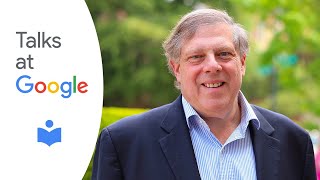
Mark Penn presents ideas from his book Microtrends, arguing that small 1% social groups (microtrends) — not only megatrends — are reshaping culture, business, and politics. He illustrates with examples (Internet marriages, soccer moms, new geeks, working-retired, long-attention spanners, college dropouts, ex‑cons, aspiring snipers, educated terrorists, left‑handedness) and emphasizes data-driven hypotheses and opportunities for marketers, politicians, and organizations.
Chapters
Hi, good morning fellow Googlers and folks out on YouTube watching this. My name's Alan Davidson, I'm the head of Google's Washington Public Policy Office and it's my pleasure to be here today to welcome Mark Penn, one of America's most well known pollsters and the author of Micro Trends, the Small Forces Behind Tomorrow's Biggest Big Changes. I was just going to say that I in looking through and reading Micro Trends, I realized that Mark would be a great guest at Google when I saw that he's got an entire chapter devoted to geeks and in fact it's got a great title, it's called Social Geeks and he comes up with this great nugget which is that while the cliche still hangs on that devotees of technology are social losers, the truth is that the most enthusiastic users of technology in America are also the most social people in America. So not a surprise to those of us at Google, I would say, but it's great that somebody out there is recognizing it. Just by way of a more formal introduction, I would say that Mark Penn is the worldwide CEO of the PR public relations firm Burstyn Marsteller and also the president of the the polling firm Penshone in Berlin. He advises companies, political leaders, organizations all around the world in a wide range of image and branding campaigns. He's also been a key advisor, I should note, and hopefully we'll ask him about this later to Bill Gates and Microsoft since at least the 1990s, right? And he's, as I said before, one of America's most well known pollsters and famously identified the critical segment of soccer mom voters when he was working as a political adviser for President Bill Clinton's 1996 re election campaign. He's advised a huge number of other political leaders around the world, including Tony Blair on his third campaign for Prime Minister and more recently he served as chief advisor to Hillary Clinton in her bid for the Senate and now serves as her. Well, I don't know exactly how to characterize it, but he is heavily, heavily involved in her presidential bid and actually appears in today's USA Today where he is pitted head to head with one of the chief pollsters for Mitt Romney's campaign. A very interesting interview which I recommend to all of you. So please join me in welcoming Mark to the authors Oogle series and we'll have questions afterwards.
Mark Penn, thank you very much for having me. I appreciate it. I appreciate the opportunity to talk about micro trends and to go through kind of what the philosophy in the book is and Maybe go through some of the examples. I've actually been writing this book since I was age 13, because it was age 13 that I did my very first poll. And I polled my high school faculty at the time in terms of where they stood on race relations and how they come out. And since then, I really have turned into a poll junkie for the next 40 years after that. And so the book is a combination of statistics, polls, facts, things that represent the basic approach that I've always taken. And that basic approach always started with the concept that I read in a book by vok, which is the simple thesis of this book is that the voters are not fools. And while this is not a political book, but more of a social book or a business book or a book about how you make the right decisions in the modern business world, it is grounded in the notion that facts, statistics, these things matter and are jumping off points to creativity. And that's really what each kind of mini chapter tries to do. And I'm going to go through kind of some of the theory of the book and then go through a couple of the mini chapters. The chapters have been compared to popcorn. You just keep eating each little kind of bite of the chapter because they're, they're really about 1500 words as we go through culture, business and teenagerhood and the various topics. But the basic concept behind micro trends is that the era of megatrends is dead and that the most important trends now are not the big trends. There are plenty of big trends shift to the environment, but that the micro trends, these 1% trends, really are the things that are driving changes in society and really mark those changes. So again, if you go back to the theory of how you run a business, you would be. You find these three or four big macro trends that are out there, you tie into them. That's how you then launch your business philosophy. This says, wait a minute. Really what we're seeing is people are becoming more diverse, that the old barriers of class, race, even community are being broken down, and that they're being replaced by communities of choice rather than communities of class. And the theory of the melting pot is being replaced by a much more permanent collage of how America is looking. And these changes are really vast. They're often counterintuitive. And what we try to do in the book is, is not so much look at soccer moms, which we looked at in 96, but we look at the counter trends so that if in fact there's a big trend towards drinking water, there's also a big trend towards drinking pure caffeine, straight as you can get it. So there's oftentimes this trend. And if there's a big trend towards people using technology to communicate, there's also a trend back to quiet cars and to knitting. So part of the theory of the book is if you think America is developing in one way, it's not. It's developing in a series of often contradictory ways. And that understanding those contradictions, understanding those intense choices that people are making is really the key again to a business, to a social movement, a new religion, all of which I think ties in very strongly to the kinds of things that you do here. And then people often say, well, Mark, if what your theory is is that society is dissembling, isn't that a pessimistic view of society? And I say quite the opposite, where there couldn't be this range of choice if in fact there wasn't a corresponding increase in tolerance for those choices. So if there are two and a half million now late breaking gays, people later in life who have come forward, as Governor McGreevey did, or others, and said, hey, here's my sexual preference, they're doing that in later life because there is a greater tolerance in society for people's choices. And we can have a diversity of choice, but we can have a commonality of values. And in fact this is absolutely essential for our culture to make it through this period of micro trending. And then we look internationally and we say, look, are there these interesting countertrends occurring overseas? Well, as soon as the door is open to those, you know, we've got what we call Chinese Picassos or we've got Vietnamese entrepreneurs, both of which are kind of strong, vibrant micro trends in their own societies, but that are playing, you know, a very important and big Rho. And so that theory comes around to saying, look, you have to understand that if you look at something like this bottle of water, it's actually made up of billions of atoms and that if you change slightly the electron mix well, you change the whole character of the substance. And that our society now is really being made up of precisely those kinds of atoms. And, and it is much more like the Democritus theory of atoms that no one believed at the time. And it is much more as some of those atoms or the mix of those molecules change, that society itself then looks considerably different. And I think that's clearly what's happening in America. So if you go to a couple of examples that are kind of straightforward, take a look at a group Like Internet marrieds. So you say to yourself, interesting, okay, about 10% of new marriages are people who met on the Internet. Now what does that mean? Aside from the fact that dating is one of the big things on the Internet? It means that in the past, people's choices were much narrower. They were based on their class, their community, a smaller network of friends, the church social. And now someone can have a wider range of choice so that it is very likely that they can break down those old barriers, find their soulmate from a much larger pool. And it is likely that those marriages now are going to be different in character from marriages before. Well, and then that leads then to, okay, as this group becomes a micro trend, as it becomes a couple of million couples that now met on the Internet, you know, what's the handbook for them? How do they tell their kids? Is the stigma of meeting on the Internet gone? Right? Or is it still remaining? And what's the transition period? At the same time, we've seen interracial marriages go from 0.002% also to be several million and to be a micro trend, because both of them are evidence of how society's changing, both to be more tolerant, to break down all barriers, and to come together around personal choice. And so this whole personal choice driver is what we also talk about in the book as the move from the Ford economy to the Starbucks economy. So in the Ford economy, everything was geared towards a single unit, lowest unit price. You can have any color you want as long as it's black. And that was the goal of their economic model. In Starbucks, it's quite the opposite. Costs of production have come down. They can personalize every product to mocha frappuccino 180 part skim, to really hit the mark on personal preference. And the whole economy is moving that way so that in fact, 300,000 people is a hit car, it's a hit book. You know, several hundred thousand people, you know, even several hundred thousand political donors drive the entire movement. That in fact, even if you take something like YouTubers, it's not going to grow to a very big percentage of the population, but it has a sharp and growing influence on the culture. And the point of this theory is that megatrends were really, and tipping points were all about growing so big that everybody did it. This is not about that. This is about society actually moving into its own arrays of choices that remain fixed, but that these 1% communities, whether they're YouTubers or Internet marriage, in fact become extremely important in the shape of our culture. And in the shape of looking at the culture from a distance. So again I go through in the book, you know, the simplest, I think, you know, interesting one that nobody's picked up on is the calculation of the straight sex ratio. So we open the first chapter with a very simple notion that there are likely more single women because there just are more straight women when you calculate this ratio. So we look back and we found that in fact there are slightly, slightly more boys born in this country, but more boys die in car accidents, shootings and drug overdoses somewhere between the 19 and 24 year old age. And then in every study there were twice as many gay men as lesbian women in every study we could find. So that calculated out to a straight sex ratio of 53, 47. That meant that there would be 9 million more single women having absolutely nothing to do with their personal choice. It also could be driven by personal choice to be single, but just based on the numbers that it's the reverse of the old west where there were simply going to be more single men because there weren't enough women unless they brought brides in. And so interestingly, no one seemed to have taken this most basic, you know, calculation and said, hey, by the numbers, what's going on here? And the census of course reported, you know, the previous week now that in fact there's a record number of single women head of households in this country. And my point is it's a function, it's a function of this, most of this most basic math. And interestingly, a lot of those trends lead to a series of new trends. Now the point of soccer moms is interesting because, and to go back, soccer moms is not in the book, but it illustrates the importance of a micro trend and how it crystallizes soccer moms existed. And I didn't coin actually the name, but identified the group and the entire then move towards these people that somehow in the process got coined as soccer moms. But we looked at Democrats, always had been pitching for non college manufacturing, lower income men. And this hadn't been working as a way to run campaigns. And in fact society had changed so that there were so many more women now in households, managing kids, managing work, rushing back and forth, who had a special set of problems, few of whom had really been addressed explicitly. And so what we did was to address those explicitly, whether it was on child care, whether it was on, you know, no drugs near their schools, whether it was on a whole host of issues. And the group became crystallized just because there is a micro trend out there. Doesn't mean that people either know about it or, or get together about it until somebody crystallizes it. And then once it's crystallized, people go, aha, yeah, that's me. I see myself in that. So part of this is. And we create 75 different potential communities in the book. The book then is heavy on illustration and light on theory, because so many people spin out theories, but then never really show you how to apply it. And so to me, I wanted to get you to kind of understand the theory by seeing how it applies. So, you know, again, soccer moms now have moved on. They're older, they're many more heads of households. They're into less into third grade readers than they are. How do they pay? College, some have met with divorce. So there are more individual heads of households, more financial issues, you know, for companies like Merrill lynch to be pitching to be pitching about. And in fact, it's. Interestingly, we look at some of the areas where women seem to be systematically undercounted, and we look at some of the areas where men seem to be systematically undercounted because people are not looking at the numbers. Women are the majority of car buyers in this country today. It flows from what I told you before. There are more single women households than ever before. So while men are the majority of truck buyers, women are the majority of car buyers. Now tell me, how many car dealerships seem to be set up, given that fact, to hit the key demographic that they should be selling? Very few. Certainly not the old line dealerships that were set up in a world where men bought 70, 80% of the cars. And so very often what you see with these microchins is people ask me, well, is it a flash in the pan? I say no, these things will develop over five to 10 years, then they will be big enough when they hit the 1% mark or more, then they should be crystallized by a smart marketer or businessman or an innovator. And oftentimes they're not. Oftentimes. You know, look, advertising's never been younger and this society has never been older. When you look at the demographics, the biggest group that's almost a macro trend in here is what we call the working retired. Is that because people have jobs like yours? Many more people have information based jobs. Many people also have old economy jobs as well. Well, in the old economy you had to retire, you wanted to retire, you couldn't wait to stop moving these bales or this thing. But in the new economy, a lot of people want to keep working in Fact, in surveys we did, half the people wanted to continue to work, half because they had to, they didn't have the money, but half of those because they wanted to. Very often in new economy jobs, oftentimes a second career. So while everything is geared towards the young, and it used to be in the consumer studies, age 49, that was, they didn't even bother doing anything beyond age 49. Now the majority of purchasing power is Moving to the 49 plus. The state of Florida is driven not by industry, it's driven by the 49 + demographic. And so have we really kind of moved our marketing to take advantage of the micro trend of women buying cars, of the working retired that is growing that then has huge implications. I mean, you know, when you guys reach age 65 and the crowd is sitting here waiting for you guys to retire, you may say, hey, I'm not going anywhere, right? And you may in fact, you know, create kind of a big workplace bottleneck, you know, 30, 40 or 50 years from now. When you look at the trends of people who are in new economy jobs and like work and the old thing about how, the old thing about how, gosh, I really wish I spent more time with the family again, it seems that the more people have the choice, more and more people are choosing work over family. When they hit age 65 and have a choice, if they have the kind of job that they consider interesting, you know, and worth continuing to pursue, and if they have the means, obviously there are those without the means who have to keep working due to issues of Social Security. Then, you know, women now, I think are obviously the biggest, fastest growing market of technology. I'm sure they're the fastest growing market of search and other things. Part of what we make in the book about what we call new geeks is that, you know, when I was in the science center at Harvard, it was basically people who had never been out in the sun who were really interested in technology and computer computers. And you could tell that right away. And most of what's being done with technology now is communication and community oriented. And consequently what we find in the studies is that the new geek is actually the most sociable person. So if you're looking for people to lead your new product, stop looking at the traditional geek to kind of be the proselytizer or the buzz agent of that product, because it's really in fact kind of the new geek who's community, socially family oriented, who's really absorbing and using what technology can do because it's no longer just about Spreadsheets. It's really about spreading the word through communication. And I think that is critical. Just. And of course, more and more women are in fact buying technology products just like they're buying cars. And again, you're seeing a very much behind the curve shift over to the basic facts of who the real buyers are. So I think whether it's technology, whether it's cars, you know, a lot of society now is way behind where women really are. And we're also seeing women play a considerable role in new professions. They are, as I well know, 54% of the voters. They are really dominating law schools where they're 57%. There are more women in college now than men. There are in fact more women in key professions like advertising, journalism, law. A lot of them are entering, coming up the stream. And this is also a sea change and I think a highly underestimated change. I think on the other side, what's happening with dads and what's underestimated there, there's a huge number of what I call new old dads, okay, which is that the number of children born to men 40 and over has tripled. And you know, as an illustration of how these new markets get created and maybe one will crawl out of the woodwork, I could not find a handbook for older dads. There's a big difference between having a child when you're age 40 or 50, and I have a 5 year old myself, and very big difference between what you're going to do, where your values have advanced. You'll be 65, 70 years old at high school and college graduations. It's a totally different environment for the, the children. Yet I don't think anybody. Well, I think you've seen a lot about how moms have gotten older, dads have gotten a lot older. And instead we've seen absolutely nothing, you know, nothing to this group, no handbooks, nothing. That kind of talks about the difference between being a dad at age 25 and a dad at age 45. And I guarantee you those experiences are dramatically different. And they're dramatically different for the children. Children growing up. But then I think that perhaps as a function of how popular soccer mom marketing and politicking became, we also point out that now dads have been somewhat neglected in the chain as dads. That right now when it comes to a topic about children, it's always pitched in terms of the soccer mom. But the kind of the new emergence of the soccer dads, I think has really been not really noticed. What really happened is because women are so much in the workforce. And the majority of couples now are two career couples. Very often what happens is come Saturday it becomes dad time. And so they say, look here, I've had all week, you and I have been working, you're taking them Saturday morning, whatever. And you know the commercial that dad took him to the game and bought 10 pizzas for the team, you know, you don't see it. And so it's time actually to understand that our society changes in these contradictory ways over time that just don't get picked up even though they're fairly obvious. If you kind of looked at the new, at the new social patterns. New social patterns or the numbers. Now some of the contradictory trends, you know, we point out, which I also think is very much an interesting one, are for you all is we create a new group called long attention spanners. I think that there's so much written about America has add, okay, that there has to be an explanation why These websites are 50 pages deep, okay? There has to be an explanation as to why people in, you know, longer letters and direct mail always work better, you know, than shorter letters. And because, you know, we say that the counter trend to the ADD is the lasers or the long attention spanners. These people never get enough information. Okay? So just as what we found in say the rental car industry, there's 15% of people who rent 85% of the cars, okay? The long attention Spanish probably are a small group, but they probably do something like 50% of the searches, right? Because they're continually searching for more information, reading more, learning more and it's their nature to continually question. And this kind of, you know, again, I don't see anyone recognizing them as a group. Right? The ADD group continually recognized, you know, FedEx commercials, people that can't stop, you know, people that, you know, have attention, the move towards 15 second web ads. Again, the counter to that is, you know, understand that the long attention spanners are out there, identify them, play to them, make them proud to be a thinking, reading long attention spanner, somebody who really has the patience to digest stuff because they are likely to be Google's best customers. And yet I don't think anybody has in fact really recognizes them as a group and almost giving them brownie points for the work that they do. Now the book also is very kind to working in middle class voters because we have another chapter in here called Impressionable Elites which I think is an interesting look at the elites in America. You know, and this crosses over to both politics strongly. Whenever someone in America Today says, you know, if the candidate were just a little bit more likable, I'd vote for him or her. Then there's another group of people who say, gosh, if the candidate would just pay more attention to the issues, I'd vote for them. Well, person A is more likely to have a PhD today. So the elites and the PhDs today are more driven by personality and character issues, whereas working and middle class voters are more driven by the issues themselves. Now the explanation that we provide for this, you know, and we say in the book, like if Woodrow Wilson, one of our most intellectual presidents were running, I think elites today would say he's too stiff, can't vote for him. And I think it's a reversal of the traditional elite theory where elites push things like the Lair news hour and really kind of got the long attention span, the great interest in issues. I think today what's happened is working at middle class voters are far more educated. The percentage that have gone to college has dramatically increased and their ability to get information by via the web dramatically increased. And their personal impact of issues like health care or child care is quite high. So you don't have to tell them they have a nephew in Iraq. You don't have to tell them they have, you know, somebody themselves or somebody else that doesn't have health care or childcare at work. Whereas the elites have become more removed from that struggle. They're fundamentally more spinable because the everyday struggle is not something that they ignore experience and increasingly people's. They didn't have the struggle, their mom and dad had the struggle. But generationally elites are increasingly removed from that. And consequently the top 10% is doing very well financially, but can be very much in their own opinion bubble. But you know, the working and middle class voters have instead become far more issue oriented themselves. And so in the book we say the eggheads have become jugheads and the jugheads have become eggheads. And that's the reversal that we're seeing now. We're not exactly where Rome got by any stretch of the imagination, but it can and does happen to societies that the elites don't focus on the issues that everyday Americans focus as you progress. So briefly, I'll just go through one or two other things because the thing about college, there are a number of socially important micro trends that I think are being missed. The high school dropout problem still very real, particularly real in very underserved communities. But remember now a majority of people enter college but they don't graduate. And so a whole new class has been created of college dropouts bigger than the high school dropouts. Now, many of you may remember when high school dropouts, that was the critical problem that our nation was going to address until we got more and more people to college. But I think you've heard almost nothing about the college dropout situation. And the biggest unrealized intellectual potential of the country, I believe is sitting in the people who are qualified for college start college but then don't finish it. And we went back to poll to find out why they don't finish it. Very few of them were flunking out, okay? The most important reason that they weren't finishing it was money. And it wasn't just the money for tuition. It was the fact that the rest of their family needed them. Maybe a parent got ill, maybe they were married, having a child. Their financial situation as a whole required them to stop college and go to work. And yet I don't think that we see anything like the drive that we should see to help those people finish college at some point in their life. Because you know, as President Clinton always used to say, you earn what you learn. And right now this is the biggest growing new gap we're also seeing on some of the interesting social societal trends. You know, we talk a lot about the group of ex cons getting out of prison. That what's happened in this country, if you take a look at it, some theories in some of the other books were that choice was a big factor or abortion was a big factor in reduction of crime rate. I don't know. But one of the other factors, and certainly a key factor also was the large number of people that got locked up and were taken off the streets. Now what's happened is that a lot of those sentences now are ending. And so it used to be that there were 250 to about 200,000 people getting out of jail a year. Now that's tripled to 650,000 and again a micro trend with 4 or 5 million ex cons. But have we seen the kind of social response to reintegrate a tripled number of ex cons into society to both keep crime down and to realize the full value and potential of those people? I don't think so. I don't think it's gotten anywhere near the kind of attention that it's gotten. Finally, some of the more controversial trends. Towards the end of the book we talk about aspiring snipers. We found in a poll that some someone else did, Sergio, Ben Dixon, we found that in that poll on an open ended question 1% of the kids in California said they wanted to become snipers when they grow up. And this just struck me as an amazing finding. And you know, the statistics of the thing is somebody tried to write that it was a + or -4% error. But as you guys would all know, when you get down to 1%, the error could be, you know, plus or minus 0.8, maybe it's as high as close to 2% or a fraction of a percent. But this was on an open ended question where people could write down anything they want. And usually those underestimate the number of kids. Now that did not mean that they wanted to become a killer sniper. I mean what that really meant was in terms of the army, in terms of SWAT teams, that there was much greater interest now in sniper. And look to me, and what I try to do in the book is give some hypotheses. You don't actually have to buy the hypotheses, but every one of these chapters is a fusion of data with some throwing out there of some creative hypotheses about why this could be and what might make sense. You know, certainly this comes after the success of the Bourne Identity movies. Certainly this comes after you see kind of the impact of snipers in Iraq. And it comes after years of video game playing, all of which promote a different role from the infantrymen or the Navy pilot that were the traditional heroes. Instead, it seemed almost smarter, craftier, more successful to hang back. And so in any event, there is this finding about aspiring snipers. So we point out that some of these micro trends may take things in a totally different or unexpected direction and they may be crystallized. The army may make something of it or they may, you know, just, you know, forget the fantasy that struck them when they were young people and move into something else. The last, you know, if we open the book with sex ratio singles, we close the book with educated terrorists. And the point of the educated terrorist section is that the most commonly held theory is if we just reduce world poverty, we'll reduce world terrorism. And that may be the case. But the book really points to a number of studies which show that in fact the leaders of the groups of terrorists, and I think many people In America know 9, 11 were in fact middle class and, and very well educated. And in fact there seemed to be some correlation between being an engineer and a terrorist, although I don't really have any particular explanation for why that turned out to be more true rather than less. And then the doctors, you know, after this was written, but before it came out, the doctors conspiracy in the UK sort of came out and confirmed this. And look, the point in the book is simply that it may well be that uneducated poor people are just too smart to go blow themselves up for a cause. That it really takes somebody who's smart enough to be convinced by a whole ideology, which again is not necessarily an uneducated person, that the lead of the groups in fact are highly educated and highly absorptive of a philosophy that is necessary for them to take the kind of violent action that they do. And of course, you know, the ultimate illustration of a micro trend we would never want to be, it's really terrorism is really a nanotrend at this point, but we would never want it to be a micro trend in the sense that if 1% of society ever became terrorists, society as we know it would well be over long before that. And the power then, you know, it just illustrates the continued power of small groups, you know, that are forceful that, that form new identities that cut across the old ones. So I've tried to give you an overview of some of the breadth of the areas that we really take. Perhaps I will give myself one more trend before we close it because I always like it. Which is the explosion of left handed people or the explosion of lefties in America. And what we go back and trace that according to cave paintings, about one in six is the natural level of left handedness. And in Victorian times And in America 50 years ago, there were very few lefties to be found for the reason that parents usually beat it out of kids usually tied their hands behind their back. They said, look, I can't have this kid as a lefty. And that that kind of whole notion has actually pulled back considerably and that we are now continually approaching the natural level because the idea of parenting has changed from you're all going to conform to, you know, I'm going to let you be who you are, right. And that that's a critical shift. And you could probably look at all the societies, it would be fascinating to do a look of all the societies and use the measure of left hand as a measure of choice and permissiveness. Because let me tell you, if they don't let you be a lefty, there's a lot of other things they don't let you be as well. And so we take that as a good sign. And it comes around to the conclusion of the book, which is in many ways this is about people really being able to express themselves through choice rather than being stuck in the old models of class and that as they express themselves in choice, there's a new kind of society that's formed. There are new business models that are formed, There are new business opportunities, there are new social movements, and there are just things that are kind of interesting and out there, you know, like upscale tattooers that, you know, may or may not develop. And so consequently, I think the book is optimistic and unifying at the end, but gives you a completely different portrait, I think, of the way America is. Is turning out and from the way de Tocqueville described it. So with that, I'm very much open to questions. Thank you very much.
So we have, I think, about 15 minutes for questions, which is great. I was going to actually take the moderator's prerogative to ask a first question, not a softball question, and actually less about the book in your role as a political strategist and professional in Washington. So as. And this is something that has come up in preparation for your talk. So I think, as many of you may know, the firm that Mark is the CEO of, Burson Marsteller, has been hired by Microsoft to torpedo, maybe is a fair word, or interfere with our acquisition of. Of DoubleClick. And I don't want to get all Columbia president, you know, Iranian dictator on you here, but I think it actually does raise this interesting question about tactics in all of this. And actually, the controversy really has to do with the fact that the London observer, actually, I think it was just last week reported on the role of Bertie Marsteller in trying to build a coalition of businesses in Europe to oppose the deal. And the controversy really had been about an email that had been circulated among some businesses that did not identify Microsoft as being part of the coalition or being. Or funding the coalition. And I say this as it's interesting as somebody who does a lot of work for Google in Washington. You know, it says something about what kind of tactics are the right kinds of tactics to adopt in these campaigns. We've adopted a lot of traditional tactics. We have a Washington office, we have lobbyists, we have a political action committee. But there are some things that we've chosen not to do. And we've really tried to embrace transparency. It's been recommended to us. And we have specifically chosen not to, for example, create front groups or astroturf campaigns where we fund a group, but we don't actually tell people that we're behind the group. So I'm just kind of curious about whether you think we're being hopelessly naive in not adopting some of these tactics or whether you think that Google itself should be engaged in these same kinds of campaigns.
Well, I'm tremendously glad you brought that up, sort of. Look, I think that, you know, a. There are issues out there that are going to invite various coalitions. You've been members of coalitions like Net neutrality, for example. You've got together with Microsoft and we've corrected Kumbaya.
Yes.
And so, you know, watching these coalitions get formed, most of the people were informed that it was. That Microsoft was behind it. There were some who aren't. We've corrected that. That was really not correct. It was before the coalition was launched. That coalition got launched. The disclosure issues have been completely remedied.
And.
And I think that everyone learns a lesson that you've got to make sure that everyone really knows a fact like that. So that in fact, where the coalition gets formed and is announced, it's fully out there. And so it is out there and fully so I think it would have been out there. But even so, in the formation period, I think that we've corrected that and I think everybody's quite copacetic with that correction.
Okay, other questions.
Back to the book, I hope.
Yeah. Do we have mics or why don't I. I'll bring this back here. Hi, Mark. My question will be easier, I think. How do you spot these trends? What do you look at? I notice a lot of the graphs in the books were from secondary research, so research that other people have done before. And my question was, do you ever do primary research or do you ever actually interview the people that are part of the micro trend? The chapter that I found interesting flipping through the book was the whole cougar phenomenon and wonder if you interviewed any of these people that are actually part of the group.
Yeah, I didn't. Cougars. I always say that we didn't invent that term, that it was out there. But there is a dramatic increase in women dating and marrying younger men, just as there were a lot of older men who had married younger women. But now that there are more single women more financially able, I think you're really seeing the. You are seeing the opposite trend having tripled. So, you know, the question really is, well, how do we spot these trends? And you know, I always explain to people who think that it's all about math, that it's a combination of creativity and math. You know, we're not inventing, we're not exactly turning the dropping of the apple into the theory of gravity, but we try to kind of follow that kind of intuitiveness we try to think about kind of some of the things that are developing and what their likely implications would be. So once in a while, you'll spend something that'll jump off the page, but oftentimes you'll have a few theories about what's going on. And sometimes those theories prove out. So, like the cougar theory proved out when we went to the secondary. Now, there's no way that somebody could just look at 8 billion numbers and come through with trends. You have to be a studier of numbers and then look for things you think that either could or should be happening based on some of the other numbers you're seeing around it, and then take your hypothesis down. I always say that a pollster, we're detectives. You know, there's limited number of questions. We kind of. That's why the magnifying glass is the symbol of the book, Right? And in fact, you know, one of the chapters is about numbers junkies that I think America loves numbers. They just hate arithmetic, right? And so consequently, they are fascinated by. By this stuff. But, you know, one of the theories, I think that didn't prove out, it was interesting. Where we then went into a lot of primary research was we looked at parents and their permissiveness. So, you know, we thought there had been a lot of anecdotal information about parents becoming more dictatorial, that they had less time, so that they were being sharper with their kids and saying, hey, this is it. I've had it. I don't have time for this. This. Now, when we polled parents, what they said to us is, they're strict, but everyone else is loosey goosey. Okay? And so we looked at this for a while. Well, they're strict, but everyone else is loosey goosey. How is that possible? Okay. Is that they just have no regard for all their friends and relatives and parent upbringing, you know? Well, so then we kind of went back because we did, like, another round to look at. Okay. What would you do if your child were caught, like, selling marijuana at school? Okay. So the question, the answer to that was, I'd sit him down and have a good, swift talk with him. Okay. So what we got was that the strict parents had redefined what strictness is. Corporal punishment has been falling like a stone. Young kids take note, and having a good swift talk has been escalating as the preferred means of talking sense into kids. And so what we ultimately concluded was that they thought everybody else was loosey goosey because they themselves now had redefined what strictness was to Something that they probably would have considered loosey goosey. So in some sense, you have to. You start with a hypothesis, trace it down. Sometimes you find what you want, sometimes there's nothing there, sometimes there's no trend, it's a dead end. And then other times you found something that's even counterintuitive to what you thought was counterintuitive in the first place. And I think that's how we did the book, which is why I enjoyed doing the book so much. Maybe a related question, when you said that going away from the melting pot type of system. I'm from a country that for years has had even a minister of multiculturalism just a little north of here. And I'm wondering, is it the case the US Is just a little slower or is there some influence coming from somewhere else, or is there just no connection at all? Well, you know, the US Is the kind of country that can become far more tolerant and appreciative of multiculturalism, but may never want a minister of multiculturalism because it's a, you know, it's a country that is trying to get, trying to reduce the role of classic identity politics. And part of what this book is about is that there may be some very ethnically related, unexpected trends, like we talk about Protestant, Hispanics, but that a lot of these trends are in fact, break a different mold in terms outside of the class classic definition of multiculturalism. So I think that America is becoming more diverse. It is becoming far more multicultural. But on the other hand, I think America most likely won't want to have that kind of ministry because I think they see the world of choice as broader than that.
So I want to thank you for working with Hillary this time around. I won't ask you where you were at in 2000, 2004, but I will ask you what you think about the Republican side. Use of what I feel they were taking small wedge issues and imposing them on either their party or on the populace in general and saying, there's a small amount of people who believe this. We're pretty sure everybody should be believing this, or we think you all do believe this. And I remember specifically in psychology, psychology, learning about this phenomena where people don't feel that their opinions are swayed by the media, but they feel like everybody else's opinions are very similar to their parents ones. And so by that happening, you know, the media does end up getting back to them, circling back and changing their opinion because their friends argue for it, whatever. Okay, so how do you feel about, you know, wedge issues like homosexuals getting married or abortion is a slightly bigger one, of course. But how do you feel the Republicans are use of those have been. Is that ethical or the media's use of these where they take these very small issues and somehow they generate this interest so everybody feels like everybody's on that boat when it's really only 1 or 2%. Could you address those kinds of topics?
Yeah, I think the question is how do I feel about the Republicans use of cultural wedge issues in the past? And I think that on one level, I think that's been very destructive and it's. Its success is dramatically waning. I mean, if you go again, if you go through this book, America is now about 15% more tolerant on every measure of tolerance. I think, for example, acceptance of homosexuality is up dramatically now. It may not be a majority for gay marriage, but there's now a dramatic majority for no discrimination at the work workplace and other things that 15 years ago would have been very unthinkable. So I think in many ways they launched kind of cultural and other wars, which now I think they can't do. I think that part of the crisis that I think the Republicans are having in their party is precisely because they don't know what to do because the old formulas aren't working. And the remaining wedge issue is really national security. And so you see, well, why are they like, looking at candidates who at least give the image of being tough on national security but don't have the kind of cultural background that they were looking for? Now I don't know who's going to win out in the Republican Party. I think they really can't use, you know, national security against Senator Clinton. One of the big reasons that Senator Clinton can win where others haven't won is because she, she really is a stopper on national security. She's both right and strong. So she has the right policies to withdraw her troops out of the sectarian civil war. And yet the strength, if there are threats, which America looks for, that if there are threats, she'll respond appropriately to them. So I think the Republicans are losing those wedge issues. I think they have an identity crisis as a result of having, of having lost many, many of those battles. There's always the fear that they come back. The Supreme Court has been dangerously chip, dangerously tipped by this administration. And so you may see some of it coming back. But I think on the voter basis, we've shifted dramatically towards tolerance. And I think the Democratic Party, on the other hand, has expanded to include netroots and other new groups in A way that I think has been very, very helpful to the party. And so a lot of way the roles of the parties have been reversed. If you go back, people never quite understood what was going on in the Democratic Party, but they thought the Republicans had reached some kind of mainstream. Now when you look at this, and those were the days when Democrats lost 49 states. But we're a long way, we're a long way from those days. But now people listen to the Republican debates and they wonder what planet they're on. Okay. Because they between not deciding, not knowing whether to support Bush, not support Bush, support the party, to support the old cultural wars or not, I think they're in a crisis identity. The Democratic Party has tremendously strengthened in recent years and that they've learned how to absorb new groups as a result. That's how I see it. Hi. Thank you. Okay, so we have, you know, 35 choices of Starbucks coffee drinks, but we have two choices of parties with two candidates at the end of the election. Do you think that lack of choice in some sense is part of the problem that is causing voter alienation or non voting? And if so, what can we do about it given the consequences, institutional limitations on how this actually works? You know, the question is that we have 35 choices at Starbucks, but at the end of the day only two choices. Candidates, you know what's going to happen here? Is there stuff we could do about that? And I'd push back a little bit saying that I think that both parties really start out with about. They may not get up to 35, but both parties really start out with about, about eight candidates, three or four ones. They go through kind of pre years where potential candidates like Georgia Allen get winnowed out or maybe Kerry was going to run again but he didn't decide. So in fact, I think that there are several slates of choices and then slates of choices that then come into play for the vice presidential choice. So part of the reasons that I think that the state system has lasted as long as it has, I think is that in fact there are the choices that come through, that come through the primary system. Now right now on the Democratic side, people are very happy with their Choice. You know, 67% of the voters say I'm happy with the candidates that are in there. That is not true on the Republican side. And I'm not trying to be partisan. I'm really these facts. Only about 27% quarter of the Republicans think that they're satisfied with the choices they've got. I think there's much more danger now that the Republican Party could break up. There were talk today about a new Conservative Party forming similar to what we had in New York. If Giuliani is the choice, I believe the intellectual cohesion or even the group cohesion that they had is really dissembling. So I again, I'm not sure what's going to happen. You've seen in Britain where the third party, the Social Democrats, got established. You as well know that there are dynamics in certain marketplaces for there to be several choices and there are other countries where there are 35 choices and stability becomes an enormous problem. The framers here dealt with choices and stability by having checks and balances and not going to a prime minister system like you have in the uk. So at various times I've seen a lot of desire for third parties. Right now I've seen actually more satisfaction. Participation is going up. I'm sure the kind of scans and requests for political information on the web is probably escalating dramatically. I think there's dramatically more interest in politics that the biggest thing changing the vote days to a weekend and changing things to easier voting like the mail Internet would probably do more for participation in this country because whenever I ask people why you're not participating, they give me answers of convenience, not of ideological dislike, which is very revealing about why people participate or not. So I don't think we're going, if anything, we could on the Republican side go to some kind of breakup. I don't see that happening on the Democratic side where right now I see a strengthening and the dynamics are usually in place for those parties that are about to crack up to do something about it. But we'll see, see if we can.
Squeeze in one or two more. I just wanted to ask you about the idea of realignment or that one party could have, whether it's Democrat or Republican, would have a kind of semi permanent majority that would have last over several decades and exist in most likely both houses of Congress and the White House and maybe in the state legislatures and governorships too. So there's a book, the Coming Democratic Majority. Obviously Karl Rob has talked a lot about this is are the parties too adaptive these days for that kind of thing to ever happen, or do you see something like that being actually possible for either party?
You know, so the question is whether or not the country will settle into a long term, you know, majority position. You know, look, I think you've seen dramatic changes every time it looks like that's going to happen. I mean, much of this book is that just as you, as you settle into conventional wisdom, it has a habit of changing on you. I always point out that Lyndon Johnson launched HUD and the War on Poverty, proclaiming that he was going to focus on the cities because 95% of us were destined to live there based on current trends. And that this book actually says if you want to learn about the future, you better have a better handle on the present. And I find that people try to project the future with a total, with a total misunderstanding, with a total misunderstanding of the present. So, you know, I think in terms of, in terms of what's coming, I do see more cohesion around, you know, the basic values, you know, of the society that we have and that, that will, I think, favor Democrats because so far Democrats have taken, taken those values. Now, as you said, how will the Republican Party adapt? How will they change? They may go through a period of no longer representing the kind of right wedge issues in order to remain competitive if things have shifted the country. You know, I don't know. You know, the Republicans thought that they were heading towards hegemony, that they had Congress, they had the presidency. Typically, if you go back historically, historically in modern times, Republicans were never able to keep Congress for more than a couple years because they would launch so many negative investigations. They would get totally out of sync with the public so quickly. So they actually held onto it, you know, for a little bit more than a decade before they lost it. But we have now gone in the last two years from when the Republicans were thinking, ah, I'm going to get 60 votes in the Senate, I'm going to have the presidency to where they were decimated in the midterm because I think they saw President Bush's policies as so out of sync with where America wanted to go. And we're in a very strong position in the presidential race. So I'm not going to project the long term because we've seen the changes right before our eyes.
It seems like one of the consequences of this explosion of choice is that it's easy for people to find communities of like minded determination individuals. So like, you know, the Fox News.
Effect, the echo chamber effect, and keeping.
In mind how difficult it is to.
Predict the future or to try and.
You know, like adjust for the future.
What do you think some of the.
That seems like it's a bad thing for democracy.
And what kinds of things do you think we can do to try and get people to communicate more across these.
Boundaries, across these group lines?
Sid? I think the kinds of things we're seeing are good for democracy. So far, you know, we're seeing people break out of class, race into kind of whole new choices. We're seeing them break into more tolerance. Now, I think to the extent that more tolerance is more important, that more people will want to preserve it and consequently they will participate more because I think they'll see that the political system, left to its own devices, might go in a road now that might constrict what they consider as increasingly valuable freedom to join this variety of new groups. Plus, I think that the information flow that people are getting now really promotes much more involvement, much more individual decision making. I think the problems created by the war and the global economy are also generating much more interest. I mean, you look at 2000, and in 2000, in some ways President Clinton managed to do a job that was so good that people were like, well, you know, this is great. I mean, we don't have to worry too much who the next president is because we're all set, right? And that turned out quickly. I think they've learned in the last seven years how that could dissemble. And I think now where you are as well, who's president is darn important, right? Because there's a war, there's an economy we don't really quite understand. We know where our leadership is going. You got 90% of the people without a raise. I'm really sure you're going to see an increase in participation. I think if Hillary is the nominee, you're going to see an outpouring of women like you've never seen before. I think all these changes are really good for democracy here so far, and I think that's going to keep going.
So, on that incredibly optimistic note, please join me in thanking Mark Penn for joining us here at Google today.
Thank you.
More from Guy


Cheryl Strauss Einhorn | The Human Edge: Smarter Decisions in the Age of AI | Talks at Google



Rachel Glennerster | Innovation and the Center for Global Development | Talks at Google

Rebecca Winthrop | Rethinking the Purpose of Education in the Age of AI | Talks at Google

Dr. Robert Wachter | A Giant Leap: How AI Is Transforming Healthcare... | Talks at Google



