Nancy Gianni: Founder and Chief Belief Officer of GiGi’s Playhouse, Author, and CNN Hero
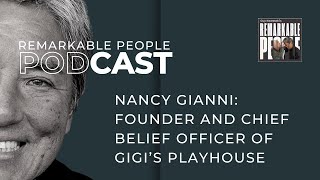
YouTube interview (Remarkable People) of Nancy Gianni by Guy Kawasaki (recording published June 20, 2023). Kawasaki and Gianni discuss GiGi’s Playhouse’s founding, mission, services, scale, and impact: free educational, therapeutic and career programs for people with Down syndrome and their families; GiGi’s network growth and volunteer-driven model; challenges families face (medical bias, prenatal testing, stigma); and rapid pivot to large-scale virtual programming during COVID. The conversation mixes personal narrative (Gigi’s birth, surgery, daily life) with organizational details (expansion model, volunteer base, virtual reach) and calls-to-action (volunteer, donate, accept and learn).
Questions this video answers
60 locations (network-wide)
~6,000 babies per year in the U.S. (about 1 in 700)
17 years old
Four months old
About 4,400 program hours per week
Chapters
Foreign. I'm Guy Kawasaki, and this is remarkable People. This week's remarkable guest is Nancy Gianni, founder and chief belief Officer of Gigi's Playhouse, author of Generation G&CNN Hero. After her daughter was born with down syndrome, Nancy started gigi's Playhouse to change the way the world views down syndrome and. And to send a global message of understanding and acceptance. Backing up. Let me provide some basic information about down syndrome. Typically, people are born with 46 chromosomes. Babies with down syndrome, however, have an extra copy of chromosome 21. This affects a baby's physical and mental development. In the United States, approximately 6,000 babies are born with down syndrome each year, or one out of every 700 babies. Gigi's Playhouse has 60 locations. They provide educational, therapeutic, and career training for people with down syndrome and their family, all for free. I'm Guy Kawasaki, and this is remarkable people. And now here's the remarkable force of nature named Nancy Gianni.
John Syndrome is when a child is born with an extra 21st chromosome. So that's going to affect certain. It's going to range in different ways. It will affect cognition, low muscle tone. And for me, low muscle tone is really the big piece of what makes everything so difficult for our kids. When a typical baby is born, they're checking out the world. When our kids are born, they're teaching their bodies to suck, swallow, and breathe at the same time. You know, the things that God gave us to do naturally, they have to teach their bodies to do. And that's why we started the playoffs, was to help give them all the tools, help teach them all of those things, because a lot of times people think it's because they're slow, they don't know how to do those things. No, their body works different. They have low muscle tone, which is really tough. I mean, think about it takes over 100 muscles to engage to say one sentence, muscles. So things you don't even think about affect individuals with down syndrome. So that low muscle tone, to me, is really the biggest underlying issue that they have it all. They do. Also, some of them have. Gigi had open heart surgery when she was four months old. They tend to have some other issues as well, but many of those they're able to overcome with the amazing medical technology that we have these days.
Okay, can you take us back to the first few hours or days after your delivery, the reaction of the medical staff?
Yeah, those were, you know, we had no idea that she was going to have down syndrome. And there was, when I look back now, there were some incredible Signs that something huge was about to happen in my life. And it wasn't until after she was born that I realized it was. You know, when we found out I was pregnant, I remember telling my husband, because some weird things have been happening, and I was like, I don't know.
But this.
I have been pregnant with this baby, and this baby is making me stand up for people. It's putting me on this moral high horse. I don't know why I think I belong here. I'm challenging people. Like, I'm like, I swear to God, I think this baby's gonna be, like, the president or a world leader. I don't know what she's going to be, but she's going to be amazing. And never in my wildest dreams did I think it was that she was going to have down syndrome. And I remember when she was born, and it was a C section, so it started out a party atmosphere. Everybody was having fun. And then the three white coats came in. And then they told us that they saw some what they thought were soft markers for down syndrome. And I just remember in that moment, just like it just echoed in my head, I thought that maybe I willed this on my family, because I was always drawn to people with down syndrome. And I just went into complete panic mode. I didn't hear anything else they were saying. And my husband was standing behind me, so I couldn't see him or his reaction because everything just went medical. It went from, congratulations, you had a baby, to, there's this, there's that, there's this. And she cried like my other kids. I held her like I held my other kids. She was still my baby. But all of a sudden, she was all these. There were so many medical conditions that they kept talking about with it. And I just said, you know, I just asked them if we could just go see our baby. And I remember when my husband came around, we finally had eye contact. I said to him, if anybody can handle this, we can. And can you imagine what better kids our children are going to be because of her? So I knew. And he was like, actually, he was the one who said, can you imagine what better kids our children will be? He was the one who said that. So I knew we were both on the same page. But then all of a sudden, everything changed. Party atmosphere was gone. There was no more celebration. In fact, they kept sending in the clergy and that. That made it. You know, anytime you pray, praying is so emotional. When you're praying for something happy, when you're praying for something sad, when you're praying for something. It's emotional and to continue. I just remember another priest would come in and then this would come in. And I kept thinking, maybe she's dying, and I just don't know it. And they would come in, in the medical stuff, didn't look at me anymore. There was no more eye contact. Like, we went from being the cool, fun couple in the morning to that family that now has a child with down syndrome. And they took really good care of me medically, but they couldn't look at me anymore. And that sort of like, you know, they couldn't find a chart fast enough so that they wouldn't have to engage in talking about what this life might be like for me. And all I remember thinking was, like, how do I go home and tell my kids when I don't. I can't process this myself, the way I'm being treated. Just this difference that we're now, that family. How do I go home and tell my kids? And that was probably my biggest fear.
It's difficult for me to understand the reaction of the medical staff. I mean, why would they treat you like that? I mean, did they think it was contagious or something?
What they. You know what they know, Guy? They know textbook down syndrome. And textbook down syndrome isn't pretty. And then when do they see our kids when they're sick? They don't see the amazing. They don't see Gigi singing the national anthem at the Cubs game. They don't see the joy she brings to my family every day. They see our kids when they're sick. They see the textbook down syndrome. I mean, the fact that 80% of people terminate their pregnancy implies they don't belong. We have medical professionals who tell our families that when they refuse to terminate. One geneticist came out when one of our families refused to terminate and said, I don't expect my dumb dog to come in from out of the rain. What do you expect this child to do?
No.
Added to God, I am not kidding. We have more people. You know when people say, is there any hope? When it's just. It's just a Down syndrome diagnosis? They're. They're told by different medical professionals. I'm not saying all medical professionals, but there's a lot of them out there who don't necessarily see the beautiful side of down syndrome that I try to let the world see.
Are you talking about when Gigi was born and now things are better, or is this still true?
Still happening still to this day? To this day. And I hear more about it, because with 60 locations around the country and startups, I talk to so many families. You know what I mean? So I hear about it more and more, and I hear the negatives and I hear the positives. And we try to praise whenever there's a positive. When a pregnant mom goes somewhere and there's a positive, we really try to praise that and try to keep that going. And the ones with the negative, we try to educate them. But you know what? Some people, you're not going to change the way they think. There was just somebody, a congressman who just stood up and said that some lives aren't meant to be, and he was talking about kids with down syndrome specifically. Now, today, this happens to this day. And, you know, it's. It's amazing to me. I don't want to get on a soapbox. I'll get me all worked up over here, guys. But it is my brother. It is happening to this day. In this world, our kids aren't accepted and they have to fight every day. Every single day. They wear that diagnosis on their face, and that makes them victims. And it's tough. But I would like to think that we've gone beyond this, but unfortunately, it is still going on. We're doing our best, and we'll continue to do our best to educate the medical community on the amazing gifts that people with down syndrome bring the world.
I would make the case, and I would put myself in this category that I have had so little contact with anybody who has down syndrome that my reaction is empathy, sadness, pity, those kinds of emotions. But I need you to tell me, what's the reality of life for Gigi, for.
Oh, my gosh, you know.
You know?
Yeah.
Are these the right reactions that people should have?
Yeah, 100%. First of all, it was funny because somebody at my gym came up to me and said, oh, you. I didn't realize you were Gigi's mom. And I was like, oh, yeah, you should come by sometime and get a tour. And she was like, oh, no, I can't see that. I can't see that kind of stuff. I cry too easy and I can't see. I go, gigi's is the most positive place you will ever walk into in your life. And what I love about Gigi's Playhouse is, yes, we serve individuals with down syndrome, but we serve the entire community, and we teach them empowerment and love and respect. And from the minute you walk in there, you will walk out of there and advocate. You will walk out of there energized about down syndrome, because you learn, you realize things just take them a little bit longer, but they do it. They've got a determination and a spirit, a spirit of just spirit of forgiveness and love. And they see the good. They will. Somebody could be the meanest person in the world and they're gonna figure out what is good about that person. That is who they are and that's how they make people feel. So their gift to the world, you know, people that, that don't know, like this woman who was like, no, I can't see that. She would have walked out of there. And she did come after that and said, I just didn't know. They're amazing. The amazing gifts they give back, the gifts that God gave them, that extra chromosome that's just full of empathy and love and determination, they give it back to the people around them. And that's why Gigi's Playhouse is what it is. People come in all the time saying, I came here to volunteer for them and my life has been changed. And that's what we call the Gigi's ripple effect. Everybody, whether you're in there as a tutor or a volunteer, doing whatever it is you're doing, you become better by being around them. It's really amazing. I don't know. It's really amazing. And you need to walk into a Gigi's and feel that energy and that, that love, that pure acceptance and empowerment because you walk around going, God didn't give them the muscles to do all this and he gave them to me. If they can do it, I can do it. So it empowers everybody who walks in the building.
What is the reality of life for Gigi? What is it like? What is her day like? Because again, people like me have no contact. I don't know what her life is like.
Yeah, she is 17 years old. She works out every day. She has a boyfriend for two years. She goes to school. She speaks at every Gigi's Playhouse opening. That's probably, that is her favorite thing to do today. I think she, she signed about 250 acknowledgement letters. She writes notes to all of the donors and when we send their acknowledgement letters, she signs them. So she's very much into makeup. She's very much into Snapchat, Instagram, social media, everything you can imagine. She's absolutely hysterical. And she's starting a podcast. She's starting doing beauty tips and makeup tips. She works out every day. She works. You should hear. I'll hear her go downstairs, the music will start cranking. Then I'll hear the punching bag. She's on the punching bag. She is so unbelievably, I guess I'd say normal. You know, the hard part is that she's just. People don't know that. Like I say all the time, like, she speaks at every Gigi's Playhouse opening all across the country, in Mexico, wherever we go. She's a speaker, an inspiration to everybody there. And yet we walk through the airport and people still stare at her. People. Kids laugh at her. People just are afraid of her. Still don't know the tremendous potential that she has, that she just. What she wants more than anything else in life is to fit in. She wants to be, you know, like, clothes. She just. She's on a diet now. She lost 26 pounds. She's killing it. And she. And her inspiration was because she wants to wear popular clothes. She wants to just be one of the other teens in her high school. She wants to be a cheerleader. She wants the same thing everybody else wants. She prides herself on going to work on days when she doesn't have summer school. So that's always a big thing. And she's just an inspiration to so many. And she truly is a gift from God. She inspires me every day to be a person. I don't know that I would have been or could have been without her in my life. The hard part is that her body works a little bit different, so she has to work harder to do those milestones. Like when she finally learned how to walk this. So I know what you're saying about just not knowing. Like, she finally learned how to walk through all kinds of physical therapy and everything else, and then she couldn't jump. I'm like, what do you mean you can't jump? Who can't jump? Like, you don't even realize how deep, low muscle tone goes. Like, who can't jump? I look at people on the air when I see them with their kids at the park, and I think, do you even know, like, how lucky you are that your kid can jump? Like, my. My other kids, literally, when we realized, like, okay, she can't jump. Like, my kids, like, taught her the dynamics of jumping every day. They were like, duu, da, da, da. Like, how does it not come natural? So I understand where you say you don't get it, because I. I truly didn't get it. And I was living it. I didn't realize how limited their bodies were and how strong they were. That's when I was like, I will never stop fighting for These kids, because that's when I realized how strong they are. They weren't given the tools that all of us have been given and sometimes take for granted and don't use. They weren't given those tools. And they have to teach their bodies to do what comes naturally to us. And that's why I will always talk about their strength and the amazing people that they are. But you're right, people just don't know from the outside. And that's what we're trying to change.
So speaking of people who don't know, regardless of their intentions and being a good person and all that, what is absolutely tone deaf to say to you or Gigi? What makes you just shake your head when people do something to say you.
Can'T do something or that she can't do something. We don't put limits on anybody. So to limit us in any way possible, Me with Gigi's playhouse, her with her life. There's nothing we can't do. And that's the one thing. And if someone ever assumes she can't or I can't, that just fuels us more to do it even stronger. You know, for her to sing the national anthem in front of 40,000 people at the Cubs game last year. She learned the national anthem? The words she, she read, that she can read. She, she learned the words and memorized it when she was about 5. It took her another 10 years before she was able to teach her muscles to properly articulate every word to that song, to build up her core. So she would have the air to blow that out to get those words out there beautifully. Because she's not going to do it if she's not going to do it right, she did it. She set her sights on it and she did it. So I think for us to say that we're not, someone's not capable or someone can't do something, I think those would be the words we can never hear and we should never do. I believe in self fulfilled prophecy and I think it works both ways. When you say I can do this and when you say I can't do this or my child can't do this, it's, it's just willing bad energy telling them they can't do something. We all can do it.
I've learned that prenatal testing can be much further out these days. So you could more or less know that your baby has down syndrome. How do you feel about that?
It's. We have many families and they find out before, like before the three month mark. Now so they're the testing that's being done now. We find out much earlier, and people are coming to us earlier and earlier. They'll come to us straight from the hospital, some of them straight after the diagnosis. Some stay home. They're devastated. I mean, it's scary. It's a scary diagnosis. It's not something you're like, oh, I hope I get a kid with down syndrome. It's scary when, like I said, for those doctors, I understand textbook down syndrome is not something you would will on somebody. But you know what? There's so many beautiful gifts and beautiful parts to it. So when these families come to us and you know what? This. This is what gets me. Guy. I had. Right before COVID we had a pregnant mom that came in and she brought her other kids to participate in the program so she could. Kids don't judge other kids. That's learned behavior. And the kids were in there, they were playing, and she was watching the siblings play with the other siblings and playing with the kids at down syndrome. And it's just a crazy, awesome, fun place. And her daughter was loving it. And her biggest fear when she was seven months pregnant was, are my kids going to see this discrimination against them? And we don't sugarcoat. We don't lie at Gigi's. I said, they absolutely are. And it starts early. But you know what? It's also going to grow them into the most amazing human beings. I could have never made my kids who they are today without Gigi and everything that they have seen through her.
And walk me through this. Your other kids face discrimination because of Gigi. By what logic should they face discrimination because of a sibling?
Yeah, Gigi's the one who really faces the discrimination. My kids are the ones who. Yeah, she faces it. They are the ones who fix it, who have to step in, who have to stop people from hurting her, making fun of her, that kind of stuff. Not. No, no. The discrimination that my kids saw is what made them who they are today. That way that they protect anybody, welcome anybody. We accept everybody as they are. That's 100%. That is. That is what Gigi's is. That's what Generation G is. Our mission at Gigi's is to change the way the world sees down syndrome and send a global message of acceptance for all. And that's. That's the most important thing that we do, and that's. That happens because of what we see. Like, I remember when that mom said that to me, like, my first thing I wanted to, you know, it's a brand new mom, pregnant mom. I want to protect her and say, no, no, it's going to be great. There's going to be no. No one's gonna. She's never gonna be made fun of. No one's ever gonna do that. But we can't sugarcoat something that's going to happen. Unfortunately, it does happen. And, and we let her know and we don't tell somebody just so they don't terminate, that it's going to be easy. That's not what GG's is about. We tell them that. What these things are going to happen. We are going to be there for you every step of the way. We are going to give you all the tools you need to survive and help your child succeed in life. And you're never going to be alone in this diagnosis. But we don't tell them things that we don't make it simple because it's not simple.
Well, what has Gigi taught you about raising children that your other children didn't teach you?
A whole new form of patience. A whole new form of patience. I'm. Well, yeah, I'm not very patient. And with our kids, you give them the extra time that they need and they're going to get things done. It's not like you say, get your shoes on, get in the car. We got to do that. It's going to take them a little bit longer, the fine motor skills to be able to even put your seatbelt on. You know, the things when you throw all the kids in the car because you got to go, you're not able to do that as much. You can, and they will do their best, but it taught me to just slow down a little bit to see life in a different way. I think with my other kids, I was excited the way they saw life, but it didn't. I didn't have to slow down to see it with them. With Gigi, it's a slower pace and it's a beautiful pace. And she's taught me to appreciate jumping, to see kids in a park that can jump and make me want to go tell their parents, do you know how lucky you are your child can jump? And that just came natural. She taught me this unbelievable appreciation and gratitude for the life I have and the way my body works and the way my other kids body work because she has to work so hard for that. So I think she's taught me patience and just unbelievable gratitude. Gratitude.
Gratitude towards whom? For what?
I would say gratitude for life. I thank God every morning when I Wake up that I'm here to help her and fight for her, and I'm proud to be able to do that. And she just makes me. I'm thankful for everything that I have. I just. I'm so much. I'm just so much more thankful than I think I was before, because I think I took things for granted before, whereas now I don't take things for granted. I don't take a smile for granted. I don't take friendships for granted. I don't take. She doesn't. When someone wants to be her friend, that means my other kids had multiple friends. They came and went. When someone wants to be Gigi's friend, they choose to be friends with her, even though other people aren't. And I just. I have such gratitude. I've met nothing but amazing people. Gigi's is 99% volunteer run. We have tens of thousands of volunteers. And these are all the most amazing people in the world. We have. Where would we be without them? Like, that's where all this gratitude comes from. Because that's everything that people that. That are out there that will give, give.
Now walk us through the genesis of Gigi's Playhouse. How did that come to be?
I was carrying her to bed. She fell asleep downstairs. And she was fresh out of open heart surgery. She was probably, I think, about five, five months old at that time. And I had, you know, I been to these support groups. I'd been to different places, and I knew I wanted to do something in down syndrome, but not sure what it was. And I picked her up to carry. Carry her to bed that night. And I just remember feeling like this tremendous weight with my other kids, you know, you. They kind of held themselves up with their muscle tone. With her, I felt the tremendous weight of her body. And I realized she carried that weight around every single day. And she did it with a smile on her face. She did it with determination. In life, she was such a happy baby. You never know she was walking around that this low muscle tone was pulling her down every day. And I remember when I laid her in her crib and I felt that low muscle tone. I promised her that I would change the way the world saw her and all of her friends with down syndrome. And I remember I didn't know how I was going to do it. And at that time, I was thinking, maybe I'm just gonna raise a bunch of money. Maybe I've always been good at fundraising and making money. Maybe that's what it's going to be. I had no idea in that moment, what it was going to be, but I knew it was going to be something. I made that promise. I put it out there to the world. And now people are helping me make this promise come true. In communities all across the country and all across the world, people are being served by Gigi's Playhouse now. So that one promise, that one really feeling that low muscle tone and understanding, you know, what that weight meant to her, how it pushed her down, just pushed me up. And I people, since that day, people have helped me make that promise come true. It was a promise from me to her. And the rest of the world has picked it up and they are picking up all of our kids. So that's where it all began, with a promise. Brother. I'm just not a negative person. And my brother Joe, I remember I was going to a support group meeting. My brother Joe was like, oh, don't go to a support group meeting. You're the most positive person I know. You don't need support. You just need to keep going and doing what you're doing. I go, joe, I don't know anything about my baby. Like, I don't know anything about her. I don't. I need to learn. Like, I have to educate myself more on this. And I went to the sport group meeting and it was like in an extra room in a hospital. Not a very positive place, but positive people. And what went on in that meeting was great. It was just the scene we were in and that just kind of brought you down. Like, Gige was in the middle of going through open heart surgery. So we were at the hospital a lot. There was other things going on. Last place I wanted to be was a hospital. So I remember sitting in that room but listening to some really cool parents that were positive about their diagnosis. And I was sat there thinking, what if there was a place? What if we just provided a place that was full of energy, full of empowerment and full of potential, so that new mom. So you didn't feel that weight of the diagnosis, but you felt hope and you felt like, I can do this. I got this. And that was kind of how Gigi's was born. There was a couple more things that happened, but then it was. We opened a year later. And her. We opened right before, right after her first birthday. For her first birthday, we did the first fundraiser and then we opened our first location in Offman Estates, Illinois suburb of Chicago. Crazy.
You have over 60 locations. How did you grow? I can understand making one, but how did you grow to 60? That's quite an accomplishment.
Well, that was that gratitude part that I was talking about. These amazing people who step up because not only do we have 60 locations and startups, but they're 99% volunteer run and we give everything away for free. So all of our programs are free. Free literacy tutoring, math tutoring, speech therapy, fitness programs, career skills, all of it's free. So it's pretty. The way the model works is it's. We scale it to these locations that we built a model and it took us a while to get this model. As soon as we opened the first location, I really opened it to make sure that my community understood down syndrome and that my kids would be, you know, have a place to show their friends and meet other kids with down syndrome. Because not all schools, a lot of times kids with down syndrome are a different school. They're not with the other peers and a lot of people haven't grown up or had the gift of growing up with somebody with down syndrome. So that as soon as we opened and then there was this tremendous draw, remember this was 2003. So like the Internet was just getting started, just getting big. And all of a sudden I went to a conference and Gigi Spails had a table there. It was in like Minneapolis I think. And we were the busiest table there. Everybody said, how do we do this? And we're like, how does. We didn't realize then that having a website opened us up to the world as much as it did back then. Like we knew you need to do it, but the social media wasn't there, wasn't it wasn't the world it was today. So we started getting all these inquiries to open more locations and that, that really forced us to build a model to, for these communities that were coming together to open a playoff. So people come to us, whether it be a founder of a location like in Nashville, Tennessee, it was a 23 year old teacher that said these kids deserve more and they deserve a place to help us get them to where they need to be. In Rockford, Illinois, it was a great set of grandparents. We have business, people have opened a Gigi's. But what they do is they come to us with the inquiry and we have different phases they need to get through and it's not easy because every Gigi's Playhouse needs to be sustainable. So we have to get them so that they, you know, this, this becomes a lifeline for the families. So we have to make sure that they're sustainable, that they have a diverse board, diversified funding. There's a very Strong business plan that goes around a Gigi's Playhouse. And remember, a lot of times, these are community. This is somebody doing this, a community member that might not necessarily have those business skills. So we have to give them all those tools, all those shared platforms, and they take that. We get them to phase three. Phase three, they become their own individual LLC like Gigi's Playhouse Nashville. And then they open their location, and the very first thing they have to do is engage your community. So the beauty of Gigi's is you're not just there to serve the individuals with down syndrome. You're there to serve that community and teach them about love and acceptance and respect. And it's really just. It's a magical place. And what a gift from God that people just keep coming in to open a location to change their entire community. So at 60 right now has just been. Sometimes I. Like I said, there's a higher power guiding this thing. And me and Giga in the driver's seat going, we don't know where we're going today. We're going to spread some love and we're going to make it happen. And it's amazing what these people do, all in the. In the name of serving others.
If someone wanted to start a ggs, do they just reach out to you? And, I mean, you have this down to a science at this point.
Yes. Pretty. In the US we're having a hard time. We've got. We've got over 80 countries that want to start inquiries in countries that, you know, we did open a Mission Playhouse in Mexico, and it's amazing they need it there. They have a lower termination rate, so they have a higher population of people with down syndrome. They also are just, you know, they. They still hide the kids with down syndrome in. Hide them away. So it's. They really. They needed a place. They probably need about five more over there. But it's. It's just such a hard country to build these in. So we would love to help the other countries, but right now in the US Is where the business model works the best. And there's so many inquiries here that we, you know, what we do for the other countries, actually, we, when other countries call, we give them our programming where all we want to do is help people be the best person, best possible person they can be. So we'll share our programs with the other countries until we're able to successfully have that international model. You know, we got it. It's the currency, it's the taxes. There's so many different reasons that we haven't been able to do it yet besides Mexico, and we need to do it. But like our GGs at home, when Covid hit, we had to take all of our programs virtual. So we do about 4400 program hours a week per week at Gigi's across the network. So that's free therapeutic, that's free tutoring, free literacy program, and free speech therapy. All these free hours of programs. So when we had to cancel all of our programs, the families were devastated. So within 10 days, we were able to go virtual. I don't even. We took multitasking to a whole other level. My team just jumped in. People were doing. We did whatever it took our families, all of us, the whole world was like, what's happening in the world? And then you add a special, then you add a diagnosis on top of that. Now the family is not only at home with their other kids while they're working, they have a child with a 247 diagnosis. Like, they needed us and we needed to still be there for them. Our adults needed us. You know, there's not a lot of places for them. There's not a lot of jobs for them. Like you said, you don't see them because there's not a lot of jobs out there for them. There's not a lot of schooling out there for them. There's. So they needed these programs. So we started gigi's at Home within, I think, five days of us closing down. We just found out the other day that people are using our Gigi's at Home programming in over 20 countries right now. Isn't that crazy?
Describe your technology. How do you do this?
It's crazy. Absolutely amazing teams and amazing volunteers. That really made that happen. That was seeing the other. Like, we didn't even know until we checked our IP address. We just put it out there for people to use, and we put it out there, but we have to be very careful because we need to keep it safe. Our families need to be able to go in there and know that their child's going to be safe on that virtual platform and that they're protected. So there's. It's just. It takes just as many people to run our programs virtually as it does to run them in our playhouses. And what a gift that our volunteers, on top of everything else that's going on for them, because now their kids are home and they're working from home, they are still stepping in and serving these families, even virtually with us now.
Are you using rooms with Zoom and.
That's how we use GoToMeeting for the general for like our fitness and our bigger programs. For the one on ones we're actually using Microsoft Teams. So we do one on one tutoring and literacy and math and then one on one speech therapy and all that is being done through teams. So it's been, it has been quite an adjustment these last couple months. But the fact that maybe this is, it's always bothered me that we weren't able to, you know, we always responded to the other locations across the world that wanted to open and said how can we help? Can we, we've got this literacy program, does this help? But now to know that 20, 20 of them can now use the programming virtually and help their families is just, is just amazing. And the number one outside of the US that's using it is Nigeria. And they've been trying so hard to open up. They wanted to open a playhouse there for a long time. And it's always like, it's been always in my heart like how are we going to make this happen? How are we going to make this happen for Nigeria? And again, I believe in self fulfilled prophecy. Well, this is the first step. Now they're getting it virtually and they're smart, they're taking advantage of it. All that free programming. Why would they not?
I understand having 60 locations, so now you have 59 more places where people can go. But now with everything virtual, do the other 59 have their own virtual programs or is everything centralized into yours?
Yes, a little bit of both. So we do live programming each week. So there's live programming all week. So I think we just did our 50. We have since it started we've done over 1500 live programs. So how many hundred per week of live programs that we're doing? And then we have over 300 on demand programs. So people can come in and do the live programs with people or they could come in on their own time and do the on demand program.
When you say we do you mean we the original Gigi's or we the 60.
The network. So Gigi's Inc. We call Gigi's Inc. Is kind of like the mother. And we, we put together all the programming, we put together all the platforms, we give them all the tools they need and then they give it out to their families. That's how they're able to be 99% volunteer run because all the platforms are there, the security is there, everything they need is there to run their program safely and successfully, their program within their playhouses. But now also virtually. So they're doing. Can you imagine that? I mean, we have done it still. When I look at it, we've had over 250,000 people visit our Gigi's at Home website. And we only launched it, you know, the end of March. It's, it's just crazy where, where Gigi's at Home is going. And it wasn't, you know, I think because we had planned on launching our Gigi's app and the LMS was in our 2021. We were getting the funding this year, working on it for 2021. And really what it did is, I mean, it made us expedite all of that, but it also kind of built it backwards because what we needed the next, we did phase one of our app, but phase two of our app was actually getting all the programs to be automated. And we did that by necessity for GG's at home. So we actually built phase three. So now we just got to put together phase two and then we have our entire app that we thought was going to be a few years away with full on programming. It's so crazy.
And so now is it, is it happening that a family in Nigeria is having peer counseling from someone in the United States or how does that work?
They, you know what, they go in, they RSVP to our program, an orientation. We do volunteer orientation. We do tutor training. All of that is done virtually now. So they can come in and learn all of that from. Yeah, from Nigeria, from wherever they are. They, they are required to RSVP because we have to track everybody who comes in and has access and, and all that. But yeah, they are getting all of the same things. And it's pretty cool because even our, like, our new family orientations, like new family orientations, we used to do them like it would be at your local playhouse. All the new families would gather, we'd have dinner and a party or whatever. And now the new family orientations are being done online and we're having other families that want to join the new family orientation. Maybe Nashville is holding one and then somebody over in our San Diego locations, like, I'm a new family, my baby's the same. Like, people are connecting through all these new family orientations and just in different ways. And gigi's is so empowering and, and watching. Like you could have a mom come in deer in the headlights look. What? You know, this diagnosis just. I don't know what I'm gonna do. The average age to have a kid with down syndrome is 28. So a lot of our families are first time parents and all their friends are having babies. And then you have a baby with a diagnosis, your baby's not like their baby. There's different things going on, different milestones when they're happening. So walking into Gigi's, it's usually deer in the headlights. They're petrified to do it, even though they know it's positive. It's hard because you're taking on a 247 diagnosis that you're going to have the rest of your life. This isn't going away. And so taking that first step is hard. And then once they do it, it's like they walk out of there a different person. They walk out of there empowered. They walk out of there knowing they're never going to be alone. But the beautiful part is when they come back next week, they are doing that same exact thing for another person within. Like, it's crazy. Like all of a sudden there they are sharing. They're the expert. And it's such an incredible gift to watch this, the transformation in these families, going from total fear to warrior. It's so awesome. And then they take that and they give that to that next mom and they give that to that next dad and they give that and it just, that's the beauty of Gigi's. That's why we're always still going to need our, our brick and mortar locations because they're so important, that contact is so important. And a place of pure acceptance. There's not many places like that in the world. And to walk into a place built on acceptance and pure acceptance, our brick and mortars are always going to be needed. But now we have another way of serving families that we didn't have before. And we have a boy in our Detroit location whose mother's in a wheelchair and he's 18 years old, he has down syndrome, and, and he's only been to our Detroit location, I think two times because his mom's in a wheelchair. They live an hour and a half away that Lucas is in probably four programs a day. I bet if I was like to text his mom, she'd be going, oh, he's in. Gigi's in the kitchen making chicken fried rice. Like it's. He's, he literally has this new life. His mom said, oh my God, he saved his money. He bought a guitar for Gigi's music. He's wanting to read. He, he's, he's on his own. He goes into every live. I mean, when you go into live, you know, Lucas is going to be in there working out or doing whatever program it is he happens to be in. It's given him the empowerment. You know, he. He doesn't have to depend on his mom, who's in a wheelchair anymore. He. And he has friends. He has friends from all across the world. He's no longer sitting in his house alone. It's. So many beautiful gifts have come from COVID It's just. It's amazing watching what. You know, we. I don't think we could have made this happen if we didn't have to make it happen in that moment. What.
Can you summarize your advice? Advice to parents trying to navigate parenting a child with down syndrome?
Yeah, I think the number one thing I say it, and I say it all the time, is have high expectations. Don't fall back on the diagnosis as an excuse, because it's not. It's just a reason to have to work harder. But it's not an excuse. There's nothing our kids can't do. It's amazing. But you cannot say, my child, he won't sit for more than five minutes. Yes, he will. You have to have that expectation. And you know what? In a place like JJ's Playhouse, it's okay if he doesn't sit there for the first five minutes. But you know what? He will sit there five minutes, and we'll help him. And then we'll get to seven minutes, and then we'll get to eight minutes, and pretty soon he's going to be sitting through that whole literacy session, and they do. But you have to have that high expectation. Do not get knocked down by what it says in the books with the doctors. We still. Doctors tell our families that our kids won't walk. What are you talking about? Like, don't get knocked down by. And I don't mean all doctors. I don't want to say it because there's so many amazing doctors out there, but we still have people that aren't understanding that our kids can and will do anything. And before we're done, I do just want you to see JJ and meet her, because I'm telling you, she's the biggest poser, the most unbelievable person you're ever going to meet in your life. And she is going to inspire you to do great things. Brother, you already do do great things. But I'm telling you, when you talk about remarkable people, she is a remarkable person. And she. She knows when she's supposed to step up. She knows that God put her here to give a voice to A population of people who deserve it. And I can't wait. You guys are gonna meet someday. Where do you live again?
I live in California. Where do you live?
Okay, I'm in. We're in Chicago, but we were opening in Sacramento. Well, as soon as Covid lets us. Our Sacramento location, well open, and we've got one in San Diego and one coming in Orange County.
That's great.
That's getting closer and closer to me. What is one? If you had a magic wand, what is one? Or a small number of things that you wish everybody knew about down syndrome.
Is that individuals with down syndrome are such strong, amazing people. That is my number one. Because I do think that sometimes people think they're weak because things are harder for them. But they figure it out. They get it done. And I would just want people to know how strong they are and that they have feelings just like you and I. They. They're not that much different than us. They just have low muscle tone, and they have so much to give. So much to give. I think that that's my number one. We wouldn't have tens of thousands of volunteers if they weren't getting something back.
Off the path here. You were named a CNN hero. So what happens when you're named a CNN hero? I mean, do you.
You.
You don't need to make reservations at restaurants anymore. United Airlines upgrades you to first class. What happens when that happens?
No, you know what? I think that what I loved is that the CNN Heroes logo has an S on it. CNN Heroes. So it always has that S on it. Because it's not me. It's not Gigi. It's everybody who steps up at Gigi's Playhouse. There. We're all. See, you know, we're all heroes together in all of that. There is not one person. So I love that that logo has an S on it, because I think that's important. It's never one person who does something like this. It's everybody coming together for the greater good. So that was the number one thing. But no, I wish it would get me into some restaurants. That would be nice.
But did.
Did donations kicked in? Did you know anything?
You know what? You know what, guys? That's such a good question. It gave. I will tell you something. They did. And what happened was it gave us a lot of credibility. So they. Because when you. When you're vetted to be, like a CNN hero, they, like, talk to my eighth grade teacher. Like, they went back years to see if you've ever done anything wrong. I was really really surprised at the vetting process and how far it went. How many people came to me later saying that they got calls, really? And I was like, I was shocked at really where they went with that. And I remember they had questions. It was. It was an unbelievable vetting process. And I. That. And now I see why, because we did get. It did pick us up. We did get instant credibility for GGs. That was instant credibility because it was. It was an incredible vetting process. But it did help us immensely. It helped us in marketing. It helped us in donations. I mean, stuff like that. To be able to have your name associated with something positive like that is. Was really huge for us and still is. I mean, it still continues to be something that people talk about, which is crazy and awesome.
This is my last question. What can a listener do to help you?
I would love it if they would learn about us. Go to our website. They can volunteer, they can donate. They can just look around and feel the positive energy so that they will go out and be advocates. The most important thing any of your listeners can do is accept us. Just learn about us. Go look at Gigi's at home. Go look. Look at some of our videos. Look at the amazing accomplishments that our kids are doing every day. They try to prove themselves to be accepted. So to me, I'm sure the first thing I should say is donations. We're run on donations, private donations. We don't get any government or state funding, and we do everything for free. But I really. What means the most to me is that our individuals are accepted and respected. And so just getting to know our organization and our kids would just be the biggest gift.
That's for sure.
Fantastic.
So I want to tell you, and I mean this as the highest form of praise, that I have conducted roughly 40 interviews for the podcast. This is the interview I have spoken the least.
I know. I'm sorry. No, no.
I can't tell you how happy that makes me because, you know, this podcast is not supposed to. Supposed to be about me. It's not. It's not Guy Kawasaki's podcast. It's remarkable people's podcast. So I can't tell you how happy I am about that. If it was up to me, I would never be on it at all. I would just like, okay, here's Nancy.
Well, I kept finding myself like, oh, stop talking. Stop talking. You know, I can go on forever. I want to thank you for the opportunity to be able to give a voice to our kids and to our families. It's. It's truly an honor. Like, I can't. When I looked at all the people you've interviewed, I'm like, why is he talking to me? Like, I feel so blessed and honored. So thank you so much, Guy. You're spreading great stuff, and we're lucky. So, so blessed to have you. Thank you for having me. Like, here. This is huge. Gigi, come here.
Oh, g. Oh. Okay, so now this is going to be another screenshot. We got to get her.
Come here and say hi. His name is Guy. Come in here. Hi, Gigi.
I just.
That's what I was doing.
I just talked to your mom for 45 minutes, and I am truly exhausted.
So I chopped his ear off.
Gig, Come closer, Gigi. I'm gonna take a picture of you. Come closer, come closer.
Right here. You know where he's at? Come down a little so we can see. It's in there. Here he is. California. We love California.
Well, I hope you come visit me. Have you ever been surfing?
No.
Okay, we will fix that.
We need to try that, get to.
California, and we'll fix that. So just. Yes, just come close to the camera, and we'll take a picture. Okay, I'll go three, two, one. Three, two, one. Okay, so thank you so much, Nancy. Thank you very much, Gigi. My best to both of you.
We. I thank you. Totally appreciate everything you've done. If you need anything else, let me know.
Okay.
Sorry about my mic.
Okay, thank you very much.
Take care.
Bye.
Bye.
See you later. Bye.
It's review time. This is from ATH Valley. Guy Kawasaki is a remarkable person in his own right, and so it should surprise anyone that he figured out a theme for a podcast that lets him interview a wide range of other remarkable people. I think she or he left the word not out in that sentence. When I heard about this endeavor, frankly, I was jealous because Guy is getting to meet all these amazing people. I was intrigued, of course, but also worried that Guy being Guy might somehow interfere with him bringing out the essence of his guests.
Wrong.
Guy is unafraid of being in awe while in the presence of greatness and is willing to express it. So, in fact, we get to enjoy the authentic thrill of him meeting these amazing people, being humbled in their presence, and being himself. Which means that he doesn't always know their fields in depth, yet makes it feel like we're there with them. His interview with Chris, you could almost feel the swells and shark bumps. It was brilliant. Thank you, Guy. Thank you, ETH Valley. And here's one more. Kathy Lee Chong. Guy is terrific because he sees the world and the people he interviews through the perspective that perfectly blends wisdom, life's experiences, optimism and skepticism. No wonder he's such a successful entrepreneur, author, influencer, and now podcast director. Awesome guy. Interview with Dr. Kim and things on COVID 19 was fabulous. I learned so much. Thank you Kathy. I'd love to read your reviews. So please go to the Apple podcast app, find remarkable people and write a review and maybe I'll read it next time. I hope that you found Nancy's dedication to helping people with down syndrome inspiring and remarkable. If you'd like to help Gigi's playhouse, go to Gigi's playhouse.org I believe Nancy when she says that the experience of working with people who have down syndrome is beneficial to to everyone. My thanks to Janet Vien for suggesting interviewing Nancy and then for actually making it happen with an introduction. My thanks to Jeff C. And Peg Fitzpatrick for their usual remarkable job. I'm Guy Kawasaki and this is remarkable people. This is remarkable people.
More from Guy


Cheryl Strauss Einhorn | The Human Edge: Smarter Decisions in the Age of AI | Talks at Google



Rachel Glennerster | Innovation and the Center for Global Development | Talks at Google

Rebecca Winthrop | Rethinking the Purpose of Education in the Age of AI | Talks at Google

Dr. Robert Wachter | A Giant Leap: How AI Is Transforming Healthcare... | Talks at Google



