Neptune City | Nicole Atkins | Talks at Google
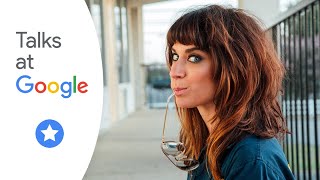
Transcript of a Talks at Google event featuring singer-songwriter Nicole Atkins, moderated by David Saltz. The session includes an introduction to Atkins, live performances of songs from her album Neptune City, discussion of her musical influences and career path, and a short audience Q&A about songwriting, touring, and music industry topics.
Questions this video answers
David Saltz
2005
Chapters
First off, I'd like to introduce David Saltz who is our moderator for today and then he can give a more formal introduction to Nicole. David Saltz has been executive producer at ABC television for 15 years. He's produced in concert programs for 10 years for ABC Entertainment, producer of the Beatles Anthology, as well as executive producer for Paul McCartney, Elton John, Britney Spears, Faith Hill, Celine Dion, Beyonce and U2 Network special. Currently he serves as the executive producer for the NFL Network Halftime Entertainment at the super bowl, which last year featured Prince and this year features Tom Petty. This year David produced the Elvis Viva Las Vegas primetime special, which created his introduction to Nicole Adkins. So, David Saltz.
I'd like to thank everyone for having us here at Google. We were here before the first of the year with Andy Summers talking about his Police autobiographical.
Thank you.
Sure, I'll be watching you book. And I found it so interesting to have an audience audience with everyone here at Google and the taping for YouTube. It's quite fascinating. You know, music is such an incredible personal experience and what makes it so wonderful to work in the online digital world is that people can develop this sort of one to one relationship with a variety of artists and genres of music. And we've always struggled in the broadcast area because being being a producer for network television, we play to whatever share of 150 million viewers that we can bring to a particular artist. In the case of something like the super bowl, we're actually playing to 150 million viewers. So it becomes difficult because you always have to be so mass and so commercial. And what was interesting about Andy's project was although he's in certainly one of the biggest bands ever, the book project was something that was very personal and a little more about being one to one.
And when we started talking about what.
More we could do with musicians at Google, I started to really want to use the opportunity to reach an audience that would be able to develop that individual relationship of discovering music, of finding artists that were so special that could become a relationship that Google could be involved in, not being responsible, but help propel an artist, an artist's early career, which is a time that is so exciting. And one of my very special relationships was developed earlier this year through a quite notable musician, Chris Isaac, who has a real knack for identifying great young talent. And on his tour he's identified artists like the Wallflowers on their first album and Fiona Apple on her first album and Anna Nalek on her album. And he introduced me to an artist that opened for him here In New York City at the Beacon Theater, Nicole Atkins. And I hadn't heard about Nicole, but I hadn't spent a lot of time with her music. And then, of course, discovered her album, Neptune City, and spent some time with her music, and I really liked it. And she'd been identified from Rolling Stone magazine as one of the 10 artists to watch last year. And it's fun to see an artist like that really blossom and grow. And Nicole is a new artist with an old soul. Her music is reminiscent of the music of Patsy Cline and the music of Roy Orbison and the music of Johnny Cash. And so many artists who've influenced her, really shaped her professional music career out of her personal love of different kinds of music. And I'm delighted to invite, for my first endeavor of bringing musicians to Google, my friend and the very talented Nicole Atkins and her band, the Sea.
Thanks for having us. Google your cafeteria rules really does what they say is true. So the first song that we're going to play is. It's the first song on my record, and it's called maybe Tonight. I.
For. My family tree that was handed down to me I've known you like a siren song that warns I have been.
In form.
You could be the death of me Pigeons pounds all the time that I stole you were meant to be mine A draw duel with the cards of the gods I will bleed and faded time oh, I know will me meet again maybe tonight? Just tell me where and when I know it's never sure maybe tonight maybe tonight. And the sky whispers in a baritone that the mystery always beats what I am shown Search the dying for what I need to know they don't play those songs on my radio. Patience bounds on the time that I stole you are meant to be mine A draw duel with the cards of the gods that were played in faded time oh, I know we'll meet again maybe tonight Just tell me where and when I know it's never sure.
Maybe.
Tonight maybe tonight oh, I know we'll meet again maybe tonight Just tell me where and when I know it's never.
Sure.
Maybe tonight maybe tonight.
Thank you very much.
Well, she's just great. And I always like to have musicians introduced with music before they have a talk, because unlike a lot of very successful musicians today, Nicole obviously actually can sing and can perform. So on that basis, it's pretty special. Now, I understand maybe Tonight is the next single. And you just finished a sort of interesting video for that out in Los Angeles.
Yeah, we did a video two weeks ago for maybe Tonight. And the premise of the video is supposed to be like us going to perform on an Ed Sullivan type of show and me being perpetually late and them having to push me. And they're like, oh, well, we'll get some other performers to be doing things. And I was like, well, I'm from Asbury Park, New Jersey, so we should get some like Coney island types. And so they got me a 30 piece vaudevillian circus called the Lucent Dozier Circus. And we did the video all in one take with this 30 piece circus. There were stilt walkers and bearded lady who I occasionally get texts from. And it just says, from bearded lady. And it makes me happy.
She texts me also. And I wasn't at the video.
Shit, it was funny. My friend was like, oh, you got a text. It's from bearded lady. So, yeah, it's just even after we shot the video for 16 hours and even when they. Every time they called cut, the circus kept going. And I was like, I want to join this circus.
So how often do you get involved in the creation of the video? Is that something you really enjoy doing?
And yeah, I like to. Yeah, I went to school for illustration and painting. So I guess with the videos and the artwork, it's kind of my way of using my degree. You know, I don't know how to make the video, but I can come up with the ideas for it.
And I'm not sure everyone knows that, you know, a video is just like a television commercial or, or any kind of short creative. It always starts with a storyboard and sort of the concept laid out. So do you actually create the storyboard for this one?
The director, Josh Forbes, he came up with the idea like, let's do it as an Ed Sullivan type show. And then it was my idea to get the circus freaks. And we kind of just went back and forth from there.
It's always good to have circus freaks in your video.
It's actually good to have them in your life too.
From Asbury Park.
You would know a lot about those kinds of people and that history. Yeah, let's start there. I thought of you last month, December 10, there was a Led Zeppelin reunion concert in London. And I was involved with some promotional things that the group was doing for that show. And I thought of you because I know how big of a Zep freak you are.
I had a chance to buy tickets for that and I was like, I could either go broke and see Zeppelin or I can pay my rent this month.
Yeah, or buy a house. I think One person bought a pair of tickets for a quarter of a million pounds or something like that when they were on for charity. So it was a pretty extraordinary night of a reunion. But you actually grew up with sort of a fascination around Robert Plant and vocals. And you were one of the sort of Ooh Baby devotees, I understand.
Yeah, there was this group of boys in sixth grade at my grammar school that had a band, and I just. It was a combo. I was obsessed with Robert Plant and Jimmy Page together. So I would always, like, listen to Heartbreaker in the backseat of my parents car on my Walkman and just picture myself walking into, like, their band practice and ripping the solo for Heartbreaker, but then singing it, too. Anyway. Yeah, I made this drawing in sixth grade and seventh grade of Robert Plant and put Christmas lights around it. I used to kind of pray to him.
And the great thing about the Led Zeppelin reunion concert is that it actually now does live very prominently on YouTube. It was great. My friends and I were talking after the show saying, well, even if you didn't go to the show, unlike Woodstock, you can say you were there because.
You can now see all the tracks.
On YouTube and act like you actually did experience the concert and you knew everything about it the day after it was performed. And what else was around the house? I know there was.
I think, some.
Patsy Cline stuff, some cash stuff. I know you dug Roy Orbison. Yeah, Roy Orbison. I know you dug Elvis because we've talked about that in the past and stuff. So what else was playing around the house?
Lots of Frankie Valli. Nobody in my family does music except for my uncle. He can do, like, a spot on Frankie Valli impression. And so there was lots of that. And then lots of traffic, Steve Wynwood and stuff like that.
Well, another chance to see another great show when Stevie and Eric come together next month.
Yeah, I got my friend's mom tickets for Christmas.
It's going to be a great show. And how much of that really inspired you? Did you find that that was that moment that you said, I either want to be a singer or did you just enjoy singing? Or what was the. What was that like sort of in the house?
Well, I always was like a singer and a performer, and I would always put on, like, little shows. You know, when my parents would have parties, I would round up all the kids and put on the shows. But I never knew I wanted to really, like, perform, perform until my parents, they used to go to Atlantic City all the time. So when I was growing up, I thought we were like rock stars, because we always had front row seats to all the shows and suites. I didn't know, like, you know, if you gamble a lot, you get comped. So we went to see the Donny and Marie show, and I was a 7 year old, and I was a metalhead. And because my babysitter was really cool to me, that's what she was into. And I was appalled. I was like, what is this? And they kept coming by and they're like, hey, little girl, you know, what's your name? And I was like, nicole. And they were like, come on up here. And they put me on a stool. And he started singing Puppy Love. And I was like, anybody wasn't looking at me? So I started going, like, every time he turned his back, I was like. And then everybody started dying, laughing. And then he turned around, he's like, what are you doing? And I was like. And so I just remember being like, after they put me back down, I was like, wow, that was awesome. I want to do this all the time. So that was kind of the moment. And then, you know, growing up, I did a lot of theater. And I always thought, you know, to be a good singer, you had to be a soprano, because everybody wanted to be a soprano. And then, you know, I was listening to a lot of Led Zeppelin, and in high school, I was listening to a lot of the black crows. And when I was a senior, they did Jesus Christ Superstar and they tried me out for Mary Magdalene, but I wanted to sing Judas. And so I came to the audition wearing a fake beard and just sang the Judas part. And he was like, where'd you learn how to do that? I'm like, I listen to a lot of black crows. And so that's when I knew I could probably be a rock singer.
Well, and by the way, I think I had the same reaction to Marie when she was on Dancing with the Stars, sort of watching that giving devil signs and whatnot. It hasn't changed much since those times. So in Neptune City, which is so much a part of the influence of your childhood and your songwriting, what were your memories of New Jersey and growing up in New Jersey at that time? Because it seemed to have a very profound effect on you. And unlike most people who sort of renounce the fact that they're from New Jersey, you sort of celebrate it and try to bring everybody along for that experience.
Yeah, it's weird. I spent so many years of my life wanting to distance myself from New Jersey, and now, you know that I do music for a living. I Love New Jersey, you know, because we have the beach and we have a great music scene. But growing up there was. It was weird because I grew up in Neptune City, which was right next to Asbury park, where, you know, that's where Bruce Springsteen and everybody had their heyday. And then there was a beautiful amusement park. And I remember from when I was really young, I caught the tail end of it. There were like swan paddle boats and a great carousel and a Ferris wheel and a really frightening fun house that I loved. And I guess race riots happened in the late 70s and the place just totally bottomed out and everybody left. And the only thing that was still going on when I was growing up was the Stone Pony. And they would, you know, let lots of local bands play there and they had all ages shows and nobody was really allowed to go to Asbury park, except for my parents were cool. So that's where I met a lot of different bands. And it was funny because we would hang out with rock bands and hardcore bands and nobody cared what you played. Everybody just hung out together and it was a scene.
Well, and it still is, of course. Yes, it's the three Bs, it's the beach, it's Bon Jovi, and of course the Boss. And you told me a funny story that I want you to share with everyone, because we were both for the current Springsteen tour, who actually. Bruce still uses the convention center for all his tour rehearsals and actually does some charity shows there before they move to the big arena. But you had an interesting experience one night at Coinciding, sort of one of the rehearsal nights out in Asbury Park.
Yeah, I scored a ticket for one of the rehearsal shows and it was my first time ever seeing him, which is totally weird because I live there. But so I met him after the show and I met his wife Patty, and they were super cool. And the next day he came into my friend's bar and my friend was like, oh, you met my friend Nicole? And he's like, oh, yeah, she's cool. And he kept coming in there when he would have off from tour. And the day I got home from tour, my friend that worked at the bar, Lucia, she called me and it was like five o' clock, and I'm in no makeup and sweatpants and I'm eating bean soup with my parents. And she's like, what are you doing? Bruce Springsteen wants to have a drink with you. Come here. And I was like, okay. My parents are like, chill out. And I'm like, I gotta go. I don't have any pants? And my mom's like, where are my jeans? I'm like, no, not wearing mom jeans. So I just went there in my sweatpants. And I got there, and it was just him and the bartender and my friend that worked there. And he was like, throws me a shot of Patron, and he's like, congratulations on your record coming out. And I went to. I was trying to play it cool. I'm like, yeah, man, thanks. And I was like, cheers. But it was really cool. He's such a nice guy. You know, we just sat and talked for an hour about, like, Stax and Lucinda Williams and good music.
Well, you both. You both have a great love of the history of music and where music comes from. And so let's go back now to the time when, like, like all young people, at some point, it's time to leave home and move on. And your journey outside of Asbury park and Neptune City took a sort of interesting route. I think there was. I don't know, when you went to Australia or what was the sequence, sort of leaving and working on your musical career.
I went to. Well, I went away to North Carolina to UNC Charlotte for college. And that's where I met a bunch of musicians that were seriously into old 70s country, like Graham Parsons and Emmylou Harris and all that. And so that's where I got turned on to other bands like the Jayhawks and Wilco and stuff. And I just. I didn't write my own songs then, but I played guitar and sang in pretty much everybody's band at the time. And then my last year at school, I went to Australia for school to get away. I was actually dating a guy, and he wasn't too nice, so I was like, I'm gonna go to Australia. That worked out well.
And was that. When did the Virginia Reel that group sort of form? Was that out of that time?
No, that was actually after I graduated college, I moved back to New Jersey for a couple months and wrote a bunch of songs and started coming up to New York, to the Village, the East Village, to do the open mics and slept in my car for a summer and then eventually found an apartment. And after a couple years of living in New York, I just, you know, the financial strain and all that just got too much. So I moved back down to Charlotte just for a winter, just to get away from, like, the harsh New York winter, and met this guy, Neil Allen, who was like, oh, do you want to sing and play guitar in my band, the Virginia Rail? And so it was cool to be Part of somebody else's band for a while after. For so many years, being just a solo artist. And all of the songs that I didn't think made sense, it was like I had. I was playing all country music and then I had my songs that I called my weirdo songs because I couldn't put a label on them. I played them for him and he's like, this is the kind of stuff you should be playing. And so I took it to heart and recorded it. And then I ended up getting a band and getting signed.
And where did the band which you came up with the name? The Sea, I would assume. How did you find those players? And were they friends of yours or people that you played with? How did that happen?
I met Dan Chen. He was friends of a friend and he was in a band called Moonraker. And he was. I guess Moonraker was coming to an end. And he went online and heard my stuff and was like, do you need a band? I'm like, yeah, yes, please. And he brought his drummer from Moonraker and we just did a rehearsal and it was like, totally on point. It was great. And Dave, our guitar player who isn't here today, he is an old friend from the open mics at the sidewalk cafe. And Derek, we. I don't know how we found Derek, but we kept him.
It's good when they just turn up. Yeah. And along the way of expensive rent and a struggling band, you had some interesting sort of side occupations in addition to your singing. Actually, some of them involve singing. And you already said you were sort of at some point an illustrator. And I think you worked for a comic book company. Tell everyone a little bit about some of those interesting side jobs that you had that had a pretty varied career.
Well, I did a lot of freelance illustration. Most of it was. Most of it was comics. Like web design companies wanted comics drawn. I did that for a little bit and hated it. And then I started my own mural company. It was called Faux Show. That went really well for, like, I would get tons of work for a month, and then for another month it would be nothing. I think I painted pretty much every Italian restaurant on the Jersey Shore. So that's when the work kind of stopped and cornered the market on that. And then I worked the door at the Delancey. I pretty much got fired from every restaurant waitressing in the East Village and worked for an after school soccer company called Super Soccer Stars, which was really cool how that came about, because the guy that runs Super Soccer Stars, him and his wife Came to see my show, and they were like, oh, you guys are fantastic. If you ever need anything, give us a call. I was like, oh, yeah, If I ever need soccer lessons, I'll call you. And so they ended up getting in touch, and they were like, you know, we noticed you don't have a website, and we support painters and sculptors, and we really want to help you, so we want to get you a website. And I was like, thanks. And then he was like, what are you doing for work? How are you supporting yourself? And, you know, every time I needed to get off for a gig or, you know, a meeting with a label or something, I would get fired from another waitressing job. So they let me work at their soccer place. I could work two hours a week, or I could work seven days a week, you know, just to enable me to be able to, you know, do what I want in life and to pursue it and still be able to pay rent, which was super nice.
And the resume is even broader than that. I mean, at one point, weren't you a rock journalist at some point reviewing shows?
I went under the pen name Harley Carruthers, so I could plug my own show, too.
I'd be like, oh, yeah, Bob Mould.
Is playing and so is Nicole Atkins. But I also did, in college, I did singing telegrams, which was hysterical. They would give us full on, like, Barney costumes, but we didn't have to return them till the next day. So we'd go to friends parties, like in a baby bop costume, having a beer. I actually got fired from that. When I showed up as Barbie, I was like, how does one be Barbie? And she's like, just take this bridesmaid dress and this wig and go paint faces. And I got there and I have a really husky voice. So I'm like, what's up, kids? And, yeah, the mom canceled the check on that one.
And you also had some other interesting hobbies. Weren't you sort of a semi professional skateboarder?
No, no, I just. I was kind of a skateboarder groupie.
Okay, skateboarding.
But I painted a bunch of decks for people.
Right, right. And also something about. Weren't you working in a nursing home for a period of time?
I volunteered at a nursing home all through grammar school and high school and. And it got really cool, actually. I did music and art therapy. So I would bring in, like, a Grateful Dead record and a bunch of pastels and be like, draw what you hear. It was cool. So there are all these old folks listening to Dark Star drawing, and I would Take their drawings and make them into something and put their name on it. It's fun.
So all that history and all that interesting early life, did that help as you started to write songs? What was the resource for that? Were you keeping journals? Were you writing diaries? Were you just writing down phrases? What was the process to get to songwriting?
Well, I always, you know, have kept a journal. But, you know, my family has a lot of really cool stories and my friends are really great storytellers. So sometimes they'll just say a line, you know, like, oh, you know, our friend Mike's mother's lips smelled like smoke when she died. And I'm like, oh my God. And that'll just spark, you know, a total stream of consciousness. Most of my stuff is really stream of consciousness. And then I read it later and it's like a puzzle. I kind of decode it after it's already written. It's odd how it happens.
And some of it's. I know later on I think you're going to play War Torn. And that was that about a relate. That was about a relationship.
It was a mix of the two. It was. I dated a guy from Australia for a long time and he ended up getting deported and I could never write a song about him. And I was reading this photojournalism book called War Torn and it was all photos from war torn countries. And I was just like, oh my God, it was awful. So I ended up. I had the melody for the song floating around in my head for years. And then I just compared a relationship that wasn't able to be repaired to growing up in a war torn country. And. And that's what happened. War Torn came out of it.
And so you're now writing songs and you're recording. You had your first EP and then that led to someone getting you with Columbia Records to have the current Neptune City album.
Yeah, it actually started with a demo called the Party's over demo that my friend David Muller and I did. I moved back to New York from North Carolina and brought him a bunch of my songs. And he was playing with Fisher Spooner at the time. And it was when they were at the Deitch Space Gallery. So when nobody was there during the day, we would just record the album or the demo and started passing that around and it got a lot of attention. So that enabled us to make the EP when I got signed to Columbia because we knew that, you know, labels take a long time to put out records, so we wanted something to be able to tour on.
And in today's music environment. You know, what's your view on a record label versus MySpace versus just the ability to reach the consumer audience through YouTube and Google and all these wonderful companies that. That allow for music artists to get recognized and have their music available?
Well, the Internet, you know, is amazing for bands, just. But, you know, a lot of them say, you know, you don't need labels anymore, you know, but for an artist like me, like, I wouldn't be able to pay my band if I didn't have a label helping me start out. But that in conjunction with how great the Internet is at, you know, getting the word out and having, you know, giving people easy access to fine bands, it's great.
And how exciting is it when you get signed to a major record company like Columbia and you go up to the Sony Music Building on Madison Avenue and you walk through the halls and you see all those great artists that line the hallways from, you know, Bruce Springsteen to Beyonce to Miles Davis and all that great legacy of Columbia Records. What did that feel like to be signed by Columbia?
It felt really cool. I actually picked out my photo spot. I want to be right next to Pink Floyd. So we'll see.
And that's a great spot. So let's talk a little bit about the record and Neptune City. When was it released? And what's the process of an artist once they released the record, the touring process and sort of. You're on now. Is this your third video for the.
Actually, yeah.
It's because we made the Neptune City video with my friend David Sutton, but that was. We made that when we did the demos, the parties over demo. So that was a couple years ago.
Which is a track on Neptune City.
But the version. The song version that's on the video is from the demo. It's not from the album. But we recorded the album last November about, like, a little over a year in Sweden. And that was really heavy, you know, because we went during the Swedish winter. So the record's very dark and orchestral and psychedelic because that's.
Which was deliberate.
Yeah, totally deliberate. You know, the. The producer was like, oh, we should go with a very Phil Spector sound. And, you know, I'm a huge Angelo Badal Mente fan. He does the music for David Lynch's movies. And so we tried to combine the two. And, you know, it also got dark out every day at 1:30. So we're like, okay, this is what the record's gonna sound like. You know, it has a dark edge to it.
And did the process of making the record come Easy to you or was it a long process? What was it like actually recording the record? Was it something that you thought about for so long and were excited about, or was it something that had its dramas attached with it other than the sort of thing?
Yeah, I mean, it wasn't all like, you know, peas and carrots. There was lots of fighting. But, you know, when I got there, we'd already been playing a lot of the songs on the album as a band for, you know, out at shows and stuff for a long time. So we thought, you know, the way is the way and, you know, there's no changing the way it already is. And when we got there, the producer was like, all right, let's sit in a room and play your song for five hours and figure out how we can make it different. And I was just like, no. But, you know, some. Some great things came from that. You know, we had a very democratic way of picking out which sound should be on it. You know, if we played the song for three hours and he's like, all right, this is what we're going to do with it. And if I, you know, woke up the next day in a panic attack, like, no, we can't do that. He was very kind and let me keep it my way. But sometimes he would show me things that I didn't, you know, hear in an obvious way the first time around. So.
And the record gets completed and it gets released, and then. And then you get all this great reaction to it from the press, and the critics say they love it. And Rolling Stones telling, you know, is telling everyone that you're one of the hot artists to watch. Were you surprised at the reaction of the record, or were you just really pleased that people dug it?
I love it, so I just expect everybody else to love it, too. No, I don't know. I. You know, I was always shocking to see anything written about yourself in a magazine that you always read, you know. But, yeah, I'm very happy that people like it.
And the touring part of an artist, which becomes so important in that aside from recording an album and then having the success of an album, whether it's on radio or on a sort of a sales level, the real longevity of an artist is really based on their ability to tour. And you guys tour a lot.
We love touring.
Right. And you play in a wide range of situations where sometimes you're headlining your own shows and playing in theaters. Like when I saw you at the Blender Theatre here, the old Gramercy Theatre in New York, and then you Also have situations where you're sort of supporting an artist, like a great artist like Chris Isaac, where I also saw you up at the Beacon. What do you prefer to do? Is there a preference?
We just prefer to play shows. I mean, we'll play with anybody. This tour that's coming up in February is actually our first headlining tour. We've always opened for somebody, so I'm pretty sure I'll prefer headlining just because we get to not play for a half hour, but we get to. To play for an hour, an hour and a half. So that's nice. Just we. My main thing with my music is I just love performing over recording, even, you know.
Yes. And for those of you who don't know. Okay. And those. And we want to get to the music for those of you who don't know. And you're going to get a chance to see Nicole. It's not only a musical performance, but it's a fantastic storytelling experience from Nicole. And it's just a wonderful evening of musical presentation. I want to ask you about one last thing and then get back to some more music. And I think they wanted some questions. Tell us about this American Express commercial. Because so many people sort of recognize you and knew you from the American Express. Just say how that sort of came about.
It came about completely randomly, I guess. They wanted an up and coming female singer songwriter to do the ad, and they didn't know who I was. And there was an intern at the. At the ad agency that was like, oh, you should check this out. And so when they called, I was like, really? Yeah. It was kind of shocking. My mom was like, did they check your credit? I'm like, I guess not. So, yeah, it was kind of like, you know, it was like, do you do this? Do you not do this? You know, cred. Then I was like, you know, I could tell my grandkids I was in an amex commercial. That's hysterical. So it was really fun. It was cool, too, because they aired it at the PGA tournament. So I never realized how many of my friends watched golf before. And my dad felt really cool because all his friends watch golf.
Well, we want to get back to some more music, and I think Nicole's got a couple more songs. You're going to do three more songs for us.
Yeah.
Which are War torn. I know is going to be one.
War torn and together we're both alone and Neptune City.
Great.
A bunch of really downer songs for you guys.
Back to Nicole. Great. And one thing I should say about Nicole, just to Recognize her songwriting. Nicole was actually honored in 2005 with an ASCAP Award, which is Music Publishing Society, with the Sammy Khan Award, which is the person who wrote Three Coins in the Fountain and All the Way and so much of the great Sinatra swing music. And she was honored, as was John Mayer, with the same award. So she's a really talented songwriter. Back to Nicole.
Yeah, the one that we won the ASCAP Award. That's the last song we're gonna play. FYI. 1, 2, 3, 4, 5, 6.
Maybe I have been fooling myself the thing thinking you should come back in my last letters don't wanna break all of the bridges we've spent years to make oh, all I can do is explain all of the reasons I cannot stay maybe I've been to the front lines and now there's no trace of hope left inside I've been taken.
Too.
Far I cracked when I tried to press my love open you come pick me up My heart is warm. But if one's born into battle doesn't know any other kind of life well, how could the battle seem so bad when it's all you've known? It's all you've had a man take them too far I cracked when I tried to press my luck hoping you come pick me up.
Sa.
To this love is war to.
Thank you very much. All right, this next song is called Together, We're Both Alone. I hope I don't bum you guys out too much before you have to go back to work.
I am raising my flight I am just, just too tired now to fight it's white and it's waving can we save this for another night? I used to be afraid but now I crave the quiet Together we are both alone but I don't mind.
Dream something.
To try make us all right. I'll make us all right. Baby, put your arms down they're machines that can't be fixed no, no more Cuz when the alarm sounds I'll be right there waiting at your door we'll sit up on the bed for a.
While.
Together we all belong but we don't mind we'll dream about something.
To.
Try make us all right. Make us all right. But with all this trouble when I close my eyes you never go away I've tried everything still you won't change Is it better you go. If the ending doesn't matter? 100 days and then the suffering stops Running faster through this help to save your heart before it drops and you can never say I didn't try.
Together.
We'Ll both alone but we don't mind I dreamt of everything I tried to make the song right it's all right right it's all right it's all right it's all right it's all right it's all right it's all right. Together we're both alone. Together we're both alone and I don't mind Together.
So this last song we're going to do is called Neptune City. And it's about the town I grew up in. And it's the name of the album, obviously. My parents friends made me name the album Neptune City. They're like, we need an album too. So anyway, that's how that came about. But yeah, I live. I live. Or I grew up right across the street from a river. And it's a bird sanctuary. And it's really calm and beautiful. And as soon as the sun goes down, it gets really, really foggy and it's terrifying. So here we go.
You can't see me from this view all the way down. Trailing the procession I'll hide out a few more days Then I'll be leaving this place soon Our hearts are singing out just for you A cemetery song for summer and if we knew just what we could do the cemetery song would not sing I'm sittin over Neptune City I used to love used to be pretty I'll come down, walk around a while until I'm sure Door I can never go home again. Maybe if I paid attention I could learn to love the landscape I was born to by the river.
In the.
Rain Let it make me new again Our hearts are singing out just for you A cemetery song for summer and if we knew just what we could do the cemetery song would not sing I'm sitting over Neptune City I used to love used to be pretty I'll come down, walk around a while Until I'm sure I can never go oh, I'm sitting over never Neptune City I used to love used to be pretty I'll come down, walk around a while until I'm sure I can never go home again.
It. Thanks so much.
I think we have a couple minutes for a few questions.
Keep it clean, folks.
Yeah, I'm just curious. The range from metalhead to Patsy Cline is a bit broad. Can you explain what is it in that. What is it between the two of them that attracts you? How do you reconcile those two? Completely different.
Well, to keep it cut and dry. When I was seven years old, my babysitter was like the coolest thing in the world to me. So whatever she liked, I liked. And as I got a little older, you know, I remember getting my first tape. I wanted to either get hall and Oates or Quiet Riot. And my uncle was like, you're gonna get Traffic. And so I got Traffic. And then I was like, wow, this is so much better. And, you know, my grandmother always listened to Old Country. That's all she listened to. So she would make me sing the songs to her. And I was like, oh, these aren't too bad. Everybody's like, oh, that's grandma music. And I'm like, my grandma's music is cool. So, yeah, the metalhead thing, you know, I actually listen to a lot of metal now, but not hair metal anymore. I think it was an 80s thing. Everybody was into WWF wrestling and hair metal. It's just a thing.
So when you play live, I know that you actually do covers. Your favorite artist. So what are some of the range of the covers that you actually. I saw you think you did Crystal Ships one night by the Doors.
We do Crystal Ship from the Doors just because it's one of my favorite Doors songs. And when we play as a full band, you know, we have a bass player and a violinist and a. I was gonna say. And a drummer. Sorry, Dan. You know, we have a drummer sometime. No, we have a guitar player, another guitar player, and a bass player and a violinist. And we just try to find songs that we feel like we could do in our own way. And Crystal Ship from the Doors is one of them. And Pissing in a River from Patsy Cline or Patsy Cline, Patti Smith, you know, Patsy Cline sings Pissing in a River.
That would be cool.
It would be cool. It would be way cool. And we also do Words of Love from the Mamas and the Papas. And, yeah, it runs the gamut. We're actually covering the Chain from Fleetwood Mac at our next show coming up, so. Should be cool.
I have a question really quick. One of the songs you didn't play today, but I really like on your album, is Brooklyn's on Fire.
Yeah.
And you've got all these great. It's like. It sounds like 100 people behind you. So can you talk about how you guys recorded that?
Well, we. You know, we sat in a room with the Dans and the rest of my band. And also this. The Swedish Players that played. And we just went through the song over and over until we kind of. The beginning of the song actually reminded me of the Peanuts Gang, you know, like to. It reminded me of, like, something from, you know, a Charlie Brown movie. But as we kept playing, we actually only had one string player, and we put different mics in different parts of the room, and he played all different types of violins and cellos. Just. He'd play it here and then he'd go play over there. So it sounded like there was like 100 string players. It was cool. One guy.
So just listening to the influences that you grew up to a lot of music in the past, I was wondering if there are any artists today, particularly small artists that you really enjoy listening to.
Yeah, there's a lot, actually. I really like Andrew Bird. You should see him live if you can. He plays violin and whistles and plays guitar all at the same time with loops, and it's really amazing. And I love my Morning Jacket. I feel like they're one of the. The most. One of the best live rock bands around, you know, because their music is beautiful, but it's so textured and heavy without being like, dun, dun, dun. I like the Arcade Fire a lot, and I like Supjan Stevens. And. Yeah, the list could go on.
One more. It's a technology company, so let me ask you a really dumb question. How do you feel about intellectual property rights protection and digital rights management software? I mean, as a struggling artist hoping to make money one day, Right.
Oh, so, like, people illegally downloading songs. I'm mixed on that because, you know, I feel. I don't know, I'm just so used. I'm one of those people that, you know, even though I'm young, I still like to buy records. I like to hold them in my hand and I like to read the artwork and, you know, I guess to each his own. You can't really stop what people are going to do, but. And as long as, you know, they like the music, they'll come out to your shows, which is great. So, you know, you got to fly with the times.
Again. Thank you so much, Nicole and David, for being here.
More from Guy


Cheryl Strauss Einhorn | The Human Edge: Smarter Decisions in the Age of AI | Talks at Google



Rachel Glennerster | Innovation and the Center for Global Development | Talks at Google

Rebecca Winthrop | Rethinking the Purpose of Education in the Age of AI | Talks at Google

Dr. Robert Wachter | A Giant Leap: How AI Is Transforming Healthcare... | Talks at Google



