Nisha Vora | Big Vegan Flavor | Talks at Google
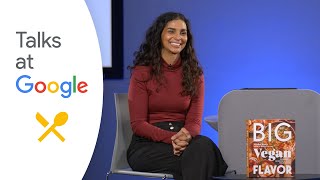
A transcript of a Talks at Google conversation (recorded Jan 29, 2025) with cookbook author and YouTube creator Nisha Vora, hosted by Kimberly. Nisha recounts her journey from corporate law to food content creator and bestselling author, explains the goals and structure of her new cookbook Big Vegan Flavor (a comprehensive, educational vegan cookbook with 150+ recipes), describes signature recipes and techniques (e.g., oyster- and king-oyster-mushroom “fried chicken” and “scallops,” silken-tofu chocolate mousse, lentil+walnut Bolognese), shares pantry staples and community-building strategy for Rainbow Plant Life, and outlines near-term projects (meal-plan subscription, possible physical products).
Chapters
Hi everyone.
Thank you so much for joining us today. My name is Kimberly. I'm actually a YouTuber based here in San Diego. I'm really excited to be hosting this talk and very excited to introduce vegan cookbook author Nisha Vora. Also YouTube creator. Nisha's second cookbook, Big Vegan Flavor, became an instant New York Times bestseller. Adds an essential comprehensive guide to vegan cooking. And you will probably turn to this cookbook over and over again. Featuring over 150 recipes. It's got you covered for an easy weekday lunch to a fancy dinner party. Welcome Neisha. We're very grateful to have you joining us today.
Hi Googlers.
This book is stunning. Congratulations, by the way. I'm not vegan, but I do love to eat plant based foods and I really had so much fun, like trying these recipes, eating the recipes, of course. This is actually probably the first cookbook that I've, that I've read and enjoyed reading. It has like beautiful introductions and you have amazing blurbs in front of every single recipe that are really meaningful. I would love to kind of start from the beginning and where did your passion for food come from?
Where did it come from? Good question. So I started teaching myself how to cook when I was a teenager. Just kind of like wanting to eat something different. I started watching the Food Network, which was very popular in the early 2000s, and I, I was very academic, so I was like a nerd in school. I'm sure some of you can relate. And the way I learned stuff was by taking notes and like this very formal process. So when I would watch the Food Network, I would like pause and take notes and like, I was just absorbing all this information. And like, I did cook in the kitchen, but I think initially I was just like learning and falling in love with the process of learning about cooking. And as I got more comfortable, I started experimenting. And I think what really helped me fall in love with cooking was the experience of serving food to people I love. So my family and my best friend's family who lived up the street from us, we would do these like every few months feasts. It was just like a mini Thanksgiving any time of year. And I would like spend all weekend cooking like eight or 10 different dishes and then we would all sit down to eat. And just seeing the look of joy and excitement on people's faces was something so powerful about how food can really bring happiness and bring people together. And so that's how I really fell in love with cooking.
That's amazing. And can you share a Little bit about your journey from, I know you, you initially worked in the corporate world as a corporate lawyer to, you know, how you became a bestselling author and, you know, content creator.
Sure. So I used to be a lawyer in a former life. And I went to law school at 21, like, convinced that I was going to practice law forever and save the world using my law degree. And I loved law school and, like, the intellectual rigor. But practicing law is much, much different than going to law school. I practiced corporate law at a big New York City law firm. It was terrible. I was waking up every day anxious and miserable, like, what am I doing with my life? Like, why am I going to work with people who don't value, like, me as a human being, don't value my contributions, don't value my time. Then I practiced nonprofit law, which was much better, but still was feeling really anxious with the combative, kind of combative litigation environment where you're like, you're adversarial with your opponents, you're not, like, working together, you're not collaborating, you're not creating something. And it was just really out of sync with my personality. And after four years of practicing law, I was like, I don't want to keep waking up every day and feeling like, do I have to go to work? Like, do I have to get out of bed? Like, I'm tired of living for the weekend of, like, you know, I want to live every day to its fullest, not just Saturday and Sunday. And so I started thinking about, like, what else am I good at? What else am I interested in? And I tried a couple different things on the side. And ultimately I came back to food, which, again, again, like, I fell in love with as a teenager. And I just started posting photos of the food I was making on Instagram back when it was a photo only platform, square photo platform. And I had gone vegetarian around the same time, and then shortly after vegan. And so I was just excited to share, like, the new things I was learning. And it started to take off and I was like, well, maybe I can use this budding Instagram account to turn it into a career or to at least find a different job out of the law. So I applied to a few food startups in New York City where I lived, and then found one where I did a bunch of different things and started building my own business on the side until I think I did that for two and a half years before I felt comfortable and financially secure enough to, like, go off on my own. Wow.
I think that's so courageous and brave because, you know, back when, yeah, Instagram was just photos and no one's, you know, growing up thinking, like, I want to be a content creator. Like, we're not dreaming of that as little girls in our rooms. So like, I just really brave to just like follow your passion and like, want to do something you love. We do spend so much of our time working. It's like amazing if you're passionate about it. So thank you for sharing that. But let's go ahead and dive a bit more into the book because big vegan flavor you also had wrote your first cookbook was the Vegan Instant Pot Cookbook. What kind of was the inspiration for that cookbook versus this, this big vegan flavor beauty that we have here.
Yeah. So about a year and a half into like my journey as a content creator, which when I started in 2016, that word didn't exist. Like someone told me eventually, you're an influencer. And I was like, what is that? Like, I've never heard this term. But about a year and a half into that, when I was still working at a food startup and doing all of my stuff at night, after work, in the mornings, before work, on the weekends, an editor from Penguin Random House emailed me and was like, I like your instant pot recipes. Like, have you ever thought about writing a instant pot cookbook? And I was like, do you have the right email address? Like me, like, you know, I've been doing this for so little time, didn't really know how to measure success in this new career. And so I, you know, a bit of an imposter syndrome. Like, you want me to do this? Of course I said yes. Not knowing like anything else, I was just like, this seems like a one once in a lifetime opportunity. So I wrote that book because the editor wanted me to write that book and I'm proud of that book. But this is the book that I would write like if I got to make. Well, I did, I did write this book. This is the book I like dreamed of writing for so long. I wanted to provide a comprehensive approach to plant based cooking, to vegan cooking that is exciting, that's not less than, that's not trying to be something else. And that shows you plant based food, vegan cooking, whatever you want to call it, can be just as exciting, just as flavorful, just as delicious than any type of cooking. And here's kind of how to bring it together.
That's what leads me right in that to me, like, I know it's like Called like the Vegan, the Vegan Bible. To me I'm like, this is the holy grail of vegan cooking. Especially like someone who's not vegan but loves plant based food and loves to experiment. I love that it's really digestible, no pun intended there. In terms of like those first couple chapters where you're talking about flavor profiles and texture and cooking techniques, can you share more about the intention behind that and like why it was so important for you to kind of incorporate that into the book and share that and not having it just be 150 recipes for people to like browse through?
Yeah, I think when I first went vegan eight, eight and a half years ago, there wasn't a book like that that gave me all the tools. So I kind of just had to figure it out on my own. Just struggling along the way, like, okay, I'm going to take this recipe and I'm going to take out all of the cheese and the butter and the eggs and then I'm left with like kale and quinoa and I'm like, I don't want to eat this. Like, it's so boring. So there was a lot of trial and error on my part and I wish that there had been a resource that was like, here are ingredients that will make your food taste better. Here's how to pair those ingredients together. Here are techniques that can improve the texture of ingredients like tofu or cauliflower or lentils. And so I wanted to include a lot of educational content that wasn't just a recipe because I think one of the strongest skills you can have as an adult is knowing how to cook without a recipe. Like being able to walk into your kitchen at 6pm on a Wednesday without any plan and just be like, oh, I have these six ingredients. I can still make a delicious nourishing dinner for myself or for, for my family. And I wanted to give people the tools to be able to figure that stuff out for themselves. Instead of just be like, here, follow this recipe. I love developing recipes is my job, but I also wanted to incorporate the educational part which goes back to like me being a nerd and like learning how to cook by learning. Learning how to cook by learning is very circular, but learning how to cook by like taking these big picture principles and then putting them into action. Yeah.
One, making it to like tangible. I'm also like a learn by doing, like you gotta, you know, figure it out yourself first and then you can kind of teach someone how to do it.
That's what one of the things I.
Really enjoyed about this book. So I'm not a gourmet cook. I shouldn't even call myself a cook, but I was able, like once I read kind of oh about deglazing or kind of all of those techniques and acid and like it all made sense. And I think there was a lot of science to that. And I imagine like, you know, probably learned how to research very well as a lawyer and so, you know, you really know kind of how to teach that and all the science to it. I would also now like to jump into some of the like mouth watering recipes inside the book. Specifically, you have an amazing fried chicken recipe in this book, Cornbread and slaw. What is your secret to the amazing fried chicken in this book?
So I'll start off by saying, like, most of the recipes in this book aren't trying to be a meat product. Like, I think vegetables and lentils and things like that are extraordinarily delicious. There are a couple recipes like this one where I'm like, I want to deliver that comfort food experience of a dish that you had in your childhood or before you went plant based, that kind of delivers the flavors and textures. So for the fried chicken, it's oyster mushrooms, which I don't know if you're familiar with. They're incredibly meaty. And when you batter them in any kind of flour, spice, cornstarch mixture and you deep fry them, like, it's bound to be delicious. And the seasoning kind of gives you that flavor of like the typical fried chicken. And then you pair it with cornbread and slaw so you get like that Southern comfort food experience, which I didn't grow up eating because I'm not from the south, but I have several friends in the south who are like, this is definitely that experience. Like, it's obviously not chicken. And if you eat chicken a lot, you might not, you might know it's not chicken, but it delivers that same experience. And that to me is what I'm trying to do with food is to deliver the comfort and to deliver like the enjoyable textures and flavors that we all crave regardless of whether we eat animal products or not.
Yeah, that's correct. So all those folks who like, may want, they don't want to necessarily feel like they're giving up things they love if they want to be vegan. But it is like they still get that same feeling and the comfort from the food. So it can be a substitution so that if they do need to go vegan for health reasons or want to do it for environmental reasons. It provides another way for them to enjoy it. I love that. And then I kind of want you to veganize these common dishes or kind of shout out. You mentioned some of these recipes in the book. So, like, the secret ingredient to a.
Bolognese that you would do. So I have a Bolognese recipe, not in the book, but on my blog, and I use red lentils and walnuts. So lentils kind of have a natural meatiness to them if you pair them with certain ingredients. Walnuts are very high in glutamate, is essentially what umami is. And so when you combine lentils with walnuts, with some red wine, some tomato paste, all of these ingredients kind of give you this, like, deeply savory, almost meaty, like, feeling. And then with the walnuts not being with the lentils and walnuts having a little bit of texture, you get a little bit of a bite. So it's not just like one mushy texture, which I'm not a fan of, like, all mush. Yeah.
And that you mentioned in the book would be something if you, in order to flavor layer it, you, like, do deglazing and, like, you do it one layer at a time with the lentils.
Yeah. So I think one of the most powerful things you can learn how to do as a home cook is to layer flavors. And I give an example in, I think, chapter one of what that means. But essentially, it's like you start with one layer. Let's say it's your onions that you're sauteing in oil. Then you add a little bit of salt, then you add maybe your garlic, then you add maybe your fresher dried thyme. Or then you deglaze any browned bits on the pot which have lots of flavor. And you could deglaze it with water, but if you do glaze it with red wine, in this instance, it's much more delicious. The acidity in the wine tends to bring out the flavors in the lentils and in the walnuts. And then you might add your lentils and your walnuts, you might simmer it. Then you might add some tomatoes, and then you might add some more salt and pepper at the end. So it's just like layer after layer, gives you something different. Instead of adding everything at once, which you're just going to get a dish that tastes a little bit flat, it'll be edible, it'll sustain you and nourish you, but it might not excite you. And that's, I think, the key to enjoying Wholesome food is to make it in a way that excites you.
Yeah. Make it taste good, full of flavor. Another secret shining star. You have a scallop recipe in the book.
Yes. So there's a mini chapter in the dinner chapters recipe called magical mushrooms, because I truly believe they can do so many things. So one of them is the fried chicken. Another one is the scallop. So we take king oyster mushrooms, which have these kind of thick, meaty stems, and you tenderize them in a brine, so that's like a salty solution. And so it makes them less kind of tough and mushroom like and a little bit softer and kind of melt in your mouth texture. And then you sear them in miso butter. Miso is going to enhance the natural savoriness of mushrooms. And so you get this just very savory deluxe package. And it has the texture similar to a scallop. Again, if you're eating scallops all the time, you will know it's not a scallop. But again, it delivers that experience and kind of what you associate eating scallops, what it's like.
And then I think this is my favorite, your chocolate mousse recipe.
Oh, that one's so easy. You just put everything in a blender. So the secret in that is silken tofu, which is, you know, you get some protein in your mousse without even expecting it. But basically you just blend that with some melted chocolate and cocoa powder, a couple other ingredients, and it kind of gives you this luscious, creamy melt in your mouth texture. Silken tofu is wonderful for desserts like that. And then for me, a perfect chocolate dessert has the richness of dark chocolate, but then something a little bit tart to balance that. And so I pair it with, like a raspberry compost. You get, like, sweet, bitter chocolate with tart, fruity raspberry. And to me, that's like the ultimate pairing.
Yeah. I have tried making many chocolate mousses with tofu. Yours is fantastic. I think the best one, like, I wouldn't even go back to having regular chocolate mousse like tofu for the win. But I think it's. You have espresso and cinnamon. I know they're both optional, but I added both of those and it's just like, takes it to the next level.
Yeah. So that is one of the, like, little things I learned in my culinary education from the Food Network. I remember watching Ina Garten, who's like, all in the news these days, but I was an original Ina garten fan in 2002. And I learned from her that, like, espresso really brings out the chocolatiness of chocolate. Cinnamon does to a lesser extent, but, yeah, that's why both of those are in there.
So delicious. And then we're in fall right now, so kind of some seasonal veggies that you also have highlighted in the book. What would, I guess be your favorite recipe in the book for your Brussels sprouts?
So there's one Brussels sprouts recipe, so I'll go with that. But there was one out there, actually that the kitchen here lovingly prepared. It's maple roasted squirrel squash and chickpeas with mint pesto. So right now, winter squash is just so perfect and you can use any variety. But what I like to do instead of, like, I think you probably all had roasted butternut squash at some point. You peel it, you chop it into cubes, you roast it. It's delicious, but it's kind of like soft. And I wanted to, like, give it an additional texture profile. Again, like, I don't want to eat the same texture of one thing. This is a hot take, but I don't like mashed potatoes for this reason because it's just like the same texture over and over. I know probably a lot of you just finished eating mashed potatoes and you're probably aghast, but that's. So this recipe, you slice the squash really thinly and you toss it with olive oil, maple syrup, and you roast it in a super hot oven so it comes out a little bit crisp, a little bit chewy. And so you get, like different texture profiles and something a little bit unexpected.
Well, you just brought up potatoes. So then I need to bring up your smashed potato recipe with all of those amazing sauces. But I think the texture, like, how they actually get crispy and it has multiple textures in there. What do you think your favorite sauce would be to go with the crispy smashed potatoes?
So there's a whole chart if you can't pick. Cause the first can't pick chapter recipes has like about 50 condiments and sauces. So, like, every flavor profile, you'd want one of them. That is just a classic for me would be the ranch dressing. So crispy smashed potatoes, ranch dressing. Maybe some, like, chopped chives or dill on top. The avocado crema is a really fun one. If you're looking for, like a Mexican spin, you could do some, like, charred corn and black beans to like, make it more of a full meal or like a Heavy appetizer.
Oh, my God. I just ate and I'm starving. We just got to try all these delicious items. And then what about pears? Those are in season. You have a. Is there a cobbler?
Yes, there's a crispy cobbler cake with pears that would be great for Christmas or Hanukkah or whatever winter holiday you celebrate. It is a crispy but fluffy cake. So I love cake. I'm not going to poop on cake. Like, I. Sorry, that was a weird word. I'm not, I didn't want to. I didn't want to use the curse word. I'm not going to throw cake under the bus like I did mashed potatoes. But I think it's nice to have different textures in cake. And so instead of just a fluffy soft cake, this cake is like caramelized and crispy on the edges, but like fluffy and tender on the inside. And there's some spice marinated pears that go in there. And it's so lovely this time of year. And if you have pears, if you're, you want like a high reward, low effort dessert, definitely give that one a try.
I'm drooling again. Also, like, we've talked about just a handful of these recipes. There's over 150 recipes. This, this book is just amazing. But I'd love to kind of talk a little bit more. You know, this is called Big Vegan Flavor. Just about vegan cooking in general. Do you have any top pantry staples for just like easy, flavorful, like what would be your go to for vegan cooking?
So flavor booster wise? Definitely. Soy sauce, tamari, both of those. They're mostly interchangeable in my recipes, but those are fermented. They have a lot of savoriness, which when you're cooking without animal products, you are missing some of the savoriness. So I'm always looking for ways to build that back in nutritional. Yeast would be another one. It is essentially, again, glutamic acid, which is the heart of umami. And so a little bit of that in a sauce or in dressing or in a cream sauce is definitely going to give you more of that subtle, cheesy savoriness that I think could be used in many dishes. What else? Again, we talked about walnuts. Those are really underrated. They're so good for you. So full of Omega 3s, but also like you can use them to add a little bit of that natural umami flavor that we're always looking for. And then in terms of just staples to have on for cooking any kind of lentil, any kind of bean, you can do so many things with that. There's lots of recipes in chapter six for those and they're so good for you. Inexpensive, you know, environmentally friendly, all the good things.
Yeah, and I think this book already does. It debunks that vegan food is, doesn't have flavor because your recipes are all delicious and they have a ton of flavor. But are there any other kind of vegan food myths that you would want to kind of debunk or kind of share some misconceptions about besides flavor? Because we know it can be delicious.
I think people are always like, where do you get your protein? I feel like we've, you know, I've talked about this exhaustively, but you know, chapter six is close, called the proteins. There's plenty of plant based proteins. You might need to be a little bit more intentional about what you eat if you have certain protein goals. But it's absolutely doable. I think also a lot of people will say, oh, I don't like how vegan food is trying to be like, there's the fried chicken recipe, I don't want that. Why can't you just not eat those things? If you don't eat meat, why do you want to eat fried chicken? Those kinds of things? You know, I went vegan for ethical reasons after seeing what we do to animals. And so it's like, not that I didn't like the taste of meat, I didn't want to eat the actual animals. And so I think it doesn't really matter why you're eating the way you are. But for people who are like, I don't want something that's trying to be meat. There are so many delicious things made from again, beans or lentils or vegetables or grains that are just genuinely delicious on their own. They don't need to try to be meat or they don't need to try to be dairy. I think we often treat those ingredients as kind of like second tier status. Like you have your meat at the center of your plate and then you have like a vegetable and like a grain and you're not really giving a lot of love to the vegetable and the grain. But those things can be truly delicious if you treat them like they're the star.
Yeah, like the vegetable is the main event. One of the chapters is called like, yeah, vegetable as the main event. So then, you know, I kind of wonder, like, how do we learn to associate and equate like these big, beautiful, delicious vegetables as also, like flavorful healthy and, you know, good for the environment.
I don't know if I understood the.
Question, sorry, how do you know? Like, how can we, I guess get the word out there? Or how do we kind of, you know, besides a beautiful book like this, help teach people that, you know, there's so much more to vegetables and how to make them the main dish, that they can be delicious and it's can be good for the environment and they can be flavorful, I guess. How would you engage with more folks that maybe wouldn't necessarily pick up this book? How do you share with them?
So my philosophy for the last several years in my content has been to show, not tell. So when I went vegan, I learned all this information. I watched like 10 documentaries and I was like raving to everyone. I was like, do you know this is what we do to animals? Do you know this is like what we do to the environment? And everyone was like, we don't want to hear it, like, stop it. And I was getting so frustrated because I was like, I have this information I want to share, but people don't really like being told what to do. People don't like being told, hey, your diet's wrong, or hey, you're not eating enough vegetables or whatever it might be. But what people like to do is to eat. So if you can show people, hey, cauliflower can be incredibly delicious or fennel can take your salad over the top. I just encourage people to try experimenting with different vegetables. Try some of the recipes in the book and then feed them to your, I don't know, skeptical family members, friends, et cetera. Because showing is, I think, the best way to subtly change people's minds and get them to be more open minded about trying different foods.
That's exactly what I was thinking in my mind when I was like wanting to get that question out of my mouth. So that's perfect. Yeah. Show, don't tell. I completely agree. I want to talk a bit about your community. You have built an amazing community. You have over a million subscribers on YouTube. Tell me more about how Rainbow Plant Life started and how you've kind of engaged your audience.
Yeah, so I started again, as I mentioned, as a side hustle, as a, just a, well, first just as a hobby, then it turned into a side hustle. And so I wasn't, I didn't really know what I wanted out of my like, content. I didn't know like I was doing it because I was learning all this stuff, but I wasn't sure like what the goal was. But over time, as I started to see that, I was able to influence the way people were thinking about food and cooking. I really wanted to share information in a fun, approachable way and to inspire people to try more vegetables and to think about food a little bit differently. And I never want people to feel pressured to go vegan. Like, I just want people to, like, eat more vegetables, try to reduce their intake of animals, and if they fall in love with that way of life and decide to go vegan, amazing. But I think part of my approach is, like, inviting everyone, not making it seem too restrictive or too judgmental. And when I started YouTube, I don't think I had any of that, but I wasn't really sure what I was doing, and I was just kind of, like, grabbing like, oh, everyone's doing this. Let me try that. And it wasn't until I decided to just focus on what I thought I was good at and to lean into what I thought I was good at and, like, kind of block out all the other noise and, like, kind of stop looking at what other people were doing was when I started to see results. And it's been a really powerful lesson about, like, trusting your intuition and doing what naturally feels good to you instead of trying to do what everyone else is doing, which is very tempting in this day and age where, like, we can see what everyone else is doing. And it's very easy to just like, okay, I'm gonna do that. I'm gonna do that. I'm gonna do that. But getting quiet and listening to what your intuition is telling you.
And I am now a part of your community. And as I said, like, I'm. I'm not vegan. I'm sure you have folks with all different types of dietary preferences that are now a part of your community. How would you. How do you get folks that are maybe not vegan to do. To dip their toes into trying vegan recipes as we kind of talked about, or do you have any advice that you share with your community on those? Just kind of looking to try these recipes?
Yeah, I mean, I think I lead into comfort food to get people on board. You know, there's people are at different stages in their journey. So some people follow me, and they've been vegan for 10 years, and they're, like, fully committed. And then there are some people who maybe just like, oh, I should maybe eat meat once or twice less per week. And so I think leaning into the comfort food angle of, like, oh, you can still have a Bolognese, and it'll Be delicious and it'll scratch that itch. Or you can still have this really comforting Thai curry, and it'll still satisfy that, like, Thai takeout curry feeling that you're looking for. So I'm not someone who's like, everyone, eat a big kale salad. Because, like, if you are on this side of the journey, you're probably not interested. I can make you an amazing kale salad. But some people are not even open to starting that conversation. They've heard all the things about kale, They've heard all the things about salad. They've had bad salads before. They don't wanna try that. So I try to offer a variety of different recipes, some which leave heavily on the comfort food angle, some of which are a lot more vegetable friendly. And having that balance, I think, allows people from different stages of their journey to, like, find something that they like.
Yeah. Okay. I have a couple rapid fire questions for you. If you had to only pick five spices to bring with you on a desert island. I know only five. You have five. Salt doesn't count. That's included.
Oh, obviously it's number one ingredient. Okay. Five spices. Curry leaves, black mustard seeds, cumin seeds, because then I can grind them into ground cumin as well. Cardamom, cinnamon.
Oh, okay.
But, like, now I'm like, what about coriander?
It's gonna be rough on that desert island.
Favorite food. Any kind of East Asian or Southeast Asian noodle soup. That's like, cheating.
No, we'll give it to you. We'll give it to you. What about a food you absolutely hate?
Not a fan of parsnips? Oh, they're kind of. Nobody eats them. So you're probably like, what is a parsnip? There's. There's max. What else do I dislike?
It's okay, we can go with parsnips. That's good. We'll see then. If you could only eat one food for the rest of your life, this has to be specific.
Wasn't this the Asian noodle soup?
No, this is one for the rest of your life. That was your favorite food.
Like, do I get to eat other foods or just have to eat this?
No, you just have to eat this for the rest of your life.
So we're not, like, thinking about dying of scurvy or anything?
Nope. No, this is just a rapid fire. There's no health ramifications. You can pick again. You can go with the, like, spice noodle kind of, like, route, and it can be broader.
I'll say tofu because you can prepare it in so many different ways.
There you go.
And I guess I'll at least have protein.
Yeah. Okay, what is next for you now? I'm sure you, like, need a break after you just spent like four years working on this amazing book, but can you give us any type of hint or sneak peek, peek into what is next or even, you know, dream out there that you would love to do someday?
We should look out questions. I'm definitely not ready for another book. This one took many years and I'm, like, still processing, but. So we launched a meal plan subscription at the beginning of this year where we. We don't send you meals, but we send you, like, kind of like everything. You would want to make the logistics of weeknight cooking easier. So we send you a PDF that has like, your grocery list and your set of prep steps to do it and the things that will make your weeknight cooking easier. So we're trying to envision and work on what stage two is like. Maybe it's an app, maybe it's a website portal where you can customize more. So we're kind of in the early stages of developing version 2. I would love to launch a physical product. We're not like, anywhere near that, but I get a lot of requests to do, oh, I love this spice blend you make that you use in this recipe, or I love these sauces that you do like. I would love to be able to buy them at the store when I don't have the time to make them. And so that's definitely on our, like, somewhat distant, somewhat near future radar. Somewhere in the middle.
Oh, my gosh. I would love to buy the five favorite spice blends to have on Niche's desert island. And since we are here in San Diego, can I get some shout outs to favorite things to see, do and eat? Sure.
Eat. We talked a little bit about this earlier, but my favorite vegan restaurant in San Diego is called Donna Jean. They make incredible handmade homemade pizzas and pastas. Everything in the kitchen is, like, made from scratch. The cheeses, the hot sauces, it's incredible. For pastries, I love Hazel and Jade. They make incredible pastries, like, really high quality pastries, custom cakes, things like that. I also love Maya's cookies. If you need like a really good cookie fix and then.
More from Guy


Cheryl Strauss Einhorn | The Human Edge: Smarter Decisions in the Age of AI | Talks at Google



Rachel Glennerster | Innovation and the Center for Global Development | Talks at Google

Rebecca Winthrop | Rethinking the Purpose of Education in the Age of AI | Talks at Google

Dr. Robert Wachter | A Giant Leap: How AI Is Transforming Healthcare... | Talks at Google



