No Plan, No Capital, No Model... No Problem
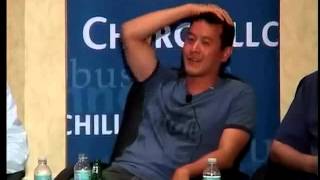
Founders of Plenty of Fish, Hot or Not, Fanpop, and other startups explain how they launched with almost no money. They share survival tactics, early metrics, and why some turned down venture capital to keep control of their companies.
Chapters
Welcome members and friends of the Churchill Club. If you're not a member of the club and you enjoy tonight's program, please consider joining the club for access to members only programs. And we've got some great upcoming programs, including mobile TV, will a cell phone be the next mega TV market? An annual CIO roundtable with the CIOs of Google McKesson Levi's in Hasbro, which is always a great event. We also have a networking event coming up in July with Christine Comerford lynch, the author of Rules for Renegades. There are newsletters on all of your tables and you can get the whole complete list on our website, www.churchillclub.org. and if you join before, if you're not a member and you join before June 29, you'll get an invitation to one of our private member receptions, which we hold before some of our events. And now on to tonight's program. The title for tonight's program is no Plan, no Model, no Problem. Companies that defied what VCs will tell you. And I'm really honored to welcome tonight's panelists. Their bios of each of these people on your table. But very quickly, it's Marcus Friend, the founder of Plenty of Fish, James Hong, co founder of Hot or Not, and then Marcus Krasmarek, Chief Engineer at MyIsMom.com, dave Liu, the CEO and co founder of Fanpop, Karen Northup, CEO and founder of Corefino. And our moderator is longtime club favorite and startup guru Guy Kawasaki. He's been moderating our annual Startups program for a number of years and as he likes to say, he is the second evangelist for the Mac and the first person to hold that title. So he was previously an Apple Fellow at Apple Computer and he recently founded troomers@www.troomers.com and is the author of eight books, including the Art of the Start. And with that, please join me in welcoming Guy Kawasaki.
Thank you very much. I was just informed that I have now moderated or spoken at the Churchill Club 16 times, so I hold the record. Unless your membership is declining, that's a good thing. I'd like to start off by asking each of these entrepreneurs and entrepreneurses to introduce themselves, explain what their company does. So, Karen.
Yeah, I'm Karen Northup. I'm founder and CEO of corefino. I am what I call a recovering cfo. I went to the dark side and crossed over into the CEO world. We provide outsourced finance and accounting services, much like ADP does payroll. We do the finance and accounting services, primarily for startups. And we'll get to the rest of it later.
Okay. Is the voice okay? Can you hear way back there?
Everybody.
Everybody's okay. All right, Dave.
My name is Dave Liu. I'm CEO and co founder of fanpop.com we're basically a user generated fan site, community site that allows fans and fanatics of any topic to create communities around the topic and share content from videos to photos to articles. They find and publish articles that they want to write and basically find one another in communities.
Okay, now we have two Marcuses. This is the first Marcus and the way you can distinguish them is one Marcus is already rich and the other Marcus is going to be rich. This is the going to be rich one. Marcus.
I'm Marcus Kasarzak. I'm chief engineer@mayasmom.com the going to be rich Marcus. MysMom.com is a social network for parents. It's a place for mothers to come online and communicate and talk to each other and talk to a real mother about real issues. It's not necessarily just what you read in a book or an information resource, but actually hearing the real truth about motherhood.
Okay. And the next person I owe a great debt to because the way I look at my life, the pivotal moment in my business career was seeing Macintosh and meeting Steve Jobs. And then the second pivotal moment in my life was hearing James Hong explain the model for Hot or Not. So my life is divided between before James and after James.
Me.
J. AJ so this is James Hong.
Hi. Hi. Thank you very much. My name is James Hong and. And I'm best known for starting a website called hotornot.com which allows users to submit their pictures for other people to rate on a scale of 1 to 10 on if they think they're hot or not. So very simple idea. We turned it into a dating service. So if you think they're hot, maybe you can date them and I can go into the model later, but it basically works like a bar. And so I work on that. I've also started some other companies, savemyass.com with Al Lieb, who started Evite, which is kind of a funny idea, but basically Hot or Not does that. And then we were doing all sorts of other fun stuff. And basically my mantra is just have fun and let everything else will come along with it. So I'll just leave it at that.
Okay, now the rich Marcus.
My name's Marcus. I started podcast plenty of fish.com, which is a free online dating site. So it's just like all the other sites, but it's free.
Okay. For the audience. Would each of you explain the genesis of your company? You went to Harvard Business school. You spent two years writing a business plan. You called in McKinsey to help. You had focus groups. What's the story of how each of you started? So we'll start down there with Marcus.
Back in 2000, there was something like 200 tech companies in Vancouver, and within a span of three years, it was down to about 10. So during that time, I would jump to a different company every six months. And, you know, you go to a company has 30 employees, and all of a sudden it's down to five. And then during the time, I only knew Microsoft, I only knew ASP, and I needed to learn ASP.net so I went and created this dating site that could teach me how to teach me asp.net because the problem is, every time I read a book and I flip the page, I forget everything that was on the page before. So I can only learn by doing things. And this was the easiest way for me to learn.
So you're probably the only good thing that came out of the asp. Well, that's another story. Okay, James.
Yeah, so I actually did get an MBA back in the day and started a company and raised venture capital and watched it grow too fast and then die. So after I did my mba, though, I basically had the consulting gig lined up and that was going to pay my debt and stuff like that. But I realized that at that point in my life, I was too young to worry about being conservative and making money. So I said, forget it. I'm just not going to work, and I'm just going to try and start something. Some friends and I started working on various ideas, and one of them down the road happened to be this Hot or Not idea, which was literally a joke of an idea. We just thought it would be really funny. And, you know, we weren't doing anything anyway, so we built it. And within, you know, the first day we launched, we just did it by telling 40 of our friends. And that day, we had about 40,000 people come to the website. And by the end of that week, the milestone that we tried to measure was when were we going to break a million page views a day?
Day.
And we hit that in eight days. And so it grew very quickly. And just, I guess on the topic of venture money, you know, at the time, this was October 2000, when we basically felt like any VC who would call us asking if they Wanted to invest must have been really desperate and an idiot because who was investing Money back in October 2000, the market just crashed and everything. So our theory was anyone who would want to invest in us was an idiot. We didn't want on our board. And so we said, forget it, we're not going to take money, we're just going to like just the goal at the time was just make enough money because in reality at the time, we didn't really make any money from the site, but what we got was a lot of props from our friends and people we would meet. And so the goal at the time was just keep the thing alive and it would be like our legacy. And somehow, you know, we were always dorks in high school and we were dorks in college and all of a sudden we were cool. We just needed to maintain it so we could be cool the rest of our lives. And so that was the goal.
So you dated better looking women after you started, right?
Yes, no comment. But yes, probably.
Did your rating go up as you. As time went on?
Yes, actually it did. So we actually measured that. Like I put my picture anonymously on the site and I got like a six. And then I put my picture on the site but linked to so people would know I was a founder and I instantly became a 9.5. So I owe 3.5 to 109. Truly. I know I'm a 6. So. But anyway, so we didn't. But in the end we realized we had to pay the server bills. So we tried to figure out a way to monetize. And we had this site where people were just coming, rating people. And we said, well, gee, why don't we create a dating site out of it? But our demographic is 25 and under, much more younger demographic, submitting their pictures to be rated if they're hot or not. And no one really kind of tackled that market. So we said, well, maybe there's an opportunity there. So we kind of made a dating site that essentially works like a bar. Most dating sites like yours are like directories and that's great. People come in and they're saying, I want to get married. Let me look with search criteria. Where is the girl of my dreams? Our system is a lot more casual, more fluid, and it basically works like this. I look at people in my area or whatever. I look at girls and I say, yes, yes, no, yes, yes, no. It's like, do you want to meet her? And if I say yes to someone, then we'll show her my picture and profile and if we both click yes to each other, she clicks yes back. Then we can write each other, provided one of us is a paid member. And it's essentially how a bar works. I look at a girl, I smile. You know, that's like me clicking yes. If she smiles back, that's like, okay, we're good to go. Except at the end of the day, at the end of the day, one of us has to buy drinks and it's usually me. It's usually the guy, unless you're a really good looking guy. But as I said, I'm assuming so, yes. So that's kind of the genesis of our business model.
So you're a pattern recognition company basically, in a sense.
Anyway, that's our story.
Okay, well, you know, we, in case I forget, we need to get this story out and I hope you tell it the way I remember it, which is the day that you knew you needed to hire some outside employees because your mother and father were telling you yes.
Right. So we recognized pretty early on that in order for the site to continue growing and to basically be cool and not scumbags amongst our friends, we had to make sure there was no porn on the site. And so we had a lot of adult website operators basically putting pictures on our site of naked girls and stuff, saying, hey, email me at whatever email address. And so I said, jim, we need my, my co founder, Jim, I said, we need to fix this. So he built a tool where we could go through all the incoming pictures as they were being submitted. And I was too busy. Jim was too busy. So who was going to do this? Well, clearly the answer is my newly retired parents. So they were happy to help out and be a part of their son's life. So I called my dad the day after they started doing that and I said, hey, how's it going? And my dad, who is this at the time, 60 years old, recently retired, Asian engineer, very conservative, pocket protector type, literally, he actually handed down his slide roll to me when I was 18 and he said, yeah, it was really interesting. Today, mom saw lots of pictures with two girls and one guy. And this one picture, this guy was doing this. And I said, jim. I called Jim and I'm like, jim, we need to open the moderation system to other people. My parents can't be looking at porn all day. And so that is the genesis of how we actually, luckily a lot of companies, in fact most dating site companies pay a lot of money for their employees to screen pictures. And we basically opened it to the community because one we had no money and two, my parents couldn't be looking at porn all day. And that actually helped our model a lot.
And do you have any new siblings because of.
After the two dating sites comes the parent site?
Of course it's vertical integration.
It gets worse.
Then you're gonna need money.
Anne founded the company back in early 2006. It started with basically an idea that she wanted to do something more than an information resource. She had two kids and she wanted a way to communicate and way to connect with other moms in a way that she wasn't able to do with current site. So she saw the gap there. So she ended up, she hired me as employee number one back in March 2006 and basically we had the idea of okay, we're going to do this parent site. But we weren't quite sure what. So we ended up pulling. We just used friends and family and just kind of tapped the network that we had of people we knew and parents we knew and things like that and built up like okay, here's a feature list of what people say they're interested in. And we basically tried to build a quick rapid prototype. Got it out in June within like two, three months. We got a prototype out there and then just started iterating on that. Found out all the features they said they liked they actually didn't use. So we had to build all the features they started using, expand on those things and just kind of build it out from there. It was all self funded from Ann and most of those funds came to me, which was nice. And yeah, so it started from that and it was just. We've been going since.
OK Dave.
So my background is actually in product management. I started at yahoo back in 99 and one of my colleagues and I had remained close since then. We always wanted to do something together but we didn't know when. And after going to Stanford for business school I went to ebay and was working in the affiliate marketing area and realizing that we were paying out several hundreds of thousands of dollars to individuals who were basically selling stuff on their websites passively. These were guys who were sitting in their boxers at home and putting out websites and making tons of money. And another inspiration actually ironically, these two guys on the end here, Marcus has a picture on the web of a check for $900,000 for Google AdSense ads from his free dating website. And that was when we saw that. We said we've got to be able to do this somehow. And actually James spoke at one of my Stanford business school classes and was Talking about working from a cafe in Mountain View off Castro. And the more my partner Dave and I thought about it, we were like, yeah, that's where we want to be. And so basically we thought about what we could do. And I had, at the time I was working on a project, personal project, because of the ebay experience and seeing this, just to test out AdSense and all the affiliate marketing programs out there. And I had a camera website that was making income right away from the first month. I made about 1000 bucks from Amazon ads or whatever and not bad for passive income while I had a day job. And then he built a site for the office, the NBC office site called Dunderball, and that took off too. So we thought we want to create a new kind of platform for fanatics of different topics to come together that goes beyond just the forums that have been around for a decade or so and the Yahoo groups that are out there. We wanted to create a way that people can interact from the Trekkies to the Cheeseheads to the Cameron crazies, all these people who are really fanatics of topic and kind of find this community of other fans similar to like a Wikipedia, but more on social, kind of more social than it is like a reference site. So we launched it in August and we've been self sustaining since then. So it's been painful, but it's been fun.
Okay.
Karen?
Hmm. I probably started this to probably prove my mother wrong in college. She said, you know, you'd be a great accountant. And I went accounting. Huh. So took the accounting degree, graduated, went to public accounting, traditional entrepreneur route. I got out of that. I at least got a job in a startup. And I did that for about 8 years and rapidly became a CFO. Filed my first S1 at age 26 and realized that I was in trouble if you reached the top of your career at 26. So I decided, what am I going to do? So I stopped working for a while and built a house and decided that wasn't a good idea. But in the meantime, all my friends were busy doing accounting. Hey, when are you going to go back to work? When are you going to do? And I'm like, ugh. So I came up with an idea that I used as sort of the story. And I said, well, I'm going to figure out how to find a way for companies to get accounting without having to pay for it. A lot of money for it. So I ultimately, my first beta customers were my contractors. It was a disaster. Worst beta customers ever. But I started the company out of my attic because there was no house or garage. I demoed it. The attic was it. I slept, I had a laptop. It was complete attic driven company. When I moved to the garage, I thought we were on the big time because we actually had a door and power cords and things like that. So I ultimately just, I really ultimately solved the problem that I had encountered as a CFO. And every company that I was recruited in by VCs or attorneys, they're like, hey, we're going public or we're going to sell the company in a few weeks. And the books are a little messy, could you clean them up? And you know, I did it and it was a lot of work, but it didn't make any sense to me. And I tell people all the time, if you don't balance your checkbook for three to five years, it's a little difficult. If you do it every month, it's pretty easy. So I used that kind of mentality to package up our solution. And of course no one will pay for accounting, I know for my salaries. And so I had to figure out a way to keep use technology and to come up with an efficient way for early stage companies to do it. And then after the bubble bust, VCs started calling up and saying, hey, can you be a CFO again? And I said, oh no, no, no, I'm out of the CFO business and this is what I'm doing. And we ultimately got our first customer pretty early on and just grew it non traditionally.
Okay, James, I'll start with you worked down and come back to Marcus. So the next question is, would you just explain, explain to the audience if you're comfortable doing it, about how much money did you start with? What did it take to kick off each of your efforts?
Me first. We actually started with nothing and we never took any money at all, not even from ourselves. So we started in October of 2000. Times were bad. We started on borrowed space. A friend had some stuff in, he had some space in the data center. In fact, Anne's brother from a company that he and I had started before and he was still working on. And so we just kind of stuck hot or not in there and quickly realized that it wasn't going to work out because in fact we almost shut the site down because that first day, because I called, I talked to Jim and said, hey Jim, you know, like according to our current, on our first day, according to our current bandwidth consumption, this site is going to cost us about $100,000 a month. And it's doubling every like five hours or something like that right now. That's not a good thing to hear. When Jim was a grad student, he was getting his PhD at Berkeley, and I was like 60 grand in debt from going to business school and then saying, screw it, I'm not going to get a job. And so we almost shut it down, but what we ended up doing was obviously, what would you do in that situation? Anyone have any ideas? Like, anyone call your father crazy ideas? Anyone have it? Okay, credit cards, but that you still ultimately owe that money, right? No. Jim, like I said, was a grad student. We got a machine and we stuck it in Berkeley, right? At UC Berkeley, of course. Like, we're going to. Going to like, you know, so I happen to have this free machine that we got from E Trade by opening an account for, you know, putting $1,000 in it. Back in the heyday, you know, myfreepc.com or something, they gave us free PC. It was a very weak machine. But we drove up to Berkeley, we stuck it in Berkeley. And I remember that was at five in the morning. We set that up. Around eight o' clock in the morning, Jim gets a call from his advisor saying, what are you doing? The IT guy just came in and said that, you know, you guys are. You're doing something weird and you're like sucking down like 60 megs of bandwidth. And so luckily, Jim's advisor was the late Richard Newton, who was also involved with the founding of Cadence and was at Mayfield as a venture partner. So he was very entrepreneurial. So he said, okay, don't worry, I'll cover your back, but you guys got to get off, like. So he said he'll cover our back for a day or two. So then we thought, okay, God, we need money. What do we do? But in the meantime, we called rackspace.com, which is a managed host. And this was early in the days of managed hosting. And I told them, hey, listen, we have no money, but we're getting a ton of publicity. In fact, I'm on CNET News today, and then I'm going to be in the Wall Street Journal. And I knew that they wanted to go public from, from doing some research. And I said, hey, you know, you can't talk about your company, but I sure can. And so we basically worked a deal where they hosted us for free for the first year. And so basically we did a lot of these kind of things in the early days of our company where we had no money, but we had something that someone who could give us what we needed wanted. So in that case we had publicity and that's what they wanted. And they had machines and they scaled us for free. We did some other deals like that. Like, you know, in the very beginning we were hosting the pictures and I remember thinking, God, that was our biggest bandwidth suck. That was our biggest cost driver. And I said, well Jim, you know, what if we just stuck them on Yahoo. Geocities and just like referred the imagery URL to there so Yahoo can pay the bill. And we said, oh, good idea. So we did that. And so for the first, for very early on, for a while Yahoo was paying our bills. But then we took that even a step further and said, hey, you know, we have users who have digital cameras. Ophoto and Shutterfly want these guys. So we said, you know, even better, you know, like, why don't we cut a deal with them where we say, hey, if you have a digital camera, go put it on ophoto and they'll host your photo. And that's like a lead gen for Ofoto. So we actually went from our biggest cost driver into something that was actually making money for us. Right? There are all sorts of things that we did in the beginning that basically we got around ever needing to actually raise money because we cut all these funny deals. So anyway, I'll end all these stories with one quote that I can't remember who the hell said this to me, but it was so awesome. And I quoted this on my blog just two days ago. And if whoever it was is here, please let me know so I can give you proper attribution. But he said creativity is what happens when you take a zero off the end of the budget. And it's so true. We had no money at all. I guess lopping a zero off of zero is actually not really doing anything. But the truth is if you have less money, you will find a way and awesome things will happen. Highly scalable things will happen. Things that will enable you to grow to large scale without needing too much money or anything. It really makes you more efficient. Something to be said about not having money.
Okay, going to be rich. Marcus, what's your answer?
The company with and started it self funded with $100,000 and that actually is still lasting us now. But we actually took on funding in October right before our public beta. We took on funding from Angel Round. We took on under a million and that will last us for a while now the major cost right now has just been employees. We have a total of five employees. Myself, another engineer and then a community manager, then Ann and a product developer. But early on, for the first part of it, too, it's all been the same thing. As James has been working with what we have. Our accountant is Ann's mother, so we may need to switch that at some point.
We could switch to her mother.
Yeah, it might be a good idea.
Who also makes really good candy and pastry.
Yeah, she's very nice. She brings by all sorts of things.
She loves to look at porn.
No, that was crazy.
That was crazy.
And, like, we ended up like, our logo is designed by a friend of Ann's and we traded a pedicure for that.
You mean Ann actually did the filing, you mean, or.
No, she found a friend of hers at Yahoo, ended up volunteering to do the logo for her, so she ended up like. And then she wouldn't accept payment for us, so we gave her a pedicure.
Well, that's what I'm saying. I wanted to know if Ann actually did the pedicure or not.
No, no, no. We gave her a gift certificate.
Okay.
Okay. We need to clarify these.
Using the network for that. And it's actually. I mean, it helped us stretch the budget for as long as we could, and we've still taken on very little. So it's been, you know, it's been great.
Okay, Dave.
So when we started this, we raised $100,000 from friends and family of mine and my partners.
My partner.
And we basically have, since then, haven't raised any money when waiting to generate revenue. And we started generating revenue once we launched in August. But agreed, once you have don't have any money, you become very scrappy. I basically have become a graphic designer. I designed our logo, and I'm a finance major. And so you can imagine our logo probably doesn't look that great, but, you know, you come up with different ways. I mean, I'm doing the accounting, I'm doing the finance stuff.
I'm doing.
Doing a lot of the random things. My partners all have chipped in different skill sets that they had. And the four of us together have built a site. And when I compare what other sites with a lot bigger teams have, I'm pretty encouraged. I mean, a lot of folks have been really impressed by what four people can do. If you stretch yourself very thin, but you can do. I mean, we had a VP from MTV come to my living room, which was an interesting experience, but basically he just wanted to see what it was like. He was so excited to see the office, which was the dining room and living room. And he wanted to see the servers that were my bedroom. So we have development servers in my bedroom. We are using Rackspace hosting. But a lot of stuff happens with all the open source stuff that's out there. There's open source everything out there. VPNs to CBS to. We're building on Ruby on Rails so you can get pretty creative and not have to spend too much money. And so on the 100,000 we've basically gotten ourselves to today where we're making enough money to pay for all our server costs, all our salaries and probably the most expensive thing. One of the most expensive things which what guy found out with Troomers is the legal fees. That's been pretty expensive for us. But there are a lot of lawyers in the Valley that are willing to work out a deal. I would say that not all of them are. Are great.
Why do you have such high legal fees?
Oh, no, I think it's more. I mean, compared to our server costs for whatever reason.
What do they do?
Just setting up corpse, doing the stock distribution, things like that. I mean simple things. And we chose to go with a bigger firm in the beginning just because we don't want to clean up the mess after. So yeah, I mean, I've actually negotiated with them so I brought it down significantly. But it was, I think they were all waiting for a venture round so that they could get paid off in that. But since we decided not to and we've been making money, we're just going to pay off our bill, pay it down from here on out.
So you can actually though, you can. It costs $100 to incorporate.
Yeah.
I mean the truth is that you can fix all these things later when you do a round or if you get bigger. But the truth is. And a lot of lawyers will tell you you need to go through them and stuff like that, but the truth is 100 bucks and go, you know, maybe 20 bucks for a book about how to do it. I mean, like, look, I'm seriously. There are thousands, hundreds of thousands of corporations within California and not many of them were venture funded and not many of them took lawyers to start. And you can. There are a lot of things that you can do to. Lawyers basically suck money.
Yeah.
So stay away.
And to be honest, it was my business, business school classmates and other VCs that told me I should probably go to a good lawyer because they're like, you know, you're going to be paying a lot to clean it up later. And if you get acquired or you go ipo, you Want to make sure it's done right the first time. But yeah, I mean, like James said, I have a book on the business law stuff and I probably could have done it myself, but I was pretty. I think I wanted to make sure.
It was all okay. This is not the law panel.
Sorry, sorry.
Karen, how much did you start with?
I actually started with the Delta V2 between my mortgage and what I paid on the construction loan. And so I figured if I'm not paying it in mortgage, I'll use it to start the company. So when you take a construction loan, your rate drops to like 1%. So I had a little Delta for a year and I figured I'd give myself a year to get the company off the ground. And if it works, it works. Now the other thing I did, which is a little probably unique, is I actually had paying customers almost day one, but they wouldn't pay what it cost me to do it, so. So I had to be creative. And I'll echo what was said on the panel. We have been ridiculously frugal. We are actually selling a product. I'm not going to say which one it is. It cost us a dollar to produce it and people have seen it and wanted it. And we were using an internal and we literally paid a dollar for a photo. And that was the logo of the product. And the rest of it was all open source and using other people's stuff and just spending a couple hours gluing it all together. So when you don't want to spend the money, you can be very creative. And then, you know, I'll echo this. We use a ton of technology and people that we're getting chased by VCs now and we have not done a round. But everyone cannot understand. I'm like, no, we're not an accounting company, we're a technology company. And when we hire employees, they get like right today about 18 logins for different things. And we're changing that. But we really do use technology to its fullest and open source and all those types of things make a big difference when you're starting a company. And you know, so I started with nothing. I've since self funded it to scale it because we've grown rapidly and to deploy some capital.
So about how much have you put in?
Yeah, in total? Probably well up until last year it was 100k.
Okay. So so far we have 0, 100, 100 and you know, whatever.
Right?
I mean, okay, Marcus.
Well, when I started this idea was just to teach myself asp.net I didn't spend a dime. It was pretty much profitable right off the bat. Within about three months after it started, I was making a thousand dollars a month. Because Adsense came out. I started actually making money before then. There was no way of monetizing it. For the first eight months it ran off my home machine. So I had no server bills, nothing. It was just basically just all expenses I would have had anyways. And I had absolutely no idea that venture capital existed. I found out like a year or two later.
Ignorance is bliss.
So what happens? Any of you can answer this. So what's your reaction when you read in the Mercury or the Chronicle or Venture Wire, you know, series A five million dollar round to do Facebook for aarp? I mean, what do you say? Oh my God, what am I missing? How did they get 5 million? Or do you say what idiots these VCs are? Or what's your reaction when you read something like this and you know what you can do with 0 to 100,000? Any thoughts here?
I would say I hope there was some partial liquidity involved because I don't know why anyone would take money for doing something like that idea. Right. Like, I mean, certainly there are ideas that venture capital is still very useful. And you know, there are still things that you might need, you might need capital up front to do, but starting a website is not one of them. No, it's true. I mean, like if you don't need to scale or something like that today. Yeah. If you're doing chip stuff. Yeah, you need venture capital, you know, like you can't do that on here. If you're doing a bio thing, probably need venture capital. Although that is changing. Right. But for a website, I would say, why didn't you just build it yourself and get it going? Why did you need that money? I would question the instincts of any entrepreneur whose first on their list of things to do the first thing was raise money. I don't understand that.
Okay, any other. Do you have any opinions about this?
There's very few websites you can't clone within a week or two or three weeks. I mean, most of the stuff is already out there partially built. You just have to throw it together.
But what if this person says, well, you know, when I started Schumer's, a lot of people said, well Guy, it's because you are who you are. That's why Michael Arrington wrote about you, blah, blah, blah. And what if somebody says to you, james, well, you know, you had just this stroke of genius luck and you sent out 40 emails. That was your marketing budget? No.
You know, okay, so let me give you an example. But I need $2 million for marketing the Facebook application. The Facebook application platform I think is really hot. And if I was an entrepreneur I would be building on that. Not on the general web today. Let me give you an example. We built the product last that we launched last week. It took us very short amount of time to build and we launched it on Thursday and we did it not as Hot or not. In fact it was just under my employees account and it took us really no money. I guess we had one machine on the web that we used and today it has about a million users. Right. In a week with no money. No, oh, I'm James Hong, I'm Hot or not or anything like that. It was just anonymous. There are many applications on Facebook apps now that have million users hot or not. Also we launched on Facebook application platform and we are now we haven't put ads in it but within two weeks of, you know, they launched two weeks ago and we launched two weeks ago. Like if we suck ads on that service it would be probably be generating at least a million in revenue right now per year annum run rate. But that's the thing. And it actually didn't take that much in resource, didn't take that much in servers and whatnot. And the fact is this is the new model, right? Like you know, like I said, Hot or Not was a subscription dating service. We were subscription only because when we launched the site we had no choice. AdSense did not exist, right? There was no media model on the web to support it because E commerce wasn't really happening. Now that it is media companies can exist. Advertising can actually support the costs. And you know, if we started Hot or Not today, we probably never would have hit these subscription model and in fact we just made it free. And I anticipate that Hot or Not will actually make more money doing that. And it is scalably profitable like it is. It can be profitable from even at a very small scale.
So we now have heard about the genesis of your companies. We've heard about the funding of your companies to the extent that you're comfortable. Can you give us some indication of your level of success in terms of uniques, page views, annual rough revenue, something like that. Because you know, it's only fascinating if you start with nothing and you build a $10 million business. If you start with nothing and you do a zero million dollar business, then you know, big deal. So can you give us to the extent you're Comfortable, some kind of indication. This is your chance to brag about where you are with these humble beginnings. So we'll start with who did we stop with? Probably Dave is next. Right? We're moving down the line.
So the first question I'm going to ask, also the one you just asked, that falls into this. Whenever I do read about companies that take in 5 million, 10 million, whatever, I'm actually pretty surprised. My partner and I are always, we just eye on each other, like, why the hell did they take that much money? What are they going to do with that money? Because we have no idea what we would do do with 5 million bucks right now. I mean, I can think of some things, but just like LA Vegas, probably not the right things. I would be fine. I would be canned very quickly.
You could throw really good parties.
Exactly.
But there's no reason to take that much money. I mean, in all honesty, I have Talked to other CEOs, actually, that James knows as well that told me when they started. They said, take as much money as you can before you launch the site because for all you know, you'll need a Runway to actually try different ideas out if this thing doesn't work. And I mean, I thought, you know, there's some truth to that. I mean, you can play with it for a while, but then you're giving up a lot of the company. And my partner and I were both like, you know, it's easy enough and cheap enough to build an idea on a website that you can try it out, see if it sticks, and then if it doesn't, you try again. My friend who started Meebo, Seth, he went through three ideas before Meebo took off, and then it went gangbusters. And they needed money for servers. I mean, they took on money only because they needed to. But up until then, there were three people working in one of the engineers living rooms for us. We tried the idea. You know, we want to get the formula right. You know, I talked to dozens of VCs and they were interested in idea, but they all said I was not willing to take money until we knew that the formula worked. You have enough time to build a site, find out if it works or not, and then maybe you need money. When you need money, you can go and get it. But for us, with all of the ad networks out there right now, it's so easy. Beyond just AdSense, Blue Lithium, Tribal Fusion Dakota, if you have enough page views, you can monetize your revenue. I mean, basically what James is saying now, he doesn't have to charge because the impressions that Hotter Knot generates can generate a lot of money. There's a lot of new ad technologies out there, and you can get some decent CPMs, especially on dating sites, travel sites, auto sites, anything like that. And I think that for us, we launched in August, and we're over a million unique visitors a month as of two months ago. And without any marketing, any advertising, you can work SEO. You get the Google results, point them, people will come to you. The buzz on all the blogs, you make a widget, you do stuff like Facebook apps. I mean, there are tons of creative ways that you can virally get this stuff out there, and you generate traffic that way versus paying for marketing dollars and doing these actions.
So, fan pop, I'm putting you down for a million uniques a month, right? Is that what I heard?
Over a million.
And how do you measure unique? Is it one hour, two hours, one day?
If they hit the site once a month and they haven't come back once a month, this is one unique person a month. Like an absolute unique user.
So if I come in on Monday and come in on Tuesday, I count as one?
Yeah, if you come in again, just one.
What are you using to measure analytics?
Google. Google Analytics, which is, I think, pretty conservative.
And in Google Analytics, did you lock out robots? So this is real people.
Not right. And we have other stack counters that actually count higher than that.
One thing I've learned is that asking a question like that, it's a very complex answer. I mean, it's not as simple as, oh, yeah, it's a million uniques. Because it could be really 500,000. Right? Okay, so, Karen, you want to give us some indication of.
Yeah, we don't have uniques. We don't have users. We actually have paying customers. So I'm a little bit different. I don't have. We do have a website, but it's different. We are raising money. And I will go back to one of your earlier questions. We 90% of our customers are startup companies, and all of them raise money, which is good because they can pay us, but I have no idea where they spend their money. I can see the financials, and I look at it and I just shake my head. But we're raising money now, so I'm not going to give the numbers because we're private, but we had 400% growth last year, and we'll have more than that this year.
Was that like, you know, from 1,000 to 4,000 or is it from 1 million to 4 million? No. Are you. 400% growth in customers or revenue?
400% growth in revenue and customers.
Okay. Give us an order of magnitude.
See, Guy really wants to invest.
I'm a good moderator. That's my role. You see, Charlie Rose, letting people off the hook.
We sold off part of our business last year. So if we take off the business we sold off, we did a million and a half last year.
Okay. See, was that so hard to say? Okay, Marcus.
So I'm doing north of 5 million a year, close to a billion page views a month, no employees. Really?
He's.
That's why he's a rich Marcus.
That's right. So you're making $5 million a year just sitting at home working in your underwear, helping people find dates?
Actually, I'm sitting right here.
Bragging about it.
Better.
Life is good. You're my new hero, James. Okay, James, what's your number?
How many hours a week do you work on it?
It's about an hour or two a day, but sometimes I just leave it for a whole week and just take off.
We were pretty much the same way. I mean, we actually ended up hiring employees because we were tired of having to work at all. But. So the only figure that I give is based on 2004, when we did, I think, like, we did about 5 million in revenue, and there was just Jim and I in the house in our pajamas as well, just like Marcus.
So 2004, 5 million bucks with two.
Employees, the owners, right? Yeah.
How many employees do you have now?
We were working about an hour or two. We were working about 10 hours a week.
And how many employees do you have now?
Well, so then the company went into cash cow mode. We had employees. Probably had, like, three or four employees for a while. But now we've changed our model. We actually just decided to go free, and we're now aggressively growing and doing lots of interesting new things. So we just started hiring up people to. So I think now we're like 13 or 14 people, but still profitable. Still never took money. Still pretty comfortable.
Okay, and how are you checking for porn now? Is it 10 guys in India right now?
My parents are very busy. No, it still works the same way. It's community, moderated. It's amazing what the community, like, you know, like, you think you have to hire employees, but at the same time, you have fanatic users. If even like, 1% of them are fanatic, they will care about your community more than you will.
So what happens? These people flag it, and then you.
Automatically take it off or not. They actually look at every picture that is submitted before it even goes live on the site. So we have the moderator section where they get to look at every picture submitted. And basically there's an interface for them to accept or reject a picture. And there's kind of a wisdom of the crowd's judgment system in place.
So the motivation to be one of these people is you can pick off the cream of the crop before they hit the yes.
It's a mixture of power. It's like enabling people to have some real authority. It's that they care about the communities. There are some people who are very vigilant about trying to keep. Keep the web safe for children. And it's a community, they have fun with it. And it's also a game because they're given a score on how well they do. So if you say yes to a picture, yes, that picture's okay, but the community deems it is not, then that is a knock against you in your score.
Actually, I think that's a pretty important distinction to make, though, in the current generation of the web and all the social aspect of it. I think it's very different than when I was at yahoo back in 99. We had surfers checking everything all the time, putting the directory together. We had to hire tons of people to actually do this for you. And now for social sites like ours, the users do all the work for you. And so starting a company with four people doing this much is probably a lot less difficult now with this whole social aspect of have the users report everything, have the users submit everything, you just let the long tail run and they can build what they want to out of it.
So even Google, even Google has the community translate their site into other languages.
For them or the images, the tagged images for Google. I mean, they have the users do everything.
Yeah, we do the same for abuse. We do have a thing on there that say report abuse, and the community's right on top of it for anything that happens.
And how do you know that it's not a false positive? That somebody wants to mess up your site and report something as bad that's good.
We have a community manager who will then take a look at it and see if it is abusive or not.
We use wisdom of the crowds like, so basically, do people know this book by James Surowiecki, Wisdom of the Crowds? I mean, basically, one guy might be a renegade, but what are the odds that 10 guys are all renegades if they are uncoordinated and can't communicate with each other and so on? So even if you have one renegade, if eight other people say that picture is bad and that person says it's good, that person will be overridden.
Okay, so what about Digda? I said, what about Digdo?
But that's coordinated. People can coordinate on that.
Yeah, because you have the names in.
Our system, they can't coordinate.
Okay, so now we know whose numbers do we know? We know Karen's.
I have not gone.
Okay, yours.
Right now we have not focused on revenue. We do have Google AdSense up. It's more as a placeholder we've been focusing on is building out the product and building out the audience and building out the community. So revenue numbers are not really relevant Page view numbers. I would say we're in the millions of page views a month, about as specific. But the site's going really well. One of the great things people have mentioned Google Analytics was one of the tools they're like. To run things cheaply is amazing. The tools available now from Google and other places like that. Google Analytics gives us all the site metrics and all the numbers we want, and that's a free tool. When I worked at E Trade, we had paid a whole department of people who buy $100,000 server software and all this of kind kind of stuff to get those kind of metrics. And now you can just put a little piece of code on your site and get it for free. All of our collaboration tools, we use Google apps, we use a Google like wiki, the Google Docs is a wiki and all that stuff. We don't even need to host internal servers or internal systems like that. So it makes it.
Karen, it's logically your turn to answer the question first, but I'm going to skip you because your answer may not be helpful for your fundraising process to this question. So I'll start with Marcus down there. So the question is based on what you know and what you've seen and what you've done, is there any reason to suck up to a VC to get invested?
Oh, I want to answer.
Yeah.
And then we'll get back to Karen so she can try to craft an answer. Fifth in a row. So, Marcus, you know, what do you see? Do you think VCs add any value?
Or if they do, I haven't seen it.
I mean, I guess that's a no.
For certain things that are really capital intensive. Like if you started Facebook and you grew to a million users within a couple of days, you need VC money. But for the vast majority of stuff, you're not Going to need any money. What's a couple servers, right? And growth is slow. You'll generate far more money than your expenses are if you don't have a team of 30 people to create. You know, some little.
But let's say I'm a vc. I know that's a leap, but let's say. And I say, okay, here's the VC pitch, right? Marcus, I'm gonna roll up my sleeves. I'll be there with you. I'll help you. Anytime you need me, you call me. I'll be there for you. I can call up Jeff Bezos and help you cut a deal. I can call up my friend Phil Zimbardo. He's a psych professor at Stanford. He'll legitimize your algorithm for dating. I know people at Rackspace who'll give it to you for free. I'm on the board of Directors of Network Appliance. I can get you service free. Really? I can add a tremendous amount of value to it. And I bring you legitimacy. Me being on your board, people are going to take you more seriously. You're not buying this, are you?
No.
But that's the VC pitch.
I would say make them prove it first. You know, in the stage where if you are raising money and these people will say all these kind of things, say, okay, do it. Show me. Just show me.
Right?
Prove yourself if you can do all of that.
Okay, so I take it you're not.
Look, I'm actually not anti venture capital. I just think that it's not a religion for me. You know, Venture capital is a tool. And it is, you know, like any venture capitalist who comes up to you trying to be your best friend, I would say, what's wrong with you? This is a business relationship.
You.
Venture capital is a tool, just like a bank loan is a tool. The only reason you, as an entrepreneur would take venture capital and not a bank loan is because the bank won't talk to you when you have no. No existing business, no, you know, no assets. No assets and so on. Yeah, I mean, if you think about it, it is just a financing vehicle along a risk reward curve. Right. A bank will give you a loan at a certain risk level that they're willing to take. When the risk gets too high, when this venture has no revenue, it's a big. Who knows if it's going to work. The banks aren't willing to give you loans. That's where venture capitalists come in. And they are business people. And there's nothing wrong with all of the Things that they do. A lot of times you hear stories from entrepreneurs about how other VCs screwed them. Well, the reality is that was the arrangement that they were, that they should have known that they were getting into. And there are a lot of strings with that money, which may be okay to take. You know, if you're like you said, like if you're Google, you need to scale fast. And to scale fast, you need $10 million in machines today. And there's no way you're going to be able to make that money in an organic way. You have to take money, you have to do what's right for your business. Right. Now, you take the example of fam pop. Do they need to take money? Maybe not. Because here's the thing, this is my take on vc. Just realize what it's getting you. It's basically your interests are now going to be the interest of the VCs. And that means they want you to hit a home run. This is the biggest thing I think that entrepreneurs should understand about venture capital. If you take money at $2 million, you take $1 million on a $5 million valuation post, let's say, for instance, that VC is not going to let you sell the company for 10 million, where you'll make $3 million or something like that. They need you to go for the big one. Now how many? Let me just take a poll. Like, let me give you two choices. One, you have a 100% chance of making $10 million, or two, you have a 20% chance of making $100 million. So the expected value of choice B is 20, $20 million. But choice A is I will give you $10 million right now. And let's just say today you have zero dollars in your bank account, right? How many of you would take A, how many of you would take B? Okay, some serious risk takers, but like one or two of them. The VC will make you take B and it is all or nothing. So VC money is okay to take. Just know that that is what you're going for. And you know what, I have some friends who I angeled who just made that decision. They had a buyout offer for about $10 million. They never took any funding except me. They would have each made like three or four million dollars. And they said, you know what, we're going to go for VC and we're going to try and make it a hundred million dollar at least minimum company. And they, and I said to them, you look, you realize this means it's all or nothing. And they said yep. And I said, okay, go do it. So there's nothing wrong with venture capital. You just have to understand, just make sure you understand the nuances of what it really means. They can block in many cases, unless you negotiate it, they can block a sale. And there are many, many examples of sales out there that could have happened where the board and the VCs blocked it. Epinions is one of them. 600 million dollar offer from Amazon got blocked within a year of founding. The guys who started would have made close to $100 million each. Blocked, you know, just know what you're getting into. That's really the bottom line.
I just spoke in Las Vegas and I got a tour of the Las Vegas CSI and forensics lab and the real csi, not the movie csi. And they showed me two pounds of crystal meth and they told me the effects of crystal meth sounds a lot like venture capital. Your take on VCs, oh, you're about to fundraise too. You want to take the fifth too?
I'll take the fifth.
Now I'm scared to actually no. I have a lot of friends who are VCs and they're hopefully my friends first and VCs second. And they tell me don't take money. I've talked to a lot of venture capitalists and some will say this is a lifestyle business or some will say this could be big, but we don't know. And I think their take on it, like James said, is if they're going to bet money on you, for them it's if they put some money in, they want a huge return and they could care not, they could care less, but they have a bunch of other portfolio companies that they're worried about that if you don't succeed, oh well, they're going to stick an associate on you to babysit you. And I as the founder who's a product manager who loves to build product, to iterate on a product and build it for the user, no longer had that option to just kind of iterate and try things out. I have a product roadmap I have to keep accountable to. I have to go to financial meetings I have to keep up with every month. I basically have, I mean I don't want to say babysitter, but a manager who's managing me, which is why I left the ebays and yahoos of the world so I could do this myself. And so the game changes once you do take that money and you are accountable to that. And I think I'm doing this Because I really enjoy building a product and right now with four guys just doing our own thing, making enough money to pay the bills, I mean, if we can continue to build this the right way and build enough users, then we'll never have to take it and we can exit and do decently and then start another company. But I think that with a 10 year horizon on a fund, you're going to have to, they can wait out as long as they want. How long you have to keep playing the game and you can't exit until they're happy with it. So for us, I don't think it's the right thing.
Karen, you want to answer?
Yeah. No, no, I'll answer. When I started the company, I thought for sure I was going to take VC money because it wasn't a website. And then I realized that the VCs weren't going to get it. It's accounting, most people don't understand it. So I had to be creative and self funded it and came up with very cheap ways to do things. We may not take VC money. There's a lot of alternatives out there. If you have a product and you have customers, I mean, we are getting called by VCs but we're also getting called by debt companies, banks, reformed VC companies which are all across the range. So I mean, I'll echo what said this earlier. You know, I've told every investor that's approached us and that's the good position I'm being approached is you got to tell me what you're going to bring to the table and tell me why I want to take your money. I have angels that are investing in that have done 100 times what any VC has ever done. I've worked at VC funded companies. So it's been a nice eye opener for me to say, look, I'm in a position where I have a great company, we're growing, we've proven the model. I mean we need capital to expand, we have no competition today we will have some. It's starting to percolate up in other countries and some rumors about it here. So in order for us to kind of own the market, we've got to go fast and we do need capital for that. So. But I found, you know, VC money is one alternative of many ways to take money. And I don't know if we're taking VC money, but we are taking money.
Okay, okay, okay. I'll start with you James again because we just started with Marcus. I kind of know what you're going to say. But I want you to say it anyway. Tell me about the process of. And the necessity or not of writing a business plan.
We never did.
Why does that not surprise you?
Because we're too busy doing it, frankly. I mean, what do you need a business plan for? To, you know, to raise money. We never did that. To have a set strategy on paper that is well thought out. Well, at least in the business that we're in, which is Internet websites, you know, the world changes so fast. You know, the time that you're spending writing things down and things, things like that, someone else is already going to do it before you can. So there's a lot of instinct, at least in what I'm doing. Certainly this doesn't apply to everything, but in the case for what we're doing, where instinct actually prevails. And I learned. You learn things in business school that are somewhat useful, but you learn more just from entrepreneurship is not a civilized joust. It is street fighting. And not to say that you should do dirty tricks or anything like that, but that's what it is. It is highly instinctual. If you play chess, all the better. There's strategy and you just have to be thinking on your feet. And my take on it is you take the time out to write a plan, by the time you write the plan, someone else already did it. Okay, Marcus?
Yeah. We didn't put together business plan before. We did put it together a plan probably five, six months into it when we were doing our angel round. But it was also the hard part with putting together a business plan is it changes so quickly. And what you're putting down is you're basically to some degree making it all up. You have no clue what actually will happen. You have no clue what the numbers will be. You don't know what the click through rates gonna be on this type of ad or this. And so you can put your guesses down, but it might change to reality. It might be different. It might be.
You know, personally, you know, I've never understood the obsession with venture capitalists getting business plans because I know you're lying and you know I know you're lying.
So what's the point?
What's the point?
You know what it's like. Do you mind?
No, go ahead.
Did anyone here go to business school? Just out of curiosity, Anyone know like, you know, like HBS cases or.
Right.
Like where it's like, you know, James was looking out his window thinking about his business. This is how they always start. It's like they never just get into it. Like, you know, James was driving his car to the office one day and, you know, and then I remember in business school thinking, you know, when you talk about it at the end, and it's like you have your class discussion, you go, wow, you know, these people are geniuses. Like, they just thought of everything. It was just so perfect how it happened. But then you realize these things were all written, like, in retrospect, later, they didn't talk about all the crap that they did that went wrong or anything. And it's like they're only being written about, well, in the success cases, because they were successful. And then they have the failure cases where I go, yeah, they totally screwed it up because they did this, this and this. But the truth is, the plans. Plans never actually, you know, life never goes according to plan. You're never going to be able to predict everything. I mean, if you're omniscient, then you're a much better man than I or most people in the world are. I mean, like, you don't know what's going to happen in the world. You don't have control over everything. You can't control what other companies are going to do. It's a dynamic world, you know, so, you know, like, life doesn't. You know. I would be very surprised if any business ever went according to the plan that they wrote in the very beginning. And in fact, like, my best friend Max, who started PayPal, like, you know, Max, PayPal started off security, right? As a database security cryptography encryption system for Palms, for Palm Pilots. Then they're like, well, that's not working. But that's what they raised their money on. Then they're like, well, maybe we should do, like, Palm to Palm payments. So they did that, and that didn't really go anywhere. And then as a fluke, someone's like, I think Luke Nosek said, hey, you know, we should just make it so you can email, too. And that was like an aside. And then they did that, and hey, you know what? It started taking off, and then people started using it on ebay. And so they're like, oh, man, like, we're getting tons of transactions on ebay. Shut it down. And they shut it down for three days because they were basically like, that wasn't the plan. But then one day they're like, why the hell are we stopping where we have trash? And so they were like, let it open. And then that became their business, right? And it's like, nothing ever goes according to plan. And anyone who tells you that everything went according to plan is either from the A team or is a liar if anyone gets that reference. But anyways, that was my.
Okay, Dave, any more thoughts on business plans?
So I. Because I went to business school and I went to undergrad at Wharton, I had to write a business plan. I think it was just in my DNA.
Plus you're Asian, right?
Plus I'm Asian, so I had to be the good.
But it's either that or you'd be a dentist.
So I wrote the business plan. I don't know why I bothered. We did show it to my investors, who are my college roommate and my business school roommate and some other people. So they. I don't even think they bother reading it. But if nothing else, I think it did help me and my partner kind of formulate some of the ideas. But like James said, if you looked at what we had in the plan compared to what we have now, it's nothing like it. And the users basically dictated where we went and so they give us feedback. What works, what doesn't work, you kind of iterate from there. So I mean, it's a nice to have, but I mean, I don't even know where it is right now.
Iteration is the key to success. Not having the right plan from the beginning.
From the beginning?
Yeah. What is the C. CFO turned CEO have to say about business?
There is no plan. It was a to do list. And there's five things on in the quarter. And I'm happy if we actually get all five done. We. It's as you said, you listen to your customers, things come up. We would have probably not been where we were at if we had a plan. What I envisioned was not actually what we're expecting today.
If you decide to take venture capital, what if a venture capitalist says, show me your operating plan for the next five years.
We have one and actually we made it for our customers. And it's a very simple way to get a plan with no time at all because it's all make believe. So if you're a customer of ours, we'll give you this nice little template.
Why does a customer want your plan? To prove that you'll be around.
Because VCs want to check it off the to do list? No, they use it as a product. So we'll provide all of our customers.
Oh, you give it to them to fill in.
Oh yeah. So you guys as VCs.
I see, I see, I see. This is the thing that every, every, every plan says in year five, you do 50 million, right?
It's almost Baked in.
Exactly.
Yeah.
You know, you just put in the.
I got that template.
You just put a few variables in and it makes this nice hockey stick. And the VCs go, oh, I thought.
You just put in. You put in the acquisition price at the bottom and it just.
Does everything go backwards?
I'm not giving away the secret. We have a plan that we give to our customers because VCs want one. It's on the due diligence checklist. We tell our clients there'll be diligence. Right. Which means they need a plan and we use the same plan. I couldn't tell you what's in it. If somebody asked me a question, I.
Think it's because, you know, CalPERS would say to a VC, so did they go to plan? And, you know, you need to tell CalPERS. Well, what are you going to tell CalPERS? We never got a plan from them. We just gave them your money.
There is that, but I mean, we actually produce budget taxable reports for all of our clients. It's hilarious. No one ever does anything.
I know you don't want to talk about your clients, but you're in the accounting business, right? So obviously you know a lot of accountants and do you ever, like, you know, when accountants are just hanging loose and having a great time at a bar?
Do you ever, like, that doesn't happen.
Right. So, you know, work with me here. So do you, like, sit around and you say, you know, can I tell you, like, my client is so stupid? This is what they did. So you got any great stories about, like, the stupidest things you heard clients do with money?
Okay, first of all, accountants do not hang out in bars. I used to go to. I have to go to CPA conventions.
Oh, wow.
You need to actually.
Are they in Las Vegas?
I call friends up. I'll be, hey, I'll be in town for a conference. And they're like, well, don't you guys go out and drink? And I'm like, no. 5 o', clock, people are back in their rooms ordering room service. So, no, my story is, I mean, we, we do have. I mean, we have stories. And it's usually. I'm not going to pick on any sales guys, but it's usually the sales guys that will try to sell something.
That'S not sellable in terms of shipping empty boxes or. What do you mean?
I'll give you. I'm not going to name the customer, but we had an email. I mean, I'm going to save it from a customer just recently saying, hey, we need to put this kind of revenue in January, February, and March.
Okay.
We're in May, June.
You mean the next January, February and March.
The date is a restatement and our CFO on the account goes, well, could you provide some support for that? We just did. We emailed you. So, I mean, we're walking around the office going, you know, this will be the next Enron story. And by the way, that client is going to be fired. But because we will fire them. But no, the stories that we have are all around people making up revenue.
So while we're on this topic, you know, what's your take on these people who allegedly back date options? I mean, how can you. These large companies we won't mention who are run by supposedly very smart people with very good legal counsel. Are we, like, reading the wrong paper? I mean, what got into their brain that they could say, well, why don't we just pick this date?
It sort of goes back to, you know, when you don't hire a lawyer, there's all this cleanup and the history gets reinvented. Having to have clients cleaned up. A lot of companies before IPOs, it's an. It could be. It could have been a reasonable argument that maybe there wasn't a documentation and maybe it was said that this person was going to start then or this or that. But, you know, it was very ambiguous in the back in the old days. It's not now. But by the way, people are still doing it.
Yeah.
Okay.
It's not changing. I mean, our clients aren't doing it because we won't let them. But it is still being done, so it's still very.
Marcus, I don't think I asked you about business plans. I can guess your answer, too.
I've never seen a business plan, nor do I think how to write one. It took me two weeks to program my site in my spare time.
That's your plan.
It's going to take me far longer to write a business plan.
Can we try to start a meme here tonight?
What? A meme?
A meme? Yes. Okay. So I actually did write a business plan for hot or not. Like two years into the company or. No, four years into the company.
Because.
Because we started hiring employees and we had to get liability insurance. And the insurance company said, well, we need a business plan from you. I'm like, but we're already operating as a company. Why do you need a plan? We need a plan.
It's the checkbox.
Yeah.
So I called it the Tactics Planning and Strategy Report. It is our tactics Planning and strategy report. Anyone here see the movie Office Space? Okay, it was pretty parentheses TPS report. And I never found out if the person on the other side of that got that. It's a joke from a movie called the Office Space. But the point is, if anyone is watching out there, if you ever get asked for a business plan and you're like, what the hell? Why do you need one? Call it your TPS tactics, Planning and strategy report and then let me know. Let's start that as a meme.
What?
Kim, Kim, how long are we supposed to go?
8:30.
Oh, great, great. So let's take some questions from the audience. And there we have a mic runner. There we have two mic runners. So any questions? Hi.
Okay, here I am, Sally Thornton. I started Flexperience in October and you guys can go online. Flexperience. So I get asked the question, when are we going to be cash flow positive from my parents who are investors and I think it's kind of a great question about when do you pay yourself? Because I'm not paying myself and my partners don't pay ourselves and we can't do everything ourselves because we're professional services and it's not a tech company and we are the business so we can't really outsource ourselves. So when do we take on debt to pay ourselves? Any advice on. It's kind of more of a services business question versus a website business. But you know, basically I'm taking on debt to pay myself, which feels like robbing Peter to pay Paul. But at the same time, maybe then I'll take some more risk and I'll be more creative. I don't know. I struggle with this question for myself. I don't know if others.
Sounds like double taxation to me, but yeah, we'll get the independent auditor here. No, no, I got according to GAAP accounting.
No, no, no. Actually I did the same thing. I didn't pay myself for a while and I still was the last paid employee. It's a bad game to be in. So my advice is pay yourself as fast as you can because you're always going to find other people to pay. But at some point it wears on you because you don't have the money going in your bank account and you watch your balance going like this as opposed to at least being flat. So, you know, I would say pay yourself a second soon as possible. Don't double tax yourself. So I've made that mistake. I was putting money in and paying payroll taxes make any sense. I'm like, why don't I just take it out of my savings and pay myself? But if you do raise money or you do sell and you don't have a salary, you're not going to get triple your salary. So before I started the fundraising process, I actually put it down to raise mine up a little bit every month. And miraculously it does happen, but it goes back to, I guess that was the business plan. I mean, you have to sort a plan to do it or you never will. So live as long as you can, but you'll always find something else to spend the money on. If you're growing a company and you're. And you're adding employees, but you've got to be fair to yourself because you can't live for free.
Marcus.
You're probably paying yourself.
Somewhat.
Are you paying taxes?
You're just one big. You're just one big deposit. So slip, huh? Marcus?
Mike.
Hello.
I think so.
Questions about the competition. How do you psych out your competition and what role do the investors play in helping you to psych out the competition or creating more competition?
Okay, competition. None of you have competition. Well, you have lots of competition.
Well, you know, at my size, I'm the size of match.com, which is 500 employees. EHarmy's third in size with 300 employees. I think they're pretty psyched.
Okay, well, you know, we thank you very much for that insight. I mean, what do we do with that? All right, so, you know, if I were 20 years younger, could skate, I'd be in the NHL. So what? I am not.
So basically, no one, they really don't care. They have their business model, they have their whatever. They know that the key metrics of the business. And there's not really too much you can do to totally scare them. I mean, they'll be scared, but are they really going to change the way they do business?
Yeah, they're scared of you, but. Yeah, but they can't cannibalize their business. Their whole business plan. They can't adapt to your model.
Yeah, you can scare them, but are they going to do anything about it? It doesn't really matter if you're scared of competition or not.
In fact, that's one reason why Hotter not never took vc because we knew that someday we were going to go go free. And we gave up millions of dollars in earnings to do it. And we knew that any outside investor would think we were crazy. But, you know those, sometimes you're, you know, we figured the company is at a strategic inflection point. We're going to have to make a very, very, very difficult decision. And as long as we maintain control, no one can tell us not to. And you know, we can have a longer term view on our business than even an investor. You know, stock market, you're in the stock market, you know, you're on a quarter by quarter view. VC wants liquidity. Within X years we're looking at it in the long haul and saying in the long run the company to survive, needs to be free. That means it's going to be three years of pain, but VC would probably not be okay with that.
On the Internet you're basically reinventing yourself every couple of years. And as a VC funded company, it's very difficult to reinvent yourself.
Can I answer real quick the question about how much to pay or not? We actually didn't pay ourselves even when we were very profitable until within two and a half years or so. And even at that point we paid ourselves like 60, $70,000 a year, which you have to pay yourselves a little. You can't just dividend because the IRS knows about the payroll thing. But you don't have to pay yourselves exorbitant salaries. But my advice on that, the thing that we did is pay yourselves enough to not worry about not having money, but don't pay yourselves enough to be, be comfortable and feel like, okay, this is all I need. You still need to maintain some level of hunger.
Any more thoughts on competition then?
On the competition? That's actually one of the, a scary way a company could come out and take whatever the 5, $10 million of VC funding and say, okay, we're going to do something very similar. We're just going to scale big. We're just going to spend a million dollars a month on Google Adsense and just try and grow the market. It is definitely something that's out there. But it just comes down to, you know, I think growing organically and growing a little more, you know, steady will build a better product and actually you get a better user base. It's one of the things we've seen is seeing we have a very, I think solid and warm, kind of like good, wholesome, like wholesome. But like it's not like a caustic user base where you do see like some, like MySpace, you do see a lot of. I don't know how to say it nicely.
I used to think that when people said that I was like, yeah, but they could still copy it. And it freaked me out.
It comes down to execution. You have to actually do it.
Yeah, So I mean, I didn't, I mean it really is all about execution because every team is going to execute very differently. A site came out probably maybe a month after we launched and all the buzz, we looked at it and we're like, oh my gosh. One of my engineers who's here, here freaked out and he was like, oh my gosh, they're going to crush us because it looks so similar. But as we look more closely, people do things very different. Their team will think very differently about a product and someone could copy. But from there you're not going to be following the same steps. Things are going to diverge. You're going to come up with an idea, they're going to come up with a different idea. What they think is right is very different than what you think is right. And you end up with two very different products. I mean, James, before we were eating, he said, said, I looked at Fan Pop and it's very similar to what he's working on now. But we both looked at it and it's pretty different. And what you serve, the product you serve, a user is going to serve a very different need, different community. And people will choose a MySpace versus a Facebook for different reasons. One product serves that user base better than another. So we think that the product that we're building is always going to, if we do it right, it's always going to create a strong, strong user base the same way as Maya's mom will serve a certain type of user.
You know, we weren't, I always said I'm not going to take money until we have competition. And you know, kind of echo on something that was said earlier. If we had taken money earlier and I had VCs in control, I would have been fired because you make decisions that you would get fired. I mean, I wiped out all my staff once. One quarter we replaced 100% of my head count and that was a big deal. But we are looking at taking money now because we are starting to see the competition and we feel like we're four years into this so we feel like we know what we want to spend the money on. So now we just want to go faster. So that's why we're taking the capital and may or may not be vc. But I think I do echo if you don't have the money and you're sort of forced to make creative, different decisions than you would if you had a big pot of money in the bank. But I think there is a time, especially in a non web based business that you do need capital to expand, and that's where we're at. So we're taking it partly to hedge the against competition. Although I get asked all the time, you know, can people replicate this? And I'm like, yeah, if they have a lot of IP and a lot of they're not going to go. A company's not going to get funded and they're going to pop up and own the market. We just want to own the market and do marketing. And our customer acquisition cost today is six bucks per customer. We've spent no money. I have my sales guy, first guy, three days, he's here today. But we've done nothing from a sales and marketing standpoint. So now we're going to put some money there and start to grow and use that capital to do that, actually.
Oh, sorry. I do want to say one thing about that, though. There was a point in time where we were the money thing. We didn't have that much cash in the bank. We were waiting and we had one offer for acquisition and another offer for a big media company wanted to actually get us to do a project for them. And it sounded a lot more like becoming a dev group for them and building out for them. But I wanted to pay my rent, so. So I was seriously considering. I was like, maybe it wouldn't be so bad if we worked on this project for them. And I would have probably. Had I decided to go that route, we would have distracted ourselves from our core focus of building out this site for the wrong reason, just because we needed the money. So, I mean, there are points where you might need to take money or get some debt, go into the credit card debt. But I learned from that point and after talking to, you know, multiple friends said, you know, don't, don't do it. Because once you do that, you're. You're basically off track and you have to start over again.
So, you know, on average, not always because some VCs are very good, but on average, if you have a competitor who raises money, they just made your job easier because nothing is worse than an organization with multiple cooks in the kitchen. And the truth is that there are a lot of people out there who think they understand your business better than you do when it's what you do and it's what you started. And the reason that they want to invest in your business is because you've been successful up to that point in time. And it's because you know what you're doing. And, you know, some VCs are very good about this. But some VCs are not. And you know, on average, you see, when companies get money, they start spending money. In fact, VCs want you to spend your money because that's why, you know, they want you to spend more money, and that's why they gave you the money. And, you know, they'd like you to burn through that cash so they can do another round, you know, part of their business. That's fine. But the truth is, more people does not usually, does not always make your organization better, faster, whatnot. You know, like if you need more money to buy more machines, just, you know, to execute your scalable code, that's good. If you needed to hire salespeople because you have a product that 20 million people out there are dying for, and you just need a salesforce, that's good. Get that money and get that salesforce. But more often than not, especially in early stages of a company where you're still doing product development, you don't need that money. You don't need more people. That's just going to be more HR issues that are going to slow you down. And so whenever we've seen companies that compete against us raise money, usually that makes them flounder, not succeed.
Yeah. And I actually recall on a post on TechCrunch, Marcus commented on Digg raising, you know, they had a lot of money and then they bought like 18 servers. And they were saying that they were going to buy 100 servers in the next year. And Marcus was saying, I don't know why these guys need this many servers. I have like 4, 8x, whatever the number of users they have, and I'm running this many page views and everyone's like, yeah, right, whatever, whatever. But he had, I mean, data saying there's no reason why they need to spend this much money on 100 servers. So it's like one page view per server or something per minute. It was ridiculous. It was completely ridiculous. And I didn't. I mean, I was looking. Yeah, I mean, he has proof that you don't need that many boxes. And then they hired a whole bunch of engineers. You see pictures of really nice offices. Heck, I would love to be in an office that nice. But I mean, you don't. That's how they're spending their money, you know, And I'm not saying some people want to go that way, but I mean, they sold off a lot of company to do that.
Marcus has enough money to buy 100 servers, yet he does not. So therefore he shouldn't raise money to buy 100 servers, right. Just because you have the money doesn't mean you should spend it.
So how many page views do you serve a year with one server?
I'm doing close to a billion page views a month off a single web server.
So 12 billion a year ASP.
So I mean if you have all these rinky dink companies buying hundreds, thousands of servers to serve 5,600 million pages a month, it's just ridiculous.
What's your concurrent on the.
It's around 58,059.
You should go into the business of selling VC funded companies your server software. I mean, whatever. Yeah, over there.
Hi, I'm Cameron Turner from Clickstream Technologies in Berkeley and I wanted to extend this conversation to international. I'm interested to hear what you think about India, China, other places. If all you really need is a laptop and a high speed connection and you don't need the VC connections and all these things, what does that mean for this area? And given the fact that we have the highest rent of anywhere in the world and those sorts of things, what will give us our competitive advantage going forward?
Okay, who's got that?
Yeah, I'll start. I have employees in India. I have them all over the world. I have 10 in my, my Sunnyvale office. It's one of the ways I didn't take money. As I went to India, I was running it out of my attic in Santa Cruz. One of the first outsourcers to India. I hired staff out there. We're going to China next. We have employees all over the place. Mexico, you know, the middle of nowhere in North Carolina, which I consider another country. I mean they're all over the place and they just need an Internet connection and a laptop and they can work for me. So, so I think it lowers the, it makes it a lot easier to start companies. I mean, I'm not a Web 2.0 company. I have actual employees and they can work anywhere. I can work anywhere. That's why I did it. I travel for fun. I take my laptop and I'll work anywhere. Vietnam, Africa, you name it, I can be anywhere. So I built a company that could do that. I think given the technology and all the ASP's and all the VC funded companies that produce these great products, very helpful. But I also think it makes a of lot little bit easier to be international. We have clients all over the world and we have employees all over the world and I did that. I had more employees in India than I did in any US state up until last March.
How much do you pay them.
Our fully loaded cost for an Indian employee with we actually have an office there is 1,400 bucks a head a month per month.
And that would compare to what here.
An accountant over 100k.
So it's 1400 times 12 versus 100. I can't do that in my head.
So I can't either somebody do that.
In their head about 16,000 or so.
So it's 84% cheaper.
I think there's an interesting phenomena that is not really noticed as much. You know, everyone when you talk about international, a lot of people will focus on, oh, we can have cheaper employees. But what it also means, the world is flat. But what that also means is you also have now a ton more potential competitors. And no one has really talked too much about the fact that, you know what, there are smart people all over the world. In fact, if you look at the ACM programming competition, which is an international competition, the US the top ranked teams now place like 17 or something like that, you know, whereas we used to dominate. And I think like, you know, 8 out of 10 are out of China or, you know, Russia or, you know, former Soviet countries.
Right.
And these are potential competitors actually, you know, there's no reason except for maybe understanding culture or whatnot. But you know what, MTV is being piped out to countries all over the world now. It's true, you know, like there are going to be a lot of people out there who can, can now compete against us on US or Western for Western customers. Because you know what, truthfully, if you look at their position, oh, you know, I can build a big company in China or I can build a big company that focuses on the American market where there already is a media industry online or whatnot. And that's actually very compelling to them. And the best example I can think of this is a company called Maxthon, which a friend of mine, Bill Tai funded. And when he found them, there were two people that had a web browser that had about one third the distribution of Firefox. Just two guys, actually a husband and wife working in China. And they were able to build up a team. They raised a minuscule amount of money and hired like 10 people in a warehouse. I think they're paying their employees $5,000 a year, but their revenues are probably, you know, pretty high. You know, and it's amazing. I think everyone focuses on how it's cheaper for us. But you know what it also means you now have a whole new class of competitors.
Interesting.
I was going to take a quick defense of the Bay Area. One of the benefits and one of the things I think that would keep the Bay Area strong is some of the companies out there, Google, Yahoo, ebay, E Trade, some of those that came from ETrade, came from Yahoo, but not necessarily those companies. But when people. Those companies hire great, smart people, those people want to end up leaving, they start their own things, and you end up having those people living here and starting those companies, and there's VCs here, and you have all sorts of opportunity and engineers who can take away from those companies also and help you build things out. So that's one of the reasons I think the Bay Area will continue to have, like a competitive edge with it. But it's also, yeah, you have to. The competition is a lot harder now, too. So it's definitely.
I think that's why Google is opening up development, development centers in every country that they can think of that has good scientists and engineers, because they know that those are the people who will ultimately beat them potentially, and they'd rather have them work for them.
We were approached early on by a company, one of the largest private Internet companies in China, to which basically the business model has been to knock off a lot of American web ideas. And they were interested in investing and they just wanted my business plan or to see what we're doing. And I just thought about that. I'm like, give. Give a business plan to a company that basically knocks off all American websites.
GSP guys.
Yeah, exactly.
I know who they are.
I was like, no, I'll pass. And so they're like, can we hire you to run one of our companies? Like, no, that's okay. So it freaked me out. And I mean, honestly, I've learned from doing this. We initially tried working with an old engineer from Yahoo. We had H1B visa issues. And then we tried to work with someone from Virginia and someone in Bulgaria. And there were just all these issues with communication. And I think that, you know, I've worked with engineers in India and I think when you're building a product, the core team has to be, I feel like, has to be local, has to be together. Because the best ideas come when you're actually, you know, having lunch or just, you know, talking in the same room, you know, about whatever, you know, the ideas that you're having. And rather than having to write out a PRD exactly to spec, because if you do not put it exactly to spec, the product you get back is going to be, yeah, it'll be wrong. It'll be. It won't be what you needed and then you just paid for that and you have to redo it and it's a waste of time. So we have a Stanford CS grad and a Berkeley EECS grad. And I mean in the Bay Area you have a lot of really bright people who can build this stuff. And so I mean it might be more expensive. I mean it's different than a services business. If you want your core developers, I feel like you need to have the best and brightest because I have a friend who started a company, he used engineers in Siberia. The product end result, it looks, I mean, I'm not saying it looks like it's from Siberia, it might as well be in Siberia because I mean it could have been a lot better if you had executed here and found the right team of people locally to do it. That being said, it's very hard to find good talent here and I would encourage, I mean anyone who's starting a team. If you're looking for technical talent, I say look for those people who are really hungry and passionate and doing projects on their own free time. As great as the Yahoo engineers and Google engineers and everyone are, they're pretty comfortable getting their free meals and getting their 206 figure salaries driving their Priuses around. I mean you get someone like we found who Michael, one of my engineers started, he had a site he was working at intel had a site called Cooking for Engineers. I found him in a Time magazine article where he had one of his souffle recipes and his site basically made a lot of money and he was doing it on the side and it's like, hey, this guy had the impetus to go and build something on the side because he was passionate about learning about web technologies and keeping up with things. So one of the big things is make sure they're hungry. Otherwise you're going to get an engineer who's kind of used to getting paid and not willing to suck it up.
Or work on, complains about their chairs.
Complains about that.
Well, he still complains about his chair, but he has back problems. That's probably because he's sitting in my dining room chairs and stuff like that. But that's my fault. But yeah, I think getting someone locally, it's very important.
I'm just going to slightly contradict that because we have patents in it and we have one engineering guy. So what we did, and part of this was a cost. But it's very difficult to recruit world class engineering people to an accounting company. I mean it is, it's not exciting, it's not sexy. So what we did is we got one and then we've actually managed to outsource all the projects. So we have a chief architect and we, we've had coding done in Malaysia, Australia, I mean, all over the place.
But if he wasn't here though, that.
Would be pretty good.
No, but you only need one.
Yeah. Oh, I agree, I agree.
I think the difference between your businesses is that you're building something for an industry that you already know and is actually fairly mature in terms of what is needed. You know what needs to be built and you can build like the innovation is in your head and you just put it down in a spec and have someone build it. Whereas yours is. Is a web Internet consumer model where it's like, who knows what people want and you're needing to reiterate a lot faster, like you're a domain expert. Whereas everyone building new products for people who have never experienced these things before, it's a much different game. And so it's like these kind of things, you know, it's like you can't build a good company, a great company to a business plan. You can't build a great product to spec when you don't even know. You have no clue what it's going to be like. Right. And whereas I think your business.
No, I walk in and I say, I was just thinking. And my engineer goes. Because I will come up with. It's not. I mean, I'm not doing normal. I mean, accounting, yeah, there's accounting software, but that's not what we're building, is the glue to make it all work. So we're not what I come up with in the shower or running. I walk in and I go, hey, I had a thought. And the guy just. You can see his face go white. Because I'll define something and he's like, I have no idea how we're going to do that, but we actually get it done. So there is some unique coding and it is our IP and it's why we actually have a patent attorney. But it's not.
We let Marcus say something.
I don't think it matters how smart your team is or how many people you have on it. What really matters is how those people work together. Because if you have two or three people programming something and one person screws up, the database has some long running queries. Everyone else is screwed. So the usual solution is buy more hardware and, or hire more people. And then you just keep getting into this pattern of buying more hardware, getting more people. And at the end of the day, you're stuck with something that has hundreds of servers and 50 to 100 employees, where someone else is doing the exact same thing with a handful of employees and a handful of servers. So I say it doesn't matter where your workers are located. They just have to be able to.
Work together or even better, have none.
Exactly.
Your biggest problem is getting your right hemisphere and your left left hemisphere to communicate. Last sort of, you know, nice softball down the middle is. I think we have a lot of entrepreneurs here. And so I'd like to ask you to just give them, you know, one sort of final piece of advice based on what you've done, what you've learned, mistakes you've made, whatever. You know the old Billy Crystal movie with where they were.
Yeah, yeah.
City slippers.
City slickers. Right. So what's Curly?
Curly says just one thing.
One thing. Right. So give them one thing and we'll start with you because you're not an accountant anymore. You're shucking and driving CEO. So go ahead, Karen. Go ahead, show us how you shuck and jive.
Thanks, guy. Yeah, let's see. You know, I'm going to say that the thing I've learned the most is trust your gut. There's a lot of times where I think I know and the instincts are right, and then I will question it or I'll ask someone else on my team, and it ends up 99% of the time being wrong. And by the way, that goes for vc.
Your gut is wrong.
No, my gut's right.
Oh, okay.
Okay.
My gut has been right. And as an entrepreneur, you sort of, you know, you hear people saying, hell yeah. You know, trust your gut and then you think you do, and then every once in a while you won't. And it happens a lot when you take money, which is one of the reasons I didn't. And every time that I haven't trusted my gut, we've made a mistake and gone back.
Ok, Dave.
I would say that this experience has taught me. I mean, I've always taken a safe route. Ebay, Yahoo, Apple, all these safe jobs.
You're an Asian. Asians take the safe route.
So, I mean, I would say that the toughest thing for me was actually taking a step off and getting away from that. And one of the analogies I use or examples I use is in Indiana Jones and the Last Crusade, when Indy had to step off onto that bridge that he could. Couldn't see, it was pretty scary. I mean, he stepped off into the. Had to step off into this Bottomless pit. But there was a bridge there to catch him. And I hadn't realized that there would be so many people supporting me that would be there to take care of you and help you along the way. All these doors opened up when people realized you're starting something and they say, oh, I can help you out with this, I can help you out with that. And you realize there is a support network there. And you also realize how much you can do when you're not in the shelter of a big organization. You're stretched and you find out that you have. I'm a Photoshop. Well, not wiz, but I can do a lot of stuff in Photoshop now that I didn't think I could do before. And all these different things. You find a way when you are really scrappy, didn't raise money, and you find a way to do things that you didn't think you probably did before. And you're probably 200% more productive than you would have been sitting at a desk job at a big company.
Okay, Marcus, my advice is very similar to. That would be just the Nike cliche of just do it and just get out there. If you have an idea, you don't need an mba, you don't need whatever. You just have an idea like, oh, I'll just learn asp and you just do it and just learn ASP and build a site and you do great. Or you just kind of execute is what it all comes down to.
I thought of another question, so we'll come back. I'll let you answer this question too, but I thought of another question. What happens if you try Fan pop, or you try your idea, or I try Troomer's and you try Maya's mom and Hot or not, or the Facebook widget, whatever thing you built or whatever, and the entire blogosphere says, this is stupid, it'll never work, you know, blah, blah, blah. Lots of people believe that. You should listen to the blogosphere. They're the early adopters, they're the influencers, whatever. So what's your take on the blogosphere in terms of either predicting success or predicting failure?
That's one of the things the. Especially for our site. We have our site as like our core as a mother. It's not the typical blogosphere person who's commenting. So it's fairly easy to ignore it to a degree because it's not our core user. It's not. So listen to what our core would be. If you're writing blog software and the blogosphere is complaining, then you should be listening. But if it's not your core user and they're just talking, they're not going to be your audience, they're not going to be using your site.
It's fairly easy to listen to your users. Most people don't use Digg either, But every blogger does. But most people don't.
How many of you know what Digg is even. But this is hardly random, right?
We're also in the Bay Area. The Bay Area is so insular. And like, you know, the majority of users out there aren't.
Okay. Any other thoughts on the blogosphere in.
Terms of they don't represent the mass market. So if you're building a mass market product, pretty much if the blogosphere says yay, you got a problem.
That's true.
That's true.
I don't have that problem. Okay. Okay. So back to your one thought. James.
Actually, before I answer, how many of you are entrepreneurs or are thinking about becoming entrepreneurs as curious?
Okay, great. Awesome.
So my advice is, I think you know my answer because I said this before. Two words. Have fun.
Right?
Because bottom line is if you're doing something that you're not having fun doing and you're not really excited about and passionate about, you're probably going to suck. And your competition is going to be better if they actually invest. Being an entrepreneur is putting your blood, sweat and tears and your life and your ego and your mental stability all into working on this one thing. If you're not having fun, get out.
But James, just to push back a little on you. So it's easy for you to say have fun when you're doing 10 million bucks with five employees. What if you're not?
But when I started, I was 60 grand in debt.
But you should be working on something you're passionate about.
Yes, exactly. Before I. Before I started this company, I had started other companies. I started a B2B with a classmate. B2B for the construction industry. Okay. I know nothing about construction. And we raised money for it. And I told them, I'm like, you know what? I don't get up in the morning wanting to come to work, you know, like, I don't, you know, I mean, my dad was a kind like comes from a construction background. My grandfather does, too. I don't give a damn. Like, I care about, you know, consumers. I care about technology, because that's what I'm about. And so I said, you know, forget it. I'm out. And from that point on, I decided I'm only going to work on stuff Where I am a user.
So your father was getting up every morning saying, man, I get to look at more porn today.
Yeah, my dad, in retrospect, said I made the right choice.
Marcus, your one thing, I guess, figure.
Out how much money you want to make. There's hundreds of thousands of people who make a living off ebay, off Google adsense, off all these other affiliate programs. Online. There's only maybe a few hundred people who make millions of dollars. So I guess it's, you know, what do you want to be? Do you want to make millions and have, you know, the 1 in 10,000 chance, or do you want to make a few thousand dollars and like replace your job and be happy? I think.
Many people who made millions or billions were, would have been happy at the time, you know, just coming up with something that would have made them, you know, $100,000. But luckily it scaled and they, you know, before they knew it.
So my observation is, most people who intend to make millions and hundreds of millions never do. And it's the people who like, you know, I think when Woz and Jobs started Apple, they never envisioned a world where there were hundred millionaires and billionaires. They just wanted to make a cool computer.
No, they got together selling like blue boxes or something like that so they could freak.
So, you know, I think the bottom line of this panel is the best one in the history of Churchill Club. But besides that? But besides that, you know, I just think between open source and WordPress and my SQL and, you know, just outsourcing and all this kind of stuff and doing things on 100 grand and user generated content and the long tail and all the other buzzwords you want to mention. The only conclusion you can draw as an entrepreneur or potential entrepreneur is life is good right now. Life is good and now is the time to do something. So please join me in thanking and welcoming the panelists.
All right, thank you.
Well, thank you all for attending. One thing I'd like to say is our panelists don't do this for free. They get a T shirt for doing it. So thank you all for coming. I encourage you to become members of the Churchill Club and look forward to seeing you at future events.
More from Guy


Cheryl Strauss Einhorn | The Human Edge: Smarter Decisions in the Age of AI | Talks at Google



Rachel Glennerster | Innovation and the Center for Global Development | Talks at Google

Rebecca Winthrop | Rethinking the Purpose of Education in the Age of AI | Talks at Google

Dr. Robert Wachter | A Giant Leap: How AI Is Transforming Healthcare... | Talks at Google



