Patagonia Founder | Yvon Chouinard | Talks at Google
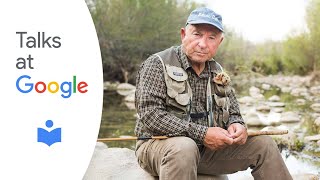
Transcript of a Talks at Google session (host Greg Powell) with Patagonia founder Yvon Chouinard describing his personal history, product and design philosophy, and the company’s environmental mission. Chouinard recounts early climbing and gear-making, the company’s growth and financial crisis, Patagonia’s values (quality, ‘‘cause no unnecessary harm’’, natural growth, work–life flexibility), and the 1% for the Planet giving model and environmental activism. He frames business as a vehicle for long-term stewardship rather than short-term growth.
Chapters
Thank you everyone for coming this morning. There will be coffee afterwards in the break room. So thank you all. My name is Greg Powell and I'm a member of the Authors at Google and Innovators at Google Program here. And today we have the honor of hosting Yvonne Chouinard, who is the founder of Patagonia. So a little bit of background information about Yvonne before we get started. He certainly fits the profile of both an author and an innovator. He's well known as a rock climber, environmentalist, outdoor industry businessman for his work with Patagonia. He's also a surfer, kayaker, fisherman, and he is really noted for his contributions over his life to the climbing industry and also towards running a company that is really seeking to challenge conventional wisdom and present responsible enterprise. So for example, in the 1990s they ran an environmental audit of what was going on at Patagonia and they found that cotton was not particularly an environmentally friendly product at all. As a result, Yvonne committed the company towards organically grown cotton. And this really created the demand in California for this entire industry to get started.
So.
It'S been a long road for him, I think, to, to build this business against what conventional wisdom would say. But we're very lucky to have him here. And so I'd like to welcome Yvonne.
Well, thanks for having me here. I'm here for, I have to give a talk at the Zeitgeist thing and I'm giving a the world is not flat talk and it's an anti technology talk. So. I was on the COVID of Fortune magazine this year and with the headline, I think the coolest company on the planet or something, although you guys probably are. But my Italian friend saw it and he wrote me a little note and said, ah, he says, I see that the cat got to advertise in the mouse magazine. Well, I think this afternoon I'm going to feel like the mouse. Let me just read a couple of little things. I'm going to talk about this book that I wrote about business. The very first part of it. I've been a businessman for almost 50 years. It's as difficult for me to say those words as it is for someone to admit. Being an alcoholic or a lawyer, I've never respected the profession. It's business that has to take the majority of the blame for being the enemy of nature, for destroying native cultures, for taking from the poor and giving to the rich, and for poisoning the earth with the effluent from its factories. Yet business can produce food, cure disease, control population, employ people and generally enrich our lives. And it can do these good things and make a profit without losing its soul. One more thing, no young kid growing up ever dreams of someday becoming a businessman. He wants to be a fireman, a sponsored athlete or a forest ranger. The Lee Iacoccas, Donald Trumps and Jack Welches of the business world are heroes to no one except other businessmen with similar values. I wanted to be a fur trapper when I grew up. So how did I end up having a business that's almost $300 million revenue a year when I never even wanted to be a businessman? I grew up in Maine, a little French Canadian town where no one spoke English, believe it or not, And we moved to California when I was seven years old. I was immediately put in school not speaking any English. And so after about three, four days, I ran away from school. And that kind of started me on a different path than a lot of other kids. You know, in high school when everybody was at the prom, I was probably gigging frogs down in the LA river bend in Burbank. And I got interested in falconry when I was about 12 years old, I guess, you know, teaching hawks and falcons to, well, you don't teach them to hunt, they already know how to do that, but to teach them to hunt for you. And when a 12 year old kid has to stay up, has to go out and trap a wild goshawk or something like that and stay up all night with it on his fist, you know, it'll fly off and put it back on. It'll, you know, do that all night long until finally it goes to sleep on your hand, which is a really quick way of building trust in the bird. Well, you know, the Zen master would have to say, you know, who's just, who's getting trained here. In fact, you know, you don't slap a bird around a hawk, a wild hawk around when he doesn't do what you want him to do. It has to be done with positive reinforcement. And that was a big lesson in my life. In fact, I've been kind of a Zen student all my life. Just kind of Zen philosophy, you know, not religion or anything, but just philosophy. And from falconry I got into climbing mountains, learned to climb to the hawk's nest. And pretty soon I was doing a lot of the climbs in Yosemite. And you know, Yosemite doesn't have any summits, right? And you know, you'll do a 10 day climb on El Capitan and you get to the top and it's just flat up there, there's nothing there. So there's another, another little Zen lesson that it's, what's important is the process, you know, how you climb is what's important. It's, it's kind of like, and if you don't do it correctly, then there's nothing to be gained. It's kind of like a lot of the, you know, plastic surgeons and CEOs and these high powered people that are climbing Everest these days, you know, they spend $85,000 for guide fees. They have a Sherpa in the front with a three foot rope, basically pulling a Sherpa in the back, pushing. All the camps are set up. They go up, their mind just switches off, they daydream and to get to the top, but, you know, they've compromised every inch of the way. There's, you know, 50 ladders in place across all the crevasses. There's thousands and thousands of fixed ropes. They haven't climbed Everest. You know, they brought it down to their own level. And you know, the purpose of climbing something like that is to really affect some kind of spiritual physical transformation. But if you compromise, you know, those guys, they're assholes when they start out and they're assholes when they get down. Nothing's happened. So it's kind of, I use those, a lot of that in business where, you know, you focus too much on the profit and you start listening to what your financial officers tell you. You start running your business that way and it's wrong. Profits happen when you do everything right and they just happen to happen. And so anyway, I, you know, I had a childhood inventing my own games, kind of going my own way. And from climbing I started realizing that a lot of the gear that was out there wasn't very good. It was all made in Europe and it was made for a form of climbing that conquers the mountains. They made these cheap pitons, they're 15 cents apiece. These spikes you put in the rock so that they could do a first ascent of a climb and then leave the pitons in place to make it easier for the next party. So it was conquering the world and making it easier and safer for other people. And I was kind of brought up, me and my friends climbing in California and stuff. We were brought up reading Thoreau and Emerson and John Muir. And we had the attitude that you go into the wilderness but you don't destroy it and you don't leave anything behind you. You act as if no one has been there. And so I wanted to make some pitons out of better material that could be used over and over so you could pound them into a crack and then take them out and then show no sign of having been there so that the next party would have the same adventure that you did. And that's what I did. I went out, borrowed $800 from my parents. Actually, that was a little bit later, but I went out and bought a forage, a coal forge, an anvil, some hammers, and started hammering my own pitons out of a chrome moly. Chrome molybdenum steel instead of just iron. And we not only found that you could put these pitons in and take them out, but you could also put them in places where the kind of incipient cracks where these soft steel pitons couldn't go in. And all of a sudden, we were able to do much more difficult climbs than we could otherwise. And in fact, we could do some of these long climbs on Half Dome and El Capitan and Yosemite that took days and days. And normally, if you left every piton in place, you'd have to take 300 pitons with you. We would take 30 or 40 and use them over and over again. So it allowed us to do much more difficult climbs. And so I could make two of these pitons an hour, and I sold them for a dollar and a half each. So that doesn't seem like much, but you got to remember, it's 10 times the going rate for pitons, which is a good lesson, that if you make really high quality and you make products that people need, they'll buy it. So that's how I got into business. Every time I came back from the mountains, my head was spinning with ideas on how to improve the equipment. I'm not an inventor at all. I don't think I've invented anything practically, But I'm a good innovator. I can go to dinner at a restaurant, and I come out saying, you know, I could have made that better. And that's what I did with all my climbing gear over the years, Basically reinvented almost every single piece of climbing gear, from crampons and ice axes and pitons and chalks and all kinds of different things. I would take an existing product and just make it better. And it's kind of like it's a different type of creativity than invention. You know, invention is 0 to 1 and innovation is 1 to 1000. And so I'm kind of 1 to 1000 kind of guy. And so I kind of grew this business not Thinking that I ever wanted to be a businessman. I was a craftsman who just happened to want to make products for myself and my climbing partners and friends. And that's all we were doing, is making stuff for ourselves and, of course, friends of friends. And then, you know, pretty soon we're selling it, and I'm spending maybe six months a year climbing around the country and Canada and Europe and selling this stuff out of the back of my car just to pay for my habit. And after a while, we were pretty much on the cutting edge of climbing around the world. The routes that we were doing in Yosemite and elsewhere were beyond what was going on anywhere. So we were kind of state of the art, and the equipment we were making was state of the art. And we had a. Our philosophy of design was basically that something is perfected not when you can't add anything more to it, but when you can't take anything away. So it's constantly driving towards simplicity is where you achieve perfection. And later on, I'm trying to apply that to my own life, trying to simplify my life, which is unbelievably difficult. Everything pulls you towards complexity, and if you don't resist, you'll just drive yourself crazy. And I see the problems of the world as is not fighting this complexity business and going towards simplicity. But I'll get further into that later. But anyway, after a while, We had 80% of the climbing business in the States and we were exporting around the world. Virtually everybody was using our gear, but I wasn't making any money. I was too idealistic. You know, we would spend a lot of money coming up with some tooling, some tools and dies to make a particular product. And as soon as we came out with it, we'd come up with another idea, how to make it better. So, you know, tooling that was supposed to be amortized over three years. We would junket after three months and just idealists and not very good businessmen. But, you know, also the sport was evolving so quickly. You know, the most exciting time of any sport is when it begins. You know, I mean, I've been involved in the beginning of a lot of these sports. The beginning of telemark skiing in the States and then the beginning of skin diving. I first, you know, went skin diving in the early 50s and all these different sports. That's the most exciting time, and that's when you're developing new techniques and new equipment all the time, and it's just boom, boom, boom. But it's hard to make any money in that Period. Because things are changing too quickly. So I happened to be on a climbing trip to. To Scotland one winter. And I love climbing in Scotland because it's in the winter, because it's all, you know, climbing in gales, and one foot is on snow, and one foot is on rock and ice, and it's just really great. And then you can come down at night and get drunk in the pub. So I came back from Scotland with a. I had bought a rugby shirt. And this is, you know, it was a blue, had some yellow and red stripe. It was a regulation rugby shirt. And I started wearing it for climbing because I thought it made a really good climbing shirt because it had a. It's made out of real tough material. It had a collar so that the gear sling didn't cut into your neck, had rubber buttons that, you know, you could rip it and it wouldn't break. So I had everybody coming to me and saying, wow, where did you get that cool shirt? That's great. You got to remember that this is a long time ago. This is when men's sportswear consisted of gray sweatshirts and sweatpants. Men did not wear colorful clothes in those days at all. So this is. This is a pretty colorful shirt to be. And that kind of started the whole active sportswear business. And I had so many people asking me about that shirt that I started importing a few from England, from Umbro, and they sold like crazy. And then I imported a few more from Argentina and different places. And suddenly I'm in the clothing business. And I could see that there's a lot more profit to be made selling clothing and no liability. And that led to, oh, making a pair of shorts. I thought, well, we need a pair of really tough, durable shorts. And so I made the pattern of this double seated short. And I chose the fabric, which was a number 10 canvas duck, which is the kind of really heavy canvas they use in lawn chairs and stuff. And I gave it to this Korean woman who's a friend of mine, and she tried to sew them up and couldn't sew them on ordinary sewing machines. So she had to use a walking foot machine that's used for sewing heavy leather. And when she was done, she sat these things down and they stood up and she was laughing. And that's the origin of our stand up short, which we still make. We don't make it out of that material because it took 50 washes to break that stuff down to where it's comfortable. But, you know, a few years later, I think it was backpacker magazine had a review on one of our products or something, and they said something about, well, what a bunch of blacksmiths know about sewing anyway. Well, we didn't know much about sewing, but we knew about quality. And those shorts were made by a blacksmith, basically. And they were made according to the principles of industrial design rather than fashion design. You know, a fashion designer takes a mannequin, and he starts with a cloth, and he wraps his cloth around a mannequin, pins here and there, and, you know, creates this creation. And we start with the principles of industrial design, Whether it's a pair of socks or a rain shell or whatever. We start, okay, what's this thing supposed to do? What's the purpose? And then we build according to that. It's totally different way to approach clothing. Design it. So we were kind of the first ones. You know, this is before North Face. This is before Columbia. This is for Mountain Hardware, any of the outdoor companies. So we were kind of the first ones to really approach design with a technical viewpoint. And in fact, we couldn't get any fabric companies to work with us. American fabric companies, forget it. All they want to do is do millions and millions of yards of denim. But we found some willing partners in Japan. A lot of the fabric companies wanted to work with us because we were pushing them to develop new things. They could see the innovation. And that's where I first got interested in Japan. And so anyway, that rugby shirt and the shorts, it led to fleece. And my friend Doug Tompkins, who started Esprit and he started North Face too, I saw him wearing a Fila brushed wool sweater one day, brushed so that you couldn't see the weave or anything. I thought, wow, that's a cool sweater. It'd be really practical for climbing if it was made out of maybe a synthetic so it wouldn't absorb water and would dry more quickly. So my wife went down to the Cal Mart down in LA and looked for some fabric, and she picked up some fake fur made out of. I don't know whether it was acrylic or what, but anyways, just this thick fake fur that, you know, people in Kansas cover their toilet seats with and stuff. Pretty ugly stuff. And we sewed a jacket out of it and tried it out, you know, and it worked. It worked fantastically well. In fact, for years afterwards, I would get letters from people saying they fell into a river in the winter. They got out and they shook their jacket off and their pants off and put them back on and saved their lives. So that was the beginning of Getting into this what we call Synchilla. And that started the whole polar fleece, the whole artificial fleece thing now. And the Synchilla really took off. It was the first product that really started. We started selling it to virtually everybody. And we were selling it to, you know, I mean, I try to make products for the hardcore, but you know, in reality, most of it gets bought by somebody who owns a gold edition Jeep Cherokee. And any day now they're going to lose 40, 50 pounds and go climb Mount Rainier. So we're selling dreams more than anything else. And that's what happened. And my God, I was growing the business 40, 50% every year, and we could hardly keep up with the business. I mean, it was just like where probably Google is right now, just unbelievable excitement. Boom, boom, boom. You're going to kill the world. And one year, 1989, I think it was, we had planned for 50% growth and we bought the inventory, I hired 100 new people and a recession happened and we only grew 30%. But we had been growing so quickly for so long on just retained earnings that we were stretched out. And when you plan on 50% and you do 30, it's a disaster when you're really stretched out. And the bank that we were dealing with was going belly up themselves and I almost lost the whole thing. I tried to get loans from other banks and they could see where we were, and no way. I even went to the Mafia, who offered to loan me some money for 28% interest, which is ironically what you have to pay with credit cards these days. I was in a real pickle. And so what I decided to do is take the 10 top people in the company and we all went down to Patagonia, the real Patagonia down in Argentina, and we had a walkabout for about a week. We'd walk for three, four hours into the wilderness down there, and then we'd sit down and we'd say, okay, why are we in business anyway? None of us had any business degrees. None of us had ever wanted to be in business. The people that I had working for me, every single one had a either degree in biology or sociology or anthropology or had no degree at all. Like me, none of us had wanted to be. So what are we doing right out of business and what are we going to do now? We're on the ropes. And so we sat down and started writing what our values were. And our number one value of why we were doing what we were doing is we wanted to make the best quality product in the world because we were all climbers and kayakers and skiers. We wanted to feel like we're making the best absolute, not among the best, but the very best product in the world. We wanted to take pride in doing that. So, okay, let's make that our mission statement. Make the best quality product, not among the best, but the very best. And then, okay, what's some other values? Well, we needed flex time. We didn't want to lose our freedom. You know, we needed flex time to be able to go on a six month expedition to Himalayas or go surfing when the surf comes up. You know, you don't go surfing next Thursday at 2 o' clock because that's, you become a loser because you'll go there next Thursday at 2 o' clock and it'll be flat. You go when they surf or, or you go powder skiing when there's powder. And so we wanted to maintain that freedom. We had to have flex time. And now, you know, it's, you know, freedom when your child is sick to stay home for however long it takes, or if you're pregnant, you're having difficult pregnancy, you stay home and still get paid. And that's kind of why the title of my book is Let My People Go Surfing. It's part of our company policy, this flex dime. And the other one is we wanted to work with friends. We didn't want to work with greaseball businessmen, we wanted to work with our own friends. And we wanted to blur the distinction between work and play. You know, a lot of people dragged their asses to work and then, you know, go home and they don't even want to think about work. Well, we wanted to have our kids with us at work so that we don't just disappear for eight hours a day. And, you know, you end up with kids that have no concept of what work is. Their parents have never taught them anything about work. They're going to grow up and they're going to be sponsored. That's what they're going to do. They're never going to have to work. They're going to be a sponsored skateboarder or something. You know, our kids are right there at work. In fact, I walked into our childcare center. We were one of the first companies in America to have an on site child care center. I walked in one day and I said, hey kids, how's school? Some little kid about this tall looks at me, I'm not in school, I'm working. My mother works over there, I work over here. It's pretty Cool. And he loves it. In fact, that's the best product coming out of my company is the kids coming out of the child care center. When they go to school, all the teachers say, oh man, this is the best kid in school. So anyway, that was our values. So what do we do with those values and run a company? Well, we wanted to have the best company, absolute best company in the world. And we thought that we can't do it being a big company. It's kind of like, let's say you're a restaurant in France and you spend years getting your one Michelin star, which is, you know, a one Michelin star restaurant in France is probably as good or better than any restaurant in America. Then you spend several more years getting your second star and finally you get your three stars. You're one of the best restaurants in the whole world. I don't know how many three star restaurants there are in France. Probably less than 20 or something. I don't know. And then you say, okay, we've made it, now let's put in 500 tables. Well, guess what? There are no three star restaurants with 500 tables. There are no three star restaurants with 50 tables. They're tiny. They're very small. It's a similar thing in Japan, where the absolute top restaurants in Japan are these tiny little things. It cost you 450, $500 to eat there. And the size is dictated by the fact that the chef is the owner. He's the only one that has the passion to really create that great quality. And the chef has to be able to see all his customers. So the kitchen can't be in the back. It's a tiny little place, just a few little tables, and that's the very, very best. So we just said we want to be the best and we can't do it by being the size of a Nike. And so we purposely stopped our growth and limited our growth. And what we did is I had to lay off those hundred people that I had hired, had to lay off a lot more. We had to lay off 20% of our workforce, which is the hardest thing I've ever had to do. Because remember, these are friends, right? We're only hiring friends. And that was tough. And I swore I'd never want to ever do that again. So we put ourselves on a growth rate that was sustainable. And in fact, I've always believed that a responsible farmer leaves the land in better shape than when he received it. Right? That's a responsible farmer. A responsible forester leaves the forest in Great shape. He just takes selective trees. He doesn't cut the whole thing down. And a government that's responsible is making decisions as if we're going to be here 100 years from now instead of three years from now or two years from now. And so I thought, well, you know, if those people have the responsibility to act as if we're going to be here 100 years from now, then I have to do it myself. And that's what we decided to do, to make all our decisions as if our company was going to be here 100 years from now. That doesn't mean we can go slow and we got 100 years to get there. It means that every decision is based on. On the long term. And it also assumes a lot of responsibility. It assumes that we have responsibility, that the society and that is going to be here 100 years from now. And about this same time I started, you know, I've been doing a lot of traveling and going around the world. I saw nothing but degradation everywhere I went. I'd go back to Africa after not having been there for 10 years, and I'd see how much it deteriorated. I saw every stream that I used to catch fish in, have soap suds on the top. And I started getting kind of bummed out about how badly things were going with the environment. And in fact, You know, these hard steel pitons, there got to be so many climbers that we started seeing that every time you put a piton in one of these cracks, it would make a slot in the crack, and after a while, you're free climbing these roots that used to have to do them artificially, just putting lots of pitons in because you could stick your hand, jam inside one of these cracks. So we started realizing that the very product that we were making, thinking that we were so clean and good, was destroying the very rock that we were climbing on. So we switched over to a whole. We completely got out of the piton business and switched over to a system of little aluminum chocks that you put in with your hands, your fingers, and you, you know, they have a sling on them. You jerk them down and set them. Then the next guy just pulls them out, causes no harm at all. So that was kind of our first time that we realized that you can't make any product sustainably. There's no such thing as sustainability in any kind of manufacturing. It's against all the world, the laws of physics and thermodynamics. You end up with more waste than you start out with, no matter what you try to do. All you can do is try to minimize the damage that you're doing. So we added a second part to our mission statement, which is to cause no unnecessary harm, make the best product, cause no unnecessary harm. It doesn't say cause no harm because that's bullshit. It's no unnecessary harm. So minimize the damage that we're doing. And we put ourselves on a natural growth by natural. You know, we got into trouble because we were selling products to people who didn't need it, they wanted it, but didn't need it. And whenever that happens, you're at the mercy of the economy, you're at the mercy of fashion. So we decided to go on a path of natural growth, which means when the customer tells us that they're frustrated, they just got their catalog, they placed an order and we were out, means we should have made more. So we let the customer tell us how fast to grow. We don't artificially prime the pump by putting ads and on billboards in inner cities so that the gang kids buy our black down jackets instead of a North Face down jacket, because that's unsustainable. So in fact, we hardly advertise. We spend less than one half of 1% on advertising, which is unheard of in the clothing business, you know. So we let basically, I call it natural growth. We grow. We grow between 3 and 10% a year, but it's not a steady growth. Some years, you know, when you learn a sport, you don't learn like this. Let's say you're learning to ski. So you're going along like this and you're going kind of nowhere. You're not getting any better. You take a ski lesson, boom. You jump up like that, right? You hit another plateau. Then you go along for a while and then another plateau. That's the way we grow our business. Maybe one year we won't grow at all. We invested all our everything into things that we really need to do or whatever, or we make very little profit. The next year we make a whopping profit. So it's not a quarter to quarter, it's not a year to year, it's not a steady curve. So it's a really different way to look at business. So anyway, we got ourselves out of, out of this hole that we were in and we got on a more sustainable growth. And that's the way we've been running a business since 1990. I mean, I could have been a billion dollar business easily had I gone the same way of Columbia or North Face, or even if I would have just sold out and become a public company. But that's not the reason why we're in business. You know, I have a very simple life. I have everything I need. I don't need any more money. And in fact, I got kind of fed up. Few years. In fact, when I was in that financial trouble, I went to see a guy in Florida who's a consultant, and I seriously thought about selling the company. And I went to talk to him and explained what we're trying to do. And I explained that, You know, that we at that time we were giving 10% of our profits before taxes to environmental causes. And he said, well, sell the company, just get out of it. And in fact, you know, you'll make 100 million or so and, and save a few for yourself and give the rest and you can, you know, do a lot more than what you're doing, giving a little bit away every year. So I thought seriously about that and. But then I started getting more depressed about the environment and I started realizing that the real causes of all the problems that we have are, you know, caused a lot of it's caused by corporations and companies. And I thought, you know what? I could probably do a lot more by using my company as an example. Because since we're wholly owned, me and my wife own all the stock. We can do anything we want and we can take risks that a public company could never do. And so why don't I just hang on to this thing and make every decision, start acting like our stockholders are, is the planet that's our stockholder. Every decision, everything we try to do, try to make this a better world. I mean, it sounds a little corny, but it's actually, that's what we want it to do. So we decided not to sell it, not to go public, because, you know, anybody that would buy it would say, oh man, here's an undervalued company. We can ramp this thing up. We can be a billion dollar thing in no time at all. We can do ipo and it would destroy everything that we're trying to do. So that's what we're, that's the way we're trying to run our company. And in fact, in the last couple years, I noticed there's a huge revolution going on in business. And it's just happened. Just in the last couple years, I've been inundated with CEOs of companies calling me, saying, hey, can I come out and visit you guys and talk to you? They want to come and see if we're real if it's just green marketing or are we actually real because they want to do something similar? I mean, I had Steve Jobs call me at home the other day and say, hey, I want to green my company. Where do I start? You know, I had the head of Fox Sports who's a surfer and I surf with the guy all the time and he says, hey, Murdoch told me I got a green. He wants all his companies to be green. This is Murdoch, Rupert Murdoch. Well, his son got to him and he says, where do I start? So they're all coming to us because we were there first, we've been doing it a long time and we're successful. And they want to be reassured that if they go this way that they can still make a profit and not just end up being an environmental company. I had a guy who owns a whole bunch of ski areas came to me and wanted to do the same thing. I told him, get rid of your ski areas, it's never going to snow again. So anyway, what I've done is I've written a philosophy of business and that's what this book is about. It's our business philosophy. Now it's about a clothing business, but it can be applied to any kind of business. I've got the philosophy of design, philosophy of production, philosophy of all these different things. The hardest one to do was our environmental philosophy. And it was really hard to put it into words. And, you know, this book took me 15 years to write. And I wrote it mainly for the employees, my own employees, so that we were all on the right track, we were all going in one direction. But basically I'd like to end up with, what time is it? Anybody know? Quarter of. Quarter of. Okay, end up with what our environmental philosophy is. And you can apply this to your own life. It's a five step program. Number one is to lead and examine life. You know, I think most of the problems caused around the world are caused by people have no idea of the consequences of what they're doing. There's an unintended consequence to every technology and people are just not, you know, if you want to feed your family healthy food, you can't just go to Safeway. You got to know the farmer, you got to go to a farmer's market, you got to know where it comes from. It's the same thing with, with leading an examined life. Just keep, you know, you know those little tiny LED lights that are on all electronics that just says, I'm plugged in. That's all it says. It takes 19 power plants in California to power those little LED lights. So everything has a consequence. So anyway, that's number one. And then once you educate yourself and that you're doing something wrong or whatever, clean up your act. I mean, we. We asked ourselves of what should we be making clothing out of which fibers are the most damaging, which are the least damaging? Well, we always thought that maybe, you know, polyester, which is made from petroleum, would be the worst. We found out that the absolute worst is industrially grown cotton, 100% pure cotton. You can't believe how many chemicals are put on a cotton field. You have to spray to defoliate the plant so mechanical pickers can pick the cotton. And you're spraying with paraquat, which is what we sprayed on Vietnam Ancient orange. It all goes into aquifer. The cancer rate in cotton growing regions is 10 times normal. I mean, I can go on for an hour of how bad this stuff is. Once I found out, I went to the Central Valley in California. I looked at cotton fields. It's a death zone out there. There's nothing alive. There's no weeds, there's no bugs, there's no birds. There's sumps in the western end of the San Joaquin Valley where the water comes up, and it's so toxic that they have to hire guys sitting on lawn chairs with cannons and shotguns to scare away the birds because they get into that toxic soup and they'll have chicks with, you know, two beaks and three legs. And it's awful. I just said, I don't want to do this. You know, it's kind of like maybe you have the best company in America, one of the best companies in America. You're making the best quality product. You're hiring people, you're giving them great perks and everything, but you're making landmines. And you go to Cambodia and you see the results of your landmines. Or you can just say, you know, like Pepsi Cola or Coca Cola or Ford or General Motors, and you say, we're going to wait till our customer tells us what they want. Wait till our customer tells us to get rid of, you know, high fructose corn syrup in our Coke. Or the customer is going to tell us when to stop making SUVs. You can do that. But I think a company has a responsibility for not only how it makes a product, but the product itself. So clean up your own act after you've educated yourself. And then you can never make a completely sustainable product. So you got to do your penance and that's where we take 1% of our, of our sales, not our profits. We used to do 10% of our profits, but then we found other companies saying the same thing. But you know what, the big shots can just give themselves a bonus and there's, you know, $2 worth of profits and all I have to do Is give away 2 cents. So we decided 1% of our sales that we take and we give that away to environmental causes because we're polluters, we can never make a sustainable product. And so that's what we do. And we give that money away to environmental activists mostly. There's 30,000 organizations in America dealing with environmental things. And I really, you know, how many of you think that the government's going to solve our problems? Government is the problem, or corporations or technology. You know, if you think that the answer is to build a prius that gets 100 miles a gallon, maybe in 10 or 20 years from now, great. But you'll be driving that car about five miles an hour because there's a lot more to it than just getting gas mileage. It's the whole infrastructure that has support the individual automobile. So we support civil democracy is what we do. All the gains I think that we're making in America right now, just check any newspaper. You'll see any gains we're making are made through civil democracy. I was just talking to. Well, anyway, you know, if you look at civil rights, you look at women's suffrage, you know, civil rights wasn't done by President Johnson, it was done by Rosa Parks who refused. Whose tired housewife refuses to get off a bus, sees, you know, black kids, refuse to go to integrated schools. I mean not non integrated schools. That's where it's happening. And so I, that's what we use our money for. We give it to about 350 different organizations around. The world who have the courage to stand up to the bulldozers and stand up to the government and try to fight teams of corporate attorneys with cookie sales. These are the courageous people. So that's what we use our money for. And then we've added one last part to our mission statement, and that's basically the influence of other companies. We don't feel like we can save the world by ourselves, but if we can make the best product and if we can cause the least amount of harm, then maybe we'll get other companies to look at us and say, I want to do the same thing. So the third part of our mission statement is to use business to inspire and Implement solutions to the environmental crisis. When I first came out with that third part of the mission statement, my own employees were saying, what environmental crisis are you talking about? Well, now we all know, don't we? It's, I mean, we're in, we're going through the sixth great extinction of the world. And 70% of all large mammals are at risk of extinction. And you know what? We're a large mammal too. And if you think that we can extinct all those animals without causing damage to ourselves, then you're wrong. Because, because we're part of nature. So that's, that's basically what I have to say. I don't know if we have five minutes for questions or not. Thank you. Well, I gave you a lot of ammunition, so if you want to hit me up with something. Yes.
So we do have a question mic for Q and A, so please use the microphone. Thanks a lot for coming and sharing your story. It's very inspirational and somewhat contrarian still, even today. So, two questions. One, you talked about the financial difficulties in going to Patagonia, the real Patagonia, and talking about your values. How did you actually pivot out of that difficulty and save the company and keep it? And then secondly, what's the long term succession plan? So it sounds like you and your wife own it. How do you instill this value system? I know the book probably will help, but what happens to the company after.
You'Re no longer here? Let me answer that second one because the first one take pretty long. But anyway, I don't have a succession plan especially I try to live forever. But the company is owned by a family trust and hopefully we'll try to hang onto it as long as we can as a family own company, we're not going to do anything else with it. So this is just a question about giving and the people you're giving to and the organizations you're giving to. Have you found in your interaction with these people a. How do you recognize a group that is actually trying to make a difference and actually going to make a difference? Well, you know, the way we give out these grants, we give out, you know, almost $3 million every year. And I have a volunteer group of employees that look through all the grants and that changes every three years. And then I have a couple people that administer the grants. But we're so clued in to what's happening in around the world with environmental issues that we know exactly who to give it to. And it's very simple. You make out a simple grant request and we Don't. We're not like a foundation that requires tons of paperwork and follow through and blah blah, blah, and you have to achieve this, blah, blah. We don't do any of that because we trust the organizations that we give it to. We just give it to them and let them go. It's pretty simple. Back to philanthropy. Maybe some of you are sitting out here, the group I'm going to be talking to, there probably isn't a single non millionaire in this group over there. But I'm sure you're not millionaires yet, but you probably will be. And you're thinking, oh, you know, when I get get to be a millionaire, I'll be giving away money too. But just remember this, if you're real capitalist, you'll recognize that $10 given now starts working right away and is worth a lot more than $100 given 10 years from now. So get in the habit of it of just, you know, every time you go get a tank of gas, put some money in the kitty, give it away to whatever cause you feel is doing some good. You know, when you. I just saw an article in the LA Times a few months ago talking about all the great philanthropists in America and how much they really give. I mean, some of these people give away tens of millions of dollars a year. Not one gives an amount equal to 1% of their annual revenue. Not one. You think, oh, Bill gates, he makes $8 million a day. It's chump change. So think about it. All these Southern Baptists and Mormons are given 10% of their income to the church. That hurts. And you know, I started. The proudest thing I've done is to start an organization called one percent for the Planet, which is an alliance of other companies that are all taking 1% of their sales and they give it to the environmental causes of their choosing. All we require is a small entry fee to get into the organization and then you make out the checks. It's like next time you make out your income tax on the back you could put, okay, I want 10% to go to the military. I want 15% to go to social services. You know, that's called taxation with representation. But that'll never happen in this country. But why not this? We look at our 1% as not philanthropy. It's an Earth tax. It's a tax for being polluters. We tax ourselves. And so these. Now we have 750 companies that have joined 1% and we're signing up over one a day. So maybe you can put pressure on Google this, we don't have a single public company.
So anyway, I think we have time for just one more question, and then Yvonne has agreed to stay afterwards to sign books and answer additional questions. But just one last question and then we'll let you all run.
Yvonne, just in terms of the impact of that philanthropy, I met you a couple years ago in Pumalin in southern Patagonia, Tulane, Patagonia, with Wharton and your friends, the Tompkins. They decided to buy something like 180,000 acres of land, make a private park, and then give it to the government so it's protected. How is that approach compared to giving kind of a little bit of money to a bunch of activists? How does that compare in terms of scope and impact? That's a good question. Actually, Tom, I'm involved in that. We're creating a national park, Patagonia national park, right now in southern Chile. That'll be when we're done. It'll be 2/3 the size of Yellowstone park. And it's all being done with less than $25 million. You know, one guy could just write out the check and just accomplish something like that. Have a national park that's there for perpetuity instead of building a 15,000 square foot trophy home. But you can do that just in that style, or you can do it by a bunch of Patagonia employees. We moved a warehouse to Reno and a bunch of employees moved up there to Nevada. And they started traveling around Nevada. They realized that there's a lot more wilderness area that could be put under the Wilderness act in Nevada. So they ran around, they did an inventory on their own time of the state, and they came up with. They came to me and said, look, I think we can get a new wilderness bill for Nevada and we could create millions of acres of new wilderness in Nevada. Keep supporting us, give us a desk, keep our salary going. I guarantee that we'll create some new wilderness. Okay? I said, why not? They did. They got Harry Reid, the senator from Nevada, to sponsor some wilderness bills. This is, this is about five years ago. They have created now over 3 million acres of new wilderness designation in Nevada. I figured how much it's cost us to do that? It's cost us 10 cents an acre. Cost my own company cheap. So anyway, there's two different ways to approach that. There's still a lot to be done with activism and there's still a lot to be done just with private philanthropy and something like that.
Well, I think we are just about out of time. So again, a warm round of applause and thank you, Yvonne, for being here.
More from Guy


Cheryl Strauss Einhorn | The Human Edge: Smarter Decisions in the Age of AI | Talks at Google



Rachel Glennerster | Innovation and the Center for Global Development | Talks at Google

Rebecca Winthrop | Rethinking the Purpose of Education in the Age of AI | Talks at Google

Dr. Robert Wachter | A Giant Leap: How AI Is Transforming Healthcare... | Talks at Google



