Physical: An American Checkup | James McManus | Talks at Google
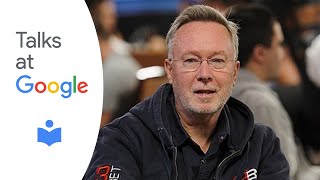
James McManus discusses his book Physical: An American Checkup, weaving together his three-day executive physical at Mayo Clinic, a firsthand colonoscopy account, family illness, and advocacy for embryonic stem-cell research. He covers medical procedures and instruments alongside policy facts and his own experiences as a poker player.
Questions this video answers
Olympus PCF160AL variable stiffness pediatric colonoscope.
100 micrograms fentanyl and 5 milligrams midazolam.
5 cm.
15 millimeters.
72%.
Chapters
Thanks everyone for coming. It's my pleasure to introduce Jim McManus. Actually, before that, I'll introduce myself. I'm Ronnie Zeiger. I'm a product manager here, a member of our health team, also a practicing physician. And I had a great pleasure reading Jim McManus book Physical. I forget the subtitle. An American Checkup. Although certainly a lot of these issues apply far beyond America. Jim, in this writing talked about some issues that are very important to many of us, such as when we're ill or contemplating our own health and mortality, how do we find someone good to take care of us? How do we find someone good to take care of our scarily sick daughter or son? What's the best treatment? And how do we navigate an incredibly opaque and intimidating health system? So I'm sure that you will answer all those questions perfectly so that we'll be all set as far as the future of healthcare goes, or at least give us something interesting to think about. Thanks, Jim.
My pleasure. I have this. Thanks for coming out. The mic's working. Good. I'm going to talk briefly about three books, mostly this book, Physical. It originated from an assignment from Louis Lapham at Harper's who sent me to the Mayo Clinic to get a middle aged guy physical. He was the same guy who in 2000 sent me to Las Vegas to cover the progress of women in poker, specifically the World Series of Poker and a murder trial that was going on a block away from the tournament. The host of the tournament had two years earlier been apparently murdered by his stripper girlfriend and her new boyfriend. And I went out there to cover the tournament and I got very lucky in a satellite and I won a seed and I almost won the tournament. And that's how that book happened. So the guy who gave me the assignment, Lewis Lapham, really changed my life dramatically for the the better. Three years later, as the poker book was coming out, he suggested that I should go to the Mayo Clinic and get what is called their executive physical for $250 more. I think it's up to 300 busy executives or sultans or sheikhs from countries which for people who have a lot of money, who live outside the country in places where there's no good hospitals, and also mainly for regular Minnesotans. The Mayo Clinic is, you know, state of the art medical facility. Certainly I didn't have anything exotic enough that the docs, my regular doctors in Chicago couldn't have handled. And this book is an account of my three days up in Rochester, Minnesota. Minnesota, getting pretty elaborate physical and the second part of the book sprang from an assignment from Esquire magazine in which I was sent to cover the President's Council on Bioethics. And I was not sent as a medical expert or a medical sociologist or a scientist who was personally familiar on a daily basis with the kind of research that is being done, but a person whose daughter had juvenile diabetes for, at that point, about 27 years and who was intensely interested on a personal level with the cures that might develop from embryonic stem cell research and the politics, some of the science, some of the politics, and the emotional place that these kinds of decisions get made at or in. So that's the brief summary of the book that I'm going to talk today about. But I also would like to speak very briefly about my next book, which is the history of poker. And I spend. I teach a course in the history of science and literature of poker and I write about it almost every day. Today's an exception. And I can't operate. I can't live without Google. I don't know how I did it. Three or four or five ago, I apparently did do it. I think it had a lot to do with microfiche and walking to libraries, all of which seem like perfectly normal behavior, you know, reaching up, taking books down and opening them up, which is things that I still do. But what you folks do here is a miracle. You might be jaded, you might take it for granted, but to people like me, what. I don't even know what it is, this thing, this service, the. The search function that you provide gigantically changes the lives of people who are, I mean, regular folks, but also people who are trying to recapture the history and sociology and culture and literature of a particular area such as the game, that is called the America's national pastime. I couldn't. I just. I couldn't work without what you do. So thanks, I really appreciate it. I think everybody's pretty much done with their lunch, so I'm going to read about two colonoscopies. One, the first one that I'll read about very briefly is mine and then another person's. I lie on my side, semi fetal with my back to the dock, watched the nurse pump 100 micrograms fentanyl and 5 milligrams midazolam into the back of my hand and wake up thirsty in the recovery room. What happened? What happened was that soon after I passed out at 8:10, Nurse Marcia Ward applied a liberal dose of Novaplus lubricant to patient McManus anus, through which Dr. Zarka inserted an Olympus PCF160AL variable stiffness pediatric colonoscope. He in Ostello GI's at Mayo have been using kitty colonoscopes on most mature patients for the last three years. The PCF160 is leaner, more flexible than the standard adult model, but in the right hands, it still gets the job done. Most of you are too young to fully appreciate this, but coming up just around the bend over the horizon, you'll see. Guided by the camera and lamp at its tip, Zarka advanced the scope into my cecum, which he identified on the monitor in front of him by the presence of the appendiceal orifice and my ileocecal valve. Clean and clean. He intubated my terminal ileum for a distance of 5 cm and observed it was normal. The mucosa in my sigmoid colon had scattered small diverticula, also normal for a person my age. I got this when I was 51. Zarka also observed that my bowel preparation was excellent, thank you very much. And that so far I was tolerating the procedure quite manfully. If I would have, we could have touched fists. The aha moment. Aha moment came after Zarca had reached an anatomically difficult hairpin turn in my sigmoid colon, in which he spotted some protuberant tissue. No, not my head, just a polyp. Assisted by Ward, he passed an electrocauterary snare through the scope, positioned it above the polyp, and lowered the lasso loop over it. Ward pulled the snare's other end until she and Zarka could see on the monitor that the lasso had tightened around the base of the polyp. By pressing a foot pedal that sent 20 joules of energy up through the snare, Zarka cauterized the base of the polyp. The base of the polyp, then suctioned the damn thing back up through the channel and into the light. 15 millimeters long, it was about the size and consistency of a shiitake stem pickled in sake. He dropped it into a specimen container, which Ward slid into the tube portal behind her, from which point it was sucked over to the Department of Laboratory Medicine and Pathology in the Hilton building three blocks away. I mean, you guys live work on a great campus, but the Mayo Clinic is also a fantastic campus of 13, 14, 15 buildings that are connected. You can send data around at the speed of light, but in medicine you need to send biological samples, and they go in these little tubes and they shoot around from building to building, where technicians sectioned the polyp and applied a stain of without which the tissue cannot be visually distinguished from an adenomatous polyp, the sort that can become cancerous. Pathologist Susan Abraham would then slide the specimen under a microscope and make her diagnosis. In the meantime, Dr. Zarka, back in suite number two, found the rest of my colon, including a retroflex view of my rectum, to be normal, though the PCF160 provided only circumscribed views as to whether or not I was anal. Our own president, as it happens, underwent a colonoscopy by a Navy GI at Camp David a few weeks before mine. Two benign polyps have been discovered while he was governor of Texas, and this last procedure was part of of the standard follow up, given a choice of local anesthesia and mild sedation or a general anesthesia with propofol, Mr. Bush chose the latter regime. Before going under at 7am he invoked the 25th Amendment, transferring power to Vice President Dick Cheney. The only previous invocation of this Amendment came in 1985 when Ronald Reagan had surgery for colon cancer and George H. David W. Bush, not Alexander Haig Dammit, was in charge for 7 hours and 54 minutes, paving the way for Bush 41 to become in a sense a two term president himself. It remains to be seen whether the same colorectal pretext will work for Mr. Cheney. Naval colonoscope was withdrawn from presidential state sphincter at 7:29 and Mr. Bush came to at 7:31. Most doctors check their patient's post anesthesia alertness by asking who is the President of the United States? But though we're told Mr. Bush's GI chose an equally obvious question, we haven't been told what it was. Perhaps he asked, but wasn't Cruz awesome and Top Gun? In any event, by 9:24 after tossing a ball for his dogs and scarfing a plate of waffles, the President was back, so to speak, in the saddle ready to Bushwhack any godless incel research, sign a more fair and balanced tax code and then, saving the best for last, decide who gets to be the ace of spirit fades on his cool desert camouflage poker deck. Gotta cut back to the beginning of the book. I go through the medical processes and the healthcare system and I also investigate the politics and science of stem cell research. From the point of view of a father, middle aged dad with a 32 year old daughter and also from the point of view of a secular humanist, you look at these things differently depending on your ethnic background, your age, your education, but also your spiritual relationship to the rest of the universe. So this is where I was coming from as I went through these various investigations. The truth is, I don't think I'm going to die. Not today, not tomorrow, not in 2067. Not me to begin with. I'm careful and lucky enough not to get hit by a bus. An SUV maybe, or the culture of SUVs, or the Colt, but no bus. I'm also immune by dint of heredity to most forms of cancer, by passport to snake bite and tropical maladies, by suburb and commuter pattern to Al Qaeda, by neck of the woods to tsunamis and hurricanes and earthquakes and floods, and by basic, straight, wholesome, good old fashioned, solid, moral American core family values or at least a fear of needles to overdose and sexually transmitted diseases. I'm bulletproof the same time I try pretty hard never to imagine those eight hyphenated integers after my name or under my black and white photograph. No, not my zip code or Social Security number. Those both have nine phone number 10. I'm talking 1951-20. Whatever. Right now I'm 54, a baby boomer gone mostly gray on the top and squishier than I'd like through the middle. I'm no Orson Welles or Chris Farley, no late Brando or early Belushi, but the small of my back, well, it isn't so small anymore. Otherwise, I seem to be in reasonably half decent shape for a person, for a fellow my age. Plus, I'm bulletproof, baby, so it doesn't really matter. You see that my father had his first heart attack at 46 and a fatal stroke at 61. Or that his father, the man for whom I was named, died of a heart attack at 35 when my father was 7 months old. Or that my kid brother Kevin, who was named for our father, died at 41 of complications after a marrow transplant at Johns Hopkins, the best leukemia treatments treatment center on the planet. A funny, athletic, warm hearted guy who wrote features for the Washington Post, he was in such bionic shape that it took him a couple of weeks for even total renal failure to kill him, and his wife and mother and siblings got to watch every minute. How am I doing? He gasped upon briefly emerging blind and desperate from his final coma. How are the kids? My doubles partner, an ophthalmological surgeon, developed frontal lobe dementia and doesn't recognize his wife and children anymore, let alone me. Needless to say, he no longer plays tennis or practices medicine. My caustically hilarious editor died in 2001 after a long illness. As the paper evades. The woman who taught me how to play poker died on her 90th birthday on his way in through a Wrigley field turnstile in September 2004. My officemate and fellow geezer dad's hyper magnificent brain was drowned in its own blood by an aneurysm in 1999. My fourth child, third daughter, made an unexpecting foot lean breech presentation, got her neck lodged between her mother's abdominal muscles during the C section and almost snapped her spine or strangled herself. Getting born two years later, my son, a scorchingly talented guitarist who was named after me. Me, who has less than zero musical talent, died of a drug overdose in a mental health clinic at age 22. Suicide. It would not have been the first time he tried medication. Mistake by a nurse. Autopsy report inconclusive lawsuit pending. Not that legal maneuvers or money can bring James back to us or retroactively soothe all the pain he was in. In any event, I sure miss my beautiful son. I've read and heard people say that losing your child is the worst thing you can ever experience, and I can't disagree. I'd also assumed it would kill me. Mind you, I do understand the basic biological facts and I do not believe in the soul. I was raised Roman Catholic, of course, from my Irish name, but I've spent the last 40 years as a secular humanist. Folks like me get branded unbelievers, atheists, heretics, educrats, ethical relativists, Jews, effetes, blue state feminists, eggheaded patch tweed and rimbless bifocals wearing faggots, French and much worse. More affectionate terms include free thinker, agnostic, lapsed Catholic, progressive, existentialist, reader of novels, queer beatnik, and my favorite honorary Jew, but I'm not sure which label fits best. I do have a great deal of faith that our bodies, our brain waves and actions, commerce and science and art, words and children are pretty much all there is to us. Religion evolved to help us cope with poverty, imprisonment, fear of death and other bad things, and that's fine. But is some white bearded guy named Jehovah orlodomare God or Allah really out there in here on a throne up in heaven above and to the left of Cloud Nine? Or is he perpetually verging a gazillionth of an anometer beyond the periphery of a Cosmos expanding at 299,792,458 meters per second, frantically Tap dancing along the edge of this most naked of all singularities was his word, his final solution on Eros. Ethics, weaponry, territorial boundaries, contraception, evolution and somatic cell nuclear transfer inked into crinkly multilingual papyrus manuscripts a millennium or two ago. Please. Even my hero Dante Alighieri's sizzling 12 year old girlfriend, Beatrice Portinari will really be spinning around. No Empyrean in perfect equilibrium with him. Sorry, Dee, because once my blipping EEG line goes flat, it's going to be all she wrote. In the meantime, my life will be sweet in a number of aspects. A boot in the testicles, other times, sooner or later a hummer will squash me like Wile E. Coyote. Either that or my heart and maybe another vital organ will break down and I'll suffer piss and moan. Not a little. Then purchase the farm. I've already made the down payment. Finally, from the last chapter, the state of stem cell research circa late 2006. Although I did a performance last night in Seattle with Ron Reagan and he went home and googled, we were on a panel together that was filmed by public television and there were two people in opposition to stem cell research, embryonic stem cell research, and two of us in favor of it. And the woman scientist who was against embryonic stem cell research stated that one reason not to do it was that all the tests so far involving embryonic stem cell research had led to tumors in mice or whatever animal was used to stage it. And between the taping of that show and our appearance at Town hall an hour and a half later, Ron went back to his apartment, googled embryonic stem cell research tumors, and found that within four or five hours previous to the taping of our discussion, the Mayo Clinic had successfully transplanted heart re had fixed the hearts of several mice, and then in subsequent follow up tests, they had shown to have had no tumors. So he came up with the fatal counterexample before we went before the public audience downtown by simply typing in four words into your system. So cheers on that. Do they have free booths at these? No, no free booths. What do they have on Friday afternoons? What a place. What a place. New polls have found that 72% of Americans approved of therapeutic medical research involving somatic cell nuclear transfer, so long as no cloned babies would result. And on May 23, 2006, the House of Representatives voted 238 to 194 to repeal President Bush's restrictions on federal funding of research on embryos discarded by fertility clinics. Before the vote, Christopher Shays Republican representative said, I think it's time we recognize the Dark Ages are over. Galileo and Copernicus have been proven right. The world is in fact round the earth does revolve around the sun. I believe God gave us intellect to differentiate between imprisoning dogma and sound ethical science, and that is what we must do here today. Sam Brownback I'm sorry, Tom delay reported this is the man who refused to let Terri Schiavo expire in peace and was about to be run out of office because of numerous fraud charges. Said, quote, we were all at one time embryos ourselves. So is Abraham. So is Muhammad. So was Jesus of Nazareth. To which I would say so were Uday and Koussay, Saddam and Osama, of course, and everyone's more than willing to dislodge a few skin cells from those biological entities. As to the. You said this place wasn't perfect, and I guess it's not absolutely perfect. As to the immaculately conceived Jesus of Nazareth, who's to say how, when, or even whether he became an embryo, let alone what he'd have to say about today's biomedical research. But this was a guy Jesus of Nazareth that Tom Delane and his cronies may well recall, who was willing to painfully sacrifice his entire body for the benefit of imperfect humans. In the meantime, I believe that our president, after he signed this veto preventing the research from being funded federally, believe that our president and his fellow conservative Christian politicians are smothering American science while imposing their personal religious beliefs on the future health of all of our citizens, at least in the area of medical research. They are no less imprisoned by dogma than the radical Islamist jurists and politicians. Any culture of life, as Mr. Bush calls it, that values clumps of wombless cells more than fully grown mothers, sons patrolling Iraq in cheaply harmored Humvees, ignores the defenseless multitudes of Darfur, supports capital punishment and accepts collateral casualties in avoidable warfare seeks to quash medical research that most citizens favor but is content to leave millions of people without health insurance has a moral bottom line that can hardly be called life affirming. It may even be called sacrilegious. That's kind of the heart of my argument. I am certainly willing to entertain disagreement or talk about any other aspect of this book or the poker book, or answer any of your questions. Yes?
Hi, I'm Nifia. I'm also with the Healthy Medals of Ronnie. So I think given your experience at Mayo and the fact that that's an out of pocket sort of high End scale if you will. You sort of comment about, you know, the ability for people in general to actually sort of get. Am I on? Yeah. So just comment a little bit on your sort of sense going through that experience. What it's like just with trying to get everyday care that's not retail, that's not boutique, that's not designed for the sultans, if you would put it at.
The Mayo Clinic or in general.
In general.
I am not an expert. I am certainly aware because for example my 31 year old daughter is employed by a very small company that does not offer her health insurance and she has juvenile diabetes which is a pre existing condition which is the mother of all pre existing conditions. So I'm speaking as a person whose job provides me with extremely wonderful healthcare insurance and free for myself and for my family. I pay a fairly nominal fee and we're all covered. So that's my medical needs are I'm in that group of well insured people and the book is written from that perspective. At the same time it's clear that while we have American healthcare offers the best high end cutting edge technology, medical training, pharmaceutical sophistication in the world. That and the top third, the top two thirds, whatever it is, are fairly well taken care of. The people at the bottom who have no insurance is an obscene travesty. It's always great to be in cat California because you're once again pushing that envelope. The state's not going to wait for national health care to take, to take, to go into effect or even to be discussed in a serious way in the coming campaign. But there's absolutely no excuse for us not offering, not providing minimal or not minimal but basic health care for everybody. But I don't write about the warp and woof of what it feels like. I am the father of someone that we have to, that we have to continually scramble to give COBRA to transfer from her from when she moved from state to state. We have to transfer COBRA systems and we have to pay very very steady premiums. So I am aware of that but I don't. I'm not intimately familiar with what it's like to be a poor person in this country without health insurance. Two completely unrelated questions. I assume this one is in the book but how did you move from getting the felt insecure to stem cell research and what's the best poker hand you've ever had? It was one magazine article that led to another magazine article with the bridge being my interest in the health care as it is experienced by what I consider to be a regular guy. I realize that I have really good health care, but I don't think I'm that far removed from the average middle class American. And then as the father of a person who doesn't have the insurance and has juvenile diabetes and needs for the research to go forward in order for her disease to have the greatest possible chance to be cured. That's why they sent me to Washington to interview Leon Katz. And a big part of the book, the stuff that I wouldn't have, I wouldn't have been comfortable reading to is especially in a fairly casual setting like this. After reading about my colonoscopy and Bush's colonoscopy is, you know, the trials and tribulations of my daughter who has had a debilitating disease that threatens her vision and could lead to amputations and so on. The book is, is all over the map emotionally. I sort of make fun of my health care needs. They're very well within the ordinary and I don't feel put upon in any way. But it's also the story of my oldest daughter's daily wrestling with a big, big dog that is, that could be taken away from her, taken off of her throat. Wrote if this research went forward and my rage at the people who want to slow the research down or stop it. The best poker hand, well, the best poker hand you can start with is Ace 8. But the problem with Ace Eights in Hold' Em is that you're either going to win a small pot or lose a very big pot. So the best hand I ever had, I made no pair. I had Ace King against TJ Cloutier. I went out to the World Series of Poker and in order to catch up with all the experience I didn't have about to play with the world's best professionals. I read their books and Cloutier's book on championship, Hot Limit and no limit hold' em was pretty much the Bible back in 1999 and 2000. And I memorized it, more or less. And then late on the second to last night of the tournament, I ended up playing, playing a $900,000 pot against him. And I had the most common hand practice hand in the book that he gives is Ace King. And I knew very, very intimately as a reader, not as a poker player, but having read his book and understood his principles, how he would play Ace King in that situation. And I knew that he knew that I had read the book book. So I played. I assumed that he was. That he assumed that I would follow his advice. And I went against it and I took, I actually took. I called him down. I had no pair and I won a big pot. I took the lead in the tournament and Amer Olslim was watching and that was the high point of my poker career. Probably no pair top no pair is what I have. Is someone right here before this, This woman. I'm afraid if I sit on this table it's going to collapse.
I was just curious as you were talking about how enraged you are at the administration and how emotional your response is to. I haven't personally read the book, but I've seen the title of Ann Coulter's the Godless Liberals who Are Ruining America. I'm just wondering what kind of critique you've had leveled against you and your position. I guess.
The book. This is my first book after having a very successful best seller. And when that book came out, lots of interesting things happened. For example, the mayor of Las Vegas sued my publishing company for $300 million because of things I said about his legal practices back in this book hasn't had. I think that the book, the people who would review this book are so comfortable with the thing political position that I take that I haven't, I didn't. The book didn't reach a level of visibility high enough to be attacked by the, by the Christian conservative anti stem cell research people. The main criticism of the book is that I didn't survey American health, the American health care system as this woman sort of asked me a question as though I could and it's a long convoluted answer, but I'll try to give you the short one. What happened was that I was writing a book called Last Minute Physical and the title comes from a quote by Abraham Lincoln. It's a reliance on what is available in the physical world as opposed to the metaphysical world. So it's a double entendre on when you get a checkup it's called a physical but it's also Lincoln's sense of the here and now world that we may want to limit ourselves to. He coined the term in the he used the term as he was writing the Emancipation Proclamation. And politicians on both side of the slide slavery issue were appealing to him, saying God was on their side. And his position was that if God is saying there should be slavery and God is saying there shouldn't be slavery, it seems to me that since I'm in such an important position as president, God would reveal his will to me. And since that's obviously not going to happen, we need to Stay in the physical world. So that's. The title of my book is Physical. And the subtitle is not. What's the subtitle of this book? An American Checkup. That implies that I'm giving a checkup to the whole of American health care system. The subtitle, as I wrote the book, was Last Minute Notes of a Mortal American. It's sort of an existential, existential creed of a person facing, you know, I'm older than my grandfather was when he died, and I'm not that much younger than my father when he died. I got little. Two relatively young children, 7 and 8. How can I figure out what. I'm here in this body, it's going to die. And I don't believe in an afterlife. I'm going to, you know, so I have this relationship with doctors as opposed to clerics. And this is my account of what it's like to be a guy needing health care and having children and a wife and parents, et cetera, who also needed health care. But since I got the contract for this book, when I had this enormous best seller number two on Amazon and New York Times best seller, they paid me a lot of money for what turned out to be this little existential. It's more of a philosophical book. It's not a survey of American health care, except to the extent that I was able to see it, not as a researcher, but just as a person in the thick of it. So that you can't have the term mortal. Apparently they didn't want the term mortal, so they gave it this reason. I think the subtitle is a reasonable facsimile of what's in the book. But. But I have been spanked by many reviewers. Not in a way that I like, by the way, it's my wife's 41st birthday and she might get a spanking tonight. This is Jennifer, who allowed me to get the lap dances in Positively Fifth Street. You will get a spanking tonight, damn it. I was spanked in my own New York Times and in many other places for not surveying the American health care system. And I think a survey of the American healthcare system would be a beautiful thing by a medical sociologist or somebody trained and inclined to do that. But I didn't do that. I was a dad and a guy with, you know, getting the camera launched up my butt. And I don't. And I think when you do those things, not believing in an afterlife, it's different than if you think, oh, I'm going to die. But that's good. Because then I'm going to be off to an infinity of hell. So that's really what the book is about. It's about rage and humor in the face of death, sickness and death. But the title sort of suggests like he's going to go, you're going to know who to call if you get diverticulitis in northwest Minnesota. It's not that kind of, really not that kind of a book. So maybe it's an obvious question, but did anything about your day to day eating, living, exercise change as a result of all this? I haven't read it at the Mayo Clinic. What happens is they don't do a head to toe body scan our randomly, not randomly, but they very carefully screen you by doing an elaborate medical history and communicating with your doctor about what kinds of health problems you've had. And then they zero in on them. And in my case, I wasn't a cancer family. That's not how the people in my family go. It's cardiovascular. So they gave me all the, you know, the urinalysis, the blood tests, but I didn't have going in. I had no appointments with an oncologist. I had an appointment with a cardiologist. And then they gave me a stress test. And they tell you how to eat better, you know, lose weight, drink a lot of water, you know, work at Google, basically is what they were. They were telling me and Vaughan tells me that I could get a job cleaning out the men's rooms here. And I am going to take it because I want to work here pretty bad. The main thing is that I had been a smoker. And for the 10 years previous, basically during my 40s, I had gotten down to the point where I was smoking 1, 2, 3, 4, 5 cigarettes a week. You know, dinner party, you're going to have a glass of wine. Now I don't know, your people are too smart to smoke, of course, but there's these little white things that are about this long and you puff on them after dinner. Oh, they taste so good. And I would save up moments like I'm going to go out or I'm going to have a nice dinner at my house. I'm going to have a glass of wine or martini or something and then I'm going to smoke a cigarette. And I would do that once a day. And I thought that would be okay. But of course, forget about the health care. You can't smoke anywhere. There's no, you know, in Chicago you're relaxing, luxurious cigarettes, you're standing out on the sidewalk and the trucks are splashing by, and it's freezing, and it's just no good. But also, it's still bad for your health, and you retain the addict. You're almost as addicted smoking one a day as you are smoking a pack a day. And what happens at the Mayo Clinic is they sort of grab you by the lapels, whip you up against the wall. Don't ever smoke another cigarette again, you dumb. And so that got through to me. That did get through to me. I had another interesting experience in that, that my cardiologist said, you can't really drink. You can maybe drink one or two glasses of wine a week, week or two or three, because you really want to get your triglycerides and cholesterol down, and you want to get these good cholesterol up. And he put the fear of God in me. And I'm sitting there thinking, I'm going to do that. But the next day I saw an ophthalmologist, and we were talking, and he said, well, how's the experience going so far? And I told him all the things that had happened. I mentioned Dr. Gao telling me that I. I couldn't drink more than a couple of glasses of wine a week. And he says, Ah, shit. Dr. Gough's my cardiologist, and we go to France together on these culinary tours. And he's drinking four or five glasses a night. We're basically sitting down with our wives, and we're drinking four bottles of wine. And I said, that's the best news I've ever heard. So I gave him a hug. So I drink less, try to drink wine. No vodka, no hard stuff. And I don't smoke. It's the basic stuff, but you don't need the Mayo Clinic to tell you. I never would have gone there if I wasn't a journalist, because I didn't need to. But there's a little extra authority when the Mayo Clinic cardiologist says, don't smoke. Thanks a lot. Thanks a lot. The next book, no triglycerides, no cholesterol. Poker, poker, poker. I learned my lesson. Poker, poker, poker, poker, poker.
More from Guy


Cheryl Strauss Einhorn | The Human Edge: Smarter Decisions in the Age of AI | Talks at Google



Rachel Glennerster | Innovation and the Center for Global Development | Talks at Google

Rebecca Winthrop | Rethinking the Purpose of Education in the Age of AI | Talks at Google

Dr. Robert Wachter | A Giant Leap: How AI Is Transforming Healthcare... | Talks at Google



