Positively False | Floyd Landis | Talks at Google
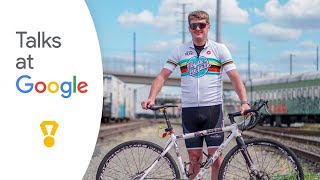
Floyd Landis discusses his 2006 Tour de France win, the doping allegations that followed, and his legal defense. He covers his hip injury, the comeback on Stage 17, training and tactics, and his thoughts on cycling's anti-doping policies.
Questions this video answers
1995.
January 2003.
Birmingham hip resurfacing procedure; he said it was done in September (month given in talk).
Somewhere around $2 million (he stated 'somewhere around that').
Stage 17 (2006 Tour de France comeback).
Chapters
Hi, everyone. On behalf of the authors at Google Program, it's my pleasure to introduce one of the world's premier cyclists, Floyd Landis. Born and raised in Pennsylvania, Mr. Landis began his professional cycling career in 1995. In 2002, he became a member of the U.S. postal Service team and completed his first Tour de France. His remarkable performance in the 2006 Tour made the race one of the most exciting in Tour history. Battling a hip ailment, Landis lost his early lead in Stage 16, falling from first place all the way down to 11th. In Stage 17, he mounted an improbable comeback, stunning the cycling world by regaining an unprecedented eight minutes and setting the stage for his ultimate victory. Three days after the race, Mr. Landis faced charges of using performance enhancing drugs and has battled these allegations in court over the past year. A decision on this case is currently pending. Mr. Lannis is here today to discuss his book Positively False, which is both his memoir and a critique of the governing bodies of cycling. He'll be speaking for a few minutes, and then we'll open it up to Q and A. So raise your hand, and then I'll come around with the microphone. So please welcome. Please join me in welcoming Floyd Landis to Google. Okay, I don't think. Do I need that in this? No, Maybe I'll sit down. Hi, guys. Thanks for having me here. First of all, I've never been to Google before, and I'm quite impressed. I had lunch already and that went fine. I hope you guys are all cycling fans or at least have been watching the Tour de France. It's unfortunate lately that the subject in cycling has been about doping and not much else, because the guys there racing right now deserve more credit than they're getting. And anyway, I hope you're still watching and you're still fans, because I certainly am. And sooner or later, we can get past this subject and get back to what's exciting and beautiful about cycling in the first place. The reason I wrote the book was because most Americans are not cycling fans. Most American sports fans don't know all that much about cycling. They certainly know about the Tour de France, and they know about the doping story afterwards and whatever other drama went on between last year's Tour and this one. But they don't have any context at all about who I am or where I came from or much else about cycling in general. So hopefully the book does a. Does a good job of educating them about who I am as a person. And then in the last part of the book, I go into some things about the case and my experience going through the process, and some things that I think should change about it for. Not just for cyclists, but for other Olympic athletes. Most Olympic athletes, even if they're the best in the world, don't have much chance of making a whole lot of money. They do it for the passion of the sport, and they do it because they like to set a goal and work towards that goal. And if they were put in a position like I was, I would never be able to have raised $2 million. Somewhere around that is what I've spent now to defend myself against the case. And the fact is, I'll probably never convince everybody that I'm innocent. But I do believe that everyone that looks at the case will see that the system needs to change so that people that are innocent can defend themselves. And before I go on too long, I usually enjoy answering questions because I often get a whole different set of questions from a different crowd. I imagine this one's going to be a different perspective and point of view, so I'll torture myself and answer any questions you got. Okay, Perfect. Nobody has any questions. Yeah, in the back. Okay. So I read on salon.com last year an article by a triathlete who got to go, like, they opened the Alps for other people to ride. And he. This was a guy that was really good shape, and he said that he was almost. He would have been in tears by, like, one quarter of the way up, but he was like. Didn't have the fluids in his body to cry or something. Like, how hard is that hill? How easy, then, Alpe d'. Huez. Yeah, well, Alpe d' Huez is one of the legendary climbs. It's not a whole lot harder. In fact, it's not harder than a lot of the others. What makes it hard is you can see all the switchbacks as you go up, and you can see how far you have to go. A lot of times, it's better if you're in the woods and you just don't see where you have to go, and you focus on what's right in front of you. Yeah, that one's just mentally tougher. And often on that stage in the Tour, at least, they do, let's see, often two or three other very long climbs before they get to it. And so it's the last of a series of climbs, and that makes it more difficult. But I think if you saw it and you went there, you'd realize it's not a whole lot harder than a lot of climbs. We have in California. It's just that it's got this reputation. Yeah. What's it like being friends? I think this is going on YouTube later, so I'll probably just tone it down a little. No. I raced with Lance from, let's see, 2002 to 2004. So those three years, and he's. Well, he's obsessive. You don't do what he did without being obsessed about everything. Focus on what you want. And for that reason, he kind of ends up being. Well, he doesn't have a whole lot of close friends, put it that way. He's not a bad guy. He just likes things a certain way. He's a perfectionist. And some people fit in on the team and some don't. For me, it was fine. The disagreements I had with Lance was because I wanted to leave the team and I wanted to race for myself. It wasn't anything that I. Any problem that I had with the way he wanted things on his team. I respected that. And I certainly learned a lot from him. I wouldn't. I don't think I would have progressed nearly as quickly or had the opportunity to learn as quickly had I not been put in a position in the first Tour that I ever raced where I had to ride in the front. It's always baffled me how some of the guys in the Tour. I mean, I really do believe, had I raced in the Tour the first time I'd done it on a team where there wasn't someone in a position to win or at least close to winning. I don't know that I would have finished. Because every day you get up and you just feel miserable, and it's awful. And if you know that you're racing for Lancer, you're racing for a guy that you know can win, then you have a reason. You have something to focus on. But there's guys in that race, probably by the end, 50 or 60 of them, who don't really have a team leader that has any chance of winning. And they don't have any chance of winning a stage either. They're tired, and they still just go just for the sake of finishing. I gotta say, I don't know if I could do that. So having raced it the first time with them and being forced to ride in the front and forced to. To accept the responsibility for the race, because most teams just don't ever do it. Certainly Postal Service did more than. More than a lot of other teams that won the Tour. But anyway, the point is, he's an obsessive kind of guy. He's a perfectionist and he liked things his way and I respected that. But I left because I wanted to race for another team. And we had our disagreements, but I certainly am friends with him now. I don't see him very much, but he's. He's not an ordinary guy, that's for sure. What do you think about the microphone, please. Yeah. What are your future plans in the sense of, you know, hip injury, the case, when will you be back in the tour, things like that? I had a. Well, first of all, I broke my hip in 2003, in January, and I had a pretty badly displaced fracture on the femoral neck on the right side. And so the odds of it healing well in the first place weren't all that good. And over a period of a couple years, it developed what's called avascular necrosis. And the joint, the end of the femur, the joint part starts to collapse because the bone doesn't get proper circulation. And so then it changes shape and leads to arthritis because the cartilage wears down. So generally it's a long term thing. And it's not the kind of pain that prevents you from doing what I was doing. It didn't prevent me from riding hard. It was more like an inflammation and aching pain that kept me awake at night. And it was getting pretty bad last year. So I knew that I was going to have to get it fixed. And I did my best to get whatever information I could get from whatever experts there were. And we decided to do what's called a Birmingham hip resurfacing procedure rather than a total hip replacement. The total hip replacements that they have now are very effective and they're very reliable and for the most part could last the rest of your life, except for if you need it done when you're 30 or 40 years old. Most people who have hip replacements are generally older, so resurfacing is. It's not totally unlike a total hip replacement. It replaces both bearing surfaces on the femur side and on the acetabular side. Both are replaced. It's just that on the femur they leave the femoral neck and they put a much smaller metal piece on there. The operation is a little more complicated and the scar is a little bigger. But in the end, if you do need a total hip replacement, in the event that something goes wrong with it or you need a revision, it's much easier to do. So. So I had that done in September, and over probably two months, I did a bunch of therapy. And since then it's better than. Really better than it was since I broke it back in 2003. And so that won't. At least mechanically or physically, that won't prevent me from getting back to the same level I was at before. The only thing at this point keeping me from racing is the other things that I've been dealing with, the doping allegations and such. But the hip is fine, and I look forward to racing again sooner or later. A question for you. So at the end of, like, a stage where you just kind of die, like, for instance, 16, how do you. I mean, given that even if you weren't in a visible position, it's a tough thing. And by 16 days, you're really pretty trashed. What. How do you go through whatever you go through? It's like, okay, I've been focused on this race. I've just blown it. You know, things are over in some degree or another. How do you get yourself back on the bike? They got this stuff called alcohol. Have you heard of it? Sorry, that was mean. That was a joke. I was actually being mean to myself. I guess it's tough because especially in the position I was in, like you said, where I thought that I had the brace under control and I just didn't eat enough. And I know from the past I've had bad days in other races in the Tour. Any race you do, it's a possibility you'll have a bad day. And generally, if you don't eat enough, it's not like you're totally destroyed. You just don't have any energy. It's like your car ran out of gas. You just have to put gas in it, and then it works fine. But the real problem is mentally getting motivated the next day. And so it takes a little while to get. You basically got to accept that, okay, now we got a new. It changes your whole plan for the race. So you have to accept that it's not going to be the way it was. You have to come up with a new plan, and you have to keep the team motivated, because at least for the tactics we were going to use the next day, I needed the team to be motivated for the first few hours of the race. But I did know that I was going to be okay, and I did know that it was a pretty good chance I'd be able to win the stage the next day. I was sure that they would let me go. They knew I was strong enough to get away, and I think they had all written me off enough that they would have let me get enough Time to at least win the stage. I didn't know that they were going to give me that much time. I figured there was a small chance, but at least I had something to work for. Then I could focus on trying to win the stage and trying to prove that, you know, the day before was the anomaly not. And it wasn't what we'd expected. So I think you characterize it correctly, it's tough. And if you don't really try very hard to keep the team and keep yourself motivated, it's easy to start the next day a little bit down. And in a race like that, that's the end. Then everything's finished. You don't really get nothing out of it. And then it becomes even harder to just get up in the morning. And again, it's easy to look back and say that it was a great tactic and it worked well. But the fact was it was a gamble that we, we put ourselves in a position where we could win the Tour. But the odds of it working weren't all that good. The odds of that working again are probably even less now. Floyd, I wonder what you think about the kind of self testing and biological marketing programs that teams like Slipstream and T Mobile are putting in place. And if you return to pro peloton, would you be willing to sign up for that? Certainly. I think that they're a step in the right direction and I don't know how much more effective they are than the tests they have now. It's a fine line between. There's a fine line between an anti doping program and a doping program. When the team's managing would be easy to use that as a way to just make sure people didn't test positive. I'm not saying that that's what the teams are doing. I'm just saying they need to be careful that when the team is doing it themselves, it's difficult to separate that and the interest of the team and the interest of actually keeping the team clean. I think the people that are doing it now, certainly T Mobile and Slipstream have the right motivation. They're not in any way doing that just over the long term. If it's not set up properly so that it's somehow a separate organization and everything's separated properly, then it could easily turn into something else. That would be my only concern with it. I don't know exactly what kind of tests they do. I have over the last year become a bit of an expert on testosterone testing, but I don't know anything about the other kind of hormone Testing and other drugs that they might be testing for or other hormone levels that they're trying to monitor over a period of time. I just don't know much about that. But from the theory of it, it sounds like it's a reasonable thing to do. Who do you like in the Tour this year? Any teams? Any writers standing out? Well, yesterday Vino crashed pretty badly, I thought, and I still think that he's probably the favorite. He lost a little bit more than a minute, but generally the Tour isn't won in less than a minute. And I think he's. In my opinion, he's the favorite. Assuming he wasn't hurt badly, it's hard to tell. I mean, they're not going to say that he was. You usually don't feel all that well after you crash that hard. But if he's okay tomorrow, I think tomorrow's a reasonably hard stage, then we should know. But he's my pick for now, I hope. Well, I should say I hope for Levi, because he's a good friend of mine and I hope he does well. But I just don't know. I haven't been able to get an idea who's strong yet because the stages haven't been hard enough. Hey. So in the last 20 years or so, so scientific cycling has become, like, more and more like a fashion, in a way. You know, people measure their blood pressure values, and I'm not talking about doping, but about all the other stuff, the VO2 Max and whatever things. And Lance has been, like, a total pro in using that information. So how do you think. How important is that going to be in the future? And, like, you know, for normal people like us? I don't know how stressful it is working here at Google. I don't think you guys have it all that bad. First, yeah, a couple things. I wouldn't say that you guys are normal people. Secondly, even if you are, I don't know that taking it to that extreme has a lot of value. Certainly, putting your body through that amount of stress and monitoring what happens to it, I think probably makes progress in a lot of areas, but as to what effect it will have for ordinary people, I really don't know. Hey, Floyd, thanks for coming in. Firstly, I'd like to say this question is asked in all respect and in total respect of your accomplishment in winning the Tour de France. No question there. I'm wondering. I see parallels between your case and another athlete who's fairly well known in this area, Barry Bonds. He's about to break this big record. He's maintained his innocence, albeit much less convincingly than you. And I'm wondering what your feelings are on that. If you're. If looking at him breaking that record, you feel like that makes people more suspicious of you. If it's a good thing for American sports, and if you think that he is a deserving breaker of this record. Well, there's a couple things. First of all, his situation is not quite the same as mine. Cycling has a defined set of substances of which are banned, and baseball didn't have that for a long period of time. And I think he's being accused of doing something during the time in which there were no rules. Effectively, when a cyclist is accused of doping with something that's prohibited, they're accused of cheating. I don't know that you can characterize what Barry Bonds did as cheating. It's going to be a philosophical problem. That debate will go on forever as to who thinks what should have been allowed and what shouldn't. The problem is they're going to try to retroactively apply a set of stakes standards, which they have for themselves or anybody is looking at it has for themselves to him. And it's completely unfair. But I don't know how you could have prevented it. It was inevitable. I guess cycling is a different situation where they've had banned substances and it's pretty well defined what they are. As to what I feel about his position in the sports history or what I think should happen, it's a debate that's going to go on, like I said, and I got to believe that if there were no rules, and if it is as it appears to be, that he wasn't the only guy doing it, then it's unfortunate that he's the only guy taking all the blame for it. Not to mention the fact that the baseball pitchers are throwing the ball faster and everything else is harder than it used to be. Not to try to justify it, but when there's no rules, it's a complicated thing. And so, I don't know. I do feel for him, though, because I don't believe he's being fairly treated compared to everyone else. Just I think it's because, number one, he's probably hasn't been the nicest guy to everyone around, and now he's going to break the biggest record in baseball. And so I never thought I'd see my name used with Barry Bonds as much as I have, but I got that going for me. Hey, Floyd. Dylan. What's going on? Hey. I wanted to go back to last year's. Tour de France and talk a little bit about the stage where Pereira got a big, big chunk of time. And maybe, you know, I think what's second nature for you and I, whether you were in the race and I was sitting on my couch, talk about the dynamics that led to that gap and then also talk about how those dynamics affected the way that Clodin and CSC and Perero made their decision making around chasing you when you were up the road. And ultimately, kind of what I'm leading to is that, you know, your ride on that stage, there was kind of the perfect storm of circumstances that really made it possible for you to gain all that time back. Well, bicycle racing is about. It's about measuring your efforts over, at least in the Tour over a long period of time, over three weeks. And there's always going to be guys that are trying to get time. Some of them are trying to win stage. There's all kinds of different motivations. There's guys that are trying to win stage, there's guys trying to win the sprint jersey, the climbers jersey. There's all these dynamics going on. And so if you're in a position where you want to win the race, you can't possibly chase everybody. You have to calculate which ones you think are going to be allowed to get a certain amount of time and how much time to give them so that it's. So that it pays off in the end for you because you just can't chase everyone. So in the case of Perero, who ended up second last year, he got into breakaway the day after I got the jersey the first time on the first mountain stage. And I didn't feel like. And I'm sure we didn't have a team that wanted to or even could control the race the whole entire time, the way the Postal Service team had a few times in the past. And even if we could, I thought it was wise that we saved whatever we could till the end. I just didn't think that it was necessary to have a lead the whole time. So I thought it was best if we gave the lead to him. I was pretty sure that his team would try to control the race after that so he could keep the jersey as long as he could. I don't think they had any confidence that he was really going to keep it the entire race. He did a really good job. He fought very hard and I was impressed, even more so than he was better than I expected. I'm glad we didn't give him any more time. Put it that way. But that's what bicycle racing is about, and it's a very ordinary, common tactic. And that's what happened on the last. Well, on stage 17. That's why I say I was pretty sure they were going to let me go. They didn't want to spend as much energy as I was going to have to on the first climb to get away in a mountain stage like that. The ordinary, the most common tactic you see among the guys who are capable of winning the race is they'll allow a breakaway to go, and they'll keep it at a reasonable pace until the last climb. And then the last climb will be the hardest of the day. And on any given day, you can go that hard on probably one climb. So I forced them into a position where they had to decide, do I go that hard on the first climb and pay for it later and hope that this works, or do I do what we normally do and save it for the last climb? Because you can't do it twice? And that's why I was pretty sure that they were going to let me go, because first of all, they're so used to seeing it happen the other way that it just seemed like it couldn't possibly work. And secondly, I think they believed that every single one of them thought another team was going to do the work and chase me. And at that point in the race, I know because I've been in this position, the guys who are working for their leaders are very tired. I mean, this was the last mountain stand stage, and it's hard to get them motivated, and it's even harder to get teams to work together at that point. They'd much rather bluff. And what I was hoping for is that they would just wait too long. I didn't ever really expect them to go as slow as they did the first couple climbs. They gave me nine minutes, and I couldn't even believe they gave me nine minutes. And then that was even motivation on top of just trying to win the stage. When I realized that there was still a possibility that I could win the Tour, then I had that extra motivation, too. Again, they severely miscalculated. I couldn't believe they waited as long as they did. But it's hard to chase on the mountain stage, and you really need to start chasing sooner. If you have a long section of 20 or 30 km of flat road and big, wide roads and wind, it's easy to take time back on one person. But when you don't have any of that, it takes a lot more distance, and they just didn't get it right. Where's the microphone? First, I wanted to say. I assume I'm not alone here in saying it's an honor to be here with you, not only because you're a top athlete, but because of all the sacrifices that I know you guys have to endure for the rest of us to kind of watch you guys from our couch. But just wondering if you could talk a bit about. You mentioned alcohol, but some of the legal things that you guys do before you start. And at the end of the day, I imagine there's quite a routine, whether it's diet, exercise, other stuff that you guys do that we don't get to see on the tv. You could talk about that for a little bit. Well, it doesn't always include alcohol. Just so you know, by the time you get to the point where you're capable of finishing the Tour or winning the Tour. Anybody? All the guys at the Tour are at the highest level in the sport and they've put many, many years of training and racing into it. And some of them are obsessive about their diets and. And other things. I was never so much. And it was a bit of an advantage if you can be flexible because you end up staying at different hotels every night and you have different restaurants every night. And if you are really particular about your food and what you want to eat, then it's just stressful because it's better if you can just take whatever you get, some nasty French pasta or whatever it is they feed you there and just eat it and go to sleep. I was never all that obsessed about that, my diet and things like that. You end up eating a lot of food. I mean, you eat. Probably the best way to say it is eat what a normal person would eat. And then you eat about three or four servings of rice or pasta. And carbohydrates on top of that. That's more or less what it comes down to. And other guys have superstitions that they do. I was never superstitious about anything at all. And I was pretty easy going about it. And I think, again, I think it was an advantage. A lot of. At least for a lot of Americans who go to Europe and try to adapt there. Sometimes there's guys who I see who I think, and I'm sure could win big races there, just end up never adapting to the culture because they have this way of doing things and they don't. They just aren't flexible. And so if you can do that, it goes a long way. I didn't answer much about the science, but that was my scientific explanation. Are you still planning on Racing Leadville 100 this year? And if so, is Lance registered to race against you still? Well, for a while there I thought I scared him off, but apparently he's going now, so I have to start training soon. I do intend to do it. It's about a month away. I guess it's on the 11th, 11th to 12th, something like that. One of the first. I don't know what's going on. One of the first few weekends in August, and I've never done it before. I just want to do it because I want something to have a reason to train for. For the first time in my life, I found out how hard it is to exercise when you don't have a goal and you don't have a reason to do it. I never could relate to that before, and now I understand why it's hard for people to get up and do it in the morning. It was always just what I did. I had a reason, I had an objective at the end, and I had no idea how much that mattered. And so, yeah, that was the purpose of focusing on a race, just to give myself a reason to go ride in the morning. Do you enjoy mountain bike racing? I enjoy mountain bike riding more than racing. The road racing suits my talents and abilities better because the stages are longer and they're harder at the end. Mountain bike racing, you have to be very good at the start, and I never was good at that. No matter what I did, no matter how hard I tried, I just couldn't quite do it. So I do enjoy doing it. I don't know that I enjoy running 100 miles at 12,000ft. I'll get back to you on that. Thank you. What is your guess and or experience about how much doping is going on in the peloton? Well, I really can't speak for anyone else in the peloton. I know that it's a subject that is discussed among writers. It's, I believe, something that exists. I don't think it exists anywhere near the level that it is made to appear at this point because the press and, well, everybody watching is focused on it, so that's all they see. But I can't say who's doing what because I. Look, if somebody is going to do it, they certainly aren't going to do it out in the parking lot. Thanks for coming. I actually have a slightly different question moving away. Cycling, I think, is starting to get a little bit more traction, certainly in certain demographics. Here in the country. And as corporate sponsorship becomes, well, it's always been an important part of cycling. For example, Discovery channels looking for a new sponsor. What is your assessment on like the actual business of American cycling or even international cycling from your point of view? I think Discovery's asking for like $15 million or something. So, yeah, You can write an email to Sergey or anything I think he likes. But yeah, just if you had any sort of. It certainly does depend completely on corporate sponsorship. It's not like American. The majority of American sponsors, which have a stadium and they have a way to. They have a way to collect revenue from fans and things like that. Cycling doesn't have that. And so it's 100% dependent on sponsorship for the races, for the riders, I mean, for the teams, for everybody involved. And I imagine, I don't know because I'm not out working on it, but I imagine it's more difficult right now because of the doping subject. But certainly it's not going away. I mean, it's been around long enough that it's going to stay. It's unfortunate that right now a lot of the riders who are still racing are paying for the focus on doping, but I don't know, I really don't know what the status is or the state of looking for a sponsor. I haven't heard what's going on with the Discovery Channel. I hope they find a sponsor. It would be unfortunate if they didn't. But like you said, maybe they'll talk to Google here. I don't know what's going on. Hey, I'm just hoping. It's been said that one of the reasons that contributed to Lance winning seven Tours was that he focused almost entirely on the Tour and he didn't participate in very many other events during the season. So his training to racing ratio was really high. I was hoping you could comment on whether or not that's going to become more of a focus of Tour winners or whether you think people should compete. Throughout this evening, it was a matter of, well, if you can win the Tour, you don't need to win any other races. That's the first thing. But it hasn't always been that way. There's been riders in the past who have done quite a few other races. But as an American, really the only races that matter in Europe are the Tour and maybe the World Championships and some other one day classics. If you're Italian, for example, the Giro matters to you because it's your home country and it is a big race. And then of course, you'd like to do that in the Tour, but for an American, it's just not quite the same. I think that was the main reason why Lance completely focused on that. It is one of the reasons why he was able to win seven. But on the other hand, I know what it's like to race the tournament. I know what it's like to win. And whether you just win that or you win any others, it's still the hardest race in the world by far. And so they gave him a little bit of grief for just focusing on that, but really was the only thing he needed to win, clearly. Hi. I was wondering, what are your thoughts on Bjarnel Reece coming forward and admitting that he used doping to use to win the tour 11 years ago? I think. And do you think it would be a good thing for the sport of cycling if more athletes would come forward? Well, I don't know who there is that needs to come forward, first of all, but if there are people and if there is something positive that comes out of it, sure. The problem is he admitted having used epo. There was no test for EPO until about, I think, 99, 98, something like that. There was no test for EPO. He admitted to having used it. The UCI and the aso, the Tour de France organization, gave him a very hard time and prevented him from going to the race this year. So what incentive that is for anyone else to come forward is beyond me. I don't foresee that happening anytime soon. Whether it's a good thing or not. Sure. I mean, if it's the truth and it makes him feel better and it somehow makes a sport better, then absolutely. I just don't know exactly what we've gotten out of it yet. Hi. How do you compare what a team does for you mentally versus physically? Like when Vino crashed yesterday and his team brought him back to the peloton, how much of that was them? Was him seeing a person in front of him and just being able to focus on that versus them really pushing away the wind so he could not work as hard versus sitting on a mountain climb? How much can they really help you when you're not going as fast as you are in the flats on a climb, it's not nearly as much. Obviously, it's a matter of. Wind resistance is a matter of speed. The faster you're going, well, wind resistance increases exponentially. So on the flats, it's much, much greater than on a climb. And there certainly there's a. A mental advantage to having your team around you. But you physically wouldn't be able to do it. He wouldn't be able to get back with the group had they not been there with him. It's hard for me to try to quantify what difference it would be, but if you've ever ridden 30 miles an hour, 35 miles an hour, you know how much wind resistance there is. It makes a very big difference to have a team on a climb. It helps if you have a. If you have a teammate. Most of the time, the climbs aren't always steady, and on the flatter parts, it's always better to have a teammate. And if you're going to try to attack like Lance would do in the beginning of the last climb, quite often he would have the team go fast. And even though it's a climb, at that point, they're still going 25 or even a little bit more miles an hour. So it does really does help there. But it's a big physical advantage over and above whatever psychological advantage you get. You mentioned that there is difference between cheating and doping, so I was hoping to. What's your opinion about if something is not illegal or illegal? And, you know, is anyone using something like that? And what should happen if something which was not illegal becomes illegal at some point? Should we go back and look at what happened 10 years ago or five years ago? People are using that. Well, I don't see any value in doing that. At least not any value in trying to enforce some kind of retroactive ethics on someone. The World Anti Doping Agency has a bit of a dilemma right now, and it's probably a good thing for them to try to figure out exactly what it is that they're trying to accomplish by banning drugs. If it's. If they're concerned about the example that people are setting for kids, that's one thing. If they're concerned about the health of athletes, that's fine, too. But they have a difficult time knowing where to draw the line. They talk, even sometimes now, about banning altitude tents, which they claim provide an advantage for people who can afford an altitude tent. Well, I mean, a guy who lives in the United States probably has an advantage over a guy in Africa that can't afford a bicycle. At somewhere, you got to draw the line and say, look, sports aren't fair. If it was fair and we all got a big hug at the end, that'd be great. But that's the whole point of the race, is we're trying, somebody's trying to win. There's nothing fair about it. And it's a Big problem. They don't know exactly what it is that they're trying to accomplish. And so I think that's what you're asking is what do we do about something that becomes known to be performance enhancing later? I don't know, but you just have to establish some rules and decide what they are. And they need to be. They need to be fairly definite. They need to be black and white. There can't be these gray areas like WADA has right now. In their rules, they have banned any substance or method that enhances performance. Well, I mean, are we going to ban training? Are we going to ban sleeping? Well, I don't know what's next. That's just nonsense. I mean, nobody can understand that. And they don't know what they want. And that is the problem. Problem, Hello. In watching the Tour last year, you see these specialists like Rasmussen on the mountains or McEwen as a premier sprinter. I mean, is it possible for specialists like that to become well rounded and better at time trials and win the race? Guys have different. For whatever reason, whether it's. I mean, there's all kinds of discussions about muscle types and all these other things that make certain people better at certain things. Robin McKeown is much better at sprinting than I am. For all the training I do, I cannot sprint no matter what I do next. And probably Robby McEwen, no matter how hard he trains, will never be able to climb. With the best climbers, he would be able to improve, but he would sacrifice probably his sprinting ability. If you want to focus on one or the other, it's best to pick the one that you're more inclined to be good at and focus on that. And so, no, for that reason, people like Boonen and McEwen, no matter what they do next, are not going to be climbers. Hi. I was wondering if you could describe what a typical day or week of training looks like for you. Well, up until a year ago, it was about if you want to train for the Tour, if you want to win the Tour, what it takes is about 5 or 600 miles a week, something like 25 to 35 hours a week. And you need to ride in the mountains always. If you want to be good at climbing, you have to climb. You sit, even though it's not so noticeable, you sit slightly different on the bike and you use different muscles because of the way you're sitting. And the only way to get good at those big mountains and big climbs like that is to climb three or four of them a day three or four, 45 minutes to hour long climbs. And so it adds up to probably somewhere around between 50 and 60,000ft of climbing a week and then several hours on a time trial bike. If you can do that for three or four months and then still be good enough, fresh enough to start the tour, you probably win. So other professional sports like baseball, football things, have well defined paths for people to get into the sport. You know, kids come up through school and there's collegiate sports and minor leagues and scholarships. How do people get into organized cycling? You grew up in rural Pennsylvania, which presumably is not a hotbed of organized cycling. So how did you get into it? How do other riders, what's the path they take to get into the sport? Most well, certainly American cyclists who have been successful all have had vastly different paths in life to get there. In Europe, it's more of a cultural thing. I think there are more programs for youth there and things like that. There certainly is nowhere any structure to the sport like we have here with collegiate sports and then a way to transition into professional sports. Part of the reason is because you don't often know who's going to be able to make it until they're 28 or 29 years old here. I mean, a lot of American sports, if you're not as good as the rest of the guys on earth when you're 21, then you're probably not going to make it. That's not the case in cycling. And so everyone's got a different story. There's not. There are youth programs here, obviously, but it's hard to identify who it is that's going to be good at it. And that's kind of one of the things that's good about cycling is you don't have to be. You don't have to be fortunate enough to be put into the right team or something like that. You can pick up a bike and you can go train by yourself and you can find out if you're good at it or not. And you can improve for a long period of time too. At any age, Even if you're 50 or 60 years old and you get a bike and start training, you'll improve for probably 10 years regardless. I don't know. It's a beautiful sport and I wish there were more programs to get youth involved in it, but right now that doesn't look like it's getting much better. A bunch of us here are nerds and we like to think about technology and stuff like that. I like to think about all the Doodads on my bike and the quality of the stuff, I don't really believe it makes a difference, but I like playing with it and thinking about it. I'm wondering what the attitude is when you're a professional cyclist. Do you notice the differences and the changes in the bikes over a long time? Are there people who really worry about every ounce, or is it really just kind of an irrelevancy that's done all for marketing? No, it does matter a lot. And for some reason, this is another one of these rules that I'm confused about. The UCI has a weight limit on bikes that can't be lighter than. I can't remember the exact weight. It's like 14 pounds, something like that. And they say it's for safety reasons. The problem I got with that rule is the rotating weight. The wheels are the most important factor, so they just keep making the wheels lighter and add weight. Other places. When it gets below 14 pounds, that doesn't seem to make it any safer. But anyway, it certainly makes a difference. Every ounce does matter. In the big mountains and in the Tour over three weeks and over that amount of vertical climbing, every little bit matters. And at the top level, guys probably aren't quite as intrigued by bikes anymore. They've been sitting on them long enough, and they don't really care what they look like. And as long as they work and as long as they're as light as the other guys. And for the most part, on all the big teams, the bikes are. They look different in their different names, but most of them have the best that you can get. And I don't think that there's been any big races like the Tour that have been won or lost because of somebody's bike. Not lately, anyway. How do you sit differently when you climb? You said you sit differently. Well, you just naturally lean forward slightly different. And if you don't train in that position and you really can't make up for it by sitting differently when you're riding on flat roads, you really have to do it. And it's also really. It's a psychological thing, too. Once you get used to climbing, you don't notice it so much anymore. It's something that you just have to do, and the best way to get good at it is just do it. I guess you're talking about the alcohol. That was not an something you learned just growing up in your family. But I am curious, what would you say are some of the positive effects of your upbringing, which I know are quite different from the majority of the people in this room. Yeah. He's referring to the fact that I grew up as a Mennonite in Lancaster, Pennsylvania. I got to say, I've gotten to see a lot of the world because of bicycle racing, and I'm fortunate in that way. And I kind of took it for granted, the parents that I had growing up, because I didn't know any better. But I certainly can say that they're some of the best people on Earth. And as far as religions go, you can't ask for anything better than that. They take care of each other. They believe in hard work and honesty and integrity. And those things, they go a long way. Regardless of where you are or whether you believe that actual religion of it all or not, it's still having grown up that way, I didn't know how fortunate I was until I got to see some other paths that people have been forced to take as a child and throughout their life. Does that help the cycling? Absolutely. Cycling is all about hard work. It's not the most glamorous sport on the professional side at least. And really, it's just about never giving up. And always, no matter how bad you feel, just realize that tomorrow's going to be another day. Hi, Floyd, a couple quick questions. One, in San Diego, do you ever ride with any of the clubs around there, like Swami's or anything like that? I haven't lately. I did up until a couple years ago, but I'm always scared of those rides, people crashing. And the problem is, anytime I would show up, they'd think, okay, they'd race even harder than before. And then I always want to go and just socialize, and I never get to. So they're even hard for you? Yeah, they're hard for me. They do have some good rides down there. I mean, I don't know where they go. I honestly haven't been down there in a couple years. And there's been quite a bit of development in north county, so I don't know where they go anymore. But we used to have a really good ride up the coast through Camp Pendleton, and it was like the World Championships every Wednesday. It was the real thing. I don't know if they have it anymore or not. I haven't been down lately. You ever do the time trial in Fiesta island or the Crit there? No, I haven't done those. I know of them, though. I know those guys still do them every Tuesday and Thursday, I think. And then my other questions, or my last question was about in the peloton. If, like, when you first got in at your rookie year in the Tour, was it difficult to integrate and that sort of thing, or. You know, some guys have it harder than others, I guess, like, you know, getting position and stuff like that. And then once you started to, you know, get acclimated to it, you know, what's it like, what's the conversation like, and are people friendly in general and that sort of thing. Yeah, the dynamics in the peloton are. It's hard to see, or it's hard to know from watching on television how hard it really is to stay in the front, especially in the Tour. Some of the other races are. You can see it more spread out, and guys don't ride quite as close together. But in the Tour, it's critical that you stay in the front. And there are people who are like Dave Zabriskie, for example, for sure, he's strong enough to do as well as anybody in the Tour, but he still hasn't quite figured out how to stay relaxed in the peloton because they ride so close. And for some people, it's a matter of just practice, and some people just never get it. But it does matter a lot, especially in the Tour, because if you're not in the front the whole time, you end up in a. I mean, you can end up in a crash anywhere, but it's far more likely if you're even in the second or third row. And so for me, it was difficult the first couple years, but I did quite a few. I did a couple years of racing on the Mercury team, and we did a lot of criterium. So the bike handling skills there are even. They're a little bit different. But if you can do those well, then you can eventually figure out how to ride in the peloton in Europe. And for me, it was okay. It took probably two years until I was really confident and relaxed riding in the peloton. And you asked another question, but I don't remember it. Was the conversation like, oh, the conversation? Yeah. Most guys, even guys who don't like each other, are respectful in the peloton, and they. Whenever there is an accident or a crash, it's always an accident. Nobody's. I mean, everyone respects each other, and everybody knows how bad it is when somebody does something stupid and 50 other guys go down. So for the most part, it's a friendly atmosphere. I mean, there's very little. Any strange tactics going on? No bike pump in the spokesman. If you show up with a bike pump, you're probably going to get hit. They're not going to let you race with a bike, Pompa. Sure. All right, who else has got questions? Hi, Floyd. So in the area, you probably know all the rides. Old La Honda is a popular climb in the area. And so it just turns out that one of your buddies holds the unofficial record climbing Old La Honda. Who? Dylan? No, he doesn't. That guy doesn't hold a record on any climb. That's why I said the unofficial record. So I was just curious to know while you're in town, if you. You might be heading over to Old La Honda with a stopwatch. Or I could hold it just to see, you know, if you want to give it a go. Well, since it's the unofficial record, I'll just go by myself and I'll let you know. I know how that works. I will give Dylan credit. He was an exceptional time trialist. It baffled me, but his climbing skills, he never really spent a whole lot of time working on those. Just following up on the equipment question. So a lot of the equipment that you use is incremental improvements. You know, an ounce here, a gram there, whatever. But are there anything that. Are there specific things that have happened over the course of your career that you thought had significant changes, arrow bars or something that you thought was a bigger leap than incremental? No. Apart from that, the last couple years, really light wheels have become easier to get. For a while there was a company, I don't remember a European company that had just. They were all carbon spokes and everything, and they were really light. By far the lightest, several ounces lighter each. But in the last two or three years, a lot of companies have started making wheels that are equally as light. And that in itself is the biggest change that made a big difference. The other things, the little aerodynamic things in the time, trail bikes and bars and position changes, they're all very, very small and they're almost unnoticeable. That's why you end up in a wind tunnel where, I mean, you get numbers that would be impossible to even know without some kind of scientific way of measuring it. Wind tunnels, by the way, are miserable. If you ever get a chance to go to one, don't. It takes all day and you have to change each little position and you have to do all these tests from a different yaw, from a different angle. Oh, it's awful. I would rather just go out and set up my own course and try it 50 times and just take the average. Hi, Floyd. This might be an obvious answer, but I still have to ask what's your most precious memory as a professional cyclist? My single most precious memory has to be last year at stage 17. I was proud of that one. Before that, I think stage 17 in 2000, when I was, I think, strong enough to win the stage. But it didn't quite work out. Back when I was racing with Lance, I was really pretty proud of that. But I think I outdid it on the last one. That's my, and probably will be for quite some time, my favorite memory. Have you ever raced at a velodrome? And do you think that the skills you learned racing on a track help in stage races? Only time I've ever ridden on a velodrome was a few months back when I did a fundraiser. And it was just for fun. I'm not a very good sprinter. If I did any event on the velodrome, I wouldn't mind doing pursuit or something like that. But I don't have any experience on the velodrome. Certainly it's racing, and from what I can tell, it's very hard racing. And I'm sure it has value for any other kind of bike racing. The sprinting part is not too unlike sprinting in a peloton. There's more guys in the peloton, but the sprinters are still only five or six guys really sprinting. So the dynamics aren't that different. But I can't say because I don't have a whole lot of experience on it. It does look like fun. I did ride one of those bikes with the electric motor on it at the track. Those are fun if you ever get a chance. Hi, Floyd. Thanks for coming. Winning the Tour obviously takes a lot of work and talent, as you pointed out. So I have two questions. What's the proportion and how much of it is hard work and how much of it is talent? And when did you personally realize that you had some talent? Were you, like, running faster than all the other kids at school? Or when did you make that realization? I don't know that I would measure it as a proportion of work to talent. Certainly you can't do it without both. But if you don't have the talent, then all the hard work in the world isn't going to make up for it. You absolutely have to have the natural part in order for the work to even. Well, it matters. But in order to get there, for the work to work to that level, you have to have the talent first. So call it a proportion. I don't know. It is critical to have both, but one comes before the other and as far as knowing that I was good at it and talented. I started racing mountain bikes when I was about 14 or almost 15, and I was much better than everyone else around. Of course, I thought I was the greatest in the world, but that probably wasn't a real big pool of people to pick from. But I was good at long distance type things. I wasn't very ever a very fast runner. I did a few track things in school, but I wasn't very good at it. Cycling I was good at from the beginning. There were a few years where I struggled as a professional, but I kept working at it and I finally got to the top level. But it's hard to know who will progress to those levels because you can't always tell, even with young kids. The best ones aren't always so obvious when they're 15 or even 20 years old sometimes. Hey, Floyd, what's your feeling about the use of radios? And does it make the influence of coaches more important in the big races like the Tour? I don't know that it changes a whole lot, the value of a coach. It certainly makes it easier for the coach to communicate from the car, and it makes it easier for the riders and the peloton to speak with each other. You have a microphone, you can push the button. And the ones we had, you'd push the button and then the whole team and the person driving the car could all hear it. So it makes it less necessary for the entire team to stay together. In my opinion, it makes the race safer because guys aren't always worried about getting next to the guy they want to talk to. They can talk to them from somewhere else. I don't think it changes the tactics in the race a whole lot at that level. You can't really always wait for, for the guy in the car to tell you what to do because he can't see exactly what's going on every second. And if you don't know what to react to, then the radio is probably not going to make up for it. That's. I mean, I really do think they should keep them. I don't know that. I don't even know if the debate's going on. I've heard in the past some people saying they thought they should get rid of them, but I don't. I don't see why that would be necessary. High Floyd. Sorry, I'm over here. I'm the other next question. So my question is, when there are these kind of horrific crashes in the Tour, and obviously over the past couple years, people have been forced out pretty early, I guess. Whenever you fall off a bike, particularly if it's one of the more horrific ones, how do you get back on again? What motivates you to get back on the bike and that kind of thing in a race? Well, I rarely crash when I'm training. The only crash I really ever had in training, I broke my hip. That was a good one. The ones in the races, I've been really fortunate. Apart from that, I've never really been badly injured and wasn't able to get back up. You never really want to jump back up and get right back on your bike. But the problem is, anytime you're in a race and the peloton is going away, all you care about is getting back in the peloton, because the last thing you want to do is be hurt and miserable and then have to ride by yourself the rest of the day and lose a half an hour. So really, in the races, it's not hard to get motivated to jump up. If I crash in training, I can't imagine I would even want to ride anymore. I'd probably call somebody to come get me after making up a story about why it was that I crashed. Anyway, I don't know if I have time to stay and sign books. We were trying to sort that out. So I think I'd rather just cut it off and say hi to everyone that wants to say hi and sign your books. And I appreciate you guys coming out. It means a lot and.
More from Guy


Cheryl Strauss Einhorn | The Human Edge: Smarter Decisions in the Age of AI | Talks at Google



Rachel Glennerster | Innovation and the Center for Global Development | Talks at Google

Rebecca Winthrop | Rethinking the Purpose of Education in the Age of AI | Talks at Google

Dr. Robert Wachter | A Giant Leap: How AI Is Transforming Healthcare... | Talks at Google



