President of NARAL Pro-Choice America | Nancy Keenan | Talks at Google
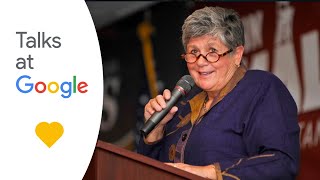
Nancy Keenan, president of NARAL Pro‑Choice America, recounts her Montana upbringing and political career (state legislature, Montana Superintendent of Public Instruction 1988–2000), explains why reproductive freedom rests on privacy and personal liberty, and describes NARAL’s advocacy strategies (prevention, access to contraception, electing pro‑choice officials). She gives concrete examples of campaigns (pressuring Verizon to restore a texting short code; corporate and pharmacist refusals to provide emergency contraception) and discusses legal/political limits of Roe v. Wade and the need for federal legislation and electoral change. The transcript includes audience Q&A on pharmacies, Roe, sex education, framing, and 2008 electoral plans.
Questions this video answers
1988–2000
2004
2003–2004
Over one million activists and members (they reported sending an email to over a million recipients).
About 20,000 messages within two hours; Verizon reversed the policy within three to four hours.
Chapters
She's the current president of the United States based abortion rights network Narol Pro Choice America. Keenan also has served in the Montana legislature and was the Superintendent of Public Instruction as a Democrat for the state of Montana from 1988 to 2000. In 2000 she ran a great campaign, a strong campaign against Republican. Denny, did I say it right?
That's right.
For the lone Montana seat in the US House of Representatives in 2003-2004, Keenan became the first full time education policy director of the organization People for the American Way, working to cut tuition vouchers and tax credits. In 2004, Naral announced Kenan to be the new President. She is focused on expanding grassroots movements and articulating pro choice values for the organization. So big welcome to Nancy.
Thanks. Thank you. Appreciate that. Well, let me thank Kim for that kind introduction and you for joining us today. I'm going to give you a couple things. One, I'm going to tell you a little bit about my background. Two, talk a little bit about my arrival at NARAW Pro Choice America and how that all came to be. Third, talk a little bit about what does it mean to be pro choice in this country and what does it mean to be a pro choice American and then what do we do? What do we do as pro choice Americans in this time in this country where we've seen our privacy and our freedom somewhat infringed upon giving the politics of the country. Let me just tell you, as Kim said, I was born in Montana and in a small town called Anaconda which was a mining town, a company town, belonged to Anaconda Company, then bought by Arco and came from a, you know, typical blue collar working family. My father was a smelterman, worked as a boilermaker on the smelter making copper. My mom a clerk in a grocery store, in a drug store. And basically I lived in a neighborhood that was like a mini United Nations. First generation immigrants from all over the country. So the Italians, the Irish, of course with the Sullivans and the Connors, and then of course those from Czechoslovakia and Yugoslavia. So it was an interesting neighborhood to be raised in and literally in the shadow of the stack. So those environmentalists in the room, Let me tell you about the stack. It is large enough to hold the Washington Monument if you were to put it inside. That's how big that stack was. You could drive two cars around its perimeter and a motorcycle. So when we talked about living in the shadow of the stack, in the shadow of a corporation that basically owned the town, it was A pretty interesting place to grow up. There were three things that you did on weekends. You either went to a democratic party picnic, you went to a church picnic, or you went to a union picnic. So that's how we spend our times. And I was raised in a very, very political family. So how did I get from that kind of upbringing into politics? In 1981, the smelter closed. And that talk about emerging technology, that was the beginning of fiber optics. So copper fell off, copper wiring fell off. So the copper industry basically went bankrupt. When that happened in anaconda, montana, a town of about 10,000 people, the company just had a press conference one day and said, we're closing. No notice, no discussion, no additional training, no backup. We're closing. So thousands and thousands of people out of work, just like that, friends and family. I actually was teaching school there and had worked on that smelter. The first group of women, when you talk about women and leaders in this movement in the smelter, we were the first group of women that were allowed to work on the plant floor. And so that's basically how I was able to raise the money in a blue collar family to go to college and become a teacher. So when the plant closed, I basically campaigned on the issue of saying, look, there should be notice. A plant of that magnitude that the entire town depended on, everybody's economy depended on, there should be notice. Give us 30 days, kind of figure it out. And what happened was I ran for the Montana legislature. I was 29 years old, 29 years old. Thought I knew a lot more than I really did know, but knew one thing, that what brings you to the political arena is something you care very much about. And in my case, it was caring about people in that town that lost their jobs and no notice, no training, nothing. So I ran and I won. It was a wonderful thing to introduce a piece of legislation that quite honestly didn't pass because corporations came out against it. But I learned a lot of other things. I learned and my eyes were opened about the environment and literally living in a place that was so toxic with fumes and the byproducts of copper smelting. My eyes were open to the environmental issues that are plaguing so many communities across this country. Second, it was around women's issues. So it opened my eyes to women who had been above abused and what had to be done for them when it came to taking care of the issues and bring that to the political arena that were not brought to the political sphere before. Economic issues for those young women in this room. And I look, I feel like a really old person here because we were fighting for comparable worth, for comparable pay, for comparable work. Basically what that meant is that somebody that was teaching school as a woman was getting paid less than the person that collected garbage. That was an issue of comparable worth. Were each position's worth and should you be paid somewhat comparably. So comparable pay was another issue that we brought to the political arena. And of course, last but not least, reproductive rights. Reproductive rights. Now, this was in the 80s, in the early 80s. So we hadn't quite seen the attacks on Roe versus Wade in the early 80s until about the late or the mid-1980s. Did my little legislative, or what you call out here in California, the assemblies, did that for six years and decided to run for state superintendent of schools. That probably was the most telling because I basically ran over 500 school districts across the state of Montana. Huge place. 500 school districts and not many kids. But what did I learn there is that actually I was asked to speak at a pro choice rally. There were five statewide elected officials in Montana. The governor, the attorney general, the secretary of state, state superintendent of schools and the state auditor. Two women, three men. We all spoke pro choice rally. We were seeing the first attacks on reproductive rights. After the rally was over, the Catholic bishop called the two women. We were all Catholic, but only two of the women. The two of us were called by the Catholic bishop. Andy said she was going to go to the church. I said, well, I don't know about that. I think I'll have him come to the capitol where my office is. So the day that the Catholic bishop was coming, you could have heard a pin drop in my office. There is this sense of respect that someone of that caliber is coming into the halls of the capitol. But as he came in the door and he put his hand out and he shook my hand and he said, I know your mother. I said, well, she's pro choice too. I said, bishop, the press is here and they'd like to join us. And I have an open policy here that if the press would like to join us, we have nothing to hide. We can cover this conversation. And we asked him to join us. And I said, but if you don't want him to join us, bishop, then you tell him he can't come in. Well, of course, the press was invited in. Tripped over the two of us on his way into the room, but he was in the room. And after about 20 minutes, the bishop spoke to me about my faith and my religion and my Responsibility as an elected official to uphold those teachings. I thanked him respectfully and said, bishop, you can dictate in the halls of a cathedral, but you cannot dictate in the halls of a state capitol. And there ensued the fight and the firestorm. If you can imagine not only the issue of where does faith belong in the public arena and who decides when it comes to some of these very personal, private decisions. It really was quite an event for me. State superintendent decided to run for congress in the year 2000. And that for those of you that are horse racing fans, Dec, that was my Smarty Jones race. That was the one we lost by a nose. But the fact of the experience was just unbelievable in being able to deal with so many issues that face this country. So you can tell from my family political, a father political, actively involved politically as a child, made a difference. As I ran for state legislative office. My father used to say to me, don't complain, do something. So we actually, I found myself running for office, ran for state superintendent. When they talk about running with the big dogs, that's when you run for Congress. And that's a whole different ball game, because all the issues from world affairs and international affairs of war and peace, that all happens when you're running a campaign. Well, I lost that race. And so that brings me to now that in 2004, I joined Naraw Pro Choice America. And after having been in elected office for all that long, it was interesting to me to say, look, folks, we haven't been doing so well around this issue. We are not gaining the support we need to have across this country. So we put out an offer to the other side. We actually put an ad in the paper, in the Wall Street Journal or in the Weekly Standard, I believe it was. And we said to them, join us on common ground. Join us because if you can prevent unintended pregnancy in this country, you can reduce the need for abortion without making it more dangerous or more difficult. So we put the call out for joining on common ground. Now, not surprisingly, it was met with deafening silence. There wasn't a response to them wanting to join us in that common ground. And when you think about it, what is common ground? Well, you would think that if we tell young people the truth about sex ed, that's common ground. Don't lie to young people. They know it. They're not going to trust you. The second thing we said is, look, it's common ground to make birth control accessible to all women. And so if the insurance company pays for Viagra, by God, it should pay for birth control. That seemed like common ground. We thought the common ground indeed was access to emergency contraception, especially for women who had been survivors of rape or incest. And we also thought that it wasn't right in this country that a pharmacist could refuse to fill a prescription for birth control. And that's happening all over. It's happening in California and it's happening across this country where pharmacists themselves are stepping in the way of giving women their prescription for birth control. So when we come down to it, you have to ask yourself, well, then, what does it mean to be pro choice? What does it mean to be pro choice? And I think you just have to believe in two things. To be pro choice, you have to believe in freedom. Freedom to make decisions. Personal, private, medical decisions. The freedom to make that without a politician or government intrusion. And the second thing you have to believe in is privacy. That again, a government, a corporation that no one can get involved in a decision that is personal and private, they don't belong there. And that depends on our medical records. It is everything around a pharmacist, again, stepping in in the way of filling a prescription and other medical decisions that we make. When I think about being pro choice, here's what it is. As women, we make decisions on a continuum during our reproductive years. The first one is whether or not we're going to access information. Aha. Sex education. You're going to tell us the truth. The second thing we might decide is whether or not to access birth control to prevent pregnancy because we're not ready for a family yet. That's another decision we make. Not having a pharmacist step in the way of that. The third thing we do is perhaps have access to emergency contraception in the event the birth control failed or something went wrong, Especially if we had been in a situation where we had been raped or incestually assaulted, and the FDA just recently ruled in the last year or so that it is available over the counter, more likely behind the counter, but over the counter without a prescription. Being pro choice also means we believe that women who choose to access fertility treatments should do so without politicians or the government being involved in that and saying, yes, you can or no, you can't. Being pro choice means that we believe in healthy pregnancies. That's why we support prenatal care, that women that choose to carry a pregnancy to term and have a child, that indeed it should be a healthy pregnancy and a healthy child at the end of that pregnancy. If in the event A woman finds herself that she's pregnant and has the child and cannot take care of that child. Being pro choice also means we believe in adoption, that we find ways to support that woman and her decisions around that adoption process. And last, we also believe in being pro choice American, that if a woman decides to terminate a pregnancy, that that is her decision between herself, her family, her doctor, and her God. Her God. Because women hear their God with their own two ears. And no politician and no government should ever interfere with that decision either. And that's what Roe upheld. Roe basically said it is her decision to make, not governments and not politicians. So who are we in this movement? And then we can go to questions here. Well, I look across this room and probably most of Google, there are the millennials, that's all of you that were born post 82, the millennials, the one whose life is technology, whose communication and how we communicate is a whole brave new world than those of us that were later in this movement. The second group of people that I see are called middle schools moms and dads. These are folks that are very upset about this abstinence only sex education business. What are you teaching my kid? Are you telling them the truth? Especially in a day of HIV, AIDS and STDs, what's going on in our schools? Yes, we believe young people should stay abstinent. But don't, don't lie to them. Give them the facts about staying safe, especially if they are sexually active middle school moms and dads. And then there is my generation. We call ourselves the menopausal militia because we've been doing this a long time. We were pre Roe. We had friends that accessed illegal abortions that didn't have access to birth control as readily. That is a generation that has been with this issue for a long time. But it's going to take all of us, quite honestly, protect the freedom and privacy that we have enjoyed since Roe. So how does that extend beyond this issue of reproductive choice? And I'm just going to call your attention to what happened in the nation here and is happening daily. And that was the issue of, and you may remember it so well, when we watched Terri Schiavel play out on television. A tragic, tragic situation for a family. And what happened, politicians got involved. And instead of leaving it to the family who were fighting to begin with, it was not right that politicians got involved. And then the President of the United States actually flew back from Texas to sign the bill. That's the intrusion of government in medical, private decisions. The other one is Stem cell research, you see that now being debated and whether or not the government should be involved in that or have some say, much more say than what we think they should have, especially in this realm of science. And last but not least, something that we just experienced most recently, and that was the issue of general privacy. You probably read about what happened to us with our little encounter with Verizon. We wanted a short code for our text messaging. We talked to all the other vendors, mci, Sprint, at, and T. And when we got to Verizon and asked for the short code, we got an email back saying that no, they would not give us a short code because their policy was that issues that might be unsavory and controversial, they would not give us our shortcut. They own about 25% of the market. So you can see what this does with us communicating, especially with this next generation of people in this country who want our messages. They signed up. So when Verizon said no, we called back, said, are you sure? Are you sure you have this right? They said, yes, unsavory and controversial. So at that point, we do. We did what we do very well. And that was call out pro choice Americans. We sent a letter to the CEO of Verizon saying, you sure about this in this day and age that you are, in essence are censoring a dialogue among people who want to have our text messages and you don't have that right to censor in this country? Well, we sent the letter, we gave it to the New York Times, and we sent an email to our activists, over a million activists and members in the country. And we said, call Verizon, because if they're not going to listen to us, they're going to listen to you. And within two hours, 20,000 email calls, I don't know if there were text messages or not, were sent to Verizon. And within three hours to four hours, they reversed the policy and gave us our text messaging code, our short code. That was the power of people who said, this is a free country. We want to have a dialogue around issues that we care about. You might not agree that's okay. That's what democracy is about. But censorship is not part of what we believe is truly American in this country. So what does Narop Pro choice America do? We do political work. We elect people that will protect freedom and privacy, and we defeat people who are going to infringe on that freedom and privacy that we have in this country. And so when we talk about election matters, election matters, because what happens when you Elect people, whether it's to the assembly, whether it's to a governor, or whether it's to the United States Congress or whether it's to the presidency. When you elect people that are willing to take freedom and privacy away from you as an individual, then what you have is a government that is willing to intrude on those private medical decisions. And if it's choice now, what will it be later? What will it be later? For those that live in California who think, well, we're safe or we live in New York and we're safe, keep in mind that federal law trumps state law. So when you have an anti choice Congress and an anti choice president, their laws trump state laws. So you're not safe in these wonderful places like California and New York. When we do our political work, it is non partisan. We are not a party. What we do is elect people who will protect pro choice rights in this country. And that's what we do every single day that we get up. Now, how can you get involved? And if I could leave you with one thing, from the time that I was a young kid till now, politics is not a spectator sport. You have to get involved. This might not be the issue that's yours to get involved. Maybe it's the environment, maybe it's issues around global warming and other other major things that are facing us today. But get involved, get involved in the political process because that's what actually does eventually change our world. If you want to get involved in our particular issue, you can join our Choice Action Network. You guys are politically and technologically savvy. Go on the web, find it NARA Pro Choice America. But you can find the Choice Action Network. And like I said, the most important message that I'd like to leave for you today is get involved. Because we now are counting on your generation of young people to really change this world. But I thank you for the opportunity to spend some time with you and hopefully can answer some of your questions. Yes, sir.
Do you know if some of these pharmacies have fired the workers who refuse to prescribe certain things? Because I mean, if nothing else, it.
Seems like the question was, do we know if pharmacies have actually fired the pharmacists that have denied to fill women's prescriptions or any prescriptions? In some cases, yes, pharmacists have been fired. In other cases we've had to change the corporate policy because in some parts, some major ones like Walmart wasn't stocking Plan B, so we had to put pressure on them to stock It. So yes, they've been fired. Yes. We have to work politically then to have a pharmaceutical board basically have a rule that says you can't step in the way, you have to step out of the way. If you don't want to fill it, okay. But somebody has to fill it immediately without delay and without inconvenience. So some have been fired, but in other cases, no. And especially, you know, take a rural state, I don't know where you're all from. Some of women have to travel 100 miles to the next pharmacy. If they were denied at this one, that's an inconvenience, especially if you were after emergency contraception. So it varies all over. But our push has been to have corporations stock it, have a policy that they step out of the way, not in the way, and make sure that it is available to women in not only the big cities, but the small cities as well. Yes.
Can you talk about the wisdom of relying on Roe and essentially five Supreme Court justices abortion legal. Is there any chance to get it constitutionally affected in some other way?
Yeah. The question is with the five justices that are presently on the Supreme Court and given the tentativeness of Roe and the Court, is there any opportunity for us to codify Roe? Only if we elect a pro choice majority in the United States Congress and the United States Senate and quite honestly a president to sign it. We do have introduced up there in Congress what's called the Freedom of Choice act, which is exactly that codify Roe. We don't have the votes. We have a majority that controls the House and the Senate right now, but is not a working majority to have enough pro choice votes to actually codify Roe v. Wade. So what we've also done is that some states have tried to do it at the state level. In the event Roe v. Is overturned, then some states might have a Freedom of Choice act actually on the books in state the states we believe we have to do it federally because what could happen in California, you know, would be very different. I just came from North Carolina. Might not be that in North Carolina it would be protected there and in America it should be protected across the nation. Yes. I have actually two questions.
One was following up on road. Can you give us maybe your thoughts more about Row? It's not necessarily the be all end.
All that everyone thinks it is and.
You know, you can definitely read it as being limiting on the woman's right to choose. So can you address that maybe a little bit more?
Yeah. Let me just talk before you go to your second question. It is. The question was, does Roe really give women the protection that they need right now? And is it the begin all and the end all for right now on the books it is. And yes, there are limits to what Roe provides. But there are two tenets that are so important. Two, Roe so fundamentally basic women in this country can access abortion care. If your life is in danger or your health is in danger and no government can interfere. Okay, so you can access an abortion up to a certain period of time and then the states can regulate. It does say that after certain period the states can regulate. But again, it falls back on the two tenets you can regulate if you continue to consider the life or the health of the woman. The life and health of the woman. Now, I am fearful that given this Supreme Court, Roe would be overturned and then what would happen if we go back to the states? So is it tenuous? You bet it is. And it's tenuous because you have a president that's anti choice. He appointed two Supreme Court nominees, John Roberts, Samuel Alito. They were. Samuel Alito was that swing vote that took the o' Connor seat. And right now, if there were something coming through, would we uphold Roe? It would be tough. It would be tough.
The second question was, can you also maybe address, I guess not just now, but historical involvement of, I guess I'd.
Call them businesses or special interest groups.
In a woman's right to choose.
So for example, like turn of the.
Century, kind of the stance the AMA took against midwives, you know, or historically the whole notion that, well, female as chattel, you know, what do we watch do up to. To now, pharmacists deciding whether or not and whether that affects the business? The end dollar.
Yeah, I don't. The question was what was historically, over time, what is the implications of businesses or certain organizations getting involved with hindering, if you will, reproductive decisions that we make? Is that accurately reflected? I don't think that it's always just a business. I think it still is. The anti choice movement that finds different venues to which to restrict women's reproductive choices. We have a group called the Pharmacists for Life. They are an organization that formed purely to deny women access to birth control and emergency contraception. Where do they grow from the right to life movement? So I think we've seen some corporations that might have people that don't share our values around reproductive choice. And then that's when you see them not stalking emergency contraception or not stalking birth control. But it varies. But where does it percolate up it still percolates up from that very fundamental belief that women should not make this decision that is better made by somebody else, a politician or somebody. But it isn't best made by her. And that's what the belief is, that she isn't savvy enough, she isn't prepared, she isn't smart enough to make these decisions and somebody has to protect her. And that's where we're seeing where they're starting to make some of those arguments as well. Yeah.
Can you discuss a bit your 2008 election plans and then how having a.
Woman in the presidential race. Yeah, the question was can we discuss our 2008 election plans and having a woman in the presidential race, how does that impact the overall discussion around this issue? Basically, our program is called Protect and Elect. Protect those members we elected last time, which were 26 members in the House and three in the Senate. So we have to protect them. Don't assume they're going to be back. Then we have to elect a whole bunch more. So I have that working majority to someday codify Roe v. Wade. So it's called Protect and Elect. It basically is taking a look at what congressional races, we're looking at 34 to 35 races across the, across this country to take out incumbents that are anti choice. It's going to cost us about $10 million. So we're consistently trying to raise that kind of revenue. It's about $350,000 a congressional district to go in and actually defeat an incumbent around this issue. Which is doable. Which is doable because we target Republican and independent women who will come over and vote for a pro choice candidate. You, if you call them, you mail them, you knock on your door and you get them into a conversation again around this issue of who decides. Okay. Having a woman in this race is terrific. What's great is that we have almost all of the Democratic side of the equation are all pro choice and they're all standing up very strong and talking about what it means to protect freedom and privacy in this country. I think having Senator Clinton in this race is great because she can speak from the woman's perspective. But overall we are blessed to have all of these pro choice Democrats. Now on the other side we have mostly anti choice candidates other than Mr. Giuliani, who we're not sure anymore, and Romney, who was one day pro choice then, not choice. So yeah, we've got a lot of flip flopping going on there. I think the great news is though, for us and from my perspective on this issue, it is always on the radar screen. It is always discussed and it is always something that people want to know where they stand on it. It's not enough that they're just going to let it go. So it's great. My hopes is we will elect a pro choice president and that's the best news, I think, in a long, long time. Yes.
There was an article in the New York Times Magazine maybe a year and a half ago, and it was talking about how the discourse has changed from kind of pro choice and anti choice or pro life, whatever you want to call it, to really this issue of.
Contraception that you've been talking about.
Why do you think that recently the discourse has kind of taken a step backwards and that it seems like discussing.
Issues that we thought we discussed like 40 years ago.
Why is it that these issues of contraception are coming up again?
Or the idea, the reversal of Roe versus why is it now that we're.
Really taking a step backwards that we thought we wanted?
Yeah. The question is, why is it in 2007, are we still discussing women's access to abortion and Roe versus Wade and now discussing the availability of contraception and contraceptives? Why are we doing that now? Because they never give up and that this issue was never just about abortion. And I think that's where we have become a little complacent. This issue has always been about denying women the right to make decisions at whatever point in her reproductive life. But they were very astute at focusing it on abortion. Focusing it on abortion. But now we see their real agenda, and their real agenda is so out of step with middle America and American, you know, who live in the burbs and say, what, you're going to take my birth control away? I mean, 97% of the women in this country access birth control at one time or another in our lives. Why are we talking about this? Because their real agenda, overturn Roe and make sure that women don't make those decisions about their reproductive health themselves. Somebody else is going to make that decision for them. Elections matter. That's why you have to elect people that are going to get that agenda off of the national stage again. Yes.
Do you know what type of sex education is typical in non religious private schools?
The question is, do I know what kind of typical sex education is available in non religious private schools? You know, when I'm in an area where, like in Connecticut, some of the places where I listen to these moms talk about and some of their kids are in private schools, I think it's pretty comprehensive. It is comprehensive sex education where they talk about the availability of contraceptives and they talk to kids about not getting pregnant, they talk to kids about disease. So I think in most of those schools, it's probably much more progressive than what we're seeing in the public schools right now. Because the federal government has a program passed under this president that says if you're going to take the money for sex education, it has to be abstinence only. You cannot talk about condoms, you cannot talk about birth control. You cannot talk about any of these other issues that affect cancer kids other than abstinence. Now, I think California has rejected the federal money, said, forget it. This is too dangerous for young people. This is dangerous territory. And other states are now turning back those federal dollars. But again, who passed it? An anti choice Congress and an anti choice president who has an ideological bent here to move an agenda on abstinence only. And now they want that also to happen to all those young people in our country who might be living with a partner, but you should stay abstinence until marriage. That's the next generation of this abstinence only sex education. Yes.
Can you talk about, like, maybe the way that the fight over abortion and choice is framed? I mean, it seems like there are some real, really good alternative frames like privacy or like freedom. You know, we get a lot of people who may or may not be too into abortion necessarily, or things that.
Are focused on like a woman's right.
To choose, but certainly don't want the government intruding into their private life.
Right.
You know, like the country's all about freedom.
The question was, how is it that in today, how do we frame this issue around abortion where it's not. You might not be totally with us on the issue of abortion care, are a little bit uncomfortable with that issue, but you can move the public with the issue of freedom and privacy. And that's exactly what we found. Again, when I came here to NARAL and I said, look, we've got to find some common ground because that's where America is and you have to go where people are and bring them to you. Most of your experience in this room is probably not about abortion. Okay. So we had to go to them and said, what's important to you? And we heard a couple things. We heard that privacy was really important to people and they were feeling that the government was pushing them from a lot of areas on this issue of privacy and particularly medical privacy. So, yes, we talk about this being fundamentally a private issue. The second we talk about freedom in a country, in a country that talks so much about bringing democracy and freedoms to other parts of the world. What are we doing to women when we infringe on their freedom to make a private decision? That's one frame that we talk about it in. The other, quite honestly, is what I talked about, about prevention, because that really is important. If we can, and I think all of us believe this, if we can prevent the pregnancy, then you can reduce the need for abortion. And you don't have to make it more dangerous and difficult, but you have to keep it safe and legal. Okay, but we should all be advocating for preventing the pregnancy. Birth control, emergency contraception, sex education. Those are the kinds of things and policies that we should be advancing. So that's another way to frame it. When I talk to, like I said, the middle school moms, they're like, got it. I got it. Young women come to this issue because of birth control. Middle school moms come to this issue because they're worried about their kids. And many of us in my generation came to this issue because we saw what it was like pre Roe, but there are different ways and that's how you've got to talk to people about it. If their freedom and privacy is the niche, talk to them about it. If it's prevention, talk there. Yeah.
Several ostensibly liberal magazines that I read have had articles recently that kind of claim that Roe v. Wade was possibly the worst thing to happen to the abortion movement. That it took an issue that was part of the political process and where people were starting to compromise and removed it from the political process and made it into a polarizing issue. And that if there hadn't been Roe relayed, abortion would be available now with some restrictions and similar making comments regarding the recent struggles regarding late term abortions, that this was an issue that.
Couldn'T.
Be won and probably hurt the pro choice cause more than this. I know you disagree and I want to hear.
You know, I'm not sure I can look into that crystal ball. The question was, wasn't it when Roe vs Wade was decided at the Supreme Court, that didn't that take it out of the political arena where people could have the conversation around this issue and maybe wouldn't it be in a better place today than where we are right now in fighting over the issue time and time again? You know, I can't look back. I mean, I don't know, perhaps I. Perhaps it would be. We would be in a better place. But I don't have a crystal ball to know that. All I know is that I live with the reality that it's on the books and that it's continually being eroded. And I think that's the danger in this country. But let me just tell you about South Dakota because I think one, Americans are pro choice and two, they had the conversation in South Dakota. It was an outright ban with no exception for rape or incest. And the people of South Dakota, one of the most anti choice states in the country, said no. But they had a conversation in their churches, in their homes, in their backyards, at their kitchen tables. And that's when the conversation happened. And I still think that's where America is, that when you sit with them and you can have a conversation, they are pro choice. They believe in privacy, they believe in freedom, and they believe no politician should be in this decision. Great. Thanks for having me. Appreciate the time to spend with you.
More from Guy


Cheryl Strauss Einhorn | The Human Edge: Smarter Decisions in the Age of AI | Talks at Google



Rachel Glennerster | Innovation and the Center for Global Development | Talks at Google

Rebecca Winthrop | Rethinking the Purpose of Education in the Age of AI | Talks at Google

Dr. Robert Wachter | A Giant Leap: How AI Is Transforming Healthcare... | Talks at Google



