Ron Clark | Igniting Engagement | Talks at Google
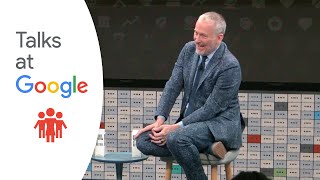
Ron Clark built the Ron Clark Academy in Atlanta on engagement and risk-taking, measuring success by 100% high school graduation and 91% college enrollment rather than test scores alone. He started with balloon math games and double-Dutch in Harlem classrooms, then created the Amazing Shake, a workforce-development program now used nationwide.
Chapters
Please join me in giving a warm Google welcome to Mr. Ron Clark.
Appreciate you. Thank you.
Thank you. Thank you. So again, thank you for being with us today.
Glad to do it.
This is our first talks at Google event and you are the special guest. Before I get started, I want to ask a personal question. Is it a requirement to work at the Ron Clark Academy to have a strong sense of style? You look amazing. Your chief development and communication officer spoke with us a few weeks ago. Pinstripe suit, matching shoes. And then every time I look online, everyone, all the teachers look good. So is that a requirement or do you give a clothing allowance to.
It's an expectation. We say dress up and so we just always put a lot of attention into our attire because we feel like if you put attention into your attire, people assume you put attention into other things as well. And also we're kind of a model school for the world and so we want people to see educators as professionals. So we can't be in jeans and a T shirt. We dress up in suits. So the very first year the school opened, I said we've got to find a way to start this trend. So we wrote a grant and Macy's actually let us take our whole staff to Macy's. And. And I said, surprise. Everyone's getting a thousand dollar shopping spree. And so we went and everyone got to get new suits and new clothing. But then we show people how to have something tailored, how to make sure it fits just well. So we kind of had to show them. And that started in 2007 and it started a trend where now we're all suited and booted. And I got to tell you something, when you're teaching kids, if you dress in a T shirt and jeans, they're going to treat you like you're wearing T shirts and jeans. When you're wearing a suit, there's a certain level of respect that you'll get sometimes. So it helps.
Makes sense. You hear that? Google employees, T shirts and jeans. That's phenomenal. That's phenomenal. I want to get started with your background, how you came along this journey. So I know doing our research, you started at a school in Aurora, North Carolina, but from my understanding, it was an unexpected role, unexpected teaching position popped up. You went there. I don't think you had high expectations. And how did that transfer into your defining passion in life's work that it is today?
Wow. So I'm from the country. You can tell when I open my mouth, the tractor falls out. I'm from dirt roads. No one in my family had ever been to college. I was the first one to go, and I was just working at a dunkin donut drive through When I graduated from college and a local school. A teacher passed away. My mom twisted my arm and said I had to go do it. So I went to this school thinking I would maybe substitute teach for a few days or maybe do it a month. And I just fell in love with it. I loved working with the kids. I tried to bring it to life to make it exciting. Had them blow up balloons. Shh, shh, shh. And they work out the math problems on balloons. If you get it right, you get a sit on balloon and pop it. I baked cookies for them. I would wrap my lessons. Now let's get down to some presidential learning. You start with George Washington straight from Mount Vernon. And. And the kids would be like, oh, they were excited. There was this girl that was really challenging. A lot of the kids had some behavior issues, and her name was Antoinette, and she hated math class, and she'd be really rude and loud. So I ate lunch with her. And you got to eat lunch with the discipline problems because they're funny at lunch. And I ate lunch, and I was like, antoinette, you know what nine times nine times nine is? She said, no. I said, well, let's work it out. I said, oh, look, it's 729. 729. 9 times 9 times 9 is. And she said, 729. I said, I'm going to ask you that tomorrow morning in the hallway. So I met her in the hallway. I said, antoinette, do you remember what nine times nine times nine is? She said, 729. I said, well, I'm going to ask that question in class. If you pay attention and focus, you're going to be the only one that knows it. So here I go to teach, and this is Antoinette just watching me. And I said, this question is going to be too hard. Nobody's going to know this answer. And anyone know what is nine times nine times nine?
And she said, 729.
And I said, ooh, Antoinette, you my valedictorian? Some kind of smart. I said, y', all, she's got a good math mind. And she was like this, looking all proud. After class, she ran up to me and she said, thank you. Years later, now she's 40 years old. Now we're really close. She said, in that moment, you threw me a lifeline. She said, I didn't know what numbers were. I was so embarrassed. And so I said, I'm going to get. Before I got got, I. I want to be loud and bold and bully these kids before they have a chance to bully me. She said, but when you made me feel smart in math class, I told myself, I will never disrespect that man. I'm going to work hard for him. I'm never going to get on his nerves. She did, though. She got on. She was bad still sometimes, but never she'd be bad. I said, antoinette. She said, sorry, sir. I said, what are you thinking? She said, my bad. So realize I could pull her back. So that was kind of the bedrock of my teaching. I made relationships. I tried to make it fun. And then there's one more piece. I made it really hard. I made my class hard because I felt like these kids can do it. I believed in them. Okay, they got learning disabilities, but just because you got a learning disability doesn't mean you're not smart. Just means you learn differently. We're going to take some different roads. We're going to get to this high goal, because the world ain't going to cut it in half for you. So I tried to find a way to bring it to life, engage kids. But then I really had high expectations. At the end of the year, I had the highest test scores in Beaufort County. The principal said, oh, my God. She freaked out. And that was kind of the bedrock of my teaching philosophy. I started showing other teachers what I was doing. Then they had high test scores, and I had this idea. I said, I need some big barn where I could put my classroom in the middle of it, and I can bring educators and show them how to teach. This way, we can make a revolution. We could change lives. So that was the foundation of what later became RCA here in Atlanta.
Wow. That's phenomenal. Throwing that lifeline is very important. Giving the kid the confidence so that they can perform later on. Phenomenal. Phenomenal. Okay, so you have. You improved the test scores in Aurora, North Carolina. Mm. You're doing well. You're recognized. Why make the move to Harlem?
Well, we had been invited to the White House three different years to be honored because of the work we did in Aurora, North Carolina, that school test scores increased. It was amazing. And then I saw a TV show about schools in Harlem that had violence, overcrowded classrooms, lack of teachers. And I said, I know these methods work in the country. Let me go see if this will work in the city at this school that they set on the TV nobody wanted to go to. So I packed up my car, I drove it to New York City. I got to one of the schools, and this kid comes busting out of the side door. The resource officer's trying to pull him back in, and he's just swinging and fists. They pulled him in, took him down the hall. I went in the door, followed him, walked around the metal detector. They go in, they set him down and went to call his mom and get the principal. And he was just sitting there doing this, and I didn't know what to do. So I just kind of sat down beside him, and he kept going. So finally I just leaned over to him and I said, you know what? I was breathing like that one time, and I passed out. And he said, for real? And I said, yeah. And so I just started talking to him. And I did this trick. Whenever I'm talking to a student, I just lock in on their eyes. Nothing distracts me. I'm just like, this is your moment. What's going on? What can I do for you? And I was doing that with the kid. I said, tell me about your day from the first moment you woke up. I want to hear all about your day to this moment. After 10 minutes, we're laughing and joking, and he said, you're different. If you are my teacher, I wouldn't get in trouble. And so I said, this is a sign. This is my school. So I begged a principal, and I got a class. And I had 37 kids, and it was a handful that made a movie about it. You know, it had to be bad when they had to make the movie. I had some rough kids, but I did the same thing I did in North Carolina. I made it hard, but I made it engaging and hands on. And I used music, and it was vibrant, and I believed in the kids. And at the end of the year, I had the same test scores I had in North Carolina. It got a lot of attention. The next year, I had the high test scores. I was named the American teacher of the year. They made a movie about it. I got to be on the Oprah Winfrey show, and it blew up. It was awesome.
So applying those principles to your students in Harlem, did you have to kind of configure? Because I watched a movie, and I remember there were these rules. I think it's the essential 55 rules. But then I believe they switched. They changed throughout the movie. Did you have to change your style?
All right. Country kids are different from city kids. And the kids in Harlem, they were rough around the edges, but when you break down that hard exterior, they're just tender Hearted and wonderful kids. But sometimes city kids, they put on this thing and you just kind of. You gotta prove to them that you're there for them. That's why I had to eat lunch with them every day. They love to double Dutch. I had to learn how to double Dutch. Then I brought in the double Dutch ropes. I taught Velocity using double Dutch ropes. They love to play these video games. And so I went and played the video games so I could use the video game content in my math questions. Anything. They loved the bully in the class. The worst one was Tamara. Everybody was afraid of Tamara. I was afraid of her too. And so I said, tamara, what's the hottest song out right now? She said, the Thong Song. I said, oh, my God, the Thong Song by Cisco. And so I said, well, I've got to use the Thong Song. So I changed the Thong Song to apply to doing latitude and longitude plotting maps. And. And the song was like, geography is so good to us. We practice and we learn so much. We study that map from front to back. Get on the ball, don't be slack later, learn about a lot of places that are cool and hot. We study every single spot from Spain to South Dakota. And we plot our maps. It was a 12 second intro to plotting maps. Well, the kids in Harlem would not tell me they liked my song. But they'd be like, Mr. Clark, when we doing the maps? I'd be like, after lunch. They'd be like, oh, could we do them before lunch? I do. They like my song. So it was all about just finding a way to break down exteriors, show the kids I cared about them, and integrate something they loved into my classroom. When I did that, then they opened up and it was great.
Excellent, excellent, excellent. I want to get into the Ron Clark Academy model. So you have a unique. Obviously a unique teaching style and unique methodology. In the business world, when we measure our performance, it's usually return on investment, profitability, ebitda, et cetera, et cetera. What type of measures, if any, beyond test scores? That do you look at to determine the success of your students?
Yeah, a lot. I love a good survey. I survey parents, I survey educators that visit our school. I survey the students, the staff. I love a survey, but. But just because someone fills out a survey doesn't mean I'm gonna pay it any mind. I just wanna know what people are thinking. Like this one mama, she went off on me at the survey for last year. She said, Ms. Clark, I don't know who you think you are. At the awards ceremony, I Sat there and I cried inside for kids who didn't get awards. You only recognize some of the kids. And every kid's working up to their own potential. Not every kid was recognized. You should have found a way to recognize every kid in some way. I hate that crap.
Yeah, yeah.
I hate that we're raising this coddled, wussified generation of Americans where everyone gets a trophy and everyone should feel good about themselves. I hate it. So just because the parents upset with me that I didn't give everyone a trophy. I ain't giving everyone a trophy. But I'm glad that I know that she's thinking that I want to survey everyone so I can see what are we doing well, where are we missing the mark? In fact, this year we did something cool. We took all of our survey results and our staff. We made a plane. And. And we said, these are things that we do at RCA that are first class up in the sky. Like, we are killing these things. We should applaud ourselves. We took a first class journey of this. Now here's some things. Now, we did economy comfort. We did well, we could do better, but we did economy. Now these things we did at RCA last year, according to all the survey and all the results, we just economy. A basic economy. And then I had a category. We missed the plane. We got left at the gate. And so how can we move everything into a first class type of experience? So I love surveys to look at results. Test scores. Of course we look at test scores. That's important for us. We also look at how our kids do when they leave RCA. 100% of our kids have gone on to graduate High School. 91% of our kids are in college. Harvard, Yale, Morehouse, Spelman, Princeton, Georgia Tech. They go to the best colleges in America and they're killing it. So we use a lot of things to see how are we doing as an organization.
Good, good, good. So you mentioned the economy class that you got. The survey results pretty much put you in economy class and you want to move to first class. And what I like about your philosophical principles is to take risk. I like that aspect. And how do you encourage your teachers and students to take risks without the fear of failure? Because with risk comes failure.
You got to know you're going to fail and that failure is awesome and failure is great. I told my staff, let's just throw a lot of stuff at the wall. Let's take some shots here. Let's go for it. And some stuff's going to stick and some stuff won't and when somebody takes a shot and they do something wild and it doesn't stick, as a leader, you've got to be like, we learned from that. What we doing next? Here we go. It can't be like, well, this was a bad idea. You just got to be like, come on, what are we doing? Let's. Let's try some things. Let's be bold, let's be different. We have a saying at our school. If we're going to be here, be here. If we're going to be a school, let's be. If you're going to be Google, be Google. What are you going to do? Be Google. Go for it and be bold and be wild. Because the way the world is moving, things are going so fast. We're always trying to get ahead of everything. What's coming next? How can we get ahead of it? You can't just sit here and be complacent. And. And if we're not trying some wild new things, we're going to miss the mark for the future. So it's kind of like it's a bedrock of our school. And in order to make sure that everyone has this attitude of it's okay to fail. In my classroom on the first day of school, I put a math problem up. I say, all right, everybody, I want you all to try to work this out. Now. The math problem is so hard. I know they're all going to miss it. And so I say, all right, everyone finished? Anyone get the answer of 14? No one? I said, Lord, I missed it. I made mistake. I said, oh, but I see my mistake. Let me show you where I made my mistake. I said, where did y' all make your mistakes? So I leveled the playing field. Every one of us missed it. And I say, I love mistakes because I learned from it. I grow from it. I'm going to make that mistake again. I'm going to be better and better. And so it's kind of a culture we have in our school of sharing what you did wrong. Oh, it was a mistake. I'll learn from it. And here we go. As a staff. I told them, like, if I were to hire you to work at rca, your job title wouldn't be chief development, communications officer or teacher or. It's not custodian or admissions director. It's just to be an outstanding team member. I told my staff, I want you to uplift each other, to high five each other, to celebrate each other and be kind. Do you have the capacity to be kind to the people you work with? So that is the culture that we built where it's uplifting, it's supportive. So if you try something and it doesn't work, you're around a lot of people who they know. Their number one job is to support you, to uplift you, to cheer for you. And a lot of workplaces into Google, too. And a lot of workplaces, people don't want their colleagues to do well, because if they do well, they're going to get the promotion. And so at rca, we said, what we're going to do is we're going to celebrate when anyone wins, because if you lift the people up around you, you lift yourself up as well. You. You put people around you down, you pull yourself down. So that's kind of the culture that we have at rca.
And it works great, great, great. So throwing things against the wall to see what sticks, is that how the Amazing Shake started? And maybe you can add some context of what the Amazing Shake is. I had the pleasure of volunteering a year ago, but I'm sure you can add, you can explain it better than I can.
Okay, so I'm really big on how do I help these kids become successful in the real world. And. And honestly, I was just meeting with Noah Amos, one of our graduates, this morning, and he's at one college. He's considering transferring to a different college. He's thinking that the degree from that college might make it look a little bit better. And I explained to him that some people aren't really as concerned where the degree is from. They're concerned with your interview skills. Who do you know, your connections to the organization, your experience. So a lot of life is, can you give a firm handshake, look someone in the eyes? Can you express your ideas? I told my staff, I don't want one of our kids to be in a community meeting and know the answer to the community's problem and not to say it. I don't want the kids to be sitting around with a bunch of CEOs and to go, they are wrong. I know what they should do, but I'm not going to say it, though. I don't want to say it. I want these kids to have the confidence. And we tell our kids, when you have that confidence, you can uplift your community, your family, yourself, you. It's amazing. So we started off 16 years ago with something called the Amazing Shake. I said, step one, these kids need to learn how to give a firm handshake. So I lined the staff up down the hall, and the kids just walked up. Each person and said, hello, my name is Brad. Hello, my name is Brad. And they had to give a good firm handshake. Oh, that's good. Who taught you how to give a good handshake? Oh, you just perfect. You born perfect. So I want to point out some things he's doing here. He's pressing with his thumb here. See how it's white around here. A lot of people don't know to press with the thumb. He's building an air pocket on the inside here. That air pocket is important. I love the placement of the fingers. The finger is not here, it's right there. The firmness of the handshake is a 50. It's a perfect 50. It's not too hard, it's not too soft. But you did one thing that I asked the students not to do. But it's hard. I asked the kids, I say, don't look at the hands, then look at the eyes. And you did that because it's just human nature. But I told the students, when you go to introduce yourself, I want you to lift up your head and give a firm handshake like that. And the kids said, but Mr. Clark, I'm afraid I'm going to miss the hands. I said, I have a foolproof plan to make sure that you never miss the hands. And you always look up. And they said, what is it? I said, just always be the first one to put your hand out. See, I made you look. Just always be the first one to have this confidence. And so we did a competition where every kid was graded on, can they do that? 10 was perfect. Anything lower than that wasn't. They dropped their card in a bucket. Then we tabulated it and we announced who has the best shake in our school. It's called the amazing shake. The next year, I said, instead of doing our staff, why don't we bring in Atlanta? Let's bring in the vice president of Delta, the head of Google. Let's bring in whoever to be the judges. And it went from just a handshake to. To a 60 second interaction where they have to be interviewed by the vice president of Google who says, tell me, why should we hire you to work at Google? What qualities do you have that will make you a perfect fit for our organization? Then they turn the corner, they have to give a toast at a wedding. They turn the corner, there is a problem at the organization. They have to problem solve with the team how to fix it. So it's workforce development type issues. You turn the corner, a lady has dropped pencils. The kid Knows I only have 60 seconds to introduce myself. Does the kids say, oh, hello, my name is Brad, or do they say, oh, my goodness, let me help you get these pencils up. By the way, I'm Brad. Nice to meet you. So do they use common sense? So do they eat with proper etiquette? How do they turn in their resume? So it's a lot of stations in the gymnasium, and at the end of it, you have the winner of the gauntlet round of the amazing shake. So it's a program that we do. It's now spread. It's in all 50 states. It's around the world where schools and districts and counties are doing the amazing shake this year. Charlotte Mecklenburg. Every seventh grader in Charlotte Mecklenburg is doing our amazing shake this year. Charlotte Mecklenburg is the seventh largest school district in the country. And so basically, when you win your event around the world, you come to Atlanta in March for the global amazing shake, where all the representatives from around the world come. Last year's winner represented Germany and second place was Canada. So Atlanta, we're going to bring it back next year, though. So it's great. It's workforce development.
Great, great. So speaking of workforce development and interviewing skills, of course, Google, we have a rigorous interview process. And what I know about the Ron Clark Academy, there's a rigorous acceptance process to get into the school. What type of things do you look for for students and what happens when a student might not seem to be a good fit? Do you have processes in place?
Sure. So we have. We take all different types of kids at rca, from kids who struggle and have learning disabilities to kids who are average to kids who are gifted. We take all different types of kids because educators from around the world every week almost come to our school, hundreds of them, to see how can we teach like they teach at rca? How can. How can we take their methods back to our schools? So I couldn't have a class of 30 kids that all had learning disabilities, and I couldn't have a class of 30 kids that are all gifted. So about a third of the kids at our school have academic challenges. About a third are kind of in the middle, and about a third are on the honor roll before they come mixed in there. About a third of our kids have an N or U on conduct before they come. So we got some squirrely kids. The one thing our kids tend to have in common is the income of the families. Most of our kids. Families pay $45 a month for them to attend our school. Then we have some middle income and have A handful of high income, but most of our kids are in that range where they pay $45 a month. And so what do we do if there's a kid who's not a fit? It's really rare. Back in 2007, the first year, kids had to meet certain marks. And if they didn't meet the certain marks, we let them go. And at the end of the year, we failed a certain kind of way because we're like with public schools, can't let kids go. And if we're trying to teach public schools, this doesn't work. I said, so we can't just let kids go. We've got to figure out everything we can do to keep kids and to save kids. So generally since then, if a kid has left, it's pretty much a parent said, the drive's a lot and I got a different job somewhere and we've had to move, but generally no one leaves. They stay the whole time.
Great to hear. Great to hear. So getting to Google's favorite topic right now is AI. That's the favorite, two letters.
Is it the favorite or is it a forced favorite?
That's a good question. I think it's of both. I'm forced to say that. What fascinates me is about AI is it's such a good assistant to do a lot of things. And I imagine students coming up, you want them to understand how to use it, but how do you create some intersectionality of bringing AI to the classroom but also discourage abuse?
Yeah, well, you got to have ground rules. So we have a contract. We have our kids to sign. And when the whole AI thing happened last year, I said to my staff, we can't fight it. We just got to lean into it because the wave is here. And we've got to just ride the wave because if don't, we're going to be drowned under the wave. I said, let's get on top of it. Let's get on our surfboards. Let's just ride this. Let's learn, let's go. So we introduced AI to our students and we said, let us show you how it will write a paper for you. Now, what do you think of the paper it wrote? And let's evaluate this paper. Does it feel personal? Does it feel real? How can we use AI to adjust it to be what you want it to be? See all these EM dashes? I know you done cheated if you cheated. And so look at these emojis. And so we, we showed them how to use it, and then we showed them how to use it in a way that was appropriate. And then like in one of my classes, it was a history lesson and we were talking about history from the perspective of different people. And I told the kids, I want you to use NotebookLM. I want you to go in and I want you to write up all the details of this person from history that you're representing for your report. And I want you to make a podcast as if this person were being interviewed on this podcast. And so Notebook created it for me. It was really, really beautiful. So we have tried to really just jump in and infuse it so much so to the fact next week on Thursday and Friday, we have educators coming from around the country to come to RCA to learn how to infuse AI into their classes. So we're trying to be at the forefront of it, not the back end of it.
Excellent, excellent. Before we move on to the next question, can you look in the camera and say how great Notebook LLM is?
No, I love NotebookLM. Use it all the time.
Great.
The first time I showed it to the staff, they freaked out. So I had the staff and the students are all in this big assembly and I said, let's write a story. I said, and we started with a character and what happens to the character when we wrote this story? I said, now let's put it in. And then the podcast started and everyone's like, oh my God.
Fascinating tool, fascinating tool. I want to get into one of my favorite topics and that's like business finance. I'm in finance and accounting and I know that Ron Clark has different avenues of revenue. You have the teaching teachers, which seems to go along well with the school's mission and principles. But I also see that you also have a printing press where you could print or other people can print custom T shirts or custom designs. And you also have a RCA app. Now, you don't usually see that type of vertical integration with a school. So what are the thoughts of incorporating those two things and how are they doing today?
Sure, it's kind of like what are we doing? It's kind of like we run a non profit and we got to go and we gotta be big and we gotta be sustainable. 91% of our income prior to Covid came from educators visiting our school to learn from us in person and take our methods back. 91% of our income, millions of dollars to run our school every year. Well, when the COVID hit, people couldn't come and so nobody came to our school. We had no funding coming in and Then when people did start coming back, they had to be six feet, socially distanced. So I couldn't fit many people in a room. We were struggling, and I said, I'm never going to go through this again. We have got to make sure that we really diversify our revenue streams. We already had some small businesses within our nonprofit, but I said, we've got to blow this up. One of them is a merchandise company. So we had a merchandise company and we had some people that would print shirts for us locally and we would ship out T shirts. Did you read the Harry Potter Bulls?
No.
Okay. But you know, they got them four houses. Yeah.
Yep.
Okay. Well, I read that J.K. rowling book in 1999 to Harry Potter, and I said, I'm going to try and do these four houses. My classroom and I recognized that I could get kids to cheer for each other, to work together to be a team. So at our school, we have the four houses. It is an incredible system where our board members, our parents, business leaders are all in houses competitions throughout the year. Everyone belongs to something they've now spread all over the world. Our four houses started our school. So people want to buy merchandise of the houses. So we now, we were going through vendors to do this for us. And I said, after Covid, we're doing it ourselves now. We have a 21,000 square foot warehouse up the street from RCA. We're producing all of our T shirts, have all of our merchandise. We're shipping out thousands of boxes a week, and all of the revenue is coming to us. We are a nonprofit, so all the money goes to support scholarships for kids. If Google needs T shirts made, and I'm sure you do, we'd be happy. And we're going to do them better quality right here locally. We'll drive them right here and deliver them in person. But what's going to happen is the little profit we do make, it goes to scholarships for kids. Now, wouldn't Google rather do the scholarship for the kids?
Definitely.
So if anybody needs T shirts, come to our school. We'll make your T shirts for you. So we also now have a T shirt business. Also we have an app. Because it's part of the four houses. Teachers have to have a way to give kids the points. So it made it an app where teachers can easily go in and put in the kid's name, give the points. When you give a kid a point, the parent receives a message. James just got two points from Mr. Clark for being honest. You can talk back and forth with the parents so now this is a multimillion dollar app company that we have grown that now supports rca. Prior to Covid, we just outsourced our app. Other people made it. After Covid, I said, we're hiring developers, we're in house, we're doing all of our customer service. We're doing it here. We're keeping all this revenue to support rca. So we've had to be really smart about businesses. We, we also rent out our facility. RCA is the most amazing building in Atlanta. We have flying dragons, trapdoors, secret passageways. So we now we do events. We rent all types of companies for things and so and those event rentals that goes to support scholarships for kids as well. And then the amazing shake. I just told you, Charlotte Mecklenburg is now doing the amazing shake. Charlotte Mecklenburg is paying us in order for us to help implement the amazing shake in 48 schools. So it is another funding generator for the school. Because I was like, we cannot just depend on this. If we're going to be here, be here. What are we going to do? We need as many funding resources as possible. And one more thing I want to say, you have to infuse that in your school to the kids as well. We have a day coming up. So what's going to happen? From 8 to 9, the kids are going to learn about the state of the economy in the world from local bankers. They're coming in to teach them about income tax, property tax, about interest rates. And then from 9 to 10, they're going to go into our gym. We've got these big pictures of homes all over Atlanta with the details about the homes with real estate agents standing there. The kids are going to go up to each one to try to pick out which house they want to buy. Then they're going back to the room where we have mortgage brokers in the rooms that will help the kids figure out this is what your payment would be for a 15 year, 30 year or 50 year mortgage. And so that's going to be included. Then they're going to learn about the history of Atlantic City, all of the streets, the roads, how the economy affected Atlantic City. For lunch we're going to have hot dogs with sauerkraut. Atlantic City themed. Then after lunch, we're playing Monopoly. Our entire gym is set up with 60 tables with Monopoly boards. And all the bankers and finance financial people are going to play Monopoly with the kids. Because I learned so much playing Monopoly with my family, people don't do that anymore. And so we're going to play Monopoly for Three hours with the kids, and we're going to teach them about finances and income tax and property tax on that board through what they learned in the morning. So not only do we at RCA try to be a smart business model, we try to teach our kids financial literacy as well.
That's great. Good business acumen being learned. Are you guys going to have security at the Monopoly games? Because when I play Monopoly with my friends, it can get very serious.
Okay, so some people are competitive, some. So we do have all of the rules clearly outlined. So on the table ahead of time, everyone's gonna learn the rules. And our gym is divided up into sections of. These are novice players. I've never played. I played five times, 10 times. My family's played 100 times. So that will kind of make it more. Everyone's on the level playing field, and there'll be one adult, one banker or staff member at every table to make sure. But sometimes the adult's the problem. So, yeah, yeah.
Trying to do side deals, let people.
Borrow money, but I'm teaching these kids generational wealth. What is generational wealth? You don't sell your property. I don't care what the offer is. You don't. You hold onto your property. So it's part of the lesson of what we're teaching them. Once you get this property and someone makes a deal for you, you've got to really question, is it ever smart in Monopoly to give up property? And so it's going to be part of the lesson.
Interesting, interesting, interesting. All right, so we have a few more minutes. I want to hit two quick stories. One, ask you about the story we talked about earlier about success stories from your school of students. And I want to hear more about the Dunkin Donuts story, because I've seen that online, if you don't mind sharing that.
Oh, gosh. Okay, so, all right, so a success story. So we had a kid, Zion Nguyen, who didn't want to come to our school. Because imagine you're in third grade, and your mom says, oh, we're pulling you out of your third grade to go to some school. You don't know anybody, and a lot of kids don't want to come to our school. I don't want to go to that school. So he said, I'm not going to that school. And he wouldn't come. So I called the mom. She said, Mr. Clark, I can't do nothing with him. He just don't want to go. I said, could I come to the apartment? She said, fine. So I go to the apartment, knock on the door. He opens the door and goes, I'm not going to your school. I'm like, I know. I said, can I just talk to you for a few minutes? We sit on the couch. He had a Connect 4 game. I said, oh, you're good at Connect 4. He said, yeah, I beat everybody. I'm the math teacher. I said, oh, let's play. So we go to play an hour later. I have won every game. He's so frustrated. He says, how are you doing this? I said, well, if you come to our school, you learn this type of thing at our school. He says, fine, I'll come to the school. So he comes to the school. He does really, really well. I mentored him throughout the whole time at rca. He ended up getting a full scholarship. We go to Princeton. Then he got a full scholarship. We go to Harvard. And then he called me last January and said, Mr. Clark, can I take you to lunch? I. I said, oh, you paying? Let's go. So I go to lunch. And he said, I want to tell you what I've decided. My master's is going to be in at Harvard. I said, what? He said, education. He said, I want to have a Connect4 moment with a kid like you had with me. And so I hired him. So now he teaches at rca.
Wow. Wow.
It's amazing. We've had. It's cool stuff. So we have a lot of stories like that of kids who just go on to do great, great work. Great. And then Dunkin Donuts. Okay? So one thing about me, when I worked at Dunkin Donuts, I worked the third shift. Okay. Anyway, I'm gonna tell you. I'm not gonna do it in rhyme for you. I'll just tell you. So I was working at a Dunkin Donuts. I ran a drive through, but we worked third shift, so it was in a rough area. So the front door was locked, back door was locked. We only had a drive through open. And I worked from 11 to 7am we would get bored, so we would play freeze tag, hide and go seek and stuff. Cause there's just no one coming through. And there's just. So one night, it was like 3am I said, let's go hide and go seek. So I took Ryan, we went outside to the dumpsters. I left him out of the dumpsters to count. I went inside and I'm very competitive. I'm like, where can I hide? I've hidden behind the flower. I've hidden the bathrooms. Where can I hide? And I was like, maybe the oven. Because we had this big oven. You cook all the muffins and the racks of cookies and stuff in it and it stays on 24 hours a day. It's just always on. I was like, I could fit in the oven. I said, well, what if I get too hot? I said, well, I'll just say, ryan, I'm in the oven and he'll let me out or something if I get too hot. So I go and I pull down the oven door and I crawl up in the oven and I pull it shut. And when I did, it went click. And I was like, oh, no, you cannot open an oven from the inside. It will not open. I was like, no problem. I'll just wait here, like for 60 seconds and if he doesn't find me, I'll say, I'm in the oven. So all of a sudden I heard knock, knock, knock. And I said, I'm ready. And he said, you locked me out. I was like, oh my God. Because just out of force of habit, I had flipped the latch when I came inside. And I was like, oh my God. I was like, I'm in the oven. He was like, what? I said, I'm in the oven. He said, get out. I said, I can't. So my life flashes before my eyes. I look at the bottom of my shoes, it's starting to melt. I'm like, oh my gosh. I'm starting to get lightheaded. I'm to starting and I'm like, okay, the manager will be here at 6am with the keys. I'll be cooked by then. I was like, what am I going to do? And so I took out my shoelaces. I was trying to put it to the latch and it wouldn't work. I'm panicking. And I remembered the week before we were playing freeze tag. I had crawled through the drive thru window and I'm like, Ryan was too big. He couldn't get through. But I was like, that's the only choice. I said, ryan, crawl through the drive through. He said, I'll get stuck. I said, I'm burning up. So like 30 seconds later I hear I'm stuck because he couldn't get through because he was a bigger guy. Well, you can probably guess what happens next. Customers came through the drive through and they saw Ryan's legs hanging out there. And Ryan said, the guy was like, son, do you need some help? He was like, my friend's cooking in the oven and I'm stuck in the drive through. So they took the crow man's Crowbar out. They busted out the whole drive through. Window glass everywhere. They got run through. They went and let me out of the oven.
Thank God.
So I used to have long hair, and so when I pulled out my hair, just pulled right off my head. My eyebrows were gone. I wasn't thinking clearly. Went to the emergency room. My sister works at the hospital, and she was like, ron, what happened to you? I said, I cooked in the oven. But anyway, so, yeah, so I did not lose my job, though.
Oh, really?
I did not lose my job.
No, no, no.
The owner loved me. But anyway, I think he might not have won a lawsuit either, but I would never have sued him. But I didn't lose my job. But, like, that's been my whole life. But I kind of like being in the oven. Like, if we're going to be here, be here. You gonna live. What's Google doing? Like, y' all got some chances. You have the ability to throw some stuff at the wall. Let's be big, let's be bold. Let's live. We're gonna be here. Let's be here. Yeah.
That's a great story. I'm glad you're here to tell it.
Thank you.
All right, well, want to extend a great, great thank you for Mr. Ron Clark for joining us today.
Thank you.
I looked out.
More from Guy


Cheryl Strauss Einhorn | The Human Edge: Smarter Decisions in the Age of AI | Talks at Google



Rachel Glennerster | Innovation and the Center for Global Development | Talks at Google

Rebecca Winthrop | Rethinking the Purpose of Education in the Age of AI | Talks at Google

Dr. Robert Wachter | A Giant Leap: How AI Is Transforming Healthcare... | Talks at Google



