Ronald Reagan | Andrew Helfer | Talks at Google
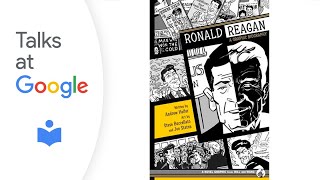
Andrew (Andy) Helfer, a longtime DC Comics editor (≈25 years), describes his shift from superhero comics to producing nonfiction comic-book biographies — a ‘Big Book Series’ of 100% true action-oriented lives (example extremes: Malcolm X and Ronald Reagan). He explains the editorial choices (favoring "action biographies" that translate visually), the creative constraint of using only documented/verbatim dialogue in word balloons, and why deceased figures are easier to publish (legal/financial/story-completion reasons). Helfer contrasts comics publishing at DC (ancillary-rights driven) with traditional book publishing (direct book revenue), recounts prior Paradox Press projects (e.g., Road to Perdition, A History of Violence) and upcoming or considered titles (J. Edgar Hoover, Trotsky, Mao, potential living subjects like Oprah or Google founders if approval but not control is granted). The recorded session includes audience Q&A on subject selection, rights, and film adaptations.
Chapters
My name is Andy Halfer and I wrote this book on Ronald Reagan. And you know what I am primarily is a comic book writer and editor. I had been an editor at DC Comics, which you may know, as the creator of Superman and Batman and Wonder Woman and the Flash, Green Lantern, you know. And I worked there for about 25 years. And I would say that here's a little background on me, if you're interested. And I found that after working on the superhero comics and writing the superhero comics and editing the superhero comics for a long time. Let me ask you a question, let me ask you a question. How many of you guys read comics or have read comics? Is it? How many of you guys collect comics? Okay. But in that time I pretty much worked on every comic out there from dc. And I found that I felt that there had to be more. I felt that the uses of comics were being very self limited by the companies who basically used comics as a way to promote the intellectual properties that they control. Those intellectual properties being Superman, Batman and anything else that is created by the talent at dc, it kind of falls into this big vat of intellectual properties owned by D.C. and that are then marketed and resold and made into movies and as we used to say, Underoos. I don't even know if anybody knows what Underoos anymore. But to us that was growing up at dc, that was the classic use of the Property was a 6 year old running around in Batman Underoos or something. So that's what they did. And that works very well for them. And obviously every summer you see another bunch of superhero movies. You know, it's making money for these companies, whether it's DC or Marvel. But I kind of always was in interested in publishing comics that accomplished something besides sold something else. You know, I wanted the comics to be an end unto themselves. And I felt that there were other things that could be other stories that could be told with comics and the educational possibilities, which were totally unexplored by companies like DC I think were there, but just not being attempted. So at dc, I started, I started a line of nonfiction books and they were called the Big Book Series and they were nonfiction true stories. Our line was 100% true with an exclamation point. That was the way we sold these things. And the attempt was to get people who did not necessarily read comics to see comics as a way to tell stories that usually they would only read in prose books. And those were fairly successful. But unfortunately for me, despite their success as books, they created no ancillary Ancillary rights and ancillary revenue. The only revenue was for the sale of the book. You couldn't exactly. If I did a story on Helen Keller, you couldn't exactly do Helen Keller action figures. And certainly not Helen Keller Underoos. I mean, maybe you could, but it never really occurred to us. And so at the end of the day, that didn't serve the purpose of dc. And so despite their success as books, and this was a discovery on my part, where a company that was ostensibly a comic book publisher wasn't particularly interested in making money publishing, you know, and so despite their success, the series was cancelled. Well, shortly thereafter, I left D.C. to pursue this kind of thing that had become a dream. And I left D.C. and I started working on these kinds of projects. And these are using comics to tell nonfiction stories. Now, I can't say that I'm an expert at Ronald Reagan. I think anybody in this room who, you know and you could, I could loan them to you at this point wants to read the, I don't know, three foot tall stack of books that I read on Ronald Reagan. Anybody who read those books can become just as expert as I am about Ronald Reagan. I'm not an authority. There's a guy named Lou Cannon who is generally regarded as one of the authorities. There's a guy named Gary Wills. There's a bunch of people who. Not a bunch of people, probably anybody who's written a book and done research, primary research as opposed to secondary research on Ronald Reagan knows more than me about Ronald Reagan. What I bring to the table is the idea of doing a comic about Ronald Reagan. You know, my take, my. I will say, I'll give myself the benefit of the doubt and say, superior knowledge of putting comic books together. I combine that with my functional knowledge of Ronald Reagan and came up with this book. So if your question is going to be why did Ronald Reagan do this and this and this, and I probably am not the best person to answer that question. I may be the best person in this room to answer that question, but I'm not in general the best person to answer the question. So what we do with Ronald Reagan, what we do with all these books. And this book was preceded by a biography of Malcolm X, which we thought we being the people. My partner, Jessica Marshall, in case you're filming this. Hi, Jessica. My partner and the publisher wanted to kind of set up the two parameters. You know, how far can you go in either direction with these books? And we decided Malcolm X was one extreme and Ronald Reagan was the other Extreme. You can choose which extreme you'd rather sit on and consider yourself a part of. But the goal was to set up the two extremes and then spend the rest of the time doing books that kind of filled in everything in between. We originally thought of doing books with the founding fathers. That became a problem because this is not a particularly well kept secret. But 99.9% of comic book artists can't draw horses. Horses are the most difficult things to draw. I know one artist who can draw a horse, but e gets paid 10 times more than I can afford to pay. He's a great artist. So anything that predated the automobile kind of was out of the picture because, you know, unless you can imagine the Donner Party walking across the wilderness, it's not going to to fly. So within those parameters, what we did was we kind of looked for what I call our action biographies, biographies of people who did things. Now, as much as I'm interested in Albert Einstein, most of the action in Albert Einstein's life was over by the time he fled Europe for the United States. Because after that, the most action you could have him is riding around Princeton on his bicycle. Otherwise he's sitting around thinking and perhaps writing on a chalkboard or perhaps writing in a notebook. But there's not a lot of action to him, at least to the best of my knowledge. I might be wrong. The double life of Albert Einstein might be interesting. I know he was a bit of a cad, but that just recently evidenced. But so with Ronald Reagan, he's clearly a person who had an action life. An action filled life is a guy who reinvented himself at least three or four times over the course of his lifetime and really only spent a little bit of time, a little part of his life, kind of sitting behind a desk and talking. And even in those years, as you can see if you look at the book, in those years, even when he was sitting around talking or thinking deep thoughts, the people who worked for him were doing nasty things which were very graphic. You know, whether it was smuggling arms or shredding illegal documents, there was always something going on that was action filled in his life. Now, I don't know how much people know about Ronald Reagan. He was a president, he was a governor, a governor of this state. And it is a very interesting life. I mean, if you read the book, I believe that the tone of the book, while slightly humorous at times, and I think most of the humor is provided by the graphics. The graphics tend to comment on the words, on the text, and sometimes, sometimes Perhaps they comment in a way that's opposite of my intent, but nevertheless, it's always amusing. But Ronald Reagan has a very controversial life. You know, to this day, half this country believes he's the greatest president since Ronald. Since Ronald Reagan, since Abraham Lincoln, since himself. And the other half of the country feels that it was. It's basically Ronald Reagan represents the beginning of the end of empire, you know, the American empire that we may be living through right now with the next stage of the end of empire. So it is a very controversial figure. And that's one reason, a great reason for having done this book in the first place. Most young people who this book is directed towards really have no impression of Ronald Reagan except for his death and the way the media was presented Hibbs, in the moment of death. You know, I mean, and in this book, if you look through the first three pages of this book, maybe not the. Yeah, the first three pages of the book, they have Nancy Reagan crying on top of his coffin whenever possible. And having watched so much of that stuff, this is. Well before I started working on the book, having watched so much, that became, to me the single most prominent image of this whole thing, which was Nancy, who clearly loved her husband, crying on her husband's coffin. And I think in this book we have at least three situations where she's crying on her husband's coffin. And that became the dominant issue. But to the rest of the world, and by the rest of the world, I don't mean people like myself, 49 years old, but the world that's, say, 30 and under, they haven't experienced Ronald Reagan firsthand. And. And all they know is that he was the great president who ended the Cold War and died. And maybe they know he had Alzheimer's, which everyone can agree is a frightfully horrible disease, but they don't know very much about this guy who, to this day, half the country, and that would be the Republican half of the country, to this day, the Republican half of the world of this country is attempting to do whatever they can to either resurrect Ronald Reagan or find someone who will fit so precisely into his shoes that his work can go on. Now, you know, you. I know, I don't know, but my suspicion is that they thought George Bush was going to do that, but it clearly did not turn out that way. And now, so you look at someone like Fred Thompson, who, you know, is ostensibly running for president, but, you know, what are his qualifications? Well, they're exactly the same qualifications as Ronald Reagan, except he was an actor. And he was a senator and he wants to be president as opposed to Reagan, who was an actor who became a governor, who wants to be. Wanted to be president. So, you know, you look at someone like Fred Thompson, you say as ridiculous as that seems, as ridiculous as the idea that a guy who was an actor is qualified to be president. Well, it worked once. It got one person president and it may well work again, I don't know. But Ronald Reagan's life is very instructive in how to become a president. If you read the book, you will see that his journey to the presidency began at least 20 years before he became president. Probably more than 20 years. And you'll see how some. His very simple. His very simple rules. You know, not rules, but his. I can't think of the word well without using the word. Then I'll try it this way. You know, he had simple points. You know, communism is bad, Business is good, Big business is good, and government is bad. Big government is bad. And everything that followed from there was based on those. The word was principles. Thank you. It was hard for me to come up with that word, but based on those three principles. And you can see. You know, I don't know if I can give you the whole. The whole Ronald Reagan story, but it really is fascinating how an actor becomes fails as an actor ultimately becomes a spokesperson for a major corporation, takes the ideas that he had, those principles that he had, and he recites those principles over and over again in the form of a speech to the employees of General Electric and Tinkers and plays. And because he was an actor, he had a great sense of what his audience thought, unlike myself, had a great sense of what his audience felt and could work his audience and tinker with and manipulate his own argument, his own principles to get the positive response from the audience. Until finally he came up with a speech that was so perfect, that was almost. That was almost chemically designed to gain the support of the most amount of people. I mean, it was something that he literally spent years coming up trying to fine tune every principle that he stood for and perhaps sometimes even change his principles because he could get a better reaction out of an audience. And this was all while he worked for General Electric, touring the country, speaking to the guys on the assembly lines and the guys in the packaging plants and the guys making whatever kind of weapons General Electric may have made that nobody knew about back then, how much the guys who were dumping pollutants into waters for General Electric. You know, I don't know exactly what it was, but get to the point where that speech is so perfect that when he finally gets the opportunity to deliver it to the nation on television, people know that this guy's got to run for office and ultimately run for president. And so the life of Ronald Reagan and of course these powerful people who would follow him and lead him and benefit from him being in office. And this book basically covers all that. And then of course covers his years as governor and then his years as president and his departure into his golden years, which unfortunately were perhaps fantasy driven more than anything else. And so I guess the whole point of this thing is that this is not the last book that one who is interested in this stuff will ever read. It may be the first book. To me, these books, all these books don't, you know, they're slim volumes. They don't intend to be the last word on people. But we live in a world where people have very little sense of history. And you know, I always think, well, maybe people don't have a sense of history because history is. Learning about history is such a daunting task. You know, if you want to read about Alexander HAMILTON, there's an 800 page book on Alexander Hamilton. These books that I read, I think the shortest book was 500 pages. And if you look at the major volumes, there are over 1,000 pages. And perhaps that's daunting to people. You know, I kind of always appreciate, appreciated a big book, you know, a big thick book because you could kind of dive into it and stay there for a while. But I have a feeling that in this world we live in today, you know, in a world of sound bites and music video, I mean, I don't want to sound like a cranky old guy here, but you know, in a world where our attention spans are so limited, there still has to be a way to educate people. Because being smarter about something, it raises your awareness, you know, and hopefully people won't make the same mistake twice. They'll read the will the. Well, actually in this country it's the same mistake three times because we've already just made the same mistake twice. But that's a personal opinion. But you know, because we live in a world where attention is diverted very quickly, I think we need to introduce people. There needs to be the introduction to the subjects that hopefully will fascinate people to the point where they will turn around and they'll read the 800 page volume and these kind of books, whether it's this one or the Malcolm X, the next book we're doing is J. Edgar Hoover. And then we're going to do a book on Trotsky. You know, all these things are introductory volumes to people today who really haven't had any experience. And as I was saying before, you know, many people who saw the death of Ronald Reagan, the three days of TV where it was all about Ronald Reagan and how great he was, you know, it's not nice to speak ill of the dead, as they say. So in the days after Ronald Reagan dies, nobody was saying anything critical. If anything, the. You know, I remember watching a lot of it and I said to myself, this guy, they're going to elevate him to sainthood. They're going to make a saint out of this guy. If they hadn't, I mean, they already made him some kind of godlike figure in those three or four days after his death, or, you know, as the cameras followed his funeral to Simi Valley or whatever it is where they finally buried him. And so the reality of the life of Ronald Reagan is here. I mean, it's all real, it's all true. And one of the things that we don't say, and I guess I should have said, is that anytime you see something in a word balloon, as opposed to in a caption that is verbatim, that is dialogue, verbatim, I made up no dialogue. I mean, I could have had a field day if I decided to make up dialogue. But all the dialogue is quotable stuff, whether it's a speech or whether it's something in another book where an interview with a friend said he said this and quoted him there. It's all bonafide genuine, 100% true. And I think the book offers some very interesting insights. If it's not the first book on Ronald Reagan you've read, I think if you have read other books, there are things in this book that other books don't talk about that are very instructive. In particular, there's a scene in there where it's a page where the book is an encapsulation of a novel that Ronald Reagan read as a child that really mirrors his later life. The motives of Ronald Reagan, the motives of the character in the book become Ronald Reagan's motives. You know, so the guy. The book is like a surrogate. The character in the book is like a surrogate for Ronald Reagan. And it's very interesting how perhaps coincidentally, perhaps truthfully or incidentally, a lot of the stuff in this book happened to Ronald Reagan. So. And there's not many books that mention this, the, the. The book at all and its relevance to Ronald Reagan's life, but it's something he read as a child. And, you know, I. I just think that, listen, newspapers, and it may be because of the Internet, although I'm not sure, but newspaper sales drop, people don't read newspapers. People get news off of cnn, which is more and more based on expert opinions as opposed to reportage of facts. You know, every time something happens in the world, CNN has 10 different experts saying what their opinions are, but it isn't news, it's just their opinions. And, you know, I think in general, this country has exchanged fact for opinion. And there's been a lot made of the death of reporting in this country, of objective reporting. And I do think that this is objective reporting. It's actually a culling of other people's objective reporting and with the graphics there to make it easier, faster, and more entertaining. But at its heart, it's all there. And I think you should, you know, eat your Wheaties and read a Ronald Reagan book. God damn it. So anyway, I would. I wish I had a. I had at home, I had a computer with the book. And the next books in the series of which one of which is totally complete, the J. Edgar Hoover one, which is, I think, is a real hoot. It's written and drawn by Rick Geary, who is. I don't know if anybody knows Rick here, but when you see his work, you'll say, oh, I know that guy. You know, he's one of these guys who have been in the business for a long time, and he's a genius of understatement. You know, he is a guy who states things very flatly. And as he states these things very flatly, you're appalled by the sentence, not the delivery, like I'm giving you the state delivery, but he would just, you know, like, you know, the comedian Steven Wright, you know, and he says, it's a big world, but I wouldn't want to have to paint it. And it's like, totally deadpan, you know, and that's kind of like what Rick Gehry is. But he does that with pictures. And unlike Ronald Reagan, the story of J. Edgar Hoover is kind of like shooting fish in a barrel, you know, because this guy. And the other thing about. Which makes that book easier, and I don't want to take anything away from Rick because he did a great job. But when we first started working on these books, I said to the publisher, I said, we got to do books about people who did one thing well. And it's like, well, who would that be? And My first choice was Henry Ford. He did one thing well, he was a total screw up in everything else in his life. And even the first thing, he wound up being a screw up too. But he did one thing well. So there's such a perfect line to this guy's life because it's all defined by the one thing that he did well. J. Edgar Hoover is another thing. You may say he was a son of a bitch, but he did one thing well. And well may have meant terrible, but he just did that one thing well. And he covered, he did, he did the thing and he covered his ass. That was what he did his whole life. Every president was afraid of J. Edgar Hoover. J. Edgar Hoover had files of incriminating documents on every president. And so he kept his job. I mean it's a perfect way to work in government, you know, have the goods on everybody. But he just did that one thing well. So when you look at it, he's such a perfect target because everything he did well is reprehensible. But he did it well. So, you know, so that's the next one then. As I say, we're doing Trotsky and we got a whole bunch more in the works, some of which are very serious topics and some of which are more light hearted and I think it's a good way to learn about a subject. You know, like I say, it's not the last thing you want to read on these guys, but it may well be the first thing you know. And I think that people will be surprised when they read these books. The younger, the more surprised. I think they may think it's not true, but it is, you know, and their parents know it. They may not know it, but their parents know it. So anyway, I would be happy to open it up to questions and, you know, arguments. Although I don't think there's going to be many arguments here. Oh, okay. I don't see this as an argumentative crowd, but I might be wrong. You might be a little argumentative. I'm not sure you kind of got that, you know, but other than that, I'll take one. Is he argument?
No. Oh, you are.
Oh, here's another one. Another argument.
You sort of answered this, but I'm also curious a little bit more about how you're picking out the exact people to do this other than just the one thing. Well, because for example, Trotsky is an interestingly secondary figure in some ways that many people these days would not be at all familiar with.
No, that's true. And I think that I mean, that one is. It's a subject that's close to Rick, who's doing that one as well. It's a subject that's close to our publisher, which is always important to do a book that the publisher would like to do to. But he's a very colorful character. I mean, as I said, there's a lot of action in his life from beginning to end.
I mean, the ending in particular.
The ending in particular is fabulous. I mean, you know, it definitely. It always reminded me it was like a Robert Ludlum novel, you know, where terribly written but action packed. And I think he's an interesting guy. I shouldn't even say this. No, I'm not going to say this. I'll tell you afterwards. I'll tell you one more thing, but I think that I would like. I'm right now working on a Mao book, so you can see that there's a bit of a trend going towards certain things, you know, and we've talked about doing Stalin because these guys, these guys on the. In the world, on the world stage, they were the tops. Now, I'm not saying that they were. That's my wife. I bet. Okay, here's my bet. Now you watch. Where is. This is the great thing about cargo pants. You have 10, 15 choices. Did I eat my phone list? Okay, here you go. Oh, it's not. Let me see. Hang on one second. I'm sorry. Hello? Hello? I think I missed it. I think that was the guy I got totally toasted with last night. So anyway, that. I think a lot of these guys, we had started out doing Americans and I guess we kind of concluded that we were kind of limiting ourselves because it's a big world. And so we very quickly kind of expanded to include the rest of the.
World, sort of the exception of Hoover, the ones you've mentioned. You do seem to be sort of heading toward a thought leaders of the 20th century in some sense.
Absolutely, absolutely. And you know, I suppose there's a relatively recent book on Mao which seems by the woman who wrote Wild Swans Chang, I think her name is. It's called the Untold Story. And it seems very authoritative, but it's like anything you imagined as bad by things like the Cultural Revolution and the other stuff that MAU. You can kind of take it to the 10th power. But unlike most books that go crazy with their subjects, this book is generally regarded as true. So it kind of opens up a whole new horrific aspect to Mao which, you know, was never really existed before. I mean, as a contrast, you Know, even though Rick wrote the Hoover book, I did a lot of reading on the subject. And there's one book, one book of all the books that I read, there was one book that talks about Hoover being a cross dressing, you know, guy who would wander, go to go to parties in Washington as Mary Hoover and he would wear a dress and, you know, I guess he must look a little like Mae West. I could only imagine that. Kind of thick, bulky, you know, I'm sure he put something in for the hips or something.
No, I'm just thinking his face does not look particularly.
No, no, that's true. But there's only one book that at all discusses Mary Hoover. And because there's only one book that discusses it, how much credibility does it have? And the guy, I forget the name of the book, but it's published by some fourth rate publisher in the middle of nowhere. And it sounded like this guy had a particular vendetta against Hoover. And so, you know, we have one panel in the book where it says some people say he dressed up as a woman and went to party, but that's it. We don't really give it much credence. But this book, the author's previous book.
This is the Mao book.
The Mao book, yeah. The author's previous book was about three generations of women in China. So she was there, you know, so there's a lot of. She has a lot of firsthand knowledge and she has a lot of firsthand context. And so it's generally regarded as true and it's positively horrific. And it creates, it creates an image of, of Mao that kind of makes someone like Stalin, who everybody knows was an sob, makes that pale in comparison. But because it comes from a very credible source, it's something that you have to include and you have to kind of base at least part of the book on that source. So I think that that kind of helps when you want to do, as I say, an action biography, you know, does that answer that question?
Any other questions?
Any other questions? You have a question?
Yes, I have a couple of questions.
Go ahead.
The first one, do you only do people that have died or do you do people that are still living?
I'm being recorded, I tell you. I'll be honest with you. The thing that I would love to do more than anything else is a biography of Oprah Winfrey. Now, I have not brought this up with my publisher because Oprah Winfrey probably won't like it. I mean, not to say that she won't like it, she just won't like the, she won't like it in principle. You know, regardless of what is there, she won't like it in principle. And so Oprah Winfrey sells more books than anyone else in the country. You go on that show and she talks about your book and you got a million copies easy. She has that book club. You sell 2 million copies easy. And my suspicion is that if we published an Oprah Winfrey book, Oprah would never allow one of this publisher's books to be on her book. So I, I don't even bother bringing it up, even though I wouldn't want to do it. So that's one live person, but the idea of doing the live people, it's hard because, I mean, yes, you have a right now. Anyone has a right to write a biography. And it's an interesting legal issue because when you start drawing pictures, then you bump into other rights situations because as an actor, say my face is worth something and if I start drawing your face, then I must owe you money. But my feeling is that these are books the way prose are books. They're protected the same way prose books are protected. The problem is that there has not yet been the legal case to make it safe to do that, you know, because you're going to do a live person, live person, and that person is going to sue. And when that person does sue, win or lose, it's going to cost you money, it's going to cost you years, it's going to have your book taken off the market and sitting in a storeroom somewhere until that case is resolved. And then of course you can, if you win, which I would pray that we would on more than just self serving points. But actually, you know, it seems to me that it's a real right to draw a picture of a person as well as write a story about them. But if you do win, then it takes another few years to sue to get recover your fees, you know, recover all the legal fees, which inevitably you will do. So it becomes as crazy ongoing thing. And the easier thing to do is to publish someone who's dead. And additionally when somebody's dead, you can end the story, you know, so there is, I mean there is a financial and legal reason, but there's also the story reason which is the ending's the best part sometimes, most of the times it is.
So the obvious follow up question is, have you considered Larry and Sergey.
Say it again. I'm sorry.
The obvious follow up question is, have you considered Larry and Sergey, the founders of Google?
Well, oh, well, let me say I would do that if they wanted to. I mean, if they want to. If they gave us permission to do it, I think it would be a great book. I'm good to go on it. As a matter of fact, get me in touch with them. Come on, let's go. Get them over here. Where are they?
What floor?
Are they up there somewhere or are they down?
Different building.
Which building?
Different building.
Different building. Well, come on, we'll go over, see what happens. But, yeah, I mean, listen, it's a great story. It's an amazing place, and if we had the approval of these people. But you know what it has to be. It has to be approval, but not control, because frankly, if you don't have control, then let them publish it. Then it becomes their story the way they want to do it. If they want to write it, that's fine, too. But it's a different story if they write it, as opposed to getting someone outside, whether it's me or somebody else, you know, to hit the. To do a Google search and find their name in 5,000 different places and write a story based on that. Well, maybe 5 million different places, I suspect it would be. But yeah, I mean, listen, you know, I did a comic book for Prince. Prince wanted me to do a comic. We did a comic, and it sold a lot of issues, a lot of copies, and it was a great comic, and he was happy, you know, but it was a fantasy as opposed to, you know, but I mean, I've done those kind of things as well. I mean, this is when I was at dc, but I think, yeah, I mean, there's a book that just came out or just came out in paperback, at least the Google story, and that would be a great source. I don't know whether that's the source that they want me to use, you know, but that's the give and take of that kind of thing. But, yeah, you tell them if they want to do it, I'm happy to do it. How does that sound? And I bet I can get my publisher to do it as well. But, you know, as I say, under those circumstances. So what else?
Any other questions?
Come on, you got a question? I know you got a question. Either you got a question, you're going to punch me one of the two. I can't figure it out.
Thank you for coming, first off.
My pleasure. It is my pleasure.
It's our pleasure. You mentioned that you were doing this series at dc. They scrapped it. Now you're doing it on your own. Was it that it was too small of A fish for them to fry, or they didn't know how to do it right. And now you're making money. Are you doing it for charity now or what? What's the. Why is it different now?
What's different now is that when you leave the comic book publishing world and go into the book publishing world, and it was a revel. It was a revelation to me. I realized for the first time that these guys want to make money publishing books. So they clearly think that they can make some money at publishing these books, but that's their desire. The desire is unlike dc, you know, where there is all their. At dc, all their hopes are pinned on ancillary rights. You know, if. If they get the movie option, if they get the movie, if they get the toy line, if they get. That's where their money comes rolling in. And it's true that it's a bigger chunk of change. Additionally, with DC in particular, DC is part of Time Warner. And so even the making of money on a movie, say, based on your property, even the making of money is ancillary secondary. Excuse me, to getting the pat on the head from the bosses. Good job. Because the Batman movie, for example, the guys who produced the Batman movie, the first Batman movie, had to sue Warner Brothers to make a profit. Because. To make some money, because Warner Brothers said it never made a penny. I mean, literally, there's a movie that's in the top 10 movies of all time, and Warner's just saying, oh, no, we made no profit. You know, and they had to sue to get some money because it was clearly cooking the books to make it look like there was no profit. But when you're dc, you don't give a shit about that. You just get the pat on the head. Good job. Make some more of those books. See what else you can give us. And, you know, so at the end of the day, it's all in the family, you know, and so that. I think that's. That's the difference. Now, give me. Give me one thing again. There was something else that was on there.
Well, it was just the contrast to it. So either they. They had other things that they were worried about.
Yeah, I mean, it's true. Like, I, you know, let me say I didn't just do nonfiction comics. I did. I had an imprint called Paradox Press. And when I was doing Paradox Press, I did two things. I kind of found two areas that I wanted to explore. One was the nonfiction stuff, which we did the big books on, which some of which, by the way, are still in Print. I actually found myself signing. You know, I'm doing a little mini tour here and I found myself signing copies of the big books, which I haven't worked on since. It's 97, 98 is the last, so some of them are still in print. But there was a nonfiction and then there was the suspense and fiction books. And what I did, and this was in 1994, I happened to see on the way in, there was on one of the whiteboards it said anime and there was an arrow. So I don't know whether there's a lot of manga and anime fans here, but in 1994, 1995, I managed to get DC to buy the rights to US rights to a book called Gone, which was wordless stories about this little dinosaur. And at the time there was not much manga being published out there. And I remember the reason that the boss let me publish it is because there were no words. And so we didn't have to do any translation and we didn't have to paste up any balloons. And all we had to do was flop it because I believed that we should be reading from left to right as opposed to right to left. And all you had to do was flop it. And it was DC's first manga and the reaction to it was, we're never going to do that again. And it won like, you know, I don't know if you know, the Eisner Awards, which is the Comic Book Academy Awards. And it won awards, but it was loathed. And they never let me do any more manga. And now every publisher has to do manga because it's the biggest thing. And unfortunately, DC waited so long to that. They have the singularly worst manga line out there. It's just, you know, it was like getting the crumbs and the garbage off the bottom. But anyway, the other thing that I was doing was these nonfictions and I'm sorry, graphic fictions. And I did maybe four different three part novels. And you know, when you're starting out something, you don't really expect to make a profit. It's just kind of, you're kind of growing and you're building towards something. And the fifth book I did, as I say in the original graphic novel was called Road to Perdition. And the sixth book I did was something called A History of Violence. So the last two books, because D.C. saw no ancillary revenues in these things, D.C. just gave the rights back to the talent. They wanted nothing to do with it. They came out, they sold like 3,000 copies. It was a Very sad moment for me because I thought these were great books. Now, even though no one at DC thought they were any good, these books got picked up in two minutes by Hollywood and they won. Well, both of them, I think were nominated for Academy Awards. History of Violence with what, what's the guy's name was David Cronenberg movie? My favorite director, you know, what's his name? Yeah, Viggo Mortensen and then Road to Perdition with Tom Hanks. And the world loved these books apparently, but the love of the movie is based on the books. But you know, D.C. canceled the Serie army and so I just like at that point I just said this is, forget it. This is not. Then they put me back on superhero comics and it's like this is not a forward thinking organization. At least not forward thinking the way I'm forward thinking. I mean, maybe they want to do those, you know, those jack chick little Bible tracts. I don't know, you know, those jack chicks, like a 16 page little Bible things about how you're going to hell unless you. But anyway, I don't want to say what unless. I don't want to give you any escape clauses. This is good coffee, by the way.
So you mentioned something interesting about the DC and Celeroy funds through movies. DC being very concerned about profits through things like movies. Yeah, I mean, it's so I've always been a big Marvel comic fan growing up and I'm curious, it looks like today that Marvel's got a lot more movies coming out about their characters as opposed to dc. And I was curious what your take on that was.
Well, I mean, it's very easy to say or to see, I should say. D.C. is a division of Time Warner. Marvel is owned by this. Well, it's publicly traded. But the major shareholder, I suppose is one guy. So Marvel is, and I believe it's Avi Arad still. It used to be Avi Arad. He was the. It's not. I, I don't know who it is now.
I forget who, but he sort of stepped down.
Yeah, but Marvel is free to make deals with any film company that has the money and the terms and can meet the terms. I mean they, it's true that they, you know, nobody's going to buy Spider man for one film. I mean, they're going to try to lock it up as hard as they can. But you can make deals with Lionsgate and Paramount if you got the characters to fill them. I mean, someone said that stan Lee created 1500 characters in his time and These are heroes as opposed to villains. 1500 heroic characters. And, you know, each of these can be sold to a different movie production company, so they have that flexibility that D.C. doesn't have. I mean, I always said, and I've said this for years, you know, the only thing worse than not making a movie if you're D.C. or if you're through Warner's. The only thing worse than not making the movie is having someone else make the movie. So I would rather nobody makes the movie than have my competition, say, Columbia or Sony or, you know, make the movie. So things sit in drawers, you know, and every once in a while, something. Something reverts back to the talent, and then, miracle of miracles, becomes a movie, you know, so somebody's else got to have a question. Look, it really. I must be totally boring. I thought I was excited. Okay, now I strip.
We'd like to thank you for coming.
That'll clear out the house. Any questions? You must have a question. How about. How about you?
Anything you'd like to ask us?
How do I get a job, Mr. President? Actually, I do have a question, but I don't know if the place to do it is on tape. That's the problem. It was something I had to tell you also. I forget what it was that I couldn't say on tape.
Okay, so how about we end on a air of mystery there as to what you were going to ask.
If I can only remember what it was. No, what you had mentioned, you had got me to a point where I couldn't quite answer the question because of the tape. I wanted to answer the question, but I intended to. But now I forget what the question was. Do you remember what it was I was asking?
How you were. How you were choosing various people and how it seemed to be turning into a little bit of.
Oh, yeah, yeah. Okay, okay, okay. I'll tell you what that was when the tape was off, because it's an idea that if somebody actually. I guess we've been on for almost an hour, someone actually watches. This is going to be on YouTube, right? So if somebody actually watches it, they'll say, what a great idea, and go to work. And now I'm arguing with my. Not arguing, but I'm discussing it with the publisher, and he's kind of weighing whether we should or shouldn't do it. And. But I think somebody else will go, I'll do it, and then do it. So I can't say it on the air.
Thank you very much for coming.
My pleasure. It's been a great time. Thank you very much.
More from Guy


Cheryl Strauss Einhorn | The Human Edge: Smarter Decisions in the Age of AI | Talks at Google



Rachel Glennerster | Innovation and the Center for Global Development | Talks at Google

Rebecca Winthrop | Rethinking the Purpose of Education in the Age of AI | Talks at Google

Dr. Robert Wachter | A Giant Leap: How AI Is Transforming Healthcare... | Talks at Google



