Rwanda's Parliament | Aloisea Inyumba | Talks at Google
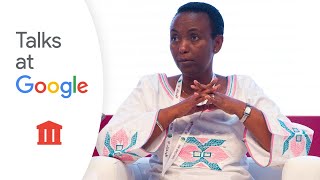
Senator Aloisea Inyumba (Rwanda) presents a first-hand account of Rwanda’s recovery after the 1994 genocide, outlining five anchor programs: unity and reconciliation, Gacaca community justice, popular democratization and decentralization, national stabilization/security, and poverty-reduction/prosperity creation. She emphasizes strong female political participation under a new constitution (30% quota; parliament ~48% women; women ~54% of population), the role of Gacaca in communal reconciliation, Rwanda’s regional engagement and peacekeeping (four battalions sent to Darfur), and efforts to attract investment and develop ICT, education, media, and tourism. The session includes audience questions on applicability of Rwanda’s experience to other conflicts, women’s roles in reconciliation, media reform, economic outlook, and education.
Questions this video answers
About 1 million people in 100 days.
Eight years (senators serve one term, renewable).
About 48% in parliament.
About 54%.
About 260 companies.
Chapters
Good morning and thanks for coming. Today, Women at Google is proud to welcome Senator Aloysia Innumba, a senator in Rwanda's Parliament. Senator Innumba is a member of the Senate's Committee on Political affairs and Good Governance. There she is responsible for monitoring the implementation of decentralization programs, the adherence of political parties to the fundamental laws of the nation, and the implementation of Kakasha, a participatory justice mechanism being used to address the crimes of genocide. This week she is in New York City being honored at the Women for Women Gala, and she has been named as one of the 21 leaders in the 21st century. Please join me in welcoming Senator Enumba.
So, good morning. So thank you for your kind introduction. I want to thank you this morning for inviting me to share with you the story of my country. I'll just briefly talk about myself. In 1994, I served in the government. I was the first Minister of Women and Family Promotion. Later I also served as a Minister of Social affairs and Gender. And after three years, I was the head of the Unity and Reconciliation Commission, a commission that has a very broad mandate of working out all possible ways of promoting unity of our people. Then I have also served as a governor in one of the provinces called Kigaringari. This is like the suburb of the capital city. It's one of the largest provinces. And I was in charge of about 1 million people, mainly monitoring and ensuring that the government programs are very well decentralized as our new policy. Presently, I serve as a Senate and am among the 26 senators in my country. And I serve as a standing member of the Political and Good Governance Committee. Normally our constitution provides that senators can only serve one term. We serve one term and renewable. So I'll be serving for eight years. I've been serving in the Senate for the last three years on the Political and Good Governance Committee. But hopefully next year I'll move to another committee and I'll be serving on what you call Security and Foreign Relations Committee. So I'm very pleased to be here to share with you about the progress of Rwanda. I know everybody knows what happened in 1994, the tragic events my country befell. And I think people are very familiar what we inherited as a country that we lost a big number of people. We lost about 1 million people in 100 days. And the family structures were completely destroyed. And the basic infrastructure, the economy, the culture, it's like everything was down. So what inherited as a country and as a leadership was very, very challenging. But 13 years down, the Road after the genocide, the country has stabilized. The country is on the right path. We are trying to build what you call a new path of nation building. And through this, the last 13 years, we've initiated a number of policies. We started with what you call the national dialogue. And from this national dialogue, we agreed on what you call the five anchor of a new Rwanda. We developed five programs. One is unit and reconciliation, which was going to be the basis of the new country. We developed a new system of justice called gachacha. It's a very, very new system because after the genocide, the classic justice, the courts, the judges, everything was done. So we initiated a form of justice system based on our traditional way of resolving conflict called gachacha. And hopefully by the end of this year, this process will have been completed then. Our third program after the genocide was what we call popular democratization. Initially, people thought it would be very difficult people thought it would be very difficult to organize participatory elections, decentralized part of the local government to the local population. But we risked with our communities. And today we've developed a very strong policy on decentralization, what you call the good governance program in Rwanda. The first program we developed was the national stabilization and security of our people. We've managed to stabilize the country. We've managed to repatriate from 4 million Rwandis who had fled in the DRC in Congo. And all the internally displaced persons have all been reintegrated back into their home communes. And today I'm proud to tell you that the perpetrators and the victims have all gone through these processes together. And they are now thinking about a new Rwanda together as a community. Our last program, a very interesting program, which is going to be a very the anchor of a new Rwanda is about poverty reduction, or what you call prosperity creation. I know your organization, Google, has been in Rwanda trying to explore how they can work with us. I know presently they are working with a national university, a national university called Butare. And they are trying to see how your product can be accessed to the university institutions. So I'm very grateful. I thank your organization for that. And I hope you can remain and engage with us to see how we can explore and see how your Internet, your service, your communication can also be a facilitation to my people. So briefly, that's the background of Rwanda. I know there will be some people who want to ask me questions, so please feel free to ask me or engage with me. I'm very pleased to be with her this morning. So thank you for Coming to listen to me. Thank you for the interest in my country, Rwanda, and I'm here to engage with you. Thank you. If you have questions, if you could step up to the mic.
Senator, at the moment, American politics seems very divided and Iraq is very divided. Would you have any advice for those countries given what you have experienced in Rwanda?
Yeah, Iraq is very complicated issue, but let me maybe share with you our experience. When we had this terrible event in our country, 1994, we'd made a deliberate decision as the leadership that our policy is going to be containment, and we reach out to the people who are fighting. And today, when we talk about the government of Rwanda, we call it the Government of National Unity. The people who are killing us are now part of our government. The Minister of defence, who was on the other side in Congo, is now in charge of our defence policy. So we felt the best way to sustain our security is to engage the fighting forces to be together, you know, and initially, people thought that was a naive policy, engaging what you'd call the enemies. I really don't think. I'm an expert on Iraq, but I think what's important is always to see how we can engage all the fighting forces and create a forum for people to establish a dialogue and see the importance of building a future together that has been working for us. And for the first time, if you look at our experience, it's the first time we have a parliament or a senate or a government where all these factions are contributing to nation building. It's the first time in my country where Ehutu and a Tutsi and a tour are seated on the same table. Ten years ago, it would just be like a dream. But it all needs a committed leadership, a visionary leadership and an honest leadership. But all I would say about Iraq, they have to own their process. It has to be the Iraqi people to determine their own destiny. The Rwandese were very much disappointed with the international community when genocide happened in our country. The United nations were watching, the Security Council was watching. So it was like in 1994, there was a resolve among the Rwandan people that nobody stood by our side. This is our time. So my advice to the Iraqi people is to take charge of their own destiny. There will be no solutions from the outside. It has to be homemade solutions. And that's really a humble experience in Rwanda. And really, this has given us energy. It's like they call us an innovative government. It's like we are always trying new things. Sometimes things don't work. We sit down and Say we made a mistake, we change and then move on. And so I think it all really depends on the Iraqi people, the leadership and the community to work together to see how they can build a better Iraq for themselves. Thank you.
Hi, Senator. I had a very quick question about Gacaca and women being involved in the entire reconciliation process. I know just from reading about it that it's been very interesting and.
It'S.
Been kind of touted as a really successful model for reconciliation. And I was wondering to what extent have women been really involved in the entire process and whether or not when the whole system was set up, there were measures put in place to ensure that women would have a seat at the table, so to speak, or that they would be part of that entire process.
Yeah, thank you for that important question. I didn't talk about the women because the men will feel bad. But Rwanda is progressing today because the women are in charge of this country. It's like we are very, very, what would say, true partners in the whole process. And first of all, we have a new constitution. Our constitution is just like three years old. You know, during my visit here in New York, people are deferring to their country as their motherland. For us, when you look at Rwanda, I call it our baby, you know, it's like it's just three years old. Our constitution is three years old. You know, it's very young. But this has also given us an opportunity to shape our constitution in a way we feel is going to help a new Rwanda. And this new constitution talks about, we've put in Article 9, talks about equal participation without any discrimination, and provides for at least 30% in all the decision making organs. So if you look at parliament Today, we are 48% in parliament. And it's not just a number where the head of the budget committee is a woman, a strong woman, the head of Social Affairs Committee, the head of Defense and Security. It's like all these committees in the parliament were in charge. And if you look at the executive, the cabinet ministers, the minister in charge of planning, in charge of poverty reduction is a woman. The head of unit and Reconciliation Commission is a woman. The head of Gacaca, the president is a woman. The head of human. It's like if I were, there are so many. So the gachacha process has been in the hands of the women at policy and at the implementation level. And it's not just that we have. It's just that we are a feminist government. It's just that after 1994, the heavy toll fell on the men, there was a deliberate target on the male population, especially the elite. The intellectuals, the lawyers, the teachers, the infrasta lecturers, and the family structures have also been greatly affected. So the percentage of women today in our country are like 54%. So it was just good policy and good economics to tap this resource that was never utilized before and create opportunities for them. So the women are very much involved. I was the first head of Unit and reconciliation. I remember when this commission was set up, the parliament gave me a very broad mandate of exploring every possible way that would promote reconciliation. And I remember my early memories when I was the head of this commission. Initially, people just would have a meeting and you would imagine a highly traumatized society. So we'd start with, like, discussions, very basic, who is your enemy? You know, before people would say, this is my enemy, but we developed another module. We would say, malaria is the biggest killer disease in our society. So what causes malaria? Then? We just bring a mosquito, an offering mosquito, and say, this mosquito bite. Hutu bite. So together, this is a new enemy. It's like we're changing the paradigm and the thinking of the Rwandan people on what the real problem is, the real cause of our problem, and the possible solution. So that was our basis of our discussion. So the women have been very much involved to have a very proactive gender policy. And we just think that when you talk about democracy, it's about participation. It's just simple. It's about participation. You can't talk about democratic rights when a section of your population is not given due participation. So there is no secret about it. It's just so much embedded in our fundamental principles in the constitution, in our guiding principles. It's like we knew that once the dictatorial regime was out, the new leadership was going to create a difference and ensure that everyone is very involved. So the women today, if you look in my country like the inspector general, police, the deputy governor of police, the whole country is a woman. She's called Maria. She moves around with her stick. And you just know that no woman will be sexually abused or there will be no issues of corruption. The head of anti corruption is a woman. The important mayor of our city is a woman. She's right now in California. She also have some engagement with some local partners. So I would say that women are very much involved in investment, promotion, information and communication. Women. We are really trying to see how we can promote information and communication, especially in the grassroots, in our classrooms, in the primary and the secondary, so that we can really develop the capacity of our people to challenge and compete best in the region. Rwanda has also recently joined what you call the East African Community. It's like we are no longer just Rwanda and Burundi. We've opened up our market. Initially, we have a population of 9 million, but now we are partnering with Tanzania, Kenya, Uganda. So we hope our population can grow because we are a landlocked country. Then the borders, the customs will be open. Then we can have access to the sea and then create an enabling environment for the investors to come. And that's why we are talking to various corporates in the U.S. in the United Kingdom, to attract them to come and try and engage with us and do business in our country. So the women are very much represented. The president of the Supreme Court is a woman. So it's like the list is endless. The head of tourism is a woman. The head of Human Rights Commission is a woman. The head of environmental authority is a woman. The insurance corporations, it's all. It's like when we are lucky to get skilled women, professional women, we always encourage them to come and do public service for our people. So on issues of gachaca, when we started, it was very difficult process because we were trying to bring people, a perpetrator and a victim to talk. But the fact that we were convinced the process was going to work, it's because we knew there was a lot of misinformation before because the perpetrator and the victim were not essentially enemies. Rwanda was initially colonized by German after the Second World War. In 1884, 45, we became a Belgian colony. So the Belgians who came to Rwanda, the Belgian administration, not the. The Belgian people who came to Rwanda, they developed a policy of divide and rule. So we just knew then, even when the Belgians left, the Rwandis who took over, the leadership did not change. They just consolidated the status quo. So now what we are trying to do through these processes, we are saying we have a common history. You speak one language, you have one culture. There are more similarities that bring you together as people. Other than highlighting the difference, the fact that there was atrocities and all you need to do in this process is remorsefully stand up and confess. So you get people who stand up and say, my name is John, I'm very sorry I killed your mother. Then we have established the gacaca works on the basis of a jury. We don't leave the discussions to be left between the perpetrator and the victim. We always allow a community of about 100 and more to sit and watch the dialogue. So it's like the communities are also part of the process. So this process has been going on for the last 13 years and we hope by the end of this year this process should close. It has given us a process to go. It has given us time to go through this process. It has given us time to heal. It has, more important, given us a time to acknowledge that genocide and killing is bad. It's no longer about the victim alone, challenging killing or death. It's like the community has been organized and educated through a peace education program and civic education program to acknowledge that together we can condemn wrong. So that's really the basis of Gacaca. We have a lot of information on this. If you give me your card, I can always send you information on our website. All these programs have very important programs on the website. Then you can always see how we are progressing. But hopefully by the end of this year, this process is going to close. The lady in charge of this program is Domitira. Her vision for this gachaca, she wants to we have memorial centers for genocide. She also wants to have a documentary of all this process, all the testimonies that people have been testifying in the last 13 years so that we don't lose it. We keep it at strong memory. But the memory is not to make us bitter. The memory is supposed to enable us to move on. So that's really the process of Gacaca. It's very based on reconciliation. When we started the Gacaca process, we went to South Africa to look at the trc, the Truth and Reconciliation Commission headed by Bishop Tutu. We also went to northern islands like we are trying to look at the various experiences. But when we came back to Rwanda, we saw that our reconciliation was going to be unique. It's like we are going to look so much into the future other than digging so much in the past, because we know our past. There was a lot of distortion. There was colonialism, There was another phase of colonialism. There was another phase of corrupt Rwandanese leaders. So we just knew that our population were products of bad systems. So it's from that basis we knew that if we developed a strong reconciliation policy, it's going to work. And now we are really targeting on the use, especially in primary secondary schools. We've developed what you call peace and civic education clubs. Then we have promoted. We are now promoting sports. Rwanda is now really leading in soccer. Recently we've been winning the regional cups. You know, that's a big deal for us. We are promoting music, we are promoting drama. Last Night when Women for Women were honored in Rwanda, we brought a group from Washington that performed, that had drumming to really show the new spirit of Rwanda. So it's like we made a conscious decision not to be stuck in 1994. So thank you for your question.
Thank you.
Senator, thank you for coming. It's very nice to hear from you. Question for you in terms of your opinion on the genocide that's happening now in Darfur. Thank you. Darfur? No, those are tough questions. Iraqi. But first of all, let me tell you that Rwanda, after the genocide and through all this recovery process, Rwanda is among the first countries that have sent four battalions to Darfur. We are protecting the lives of Sudanese. And if you are aware, there is what we call African Union, United nations hybrid in Sudan, because initially it was an African peacekeeping mission and they had a lot of challenges on issues of resource. They had no budget. But then through our negotiations, the African Union and the United nations, they formed a hybrid. And the overall commander is from, I think Nigeria and Rwanda is number two. And of the four battalions, one important battalion that's a very secure region. It's led by the Rwandese. It's so unfortunate that we've lost lives in Darfur. We lost some of our young men. Like, I think we've received like six bodies. But we always take the labor to explain that we can't sit and just see people from Sudan just perish. What we went through, we can't just let our neighbors happen. So it's so unfortunate that what we went through is happening in Sudan. But like I talked about, Iraqi. It all really depends on the willingness of the government of Sudan and the people, the North Sudan and the Southern Sudan to see how they can forge unity and see how they can stabilize. So a humble contribution in Darfur is that we are promoting, we have contributed the peacekeeping mission. We are now training the Somadi. We could not send a peacekeeping mission in Samadhi, but our president, when the president of Somalia came to Rwanda for support, we said, we can't afford many peacekeeping missions, it's very expensive. But we said for Somalia, we can train their police and the army in our country. We've also sent a delegation to Liberia. We are helping the president of Liberia, Aaron Salif. She used to be the head of UNDP, the African Bureau in 1994. So we had very good relations with her when she was still at the UN United Nations Development Fund. So we also, we've sent a police keeping nation in Liberia to help build the capacity of their police force so that they can be able to restrain and build their own police force. So I would say that our contribution in the region is mainly Sudan. And you'll find out about a peacekeeping troop group battalion, the four battalions, boys and few women, because we could not risk the women. You know, it's like people are saying now you've been talking about participation, so send 50% to Darfur. We said, no, it's very dangerous, you know. But I think on in their full. We remain committed, remain involved in the peace negotiations, and we are happy to be part of the African Union au hybrid. So I think we'll work in that framework to see how we can contribute. So thank you for that. Hello.
Thank you so much for coming. I was wondering if you could speak to. We know that the media in Rwanda played a pretty critical role in exacerbating separation between the people. And I was wondering if you could speak to maybe how the media has changed and what the government has done as well to promote unity.
The media has a long way to go in Rwanda. Definitely. As someone in the Senate, it's like, because the media was not very developed before the genocide. So what we've done now, we've started the school of journalism in our national university called Butari. And I know there are some universities from the US and Canada who are helping us to do what you call capacity building for progressive media and journalism. Because in the past, the media there was the hate radio that was very much involved in sensational messages that really destroyed the neighboring factor in the genocide. So by now I think it's more about institutionalizing and developing professional journalists, develop a strong media policy. So we have now a new Ministry of Communication, which is also a new development. And this Ministry of Communication is under the Prime Minister's office. So you understand that we're really trying to see how we can promote a very progressive as another voice of democracy in our country. Then what else? We have also developed recently, like three years ago, we've developed like the High Press Council, so that all these media have a forum where they can be part of this healing process. So I would say we are still at a very infancy level, but at least the constitution talks about our position on the media, that the media that we want to promote in Rwanda is a media that promotes reconciliation, a media that promotes opportunities for investors, a media that really becomes a strong other arm of democratization process. But I would just say it's mainly the school of journalism, the Ministry of Communication. And when we took over government, there was only one radio and one television. But now we have new private 9 radio which is a very big development. Even the churches there is Radio Maria. It's like radio, some FM stations. It's like now you can see having nine in a short time. I think it's a good progress. Then we have also. There is also American farm that I think is going to also to open a new TV station. Even the Chinese, the Chinese are also going to open. Our president was there and we've been doing like we've been to the us, we've gone to Asia. We've been really trying to solicit support, many from the corporate world to come and do investment in Rwanda. So China is also going to build a TV station in Rwanda. Hi. Hello. I was wondering if you could speak a little bit about the economic outlook for your country and maybe some of the efforts by the government to ensure growing economy. Yeah, very important. It's about, like I said about the five pillars of growth, you know, from unity. Now it's like the last 10 years because we really don't count the first three. It's like the last 10 years we've been creating an enabling environment. It's like writing the constitution, stabilizing the country. And we just knew the basic infrastructure. Like I remember one time we used to get delegates from the US One time President Clinton came to Rwanda and he could not get accommodation so he had to fly back to Uganda. So we said we are going to build a hotel. And now the imf, the World bank did not approve that project. They felt that was an ambitious plan. But we have a five star hotel now in Rwanda. So it's like we've been the last 10 years we've been trying to see how we can create an enabling environment for investors and creating good policies. So we have what you call Rwanda Investment Promotion Agency, which is under the Ministry of Commerce and Trade. And we've recently recruited very competent young men and women. The deputy is a woman, Claire. And so it's like we've been really the last 10 years it has been stabilization, but the next 10 years it's what you call prosperity creation. It's about business, it's about engaging corporate world. And I'm happy to tell you that in the last one year we've registered like 260 companies who have come to do business with us. It's like Terracom, some companies from Boston, other companies from South Africa, some companies From United Nations, UK Because UK was initially after 1994, they were very much involved with reform and ensuring that our economic policies are stable, controlling the inflation rate, working with the regional integration markets. So our basic export item has been coffee, tea. But now tourism has grown. We have what we call high tourism policy. It's not just. And the leader of this tourism corporation is a woman, Rosette. I wish she was here to talk about that. But it's like we really want to see how we can diversify our economy and encourage non traditional services and products on our market. And also the fact that Rwanda has opened up to be part of the region, the bigger regional economic market. We are part of what we call the East African Economic Market. We are part of what we call Commesa. This is like the central East African market. We have also now trade networks with Sadak. These are the South African countries. So last week you had negotiations with what you call Africa, Caribbean, Pacific and European. Like we really want to see how we can also negotiate and position ourselves by mainly encouraging investors to come and help us with all these products. So mainly our economy is coffee, tea, tourism and minerals. Those are like the four. But we really want to see how we can diversify and grow the economy. And definitely we have a very aggressive ICT policy. Rwanda. Now we speak English and French. We are encouraging schools, primary, secondary schools, then a very strong component of information and technology and then good service system, a secure base. Then people can always come and do their business in Rwanda. So my message all through has been attracting people to come and see how they can engage with us. So thank you. I hope you can come to Rwanda. Please. Yeah.
Kochacha, sounds like an amazing success in your country. Is it going to remain as an institution? And do you think that it's something that Rwanda could export?
What?
The reconciliation and justice system. Do you think that's something you can take to other countries?
Thank you, Lilith. I, you know, in our culture normally we don't like talk about really the. But now I have seen in the US people talk about the good things they do in our culture. It's like people always say, no, it's okay, it's like. But it's. It seems really that's the world we live in. But to be honest with you, I think Rwanda has a lesson to share with the neighbors and friends. Because the serious reconciliation policy we adopted is reaping good results. If you look at our government, you know, like our constitution, my party is called Ruhanese Patriotic Front. It's the ruling party. We took the majority lead in the last elections. But the constitution does not allow us to take it all we can only take 50% to allow a policy of power sharing. So if you look, the president, who is from the leading party, cannot have a prime minister from his own party. The president of the lower chamber of the lower parliament cannot come from the same party. The president of the Senate, my boss, comes from another party. So in a way, it's like we are allowing other people to be part of this process. It's a good experience, and we think this is working for us. It's like this reconciliation policy really allows people to contribute, to be part of the process. And it has really helped us to bring everybody on board. And so it's now competition. The mayors, we have very dynamic mayors. We've initiated what we call performance contract. This month in the national Parliament, all the 30 district leaders are going to give their performance report. So each one wants to look good to their communities. We're also changing the paradigm of leadership. It's not about position. It's about service. It's about commitment to our people. If you look at our policy on corruption, we have a policy called zero tolerance on corruption, even if you are a senator or a government person, it's like, it's unacceptable to cheat and misuse public funds. You know, I'm going. It's like when people ask, come to. If you come to Rwanda, it's like, we are very, very serious on issues of cleanness. Our town is the cleanest in Africa. It's like no one can just. And it's like there are dust bins all over. It's like we are making people responsible for their environment. Then we have programs of harvesting rainwater. All these, we are trying to what we call homemade solutions, making the communities responsible. So I think these are lessons we can share with our neighbors if they want to learn. But these are good things. It's like this genocide has generated positive energy. It's like people are not discouraged. People are not stuck. I am a survivor. I lost my father. I never saw my father. But my determination is not just to go back and revenge, because I have two kids. I have a child. I have my daughter called Nicole. She's 11. I have a young son who is 4. Noah. I want my kids to be happy. And the only way I can prepare a future for my kids is just to work out a deliberate policy to change that past. But if I'm just stuck and say, poor Aloysia, you lost your dad, you lost your brother, then it's like the whole life will be destroyed for our generation. And I would say we have a very smart President, he's young. He plays tennis. He's with us. He wears a T shirt. He's not the typical president, you know, it's like he's just a human being with us. You can send him an email and you just say, Mr. President, I have a guest coming from the U.S. you know, when Women for Women came to Rwanda, I sent him an email. I have a friend, Zainab, who is the president and the CEO of Women for Women. Can you please, in your tight schedule, share slaughter sometime say, why not? Nikki was there, you know, and the whole delegation, women say, oh, can we take pictures? We say, why not? Do you have cameras? You know, it's like we are trying to change a a new thinking of the leadership. You know, when I was the Minister of Women, it's like I was in charge of children. You know, I would cry with the women. It's like we are also human being. It's like we are human being and that's really what we are trying to build. It's like before in our country, politics is about lies, it's about tricks, it's about manipulation. So our commitment is to ensure that we really bring new kind of politics. It's not easy, but we just know with the bad past we went through as a country, we have a responsibility to create a new future for our country. And this is really the message we are giving. I'll be serving for eight years and go, maybe I'll work for. I hope I can work for your company when you come to Rwanda. But it's not like I'm going to be stuck as a Senate. I can do some, I don't know, but my passion is with women and children. Hopefully I can do something with women and children. But that's really the kind of politics. It's not about us. We've initiated something called, like, every year we declare our wealth. The president, the first lady, the ministers, the chief of staff in the army, they all go to the oddsman to declare, like, we have what you call code of conduct of the leaders because we know it all starts with the head. If the head is not right, then the legs will not move. So it's like we really know that if Rwanda is going to survive as a country, the leadership have to be committed and honest. That's why we concentrate so much and we are happy. There are so many women in the leadership. I hope they cannot be corrupted. Yeah. So.
You talked about how education was important in the reconciliation process, how you added some civic education in the school. Can you tell US a little bit more about the status of education. How do you get kids to go to school? How do you keep them at school? And later on, for students at university, do you have a lot of people going abroad to study and do they come back or can you keep them in your university?
Okay. On issues of education, it's very central to a transformation basis. And the Minister of Education is a woman. She's a doctor. She came from the diaspora. So we're also encouraging Rwandis, who have been living in their diaspora, to come home. Like the Minister of Education studied abroad. The head of television, who is a woman, also studied in the U.S. it's like we've been really attracting the diaspora to come and contribute. So on education, we did a lot of reforms. We did a lot. And I'll tell you that the primary enrollment, first of all, we have a policy of universal primary education. It's like people in Rwanda. Our kids can have free access to primary education for the first nine years, up to ninth grade, compulsory. And then we have what we call our budget, like what we call budget commitments. 40% of our budget goes on education, 40 on health. So that is also a constitutional right. It's like the social service sector will get priority allocation on our budget. Like this coming year 208, budget for education has been increased to 45. Because we want to promote what we call quality education. Because the last 10 years we were mainly looking at infrastructure, like building schools, providing chairs, materials. But now we're going to invest in teacher training programs. We've done a lot of reform on school curriculum. And we are now putting special emphasis on science and technology in schools, like as a mainstream of our education. Then other reforms. Because during. Before the genocide, the education system was very much corrupted. It's like there was a lot of discrimination. But last year we got the UNESCO award on education reform, which really shows. There's an acknowledgement that we are trying to see how we can create equities for all our kids. Before, if you are a Tutsi or a Hutu, you would be discriminated. But now people are being promoted on merit basis. So which was very fundamental then we've done, we've started new schools because it's like we've really been. The last 10 years, we've been doing a lot of investment in primary education. And the African Development bank is helping us on this education reform. And the World bank too. We have two big projects with the World bank and adb, ensuring that we do a lot of investment on human resource development we have what we call Vision 2020. That is what will be in the next 20 years. And the biggest component of Vision 2020 is human resource development with a special, what they call an ambitious plan on information and technology component. Our president was in San Francisco and last month we had many IT companies that we had a big international conference in Rwanda. And there was a commitment last month like Cisco, I don't know, you know, the world best. But we had so many companies like 400 from all over the world who. Who made a commitment with us to see how they can pattern on education. Then we have a strong a new policy on girls education. It's like we are reforming the whole country, you know, Then like what used to call the military institutions have been transformed into tertiary schools. We used to have a very famous military school. We've now transformed into what you call Institute of Kist, supported by the Germans, what you call Institute of Science and Technology. It's right in town. Then we have also started evening classes. So like people who are not got an opportunity to continue. So we have morning. It's like people are in session. I think it's a popular program. Moreover, so it's like people what you call night shifts. And normally the mothers are going to study at night. So it's like really. Then also to show the importance of our education, we used to have one minister of Education, now we have three. So that one can look at primary, another one can look at secondary, another one can look at higher education. And we have also had new universities coming up. Like churches are building universities. We have now like nine. When it took over government, there was only one university, but now there are like nine. Then we have a teacher training institute. We have for the first time a national institute for nurses. So that we can also train the professionals to help in our medical departments. So education is really so much centered on our heart. If you are to reap results, we just know it's about. People have been asking me, so what are your two priorities? And I've been saying education, education and investment. So I hope you can come to Rwanda. Please. We really want to partner with you. We want to know, get time and go on the web. Look at what Rwanda is doing. I think it's like everybody thinks about Rwanda in terms of all Africa, about bad stories, you know, Bad stories. People expected me to talk about children. You know, when they ask me about orphans, I just thought, let me try to remember what I did in 1995. You know, that children are not important. But Rwanda and Africa is not just about the bad history. It's like if you are lucky and you get. People are committed. People should take an opportunity of that and see how we can do change livelihood for the betterment of humanity.
More from Guy


Cheryl Strauss Einhorn | The Human Edge: Smarter Decisions in the Age of AI | Talks at Google



Rachel Glennerster | Innovation and the Center for Global Development | Talks at Google

Rebecca Winthrop | Rethinking the Purpose of Education in the Age of AI | Talks at Google

Dr. Robert Wachter | A Giant Leap: How AI Is Transforming Healthcare... | Talks at Google



