Sean Sherman | The Sioux Chef's Indigenous Kitchen | Talks at Google
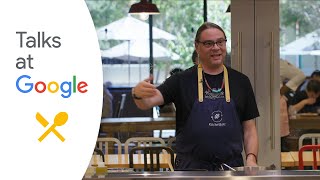
Sean Sherman, an Oglala Lakota chef, discusses reclaiming Indigenous food systems after generations of commodity food dependency. He founded Owámni restaurant and Natifs to source from Indigenous producers and teach traditional techniques like nixtamalization and three sisters planting. Climate change is already shifting wild rice ranges and maple tapping seasons.
Chapters
Good afternoon, everybody. Welcome to talks at Google. I'm Ida Shen. I'm on the food team here in the Bay Area. And I am very excited to introduce today our guest Chef Sean Sherman, who is going to help us kick off the November's Native American Heritage Month. Sean is an award winning chef, educator, author, and activist. A member of the Ogalla Lakota Sioux Tribe, Sean's personal mission is to revitalize indigenous food systems and build awareness of the transformational potential of indigenous food ways. Oh, my gosh, that was hard to say. He wants to restore the health, local economies, culture, and food sovereignty of Native people. So please, everybody, help in welcoming me. Chef Sean.
Well, ha matakyape, hihani, Wasite, Wambli, Watakpe and Nichiape. My name is Sean Sherman. I am from Pine Ridge, South Dakota, which is the third largest reservation in the United States. And I currently live in Minneapolis, which is home to the Dakota, the Anishinaabe, and the artist formerly known as Prince. I'm here today basically just to kind of share with you guys the perspective of what we do, because for basically too long, indigenous foods have been very invisible in the United States and elsewhere across the globe when it comes to indigenous peoples. And so it's really important that we believe that people should have a deeper understanding of a lot of our amazing diversity that we have amongst indigenous peoples and especially through food, because food is something that's. Food is something that connects all of us, no matter who we are. And it's important to think about the importance of understanding the land that you're standing on and the people who have lived here for countless generations and the contributions that they have created and the contributions that they can still bring forward to the world of understanding a better way to look at foods, a better way to understand the environment, a better way to have deeper and more plant diversity and protein diversity in our diets and to really just kind of think about all of these pieces together. Can you guys hear me? Okay. I can talk a little bit louder if I need to. You're okay. A little bit more. You're okay. Okay. So basically, I grew up on Pine Ridge, and we grew up rather poor because Pine Ridge still today has probably 75% unemployment on the reservation with a population of around 60,000 people, which is a lot. And when I was growing up on the reservation, we didn't have things like restaurants on the reservation. You had to go off the reservation, of course, to find a restaurant. We had one grocery store that serviced an area the size of Connecticut, which is A pretty decent sized area. I'm pretty sure Connecticut has more than one grocery store, would you say, Michelle? Yeah. So food access was something that was a huge issue growing up on the reservation. And so I grew up on a ranch. We grew up on a cattle ranch that my grandparents managed, and we had a lot of land space. We were very feral as kids in the 70s, as most kids were in the 70s, but I think on the reservation, it was an extra level of feral. So our parents. Parenting wasn't really a thing for boomers. They were basically just like, stay outside until dark was pretty much the main parenting rule. And so a lot of us grew up in that kind of situation. But I really enjoyed growing up with the freedom that we had to be outside. You know, we had a tv, but we had about one and a half channels, so TV wasn't really the option back then. And so we spent so much time outdoors, you know. But when I looked back on my youth and what we had around us for food, it was pretty dismal for the most part, because what we didn't get from the government through commodity food programs. The Commodity Food Program, also known as the FDPIR program, it's a program of food that gets sent out to tribal communities, a lot of it because of the agreements the US had made with tribes a long time ago, supplying food and resources. But unfortunately, the commodity food program, you guys would be very familiar with it because it's just lots of big cans of canned fruit, big cans of canned vegetables, and the fruits are typically packed in really bad syrups. The vegetables are packed in really high sodium. There's a lot of empty white carbs and everything. So things like powdered milk and, you know, just ultra processed foods in general. And it's led to a lot of health epidemics on tribal communities that have been really utilizing those food sources as a mainstay, you know, so we see a lot of type 2 diabetes, obesity, heart disease. All of these are linked to the nutritional access that we have. So for me, I grew up, you know, working in restaurants. At the young age, my mom moved us off the reservation, and we moved to a very small town in South Dakota in the Black Hills, which is on the western border. And we grew up in a town called Spearfish. And it was just a, you know, little touristy town right on the edge of Wyoming, basically on the western edge of South Dakota. And I started working in restaurants when I was 13 years old. So I was very young. And in South Dakota, they didn't seem to care how old you were, as long as you could wash dishes or, you know, put a salad together or flip a hamburger. So I, you know, started my journey in restaurants at that young age, working for a lot of touristy restaurants. And eventually I moved to Minneapolis. And Minneapolis, I didn't know, like I think we were saying, I just. I didn't know anything about Minneapolis, except that's where Prince and the replacements came from. But it was a cool city. You know, it's a smaller city, but it's, you know, decent size, and we have a decent food scene today. And it was a good city to kind of, you know, move into my career. And I became a young chef pretty. I was still in my 20s when I became a chef, and I, you know, as a chef, we try. We're curious. We try lots of things, you know. So obviously, I learned a lot of European foods. I learned a lot of Italian, Spanish, French. I learned a lot of. I was just curious. So I just kind of picked up what I could. You know, I learned a lot about Japanese food. I learned a lot about North African and West African foods and South American foods and Mexican foods. And so obviously, as a chef, that happens. Like, you become curious. And I didn't go to culinary school. I just read the books, basically. So that's kind of. Kind of how I started my chef career, was just working really hard, reading lots of cookbooks and experimenting constantly and coming up with new stuff. And it was a few years into that chef career that I realized the complete absence of indigenous foods out there, because I realized that in Minneapolis, with a great food scene or any pick a city, like, you could find food from all over the world, just not food from the land that you're standing on. And so there was no representation. And as I looked deeper, there was very little resources or information on the subject at all. And it was largely unknown, and it seemed crazy, you know. And so I challenged myself, like, who in my generation, who in my family history would have been the last to have had a full access to Lakota knowledge and history, right? And food ways and the whole situation. And so for me, it was only my great grandfather, because my great grandfather was born in the late 1850s, early 1860s, somewhere in that cusp. He grew up a Lakota boy on the plains, learning everything it meant to be Lakota. But he was 18 during the battle of Little Bighorn, which was Custer's last stand, you might know it as, which was a pivotal battle for the Lakota, because they beat the US Cavalry in that battle. And he sees in his life, his kids have to go into boarding schools to learn how to speak English, to learn Christianity, to cut their hair, to basically have everything it was to be Lakota stripped from them. And so this only happened at the turn of the century. So my grandparents are that era of children who are going through this transformation, this assimilation. And so it's not ancient history. You know, as Lakota, we were still fighting the US government till the late 1800s, almost to the turn of the century, because the Wounded Knee massacre happens in 1890, you know, and I looked at, like, I was born in 1974, and in 1874, 100 years before my birth, all of my Lakota ancestors held all of that knowledge because they don't discover gold in the Black Hills until 1876. And that's when things go south really fast, right? And so I realized that I didn't know much about my heritage food because it had been taken from us. And so it set me on a path to understand what were my Lakota ancestors eating? What were they gathering? What were they harvesting? What kind of crops did they have? Were they trading with other people? Where did we get salts and fats and sugars? You know? And so I had all these questions, and so it sent me on this path to understand all of that. And as I started to learn more about my Lakota ancestry, I started to learn more about the other tribes around us in my regions. And that really opened me up into more and more larger areas, you know, so today, like, my whole nonprofit's built on just mainly looking at North America, but we see indigenous value across the globe because colonization has affected people everywhere. Whether you're in North America, Central America, South America, Africa, India, Southeast Asia, Australia, New Zealand. Colonization has happened massively globally, and it's affected cultures and diversities across the board. And so for us, when we're using terms like decolonization, like, it's not a bad thing, because we're just taking. We're looking at what colonization did to us and how colonization has normalized so many things in our life. Because colonization is the policy or practice of acquiring full or partial political control over another country, occupying with settlers, exploiting it economically. And we see colonization still alive today in many forms. You know, whether it's the Middle east, places like the Congo, Ukraine, places like Brazil, where they're literally murdering indigenous communities for the sake of logging and mining. You know, colonization is still rampant in the world today. Like, we haven't exited an era of colonization yet. So it's Important to think what colonization brought. Because basically, if we look at America, America kind of developed its own form of colonization, too, because our government's very young. Like, America is born at the end of the 1700s, and even at 1800, we're still kind of like these 13 colonies squished up on the east coast. And the majority of North America is still stewarded by indigenous peoples, right? And there's countless cultures across that landscape with so much different ways of food, of agriculture, of permaculture, of just understanding the world that we're living in. And so many different climates, you know, because indigenous peoples in North America are living from the Arctic down to the tropics. There's so much amazing, amazing stuff to think about there. And America, one of the first things it does as a young government is sets. Sets the Northwest Ordinance of 1779 in play, which basically justifies the next century of land acquisition. So basically, the theft of land, justifying it, of what they do with it, because they discover that if they take over native land spaces and make it ownership, you know, make land ownership a situation, they're able to parcel it, commodify it, and make a ton of money off of it. And the United States is really born from the theft of this indigenous land space and utilizing indigenous people stolen from Africa to really build the whole situation. You know, so it's understanding what happened in America, but looking at it, that this isn't. This isn't. This is something that also happened across the globe, and it's still happening in different forms today, right? And so colonization brought not only, like, the concept of land ownership, but it also created, you know, dehumanization of people of color. It really focuses on individuality and forcing people into a capitalistic system where we're not working together as a community to feed ourselves. We have to use money to be able to buy things, including food, right? And so we also just ignore, like, the environmental protections, you know, so it's just ripping up the earth for whatever we need, whatever it's mineral, whatever's deemed profitable, right? And so colonization has all of these really negative things that we just take for granted because it's just the way it's been, and it's just very normal to see these things happening. It's normal to see pipelines going into really delicate ecosystems, you know, or mining situations, just destroying the earth and leaving decades of toxicity behind, right? Without the care of the communities or the people that live around those situations. So it's important for us to understand, if we look at the world through an indigenous lens, we can start to see that we have a deeper connection to the earth. We have more understanding of the plants around us because the indigenous diet includes so many plants, right? And there's so much that we could be doing. And it's just also owning up to this history of things that's happened, you know, because California, where we are today, like after the Spanish colonization happens and all of the missions get put into place as a way to try to. They were trying to keep Russia out from coming in from the north. So side, basically. But basically it's really damaging to the indigenous peoples there. But what happens when the Americans move in becomes greatly worse because just within two decades between 1850 and 1870, they wipe out the indigenous population almost to nothing because there had been hundreds of thousands of indigenous peoples at the turn of the century still alive even despite the Spanish colonization. In 1873, they do a census here in California and they're only able to count just shy of 14,000 indigenous peoples left alive out of hundreds of thousands just a few decades earlier. And part of that was because when the American colonization moves in, they set up a bounty system. So you're able to get paid upwards to $200 for the body part of an indigenous person, which is why we have bounty hunter stories in America. And just think about what $200 is in 1860, right? It's a massive amount of money that the newly formed state of California pays out basically that then gets paid back from the United States government. So not only is it state sponsored, but federally sponsored genocide that happens within a two decade period, you know, wiping it almost out to completion. And so the only value that we had as indigenous peoples across North America during these time periods, especially in the 1800s, was just the land that we stood upon, you know, so we as humans had no value. And so that's why for us, that's why there's no native restaurants across the board. Hardly at all. You know, it's because we're still reeling from this generational trauma that was laid deep into our communities, you know, and so this work is really important because it thinks about North America as a whole. You know, it thinks about like we have this massive continent and the western diet's completely ignored so much of this beautiful, all of the plant diversity and protein diversity that's here, you know. So as a statement, when we, when I started this company called the Sous Chef and we opened up, even opened up a restaurant just recently in 21 called Owaminee in Minneapolis, Our philosophy was, in order to showcase North American indigenous foods, we took away European ingredients, right. So there's no dairy, no wheat flour, no cane sugar, no beef, no pork, no chicken. Those things didn't exist here. So we wanted to showcase what was really here. So using heirloom varietals of things like corns and beans and squash, and the agriculture that was here, utilizing all the wild foods and all the wild plants, you know, so, so much. We have so much plant diversity in our menu compared to a typical menu, and, you know, just coming up with really creative ways to make foods. Like half of our menu, over half of our menu is completely plant based because there's no cheese and butter and everything, you know, and we can still make food taste good. Right? Yeah.
One thing I was going to say.
I named Sweetened from the Klamath tribe.
So I have five sisters. A lot of them are Sweetened, not herb. And cousins are gluten intolerant or gluten sensitive and lactose sensitive.
Yeah. And it's a healthier diet for us in general as humans, and we don't have to be native to see that benefit, you know, and so, like, it's important. So we're trying to normalize healthy foods, and we can make healthy foods taste great, you know, and chefs have a lot of fun because we're not trying to cook exactly like it's 1491, you know, we're trying to showcase what's possible moving forward by applying a different kind of philosophy of how we move forward and looking at the world a little bit differently and having a deeper understanding and an appreciation of diversity, of peoples, of cultures, you know, and food systems. Because I just finished a new cookbook that'll be out next year, a year from now, because it just turned it in. So it's a big one. But it looks at North America from Mexico to Alaska, and there's so much diversity across that that all I could do is barely scratch the surface of showcasing, like, how we should be looking at places like North America, for instance, instead of just completely keeping the indigenous histories invisible, you know, because we're. We're in such a divisive political situation right now, you know, that I'm probably illegal in Florida right now, you know, but we have to really think about, like, we have to stop fighting over this left and right, and we have to start to figure out how do we come together in the middle towards humanity, you know, how do we have a deeper appreciation for ourselves as humans? How can we use food as our Language. Because food is something that we can all talk about. That's all we can all share, we can all appreciate. And history is tough, history is violent, history is ugly. But it's important to understand what happened so we don't make the same mistakes moving forward. You know, we have to own up. And America has done an awful job of understanding and owning up to what it did to black and indigenous peoples on this land space. So there's a lot of work that has to be done. And being afraid of DEI projects and being afraid of understanding black and Indigenous histories is the wrong direction, because we can have a deeper understanding if we really pull this together. As ugly as some of this history might be, it's just something that we should understand. And as we're moving forward, like these kinds of recipes, these kinds of foods are important, you know, and it's also the intention of who are we purchasing our foods from? Who's growing our foods? Where are our food dollars going? Because, like, how many people does this whole campus feed in a day? Would you say?
Close to 100,000?
100,000?
Yeah. When you add in all of our.
Guests and just think about like, you know, cause like, I could do this food with just Cisco products, but then is that really doing anything right? You know, so like, it's a more important of understanding, like, how can we put some of these, you know, these cultural producers into our recipes to make sure, even if it's just one piece, right? If it's just one varietal of bean coming from an indigenous community, or some hand harvested rice coming from a tribe in Minnesota or whatever it might be, like, how can we be intentional about supporting some of these groups that really need some of this support? You know, that's an easy way to help repair some of the damage that's been done. And so all we're trying to do is showcase how easy it is to create beautiful, healthy foods, but also make it intentional and make it food with story. Not just a title of what the recipe is, but actually like, what's going on with this food, you know, so when I selected this recipe, particularly out of the cookbook, which, like these recipes we wrote way back in like 2015, you know, because this book came out in 2017. So this kind of feels like ancient history to me a little bit because we've been doing so much, we've grown so much. But this recipe called Missouri River Pozole, most people think of pozole as something from Mexico, and you think of red or green pozole, but Think about Mexican food for a second, because Mexican food is more indigenous than it is Spanish or French or English or whatever, right? And, you know, and it doesn't matter who's speaking even any of those languages either, because, like, Spanish, French, English, those are foreign languages on these land spaces. English is a foreign language right here where we stand today. And so we have to understand, like, something like this is showcasing the beauty of things, because corn culture, which begins at the bottom of Mexico, Central America, and those regions in Belize, it shoots both directions, north and south into the Americas and over centuries, right? And so corn, like, moves throughout almost all of Mexico, throughout the entire Caribbean, all the way up the Mississippi and Missouri river valleys into places like Montana, all the way throughout to the entire East Coast. And people were growing these beautiful varietals of corns and beans and squash in many, many different ways, right? And there's also sunflowers and chilies and all sorts of other things that people are utilizing for agriculture on top of having a vast education of the world around us.
And do you call aposole?
Because that's actually an easier word. Yeah, absolutely, because you can trace those words back, the nahuats. And so understanding that where the nixtamalization of the corn, which begins down there with the processing, because when you nixtamalize the corn, you're soaking the corn, you're drying out the corn first, and then you soak it in an alkalized bath, right? And like, typically, most people are using cal, which is calcium hydroxide, and it helps, like, loosen up the kind of, like, dissipates the outer sit skin, and then they'll even, like, cook it down. So the little eye thing falls off of the corn kernel, but it swells the corn out a little bit. And you can see this when you're cooking some of these corns or when you eat the soup later, you can see that's why hominy is so fat. Cause pozole, nixtamal, hominy, it's all the same situation, just different words for it. Right? But then what makes it really important is that when you nixtamalize the corn, it unlocks that kernel to get really valuable nutrients into your body. Minerals, essentially, especially. Right. And there's other ways you can alkalize water. You can use wood ash, and plant ash was a typical thing utilized in many cultures across the board. We still utilize that. And because there's also. You can use something as simple as baking powder, you know, which gives it a kind of a funky flavor, but it does the job, it does alkalize the water. But what happens is like that corn becomes really nutritious for you because corn has a lot of amazing minerals inside of it that when you nixtamalize it, you get. So there's calcium, magnesium, iron, potassium, zinc, niacin, things that are really important building blocks for us to eat. And so, like, when European colonizers first started bringing corn back over to Europe, it became very popular in Italy. And they started growing a lot of corn, which is why we see a lot of polenta right, in Italy. But they were trying to feed a lot of people a lot of this just straight corn product. You know, they didn't take that knowledge of Nixon the corn. And people were eating really heavy cornmeal diets and they gave themselves pellagra, which is something you don't want because it's a nutrient. You're lacking all these nutrients and you make yourself really sick, you know. But if they had taken the time to learn from the indigenous communities of how this corn was processed, then they could have like been really healthy. Because again, like, Mexican food is more indigenous. Because if it's not hard to decolonize Mexican food, you take away cheese and chicken and beef and things that just didn't exist, but you still have nixtamal and tamales and asa and tortillas and nopales and chiles and tomatoes and all these things that are like. That still is overwhelmingly Mexican. Right. So pozole. Because corn culture went so far north, even all the way up to Missouri river valleys, the process of nixtamalizing corn followed it also. And so that's why we chose this recipe, which is really simple. I should do some cooking. So you guys are here to see some cooking, but should we answer a couple questions? I'm just kind of like, are there.
Any questions in the audience.
Please?
I have an obscure question.
That's fine.
I work in finance. I actually thought. I've heard interviews with you. You turning your restaurant into a non profit was, I think, huge achievement. Would you mind kind of sharing why you did that?
Yeah, the question is she, Sean has a restaurant that he's turned into a non profit and I believe it's called Natives. And would you please share the story of that?
Yeah, absolutely. So it was always kind of the plan because I see we're trying to educate people on this food system situation. We're trying to showcase what's possible. The nonprofit's called Natifs, which is North American traditional indigenous food systems Natifs. And under Natus we built a model where we have a public facing entity called Indigenous Food Lab. Indigenous Food Lab has a market space where we've created so much indigenous. We've created a bunch of. We've pulled together over 50 different indigenous producers because we want to make those distributable and get these. Get this access into indigenous communities where we have very little food access. Right. And then we also have a teaching kitchen. Not as nice as this one, but we also have lots of kitchen cameras. So we can start to just do a lot of video work so people can learn what to do with these foods. So if you go to natifs.org, you can see some of those videos of what our team has been doing. We have a production kitchen that's making more products. And then the restaurant, we pulled into the nonprofit. So the restaurant is actually a for profit entity, but it's owned by the nonprofit outright because we're using the restaurant as a tool because that's where job creation happens. Because we were able to maintain over 100 employees at that one restaurant, we're doing about 6 million in sales there. And a huge chunk of restaurant costs are food, right? So food cost is a massive component. And because of our intentionality of trying to purchase from indigenous producers, it's taking up a huge chunk. So we're pushing nearly a million dollars a year just to indigenous food production through two indigenous food producers. That's with one restaurant and one kitchen. And the restaurant becomes a voice for us where people can come and accept experience. Because how many people have been to a Native American restaurant before? So it's kind of rare, you know, and so there. And there's no reason for that, because you guys are lucky that in Oakland you have Crystal Wapipa's kitchen up there, you know, to be able to experience some of this stuff. We're good friends, you know, and we helped her when she first started opening too, so. But it's atypical to find a native restaurant on Native American land spaces, you know, so that's something that we want to help change. And that's why we kind of did it through the nonprofit. And the IRS was like, you can't have a restaurant under a nonprofit. And we're like, why? And they're like, because they make too much money or like, bullshit. Like every restaurant should be a nonprofit, really, you know, saying that in the interview. And I was like, blown away.
Oh my gosh, more people should be doing that.
Yeah, it's really smart. And then I question, no, go for It.
So I come from New Mexico where it's a really small town. A lot of the aspects you described are similar to areas there in New Mexico. There's a lot of pueblos there. Like there's a lot of mixed heritage.
Yep.
But there's also two things that prevent people, I think from having. Maintaining their past culture and having health. Just trying to survive in very low salaries.
Yep.
And also a sort of fear around things like wild crafting or using these traditional ingredients when there's this increase in pollution. For example, Los Alamos Natural Labs and right on the river, all these fluids that make it a little bit maybe scary go that route. So I guess do you do any education around that or.
Yeah. And so like repeating the question. Oh yeah. So yeah, help me repeat the question a little bit.
So I guess you could boil it down to there's a fear around. Well, there's, there's a prevention of, of having this healthy food by just trying to survive it. So you get like the easy carbine and also just like how. What education is there that you provide around doing this kind of wildcrafting or use of traditional materials, Higher pollution levels.
Yeah. I mean, the question's about education. How do we. How is this going to be effective? I kind of feel like, I mean, how can we make a change even in some of these areas that face a lot of oppression and face a lot of economic issues and health issues and, you know, and it's difficult. And so I just. Because it's very similar to what I grew up with, which is still the case on Pine Ridge Reservation is like in order to make these changes, education has to play a major role in it. And we have to get this food directly into school system. So one thing we've been doing is working with the school on Pine Ridge called Red Cloud School. And we've been helping them to create healthy food recipes that are very Lakota and giving them like five institutional style recipes a week. Right. And we've also just been sharing a lot of videos so they can learn how to do that. But we're also moving into institutional food support where we just want to create large format foods that are ready to eat. You know, and that's part of the reason I'm working with Michelle over here with Wholesome Crave is because they're doing a lot of these big format foods like soups that you guys actually have access to. And we're trying to see if there's ways to get some native food products into some of those recipes and still Trying to hit some of those price points that we have to do. But it's ways that if we move into institutional food support, then we can get those foods directly into those areas that need it the most to offset the need for people just to eat. Like try to eat healthy out of a gas station, you know, it's just not possible. But those are the choices out there. On some of those reservation communities, you know, you might have one gas station in a 40 mile radius and like that's your main food source outside of commodity foods and things like that. And since there's not a lot of money or jobs, people buy the cheap food that's over processed and it creates a lot of health epidemic, you know. And so there's a lot of, we're trying to come up with solutions to change all of that little by little, but also creating these ways that we can do this kind of with any culture around the world, that we can work with people everywhere in South America, in Africa, in India, Southeast Asia, Australia, New Zealand, and helping people really reconnect with who they are. Not having to have a Eurocentric viewpoint in the forefront of it all, you know, but really being able to celebrate the diversities that are out there and be really proud of who we come from, you know, and the contributions that we still have, still have left to offer the world.
Sean, do you mind sharing with the audience what you've just done?
I was puffing wild rice. So this is cultivated wild rice. We use a lot of hand harvested wild rice in Minnesota because we have a lot of tribes. You know, there's like almost 15,000 lakes in Minnesota and there's a lot of wild rice out there on the water. And it's got a lot of deep cultural connection to the tribes out there. But it's really rare because it really kind of grows in that little Great Lakes region right around Lake Superior into a little bit of Michigan, Wisconsin, Canada. Just kind of. So like out of the whole world, like this particular, that particular particular rice grows there. This rice was this wild rice that we're used to seeing in grocery stores. A lot of this comes out of California, actually. But this was cultivated, this was designed so they can use combines and make it more industrial, you know, and so it doesn't taste or look like the true wild rice, which is lighter colors, that doesn't cook as long. And it's just got a little bit different nutritional value, you know, but this is still fun to use. And so all I'm doing is puffing it. So it's Just a dry pan with just medium high heat and you just apply a little tiny bit at a time and you just kind of keep shaking it and it just starts to puff up. You can hear that crackling a little bit and it just kind of puffs up into almost like a little snack, you know. So I think we made a bunch, but it's going on the soup basically. And the soup is really simple because it was the next' em all, which is the hominy. It was some fresh squash that we just cook in the soup to give it some flavor and some body. It was a little bit of sage, a tiny bit of maple, some corn stock, you know, where we're just using the cobs of the corn and just making a really wonderful corn stalk. You can smell that. Like it's really, it's really, you know, it just smells so good. And it's just using these really simple things. Cause just like our restaurant in Minneapolis, like all this food that we're making, it's gluten free, dairy free, sugar free, soy free, pork free, you know, and it's plant based, a lot of it. So it's just a really ideal diet. And it's just, you know, how do we normalize healthy eating and not just, you know, we don't have to turn plants into a hamburger to make it taste good. You know, we can just allow plants to taste like what they are and just, you know, be more in touch utilizing some wild ingredients, utilizing some heirloom varietals, keeping those seeds alive, basically trying to purchase from indigenous producers that have deep connections to the plants that they're growing. And so there's just a lot, there's just a lot to think about in that way.
Fun fact. In September, Sean was named to the inaugural Climate 100 list by the Independent. And the reason why is because native indigenous foodways are very sustainable. Do you mind sharing some of that kind of full cycle sustainability aspect?
Yeah, I mean, so much of our land usage, especially in places like the United States, goes to things like cattle ranching, you know, so cattle is the biggest take up. It takes over the most amount of area in the United States of land space. Right. And cattle is not even from here. So cattle, when cattle was introduced in the 1800s, the cattle ate a lot of the wrong plants. We created the barbed wire fence systems to keep everything, but it created, it inhibited the natural flow of animals, which helped the plants grow, which helped the ecosystem grow. And just the introduction of cattle alone in the United States at the volume that happened. And the disappearance of bison who were natural to this region, to so many of these regions was an environmental catastrophe. You know, it changed everything. And so like, it's a different world out there today. And, you know, and it takes the environment a long time to try to rebalance after something so shocking happens to it, you know, and so indigenous peoples again, have such deep connection to the land. Stories of the plants and animals and insects and birds and fish, whatever they might be, that go back, you know, countless generations, and they just have a better way of thinking about all this regionality. You know, what's the difference between foods in Kansas to New Mexico to Boston to San Francisco to Washington State? You know, if you look at it from an indigenous lens, it's easy to understand the differences there. But if you drive across America today and stop at any restaurant, everything tastes the fucking same. You know, it's just a hamburger, a Caesar salad variation that's not even that good. Everything's coming out of a single anyways, you know, and so everything just is so homogenized. But if we celebrated more indigenous foods, we would be supporting indigenous producers which are closer to the environment, which are protecting our environment, which are, you know, because we're going through some really harsh changes right now that we're not prepared for because we're. Water crisis is happening in real time, you know, and we are not smart about it. You know, Palm Springs has 120 golf course in the middle of the desert, right? And if we're going to, like, we need to be knowing that we're coming up on a water crisis, we need to be prioritizing water usage for food and for humans, you know, if we're going to stay alive, you know, and as much as like I tried to survive off of wine alone, it's not possible. You know, I keep trying, but it's just not possible. And so like we over water our grapes, we over water almonds. We are spending all the time, time and effort on golf courses. Just think how much water one golf course uses, let alone 120 of them in the desert, you know, and so like, we have to be smarter, much, much smarter. And we have to stop giving up all of our water to companies like Nestle's of the world that buy up water rights for nothing, literally nothing, just to create plastic bottles, you know. And so we have to be smarter on a state level, on a federal level, on community levels of what we're doing with our water. So we have to just understand these changes and climate change is happening in real time. Like, we tapped maple seven weeks early, which is a big chunk of time, you know, that's almost two months early, and that's insane. And wild rice, we're watching it slowly dissipate because it likes the cold waters, and because things are getting warmer, it feels like it's moving northward away from us a little bit, you know, and so we have to. We're seeing all this climate change happen in many different forms. And again, so if we adopted more indigenous perspective on food systems, utilizing more plants that are natural to our region, you know, just being smarter about how we're growing things. I always say that lawns are stupid because they are like, we should stop wasting our time and effort on things that don't matter. We should just be putting food plants everywhere, you know, and we should be teaching about plants because you have all these beautiful plants outside. But how many people can name any of these trees? You know, our kids can. Can name more Kardashians than these trees out here. And so that's why we have to understand, like, what are we teaching ourselves? What are we teaching our next generation? You know, so there's a lot that really. There's a lot of pieces to this that's important than just the food. You know, that's why I should be talking about what I'm doing. But, you know, I'm making this soup that's in this first cookbook, which you guys. A lot of you have that cookbook. But it's really about what the intention is. It's really about why this is why we believe this is important and why we believe you guys should understand why it's important. You know, it's just a different way to look at the world, and we need that right now, you know, so that's.
The food is also a medium for which you can use to educate people, correct?
Absolutely. Again, because it's a powerful language, you know, and just think about the first time you try somebody else's food from a different culture. The first time you try Ethiopian food. It opens up a door of curiosity, you know, the first time you try. Just think of. Think of anything, you know, and that's why it's important to use food, is that because as humans, we can connect. Food doesn't care what, you know, if you're blue or red. You know, food doesn't care about all these things. But we need real food, too. You know, we. We don't need all of our food controlled by all these giant corporations that don't care about what happens to Us, because what will happen to us after we've been microdosing glyphosate for the past 20 years? You know, that's not going to be pretty. But we've been doing it because you can't get away from it. It's in everything, you know, so we have to be more intentional about where our products are coming from, how we're spending our food dollars, what we're teaching the next generation to eat, you know, and there's. There's a lot of. There's an uphill struggle, but if we all work together, we can all do it. Because it's just a matter, again, of wanting to be healthier, wanting our next generation to be healthier. Because all this work that we're doing with my nonprofit, we're. Our goal is to replicate everywhere. Because we're already moving into Montana right now. We're getting ready to move into Anchorage with all these things, with all these regional food supports for the tribes to help preserve a lot of indigenous knowledge instead of just watching it wipe away and helping to make distribution points and education and these restaurants to create jobs and move food products and get people to think differently, you know. But some of these, like, eventually, I want to see us move around the world. Like, we can be in Canada and Mexico, South America again, like all over the world. Africa, India, Southeast Asia, Australia, New Zealand. But some of this might not happen in my lifetime, and that's okay, because the best thing we can do with our lives is set up the next generation for success, you know, and we have to get away from all this power and greed, wanting that. We just see being a part of our political atmosphere. We have to really understand how do we protect ourselves and our next generations. And food is the most important thing.
So there's a. I think it's related to the three sisters, but there's a connection between the mental, spiritual, and physical health with food. Can you speak a little bit more about that and how it's full circle?
Yeah. I think anywhere in the world, when you're looking at indigenous communities, that food is for health. You know, food makes us healthy, and food is medicine, you know, and there's so much medicinal properties and especially the understanding of plants, because plants give us everything. Plants give us food, medicine, plants give us crafting things. We can build stuff. We can build tools, utensils, clothing, lodging, weapons. Like tools can give us all sorts of stuff that people have figured out how to utilize across the globe. Right. And so we have to have a better education on plants in general. And I forgot the question. I'm so sorry.
It's about the three sisters and the connection.
And so three sisters, which represents corns, beans and squash. Because if you look at the Mayans are growing it. The Nahuat were growing it. It spreads all across. It goes into South America, you know, and it's something that's deeply connected. And there's some farming techniques where they would plant the corn and then you plant the beans, and the beans would crawl up the corn stalk and you plant the squash to kind of create the symbiotic relationship of these three things that are really healthy. Especially if you nixtamalize the corn and unlock its potential. Potential. You get all these nutrients with those three pieces alone, which can really help. You can survive off of those three things. But there's certain tribes, especially on the east coast, where three sisters is a part of their whole mythology and religion, their origin stories. And it's something that's been adopted by a lot of other cultures. But again, we share this corn culture in so many areas of North America, from Mexico to New York, you know, from Mexico to North Dakota. Like, there's so much amazing corn and history and just food ways and different varieties, you know, because we have. We're buying seven. We're buying corn from seven different nations across the US Alone right now at the food Lab. And we do have an online market, so you guys can go on to natives.org and find the market space and order some of these products to cook at home if you want to. Because we have wild rices and corns, but. And sometimes we have some. All of them. Sometimes they sell out, but, you know, we keep moving them through. But we have blue corns, white corns, yellow corns, red corns, you know, multicolored corns, black corns, purple corns. There's all these different things, and there's so much amazing, beautiful diversity of all these things to play with. You know, it's like we're. We're so used to just seeing the sweet corn. And like, native corn, like true native corn, typically has less than 10 rows, you know, so if you count the rows of corn kernels around it, so it's typically 10 or less rows for true corn, right, that came from the Americas. But things like sweet corn that we're so used to has 26 ROEs. It's like a Frankenstein corn, you know, because it was built just for sugar, basically, sugar content. And so that's kind of all you get. You just get carbs and fiber when you eat sweet corns. Whereas if you take some of these beautiful old heirloom varietals, nixtamalize it and eat it like that, you get so much more nutrients out of that corn. That's really, really good for you. Natifsnatifs.org.
So speaking of sweetness, in your cookbook, you have something called Maple Chili Crisp.
Yeah.
And I was wondering if you could share that story with us of how you developed it and the fact that you're a selling that too, right?
Yeah. So we just have the restaurant Awamini. Awamini is a Dakota word, because where we are in Minneapolis was Dakota Land, and I'm Lakota, so, like, we're related, and I do have Dakota ancestry, but it's just slightly different. It's a slightly different language. Just barely, you know, and it's just a different dialect, basically. But we're all kind of related into the same group. We all speak basically the same language with the variations. Right. And so Dakota Land in Minnesota was where. Where we are in the restaurant. And Owamnee is named after what's in front of us because we're on the Mississippi river. And there used to be this one major waterfall in the Mississippi river called, in the Dakota language, Owamnee Yamini, which meant the place of the falling, swirling water. So our restaurant sits on the shores of where that waterfall used to be, which is gone now, because when the colonial machine moved into what is downtown Minneapolis, you know, mowing down all the trees from northern Minnesota, and just, like, it ruined this natural feature of the waterfall. And so there's a lock and dam and concrete skirting out there today. But it was a really important place for the Dakota people that still live in Minnesota today. And so when we took Owamni, it was just kind of the part of that name we just kind of reclaimed where we were with the original namesake of it. And the question again, sorry, the chili Crisp. So at Owamni, we have one of the first. One of the things that's always been on the menu from day one was this roasted and then grilled sweet potato whole that's kind of quartered up. And then we created this Maple Chili Crisp, because for me, it's just like, I like to grow chilies in the summertime, and I would just, at the end of the summer, harvest everything, dehydrate everything, and then make a chili crisp, because it lasts a long time, and it's really tasty. And then I discovered by adding, after it cools down, adding some maple sugar to it, it Just created even more of this kind of really beautiful flavor profile. So we have this maple chili crisp that goes on this roasted sweet potato, and it's just something that's just really simple but also really beautiful. And we're working on marketing that maple chili crisp this year too, so hopefully we'll have that.
And that's an example of how you're moving the indigenous food forward, Right, because the chili crisp is Chinese or Asian in origin, but you're using indigenous.
But most of the hot spicy chilies come from the Americas originally. But because of. Because of spice trades and things like that, a lot of these flavors move across the globe, you know, So a lot of. A lot of things across the world came from the Americas that just aren't really talked about because they got so deeply adopted to other regions across the world, the globe, you know. And so, you know, imagine Italy without tomatoes or polenta, you know, or Belgium without chocolate, you know, or whatever. It's like, there's all these things that are from the Americas that, you know, that there should be a little bit more understanding of where they come from. And we see these foods in countries all over the world, you know.
Are there any other questions from the audience?
Go for it.
We have a question here. Oh.
Oh, okay. You alluded already to the US Government's kind of history of erasure history.
I'm curious what your journey was like.
In figuring out some of your sources and understanding more about traditional practices.
Yep. So the story was just kind of like, what were. What were the resources of trying to understand some of this knowledge that was completely wiped away, you know, so it wasn't easy. But chatgpt teasing. This is all before that. No, it's. You know, I started. I had an understanding of what I wanted to learn. And so I remember when I asked my mom, like, did. Did my grandparents who grew up first generation Lakota speakers, like, did they. Did they pass down any recipes that were truly Lakota? You know, do they have any recipe cards, anything? She's like, oh, I've got a Lakota recipe book for you. And so when I went to pick up this recipe book, it was just. It looked like a Lutheran cookbook. You know, it was like this little paperback. And I was like, mom, I'm looking for things without cream of mushroom soup, because I know that my ancestors weren't opening up cans of Campbell's cream of mushroom soup to add to their food, you know, So I want to know what we're really eating, and that's kind of what set Me on the path, but I really turned to plants, you know, because I was able to talk to a lot of elders and things like that. But they'd also been through a generation of boarding schools and a lot of assimilation and have already stripped of a lot of knowledge. And so plants was something that I could connect with my ancestry right away, because knowing that they had a vast knowledge of the plants around them and what to do with them, I started with a lot of ethnobotanical texts, you know, so just really starting to relearn. And luckily for me, like right out of high school, I worked for the U.S. forest Service in the northern Black Hills and my job was a field surveyor. So part of my job was I had to learn the names of all the plants and trees in the northern Black Hills, which that skill set came in rather handy later in life, you know. And so I already had a base of that education, of knowing that there was a lot of plant diversity and tree diversity and a lot of cultural usage and understanding of what these plants can do for us. Is it food? Is it medicine? Is it crafting? Is it all the above? Which. Which it typically is, you know, and so it just, it really helped me. But again, lots of history, of course, lots of accounts, but unfortunately a lot of historical accounts are coming from, you know, the other side. So it's coming from either military or religious, typically. And they're very skewed in their perspectives. So it's hard to like dig through those to find. To try to find a window of something that might be a little bit more true to form, you know, and even texts like the Lewis and Clark's Journey is very misunderstanding of what's going on in the world that they're exploring, you know, so it's difficult and it's going to be a never ending education. I'll never get to the end of it, which I'm fine with, you know, I have countless information and education in front of me for the rest of my life.
We have another question here related a.
Little bit to what you're just talking about. I was wondering if you're exploring native uses of plants to create dyes. If you're using an olive pure cooking restaurant, what have you found? Surprising gone down that half the question.
Is whether or not Sean's using his knowledge about plants for dyes and other uses.
Yeah, and there's a lot of that because I found a lot of these dioramas that were created in the Southwest back in probably the 60s and 70s, but they show all these Raw plants, right. And then they'll have a string going to it with the color that they create. And you can see the weaving of the blank like a piece of blanket. And the different colors are coming from different plants, you know, And I like to paint. And so I've been playing around with, trying to figure out how to make pigments and dyes utilizing these plant pieces. Because there's so much between berries and sumacs and onions and all these different kinds of barks and greens and all these things that make different iterations of color palettes, you know, and just trying to find some of those primary colors that really pop. So I think it's just. I think there's a lot to explore in that whole. In that situation because there's so much amazing crafting knowledge across the board from, you know, again, like, pick an area. In all of North America, Mexico to Alaska, people are utilizing art as a form of expression, as a far as a form of preserving cultural heritage and histories and knowledge and utilizing all these different, you know, very earth based pieces to be able to do all this work from. And so you see that. So I think it's amazing when we're looking at a lot of. If you go to some museums that might have some of these pieces, like here in California, all this basket weaving utilizing different colors of plants to make like these beautiful, beautiful baskets that are waterproof, you know, that's crazy, you know, but there's all this cool stuff that people figured out how to do. Absolutely, absolutely. And like black walnuts or what, you know, things that just kind of just get that real inky color, you know, there's a bunch of cool stuff.
Well, Sean, thank you so much for joining us and kicking off Native American History Month.
Thank you so much. I appreciate it. Sa.
More from Guy


Cheryl Strauss Einhorn | The Human Edge: Smarter Decisions in the Age of AI | Talks at Google



Rachel Glennerster | Innovation and the Center for Global Development | Talks at Google

Rebecca Winthrop | Rethinking the Purpose of Education in the Age of AI | Talks at Google

Dr. Robert Wachter | A Giant Leap: How AI Is Transforming Healthcare... | Talks at Google



