Senator Chris Dodd | Talks at Google
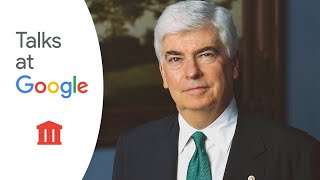
Senator Chris Dodd argues against retroactive immunity for telecoms in the FISA renewal, citing NSA access to AT&T facilities revealed by whistleblower Mark Klein. He urges Google to demand warrants for user data, resist censorship in China, and maintain transparency. The talk covers net neutrality, a proposed carbon tax of roughly $50 billion yearly, and his Iraq war position.
Chapters
Good morning fellow Googlers and viewers on YouTube. I'm Alan Davidson. I'm head of US public policy for Google in Washington D.C. and I am delighted to be here today to welcome you all to the next in our series of ongoing conversations with presidential contenders in the United States. And also to introduce our next guest in the series, Senator Chris Dodd. Our guest today, Senator Dodd is the senior Senator from Connecticut and chairs the Senate Banking Committee. He was a Peace Corps veteran in the 1960s, elected to the House of Representatives in the 1970s, and he has served the people of Connecticut in the senate for over 25 years now, I think it is. And in the meantime, he's developed a reputation as really one of the lions in the Senate, one of the deep thinkers on both domestic and foreign policy. He was the primary author of the Family Medical Leave Act. He is an architect of the Latin American Peace plan in the 1990s. And he's really developed a reputation as somebody who can get things done in Washington and reach across the aisles to do so. Earlier this year, in January, he announced his candidacy for the Presidency of the United States and for the Democratic nomination. Interestingly, he has made protection of the Constitution of civil liberties one of the cornerstones of his campaign. He's taken a strong stand in recent months against revising the Foreign Intelligence Surveillance act to grant telecommunications companies retroactive immunity for participating in potentially illegal wiretapping acts. And I say that because we have, of course, no interest in that provision at all. So hopefully that'll come up a little in the Q and A. And for this audience, though, I could think of really no better way to introduce the Senator than to show you the video that he and his team put together for the YouTube CNN debate in Charleston earlier this year. Do we have that video that we can queue up? This is really the best way to introduce him, I think, hopefully.
Senator, I have to ask, what's with the white hair?
I don't know how you bring that up. Bill Richardson, Hillary, Joe Biden and I, we, we're all about the same age.
I don't think the white hair is an issue.
Well, how did you get the white hair? Hard work, I suppose. For example, it took me seven years to pass the Family Medical Leave act and I helped end wars in Central America and bring peace to Northern Ireland. I'm ready to be President. Uh huh. Well, how many white hairs do you have?
Hundreds. Thousands, I presume. Really?
Senator Dodd is going to be joined for our conversation today by, by Google's General counsel, Kent Walker. First, he's going to give a few remarks. Please join me in welcoming our next guest, Senator Chris Dodd.
Thanks Andy.
Thank you very, very much.
Appreciate it.
Well, thank you very much, Andy, for that very gracious introduction.
And I still have the white hair.
As you can see here this morning.
I'm delighted to be here and to.
Be part of this series that Google has offered to other presidential candidates. It almost feels like being in Des Moines or Ames, Iowa here this morning.
To be with all of you and to look forward to the engagement and.
Conversation and questions about issues that affect not only this company but our country and the world in which we live. I should tell you, despite this head of white hair, I'm a new father. I'm a first time father.
I have a six year old and.
A three year old. In fact, I'm the only Democratic candidate that gets mail from AARP and Diaper services here. I have a rather broad reach when it comes to constituent interests.
What I'd like to do this morning.
Is to take advantage of this invitation here to share some thoughts with you about a subject that Andy has raised with you here this morning.
And that is the Constitution and the.
Values which we embrace as a nation, but also see as transcendent and the.
Role that Google and other institutions like.
This to play such an important role.
So if you bear with me for.
A few minutes to share some thoughts.
On this, I'd invite you as well. I know all your PCs here to go, but we have a website, ChrisNodd.com in which we're very active of a.
Wonderful Internet team on the campaign, very engaged on a daily basis. And so at some point here, if.
You want to learn further about our views on a variety of issues here, that is available to you as well.
But not very far from where we're gathered here this morning.
Here there's a building located at 611.
Folsom street in San Francisco.
And I'm sure the address is familiar.
To some of you here. In fact, it is precisely 35.7 miles.
From where I'm standing at this very moment. Thanks to Google Maps here, they can tell you exactly how far away that all is.
And a few years ago, an Internet technician in that building named Mark Klein received an email that informed him that someone from the National Security Agency would be visiting. Indeed, it was Mark Klein who opened.
The door that day and allowed that.
Individual into the building. Not long after, he and a co.
Worker discovered something unprecedented at that building.
A switch that channeled Internet traffic culled from millions of living rooms, bedrooms, kitchens, and offices across this nation to seek a secret room operated by the nsa. There that information was collected and processed ostensibly for the purposes of of defending our country. Was the handover of this information necessary for national security? We have no idea. Quite candidly, with very few exceptions, Congress is as much in the dark on this issue as the public is in our nation. I believe you'd be hard pressed to explain why our government would need a copy of all Internet traffic flowing through AT&T as cables to keep our nation secure. That we know has happened is not because the government told us, as a matter of fact, it was classified, not.
Because AT&T told us either.
Indeed, we may not have learned of this at all were it not for mark Klein, a 22 year veteran of AT&T, who was old enough to remember when a law was passed to prevent this very sort of thing from happening.
In the first place.
A law that was expressly written to give the government the tools it needed to defend the country and at the same time protect our fundamental rights, privacy. That law, the Foreign Intelligence Surveillance act, was first passed in 1978. It is now before the Congress again for renewal. Few would argue that it doesn't need to be modernized. But President Bush is asking Congress to do something else. To give the telecom industry in our nation immunity for what they've done. To essentially declare what happened not only to AT&T, but other telecom companies, both constitutional and and necessary to defend our country. I come to Google today to tell you that it is neither in our interest here in security nor to protect our nation. There was no warrant served in that case. Yet these companies simply handed over our professional personal information of people, some of whom are likely sitting in this very room today. That is why I have placed what is called a hold in the United States Senate on the upcoming renewal of the FISA bill, the Foreign Intelligence Surveillance Act. And if retroactive immunity is not stricken from that legislation before it comes to the floor of the United States Senate, I'll do something I haven't done in 26 years. I will filibuster that legislation to stop.
It from becoming the law of the land. And I hope you agree here at.
Google about the importance of that. Congressmen and Congressmen and Senators and Presidents, on assuming office, do not swear to uphold and defend the Constitution or. Or protect the country. That is a false choice. Rather, we swear to defend the Constitution and the values it expresses precisely in order to protect the nation. By and large, that has kept us safe for more than two centuries. And I intend to uphold it as a senator and if elected, as President of the United States. What appears to have happened at AT&T was shameful, an infringement on the rights of Americans that ultimately makes us less secure, not more so. Beyond the unprecedented access to information, it is here that the similarities between Google and the telecoms largely end. When Pfizer was written, the telecoms had been around about 100 years. In 1978, Larry Page and Sergey Brin were five years old and still lived a half a world apart. To say that the laws and regulatory structure relating to the Internet are still in their infancy today would be a massive understatement. And that is precisely why the decisions you make in the coming months and years are so critical. It is about those decisions you are making and will make that I wish to address you this morning very briefly. In less than a decade, you already have the most widely used search engine in the world and the ability to track what users look for. You have one of the most popular free email services and anywhere in the globe. You are in the process of digitizing digitally rather scanning 32 million books inside of a decade to create the first universal digital library with the ability to track who is reading what. Your tools allow users to virtually store documents, pictures and spreadsheets. Most recently you have proposed G Drive, which allows the user to transfer all of the information and documents from one person's computer onto a virtual hard drive owned by Google. You hold in your hands a transformative power both vast and unprecedented, a capability to not only transform society, but the very notion of society, of community and of democracy. To many in the current administration, they believe you spread democracy through the barrel of a gun. I believe you spread it through the power of information and the Internet if we let it. But if you believe that the Googles of the world can serve as a democratizing force to expand freedoms after what we've seen after the wake of 9 11, the sheer amount of information you have would be fools not to also believe the other side of that equation, that such power can also deny these very, very freedoms.
Indeed.
That is precisely what Yahoo was criticized for when it was alleged to have assisted the Chinese government in cracking down on dissidents. It is what you have been criticized for in doing your China venture in Google cn, which was built when you agreed to expressly censor subjects the Chinese government deemed controversial. And it was what you are currently being accused of doing in assisting the Israeli government with identifying a citizen who made allegations against three members of Sharai Tikva Council posted on the Blogger service. I understand and admire that Google is much more than a company. It is also an idea. A powerful idea. And working for this institution, this building this company here, is more than simply a job for all of you gathered here. It's part of being a part of that idea. Having served, as Andy mentioned, in the Peace Corps back some years ago in the 1960s, I appreciate immensely the energizing effect it can have to be a part of something larger than yourselves to care deeply about both what we are doing as individuals, but also as a generation, both at home, at work, and at the ballot box as well. I am asked frequently why I am running for the Presidency of the United States. I often think of my two young daughters. Years from now, my children, as will yours, are going to ask us both what did we do on our watch to keep us safe and secure. Similarly, yours will ask, when you worked at the center of one of the most important technology companies in the history of mankind, what did you do on your watch to ensure that this technology was used not to limit the arc of our collective imaginations, but rather to expand it? What did you do to unleash the collective capabilities of mankind to overcome poverty, global pandemics, hunger, environmental degradation, genocide? These are all issues which we can make a difference on. I'm deeply moved by the principled work you do at this company. I don't say that lightly because I'm here this morning, I look@google.org, in which you are setting up global information monitoring systems for pandemics or the recent venture into alternative energy. And while America struggles to keep faith with our values in the Internet age, you understand that you have a special, I think, obligation as part of this remarkable idea called Google. Sixty years ago, my father was a top prosecutor at the Nuremberg trials of Nazi war criminals following World War II. He considered it the single most important thing he ever did in his life. He wrote my mother every single day from Nuremberg from the summer of 1945 to till the fall of 1946, some.
400 letters detailing his observations about the.
Defendants and the events that occurred there. I've just published this in a book.
Called Letters from Nuremberg to talk about.
Those events and what happened. What terrified my father most about that experience of his wasn't merely the horrific testimony of Nazi leaders detailing their atrocities. Rather, it was the banality of all of it, the complicity of the German people that made such atrocities possible. I'm told Google's unofficial motto is don't be evil, but in the fear, in the face of fear and certainty. It's not enough, in my view, to not be evil. We also need to do good in so many ways. Google already is, and I acknowledge that. But to face our challenges and to.
Reject fear, I think we all need to do better.
That's why I challenge today, all of you here, to pledge that you will stand up for the best practices, practices that increase transparency and support technologies and expand free expression, Reject businesses with repressive states and protect your users in those nations. That is how the Internet can be a part of something greater than ourselves and spread those inalienable rights and principles around the world.
Why not start with this?
In fact, to tell the Chinese government that Google CN will no longer censor information with Google consent. And should the Chinese government not find that acceptable, then Google CNN would shut down its operations. I understand you have already moved all of your search records out of China to prevent them from being turned over to the Chinese government. But what better way to affirm Google's commitment to the free flow of information as a human right than to send this message to a nation with the.
Largest population in the world?
And because I know of your commitment to these values, it also begins here at home. And so I'm asking for another pledge, if you will. Should this or any other administration seek the personal or private records you hold on anyone in our nation, you will not simply ask to be presented with a warrant. You will demand it. Demand that court order and demand that warrant. And if this administration or that administration cannot produce a warrant, you will show them the door. I'm asking you to uphold your most fundamental commitment to the public, that you not produce these records outside of the law. When Google acts, others will follow. In my view, standing up in these instances will not only be good for.
Business ethics, I also believe it's good for business.
And as Darwin said years ago, it's.
Not the strongest of the species that.
Survive, or even the most intelligent, but the ones most responsive to change. One way we respond to change, in my view, is to stand up as to stand up for our principles, which do not change. Despite what this administration has done, our Constitution is transcendent, its underlying principles enduring, many of which have been around, of course, since the Magna Carta. What they are not is temporary. And what we do not do is tailor or trim our constitution and the rule of law when our principles are at risk. Indeed, as my father's work at Nuremberg showed and the 60 years of moral authority that followed it, it is not simply the example of our force that keeps it Safe, but rather also the.
Force of our example.
And so today I ask you, where does the map you chart in the 21st century lead us? In the direction of strength, imagination, of freedom, community and shared responsibility? In the direction of democracy? Or does it end here in Mountain View? It is your choice.
It's our choice and it certainly is our collective watch.
And I thank you for listening this morning.
Up here.
Thank you.
I think they want to show up here.
Yeah, whatever.
You want me.
In the High chair?
Yep, the Director's chair, The Director's chairman.
So, Senator Dodd, thank you very much.
For joining us this morning. Thank you.
We're honored to have you and we wish you all the best in your campaign for the presidency. Let me start rather than going into some of the campaign questions, but by taking up some of the challenges and the issues that you've raised in your comments this morning. I think we share very much the spirit and the commitment that you express, but it is at the same time as you recognize a complex area. We strive to be a company that complies with laws around the world while simultaneously advocating for free expression. There are many countries, Germany and France, for example, that have laws against Nazi information being up on the Internet. We try and balance those things. Companies constantly, many American allies as well as China, have different sets of laws. Do you have a framework that you would suggest for us in terms of balancing the desire to be a global compliant company, a good corporate citizen, as many countries would say, with American commitment to free speech?
Well, I think, yeah, you've got to some basic. I mean, there's certain things that I think are more are variables here, which obviously we may find somewhat restrictive, I presume ourselves as well, we impose some of those. But when you get into the issues here of excluding very specific information here, in the case of China, particularly where any reference to Tiananmen Square, any reference to Taiwan, any reference to the Gulan is somehow absolutely prohibited, or that we move automatically people here to government controlled information here, that worries me in a sense where there's that much manipulation, it's hard to find it in very exact terms here. But I think we all know what.
We'Re talking about here.
When it reaches that level, it seems to me then we're becoming complicit in becoming an arm of the public institutions rather than conforming to some restrictions they set up. And so when you cross a line and become sort of an arm of that operation, I worry about that and believe that we must stand up at.
Some point here and say that goes too Far.
Let me shift gears a little bit and move back now to talk about your campaign. The voters this session have a lot of choices. They have a range of experience levels, a range of positions on various issues. What's the basic rationale for your campaign? Why should people vote for you?
Well, obviously, we're not the best known of the most celebrated, obviously, in all of this. But I think it's important now, in light of what we've been through for the last six years with an administration that seems terribly incompetent, lacked experience in.
Terms of getting results or producing results.
Despite the promise to be a unifier, not a divider.
It's been anything but that. And I think we've all recognized it, even people, people who have supportive of some of the values and ideals that this administration claims and embraces.
I think this notion that we're less secure today, less safe, more vulnerable in.
Many ways is becoming more and more apparent to more people.
I happen to believe there are two questions that you probably are asking yourselves from the moment I walked into this room. It's true of all audiences where you are that are very difficult to ask.
But are fundamental in determining for whom we're going to cast a ballot or be supportive of.
And the questions are the following. First, who am I here? If it's more, it's nothing more than a collection of a resume where certain dates are marked down when you did certain things, then I think you're missing the point. People want to know much more about you as a human being. What values do you bring? What experiences, both in your own family and throughout your life, that give you a heightened degree of confidence or optimism.
That given a problem that will land.
On the president's desk in the next administration that will never come up as a question over the next 12 months? Invariably that happens.
Who will I have around me?
Who will I listen to here? What experiences do I bring in making that decision that will give you a.
Sense of security, that I'll make the right decision on behalf of the country.
And the world in which we live. So I go back here, growing up in a family where public service is very much involved.
I mentioned my father's involvement not only at Nuremberg, but also prosecuting the Ku Klux Klan in the 1930s and 40s.
As I prosecuted with the Justice Department, having served in public life, brothers and.
Sisters who are academicians at both the elementary level, university level as well, aunts.
Who taught for 40 years in the public school systems of Connecticut, the Peace Corps experience in Latin America, serving in.
The Army National Guard and Reserves after.
The Peace Corps here, an added dimension, if you will, to that process. But most importantly, I think in the.
Last 26 years, I've been able to do something which I think is most troubling to people, and that is the.
Ability to bring Democrats, Republicans and others together to try to create change in the country.
When I arrived in the Senate in.
1981, the first thing I did was to ask Arlen Specter, a new senator Republican from Pennsylvania, to help start the.
Children's Caucus in the Senate. I looked around and saw we had.
Caucuses for every imaginable constituency but one out of four Americans who are our children.
And so we started there. I wrote the first childcare legislation with Orrin Hatch.
I wrote the Family Medical Leave act with two very conservative Republicans, did financial.
Services reform with Phil Graham of Texas, election reform with Mitch McConnell.
I wrote the legislation on autism, premature births, infant screening, after school programs, pharmaceutical and medical devices for children.
In every case, I went out and I sought out someone of the other party. In most cases, someone far different than I am substantively.
I did so not because it made a nice picture, but because none of these things would happen if I didn't. I wasn't elected to a social club or a supper club.
I was elected to. To try and make a difference for my country, try and create change that.
Would benefit and improve the lives of people in our country and around the world.
And I think that's been missing in all of this.
We often treat this job of the presidency as the only one in the country where prior references aren't required.
None of you in this room got.
Hired by this company here because you.
Showed up and said, I've got a.
Great idea of the future, but I don't want you looking at anything I've done in the past here. In a sense, this is the only.
Job I know of where we don't.
Seem to require that at all. We wouldn't have a tooth extracted without.
Wanting to know that the dentist may.
Have done one of them, at least before. In a sense, I think this is true about this office of the presidency here.
These are complicated problems that are growing by the hour. The idea we can take someone that virtually has little or no experience in.
Any of this and assume they're somehow going to meet these challenges and to get this ball moving again, I think.
Could be terribly naive. So with all of the other candidacies around, both in domestic and foreign policy, it's that kind of experience of protection producing results.
I know how to win elections. There are too many people, I think, in my party who believe that any Democrat we nominate will automatically be elected next November. Nothing could be more naive. In 1995, I chaired this party for.
A year at the behest of Bill Clinton.
I just lost the race for Democratic leader in the Senate by one vote. In fact, it was a 23, 23 dead even vote. After that election in 1994, the deciding.
Vote, the 47th vote, was cast by.
A fellow named Ben Nighthorse Campbell, who was a Democrat, but two weeks later switched parties and became a Republican.
I then wrote Tom Daschle and I.
Said, how about a recount? Having lost this thing by one vote, I was not able to convince him of that. So I became the chairman of this.
Party nationally, which was not a job I welcomed, but nonetheless learned how national campaigns are run. And it's important as well.
As people talk about this too often.
I think people just blow by that.
Issue of whether or not these candidates or any one of these people are electable come next November.
Now you've put a big bet on Iowa. You famously moved your family to Iowa. Thoughts on the role of the early Iowa Caucuses there's been a lot of concern that this gives too much prominence to issues like ethanol or farm subsidies and more generally, the role of the front loading of the primaries. We're seeing a very different cycle this.
Year, and there are legitimate concerns and complaints about it.
And it is what it is.
And it's a caucus state which is entirely different than a primary state. And it's, it is bizarre and arcane in some ways. It was initially one of the great reforms in American politics back in the early part of the 20th century, when Iowa became one of the first states that actually democratized its process of who.
They would choose as their candidate for office.
But it is difficult.
Only about one out of six eligible.
Voters will participate probably on January 3rd in the caucuses here.
About 100, 120,000 people maybe will actually.
Show up for the two or three hours you have to spend in someone's living room or cafeteria or library here to decide where these delegates are going to go.
If 100 people show up, at least.
15 have to be for you.
15% of the room has to be for your candidacy or they don't count in the room.
So there are very arcane processes here involved. But it is what it is. And beyond the size of the state and the subject matters that there's a real value in this. We've been webcasting every Single house party.
And town hall meeting. So we're expanding the universe of people who can actually participate, at least in listening to the questions and the answers.
That are raised in these gatherings. Which has, I think, been of value in terms of informing the rest of.
The country to the kind of intimacy associated with the Iowa caucuses. Iowa and New Hampshire are about the only places where this happens. This kind of sitting down with a small group of people for two or three hours as they drill down on various subject matters only happens there. Once you go beyond those states, it really goes airborne.
It goes to advertising, 32nd minute long TV spots.
And that kind of getting to know.
People in a sense in a more.
Intimate way is far more difficult. So despite the, I think, very legitimate concerns about any one state having this much ability to make an early decision.
There is a value beyond that that people get to see you in smaller.
Settings and make judgments about you, other than that being manufactured through a TV spot.
Which gets to the second point I.
Wanted to raise about the second question you've asked me since I've walked in.
Not only who am I, but do I know who you are?
In a sense, I'm always amazed at.
How many people run for public office in this country who think elections are.
About them and not the people you seek to represent. And we all want to know whether or not people are actually listening to.
Us, not individually, but have some idea what our hopes and fears and aspirations and dreams are as a people, and.
Whether or not they'll take that in the decision making process they engage in.
And if people don't get a sense about you that you care about, that they won't care what you. Where you stand pretty much on issues here, they'll never end up being for.
You if you don't make that connection. And so those are two very important.
Questions that people consider before making a decision.
Now, surprisingly to some, some of the most experienced candidates in the race, yourself, Senator Biden, Governor Richardson, are trailing in the polls. Why do you think that is?
Well, you're dealing with almost incumbency status.
I mean, you walk into a debate in a small high school the other night and you run into the former President of the United States and Oprah Winfrey.
You know, it's a different campaign than.
Normally you've been involved in here. And again, it's sort of breaking through a lot of that. And I understand, I think why they.
Do it is beyond me to some.
Extent, but because I think people are smarter than that in a sense. And why we'll show up, obviously, to see someone that's celebrated. The idea that we're going to assume because you're standing next to someone who.
You'D be interested in seeing is all of a sudden going to convince you.
Intellectually that you're going to end up supporting that individual, I think is presumptuous in many ways. And because this process does take time in Iowa, because you go through this in a more deliberate fashion, I believe.
We still have a very good chance of prevailing.
We've made. I won't bore you with a lot of process issues here, but have some 80 people on the ground in that.
Small state, 13 offices open.
We call about 10,000 people a week.
And about 60 to 65% are undecided.
In Iowa, 25% have indicated they could change their minds before actually voting on the night of January 3rd. Not uncommon here, as I believe I mentioned John Kerry four years ago, to put it in somewhat perspective, although you've got to be careful about drawing too.
Tight an historical correlation here.
On December 23rd of 2003, John Kerry was 20 points behind Howard Dean in Iowa.
He was at 4% in the polls.
Nationally and 25 points behind Dean in New Hampshire, and three weeks later won.
Both the Iowa caucuses and the New Hampshire primary here. So the assumption here that even at this stage here, based on polling data, that these decisions have already been made. I sometimes feel when I'm in Iowa for several days, I can feel rather positive. Things seem to be going well.
People are responding well to the ideas and thoughts I'm bringing to the debate.
I'll then fly to Washington to cast a vote or be in New York.
And I wonder if I'm on the same planet that I've just been on. There's been such a total disregard by.
The national media to other candidates out there. And again, I think this is primarily because that's where the Nielsen ratings are.
And that's where people are selling newspapers here. So following other candidates beyond those that.
Already have sort of national reputations is very difficult.
Some of these debates I could actually go out and have dinner and come back before I get the first question from time to time on these matters.
So it is frustrating to find yourself.
Sort of sitting in the wings from time to time with a preoccupation only on those who are the more celebrated.
And better known candidates, thus reinforcing that. But again, I think history has taught us that people are more apt to make these decisions.
Gary Hart in 1984 now we're going, we're talking about ancient history here ended.
Up with 14% of the vote on caucus night in in Iowa, Fritz Mondale.
Had 86% of the vote that night. And yet the next day the national.
Media was talking about this challenge from Gary Hart. It was on the COVID of Time.
And Newsweek ended up winning the New Hampshire primary three weeks later here.
So this is all so dependent upon.
Where buzz is, what's the latest, what seems to be the hottest item moving here. And if you end up doing well.
I think there may be four tickets out of Iowa in 24 days that if you're one of those tickets here, the chance that you can begin to catch some fire and people pay more.
Attention to your candidacy increases dramatically.
Iowa is about expectations, not about polling.
You either exceed equal or fail expectations.
The three so called leading candidates, only.
One of whom can equal an expectation.
Two will fail expectations here.
Those of us in the second category here, all of us have the potential.
Of exceeding expectations and thus being a.
Part of that story on January 4th.
In the last week or so, there's been a lot of talk about religion in the race. Governor Huckabee is obviously on the upward track on the Republican side. And Governor Romney gave a speech which was a very interesting speech, simultaneously a call for religious tolerance, but also has been seen by some as an attempt to rally the religious voters. And he had a quote, let's see, freedom requires religion, just as religion requires freedom. Do you agree that freedom requires religion?
No, again, I think that was. He was in a very difficult position in my view.
This was unlike John Kennedy's speech in Houston in 1960 where he was already the nominee and was really asking for.
Tolerance in that speech. This speech had the difficult problem of asking for tolerance and also appealing to.
The very people who were being intolerant at that time. This was a very difficult path to walk.
And I can't tell you how successful he was or not at it. Time will tell whether he was or not.
But the First Amendment just doesn't protect.
The independence of religion from government and.
Protect government from the influence of religion, but it also protects those who are.
Not religious in a sense.
And the idea here that our freedoms are derived from our Creator, while there.
Are many who believe that and I respect that, there are many who believe these freedoms come from elsewhere and I respect that as well.
And we must in this society. So in a sense, right Romney was heading in the right direction. But I think once again was the.
Emphasis in that speech was to appeal to some of the most intolerant elements in Our country here. A very different motivation, I think, than.
What Senator Kennedy did or President Kennedy.
Did back more than 40 years ago.
So let me ask a few more questions and then open it up to the room because I'm sure people out there have questions as well. Let's turn a little bit to technology. You and Google have both supported net neutrality and increasing broadband access. Can you talk a little bit about that and why you think it's important?
Yeah, in fact, I talk about it.
Part of my rural policy, you know, in these states, you lace out again, all your ideas and policies. And a big issue in Iowa and New Hampshire is creating opportunity in rural.
Parts of the country. And how do you do it? And obviously, one of the great opportunities.
Today is to, in a sense, duplicate what Franklin Roosevelt did with the Rural Electrification administration in the 1930s here, which.
Which brought incredible opportunity to small rural.
Parts of our nation here by providing electricity, obviously. And this is sort of a similar.
Opportunity in a way here.
I mean, there are a lot of people today, one of the debates were going on in Connecticut, not to bore you with details in Connecticut, but this whole telecommuting issue. I have a lot of people who live in Connecticut, work for companies in New York.
New York wants to tax them based on New York income taxes.
My constituents obviously would prefer not to be, since they're not working in New York. And there's debate about where you tax.
People who are commuting, telecommuting, but we're.
Getting more and more of it, major corporations. I don't know what the process here at Google, but I suspect you have.
Employees that never step foot in these buildings for you. They could work anywhere in the world.
And are very fine employees in a sense.
They don't have to be here necessarily.
To work for this company here. And that idea is creating tremendous opportunities.
In rural parts of Iowa and New Hampshire. That ability for people to have access from an educational standpoint, a health perspective, all of these ideas really do increase the likelihood that people can make better choices about where they want to be, whether they want to raise families, what.
Sort of lifestyles they want to have. So the broadband access, I think, is.
A very exciting idea for so many different reasons. And as real currency, even in places, rural states, in fact, a particular currency, I think, in places like Iowa, New Hampshire.
Now, there is an issue that's been of concern to us and others in the tech industry as we try and assemble a global workforce, and that's the question of access of people overseas to the United States. The H1B program and similar kinds of programs. Would you give us your thoughts on that?
Yeah, I'm an advocate of expanding H1B issues. I want to have done it carefully.
In fact, I've introduced legislation to do it precisely to make sure it's not abused, obviously here. Ideally, we'd like to make sure that people have an opportunity here to fill.
These jobs, if they're capable of doing so, that we understand the need for this.
In many cases, when it occurs where.
That expertise does not exist, you've got particular needs and their talents and abilities that don't reside here to seek them.
Out, want to make sure it's not being used to replace striking workers and a lot of other things we've written into the legislation. So that door is open.
I think if we do that, you can build a real constituency for it.
We're doing this in the face, however, of one of these issues that I think could dominate the election of 2008, and that is immigration policy. And here in this state here, you're particularly sensitive to it, given the wonderful diversity in this state. But it is getting very, very ugly out there. I just warn you, get ready for this. This is incredible. I'm engaged primarily with Democratic activists in.
States as I go out and campaign.
So I'm sitting with people that you might normally draw. The conclusion would be most hospitable to a thoughtful, practical, fair, historic immigration policy. It is stunning what I'm hearing in audiences that if I blindfolded you and took you into the room and you didn't know where you were and listened.
To it, you'd swear you were talking.
To Tom Tancredo over and over again on these issues, I hear, and I.
Don'T mean to be humorous about it.
Because it's deeply troubling to me. We've had experiences in our nation's history.
In the 19th century.
The know nothings almost won the presidency in the 19th century with this anti immigrant policy.
At the end of World War I.
There was a very strong anti immigrant mood in the nation.
In fact, thousands of people packed up and left the country who had come here and been here for a generation.
Because of the anti immigrant reactions.
So this is going to require, I.
Mean, I had an awful lot of leadership. This is a wedge issue here to appeal to the worst fears and hates that exist in people. And fanning those flames, we've learned historically.
Are the easiest thing to do and the easiest to sustain.
And yet all of us would be the first to tell each other that there's nothing we can Think of historically.
We'Ve ever done as a people they were particularly proud of and motivated by those emotions.
So this is going to require strong leadership to make the case about the.
Uniqueness of this nation, the welcoming quality.
Of it here, which has not only been a wonderful thing morally and so.
Forth, we have been advantaged substantially because of it. I mean, I can't even begin to think of what this nation would look like had we adopted the policies of.
Our European first cousins and others here that we had restricted the kind of.
The influx that has enriched this nation beyond our wildest imaginations. And the idea in the 21st century.
At a critical moment when there's expanding educational opportunities and still people see this.
As a desirable place to be. But not exclusively so.
Only a few years ago, places that many would have thought of as not being terribly desirable are becoming very attractive places to be.
So the competition is going to get fierce. It is already in a view.
So the H1 visa programs and overall an attitude on immigration policy. And I don't have any magical solutions for you here, except that we've got to have far greater sense of cooperation. I've chaired for 20 years the Inter parliamentary meeting with Mexico here. In fact, Mexicans are giving me the.
Highest award they give to a non Mexican, the Aguilar Award, because of my work on a variety of issues.
Cross border issues here and obviously the great disparities of wealth in Mexico, largest in the world. One of the facts that exacerbate this problem, not to mention what exists in the neighboring countries of Central and South.
America, given historic problems here.
But with the arrival of Vincente Foxx.
And now President Calderon, the world is changing. In Mexico, there's far more diversity in.
Terms of economic thinking here. I believe there's far greater possibilities of seeing a democratization of their economic process that will increase the opportunities of wealth.
Creation in Mexico and reduce what has.
Been the strongest motivator over the years. People moving because they have to, they can't raise families, they see opportunities elsewhere. A very noble motivation, by the way.
But obviously, to the extent economies can improve in these countries, greater political stability.
You reduce, it seems to me, that desire to emigrate. So that has to be done.
Not to mention reducing the kind of temptations that occur as a result of employers knowingly hiring people that are undocumented.
And then obviously dealing in a thoughtful.
Practical, humane way with those who are.
Here so they can achieve a status of legality here, if they so desire, move them in that direction so that.
They can acquire the education Step forward and deal with health matters and the like to keep us all safer and more secure. But it needs to be dealt with sooner rather than later.
And I deeply regret we didn't get it done last year. It's not printed the proposal, but I think it works and it gets us.
Moving in the right track. Sorry about expanding the answer, by the.
Way, just from H1B.
No, no, no. It's very useful. So if anyone does have a question, I'd urge you to queue up behind the mic there. Let me ask one more while people are getting organized. As you know, Google's a big fan of alternative energy. We've invested in a variety of different forms of that. We've noticed that you've called for a carbon tax, which I think a lot of economists would agree is one of the most efficient ways to address the global warming problem and capture the exception externalities. But it's a corporate carbon tax. It wouldn't extend to a gas tax. Aren't the arguments there the same?
Well, to some degree they are, but, you know, I live in the world of what's doable. And while Tom Friedman and others have advocated and you can make a case.
For it, the practicalities here of that are probably limited.
In fact, it will be difficult to get a corporate carbon tax in place, but I think there's a greater likelihood of doing that. And I'm the only Democratic candidate calling for this here because I just don't, don't know how you get from point A to point B unless you do this. The cap and trade issues can work, but they're very slow. They worked with the acid rain issues.
A few years ago, but I don't think we have frankly, the luxury of waiting much longer.
We taxed cigarettes and decided to do so for a number of reasons, not the least of which is because it.
Was killing us and killing people who were subjected to secondary smoke.
Carbon is killing us, not here.
It's killing our planet and it's killing us individually here.
And so the argument that we somehow want to get a pass on this.
Subject matter, while not opportunities for developing.
Alternative technologies and energies, I think has.
To be accepted here and aggressively pursued.
In fact, this is the only plan that Al Gore, congratulations today, gave his speech in Oslo and his Nobel Peace.
Prize that Al Gore, Bill Bradley have called the boldest and the most honest of the energy plans out there and.
Pleased to receive that sort of moniker of approval from them. Having cared as much about these issues.
What you're doing here at Google, as I mentioned earlier, in your environmental areas.
The idea that we can't do better on fuel efficiencies for automobiles. If you go to your website to look up the fuel efficiency standards in 1983, 84 and 85, you'll find with four and six cylinder automobiles produced in this country, we're getting 45 and 50 and beyond miles per gallon in 1983 and 84.
My wife's CRX in 1983, her first.
Automobile got 43 miles to the gallon in Citi 24 years ago. I don't need to compare where we.
Are today and the technology is being.
Developed here as opposed to what we've been able to do with fuel efficiencies.
I don't take nuclear off the table here.
I don't know how we operate the grid just on wind and solar and.
Biomass and other alternative ideas. I'm very much aware of the problems associated with this, but I think it offers real opportunity in international construction consortiums are here to develop the use of that technology not only for ourselves, but.
To deal with third world and developing countries who don't want to be held.
Hostage by oil producing nations here for.
Their source of economic growth. We ought to be able to share these energy ideas so that people have the independence to provide for themselves as well.
So in addition to dealing with the CO2 emissions associated with coal and petroleum, my corporate carbon tax cost 50 billion a year. It's about 10 cents a gallon.
It's expensive, but I dedicate all 50.
Billion to investing in our laboratories and.
Universities to accelerate the development of these ideas and fuels and technologies. Provide some relief for consumers who want to opt for the more efficient, cleaner producing appliances and the like.
And provide relief to companies that can't afford to make that transition as they.
Move from the fossil, the carbon producing fuels. I would just point out that we borrow a billion dollars every single day. Every single day of the week. We borrow $1 billion to buy foreign oil. About a third of it going to nations in many cases that are hostile.
To our interests here. So while my expense, my program is not inexpensive, the status quo in maintaining the present cost to us I think.
Is vastly more costly and therefore deserving of a consideration of a corporate carbon.
Tax as a way of dealing with the issue. That's a brief answer.
You can go to the website, read more of this if you so include. But that's a shorter version of it.
So let's go to some questions from the audience and then that have been sent in from other offices, please.
I miss my CRX too, but it wouldn't fit a baby seat. But that's not the real question. Why is the Democratic leadership of the Senate consistently caving on bills like, for example, fees are reaching the floor, immunizing the corporations. By contrast, the Republicans have been happily filibustering right and left, and the Democrats don't seem to be willing to filibuster anything. Even the Democrats finally control the Senate, and yet we seem to be seeing the same bills going through as if they didn't.
I hear this complaint all the time and it's not without merit. I'm of a view that we don't even we don't require filibustering. We ought to require it in a sense. If you announce to me that you object to a piece of legislation and you intend to filibuster it, what we do today is then just file cloture that so many hours later there's a vote on cloture. And if I can, if I don't get the necessary number of votes, then the bill dies. My view would be you want to filibust and then be prepared to spend all night standing up reading the phone book here, but I'm going to make you do it here. And if I do make you do it often enough, others may have second thoughts about whether or not to be subjected to the kind of ridicule of stopping things from happening because the country sees that this is nothing more than a charade to delay the ability of the institution to grapple with issues. But I've got to make you do it. If you just engage in the 50 of you threatening one, I filed cloture, which people think is sounds like something you may do when a person's got a bad cough, rather than actually engaging.
In a process or procedure to deal with legislation.
I think you'd be more successful. My complaints on this go back to the Iraq issue. I think clearly Democrats won control of the Congress last year because of one issue, Iraq. That was the reason why here. That's why we got a majority in the House and the Senate and to.
Watch what's happened since January where instead.
Of having a very clear position on the one power the Constitution gives the Congress, and that is to stop funding bad ideas here. We've tried to manage this conflict by building a consensus here. We end up saying absolutely nothing on the issue, only further frustrating everybody in terms of why we're still there funding an operation here that's taking us in a very bad direction. So I am very sympathetic to your concerns that you raise Here. And frankly, I wish that I've asked for Democrats to be far clear on this issue. I'm the only Democrat last week who would vote against the funding of the war. The only one on the thing. And again, it isn't just the funding of the war. Listen, first of all, the debate in Iraq is so simplistic in so many ways. It's far more complicated than just our military presence. But that issue does make it more difficult for us to get to the other means by which we can resolve those issues.
Let me ask a follow up, if I could. And this echoes a question we got.
Thank you, thank you. That we got over the, like the gray hair too. By the way.
You had originally voted to authorize the war in Iraq and as you know, recently voted against continued funding. What accounted for your change in perspective and what do you think is the best solution at this point?
Well, he lied to. I mean, you know, I sat back in 02 and, you know, like too.
Many people, you know, I believe that.
When people were standing up and saying this is what the facts are on the situation, even though I urged in the fall of 02 and the winter.
Of 03 that we delay any military action pending the final determination by the.
Inspectors on the ground as to whether or not those weapons are actually there, you know, they're the boats I'd love to have back. That's certainly one of them. Knowing what I know now here and with this administration with literally cooking the books, gave a speech yesterday at the World Affairs Council in San Francisco and cited the information that was the subject of President Bush's speech in a joint.
Session of the Congress.
Information was gleaned from a person that.
We sent to Egypt to be interrogated.
Who then under extreme torture announced that al Qaeda was being trained by Saddam Hussein to develop weapons of mass destruction. It was the centerpiece of the argument that Colin Powell made at the National Security Council at the United Nations.
It became the justification.
Turned out it was completely and totally false. Here he shared that information because he just couldn't talk, tolerate the torture any.
Longer here and so said exactly what he thought the people wanted to hear.
And so I would love to have that back. But I don't excuse that old expression. Fool me once, your fault fooled me twice, my fault, in a sense, why.
People a few weeks ago would be voting on a resolution basically declaring war against Iran here with an administration that.
Already cooked the books.
It's the reason I vehemently opposed John Bolton to become the ambassador of the United Nations. This was A guy who tried to fire intelligence analysts because he would, they.
Would not give him the data to.
Support his ideological perspective. I'm not opposing. I love a debate. I think a healthy knockdown, drag out debate is terrific. When you start threatening people's jobs because they're not telling you what you want.
To hear, then you've done something that.
Crosses a line to me.
And no one ought to ever be promoted to a higher position if they engage in that practice. And that went on in those days.
So we'd love to have the vote back.
That's not the case.
So the issue is what do we do from here?
Right.
Hi.
Oh, let me ask you the answer to that question though. What do you think we should do?
Well, listen, I've reached the point here and that's why that this isn't working. There was never going to be a military solution in Iraq.
That the idea that we're going to resolve this militarily, all we were trying.
To do was to create space so.
The Iraqi political, religious leaders would come to some resolution here that would allow them to move forward, form a nation state, provide the abilities for themselves to defend themselves here. All we're doing is creating this incubator and a recruiting operation for jihadists. In my view, we're glorifying the confrontation by our continued presence. And for those who understand it from.
The other perspective, that's what they want to do, is to glorify this confrontation here. And I don't believe we're achieving anywhere near the results.
I believe that the Iraqis may, just.
May, if we're clear on this issue of saying that our military presence here is coming to an end. Now you decide whether or not you want to step up and form that government here. I don't believe we ought to tell.
Them what kind of a government it is. I disagree with Joe Biden on this point here. If they want to develop a federated state, a loose federated state, I'm all.
For that, provided it's their decision to do that.
There's again the idea that we're going to become sort of Clemenceau and LLOYD George.
It's 1919 Versailles with our crayons out, drawing the map of Syria and Iraq.
The French got Syria, the British got.
Iraq is dangerous here. We're paying an awful price still today.
Because of what happened then.
So the idea the United States is going to sit here and describe to you what your government should automatically look like. I think we ought to be careful about that. I think you get into a lot.
Of trouble when you do that. So again, I believe that redeploying forces out.
We have major facilities in Kuwait and Qatar.
We have wonderful tools available to us, in my view, to deal with these issues. Iran poses problems, but it's a far.
Sea speaking, very different nation. The idea that it's going to overrun.
The Middle east here is a total exaggeration in my view here.
There's little understanding of what Iran really represents today in terms of its capabilities here. And so I think there's a far.
Greater opportunity for us to do other things. Darfur is affected by this Latin America and Asia.
Every issue that we're confronting from a foreign policy perspective is seen through the prism of Iraq. And if you're unable to disengage in.
A way that allows us to redevelop some credibility on these other issues, every other issue we try to have some positive effect on, I think is being.
Adversely affected by our continued insistence upon a military presence in Iraq. Our military leaders. I was at Walter Reed Hospital a few weeks ago, meeting with some young people from Connecticut, one of who had lost his eye, another pretty damaged.
And I asked them the question you.
Just asked me, and again, it wasn't.
A scientific survey being done. But let me quote to them what these. Well, first of all, they'd go back in a minute. They'd be back with their buddies in a second. But this young guy said to me, let me tell you, he said, senator, it takes us a month and a half to clean up an area. An hour and a half after we leave, it's right back where it was before. All I'm doing, he said, here is.
Training Sunnis to kill Shias, and I'm arming them to do it here.
The civilian population know where the IEDs are. They know where the ammo dumps are, and they will not share it with us.
They said, this is not.
We're not.
We've got a temporary relief here, obviously.
With 30,000 people on the ground, obviously the violence is coming down.
But the question, he said, is not what's happening today, but what happens when I leave. And he said, you've lost 4 million.
People in the country that have left. The country is not functioning here.
And the idea that the political leadership is going to necessarily pull its act together as long as we're there, he said, is a mistake.
And I agree with him.
Hi.
Something I appreciate about your candidacy, as well as those of Joe Biden and John McCain, is your track records of reaching across the aisle to get stuff done Which I think is great. Over the last few presidential election cycles, I've heard a lot of candidates to talk about uniting the country rather than polarizing it. But generally the people I see elected end up being polarizers, in my view. I wonder if you share that view, that that's kind of been our history recently. And I mean, do you think there's something about our electoral system that rewards these polarizers? And if you think there is, do you think maybe there's some changes we should make?
Well, a lot of changes need to be made. I mean, clearly the present system is not exactly what historians are going to celebrate, I suspect, as we get through with all of this here. We spent, we started these forums last February, countless hours of these 30 second answers here at a time when the country's interest by and large was marginal. This process will now be over with in about a month and a half, if in fact history has any teacher, at a time when the country's interest ought to be accelerating and following it. So it's logic turned on its head in how we decide this and do this. I'm a great advocate of public financing of federal elections here. We're shrinking the pool of candidates here, we're expanding the level of cynicism in the country here as a result of how we finance these operations here. And money drives an awful lot of this, as we've painfully learned. So that would change if I could effectuate that as well. I think we need to probably look at proportional distribution of the electoral college votes here. So we require people to campaign in more than 10 or 15 states here that share the lion's share of those votes. So there is a greater sense here that people's views can actually be reflected in what is the deciding.
Institution that.
Is the Electoral College and how matters are decided. There needs to be a far better way to engage. I invited, in fact, I went to John McCain about three months ago and I said, John, why don't you and I every two weeks pull up two chairs. We'll invite the media to come and you pick a subject one time, I'll pick the next subject. We'll spend one hour just having a civil conversation about what the two of us think ought to happen in the country as maybe a different way than having this sort of lineup with Wolfie Blitzer here asking 30 second questions about UFOs or something that got more attention than economic questions. John didn't take me up on the offer, but it was a nice idea as a way of trying to do something that may be more enlightening to people in terms of where we stand and where we need to go in the country. I think the appetite for it is strong in the nation. I think people seem to say this and believe this. Most people don't wake up in the morning wondering if they're Republicans or Democrats or liberals or conservatives. Most people get up and wonder if anybody is paying any attention at all to what they're grappling with. So our means of achieving desired mutual goals are different, but the goals, I think, are common here. And therefore that desire, I think, for some leadership in the nation that can help us get there is very, very strong. And I'm hoping this time around, in light of where we are both at home for an awful lot of people, the income gaps are huge and growing in our nation here in this sense, that maybe the best days of our nation are not in front of us is a growing sentiment, and it's a very troublesome one to me. And so it's a critical moment.
Well, thanks for the answer. And I think that was a good idea you shared with McCain, and it's too bad he didn't take you up on it.
Time for one last question, I think.
Senator Dodd, thanks for coming today.
Thank you.
I value your thoughts on fisa. I see them as an example of what might more broadly be an executive branch gone wild. From the CIA destroying tapes that show them torturing people to Vice President Cheney and President Bush signing, doing hundreds of these signing statements where they say, you know, Constitution says something. You know, Congress passed a law, we don't think it's right, or we don't think it applies to us, so we're just going to keep doing whatever we want? Would you agree that the executive branch has kind of got out of the balance of power and the checks and balances, and as president, what would you do to restore some balance there?
Well, clearly have. And this is not unique to this administration. They've taken it to new heights here, new levels. But we've seen this in the past. Obviously, there's a temptation by both the judicial and the executive branch from time to time to exceed its authority. It's only the legislative branch, where people actually run for the office and say, if you elect me, I promise to diminish the influence of the legislative branch. It's rather interesting. I've never heard of a president or a federal judge make similar claims. And during their confirmation hearings or elections.
So signing statements are just.
I mean, they're unconstitutional. I mean, this is. It's Not a question of the idea that some president would believe they actually have the right to sit there and provide legislative history for a piece of. For a law that they had nothing or limited involvement in creating is just fundamentally wrong. I mean, in my view. And the fact that courts would even consider those things is wrong as well. So. So whatever executive powers exist to make it clear that that would not happen, here is what I'll make clear at the outset as well.
And look at this.
It is. This is the most frustrating system in many ways. I mean, you know, the temptations we all feel when we watch something we care about getting done. The woman who asked the question about the frustrations here of watching too many things not happen.
And clearly the founders of our nation, if they had been concerned about efficiency.
They never would have adopted this. This was the last thing they had in their minds, I hope, because it certainly is the most cumbersome, frustrating, exasperating system in so many different ways.
But the temptation to want to alter.
All of that has to be restrained by the notion of not only what we produce, but how we do things. And I think the founders were as deeply concerned, in fact, more concerned about how we did things, not no more how efficiently we did things, obviously.
And that's where trying to make this system contemporaneous in a 21st century world.
Here that allows us to become responsive in ways that are acceptable is a real challenge. And the temptation to want to blow through this and just grab this power because you believe you have the right ideas and therefore step all over. The sense of balance that we insist upon is strong. But I believe so deeply and strongly that throughout history we have functioned better. We need to come out with better ways in terms of how we operate here and to modernize how we do things in a way so there is a greater connection between public policy and what happens in people's lives. But I would certainly have no hesitancy in committing to you today, having been involved and deeply committed to these issues, that as a president I would do everything I could to restore that sense of balance. That is absolutely essential. And I think you can.
I'll tell you a wonderful anecdote that I got a call From George Bush.
41 the other day, and he invited me to speak at Texas A and M. He called, invited everybody. I want to suggest it was some individual thing, but I said to him on the phone, we had a nice.
Conversation on the phone.
I said, I've been telling a story about you out on the campaign trail. And I could see him holding his breath as I told that to him. Back in the 19, early 1990s, I was deeply involved in the Central American peace efforts, dealing with the contra aid issues in El Salvador and the like, having chaired the committee dealing with Latin America and the Foreign Relations Committee. And President Bush, in a moment of peak in frustration as president here, turned to me and said, I can only make one call in Latin America. Who should I call? I said, well, that's an interesting question, but I don't have a quick answer for it. Let me think about it.
And so I thought about it for.
A couple of weeks and settled on a guy named Sanganetti, who was a former president of Uruguay, small country in the Southern cone, but highly thought of, well regarded in Brazil and Argentina and Chile. So I ran to President Bush several weeks after that, and I said, you know, I've got an answer to that question. There's a guy named Sanganetti, he's a.
Former president, but he's highly regarded and.
Well thought of in the region. And if I could only make one call, not a bad call to make, that was the end of the conversation. About four months later, I ran into President Sanganetti in New York and he stubbed at me and said, you're never going to guess who calls me all the time, calls me on my birthday.
Calls me how the kids are doing.
Wants to know my wife is doing. And the point being that President Bush, and he didn't do this just once here, he went out. It's labor intensive on this stub of working, of engaging people, not just the night before a vote at the UN or at the OAS here. But the same is true in dealing with Congress and members. I said to people, look, it's not an exaggeration that sometime after January 20, 2009, a week, a month afterwards, that I might invite a Nancy Pelosi, a George Miller, an Orrin Hatch, a Thad Cochran, an Olympia Snow, Dianne Feinstein here, Tom Harkin, Jack Boehner, to all come.
Down to the White House.
I've known every one of them for 25 or 30 years. I'm not going to go through two years of getting to know people here. This is the kind of relationships that are essential if you're going to get something done. And I happen to believe that most people, even ones I fundamentally disagree with on substantive matters, want to be a part of constructing something of value here. They don't want to spend their careers just being obstructionists for the sake of being an obstructionist. But would like to be invited to make a difference here, but don't get vit very often to be a part of that. And that's what a president has to do. You have to know these people, to be trusted by them. Even when you disagree on these matters, matters in order that you can achieve something together that moves things forward. With all the cumbersomeness of it, with all the frustrations associated with this, that's.
The only way it works.
If it's all about 50% plus one, to use Dick Cheney's description of all that you need to have power, then you end up exactly where we are today. And so I'm determined here. And having never done this before, I never thought about it. I didn't wake up when I was 10 with a life ambition of being president here, but decided after this length of time that if I thought I had these skill sets and believed they were missing and valuable, why not step up and try as well? I was also motivated by the fact.
That this daughter of mine, the two daughters where Grace was born two days.
After 911 in Arlington, Virginia, here. And I could watch the Pentagon burning in the afternoon of September 13th when she arrived in this world as my first child. And I've done what every parent has done throughout the ages, looking at her, wondering what kind of a world, what kind of a country she going to grow up in and what am I going to do about it here? If it's merely sitting in the bleachers in a sense, and complaining about it, then she'll justifiably question whether or not I really did try to make a difference for her. And I'm not exaggerating when I say this is really something we all bear a collective responsibility for generations are judged, not just the leaders generations choose. And this is our watch. This is our time to get this right. And I believe we have the capabilities, the intelligence, the ability, if we can just begin to attract and motivate people to be a part of things larger than themselves. That's why I joined the Peace Corps, because it was our President of the United States who invited me to. And my peers went off to the military, the Justice Department, to vista, to the farm workers movement, to the civil rights movement. But it felt damn good to be an American. And even though we didn't eradicate ignorance, poverty and disease everywhere, we made a difference here because we were invited to make a difference. And I don't think this generation is any different. We just haven't had anybody lately invite us to make a difference. And I think we're anxious for that. Thank you all very much.
Appreciate it.
More from Guy


Cheryl Strauss Einhorn | The Human Edge: Smarter Decisions in the Age of AI | Talks at Google



Rachel Glennerster | Innovation and the Center for Global Development | Talks at Google

Rebecca Winthrop | Rethinking the Purpose of Education in the Age of AI | Talks at Google

Dr. Robert Wachter | A Giant Leap: How AI Is Transforming Healthcare... | Talks at Google



