Senator Mike Gravel Live Discussion | Talks at Google
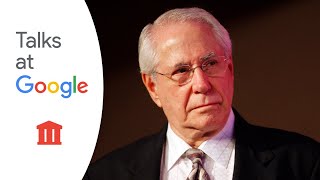
Transcript of a 2007 ‘Talks at Google’ live discussion featuring Senator Mike Gravel (Alaska) and moderator Andrew McLaughlin. Gravel outlines his positions on Iraq, Iran, terrorism, climate change, healthcare, drug policy, Social Security, federal sales tax, and the ’national initiative’ proposal to empower citizens to make laws directly; he recounts his role with the Pentagon Papers and his Senate career. The piece alternates short audience prompts, a moderated interview, campaign anecdotes (1968), policy argumentation, and a sustained pitch for direct democracy (national initiative).
Chapters
Iraq.
George Bush says oil war was a mistake. We need to stop killing Americans and Iraqis.
Iran.
We have no beef with them. They have one with us.
Leave them alone.
They'll get their own democracy.
Terrorism.
Been around since the beginning of time and will be with us till the end of time.
War on terror.
It's not a war. It should be a police action based on global intelligence.
Gas prices.
Let the market work its will to induce alternative energy sources.
Gay marriage.
Marriage is a word used by all civil societies. It's a commitment of love between two human beings. We need more love.
Global climate change.
The most serious problem facing humanity today. It requires fundamental human changes. Renewable energy Vital to address the problem of global warming.
Poverty.
Any solution requires a fair tax policy.
Health care.
A universal voucher system will provide equal treatment and and choice of providers.
Economy.
Our fiscal gap is a $50 trillion economic catastrophe rushing toward us.
Social Security.
The Congress has to stop raiding the surplus and invest the money for the benefit of those who pay into the Social Security fund.
Federal sales tax.
It will replace the income tax and turn us from consumers to to savers. It will do more to address climate change than anything else.
National initiative.
The people must be brought into the operation of government to make the laws that affect their lives and thereby become the fourth check in our government system of checks and balances.
Where have all the leaders gone?
This leader is back. My name is Mike Gravel.
I'm running for President of the United.
States and I need your support.
Thank you. You work at Google. You deserve an applause.
Well, thank you all for joining us. I'm Andrew McLaughlin. I'm Google's director of Public Policy. And it's our great honor and pleasure today to have Senator Mike Gravell from Alaska joining us. I'm going to take my moderator's privilege to ask a couple of questions at the outset and then of course we'll throw it open as we always do to the microphone. I promised Senator Gravel that we would skip. Skip a lot of the lame horse race gotcha questions and try to get into substance and talk about ideas. I did want to start off by showing a video clip, but I note that our screen has disappeared. Should I wait for the screen to come back down or should I proceed?
Keep going.
Keep going. Okay, so let me say just a few words. When I was at university, I studied history and I spent a lot of time taking courses on the Vietnam era and the Vietnam War. And in many ways, Senator Gravel, your strongest mark on American history was in connection with that war and in connection with The Pentagon Papers, which I always admired as an act of tremendous courage. Can you say a little bit about your thinking during the war and your strategies and tactics as a senator in confronting a war that you thought was wrong?
The tactic was constantly to assault authority, question authority all the time. You can never go wrong by questioning authority because then they have to respond. And if they've got no response, they don't deserve any authority. And so by using the filibuster as a tactic in the Senate. When I first got to the Senate, you know, we just had the filibuster over denying the equal racial rights. And so the liberals in the Senate were saying, oh, we gotta lower the filibuster rule from 2/3 to 3/4, rather to 60. And I kept saying, and of course, I'm from way up in Alaska, freshmen, and I'm talking to all these senior people who just had been through the battle. I said, you, you're fools. You're giving away a tool. And the tool of a filibuster can be used for good and for bad. That it was used for bad doesn't mean you do away with the tool. You can take a hammer and hit yourself and you do some damage or you can pound the nail in. And so I just took a different. I marched to a different drummer. You say courage. I've always looked upon myself. Boy, they keep saying I'm courageous. Well, what's courage? I don't know. I really don't. I just see something and I react accordingly. And so some people view it as like the Pentagon Papers. I was scared. I mean, I thought I might go to jail. I had three young attorneys telling me, well, Senator, we don't know, you know, this is the speech and debate clause. We don't know what it really means, push come to shove. And so. And here I worked my heart out to get to the Senate, and within two years, I'm risking it all, throwing the dice against the wall. Wall that in some quarters is viewed as irresponsible. It's viewed as irresponsible. But if there's anything. I've just done this tour of Google my. You're all irresponsible. From what I can see.
You picked that up. Normally we try to keep criticize.
That takes one to know one.
Since I see our screen has appeared again, let me take you back to the 1968 campaign. And one of the things that you got recognition for was using the medium of television early on in an interesting way. I'm not so interested in digging into the kind of political tactics that are behind it. But I am interested in going back to your political sort of background in Alaska. And if we could. Let's dim the lights and show an ad from Senator Gravel's 1968 primary campaign.
New leadership for Alaska.
The proposal that the United States leave Vietnam unilaterally is an unsound one, and I think a very immature one. It's seeking to crawl into a hole and hide and hoping that the problem will go away. Well, the problem won't go away. And as a result of our leadership position in the free world, we have to solve the problem, not just hope that it will go away. We can extricate ourselves from Southeast Asia when and if we are assured that peace can be maintained in Southeast Asia. Because upon that peace will depend the peace of the world. I think our nation can meet that.
Responsibility in a time that needs new leadership for us. Senator Mike Gravell. Presented by Alaskans for Mike Gravell.
You can probably tell where I'm going with this, which is that's the kind of argument that we're hearing now about Iraq. But before we get to Iraq, I'd like to go back to 1968. And can you paint a picture for us about this prime primary campaign? Senator Gruening, whom you defeated in the primary, was one of the two senators to vote against the Tonkin Gulf resolution. It's fair to say that he was one of the leading doves in the United States Senate in 1968. You ran against him with an ad that was critical of him, or at least implicitly critical of him for being too dovish on Vietnam. Your thinking clearly changed once you got to the Senate, or I shouldn't say clearly, it appears to have changed when you got to the senior. Can you go back in time and sort of talk us through that?
Very much. I was a protege of Ernest Gurnon. Whenever he'd come to town, I'd drive him around. I was a young kid, and so I just looked up and I thought he was a giant. And I still do. But it's a giant with clay feet, like a lot of other politicians, with some degree of dishonesty and lack of integrity. But all politicians have that. Make no mistake about it. What that ad showed that what I was doing. And this was on public radio just recently. And my wife keeps telling me, I gotta respond to it. I don't have to respond to it. I was not attacking Ernest Greening, and I never put an ad on attacking Ernest Greening. What that ad shows that Ernest Greening is over here, viewed as to the far left. And all I gotta do is stand next to him, snugged up on his right side, and people will make all kinds of interpolations from that as to where my views are. But poor Ernest didn't know that. In his records was a letter from me right after Tonkin Gulf vote where I just poured out my heart and admiration to him for what he had done. And so when I get. And every so often I get it from older people, well, you defeat Ernest greening. He was 83 years old, I was 38. And I was ambitious and I wanted to do what, what I wanted to do in life, with my life. And so I answered by, hey, would Ernest Greening have released the Pentagon Papers? I think not. I know Ernest very well, he's tough. And the reason why I ran against him, I would have never done it. I ran for the House. I thought he had talked me into running for the House against Ralph Rivers, who was a very modest person at best. And so when I ran, Ernest Greening said to me, to my surprise, when I what the hell you doing, Gravel? You're rocking the boat because the Democrats controlled everything. And then I was thunderstruck that here's my hero chewing me out for doing what I thought he wanted me to do. And then what does he do? Oh, he tells me, oh, don't worry about a thing. You know, he walked away, got in a car, he was in Anchorage, got to the airport, flew to Fairbanks, got in another car and is sitting there with three other people, four other people in the car and is making a statement. We got to kill Gravel before he gets off the ground. What happened? This is what you learn in politics. Somebody in that car was working for me and called me immediately. You can't believe what Ernest Green just said about you. Now that just freed me up from my hero worship and said, hey, I'm going to do what I'm going to do. I barely lost. I barely lost, but when I lost, I had to recoup myself and then said, earnest greeting is fair game. And that's the reason I became a senator and five and 10 other competitors didn't because they didn't have the chutzpah to sneak through the crevice, the fissure that existed of opportunity because I ran against he ran. Ernest Green ran a write in campaign after I tried to suck up to him after I won the primary. And the other person was the wealthiest man in Alaska, Elmer Rasmussen. And I sat there between these two guys and we had debates galore. I didn't have enough debates. Bring it on. Because it was just easy to really present what was the middle ground. And that's what you saw was the middle left. Now, you can interpolate that. All I can say is that young man was very ambitious. This young man is very mature. There's a difference.
Well, let me ask you about the. Then let me explicitly draw the connection between the substance of this argument and what we're hearing in connection with Iraq today. So the position that you just articulated was some people are calling for immediate withdrawal of our troops. And I'm saying let's wait until the situation is basically stable so that I forget the words of the ad, but freedom can be secured and then pull the troops out. You've been calling for an immediate withdrawal of American troops from Iraq. Can you talk us through what you think the consequences of that would be.
For Iraq or for Vietnam?
I'm pulling us to the present day.
Well, let's put it, let's push it back there for a moment. Because one of the things that we don't have right now, which we didn't have then, was a person who's president, who's going to do it right. You know, we all get carried away that it was the people protesting to get us out of Vietnam. That's not what happened. Richard Nixon got us out of Vietnam. The people created a climate to get us out. But he got us out with the phony Henry Kissinger, where they just wanted to leave a lapse of time so that it would not be done on their watch. Now, the dilemma we have right now, and I know this very well, I say that we can get out of Iraq in 120 days. All you got to do is do the math. The number of seats on an airplane, the number because the military has always wanted to leave all of our equipment there because they want new equipment. That's, of course, what we're all about in the military industrial complex, is making more equipment. But now what is the problem? It's easy to get the troops out, but what do you do as they're leaving and what do you do to address the problem that you're leaving behind? I would go to Iran, I would go to Syria, I would go to Saudi Arabia. I would go. I'd go to Israel. I would go to the Russians, the Chinese and get everybody, but primarily the regional group and say, we screwed up, we screwed up. Help us solve this problem. So now that takes a lot of leadership to admit you made a Mistake. And one of the problems that we live with, the legacy from Vietnam that as a nation we never admitted the moral wrong. And that's the reason why a lot of our Vietnam veterans have got their heads still screwed up and because they can't handle what really did happen. When you as an individual, when you turn around and you make a mistake, how do you address your mistake? You see the mistake and you mature from it. Now what do you think of a nation which is nothing but an aggregate of individuals that cannot admit wrong? It gets all screwed up. And that's what's going on in the dynamic of this nation. And so now I've got a great plan. I can get us out in 120 days. I've given the plan to the Congress guaranteed to work to override the President. Problem is he's still President. And so if we do follow my plan to get out, which is good, you think that he's going to be able to talk to these people? Intelligence. He has got no credibility left in the world, not much less with Iran and other countries. So there's a hiatus there like there existed back then. It's a great idea. That's what we should do. But the leadership is not able to handle it, not mature enough. And that's the problem we have right today. And the sadness is that if there was leadership in the Congress you might be able to overcome it. I'm dubious about that.
One of the countries in the regional group around Iraq is Iran. If you were. Let me pose a hypothetical. When we interview people for jobs at Google, we very often do hypotheticals. So we're interviewing you for the presidency. Let me try one. Let's suppose you're President and your intelligence agencies tell you that what is suspected about Iran is true. That they do in fact have a program intended to produce nuclear weapons. And you've also heard from our ally Israel that they will not allow this project to come to completion and if necessary will use military means to stop it.
What's your approach?
Yeah, what would your approach to that be?
First off, what's wrong with Iran acquiring nuclear devices? What's the big deal? Truthfully, look at it. We got them. China's got them, India's got them. You know anybody who's afraid of us wants nuclear devices. And so they're signatures to the Non Proliferation Agreement. How many of you know that we're in violation of the Non Proliferation agreement and the five other members of the Security Council are? Article 6 says that we will diminish the amount of nukes around, we're going the other way. And so who are we to point our finger at them now? I think it's a stupid decision, but it's not so stupid if you're afraid of us, then Ahmadinejad, he's running around saying, oh, we're getting close to the bomb the Israelis. And this is what's interesting about the Israelis, because it's not accurate. The scientists tell us that they're not going to have a bomb for five to 10 years. What's the rush? What's the rush to go bomb them if they're not going to be a threat to anybody?
But.
But then their rhetoric doesn't match their scientific accomplishment. And that is. And why is their rhetoric off key? It's the same thing with Saddam Hussein. Why was Saddam Hussein hanging in there, making off like he had weapons of mass destruction when he knew he didn't and we knew he didn't what was going on? We have made a decision in this country to invade Iran. That's a given. And now it's going to be implemented in some kind of way. Now, if you saw recently in the last debate, I brought up Hillary up short, said I was ashamed of her for doing this. I wanted to say a lot more than that, but that was the kindest thing I could say. And it's a sick situation. It doesn't get any sicker. So that resolution that passed, does it not bring about some suspicion that Lieberman, who's the author of the first resolution, is now responsible for probably a million deaths in Iraq and going on 4,000American deaths? That's what Lieberman contributed to that. And even before, after that resolution, he wrote a letter to George Bush, please go to war. Now, this is a person in my mind, and I would say this to his face if he was. He's sick. He's sick in the head. Anybody that is so cavalierish about human life and has power is. Is sick. There's just no other way to look at it. Or you could be nice and be reserved, but if you look at it, and so now what are we doing in Iran? He comes forward with a resolution. Hillary doesn't even know what she's voting on. I go up to Biden before the debate and Dodd and I'm congratulated. I said, my God, you guys voted, right? And they're looking at me about what I says, well, with the Lieberman resolution, they didn't even understand what their vote was. And so then when we got on camera, I thought I would do the gracious thing and compliment them for voting it right and telling Hillary that I'm ashamed of her. Well, Hillary not only didn't understand it, she starts giving some phony reason why the United States is party to sanctions to Republican guards that passed in the UN in March. So we're already there and we've got the Republicans, we've got six, five generals and two admirals that we had their names and they can't move money around the world anywhere. So we're already doing that. So what is the purpose of this? And then Webb was right. The only guy that understood what was going on and it was happening so fast he didn't get his moxie up because he could have filibustered and he choose not to. But what Webb was saying, hey, this thing is just sprung on us. I'm on the Armed Services Committee. This is something that should go to committee. Nobody's got any hearings, nobody knows anything about it. And we're making quick interpretations of what this means right there when you're about to vote. And who votes? The Democratic leader, Reid, Carl Levin, a fine person, Chairman of the Armed Services Committee. The only guy that spoke up was Webb. It doesn't get any worse than that. Now here's what the purpose of the resolution was. And that was to take the term terrorism and apply it to a part of the government of Iran. The fact that you can't do that in international law is beside the point. You now get the magic words terror. And it's on the other border. And so they now George Bush, and I'm going to be shouting this from the rooftops because unless somebody doesn't do that, they're going to do it. I'm convinced of it. Otherwise why is this exercise going on? And so now what will happen is it's not going to be like Iraq where they're going to have the big military buildup. I'm very proud I ended the draft. And George Bush doesn't have the boots and the ground to put into Iran. So what they're talking about, and if you want to look at the New Yorker magazine, Cy Hirsch wrote in detail all the plans they have. Well, what they're going to do, they're going to pull off what was done in Laos. They're going to come in with a slight argument and you see Petraeus, this four star general, a liar. And I've said this on national television and I'll say it to his face. I become President of the United States. I got to tell you, we're going to make an investigation in the military. And anybody who has made statements that were not corroborative but are there to incite war and loss of life, they're going to be court martialed. You can't do that from a position of power. And they have power and they have the respect of the American people because we've militarized our culture and so we think they walk on water. Let me ask you to read one book. It's called 111111 by Serpico. It's how the First World War ended. And you'll see how craven and veno some of these generals can be. You get some good generals, but there's a lot of craven and venal ones. And Petraeus is one of them when he's making the statement to the American people today. Today. And they've arrested another group of Iranian diplomats. And of course, we arrested five of them. Now, can you imagine? These are diplomats, they're being arrested and we're saying they're there to help facilitate the transfer of arms. Well, you know, you want to go back to the intelligence? I get intelligence that they're bringing in arms. So what? What's wrong with them bringing in arms? They got friends and family members, religious types, Shiites. How much money do you think just anybody got a number. How much money the CIA is spending right today as we sit here on destabilizing the government of Iran? Well, the last supplemental I saw was $92 million. That's all within the CIA. So you telling me they don't have a right to do what we do wantonly to them? That's what's wrong with American triumphalism, is that we think we're better than anybody else. We're not. We're no different. But we act like we own it all and we can do what we want to these people. And here all I can say is reason out. Whenever you see this stuff, begin to reason it out, you'll see some very interesting patterns unfold. I would maintain that they're probably going to let the thing settle and sometime next spring you're going to see an incursion into Iran. They got to do it next spring. They can't get too far down the road closer to the election, and they'll do it. And then what will Iran do? Well, you got the likes of Ahmadinejad who just shoots his mouth off over nothing. Imagine what they'll do now when we take out some life. We've arrested these people and they have not retaliated except with the Five Americans that were over there that they arrested and have released, I think one or two. Now, that's their kind of retaliation. That means they're acting more maturely than our leadership. Doesn't that say something? The likes of an Ahmadinejad is acting more materially than George Bush. And you say, well, these are a bunch of religious nuts that run that country. We got a religious nut running our country. Is there any difference? Really? Really. So.
If you become president and let's suppose that American troops are still in Iraq at the time, I presume you would implement some version of your 120 days plan to get immediately.
Immediately. More than that. More than that. Let me tell you, I'm making my inaugural address and we're going to bomb all of the prisons in Guantanamo at the one near the airport and two others in Abu Ghraib. I mean, while I'm, While I'm reading my inaugural address, I will make sure that I have the military because they'll get promoted, because they'll be. Because I have no power until I'm sworn in. But the minute I'm sworn in, they have orders to bomb those two, all those prisons, just bomb them. Why, I could make all the speeches in the world to convince the people of the world that we Americans have changed. But one set of imagery of us blowing up these areas of torture, that will get the message across the world there is a new leadership in the United States. And then I would turn around and cut out all the sanctions. Sanctions don't work. Pardon me? Oh, yeah, what that, yeah, that's going to happen. They're coming to the United States and they're all going to get attorneys. Okay, they're all going to get attorneys. I got a tactic that will blow your brains out here. You know, I know that what I do is very controversial. And so I become president. My God, the timbers are going to shake. You know, this guy's crazy. You know, it's good. I, at 23 years old, I was a top secret control officer. And I'll tell you the tactic I have for them that they can't handle. And I don't mind making it public. 80, 90% of what the government does in secret should not be in secret. The people should know it. Now, you remember what happened with the implosion in Russia, in the Soviet Union, man, they were digging through the archives. Who was a spy, who was not a spy. Who did harm, did this? Did they? The same thing happened to Stasi. I got to tell you, I become president, we're going to tip over all the garbage. They'll keep the nut cases so busy they won't have a chance to attack me because they'll be covering your ass as best they can as you go forward. That's just one of the tactics the other is doing. Let me tell you about sanctions. And I don't mind taking a swipe at Bill Clinton because, you know, we're getting two for the price of one. Well, I'm going to deal with them as two for the price of one. You realize that in his eight years, 500,000 children. I'm not talking about adults, old people, I'm talking about children died in Iraq. And it's not a disputable figure. They died because of our sanctions. No clean water, no medicine, everything improper food, 500,000. Now that's Bill Clinton. That's the American good side of us, you know, that did that. Now, Madeleine Albright was hit with this question and she said, well, you know, there's collateral damage and it was worth it. Well, I'll tell you, Saddam Hussein never missed a meal in those eight years. And it's not worth it. It's immoral. It's immoral. And when you have political leaders that can't make that distinction between what is moral and what is immoral, then little wonder we have some problems in our political leadership.
So what's the moral thing to do in Burma right now? If you don't think sanctions is a good option, what's the moral obligation of the United States?
Well, first off, you can't deal with it. What the moral obligation is, turn around and try to. And I hope we'll get to the national initiative, because I'll show you how we can do this via the national initiative. We need global governance here. You're a global community. I heard the statement made. You know, knowledge is power. Of course it's power. Problem is, it's not real power. Because knowledge without the power to implement your knowledge is just knowledge. That's all. You're just doing therapy for yourself. So if you have knowledge, you need the power to implement it. I get my knowledge from Google and I use it because. Because I've got the internal power to do it. And that's what's going on in the rest of the world. And that's the role you have. It's interesting. You call in the politicians. The politicians should be at your feet, listening and learning. This is an awesome briefing I just had. You're so blessed. You're so lucky to be here, to be part of this whole Process, because that is the future. I'm not the future. You are the future. And it's the future of packaging knowledge so human beings can use this knowledge. But we're missing one ingredient. And there's only one place on earth that has that ingredient, and that's Switzerland. We're missing the ingredient for the people to take the knowledge and be able to do something with the knowledge. All they can do right now is go to the polls and give their power away to politicians who use money from special interest to manipulate them so they vote for them. And. And the politicians tell you what you want to hear. That's our system. Here. You people are in the 21st century, and I'm running in a political dynamic and system that's 226 years old and has never been changed. Just look at the amendments to the Constitution. They're all housekeeping. Or you say, well, we expanded the franchise. That wasn't done by amendment. That was done by the Civil War. That was done by. Women got to vote because several states had initiative and referendum gave them the power. And Edith Gault was in the bedroom with the president, Woodrow Wilson, he was sick. And she was the one telling the people what's going on. And so she said, okay, we buy into. And he opposed it all of his career. We buy into women having the right to vote. That's how that happened. And so tell me it comes from on high. It comes from you, from the bottom up. You're the revolution. I just. I can't tell you how it excites me to see this. I was using the comparison. I mean, working here is like going through an intellectual orgasm all day long. Okay, now, next question.
Well, why don't you. Since you raised the national initiative, I want to give you a chance to make the pitch on that and to explain what it is and why we should support it.
It floats my boat. First off, what it is, is I'm more of a theorist than an activist. I didn't want to run for president. My God, look at my age. I'm going to run for president. Running for president is terrible. Being president is going to be great. I'll live well for the four years that I'm there, but only four. Only four. You can't take more than four because you're going to have to masticate every change I brought about. So now what happens is, when you become knowledgeable about the processes of governance, you realize that representative government is broken. Oh, we love to say, you know, our founding Fathers. Hey, I love our founding Fathers. Problem is they weren't what we think they are. We lionized them. They all said, and to quote Sir Replete, that the people have the right to make laws. They use a code language like the people can change their government anytime they want to suit their happiness. Okay, that's lawmaking. That's what, that's what that means. Now what happened on the way to Philadelphia when they turned around and did not provide us with any procedures to make laws and to change our government? They were elitist and they cut a deal with slavery because they knew the country was falling apart. And, and so we're the victims of that. Not only the slaves, but we, the rest of the people in this country were victims that we never were able to assert our governance and governance. So you don't make any mistake. It's not voting. And we're brought up from childhood, oh, gotta go vote, gotta participate. That's not where the power is. The power is lawmaking thems that makes the laws determine who, how and when you vote. And so if you're ever going to get a handle on the government, representative government, which is broken, broken, then you got to become lawmakers. And so I landed on this idea, I started grappling with it in 1971 in the book Citizen Power, which we're reissuing shortly and I hope you'll go buy it. And if you don't want to buy it, you're going to get it free on my website. But read the book, it's going to be very controversial. And so the whole concept is that we now have to empower the people. Well, you all live in California, you got the initiative. And of course when I travel around the country, they say, well Gravel, you know, your initiative idea is pretty good, but look what California does. And I always respond by saying, California is the best governed state in the United States. Go ahead and dump on them. You're just jealous, that's all. But what you have here in California is you have what, 23 other states and in several hundred local communities, you do not have proper procedures for lawmaking. Lawmaking is a serious endeavor. You cannot turn around, get initiative qualified. Everybody throws money at it and people vote. That's not the way to make laws. Oregon had a, seven years ago had a situation where they had 26 initiatives and they had all the people running for office and they put out a book to the, to the electorate. There was over 300 pages. Now can you see a citizen walking to the polls with his 300 page book and is now going to make 26 decisions on initiatives. I mean, no legislative body in the world would ever think of acting like that. But that's the way we treat the people in this country. You know, who does that? That's representative government. The people who brought about the initiatives at the turn of the century. They were IRR laws. What they did is they. They were progressives and populists. They understood that they had to overcome the corruption. And so what they did is they passed these laws, but they didn't have a lot of experience legislatively. And so the more senior members ate their lunch. And so they kept it designed in such a way that representative government controls the initiative process. They do it primarily to the judiciary so that their fingerprints are not on the dastardly acts that they do. Now, I come in, and I'm looking at this. I'm informed by my own experience of being a Speaker of the house in Alaska, 12 years in the Senate. I'm a knowledge junkie. And so I'm grappling in 71 with, I know the people are the boss, but I just can't figure it out because I'm a senator, and that's supposed to be more important than the people. So I'm confused and conflicted. You see a little bit of it in that little bit. So now I mature and I leave the Congress. And I never used my title as a senator till seven years ago. I was literally ashamed of being a former senator because I know how bad it is. I've been there, seen it. And so when I see people just with round heels, well, admire. He's our leader. He knows what's right. Question authority, please. And so now what can we do? I spent 10 years writing a law, and I had it vetted with a lot of colleagues. I was the only person with legislative experience. And now that law is backed up by Richard Parker, one of the constitutional specialists at Harvard, by Akhil Reed Amar, probably the renowned constitutional specialist in the United States of America, by Tushnet at Georgetown, Becker at Auburn and a few other universities. And I got him on video that what I'm talking about is legal. You have the right, your sovereigns. And so all I got to do is use the talent and the tools of Google and ask the American people, do you want to be empowered as a lawmaker? Couldn't do that 30 years ago, 20 years ago. So I ask you, do you want to be. You want to be a lawmaker? That's where power is. And so if you say yes, and there's 60 million of you, it's the law of the land and the Supreme Court can't even touch it. And what in the constitutional moment occurs, will the Congress appropriate the money to permit the electoral trust to come into being which will administer the procedures on our behalf? And I know how the Congress works. Push comes to shove, they're cowards. When you get 60 million Americans that weigh into this who really want to be empowered. Katie, bar the door. Don't you worry, you'll have that power. And then now what you need is not only to have the national initiative, but stop and think of the issues that you can't get. Okay, is anybody talking about tax reform? We've got a corrupt income tax system. Not only is it corrupt to us as individuals, it's corrupt to corporate America and cripples us as we try to compete in the world. That's our tax system. Is there any thought of changing it? Charlie Rangel in a house. I was on the finance committee for eight years. I'll tell you how bad it is and well, I won't tell you the details. If you want details, I'll give it to you later. So now you've got health care. How many of you realize that Bismarck put in health care in Germany in 1888 and Harry Truman after the Second World War stated the obvious, why can't we? Why can't you have it? I mean, we have improper health care. This is not rocket scientry. And you could go on from there. Our whole infrastructure, this country is crumbling. Third, this is why I compliment you on being so blessed. A third of our children do not graduate from high school. What does that mean? You're well off your careers, your future, your life is assured. But what about the third of our youth that don't even get out of high school? They're destined to a sub economic existence. Match us up with Japan, match us up with other countries, Spain, Finland and the others. We don't come off very well at all. And it's difficult in your environment to understand how bad it is. We're not built that way. You've got to go suffer the pain to know the pain and what you're. But thank God you're in the creative area and that I just laud. But I see the other stuff and I know the consequences of the other stuff because you're all going to be living in gated communities when you're my age. And the reason is that there's going to be too much crime on the street here. I'm the first one you saw in the debates to come out, end the war on drugs. God, is there anybody in this room that hasn't smoked a joint? I mean, tell me, is it wrong? Oh God, you're lying to me. I've smoked about four or five of them and I inhaled them and I inhaled them and my God, I don't get any effect. The only thing is somebody gave me some brownies once for the pain in my feet and that had a benefit. That was my son in law who baked me some brownies and he was hanging around with a video camera to be able to take my picture and, and he went to sleep before I really got turned on a little bit. So what? Hey, buy it in a liquor store. Alcohol is a lot more damaging than that. I don't want a filibuster when you want me to stop. The sign is just like that. He's rolled down.
Here's what I want to do. I want to challenge you on one thing that you just said about the national initiative. I'd like to ask you a couple of very short answer questions just to get some things out on the top and then we'll go to the mic. What I want to challenge you on is from where I sit, California doesn't feel like a very well governed state. And the initiative is part of the, the initiative process is part of the problem. It's not simply a matter of money, right. That corporate interests or other interests can just go and buy initiative results. The problem is that initiative after initiative after initiative has locked up parts of the California state budget and required that money be spent in particular ways. And the amount of discretionary spending has shrunk. So I think at last count, you know, north of 70% of California's budget is locked in either through federal mandates or through initiatives. And so the problem with that is that in a one off initiative process, it's very difficult to get a global view of the budget and to set priorities over time. You know, for example, the proposition that limited tax increases on property and can. California locked US in 1313 from 1978, locked US in to a particular budgetary consequence. My big skepticism about initiatives is that they don't have an ability. Or maybe you've thought this through and there is in your plan a way to do this. I have, but. So they tend to be sequential decisions with consequences that are not taken together as a whole and can't be reevaluated solely. How, how would you deal with that?
Well, first off, I have dealt with it. All you gotta do is read the text of the law that I'm proposing, which is the national initiative. Secondly, what you're describing is a bad law. I said that or did I not say it very clearly? That in the 24 states we don't have good law because it's controlled by representative government. Most of the people who criticize the initiative process are describing representative government. They attribute all the wrongs of representative government on what you do. If you're going to empower the people, they're different. You know, in California, it takes about a million dollars to get anything on the ballot, unless it's a real sexy issue, like three strikes. And then after you spent your million dollars, everybody throws money at it and you vote. And I said that very clearly. That is the dumbest way to make law that I could ever imagine. And I know no legislative body other than the Congress of the United States, which when they passed the Patriot act, that would act so irresponsibly. So now. So don't tell me the problem. I know that problem. And it's interesting. The finest studies on the shortcomings of the initiative process were done by the state of California, and they're all on a shelf gathering dust. And I've read all those studies and amalgamated that into the legislation that I've created. And so we solve all those problems and we solve them in an interesting fashion, because I didn't have any pressures on doing the right thing because nobody knew what we were doing except people that didn't have any legislative experience and they were trying to be a little harder here, a little harder there. And I would fight for every part of it. And my will prevailed. And so we now have a piece of legislation that that's less than 5,600 words. And you can deal with the question you ask. First off, you can only have an initiative that's no more than 5,000 words. That's in law. Okay? That's the beginning. So you can't have a 200 page document where you have one thing crawling over another thing. The second thing, it has to be one subject. And so if you got 10 subjects, you got 10 initiatives, that's all in law that we've written. So we've addressed all of the problems that you talk about. The biggest problem is, and it sounds very simple, is how do you govern? Because you're talking about it, the process of seriatim. You know, you vote one thing after the other. When people say, well, what is the law? The last thing that passed, that's what the law is. There's no Other way that I know of it. So if you pass a law and, and then he comes along and he passes another law, what is the law? The last thing that passed now in the Congress laws, the flow of legislation is controlled by the parties. So it's got this partisan twist to it. It's not what is the best, it's what's the best for my party. That's the major consideration. So now how do you address that problem when you're providing procedures to be able to have Americans vote and in every government jurisdiction of the United States, whether it's a lowly city council or the federal level? Well, I labored on this. You know, the simple chronology. Chronology. You come in with your initiative, it's ahead of my initiative. We go through the hearing process, we go through the markup, we go through the communications, we send it to Congress for an advisory vote, and then we put it out there for a vote. And we could put it out for a vote for one week. 7 24s, you can call any place in the world, give your pin number, and you can vote on your legislation. Why should we make voting so difficult and so ridiculous? The reason why we're all screwed up in the last two presidential elections, and I hope that we use paper ballots. I know technology can do it. You know technology can do it, right? But that's not what's going on in this country. Not at all. The body politic has always been designed to make it difficult to impossible for the people to participate in the process of their own governance. That is a given here. You've heard the cliche, you know, I've got to get a voter turnout. I don't want your voter turnout. I want my voter turnout. Hell, I want to sabotage your voter turnout. I'm going to fix it so they stay home. And so you hire some people that do crazy things and immoral things. Because I want to get elected. That's the process of representative government. It's broken. And so going back to the question that you asked, we address all of these, and I would invite you that since you're in the information deal. Turn around, read it, read it, critique it. And write me if you think we made a mistake somewhere and there are ways to change it. Not right now, but if, and I've always had it in the back of my mind, if we've made a terrible, terrible mistake, you kill the election, you start all over again. No big deal. We don't have but 4 or 5,000 votes and we need 60 million. You don't think I don't have a problem. We need 60 million Americans to vote for it. The standard that we use, we follow Prop. Article 7 of the Constitution. It says that's the creation article. Forget Article 5. That's how the government amends the Constitution. The government never provided for us to amend the Constitution because we would have not permitted slavery. So you look at Article seven, it says when nine, when the conventions, not the people. When the conventions of nine states vote for this, it becomes the law of those nine states. And that's Madison's formula of first principles. The people just do it. And it's so now we look to that and say there's the precedent for us to act. So what we're going to do, it's ridiculous to talk about nine states. We now have the technology. We can ask all the Americans, do you want to be empowered? So but what's the standard you use? They had nine states. Well, there's a simple standard. From day one in this country, whoever voted and all we elect at the federal level are personalities. So it's always the majority of the people who turn out. And so it's real simple. What was the majority of the people who turned out at the last presidential election? It comes to about 60 million people. We need to vote in the affirmative. You can go to the website that we have@nationalinitia us and you can vote no. And we get about 20% of the people who vote no. 80% vote yes. And that's fine, you can change your vote. And people, I was getting a criticism on here's a simple mundane deal. That problem that you would love to solve out there on one of your boards and that is how do you fix it when you don't have any money to permit people to change their vote. That's an interesting problem that took us a little time to figure that out. Well, what we did is and it was a young man, I hired a company that one of the major companies that does these machine voting and six months and they couldn't deliver. And they were billing me $68,000. And I said, you keep your money. No delivery, no pay. And so I have a young kid comes up to me, a techie had worked 15 years for son, he's in France and his stepfather who was my chief of staff and he's talking to me about it. I says, you know, he says I think maybe I could do something. I said, well I don't have any money to pay you. And he said, oh well, we'll spec it 30 days. He figured out what they couldn't figure out in six months, and they had at least 50 people. You're going to vote. We ask you to register just like you do in government. And so you register. But we ask you two things that are very interesting. We ask you for your city of birth plus your date of birth. Now, when you go back in to check, see how you voted, or to change your vote, you have to give those two. Now, it's not perfect, but the likelihood of somebody with your name being born on that particular date in that particular community is somewhat rare. And so we have a very simple, straightforward device to be able to properly identify you so you can see how you voted and change your vote if you want.
All right, quick questions. A sentence or less of an answer?
Oh, yeah, tough.
Hey, you want to end the war on drugs? Would you legalize crystal meth?
Crystal what?
Crystal meth. Take. Take her.
Oh, yeah. Oh, yeah. No, that's. That's a simple one, too. The first off, you get your marijuana in the. In the liquor store. And how you do it, you need some crystal meth. Go to a doctor, get a prescription, then go get it filled.
Anything with a prescription.
Marijuana, you know, we do at the drug. No, no, marijuana. You go buy marijuana at a liquor store. But any hard drugs. Any hard drugs, you go to a doctor, and the doctor has to fill out a form so you are identified as a druggie. And so now we proselytize you. You know, we send you a little literature. You want to get off of drugs, pick up the phone, call us. We're there 24 hours a day. We'll walk you by the hand to an AA meeting or whatever we'll have at that point in time. That's where the help is. Hard drugs is, hey, I take hard drugs for the pain in my foot. I take one a day. I don't want to take any more because it makes me drowsy. And so we're all druggies one way or another. And so what's the big deal? What we need to do is recognize that it's not a criminal deal. It's a public health problem. That's the short answer. I can elaborate a little bit more, but I know you don't want me to.
Well, we need to move, unfortunately. And last question for me, does. Does the second amendment apply to individuals and give them the right to own arms, or is it a group right?
I'll tell you, I can look at it both ways. I come from Alaska. Do you think I was up in Alaska Saying, hey, we're going to do away with guns. I mean, you saw that tape. Okay, no. And what you do. But they were always suspicious of me in Alaska. They knew that this guy's not sincere because he doesn't hunt or fish. So you imagine living with that problem and getting elected in Alaska. And so I can't address that. All I can say is the Constitution says that I want to empower the people to make those decisions. And if you don't like my decision, let's say on a woman's right to choose. That's always been my position. I don't embellish it. That's it. I can't be reasoned with on that. But that's an issue. All of these vexatious policy issues will be decided by. By the people. I become president, and so if you don't like my position, don't worry, you can vote against me. I'm only going to have one vote as president, and you're going to have one vote. You cancel my vote, but the people will make that decision. You know what's so beautiful about having the people make policy decisions in law? They have more respect for the law. You don't think that we're losing respect for the law when you know you can smoke a joint and it doesn't do any harm? You don't think that doesn't. That's what alcohol did. What was speaking. People were drinking more during Prohibition than after prohibition or before. Isn't it an interesting phenomena that where our stupidity takes us when we let it.
We've got to wrap up in about less than five minutes. Does somebody want to hit the mic and pose a question?
I mean, that's all we get from them is five minutes.
Well, then we turn the cameras off and we unleash the crowd on you to ask you questions, whatever they want.
I got security guys right over there, but go ahead.
All right. It's just good. It's on. So one of the questions I have about national initiative is it seems to me there's a lot of issues that require a lot more thought than most people have time to give. For example, if we were to ever recognize Taiwan formally, you know, that's a very complex issue. You could state it in one sentence in your national initiative. The United States formally recognizes Taiwan. It's a beautifully simple initiative, but most people don't. I mean, you've probably thought about this for months, years. Most people don't have the time to think about that one issue, much less all the issues confronting the nation so how do you deal with that?
Do you know what a Q is? C, U, E. I'm drinking this water now. I presume this water is safe to drink. So I'm queuing on the fact that it's got a label, that I'm in a reasonable place, that I'm not going to be drinking bad water. That's called a queue. We live our lives on queues. The food we eat, the stores we go shop with, it's all queues. You legislate on cue. I was interviewed in Iowa and they said, well, Senator, how do you feel about this farm legislation? I looked at them. This is live tv. I said, what do you mean? I've never read a farm piece of farm legislation all my entire public career. Why would I read farm legislation? I'm from Alaska. Oil, timber, tourism, fish, you know, that's what I read. So how would I make a decision? Because I would go vote, unlike Obama. And you could ask him about that, about a legislator who votes president. What does that mean? Ask him the question, because he hasn't been here yet. And so what do you do? I go to the floor and whoever's carrying the bill, John Stennis, senior member, and I go up to John, of course I know what the bill's about. I've asked the staff person, while I'm taking the trolley to the floor, what's my position? That means that's code for who attended my last fundraising. Okay. But then when I get to the floor and I know I'm going to vote with the chairman, the guy who's carrying the bill, I go up to him and I look him right in the eyeballs and I say, oh, how do you want me to vote on this? Oh, up like that. And I give them the sign, up like that. That's code for next time I got something there. And you don't make eye contact when you come in the room. I know that I voted for your deal and you're not voting for mine. And if that, then there's the other, you know, the lobbyist showed up. And so what I'm defining to you is you vote on queues, and so we will vote as people on queues. And so you say on Taiwan. First off, you'll have a hell of a dialogue in this country over that. And it'll be a great dialogue, because does China have the right to consider Formosa or Taiwan part of its land historically? Do they have the right? And the question is, the serious part is, can they enforce that right militarily? The Chinese are taking the long view. They're patient, and that's what we should be doing as a nation. So you'll have people like me out arguing one side, you'll be arguing the other side. You're right. Go ahead.
All I want to point out was that people have very short time, and while we could have a great debate on that, that has to compete with American Idol, it has to compete with cooking dinner. And it's probably a hard battle that's.
Not so bad that it competes with that. Why do you have to vote? I mean, I get it all the time. Oh, is this going to increase the voter turnout? I don't care if it increased the voter turnout. I'm only interested in one thing. The quality of the voter turnout. The quality of the. If people are voting for a bumper sticker or they're voting for Hillary because she's a woman, my God, you know, there's justice because people vote for men, because they're men, but still, it's irrelevant. It's irrelevant. And that's, of course, what you'll see, is people will vote like you'll vote and you won't vote. And we pass a health care deal and you get hurt by it. Boy, I'll tell you, next time something comes up, you'll vote. And that's the process. We have a structure of representative governments that is designed to keep you in civic adolescence, and that is you give your power away and you hold them responsible. How can you grow up if you don't take responsibility? And so the initiative is a way to take human beings and force them to become responsible. They'll make mistakes, but they'll have the power to correct it, which is not what happens in representative government.
All right, here's how we're going to wrap up the formal portion of this. We'll do the last two questions in line. If we'll just take them one after the other, you'll get to answer those in whatever way you want.
I'll try to hurry up, and then.
We will wrap up. I need to let the camera crew shut off their cameras, and you'll stay.
As long as you want.
Unleash, as I said, unleash the crowds on you to talk one on one or in a small group. So go ahead, please.
Mr. Senator, this is about the free trade agreements that the US Is signing with or negotiating with Colombia, Peru, Panama, and South Korea. The Democratic Party seems to be reluctant to sign these agreements, especially in the case of Colombia, arguing that it has a poor record, perceived or realistic about violence against union leaders and other people. It sounds to me like it's kind of counterproductive that you will hurt the economies of these countries and that it will sink those countries further into violence that will in turn hurt more union leaders. So it's kind of counterproductive. And the Democratic parties. The New York Times just published an editorial against President Uribe and things like that. So what is your position and your take on the free trade agreements?
And let's take the other question just so that we've got them both on the table and then we'll let you.
Deal with the vote and we'll come back to free trade.
Senator, you've been fairly critical of several members of your party who are some Democratic leaders you feel are doing well. And if you were to get the nomination, would you consider any of your current opponents as a running mate?
Both great questions.
So let's take them. First off, I wouldn't share with you any running mate question. It's just not politic to do that. Of course I'll be a little bit of a politician. Back on the trade stuff. The trade stuff is considerably more complicated. If you look at what the support that the Clintons had was from Wall Street. The trade programs benefit the management of international corporations. The management, not the shareholders. The shareholders, they're always a day late and dollar short because they don't hire the lobbyists. The lobbyists are hired by the management. So our whole approach to South America is. Has been horrific. Horrific. If South America fails in democracy, it's partially our fault, no question about it. And the way we treated it and it's always been gunboat diplomacy. That's been the history of our country is we treat other people for our self interest. It's never been. And you hear this all the time. What is, you know, I'm an American leader and what's in our self interest and particularly with the immigration deal. I always joke with my in my own mind say my God, if they don't come over, who's going to pick the lettuce? You know, it's sick. It is sick. Our planet, and that's what you're working on is so beautiful is the communications aspect of this and the knowledge of that. Our planet has the capacity to handle everybody in the world fairly. Where we lack, there's enough resources for everybody. Where we lack is the management ability to share it all properly. And so when you get a country like ours that wants to be an empire and push everybody down, then you get the problems, you decide and there's no quick answer. We need global governance. And I'll just close on this one note because this is extremely important. You hear it from Americans. Oh, we can't let a foreign general handle our troops. We're not going to go for any global governance. We're going to lose our sovereignty. You don't know it. You've lost all your sovereignty. You left some of it at the local government, left some at the state government. You left some at the federal government. All I'm talking about when I talk about global governance is to move some of your sovereignty from the national level up to a global level. And you haven't lost a thing. But we verticalize it, because this will only work if. If you can turn around and empower the people and not empower what we have today, the nation states who use the UN Like a toy. And that's the reason why we have very improper governance. We topped out at the end of the Age of Enlightenment with the nation state. We need to go beyond that. And the only people that are doing anything in that regard. There's nothing going on politically that I can see, but I see what you're doing, and that's why I'm so excited. Because you are the cutting edge and it's this information. And then with the information, it will agitate and as a result, what will happen, it will create the climate for somebody like me to come out of left field and present a piece of legislation that will empower you, and it will race around the world like wildfire. Thank you very much, Senator Gravel.
Thank you for coming to Google.
More from Guy


Cheryl Strauss Einhorn | The Human Edge: Smarter Decisions in the Age of AI | Talks at Google



Rachel Glennerster | Innovation and the Center for Global Development | Talks at Google

Rebecca Winthrop | Rethinking the Purpose of Education in the Age of AI | Talks at Google

Dr. Robert Wachter | A Giant Leap: How AI Is Transforming Healthcare... | Talks at Google



