Shopping for Buddhas | Jeff Greenwald | Talks at Google
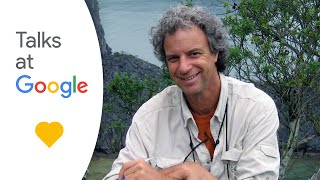
Travel writer Jeff Greenwald traces his path from Arthur C. Clarke to Nepal, where a humbling moment in the village of Bala pushed him to write. He spent nine months circling the globe without flying, filing dispatches that became an early internet blog, and later founded Ethical Traveler to promote responsible tourism.
Chapters
Jeff Greenwald is the author of numerous books, among them Mr. Raj's Neighborhood Shopping for Buddhas, Scratching the Impressions of Planet Earth From Hollywood to Shiraz. Jeff has contributed travel and science articles to the New York Times Magazine, National Geographic Adventure, Yoga Journal, Sierra, New Scientist, and Outside, as well as Wired magazine. In an interview with Rolf Potts, Jeff was asked, how did you start traveling? To which Jeff replied, Two movies I saw as a teenager, 2001 A Space Odyssey and Lawrence of Arabia, made me long for the otherworldly for vistas far removed from the Long island rat lands of my youth. As soon as I got out of high school, I traveled alone to Europe. But I was too young, really, without a shred of street smarts or sophistication, and the trip was a disaster. My first actual travel assignment, no expenses and very little pay, was covering the launch of Apollo 17, the last of the six successful moon landings for my Hollywood college newspaper boy. That put my eyeballs on straight. What an experience. It was like the rocket and my career got launched at the same instant. And so, before bringing Jeff up, I wanted to tell a little small world story of my own. Back in October, when I was visiting my son in Delhi, he was going to St. Stephen's as an exchange student. So I was on my way home with my younger son, and we were sitting in the Delhi airport, and this older woman came and sat next to us. Asked if the seat was available, I said yes. And I recognized the accent as a New York accent, Long Island. And so we started talking. You can see where this is going. And I said, so you're here. You're traveling alone? And she said yes. My son was wanted to show me the Taj Mahal. Does your son work in Delhi? Well, not really. To make a long story short, her son was Jeff Greenwald. So, anyway, on that note, here's Jeff.
Hi. Is this mic on now? I think it is. Thanks for coming out to hear me talk to you today. Can everybody hear me okay? And is everything fine? Yeah. You know, for my mother's 75th birthday, I took her to India. And not only had my mother never been to Asia before, we never traveled together before. I mean, anywhere except for going to the supermarket or the orthodontist when I was, like, 14, because I left home and moved to California when I was 18. So this is the first time my mother and I had ever traveled together. And I was terrified about what would happen to her in India. You can imagine. I thought that she would be totally sick, that she would just freak out Because India is so chaotic and crazy for people who've never been there before. And that she wouldn't be able to eat anything. Because my mother has kept a strictly kosher home her whole life. And of course, she completely loved India, ate a vegetarian diet, was completely at Homer's. I was freaking out and sick, and my mother was, of course, forced to take care of me all over again, which is, I think, the role she's most comfortable in. But it was great. I didn't know what my mother's reaction to India would be. Here's a woman who paid for and sponsored her own Bat Mitzvah when she was 68 years old. And I remember leaving her alone for five minutes in this one temple in Delhi, this ancient Kali temple, the temple dedicated to Kali, who's this goddess, this sort of female aspect of Shiva, the God of destruction, during this huge festival called Dussera. And I left her alone for five minutes. She said, don't move. I said, just stay right where you are. Don't go anywhere. I'll be right back to take care of you. I came back, of course, five minutes later, she was gone. I went into the inner temple sanctum and there's my mother on her knees in front of a naked sadhu, getting a blessing like this. I'm just like, Mom. And I suddenly realized at that point where I kind of got it from, I always thought these travel jeans were from my father, who was always so restless and wanting to abandon the kids and the family and just go off and be a wild wanderer in the west or something. But I think that the restlessness might have come from my father. But I think this ability to sort of interact with other cultures and be very at home in these different parts of the world might be something for my mother's DNA. It would seem that way. Ann mentioned the influences on my Travel career being 2001 in Lawrence of Arabia. It's kind of an interesting story. I saw 2001 A Space Odyssey when I was 14 years old in 1968. That's the year it came out. And the movie blew my mind. I had gone to the theater, this twin theater, to see Bonnie and Clyde, but it was rated R and I couldn't get in. So instead I went and saw 2001 in the next door theater. And I sat through it like three times. And I got out at 11 o' clock at night. And I remember walking on the summer evening into this, you know, out of this theater underneath the sky that was just blazing with stars and. And it was as if I was seeing the night sky for the first time. The potential of outer space, the allure of the stars, of distances of those, even those lonely distances in between them suddenly became really, really appealing to me. So I saw the movie and then I saw that it had been written by this guy named Arthur C. Clarke. And I went to the library and I looked in the card catalog for Arthur C. Clarke and saw that he had written like 75 books. So I started to make my way through them one after another, all 75 of them. And once I had read about 60 of them, I felt I was ready to make my big move and went to the back in those days, today of course, if you want to find somebody and where they live in their biography, of course you look at Google. But back then there was no such search engine. And I had to go to this big tome in the library called the who's who. And the who's who was this source of where you found everybody who you were curious about in the world. And I looked up Arthur C. Clarke and I saw that he lived in a place called Sri Lanka, which I really had no idea. I thought it was like a Hollywood suburb. I had no idea what Sri Lanka meant. But I wrote him this five page letter. Mind you, I was 14 years old, all on graph paper filled with designs of rocket ships and like the kinds of pens you'd use in outer space and all these crazy ideas. And I wrote him this letter and I said I have some ideas that might be useful to you if you'd like to contact me and we can share ideas because I love 2001 and all your books so much. And I mailed the letter and of course I never heard anything back until May of 1969. I was now 15 years old and a postcard came for me at my parents house in Plainview, New York. And it was a very simple postcard, the kind that you buy pre stamped and on the back just written, we'll be in New York at the Chelsea Hotel all month, give me a call. Signed Arthur C. Clarke. And it's hard to overstate how scared I was. Taking the Long Island Railroad into Penn Station, Madison Square Garden, and then walking the 10 blocks to the Chelsea Hotel. I. I had brought some short stories I'd written in the hopes that he would tell me where I could publish them. And I got there, I was led up to his room and I went through the door. He opened it at that point. He was a very convivial, very energetic man of I GUESS he was 52 or 53 at the time, about the age I am now. And he invited me in and we had tea and we talked, and we had just a great time going back and forth. He was showing me all these pictures of all the astronauts he'd been hanging out with. I was talking to him about what it was like to be in high school in the United States. Of course, he was in England. It was like totally quid pro quo, as you can imagine. And finally I took out these stories and I said, arthur. At this point, I was on a first name basis with him. I said, arthur, I brought this story I'd like you to read. It's called the Gargantuans. And it takes place on the planet Saturn. And I wonder if you'll read it and let me know where you think I can publish it. I think it's actually pretty good. And he said, right now, okay. I personally, I've written five books, and a lot of young writers come to me and they would like me to read things they've written. And it's kind of excruciating because in a way you'd like to help them. And in the other way, so much of what you read is bad and you don't know what to do. Arthur had this great diplomatic response to me. He said, you know, I'd love to read your story, but my agent has forbidden me from reading any unpublished work because I might end up stealing ideas and we'd be in this terrible lawsuit. So I said, yeah, that makes sense. Totally understand. I'm so sorry. And he said, no problem. No problem. Where were we? We went back to our conversation and we talked a little while longer. And I went in. I used the bathroom before I left. And then I finally shook hands. He said, stay in touch, and if you write to me, I'll always write you back. I'm so glad to have met you. He was the most gracious person I'd really ever met up to this point in my young life. And I left and I went back out on the streets of New York. It was a sunny spring day in May, and I was so completely thrilled with everything. It was like I was on top of the world. Until I realized that I had done the unspeakable thing. I had left my story. I on the sink in his bathroom. And I realized Clark would see this and he would thought I was trying to manipulate him, that I was basically trying to pressure him into reading my story. And I felt horrible. I didn't know what to do. And should I go back up and get it? Should I grab it? What should I do? And I decided just to forget about it. Realized I'd never hear from him again. Well, as Ann said before, you see where this is going. Three weeks later, I got a manila envelope in the mail. The return address was the Chelsea Hotel. And I opened it up, and there was my story, the Gargantuans. And Clark had taken out a red pen and gone over it and made all these really cutting remarks all over the story. Like, you have your astronauts walking all over the surface of Saturn, quite difficult as it is, a gaseous body, or, ha, an expedition from Saturn to Enceladus. Are you sure you're linking the right moon with the right planet? All these things are just completely humiliating. And then on the last page of the story, he had switched his pen and taken instead a green pen. And he wrote a final comment. And he wrote, well, you still have about a million words of writing to do, but you're just about where I was at 15. And those words, that small little phrase from Arthur Clarke, were really all that I needed at that point to feel encouraged enough to dedicate my life to this thankless profession. And I owe it all to him. So I don't know if any of you saw. When Arthur died last month, I actually wrote the tribute that appeared on Wired News. I don't know if any of you were able to see that, but it was a tribute based on the last time I saw Arthur, which was during the time when I was in Sri Lanka working on the tsunami relief teams in 2006. Arthur and I had actually kept our friendship going for about 38 years, and I visited him during that time four times in Sri Lanka. But he's really the reason I became a writer. The travel writing angle, I don't know if any of you are really. It was mentioned briefly by Ann, but my career has spanned pretty much the breadth of the whole Internet age, which has been a really interesting time to be a travel writer, because when I started travel writing in 1979, there weren't even videotape machines. I mean, the parts of the world that seemed remote then were so remote that you could travel to a place even like Kathmandu, and feel absolutely, completely cut off from the world. And. And I remember teaching English in Kathmandu, which is something I was doing as one of my first little jobs there. And I had a class of kids who were 17 and 18 years old, and the idea was to teach them conversational English. So I thought, well, what better way to learn conversational English than to use song lyrics. So basically I pulled out who's the most common, well known songwriters in the world would be the Beatles. And this is 1979. So I printed up the words to some of their songs, like Yesterday, Love Me, do some of the simple songs with simple words. And I brought them into the class and I had a class of 45 kids. They looked at the lyrics with complete puzzlement. Not a single One of these 17 or 18 year olds had ever heard of the Beatles in 1979. You go there now, of course, and you find Tibetan students reading the Diary of Anne Frank. You find them downloading the latest contemporary music and. And sometimes movies before you even see them. Here the world has changed so fast and communications have gotten so effective that it's very hard to go anywhere where you feel remote anymore. And it's been quite fascinating to see this change not only in the way that the world feels to me as a writer, but in the way I present the world as a writer. In the late 70s and mid-80s, a book like Shopping for Buddhas, where some of the essays in Scratching the Surface would be written and it would be like months or years before I could hope to see any of them in print. Now, as soon as you observer write something, you're in the magazine, you're in print, photos and all video, sound, and it's absolutely astonishing. It's just done so much. It's like a ratchet that's just drawing all corners of the world work closely and closely together and nobody really knows where it's going to lead. Least of all a travel writer. One sort of feels like, do you have to really go further afield to explore effectively these days? Or can you simply look at places you visited before with a sort of new eye and a new light? And that's the big challenge for people in my profession right now. Sometimes at conferences and when I teach at bookstores, people will ask me, well, you've always been writing since you were like 15 or 16. Was there a point at which you actually. Can I stray very much in these lights? I feel like a caged. Huh? But I want to go that way too. I feel like a caged animal. Push the boundaries, push the box. Yeah. Breaking out of it. Was there a point people ask, when you actually decided to write travel, like when your travels became. You realized you had to actually tell stories about what was happening, where it became absolutely critical that you didn't just have the experience, but that you share that experience with people out in the world. And in fact, there was one incident, one moment in 1983 where that became imperative. And it all has to do with this story that took place in Nepal, in a place called the Arun Valley. I had been in Nepal for a year and a half, trekking. Well, I'd been in Nepal a year and a half studying on a journalism fellowship from the Rotary foundation, trying to write the great American Nepali novel. And I'd been studying the language and learning the written and written Devnagari, the Nepali language, and decided to really challenge myself by going off into a part of Nepal that very few people had ever trekked in before. This was far eastern Nepal, an area called the Arun Valley, and the deepest canyon in the world, deeper than the Grand Canyon. And if you follow it all the way north towards this northern boundary, you enter what was then, in 1984, the very much forbidden kingdom of Tibet. So I decided to go there alone to fly to the base of the Arun Valley in Tumling Tor and begin trekking up by myself and see how far I could get, using only my Nepali language skills and my wits, carrying all my own supplies. And very few villages up there. Very poor, not like the major trekking routes you've all heard of, like Everest and Annapurna and Langtang. Much, much more depressed area than that. And it was April, and it was just starting to rain in the spring. And I got about two days into the trek, and I discovered something completely unexpected that had the effect of ruining my entire experience. And what I discovered were leeches. I had never experienced leeches before. I'd never seen them. I know if any of you are from the south, you're very familiar with leeches, or even if you're from Asia, you're probably familiar with leeches. But I had never experienced them, and they are horrible. I mean, I was unprepared for what it was like to have a thousand kind of little brown worms dropping from every leaf and tree and coming up from the ground, trying to get on you and suck your blood out. We're very lucky not to have them here in the Bay Area. I was horrified. And in fact, by the end of the second day, I was no longer trekking in that blithe trekking pose that you imagine so many people are at. Instead, I was running. I was racing through the trail every day. Every time I stopped, I would find a rock and just hang out on a rock, looking around at the ground and. Which seemed to be alive and just crawling with leeches. I decided it couldn't go on this way, it absolutely could not go on. So I went to a village, a little village, a village called Nym, and I tried to see if I could find a young man or somebody who would carry my bag for me. That way I could run more effectively and jump on rocks that were smaller and higher and have a better time in traversing this leech infested territory. So in fact I met a guy, 17 year old guy, very tough looking guy. If you were going to make a Nepali version of say, Spider man, he would be great to cast in the Peter Parker role because he was like really sinewy and really handsome guy, Sherpa Rai fellow, very dynamic and dashing. And he agreed to carry my backpack, which weighed about 75 pounds for the duration of the trek as we headed more northerly towards the Tibetan border. So I hired George on and he was a great guy. We both spoke Nepali quite fluently at that point. I spoke very fluently then and we became really close friends. You know how it is when you spend 24 hours a day with somebody, it's just the two of you walking, you talk about everything. And after about two days, Dorje said to me, you know, tomorrow we're going to get to this little village called Bala and I'd like to stop there and spend the night there if we can, instead of, I bet there's a house we could sleep in. And I said, well, what is it about Bala that appeals to you? He says, well, my grandparents live there and they are the head man and head woman of the village. And I haven't seen them in five years, since I was like 12, so they'll be really happy to see me. And I said, great, let's go and stop. But I said one thing I want to make really clear before we go to this village or any other, we are self sufficient in food. We've brought our own rice, we've brought our own dal. You know, we're not going to take food from anybody. These villages are very poor and I insist that we remain self sufficient. And he looked at me and he said, that's not going to be possible. He said, they're going to insist on feeding us and we're going to have to accept their hospitality. And I said, okay, well, I count on you then to make sure that they realize that we can supplement whatever they give us. So we got into Bala the next day and it was an amazing homecoming. Dorje's grandparents welcomed him like a returning king. They surrounded me. They'd never seen a Westerner before. Never seen a white skinned person. No Western person had ever come and stayed in the village of Bala. They were indeed the Tulo Manche and Tulo Kati, the head man and head woman of this village. And they insisted, of course, on making a ceremonial dinner for me and for Dorje. And my protests, of course, were futile. Resistance was absolutely futile. And I said to Dorje, well, can I help cook? He says, absolutely, you cannot help cook. First of all, it's a one burner clay stove. What are you going to do? We don't peel potatoes here. So he said, you just go up to that ridge top. Because Bala was situated in this little valley surrounded by these beautiful foothills. He said, go up and sit on one of the hills and, and just write in your journal, do whatever you want to do, and we'll call you when the meal is ready. So I went up and I hiked up this hillside about 1,000ft. I was in such great shape back then, having trekked for like a week at high altitude. I was young, I was fit, I was starving. I weighed about 93 pounds, just like right to the top of this hillside. And I'm looking out in the panorama of Himalayan peaks. Just astonishing. These sort of meringued peaks line the horizon and the clouds, thick but with gaps in between them, so that the beams of sun were shooting through the clouds between them and lighting the edges of them in gold. In gold and silver. And beams of light raking the landscape, moving like a fan over the snows and the green terraced hillsides of the surrounding mounds. Absolutely beautiful. And I just sat there and I said to myself, I was so high, you know, I was really high. And I said to myself, this is it, you know, this is the moment that I've been living all my life waiting for. This is the moment at which I am truly realized. I've come here by myself. I speak the language. I'm all alone, really. No one I know for 1,000, 10,000 miles. And I'm totally self sufficient. I love this. And I was so happy. And then I listen to the sounds down from the valley below me. And you could hear kids playing around and the occasional flute. You could hear dogs barking and the cowbells. And I went into this sort of trance state. And I heard this one bell that was more insistent, ringing and ringing, and I realized it was Dorje calling me down for dinner. So I made my way down the hill in the near dusk and came into the house. The very simple, traditional home of his grandparents and I want to describe what the home looked like for you so that you can imagine how on the spot, I felt it was like a big room, maybe just half the width of this room. And all along the sides of the room were wooden benches, very crude wooden benches, upon which everyone in the village was sitting. Everyone in the village had come out, all dressed in their best clothes, which were very ragtag, but had. Had been cleaned for the occasion. And the men in the traditional topis, which are these Nepalese hats made of cloth that sort of serve Nepali protocol, much like the Western tie. They're something you wear when you want to dress up. And at the head of the room, two chairs where Dorje's grandparents would be sitting. Beyond that, the little clay room that served as the kitchen. And then in the middle of the room, all kind of by itself, fell, facing Dorje's grandparents, a stool upon which I would sit and eat my dinner. Dorje sitting up with his grandparents. So they motioned me. His grandparents said, sit down. Bas Nusna. Bas nusna Kostaramroch. I was so glad you're here. Please sit down. I sat down in the chair at the head of the room and just looked at this room on both sides. Dozens of people all looking at me, all so thrilled, all. He'd never seen a Western before. His grandfather sitting there so proudly. And then his grandmother comes up and she's carrying this tray, and it's this big copper tray, this hammered copper tray, which is one of the traditional wedding gifts that's given in Nepal. So she brought out her wedding tray, and as she brought it towards me, I was floored. I'd never seen anything like this meal. There was a mountain of rice, because the Nepalese are not stingy with their rice. A mountain of rice. Enough here. If you went to a Thai restaurant, ordered rice for like 15 people, this is how much rice was on the plate. A big amount of dal, stewed lentils, some takari or vegetables, little dishes carrying different achars or spices. Then on top of the rice plate, there was something that sort of made my eyes bug out, not only with. With anticipation, but with guilt, which was a fried egg. They had fried me an egg. In a village where every egg is precious and there's many children who don't get enough protein, they had actually fried an egg for me. And then on top of the egg, I didn't know what to even say about the roast chicken leg that they had added. They had killed a chicken. They had slaughtered one of their few chickens and roasted it up for part of this ceremonial banquet and occasion. And I sat there, and Dorje's grandmother came and set this tray on my lap and greeted me with the Namaskar and backed away. And I sat there, and all eyes in the room were upon me. And I tell you, you know, just thinking about it now makes me kind of want to cry, because I was so thrilled, and I was just sort of. I wanted to pray, I wanted to do something to thank the powers that be for bringing me there. And I sat there, and I was still so high from being up on the mountain and some other things as well. And I sat there and I thought, wow, this is just great, you know, I just can't believe I'm here. This is so wonderful, and it's so fabulous to be here, you know, I wonder where we'll be tomorrow. And this and that can't be. My mind started wandering, and I just lost my train of thought, and I just kind of crossed my legs and the tray flipped over and went upside down onto the dirt floor. And, you know, there's all been times in all our lives where we just want to turn back the clock. And at first we want to turn it back five seconds, then we want to turn it back 10. And as time goes on, we realize the clock's not going anywhere. I just started muttering to myself in Nepali, the only phrase that I could really think of at the time. I was dumbstruck, you know, dumbstruck by the steaming, the room utterly silent, the candles, little butter lamp, candles flickering, no electricity. And I just started muttering to myself, tik china, teak china, teak china, teak china. It's no good. It's no good. It's no good. It's no good, you know, it's just like, it's no good. I don't mean the food. I meant what I'd done was no good, you know? Yeah. What I had done, I'm no good, China. This is no good. And George's grandfather, at that point, leaped to his feet. Little guy, you know, about 180 years old, like a little gnome, little forest gnome. And he just walks over to me and, like, looks at the food on the floor and, like, looks at me, and he's like, it is good, you know, it's very good. It's great. It's wonderful. And he looks around the room, ti cha, ti cha. Looks at all his friends, and they're all, like, kind of looking at me and looking at the food on the Floor and, like, nodding, yeah, yeah. You know, And I'm like, what's. You know? I couldn't make any sense of it. What is good about this? And then I kind of realized it kind of came to me slowly, you know, what had happened here. I'd walked into this village, the first Westerner they'd ever seen, wearing my $200 Gore Tex parka and my vast hiking boots with my Nikon around my neck. Even my hat costs about 15 bucks. And I was like. To them, I was like some kind of God who'd walked in from the outside world, from the mythic world of just beyond Nepal, beyond their little village, who had come in, who they had just expected to act like some kind of a deity or avatar. And instead, really, I was just a schmuck. You know, it was like that Joan Osborne song, isn't it? What if God was one of us? Just a slob like one of us? And suddenly I was on equal footing with them. And with that single move, I had completely pulled out, I just pulled a tablecloth out from all this crystal pretension that we have about what the west is compared to the East. And Jay had just seen that, and I still didn't know what to do. He was standing there yelling that the food was still on the floor. I was covered in shame. Dorje walked up to me and I said to him, we've got to leave the village right now. We have to go. And he said, we're not going anywhere. And I said, we have to leave. This is too disgraceful. Let's just trek through the night till we get to the next village, and then we'll make it up there by giving away a bunch of money. And he said, that's not going to happen. I said, why not? He said, they're going to cook you another meal. He said, all they can do to save face now for all of us is to do it all over again. And I said, what should I do? He said, you go back to your hill and sit down there and wait, and I'll call you when dinner is ready. And I went back to my hill, and I came back in about an hour, and we played the whole scene over again with one important difference. I ate the meal, and later that night, I was sitting there writing about all this in my journal. And I kind of realized that never, I would not live long enough. If I lived to be as old as Dorjay's grandfather, I would never live long enough to overcome the shame of what had happened to me. And yet, somehow I remember this image of that copper tray and sort of how it was given away. And I somehow realized that if I could somehow write this as a story and send it out into the world, like on this big Frisbee in a book or something, just send it out into the world, Send the story into the world. And anybody who read the story would totally share my pain. They would, like, share my shame for a moment. They would totally understand this whole thing that I went through, and they would understand why I had gone through it, so that they could feel a certain way with me, and somehow that would redeem me. And that was when I started writing stories about travel for the world. It was because of that moment where I understood the redemptive power of putting all your best and worst moments on the road out there into the world. There's a sense of redemption that comes from it. And it all traces back to that story, back when Nepal was one of the most distant places in the world, and I was just this blundering idiot, you know, who thought he could, you know, just do the right thing in any situation. About 10 years after that happened. How are we looking on time? How long have I been talking? How long have I been talking?
About 30 minutes.
30 minutes. I'll talk about 10 more minutes or so, and then I'll ask for some questions, because I love questions, because they also inspire great little stories. I just want to jump you ahead in my career as a travel writer. Ten years after that incident in the village of Bala, at that point in 1994, 1993, I had been writing travel for about 15 years, at least, and I realized that something weird was happening to me. I was losing track of how big the world was. I'd become a travel writer because I loved the idea of going far away, of exploring new places, the idea that this world was just sort of this gigantic place, but it was getting smaller and smaller. And the reason was because airports, every place I went and everything I did, it was like just getting onto one plane and flying somewhere to another airport. All airports looked the same. All airplanes looked the same. It was like, where was I going? I didn't understand anymore what connected the world. So I wrote a proposal for a book in which I would go around the world without taking any airplanes, a book in which I would rediscover the size of the world. And the name of the book, actually, was to be called the Size of the World. And I got the contract to do the book. And in 1993, I set off from my home in Oakland, California. Wearing a backpack, I walked to BART. And the idea was I would go around the world without ever leaving the ground. I would use land or ocean transportation, whatever I could find wherever I was, and go from A to B in whatever way conveyance was available. So I walked to bart, took Barton to San Francisco, and then I met up with a friend of mine who was kind enough to start me on my first leg of the trip by driving me and my traveling companion, Sally to Mexico. And the trip was amazing. It was a successful journey. 27 countries, nearly 30,000 miles, nine months. There were many times where it seemed I would have to get on an airplane because there was no way out of the place. I was stuck. But always at the last minute, whether it involved a map through a minefield or a sudden letter from a shipping company, I was able to continue on my way. But what was interesting and significant about that trip and very little known about me as a writer, and if there's one thing I would like to be known certainly in this community, I would like to say it here. That was in the nascent days of the Internet. 1993, 1994, before I left on my trip, I was approached by a guy named Alan Noren and a guy named Larry Haberger, who worked for a company called gnn, the Global Network Navigator, one of the first Internet online content providers. They were started by another company you've probably heard of called O'Reilly, who does a lot of computer books. You all know O'Reilly, don't you? You've heard of O'Reilly. So they suggested to me, they had this revolutionary idea. They said, why don't you go around the world and we'll give you a laptop computer that you can use, one of these little things called the Hewlett Packard Omnibook, which is really small and light. Why don't you send back to us stories whenever you can during your journey, and we'll put them up on our Internet site. And I said, well, that's impossible. And they said, no, no. And they showed me online. They. They went on my little black and white computer. I had a Mac LC3. And they showed me how they could do it. And I was amazed because they had on their site called the Global Network Navigator, they had something I'd never seen on a computer screen before, much less on the Internet, which was a map of the world. And they said, imagine this. If you can, let's say you send us a dispatch back from Spain. We'll put a little dot on the map of Spain and people can move their cursor and click on that dot and read your dispatch from Spain. And I was like, that is miraculous. Can that really happen? And they said, well, let's try it out. Let's see what we can do. So I accepted the computer and their offer and began traveling around the world. And during the course of those nine months, wrote 17 dispatches from all these different places in the world. The middle of the Atlantic Ocean, Morocco, Mexico, Tibet, Nepal, and through modems that were so slow that sometimes we sat by them for three or four hours to send a thousand word story with no images. We managed to get all these dispatches in through GNN and onto the Internet. So I just will say it here that as far as I know, and I would love to hear somebody tell me otherwise, I was the first blogger, I mean, I believe that I created the first international, the first international blog. And parts of that blog, every part of it, are actually included in that book, which is called the Size of the World, which is now out of print. Although I've got a box of them coming if anyone's interested. You can let someone here know and I'll get one to you at some point. But that was what was so significant about that trip, was that to look back on that now, just 14 years ago, and the incredible primitiveness of the World Wide Web compared to today, and how revolutionary it seemed, not just to me, but to everyone who was helping me. I had a team of eight people in China helping in Chengdu, helping me try to send this dispatch back through their computer to the Internet in the United States. And when it was done, there was like champagne. Everyone was so thrilled. The other thing I tried to do during this trip, I was also working for Wired at that time as a contributing editor. And we wanted to send from Nepal, Kathmandu, the first image, the first picture ever sent back from Kathmandu to another country through the computer. So we chose an image of Ganesh, who is the lord of auspicious beginnings and the protector of travelers. We scanned it there on their 300dpi machine, if it was even 300, I don't know. And we sent it over the Internet through their computers and at the place that was the equivalent of Microsoft in Nepal was a place called Mercantile Office Systems. And we used their mainframe computers and sent it back. It took 14 hours to send this little image of the elephant God Ganesh back to Wired magazine, where it appeared on Hotwired, which was at that point their online news source. So that was really an amazing Thing I don't have those books with me now, but if anyone, any of you, ever have a chance to pick up the size of the world, I think that's very interesting. The way it describes the way the world was changing at that point, with information technology just reaching its tendrils into so many different parts of the world. I'm going to wrap up by just saying the two things I've done most recently in my career as a travel writer and just how inventive you kind of have to be in this world to survive. Because it's not easy to be a travel writer, especially as more and more places become inundated with travelers and the number of places you can go kind of shrinks. One thing is that five years ago I started doing a solo show. I decided to try to take my stories, a couple of which I've told you this evening, and do them in a theatrical setting. So I came up with this idea for this show called Strange Travel Suggestions, which attempts to duplicate the experience of travel. People come up from the audience and spin a big wheel. And wherever the wheel lands stands for is a theme about travel. Meals of misfortune, strange smells, doors strangely opened, the fool, the ugly American. And wherever the wheel lands, I'll tell a story based on that theme. The show is currently running at the Marsh in San Francisco. The current run is sold out, but we're going to do a few more performances in May and then add it again in June. So if you go to the website the Marshall themarsh.com for San Francisco, you can try to come to the show. It's a lot of fun to do and I think it's fun to see as well. The other thing I did five years ago that I'd like you all to sort of pay a little attention to is I started a non profit and the reason I started it is because two years ago something really extraordinary happened. Oil, cigarettes, automobiles, they're not the biggest industries in the world anymore. The biggest industry in the world right now is travel. It surpasses oil for revenue. And it occurred to me, what if you could take travelers and do with travelers, the international community of travelers, what David Brower did with people who like to hike and camp with the Sierra Club. What if you could take people who love to travel, feel a sense of stewardship about the planet and and bring them together into a political action force. So I started a non profit called Ethical Traveler. And the idea is we have membership from 66 countries, thousands of people from all around the world who contribute to us and take part in our campaigns. And what we do is when we find issues that involve human rights with the environment in countries that people love to travel to and visit, we do massive snail mail letter writing campaigns aims to the directors and ministries of tourism in these countries saying, hey, we love visiting Tasmania, we love your old growth forests, but if you continue to destroy them, to sell them as wood chips for Japanese factories to make cardboard boxes, we'll find somewhere else to go. Here are some solutions of how you can preserve those forests and build up your tourism infrastructure. The Galapagos will partner with an organization like Sea shepherd and say your rangers are poorly funded, they don't have the right clothes, they don't get enough food. How can they protect these beautiful islands if you don't fund them properly? We have a choice of where we go as travelers. Please help us choose the Galapagos. And these kinds of campaigns are remarkably effective. So I urge all of you to visit the website of that nonprofit, www.ethicaltraveler.org and just take a look at what we're doing. And especially if you're going to be taking a trip soon, check out our 13 tips for the Accidental Ambassador, which are just some things to keep in your vest pocket while you travel and remind yourself in terms of interacting with people around the world. And so that's just about it. That's all I really wanted to say to you and probably a lot more than I wanted to say, but I hope you've enjoyed this and I'd be very happy to take some questions if anyone's curious about anything to do with travel writing, the show Ethical Traveler, how one becomes a Travel writer, anything in that aspect, feel free to ask and I'll do my best to answer your questions. I'm guessing most of us here have blogs and most of us when we travel, we blog about it. So echoing your last question, how does one become a travel writer? Well, I think the main thing is what people don't want, what editors don't want, if you're trying to sell any travel writing is they don't want like an umbrella piece like welcome to Lisbon, you know, here's Lisbon. If you have a slant, if you have an interest, if you have something that is your passion when you travel, try to find like minded people and find an angle there. Let's say a friend of mine is a firefighter and whenever he travels anywhere in the world he goes to fire stations and seeks out how do firefighters live, how do they work in those parts of the World, you know, he goes with them on a call or something. It's something where he takes what he already knows in his interest and uses that as his angle. You really need an angle or a theme, something that's of passionate interest to you that you can try to build a story around. And the most important thing to remember when telling any story is nobody just wants a list of things to do in City A, B and C. People want to hear a story. And a story has three parts to it. It has a beginning, a middle and end. A story begins somewhere, it goes through a sort of progression and then it comes to an end. That's satisfying to you and to the reader. So actually, at the end of a story, the reader should feel a sense of having, aha. That's why I read this. That's what this means. That's why I'm visiting this place right now to meet this person who told me this. To learn this about the wine industry in Croatia, to learn this about the plight of the Tasmanian devils, to learn this about the history of Machu Picchu. There should be a story arc of some kind. So I hope that answers your question. And start small. Don't try to sell a 5,000 word feature to National Geographic. Start with writing a short 300 word piece for outside or Adventure that goes in the front part of the magazine. They're always looking for stories like that from good writers. So that's a bit of advice. Another question? Another question. I'd love to finish up with a.
Story about your meal in Iran.
Oh, in Iran. You have a request for the Iran meal? Ok, sure. If there's no other question, I'll gladly tell that story. No other question. In August of 1999, I was lucky enough to be with a group of only seven Americans who were permitted to enter Iran to watch the total eclipse of the sun. And I'd never seen a total eclipse before and I was absolutely thrilled. But there were very strict rules and regulations for our group of Americans. The main thing is we had to stick together. And we could only eat at the restaurants that the insurance company that had underwritten the trip approved. So we all ended up eating in all these five star hotels. We never saw another Iranian who basically wasn't a waiter. It was just this horrible syndrome that so many Western tourists get into and that travelers try to avoid. So one afternoon, this friend of mine named Sam, we broke off from the group and we snuck out of the hotel and we went wandering through the streets of Tehran looking for a place where we could actually eat with Iranians. And of course, it's all men out there. There's no women out during the day. The women all come out in the evenings and pack the cafes. During the day, it's all men. So we're walking down this one street and we see a flight of stairs heading down to this big fluorescent lit room that looks like a big high school cafeteria. And we follow the steps down. And indeed, it's a restaurant. Fluorescent lights, pictures of the ayatollahs glaring from the wall. It's really amazing to see a picture of the two ayatollahs flanking a Coca Cola wall clock. And we went in there and we sat down, and everyone in the place is looking at us. Everyone. Big beards, a lot of people with turbans, a lot of men with turbans, all looking through papers, looking at us in the most the way you'd look at a bug that was smashed on your windshield. Like, what is that doing there? And we sat down, we opened the menus. They were printed entirely in Farsi, Couldn't read a thing. We ordered Coca Colas. The waiter brought them. And we're like going, what should we do? And Sam said, I don't know. And what should we order? I have no idea. The room. Everybody is just sort of like snarling a little bit, looking at us American. And we started looking around. Like, the only way we figured we could order food would be to point to what other people were eating. So we sat there and we were trying to steal surreptitious glances at what are the people eating. But as soon as we saw, as soon as we caught the eye, as soon as somebody eating, like the guy eating the plate of fava beans and meatballs, if he saw us looking at him, he would just immediately, like, call the waiter and say. And just the waiter would just glare at us. And we would just turn our gaze somewhere else to somebody eating a big plate of rice with some lavash bread and kofta or something. And we would look at them and go, maybe those guys. And the guy would look up from his newspaper and he'd go, oh, you know, American, American. Point his food and yell at the waiter. And absolutely terrifying. And we finally said, this is not working out. Because the room began to get more and more edgy and more and more agitated as we sat there. And we, you know, we remember the hostage situation. And even though this was the Clinton administration and they loved Bill Clinton and they loved Monica Lewinsky, they admired him so much for that, they would not you know, there was this edgy feeling about Americans. We were the only Americans in the whole country, as far as we knew. So we decided to leave. So we pulled out a bunch of money and left it what we thought would cover like 10 Cokes and a huge tip and left it there on the table. And then I started to get up to leave, and I felt a huge hand on my shoulder. And I looked over, it was covered with black hair. And the guy's looking at me like, no, you're not going anywhere. And I looked at Sam and we were like, oh, no. And like, okay. For Sam, this was like a huge disaster because he just was just doing his IPO for a startup company and was going to do really well. And he had to get back in, like three days to be there for this company he'd started. But for me, this is like a writer's dream. To be taken hostage in Iran during the total eclipse of the sun. I figured maybe 90 days of captivity, boredom, a little bit of mistreatment, you know, then I'd come out, there'd be a six figure book advance, I'd be sewn up, you know, And I was just sitting there. I was just feeling absolutely great. And we were just ready. We were resigned to become hostages. And then the door, you know, one of the doors in the side of the restaurant burst open and these two guys came running towards us. But of course, they weren't carrying weapons. They were carrying, again, these huge trays, all of them just piled with every dish. We looked at the fava beans and meatballs, the rice and lavash bread. What these guys had been doing is telling the waiter to bring us what we were looking at. And they're all sitting there scowling at us while we're eating the same expression of absolutist scowling. We realized that's how these Iranians smiled, you know, just to scowl. They couldn't not scowl. They were scowling us and nodding piously while we were wolfing this food down. Finally, the waiter brought our checks. We were charged only for the Coca Colas. And I felt completely ashamed in a very different way this time, Very grateful and ashamed. And I stood up and I looked through my guidebook, and I found one phrase that seemed to sum up everything I felt at that moment in my little Lonely Planet guidebook. And I just, like, stood up and looked around the room and I said, chup kare nakon, which I believe means, your generosity has put me to shame. And just look all around the room and all these malas with their big beards just nodding, nodding at me. And that's the Iran Cafe story. It was just another example of how what we see on the news, what we encounter when we actually travel, are very, very different things. And the most important thing, I think personally and as a spokesman for ethical traveler, as well as a travel writer, the absolute best way to create goodwill and international understanding of this world is for people to get out there and travel and see that the line that we're fed by the media and the newspapers and the government is not at all what people are about. Everybody around this world, you know, pretty much it wants to be part of the global community. And so many of the problems we're facing right now are just from people who feel so marginalized. And if you get out and meet people and talk to them, exchange your views with them, listen to their views, as well as tell them your own, I think this world could be really a global village. I look forward to the time that happens, even if it does put travel writers out of business. Thank you.
More from Guy


Cheryl Strauss Einhorn | The Human Edge: Smarter Decisions in the Age of AI | Talks at Google



Rachel Glennerster | Innovation and the Center for Global Development | Talks at Google

Rebecca Winthrop | Rethinking the Purpose of Education in the Age of AI | Talks at Google

Dr. Robert Wachter | A Giant Leap: How AI Is Transforming Healthcare... | Talks at Google



