Silicon Valley Angel Investors Panel
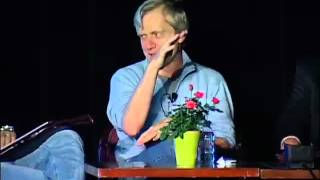
Ron Conway, Ian Sobieski, and Andy Bechtolsheim discuss how angel investors work differently from venture capitalists: they use their own money, decide in days instead of months, and often fund the earliest stage. They explain why they backed Google, how Band of Angels operates with 120 members, and what actually moves them: a one-page summary and a working demo, not a polished deck.
Chapters
While we're figuring out who's sitting where and what, let me go ahead and introduce the moderator for this next panel, which is the panel is Silicon Valley angel investors. And the moderator is Gahi Kawasaki, who's the managing director for Garage Technology Vendors Ventures and also the co founder of True Mart. He seems to like writing books. He's written eight with titles that are as catchy as the art of the start Rules to revolutionaries, how to drive your competition crazy, Selling the dream in a Macintosh way. He's got a bachelor's from Stanford and an MBA from UCLA and has also been honored by a doctorate from Babson. So he's been recognized on the east coast as well as out here. So with that, if you are ready to take over.
Yeah, we seem to be missing one panelist, Andy Beckettenshine. But has anybody seen Andy?
Where in the world is Andy?
No. Well, I say we began.
Right.
Okay.
Well, let's welcome those that are here, folks.
So round of applause.
Thank you.
Thank you. My name is Guy Kawasaki. As you heard, I'm the managing director or a managing director of Garage Technology Ventures. Another one is here, Bill Reichard. Also, when we started Garage Technology Ventures about 10 years ago now, it started.
As Garage.com and it was really the.
Original vision was an angel matchmaking so service where we thought there were many angels and many entrepreneurs and we would serve as this intermediary between the two bodies, introducing angels to entrepreneurs and entrepreneurs to angels. So that was the original vision. We did well at that, but we quickly changed to a venture capitalist, meet entrepreneurs and then that sort of that whole time busted. And we became Garage Technology Ventures, which is an early stage VC fund today. So right now I'm just trying to stall to see if Andy's going to show up. So maybe Scott called in and wanted something. So the panel here is about angel investing, probably as an alternative to venture capital investing. And I must say I listened to the previous speaker and wouldn't you like to be able to say someday to speech? Well, when I won the Nobel Prize, I just love that line. That's just a great line. Someday I'm going to say that I have never followed a Nobel Prize winner as a speaker. Of course, he's never been preceded by an evangelist. So off we go. I would like to allow the panelists, two of them, to introduce themselves. I thought we would you need an algorithm for these things. So I thought we would go in increasing order of net worth. So now by that means, you know, Andy will be next week. So who's Richard, between the two of you, probably Ron. Okay, so you go first, Ian. Okay, Ian.
And then Ron.
And then maybe Andy will show up next week and then we'll have. There you go. All right, so go ahead, Ian, introduce yourself what Band of Angels is, what it does.
So.
Hi, I'm Ian Sobieski. I help coordinate the activities of the Band of Angels. So the Band of Angels is a, as the name implies, a group of angel investors. And it was the first organized group of these individuals here in the Silicon Valley and one of the first in the country. It came about in the mid-1990s, founded by a fellow named Hans Severance. Ron was one of our, one of our members and we, we have a lot of other individuals prominent such as him in the organization. To be in the group, you have to be an active angel investor, but you also have to have been an operational level person at a high tech company. So a founder or an executive officer at one of these companies. And the thought is that these are people who walk the walk that the entrepreneurs are aspiring to do themselves. And they invest not just capital but also their time and their mentorship in helping these entrepreneurs grow their ideas and become successful companies. So in our now 13 years of operation, we funded more than 220 companies with more than $160 million. We've ceded nine companies that eventually went public on the Nasdaq and we've had about 40 that were acquired for a profit. And we've had more than 100 bankruptcies in addition to of that. So it's not all glare and gold. The band today is 120 people. And last year we did 11 new financings and about eight follow on financing. The average investment size of the band is roughly 550k at a 2.5 pre money valuation. We're usually about 2/3 of the round. There's another third that comes from other angels and other small fellows.
So you guys account for 10 2/3 of 550.
We're the 550.
Oh, you're the 550. Okay. So how many people make up the 550?
About six or seven. So you're talking about less than 100k per person.
Okay.
And that's the notion. We're going to talk about it more, you know, angel capital. And I have two slides to show later at some point. It's a big category and organized angel groups like the Band are the exception. Last year, according to the University of New Hampshire, there were 58,000 angel investments made eight companies funded by angel investment with something like $20 billion. So comparable to the whole venture capital business.
Hard to believe.
Even if it's wrong. Even if it's wrong. Admittedly, the numbers, this is from the University of Miniature center for Venture Research Research, and it's based on the kind of statistical sampling that, you know, the New Hampshire polls were done with. So they can be wrong. But even if they're wrong, let's say by $10 billion, you're still talking about an activity. Even if they're wrong by 50%, they.
Must be covering the mafia.
Talking about true angel at restaurants.
Ron Conway, born and raised in the Bay Area, started National Semiconductor years ago, which is the Marine Corps of job training at the time, with Charlie Spork running it. Then I helped start a company called Altos Computer Systems that went public in the early 80s, stayed there about 12 years, then acquired a company called Personal Training Systems and sold that to CBT Systems, which was a NASDAQ company. And in the early 90s is when I've been dabbling in angel investing. But then in the early 90s, decided to do it full time. Teamed up with Ben Rosen, who was then the chairman of Compaq. Even though he lives in New York, he loves the Valley. And he and I in the early 90s said this Internet thing is going to be transformational. At the time, everyone thought we were lunatics, but history proved we were not lunatics. But he and I made like 40 Internet investments, and that segued into starting some formal funds that invested in Internet startup called Angel Investors 1 and 2, which we started in 98 and 99. And our successful investments in those funds, and this is a hits business for sure, were PayPal, SGS and Google. And they paid for a lot of other investments that didn't do as well. After we distributed the Google shares, we sold the funds to csfb. I started angel investing as an individual angel again. So I've come full circle in 2005, and since then I've invested in about 120 companies. So I pick high growth sectors in the Internet and try and invest in the best 10 or so companies in each of those sectors, like video search, behavioral targeting, gaming, you know, high growth sectors on the web.
You're not on 120 boards, are you?
No, no, no.
I don't do any board seats. I don't do any board seats. I only get involved with the companies at inflection points, which is when they're originally getting funded. I'll help syndicate the round. We'll co invest with Band of Angels. Then we'll help with the VC funding which is an important milestone in the company's history. We help put the BD deals together, you know, introducing the companies to distribution partners and then at the end help with the liquidity event. And MA is the way most of these companies are ending up today. So we'll help match our companies with M and A from partners.
Okay Andy, in case you missed it.
We decided that we would the way the order of introduction would be increasing net worth. So we thought you'd be here next week. I said next week.
I was one of the founders of Cell Microsystems in the early 80s and then for the last 10 years or so I, I had my own venture fund essentially and have invested about about 50, 60 companies, many of which were either public or got acquired. The fact that I didn't have too many breakdowns, I'm proud to say I'm doing things primarily complementary to VCs meaning focusing on segments they're not focusing on or investing with people that I know and have worked with in the past. That's not the usual formula. And what is going to tell you?
Well, you said a very interesting thing already which is you're investing in companies or sectors that VCs aren't. Wouldn't the theory be that VCs are.
The smartest people in the world so.
You would follow them as opposed to go different from them?
No, no, it's a matching issue. Right. So VCs funds are as you all know, very large and they have to make certain minimum type size investments and some companies are not suitable for that. So for example, the computer design business, which is certainly not as solid as the Internet or, or anything with cease investing these days, has been completely ignored by venture capital for the last 10 years and it's actually very predictable or has been very profitable. It's almost perfect. The one problem is that the software sometimes things up.
You can have, you can have bug free, you can't have bulk.
Well, I can update the software. The bottom line is that CAT is one of the few areas where you know, a couple of guys can get together and literally for a few hundred thousand dollars start a company that can only be sold for 5 million. Right. Which is unheard of in most other segments. Now some of the latest web startups actually getting more like that because you can outsource all your equipment and facilities to Equinix and whatnot. So the capital cost required to start some of these earth banks is actually also much, much lower than it used to be, which is again opens opportunities for people that don't have access to, you know, sort of tier one venture funding. But it's useful that a little money of course to get going and then if things go really well or people hit a gold mine or you know, find a sweet spot somewhere, you know, they, they can then talk to people that are willing to give them money. But the point was VCs can't really invest a few hundred thousand dollars at a time. It just doesn't match, you know.
Well, they say they can because they love early stage investment.
They want to get involved with the company of their own, but they put a middle thing and say hundreds of millions dollars because they have, you know, a dozen limit part channel partners and in the average they have to invest five or ten dollars a company or more. So each type of funder is sort.
Of a different phone there for both of you. Everybody wants to hear a Google story, right? So two guys show up, unproven team, unproven technology, unproven business model, the 15th search engine in the business. And both of you guys squeeze the trigger on Google.
Google, right. So can you tell that was their first one?
Okay, so tell us, tell us what went through your mind when you meet two people who are coming out with the 10th search engines.
In my 15th search engine, fifth.
It wasn't the first.
It was the only one that made any sense.
Oh well, that's different. But it wasn't the only existing one.
But the truth was, yeah, let's have you know, like the other side. This was 1998. So I was at a constant use of Internet time and I used AltaVista trying to find stuff and it was getting horrible. You couldn't find anything anymore because of all these tricks people are playing to get higher rankings. So what people would do is they would fill in the hidden part of the page, all kinds of buzzwords or keywords so that when you search for something they would rise in the rankings. So it used to be like in 95 and 96, information on the Internet was actually more relevant because was future websites. And suddenly everybody piled in and everybody wanted to get on top of the list, right? So now if I wanted to search for some new chip or something that was interesting, it would take me 100 pages to flip through to find this stuff. And my concern was the Internet would actually get useless because you couldn't find anything anymore. So here's these two people that say, well there's a much better way of doing this by doing this kind of ranking that people should have scientific papers. I'm not sure what you know about scientific papers, but it doesn't matter how many papers that you write. But then it says how many people quote you. Popularity index is what makes a difference here. And this is well known in the scientific literature, right?
It doesn't.
Again, you know, the more famous the place you publish it and the more people it quotes, the better. So here they're applying the same principle to the website in an automated fashion. I don't have to do it manually like Yahoo. They would just have the computer drilling down all these links and saying well this is the most relevant thing. And it was just the most obvious idea that I've ever heard about, quite frankly. The other question of course was how are they going to make money? Right? So the business model is going to be, well, there's going to be small siblings and you would click on them and they would earn 5 cents per click. So I did this math in my ASMR this million clicks a day, $50,000 a day. Well at least I'm not going to go belly up anytime soon. You know, this regular check they're going, I don't think they believe, I absolutely didn't believe how much the, the price per click would go up over time and how many clicks there would be. Right. So the scaling of that opportunity I did not foresee, to be totally honest. But as a business model it made complete sense because the Yahoo way of doing things and not recruitment of Yahoo. It was a big public company at the time, ran into all these billboard ads. I never clicked on one of those ads maybe once in my life, okay. But they just go right by me. I don't know about you guys, but then ads just, you know, it's like tender advertising, it's like mostly image building or whatever, but it doesn't lead to transactions. Whereas on Google, let's just say you want to search for some reference on some tennis racket and there's a sponsored links for some tennis shop. You know, the chances you click on that and see what they have to sell you. Right. So it's a much closer relationship between what you're looking for and a commercial transaction which would give them essentially a commission of getting get the customer to this other website. And again, I don't think, keep in mind, Google's business really took off after the crash. And I think most people realize as we go back in their perspectives, when they went public and they showed the previous years, it really became successful in 2001 2002. Because that was the time when people realized that they were wasting their money on these band ads and they should have done click ads. Right. So the shift in the market to was it good? It was a good thing for them certainly and for the industry. Now back to the lowest of people who make money off Google. So it sort of was the second revival certainly of the web. But one has to give full credit to the founders of the company. And at the time there wasn't a company to be totally focused on this opportunity and not trying to compete with Yahoo or AltaVista or whatever way of doing it.
Did you do any due diligence?
It was completely obviously random. It's like, you see my way of judging these are business plans or people is if it makes sense in the first 30 seconds, you know, just do it. If not, it's probably not a good idea. Okay, so this is our first, you know, minute where Rehearsal.
Right. 30 seconds. 30 seconds.
The elevator catch.
Right.
But it was so obvious, you know, like. And the other problem is I couldn't find anything else on my, you know, file systems here. So that notion of extending enterprises and searching for stuff that otherwise can't find was wonderful. Right. So it's just amazing to me that nobody did it before. Right. I mean this was after like Excite was popular at the time AS.com was out there as cheap was out there was linked to me. Well that was more the infrastructure. Right. They got it quite. Or whatever. There was all these smart people, you know, trying to figure out what else is on Internet and they missed B1 1 most obvious, most compelling opportunity which has proves to the world that you know, even a lot of smart people may not see the most other things.
And what was your decision making process? Andy invested so we'll invest.
Well.
So Andy invested with three other individuals. Right.
It was David Sheridan and there was another unnamed person who I don't think even today doesn't want to be named. But he was also very helpful. Sorry, four people.
And that was 98. I actually met David Sheraton who is a professor at Stanford at a holiday party, Christmas of 98 and David was an investor in our angel funds. And I actually approached him and said what's happening in Stanford? You know, give me an update. And he said don't we. Oh this is what really interesting company. I think it was background at the time was the code word for it or something. It wasn't Google yet. And I said well you know, what are they doing? He goes search by page Rank and relevancy. Well, we had Angel Ask Jeeves. And so I was familiar with the search space and I said, just like Andy said, page, rank and relevancy. My God, why didn't anybody else think of that? I said, hey, I gotta meet these guys. And he said, well, they don't. They don't need financing right now because they had had the Angel. But a few months later, David said, hey, now would be a good time to engage because they're thinking about venture capital. And so we went and met with Larry and Sergey when it was on University Avenue. And I was talking and we had another partner, our friend, who was the technologist, and he was playing with the product. And he just leaned over to me after five minutes and nodded yes. As I said, you know, if this is what they say, this is going to be a really significant company. He just nodded yes to me. And then I basically said, okay, what can we do for you to help get an allocation? And they said, well, we need engineers, we need a marketing person. And without getting an allocation, we started introducing Larry and Sergey to people that we thought could add value at Google. So we introduced them to quite a few of the management team there. But it was page rank and relevance and the fact that it worked, Yava's rightful focus, that we wanted to be investors. Thank God Larry and Sergeyev really wanted Yahoo to be an investor. Not an investor, but a partner for the company early on. And nobody knew Mike Morris at Sequoia. And so Larry and Sergey called me up one day, hey, do you know Morris at Sequoia? And I said, you know, I've known him for 15 years. And they said, if you bring Moritz into this deal, we'll probably find an allocation for you. And of course, Mike Moritz went in and took a look and loved it. Klider Perkins was also looking because Klatter Perkins had good connections with AOL and became early Google partner. So they kind of fought over the allocation for a while, but it all came together. And so we invested with KP and Sequoia.
I introduced him to their marketing person. I didn't get an allocation. What happened to Guy and all this? He's a little weighty.
Yeah.
I knew they were going to be successful.
Very much like Andy. Within five minutes, I know if I'm going to invest in a company or not. It doesn't take long to figure out that the idea is right. The chemistry with the entrepreneur is good.
You realize, well, this is an older group, but you realize that most entrepreneurs are being taught in Each group a pitch. You need to create a plan, you need projections, you need to research your market. You need to do all that and you're telling them no. 30 seconds. Is that what I'm hearing?
This assumes that the guy knows what he's talking about.
Angels, right?
So yes, let us go into why an angel versus a vc. When does it make sense? When does it doesn't. So we'll start with you.
Well, I think you saw one of the great virtues of angels as an investment category in this Google story, which is the primary difference between an angel and a vc, is that an angel is investing his or her own money, a VC is investing someone else's money. And that makes all the difference in the world in terms of style and behavior. The VC takes on often institutional approach to making these investments where the individual approach can be more eccentric, can be quicker, can also be longer. And so angels can be defined often by the heroes who found Google or by the most common denominator, the applicants of higher floods. But the point is that you can find an angel often for your venture if you look long and hard enough. And so if you know, if you get turned away by the VCs, you don't need to necessarily go off. And that's one of the beauties that the fact that it needs to exist.
Do you ever hear an entrepreneur say to you, well KP's interested, Sequoia's interested, Trade Professor Gerber is interested. Why should I take your personal money? Do you ever get that kind of. No, because, well, you are the uber angels of the Valley.
No, because if they had a chance to get money from kp, they will probably take it. They wouldn't be talking to us.
You really believe that?
Yes.
Well, the guys that say that to me, I'll actually go check with KP and Sequoia and they'll say, yeah, we turned that deal.
That's not the way to get interviews. But going back to the Google situation, amateur people fully understood this. So the serious theory around which the one advertising the founders were actually very smart, they realized they were not quite ready for the larger venture round. If they were to take venture money on day one, they quite frankly were not going to get the valuation and the size of the money they were looking for. What they wanted to accomplish was to establish and demonstrate the scalability of the approach in terms of having enough systems or motherboards or index of the web on their cluster digitally go to the mainstream VCs to demonstrate that this could really scale to be a big public company one day. But they needed enough money to buy the first hundred or a thousand server boards. And this is actually what they used the series A money for. It was actually in strain into motherboards. They didn't give themselves much of a salary. Right. So in their case, they went to the angel first to get to a milestone that could be demonstrated to a client. That was Sequoia, which in fact exactly what happened to raise the next 25 million.
Okay, that was the very respectable valuation. Yes, they added something to show.
But what about the, you know, the myth perhaps that angels are less involved with a large quantity of companies. They can give you more time, they can mentor you, they can do all that. I mean, you were in 120 companies. I don't know how many companies companies you were in. Did you really provide more hands on, more support than a good VC would have?
Well, like I said earlier, I provide or I think I provide value at inflection point. So I let the entrepreneurs kind of know what I can help at. I can help you with, I can help you round out the angel round with high quality people that I think will add value. I'll help you with your VC financing. I'll get biz dev deals closed. I'll ultimately help you monetize. Other than that, because I have 100 companies, I'm not the right guy if you want day to day mentoring. Now we have a whole cadre of day to day mentors that we refer, but I don't pretend to do that myself.
What did you do for them?
Well, the thing is different people are good for different things, right? So there's nothing, any single person that can provide all the things a startup company needs. It also depends on the startup. In my own case, I have certain expertise in certain market segments of high tech and I can actually provide people some real input. But generally I don't invest in a company where they need help because that's not my cup of tea.
And Bernstein runs number six on the modest dealmaker list, is that right? Because he's just number nine. He does so many deals and I know Andy does a ton of deals as well, but the typical angel does, I mean the typical angel does a few in an area of great interest to him or her. And if that's the case and they only have one or two or three deals, they can pay a lot of attention. So do you remember every deal that comes to the Band of Angels typically gets at least one board member from the band and that's the person for whom that might be the only board they're on. So if anything the angel might be not very giving too much advice from the angel and that's of course so.
Going forward from this day for one.
Of the CRS investors in Google of course joined the company and still with the company and has helped the company a great deal. So he got so excited about the issue, you know who's this rapture Roms or any similar point. So he was extremely helpful both as an initial investor and what would you.
Characterize as the primary motivation for angel investors?
You mean personal? Why do you think money?
Well that could be the only reason.
Well I find it actually stimulating basically to talk to people that have interesting ideas and understand what's happening in markets and market opportunities.
What what do.
The man the typical person wants to stay intellectually engaged in the activity that they build their career on. So it's not about making money per se. When someone joins the band we expect them to be able to lose a million dollars and unfortunately often they do. But if they make money the funds isn't going to change their lifestyle. Certainly could catch a deal like Google it would but the typical return of 2, 3, 5x on their whole portfolio isn't going to enable them to suddenly do something they didn't plan on doing in their lives. So it's more a trophy to stick on the shelf that they're still, they still have what they had 15 years ago when they were cutting their teeth as the COO of a major publicly traded company than it has to do with making money. And it's a lot about also sort of giving back to a different generation.
Ron, what's motivating you?
Well I use one word because it's so interesting meeting these entrepreneurs. When you meet an entrepreneur you are talking to the future of technology. I just think it's hugely fascinating and you can't believe the people we meet every day. We don't invest in all of them but it's just hugely interesting.
So every entrepreneur always asks me how do I get to how do I get to John Doar?
How do I get to Michael Moritz?
How do entrepreneurs get to the three of you?
How do they get to John Door?
No, how do they get to you? How do they get so that they can pitch you to invest in their next thing?
Maybe I should clarify one thing. I'm actually a limited partner client with the last company was actually Google. Okay. So I don't stop. I actually get a lot of unsolved solicited sort of emails from all kinds of People but quite frankly I don't have time to respond because I don't have like a staff of people that research this. So I invest permanently with people I know. Basically it's kind of a weird total function. I don't even have enough time time.
So if Craig Johnson called you up and said I saw a deal that I think you should be interested in, is that how the way it works?
Craig has sort of unconditionally sell high ends.
Okay, Larry on seeing.
No, not Larry.
Okay, I'm running out of names here.
No, it's more like the. There's a lot of people who used to work at SunCreak that became very successful startup entrepreneurs in their own rights and they've demonstrated what they could do before investing in the people empire but not reference to those people. And so people have done great things in the past. That speaks a lot for them.
So if I'm your random bright eyed bushy tailed entrepreneur sitting out there, are you essentially telling me that there's no way to get to you?
Well, if you currently at Stanford University, give me a call. But there's a filter function, right?
Well I'm trying to figure out the filter function. How do I get the filter? Do I call interest?
Yeah, it has to be a fantasy sense. And also I should mention entry investment really has changed over the years, right? It was a lot of fun 10 years ago. You know, you could invest in a startup eventually people followed nine months later and public 18 months said that's not the case. So now you have to think about the whole funding of, you know, what does it take to get this from start to some exit event in five years. So the resources required, you know, people, money and otherwise actually are higher than it used to be. Even the initial upfront cost me the lower. But there's no really exits fundamentally so it's not as much fun for as it used to be. It's harder. Okay, how should we stick with the fundamental.
Ian, how do people get to you or the band?
Yeah.
Well I think the problem that your handy describing is one that that a lot of people who don't recognize as angel investors have and it's one of the solutions that the angel group provides them as a service for their membership. So at the band one of the people reason people belong is that they don't have to be inated all the time and say no to a bunch of deals because they can rely upon the organization to help filter and be the source of those deals and filter them through. So every month we get north of 100 proposals submitted through our website, and even ones that are referred from Larry Sunsini, we ask to go through that same website. What's different than NRDC is that every one of those deals then gets sent to six angels show the designated area of interest in that particular kind of plan. And so every deal only gets named site that's local, that fits our box in terms of seed stage, gets looked at by six smart people, six certified angels. But since with 120 people, that means any one angel only has to look at a half dozen deals a month. And that's a manageable amount of deal flow to get a good look at. And I like to say that if you don't know anybody, you can't get a referral in the client. You're never going to get a fairer shake than simply submitting to the dealership. And the result of that evaluation then gets to the three that we invite to our dinner, our monthly dinner where the entire band hears the pitch.
So the odds are one out of 33 that they'll get through the roughly.
And then only one of those gets invested.
So that's better than a JP.
It's on them a lot.
Yeah, yeah, yeah.
And how do people get to you, Rob?
Well, I've invested in 500 companies in the last 15 years.
You must have like a stack of K1. What? How do you even deal with that?
Really bad.
The IRS will just say, keep your money.
My accountant loves it.
Yeah, I bet he does.
So from that, the 500 entrepreneurs and the teams in those 500 companies, it's mainly that population that, that when they come back to start their next company, they go, oh, why don't I go back to the guy that angeled my company the last time? So that's the majority of the deal flow that I focus on or referrals from one of those people that I already know really well because I've invested with them where they say, hey, you know, my college roommate is now doing something, I can vouch for that person. You really ought to take a look. But it's over the transom. Very, very rarely. I mean, I get over the transom opportunities, but it's a real long shot that I would be investing.
Okay, now let's suppose that via your associate, premium investor, via one of the hundred decaying, or via someone you trust and know. Now, what should an entrepreneur do in this pitch? Do they use PowerPoint? Skip the PowerPoint for you. Just do the demo. Do you want a business plan? What do you want what's the actual mechanism?
So for me, the less information the better because I don't have time. So the longer the slides, the less likely it will get them. The longer the email, the less likely they read it. Okay, so if you just get enough, one paragraph, that's okay. One paragraph.
Absolutely true. We had a company this morning where, because I have a fund that I'm associated with that has three really smart people in it that help me do the due diligence. There is no way I can diligence the deal flow.
I see.
And we kept telling this one entrepreneur with a good idea, we are not looking through 40 slides, cut it to 20. You know, he couldn't do it. It was amazing. And we're like, you're never going to get funded if you, you don't cut this thing down. We actually like to see a one page executive summary. From that we decide, we decide if we're going to make a phone call to the entrepreneur. Only a third of the deals get a phone call. So we interview the entrepreneur over the phone. This sounds pretty good. We'll talk about it and then we'll have a meeting. So get three years ago, the deal flow was sporadic enough. We would meet with almost every company. Now a meeting is a big event for a company. It says you've gotten way down.
How many initial contacts do you get a year?
I receive five a day. Five a day. That's why these three people keep very busy. These are five deals that are decent quality. They're from this network that I built up. Now three, three a day, pretty much get X. There's no way to keep up. So we're very, very judgmental.
So this executive.
So what I'm saying is the executive summary should be spectacular because if you don't get past that step, that's it's over one page. The elevator pitch has to be really good.
What's the smallest font they can get done with? What? What do they apply? What's your application for all these actually?
Well, two things. One is at that first stage of the submission to the website, since the volume of any particular angel has to see per month is relatively small, farm it out. We actually let them submit anything. The most successful ones, however, are the ones that are most concise and distract their body count position. Past that stage, we actually require them to distill everything out to not just a one page template, but a one page template we provide them that focuses on team marketplace, technical barriers to entry, their financing history and their and their projections. So it's laid out in a standard format for all our members to see that they've come to expect and like what the value proposition of the company is.
By the way, this doesn't mean that for the startups in the audience here said you should not have a business plan that's very detailed, that it's a living document that you update as you refine it. And so that's a completely different thing. But just sending a 30 page business plan to a VC means all certainly go straight in the wastewater basket. It's not just time to read these things. And also this is a sort of level setting. Some of the most successful companies that I know, for example Intel Corporation was some of the business panels on the one page. It's an indoor museum. The sun business plan was four pages long. Okay, so if there's a focused activity which is for the basis of any successful startup, distilling it down to less is actually the right thing to do.
Yeah, the Google, I still have the Google, it was 10 pages, huge font like that, probably a 200 words on it, but it was great.
So you're saying they should have a.
Business plan, but then they bring that to the face to face meeting if they are.
Yet the purpose of business plan is ultimately the startup entrepreneur has done some market checking, customers feedback. There's lots of stuff that goes in the business plan, but the essential idea of the company, why it's going to be successful can be distilled down from that level of information.
And honestly, prior to you making a decision, do you ever read the plan?
I don't really receive business plans on things that make investments. I assume they come to service.
Napoleon Bonaparte said planning is essential. Plans are useless and it's essential within the exercise come to constantly appraise where you are and what you're doing. But communicating to an outside party is a totally different issue and requires different means. And to confuse those two is to confuse oneself.
We have about 15 minutes left, I think 2020, so we can start taking questions from the audience. Are there any questions?
Do we have a mic runner?
Is that how we.
Okay, we have one back there.
Hi, Luis Mejia from the Office of Technology Licensing at Stanford and just a little bit on the Google story, just because I have a question that goes to the end of this. But initially when Larry Page walked into our office with his patronic algorithm paper, we had to decide whether or not to file a patent application on that. And so like Andy, we don't really spend a lot of time thinking about all of these Things we look at trends. And so given what we thought the trend of the Internet was at that time, we decided to go ahead and file a path application on the PageRank algorithm. But then following up a little bit on what Guy said that there were indeed a lot of search engine companies out there at the time. And we shopped that technology around to the search engine companies that were out there in addition to some of the VCs on. On Sandel Road. And there wasn't any interest except for one company that had that wanted to take a license. But at that time, after sufficient frustration by Larry and Sergey, we decided to go ahead and grant the license to Google. So my question to the panel is because Stanford Licensing Office has to take a lot of risks in its activities in, in terms of filing patent applications, my question is for angels. To what extent do you look at whether a startup company has patent protection? And maybe you might even want to comment specifically on Google. To what extent did the fact that we had a patent on PageRank algorithm help you in terms of deciding whether or not you wanted to make an investment in that company?
Strong opinions on this and that the Google patent that you mentioned actually did come up in this first meeting I had with the Google founders and my immediate advice, and this was probably the best advice I gave them, was don't sell this patent to this other company for a million bucks, but start your own company because it would have been a very bad deal for them as well as the opportunity at hand. Right? Yes, there was one that was quite interesting, this particular patent, but they undervalued the Tiguan to an extent that was completely obvious to me. Right. And I think it was sort of at that point that the real estate would actually raise funding, that you just do their own thing. But going back to patents, it's very cheap to file patents. So if you have your own lawyers or patent. Patent. Well, hire some guidance. You can probably get the Castle of Haddon fighting down to it. Thousand or a few thousand dollars per patent. So it's like being a VC that invests $1,000 at a time and you can file a thousand patents for a million dollars. And some of these patents will be very valuable and the majority will be useless. Right. But your hit ratio, even if it's very low, given the low cost of patent filing, is going to be such that it's very useful to file patents. What's expensive, of course, is to defend patents or to accuse somebody of patent violations that the collector that will run into millions, if not tens of millions of dollars depending on what's at stake. So that's very expensive. But the patent filing process is very cheap. So this is why the patent office has an increasing backlog because more and more people are filing patents on all kinds of stuff, including stuff that doesn't matter. But it's generally recognized that patent filing is your thing. Now from an investor standpoint the question of course is are these patents defensible, are they unique? Are they really will they held up one day, is there somebody else and filed another patent? So the whole patent landscape is getting more murky if that's the right here. But there is a certain comfort factor that if somebody has a new technology and they have filed, you know, a dozen or two dozen patents because it's so unique that this is something special, they have one random patent on a like I wouldn't think that the one click Amazon thing but it fold up in court. But if somebody put in company they're going to find eval Montreal that's that's too obvious. It's like forget it. But IP that can be protected. Someone invents a new transistor, a new for 2016, whatever that takes a long development cycle where you're going to spend lots of money for a long period of time to get to a product that you really want to have as much patent protection as you can because otherwise some Asian company comes along and see what you did and just going to copy it and there you go. So it is important to have patents to be underestimated. But sample can play a useful role there by finding patents on researchers behalf. But it's a venture capital kind of activity to essentially file patents. Again standardism with the I guess the DNA pattern and ultimately the Google pattern.
But let me spin your question a slightly different way. Two students show up to you, they cut through your filters and all that and they say that they have a patent. Does it really matter? I mean, does it?
Well the question is your pulse. The question is is the idea good enough that a strong patent will eventually make a difference in the market? If the patent is an obvious kind of idea, it always goes back to the idea. Yeah, exactly. If the idea is really good, then please go ahead patent it because that makes it even better. But if we get the patent weaker.
Deal because many an executive summary starts off with we have patent pending technology. Right. As if that's a defensible knowledge.
Well it highlights the fact that at least the founders thought it was worth a patent on. The question is in fact that's the first judgment was this actually a good way to spend the first $10,000? And one can question it, but it.
All depends on the idea. In the case of good Google, we did not. The patent issue had zero impact. It's the fact that they said the words Page Rank and relevance. And when we tested it with all our knowledge of Ask Jeeves, we saw that this was light years ahead. Google's 10 years old in May. 10 years. And all they have done done is dominate search. I mean, so think of how powerful that algorithm was 10 years ago. It still is extremely powerful now. You said Stanford took a risk. The risk and the cost of a patent.
No, in terms of the licensing until the party were going to pay money from. No, actually.
There'S a more basic question than that. It was a more basic question than whether or not as far as the licensing was concerned, but it was more.
The.
Patented technology itself. So it was just a generic question for entrepreneurs and what they might expect from angel because as I said, there weren't a lot of companies that were interested in this technology. I mean the idea was there and we went up and down the valley looking for people who were interested in licensing this technology. We already filed a path application on it. But I just wanted to know from your standpoint, for the benefit of the audience, to what extent the patent was really important to you. Because at the time we did the license with Google, the business plan really wasn't laid out. And so I think you invested more potentially on maybe perhaps the people and the fact that the Page Rank wasn't something that was currently being done. But if it had not been patented, the Page Rank algorithm had not been patented and you know, ash G, Yahoo, Infoseq, AltaVista could have used that Page Rank algorithm. Would that have changed your mind?
That was really interesting actually. I have I guess another comment here which is I heard about that there was this, this thing was being shopped around which was migration was, you know, put it in the company, don't sell the idea of it. But the fact that Stanford actually did file the patent in many ways was actually a risk to Google because unless that patent was exclusively licensed to Google, it could have still been licensed to others. In other words, if it had not been exclusively associated with Google and Google would have been successful and other people would come along and say they want the same patent. So in that sense they actually presented the risk to Google or false things, maybe not to Stanford as much, but certainly to the other company. So in many ways it's better for the startup company to file the patents rather than say Stanford, because Stanford is in a position of conflict of interest. Should they license it exclusively? Disclosing where should they call up GE or Microsoft or whoever to try to sell it to a big company which can make or break the startup situation? Quite frankly, in some cases it's better off to like the DNA patent or second patent that made more sense in a very large company. But a lot of the high tech pants only work with the entrepreneurs that then build the business. And in the case of Sutton, in my own experience, there was actually a patent on the sun workstation and Stanford Office Technology Licensing called a three big companies and nobody was interested in the workstation, which to me the workstation was the only thing that mattered. So the difference between what the entrepreneur sees of an opportunity versus what big public companies is black and white. And I guess in several cases I've seen this where the people who can really make a patent successful are the people that have the idea behind it, that can perfect it, improve it, make it better yet and really develop it, rather than some public company that just acquires patents for either defensive or opportunity purposes.
Question.
There's a book just out this year.
Called the Black Swan and they mentioned.
Google Story and their point on Google.
Is that they saw something nobody else saw, which was that white space was more valuable than a very crowded screen. And the I'm feeling lucky button was really the innovation. Now I know it's the pagering algorithm that got all the attention, but who had that idea?
Or was that an original idea in Google?
You mean the lucky button? Yeah, just the lucky button wasn't the first device. I think that one was almost a very cutesy, fun thing that they were so confident of the algorithm that you would get the right answer on the first try. But I don't know too many people actually use the. Actually my default Google just get 100 results rather than 25. Because the answer is usually the first time. You almost never get to the second page. But if it's only 25, you sometimes miss the next 25. And recently it's gotten a little worse because, you know, Amazon has all these affiliates. So what happens if you look for something that Amazon some of our sales and they have 100 affiliates that sell it to. They show up on the first 25 because they all try to get up in the rankings, right? In the end it's all the same seller ultimately. But it kind of pollutes the top spots, you know, or ebay or whatever. It's the same problem. Basically, the largest merchants are sort of buying.
Could there be another Google to solve this problem?
Well, people have worked on, you know, linguistics search. I mean, that's new ideas even in search, right? Can you do it better if you semantically discover what the guy really means? I'm sure there's improvements to be made. It's just if the computer takes 10 seconds to develop a domain, nobody wants to wait 10 seconds as a real time issue as well.
Next question.
What have you learned from the projects.
You got involved with that failed? You have all this great due diligence and experience.
Experience.
And yet down the road, some of.
Them go bankrupt or don't make it. What's typically the issue that caused them to fail? Oh, there's many failure modes and I'm sure we all could talk about something, but usually it was not the right idea. And if the idea was wrong, then just keep doing it. It's a waste of time and money for everybody. So I think this is a point where people just have to pull the plug and decide, heck, this wasn't the best idea, let's do something else. Because it was the wrong idea for everybody, for the investor, for the employees, for the founders to get involved in this. And sometimes when people do learn from something, the next idea is better. But I haven't seen, let's see, too many. Well, I guess you have to separate effort from the idea. So there are some people who put a lot of effort into making something happen. And those are the kind of people you actually want to invest with because they're really committed and they brought day and night on whatever they're doing. Right. So they have been successful entrepreneurs that came out of the failed class and they worked double hard on the next one and they turned it around or came up with the right thing. The only kind of bad experience I really had is I think it was just one or two in my life was people out there lied to you about either what they had or where they were and what they were doing. And that's just. You don't want to talk to them anymore.
I think we have more failures than.
Somebody.
More, fortunately.
That's why we had you on the panel.
Right.
So, you know, we've had invasion for our ideals. We've had more than 100 bankruptcies. So we've seen many good ideas fail. And I wish I felt like all good. The best ideas always succeeded. But the same author who wrote the Black Swan wrote something called Fooled by Randomness, which is a book all about the Fact that, that you can do everything right and still be wrong. It's not a deterministic world. You can work hard, have a great idea, do everything that's in your book and still end up failing. And the outcomes sometimes are just outside your control. You are in the right place at the right time. You either evite.com or you're mambo.com six months later. And if you're six months too late, no one ever heard you. And you have to just, you know, your team went to Harvard also, and you got great funding also. And so why did mom, have you.
Learned anything that you apply to make the next hundred less likely to fail?
Well, as an investor, the thought is, and you see two examples of here, which is do a fair number of companies. You know, I think Ron's the first to admit that you're looking for the outlier men. And so you invest in five search companies and what do those do? The other one's asked, jeez.
And he.
Did you pick a market segment that you think, well, it's what I do that you think is going to have astronomic growth and be a really interesting segment like Internet video today. I still think search is in that category. And you talk to all the entrepreneurs in that space and you'll be able to figure out the companies that you think are going to win that you're going to invest in. One third of all my investments go out of business. So when I see them going out of business because I'm in 500 companies and third are going out of business, I can predict the ones that are going to go out of business. So to all the ones that are going out of business, I'm Dr. Doom because I say, guess what, you're fitting the pattern.
What's the pattern?
The site isn't getting any metrics, mainly performance, and the other investors and the founders not admitting it. So I just go in and say, wake up call. Even though we're all petting ourselves on the back, it's much crap. Even if they have metrics but no revenue. That's a big problem. Hey, we got a problem. We have. I always look at the cash in the bank burn rate. We have three months to figure this out. So in a month and a half, if we haven't figured it out, you need to think about an orderly shutdown and you shut the company down.
So what would be your opinion of Twitter today? No. Foreseeable. I don't know what the business plan is.
Lots of traffic.
Everybody's talking about it.
They they're smart people. I mean Twitter. So I'm biased.
Oh, I don't know.
And I think they're early on the curve. They will figure out a way to monetize. Remember that Google was two and a half, two years easy with no revenue and no revenue forecasted in to the investors when we invested. But eventually you do have to figure out a way to monetize your site. And if enough time goes on and you're running out of money and you're not monetizing, you need to admit, well.
How long will you go without revenue?
That's all controlled by the amount of money in the bank. So I let that drive all the arguments.
It's the most practical.
So one good thing or one lesson to keep in mind for the entry is that you want to have extra Runway at the end of the airport here because it's much harder to raise money when you need to risk money than if you have extra money in the bank. So your chance to actually get to that revenue pickup or improving metrics is much higher if there's more Runway. So in other words, you want to really watch the money up front to never mind what you told investors, you know, to burn it even less slowly if you can because it's going to improve your loss.
Or if you're not getting metrics and you have three months of cash left, you can do an inside round. It's called a layoff. This is what I always tell the entrepreneurs where I can see you're headed for a collision. Guess what we can do. Stop paying the rent and guess what, Fire half the staff. Are you committed to your idea or not? Because you're going to go out of business if you don't do that.
And what if the. Because I've been on this side of this argument, right? So I'll be the entrepreneur, you be the heavy, right? And I'll say, yeah, but conservatively speaking, we're going to get a million people signing up and we have, we need this co location, we got this world class IT staff and if we let go of these people now, we're just.
Going to have to hire them again.
In six months and we'll have to.
Start all over a couple of months of cash left.
Have we not heard that story, Bill?
No, no. What I would say to you, the entrepreneur is Guy, you told me the same thing the last three months. When you're going to face the fact that is when I would tell you. Because sure, you would have told me that three nights before, but eventually there's an inflection point where someone's got to stand up. And by the way, when I'm giving this lecture to the entrepreneur, I'm saying, by the way, you don't hear the other investors saying this. I'm actually the only friend in the room because if you listen to me, you survive. If you let the other ones cajole you, you've got to go out of business. Because I've done this too many times. So now I'm getting very forceful with entrepreneurs. And guess what, there's one that got a lot of publicity last month and we orderly shut down that company. But I hate to say it, I did all the dirty work, but the entrepreneur eventually got it and said, you're right, I need to focus now on a successful shutdown. I said, do a good job of shutting it down, do a good job of admitting it didn't work.
But most entrepreneurs are supposed to be optimistic and go for the upside risk to shut them down. Obviously that's the last.
I invest in people. And so, you know, in this first five minutes where Andy and I make our decision, a lot of it's about the person and the chemistry with the person. And now when I invest, I really think about will this person admit that they are going sideways, will they make adjustments? Lots of entrepreneurs refuse to admit that it's not going right and start thinking of, hey, let's go restart the company, let's think of a new idea. And so I look for entrepreneurs who are flexible.
I want a funny story to tell about just the first moment of meaning, which is there was. Someone has researched how when people try to find a date, you know, how quickly they make up their mind about a prospective date. It turns out within the first five minutes they decide if this person is interesting, is this going anywhere, et cetera. And venture investing with startups is actually not unlike dating at that stage.
Right.
Because either you want to get involved with these guys or not. Right. And if you get involved, I mean, there's no love there, but it's a long term, you know, somebody's going to get screwed. So there's some similarities here.
Do you.
You said you invest in people, do you invest in people or ideas? Well, but let's say that two guys show up, great idea, page rank, new kind of search algorithm, you love the idea, but there's slovenly, stupid, arrogant, disgusting and dishonest. Would you still own.
This is a problem. You need people that convert the good idea into reality, right? So that's the key.
So would you invest in two jerks with what you think is a good idea.
Well, if people have, you know, lied or whatever, that's a different story. But most people are good people, okay? It comes down to hope.
Well, but if you invest in Larry and Sergey and they make you billions of dollars, you probably would consider consider them good no matter how arrogant.
I know an angel who missed Apple. He went over to the two skis how their garage got the full pitch, but he couldn't get over the fact that they wouldn't put on shoes. So he decided not to invest.
He wouldn't have invested in Facebook?
Probably not.
So I think we've learned a lot about the angel invest. I mean, ve they sort of contrary to the wisdom of what you hear about venture capital investment, right? Or how people are told to prepare for venture capitalists.
The one thing is venture capital investing or meeting with venture capitalists is not like speed dating. Okay? You sit up for an hour, you know, you put on some nice dress or shoes.
More eharmony. So angel investing is like hot or not. And venture capital investing is like eharmony. So good analogy. We have one more question over here.
Hello, I have a question regarding VC funding. What would you recommend for a European company that moved over here to select with the right investor? What are your thoughts? How to select the right investor investor for a Swiss company who moved over here. And what were your thoughts? Just to how to select and really select the right investor for any company. So it's much easier to invest in companies that are local than remote because nobody has time to travel on airplanes just to do the board meeting or visit people outside the Bay Area. So the best opportunity for those of you not in the Bay Area to get funded from where we see in the big area is actually to move to the Bay Area. I think that goes to the same and this is true for international companies as well. I don't know anybody that invests in Switzerland. Do you know?
Not from here. But if you move here, then you should find a mentor, someone who has gotten their company funded and get advice from them before you just go calling anyone.
My advice is simpler. You know, the right investor for you is someone who writes a check because at the end of the day you either got the money or you didn't.
But it's also true that certain type of VCs invest in certain type of deals. So you know, energy deals is a new walk on Santos for us. So if it's an energy deal from swisswan, then they get funded, right? If it's an IT deal from Switzerland that seems less likely, but who knows.
Mary Ron Andy's point, it's you want to you want an investor who's going to be a mentor and you also want someone who when you're done dating, you're comfortable being married to for a period of time. So really just sit down with a bunch of investors and for sure you need to check at the end of the day, but just get to know the different kinds of investors until you find one that likes you and you like them.
This is a true story about myself. Maybe my luck in life was that the first person I ever met, one of my mentors who speak who told me about venture capital, was actually John Dewar who came into my lab at Stanford and wanted to see what's going on there. He actually lived on Stanford campus at the time and sort of checked out all his activities at the university. But that's, you know, was my first contact into both venture millionaire investment software as well as you had good imprinting from the start. Pure chance.
Yeah.
Which outdoor was smart to hang out at Stanford. He was. Although one of his famous quotes is that the mistake he made one of his biggest mistakes he made is he never went into the basement of market shared with Cisco Strategy. He was one of the top four floors in the Cisco that's been basement.
Do we have time for one more question?
I hate interrupting this conversation because it's so much fun, but I also know that people would like to have some coffee. If you don't leave right away, please just stay on the stage for one more second. So I'll explain to the panelists what this whole gathering is about. We have entrepreneurs and investors from several countries and a lot of entrepreneurs from Silicon Valley. The event started five years ago. We were discussing the if the Silicon Valley success could be replicated outside the valley. And five years later, a lot of entrepreneurs and investors are raising the question and does Silicon Valley still matter for people outside? So what we've done over three days with your help, I think we answered the question. Indeed, it does matter. But I also acknowledge people who helped put this event together and I know that it is Consul General of the Russian Federation in the audience, Vladimir Vinakurov. If you can get out, I don't know if you want to say a word or not. If you don't, it's okay. If you do, it's up to you.
Whatever. Okay.
Whatever. So I don't know one word.
All right.
Thank you.
I just wanted to assure everybody that our duty is to facilitate the cooperation with Russia. And if you have any problems you need resolved with our consulate, just come and say that you were at the Global Technology Symposium at Stanford and you'll get VIP treatment. I promise you that.
Thank you very much. Thank you, panelists. And right after this panel, we'll have the panel Silicon Valley versus the World where our own and Wimbledon will defend Silicon Valley with the funds from China, India and Russia. If you could stay for that, you're welcome. If not, let's just. Let's have a coffee break and be back here at 3:00pm thank you.
More from Guy


Cheryl Strauss Einhorn | The Human Edge: Smarter Decisions in the Age of AI | Talks at Google



Rachel Glennerster | Innovation and the Center for Global Development | Talks at Google

Rebecca Winthrop | Rethinking the Purpose of Education in the Age of AI | Talks at Google

Dr. Robert Wachter | A Giant Leap: How AI Is Transforming Healthcare... | Talks at Google



