Soon I Will Be Invincible | Austin Grossman | Talks at Google
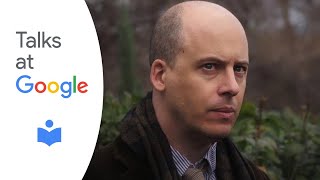
Austin Grossman reads from his novel Soon I Will Be Invincible and discusses translating superhero comics into literary prose. He reads chapter 5 in Dr. Impossible's voice, talks influences like Alan Moore and Frank Miller, and explains craft choices around lists and fight choreography.
Chapters
Good morning. Thank you all for coming. Today we have austin grossman, who is the author of soon I will be invincible. He's here all the way from berkeley, Drove through the rain. So thank you very much for being here today. He's been touring with this book, and it is a spoof, would you say satire?
I just like the word spoof.
Don't like the word spoof. Could be a true story. You never know about comic book supervillain. And he's been touring with the book, and it's been getting some great reviews. There's also a website, which is sooniwillbeinvincible.com easy to remember. So, Mr. Austin Grossman.
Thank you. Thank you for coming in the middle of your day. I, of course, don't have a job. So it's all like this for me. I wanted to sort of explain and sort of position the book a little bit. You guys can hear me, right? More or less. And then I'm going to do a reading of a passage from it. And then we can talk a little bit about the book, about comic books, about whatever's on anyone's mind. This book is kind of an experiment. It arose out of a kind of prose experiment, which was what would happen if we transposed the familiar characters of mainstream superhero comics and the sort of situations they get into into something out of comic books and into something resembling a mainstream literary fiction kind of voice. How would that change how we saw the characters, how the characters function in the world, how they thought? I sort of made a requirement for myself that I was going to stick to genre. I was going to trust genre. I was going to tell a really, really good superhero story. I was just going to tell it shot through a different lens, Showing the characters, what they thought, what they felt when they got up in the morning, what they talked about before and after the big fight. I wanted to take this cartridge I found really fascinating. And see them in a new way. Obviously, I was following other people's work, following alan moore's work, following frank miller, following the rare pro superhero experiments that had been done before. Wild cards. And it's easy. I just used the word spoof. It's easy to make fun of superheroes. But obviously, I love superheroes. I love reading comics. I wanted to give their superheroes and their reality more life and more detail, More attention than they had had before. I wanted to show more of these characters, Give them more of their due. I really just wanted to write the greatest superhero story I could think of without pictures. This was sort of my goal and also to kind of interfere with the dignity of a writing workshop that I was in. And there was a sort of moderate success on all fronts. The story is set in a world full of superheroes. A world sort of equivalent to the kind of sprawling continuities that the mainstream houses have set up, DC and Marvel. There are a lot of superheroes and there's a lot of superhero history superimposed on the real world. I wanted that sense of richness. It's narrated by two separate characters in the first person who alternate chapters and who kind of show different sides of superhero existence. One is a cyborg who calls herself Fatale, a kind of play on Femme Fatale. Because she doesn't really feel much like a femme fatale. She's a cyborg. She got her powers after being in a traffic accident or mysterious corporation kind of swooped down on her in the hospital and gave her all these sort of cyborg enhancements and saved her life. And then the company kind of vanished and they were revealed to be a front. So she was kind of stuck trying to make it as a cyborg in something like the regular world. She worked for the government for a while as an enhanced agent and then she got fired. And then she sort of tried to become a superhero, but it doesn't really happen like that. She has a lot of maintenance costs. She hangs around listening to the police band. She's kind of struggling to get into that role. So the book starts when she gets her big break, when she gets to join an actual high profile super team that has a vacancy and start to see superhero life from the inside. She's a little bitter, she's a little confused, she has body issues, she's partly made of metal. She has an interesting sensibility through which to see superhero life. The other character who I'll read from today, his name is Dr. Impossible and he is a super villain. And he shows us all of what supervillain life is like, what those people are all doing when they're off camera, off stage, as it were, not getting beaten up. Dr. Vellum is a pretty important supervillain in this particular world. He's sort of a mid career supervillain. He's tried to take over the world about 12 times.
He.
He's maybe just starting to be past the top of his game. And as the novel opens, he's in jail. He's kind of a mad scientist villain. He's a kind of cartoon mad scientist. He has an island, he has a fortress, a laboratory. He builds giant Robots. When he's stuck in jail, he's just sort of, you know, he's kind of stuck in place and his thoughts run. And he's starting to get let in on the joke about himself a little bit. Starting to get a sense that he is a cartoon mad scientist. And what exactly is he doing with his life? He has no job, he has no girlfriend. As the smartest person in the world, has he really made particularly smart choices about what he could be doing with his life? So you have these characters at the start of the book, and then just as the book starts, the greatest superhero in the world goes missing. The most powerful, the most respected superhero sort of drops off the map. And that kind of. That's the motive that starts the plot running. Everybody thinks Dr. Impossible did something. Dr. Impossible. They're nemeses. They look for Dr. Impossible. They look for core fire. Dr. Impossible is trying to figure out what's happened, who's done away with Core Fire. Of course, he wanted to do away with Core Fire, but he hasn't. So what exactly is he doing now? The passage I'm going to read is from the early middle of the book. Sometimes I read from the very start, but it seems like cheating somehow. I'm going to read from chapter five, and you have this scene where Dr. Impossible has just escaped from jail and Corfire, his nemesis, gone missing. Everybody's looking for Dr. Impossible. Everybody thinks, oh, Corfire's gone, Dr. Impossible escaped. You know, let's connect the dots. Obviously they think Dr. Impossible did it. Dr. Impossible. Impossible has no idea who did it, and he's just kind of getting his bearings. It's just like the morning after he's broken out of jail and figuring out what it is he needs to do now. The chapter is called Free at Last. When I get out of here, I thought that a million times when I was in prison. Now I'm lying on a bare mattress with a television on, thinking about nothing. It's the middle of the afternoon. I paid for this room with cash stolen from an ATM I dragged out of a convenience store. I carried it into the back parking lot and tore it apart. Then I ran away as fast as I could. It's not my finest scheme, but these are trying times. The apartment is three small rooms and a gas stove. Cooking smells drift up from the floor below. Outside, a woman with a bruise on the side of her face is arguing with an elderly man. He looks like a homeless guy. I've probably seen this building before, flown over it in an orbital jet. Plane or drifted over it in my dirigible. The exterior is a grubby pink stucco. I never thought about what it would be like to rent a room in it like a normal person with cash and no references. I paid it all up front. Six months after, I walked for 11 hours along the highway until I found a change of clothes. Clearly it is time to start again. There's a scheme that's already boiling up inside of me. It's a good one. I worked it out in prison. I sketched out the angles while staring at blank white walls. But the thing is, I'm starting to feel like I've been here before. How do you take over the world? Because I've tried everything. Doomsday devices of every kind. Nuclear thermonuclear, nanotechnological gadgets that fit inside a shoebox. Gadgets that were visible from space. I've tried mind control. I've stolen the gold reserves in Fort Knox only to lose them again. I've traveled backward in time to change history, forward in time to escape history. I've stopped time altogether to live in a world of statues. I've commanded robot armies, insect armies, dinosaur armies, a fungus army, an army of fish, an army of rodents. Alien invasion, an interdimensional alien invasion, an alien God invasion. Each time it ended the same way. I've been to jail 12 times. Give me where to stand, said Archimedes, and I will move the world. But it feels like I've stood everywhere. The center of the Earth and the top of the Eiffel Tower and the surface of the moon, although I have never stood up to now in room 316 in the starlight Motel in Queens. I've operated out of sinister casinos, accursed castles, diabolical fortresses, caverns. This is somehow worse. The smell of disinfectant comes off of everything as a brown substance even I cannot identify sweating out of the pale yellow walls in the bathroom. Plaster walls instead of brushed steel, plastic wood grain sheeting. On cnn, the heroes are having a press conference about my disappearance. Black Wolf is making a windy speech about justice. They're asking me to give myself up. Think about it for a second. They're running file footage of my last capture over and over on tv. A zoom lens shot from a helicopter showing me at the bridge of my dirigible cape streaming in the wind. And then it cuts to handheld footage of me sprinting down a Manhattan avenue. My power staff is gone. I'm zigzagging between cars, turning around to throw knockout grenades you can see sweat stains. My costume wasn't designed for long distance running. That cape is actually as heavy as velvet. Four years ago, I stood a third thousand meters above this spot in Queens, looking down at the world, at the scum I was planning, how I'd exact tribute, the cities I'd rename in my honor. People of Earth. I bellowed. The sound of car alarms drifted up from among the buildings. The dirigible glided forward a few car lengths. I looked down to see its long oval shadow Swallow Main and Lansing and Dean and Church. The blimp was an expensive gamble, but there's no doubt it got me noticed. The sun gleamed off the brass railing. The wind ruffled my imperial robes just so. I didn't just want their money. I wanted them to look into the sky and see me. Something extraordinary. Something menacing and grand. No one knew when I would be looming above them at the wheel of a colossal airship. In the bathroom, the handle on the toilet comes off in my hand. Part of me never adjusted to having this super strength. It's a profound biological change inside you. This far into my career, the first morning is a moment I can scarcely recapture. He got his powers in a laboratory explosion. Like everybody gets their powers. Dust sifted down over me. After the heat and pressure was over, I was on my back. Fl for some reason, I could see the stars. The ceiling was gone. The laboratory was in ruins, and the emergency teams had actually come and gone without finding me. There was no question at this stage, my graduate study was basically over. This was the last the world knew of me. A fifth year graduate student with a degree nowhere in sight. A clumsy lab assistant come to a tragic end. The beginning of Dr. Impossible's long impossible doctorate. I tested my new powers. Disappointingly enough, I couldn't fly. I couldn't go invisible or move objects with my mind or shoot lasers from my eyes. I couldn't communicate with my mind or read other people's thoughts. Not that on the whole, I wished to. The night wore on. I exhausted every variation I could think of. Heat, cold, growing, shrinking. A lengthy series of hops and half gestures and brow furrowings satisfied me. I didn't have any more recherche talents. But as my eyes adjusted to the light, extra wavelengths seemed to flower into being. I could see deep infrared and earthy radio tones and the unearthly sheen of frequencies above the violet. I wasn't quite human anymore. I had superpowers. I was. I was strong. For one thing, I was really strong. I could do whatever I wanted. I could be A sports star or some lame jock. I imagined for a moment what would happen if anybody messed with me now. I imagined it then. I imagined it carefully, in slow motion. I wasn't a civilian anymore. I had superpowers. I was a super what. But really, really, I knew when you get your powers, you learn a lot about yourself. My professors in graduate school had called me mad. But it was time for me to stop punishing myself and start punishing everybody else. New technologies unfolded in my mind. Plans and inventions formed faster than I could name them. Chemical, biological, metallurgical, cybernetic. This is what they had held me back from in graduate school. This is what had lain dormant, had been suppressed, what had been like a bomb going off underground over and over in my mind. I was strong, yes, but this science is what my empire would be founded on. I got up. I stole clothes from a laundry room in a nearby dorm. Wearing jeans and a too large sweatshirt, I walked until the sun came up. The Midwestern dawn was gray and the bus station was gray as well. I had slept a little next to a dumpster behind a supermarket and done some thinking. I cracked open payphones with my hands until I had enough for bus fare at a Milky Way bar. I was exhausted and I was broke, but I was young and evil and super intelligent. Somewhere in America. When it came, the bus was nearly empty. I I took a seat two thirds of the way back on the left and sat looking out the window, headed west. The roads and houses and gas stations rolled by, and I knew that not one of them was a place where I could really live or work or think. My ticket was for Reno, Nevada, bought at random. I had to go somewhere emptier, somewhere with a desert. Somewhere I could build underground, working with my hands if necessary. I'd lay out circuitry on wood and metal and frames and make the supercomputer I had already designed way back in high school. I'd build up power gradually. Computing power, electrical power, fusion power. For a long time I watched the world change from Midwestern green fields to rocky scrub and the clouds darken and burst away up in the mountains, raining. Somewhere else maybe, but not here. I remember those nights that followed. Planning technologies that didn't exist. Outsider science, futurist dreaming half magical. The things I could do outside the university setting. Now that I didn't have to wait for those pompous fools at the college, I was building another science. My science. A wild science. Robots and lasers and disembodied brains. Science that buzzed and glowed and did Things it could get up, walk, fly, fight. Garish, glowing creations in the remotest part of the world. Domes and towers and architectural fever dreams. It was angry. It was a mad science. You don't become a world class villain overnight. I learned this, and I wandered for a long time before I became Dr. Impossible. Leaving the country for the first time, I learned it was a revelation. I was opening myself up to new influences. Changing myself, I hoped, into something new and dangerous. For a while, I fought for prize money in unlicensed hero fights in Bangkok. Brawling in basement rooms lined with mattresses, sweating under the lights. This is the bottom end of the superhero trade. Local talents and wanted fugitives. Oddballs with nothing special going for them, just a taste of superpowers to set them apart. An American in homebrew armor would fight three Australian pygmies. A karate specialist fought a French sorcerer. These were small timers, grotesque rejects, one on one or in groups, late into the night, while the crowd screamed and jeered so loud you couldn't think. You wouldn't even feel it when you took a burn or a bad cut. I fought as Baron Benzene, as Count Smackula, as whatever name they put up on the marquis that night stand, Smarticus, Dr. Fiasco. I learned the basic how to throw a superpowered punch without falling off your feet, and how to take one. How to spot the telltales of power, the stutter step of a bad nerve operation. How to look at the way a superhero walked, or their eyes or their hands, and see what happened to their bodies. Once upon a time, most of them had paid a price for their power. And for most of them, it turned out to be too high. Superheroes carry their stories on their bodies. If you knew what to look for, you could see it in the first few steps they took in the arena. I fought three or four times a week, waking up on off days bruised, singed, steamy raining mornings in Bangkok in an apartment over the market a half dozen of us just rented together. Pharaoh and Shylock and a rotating cast of down and outers. I'd be stretched on a mattress on the floor, someone with an insect's head passed out on the couch. It was where I met people like Pharaoh, the first time I met anyone at all like me. Ones who had had found a little power but said no to the mask and the cape thing, to the roll. Most of them were nothing like me. They had no advanced degrees, but like me, they said no. They haven't found anything worth saying yes to. I remember the night Argonaut showed up in incognito and fought all comers to a standstill. I remember nights holding a stranger by the hair, one arm raised to the crowd, and then the alcoholic celebrations afterwards on prize money that sent us reeling through the streets, heartsick, swearing drunken vows to one another, our nameless common ethos of silence, exile, and the long defeat. And I marveled that no one really appreciated how serious it all was. The change that had happened to our bodies, the destinies that were slowly beginning to work itself, work themselves out for these wastrel ninjas, Martians, exiled sorcerers. One night Pharaoh and I sat by the ocean, looking out at the strange waters of the Gulf of Thailand, feeling our ribs cracked. I swore inwardly that I would never quit, not ever. The name. I got the name on my first job, the first real crime I committed in the United States. That morning. It was a long ride up from up the New Jersey Turnpike. Four hours in semi darkness. I was sitting in the back of a van driven by a robot I had built myself for the purpose. I drowsed a bit. The rocking motion reminded me of sensations of childhood road trips. I dreamed of the Zeta effect momentarily. The Zeta effect is a kind of scientific obsession of his. It's part of what gave him his powers. I dreamed of its flickering, its red field, its tantalizing mysteries. And then I woke to stare up into the molded plastic face of the robots swaying beside me like a row of drowsy crash test dummies. I felt us come out of the hall and tunnel into the stop and go traffic of downtown. The bank was in midtown, a small one that I'd chosen. I needed capital. I needed contact with the world. I needed them to know about me. It seemed like that was part of being a supervillain. I couldn't do it privately. I felt the robot smoothly taking its lefts and rights on the weight of the target, even honking the horn at a road, at a truck blocking the road up ahead. It's a design feature. I crawled back to the rear door and seated myself. And then when the van cut over to the curb and double parked squarely in front of the double doors of the bank, I kicked open the van's rear door and stepped out into the street. There was a light snow falling, frosting the edges of things, darkening the asphalt. I'd spent months designing the robots and the costume, waiting for this moment, but now I was standing in the street outside in midtown Manhattan. Traffic was swerving around me. I was squinting into the sudden light, my eyes adjusting. It was 10:30am on a Tuesday in late January. In the nearby buildings, people were just halfway through the morning's work. They were rustling papers and having meetings and chatting at their desks. I was 24 years old. Inside the bank there was a burly man looking at me. He was wearing a uniform and staring angrily and pointing at me as if to say, go away, whoever you are. And there was a sick moment of vertigo, of nightmarish embarrassment, and I had to think about what I was doing. I ought to be up there in the buildings with them. I ought to be at work. Why was I wearing a costume? Why did I look like a publicity stunt? This is the moment of truth for a supervillain worse than any crime fighter, any secret weapon. This is the moment when your insides clench. I forced myself my legs to take me forward to to the bank's heavy plate glass facade. Behind me, the robots were piling out of the van, oblivious. They were raising their concussion pistols. My earplugs cut in automatically. The man standing inside put up his hand, gesturing at me to stop, to go away, to be somebody else's problem. And that was the moment when. That was the moment I shook my head. Stop. Go away. No. Absolutely not. I felt an unfamiliar smile take hold on my face. He raised his gun, but it was too late, because I didn't have to stop. I had superpowers. I grabbed this door and I pulled so hard it came off its hinges and hung there. I wasn't going to stop and I wasn't going to pay any damages. And I wasn't going to say sorry because I wouldn't have to do what anyone else said ever again. The sonic went off behind me as I went through the door. And after that there was just a whole lot more I wasn't going to be paying for. Kneel, I suggested to the crowd. I pointed to the floor. Most of them would be deaf for the next 30 seconds or so. I needed to look like I was giving orders. I looked up to see that I had actually. That I was actually holding the unconscious bank guard aloft by his shirt. I tossed him into a potted. It was only a few hours later that I got home and realized he'd actually shot me square in the chest. Nice try. There was a bang as the robots breached the vault. Two of them brandished their pistols at the crowd while the rest shoveled bricks of currency into sacks. I had nothing to do but stride around the lobby for a few minutes, looking menacing and in control, but it felt like an Eternity. I shouted. I kept on shouting. I screamed, although I don't know what I said. I. I declared myself emperor of Manhattan, of America, of the world. I was shaking. Outside, the traffic had shot stopped. People across the street sort of peered inside at me. I could hear sirens now. But the final phase of my heist was already in progress. I dug the tunnel weeks before. I motioned two robots to the front of the bank to engage the police and the rest loaded the money into the shaft. After my escape, that collapsed the tunnel behind me and decorously self destruct in place. So there was only one thing left to do. I turned to face one of the security cameras. It was time to let them know who I was, what I was doing. I planned something and I forget what. But something else rose up to my lips. The humiliations build up in your life and you know you'll never get back at everybody. Even though somewhere inside you know you're better than they are. The real you is somewhere else. Someone untouchable. Someone invisible. Someone unknowable. Impossible. And then I knew. I'm Dr. Impossible. I shouted it at the camera. They would have to know now. I turned and climbed down into the shaft. The tunnel had an exit point miles to the south. And a rental truck was waiting for me on the return trip. There was one last moment of weakness. There was no turning back now. They'd seen me. I wasn't just a missing person or a whimsical inventor. I was a supervillain, for heaven's sake. I'd robbed a bank and broadcast daylight. I pulled over to the side of the road. I felt a little sick, because what had I done? There was no way to hide this. Now. There are people who can fly, who can see through objects, who can kill you with their eyes. They were going to hunt me down now, like an animal. So I thought about turning myself in. Giving it all back. The gold, the money. How much could they do to me? It would be a couple of years and I would be out, right? I could go back to the labs. You know, my robots work is very good. I could get a grant mend fence University. I could do a little teaching. They could forget about this ridiculous little incident. I'm a scientist. The costume, the name. Well, you just all forget it. I actually put my hands on my helmet, ready to lift it off. But then what? What then? It wouldn't change anything. I could go to the FBI. I could go to prison. I could turn myself in, but it wouldn't make me normal. I knew that when I Got my powers. But I knew that. I knew it before then. I knew it on my first day of college. I knew it. You know, I knew it in Bangkok. If you're different, you always know it. And even if you. And you can't fix it, even if you want to, even if you beg to. So what do you do when you find out your heart is the wrong kind? You learn a lot about yourself when you get your superpowers and you have to face that. You take what you're given. You be the hero. You are able to be the hero to your own cold, inverted heart. So this is what I think about in the motel room. I think about the last time I've but one. My last failure, my last arrest. The one with the blimp. I was on the bridge of that blimp. It was listing to one side, belching black smoke into the clear air as I strapped on a suborbital flight suit. My hands shook, filling the gas tank, the stink of rocket fuel in my nostrils. This was the last of five escape plans at the bottom end of a flowchart I'd hope never to get to the end of. And there was core fire. My nemesis teamed up with the massive hero battalion. Two and a half tons of metal impossibly adrift on the summer breeze. Uncanny. I'd thrown everything I had at them. And Corphire looked smooth, unscarred, crisp, like he'd just stepped off of a yacht. Underneath us queens was spreading out a little bit too close. I was losing altitude. My eye was already picking out places where it might be safe to fall. Soon I'd be going back to prison for term number 10. Do you give up yet? The superhero asked me. Never. And it is never. That's what I realized I've dreamed for so long of the day one of my schemes will actually be fulfilled. The last step in in place, executed to the last detail. The last ball rolling down its ramp into the last cup to pull the last lever in the grandest Rube Goldberg machine I ever came up with. When the doomsday satellite is finally unveiled. Launching laser built. The weather controlling device finally aloft in orbit, the skies dancing to my whim. Sunny days if I want them. Dark crackling storms if I wished. Or late afternoon drizzle. All these years underground, I dreamed of a land where I could just live in the weather I wished. Surrender or be destroyed, I said to them on the bridge of my battle blimp. The wind rises, carrying a new scent. Autumn. Thank you. If there are any questions or Anything you want to talk about, I'm really happy to take any of them. Yeah.
I want to thank you for being here. The book is charming, and it's very nice to have you here. Speaking. Something I was aware of when you were reading that chapter that I wasn't when I read it is that you love lists. You'll say doomsday devices, and then you'll say nuclear, thermonuclear, nanotechnological, metallurgical. And you did that, like five times in that chapter. And I didn't notice it originally. And what I wondered is, is this just part of your style or is it what you were using to evoke that long, complicated continuity that you can't really describe because you're not putting out 500 issues of a comic book.
Yes, that's exactly right. That's one of the things he does. It lets you know what kind of world you're dealing with, what kind of character you're dealing with. It's letting you know that you kind of know the score here, who this guy is. And we're just filling in the world a little bit so you know what you're playing with. I mean, it's also a little bit because the voice of the character, because he's a villain, right? He likes to monologue. He likes to go on and spin out his plans. So it happens for all those reasons. And it's also just because I find that kind of detail, in some sense, sort of delicious. You know, I love that stuff. Stuff. I read comics avidly. I love comics. I wanted to have a prose voice that kind of made you feel what it was like to love comics as much as I do. Even if you don't read comics at all. A lot of my readers, while I was writing it, while I was writing, I picked people to read it who didn't know comics at all. So I wanted to fill in that world for them, too and let them kind of enjoy it and savor it. Just on the right there, I guess.
Yeah. Thanks for coming. That was great. I've been interested in checking out your book. I was just curious. Like, I have friends who write, and it seems like things kind of come in groups like zombie movies and zombies, like, hit sort of a saturation and sort of like real life lives of superheroes seems like it's kind of hit this, I don't know, synchronous. There's something going on there. And I was just curious, like, as someone who reads a lot of comics, just thinking back in my head while you were reading there's like Alan Moore did top 10 where it's about a city. I mean, you probably read it just a city where everyone has superpowers or there's like a Frisky. What is it? Frisco Dingo or something on Cartoon Network where there's a super villain who's like a CEO. So I was just curious, like, as a creator or a writer, like, did you look at the comics and think specifically, like, there's something that hasn't been said? Or was this a story and this is the format that it took for you to come across?
It's a good question. And I was very conscious of being in a lot of people's shadow as I was writing this. I mean, I love the Watchmen. I tried to get them to market this book as 60% as good as the Watchmen. Like that was going to be our tagline. Or in my head, they never, of course, bought that for a second. So I was conscious of writing in the shadow of other people's who were doing it. And it's kind of the way we like to see our superheroes now. We have the Incredibles. We had Fortress of Solitude and we had the Ultimates a lot of people in mainstream comics are doing now. And it's wonderful. So kind of partly while I was writing it, I was going, oh my God, other people doing this better finish, finish. I mean, I tried to justify this product to myself. I mean, people haven't done it very much in prose. I feel like the. The kind of lens of the novel lets you show a lot of things you can't show as clearly or as in detail as in comics. That was my. Surely people have shown superheroes as real people before. I kind of felt like the novel was a unique tool for doing it. That was my justification for keeping up with it. The fact that it slows things down. The fact that it's kind of. The novel is almost like sort of dedicated to showing the sort of quotidian details, the fact that it's written in the first person and you can dwell on what it feels like to live inside a super villain, super powered body and live in it every day and go to sleep in it and wake up in it just to kind of bring out that sort of very rich portion of the world that you don't quite get when you've got comic book panels. So, yeah, it's being done a lot. And it's a funny kind of title shift in our taste that we like our heroes that way now. And it's being done so well. I can only try to throw my hat into the ring. A ring already becoming cluttered with hats.
I actually have two questions. First, one would be, given that superheroes is a genre, not a medium, per se. But did you ever feel like you really wanted to have illustrations going around, or were you doing sketches in your head or on paper of what these guys would look like and how the fights would be choreographed and the.
Like, I did kind of sketch it in my. In my head. Some. I did think in terms of panels. Sometimes I would think about a panel. I mean, panels are a rhythm to comics, to the comics medium. And I tried to develop equivalent rhythms with paragraphs, with sentences, with chapters. And I'd actually sort of call a chapter an issue of my comic book series. And then sometimes I would go panel by panel in my head. And I really like the device that you get when there's a kind of sea breeze of panels. And then there's a kind of monologue running of those panels. And they sort of juxtapose with the action, and there's a kind of. Of tension there. I tried to. In my head, I had that device running, and I tried to come up with prose equivalents. So I did. I was heavily indebted to the comics medium and sort of setting out a rhythm of things as I wrote. That said, also, I always tried to keep in mind that I needed to do what comic books couldn't. If I was really going to justify this as a product. I always thought to myself, do we need one more superhero story? What can I do that's new with this? So I thought about comic book panels a lot. But I tried to keep in mind that I looked for ways where I had a formal advantage over them. It's interesting that you mentioned fight scenes and choreography. Because that was the hardest thing to do in prose. I felt like that was where I had a real challenge and where comics had an advantage. They could just show everybody standing and lights coming out of them. And people are flipping over and their bodies are sort of beautifully posed. And I didn't have any of that. I had to remember where everybody's arms and legs were. And who was standing next to who. Those kind of set pieces were the hardest part. When I originally set out to do this, I thought to myself, I'm going to do everything comics don't. I'm going to skip all the action scenes and just do the character scenes. But then I thought to myself, who am I kidding? We love comics. We love, love superheroes heroes have fighting. So I put fight scenes in, and it actually turned out to work well. I was happy with how they came out. Again, you could show a fight scene from inside the body of the person that it's happening to. And that sense of shock and confusion. And that was a new thing I got to do.
And the other question is, obviously superheroes and comic books, again, separating between genre and medium have become more and more acceptable in the adult mainstream over the years. Both do the works you mentioned. We have things like Heroes on TV and the like. And that's that you're a doctoral candidate in literature, which. Having a sister who has a doctorate in literature who has always been on my case about reading comics as an adult and the like. I'm just curious, sort of the. How you came to comics and how it's affected your other career, as it were.
Yeah, it's funny. I mean, while I was writing the novel, I had just started the PhD program at Berkeley in English while I started writing the novel. And the novel was kind of like my secret revenge. I guess there's no other way to think about it. But it would be disingenuous to say that I didn't sort of cackle to myself as I wrote a superhero novel while I was doing my coursework.
So would that make you sort of a literary supervillain in this case?
You know, the situation of being in graduate school and the situation of being a supervillain are not as far apart as many might suppose. The sense of being incredibly sort of frustrated and the sense of overweening intellectual ambition combined with total insignificance and thwarted ambition, it gives you something to work from, I'll just say that. But, yes, this was. I mean, I would do all my literary stuff and it would be very proper. And then I would just go home and kind of unleash and have the best time I could possibly have working with superheroes. But I would also. I mean, one of the things I wanted to bring to superhero comics was more attention to language, a different emotional range for characters, and, I don't know, a kind of freedom to improvise with images that went beyond what was stock for the genre. I would end scenes in unexpected places or show them from unexpected angles, or start and stop scenes in different places than I felt was standard. And I felt like I could borrow some of the devices and originality I was getting from 1970 century literature and kind of sneak it in to the superhero world. But at the same time, I felt like I was sort of. I Don't know, throwing my shame in their faces or sort of stealing the sacred fire. I mean, Berkeley doesn't even have an MFA program. People aren't even supposed to be fooling around with actually creating literature. I don't know. It was a lot of fun to do. I hope some of that fun, I think, shows in the press pro's voice.
Questions.
It said you are a video game consultant. And so in your bio in the back, and I was just curious, like, if the story grew out of doing that work or things you couldn't do with that work or. Or. Because video games are a little different than comics.
No, totally, yes. I basically spent the 1990s working in video games, and I still consult in video games. I mean, I did borrow some things from that experience. I mean, the experience of feeling like a really huge dork. I mean, Dr. Impossible is the world's angriest dork. Like, he's a total geek and he knows it. And a lot of his sort of vaunting ambition springs out of that. I mean, I borrowed from that experience, I don't know, a kind of fluency in pulp genres it did produce. The thing is, if you're writing in video games, you have to be really, really spare because no one is really there to read the words, for heaven's sake. They're just clicking through the text explanation so things can move around and zap each other. So working in video games teaches you to be very economical in your prose. And it also teaches you to make something out of anything. If somebody hands you a spaceship that's flying around, you got to explain what that spaceship is. It teaches you to adapt to pulp genres and make whatever meaning you can out of them. It was kind of my. I think of it as my substitute MFA program because I had to produce a lot of prose and I had to learn whatever lessons I could from that, even though no one was particularly interested in the writing that was happening in video games. So that was another piece of puzzle or another big area of sensibility that I ended up bringing into this.
Yeah, I read comic books. I love superheroes. But I'm extremely frustrated when I read comic books these days because the attitude of, hey, it's just a comic comic book seems to have been inculcated into the writers and the editors as well as many of the readers. And a lot of what I read are idiot plots that couldn't go anywhere unless the characters didn't really know what they could do and who they were. I can believe a man can fly just As I can believe that a magic ring can turn you invisible, but that has implications and that evokes a world. I can't believe that, you know, a man will just forget the guy standing next to him, you know, murdered his best friend, that kind of thing, because that's what's needed to keep the story moving. Do you think that that's intrinsic or even appropriate, some would say, to the medium of comic books with the bright colors and the panels and the word balloons? Or is it just an effect, a direction, a circumstance that we found ourselves with? Because, you know, I read the Sandman, and I know that a comic book can be resonant and evocative and actually makes sense, the characters can make sense, and it's still a comic book. But the vast majority of what I read is not childlike, but childish. What do you think about that?
Yeah. Well, I mean, ever since, you know, the mid to late 80s, people have shown a few really ambitious people have shown what you can do with that medium and that genre, right? You can make like people like Elmore, Frank Miller, Neil Gaiman. Other people have shown that the medium can be as expressive and original as anybody cares to make it. Anything can be literature. There's nothing intrinsic holding it back. Alan Moore, I don't know where that guy came from. He showed people you could be ambitious with these plots that you love, that you didn't have to dumb it down. You could shoot for emotional effects, resonance of formal symmetries. You could do it all, basically. You could do literature. There's a sense that people are as ambitious as one would like them to be in those plots. And frankly, we have really good people writing today, people like Gail Simone, Ed Brubaker. These people are really good writers. Part of it is, I think they have to churn out a lot of writing pretty fast. And I have nothing but sympathy for being in that position. But thanks to people like EL Moore, Grant Morrison, whoever like, like, we at least know it can be done, that the high watermarks of the comics medium are as good as anything you'd want to read. One of the nice things about writing it in novel form is that the novel is already established as a literary form. So there's that sense that there's no stealing to how good it can be. There's that call when you start to write a novel, which I certainly didn't admit to myself I was doing for a long time. When you realize you're writing a novel, it tells you you got no excuses. You have to be ambitious. And frankly, no one's paying me to write this novel. I was just doing it in my spare time. Why shouldn't I be as ambitious, as literary as I can make it? I guess that was one of the things I was trying to prove to myself. That you could write in the superhero genre. And be interesting with knowledge, language, Be interesting with character, have interesting female characters, have strong female characters, have interesting male characters, have people feel. Feel like people you would care about as individuals. I think it's been shown that in comics. And really, it's starting to feel like any medium you can be as. You can produce as good art as you want to do. Without being boring or betraying that genre. In genre in some way, it feels like on multiple fronts. In animation, the same way we're seeing that we can do incredibly artistic work. I look forward to when people. I look forward to that change happening in video games, too. It seems like what we're learning, what we're being taught by comic books. Is that even stuff we thought of as silly. Can be incredibly powerful. So, yes. I mean, but, like, with comics, We've always got people in the top end. Right. That we can be thankful for. So I feel like I'm being served. Okay. By superhero comics now. If you pick the best writers, you, get good stuff.
This is kind of a silly question, But I was just curious. I know that book covers are really important. And since this is kind of based around comics, like, and comics is visual, the book cover is really important. So I was wondering, and I know chip kidd designed it. So I was wondering if you worked with him. And what your vision was and so forth.
Sure. There's a whole story to the book cover, which is that when I finished the book. And I was trying to sell it to publishers, There was already a big question of how it was going to be considered. Was it going to be bought by a science fiction imprint? Where was it going to go In a bookstore? How were people going to review it? What exactly had I written? Right. So that was a big question from the start. One of the big questions was, what was the COVID going to look like? What message would that send? We shopped a couple of publishers. Pantheon's art director is chip kidd, who is a famous book designer. He designed the michael crichton, jurassic park logo. Secret history. A lot of book covers that have had a huge impact on the form. And not incidentally, sold a lot of books. So pantheon said, you go with us. We'll have chip kidd do it. And so that was a heavy factor because. Because I Felt like how it was presented to the world was important. If people were expecting just kind of superhero action, it would read funny to them. So we had to send the message that it's superheroes, but it's also trying to be literary. We're trying to do an experiment here. Go with it. So, yes, I said, so the fix was in. They said, chip's going to do it if you go with this. So I went with him. Chip read it. I sat down with him for about half an hour. We had actually kind of very generalized conversation about comic books. I mean, Chip is hugely into comics. So we just kind of talked comics for half an hour. And I was kind of like, when are we going to get into the design stuff? And then he sort of. Then at the sort of end, I said to him, you know, Chip, I just want comic book readers to know that this has something to do with comic books when they see it. Like, that's all I'm asking for. And then my editor, Marty Asher, said, I just need people to know that this is literary fiction. And then Chip said, okay. And then we all got up and left. Because you don't really tell Chip Kip what to do. It just kind of swishes around in his brain for a while, and he does something. So a couple months, and then I hear that he's thinking about a photograph. And I thought to myself, what the hell? Because I thought it would be some kind of processed sort of vintage comics image. You know, you can kind of picture the sort of thing you'd expect. And those covers. That style of COVID has kind of been around for a while. So when he said photograph, I had no idea what he's talking about, but whatever. Then, like, a couple months later, I get. Yeah, it came in. It came in the. Came in the. I got a, you know, padded envelope in the mail. And so this came out, and it just kind of floored me. It was incredibly iconic and eye catching and sort of, like, comicsy, but so sort of powerful. It was kind of angry looking. Like it had all these emotions bound up with it. And whatever Chip does, I don't know how he does it, but he gave us this, which I think does what we asked him to do, aside from being incredibly sort of eye catching and compelling. And then the design kept going. We had the back cover with the fist. We had the casing, which is a whole other photograph, which it looks like sort of Robin just kind of stepped into the shower. And this is his stuff he dumped on the floor. We've got Photographs inside. I think Chip really liked this book and he just kind of made it a whole creation. So I'm incredibly satisfied with it. I think the first day we also had a little debate as to whether to show the characters. And the idea of a work was, no. I'd done a whole novel, never seeing the characters like the characters are for the reader to see. And let's stick with that. Let's not sort of co opt their imagination by showing a picture of Korfire on the COVID So that's the story of the COVID We thought about it a lot. Like, it's more successful than I could ever have imagined. Authors complain all the time about their covers, but this is just brilliant.
I'm curious about your secret origin with respect to comics. Could you talk a little bit about how you discovered comics and how they've influenced you throughout your life before you started working on writing on the novel?
Sure. I mean, everybody said, even if you don't read comics, you sort of know what superheroes are. When I was really, really little, I would watch the Super Friends cartoon and so forth, which I think was part of my education in what adult life was like. And you'd see, like, you'd watch Super Friends. And I love the Super Friends because they made no sense. Like they were from totally different corners of the world. There's Batman, there's Aquaman, who's the King of Atlantis. There's Superman, who's an alien. There's Wonder Woman, who's a mythical Amazon. They're all living together in a big metal house. And I thought that was a really sort of compelling model of adult life. I guess the first comic book I really bonded with was Chris Claremont, X Men in my early, early Teens and so forth. Obviously, a lot of potent metaphors sort of sewn into the X Men that really work. But, like, people always ask me if I'm a Marvel or a D.C. guy, but I just kind of wandered back and forth. I mean, there was just good stuff being done at different times everywhere. When in 1986 was the sort of honest was when the Watchmen and Dark Knight Returns came out. And that just sort of completely overturned one's imaginary space of superhero dome. I think I would. I basically, like, waited, you know, 15 years for another Watchman to come out. And of course it never, never would. So I was eventually sort of stuck trying to write it for myself as best I could. But, yeah, I think from teens to college then, I just kind of saturated myself in comics. I mean, I follow alternative comics. I follow, of course, where are the Dan Clowes? But I'm always slightly embarrassed by the fact that I just love superheroes. I was never quite wooed away from mainstream comics by, obviously, the great work that was being done in alternative comics. And I read a ton of comics now. I feel like we're in a really great period. Period for comics.
Okay. I think we're just about out of time, so we should probably wrap it up. But thank you again, Austin, for being here today.
More from Guy


Cheryl Strauss Einhorn | The Human Edge: Smarter Decisions in the Age of AI | Talks at Google



Rachel Glennerster | Innovation and the Center for Global Development | Talks at Google

Rebecca Winthrop | Rethinking the Purpose of Education in the Age of AI | Talks at Google

Dr. Robert Wachter | A Giant Leap: How AI Is Transforming Healthcare... | Talks at Google



