Stonyfield Farm | Gary Hirshberg | Talks at Google
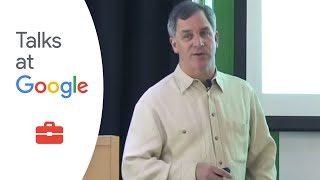
Gary Hirshberg (president & CEO of Stonyfield Farm) presents at Authors at Google about his book Stirring It: How to Make Money and Save the World (Hyperion, Jan 2008). He traces personal motivations from early environmental observations to founding Stonyfield (started from a seven-cow organic farm school in 1983) and growing it into a national organic-yogurt business (~$300M annual sales). He frames environmental harms as externalities and emphasizes business-driven solutions: measure, reduce, offset, and educate/advocate — across three climate scopes (direct combustion, purchased electricity, and supply-chain embodied impacts). Hirshberg gives many operational examples (anaerobic digesters, packaging lightweighting, logistics/smart routing, grass-fed milk, organic sugar conversion) showing environmental improvements that also cut costs or increase margins. He describes marketing and engagement strategies (Profits for the Planet, lids campaigns, sampling) that build consumer loyalty. Q&A covers ingredients (no gelatin/thickeners used), packaging choices, crop rotation, farm subsidies, and compromises made (packaging/plastic tradeoffs).
Chapters
All right, we're gonna get started, so. Good afternoon, everyone. My name is Josh Tu, and I'm very excited about this Authors at Google event. It's my pleasure to introduce Gary Hirshberg, the president and CEO of Stonyfield Farm, the world's largest organic yogurt company. And once you read this book, I think you guys will agree that he's also an incredible advocate for our planet. A true force for change. Mr. Hershberg has been at the forefront of movements working for environmental and social transformation for 30 years. His positive outlook has inspired thousands of people to recognize their ability to make the world a better place. Mr. Hirshberg has overseen the growth of Stonyfield Farm from its infancy as a seven cow organic farming school in 1983 to its current 300 million annual sales. This growth has been built with innovative marketing techniques that often combine the social, environmental, and financial missions of the company. One of the company's five missions is to serve as a model so that environmentally and socially responsible businesses can also be profitable. And Gary has realized this vision in every aspect of the company. In January 2008, Hyperion Books in New York published Hirshberg's Stirring it how to Make Money and Save the World, which outlines how consumers and businesses can be forces for positive and tangible change. In a recent book review by Robert Redford, he says, Gary Hirshberg dared to dream new ways of doing business based on respect for customers, employees, and the earth. And it worked. If you buy or sell anything or simply want to feel hopeful about the future, this lively and legitimately optimistic book is worth every minute. Just to give you guys some logistic heads up, we're going to have a little bit of time for Q and A in the last 10 or 15 minutes. Make sure that you use the podium mic that's to my right. And with that, it's my pleasure to welcome Gary Hershberg.
Okay, thank you. Thank you. Well, thank you all. I hope you're enjoying the yogurt. This is our newest. It's called Oikos. It's an organic Greek yogurt. There are a few more. There's actually several hundred other cups somewhere in your building, but you'll get to enjoy those afterwards. I'm going to just plunge right in because I've been traveling the country and one of my favorite stops thus far was your Boston office. And I learned there that Google folks have a lot more interesting questions than a lot of other audiences. So I'm going to try to blast through so I can get to your questions. This is the book. I'm sorry, there is one more here. I guess it appears to be here. I don't know if it's somebody's. Let me just say I grew up in New Hampshire and was a son and a grandson of shoe manufacturers. And so out the back of their factories were very pretty colors that went into the rivers when I was a little boy. And one year when I was a teenager, the river caught on fire. Last time I checked, rivers weren't supposed to burn. So I went off to college. I was a ski racer. I watched views where we used to see from the top of the mountains. We used to be able to see the Atlantic Ocean just disappear in the course of my childhood. So I went off to college to really run as far away from business as I possibly could, because I saw it as the source of all things bad. And there in my very first economics class. And some of you will have bad memories from your first economics class. I ran into this. And this lessons always stuck with me. And it's really something that I think is a part of the mythology that we, our species continues to perpetuate that there is such a thing as externalities. These things that don't exist on our income statements or our balance sheets and therefore exist. We're not accountable for them. So childhood obesity in America would be an externality as a result of the preponderance of really bad foods out there and corn syrup solids and so forth. Climate change obviously, is an externality toxification of our planet. And anyhow, to sort of summarize this whole talk for you, I like to start with this slide to kind of remind us where we are. Because when I first began my pursuit away from business in college, I ran into this little chart. This was an extraction from a book that was called the Limits to Growth. And most of you aren't old enough to remember this book in 1972, but it was the first economic model that showed what would happen if humans kept exploiting the planet as we had for really centuries. And as we kept consuming natural resources, growing our population, generating food, producing, of course, pollution as well as industrial output. And the model showed in 72. And then this is a 2004 version that updated it and basically confirmed the same findings from 72, just with better science. And it showed that essentially by the middle part of this century, mind you, I was studying it right about here, we would have a real sudden crash of all productivity on this planet. Because essentially we are this notion of externalities, this idea that we're not really responsible for the fact that we're depleting natural resources, we're not responsible for the fact that we're generating pollution. And of course CO2 and methane are prime pollutants would result in a situation where the only line that would be continuing to go up after 2050 would be pollution and everything else. Our gross sustainability as a planet would cease rather precipitously as you see now. This was 1972. I was immortal, as all 17 year olds are. And 2050 seemed like forever from then. Of course it's not now we know 2050 is just about here, certainly in our kids lifetimes. And so when you're looking at externalities and you're looking at these systems, you're all probably familiar with World Mapper. A lot of my audiences aren't. It's a wonderful program that projects and shrinks sizes of countries depending on the index that you're looking at. So you could look at child poverty or illiteracy or. But in this case, if you look at population, you'll notice that we're fairly skinny over here in this hemisphere compared to these other kind of more bulbous countries. But if you then look at our climate footprint, you realize that in fact we're the ones who have the obesity problem, we're the bulbous ones. Now this happens to be a 2000 side. 2008 was just updated and I think you all know that China will now equal the US in size. But this is clearly one of those externalities. Putting it simply, I think a lot of you probably realize this, but if Americans consumed, if the world consumed as Americans do, we would need three planets to support the number of people who are here now. And, and like the river that wasn't supposed to burn, last time I checked, there's only one Earth. So we've got to kind of make do here. And as I pursued my studies I learned things like this. The fact that half of the energy that we burn and use in America is not used generates waste heat or waste energy. And it is in fact not. We are 50% at best efficient in terms of energy use with all kinds of incumbent results and problems. I learned about hypoxias. I don't know if you're familiar with this, it's normally a medical term, but it turns out that off the coast of New Orleans there is a large and growing hypoxia. An area of literally no oxygen, no plankton, no algae, no fish, no birds, no nothing. It's about the size of Rhode island and it's growing by about 20% per year. And this is a giant sterile body of water. And it is, by the way, one of only 146 around the world. And it is located here because as you know about New Orleans, looking at the upper left corner there, this is the place from which all of our failed agricultural waste arrives. But our approach to, again, these mythologies that we have as a species, our approach to agriculture is that we view soil as a substrate, a medium into which we can inject annual doses of synthetic fertility and not worry about the condition of the soil. As a result, we've lost a third to a half of the topsoils that were here when Lewis and Clark crossed the country. But also the excess use of nitrogen by placing it into this, prescribing annual doses into our agriculture and then not worrying about soil erosion, not actually holding back the nitrogen to be retained for future use, to build back the equity which is our topsoil. The net result of it is it all flows out. And the areas of low oxygen, these hypoxias are absolutely a direct result of excess use of nitrogen. And again, no one takes responsibility for this. No one thinks about it. It is what we call an externality. Like I said, There's 146 of these around the world. They're all growing and, and effectively we're killing the oceans. So, I mean, climate change is the most obvious example of our lack of focus on externalities, our lack of focus on being more cyclic in our use of resources. Hypoxias is another. Or you can just look at this depressing slide. And my goal here wasn't to depress you right after lunch, but rather just to say that this too is another example of our unconscious behaviors that I was being confronted with back in the 70s. This is a study that showed, took 90 kids 3 to 6 years old, put them on completely organic diets for 90 days, and then took those same kids. And by the way, they crossed. There's another 90 who switched that 90 went to non organic diets for 90 days. And in the 90 days on non organic diets, they wound up with pesticide concentrations six times what they had found in their urine when they were on organic diets, which by the way, is five to six times what the EPA determines to be safe. There's a study, I thought I might have it here, of cord blood studies that shows that a baby born today, right here in San Francisco or anywhere in our country, will have 288 toxins, chemicals, excuse me, in her cord blood, 188 of which are suspected are known carcinogens. Now, this is not, this is before she had one bite of a McDonald's burger or anything else. It's just this is endemic to our world. And what we know is that we can't keep on going this way. The studies in 72 and 04 showed us that. And so I started getting really freaked out about this in college and thought, I've got to work on the solution side of the equation. All my advisors, the climate folks I was working with, many of whom are now members of the IPCC Intergovernmental Panel on Climate Change, were studying the problem. I wanted to focus on the solution. So I went to work at an ecological research center on Cape Cod that was in the end, a victim of Reagan budget cuts. But during our heyday, in the large greenhouse that you see up in the middle there, which was, by the way, about the size of this space here, we found that we could feed 10 families three meals a day, 365 days a year, using no fossil fuels whatsoever. We had four feet of snow outside, and yet you could find bananas and figs and papayas growing inside this building. With absolutely no fossil fuels being used for heat. The mechanical and electrical energy was provided by the windmills. That was my job, actually building that mill that you see and in this large building. And by the way, we used no chemical fertilizers, no pesticides, no herbicides. It was absolutely the opposite of what's going on in conventional agriculture in that building. We would use this tank of water here to store the sun's rays. And as the rays were stored during the day, they would re release heat at night. So since it heated the building that was our furnace, we figured we'd grow fish in these tanks and we could grow 100 pounds of organic, high quality protein in a fish tank that was 5ft tall by 5ft in diameter. And we wanted the algal growth because it made it darker, which absorbed the sun's rays and thus heated better. And since we had fish and we had plants, we took the leafy matter, we used the nutrient rich irrigant from the fish tank and fertilized and irrigated the gardens. And we took the leafy matter, the waste matter from the gardens and fed it back to the fish. And indeed, what we were doing, you already got the pictures. We were mimicking the complexity of nature, the cyclic nature, where of course, there is no such thing as waste. The waste from one system is always the food for another. In nature. And anyhow, this building worked. It was dramatic. It was incredible. And 25,000 people a year came to visit me, and we proudly showed them a different kind of future than I had been learning about in college. But then I had kind of a big comedown. I went to visit my mother, who was the senior buyer at the Epcot center in Florida. I don't know if any of you have been there, but Kraft Foods had funded this thing called the Land Pavilion there. And you can imagine their view of how food would be grown in the future was a little bit different from my view. This was a building that was sort of a monument to mining the earth's crust for natural resources and generating waste. It was a heated building in central Florida using fossil fuels. There were sort of rivers of. Of nutrients, synthetic pesticides, herbicides, chemical fertilizers flowing past the roots of these plants. And the most horrifying thing for me of all was that for the 25,000 people who visited my institute every year, that's how many people went there every day and paid. And so I came through this exhibit at the end, and I said to my mom, I need to become craft foods. I need to have that kind of power to reach larger numbers of people. And so this kid who had run away from business found my way back and started Stonyfield Farm, which in those days was this old rickety barn. It sort of went rhomboid when the wind blew. This was an old, struggling place. I will just jump fast forward and tell you that 14 years to the day after we started this, after this inspiration, we actually passed craft and sales of yogurt. Stonyfield is now six times craft size. As a matter of fact, I was giving this speech in December, and someone in the audience brought me a package of Kraft American sliced single cheeses that were all organic. So I realized I didn't have to become Kraft. They'd become me. It's been very vindicating. This is Stonyfield today. Starting with this crazy dream, which was essentially as captured here, is it possible to create a business that could embrace the solutions to all of these problems, of our unconscious behaviors, and actually make money and compete while doing so? And certainly, as you heard in the introduction, I think you'd agree that we've clearly proven that we could be a successful business. And as I'll try to prove to you right now, I would absolutely vouch, and the book certainly goes into this, that the reason for this incredible growth curve in a category that's, by the way, grown 3 to 5% annually. At the same time, as we've grown like this, we have everything, all of our growth has been driven by our commitments to sustainability. And the book really celebrates 25 years of reinvestment, of looking at cycling, at looking at how we can invest in the planet and think differently. If I was going to summarize the book in a very simple terms, I would just say the title of it should be why not? Why not have a culture that gives back to the earth, that builds the equity of our top soils, that saves family farmers? Why do we have to have it be the way that things are in the status quo? And so I'll just focus on climate change for a few minutes, because this was actually where I got my degree. Any company, your own being a wonderful example who wants to be serious about climate, has got to embrace the four, four steps. We've got to measure, we've got to reduce. Offsetting, which is controversial, nevertheless is a part of the mix, because we're always going to pollute. As I like to say, my name is Gary, I'm a polluter. We all still produce CO2, even when we minimize our footprints or methane. And of course, you need to educate and advocate, because our supply chains, our consumers, all the stakeholders in our businesses are actually, in fact, part of our challenge to become climate friendly. And so at Stonyfield, over the years, we've done better and better testing, development of our climate measurement methodologies. And in the course of doing this, we've come to see it this way, that when you're addressing climate, there are really three scopes of your focus. The first scope is what you're actually burning, what you're combusting. So whether it's through your vehicles or your furnaces or whatever you're doing to actually burn to produce fuel, in my case, to pasteurize milk, to make yogurt. The second is the electricity that you're bringing in, because obviously that's a big footprint. I always tell my kids, you flick a light switch and a puff of smoke goes up somewhere, and that's, in fact, a big part of our footprint. But the third scope is this one. And as companies are getting more and more sophisticated, we're recognizing that, in fact, scope three, all of the inflow, all of the stuff that comes into our businesses, is in fact, the lion's share of our footprint. That's certainly true of Google. You can convert all the lighting, all your heating, all your energy use, shut down at night or whenever you ever shut down. And I assure you that everything Coming into this building is far more impactful in terms of climate than anything you could do in this building. That's certainly true with Stonyfield. The cups, the lid, the fruit, the milk and so forth. So as a sort of a humbling example of this, in 1994, we were the first manufacturer in America to offset 100% of the CO2 emissions from our factory. And basically we concentrated on Scopes one and two. We thought that was pretty significant, and at the time it was. Nobody was really talking about climate change back then. But actually, by not concentrating on Scope three, as you've probably figured out from my preamble here, we in fact were not really doing much of anything at all, despite our best intentions. This is a snapshot of Stonyfield's climate map. If I put it up in real life, it would run pretty much the length of this room here. And in it we have. This is just a call out from it, but we've mapped literally every aspect of our activities from our consumer, I'm sorry, our commuting miles to the footprint, from our packaging, from our water usage, from the cows here. I can tell you, if I ship a cup of yogurt to any customer in America, I know what the climate footprint will be. You know, we're pretty serious about this stuff because we've really been sincerely asking this question, is it possible, when you're factoring in growth in a company, is it actually possible to be part of the solution to climate? Because otherwise we've got a big problem. If the answer is no, certainly our children do. And so to my earlier point, when we were proudly offsetting Scopes one and two, that's what it was. It was, as it turns out, about a rounding error in terms of our total climate footprint. And it became obvious to us in the mid-90s that we actually had to really concentrate on scope three, which is the supply chain. And by the way, so too has every advanced company. Even Walmart now has pulled all of their suppliers together and said, you know, we're doing incredible. I talk about Walmart in the book. We're doing incredible things with reducing our climate footprints, with they're improving the installation of their coolers, changing over their lighting, making their buildings far more efficient, their logistics and so forth. But actually, by my reducing the weight of my packaging, I will have a bigger impact in all the other suppliers than anything that they will do. And of course, that means in turn that I have to push my supply chain to do the same thing. You know, we're all focused as A relatively enlightened people on recycling. Recycling is nowhere near going to solve the problem of climate. The bulk of the embodied energy is in the manufacture of goods, of packaging. And by lightweighting packaging, we much we far more dramatically reduce our climate footprint than we'll ever recover in recycling. And by the way, there's energy that's consumed in recycling, so that's a loser too. So just to give you an example, what I was just saying, when we did our offsets in 94, this was it. Now, not insignificant in my total climate footprint, but clearly, clearly bigger than other things, but smaller than my transport, smaller than my packaging and way smaller than the milk. And the milk is a very serious issue for me. But I can tell you, every business, every business has their milk, has their version. And in our case, when you get into it, we've discovered, for example by focusing on the milk, that we could get a 50% reduction in our climate footprint just by switching, making sure 100% of our cows are on grass instead of grain. And we could get a further 50% reduction by better managing the manure from the cows by composting. There's actually bacterium we can add that will convert the methane to CO2, which is to say 1/20 of the greenhouse gas impact. CO2 is a much less effective greenhouse gas than methane. We can convert the manure by composting it. We can do methane digesters and so forth. The. But as you see, lots and lots of examples, and the book really goes into this in depth, hundreds of examples that we've found not only are dramatically reducing our climate footprint, but every single one of them has been profitable. And to cut to the punchline of my brief remarks with you today, I'll just tell you that I've spent 35 years lecturing about the virtue and moral imperative of saving the planet. And as you can probably tell, I haven't succeeded yet. No matter how beautiful my words were. When I turned 50, I just got grouchy and said, you know what? There's no more time to do this. I now am preaching and talking about exactly this. How to make money and save the world, the inherent profitability of climate, of fighting climate change. The reality is my argument is being made for me by pure economics. Oil was $32 a barrel seven years ago when Bush came into office. It's $100 a barrel now and it's going to be 150. We all know where it's going. $200. And that will fundamentally change everything that we do. These chairs that you're sitting on will cost three times what they cost in a two hundred dollar barrel oil world than probably the world that they were built in. So I'll give you examples of this. I'll skip this for now. Fundamentally, we know where fossil fuels are going. And my arguments in the book are really not that brilliant when you look at the fact that fossil fuels are only doing this and renewables or conservation, anything that you can do to get off this curve is money in the bank. Every renewable, it doesn't matter which one that you're looking at, and obviously some are more problematic than others. Every one of them is becoming more cost effective. And so the reality is that. I'll just give you an example of what we did at Stonyfield. I talked earlier about mythologies. One of those mythologies is that when we treat our waste, including the waste in this building right here, is that the solution to. We believe that the solution to pollution is dilution. You know, add enough water, oxygenate it, which takes a lot of energy, and then send it to this other myth, this mythological place called Away, Right, that doesn't exist. I've shown you what happens in the Gulf of Mexico as a result of our excess use of nitrogen and our agriculture. And by the way, in the dairy business, if you build a waste treatment plant, as I had to several years ago, you discover that you produce, in my scale, about a truckload of sludge every single week. This is a pollutant that has to go somewhere, to that place called Away, I guess, but I don't know where that is. I haven't found it yet. And so we couldn't do that as a green company. So we built an anaerobic facility. We asked that question, why not? And we built ourselves an anaerobic facility which now traps all of the waste, extracts the gas, the methane gas from it, turns it into a burnable biogas which we use to preheat and make this run more efficiently. And I generate excess energy that I now run in my factory as a result of this. Now, the net result has been dramatic in terms of the environment for sure. My climate footprint is almost neutral from this. We do believe that we'll produce one truckload of sludge, we think every four years instead of once a week. That's why I say almost neutral. But we, at this point, in a year and a half, we haven't had any sludge yet. But much more important than the left side of the slide, although I think it's the ultimate point of this, is this side, which Is while it did cost 17% more than a conventional plant, look at the payback I got. I got $3.6 million coming back to me over the first 10 years of the operation, probably more because we're growing faster than we thought we were. So this was just a classic example of asking, why not? Let me give you a totally different example. Ups. You may know this story. UPS has figured out a software that budgets left turns out of their system. Now you could say, you know, is that a political thing? Or what are they doing? What's happening when you're turning left, you're in traffic and you're waiting for the cars to go by, go by, go by. It's, it's a completely wasteful thing. You're just sitting there idling, and then finally you can turn left. And they have discovered that three rights is far more effective than one left. And by getting left turns out of their system, they have saved themselves $10.1 million a year by not going left. Now, this is not a political prognosis here. Don't take this too far, especially now with the election about to happen. But you get the idea. I mean, just somebody somewhere, like everybody here one day said, gee, why not? Why do we have to go left when we can program this out? One little example. I'll tell you another one. You see this exit light hanging over here? I was on a college campus speaking recently, and the energy administrator came up to me and told me that he figured out that the only lights that are on that campus 247 are those little exit lights because they have to be for the kids safety. And on this small liberal arts college in northern New England, he found out that they have 10,000 exit things, all with incandescent bulbs. And by switching them over to efficient lighting, he saved the campus $11,000 a year just changing those little bulbs over to a digital lighting system. So again, when people say there's no way to do all of this, I say, why not? Which is really the purpose of my book. We asked ourselves, gosh, with our packaging a significant part of our footprint, why not shrink it? Because in fact, as I said earlier, shrinking the actual mass of our packaging is a far more effective thing. Recycling is the failure to have reduced and then reused. And so we took the overcap off of our lids and replaced it with foil. Got rid of the plastic cup. You can see the savings. But this was money in the bank, a million dollars a year savings. Or we switched over to this form, fill and seal packaging, where instead of single cups, we now actually bring in, instead of having preformed cups that have to be shipped in and stacked and restacked and all of that, we now bring in roll stock of plastic, much more efficient. One truckload a year will cover us. And we mold our cups online so they're the lightest weight, strongest cups that we could produce. And then we fill the yogurt in the molded cups so that we're not now having to bring in all of that, all of the steps along the way in the supply chain. And again, forget the moral virtue of this, okay? This is money in the bank and a 300 million dollar company. This is my venture capital, I call it the first national bank of conservation. And of course, many, many truckloads of materials and all those virtuous and wonderful things. But the bottom line is the bottom line. And as we're trying to figure out how we're going to do this by 2050 and adjust the trajectory of CO2 emissions in the next decade, I assure you that these reductions are really the ticket. So at Stonyfield, again, 500 employees, a whole lot smaller than you. But by taking this stuff seriously, we've created these mission action programs. 10 different teams in the company who are all focused on the 10 largest aspects of our climate footprint. And all 10 of them have job descriptions, their performance reviews and their bonuses are tied to these results. So every one of these areas we're concentrating on, and it's just been, I can tell you that every single thing that we have done, because again, I'm a small company competing against big, big players for whom my entire corporate budget is a rounding error next to what they spend on marketing. Okay? And yet we're out competing them at the top line and by the way, generating a better net bottom line than them. Because every one of these things focusing on every one of reducing our climate footprint has actually been profitable for us. I already mentioned this example, I'll spare you, but it's extraordinary. Now these teams, I talked about the cows earlier. These teams have concentrated on everything and I mentioned the kinds of steps that we've discovered. We can reduce the footprints with the cows, both ends of the cows. By the way, it's not a small problem, but our packaging, life cycle analyses, reducing at the source level re engineering our distribution. The MAP team last year that focused on logistics got a 46% reduction and our climate footprint from logistics in one year alone, which by the way generated millions of dollars for me and them. We improved truck efficiency measures, we re engineered our routes, we stopped idling we separated the refrigerator from the actual engine itself. We discovered that a 2 mpg increase in fuel efficient. Sorry, that by keeping our tires properly inflated, we got a 2 mpg increase in fuel efficiency just by having the air properly inflated. So we now have a checklist of things that the drivers do. Hundreds of these little things that all started with asking, why not? Now organics is the most significant thing that we do. This Greek yogurt that you're having here is all organic. We're 100% organic company. And I just give you this example though, I would tell you that I could talk about milk, cocoa, fruit, sugar, any commodity. This one just happens to be a very good one. This is what happens when you convert agriculture to organic from the conventional system that I described earlier. That leads to hypoxias and soil erosion and water pollution and toxification and so forth. I could show you a slide by the way, of conventional banana production and show you that there are 11 known carcinogens used on 100% of banana production in this world. And so organics has all kinds of significant benefits. But let me drive to the economic ones here. These guys here have converted 35,000 acres to organic sugar. In Brazil. The old approach to sugar production was of course, slashing and burning. You'd harvest at the end of the season and then burn off everything, which by the way, is a huge release of CO2. And then in fact, you would burn off your carbon instead of putting it back into the soil. They did it to clean, get rid of weeds, viruses, snakes, whatever other challenges there were. But these guys, over the five years that they've been converted to organic, they've had a 90% reduction in pest damage. You can read all the stats, I don't have to read them to you. But very significantly, in contrast to what we've done in America where we've lost a third to a half of our topsoils, they've improved the organic content almost to the level of native forests, which means that they've improved their drought resistance. The carbon in the soil is absorbing the limited amount of rainfall there and, and retaining it instead of evaporating it. They've improved groundwater quality and volume, obviously improved farm workers health, which we don't have any stats on. But here's the bottom line. They've gotten a 10% increase in yields by converting to organic. People say organic isn't proven. I would tell you folks, it's the chemicals that aren't proven. You know, all food was organic until the mid-1930s. And we are, you know, the jury is out here. We've been on this sort of 80 year experiment with our bodies and with our planet and clearly we know all rates of cancers are on the rise and so forth. And so the fact is, is that leaving all the moral and health arguments for organics aside, they've gotten better yields and the yields grow every single year because they're improving the quality of the soils. And the net net of this is that five years ago when I started with these folks, organic sugar costs 100% more than conventional sugar and now it costs exactly the same. And this is what you're going to be starting to see Safeway down the road here. Safeway, o private label organic is now a lower cost organic than you've ever gotten before. And it's perfectly organic. And the costs are driving down as more demand has increased. Now, up till now I've just been talking and in just the last couple of minutes here, before we go to questions, I want to shift gears. Up till now I've been talking about the costs savings of sustainability. And you're involved in all this stuff. I can tell you this book is full of hundreds of practical examples from asking the question why not? But the other side of this is very simple and I'll describe it this way. If you think of the Coke and Pepsi view of commerce, the business model that is conventional with consumer products, what their whole mission is to make their products as cheap as possible. There's nothing cheaper than sugar water and corn syrup solids, right? And a little CO2. And what they do is by driving the cost down, they are left with this big gross margin which they can then use to blast you and me with advertising. And the theory, it's basic marketing theory, is you build awareness with lots of ads, you know, hire Pete Sampras, you know, whoever the celebrity du jour is, and blast messages. And then you build, hopefully trial and then maybe repeat trial, you hope, and then purchase and then repeat purchase and eventually you hope you get loyalty. Now, when you are committed to organics or you're committed to changing the way agriculture is done, there's simply no way that you can cheapen the product. And by the way, there's no way to compete with, in my case, the Yoplaits and Danons of the world with advertising. I mean, I'm never going to be able to win those battles. So my business model, by investing in quality, by producing a better widget, a higher quality product that pays farmers a minimum support price, that ensures that they're composting their manure, they're taking care of their climate footprint by keeping toxins out of the food chain. All of this stuff. And by the way, I hope you'll agree from eating this by producing a more delicious yogurt that's better for you. What ends up happening is, is I've got a very high cost product. And yet the bottom line, I already told you this earlier, my net margins are better than both Yoplait and Dannon. Now, how do I do that? I do it this way because the flip side of this whole paradigm about investing in sustainability is it also can drive your top line. It can get you to loyalty without even going through advertising. And we do this through a variety of ways. Half the book is about this partnerships with nonprofits. We call it PfP, our Profits for the Planet program, where 10% of our profits go to environmental causes, our PR, our web work. You know, classically, we use our lids on our regular yogurt cups to talk about causes that we care about. And this bonds us to our consumers. It's sometimes risky, but we, you know, during election years, you can, through our lids, find a website where you can check the congressional voting records on environment. When Al Gore was going off to sign the Kyoto climate accord, we weren't actually sure what he was going to do because Big Auto was. There was a lot of pressure on the Clinton administration for him not to sign it. So we published his email address on our lids. And in a week, I can send out 9 million lids. And he got something like 450,000 emails telling him to do the right thing. Now, I sent 440,000 myself, but 10,000 other people sent them out. But seriously, I mean, we do lots and lots of these things, and sometimes you get into trouble. And I'll tell you this anecdote from last week. Nancy Pelosi managed to get healthy food onto Capitol Hill. And, you know, they said we need healthier food. We got. So Stonyfield made it onto Capitol Hill. It turned out my lids in my very first week were talking about campaign finance reform. And the lid said, in politics, the cream doesn't always rise to the top. Which was sort of the fact that, you know, you have to be a millionaire to run for Congress nowadays, which is a joke. I mean, that's. And so we say, you know, some of America's most capable leaders can't even get elected and so on. Well, I got my message across, but I got my yogurt kicked off of Capitol Hill. As you see, this is a returns Billing order. It said label lids unacceptable for House of Reps. Too much of a political statement. They were blogging on Capitol Hill. I'm a, I'm very active with Obama and it's pretty well known. And so a group of Republican aides were actually blogging that the money from our yogurt was going to fund the Obama campaign. I think I make a thousandth of a penny per cup of yogurt. So if they sold a thousand cups, I could give a penny to Obama. But nevertheless, sometimes you get into trouble with this stuff. But I can tell you in the long run, our commitment to these programs have built incredible loyalty. And you don't have to be a big or significant company to do this kind of thing. When we started our first nine years, we lost tons of money, but we had no money for marketing. But we had cows. And so what we did was we decided to put cows up for adoption. And we sent out, you could send us five lids and you would get a certificate naming you the co owner of your cow. You would get a photograph of your cow mailed to you and then your cow would send you two letters a year and she'd write to you about synthetic growth hormone and all these things that I was interested in. It was quite an amazing coincidence. Now we're much more climate friendly. They now send only emails. It's four times a year. I mentioned earlier the 2 mpg increase in fuel efficiency by keeping our tires properly inflated. We went to Texas with big signs that said we support inflation. And people would pull off the road wondering what the heck we were doing and they would get their tires inflated. They would get a yogurt cup, a spoon, and we built market share that way. In Chicago, the Chicago Transit Authority, we were trying to break into the Chicago market. They said that we had to get to a 3.5 market share in order to be able to survive on the shelf after 90 days by conventional marketing. That old Pepsi, Coke way that would have cost me $10 million, which I didn't have. So instead of buying advertising, I called the Chicago Transit Authority and I said, can I thank your commuters for riding the trains by giving them a cup of yogurt? For doing their part to fight climate change. And they said, excuse me, you know, they'd never allowed food on their platform in their history. But what we did is in three days we gave out 85,000 cups of yogurt to 85,000 bewildered commuters wondering what we were doing. Handed them a spoon, handed them a we salute your commute brochure explained how by taking the trains they avoid the production of 45 pounds of particulate into the atmosphere. Anyhow, we got to a 3.1 market share in about 72 hours. The today show came down and filmed us. The local news stations came to see the crazy yogurt people thanking the commuters. And you know, it was incredible. The total cost was $100,000 versus the 10 million it would have cost me otherwise. And we've repeated this again and again and again. I sit on the board of this company, Honest T and we do the same exact marketing with them. And this just leads me to the final point I want to make to then open this up, which is in addition to writing the book, we've also created a non profit and this nonprofit. What I've realized in the course of this whole odyssey has been not only is investing in fighting climate change, investing in taking toxins out, highly profitable. But actually it's, it is also what has become a critical learning for me is the power of all of us as one to make change. When we purchase, when you run an item past the scanner, you're voting for organic or not or local or not or whatever. And a large retailer told me recently that if they get 10,000 emails or letters of praise for something, consumer relations handles it and you know, sends them something nice, a thank you. But if they get 100 letters of complaint, it makes its way to the executive level. And when I think about the most powerful social change that's happened in my lifetime, it's happened as a result of business which got us into this mess, back to the opening lines and is the only force I think strong enough to get us out. It's when business starts to protect its reputation and gets worried about itself that we start to see real change happen. And the anti apartheid movement is the case example I would give you, where academics, students and faculty around the world attacked companies for investing in supporting the racist regimes in South Africa and Rhodesia. And so we created a non profit called ClimateCounts, which scores the largest companies in America, including your own by the way, on whether they are committed to climate. And it took us two years and about a million dollars to develop this scorecard. And what it does is it ascertains whether companies are measuring, reducing, reporting and also promoting or stopping progressive legislation on climate. And so you'll recognize a few of these brands and indeed this is an objective third party analysis. It, it's done by a whole team of MBAs and then it's third party verified afterwards. Every single company. So Google, for example, gets a sheet like this where we work on it for several weeks to get the scores. And here are the scores. And let me say first, in the interest of full disclosure, here's Stonyfield farm with a 63. If my kid came home from school with a 63, she'd be grounded for a month. Okay, I'm not telling you that this is a good versus bad. What I'm telling you, though, is that we as a species, and we all as companies, have got to now engage seriously in the process of continuous improvement. What Climate Counts does is it provides a guideline, a way of improving your score by essentially improving your commitment. Every one of these companies gets scored annually. So, Stonyfield, this year, I'm hoping we'll get over 80 now. Now, we're nowhere near 100, which is the goal, and I'll be the first to tell you that. But of course, you can see yourselves here. 17. Now, this was done a year ago. You're being rescored right now. But let me draw your attention away from you and away from us to this one. When I go to college audiences across the country and I ask, what's the hippest company in America? They don't say Google and they don't say Stony Field, but they do say Apple, the first name that comes to their mouth. Now, I don't call this too hip. 2 out of 100. And really. And Al Gore is on the board of Apple, by the way. Really, the issue here is that climate has not been a focus. And I'm not saying that makes them bad. They're an awesome company. But I'm not saying that we ought to let them off the hook either. And the whole purpose of Climate Counts is to awaken the consumer, to use our power of one. You know, an old friend of mine said that anyone who thinks they're too small to make a difference has never been in bed with a mosquito. And really, that's kind of where we're at. We need to start doing a lot of buzzing and biting here to wake up industry to the incredible economic potential, the power of building loyalty. If Apple takes themselves from a 2 to, let's say, where IBM is as an example, that's heroics. And anything less than that is immoral at this stage. And similarly, I happen to know that you guys are going to have a much better score in 08 than you had in 07, because, well, you're probably far more aware than I am of the kinds of things that have been going on. But just before I leave this altogether, McDonald's here got a 22. And yet they've been talking about it endlessly. It's been blogging. McDonald's people have been talking all about it because they've said, we're really proud to have this. It's a great guideline. It's a great way that we can improve for the future. What they're really doing is they're focusing on this look at their competitors, Burger King and Wendy's at zero. So we're trying to use the carrot and stick here to drive it. We get picked up in all kinds of media. We've had millions and millions of impressions on this. And really that's what the book is about. And just to leave you, in closing, I'll say that lest you think these are the ravings of a guy who wasn't exhaling, unlike Bill Clinton back in the 70s. And that's true, by the way. I assure you that the kinds of savings that I'm talking about here, which you're realizing and most enlightened companies are, we're not alone. I mean, now, to be fair, DuPont got a 69% reduction in greenhouse gases by cheating. They divested their most polluting divisions. But you know what? It's progress. And I've gotten to the point, I never missed a nuclear protest in my growing up, but I've gotten to the point now where it's not about good versus bad, just like red versus blue, it's totally unproductive. Now it's about encouraging companies who see exactly this, that in a $100 a barrel world, no one's going to lose money by investing in climate. This book goes into countless examples. I won't belabor because I'd rather get to your questions. From Walmart to Interface Carpet to Timberland to many, many others, just shows simply that companies that push their way into the upper quadrant here are in fact laughing all the way to the bank. So I won't belabor this last points, but bottom line with this slide is just, you know, there's a cost of delaying now and our children are going to be paying that cost. So I end with this slide, which is the most amazing commute I've ever seen. By way of saying this to you, that I don't think impossible is an option anymore. We've got to ask why not? And with that, why don't we turn to whatever questions you've got? But thank you for listening. Questions? Oh, yeah, I'm always fundraising for him. I forgot that's at the end. So if you want to send money, there's the website. But anyhow, what can I tell you or answer for you? Anybody?
Hello?
Yes. Oh, sir.
Hello. So, two questions. One is Yoplait, among other yogurts, you use gelatin. So two questions. One is. I was wondering if you use that at all. Yoplait, among other yogurts, use gelatin.
Why would put. What?
Why would you put meat in yogurt? And why you would put meat in yogurt?
Why would put what?
Why would you put meat in yogurt?
It's the most unedible part of the animal. We will never use gelatin. We will never use modified food starch. In fact, we don't add any thickeners whatsoever. The reason they use it is the Coke and Pepsi example I gave you before. They produce a very, very thin product because it's low in cost, and then they add texturizers to give it body. And so when you grab that, stick your spoon in the Yoplait and you get a nice thick feel, that's gelatin. At work. There's all kinds of issues that I won't beat the heck out of my competitor. But I'll just tell you you that in organic, it's prohibited any. I suppose there's such a thing as organic gelatin, but we would never use it. So I concur. I agree with you.
Even though you could argue that it's recycling the cow that's not otherwise used. Yes, gross. Anyway, also, I was wondering about crop rotation with sugar cane fields in Brazil. Is that not necessary, or is it.
Done with some other product? No crop rotation is necessary with any crop. And they do go fallow about every three or four years on these fields, but they go fallow a lot less. Or rather they rotate out a lot less frequently than they were doing when they were conventional. Because what they've done effectively is they've invested in the soil. The reason rotation is still important is that sugar will still exploit a very prescribed range of nutrients. Micronutrients. And you've got to replenish sooner or later. My dairy farmers, for example, have figured out a strategy where by intensively grazing, I told you earlier that when cows are grass fed, they're much healthier. And it's a much better climate footprint too, by the way. They literally produce less gas. I mean, as both ends the cow. And by intensively consuming pasture and then moving to the next paddock, my farmers on patches of land size of maybe 10 of these rooms can bring the cow all the way full circle and come back to that first patch in two weeks where by then the grass is rebounded because the manure, the cows have turned up the soil and manured it. So rotation is absolutely an inherent part of organics because again, it's about cycling, it's about not being linear exploiters where we just extract, exploit, produce waste and destroy our soil. So, yeah, thanks. Any other questions? Yogurt tastes good. Oh, thank you. That's why I've been thinking it. All right, well, taste is a rather important part of the whole equation, isn't it? It is food, after all. Thank you.
Yes, very impressive. Thank you.
Thank you.
I jotted down a few questions as I was going.
Sure.
This isn't an interrogation.
These are just like random questions. I'm ready.
So I was wondering, like, you know, if you looked at, if you've done studies to see if the yogurt leaches any chemicals from the plastics and if you've chosen plastics that don't leach and stuff like that.
Yeah, yeah. It's a really interesting question. It's an acidic product. The reason we use the plastics we use is first and foremost that they are the lowest lightest weight packaging available. I already told you that climate is number one. Polypropylene is the least toxic of any plastic. It outgasses the least and breaks down to the most organic ingredients at the end. But let me just be right up front and tell you, I'm not at all happy with my packaging solutions. Even the lighter weighting. The ultimate answer on packaging is we need to have edible cups at least compostable. But my dream in my lifetime is that you'll finish your cup of yogurt and then eat the cup and, and get some nutrition from that, like an ice cream cone or something, you know. But no, we have no leach toxicity. No. No residual that we can measure at this point. But we have done the studies. Very cool.
It's one of those things I always wondered about.
Yeah, sure.
I figured you'd be a good guy to ask.
Yeah, yeah. Well, you know, glass. Glass would be better than plastic except for one thing. The embodied energy in glass and the weight that you're transporting around is just a way step backwards on climate. But from a leaching point of view, it would be much less, even more inert. There are probably residual levels because the plastic is breaking up, but they're immeasurable.
Very good. And then what's your feeling on farm subsidies? I would imagine that.
How long do we have to talk.
Thumbs down in general, I guess, right?
Yeah, I mean it's, it's, you know, I mean the reason I'm supporting this guy, I'll make my plug. No special interest money, no PAC money. I mean, Washington's broken. You know, the last energy bill, every subsidy, everything for renewables and conservation were thrown out. And it's oil, gas and coal and nuclear that got the, you know, and the last impetus bill, the stimulation bill, same thing. We're not focused on conservation and renewables and the things that are really going to work our economy, create jobs by, I mean the construction industry in the Northeast is dead right now. We could super insulate every building in New England and bring it back to life and dramatically reduce our footprint. So the problem here, and I feel, honestly I get emotional about this subject of subsidies because it's the status quo protecting their ducklings. You know, they got there. It's just like we have a whole generation of wastewater engineers who just think that the solution to pollution is dilution because they learned their stuff when oil was $20 a barrel. But at $100 a barrel, that's not true. And by the way, there is no such thing as a way. But they weren't taught that because we weren't worried about externalities. And the same is true. The special interests right now who are driving subsidies of either non renewable energy or conventional agriculture are just protecting their status quo long enough to get their stock options and get the heck out of here before all hell breaks loose. I am not looking for subsidies for organics. I'm just looking for us not to have to. I'm looking for the playing field to be level. It's the same with solar and wind right now on a per installed kilowatt basis right now solar and wind beat the heck out of any non renewable if you take away the subsidies. But we're competing in an unfair playing field. So yeah, it's garbage. But you know, this is going to change. I mean it's right now we're funding these ethanol operations, so we're subsidizing with 50 cents on a dollar tax credits to build corn into ethanol plants. It's just the dumbest idea on earth. More energy goes into making ethanol than you're going to get out of it with corn. You're converting food area into, into energy. And by the way, we're just bringing the same old monocrop polluting, devastating ways of agribusiness to energy that we brought to food. So it's absolutely absurd, but it's going to take a generation or two to break us off this fix. It's like an iv.
So no farm subsidies?
No, I would say no farm subsidies. That's much more succinct than I am. Yes.
So then when you were building this business, you really built it because you wanted it to. I mean, that was really the impetus that you were saying. Like, you said, okay, and then I have a few questions about that. Like, why did you choose yogurt? Yeah, like, why yogurt? And I mean, it seems like kind of Ben and Jerry Ask, you know, it's like, interesting that everyone's into that.
Well, we couldn't choose ice cream because.
Of them, but it's just interesting that everyone's like, yeah, we'll go back to the.
You know, I'll tell you the honest, truthful answer. My. I was running that ecological research institute on Cape Cod. My partner was running a small organic farming school in New Hampshire. He had seven cows. And we would sit at lunch. I was a trustee of his farm school, and we would sit at lunch and eat this incredible yogurt every day when we had lunch at our board meetings and Reagan came in and slashed funding for organic research, slashed funding for renewable energy. Slash funding for everything that I believed in, which made the competition for private dollars, foundation money, just impossible. This is 1980, 81, 82. And one day, one of us just thought, gee, this is such good yogurt. Let's start selling the yogurt to fund the school. By the way, my partner also made beer, organic beer. He made pickles and he made kimchi. Thank God we picked the yogurt. I mean, Sam Adams was launching about the same time with beer. We would have been killed by him by gym. And the pickle business has not really been a rocket ship. And kimchi, I'm not sure where that could be. I know a couple markets that sell it. So that was really it. It was just this delicious product that he made. It started with great taste, as this woman said.
Cool. And then. Sorry, my last question was just. I was just curious about compromises you've had to make along the way. Because anytime you kind of have a goal and you're trying to. Trying to do something, like, you always find yourself in a position where to achieve that, you're going to have to settle for something you didn't want to do.
No, it's a good question. Well, I mean, plastic packaging is one of my compromises. I consider it, at the moment, the best of a bunch of bad options. Transporting Yogurt across the country is not my idea of what we ought to be doing. There's a climate footprint with that. But, but before I go too far into that, let me just say that while many and most of us are consumed with local and are eating, we need to be really careful not to make the perfect, the enemy of the good. I discovered last year when there was an organic milk shortage in the US that I could bring in. I didn't do this, but I discovered I could bring in organic milk powder from New Zealand to New Hampshire with half the climate footprint of bringing in fluid milk from Wisconsin to the in New Hampshire. And the reason is what I told you earlier. It was 100% grass fed system. 100% of the farms are organic. So the pickup is very efficient to go from farm to farm to farm to farm. You convert it to powder, you ship it by boat. It's far more efficient than fluid milk in a grain based system in northern parts. So, you know, we compromise in a lot of ecological ways. Whenever the subject of local comes up, I remind people that us northerners have discovered the banana and we're not going to get rid of it. We've discovered coffee, tea, sugar, cocoa, citrus also. So these are compromises. But there are ways to engage in all of these things properly. And organic is job number one. Organic bananas are incredibly efficient, very profitable, and as I said earlier, they avoid 11 known carcinogens being put into our biosphere. So I have a lot of confessions though. Lots of compromises. Yes sir.
So we're actually all out of time. I just wanted to thank you again for coming to share with us.
I hope you'll read the book, I think you'll like it. So thank you. And there's more yogurt.
More from Guy


Cheryl Strauss Einhorn | The Human Edge: Smarter Decisions in the Age of AI | Talks at Google



Rachel Glennerster | Innovation and the Center for Global Development | Talks at Google

Rebecca Winthrop | Rethinking the Purpose of Education in the Age of AI | Talks at Google

Dr. Robert Wachter | A Giant Leap: How AI Is Transforming Healthcare... | Talks at Google



