Tamron Hall & Lish Steiling | A Confident Cook | Talks at Google
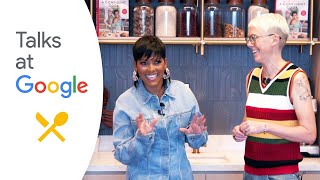
Talks-at-Google session where Shilpa Maniar interviews Tamron Hall and Lish Steiling about their cookbook A Confident Cook. The book combines storytelling about their friendship and practical guidance to build confidence in the kitchen—tools, pantry staples, basics (eggs, searing, spatchcock chicken), and 360° content (meals, snacks, cocktails, desserts). The transcript includes a live cooking demo (braised chicken thighs with dates, olives, cumin, Calabrian chili, tomato paste, feta, za'atar) and audience Q&A about equipment, meal prep, and apartment-safe cooking.
Chapters
Hi everyone. Thank you for being here today. Welcome to talks at Google. I know that we have so many of you here in person to share this journey with us and be a part of the conversation and we have so many people joining on the live stream. So thank you all for tuning in globally. I'm Shilpa Maniar, I'm the head of Google Ads Safety and also the chair of the Indus Google Network. And I am honored to have with us today two very talented and inspirational women that you've probably watched growing up as well, Tamron hall and Lish Styling, who just launched their cookbook, A Confident Cook, which I'm so excited to share, which is fresh off the press. It is now number three in all cookbooks around the world and it is, I know, amazing in a day they were able to do this and it is number one in entertainment and number one in Christmas. So. So all the holiday spirit's already very active and fresh and so really excited to talk about this book today. But before we get into it, I wanted to share a little background on these two incredible women. Tamron hall is a fellow Texan, a two time Emmy award winning television host and executive producer of the syndicated talk show Tamron Hall. She just launched season six of it. I think she came fresh from the studio today which is pretty exciting. She's also someone that I've been able to watch kind of growing up as a young journalist at NBCUniversal. So you know, she's constantly a motivational force and there's no surprise that her unique storytelling capabilities has led her to become a best selling author, an Emmy award winning television host, a self taught cook and she's also a mother. Tamron has had her culinary senses ignited at an early age by her grandfather and she's very inspired by her dad who she'll talk about later. Today she is guest judged on the Food Network's Bobby Flay Emeril Live and she has been a longtime supporter and participant of leading culinary events like the James Beard Award. She is, she enjoys cooking at home with friends and having people gathered around her table. So really excited to have her with us today. And joining her will be Lish Styling who is a chef. You've probably seen her on Chopped and Food Network kind of winning awards and kind of cooking up a storm and really showing you the magic in the kitchen and what you can create together and how you can enjoy the process. She is a food stylist, a recipe writer, a James Beard Award and Emmy award winning culinary producer. She's the co founder of the brand, the Taste Curators, and is a regular chef on Epicurious on YouTube. So a nice plug for YouTube. Glad that she's representing us as well in the broader ecosystem. She has worked for and contributed to the Today Show, Food Network, the New York Times, the Tamron Hall Show, Vanity Fair, and so many others. And we're very excited to have these two very intelligent ladies with us. And about the book. So going back to the book, A Confident Cook is about friendship, it's about family ship, and it's about bringing people together through food. This book has 73 recipes, and we're going to talk about the whole journey from making eggs to branzino and really complex dishes. And so, with no other delay, I would like to welcome Tamron hall and with styling to the kitchen.
Hello.
Thank you so much.
Thank you, thank you, thank you. It's like you Googled us.
I know.
I didn't know I said all that. As if I don't Google myself every night. Thank you for the warm welcome.
It is such an honor to have you both here. It just really, the magic of your spirit shines in this book. And I'm excited for everybody around the world to kind of indulge with us as we, because we're going to do some cooking today. And so before we get into it, I wanted to talk a little bit about this book. Number one right now on the charts. It's been a day into it. How are you feeling? I don't know.
I think we keep pinching each other.
Full disclosure, because we are like, I'm a Texan, she's a Wisconsinite. We're kind of born to be competitive, but in a humbling, polite way. And so in that humbling, polite way, all night long, we heard going, oh, look at us. We're moving up.
We're moving up.
We're kind of like, you know, there.
Were a lot of phone calls.
There were a lot of phone calls. Can you believe it? It's a joy. We met almost 10, 10 years ago at the Today show when Lish was on the food style team and I was a host of that show. And as this journey started, we said, you know, we're gonna maybe do a cookbook. And it was just kind of in passing, and then it became real. And you're holding our book.
I mean, I mean, it's out there.
It's like you're babysitting 20 bucks an hour, you New Yorker.
20 bucks, maybe a little bit more. But, you know, the book that you are holding has over 73 recipes in it, and it's so thoughtfully curated. But before we get into all the delicious recipes you talk about, wanted to talk about the journey of your friendship and the conversation that started this all because you were somehow able to take this moment on the Today show and turn it into a deeper connection, into a friendship, a family ship, which you talk about. So I would love to hear a little bit about your journey as friends as well as your inspiration behind starting your own culinary journey.
Well, honestly, that's why we opened the book that you have in your hand with pictures of us from. I think we were both 7 years old. Miles apart and miles apart in age. I'm a lot older than licious.
Not a lot older.
Okay, Old enough.
Be gentle.
But we had the exact same haircuts then. Then if I had come all at.
That, we would still have.
And all these years later, we had the ex. Same haircut. But our friendship really started. And I love that you appreciate that part of it because we do have phenomenal recipes. But what we wanted was a story. You know, we're both storytellers. She tells stories with food, and I do it on the show. But we wanted to share with you the nature of curiosity. Right? Food inspires curiosity, but also life is better when you are curious about people. So she had the tattoos here. I walk over in the kitchen and I see someone with a radish and a carrot. And I'm like, anybody who gets a root vegetable means business, right? I'm like, you gotta be able to cook. Cause you could have had, like, a.
Hot fudge sundae, which I love, by the way. Don't put it past me.
So I inquired about her tattoos, but she also had bruises on her. And I'm like, is everything okay? What happened? Is cooking that hard that you end up bruised? And she said.
I said, oh, no. My wife and I are taking a boot camp in Central Park. Like, you should come sometime.
A boot camp?
Yeah, it's a workout thing. And she was like, really? Okay, boot camp.
But I had an agenda.
She showed up.
I showed up because I had an agenda.
Because in her Lulu line.
That'S how Wisconsin. She thinks it's Lululemon. And so I. I did. I did. And. And I said, okay. Well, I. I knew in the back of my mind, I had all of these questions about cooking that I didn't know where I was going to get these answers. So I'm like, okay, I'll go to this boot camp thing with you. I showed up, she was SP it was in Central Park. I left with a lot of what you get on your back when you lay in Central park and lose your imagination. But I left with a lifelong friend. We went back to my apartment. That sounds so nefarious.
She drinks champagne.
We met at a park and ended up in my apartment. But we ended up there with her wife, which now sounds even more scenery. We'll be back.
This story is not in the book. We're getting rid of bts, and it's.
Only going out with the world right now. Hyrule. But we started this conversation, and I explained to her that, you know, my dad had passed away in 2008, and the two things he loved more. Thank you. Than anything was serving in the army and his family and cooking for his family. So we started to talk about, like, how do you start? How do you get confident? Right. You know, I told her, and it's in the book how I'd gone out to a store and I bought all of these toys, and I got back home with $2,000, and this is the truth. Worth of tools from a store I won't name, and I still couldn't cook.
Shocking.
That's not how it works.
It made no sense to me.
I know I've done the same mistake. I'm like, I bought this pretty pan. It looks good. Does it taste good?
You're like, you want the food to magically appear? And Lish launched in and started this. Of helping to build my confidence in the kitchen.
Yep. Which all started with those tools. Like, we got rid of a lot of them. Full disclosure. I mean, even there was this peeler. I kid you not. I didn't know how to use her vegetable peeler.
She was like, what is this?
I was like, what is this? And meanwhile, this is, like, the exact peeler that I gifted her a couple months later. And she was like, this is amazing. It's my favorite gift you've ever given me. And it was like, $5.
$5. And that's why in the book, we have the chapter on what do you need in the kitch kitchen? And so we don't tell you to throw away things, but we do clear up some of those things you're afraid to ask, like, what knife do you really need that big block with, like, 16 knives?
That really is just the book. And then you're like, should you really put it in a wooden thing that's down and you don't know what's inside of it?
Exactly.
You can't clean it, but they're Expensive.
But you break it down in the book. You really only need three knives.
Just a chef's knife, a serrated knife, and a paring knife. And as long as you keep them sharp, you can do anything. It's pretty amazing.
You also talk about all of the rubber utensils or plastic utensils that you need. So you were able to take tamron from a gadget gal to almost a minimalist.
Yeah.
And so if, you know, I want to hear. Actually want to finish your journey story, but since we're talking about the pantry, if there's top five things you need in your pantry, what would that be?
Pantry or equipment.
Equipment, Equipment. Equipment.
Now, okay, equipment. A good chef's knife, wooden spoon, pair of metal tip tongs, fish spatula, and a good cutting board that's at least this size so that you're not chasing things around the counter as you chop. There's nothing worse than like you're chopping and things are rolling off the board. Right. Half your mise en place goes on the floor, like, so having a board that's big enough that you can actually use is so important in my mind.
And I saw you all look as I did when she said fish spatula. Let's just stop there. You had me at fish spatula. I too. I too. Beginners did not know what the hell a fish spatula was. We ended up after she purged my drawer and I then had enough money to go buy Louboutins from the ebay sale of Walmart things. We went to a Restaurant depot, which is pretty much everywhere. They have them here in New York and most places have some place that you can find affordable tools. We went in there. She said, you need this thing. It's called a fish spatula. If you go. And you'll see it in our book as well. It's a very thin spatula that allows you to flip, for example, fish and other things with ease. I'd never used that. So that's in our book of some of those things that you didn't. And she says, chef's knife. That's again, I'm going to decode because I am the beginner. It's just a knife, but, you know, the regular old sharp looking knife that your mom or dad used to. But that's the link. It's the one that Anthony Hopkins held. Exactly. But those are the things that we feel you need.
And so I feel like we just pivoted right to the kitchen. We went from the Central park to your apartment to the kitchen. So I'm going to take it back to your journey again so that evolution kind of happened organically where you're able to take this moment and build a deeper connection. And then you talk about your dad and you talk about your journey as a 13 year old experiencing the magic of a kitchen. Can we talk about what made you want to become a cook and what made you want to be a confident cook?
Well, what made me want to cook is once I moved to New York, my delivery bills were insane. I'm like, are you kidding me?
$20 for just one sushi? Yeah.
It's like, wait, what? I mean. And the math was a math thing. And so I was like, oh, gosh. But also, my dad had passed away and we, to be very honest with you, went to Texas to see my mom. And we went from this celebratory holiday of, you know, like I said, we are Southern. We're Texas, five or six pies. Turkey, ham. You know, there's that meme, greens, beans, tomatoes. We would have everything to nothing because my mom was never really a cook. And I said, I want to surprise my family within a year or so with cooking the meal. And so we just started, and it really started with a text. I said, you know, where do I even start? She goes, what do you have in the kitchen? And I'm like, well, I just went to Fairway and this is a true story. So I'm just gonna. I went to Fairway and I had a filet, right? I said, I have a little fish. What do I do with the fish? And then we started from there, and it was through text message. Because she lived on one side of the city, I lived on another. This was pre Uber. Believe that. That did not exist when we met.
Taxis, yellow cabs. Remember this?
Yeah. We were in those days, and I'd already spent all my money on delivery, so I couldn't get a taxi. And so we started to walk through a very simple fish on text. And in fact, I've never shared this. Our first idea for the book was Cooking by Text, and we were going to share all of our text messages.
We joked about it for a very long time.
And so that's why in the book, after each recipe, you see dialogue. Those are real conversations of me. She created 79 recipes. And I'll have to brag on her for a second because what's not on Google about her is that she is your favorite chef's favorite chef. Lish is a recipe tester. And so recipe testers don't often get the shine. So she really has probably created 90% of what you love in cookbooks. Truly. I call her. What are you doing? Recipe testing. Recipe testing. So she is the person, when you see the measurements and all that, that's her mind, and that's her creativity. And I'm like, you need to get your shine on. And that's why we have this book together, because she does have a particular set of. Liam needs some skills. No, it's true.
It's tr. I love how you bring your hype woman best friend with you everywhere you go.
I need to be part of this.
I need to be part of this friendship and into your team. And so, Alish, you talked about you were 13 years old.
Oh, yeah.
You were. I think it was a Martha Stewart cooking class. Was it?
Oh, no, it was just. I was obsessed with Martha Stewart. Like, Saturday morning cartoons. Oh, no. It was Martha Stewart living on the television and me sitting in front of it. And I'm pretty sure, like, some garden show came right after her. Like, I remember it specifically. Every Saturday morning, I would be in front of the television. And then my parents were finally like, okay, we'll get you a subscription to the magazine. So I had a Martha Stewart subscription when it was like, you know, the third publication kind of thing. And I saved all of them. I think my parents still have them in the basement. Sorry, mom and dad, but, like, I was obsessed with it. And I. From the age of 13, I cooked her, like, turkey that had the cheesecloth soaked in white wine with butter and the whole thing, you know, like, she.
Was their favorite kid.
Yeah. But, like, it just grew on me. I was a dancer growing up as well as a kid, and I love rhythm. Yes. Yeah. I love ballet. I taught ballet. I took it all the way through up until the pandemic, really. But the rhythm of dance is the same as the rhythm in a kitchen. Like, I. Once I realized that, I'm like, oh, my God. Working on a line is just like a dance, except that if you mess up, somebody could get hurt, you know, so. And that's what kind of drew me to it. It's like there's this rhythm, this passion.
Yeah.
It's beautiful. I love that you think in the book you even call it a science experiment, which sometimes I think about it, you're like, if you add this, like, what's gonna happen? Is something gonna blow up? Usually I'm like, am I gonna blow something up, or is the fire alarm gonna go on? But I think it's interesting that you say it's such a fun place to be. And it is a rhythm, and you can relax.
And I didn't think that at first. I mean, when people would tell me, oh, I love cooking. It's relaxing. I'm like, what devil are you? Like, what plant?
I just.
It was such a foreign thing. And I Before meeting list. So I've been in TV for 30 years, and I've done every morning show, and I've done every cooking morning show. Da, da, da. I would leave and not be interested. I'm telling the truth.
I get it.
I can't wait till we make it tomorrow. Bye. Bye. And I'd go home like delivery. Hi. I mean, because I was just like, okay, it sound good in the moment. But then you go home, you're like, wait a minute. First, I don't feel like going to grocery store. And you make all these reasons as to why it's not a good idea. I don't have the time. So that's why in the book, we tell you how, not only the tools, but how to stock your pantry. Because one of the things with me, I want to go home. I don't need to run to the store to go get red wine vinegar. I don't need to run a store. Get apple cider vinegar. So we tell you these items with a long shelf life that if you stock your pantry with, that's one less thing you have to worry about. And these aren't things you're gonna have to go out and buy tomorrow, and then they're gonna go bad the next week or things that are gonna break your wallet. And so if you keep these staples in whole mustard, for example, Whole grain mustard. So I'd never heard. I'm a French's kid. I didn't know what this was. And so she tells me.
Whole grain mustard or the pink peppercorn. Peppercorn.
Very scandalous thing, those people, peppercorns.
Why are they scandalous?
Because it's a long story. On the after show. But no, we tell you in that what to stock your pantry. Because I understand. And we understand what it's like to work all day to have other things on your mind. And the last thing you need to come into your home is, okay, what am I? It's. It can feel like a chore. And we don't want that for you. Which includes this recipe that we're going to make a little bit later on paper. You're like, I can't make that. When I tell you it's so easy. And this is the type of dish you make. And when your friends come over, you're like, go ahead, try. You're welcome. You're welcome.
Well, and to that point, though, like, you change somebody's day when you feed them a good meal, right? So it should be joyous as you're preparing it.
I feel like Google is subliminally doing that to us because they're feeding us every day, and then we keep coming back.
With a shot.
Food is a common thread.
Cause we're not.
Food does create this community in this ecosystem and connect us. And I think that is beautiful.
It is beautiful. And I'll tell you, when companies were looking at ways to connect with employees, way back when I started out work, you know, it was like, okay, can we provide childcare? Then it became, okay, what about a great place for them to eat? Because food is a common thread. One of the things I'm so proud of with this book, and we don't talk a lot about it because it speaks for itself, but we are the only book out right now, and maybe the only book that's been created for a long, long, long time with a black woman and a white woman, with a woman who's LGBTQ and a woman who's an ally that doesn't exist. Think about some of the cookbooks that are fabulous and so what we want in the food as well as our story to show this common thread. You know, I'm curious about this carrot radish woman with white hair that's, you know, seemingly floating through a kitchen. She's curious about this spunky black woman that's talking way too damn much all the time. But we become friends. And so as much as we are so proud of these recipes, and they are fire, we are proud of the connection that food can make with your workplace, with your friends, with a stranger. And that's what these meals are.
And I love that you said that, because food is truly a universal language. It transcends borders and culture, cultures. And I think that also adds to the element now to cook, it's like, there's so many spices, and you're like, which ones? And I know I cook Indian food, and I have my spice. You know, jar my spice, like, container with a bunch of things. And so, you know, we talked about kind of the five tools you kind of need in your kitchen as a utensil. What would be, like, the five things or ingredients? Can you say if there. There are a few that you would just want to have, like, staples?
Oh, God. So, well, obviously salt. And we're very specific. And I know that sounds like salt. Du. Beginner cooks. Beginner cook. I learned through Lish not all salt is created equal. We don't get paid to say this, but we use diamond crystal salt. It's a lighter salt. It's a layering salt. And we talk about it in the book because what Lish has taught me, you know, I kind of was that person, like, I'm going to over salt it, or at the end I can finish it off with salt. And then you're like, this is really salty. Salt is layering. So when this dish we're going to prepare, you'll see we add salt at different points. Points in it. But this diamond crystal salt is a lighter salt because not all salt is the same. And she breaks that down in the book.
Yeah, it's not as salty. It actually is very jagged. So it sticks to what you're seasoning very well. Like a lot of times, nothing against Mortons and people like love it and use it and just learn how to use it. That's the important part. Right. But they're little pebbles. So when you season a steak, some of it bounces off. Most of it bounces off. Whereas with the diamond crystal, it actually is designed to stick to the protein and to your food. So see?
Yeah, Right.
It's fine.
The reason why we do that is because to build confidence in the kitchen, we want you to have the foundation for success. So the recipes are for beginners, but they're also recipes. The book is for people who are seasoned pros looking for something new to make.
Yeah, yeah.
And I think that you said that I'm gonna always remember this salt. Now, the diamond crystal, because it's your white T shirt. You always have it. Use it in everything. It has low density and so definitely a tool. I'm taking away from this, but I want to get into the demo and cooking some of the delicious food we have in front of us. But before we start, just wanted to ask you a quick question. For a lot of us, because we're working, we're busy. Do you meal prep on the weekend or how do you kind of plan your. And then you can cook. So it's easier to cook than when you come home from work.
It is. So I have a 5 year old son. I know I'm 199.
But you are so young. And she keeps.
My birthday's coming up. I had my first kid at age 4. I have 178 shows a season. We start out in September and we end In June, she's recipe testing all the time. We're like you. We don't have time. And plus, we want to have a social life. Trust me. Our favorite water is known as champagne. We have a life, and so we have things we like to do. And for me, I prep out because I'm a Virgo and I am obsessed with organization. I'm a very. I pick out what I'm wearing for the whole week on Sunday, down to my Spanx, because I need to plan. And so for me, I look at the recipes that I want to make, I plan it out. And here's the great thing. If you decide you don't want to make it that day, that's okay. But I look at my week ahead. It just helps me out, and it helps me with my food confidence.
I love that. Okay, so meal prep is okay to do. So it's okay if it's not as fresh or, like, is it. Because I know that you talk about in the book about certain herbs and certain.
So that's the one thing that she did ask me was with prepping, like, is there anything that I can't prep ahead for me? Onions and garlic do not prep ahead. They just grow intenser in flavor. They can get an off flavor a little bit.
Your whole refrigerator will smell.
Yeah. So that always chop last minute and fresh, like tender herbs. Don't chop them ahead of time. That takes, like, you know, 30 seconds to run a knife through them. They bruise so easily that they'll just die and lose their flavor. If you pre chop them.
Yeah. And what I do with food prep, for example, we're big brunch people. You can come.
There'll be water.
There'll be water. Which, by the way, speaking of water, it was important that we have a whole book on cocktails, because this book is 360. I wanted it to be the modern person's Betty Crocker, where we have breakfast, lunch, dinner, snacks, drinks, desserts. The best chocolate chip cookie recipe you'll ever have in your life. And so we have our endless mimosa recipes. We use one that has cherry juice in it. That's spectacular. Lish, because she's a recipe tester, really talks about how salt can enhance anything. So our mimosas have a little dash of salt, which you'll be able to read about. So we wanted this whole 360 experience. But going back to your question about meal prep, so we have this cardamom. Beautiful. It's a baked French toast with cardamom, which is a spice One of my favorite spices that I keep. I love that you prep it the day before by putting it in a soak. It goes in the refrigerator. Back in the day, I'd be like, oh, my God, that's two days of cooking. No, it's really not. Because you're putting it in overnight. It's soaking up all the goodness from the recipe. The next morning, when your friends are there, you're up, you're talking, you're having your water, it's coming up to room temperature. You put it in the oven, you pull it out, and you have this beautiful baked French toast that is absolutely the best breakfast. I will put my stick my name on it. That you'll ever have.
Custardy goodness with cardamom.
And we have it with berries with it. Sparkling berries, we call it. You'll have to rewind. Sparkling.
Yeah, exactly. But you can guess.
But you don't have to. For kids. You don't have to. So a lot of our recipes, you know, they're for an adult palette and for kids to enjoy them as well. We have a bucatini pomodoro that is absolutely beautiful. It's my son's favorite, young Mo's favorite. But it's also delicious for adults because going back to time, I don't have time to make three meals. One for him, one for us. So we looked for things. Even this dish is one of his favorites that everyone can enjoy because we mean this. We want joyous. No pressure. I did not, and Lish did not want to add to the stress. We're all stressed out enough, and we wanted you to be able to have a big result right. With effort, because it does take effort, but not overwhelming effort. Does that make sense? And that was important to us.
I love that. And when we're looking at the food, our digestive system.
I'm hungry.
Starts by looking at food. Actually, 80% of what we taste is by looking at it. So we're going to cook today chicken thighs with dates and olives. So we're talking about dates earlier, basically.
And this is the thing with this recipe. Chicken thighs. I didn't we tell them the book Eat chicken thighs until I was, like, in my 30s, because when I was growing up, like, that was the part of the chicken that the old people ate, like, chicken thighs. Give me a leg. And then Granny's gonna get Granny. I want the wing, you know, and so this the reason why chicken thighs is that it soaks up the flavor it really brings in. And this is the dish that at the end. You want a nice crunchy bread so you can get in there and really absorb the flavor. So we start out with chicken thighs, skinless chicken thighs, which are easy to find. Easy to find.
And how hot is the pan?
Oh, we're going hot. And you want to start hot pan, hot oil, and then the protein.
Right.
If you heat your pan all the way through and then add your fat, that pan is virtually nonstick. So then you don't have to actually have nonstick pans. You can use stainless steel, cast iron, all that goodness.
And as a beginner, what I would do, I used to put my oil in the pan and then put it on and then turn it on and then boof. And wonder why and wonder why the house was smoking. Part of the reason, Lish. And we talk about in the book that you heat your pan without the oil. Let's say you forget, you get distracted, Google calls you, and you gotta go to work. You're not burning up your oil, right? So you can turn this on and heat this up without it causing a smoke out. You put your hot. Your fat in after that, and it makes it instantly nonstick. And you've saved yourself the drama of a smoky house.
Wait, are you gonna talk about her pinch of salt? She just had it didn't tell us about.
And this is a pet peeve because she wants me to this all the time. This is a big deal. It's a big deal. What's a pinch of salt? Hold your hand up. What do you think a pinch of salt is? None of you can. This is a cookless class. In here, a pinch of salt is.
Three fingers and a thumb.
Three fingers.
That's a chef's pinch of salt.
And that's the point of what you just did. There literally was music to my ears because I am you. So I was able to.
She feels humanized. Like 14 years ago, I was able.
To ask a world class chef without being embarrassed, because if I'd asked that on one of my shows, people are like, ah, please. Did y' all know anything? And I'd have to look at my name all trending all night long. But I get to ask the questions that you may not know to ask or maybe you're embarrassed to ask. So a pinch of salt is not that pink dress. You gotta get in there. You gotta get in there. It's like a comedy show. When you sit on the front row, you get roasted. You get roasted. So a pinch of salt, three fingers. And I did not know that. And that's the Thing Lish is saying. You're layering the salt.
Yes, exactly. Every ingredient deserves to taste the best that it can. That means that every ingredient needs a little bit of salt. That's what brings out the flavor of food. It's not there to make it salty. It's there to bring out the flavor of the food.
Right. Even the oils you're talking about, you can use a neutral oil.
Yeah, absolutely.
Because there's so many oils on the market, you're like, what's going to be.
This can be overwhelming. And we kind of experience explain that in the book. Listen, you know, healthy is subjective and so.
Very true.
Well, I tell you why. Because, you know, we, we grew up eating meat and I have no issue with vegans. And God bless, it's a, it's a wonderful experience I'm sure you're having. But, but my favorite thing is that my favorite thing is a burger. And we have our triple bee burger that you make with a butter compote that you can keep this butter in your freezer. So once you make it for your burger, you can keep it for fish if you want something else to put it on. So we have burgers, we have a steak that is. I have a 27 year old nephew, he works for the Buffalo Bills. He practically comes to New York every other weekend. He's like, aunt Tamara, just make the steak. And we, we have fish. We have a whole fish. Our first vacation after our date, well.
I was actually gonna say, there's so many fish in the sea.
I know, right?
There were so many fish in the.
Sea and I ended up with this one. But we went on this trip with my nephew to Antigua and I love whole fish. And I said, lish, we have to have a whole fish in our book because so many people are intimidated by whole.
By whole fish.
Yep. I think the eyes intimidate me. I'm like, why are you looking at me?
They're not. You're looking at it.
Yeah. Trust me, they're not looking at me anymore.
And so right now she's cutting a parsnip, which is a part of this recipe. So you're browning your skinless chicken thighs.
Smells so good.
And so you're gonna brown these on one side. This recipe, as we pointed out, you've got pitted olives, dates, cumin, Calabrian chili paste. That's gonna give you a little heat in it. Tomato paste, feta, and za'. Atar. So it seems like again, I used to be the person. I'm counting the number of ingredients Cause I'm like, hold up. Not making that too many. This has layers in it. And when you look at it, you might think, God, that's a lot of recipes. It's not. It really isn't, and you'll get through it. But I was the person. If they had two lines for the recipe, I was not making it. And so that's what we were conscious of, because we want you to be able to still enjoy and build your confidence in the kitchen.
Now, the nice thing about. I know a lot of people are probably, like, skinless chicken thighs. Like, why would you do that? For me, when you're doing a braised chicken dish, the skin always just kind of gets soggy and slimy, right? And everybody kind of ends up pushing it off the side anyway. So why not build the flavor into the meat itself? Because otherwise, you're browning with that skin, and nobody eats it. So you might as well get the flavor in the actual meat and let that help develop the dish. So that's why the skinless in this recipe, which I think, you know, makes a huge difference in the end result.
And that's the knowledge of a recipe test.
Right?
She's tested enough of these dishes with the skin on to recognize what we all experience, which is, you see that skin, you're gonna slide it right over because you can't cut it. And so this is a braised chicken with a lot of flavor. And it is. It's just. This is one of my. I know we were talking earlier. This is one of my favorite recipes in the entire book. It just leaves you with this great feeling of the feta cheese. It's very Mediterranean fire, and there's a freshness to it that is so good.
And I also love that your husband doesn't necessarily like olives.
No, he does not.
And he eats this dish.
He eats the dish, or he can.
Take out olives, but he likes the flavor of it.
Yeah, no, he does love it. He pushes the olives over to the side, and we want you to be flexible, right? If you don't like olives, don't put the olives in. Right? It's okay. And that's what we want you to do. We want you to try the recipe and then decide on what fits you, because that's a part of the confidence, tasting as you go and putting the things in it that you like.
And I think that one of the things you also talk about is, like, if you can't get skinless things or you can't get a fish, that's deboned. Like, you can actually ask at the deli or the butcher's shop if that's the way you want it. Right.
They are there to help you.
We don't have to struggle. So you said become their friend.
Yes, exactly. I am friends with the guys at my fishing. I am friends with my butchers at my butcher shop. Like, and I can go in and say, hey, what's fresh today? I'd like the skin removed from that. I love this red sea bass, but I don't want it whole. Can you fillet it for me? You know, that's if I don't feel like practicing at home.
But she's a chef and she has a friend. I walk into the random grocery store and I'm like, can you please take the skin off the chicken? And they do, because it's their job.
Yes.
A fun fact here. Some of the most skilled people in the grocery store will be in the meat department and the fish department. And you don't have to know them personally. You go in and say, can you debone this fish and clean this fish? That's a part of the grocery store. And this doesn't have to be an expensive, fancy grocery store. Wherever you live, wherever you go, you walk in, hi, can I get that whole branzino? Can you clean it for me? That's a part of it. So that's again, building your confidence and recognizing and shout out to people who still have those jobs, because those are skilled jobs. You don't just become a butcher. Those are skilled jobs. And they're there to answer your questions and to do you know what you need to make your recipe? I've gone in and said, here, here's my. This is what the recipe says. Can you do that? And they're like, okay, that sounds good.
Exactly. And it gives them something to do. It's like, you know, how many times can they weigh out a pound of ground meat? Like, you know, kind of want to.
Be like, can you make it for me, too?
Can you cook it?
But it was interesting. You said that I'm always scared to cook for a fish or anything raw. But you said to know, like, you can't. You can smell if a fish is bad, but you can also look to see if it's fresh or not. And you said, make sure you look at. You said to look into its eyes.
Well, not like this, no, but you'll see that it's a cloudiness in the eyes, but you'll be able to see.
You want it to be clear.
But I. And part of this, again, building confidence in the kitchen is the relationship with food. I said, you know, we hear people say, oh, I'm so scared to touch that fish, or I'm scared to touch that chicken. What you put in your body, there's nothing more important. And getting to know the food source, getting to know what your fish is supposed to smell like or what. Oh, that was a pinch.
Two pinches.
And so what she's added in here, onions, celery. We're building a base for the chicken thighs in there now. I still can't do that.
So do you want to try?
No, I don't want to try. If I was, I'd try at home. I'd be like. But again, that's the reality of it. This is a James Beard award winning producer chef, and I am truly somebody who did not really feel comfortable in the kitchen. And now I cook probably four times a week. I have two shows a day. I come home, I've already decided what I'm preparing that night. We have a couple of, like, we have no time to waste chickens, because who has time to waste? And so you're thinking, what am I gonna have? We have a big salad, this big bowl salad. Because Lish said that when you make a salad, all the good stuff is at the bottom. So she just basically made us a salad based on all the good stuff that gets at the bottom. Right.
The little extra dressing, the cheese, the protein, it all sinks to the bottom. The croutons. It's like, I always wanted to do a big bowl salad, so this was our opportunity to do.
Yeah.
Big bowl salad. We tell you how to make a basic vinaigrette. That's something that you can make in advance. Keep it in the refrigerator, and that will last you for many days. So we try to set you up again with your time in mind, but also because you want to have fun. And whether you're cooking for yourself or some other people in your life or a big crowd, we have. And you go on my social media, I just made it. I couldn't believe how impressed people were. We have a giant crab cake because Lish said, how many times you go to a restaurant, you have a crab cake, and everybody's fighting over those two little crab cakes. So she said, why not make a giant crab cake? So we make this beautiful giant crab cake with a creamy herb sauce that any of you today, if you've never walked in a kitchen, you can make that today. And it is absolutely delicious.
Yep. So we have our parsnips. The celery onion going. Added a little bit of cumin in there. So this is one of the things that I like to encourage people to do. You are in charge. You're in control in the kitchen, right? Yes.
Okay.
So the pan was a little bit hot. Turn down the heat. Even if the recipe says medium high heat, everybody's medium high heat is different.
Right.
So you just need to keep an eye on it, listen to it, use all of your senses. Smell. You can tell if something is starting to burn, right? By the smell, by the sight, by the sound. Oil sounds angry when it starts to get too hot. Right. And you can actually hear the difference between happy oil and angry oil. So you just really have to use all of your senses as you go.
And don't be afraid of browning. I think sometimes people think, oh, my, it's browning. Is this gonna go to. It's not. You can control the heat if you need to take it off. As Lish said, if you're listening to it. And that's what I do. Enjoy. Listen. I used to ride my bike all the time around New York City when we met at the Today show. I would ride my bike from the Today show to my home in Tribeca. It's an escape. And cooking is that for me, if it's 20 minutes, it gives you a chance. You guys work very, very hard with very pressure cooker lives. And it is nice to have something for 20 minutes, 30 minutes, an hour that you can just carve out. And I think, to me, this turned into a therapeutic thing. I, you know, I do transcendental meditation. I don't always have time to fit in my 2:20 minutes, and I feel terrible. I'll go in the kitchen, and it gives me that same cathartic feeling of just like, I'm not thinking about anything right now but this. And then you sit down and you prepare your meal, and you might find yourself back on your email working, but you're sitting there with this delicious meal that you've made. There's a form of peace that can come from it if you just get in there and try it.
And when did you go from that? Because I know that you said you were overwhelmed, and you've been cooking for now, 12, 20 years. I mean, you're not a beginner anymore, but, like, you know, when you started cooking, when was that turning point for you where you found it relaxing because you went from overwhelmingness till, like, now you find it meditative?
Honestly, it was very early on in our friendship because, you know, And I have. This is not a name drop, but okay. The Barefoot Contessa. Her foolproof book. Somebody told me to get her book, and I did. Foolproof. And I started practicing. It was phenomenal. And I was lucky enough to have her invite me to her home. You're welcome. In the Hamptons. And there I was with myself and Ina, and we were talking. Ina and I were just chatting it up over in her beautiful home. And Jeffrey was out back. And then I came back, and Lish was like, okay, try this. And I said, wow, there's something so comforting about Lish and Ina and the way they explain and take you on this journey. So early on, Lish was very. She had that same way of building your confidence. So she set me up for success. And honestly, when I made my first whole fish, I was like, this girl. I can do this. And it just. And so those are the recipes. So when you get the book, look through there, see what speaks to your heart, and then try it. Get in there. One of the things that I also did, I'm a Virgo. I have mentioned that seven times. Don't let perfect be the enemy of good. And what I mean by that is.
I used to be.
If my onions weren't exactly all the same dice, I was like, this is all wrong. Well, she's a chef. She's a culinary expert. My onion dice will never be up to her gains. Also, other tip, don't try to clean while cooking.
I was gonna just ask that. I was like, you know, the cooking and the cleaning and the prepping, like, that takes hours.
You can do some cleaning. But what, What? And this is the reason I say that you start cooking, you turn away. This is burnt your chicken, you know, and now you're mad because you're like, damn it, I did all that for nothing. So, yeah, you can tidy up your workspace, and that's important. But don't turn around and say, let me now scour this pan, or, like, just stay in the moment of cooking. And I think that helped build my confidence because, again, you're focused on that. So what she's done now, she's put the tomato paste in there. She's also added the Calabrian chilling, which some of you might be feeling tingling your throat right now.
Yeah. Can you taste it? They said 80% is what you taste.
And so that's exactly. So it's going to add heat to this. But not too spicy. I love spicy. My husband does not. But what we added. This is a layered dish with texture to it. So because you know it's like anything, you're gonna put the effort in it. I don't want it to taste just as Cardi B says. Regular shmegula. No, we've got layers in this. So that's what you feel that you feel that heat coming out.
I smell the.
Yeah. And you can smell how when the tomato paste goes in, suddenly there's a sweetness that comes out. You bring out those sugars. So that adds that depth of flavor, that sweet depth of flavor from the tomato paste.
And when did you know this was ready to. After adding the additional seasoning, like, do you wait for the onions to be completely, like, translucent or at what point.
It'S softened so that you can see that the vegetables are softened, starting to be almost cooked through. A little whisper of brown is always a good thing because that's developed flavor.
You can see in their color that they change there. These are the things as you build your confidence. At the beginning of the book, we tell you, for example, how to sear a steak. We take you all the way back to how to scramble an egg. Because so many people I grew up with, people like. And I'm like, that's not scrambled. What is that? We teach you a technique to scramble eggs. We talk to you about what's a hard boiled egg. I like a seven minute egg. Lish, what's you like five?
No, I'm a seven or eight.
Seven or eight.
I think I like a nine minute egg.
You like a nine minute egg. So basically, like. Yeah, you're like, you're done.
Done.
So we take you through how to boil an egg. Like, when we say the basics, we do. So when you look in that book, there's a chapter that. How to sear a steak. Our. No time to waste whole chicken. It really is that. And so what we are trying to do is set you up for success. Once you. You see how effortlessly she's doing this. We detail this in the recipe. And at the end of the chapters, as I said, there are real questions with me saying, wait a minute. How do you spatchcock a chicken? Which is the most controversial recipe in our whole.
Is that the engagement chicken that you say is the engagement chicken?
No, that. Well, that's. I think it was in this. That was engagement chicken. But this is very. This spatchcock chicken is. I'm breaking out in high.
Who's spatchcocked and who's.
You know what it is?
I don't know what spatchcock. How do you spatchcock a chicken?
So in normal, layman, non chef y terms, it's when you take out the back, the spine of the chicken, and it's flat, and that allows it to cook faster. So she said to me, we're gonna spatchcock a chicken. And I'm like, what did you call me? And in the book, we take you through spatchcock this chicken. And I thought it was important because I think when you try this, first of all, it gets your hands in it, but you will have success with this. Oh, you get to eat. Oh, my gosh, I love it. You get to spatchcock the chicken. And it's a great recipe that cooks really fast. So it's in the book as well.
And so what should there. You guys are all getting to taste this. The folks that are in person, Sorry. On the live stream, you can watch us eat. But what should they be like? How savory is it? What spices do you think they're gonna. What undertones are they gonna feel? How do you explain.
This is a very, like, sweet, savory, spicy. There's lots of layers and nuances to it, and you should be able to taste all of those layers with each bite. I think that there's a nice brightness to it from the funkiness of the Calabrian chili and from the vermouth. And there's just like that underlying super savory element from the parsnips and the olives and that caramelized tomato paste. It's just like.
And that's what she talked about. What was in the jar was the vermouth, and that allows you to deglaze it and get that flavor and that crunchiness, because you can't be afraid of the stuff at the bottom. So often people like, that's burnt. It's like, no, it's not. That's burnt stuff at the bottom's best. That's the best stuff. So we walk you through understanding that. The deglaze of the bottom of the pan, for example, to get you just this flavor. But I can't stress enough. I really did not cook. I really did not cook. It was not going to be a part of my journey, but I've learned to so greatly appreciate it. And the key to that building that confidence is having someone who will set you up for success. And I think this book. I know this book does that. I mean, we have a Dutch baby that's amazing with ice cream and citrus. I see a pink dress. You're falling in love over here. And so we have all of those Things. We have a tahini malt that I have had every day this summer, and my Spanx are angst at this point because it is.
It's a tahini milkshake.
It's a tahini malt. So we use malted milk, tahini, oat milk, salt, vanilla ice cream.
Oof.
And it is game changer.
Wisconsin. Like, this reminds me of the frozen custard of Wisconsin. It was super, like.
Yeah, you know, it was really tough to find one recipe to make for you all today, so hopefully you're enjoying it. There's so many more in the book, but it's made with chicken. I know we talked about this. I know how you feel about vegan food. Is there a substitute for chicken for the folks that can add chicken to it?
So that's for me. I thought that the thing that would probably work the best here would be, like, a cauliflower steak, and then you could braise it in that same liquid and it would absorb all of the flavors of that same juice. I didn't have a chance to actually develop it and test it beforehand, so I apologize if there's no vegetables substitute for it.
Make our harissa carrots. We have harissa carrots.
Don't make this.
Don't make this.
We have a beautiful harissa carrot that really reminds me of this because it does have the heat of the harissa and it has, like, a texture. So I think you could do the harissa as a replacement for this. We have a pink peppercorn corn on the cob that you don't have to make on the grill. This cheese and pink peppercorn, and it's an elote inspired corn. We have a beautiful zucchini, so that we have, I think, great replacements. But for me, I think the closest thing to do this would be the harissa carrots, because they're amazing. It's phenomenal.
I wish we could have made all this food. It's just making me even more hungrier.
So who's cooking dinner tonight? We're coming over.
Yeah, exactly.
So before we open the Florida questions, what is your song? Because you talk about this. You talk about cooking as a dance, cooking as a rhythm. There's songs that you have in the book that you listen to while cooking. What is the song you would listen to while you're preparing this dish?
Oh, that's a great question. What's in the book? Let me see.
I know. I mean, you just quoted Cardi B. Earlier, so I know.
Yeah. That doesn't go with Cardi.
Maybe Billy Ocean, Love really hurts without you.
You like that one? So this is our playlist. At the back of the book, we have our playlist. I think mine would be how deep is your love? Cause it's deep inside and soaking up little Bee Gee. How deep is your love?
A little step tap action as you make your chickens.
Oh, we can. Oh, these are. Okay, let's see where we go. I'm looking at our. Oh, I like just one kiss. Rafael Siddiq. These are our real playlists, but we put this book together like a year ago. By the way, this is all at my home in Sag Harbor. This is a market in Sag harbor that we go to, and it was important for us to shoot it on location. There's your playlist.
Oh, I love it. There's so many.
And we shot all of this on location because we wanted to really take you inside our journey so that you can feel like this is your friend and you're able to call her. And I'm your friend and I'm really going to ask the real questions that your friend would ask on this cooking experience. And we were so lucky that Giada, Carla Hall, Gail Simon, Suzanne Goh all have the back of the book endorsement. Let me just put that out there.
And you know, it's because it's the book. I can't wait for you all to kind of get in there and start cooking. I can't wait to cook. But I'm sure you have a lot of questions, so I do want to open up the floor to questions. You can sing a song, you can do a dance, you can ask a question about cooking to our amazing chefs here. So any questions? Sure.
Hello.
Hello. My name is. Oh, we're doing. Oh, hello. It's official. It's official. So my question, I have like your stereotypical 20something New York City apartment and that the kitchen is non existent. And so when it comes to, like.
Appliances, there are a lot of fancy.
Appliances that I have no space. And so if you were to have like one kitchen appliance on your counter that was going to take up a.
Substantial amount of space, what would it be?
Mine is a food processor.
Mine's an air fryer. But you didn't ask me.
I'd say a Vitamix.
Vitamix, yeah.
Yeah.
We do go through, like the equipment that you need in the book, and a lot of it, we say is unnecessary unless you're really going to use it. So that would be my suggestion, is think about what you're actually really going to use and take up the counter space with that. And whether that's a food processor, a blender, whatever it may be. It could just be a toaster. It could be a toaster oven.
You didn't like the idea of whatever.
Gonna use.
Yeah.
An air fryer.
You won't use it enough to justify it.
But no, I think that's something that you're gonna use.
And, you know, you look, I think that's a great question because it's true. We live in New York, but outside of New York, it doesn't matter. I don't want a bunch of stuff in my. On top. And then I'm trying to cook and it's like. So for me, I think it's how often, as Liz said, you're gonna use it. And I have to say, I did change my mind. I thought food processor until you said the Vitamix, because I probably use that more than anything. You're making soups with it. It has a versatility.
The tahini malt.
The tahini malt. But yeah. And just realizing that there are no rules to this. Right. What you're going to use. Use it. But the biggest. The one rule, just get in there and try it. Really. Don't make. Don't make the busyness of life make you miss the important things of life. And sometimes we get so looped into our lives and our careers and just sitting down and having a good meal and a sense of accomplishment that's not related to your career, that doesn't turn into a bank account, you know, oh, look what's in my account. It's just a moment. And I feel like if I had any advice. Now I'm about to be 54 years old. I wish that I had stopped to smell the garden that I was growing. I was always looking at the next garden, the next thing that I needed to build this show, that show, this show. And that's probably why I never learned to cook, because I was always looking at the next garden and not smelling the roses that I had produce and nourish. And so I would say to you, take a moment. Even if you just start on the weekends, you don't have to cook every day. Look in there. Pick one thing you want to make over the weekend. If you're by yourself, make it by yourself. I didn't get married Till I was 47, but if you have 100 friends, bring them over too. Just make sure they pay some of the grocery bills. But take a weekend and just try one thing. Escape from the pressure and enjoy the moment of cooking for yourself. And then put it on Instagram and tag it.
Me.
Yeah.
And look at your garden now.
Look at your garden now.
Actually, it was funny because even in the book you say that, even with the eggs. And it's so simple with the six, seven, eight, nine minute eggs, because it literally takes six minutes to make it. You said that's the first time you didn't want to be a 10.
Yeah, I didn't want to be a 10. That's the first time I didn't want to be 10. But even boiling the egg, like people think of that. Oh, put it in, turn it on. There are so many theories about how to boil a perfect egg. Explain liciously to me.
Start with boiling water. Lower it down gently. Don't try to drop it in. Don't be a hero. Like you're gonna burn yourself. Right. Take a slotted spoon, lower it in gently, and then you set your timer, let it go for the six minutes, let it go for the 10 minutes. Wherever your sweet spot is, that's entirely up to you. You're in control. Shock it in ice water, let it sit for a couple minutes in the ice water and it should peel easily and give you the result that you'd like.
So don't put the egg in the water on the stove and then turn, turn it on and think in 8 minutes magic is going to happen because it has to come to the boil. So that. So a lot of people. And that feels like a weird question to ask. Right? You're not going to go up to a chef, world class chef and say how to boil an egg. But I did for you. This is what I did for you.
Thank you for doing that for us. I was reading the conversation and I.
Was one person at a time.
I'm going go to. You're going to be my new friend. I'm going to phone a friend.
I'm a friend.
What do I do? We have time for one more question.
So this is great. With the recipe that you just created, I'm a little fearful when I cook with oil and stuff on the stove. I live in an apartment complex. I'll be setting the whole place up. Fire alarm's going off. I don't want that. I'm in Jersey. So what would be the difference? I'm very proud of that. What would be the difference in the recipe? If you baked the chicken thigh versus cooking it on the stove?
Interesting. If that was. If you wanted to, like, actually get a sear on it, I would broil it so that you get some color on it. Like season it with the salt, rub it with a little bit of oil and throw it under the broiler for a couple minutes until you get that deep flavor and that deep browning. And then build everything else on the stovetop and just finish it on the stove top. At least then you won't have the, like the searing smoke going all over the place.
Why are you afraid? Sony Soprano live in your building? What's going on?
My father was a firefighter for 30 years.
You're afraid about the smoke detector going off?
Yeah, because it's a big complex.
It's a big complex.
So does that immediately call the fire department if it goes off? Oh, it does turn it off.
What about the fan?
There's only. I try that too, but I. I'd rather not play with it.
Yeah.
So I get that.
There is a device that I recently tried out.
So we put the fan on above the. Like on the microwave.
Right. But no, there's actually a portable hood that you can buy now that sits on your countertop.
Okay.
When you're done. And we've been testing it and it. Because I'm, I'm. I'm in a building in Brooklyn. It's just a three apartment building. But like I set off the fire alarm all the time.
Right.
No shame in that gig. But like this little device, I can sear steaks, burgers and the alarm doesn't go off.
It retails for 140 bucks. I bought it and I said, let's test it out. And that is a true story. The recipe test. I'm like, let's see what it's got. And we test it out. It's called the. It's on our phone. We'll get it for you. But it's a little air hood. So there's one. And again, we're not getting paid by air hood. No, they have a plug in version and then they have a version that's battery operated, but it absorbs the hood. But like, you know, we. That's a tough question because of our circumstances, but we have a number of other things in there to try. As I said, we have two chicken recipes. We have things that you finish off in the oven. But it's also just as Lish said, you have the ability to control the smoke. And so the tip about not putting the oil and then turning it on reduces your risk of that. I knew it. I saw it in your face. I saw it in your face.
Not anymore. Not after I'm like, what is going.
On in this house? So try that out. Call us if anything goes wrong and we'll be there. But that's a big part. That's why mine would smoke a lot, is that now we do have a steak that I highly recommend you don't make.
The head note literally says if you don't.
Right.
If you don't set off your fire alarm, you're not doing it right. So don't.
Maybe next year.
Maybe next year. Next year.
But, yes, remember, to Tamron's point, you're in control. So medium high heat, like, just make sure that it's browning and doing its thing. It doesn't have to be spitting and angry and, like, smoking up the whole place, you know? So it might just take a little.
Bit longer to take longer to brown.
You just have to be patient.
But you don't have to turn it, like, flame on.
Yeah, I panic and then I move it off.
Exactly. Yeah. And so, yeah, start your. Warm your pan, add your oil. If it looks like it's angry, take it off to the side, Calm it down. It's like a toddler. Let's be cool here. Let's be cool. Let's keep it demure, let's keep it class. Very cutesy, very cutesy. And then bring it back and then brown it and then layer it on. And as you saw, the smoke started to dissipate. Because this is what she means by braising. See, it's living in the juices here. So all of that is soaking in. So when this is finished off, when you have a bigger plate, clearly Google is struggling. They couldn't give you more than a little piece of chicken around here on the struggle train over here.
Don't say that.
We'll get. I'll get. I won't Google myself after this.
I know.
I was just gonna go, how dare you. But you would soak it up and the juices, all right, you're gonna soak it up with some crunchy bread and then move on. But that's. That's braising. That's what you see happening right there. And that smokiness goes away and you'll just be able to enjoy that.
Well, this was such a wonderful conversation. I feel like we can hang out with you all day, so we will hold you captive and we will have our bigger plates to eat with you. But this book really is about friendship. It's about a journey. It's about families and bringing people together. It's beautiful. It's number one right now on Amazon for Entertainment for Christmas. We talked about number three. It's probably even higher than that.
People are gifting it already, apparently for the holiday.
We need Google reviews.
So write a Google review to have Google reviews. And so I guess if you could leave us with this. You guys shared so many beautiful words about just the process of it. What's next for you? What advice do you have? What do you want to leave us with in terms of the beginner cook, intermediate cook, audience?
Tough. So for me, one thing my biggest suggestion for people who are starting out is season as you go. Taste, taste, taste. I feel like that's something that isn't necessarily instilled in a home cook. And it's so important. It's something that we as line cooks learn from the get go. You can taste at almost any point in a dish, and that way you're in control of the seasoning.
Right?
And above all that, just cook with love and confidence. I mean, you can taste that, you know, so secret ingredient.
And I think, you know, there's so many things you can't control in life. I call them the unknown variables. We're going to all walk out here and life is going to be lifen'd. It's going to be waiting for us. And you don't even know the things that are around the corner. You can control what you eat. You can control that part of your day. So again, you don't have to launch into this book and cook everything over the next 10 days. You don't have to get one thing, maybe one of the breakfasts over the weekend, launch into that maybe sear steak, and just start that journey. Because you can control what you eat and you can control that portion of your day. And I think that's empowering, especially now more than ever. So we wish you the best. We want you to lead with confidence and love and just go have a good meal.
Thank you so much. Thank you for being here with us. Thank you so much.
Thanks for having us. Seriously, there.
More from Guy


Cheryl Strauss Einhorn | The Human Edge: Smarter Decisions in the Age of AI | Talks at Google



Rachel Glennerster | Innovation and the Center for Global Development | Talks at Google

Rebecca Winthrop | Rethinking the Purpose of Education in the Age of AI | Talks at Google

Dr. Robert Wachter | A Giant Leap: How AI Is Transforming Healthcare... | Talks at Google



