Teach for America | Wendy Kopp | Talks at Google
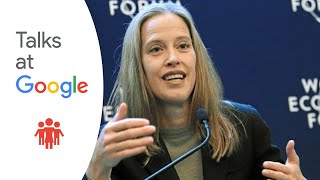
Wendy Kopp founded Teach for America from her 1989 Princeton thesis and grew it to 489 corps members in the first year. She explains TFA's model: recruit top college graduates to teach two years in low-income schools, creating immediate gains for students and developing long-term education leaders. The organization emphasizes teacher quality, data, and untapped potential in educational technology.
Questions this video answers
1989 (as her Princeton senior thesis).
No fewer than 500 corps members; budgeted at $2.5 million for the first year.
About 2,500 people responded within four months.
489 corps members.
Second year $5M; third year $7.5M; fourth year $8M; by 10th year $10M; later budget reported at $70M with $60M raised in one‑time investments for growth.
Chapters
So welcome everyone, to our second ever Women at Google series. We had our first speakers, Gloria Steinem and Jane Fonda, just a couple of weeks ago, and I think the response was overwhelmingly enthusiastic. So thanks to everyone who joined us, joined us this time, and sent us great ideas. I'm thrilled to be able to introduce Wendy Kopp for this series, who was the first person I actually invited, and as I said in my email, a personal hero of mine. So Wendy attended Princeton in the mid-1980s and spent time thinking about why it was that the nation's top talent wasn't going into teaching. And what were the challenges the nation faced when everyone in the country couldn't get a great education. And how do you solve that problem without attracting the top talent? So she formed upon graduating after writing her senior thesis at Princeton on this Teach for America, which I think now we all know, and we all, I think, know people who graduated from top schools with great excitement and dedication. And rather than taking jobs at Goldman, McKinsey, or dare I say Google, went to teach. And they went to teach in urban cities and rural areas as part of the Teach for America program. And they did it because they cared and they wanted to help make the country a better place to be. So that didn't exist when Wendy was in school, and Teach for America, where she served as president since 1989, made that possible. I'm going to throw a couple of stats your way. 4,400 corps members this year serving 375,000 students. Last year, 19,000 college seniors applied for Teach for America. They got 10% of the graduating class of Yale and Spelman and a whole bunch of others to apply for this program. This is less than 20 years after no one from these campuses basically went into teaching. There are 12,000 Teach for America alumni spread around the country. And this is what's most impressive. 60% of them are working in education on a continuing basis. So Wendy's dream was to start a movement, start a movement for education. I think it's pretty, pretty clear that she's done that. She visits us in a place where she is poised for the next level of growth. The goal, I think, within four years will make Wendy and Teach for America the largest corporate, the largest single employer for people coming out of college in this country, which is pretty unbelievable. So she's here to share her story with us. I'm going to do this in a bit of an interview format, but we're going to talk about Wendy's journey and her life and Teach for America and the Things that she's learned along the way she can share with us. So welcome to Wendy. Glad to have you.
Can you all hear me? Is this working? Can you hear her? Yeah, no, I'm excited to be here at Google.
Great.
All right, say it again.
I'm excited to be here at Google. Really excited. No, I really am. I've been trying to absorb the, the growth genes here in the air to bring them back to teach for America.
So we're going to start Wendy's story at the very beginning. So, Wendy, share with us some of the stories of the early days. What were you thinking when you first started happened upon the idea for a teacher corps? And how did this all start?
In 1989, when I was a college senior, our generation had a label. We were the me generation. And I was sitting there as a senior at Princeton thinking, I don't know where they're getting this label. The people I know are searching for a way to make a real difference in the world. And I felt like the issue wasn't so much that we weren't searching for that, it was that no one was showing us the path. So in fact, the only recruiters on our campus at the time, it seemed, I mean, I actually think sort of true. Like for liberal arts majors graduating from Princeton, it was two year corporate training programs, you know, which is great for the people who really wanted to do that, but I felt like a lot of people were just doing that because those were the options available to them. And at the same time I'd been really focused on this issue of educational inequity as a public policy major and just a concerned college student. And one day all of this just came together in my head and I thought, why aren't we recruiting people as aggressively to teach in low income communities as we were being recruited at the time to work on Wall Street? And it was just one of those things where the minute I thought of this idea, I became obsessed with it. Just because I thought that there would be a real power in the short run during the two years people would commit to do this in the lives of the kids people would reach. And at the same time I thought, how powerful would it be if the first experience out of college for all these future leaders was teaching in our country's lowest income communities? And I just thought that that could really influenced the consciousness ultimately of our country and the decisions that got made. So I needed a thesis topic and decided to propose this as my thesis.
And so then what happened?
I became all the more obsessed. I Wrote a letter to the President of the United States suggesting that he start this. It was a very passionate letter, one and a half pages long. And I got a job rejection letter back in the mail from the White House. So I realized it was not going to happen that way. But I was just. So it was one of these ideas that was, it was so obvious to me that this had to happen. And in fact, it was one of these things where when I would float the idea by people, they would say, doesn't that already exist? Like, it just seemed like it had to already exist, you know, So I just thought, well, it's not going to happen with the federal government. I had complete naivete on my side, decided I would try to start this and, and created a plan within the thesis to start it as a non profit organization. And to me, part of the idea was that this wasn't going to be sort of a teacher training program, that what we were going to be trying to do was to create a movement. And I thought that we had to start on a certain scale to surround this with the level, the sense of national importance, basically and a sense of urgency, and that that was the only way we were going to get the really top graduates with the most other opportunities to join in. So the plan in the thesis was to inspire thousands of people in the first year to apply and train in place no fewer than 500 of them, because 500 seemed like the smallest number that would seem big enough to communicate that. So developed a budget that said this was going to cost two and a half million dollars in the first year to pull off. And after I turned in the thesis, I sent this thesis out to executives who were quoted in a Fortune magazine article about education reform saying, can you help me with this? I got a better response than I got from the president. I got a few meetings and one of them resulted in a seed grant. You want me to keep going? Keep going. So I then spent my summer living off this seed grant and working out of an office that another one of those executives had donated in Manhattan, trying to meet with anyone and everyone who would meet with me to talk about this idea to try to build support for it. So I was trying to meet people in education, people in the funding community, governmental folks, education reformers, you know, straight out of college, I had this crazy idea I was getting like two meetings for every 100 letters or something, but those two people would then introduce me to others. So I ended up getting through to a fair number of people by the end of the summer. And Everywhere I went, people, people basically said, this is a great idea, it'll never work. I mean, people thought this would never work because we were the me generation. They could not get their head around the idea that college students from. I had a list of 100 colleges where I said we were going to recruit in the first year. People were just like, not in a million years. You're not going to get students from Yale or Stanford or whatever. I mean, at a diverse group of colleges. But people were just like college seniors who have lots of other opportunities. They don't want to teach in our local low income communities. And so because that was the one thing I actually had any reason to have conviction about, I decided, okay, we'll show all these people under the assumption that then everything else would come together. So working with a team of other recent grads, we launched a grassroots recruitment campaign, which meant at the time, no email. So it was flyers under doors. Who knows what would have happened if we were one decade later, but we had 2,500 people respond to those flyers within four months and apply to Teach for America. Like go through the application process. People we sent out recent grads driving around and donated rent a cars to interview them. Teacher educators and experienced teachers came together to plan a training institute for them. This outpouring of interest from college students generated all this media because people couldn't believe where is this outpouring of idealism coming from? The me generation that led to the money that we needed to raise. And one year after I graduated, I was looking out on 489 Teach for America corps members who are about to enter training and go into their first year of teaching. And that began the true learning curve that this has been. Yeah.
So as we've talked about it before and as I've heard you quoted and read your book on, after you got those first 500, came some more the organizational challenges. Love to talk to you a little bit about that. So I think your original, your original program was everyone made all the decisions together. One vote for everyone in this organization.
Yes.
Do you want to talk a little bit about how that changed and what are the lessons you learned?
I think, I mean, my real asset when I was starting this was my complete inexperience and really just not understanding how the world worked at some level. If I'd understood what I understand now, I never would have thought this could start on this scale that quickly, you know, and yet I quickly learned the advantage of experience as well, basically on every front. I mean, organizationally, in part, in Huge part programmatically. I mean, it just became clear very quickly how incredibly challenging it would be to actually have the impact we were trying to have. You know, to figure out how do you actually recruit and select and train and support people straight out of college to not just survive, but excel in the most challenging teaching situations in the country? How do you ensure that they leave not more disillusioned, but more committed to fighting for the larger changes that need to happen? So we went through just massive programmatic learning curves, and to your question, just massive organizational learning curves. I started out thinking that the last thing I had any time or interest in dealing with was sort of issues of management. And several years later came to the conclusion, which I still deeply believe, based on everything I've seen, that management is sort of everything, actually, that if we're going to fulfill the mission that we're setting out to fulfill, we were going to have to become well, well managed. And that led to my learning curve on that front. So I became obsessed with all the things that you all are no doubt obsessed with here, which is talent at every level and strong culture and systems for accountability and continuous improvement, et cetera, et cetera, all of those basic things, which I think we had to learn those lessons the hard way. And then there were other learning curves too, like how do you sustain this financially beyond the startup grants and such?
Let's talk about those a little. I've given a bunch of talks for the google.org Some of our philanthropic stuff and we looked pretty carefully at what we wanted to do. And one of the things we talk about is that one of the problems in the philanthropic world is that everyone wants to be a leverer and no one wants to be a leveree. Meaning there's lots of money out there for seed to start something and there's not enough money out there to continue. And I know I found this in my own smaller fundraising efforts. And this is clearly something you faced. I'd love for you to share that experience.
We faced that initially. We were initially funded by, to your point, national startup grants. And that was the case. I mean, there was a lot of momentum around Teach for America initially. So as of our second year we had a five million dollar budget. As of our third year we had a $7.5 million budget. As of our fourth year we had an $8 million budget. And we started losing grants in $500,000 and million dollar chunks and woke up then to the reality that we were going to have to figure out how to completely convert our funding base to new sources and went through several years of sort of searching for a financial strategy that made sense. We entered what I call the dark years of Teach for America, where we were sweating every single payroll. It was just not at all clear we were even going to make it. There were headlines in major magazines saying we had gone under. I mean, it was just a terrible time, but we ultimately pulled ourselves out of that. And just to fast forward, because the contrast, I myself really struggle to understand exactly how this all happened. But we spent the last few years of our first decade having learned many lessons. All these lessons around management and the power and importance of focus and of operating with a different mentality from a resources perspective. Like we started out thinking, how much money do we need? We'll raise that much. And that continued. We were able to do that for the first three years. And ultimately that sort of doesn't work as a financial strategy. You sort of have to ask yourself, how much money can you get? And then figure out, you know, that's the level you can operate at. But ultimately we gained stability by our 10th year. So, so at that point we had 1,000 corps members, same scale that we started on, 500 people committing each year, and a $10 million budget. And at that point, finally feeling that we had solid programmatic results, a strong organization and a solid financial footing, we really stepped back and asked ourselves, how can we grow our impact? And I could tell you what we're actually doing to try to do that. But just by contrast, our budget now is $70 million. It's not reliant on me. It's, you know, very, very. Our funding base is very diversified. On top of the $70 million we've in the last year raised $60 million just in one time investments for growth. And what I've come to believe is that actually there is money out there to sustain things and to grow things. We had to just learn the hard way because there are not many models in the nonprofit world of startups that have figured out how to gain stability and how to grow to scale. So we ourselves had to try to figure out how do you do that and what's the financial model that will enable that. And once we figured that out, we realized the money was there. You know, so let's talk a little.
Bit about education so maybe you can share with us what you think the problem was. You were trying to address it and what kind of impact you think Teach for America has. And then we can talk about what you think still needs to happen out there for Education, we can, I think, focus on this country, which is where the majority experience is.
Yeah. So Teach for America is working to address the incredible inequities that persist in our country in educational outcomes, just along the lines, socioeconomic lines, and in turn racial lines. The fact that nine year olds in low income communities are already three grade levels behind nine year olds in high income communities, that gap gets wider from there. You all know that a fraction of kids in urban areas graduate, right? So if from high school, so high school freshmen, you know, depending on the school, 30 to 50% of high school freshmen graduate. Typically, those people who do graduate, who walk across the stage, get the diploma, are at the 8th grade level compared to where kids in more privileged communities are. And we just think in a world, in a country that aspires so admirably to be a land of opportunity, we can't tolerate that inequity. And so that's what we believe is our country's most fundamental domestic challenge. And we think that that issue needs to become this generation's civil rights issue. It's interesting because I think when I started out, I believed that we had to do this because that just the world should be a different way. And I think what I've learned over time has led me to think not only should it, but it absolutely could be a different way. And I'm tempted to come at this whole question by actually sharing a story and then stepping back from that because I think what's led me to still be, to be, in fact to feel a greater sense of urgency today than I've ever felt in this effort is really what I've learned from those people among our corps members and alumni who have figured out how to attain just extraordinary results with their kids. So not even saying that this is the average Teach for America corps member, but actually saying some of our people have figured out how to put their kids on a level playing field with kids in other communities. And it's been spending time with them and understanding what is it that they figured out that has really done more than anything to shape how we're progressing. So let me share one story and then step back and tell you what I take from that. Okay, I think about a woman. I'll just. Let me share a couple of quick stories. So Aurora Laura is a teacher in Houston, Texas. She starts teaching fourth grade. Her kids come into her class at the first grade level. She's thinking they're going to be writing essays and they cannot write a complete sentence. She's completely shocked. Despite the Fact that of course we all know these statistics and anyone who comes into Teach for America knows, you know, kids nine years old, fourth graders are going to be at about the first grade level on average. But when you see that in your actual class playing out in the lives of real kids, you're just absolutely floored by it. So she's devastated. She grew up in a similar community to that in which she was serving and she was just so outraged by this whole situation. But she comes back in and you know, in the first couple weeks of school, says to her class that by the end of the year she tells them where they are, that they are in fact really where first graders should be. But she says if you work hard enough, by the end of the year, we will prove to this school that you all can do fourth grade work and every one of you will pass this fourth grade test that they have in Texas and you'll all be able to write beautiful five paragraph essays. So she goes about convincing the kids that they can do this, that if they work hard enough they will quote, get smart, that they're not at the first grade level because they're not smart. It's just they haven't been taught in the right way. She convinces their parents to support her in this effort, tells them exactly what she's working to do, gets the parents to help her by bringing the kids early, getting them to stay late. She gets a key to the school building and starts having Saturday classes. Because as purposeful as she is with the time she has with them during the day, I mean, if you walked into Aurora's classroom, you wouldn't, what you would see might not be consistent with your own. Like thinking back to the majority of your teachers. Like you would just see someone who's on such a mission, like feeling such a sense of urgency, thinking where are my kids now versus where they need to be at the end of this class period to get where we're trying to go. And yet still she didn't have enough time. So she figured out how to lengthen the school day. Fast forward end of the year, all of her kids passed that fourth grade test, every one of them. More kids passed in her class than in the entire school, which led the principal to double the number of kids in her class for the second year to see if she couldn't have an even broader impact. One other quick story, Nicole Sharon, who's teaching middle school. I'm going to tell this because I think that there's a prevailing perception out there that what might be possible with young kids is possible when you get older. So I think about this woman, Nicole, who was teaching in Phoenix in a very impoverished community. There, 120 seventh and eighth graders, she was teaching math. And she describes her first day of school looking out on a sea of disengaged faces. You can sort of picture it, you know, the kids just seem like impenetrable. They do not want to be there. They're totally, they seem out of it. She starts thinking, how am I ever going to do this? She starts spending more time with her kids after school to try to figure out what's going on. And she said that one day after a couple weeks it clicked with her because every time she would introduce herself like she would go to their extracurriculars or she would drive out to some of their homes and she would say, I'm Ms. Sharon, the math teacher. They would say, oh math, I hate math, I'm not good at it. And she said it always went together like they would always say I hate math, I'm not good at it. So she just realized they have no confidence in math. So she really went sort of wound back and started really figuring out where exactly are my kids in math and how do I meet them, where they are to build their confidence. Now she showed me these assessments of her kids math performance. So I have seen them myself. And there are these three different standardized assessments all of which showed that her kids were the lowest performing math classes not only in her district, but in surrounding districts, very small districts in Phoenix. So she goes about trying to change this. She's thinking to herself, I'm going to make these, my kids are going to be the top performing classes by the end of the year, which seems crazy, right to any normal human being. She figures out that despite all the now good stuff that's going on in her classroom, because she had figured out how to build the kids confidence, they were working with her. She realized no way to do what needs to be done in this class, period. So she convinced she's 23 years old, she convinces the other faculty members in the school to change this school wide study hall, which is 45 minute study hall into a math tutorial. So she's got the whole faculty now tutoring the kids in math in addition to what's going on in her class. At the end of the year, her kids literally were the top performing math classes in her district and in surrounding districts. And three quarters of the eighth graders signed up for an honors math track in high school which led the high school counselors to get in their car and drive over to this school in the middle of the day because they'd never seen one kid from this school sign up for an honors math trek. Stepping back from those two stories, so here's what I take from this. First, what you see in these stories is these incredible disparities juxtaposed against the possibilities, right? And that's what we see every day in our communities, is just clear evidence that these disparities don't need to exist. So that more than anything, like if Aurora can do it in her classroom at age 23 and Nicole can do it with her kids at age 23, as well we should, it's within our reach as a country, right, to ensure that all kids attain an excellent education. So I think that more than anything, has fueled our sense of just responsibility to say we have to figure out how to do more. The second thing, take from their stories and many, many others like them, is just you see the incredible influence that one person who has real leadership abilities can have in the lives of kids when they commit themselves to teaching. And we've come to believe that in our context, teaching is leadership. When you think about what these people did, they come in, they're seeing a somewhat hopeless seeming situation. They set a vision of where they want to be at the end of the year that most people think is crazy. They figure out, how do I motivate my kids and their influencers to work harder than they've ever worked before? They're completely goal oriented, completely purposeful, and absolutely relentless. Like, whatever the challenge, they don't have enough time. They figure out how to get more time with their kids. So that's the second big thing I take, and that's one of the things that fuels our sense of urgency to say we need every additional person out there with real leadership skills to commit themselves, even if only for two years, to try to help expand opportunities for kids growing up today. The third thing I take is that that won't be enough. That ultimately, as important as that is like getting more people like that who will go to those heroic lengths. Ultimately we're going to have to do more as a country, because it's true that it's not ultimately replicable and sustainable. Like, we're not going to fix this problem by having hundreds of thousands of teachers in urban and rural schools, schools going to those extents to compensate for essentially the weaknesses of the system and the extra challenges that their kids face. And I think that ultimately we're going to have to step back and effect fundamental changes in our society that first of all, take some of the pressure off of schools by ensuring, for example, that kindergartners don't show up that far behind, as far behind as they show up right now. And at the same time, we're going to have to build much better capacity within schools and within systems to ensure that as long as our socioeconomic disparities do persist, we have a system with the mission and capacity to put kids growing up in those circumstances on a level playing field in the hands of talented, committed teachers, if not absolutely heroic superstars. And that fuels our theory of change as well. I mean, that does a lot to fuel our efforts out there. We're saying we need every person on these campuses who has the potential to assume real leadership roles in our society, in every sector. Because ultimately we need people at every level of policy, in business, in journalism, in every sector who understand what you understand after you've taught successfully in a low income community. Because it's those people who will actually know what changes to affect and who will know that this is a problem we can solve, which most people in our country don't believe right now.
So you and I have talked about this and about the movement, and you said that one of the things I'd love you to share it with the group. One of the things that you judge success on is what the people who join Teach for America say on the way in and what they say on the way out about their understanding of education. I think that's what you're talking about when you talk about a movement. Can you share those observations?
Here's an interesting thing. There's a Gallup poll every year that asks the public for its views on public education. And each year the poll results are pretty similar. Last year's question gave the public 20 options. Like they asked, why do we have low educational outcomes in low income communities? Think about it yourselves, actually. So you get that question, why do we have low educational outcomes in low income communities? You're given 20 options, the public's choices. The top three choices are lack of student motivation, lack of parental involvement, and home life issues. Which captures what I believe, based on all my conversations with very committed, engaged, civic minded people in this country, I think that captures the prevailing ideology. People think they're committed to public education, but they think at some level this is an intractable problem because kids who grow up in poverty aren't motivated, their families aren't involved, they don't care, whatever the image is. So we ask our core members the same question when they come out of their two years, you know, after they've actually worked with these kids and families. And their answers are so very different, as you can imagine they would be when you hear the stories that Aurora and of Aurora and Nicole. So they don't say it's lack of student motivation, lack of parental involvement. Those are nowhere in the top realms of their responses. Their answers are teacher quality, principal leadership and expectations of kids, academic expectations, expectations of kids. So we just believe, we think that as long as we have a prevailing ideology in our country, that this is an intractable problem. That's the ideology that informs our priorities and our practices and our policies as a country. And we think that ideology is in itself so misinformed and that that's what we need to change that so that the prevailing ideology is one that we can solve this problem. We just really, really believe that a lot of other fundamental changes will result from that shift.
The last question for me, and I'll turn it to the group to ask questions. So if that is what you're trying to do, and that is the movement you set out to do almost 20 years ago at a dorm room in Princeton, tell us about your plans. What's going to happen from here to the next stage for Teach for America now that you're safely out of the.
Dark years, knock on wood. I think. Well, we are, if you just think even about the stories I just shared. We feel such a huge sense of urgency to take our effort to a whole different level and are working to become. We basically believe that for our theory of change, this theory that I basically just described, which is that by enlisting our country's most promising future leaders in teaching for two years in low income communities, we'll do a couple of things in the short run, will provide more teachers who will go above and beyond traditional expectations and make a huge impact in the lives of kids growing up today and in the long run will influence all these future leaders. Some of them will influence to stay in education. And we know that we need long term, sustained, committed leadership in education to really get where we're trying to go. Others will continue on into policy, into business, into other sectors, and will take with them just this rare level of insight and conviction about what needs to happen. So, you know, the only way that that theory of change ends up making a huge difference is if we basically get much bigger and much better. So that's what we're working to do. We're working to grow significantly, to become, as Cheryl said earlier, the Top employer of recent grads. And we're at the same time working to ensure that by learning from the Auroras and Nicoles of the world that we get to the point where many more of our corps members are attaining that level of impact. Because that's important both for the kids they reach and for the lessons they learn. Like the Auroras and Nicoles of the world. Leave this knowing you know what is possible and they're far more likely to continue working and to work for all the right changes. So we're working to grow while maximizing the corps members impact on their students achievement and doing more to accelerate the leadership of our alums. So we. So we've got these various initiatives to get more of them into elected office, more of them into school principalships and that kind of thing. So by 2010 we're working to reach the point where we have 8,000 corps members at any given time. At that point we'll reach as many kids as the second largest school system in the country does. And we will have created a truly unprecedented leadership force for change and we think will stand the chance to reach the point where not just a few, but many of our future leaders have this experience in common.
Turn it over to others for questions we're videotaping, so go to the mic if you don't mind.
Yeah, I hear in the news and such that it's more difficult to find teachers in math and science. Have you found that to be the case within Teach for America as well?
Our core is reflective of the percentage of math and science majors on college campuses. But we have a so meaning about 20% of our core members are math and science teachers and math and science majors. We have a huge initiative to recruit more math and science majors in To Teach for America because it is such a huge priority and such an area of extreme need and are looking for corporate partnerships and other partnerships to help take that effort to a higher level.
Yeah.
Second question. How have you seen the role of the Internet in education come into play, if at all, in Teach for America and public education in general? And I mean what kind of evolutions and resources on the Internet would you find most useful for your mission?
Let me answer. Let me not answer that directly, but let me tell you what I think a lot about. I don't know if that relates to technology and education. I mean it's not specifically Internet related, but let me just throw this out because maybe you all can have a real impact on this somehow. Like you can figure out the Internet aspects of it literally we are going about education reform right now the absolute hope, hardest way, which is we're assuming that it's all people. There's no leverage to be had from technology or other systems. So while other sectors have completely changed the way they work and Teach for America, for example, has completely changed the way it works, thanks to all of the various evolutions of technology, Even the last five, 10 years, basically nothing really has changed in our schools. I mean, no kidding. Like they're. So what happens as a result? And there are numerous levels of this. I think we're making progress on one front. Like there are certain people taking on the challenge of how do we. Data is hugely important in education. I mean, that's a very controversial thing to say. I don't know if everyone here will believe it, but we just look at the classroom level. Knowing where your kids are, exactly where they are, which you can only do through assessing them constantly, is absolutely fundamental to success. Like, you have to know that in order to know exactly where to meet them and how to move them forward. So constant assessment is actually incredibly important, despite all the political controversy around that. And you need it at whole school levels, et cetera. So, so one use of technology should be to make it much easier to understand where kids are and to ensure that parents, kids and the teachers can see that themselves. Like our best teachers are getting their kids so invested in measuring their own progress and tracking their progress that they end up driving their own, I mean, along with the teacher, but they're propelling themselves towards really clear goals. So. So one use of technology is in that realm. The area, though, where I feel like there's nothing happening, I mean, a little tiny bit happening and needs to be so much more happening, is that we have these teachers, hundreds of thousands, millions of them, going into classrooms today, essentially reinventing, like themselves, thinking every morning or every night before or whatever. How do I teach X in the most effective way possible, in a way that competes with the rest of the world, if you all have kids. I mean, I have a six year old and I know what these poor teachers are up against because he's surfing the web better than I am, you know, at this point. And like they're just so low tech in their approach. And so there's one program out there that's worth looking at. I'm constantly selling this thing, even though it has nothing to do with Teach for America. But there's an interesting program out there that got me to start thinking, thinking about the potential of technology to really change things. It's Called Headsprout, it uses sort of all the latest reading research to teach kids to read. I saw my kid learn to read. He started reading nothing. Two months later, he was reading on the second grade level and the whole time he thought he was playing a computer game. Now, that technology, which I've since heard from all sorts of people, is actually the very best educational technology and is not in use anywhere else. That showed me the potential of saying we have to figure out how do we catalyze the technology revolution in education? We can make it so much easier for talented, committed people to do a good job by their kids. There are few pioneers right now like leading that charge. And in fact, Teach for America. One of the big things I want to do, or little things I want to do is try to get the next generation of ed tech pioneers, recruit them off of campuses, get them to do Teach for America. Because you sort of have to know really what the deal is within schools in order to know what technology applications would make the most sense and then go out and like inspire the fundamental changes.
Hi.
So you mentioned that these instructors coming out of their two years are likely to identify principals as a major factor in the kind of status quo. And yet I haven't heard very much about how this program might apply to recruitment or change in the kinds of folks that become principals. And I'm wondering if you've thought about that, because as I thought about it, it sort of seems like you have to come up through the ranks. And then my thought is, well, maybe you then take things much more. You know, you develop realistic expectations, which is to say no expectations at all.
So there's a couple things on this, you know, one, just to share our experience in this, There are about 200 schools across the country right now in low income communities run by Teach for America alums. Who are principals of those schools? A small number, obviously, in the general scheme of things. But they're running many of the most acclaimed schools in low income communities in our country. Some of you may be familiar with some of the schools here in the Bay Area, some of which may be run by Teach for America alums like, like the local KIPP academies and others. In my experience, the schools that are truly putting kids in low income communities on a level playing field with kids in other communities are run by people who as teachers experienced extraordinary success with their kids. So they know what's possible and they have such conviction. And that's what leads them as principals to know that, that they shouldn't take any excuses. And it's what gives them also the moral authority with the other faculty members to say we can get here. And my belief is that we have to, in this, as in any other sector that I've seen, take a pipeline approach and recruit people with leadership potential into teaching positions and develop them over time, ensure they're successful as teachers, develop them over time. And then my hope is, I mean, beyond principals. I mean, it's leadership at every level, right? Like, we need more superintendents who really deeply get this, have the will to take no excuses, et cetera. And I think they're going to come from highly successful principals and managers of principals. I mean, Teach for America itself. I mean, our mission is to fuel the broader education reform movement and to inspire all these people to go out there and affect the systemic change changes that are necessary. So we're not seeing ourselves in and of ourselves as a teacher quality or a principal quality prop, you know, program. But I think our experience has led me to believe that we do need huge systemic change. I mean, essentially we need districts to develop a talent mindset to be as obsessed with talent as you all are obsessed here at Google. That is the only way we'll ever solve this problem. That plus like maybe making it a little easier with technology. I mean, it's all about the basics of this whole problem. Comes down to all the basic things that we all actually know. I mean, it's about talent at every level. Strong cultures, strong capacity systems. Like that's what this is all about, I think. And principal quality and other forms of leadership is a fundamental piece of that.
With so much focus on socioeconomic and racial inequalities between school districts, I'm wondering how those same inequalities play out within a Teach for America classroom where many of the teachers are from privileged backgrounds and intend to lead schools.
So we go out and recruit, as you may know, aggressively and really working to get a very diverse core. And we do have a relatively diverse core, though we're always trying to become more diverse. But to your point, we are bringing people who are from very privileged backgrounds and we're also bringing people who in fact are doing Teach for America because they themselves were taught by Teach for America corps members. So we're getting a whole range. We've done so many studies and analyses that have informed our program for admissions and training and support for looking at what is it that differentiates the most successful teachers who have the greatest impact on their students achievement. And what we found actually is that the background of the teacher, their race and ethnicity, their Socioeconomic background is not a predictor of their success, that it's actually a set of personal characteristics. There are about five personal characteristics that have emerged in our selection studies that thus are our selection criteria. They're number one demonstrated track record of achievement. Like people who, when you look in their past, cross academics, extracurriculars and work experience are the kind of people who've set goals and met them. Perseverance in the face of challenges is a huge one. It's really hard to see in college seniors. But the instinct when you're in a challenge to figure out what you can control and own it rather than decide blaming lots of other people, that is absolutely huge. The ability to influence and motivate others in a very sophisticated way. Not to be confused with charisma. It's not charisma, actually, but the instinct to understand what's motivating people and figure out how to speak to that. Problem solving ability, strong critical thinking skills, and a set of traits that we call fit with Teach for America, like the desire to work relentlessly in pursuit of this particular mission. And high expectations for kids and families in low income communities. And respect and humility in terms of your instincts around the openness with which you work with others.
Thank you for coming. I had a question. My first year in high school, I actually went to a fairly underperforming school. And I agree with your assessment that the state students had, after going through the program, that quality of teachers and quality of principal definitely play into that. I was curious too, to your thoughts on what degree the fact that our public education is funded locally, curriculum is set locally. So the degree to which the community plays into the quality of the education, and the degree to which a student's ability to feel safe, to not be surrounded by violence, to not be surrounded by drugs, you know, other poverty initiatives, other groups that are fighting this on different levels. So I guess question one is, you know, have we kind of outgrown to a certain degree is part of the problem the fact that public education is funded locally and derived locally? And then two, are there opportunities for Teach for America to work with other nonprofits that are focusing on similar issues so to leverage both the impact and kind of the reach of how to affect basically students and children in poverty situations?
Gosh, I'm trying to think how to approach those questions. I actually think that the fact that this is local, there's only so much. I mean, take nclb, the federal law that no Child Left behind, through which people came across both sides of the political aisle. And said we are going to commit ourselves to make measurable gains around closing the achievement gap. That was a first great step because it was the first time in our country we've actually said we're going to commit to close the achievement gap. But the only real way to get there is to build is through local leadership and through building real capacity at the local level. So I think it's like anything else. Like, you know, we cannot do this through federal mandates. In fact, sometimes those will backfire. So we can create a federal context and all. But ultimately it is going to be about local leadership and local efforts. I think I'm not getting at the question, but in terms of the broader thing, I mean, I think our teachers really, what Teach for America is, is a force of peace people, right? We're a force of leaders. They're out there operating as leaders, as teachers. And then ultimately they're asking themselves, how can I personally have the greatest impact on this problem? And so it's less what Teach for America as an organization does to partner with other groups, and it's more about how they work with their local resources. And the best Teach for America corps members, the most successful of them, meaning, are people who are reaching out, getting to know their kids, getting to know the kids, families and families figuring out what are the challenges actually facing my kids and what are the different things that I need to do to overcome all of those challenges. And they're not duplicating, replicating the wheel, creating the wheel, whatever, if they don't need to. Like, they are partnering with the local resources in those communities.
Last question.
Congratulations on the success of Teach for America and thank you for coming to Google. Wanted to ask to what degree you're trying to affect more systematic changes through the government itself to reach a larger scale solution to the problem. Because as great as Teach for America is, even with your growth, you're still a small percentage count of the mix of teachers. So I was curious about the approach for more systematic change and then secondly about international. So the idea that Teach for Country X would be on the horizon even given all the problems and issues in America.
Yeah. To your first question. Again, it's interesting because Teach for America existed until six years ago. We were bringing 500 people a year off of college campuses into this picture. And just over the last three or four years, did we start getting anywhere near 1500, 2000? This year we brought 2,500ft a year in. And yet when you look at where the energy is in public education reform, not to say I mean, there are lots of people in this picture who did not come through Teach for America. But most people who are, you know, engaged in education reform would say Teach for America is changing everything because it's a force of all these people who are at the center of so much that's going on. And we think if, if we just contemplate doubling the number of people who come in, we will double the number of alumni who are part of Teach for America in four years if we meet these scale targets. Like, we will literally double the number of people in just four years. And we've been around already for 17 years. So I guess I think we would never say that we are the solution, but we're very focused on our particular role in this, which is to fuel the larger effort. If you, if you go to any education reform conference and you get people talking for any more than five minutes, they'll start saying, what are their biggest challenges? It's not funding, it's talent. I mean, that is the fundamental challenge facing everyone. And so what we're trying to do is say, okay, we're going to help be the talent solution to this picture. To your last question. I've recently become really, really excited about the idea of really thinking about how can we help seed this idea and support the development of this idea in other countries. There are a few groups of people in India that have been working to start Teach for India that we've started working with and just realizing that we've learned so much in the last 17 years. Like we should be able to hugely accelerate their impact so that they're in five years a kind of accomplishing what it took us 15 years to accomplish. So, you know, we have our own. Let me make a pitch here for all your friends. Of course, not you yourselves, but talent, talent is our biggest issue. And you know, we're in the midst of what for us is this hugely ambitious scale up plan here. But also are dying to get involved in that kind of international scene as well. And just we need capacity and people to pull it up. But we're really excited to. We're developing a whole strategy right now to figure that out.
So in conclusion, along with thanking Wendy for spending her valuable time with us and sharing her insights, I wanted to share something she told me, which I found incredibly interesting, incredibly inspiring. So last time Wendy was here and we've spoken a number of times, I asked her just in a moment alone, I said, so did you ever think this would happen? I mean, you're sitting in your college dorm room, you write a thesis on starting a teacher course. Did you ever think you would grow to this impact? And I don't know if you remember what you said, but I'll remind you, she said yes. I just never thought it would take this long. And that, I think, is the most important thing. I think we learn from Wendy and people like her, the ability to dream big, the impatience, the urgency with which she speaks. Because I think what we learn is that if we're going to tackle big issues, solve big problems, having a sense that everything's possible and a sense of urgency to get there is probably the most important thing. At least I've learned from her. And I was hoping she would share with our colleagues at Google. So thank you for being here.
Thank you so much. Thanks for having me.
More from Guy


Cheryl Strauss Einhorn | The Human Edge: Smarter Decisions in the Age of AI | Talks at Google



Rachel Glennerster | Innovation and the Center for Global Development | Talks at Google

Rebecca Winthrop | Rethinking the Purpose of Education in the Age of AI | Talks at Google

Dr. Robert Wachter | A Giant Leap: How AI Is Transforming Healthcare... | Talks at Google



