The Argument | Matt Bai | Talks at Google
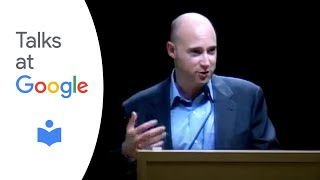
Matt Bai, a New York Times Magazine writer, discusses his book about how billionaires, bloggers, and progressive movements are reshaping Democratic politics. He explores the party's internal divisions and argues that American politics needs a fundamentally new argument.
Chapters
Hi everyone, and welcome to today's Authors at Google event. It's a great privilege to have Matt by with us today. Matt is a contributing writer for the New York Times Magazine, and he's producing some of the most incisive and readable work about the Democratic Party and its politics today. He's currently covering the 2008 presidential race for the magazine, and he's one of the writers whose name, at least I look for every Sunday when it comes. And if he's there, I'll read the magazine. If he's not, sometimes I'll just skip over it. Before coming to the Times, Matt worked for the Boston Globe, Newsweek, and had a brief stint at Rolling Stone as well. He's a graduate of Tufts University and the Columbia School of Journalism, and he's here today to talk to us about his new book, the Billionaires, Bloggers, and the Battle to Remake Democratic Politics. Writing about the book in the New York Times, the ever tough Machiko Kakutani called Bayh's work, quote, illuminating. He combines lots of energetic reporting with some astute political analysis. The result is colorful topographical map of the Democratic landscape. This book suggests that Democrats of all stripes have failed thus far to redefine their party with a new vision and that as the 2008 elections approach, the party is still struggling to figure out exactly what it represents other than a repudiation of Republican principles and policies, which I think is a pretty good summary of Matt's book. He'll be speaking and then take questions from the audience. If you do have a question for him, please wait for the microphone to arrive. After the event, he'll be signing book for anyone who would like to stick around. So with that, please join me in welcoming Matt Bai to Google.
Thank you and thanks, Ricky, for the nice introduction. Let me don't skip over the magazine, by the way. Let me start by apologizing up front for a couple things. First, I have a little bit of a cold, so if I sound sniffly or I cough in the middle, I apologize. Also, I apologize for wearing a suit and displacing the karma of the workplace here at Google. I've never been here before and I didn't quite know what to expect. I was downstairs in the lobby earlier. I actually sent an email to my wife on my BlackBerry and I said, you know, it's an obvious thing. I said, I cannot believe they built all of this from a software program. And my wife emailed back in about 30 seconds and she said, it's a pretty good program. I Thought that was a pretty good response. Let me also say I'm very excited to be here for one reason in particular, which is, and I finally get something to say to all of you, something I've wanted to say for a long time, which makes me, it's a great opportunity for me, which is, you know, we live in this world. I mean, I cover politics and politics is a very emotional subject for people, as you know. And we live in this world where in about, you know, 0.28 seconds or so, my wife and my mother and my aunts and uncles and everyone I know, and soon my 2 year old son can find out with the click of a, with the push of a button just what a stupid, immoral, morally bankrupt, unindustrious person I actually am. And I want to thank you for bringing that to the world. It's very, it's a great advent. In fact, if you go back and you type my name to Google on your computers afterward, you'll find that within the first six or eight entries, somebody actually at great length takes the time to compare me to George Wallace. So thank you, thank you for making that a reality. But of course, like everyone else, Google's a huge part of a huge part of my day and all the work that I do. And it's also, you know, very emblematic of what's on my mind because I, as you know, if you've read my work, I spent a lot of time thinking about and writing about the changes that are going on in America economically and the changes in the workplace and the kinds of things we're going to have to grapple with technologically and socially over the next 10, 20, 30 years. And Google is really ground zero for that. And so it is actually very exciting and an honor for me to be asked to come here and talk to you about the book. The book, the Argument has been out for a little while now and I've been very gratified because there's a lot of conversation and the reviews have been great. But you know, one thing that has surprised me a little bit is the extent to which the book has been talked about in terms of, in polemic terms, in terms of it being almost more of a critique than anything else. And I think that's, I think that's because we tend to put political books into sort of a box. You know, we, and I do it too. And it's the reason I don't read a lot of the current political books that do come out because we tend to think that they're going to be either arguing one side or another or some kind of screed or somebody's thoughts for two or three hundred pages. And the thing is, if you read this book, and I hope you will, or have, and people who read this know this, it really is more of a story than it is a polemic. There's certainly a point of view and analysis that comes through as you read the book, intensifying as you go. But it's really the story of what I call these oddly heroic characters, these people who rose from nowhere, from high school teaching or from building websites or whatever they were doing to wield a tremendous amount of power in Democratic politics in a very, very short time. And it's a journey that began for me in the spring of 2003 when I went out with a guy named Howard Dean in Iowa, who you all remember, and we traveled around eastern Iowa in a van. And that was a period of a campaign. You know, we sort of missed this period in this campaign because the candidates are so well known and have. Are so surrounded by coteries of advisors and press interests. But, you know, in most campaigns, that's the time when you get to go out and you sit in a van with somebody. It was just me and Howard Dean in a van with a couple aides, and he had his wash and wear LL Bean shirts in the back of the van. And you really get to know who people are. And Dean was a very interesting guy. But what really fascinated me, what surprised me in that time period were actually the crowds he was drawing. It was not just the size of them and they were huge and the type of them because they were of all ages and some of them weren't even Democrats. But it was the amount of emotion that came through in those appearances, the fury and the resentment, very deep seated, that kind of spilled forth from a lot of these folks who were furious not just at the direction of conservative government, but but also at what they saw as their own party's inability to really stand up and do anything about it. And I came back to Washington quite shaken by this after a couple of trips. And I said to my editors, you know, there's something happening at the grassroots of the Democratic Party that I don't think we understand. And they being the New York Times Magazine was a terrific place to work. They said, well, go figure it out. And that's what I did. And I spent the next couple of years piecing together what I think are the fragments of an increasingly cohesive fragments of a new. The first real political movement of the Internet age. And that is this new progressive movement inside Democratic politics. And I think to understand what's going on in the 2008 primaries inside the Democratic Party, it's very important to understand what this movement is and what kind of power it's wielding. So who are the pieces of the progressive movement in Democratic politics? Well, let's start with the bloggers. I'll run through a few of them and you have the bloggers on the COVID And, and of course, you know, I spend, I don't just talk about the so called celebrity bloggers. I mean there are people who pop up in the book who are beginning also to be quite important in this picture. People like Gina Cooper, who runs what's now Netroots Nation, which was Yearly coast and I moderated the presidential debate for Yearly coast out in Chicago a couple of months ago. And folks like Chris Bowers, who I talk about a little bit, Susan Gardner, a front page writer in Daily Coast. But I do spend a good chunk of time with these two real two of probably the highest profile so called a list bloggers. And that is Marcos Maluzza Zuniga, who's the founder of Daily coast, and Jerome Armstrong, his partner in crime, who they sometimes call the blog Father Online because Jerome was founder of MyDD, was one of the first people to really start the blog movement. And you know, five years ago Marcos was, as I say, building websites not far from here. Jerome was a day trader. He was just trying to get by trading stocks online. And in a very short time they built this community from nothing. And I described the book tour that they're on when they did their own book and I joined them for it. And I start out, this is one of the chapters in the book. I start out in Norman Lear's big mansion in Hollywood and there's a huge Hollywood party and Tom Hanks is wandering in and Rob Reiner and all these people, all to see Marcos and Jerome. And then we drive up the coast straight from Los Angeles to here to San Francisco. And it's fascinating because at every stop they don't actually do a book tour. That is, they don't set up events and say we'll be here at 2 o' clock or we'll be there at 3 o'. Clock. They actually just drive up the coast and they say, they go online and they say to folks, you know, we're going to be in California and here are the dates and people just set up spontaneous events and they say, well, come to this bar, come to this library, and hundreds of people came out rather spontaneously just to shake their hand and meet them and talk with them. And I don't know that you could think in all of American politics, in the history of American politics. I'm an example of ordinary people building this kind of community from nothing. I don't think it could be done before in the online age. I think it's an extraordinary accomplishment. I met one guy up in. Or down, since we're here in Santa Barbara, I think it was, and he had the Daily coast artwork, the original artwork from the website. It was framed, and he was carrying it under his arm. Marcos had signed it for him, and he told me he'd spent $2,500 for it at auction online. I said, $2,500? A lot of money for a piece of artwork and a banner, you know, and he said, no, it's an investment. He said, it's like buying the NBC peacock in 1960. And I think he's right in a lot of ways. Move on plays a role in the book, too. And, you know, they've been in the news a lot lately. And I think, you know, the interesting thing is that I really found out in following MoveOn and meeting its members and spending some time with its leadership is how different it is, in a sense, from the stereotype that people have, because it's not all a bunch of kids with, you know, pierced ears and running around with tattoos or whatever else. It's not. It's not run by a bunch of crazy radicals. It's actually an organization run by some very shrewd politics political operators, a small sort of disparate staff of younger folks, and populated primarily by baby boomers, populated primarily a lot by as many senior citizens as there are young people. And you know, what animates MoveOn is the fact that in so many places, the Democratic Party either pulled up stakes and just left. You know, in rural parts of the country, and every place they did move on just sort of sprouted up like weeds from the rubble. Or, you know, even in urban areas where the old Democratic machines were no longer very functional and they weren't handing out jobs anymore. And they kind of rust out here, too. You know, people banded together around MoveOn where the party wasn't strong anymore. That's where MoveOn came to sort of fill a vacuum. And how people got came to fill that vacuum is really interesting because everybody has their own story. And I tell the story of a guy named Chuck, and Chuck gave a house party in Northern Virginia, and I went to it. And this is around the Supreme Court nominations. And I said to Chuck, you know, what are you doing here? And he told me that Chuck actually wasn't a Democrat and he'd not voted before. And I said, well, if you're not a Democrat and you've not voted before, how do you find your way to move on? And the answer I got was actually not something I ever would have imagined, which is that Chuck lived across the street from a guy named Brent Bozell. Now, many of you may not know who Brent Bozell is, and that's probably to your benefit. But for people who follow politics closely, Brent Bozell is sort of one of these icons, one of these little known icons of the conservative movement. He's a media critic. He's actually one of these people who started the drumbeat about people like me being liberals, crazy, out of touch liberals. Nothing could be further from the truth. And he started an organization around that. And he's very well known in the conservative movement. Well, Chuck googles him, thanks to all of you. And he can't believe what he's seeing because he can't stand these conservatives and he can't stand conservative government. And it starts to actually kind of drive him crazy that he lives across the street from this activist. He starts to just seethe about it and he can't even walk past the house without getting angry. And he sees the guy walking his dog and he can't even go out. He can't even say hello or whiffed his head up, says to his wife, I just want to go pee in his pool. And his wife says, well, that's not. His wife says, that's just not constructive. And so he goes online and what he does is he goes online and he joins move on. And he decides to host a house party because Brent Bozell has his house parties and Chuck wants to have his own. And soon there's like 60 people at Chuck's house who he's never met before. He's not only part of a community, he's an activist. He's a leader in a community. And all these folks are signing petitions and making plans and talking to one another. And I think it's, you know, it's indicative because five or six years ago, what did a guy like Chuck do? I mean, I guess he could write a letter to his congressman. You know how that goes. Maybe he'd get a reply back from an intern, maybe not. He could theoretically go to a local Democratic party meeting, but they would have given him Robert's rules.
Of order.
And maybe after a couple years, he could have actually been recognized and said something. But here he's instantly active and engaged in a political movement. And I think that has a. That opportunity for people has a lot to do with what draws them to something like move on. I spend some time with Howard Dean in the book, and as I mentioned, and we go to Alaska and California and all over the place. And, you know, Dean, I liken to Ronald Reagan in the book. And it's people sort of, you know, look quizzically when I say that. And generally, if people give him a historical analogy to the conservative movement, they think of Barry Goldwater, you know, But I think not. And I'll tell you why. He's not the communicator that Reagan was. I don't think he's the visionary that Reagan was, certainly not the towering public figure that Ronald Reagan was. But Dean. Dean is like Reagan in this way. Reagan, when he lost the 1976 campaign for president very narrowly to Gerald Ford, the incumbent, it was a crushing blow for him and for his supporters. But he had brought in this entire generation of conservative activists into the party who had not been engaged in party politics. And they went out to their local parties and their state parties and they took over. They overwhelmed the party. They became its power center, and they make up the backbone of what we consider today the modern Republican Party. And I think Dean is very similar in this regard here. He lost, obviously, in 2004 badly. He won only one state, his own. But in a way, the party that emerged from the 2004 campaign did not belong to John Kerry, it did not belong to John Edwards. It belonged to Howard Dean at the grassroots level. A lot of people who had been energized by Dean's campaign or by even not by him, but by the ethos of that campaign, by the democratizing ethic of it, actually went out and did join local parties and did join state parties. And, you know, this has been very undercovered by the media. But I spent time in North Carolina, I talked to folks from Nebraska and states like that. And what you find is that in a lot of these local parties, people came after 2004 who had not been engaged before and showed up and took them over. And in several states, people ran against their Democratic Party establishments and won. And so I think Dean had an actually transformative effect on Democratic politics as a bridge from really one generation to the next. And I also talk quite a bit in the book about this group called the Democracy Alliance. And the Democracy alliance is A very secretive, at least up until now, group of about 100 millionaires and billionaires. There are some people you would know, like perhaps George Soros and his son Jonathan from New York, Peter Lewis and his son Jonathan of Ohio, the Sandlers here in Northern California, These are core huge Democratic families, huge in terms of the money and influence that they have. And they get together around a PowerPoint presentation that really lays out. It's a very secretive presentation. Everyone has to sign non disclosure forms when they see it. And it lays out how the conservative movement was built by a group of conservative financiers and how progressives need really to do the same thing. And these hundred donors they are now have put into this point probably a little over $100 million into what they call the new progressive infrastructure in American politics. And that's a series of groups, some in Washington, some outside, that are largely concerned with the business of winning elections. And this effort is very, it's, it's a little understood and it's little known, but it's highly influential and it's a big part of the progressive movement. Now, what binds together a lot of these donors? And when you look at that, that's interesting because yes, they're Democrats, but a lot of these folks were not the people who gave a lot of money to the party in the 1990s. They were not big Clinton boosters. Some of them were, but the majority not. And in fact, what binds them together as it does much of the progressive movement is actually a resentment and a deep ambivalence about what Clintonism means. And this is very important for Hillary Clinton going forward in this campaign. I think if she has one vulnerability out there that could really derail her. I think this is it, that there is this great feeling. And you have to look at it through the eyes of some of these folks who got involved in politics in the 1960s. And some of you may have. They got involved through civil rights, they got involved through Vietnam, the protests against Vietnam. They were strongly liberal ideologically. And then they came a series of losses. They lost a lot of influence in the country. And then along came Bill Clinton. And Bill Clinton said, you know, you need to reimagine the way you look at the country. The liberal ideology is not necessarily well suited to the next era of American government. And in fact, he took on some of the interest groups inside the party, if you recall, on free trade and on welfare reform and things like that. And he moved the, the party, of course, to the center and was very successful. And for a Lot of these Democrats, that was a very conflicted time, because on one hand, they loved having a Democratic president. It was amazing to them that they were actually winning, and they didn't want to undermine that, and they thought that it would lead them somewhere. But at the same time, they never really bought the Clintonian argument. They never really bought the notion that the Democratic ideology needed to change what they heard, what they saw was an electoral tactic. They believed that Clintonism was really all about changing the way you spoke and strategizing on issues such that you could corral and appeal to centrist voters in the country. And this did not appeal to them. And they felt it was selling out of the principles that made the Democratic Party so vibrant in the 20th century. But they went along with it, and they quietly sort of sat on the sidelines and seethed about it. And they went along because they thought it was leading them to victory, because it was a way to win. And then what happened? They got the 2000 election, which they believe was. Was stolen, and that their party did very little to stand up and stop that from happening. They got the midterm elections of 2002, which were catastrophic for Democrats in the House and Senate. And then right close after that, on the heels of that, of course, the vote to authorize the war, which really drove a lot of these activists over the edge because they felt that that was ultimately the great sellout of the Democratic Party. And it was where this Clintonist philosophy had been leading all along. And they became quite active, energized by it, and banded together. And that that ethos has a lot to do with Democracy Alliance. Now, there's a scene in the book, and I'm going to read from this in a moment, and Bill Clinton actually comes to talk where Bill Clinton actually comes to talk to the Democracy Alliance. It's in Austin, Texas. And it's a fascinating scene, I think, because it's. It may be the only instance we know of or can document where this icon, this former president, clashes openly with the new progressive donors, the Democratic Party. And what happens is he comes and he talks a little bit about the war and the courts. He's very nicely received. And he talks a little bit about the war. And he says, you know, it's not how you voted on the war that matters, it's what happens going forward. And there are some. There are some donors who don't, who reject this idea. And one of them is a guy named Guy Saperstein, who's right from this area. He's a civil Rights. Retired civil rights attorney, built of Lot A, largest civil rights practice in the country. He's sitting at a table nearby, and he's really getting steamed about this. And so I'm going to read you very quickly this scene as soon as I find the page. Now Saperstein rose and challenged Clinton directly. He pointed out that John Edwards, Kerry's running mate and a certain candidate for president in 2008, had already apologized for his vote on Iraq. Why shouldn't every Democrat who had voted for the war, including, presumably, Hillary Clinton, do the same thing? How were Democrats supposed to have any credibility if they wouldn't admit when they had been so calamitously wrong? Clinton's face reddened. He leaned forward belligerently and pointed a finger at Zapperstein. You're just wrong, he said. Everything you just said is totally wrong. Wrong, wrong, wrong. By the way, I do a pretty good Clinton imitation, but I'm going to leave that for now. I'm going to let you use your imagination. While the donor sat stunned by his tongue, Clinton then went on to explain why the vote in Iraq had not, in fact, been a vote for war. It had been a vote to authorize the president to use the threat of force as a means, in fact, of avoiding war. Bush had said that such a vote was the only way to get the weapons inspectors back into Iraq, thus diffusing the confrontation. This was a fair point. Hillary Clinton had, in fact, said this very thing when she cast her vote back in 2002. But her husband wasn't following. Finished. Just as he appeared to be winding down his argument, Clinton's voice started to rise again, and he turned remarkably personal. Look, if that vote was a mistake, then it's a mistake I would have made, he said. But you're just wrong. He stared directly at Saperstein and lost any semblance of restraint. This is not productive. You're asking people to flagellate themselves. What you do tomorrow is all that matters. Only in this party do we eat our own. You can go on misrepresenting and bashing our people, but I am sick and tired of it. Stop looking back and finger pointing and ask what we should do. Now, let's get real here, Clinton went on. Go ahead and give Edwards a gold star because his mea culpa is better than Hillary's. Do it, he said, and lose. The ballroom was dead silent. No one said a word Spent from his tirade, Clinton tried to lighten the mood. As you can tell, I don't have any strong feelings about this, he said. The partners exhaled and laughed again. No one applauded. However, a sense of hurt and fury lingered on both sides of the room. So the question arises, what do all these folks in this progressive movement want? And the contention I have, after watching them for a couple of years, and it's the piece of the book that generates the most discussion, of course, is that they're just beginning to ask themselves that question, and the leaders of this movement are just beginning to have a conversation about. About what their argument is for the future of American government and for the Democratic Party. And that's why the title of the book is the Argument. It refers to the argument that these outsiders are having with the insiders in Washington, but it also refers to the need to have an argument if you want to change the country. And I want to be clear about what I mean by this. I don't mean to say. I'm not saying that Democrats or progressives have no ideas, but because we know that's not the case, there are lots of ideas. If you look at the campaign right now, there's a whole bunch of health care plans out there in addition to a whole lot of other proposals, and they're very worthy, and any one of them would probably be very good for the country in some way. I'm not suggesting the Democrats don't know what they stand for, which you hear frequently, because I don't think that's the case either. The principles that have animated Democratic politics have largely been the same, at least since fdr, maybe before. I think they're relevant today, and they'll probably be relevant for a very long time. And American life. An argument is something different, and this is an esoteric concept, and people define it different ways, whether we're talking about vision or an argument. But I define it this way, which is, I think every great political movement, every great political party, has to make sense of the moment for people. In other words, it's not enough to say things are really bad here. We got a problem with the economy, we got a problem with war. Everything is just bad. People know what's wrong. They understand the anxiety in their lives. You have to explain why it's happening, how do you make sense of it, what brings us to the moment we're at? And how do you propose to change or adapt government in order to address those issues going forward? And this last concept about changing and adapting is very important because it's not enough just to identify the issues or identify, explain the moment to people. The answer in American politics, the the success of American politics has never been in making sense of what's happening in the country and the world and then just letting the same old government deal with it right now that we know that's good because we can just layer on a few more programs. The ingenious and courageous leaders who've brought us through similar transformational moments in American government have done so by figuring out how government can evolve. It's a flexible system. That's what makes it terrific. And they figured out how it can adapt and change. And that's part of having an argument is knowing not just the kind of government you'd like to return to in your, in your greatest hopes, but the government you'd like to create. And someone who I think, you know, expresses this best, articulates this best, is in the book. And that's Andy Stern, who's the president of the Service Employees Union. And he's a significant piece, a significant piece of the book with him. And some of you may know about Andy and his. The Service Employees Union is now the most powerful, politically powerful union in the country. It's the fastest growing union in North America. These are all those low paying new economy jobs, service industry jobs. And Andy says to the donors, you know, he says, our members, my members, they're the people who clean toilets, they're the people who change bedpans, they're the people who spend all night on a security desk somewhere. And they're not going to get the kind of benefits packages GM workers got. They're not going to get the market isn't going to give them the kind of pension and retirement from the workplace that other generations had. They don't have that kind of security. They're going to change jobs a bunch of times. He says, there's no social contract from my workers. And he says, you know, you can say we should just go back. You can say we should just enforce the social contract we had or strengthen it or expand it. But you know, he says, and it's a quote in the book, he says, you know, we're as far now from the New Deal as the New Deal was from the Civil War. And I don't think Franklin Roosevelt looked back to Abraham Lincoln to figure out what to do about the Great Depression. And I don't think we can look back to Franklin Roosevelt to figure out what government's going to look like now. And I think that's a very prescient, prescient way to put it. You know, Bill Clinton made a, Bill Clinton made a very strong argument when he, he ran in 1992, and it's just forgotten now because people think, people do think of it mostly as a rhetorical campaign. They think of it strategically. When they think of the Clinton campaign in 92, they think of the war room, the rapid response, and all the great things that have become a cemented part of American politics. But Clinton actually made a strong argument because all these terms we use now and all these terms that you all live the new economy, the post industrial age, the information age in America, these things that we throw around as tired phrases, no one used those words before 1991, 1992. No one accepted the premise that there was that kind of transformational change going on. Bill Clinton stood in airport hangars and in factory floors and he said to people, this economy is not going to be your father's or grandfather's economy. We don't live in that country anymore. It's changing, it's changing forever. And you're children aren't going to have the same opportunity to go work in the mill or go work in the factory. But there are opportunities inherent in this change, and we need to seize them and maximize them and understand them. That was a very powerful argument, and I think it's the reason that he won and he built on. And of course, that was where the bridge to the 21st century four years later really stemmed from as well. And we've taken a step back from having that conversation in this country about what comes next. We're taking a step back because. Because during the Bush era, we've taken a step back from a lot of productive conversations. It's kind of brought out the worst in everyone. And that's okay, because by the way, these conversations are not generally linear in American life, you know, at the dawn of the industrial age and the thought about what to do with concentrated capital and the new kind of economy America was building, you know, you had Teddy Roosevelt and it led to the progressivism of Woodrow Wilson and ultimately culminated in the New Deal of Franklin Roosevelt. This idea that American government could take not just a central role in economic planning and management, but that it had to in order to save the markets from themselves, in a sense. But, you know, in between in there, we had Taft thrown in and Coolidge and Hoover, and, you know, it's always one step up and one step back or two steps up and one step back. We don't solve these things in a linear way. And so I think Bill Clinton began that conversation. But the question now, you know, as we look forward, is who's going to bring it further. What is the next step in that conversation about how you change American government, how you take advantage of those opportunities? And there are people who've looked at the Bush era in Democratic politics and in progressive politics, and they've said, you know, politics really can't be about ideas anymore. It's about how many people you turn out. It's about voting databases, it's about messaging and framing and messaging and frank framing and psychographic polling and all these kinds of things. Because if this guy can win not just once, but twice, then clearly elections are not won and lost on the power of ideas. And that's, I think, a misreading of American history, and I think it sets us back to think that way. And, you know, Bill Clinton says in the book, there's a chapter where I go and interview him, and he says, you know, politics is driven by ideas and. And he feels very strongly about this. And I think it's right. I think we forget that elections aren't how you change the country. Elections are the mechanism by which you enact your argument, your vision for what government needs to be. And if you don't have that argument, you could win a few elections. But I don't think you build the kind of majority or constituency over the long term that you need to do the things that other great leaders have done in this country. So thank you for your interest in the book. I hope you'll read it. I hope you enjoy it, and I'd be glad to take any questions about anything you want to ask about. Thank you. Yes, sir?
You could wait for the microphone, please.
Oh, we need to wait for the microphone.
So there's a disconnect between the voters, the general American public, and the people who live in Washington. They're commonly referred to this as inside and outside the Beltway and so on. From here, it's perceived as, why are the Democrats so chicken shit to take on George Bush? But I think the broader picture is what happens to people when they go to Washington? Where are they getting their information? How do they make decisions? And why does it seem so unrealistic to the rest of us?
Well, The idea that people inside the Beltway, and, you know, you use this term a lot, and some of you spend a lot of time in Washington. The Beltway is actually. You don't get inside and outside the Beltway very easily. It's a quite horrid highway. It's always packed like, 24 hours a day, and I hate to even use the word, but the, you know, there's always been in American politics a notion that people inside Washington are somehow corrupted or lost in a haze or not hearing the public and people outside have a better sense. And this goes, you know, this is part of the populist instinct that animates a lot of American political campaigns. What's different now is that the people outside Washington have a much stronger voice. Right? Because I think the Internet has really changed the way we communicate in this country. People can make themselves heard and they can exercise a lot of influence. But I think life in Washington is. The changes of life in Washington are partly real and partly perceived. I mean, I do think that the influence of money in politics has had a corrosive effect in distancing those who serve from those who elect them. Because. Because the arms race of money has created, you know, very powerful interest groups and very powerful lobbyists. And I actually think that there's hope on that horizon because I think that that money is largely driven by broadcast advertising. And I think the age of broadcast advertising has numbered days at this point. I'm not in a majority of people who think that, but I think that. And you all at Google would understand why better than any. Anyone else, because video is obviously, you know, moving online, but part of it's also perceived because, to be fair, you know, most of the people who serve in Washington are good people, and most of them have good intentions and most of them are quite smart and know a lot about politics. And when you, when you serve, when you govern, it's like anything else, like running a company or, you know, anything else you do. When you, when you govern, you face different realities than people understand from the outside when you campaign. You don't even understand the realities you're going to face when you govern. And I think part of responsible leadership is to make the case to people, is to make the case to people why what you're doing is not unprincipled or why what you're doing is not, as you put it, chicken shit. But why. You know, you have your strong reasons because you know more than they do because you've been elected to lead. And part of leadership is not, as George W. Bush seems to think, just doing what's unpopular. That's not leadership. Part of leadership is making what's unpopular more palatable, is persuading people, people that you're right even when they're not. And we, you know, that that is the. Even when they don't necessarily agree with you. And that's been the history of great leadership in this country. And I think part of the failing, part of the dynamic you're expressing is the inability or unwillingness of political leaders, the failure of this generation of political leaders to tell people difficult truths, to explain to people the reality that they're seeing on the ground, and to ask people to make difficult choices. And I think when you don't do that, there's obviously necessarily a widening of the differences in worldviews between the people who govern and the people who elect them. But I think at the heart of this is. I think at the heart of it is a misunderstanding and it's a misunderstanding and sometimes based on the fact that people aren't willing to tell the truth and to express what they're really seeing as a governing force to the people to whom they're answerable. I hope that makes sense.
I actually have another question after this. I was going to ask, but you mentioned an arms race. If you could briefly talk about, you know, the power that's being put, the financial power that's being put by this group. It's not a bad idea to play on those terms against the Republican Party, but by the nature of its consistency or constituency tends to have a lot more money and willing to spend it to get their people in power. Like, how do you perceive, well, how are we playing on their field, essentially?
Well, they're playing on your field now if you're a Democrat, because actually the clear financial advantage right now is with the Democrats. And in the latest Pew poll, there are as many wealthy, self identified Democrats as there are Republicans. So, you know, I'm not sure who would benefit right now if, you know, more right now if you pulled the plug on the big money age. You know, my thought about the Democracy alliance is important to mention this. You know, it's easy to talk about millionaires and billionaires as being, you know, engaged in politics as sort of being dilettantes and trying to impose themselves and spending all this money. But I think it's important to remember there are an awful lot of rich people who are just, you know, sitting on a beach somewhere not paying a whole lot of taxes and doing absolutely nothing for their country. I think there's something inspiring and certainly useful about people who have a lot of money banding together and trying to do something, you know, to serve the principles they believe in government. And, and I don't have any problem with that. I mean, if, you know, Oprah wants to go and elect Barack Obama, that's great. She should use every, every American citizen should use every tool at their disposal. Within legal means to be actively engaged in politics. Where I have a problem is when it's done in secret. And this is sort of the tension that animates parts of this book that I talk about a little bit is, you know, my feeling about the Democracy alliance was, look, you guys can do anything you want with your money, but now you're sort of on my turf. You know, if you're making widgets in a factory somewhere, I got no problem with you. You can do that as secretly as you want. But you're going to put $100 million plus into American politics, you've got to answer for it. You need to be accountable. And their attitude was, you know, by and large, well, you know, we're only accountable to the irs, right? The IRS has rules. We're accountable. We don't have to tell you anything. There's no, there's no law against not, not being public with what you do. And, and I'm, I was trying to explain that. I'm not talking about the law. I'm talking about, you know, the ideals of the country and the fact that I think transparency, a movement that mandates transparency, that states out front transparency as one of its guiding values in government, should also extend that concept of transparency to itself. And so where my issue came in with the Democrats not spending all that money wasn't in spending the money. It was in not telling us who was spending the money and how.
Okay, and just a quick follow up. As far as, you know, campaigns being run on ideas, I feel like there's been a sentiment for at least the last, you know, as long as I've been paying attention to elections, which I won't mention how long that is, but that people, that these candidates aren't expressing real ideas or, you know, some of them are giving out, you know, plans that are certainly differentiated from each other. But I feel like there's been a decided lack of, you know, a clear argument, and maybe that's what you're calling for. But how has it always been like this? How will we let it get to this point? If everybody's demanding sustenance and we're not getting our substance and we're not getting it. When did that come about? And how do we really turn that ship? Because I don't feel like they're necessarily. Some of them are, but I don't feel like they're all necessarily doing that this time around either.
That's a great question. And the answer is no. It hasn't always been like that, but it's not Always linear either. There are moments in American politics and more in American history that are just more about ideas than others. And some moments that are just more tactical. 2004 actually was an election where I wrote a lot about process because I felt the process of politics was the thing that was really changing and having an impact. This theoretically should be more of an ideas election. But if there is one thing that's changed about that, and I agree with you, I don't think we see that clarity of purpose, and I am trying to contribute to it by writing the book, I have come to the view, and it doesn't please everyone that this generation of sort of baby boomer political leaders is simply never going to wrap their heads around the change that exists in the country in a constructive way. They've just. They really are essentially the first generation I can think of, certainly in modern American political history to simply fail to meet a moment of great change. They've just not done it. And it's become clear to me they're not going to. I think that they continue to litigate and relitigate the same fights they've been having for 25 or 30 years. No matter what else has changed in the country. And in a way, maybe it's just been too much to ask. Maybe in effect, you know, if you were born in, oh, I don't know, the 1930s, and you ended up leading the country in the 1970s, you know, maybe, you know, a lot had changed in the country, but it was probably essentially much the same. The economic engine driving the country was the same. The international structure of governments and military relations was essentially the same. And that was probably a reasonable leap to make. You know, maybe if you were born in 1950 and you find yourself governing in 2000, 2005 or 2008, maybe that's just too much to ask of a generation. Maybe the world has just changed in such an incredibly sweeping and fundamental way that that can't be done. I mean, this generation of leaders was born into a world without suburbs, cell phones, silicon chips, mutual funds. You know, everybody was making their money off wages. The national highway system hadn't been built, the country was segregated. I mean, it may just be that to get your head around the kind of challenges we face and the ways in which we can't go backward to what was, you need to have simply been born into a different time. And it will require a generational change before we get the kind of substantive, forward looking debate that you and I are talking about. Yes, sir.
Yeah, I came a little Bit late. So I don't know if you addressed this already, but I'd like to get your thoughts on.
You missed the really good part.
I probably did. Probably did. So my question is, what do you think is the future of the two party system in the US for both the Republicans and Democrats? And I say this from the context of it seems to me what you just described was an issue over compromise and that perhaps we put ourselves into a state of paralysis, if you will, because we're constantly trying to compromise because between various interest groups or various principles and perhaps what keeps the two party system together is just a simple matter of trying to compromise among these disparate groups with different ways of thinking in order just to beat the other side. What's your thoughts about this and whether that idea of just trying to beat the other side, trying to get your agenda compromised, agenda through, will that be enough to sustain the two party system or do we think that we might have a splintering off where people want to really identify with groups that are truly going to be representative of what they feel without having to compromise?
Well, it's a great question that no one knows the answer to and I'm not sure the problem is all in trying to compromise. And sometimes the problem it's, unfortunately I don't think it's, it's nice and neat that way. Sometimes the problem isn't an overcompensating, a need to compromise. Sometimes the problem is a refusal to compromise on things in which the actual country, the people in the country can actually build some consensus. I think a lot of the social issues that these two parties continue to fight about, that technology has actually, technology and the debate has actually outpaced them. And actually in most of the country there's a pretty good consensus. But in the political establishments there's sort of an industry built up around these issues and, and they can't let them go. So sometimes it's compromise and sometimes I think it's a lack of compromise. The heart of your question, I think is a great one. I believe now, you know, you can round up 25 people on the streets in Washington right now, you know, and all of them would disagree with me. So, you know, this is my $0.02. I believe we've never had a moment in the country that was so hospitable to an outside political challenge to the two party system. Nor have the barrier's ever been lower, you know, just because, look, we've had moments of dissatisfaction. First of all, it's moments like these, it's greatly Transformational, turbulent moments in American politics where you do generally see the rise of outside parties and interests who have generally taken over. One of the other two parties, or at least influenced them greatly, was the progressives of the early 20th century. The, you know, the abolitionists, you know, and the Republican Party in its infancy was a challenge to two party system. So certainly the moment, you know, historically would seem to be right for that. The barriers to challenges to the two party system have traditionally been money and organization. That is, it takes a huge amount of money to run a modern political campaign, as you know, and the only people who have it tend to be people like Michael Bloomberg, billionaires who instantly, you know, start out with Ross Perot, who instantly start out with a little bit of skepticism directed at them because they have all this money and they seem to want to buy their way into politics. Or, you know, the other problem is sort of organization of ballot access. We've created this very, the two parties have created this very arcane system to keep people out of the process. And that begins with state by state laws that no one understands that are different everywhere. And before you look up, you've lost your ability to list yourself on the ballot. You have to know like three years out that you're going to, to do this and that you're going to have the money to do it. And then, you know, it goes right to the debates, which they've now controlled the debate system through the Presidential Debate Commission. And you know, you only get the debate if you have a certain number in the polls, which of course there's nothing in the Constitution about having to have a certain poll number before you can be competitive in a presidential campaign. So I think that's a lot of garbage. But, you know, we're seeing those barriers increasingly fall. I mean, and again, for reasons that all of you will understand better than, you know, just about anyone else I go and talk to. I mean, the age, I mean, the cost of campaigns is driven by broadcast advertising. Half your monstrous presidential campaign or any national political campaign is driven by network tv. Network TV is like a silly relic. I mean, in another cycle or two, I can't imagine that anyone's going to be doing that. And you can find ways. I'm sure many people in this complex will find ways to make money off the transfer off the movement of politics from broadcast to the web, but not that kind of money. But you. There's a simple market dynamic at work. There were three networks. They could charge whatever they wanted. There's a million, you know, outlets online There's a million cable channels. I mean, I don't think you can ever find a way. You may, but I don't think anybody's gonna find a way to make it that exorbitantly expensive. I think we're gonna look back at a 40 or 50 year period American history and say, wow, that was crazy, man. People just spent money. That's unreal. And I think the practical effect of that is that you can go out and raise. You may need a crazy amount of money to run for office. You might need $50 million to run for president. $75 million. But the difference between $50 million and 100, the difference between 100 and 120 is just going to have a sliding, diminishing return. In fact, the difference isn't going to matter very much because what are you going to do with it? Open nice offices, Hire more consultants, Raise salaries? I mean, if you can't put that money onto TV and into the pockets of your consultants, I just don't know where you spend it. Buttons, bumper stickers. Okay, but I don't think that stuff turns elections. So I do think the playing field is leveling because of technology and change. And I do think the moment leaves an opening. I just don't think we've seen the right candidate and the right movement yet. But if I were one of the two parties, I would think I would seriously be considering the possibility that the failure to address some of these critical issues in American life is leaving you vulnerable to the control you stake in the political process. Yes, sir.
Sounds like an interesting book. I can't wait to read it. You mentioned about.
Thank you.
Earlier. About the influence that billionaires are having like George Soros and moveon.org and so forth like that. I'm actually more concerned about the fact that we're getting bipartisan appropriations to companies like Halliburton and Blackwater that are being recycled back into the GOP to help defeat some of the very people who voted for it. My question is, I really want a reason to vote for a good Democrat. I'm looking for a progressive Democrat who represents my views. And yet I'm continually disappointed by the actions of my fellow Democrats in Congress when they vote for like the authorization to use force against Iran, the Military Commissions act, the Patriot Act 2, the authorization of wiretapping. And I'm going, why are they so acquiescent? It's not just that we don't have a veto proof majority. It seems like they're. And they're afraid of looking like wimps because they don't support, support defense. But I'm also just wondering if Bush had maybe used the NSA to wiretap Congress and has something over them or why.
Now that would be a story I would like to.
What's your take on it?
You know, first of all, thank you for, I appreciate that you're going to read the book. And by the way, anyone who wants to share their thoughts on the book with me, you'll see it on the book jacket. But I have this brand spanking new website, www.mattbuy.com which I'm just learning how to use. But I do take reader response. I answer virtually every reader response that is not profane right there on what I call the non blog on the website. So let me know what you think of the book. You know, this goes back a little bit to the question we started with over here. And you know, obviously ideologically, I can't tell you. I'd be curious to know which of the candidates you find most interesting. But I think part of this, one of the lessons you see when you cover campaigns and you look closely at American politics is that people don't have to agree with you on every issue. If you're a candidate running, in fact, they don't expect to agree with you on every issue. What they really do respond to is a little bit of courage. And I think what you're, you know, it might not be enough for you the kind of courage you want as a voter. And a lot of voters might be something different. You might actually want that vote to go your way and that's it. But for a lot of American voters who disagree with some of these votes, and you may be one of them, I think the issue here boils down less to the vote than to the way that people, people are constantly, you know, this, this, this, this group of leaders is constantly trying to ameliorate and, and, and soften their positions and hedge them and change them and whatever else, you know, to, to try and win the maximum number, the maximum amount of acceptability out there. And this is why the John Kerry attack, I voted for it before I voted against it, had such resonance, I think, with voters because it's exactly the thing they're tired of and they fear in their leaders. And Kerry was susceptible to it and the Republicans really jumped on him and found a way to exploit that. So I would suggest, I mean, I don't know, you know, without talking to the merits of the votes themselves, I would suggest that a candidate could vote the way a lot of progressives don't want them to, as Bill Clinton sometimes did, frankly, but come at them, as Bill Clinton did in late with labor or with poverty activists and in the case of welfare reform and say, look, I'm doing this for a good reason. Here's why I believe, believe it has to happen. Here's why I think it's substantively the best way for government to go. And I think people will forgive that in a lot of cases. I think if they believe a person is doing what they think is right and they think that person is smart and has done the homework and is doing what their conscience tells them to do, I think people give you a wider latitude. I think a lot of the frustration with this generation of candidates is the inability to do just that, even, even perhaps more than the actual positions they take. Yes.
You mentioned that President Clinton made an argument about the Iraq war vote. And I wondered if, because I think it's a strange argument, I wondered if any of the people there kind of caught him on it, which is really he said the vote was about authorizing the threat of force so you could get inspectors back in there and not to go to war. But in fact, so we made the threat of force. The inspectors were, went back in there, they didn't find anything. In fact, it's been reported that Saddam was desperately negotiating to have to not have a war start. And it was reported in the Guardian, for example, that he had offered to hold elections and even allow American troops to escort the inspectors who were on the ground when we started this war. And so it seems like President Clinton's viewpoint where you don't look back and nobody gets punished, basically. So he's not proposing, he's saying it's sort of a nebulous what are you going to do now?
Right.
But he's not saying someone has to be held accountable. And as a follow on for that, the way that he sold some of the policies, such as nafta, for example, if you go back and look at the arguments, it was argued that NAFTA would help the problem of illegal immigration. It's doubled since then, and that it would help the working people in Mexico who now earn 15% less in real terms. Nobody goes back and says, okay, I did sell it to you on these on this basis, but I was wrong and now how are we going to change it?
Well, let me, I mean, let me actually address the second part very quickly. First, because President Clinton has actually said, I think on many occasions, certainly Hillary Clinton does that, that you know, there were unforeseen consequences of free trade that, you know, would have to be addressed. I mean, I think that, you know, to me, that goes to the heart of. I'm hesitant to say, you know, I'm hesitant to condemn people for what they felt was going to happen in the future. As long as, you know, if people understand that that conversation, you have to keep evolving on this. You have to look at policy and the effects that policy has, and you have to keep re examining them, and it has to keep evolving, and you need to be flexible. And so, you know, digging in on one way or the other, to me, is less effective. But I do think he's acknowledged the sort of shortcomings in his vision and free trade, you know, on the war. Yeah, the answer is they did call him on it. And that was Guy Saperstein's feeling when he stood up in that scene. I read. And afterward, the other point of this, which I didn't get into in what I read, but it's in the book, is, you know, what happens next is that Clinton actually sends an aide back to the hotel a little later in the morning to go to Guy Saperstein's room and to apologize for the loss of his temper. And Saperstein responds by sitting down and writing a long indictment, particularly exactly what you're talking about, how a lot of people had the foresight to vote against this, how it was in fact, a vote for war. And then he releases it publicly to a reporter who calls and that. And so, you know, he sort of takes it to Clinton again in. In that realm. But, you know, I would say one thing I hear about this, it's a very complicated subject, Iraq. And I understand the frustration over. And I think it's well placed. I would just say this, which is, I've been there. You know, I was in Iraq for six weeks or so, five or six weeks prior to the war. This is back when one of these other standoffs where the exact same thing was happening, but it did not end in war. And, you know, it is important to remember because a lot of people just started paying attention, close attention to this at the time this kind of calamitous invasion took place that Saddam had been saying these things for. I mean, these people who voted this way or these people who felt this way were not just dumb or craven. Saddam had been saying these things for years and years and years. I mean, he'd been. He'd promised inspectors more times than anyone could count. He'd bring them in, he'd Kick them out. And part of this, by the way, was not Saddam being just crazy and arbitrary. Part of this, from my experience in the country, was that the inspectors behaved with a high degree of cultural insensitivity in a lot of cases. And he threw them out because he had domestic political pressure, because he looked like he was letting somebody come into his living room and, you know, trample all over the rugs. And although he'd lost a war, you know, they'd still given him this latitude. They'd given him sovereignty, and his sovereignty was being challenged. So there were reasons that that was happening. But it is true that by the time of this vote, you know, when people like Hillary Clinton were looking at this, I think it was a, it was a, it was a reasonable way to feel that he was just trying to delay bombings again by saying he would do something he wouldn't do. And the question was, how long do you let him delay and under what circumstances does a military invasion become inevitable or necessary? And that's a question on which people reasonably differed. And, you know, a question I think a lot of people would like to have back. But the idea that he was somehow, you know, about to cave in and do everything thing they wanted when they bought him, I don't think that's exactly a fair reading history because he'd caved a million times. And then as soon as the, soon as the target was off his back, you know, it was, it was the same thing all over again. They were. You would find very few people in the military or intelligence establishment. It's probably a commentary on them. Who wouldn't have said at the time that they, you know, they had a real legitimate fear of weapons of mass destruction. And that, you know, and that how that came to be to me is almost as big a question because that intelligence was really a problem. Anyone else?
We're just about out of time. I'm gonna steal the honor of the last question, which is a two parter. My first question for you is, when I read your book, I recognized many of the chapters as having appeared in, as pieces in the New York Times Magazine previously, when, along the process of writing those pieces, did you realize that you had a book? Because it comes together very well as a coherent story. And my second question is, what do you think the Democratic Party's argument should be?
Well, on the first question, I think it comes together very well precisely because it's not the magazine piece. I mean, there's elements of a lot of the magazine pieces, but I broke it all down so it was all new reporting, and it was all sort of rearranged. So I think if you just drop in your pieces, it doesn't work. And people who have read the pieces before don't find it new. So I think the reason it worked was actually because I, you know, I actually took it all apart and started all over again. And, you know, very little of it is sort of older reporting. But the. You know, the truth is, I didn't know ever. Like I. The true story is that the day after the 2004 election, my agent said, people are really interested in having you write a book. It's a great time to do it. And all this stuff you've been doing on Democratic politics is really relevant and you should make it into a book. And I said I had no idea what that book would look like. I mean, I didn't know who was going to be in it. I wanted a book driven by characters. I don't like to just write what I think, and I couldn't see who the characters would be. And I didn't want to end up using all this old stuff from Stories too much. And so I was kind of reluctant to do that. And they said to me, well, just write up an overview. You know, we talked about it for a while, and they said, what you just said is interesting. Just write up an overview of what you just said so we can look at it and bounce it around the office. And I said, okay. And I sent it to them, and they said, this is great. We're sending it out to publishers. And, you know, I kind of. I guess good agents do this. I kind of got swept along in the process and persuaded to write a book, and I'm glad I did. But, you know, a book like this, you're really building, like, in a lot of my pieces, you're building narrative that doesn't exist. You're taking a lot of things that are happening disparate, and you're putting them together and trying to make a coherent story for people. And it's a huge undertaking. And when you look at it, at first, it looks like this huge mountain. And I was very. I was very hesitant to scale that mountain at first, but I'm glad that I did. As far as what the Democratic argument should be, you know, I don't really get into that because, first of all, for two reasons. One, I don't think it works that way. I don't think I could possibly have that, because I don't think you just get in a room and a bunch of people There have been millions of these conferences. You just get in a room and, you know, you come out with the argument. I think that you have to. This is a part of what I'm really talking about is a conversation. It takes years of debate and dissent and competing ideas to form some cohesive argument. And I think what I'm really saying is that 95% of the conversation to this point has been all about. Has been all about the tactics of how you win elections, how you get power. And very, very little of that conversation online or in the progressive community, among the donors, very little of that conversation has been about what you do once you get it. That might be different from what you've done before. And so. And so, you know, what I'm really talking about is the need to have both conversations at once. It's fine to want to win, but there's this whole other conversation that isn't happening. And the other reason I don't offer my own prescription in addition to the fact that I don't have one, because I don't really think it's my job. I mean, I think. And I think we journalists have to be careful about this. And I think, you know, I see our role as asking the very important questions that need answers at the moment. And when you ask those, you. You have to keep asking those questions because the country desperately needs answers. I don't provide the answers. I don't think anybody wants that from me. I don't think anybody would accept that. I think what you do is you figure out the process of writing stories about politics is the process of figuring out what the questions are that we face as a country, how you boil them down and trying to get people to answer them in a dynamic way. And sometimes people don't like it because you ask the same question again and again and again. But that's what I think. That's what you have to do if you're not getting answers. And so, you know, that's how I see my role, really. As I say in the book, I see the book as really posing a series of questions, and I'm hoping people will begin to try to answer them. Thank you so much, Matt. Thank you, Rick. And thank you all.
More from Guy


Cheryl Strauss Einhorn | The Human Edge: Smarter Decisions in the Age of AI | Talks at Google



Rachel Glennerster | Innovation and the Center for Global Development | Talks at Google

Rebecca Winthrop | Rethinking the Purpose of Education in the Age of AI | Talks at Google

Dr. Robert Wachter | A Giant Leap: How AI Is Transforming Healthcare... | Talks at Google



