The Best Job I've Ever Had | Michael Gates Gill | Talks at Google
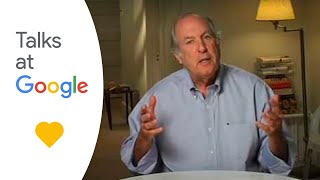
After losing his advertising job and facing a health crisis, Michael Gates Gill found unexpected fulfillment working part-time at Starbucks. He discovered that serving customers and the company's benefits for part-timers mattered more than his Yale education and privileged past.
Chapters
Thank you so much for coming today to this Authors at Google event. We're really pleased to have you here. I'm very pleased to introduce Michael Gates Gill. His new book is called How Starbucks Saved My Life. A son of privilege learns to live like everyone else. I'll let Michael explain how exactly his life was saved. I'm sure he'll do it more eloquently than I can. But let me share some of the praise that's been given to this book. Thomas Moore, the author of the Worth of our work, writes that How Starbucks Saved My Life is based on the simple idea that down to earth humbling labor can help you reorient. Excuse me, your values and priorities and give you a new life. It will speak to anyone in need of radical surgery on their worldview and that includes most of us. Sit down with a cup of coffee in this book and entertain yourself towards enlightenment. Please join me in welcoming Michael Gaitskill.
Thank you. So that's a great introduction. You know, I always was appreciative when I heard anyone speak of shortness. I never rushed up afterwards and said I wish you'd talk longer. So Lisa, that was a great. Perfect. But also it's Lisa. Lisa shared with me that shirt second year anniversary today with Google, so it's a big day for her. And I'd also like to say it's a big day for me because I'm making a couple month book tour and I go to many bookstores, which I love, but also many cities. But coming to Google is the high point. So I like to say yay, yay to all of you because you make my life so much more enjoyable and doable. And I know everyone talks about like the ease and speed, but I talk about, or I like to share with you that for me it's a creative, it's a creative door that you open too because creativity is based on communications and information and no one can create without that. And I was a history of art major, so I studied the Lascaux cave paintings where they began to communicate with each other. I mean that's our primal. I think human desire and need and excitement is that idea of communicating. And I think all of you in this room, well, it's just an integral part of my life. But it's so great to see it brought to life and to be at your campus, this beautiful campus on this spectacular day. And I just want to say how grateful I am, how grateful I am to be here and for all your hard work everyone in this room does to Help me and everybody. And, you know, I think the fact that it's become such a part of my life, everybody's life, it is a verb. You know, I'll Google it. I'll say, I mean, that's like, I'll print it or whatever. I mean, it becomes such an essential part of any creative person's life. So you've achieved a great thing every day. I know that you probably hear some of this, but I just wanted to recognize what a major part you play in every creative person's life at any time of the day that you might even not be aware of, but you probably are in a general sense, But I wanted to make it specific. The other reason I'm grateful to be here today is about four years ago now, I was diagnosed with a brain tumor by one of these eager brain surgeons. And he was so eager to operate, and he said, you're one of those very rare percentage of people that get this thing. He was excited by it, and he said, actually, it's my specialty. He wanted to show me the articles he'd written about it. And I said, well, I just. I immediately said I wasn't so eager for the operation. And secondly, I didn't have health insurance at the time, you know, and so he lost a little bit of his enthusiasm. And four years later, I'm still negotiating. He calls it watchful waiting. I call it fear and trembling. I don't want to go into the knife. It's so medieval. Talk about the old days of the printing press. That's the old days. They have to actually still bore into your skull. So I'm grateful also just to be alive, you know, right here, right now. And then, secondly, that was one of the shocks that led me to this story, really. A couple weeks before I walked in the Starbucks store, I had that diagnosis. And then also my life. I was 63 at the time. Now I'm 67. But at that time, my life had been sort of going downhill. I'd been given everything in life, really. You couldn't imagine a more bountiful birth in the sense that I've been born into affluence. And my father, Brendan Gill, was a famous and very great writer at the New Yorker magazine and the New Yorker magazine in those days, this is even before Google was the place people looked for great writing. And so it was, you know, I knew all the famous people of the day, from Jackie Kennedy, Norman Mailer, all the famous writers of that time. And I was in that world, which they called, like, the glitterate. And it was a glittering atmosphere. And then growing up in that affluent thing, I see you've got a thing from Yale on the wall. And I was also given a Yale education. In those days, if your father, grandfather and great grandfathers, mine had gone to Yale, the door was open. There was no rigorous competition. It was just obvious that you could go. I mean, you had to have an open checkbook as well. But it's amazing how things have changed in that way. But in my time, as I said, I was given that gift of education. And then a friend of mine from college gave me a job at J. Waller Thompson, which is the biggest advertising agency in the world at the time. But he. Just because he was working at Pan American Airlines, which at that time was the biggest airline in the world, and they were the biggest client or big client. It was sort of a series of gifts. But I made the big career mistake in advertising of growing old. That is really. That's one thing you're not allowed to do. So in a naive way, I thought, well, if I'm loyal, hard work. But it was stupid. You're never really that exceptional. So at 53, I was sort of invited to have breakfast off campus, if you will, off site, which never go to a meal like that. It's like the Mafia. Never take that invitation. And then I was told, we have to let you go. And unintentionally, I love that phrase, let you go, because they were letting me go. I didn't realize it at the time. And by the way, you can't complain in corporate life. It is like the Mafia again, too. It's the vow of silence. You can never complain. Anyone's treated you badly, because your next move, your next job then will be impossible. You'll be professionally dead. So I set up, a lot of people do at that time, a consulting quote, unquote business. And for a couple years it went well. But then gradually, no one answered my calls. And you can imagine in this room how terrifying it is to have silence, silence at the other end of the phone call. But I was still pretending. I'd still dress up in a suit and tie. Yes, that's what we do in the east coast when we're pretending to be successful. Isn't it bizarre? But that's still the culture today. If you went to New York City today, the people that think of themselves as the master of the universe still put on a necktie. And there's no reason for a necktie, no functional reason. It's pure fashion. But that was still the Fashion. So I still do it in a kind of magical. If I dress up in this Brooks Brothers suit and carry this briefcase and pretend like I'm making calls. And, you know, many of us, when we have hard times, we go back to happier memories. And I went back to the memory of my youth when I was this fortunate son and living on East 78th street in New York, which is a nice area with a nice brownstone, old brownstone. And I saw that there was a Starbucks store there. And I said, well, at least I'm going to have a latte. I was also broke. I'd been divorced, so I had the brain tuber. So I had a series of, sort of a series of perfect storm almost hardships on me. And the hardest hardship was myself, because I had been given everything. I had no real way to move towards a new life. You know, I didn't really know how to get out of that box. I couldn't call for help because I was still in that cocoon of sort of self entitlement. I didn't know how to wave or even ask for help. There's a great poem by a woman named Stevie Smith. It says, I was further out than you thought and not waving, but drowning. And you know, in life sometimes you're in desperate need, but you can't really, and you still have to smile. How are you? Everyone says, fine, no matter what you're feeling. I was in that state of a frozen state, and yet I was declining, I was failing, and I didn't know how to ask for help or get out of that box I put myself in. So I went into Starbucks. Latte. I'll have a latte and feel better. And I happened to go into a store that was having what they call a hiring event. Managers from all over the city would come in to hire people. And I happened to sit down next to this young, attractive woman and she turned to me and she said, after I sat down, would you like a job? And suddenly that broke through this sort of screen I'd set up. I said, I realized, yeah, I would like a job. Then she said, well, fill out this application. I said, whoa, whoa, I need help. So I was also in that moment, there was just something, I guess I was desperate enough because it wasn't courage, it was just desperation because I knew that I couldn't fill out a job application I never had in my life, had to, and I would fail. So I said, well, I need your help to do it. She said, okay. So I moved over across from her and by the way she was the kind of person from a no education background, grew up on the streets of New York, made her own way, was now manager of a Starbucks store, but without any of my advantage, a totally different person, decades younger. And I can say completely honestly and sadly, I would never have reached out for her. I would never have helped her make that transition. I mean, when I was interviewing people and we would, for example, have a minority program, I would say, this is not going to work. People without an education, in the Ivy Leagues, without these things, they can't do it. And guess what? My prophecy would always come true because of my attitude that only the people like me from my background with my education could make a contribution. But she had a more generous spirit. And so she reached out for me and she said, okay, let's go through this. Have you got any retail experience? And I said, well, what is retail? But she took the next step. She said, well, like Walmart. I said, well, I've never been in a Walmart. And she said, well. And then I thought I was going to lose her. So I desperately was thinking, well, I'd written submission statements from Burger King. So I said, well, I worked with Burger King. She said, burger King. Okay, we'll put that down. So in other words, she was on my side. She was going to help me from the silent death that I was going through. And that was such a miracle. I mean, that is not a minor miracle in the way my life was saved at that moment. And it's those little interactions in life, those accidental, spontaneous interactions which I'd been, I think, almost too frozen to engage in. But she broke through and did that. And then as we went through it, she also said, well, by the way, how many children do you have? And I said, five. She said, whoa, you've been busy. In other words, for her, it was a sense of humor in her life. Later I learned her mother died of a drug overdose. She'd been put over to an aunt. In other words, an extended family, having five kids was nothing. And that was a relief to me too, because I was in that guilty feeling too, that how do I support them? And she said, starbucks. Even for a part time employee, which I was going to be, she said, they'll completely cover insurance for all your children. Whoa. So instead of just saying maybe this job, I said, really? This is the job for me. Anyway, she called me a couple weeks and said, okay, show up for work at 93rd and Broadway. That's what was way across town, if you know New York, 93rd and Broadway is like a different world. It's a very tricky neighborhood and I'd never gone there. So I said, whoa, I thought you worked at 78th street, you know, the east side? And she said, yeah, I don't work there. I just came over to hire people. And so my store, if you want to work for me, do you want to work? That kind of thing. So I showed up there, but I was feeling worried. My dream had never been to wear a green apron and a black baseball cap and serve coffee. So I was worried and sort of humiliated as I came in that door. But her name was Crystal. She came over to me right away, sat me down, gave me some delicious coffee. It's called Sumatra. It was really delicious. And she gave me some espresso brownies. I've always loved brownies. By the way, I hear you have delicious food here. So I'm going to stay for some of it. But it's certainly what, you know, in all my years, my 26 years at J Water, I never even imagined, ever thought of bringing coffee to anyone who worked for me, you know, and right away, my first day, and she's sitting across the table and we're chatting, we're enjoying those moments once again. It's a very busy retail environment. It's this kind of scene. You would never expect that the person running this whole thing can take that time to just engage on a personal level on the first day. Because in many companies they say first day orientation, all stuff, but a lot of times you're just thrown in and is there that from the person who is at the top of it, if you will, that kind of consideration, just a personal consideration. So I knew I was a little bit different world. And then I looked around the store though, and then I was little bit worried because originally I thought this job might be beneath me, right? My elevated education, everything. And then I realized these 20 somethings, they were calling out drinks, doing the register with all these complicated things. And I realized this might be beyond me. I was never much of an athlete. My hearing was affected by this brain tumor and I was feeling like, gosh, it's one thing to be fired by J. Walter Thompson, another thing to be fired by Starbucks. And I was well on my way to thinking I couldn't make it. And then she introduced me to this person, came in wearing, what do you call it, a dewlap and very formidable looking man, you know, in his 20s, but he looked, you know, he's the kind of person I would have crossed the street to avoid in My previous life. And he came and Crystal said, hey, Kester, come over here. And he brought him over the table and he said, you know, I'm going to, Kester, you're going to be Mike's coach, Mike's co training coach. And Kista gave me this big smile. And that was a turning point too, because he believed I could do it. So he believed and he made it true. So just to make it very short, all those different things that I never thought I could do, like calling out drinks, by the way, I'm not still a perfect person at any of this stuff, but they did believe I could do it. And I was able to make that move across the bar. And, and working with these partners from all these different backgrounds also restored my faith in the idea that, in other words, if I hadn't had this experience, I would have probably ended up somewhere, a country club somewhere, saying people of different races and cultures and backgrounds and religions and education experience can never work together. And yet it happened on every shift. It happened with two or three people needing each other to be successful. We needed each other. We needed each other to be successful. Whether it was putting out pastries or coffee or doing all those thousands of things that make for an enjoyable experience. The other revolutionary thing I discovered was because I'd worked with many Fortune 500 companies and most of them say we put our customers first and Starbucks puts their partners first. In other words, just like sitting down with a cup of coffee with me. But also in addition, training and, and all the health benefits and in addition to that, the idea that you get stock right away, I mean, after 90 days or something and stock options and you literally become a partner as a part time person. See, that's the revolution. Part timers, isn't that unbelievable? I mean, these are people who just, there's a flow of partners in and out, right? But they're taken in and given all the facilities, all the resources that you might not get as a senior executive in corporate America. And now that's not true for Google, but it's true in many corporations. So it's that respect. And even day by day there's that respect for like, it could be a line out the door or busy and someone spilled coffee. And Crystal would turn to me and she'd say, mike, could you do me a favor? Now, my previous life, say a client says, we need three commercials by Monday and it's Friday night. I'd run down the hall and say, we're working this weekend. A kind of macho excitement that we're going to sacrifice our lives to get these commercials done. And instead, just that few moments, I mean, it's not a question even now of cost and benefits and stock. It's really a question of few seconds of saying, would you do me a favor recognizing me as a person and just engaging in those few moments of we're humans and we're individuals. For example, after I've been there some months and I could help other people. I had this class on how to coach. And they said, everybody learns differently, so don't worry about how you learn. Don't try to impose that. Try to find out how they learn. Like it's by reading or visuals or doing. And I never learned that in my previous corporate life. It was always like, here's the way you learn. So it was a whole individualization too. And that was also played out with the customers that they call guests because, you know, it didn't seem to make sense. When I first got behind the register and they would come up and. And guests would say, aventi, I think, is that big or grande? Or I said, why are they making it so hard for people to order a drink? Because in my previous life in advertising, you say, make it as easy as possible for people to buy something, right? And it seemed like we were making it so hard for them. I said, americans don't like foreign languages. You know, this is a foreign language, Cappuccino, all these things. And yet as I worked there over the weeks, I discovered that food. First of all, the guests would come in very uptight, and then their faces would be. But as they tried to order these drinks and they say, venti with two shots of sugar free vanilla and all the specialty things. I would say 90% of the companies in the market don't want you to order your own little special customized thing. They want you to 1, 2 or 3. A cookie cutter approach. So here was Starbucks doing something totally different. Each individual was encouraged to make their own drink just the way they liked it. But you know what a powerful, powerful excitement that was. You can only. Even for everybody from different places. I saw them come in and they, as they went through this process and they say, okay, double tall, non fat latte. Okay, double tall, non fat latte. It was almost become a song. But they heard a call back two or three different times and they knew in this aspect of their life, in many aspects of their life, beyond their control, many, like a young mother, came and said, this is the one time in my day where I get things just the way I want it, that's satisfaction. And then also it's the way you got to know your guests because they would say, this pregnant woman would say, I have to have decaf. Oh, now I can have folk. In other words, you engage in that dialogue, it's participatory creating. And you say, what are you creating? I mean, my previous job was called a creative director at advertising agency. And what I was creating was sort of different ways of manipulating words and people. What I'm creating now at Starbucks and creating these drinks and just those moments of enjoyment. I think in some way, I don't want to be too pretentious or pompous about it, but I think in some ways, at least for myself, it's much more satisfying because it's so rare. Those little moments of enjoyment, those little moments of you are special and we're going to have a good time together. The smile, the laughter and that whole music, the whole thing that comes together. So when I leave a shift. And by the way, the great gift, I shouldn't tell you this because I know how hard everyone in this room works. The part time job for a full time life. Because in America we always say, you know, we define ourselves by our work rather than define ourselves by our lives. And this is not true of many civilizations, but it's true of ours. It goes back to the Puritan ethic and I could do a riff for a very long time about that where they said the devil makes work for idle hands. And they described anything idle as not doing. And because they were our founders, you know how powerful founders are in the culture of any company. It's true of a country and you'll be, in one way, it was great. They were from England, they were Cambridge and Oxford professors who said everybody reads, everybody reads. That was a revolution because everybody has their own way to understand the Bible, right? So that's why in little New England villages you have a church and a school. And it was mandatory that everybody, men and women, totally egalitarian about that. But it was an intellectual focus. And that was all great. But then I think that the pure ethic of saying that anything, you know, if you were even sleep, they were terrified these early ministers would talk against sleeping too much. See, So I think anything gets unbalanced. This is a long way of saying that, defining yourself purely through work. So I get up at 4am in the morning at 67, I'm sort of staggering out of bed, I still hurt, etc. I go there by 5, but then I have a few cups of Coffee with my partners and the guests. And it's enjoyable. And we're creating together those moments of enjoyment. And when I leave at one, I feel great. Because guess what? The rest of the afternoon, evening, night is mine. I can go home. I can listen to music, I can play with my kids. I can read a book. I would never have been able to write this book without that wonderful, luxurious expanse. In other words, my life was given back to me. So I'm happier today than I can tell, not just by. I have to say, I'm happier today being here. I feel it's a great. I'm congratulating myself on this great achievement. What a miracle in my life that through this circuitous circumlocution, I've arrived at Google on such a beautiful day and to be able to thank you. And I really am grateful for that. But more than that, I came out of Starbucks one night after mopping the floor and cleaning, by the way, I became the best bathroom cleaner. If you're wondering what specialty became really good, I could make any bathroom sparkle. And it was so therapeutic in a time in my life where I didn't feel I was useful for anything. And Crystal, no one has ever cleaned the bathroom. You should never see anyone do better. So, you know, it's a peculiar thing, probably hard for you to believe, but at some points in your life, just that feeling of usefulness can be happiness. And that's one. But the other thing was I was so relieved when I went out into that west side street, which is still tricky, but it was late at night. But I said, you know, I'm happier than I've ever been. And part of that was having that your life back. Part of that was finding some useful thing I could do. Part of that was creating enjoyment for others. But I think another big part of it was that big superstructure of achievement and status and big houses. What a relief. I go back to my little converted attic, which is my apartment, and by the way, the New York Times interviewed me in the attic. And this Joyce, this reporter, she said, I got to stop being a reporter. This is unacceptable. You've got to get a couch. Because what I did is I have two plastic, white plastic chairs, picnic chairs and a picnic table. But they only cost $5 and the picnic table cost like 15. So I furnished my dining room, if you will call it this one room, with a kitchen and bedroom. But I finished it Spartan, and the walls are white, and there's not a lot of stuff. There's not a couch, you know, she said just to get a couch against that wall. But if I got a couch against the wall, I'd pile it with papers, I'd fill it with stuff. And it's such a relief. I can't describe to you the relief not having the physical stuff and all that mental stuff and strain. And by the way, I would have never discovered this because I thought I was happy in my previous life of status and title and expense account and traveling and all that stuff, I thought I was happy, but it's nothing like the happiness I feel now without it. So my new life. And I think if. Reading the story. I hope you enjoy the story, but if you read it, I think the only thing I would. And I'm not a guru about life or management or companies or anything, and it's not really about Starbucks, but it's like, well, you know, when Tom Hanks called after this book was accepted for publication, what apparently. And by the way, when I say he called, I don't mean that I know him or whatever, but apparently what appealed to him about doing the story? Because he's going to play me in the movie. What appealed to him about the story was the idea that you can have an unsuccessful life like mine, or I would say probably his would be successful, obviously. But there can be a whole new chapter that you never imagine. You know, in America, how we like to plan out marketing and this and that, that you never imagine that through a spontaneous accidental turning you can just step into this whole new world and that new world, you'll be happier than you've ever been doing something you never imagined. I think that's the key. And I think, I guess that's the only lesson out of my story that other people could enjoy and maybe share, which is when you're feeling like you're stuck in any box for whatever reasons, if it just doesn't feel good and you don't see any rational way to think your way or analyze your way out of it, you know, just leap. Leap to something totally new, unexpected, crazy, humiliating, foolish, stupid, great, whatever. But just to put yourself in that new position, because what I've discovered is that by just making that leap out of the box, you can find happiness that you never found before. Well, thank you very much. Thank you for being here. And once again, I'm so happy to share these moments with you.
And if you have any questions, please ask them into the mic.
Hi. Yes. Did you need permission from Starbucks?
Can you repeat the question?
No. Did I need permission from Starbucks? No. That's another Bizarre thing. I mean, obviously I told my manager of my store and she told corporate and all this stuff that I was working on this book. But the word back was, will we encourage partner creative efforts? And she said, well, I said, well, that seems pretty relaxed because in my previous life, you know, if I told anyone, they'd say, I want to see every word and make sure. But she said, well, you know, they're baristas. I'm a barista. She said, the baristas all over America creating CDs and artwork and Starbucks. And just before I came out here, there was a memo saying, would anybody, any partner, like to write a song for Starbucks? So they're continually encouraging this and they're so relaxed about it, they didn't see a word before it was published. And by the way, there's some stuff I've heard from partners that they like. I refer to it as a double tall skim latte. And they said you should say non fab. So, I mean, I'm sure there are lots of stuff, but it's amazingly relaxed, isn't it, to say, go ahead, we believe in creative efforts without saying, well, we want to see every word and that kind of thing. But I feel so grateful to be in that kind of situation. It is a creative. You're all working in a creative experience. And believe it or not, creating these things are also creative. But no, they didn't. And also I didn't want to share with them because in my previous life, I noticed once you get into a corporate digestive system with words, you know, it's almost like anything any English goes in, it comes out mush. What's the plight way of saying anything? It doesn't come out better because the best people in the world would add five good ideas, right? And then pretty soon that sentence of English becomes gobbledygook, corporate speak. And I knew I couldn't do that because all I and I didn't want to tell a story of Starbucks. I wanted to tell my story truly as I could. And it could be. It doesn't have to be someone leaping out of an old life into a new life and going to Starbucks. Obviously, it could be anything. It happened to be Starbucks with me. Yes, sir. I guess this is kind of an unwitting follow on to the previous question is that with your success as an author and book tour and a movie coming out, are you worried about getting promoted or anything happening to your current job? That's a good question. I'm still, I should say the other day for Example, this woman came in and she said, you know, I want a grande, you know, two pumps of sugar free vanilla, you know, extra hot, no foam latte. So I was getting that extra hot, no foam and the two pumps of vanilla. And I gave it to her. And a few seconds later she came back and said, mike, I think something's missing from the drink. I said, what coffee? I'd forgotten to drop the espresso. So no, no one's come up to me and said, you should be promoted. There's shift supervisor, there's manager. And I think also I made myself. Obviously, I've stumbled across a happiness I'd never known, right? With my. What you might call a smaller life rather than the bigger life. And obviously I'm not going to. I want to continue work for Starbucks. It's a perfect balance for me. And I don't plan to make any changes in that happiness because I'm worried that it is mysterious when you're happy, right? One day you walk in and say, whoa, I'm really happy. Why? You never really know, maybe. And I just don't want to change any of the elements in it. Is there any other? By the way, I'll stay and sign books and answer questions as long as I tell Lisa this is the high point of my book tour. So I didn't schedule anything for this afternoon, except hopefully I'll get some food. So I'll stay as long as anyone here would like to. But I have one more question, because I knew the other thing. In my previous life in school, by the way, I'd never graduated from Yale. This was a decision fueled more by drink than by rationality. But I thought everyone was going for degrees. So my senior year, I gave the class oration, or whatever it was called, you know, the commencements address. But I didn't take the degree. And also that allows me to go back. I want to be the oldest undergraduate at some stage of my life. But let me take one more question and then, as I said, I'll be happy to sign and talk as long as possible. Yes.
Yeah, one question which is half related, half unrelated. Yeah, I was really happy to hear that. How Starbucks treats the employees here and call them partners and whatever. But I was looking through the marketing brochure the other day and I was a bit surprised that still only a small percentage of the coffee they buy is fair trade coffee. So I don't know, I would feel that this happiness which was given to you could be given to other people as well. And maybe the employees should make an effort to make that more than 20, 30% to make that 100%. So people don't live on less than dollar a day and they can send their kids to school as well. And I wonder if there's any initiatives from the employees coming.
Well, that's a good idea, by the way. Yeah. I'm not a spokesman for, for Starbucks.
Yeah, I know that. That's why I'm saying maybe you should do a bottom up approach.
Okay. That might be a good idea because I know that they work closely with farmers and do all that stuff. But also, if you email Starbucks or whatever it is, I think that's a good idea too. But I will definitely put my little voice into it as well. Anyway, thank you again, everybody for having me here. Thank you.
More from Guy


Cheryl Strauss Einhorn | The Human Edge: Smarter Decisions in the Age of AI | Talks at Google



Rachel Glennerster | Innovation and the Center for Global Development | Talks at Google

Rebecca Winthrop | Rethinking the Purpose of Education in the Age of AI | Talks at Google

Dr. Robert Wachter | A Giant Leap: How AI Is Transforming Healthcare... | Talks at Google



