The Book of Fate | Brad Meltzer | Talks at Google
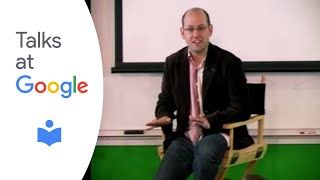
This is a transcript of Brad Meltzer’s Authors at Google talk (video titled “The Book of Fate | Brad Meltzer | Talks at Google”). Meltzer promotes his novel The Book of Fate (which he says debuted at #1 on the New York Times bestseller list), recounts research anecdotes (a high-profile publicity visit to Bulgaria and time spent in White House spaces), describes his interest in Freemason history as a seed for the novel, and answers audience questions about his writing process, timelines (roughly three years from conception to publication), and work on Justice League comics.
Questions this video answers
24 rejection letters.
At number one (debuted last week, per the talk).
Almost three years (about two years to write plus at least six months for research).
About 80% of Bulgarians (as cited during the talk).
Fifteen U.S. presidents.
Chapters
Welcome to another Authors at Google event. Our guest today is New York Times best selling author Brad Meltzer, whose new book, the Book of Fate happened to debut last week on the New York Times bestseller list at number one. And this seems, this seems to be a very good month for him because he also started writing the Justice League of America comic book for DC Comics, which also debuted on the sales charts at number one. And basically, Brad is a very interesting person. If you go to his website and look through things, you'll notice that he's on his sixth novel with a seventh one buried somewhere on his shelf which got how many rejections was it?
24 rejection letters.
24 rejection letters.
Still published by Kinkos.
He was also the creator of the WB series Jack and Bobby, wrote the DC Universe miniseries Identity Crisis, and had a run on the Green Arrow comic, and was also Judd Winnick's roommate way before the real world ever happened. He's also done research for his books, including Talking and I believe Hanging out with, as it were, former President Williams, Bush and Clinton, and has been asked to consult on terrorist opportunities and hopefully he'll talk about all that and some of his writing. Brad Meltzer.
Is this working?
We working? Okay.
Okay, I'll tell you this. The Book of Fate started for me a couple years back and I will tell you, I got a call from my editor in Bulgaria and she said to me, brad, they love you in Bulgaria. Can you please come to Bulgaria? And I said, that's so nice of you. There's no friggin way I'm going to Bulgaria. And then she said to me, please come to Bulgaria. And I said, you know what? My Italian publisher doesn't want me to come visit. I said, my French publisher doesn't want me to come visit. This is the little country that could. I'm going to Bulgaria. So I fly to Bulgaria, I land in Bulgaria, I get out of customs. And as I get out of customs and it looks like customs here, there's family and friends waiting for their loved ones. And all of a sudden a flashbulb goes off. Pow. And another one goes off. Pow. And then it's like Brad and Angelina have arrived. It's like, bop, bop, bop, bop, bop, bop. All these flashbulbs are going off. So much so that I go like this. And there's nothing behind me but two closed doors. And as I'm turning around, I'm thinking to myself, there's no way that what I think is about to happen is actually happening. And all of a sudden, as I turn Around a thorough of Bulgarians come racing at me, all yelling in Bulgarian. And there's one English voice. And the voice says to me, I'm your Bulgarian translator. This is the Bulgarian press. This is the Bulgarian. Your Bulgarian editor. The Bulgarian press would like to have an interview right now. Will you grant their interview? Now, who am I to deny the Bulgarian people? So I say, of course. And they say to me, thank you. They say to me, first question. How does it feel to outsell John Grisham in the United States? And I say, can you translate that again? And she says, how does it feel to outsell John Grisham in the United States? And I say to her, very honestly, I don't. I don't outsell John Gresham. Almost nobody does. And the reporter says something about Garion and laughs. And I say to my translator, what did she just say? And she said to me, oh, she admires your modesty. And I get into the car and I open up the paper. And it says, my picture is in the paper on the day I arrived, announcing my arrival in Bulgaria. And I can't read the writing because of the Cyrillic writing, but I can read the number 220 below my picture. And I say to my Translator, what's the 20 here for? Because I know it's not my age. And she says to me, oh, 20 million copies. That's how many books you sell per book. And now I realize that the poor Bulgarian people have been lied to, okay, they've been lied to. My editor, there's. To drum up sales and to get excitement going, has told them that they have the greatest author in the entire world, the biggest selling author in the entire world. And that author is me. Okay? So now we have these huge press conferences, and they put me on the Slavi show, which is the biggest show in Bulgaria. You can put it into Google. You'll see it. And the Slavi show, when you put it in, you'll see it says, is watched by 80% of Bulgarians, is what it used to say. I think it still says it now. 80%. Now 80% of Americans don't brush their teeth. 80% of Bulgarians are watching the Slavy Show. So I go on the Slavi Show. They got a live studio audience. People wait. Now it looks like the Tonight show in Bulgaria. And Slavi's this. I love Slavi. He's this great giant Bulgarian man. He looks like the strong man of the circus without the mustache, got a shaved head, muscular guy. And I know all the questions they've Given me all the questions. But I get on the couch and the translators between us, and Slavi throws out all the questions in the garbage. And he looks at me and he says, brad, I can see what you're wearing. I know what you do for a living. I'm going to guess everything I can about you. You can see what I'm wearing. You know what I do for a living. I want you to guess everything you can about me. He says, if I'm right, you put me in your next book. If you're right, I buy you a drink. What do you say? Of course, Slavia, I'd love to play this game on live Bulgarian television. So it's all true. You can't make this up. So now he looks at me, and I figure it's going to be a joke and have some fun with me. And he looks me dead in the eye, and he says to me, you don't care about fame. You don't care about money. You know that's all nonsense. He says, you love your wife so much, you're worried that if anything ever happened to her, you don't know what you do. He says, you're overprotective of your parents. You fight battles for them that you think they can, And the next day, just be someone who has to stop at red lights like the rest of us. And Bush was kind enough to say yes. He invited me. I spent nearly a week in Houston with the Bushes and. And then went up to Clinton's office in Harlem. So all the details you see in the Book of Faith, they're real. I didn't make them up. All those ones that you go, is that real? That one seems. I got it from their office. I got it from them. I'll also tell you that when you look at the Book of Faith, my other obsession was the Freemasons. I didn't even know what a Freemason was. I didn't know it was the world's oldest and largest fraternity. But a friend of mine sent me a list of all the famous Freemasons. It was a list that included everyone from George Washington to Winston Churchill, dating back to Voltaire. It was a list that included John Wayne and Mark Twain, Bob Dole, Jesse Jackson, Harry Houdini. Eight signers of the Declaration of Independence were Freemasons, nine signers of the U.S. constitution and 15 U.S. presidents were Freemasons. So 43 presidents, 15 of them are part of the same secret club. You better believe. I want to use that as a seed for a thriller so that's what the book of fate is really about. You'll see. It's about a president's aide who watches his friend die, the victim of a crazed assassin, and eight years later finds out that his dead friend is alive. He has no idea how. And to figure it out takes him back to buried secrets in freemason history, to a 200 year old code invented by Thomas Jefferson. And he has to figure out, is this all coincidence or is it fate? And that's where the book of fate begins. But again, what I'd rather do is answer any questions you have and then of course, sign some books and listen. You can ask about the novels. I write fiction. I'll make up an answer and let's see where we go from there. And. Yeah, and I'll repeat the question. Yes, for purposes of the videotape. Anybody have a question? Yes, Tom. Once you get that glimmer of an idea to start, how do you proceed? Yeah, the question is, when you get that first glimmer of an idea, how do you proceed? I always start with research. We are, whether we like it or not, a society that gets its information and its news from comedians and we get our history from fiction. So I don't know anything about former presidents. I'm going to try and get down there and see what I can see. And sometimes you'll be standing there and it'll jump out at you. I was right. When I was researching my book, the first Council, a friend of mine said to me, you want to come see what the attic looks like in the White House? Sure, I want to see the attic. So I go up to the attic in the White House and it looks like a normal attic. It's exposed wood beams and slanted ceilings. And then she says to me, you want to go see the President's bedroom? I will tell you that this was the height of the Monica Lewinsky scandal. You better believe I want to see the President's bedroom. So I go up to the glass window from the attic that overlooks where Clinton's bedroom was. And I put my face against the window, my fingertips against the window, and I'm staring out, looking across the way where his bedroom is on the corner of the White House. And I say to her, you know, doesn't the Secret Service care about this? And she says, of course they care about this. That's why they have the cameras. And I look up and there's a camera staring straight down at me. I am pressed against the window. My fingerprints are all over the window. I'm slowly pulling back, realizing if the Secret Service hasn't opened up a file on me at this moment, they're not doing their job. But for my readers, I will risk my life. That's just the way it's going to be. But what I saw in the attic, and I won't ruin the end of the first Council for you, but what I saw there, that inspired and changed the whole ending. What you see in the book in those final 50 pages is real. I saw it in the attic that day and that's what inspired the book. So I always, once I get that kind of that world that I want to explore, I explore the world as best I can. And then you find what's there and what is going to be exciting to you. If you like it as a writer, that is the best way to tell if your reader is going to like it. Because if you don't like it, it's just not. Yeah, from conception to first publication. Yeah, from conception to publication. How long does it take to write the book? It takes. It takes me almost three years. From true conception, it takes about two years for me to write the book. It takes another six months at least for research. I would love to write a book a year. My publisher really wants me to write a book a year, but if I wrote a book a year, that would be garbage. And my biggest fear as a writer is being one of those guys who pumps out a book every year and they are garbage. And there are a lot of guys out there who write a book a year and they do a great job. But I'm not that guy. And I need to take the extra year to do the research, to do the homework, and to hopefully the best of my ability to get it right. I hope it makes a better book. Certainly I think it does and hope it does. Questions? Yes, the question is, who do I read for thriller fiction? Interestingly enough, I do not read thrillers at all. I can't read in the genre. To me, when I read a thriller, I enjoy myself for about 50 pages and then all I'm doing is taking it apart. I'm taking it apart trying to figure out what the author is trying to pull over on you. And it's like a mechanic driving in a rental car. You're not enjoying the ride, you're just trying to figure out what's wrong with it. And that's all I'm doing. So I actually read completely outside the genre. I had a book recently that I read and I said to my wife, I found the best Book. We got to tell everyone about this book. It's the greatest book I've ever read. We got to tell the world about it. She said, what's the name of the book? I said, it's called To Kill a Mockingbird. And she's like, imbecile. We know the book, but I tend to like. I mean, if you say, what's the greatest book I've ever read? It's To Kill a Mockingbird. I tend to like things like Flowers for Algernon. Things that are about transformation. Even though the books are all thrillers, my novels, I hope first and foremost are about those characters and their transformations, that who you are in chapter one is different than who you are in the final chapter. And the same thing with the comic books. Who you see in the first issue is different than who you see in the last. And that transformation is, to me, what the entire book is. Yeah. The question is, in writing in different mediums, which do you prefer? I write comic books and I write novels. And I'll tell you, I love writing my novels. I get the most reward out of that because it's me building my own house brick by brick with my own hands. And there's nothing like that. But I will also say that I get to write Superman and Batman. I get to write Wonder Woman. And America has not given very many art forms to the world. We gave the world jazz. That was a good week we had there. That was good. And then we gave them the American comic book and Superman. And there is nothing like. And that's American history. But there is nothing like sitting in my room and typing on my computer screen S U P E R M A N and putting words in Superman's mouth. That is a fun day of work for me. But to me, what novels and comics are. The cliche is true. The grass is always greener on the other side. But when you go to the other side and you're in the greener grass, the first thing you realize is the original grass is greener. And then you come back and you go, no, that grass is greener. That's how comics and novels are for me. I go to one and I realize how much I love the other, and it inspires me and reinvigorates me to come back. And that's why I try to stay fresh. So I'm not churning out something on an annual basis. That's just garbage. But I do love the comics as well. Yeah. How did you get started writing?
First book?
Yeah. The question is, how did I get started Writing my first book. I had some debt to pay off after college and had a guy named Eli Segal who offered to be my mentor at a magazine called Games Magazine. Games Magazine is a puzzle and game magazine. And he was going to pay me real money to play puzzles and games for a living. I am not that stupid. I took that job and I went there and he said, I'm going to be your mentor. I'm going to teach you everything. I'm going to take you under my wing. And the week I got there, he left. And I thought, oh my gosh, I've wrecked my life. And I did what all of us would do in that situation where we think we've wrecked our lives. What every person here would do. I said, I'm going to write a novel, right? It just seemed like the logical thing we would all do. And it was a complete lark. My first novel that I wrote, it was before the 10th justice. That novel got me 24 rejection letters. Now I will tell you, There were only 20 publishers at the time and I got 24 rejection letters. I mean, some people are writing you twice to make sure you get the point. Not even making it up. Like Dear Brad, in case you missed our first letter. That book was really crap and it was just a disaster. But what I loved in that year, I found out that I love to write. I just loved talking to these imaginary characters. And I said, if they don't like that book, I'll write another. If they don't like that book, I'm going to write another. And the week after I got my 23rd and 24th letter, I started what became the 10th justice. And I look back on that experience and I don't look back and say, well I was right and they were wrong and haha on them. I look back and I realize that life is subjective and all it takes is one person to say yes. That's all you need. And all you have to do is find that one person. Take one more question then I want to of course sign some novels for you or comics or anything else. One more. Yeah. What are you doing with the Justice League? What am I doing with the Justice League of America? You know, I'll tell you that every 13 year old boy has two fantasies. One is today to Playboy centerfold and the other is to write a comic book. And only one of those dreams is worthwhile. Okay, I'm telling you, ask my wife, she'll tell you which one it is. And I love writing the Justice League. My first comic book I ever Read was Justice league of America 150. And now I get to write the Justice League and pick out who should be on the team. I get to pick out who should join Superman and Batman and Wonder Woman on this team. Should it be Green Lantern? Should it be Flash? What I'm doing in the storyline is I'm doing a story about a character named Red Tornado who is a robot, and all he wants to be is a real boy. I'm doing Pinocchio, and it is the easiest of all the Disney movies that are out there. It's the one motivation I always understood is the little wooden puppet that wants to be a real boy. And I love applying that fairy tale in my own twisted way, of course, twisting it as I go to the world of superheroes. So you will see what happens to Red Tornado in his quest for humanity. And does the robot have a heart? Okay, so with that said, let me say this. I got 24 rejection letters on my first book. I got 24 people who told me to give it up. And what I take away from that experience, as I said before, is not that I was right and they were wrong. That's obviously a very pigheaded way to look at it. What I do take away is whatever it is you do with your lives, whatever it is you do here today, whether you're at the highest or the lowest level, don't let anyone tell you no. Especially here. You know, this. This was the place that was built on people saying that can't happen. And it does. But don't let anyone tell you no. Whatever it is you do with your lives, the cliche is a cliche, but it is entirely true. The only way you find your dream is to chase it. And I hope for every one of you sitting here, you find it. You chase it, and you get it. And with that said, I'm happy to sign some books, some comic books, whatever you guys brought. I'll sign some Mary Higgins park if you want.
Day.
I'm feeling a little randy. But thank you for coming out, thank you for inviting me here, and thanks for all the research you've provided me unknowingly with my books. It means more than you will ever realize. I owe you here. Thank you.
More from Guy


Cheryl Strauss Einhorn | The Human Edge: Smarter Decisions in the Age of AI | Talks at Google



Rachel Glennerster | Innovation and the Center for Global Development | Talks at Google

Rebecca Winthrop | Rethinking the Purpose of Education in the Age of AI | Talks at Google

Dr. Robert Wachter | A Giant Leap: How AI Is Transforming Healthcare... | Talks at Google



