The Brief Wondrous Lives of Oscar Wao | Junot Díaz | Talks at Google
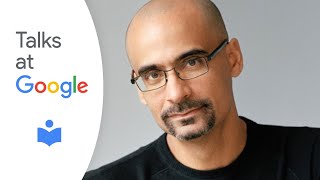
This content was created by Guy Kawasaki. This content was uploaded by Guy Kawasaki. This is a YouTube video titled "The Brief Wondrous Lives of Oscar Wao | Junot Díaz | Talks at Google" featuring a talk by Junot Díaz. The talk, recorded on October 4, 2007, covers Díaz's experiences as a Dominican American writer, his inspirations, and the themes of his novel. He discusses the intersection of personal and historical narratives, the influence of his cultural background, and the challenges faced by writers of color. The talk includes a reading from his novel and a Q&A session with the audience.
Chapters
I'm going to keep the introduction short because he's a super interesting guy, and I'd like to get him on the mic sooner, but just briefly. He's a Dominican American writer. He lived in Jersey after moving here with his family around age 6. Just from talking to him, I learned that he worked in a steel mill. And I think probably a lot of other things, if you haven't checked out his first short story collection. It's called Drown. It's super excellent. And his newest novel, which hopefully I have a copy of, got rave review from Michio Kakutani in the New Yorker. And an excerpt of it was illustrated by one of the Hernandez brothers, famous cartoonists. He also read this really great story for NPR's this American Life that I thought was hilarious called how to Date a Brown Girl, Black Girl, White Girl, or Haffy. And he also teaches undergrad creative writing at mit. And the last thing I'd like to say is that if you open your book, the epigraph to the book is from the Fantastic Four comic book. Of what import are brief, nameless lives to Galactus? It's probably the best I've ever seen. Please welcome Jeannot Diaz.
Thank you, Guys. Thanks so much for coming out. Yeah, it's kind of a cool thing. I mean, I really don't know what the actual details of it are, but it's really kind of a wonderful thing that they give you these kind of little events. Yeah. And for me, it's just like, I'm always kind of astonished and humbled when anybody will take any time from their lunch break to come talk to an artist or interact with an artist or some kind of writer or anything like that. So I find that to be extraordinarily human and touching. So thank you for taking a little bit of time. It's hard to make any time for anything. So this is like. I honestly just can't believe it. So thanks so much. And it's sort of weird. I have this year off. I'm not teaching at my school, mit. And so I have these, like, kind of bizarre pangs when I'm walking around your campus, because it's like the same engine, the same architect built the damn MIT and built this place. You know, it's like just the numbered buildings and your signs don't work, which is like, mit. My students always change all the signs. So they're like, Building 41. It'll actually be the opposite direction. So I felt like, oh, God, this place is equally fucked up. I think it's cool yeah, so thanks guys. And since I hope you guys don't mind, we're like an intimate group. If I like talk more like I would normally talk and not how I would talk with my students, is that okay? Because it takes a lot of energy to pretend to be someone else. Yeah. So which you have to when you're at work. Yeah. So. Well, at least we have to, but I'm sure other people do. Yeah. So I got asked here what I was going to do was just a small reading and then probably could have some questions to talk about some things by way of introduction. I'm a writer and I'm really interested in probably the dumbest thing you can be interested in if you're a writer. I'm like interested in the gaps in stories, like the places where there isn't a story. Like if someone misses four or five, if there's like a four or five month gap in someone's life, that's like what really pulls me. Yeah. If there's like a period of history where there's like no writing or there's no records about it, I'm like absolutely fascinated. So it's like a bizarre thing because most writers want to write about things where there's at least some documentation. So in some way this book was. I wanted to write a book about, you know, you were talking about the galactic, the galactic's quote about nameless lives. I wanted to write a book about this period in the island. I came from the Dominican Republic, where everybody talks about this dictatorship but nobody actually says anything. It was like such a weird trauma that people will always say, oh, in the time of Trujillo. But then they won't actually say anything. There's like no details. And I was fascinated about how you can hide something in plain sight. It's like the dictatorship is hidden in plain sight. Everybody mentions it, but nobody there is actually give any details about it. And I started doing this about 10 years ago because my grandfather, he's like an old country guy, real funny dude. He belongs to that tradition which he would like this because when he used to work in the Dominican Republic, they would have a lector, somebody who would come and read while they were working. So in his mind this shit would be really normal. He'd be like, this is awesome. Somebody would always come in and usually read like communist work, you know, and. Yeah, but he told me this crazy story about during this dictatorship about how he was walking down the street and somebody was eating an orange and threw the peel down. And at this time they believed about 50% of the island were informants for the dictatorship, which kind of makes East Germany look like normal. And somebody threw an orange peel on the ground. And the secret police came from all over and arrested the guy who threw the orange peel and the three nearest people who didn't stop and apprehend the guy who threw the orange peel. And my grandfather was number four. And so the guy in front of him was arrested and he was like, yeah, you know, had I been walking any faster, I would have been in prison for 10 years for an orange. And he said this story. And I had never ever heard that things were that crazy over there. So part of this novel is about that, but part of it is also about growing up in New Jersey. About kind of a big dork in New Jersey. Yeah, like the huge nerds. 80s was like the perfect time for nerds. You know, it was like personal computing, role playing games, comic books became really big. And like video games. Yeah, it was all like this perfect storm of nerdery. So I wanted to write about that. So I'm just going to read a small little piece and then maybe, you know, some questions or some comments and then we could take it from there. All right. The piece I'm going to read is from. It's called Sentimental Education. There's like a lot of voices in this book because it's. I always say, have you guys read Wrinkle in Time? Everybody read Wrinkle in Time. Poor Madeleine l' Engle just died recently. Yeah, Wrinkle in Time was like, I love that book. Do you remember who the bad guy was in Wrinkle in Time? Does anybody remember that? Come on, man. The bad guy was called either the enemy or he was called it. They were so afraid to name him. And anyway, for a kid who grew up in the shadow of a dictatorship, the Wrinkle in Time really wigged me out because it was a dictatorship taken to the extreme because when the enemy had taken over a planet, do you remember what he did or how people acted? Do you remember that all the kids would come out of their houses and bounce the basketball at the same time? And that was like, ah. And I always remember, for me, struck me, I was like, fuck, that's a dictatorship gone nuts. So there's all these voices in this book because it's an attempt to sort of get away from that single voice. And so this is a kid talking about his college life and how he meets. How he meets the biggest nerd in the world. But first he meets his beautiful sister who he falls in love with. And so the voice is kind of a college. A college? Like in Spanish it would be a Susio, I guess. Like a playboy, you know, dude who's got like 25 girlfriends. So it starts like this. Sentimental Education, 1988, 1992. It started with me. The year before Oscar fell. I'd suffered some nuttiness of my own. I got jumped as I was walking home from the Roxy by this mess of New Brunswick townies, a bunch of fucking Moreno's. 2:00am and I was on Joyce Kilmer Ave. For no good reason, alone and on foot. Why? Because I thought I was hard. Thought I would have no problems walking through the thicket of young dudes I saw on the corner, which was a big mistake. I remember the smile on this one guy's face the rest of my fucking life. Only second to his high school ring, which plowed a nice furrow into my cheek. Wish I could say I went down swinging, but these cats just laid me the fuck out. If it hadn't been for some Samaritan driving by, the motherfuckers would probably have killed me. The old guy who saved me wanted to take me to Robert Wood Johnson, but I didn't have any medical insurance. And besides, ever since my brother had died of leukemia, I had not been hot on doctors. So of course I was like, no, no, no. And for having just gotten my ass kicked, I actually felt pretty damn good. Until the next day when I felt like I had died. So dizzy I couldn't stand up without puking my guts. Feeling like they'd been taken out of me, beaten with mallets and then reattached with paper clips. It was pretty bad. And all the friends I had, all my great, wonderful boys. Of all of them, only Lola came through. She heard about the beatdown from my boy Melvin and shot over asap. Never so happy to see someone my whole life. Lola with her big innocent teeth. Lola, who actually cried when she saw the state I was in. She was the one who took care of my sorry ass. Who cooked and cleaned and picked up my classwork, got me medicine and even made sure that I showered. In other words, she sewed my balls back on. And not any woman can do that for a guy, you know. Believe you me. I could barely stand, my head hurt so bad. But she would wash my back. And that was what I remembered the most about this mess. Her hand on that sponge and that sponge on me. Even though I had a girlfriend. It was Lola who spent those nights with me, combing her Hair out once, twice, thrice. Before folding her long self into bed next to me. No more night walking, she said. Okay, Mr. Kung Fu. @ college you're not supposed to care about anything. You're just supposed to fuck around like crazy. But believe it or not, I actually cared about Lola. She was a girl. It was was easy to fall in love with Lola. Like the fucking opposite of the girls I usually went after. Bitch was almost six feet tall and no chest at all. And darker than your darkest grandmother. And she was like two girls in one. The skinniest upper body married to a pair of Cadillac hips and an ill donkey. One of those overachiever girls who runs all the organizations organizations in college and wears suits to student meetings. She was the president of her sorority, the head of salsa and co chair of Take Back the Night. And she spoke perfect stuck up Spanish. We had known each other since pre freshman weekend. But it wasn't until a year later, till sophomore year when her mother got sick again, that we had our little fling. Drive Me Home Union was her opening line. And a week later things jumped off between us. I remember she was wearing a pair of Douglas sweats and a tribe T shirt. She took off the ring her boyfriend had given her. And then she kissed me. Her dark eyes never leaving mine. You have great lips, she said. And I ask you, how do you forget a girl like that? Only three nights we were together before she got all guilty about her boyfriend and put an end to it. And when Lola puts an end to something, she puts an end to it hard. Even those nights after I got jumped, she wouldn't let me steal on her ass for nothing. So I said, you can sleep in my bed, but you can't sleep with me. And she laughed. Junior, she said, yo soy prieta, pero yo no soy bruta. Because she knew exactly what kind of sucio I was. Two days after we kind of broke up, she saw me sitting on one of her line sisters at a party and she turned her long back on me. So that's it? That's just a small entry? Yeah. So I think the best thing to do is to read a little bit. Yeah. And then maybe take some questions and I'll just finish off by reading something else or comments. Yeah, you guys can't be any harder or meatier than my kids. So I figured anything you want to say or to talk about, that'd be cool. It spares you having to listen to me for another 15 minutes of reading. We can save that for the end. Yeah. Am I blocking my oh, no, no, that's.
Good. Anyone wants to ask a question, if you line up at the mic so we get it on the.
Tape. Oh, Lord, that's even worse. I'm sorry, guys. Would have been so much easier if you just said some. Okay, we at least have one. Sure. Just a quick question. I understand that this is your first novel, but you've written fiction for the New Yorker. What inspired you to, at this point in your life to take this leap into writing a novel in this novel? It's a good question. I always was. I come from this immigrant, overachiever family. My family. You know, when you're a kid and you score well at anything? In my family, they were so fucking excited. They were like, we got one. You know, they were like, ah, it's gonna be a doctor. It's gonna be a scientist, gonna be whatever. And so I was, like, really good at scoring those damn tests that they give you as a kid. I was always scoring in, like, the 99th percentile of those student little tests. But I was. I loved to read, and I kind of screwed my poor parents who wanted something more professional, and I became an artist. I wanted to. I loved to read, and I wanted to. To be a writer. Like, probably since I got into high school, I thought writing would be cool because I like to read so much. And it was also kind of reacting to my old man. My old man was like a military guy. He was like a boxer. He had a black belt in judo. Every Sunday, the pain in the ass would go take us to the rifle range, you know, And I was like, I didn't want to be anything that he kind of approved of in a weird way. And so being a writer seemed like a cool thing to do. And I got pretty serious about it because, you know, despite how much I want to resist my parents, you have that immigrant work ethic where if you don't have three jobs, you're lazy, you know, My mom would be like, 10pm she's like, why aren't you at work? You know? And the commercial would be on. Do you know where your children are? My mom was like, yo, you better be working. So probably from about college, I started bringing kind of that weird work ethic into writing. And I've been writing for a while. It's just that the two books I published are the only ones that worked. I had written, like, three other books, and they were, like, really, really bad, you know? So it's like, I'm telling you, if any of you guys are like, wannabe artists, I'm a perfect encouragement. You can't be fucking worse than me. You know, it's like three for two. That's bad, guys. So it was a lot of that. But I think, like, more fundamentally, growing up, I mean, I'm older than most of you guys here. It's like, you guys look like babies to me, some of y'. All, you know, like, little. But I grew up in, like, the 80s. Yeah. And it was like, a weird time to be poor and Dominican and immigrant, because the 80s was, like. It was crack, it was AIDS, it was genocidal wars in Central America. It was voodoo economics, where basically that was when they say, if we take all the money out of the system and we give it to the rich, we promise you it'll trickle down to the poor, you know, which of course, didn't work at all. And so all these things were happening. And as a kid, I was really observant, and there was a part of me that felt that there was this vacuum in the historical record. I would turn on the tv, and all these things that I saw happening at once, nobody was talking about. And so, of course, there was this desire to bear witness. It sounds like, kind of lofty, but as a kid, I really did want. I felt like I was seeing shit that nobody wanted to talk about. And there was this desire in me to note that. And that was part of my writing. I mean, first, all I ever wrote were, like, kind of news reports from my neighborhood about the shit that was happening that nobody really would ever care about. It was, like, really weird, you know, So I think that was some of it, yeah. Oh, Lord. This is a setup. Sir, if you ask the question, I'll repeat it so you don't have to get up. So based on what you said, what I'm reading here, it sounds like it's college age, New Jersey. Can you describe the relationship between the trio region? What's the link between that and the story? Yeah, no, that's an excellent question. Like, you know, just from what I'm talking about, I was talking about a dictatorship. And yet the first thing I read to you is kind of, you know, a story about being at Rutgers and just running around chasing chicks, you know? And the real question is that what happens when you're a kid like me who, you know, goes to Rutgers and basically runs around and chase chicks? And you visited a home where your parents were, like, victims of a dictatorship? Do those histories ever meet, and do they actually ever influence each other? Does one speak to the other? Does the fact That I had all this access to all this privilege, and I thought it was incredible privilege being in a state school and learning all this stuff. Did that impact my mom at all? And the sort of silence around her personal history, did that have any influence on me? And in some ways, the book is about. I thought was about the tyranny of the present. How, you know, the present is such a strong force that it's very hard to think about the past. You know, a lot of historians talk about this term the tyranny of the present, that it's like the present is such a force that people don't even want to see old movies. They'd rather see a remake because they're like, you know, I don't want really to do anything with history. I don't really want to think about the past. And the problem is that it's. You know, we live not only in the present, we also live in a historical moment. You know, a lot of the things that have happened in the past have very subtle influences on our choices and our decisions. And part of what the book was about is trying to run these two stories side by side and see if there was anything that was happening between the two of them. Is it true that I always felt that even though I was living in a real contemporary Jersey, you know, into baseball, into hip hop, I always felt the shadow of that past history was on us, even though none of my siblings believed it was. And yet all of my siblings act the same way in some ways. I mean, you wouldn't have to be a super smart person to figure out that all of us are like the children of victims of a dictatorship. You know, it's like kids who grew up in Jersey who seem completely normal, yo, they never speak in public. It's like my parents ability to not to say anything incriminating. You know, anybody calls the house, it's like, nobody's ever home and you've got the wrong house. When I got accepted to Cornell, it took them months to track me down because my mother was like, who, Junot? No, he doesn't live here. Click. And so it seems like really minor, but I do think that there's a tremendous amount of history that bleeds into the present and has an influence on us that we don't even understand. And so for me, I guess that was. Is the kind of the sort of the question how much of the present, what we call the present, is made up of the past? And even at an unconscious level, are we influenced by. You know, they talk about the Unconscious. It's like when somebody's cheating on you and you don't know it, your kind of unconscious knows it, you know. And they say that that's like. That's like real common for people's unconscious to know that somebody's betraying them and they're conscious not to know, you know? And so I've always wondered how that works. And I was very, very curious about the link between a pair of parents who grew up disciplined in a dictatorship, and then how do they raise their kids in their own house, you know? And yet, you know, at Rutgers, it seemed so far away. When I was at Rutgers dancing salsa, you know, Santo Domingo and secret police, that seemed like a million miles away. And yet I would go home to my. See my mom, and my mom's back would be all scarred, and it would suddenly be right there. And I was like, is it just that I'm pretending that the history is not here, or is it really here or making it all up? I'm not sure that there's the answer. It was more about putting these pieces together, seeing if I could generate any conversation. Yeah.
Sir? Oh, yeah, I had a question. Like, the first thing when I read your excerpt in the New Yorker that, like, jumped out at me was like, oh, this character is talking about, like, comics. He's talking about video games. He's talking about all this stuff that, like, I'm into. And then, like, as I got into it, there's like this brutality and, like, sadness that comes over you just in the exop even. And, you know, a lot of my, like, a lot of my friends were talking about it kind of. There's this thing that's been happening where these writers like Jonathan Leatham and Michael Chabon, like, are getting a lot of praise for, like, breaking genre and like, talking about comics as if they're important. But a lot of my friends are second generation immigrants. And so they were like, yo, you have to read this. Like, there's a brown nerd in this story. And so, like, I was just curious to hear, like, you know, it's only one part of your book, but kind of your thoughts on, like, that whole kind of like, McSweeney's Cosmopolitan comics are high art thing that seems to be like, kind of a lot about, like, upper middle class white dudes talking about it and just like, how your book fits into.
That. It's an interesting question. Look, it's part of this whole thing. It's only because the market is rewarding it that you suddenly see all these kind of like, you're saying the white guy is suddenly talking about comic books and stuff. I mean, there's been white guys reading comic books for a zillion years, but it's only now the market's beginning to reward those kind of books. For me, the real question isn't about whether. The real question is that it seems that the relationship between, like, high literary figures and, let's say, comics is unidirectional. So that Michael Chabon and Letham can turn around and they're literary figures. Even though Letham started in the genres, he started as a really cool science fiction writer. They can go and write comic books, but it's sort of like going slumming. They can always come home to that really great suburb called literary fiction, you know, so they can go dance with the black girls down in Darkytown, come back, and they still got their really nice zip code. And my thing is that I feel like things will change when Michael Chabon is losing a Pulitzer Prize to the comic book writer of Spider Man. In other words, it's like the literary figures can go loot the genres all they want, but they never have to worry about the people who are actually genre practitioners challenging their literary prerogatives so that the borrowing is kind of unidirectional. I don't know if that makes any sense. I seem like I sound like I'm crazy, you know, but it's sort of like having an American passport versus having a third world passport. I feel like the genres, they have passports from, like, North Korea. So you're not allowed anywhere, you know, oh, American Academy of Arts. Sorry, fool. You write what, Hulk? Nope. You know, but Michael Chabon can turn around and write a hunter novel, and it'll be the best selling thing. And he'll be like, everywhere, you know? And for me, as a writer of color, one of what's really interesting is that in the United States, if you're a writer of color, no matter what you write about, you're considered a genre anyway. You're never accepted in a real literary. You know, there's always this bizarre question. I went to do a book signing earlier, and the owner of the bookstore said, hey, I heard if you don't speak Spanish, you can actually read your book. And I'm like, well, it's in English, so I'm assuming you could fucking read the book. You know, I'm just like, jesus, I wonder how many, you know, people who are like, anyway. So there's this sense that part of the joke for me was that being a writer of color, you're already considered as bizarrely marginalized. Your passport is always being checked three times before you get let in. You'll get let in, but boy, oh boy, they'll run you through security for 20 minutes, you know. And so I thought part of the joke was, I can't decide who's more of a genre in this book. The parts about the Dominican Republic and the parts about being a Dominican kid at Rutgers are the parts about the science fiction comic books, like who gets the better passport. In fact, I feel like if you're a Dominican writer in the United States, you have a lot more in common with somebody writing the Hulk than Michael Chabon has in comic with anybody writing Superman. Because in the end, both me and the comic book guy, we go back to our crappy ass neighborhoods, you know, sort of the neighborhoods where you fit in the art. And I mean, these are like kind of generalizations which, again, if we had more time, there's way more nuanced ways to talk about this. But it's always, always like when you're. You only have 30 minutes of talk, you end up having to try to get your ideas across in the brute and never in the way that they really deserve to be across. So in my mind, I always was working in that joke. I always felt so separated from all those dudes who were doing it and were going to win the awards because I just felt like historically, writers of color in the United States have been even more marginalized. And comic book writers, you know, I mean, I think about Joseph Campbell. Excuse me, I think about. Not Joseph Campbell. God, I don't know why it's flying out of my name. Do you guys remember the name of the science fiction editor who basically put together the silver age of science fiction? His last name was Campbell too. Anyway, he didn't allow no black writers, Latino writers, or women. He refused to publish them. And if anyone wrote about a black character, he would like, reject it. And so for 40 years, like, all of the main science fiction organs refused to publish work by anybody of color or who had people of color in it. This was up to the 70s. And so I really was interested in that question as I was writing. You know, it's like, which is. Which is more weird.
So.
Yeah. Madame, my question is about your first place. I'm sorry. Yeah, no, my man got away with it. I like how you order the youth around. Terrible. The.
Tyranny. My question is related to what you were just talking about. Writers of color, authors of color. And I find that a lot of times, authors of color or writers of color are sort of pigeonholed to sort of be the voice of their people. Right. So do you find that people say, oh, Gino Diaz, he's the voice of the Dominican Republicans, or that he's the voice of Latinos? Or like, I find that, you know, black writers, Asian writers, they write a book and it's like, oh, my God, she's the voice of Asian Americans. Or do you ever. Do you resist that characterization? Is that something you find kind of offensive? Or how do you feel about that? And if that's something you don't like, how do you combat that and say, this is a book that I've written, Take it for, you know, for its merits and not. I'm not suddenly representing all the Dominicans in the US or abroad or.
Whatnot. Thank you. It's a really good question. Yeah. I mean, it's the weirdest thing. One of the things, again, these are issues which people tend to be not so comfortable about. But it's kind of bizarre, man, that if you're a writer of color in the United States, you're always viewed as a collective. In other words, you're viewed as somehow, you know, an ambassador from this larger collective. But it's at every level, at a societal level. You'll even see it amongst ourselves. I mean, how many people will tell me, like, they won't date an entire group, group of guys, but always that group of guys tends to be ethnic. It's like, you're much more likely to collectivize an ethnic group because assume that they all share something really deeply in common. And I think that it's something that is part of the condition that we're dealing with. Trying to be simultaneously viewed as someone who belongs to a community, but also an individual. That's a really good thing. But most. Most of us are usually viewed just as a part of a collective. And I am no more the representative and the spokesperson for the Dominican community as I am to the New Jersey community. I mean, if you want to understand what the Dominican community is, you would need about 10 million novels, and then you would only have the first pass, you know, And I do think that it's. There's a deep desire in. In American culture to have native informants, to have people who are going to translate something for you, because it's far easier to have a native informant explaining to you a larger culture than it is for you to encounter the stupendous complexity and diversity of that culture. Like, it's so much nicer to boil down Japan down to your 1ja friend, you know, and that dude, probably he doesn't like rice. But you're like, yeah, that's Japanese culture, you know, never been to Japan. You're like, yeah, yeah, he knows. And a lot of us fall into that because it kind of. It's also a weird we become complicit in that because I have a lot of friends of mine who they're like the expert in all things Korean. I'm like, motherfucker, you never been to Korea? You know, like, how did you get an expert of this? But because his parents were Korean. And so I feel there's a double sided. As a writer, as an artist, what really matters to me is that a piece of art is really in some ways a distillation of a single subjectivity interacting with usually a very random and bizarre collective. And if you get the proportion wrong, you in some way erase what's important about a piece of work. If you see a piece of work only as an example of a larger collective, you've erased that person, that individual arches and whirls of the thumbprint of the artist who made it. But if you reduce someone just as the individual, you lose the fact that this person came about in a context. Yeah, it's like Picasso doesn't make sense. He does not make sense if you don't understand the context he came out of. You know, there's no way an individual makes sense without their context, because usually you're reacting and interacting to it somehow. So I think that both elements are vitally important. And often the stress is put on you to be as a writer of color, as an artist of color, more towards your collective. But then we take it too far sometimes where some writers of color are like, I am the supreme individual. I want nothing to do with my community. And that's equally toxic and I think misleading. And it's the hardest thing for all of us is equilibrium. You know, I know the gap. While we get to the, to the microphone, you have like the whitest shoelaces. I'm like in envy of you. It rocks.
Man. I have a few things because as you're talking, I'm thinking. Once I heard Julia Alvarez speak about how she. Her process, and she said something that I thought was very interesting. She said, I feel in Spanish, but I write in English. And so I was wondering, you know, for you, is there a voice in one language that comes easier than in another, or are they. Whenever I read anything you write, it just seems like the Spanish comes out at the right time to convey something that is really almost as if you couldn't say it in English. I don't know if that's my own interpretation, but. So that's one question. And then I also wanted to know about your experience teaching at.
Mit. Cool. Thank you. I have this bizarre thing with language. It's like typical immigrant. You come and you have to learn the damn language. And all my siblings learned it within six months. And I had to get put in special education because I couldn't speak it. For some reason, English wouldn't come out of my mouth. And I learned to read English within a few months, but I couldn't speak it for a very long time. So language has always been tricky in some ways. And then typical adolescent reaction, you're like, you get that weird self hate period where you hate everything that has to do with your larger culture. And so I almost lost all my Spanish in my teens, and then I had to relearn it all. And the thing with me is not so much that I have either a Spanish or an English voice. It's more that I have those two voices running through my head at the same time. And sometimes I'm in my English self, my English dominant self in a complete Spanish setting. And so people are speaking in Spanish, and I'm translating the Spanish for my English self. And sometimes I'm my Spanish dominant self in an English setting, and I'm sitting there listening to everybody speaking English, and I'm just like, oh, brother. And, you know, and I'm translating the English to my Spanish self. And the best parts are when my language is actually coincide, you know, because it's just whatever frame of mind you're in. And sometimes you encounter these worlds. And for me, it's like I feel both languages are, like, running simultaneously, and they'll cross at weird moments. And when I'm writing, I tend to have both of them running through my head. And the one that bullies through the most, you know, because English is what I write in, but Spanish and English, or what I think and speak in. And so in my head, Spanish will always, like, seize control. It's like that really angry driver, like passenger who, like, grabs the wheel. So anytime I'm writing in English and Spanish is, like, enough. Yeah. Suddenly it just. It comes in, you know, but, you know, it's also a process of rewriting. I don't want to think that it's completely this intuitive, bizarre written relationship to the linguistics, you know, when you're rewriting different Languages begin to help out. Sometimes I'll be reading a sentence in English, and it's not until I read it for the Spanish frame of mind that I'll understand the way the sentence works. So a lot of times I'm like, doing all of that. And teaching at MIT is really great. I mean, I don't know, guys. Being an artist to get medical insurance, guys, I'm not kidding. I didn't have medical insurance at the stage. So I was like, you know, it's awesome. But also I still have the energy to work with young people, which means, like, you can put up with a lot of ridicule and being completely irrelevant to them. And that's like, it requires a certain kind of constitution. And I still have that. And MIT students tend to be like people who, you know, they tend to be like anyone who's a superlative. You've basically sacrificed a human chunk of your childhood to get to this place. Like, you didn't get to MIT because you went, you got drunk two nights in a row. That didn't fucking happen. You know, I'm saying you didn't do what I did when I was in high school and gotten at mit, you know, you didn't skip a week of school to watch the, you know, the playoffs. Like, that just didn't happen. These kids sacrificed an enormous amount of their childhoods to get there. And so part of what's really cool about it is that you're teaching. What everybody teaches at a university is how to be more critical minded. Beyond just the subject you're teaching. If you're teaching literature, if you're teaching high energy physics, you're also teaching that component of how to be critical minded, you know. But the second thing at a place like mit, what you're teaching is compassion. You know, it sounds like really like kissy, smoochy softy, but those kids have like, no compassion. You didn't get into a top select college because you were a compassionate person. You're like, oh, you failed. I forgive you. That wasn't you. You got in there because you got a B. You fucking suck. You know, and so one of the weirdest things that I learned at MIT was that beyond just teaching them what I had to teach them, compassion, which I normally never thought about, I had to learn how to teach it because I would have kids who, if they would make one error, they would just be like, you know, I'm like, whoa. You know, as an artist, you know that errors are the fountain of your inspiration. It's completely unlike the Academic process. And in academic process, if you make a mistake, you're punished, whether it's through a low grade or through. You don't get the little golden sticker. But as an artist, your mistakes, that's the foundation of your work because you can't explore without making mistakes. And exploration is the root of all artistic endeavor. You're taking chances and you're messing things up and you mess things up and that leads you into another direction. Yeah, but in an academic setting, too many mistakes and you're getting kicked the fuck out. And so it's this weird thing that you involved with as a teacher, you're involved in with attempting to make the student know the material, make them more critical minded. This other aspect, which is compassion and then trying to teach the ethos of exploration, which is quite different from the ethos of approval. You know, exploration and approval tend to be two entirely different things. So just one more question. Yeah. Or someone. Anyone. Sir. You guys are so good, I'm telling you. In fact, I make my students come with me sometimes to do stuff and they are like so pissed at me. You touched earlier on kind of.
This issue of high culture and low.
Culture with the literary fiction writers kind of adopting comic books. So I wonder if you could speak to. I don't know what the, the academic reception for your work or other similar work has been, but I wonder if you could speak to the role of the academy and sort of disseminating this culture. What do you think it's doing to it? And sort of the problem of.
The ivory tower, I.
Guess. Yeah, that's a really nice question. Again, my awareness is really limited. There's people who study academia as a subject, like what's happening at the select colleges, what's happening at the university press level, what's happening at the level of people who are getting tenure. And those people tend to have a much more holistic, longitudinal view of what's going on. So what I'm going to tell you now is completely provisional, episodic and reveals more of my narrow, you know, my narrow exposure than probably any real significant knowledge. You know, my sense is always that there's a real, real tension between readers, those of us who love to read. Yeah. And the rest of the critical apparatus. So that like readers are a really big part of what makes this business roll. You know, people who just love to read. And reading is deeply anti hierarchical. If you've ever met a reader, their bookshelves tend to be wild. They tend to be like, yeah, they've got Jude Devereux right next to William Gaddis. Yeah, or they'll read like, oh, Drixit, the crazy dark elf, you know, Dungeons and Dragons character dude who has like 80 novels, you know, and the same, these same people will talk to you all fucking day about how important Toni Morrison is. You know, readers are very, very creolized in a way that's kind of interesting. And the problem with Academy is not the problem, but it's structural limitation is that it has to create categories, it has to create canons, and it has to create hierarchy. There's only so much time in a class you have to study. And I feel like in there there's already an implicit, an implicit, like opposition. So in a way I'm always writing kind of for readers. Yeah, because readers, I feel are far more generous and far more likely to understand that your work isn't always there for you, just to give it a decimal point value to it. You know, it's like the love you have for a piece of crap literature. Is it more or less than the love you have for Dickens? And can you tell? You know, and that's what readers are about. They have this love that's really hard to quantify. And the thing with canonical work is that it's. I mean, the thing with academic work is that, you know, if you're a person, that your work is being picked up for dissertations, that your work is interesting for the current theoretical apparatus, it's all good. If you're outside of that purvey, it can be problematic, you know, and so there's a sense in my mind that you're really dealing with two kinds of legacies. You're dealing with your legacy among readers and you're dealing with your critical legacy. Yeah. And both of them are dynamic, both of them are changeable, both of them are hard to predict where they're coming from. You know, and I'm always way more scared of the. I'm always way more scared of the academic one. Not just because of some anti intellectual streak in me, is that there's so much at stake in academia. There's tenure, there's your relationship with your professor, what you're getting published, what's the current critical climate. Yeah. While readers tend not to have any of those considerations, they tend to be reading far more freely and far more more unencumbered. And so currently I'm like, as a writer, I could have a dozen people writing dissertations on you, but it doesn't mean much other than that you're just, you're fitting the profile of what the critics need right now. And yet if you're not read, that doesn't mean much either, because most writers are writing for a future audience. Few writers are writing for an audience that's here now. Most of us are waiting for an audience to assemble itself that can really interact with you. And so I think they're both kind of sketchy, but I also don't want anyone to get a sense that either one of them is quite evil. I think they just have their advantages and their disadvantages. But again, both the academic and the standard reading audience are provisional. And as a. An artist, you're trying to engage. You're trying to engage a kind of a collective over a long term in an unpredictable way. And neither of those can really predict where your work is going to end up, you know, so, guys, I thought I would just end. I was just going to read a little footnote to you because there's all these footnotes in this book. Very weird. You know, again, the critics, a lot of the. The critical responses compared these footnotes to David Foster Wallace, which is so weird because I, like, openly and nakedly robbed the footnote technique in this book from a writer from Martinique. His name is Patrick Chamoisu. How do you pronounce that name in French? Anybody? Chamoisu. Anyway, he wrote this incredible novel called Texaco. And in Texaco, he has the most astonishing footnotes. But unlike sort of the postmodern white boy writers who use the footnotes to reinforce authority and reinforce erudition, Shamuazu uses the footnotes to gossip, to get involved in ad hominem attacks, to, like, undermine his own authority. He'll be like, oh, oops, four pages back. I made a mistake. You're fucked. You know, But I don't feel like changing it because it sounds cute, you know, and he was the one. I'm telling you. Go read this novel, Texaco. It's like one of the best novels I ever read, Texaco. And then there's a fantasy novel called the Etched City. Have you guys ever read the Etched City? Yo, the Etched City is bananas. It's bananas. It's like Cormac McCarthy wrote a love story. Yeah, you got to check it out. I was like, by the end of it, my. My military father would have have been ashamed. I was all tearing up. I was like, I can't believe you fell in love with the Sphinx. You know, like, oh, shit, this is bananas. Yeah. So anyway, I just wanted to read one small footnote, and I thought I would recommend Those two, because those are like, those are really two cool. Those are really two cool books. And if I can find this damn thing, I'll be there. So in the book, does anybody speak Spanish? Do you guys know what a creada is? What's a criada? Culturally, sir, What's a creata? Yeah, like the maid. Yeah, a creata. In Santo Domingo there's like a whole, you could tell where like, you know, you're asking your question about history, you know, the Dominican Republic, the whole island, we had like 300 years of slavery plus. And there's still a culture in the Dominican Republic, in Haiti of restavecs or criadas, which are children who are given away by their families to other families to be the built in slave. They're basically made for life and they're just like given away. And it's usually your excess child, your youngest child, and it's fucking bananas. And it's like common, they believe like 20% of the United nations did a study. 20% of all, all children in the Dominican Republic have lived in this situation at one time or another. And so this is the narrator talking about the criada, A criada, and it's the footnote. And one of the main characters is sold to be a servant by her step parents. And then the narrator breaks the narrative to give this tiny footnote and he says, I lived in Santo Domingo until I was nine and even I knew criadas. Two of them lived in the callejon behind our house. And these girls were the most demolished, overworked human beings I'd known at that time. One of them, Sobetha, did all the cooking, all the cleaning, fetched all the water and took care of two infants for a family of eight. And the chickie was only seven years old. She never went to school. And if my brother's first girlfriend, Johanna hadn't taken the time to teach her her ABCs, she would not have known nada. Every year I came home from the States, it was the same thing. Quiet, hard working. Sobeida would stop in for a few seconds to say a word to my abuelo and my mother before running off to finish her next chores. I tried to. To talk to her, of course, Mr. Community Activist. But she would skitter away from my questions, from my stupid questions. What can you two talk about? My mother demanded. La pobrecita can't even write her own name. And then when Sobeda was 15, one of the Callejon idiots knocked her up. And now my mother tells me her family has got her kids working for them, too. Bringing in water for his mother. Thank you. Thanks so much for sharing this time, guys.
More from Guy


Cheryl Strauss Einhorn | The Human Edge: Smarter Decisions in the Age of AI | Talks at Google



Rachel Glennerster | Innovation and the Center for Global Development | Talks at Google

Rebecca Winthrop | Rethinking the Purpose of Education in the Age of AI | Talks at Google

Dr. Robert Wachter | A Giant Leap: How AI Is Transforming Healthcare... | Talks at Google



