The Co-Intelligence Revolution: How Humans and AI Co-Create New Value | Talks at Google
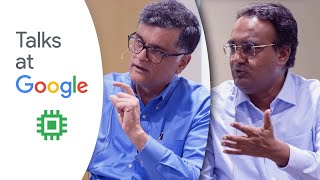
Venkat Ramaswamy and Krishnan Narayanan discuss co-intelligence: humans and AI actively creating value together. They walk through real examples like a WhatsApp pilot helping Indian farmers and L'Oréal's AI beauty app, and flag overlooked risks including failing to act on what users ask for.
Chapters
Good morning everyone. Welcome to Talks at Google. I'm Sharad Bulasu, I work on the Google pay product in India and I've been working at Google since 2005 on different things. Did stuff outside Google for a while as well. But on and off I've been associated with Google for about 11 years now and over the course of these years we've seen a lot of technological shifts. I went from being a PM who did not have to worry about small mobile screens, to worrying about them, not worrying about cloud, to worrying about things happening in the cloud, thinking about AI and ML that happens somewhere in a corner, to it being right in the middle of almost everything that we do. So with this context, I'm actually really, really excited that we have two brilliant authors here today who've been thinking about how the latest technological shift changes the world. I have with me here Professor Venkat Ramaswamy and we also have Krishnan Narayanan. They're co authors of a new book called the CO Intelligence Revolution that came out just earlier this year. And it's fascinating that they've not only thought about what does the change that's being driven by artificial intelligence do, they're also thinking about what does this mean for people, what does it mean for organizations, what does it mean for society. So what I was struck by as I looked at the book was not just that it addresses questions like where could this technology take us? And think through some examples of real world impact that's been created in different companies, including some of the time they spent here at Google during their research phase talking to Googlers about how this stuff has come together. But a little bit about the authors before we go ahead. Professor Venkat is a distinguished professor at the University of Michigan's Ross School of Business. Award winning author who in 2004 wrote a book about the future of competition. And since then his later books have focused on the concept of co creation. And I think it's very beautiful how that arc continues now to him talking about not just co creation between people and organizations, but also between people, organizations and machine intelligence. Krishnan also is an award winning author. He's co founder and president of Itihasa Research and Digital and he's been studying how technology has evolved in India. And one of his books, Against All Odds, the IT Story is a great recounting of how the beginning of the IT industry and its progress in India shaped a lot of what has happened here. Many of us who are involved with different aspects of digital public infrastructure in India know what some of the personalities from that space have done. And so it's been fascinating to see that. And also his later book on empowering India. Today we're exploring this whole idea of what happens if you bring humans and computers together in this completely new paradigm. I want to start off with a few questions for the authors and then we'll take questions from the audience as well. I think the first thing that I would probably start talking about and maybe a question for you, Venkar, but Christian, please chime in as well. You talk about this shift from artificial intelligence, which is still the hot topic, the word that dominates a lot of headlines, to talking about co intelligence in your book. Maybe it's helpful for our audience to understand what you mean by cointelligence. And the premise of the book is centered around that. So maybe we start there.
Sure. So first, thanks Sharath, and thanks to all the folks at TalksGoogle for this opportunity to share our thoughts based on the book. Actually, our starting point, therefore, is natural intelligence which we humans are endowed with. And the way we approach the book is that humans have had enormous creative capacities. If you go back in history, we have created amazing things, including AI. And so for us, the starting point is that creative capacity that we as humans have, but also the fact that we subjectively experience the world around us. We are sitting here looking at the room around us and that context of that world experience, which is highly subjective and we have our own life world experiences. That's very important to recognize because that brings the kind of context in terms of how we interact and engage with the world, both at an individual level, psychologically, socially, culturally, and there are various aspects to that subjective experience. So what we find fascinating is that we are now at a point where as we are engaging with the world, suddenly now we have, on the other side, AI systems that can actually engage with us. I just want to underscore that part of engage with us because this book really started post generative AI. That's where it's placed. That was the starting point because where AI systems for the first time could understand us in our natural language. We think that's just amazing. It never happened in humanity where you have systems of intelligence, if you want to use that word, it's a different kind of intelligence. That's the way we look at it in the book. And so for the first time, you didn't need to understand computer languages. We all grew up with learning programming languages, but in some sense now the programming language, we argue, is the human experience. We can Just talk to it based on where we are in our lives, what we want to accomplish, how we want to engage the world and bring that sensibility and aspiration and desires and the way in which we want the system to engage with us so that it creates value. In the way in which we think about value for a long time the value was created in our goods and services that were delivered to us. If you go back like over 100 years, you have factories that produce goods and services. So we had this exchange paradigm where through the process of exchange, value gets created. We think we are now into this new paradigm where value gets interactively created, it is enacted, it is emergent from all of the interactions that we have in the real world, the physical world, but where now these systems are engaging with us both in the digital realm, the digital intelligence, but increasingly getting embodied in our physical world. So the core intelligence, to now answer your question, is this kind of synergy between these intelligent AI systems which bring that different intelligence, but that can engage and co create with human intelligence. So that's the call that's very interesting.
As you were speaking, I jotted down this phrase life experiences, because you talk about that a lot in the book and you also introduce this concept of a life X verse. It's interesting that the book, at least my impression as I read through it, was I started by thinking it was about technology and then I realized more and more and more that it was about human centric concepts. It is about how the technology might affect us. But more of the book felt like you're talking about how does the ecosystem change because of this human centric thing. Now again, life experts, it's a phrase you have come up with. I'd love to hear from you both, what do you mean by it and how should people think about it as they're thinking about applying this kind of technology for innovation.
So maybe what I'll do is I'll just take an example and then invite Krishna to jump in. So we actually kick off the book with the example of something called Jugal bandi, which is actually an Indian word which means creative improvisation, which actually beautifully captures the idea of co intelligence. And just to give you the backstory on Jugalbandi, So about A week to ten days after ChatGPT was released, on November 30, 2022, some volunteer developers in India, in Bengaluru, some of whom actually were working on language translation, there was a government service called Bashini. So some of them had that Expertise, basically took ChatGPT and then along with Bashini built an application inside of WhatsApp and invoking Azure OpenAI services to create this application for farmers. And they did this pilot in a village in India, in Biwan in Haryana. And what happened there was that farmers could speak in the natural language. And this was essentially grounded in the government's public benefit schemes, which a lot of the farmers aren't even aware that they exist and whether they qualify, et cetera. Now, in India, for those that have been kind of following the kind of the digital India story, there's a digital public infrastructure that has been built over the past decade. And as one of the foundational layers, there is an authentication of your identity. So that's important because that helps this application identify farmers. And since then, a lot of KYC know your customer type applications are being built, but in this context, the farmer can just speak to it in their own natural language. And there are, you know, over 22 official languages in India with lots of dialects and so on. And so that's where that Basini came in. But the point is the farmer can just be himself and just say, hey, you know, am I eligible for any benefit schemes? I mean, just literally talk like that natural language. And then the system has the intelligence to then interpret what he's saying and then see whether he's eligible based on where he is and so on. And what is interesting there is the system, let's say you're eligible. And it actually came back to the farmer and said, yes, you're eligible. And he said, okay, so how do I get the money now? Thanks to the digital public infrastructure, those rails already exist in terms of if you qualify for the money to be transferred. But now there is a process here where you have to fill out forms. So go ahead and fill these forms maybe in PDF, maybe farmer doesn't even know what PDF is. So the story actually is the farmer said, go do it for me. Now, today we are in the world of what we call agentic AI. We have agents that do it for us and actually this application, three years later, we'll do it for the farmer. But I think that's amazing because all of a sudden you unlock at population scale just the ability for a farmer in a remote village in India to now participate in this revolution on the one hand, but actually now the government now can actually directly identify, from their perspective, create the value for the farmer. And then just to finish the story, it then evolved from this initial demo to a pilot to actually a government app called PM Kisan, Kisan meaning farmer. And then now There is an additional set of apps that have come in which now provide agricultural service to farmers. Started with these government public benefit schemes, but now the. Let's say the farmer now has the money, okay here, I can now utilize that to enhance my income. And so there are now various platforms being built on top of it, especially by the private sector. And one of the examples we feature is itc, it's agribusiness. So this just unlocks all this value space which we really haven't tapped into, which is in this thing we call the Life X source, which is a neologism which we basically say is.
A.
Combination of physical, digital, virtual realms, but it's situated in the kind of natural, societal, economic ecosystems that we inhabit. Like this life world.
Right. So thanks Sharath and thanks Google for inviting us. So I just want to give you a little backstory before I come to this life experts because I come from a tech world in the sense I at Itihasa we deal with AI research and so on. And so if you look at the sort of the demand side and the supply side of this equation, I come from the supply side, the AI side. But then we've heard this story about we have to put humanity ahead of technology. And so I had that phrase with me as something which I knew people said. But then this process of co creation with Venkat really, and this book answers that question. What does that mean? Lifexperts for me, you take any kind of situation, it could be beauty, context, user wants some particular kind of product, a foundation or a lipstick for a particular context. That's one life experience, a context. It could be a worker in a factory, there's some problem going on. And in the flow of this work at this moment, I need some solution for this problem. That's another element of the life exit. It could be a teacher in a school discovering that the child has not learned well and now saying, okay, what can I do now to create a unique learning plan for the child? That's another example in this Life X verse. And so how can the AI system now come in the flow of the work, not have the human go outside, away from the flow of the work, so to speak. And in the flow of the work, how do we now involve the person as a creative experiencer? And so that's the thing that I want us to think when we think of the Life X verse.
This is fascinating and I think we'll come back to this notion of life experiences and life X verse as we go ahead in the conversation. But I also wanted to touch on the fact that you made references to digital public infrastructure. You spoke about the fact that there are certain types of systems that make this possible. I mean, for something like PM Kisan to happen, a number of pieces had to fall into place, not just the AI that was used, communication medium and so on. And talking about infrastructure, you extend that concept. You talk about shared digitalized intelligence, and you talk about tokenized digital intelligence. I want to understand a little more about what you meant by that and how we should think about that as we're thinking about all the infrastructure that permeates.
Sure. So let me get started. And again, Christian, feel free to add. So if you go back to the story I asked, I basically shared the question you can ask there is.
How.
Did this all suddenly happen right this chatgpt moment? So now we have to bring in another kind of entity into the story and this Nvidia. So as we know, it was because of Nvidia and accelerated computing and actually Jensen huang going to OpenAI presenting the DGX1 as we started now building out these electronic neural networks, which is part of the magic there in terms of these transform models which came out of Google. So I think that's important for people to recognize, but I think the way in which most people can try to understand it is that we are now for the first time also building AI factories which kind of produce these tokens of intelligence. Right. So think of it as in the industrial revolution, we used lots of raw materials to actually even generate electricity, right? Which then spurred a lot of further innovations in the revolution. Now, electricity is kind of like the input and the output are tokens. So using energy is coming in and then tokens are coming out. But these tokens, which we experience right, as text, image, video, audio files, or even in the case of the recent Nobel prize, protein structures, AlphaFold Google. That's very remarkable, the fact that you can essentially use floating point numbers to actually build these kind of representations which we find useful. But the point is they're like raw materials right now. They are things that we now bring into, like we were saying earlier, our context of using it to bring value for us in terms of our engagements with the world around us in this life x force. So I'm glad you pointed out that these tokens of digitalized intelligence are very important because they are the units of intelligence that we have to kind of compose with to create various new forms of value. And therefore the infrastructure, the AI infrastructure now, which obviously incorporates all of this, what we're Finding is in that example, it's very important to have what we call a shared digitalized infrastructure because no one person is going to be able to build it, even if you're a private company. We need to kind of, if you go back to the industrial revolution, highways were built and then the public sector participate in the process. So there's a different kind of engagement between the public, private and the plural sectors that is happening like in that example, which allows us to build this foundational infrastructure, not just in terms of the foundational AI models, but what we mean is this intelligence infrastructure which actually makes all this possible, on top of which all these engagements are taking place and values getting enacted, which in turn drives lots of impacts right at speed, at scale, in various arenas, like Christian was mentioning, all those what we call use case applications, right. And trying to do that sustainably because there's also this question about we're using enormous amounts of energy. So to kind of summarize, what you're seeing here is that we are unlocking this new value space. But absolutely that's being driven by this ability to actually bring in this tokenized digital intelligence which we have to think about how does it parlay into various offerings in terms of what we are creating, but also how we create all across the value chain. And so that's like foundational to this co creation of value.
And if I can give one sort of example, take the beauty thing that I talked about. Okay, so and in the book we talk about l' Oreal as an example. And, and so they have a number of offerings, but let's look at a couple of them. There's something called the Beauty Genius where somebody would have a conversation, a consumer may have a conversation with Beauty Genius. There are words which they describe saying, look, I've just come back, I feel dry, whatever, I need something. Now all these words get translated in some way for the, the system to make a recommendation. And so that's one aspect of that, how the TDIs get into action. But there is something more because TDIs also get into an actionable intelligence, if you will. And so they have another product called Perso. Perso is actually a physical factory, if you will. The AI factory in the back end is now capturing this information. It might even say, look, here is a picture of my face. That's another piece of information that's coming in. There are some sensors. It'll sense the humidity in the place. A user using Perso in Bangalore versus using in Chennai the output that you want, you require that to be different because the humidity levels are different in these two places. All, all these information now are translated in the form of TDIs for, you know, it could be, we kind of call it the hydration tdi, if you will. But that's what l' Oreal is now translating. All this information that is captured to now create a specific foundation or a lipstick for you. So that's an example of a TDI in action, for instance.
No. This is fascinating. As a product person, I approach this with a lot of optimism. But at the same time, what I'm finding personally, even though I see the positive story in the examples that you've given both of you across the last few minutes of our conversation, I also worry a little bit about a lot of our intuition for how products have worked and the impact they've had is breaking. This happened at many different technological revolutions. Our intuition for what happens when the speed of transport for goods goes down, that speed with which people can move, the speed with which they can communicate, the ease with which they can communicate breaks in this case, as you talk about cointelligence, personally, I'm finding it still quite hard to develop my intuition for the space. And at Google, we talk often about a lot of the products that we build. How do we build them responsibly? We are aware that what we're building is very powerful. We care about it, doing good for the world. When you approach this, how do you view the risks side of this? What do you worry about? How do you prepare for that world in which you do this more responsibly?
There are a couple of things. Let me just unpack your question. The first one, you said you talked about intuition and so on. Absolutely. I think this is why we. We called it the cointedness revolution. We use the word purposefully because it is a revolution. Because in the traditional model, if you go back to the industrial revolution, the model was you had a value chain which you control, and that gave us the quality revolution. Because when I give you, going back to the example of l' Oreal product, right. Give you or somebody else, we want to ensure they're the same quality. So we had quality, Six Sigma, all of that, but we controlled the quality of the product and the process, Right. Because our focus was on creating that offering that came out of this value chain, right? And so we could control that. Now we're seeing something very different because now we are saying the starting point is really not here in the sense that, yes, we have the setup, right. We have this. When he said this, the l', Oreal, the physical factor, what he actually meant was that it is sitting in my home in the bathroom, let's say, right? It's a little device, it's got cartridges and so on, right? And now I'm actually talking to it through this interface I have. L' Oreal has the app and it understands kind of my needs, right? And like you said, brings in all this information. So there's a different kind of interface here where I'm interacting with it and it's figuring out, therefore, you know, what it should be dispensing to me. Now there is still a value chain in creating that. But if you look at it now, what I've done is at this point of exchange now just me giving you that fixed product, right? And then I use it. Now the product itself in this context, right, changes as a function of how the user wants the product that particular day. So it's a joint creation between the human and this. And absolutely, this is very difficult and challenging because all of a sudden I have just induced a lot of variability. If you go back to the heart of the quality and Six Sigma revolution, variability is the enemy, right? You want to root out variability, but variability in terms of the quality of the product or process, that still is there because you want the product to be of good quality. But what we are saying here is a value is now a function of the quality of the experience I create interactively with it. So that space, absolutely, it's highly variable because everyone wants a very different kind of personalized experience. And I can't. It's not something I control. In fact, it's the exact opposite. I need to embrace variability because everyone will interact with it in various ways. It opens up. It's almost like anti six Sigma in terms of that interaction space. So we do need new ways by which we can now think about how the interaction will take place. But it's not clear to me. Therefore, the intuition that served us well in terms of. How we actually went about creating our offerings in the past still works. Because in the old world of the way in which you develop these products, you brought intuition through your own research. Maybe you got some input, feedback from customers, you had your own things in terms of what you want to bring to the table. What I'm saying is we need to, and that may still exist, but we need to kind of understand that we need to have that intuition is going to be co developed, right? And so we need to actually build tools where the customers and the users can actually continue to inform us Right. Not when we want to build the products, but when they're having their ongoing experiences. So I think that's going to be a challenge. But actually we are now building AI tools where you can analyze, for example, a lot of. Sorry, a lot of the people's voices at scale. Right. So people can give voice feedback. Like the farmer can give voice feedback. Right. The person who's using this consumer can continue to give feedback, but it's not like feedback to like market research questions we ask or, you know, they can just share what worked, what didn't work. Like the person can ask just like ChatGPT, say, Hey, I made this for you yesterday, what was it like? And the person can come back and share what worked not, or it was good, can just have the chat, but we can extract from it and intuit from it what that all means. And that's why I think AI can also help us intuit. I think that's very important to understand along with all of this stuff. So it's, it does open up this other space, but absolutely, in terms of risk, the last part, to unpack your question, we are just creating more risk. So as we move into the space, by definition we say risk is the other side of the coin. So you have to create risk managed values. The phrase we use that is you have to now think about what are the new types of risks? Formula risk. Absolutely. Because before we control all of them, this is a whole new territory. And so what are the different types of risks all the way from obviously privacy risk, security risk, those are the obvious ones. But also other forms of risk that might. Now you have to kind of think about like in terms of creating that quality of experience.
In fact, just leading on from that point, in fact, NIST, NIST in fact identifies these 12 risks which are particularly accentuated by generative AI.
Right.
And so there's in fact an entire section about how we manage risk, how other companies manage risks, and so on. I mean, take something like Adobe's Firefly. Okay, now the way we featured that in the book, I'm saying the way they manage, the way they train that text to image generation, engineering was using licensed images. And so the copyright aspect is one example from there, for instance, where as an end user, if you want to be assured of the copyright, that's a way to handle. I mean, we do talk about Google buying Mandy in itself as a means of managing the cybersecurity lists and so on, but this is another place. And I'll just give one more example to illustrate this One of the ways of managing this risk is now to the code is the law, like Larry. So an example would be the DEPA framework in India where it's codified or in Web3 where smart contracts now ensure that the you do a deal and then if the things are fulfilled, the contract is automatically executed, if you will. So these are examples of managing such risks which are very dynamic and emergent.
It's interesting, but when you were answering the first part of the question, you also spoke about the way people interact with AI. Now the easy ones for people to get are the basic modes of communication. I not only can type in a question, I can speak it, I can give it an image or a video. But I think the next higher order is as you're co creating though it is not just about I gave one input and got some other regular output back. How do you see human AI interaction changing? Is that, you know, is the intuition that you think about it as a replacement for some of the things that.
Exist today, these kind of meta risks, right? There's a risk that you're going to outsource your thinking to the GPT, right? So let's take the business that at least I'm in, right? Education. This is a huge risk, right? Right now the current thinking about that risk is, well, as students use ChatGPT more and more, are they just outsourcing the thinking? Because one of the things we want the students to develop are critical thinking skills. We want them to be creative, we want them to be collaborative, we want them to also develop these critical thinking skills. So that poses a very interesting challenge because on the one hand, in the traditional paradigm, we kind of delivered courses to them, but they were fairly passive. They were not participating in the value that gets created. But as you move from that model to a learner based model, where and how they want to learn, you would imagine that hey, ChatGPT is great, right? Because it can be your personal tutor, it can help you learn. Obviously we have to design it in different ways. We give the example of Kanmigo for instance, where they've designed it for active learning. It doesn't give you the answer. It works with you until you get the answer. And the teacher might want to design it, but in terms of how long should that go before maybe you reveal the answer? Sometimes we also learn from the answers and so on. So there's a lot of science and art that goes into designing these systems in ways in which the student feels empowered to learn and is actually engaged and is learning. But that's a very different process because in the old model, as a teacher, it's very difficult for me to personalize the way I want to describe something so you understand it because I don't know what will click with you. But that's what the AI does very well. You can ask it to explain something like give me a sports analogy or help me understand it in this context. So its ability, the ability to actually change the way something is described is phenomenal. Now, if you're a teacher, how do you look at this? It's a risk. It seems like I'm going to be replaced. But if you actually see the world that we are moving into, we want to be able to train students to actually be able to engage with the AI systems because in the workplace, presumably now the task is to manage, design and enhance these systems even as it augments their own capabilities. Right? But if you keep that as the goal, yes, it comes with challenges and risks, but now it's very interesting. What it does is it forces you to think about, hey, how do you therefore evaluate students? And to me, and I just started experimenting in class where they all use ChatGPT. So, so what is my role now? Well, actually I have to design it in a way in which the enhancer learning but the focus shifts from migrating answers because ChatGPT gives answers to things to how well do you question? So do you, how well do you craft questions? How well do you use the system to frame problems individually, working chatgpt or working in teams? So it shifts the nature of the way you think about assignments, right? Because they are now interacting and so you're evaluating how well they interact because in the workplace, presumably that's what they're going to be doing in the future.
So in a way you're saying, don't show me what you've done, show me how you thought about it.
But then you need to evaluate that. Right? And so that is, I think now that's where things are evolving now in terms of being able to allow them to learn at their pace in the way in which they want to allow them to creatively express their agency in the process. But then our role is to actually build this architecturally to actually facilitate that cointelligent co creation of their learning experience.
I mean, and once again, just thinking out aloud in terms of how and presumably, I mean, in Google you must be working on these ideas. But we briefly touch upon it in the book, but things like a world model, does it understand like a baby understands from just looking at the world? And Getting a sense of the world. How does the AI understand the world model in how it responds to a situation? That could be the next form of interaction. I think even for the AI system to say, I don't know, I think that's the next level of development, right? I mean I like there is no clear objective function right now. I don't know what to do here. And so for the system to come back to the user saying now tell me what you think and having that dialogue, that's another form of evolution, if you will, for the AI system in forms of, you know, potential dialogue that it could have with humans to understand.
So maybe just pushing a little more in this direction. We've spoken a bit about how humans, whether they are students or educators or you know, business professionals interact with AI. But I'm assuming as this goes along, this is going to have a lot of implications for how our organizations are designed, how they interact with each other. And these organizations are not necessarily necessarily only for profit businesses. This could have implications for governments, for universities, for a whole range of types of organizations. How do you think about the impact of cointelligence, that becoming a more natural, normal way of working, way of doing things? How does that impact the design of organizations, how we manage them, how we run them?
Yes, so in the book we introduced the idea of the organization being thought of as a living system. So we call it a co creative living system organization. Right. Because if you go back to kind of where we started, what we are saying is that if you take our biological systems, we are also very adaptive, right? We are living systems that we interact and engage with the world. So while the organization may have, let's say, a digital brain, however, the organization kind of processes a lot of this intelligence, right? And engages back with people. The point is that we need to build the management systems in ways in which they function like living systems. So what does that mean? Clearly the systems have to be very adaptive and very responsive at the individual level in teams. So we have already things like copilot and so on in the flow of work. But that's just in terms of designing workflows, right? And work artifacts and so on. But if you were to step back and say, and going back to risk management, right? How do we govern these systems? So it puts a lot of emphasis on governance, not just strategy and executing strategy. So how do you build these governance architectures and management systems? And remember again, going back to, if you look at product management systems, right? So now you have to worry about experience, quality. So what we do in the book is to say, depending on the context, if you're looking at supply chain management, like what changes there? If you're looking at product management, what changes there? If you're looking at marketing, sales, service, what changes there? If you're looking at talent management, what changes there? So I think if you look at each set of management activities, we say, okay, how are the interactions changing there? Because we're moving from just the activity itself to how people engage with AI in that activity. So we need to think through at that kind of granular level, at that micro level to really say what changes need to be made. Because that ultimately gets then reflected in the various management systems and processes, right? So it's not like a top down approach as much as this bottom up redesign of management systems, but in a very co creative way. In fact, the systems itself are getting co created and so the platforms that we build in terms of whether it's performance management or various aspects of strategy management, all those will change. And so we take different types of management activities in the book and we feature examples of people who with respect to that context are making that shift in terms of redesigning their management system. And if you take all of these things then we're really talking about what we call a cointelligent enterprise of the future. Right? But it's not something that we can define upfront. It works with cointelligence all across its authoring system, its value chain system and its management activities. So that's the way we see it, right?
I mean, I just want to add two other points to what Venkat talked about. For me, one of the important things in this new way of working, if you will, is the, is the value creation. In the flow of work, every moment of interaction becomes important. And so the role of the manager as a creative experiencer in maximizing that value creation in every moment of engagement. So you need to give that capability to that employee in that thing. So as an organization, do you have that kind of a co diligence knowledge environment? So we argue that you need to think about it, you need to create that kind of an environment. So supply chain manager, you have now discovered that there is a flood in some place. And so now what do you do at this moment? Is there a knowledge environment available for you to maybe do some simulations of alternate availability, what kind of time frames, what kind of. And so maybe you will now discover that, look, only 80% of the orders I can fulfill with these two. But that's a business decision that you can now take, you can go back to your higher ups and say, this is what I simulated. So I'm saying this ability for providing that capability to the manager, not just as just a passive user, but as a creative experiencer to participate in that, engage with the system, share certain inputs and then create certain, simulate some scenarios. That is one very important requirement in this new world. Are you creating that kind of environment?
And if you could actually build on that, what you're saying is we're moving to real time value creation. So that's what. So if you actually take what he was describing, we have now the ability, he used the word simulation, to simulate like a digital twin of the entire enterprise. So one of the things we are seeing and we feature in the book is that digital twins will become very pervasive in this life. Experts, right, because it's a representation of the interactions you have in the real world with the system environment. But this time it's different because these digital twins are not digital twins have existed before. You'd go, you simulate some things and then you make some policy changes, strategy changes, you implement that and you see what happens. But these digital twins are actually linked to the real world because increasingly everything is becoming software defined, right? So if you take a factory today, the intelligence exists in the physical factory via all of the sensors and controllers and so on. And we give the example of Siemens, for instance. And so the Siemens digital twin is actually connected to that real world, it's not just a mere representation. And you do a simulation. So using tools like Nvidia, Omniverse and so on, you can actually simulate changes in this, let's say a factory that you're building. So you have the AI factory, you actually have a virtual representation of the factory built on top. And then you have the real factory. So there are three layers, but these are connected. So as you make changes, you can see what effects it might have. And going back to your risk point, you can actually manage risks much better, which we feature in the book, lots of examples like that. But the beauty is once we have decided this is the decision we are going to take, looked at all the pros and cons and making informed decisions, you can hit a button and you actually see the real factory floor change accordingly because it's software defined, because it changes the software in the real factory. That is huge. Because one of the benefits we found is that in designing the factory, things become much more collaborative because you can invite people because it's less risk. And so they said there's also this Thing called they're building it for engineers and they call it immersive engineering. Where now if I put on goggles and now if I bring in the AR VR aspect into my manager life experts, in that moment I can engage with it and I can speak in my natural language. I can speak German, you can speak French. And so actually for the first time you can really truly tap into the power of this interactive collaboration where we are not just having like a Google Meet or in a zoom call, we are actually looking at the factory four and someone can move things around and we can see what effects it has and they may have some opinions about it and we can really have these very rich immersive conversations. And going back to your point you made earlier about intuition, we can bring our collective intuition. Right. But I think the key here is we must have the customer as part of this, which is what they were saying. In that case, the factory for the customers are the people who are the employees and supervisors. So they make sure they are also part of it and not just the manager level people. So when you extend this to making it more inclusive, suddenly you are able to create value that actually people feel is getting realized for them so that the shop floor person has a better experience, the managers who manage those systems have a better experience. So in some sense we are saying that we can enhance the experiences of everyone involved. That's what the opportunity is before us while we risk manage it effectively. Especially with digital twins.
This is interesting. When we were talking earlier, I was describing when I was in college and studying industrial engineering, this kind of simulation that you're talking about to develop an intuition for what happens when you make decisions in a factory was a mathematical simulation tool. Right.
And I remember when using Matlab or something.
Exactly. And these were built using systems and there are a few universities that actually built like these little, what they called virtual factories. But basically they were mathematically, they were not really, they were not really connected to a real world shop floor. I remember in one of my early jobs in industry, I used to work for a railroad as an operations research analyst. We tried simulating the operating plan, try and understand where various risks lie. Right. Because the forecast has variance, all of these things. But again, like you said, it wasn't connected to the real world. So I think in what you're describing, there's a lot of excitement in some ways because I could imagine future generations of could be engineers, could be economists, et cetera, coming out whose learning, even though it's still in the academic space, has a Lot more of a deeper connection to reality. So yeah, absolutely, absolutely fascinating. I'm also mindful of time, but I also think that given that we've been talking about cointelligence and you've written books on co creation, is your chance to co create something by throwing a question back at me and Google while I pull up some of the questions that Googlers have prepared.
We were actually planning on doing that.
So Sharath, last time when we came and spoke to you because we heard a bit about your work when you are the architect of the GP story in India. So if you were to having read the book and having had some discussions about the cointelligence, if you had to sort of apply that to the, to the GPay ecosystem in India, fintech ecosystem in India, what might be some, two, three new things that you, that, that you would like to do.
And at this point there's a lot of stuff racing through my mind but I think the, the two things that I'll probably point out that have stood out from the stock for me that apply to this question are one, this notion of understanding life interactions a lot better and the second one is where you're talking about having the customer involved in the co creation as well. That l' oreal example of the person almost being able to produce these specific kind of product that they need. If I try to find those parallels in fintech, what I would say is that we've up until now generally been used to the idea of creating products where we tell people, look, you're looking for a particular function or you're looking for a particular product and there's a process that you go through to get it. So if you want to make a payment, you go choose a method of payment, you authenticate yourself, you say where that payment is going, all of that stuff, and there's a particular flow that you go through. That flow looks somewhat similar for all of us. Whether it is Google Pay or many other applications. If you took something more complex like I want to get access to credit, we put them through a longer flow. Say not only is it important enough to authenticate yourself, but I need details like your name, date of birth, some identifiers that let me pull a credit report. If that isn't available, give me alternate information that helps me underwrite and so on. But imagine now that the user comes in talking about what they want to do and it is not just that we're able to tailor the process, we could actually even create the right experience for them on the fly. So I Could have a user who from your example, if it's the farmer in let's say Maharashtra and prefers an interface that works in Marathi, is someone who has not taken a loan before, is not completely aware of various schemes they might be eligible for from the government. We do a more elaborate, simple interface for them in Marathi. But if it was one of you who is a more tech savvy individual who's comfortable with financial products, et cetera, we might even speed up that process by introducing some of the jargon that brings efficiency because you probably understand some of those things, right? And therefore there's no point in putting you through what would appear to be a very long experience. I think between these two, the thing that I don't have a good answer for and which goes back to this question of risk is at the same time to ensure that there is a level playing field that we are not discriminating against people as they get into access to products to ensure that because it's a financial product, we're making the right disclosures so that that people know what they're getting into. How do I maintain that baseline of making sure there is sufficient transparency in the process, that your privacy is respected, that you have a secure experience and that all of this happens in a timely fashion and that is a harder one to solve for. And that is where I think I'd go back to this question of life experiences because you need to have that intuition, put yourself in that users shoes and say why are they trying to.
But if I may, if you actually think of it as a life experience ecosystem then when you ask the question we said fintech ecosystem but that's just slotting you in terms of fintech. So one of the things as you're talking as reminded of my recent lived experience where since I came in from the US and my mother lives here, she wanted to make my favorite dish for me which involves some kind of spinach. And so there's a vegetable vendor whom she gets the spinach from and it's amazing how she knows what kind of spinach and she brings exactly the right quantity. So she does demand forecasting very well but she's got a limited physical space right in the cart. So I was just. And by the way, so payment is so easy here. I just scan the QR code and use gpa, I'm done. And for her that's great. I was talking to her, she said she does get a cash loan, it's much more secure and you get all this stuff. But then when I was Saying, hey, if it's like Aladdin and the magic lamp, if you had a wish I could grab, what would that be? It's very interesting. She wanted to have another cart. She wants to grow her business. I mean, she wouldn't use words like growing business. She said, oh, it'd be nice if I could this, because I have only so much I can do. I wish I could have another cart. But if you actually. So going back to what you're saying, there are two things. One is how can she express that intent? So if you think of it as just a financial app, okay, it's doing the transaction. But what if you had something there chat saying, hey, is there something. How would you like to improve your life, your livelihood? And the person says, well, I would like to have another card. What she's implicitly saying, perhaps for you might be, hey, I might need another loan to actually get a card. But she may not ask for a loan. So that's one thing that struck me. The other one is, as you start then thinking about that, what she's saying is, hey, I need another cart. Now, are you in the business of building carts? Not necessarily, but it means that from your ecosystem perspective, you could create other kinds of services that could kind of plug into it. Like going back to the farmer example. Now, ITC has built this platform. It's almost like a marketplace, right. Where different people provide fertilizers, pesticides, other things in a way in which the farmer wants to utilize them in order to grow his income. So similarly here, it basically means going outside of the kind of the narrow confines of the fintech ecosystem. Right. It might involve other interconnected ecosystems. So I think it also allows. It brings a lot of opportunity. But we need to really broaden our notion of what the offering is.
This is fascinating. I think lifting it from the question of a user who knows they want to learn loan to a user who may not even be able to express it in that form, or not necessarily not able to, but maybe hasn't thought yet to the point of whether they want to do it through a loan or something else. But start from the actual need of saying, I want to grow my business. And the way I think about it is if I had one more cart that I could rent out to someone else, I've got a new source of income. It's fascinating to think about.
There's a lot of opportunities, small and medium, at the prices of. If you were to just generalize for that example, which is totally untapped.
Yeah. And this also probably ties back to what you were saying about shared digitalized infrastructures. Because when you get these more general kind of, you know, needs that people express, I may not have all of the building blocks to be able to build a solution for them. But if there is a way for me to connect other pieces and build that, and I think that's, that's part of the magic of what's happening in India with a lot of the digital public infrastructure. But I think if we can build on top of that, then it becomes.
A lot easier to plug in user components from other ecosystems.
Exactly, exactly. Now this is fascinating. I do want to also bring up a question that someone from our team had submitted. They were looking at your book and they went, your premise is fascinating. Do you regard co creation as a way out of the current human versus robot dilemma that surrounds all the AI narratives that we see today? And what do you envision when you think about cointelligence in the context of healthcare and life sciences? I'm sorry, I didn't capture the name of the person submitted the question, but came from other Googlers so I thought.
I should bring that up. I mean if you could have an interaction with the person then we could clarify the question. So I don't know if I'm interpreting the question. Right. But yeah, in terms of human and machine, right? Yes. I mean broadly speaking I think yes, because we are thinking in either or terms when you say of machines replacing us humans. So what if machines, what if AI is not here to replace us humans? But our premise is what is there if it's there to co create with us. But that's up to us, right, in terms of how we view these AI systems. So I think in some sense there's a lot of the narrative which is looking at AI replacing humans. And yes, it will do several tasks better than as humans. But then the point is in human history we have always elevated ourselves in terms of how we build these systems. I mean like I said, we have built these AI systems and granted now the AI systems has the potential to self build itself. But keeping that aside and as to when and how it might happen, and also as humans we have a role to play in ensuring, speaking of risk and guard railing, in ways in which we can steer it, in ways in which it actually serves humanity and not the other way around us serving AI. So from that perspective, absolutely, co creation is a way out to go back to the question because it's both in creating these systems and, and also creating through it. Right. How it affects and Being able to understand those effects faster, like we said, using all of the inputs from people's lived experiences of engaging with AI. So you need all of these pieces, not just that infrastructure and platforms and focusing on the flow of engagements, but also once they've had experiences, how do you bring those experiences back? Which goes beyond reinforcement learning, where we are trying to improve the system, but actually letting the system understand that, hey, we as humans have a lived experience of the world that is subjective, which the AI system doesn't. And I think that's the role we have to play to teach it what our lived life experience are all about. And so going back to what he said, that world model and representing that and getting it to understand the world is important. The last thing I would say is that when we think, sometimes we conflate two things. The way a robot perceives the world is not how us humans perceive the world, right? So I think sometimes we conflate the two. For instance, you know, when I came into for this talk at Google, if you were to ask me, hey, you know, what is the color of the wall you just passed by, et cetera, I wouldn't know. But if I was a robot walking in, you can go and you can look further, tell you the color, it may even tell you where that material came from, et cetera. But that's not part of our human intelligence, right? So in some sense as we are, we operate in the world and there's the system one and system two of Kahneman One is, you know, automatic and this. And we're still trying to understand the human brain, right? How we cognize the world and engage with it. So I think all of that will inform us in terms of what is unique about our perception of how we engage with the world. And so in some sense they're complementary, right? Because that can give you a lot of detail. And, and so if we can think from that perspective, then together we can co create new value.
If I can just add one and I want to intentionally take a more sort of a forceful view, see, if you accept that we have to move to this experience centric world, then co creation is not like a choice. Okay, we could do co creation, but we could also do other mechanisms. We are saying no, like if I want to create a Sharath experience, I cannot produce it beforehand and keep it ready with me. When Sharath wants, I give it to you.
It must be co created.
It must be co created. So I'm saying the answer is it has to be in the experience centric World you have to co create and because it's life centric, human is at the helm of it and human co creates with the AI to deliver that experience. Experience.
And Krishan, since you gave us some examples about different companies, l' Oreal or others.
Yes.
The second part of the question where this person is also asking, you know, how does this cointelligence revolution affect specifically healthcare and life sciences.
Yes.
Are there any examples that you've studied that true?
In fact, let me just offer a couple of different scenarios. I mean there is one that we talk about as open evidence which I think in the US is at least 30, 40% of the doctors have started using that as a. In a way it's a more fine tuned chatbot but trained on medical journals and so on. So more authentic information, impossible for humans to keep pace with the amount of knowledge that exists.
But.
But using the open evidence the doctors can take a more informed decision about treatment protocols and so on. That's one example. At the other end of the spectrum in terms of medical research and so on, I mean there's a fascinating example that we start off with at IIT Madras with the Sudhak Gopalakrishnan Brain center. They have now created, they've just released something called Dharani which is a database of human fetal brain. Okay. So this is the world's largest collection of human fetal brain. So that means they are actually mapping fetal brains, the whole brains, they have released it now, but this is all petabyte kind of information. So they are now forcing organizations like Nvidia to come in and say how can we now use AI in a much more effective way to deal with such kind of information. I produce this data, but how will now doctors use this to make certain decisions? So that's the frontier in terms of saying how it's forcing new kinds of AI capabilities to be built to process this.
That was definitely fascinating. And while this is not my area of expertise, I definitely see people at Google working on areas like medjimmer. There have been people who've tried to map the connectome. So a lot of what you're describing.
But also in terms of healthcare, I think this in terms of medical research side I just wanted to also add that there's this whole area and we give different examples where we have lots of, for example, helping nurse practitioners engage better with patients like who might have dementia or people who have mental health issues. Those are very, very complex. But with these things people can speak in the natural language so you can better understand what they're going through. Right. Or what anxieties they have, what symptoms they experience in terms of pain or mental well being and so on. Because those are all very soft issues and they may express themselves through words, images and so on. So I think there the practitioners who are taking care of them can better connect with their lived experience. I think that's where also the power lies so that then you can adjust the way in which a certain treatment plan works. Because before that was missing it was very hard for them to kind of share that in terms of actually affecting the protocol in terms of the delivery of the healthcare.
I think we also have some questions from Googlers here, so I'll request someone to hand a mic there.
So hi, I'm Jasmine and my question is based on managing risks in co intelligence systems. So what's one thing that you believe is often overlooked, like a subtle risk that's often overlooked in organizations adopting AI?
So you're saying that. So I understood your question. Right, which is the risk that is often overlooked. Okay, so that's a very interesting question actually. So if I were to think about all of the risks, I think one of the biggest risks that is overlooked is actually the risk of not following through on people's engagements with it. Because a lot of the time we dismiss when someone, let's say, fails to utilize something in a certain way. Right. It's almost like we have invert that and see it in a positive way. It's like seeing the glasses half full. Right. And I think it's actually it's very important here because when people engage with the system, for example, most people in the use ChatGPT, they use it in a one shot way, they hit it, they think, they answer oh, it's not. But what they fail to see is that they need to further engage with it. Right. Have that dialogue with it. But maybe they don't know that and of course now we give some prompts. Right. And so on. So actually just understanding how people can better engage and if they don't engage, why they don't engage. Right. And or maybe it's not evident to them how to engage with AI. So in other words, it's almost like I'm flipping your question on its head and saying what are the risks they're.
Seeing.
Or what are they fearful of because of which they don't engage. So it's almost like that I'm calling as a risk that is overlooked because if you understand that then you can make it easier for them to engage with it's, it's A little bit more subtle notion of thinking about risk.
Yeah, good question.
Hi, this is Shanmuki. The idea of this co intelligence is very fascinating. That like, which can answer the question that's do AI replace humans? I felt that. But in present world especially, students are very much habituated to relying on AI, like using ChatGPT to answer everything. So what do you think? Like, how should students approach this foundational, getting foundational knowledge and critical thinking when AI can answer everything that they want?
Yeah, so that's a great question. Being an educator, let me tackle that because I teach a course on innovation. So I've been now experimenting with the use of ChatGPT. You pose a question in terms of the students. I think the implications for us as educators first, because so yes, from students perspective, I think we talked about the fact that you don't want to outsource your thinking, but that may happen. Right. So in a classroom setting, if I'm the educator, the question is that how do I ensure that you're not just outsourcing your thinking, getting answers? I think that is also part of your question. So one of the experiments that I've done is basically saying if you use ChatGPT and I briefly talked about it, I really want to ensure that you're able to have that interactive conversation. Right. And build your skills in doing that. But that's not something that I can just teach, put up like a slide. Right. It's something that comes through practice. So in some sense I have to spend a lot of time, which is what I found, changing the nature of my assignments. So in the old model, I would have some assignments, I'd give you something, some questions, but then you can cut and paste it into ChatGPT and you get some answers. Right. And then you may work on that. But is that really what I now should be doing in this world? Probably not, right? So therefore I have to change what the nature of the assignment is. If it is to improve your thinking, then it should be like, how well I give you a situation, how well are you defining a problem? Then you may use ChatGPT. Maybe somebody else in your team uses it. Well, then talk with each other. Hey, what did you get as outputs, right? What did you get? Oh, how did you prompt it with? How did you approach it? So it's almost like there is a conversation you had. So you may share your chat with the other person, the other person may share the chat back, which by the way, is what I asked them to do and then I asked them to then share it and say, hey, is there something that you learned from how you interacted so that they build those. Oh, I didn't know. Oh, I didn't know I could ask it that way. I didn't know if I did this way it would come come back in this way. Because sometimes when it comes back with something that you think is incorrect, you might just say, hey, you can do better. This is not correct. And you'll say, oh, and here's why. So that interactive back and forth is very important, but it's very important to design the assignments in that way so that you can enhance that capacity of people.
Right. If I can add, I mean, I do do a lot of research in the space in AI and education at the center for Responsibility at IIT Madras. So I'll answer this in two perspectives. One, what I, what I recommend to students, okay, so, and of course this will vary depending on the age of the student and so on. I mean there's, there's a certain sense of maturity with age that you hope they develop and they understand the risk. But this is what I would say. I think you should, you should keep using it on a daily basis to get that habit. And as you use more, you learn how to use it and engage with the system better. I do know that kids love to take the shortcut. There's this beautiful answer right in front of you. Question is already asked. There's a tendency to just copy and paste it, which they will do. So it's the responsibility of the teacher to figure out what else. Right. So we, not just the answer, but maybe we should ask them the question. But that's not on the student. The student wants to make their life easy. My, my submission to them is play around with it, build habit. And as you do, I mean the other very important thing is not to trust it. Despite, despite a lot of efforts by, by technology companies to, to get it right.
Right.
I mean the agent systems, etc. There is, but I would start with the sense of don't trust everything that the thing says, you know, you have to go and verify for yourself and build it. That's on the student, on the organization that is the school or the educational institution. I think they have a very clear responsibility to develop more thought, thoughtful systems. Which means you can't have, you know, answers like you ask a question, it's spitting out answers. You can't design systems like that. You need to build guardrails in terms of, you know, reducing the amount of hallucinations that it does. So how, how to Maximize those systems, that's another. So I think there are lots of responsibility on education institutions to design the systems more thoughtfully. Yeah.
Just to add even in terms of like for example, what courses you should take. So I think sometimes we conflate the fact that, you know, this ChatGPT is allowing us to talk in a natural language. That's one part of it, but the product itself, Right. The content. So imagine if you're as a university, we provide courses, students are still clueless about like, you know, what courses you should take because we haven't designed that interface in a way in which it tries to understand what your career path might be based on that saying which courses might be more suitable for you, what you have taken, what your goals are and craft a very unique personalized learning path for you and then based on your experience of one course, what you should take. So I think right now it's very course centric. You have drop down box, different types of courses. But right there you lost me because that's not how I want to engage with it. I want it going back to everything we've been discussing, like the vegetable vendor, here's kind of what my aspirations are, what I want to do. Like in that finance example, right? And then saying use that intelligence to go through all of the stuff there and say, hey, these are the courses that you might want to consider. That's very different. Right. In that system helping you. And then of course within that, what you're saying is then how does the learning take place? But I think there's this whole other set of things in terms of what does it mean to have a set of offerings that connect with you as a student in terms of your career path. So we jokingly in the book say we have Coursera, but maybe we should move to learn error or maybe growth era where it's about the growth of the individual and these AI systems are intelligent enough to take your inputs and to be able to craft that learning path for you. And I think there are lots of startups and various entities having this kind of frame of reference in terms of designing these systems features. So when they get designed, I think inside of it the way learning will occur will also be different.
Thank you. This is fascinating and I think we could go on for a long time on this topic, but I know we are at time. I did want to say that my experience of reading the book, talking to you, it definitely feels like, yeah, this is not a point of evolution. I think that you're onto something when you call this the Fourth industrial revolution in the book. And you said there's a massive, massive change that we should be better prepared for.
The co intelligence revolution.
Yeah, the co intelligence revolution, actually. Yeah. And I think the other thing that also stood out was when you answered the question about what is the subtle risk that people overlook? It almost sounded like you're saying, look, more than the risk, there's the opportunity cost. The risk is that we overlook the fact there's a huge opportunity cost to not being involved in this at this stage. I love the fact that as you brought out some of the examples, it's clear that if we follow this path, we actually end up creating a much more inclusive version. Because it is not just that as the product manager, working with a set of engineers and designers and various other professionals, I create a thing that tries as hard as possible to meet your need but still doesn't do enough unless you can get involved in it and say, hey, this is what I want in the moment and the entire product can adapt to it and that reality is in our reach. There may still be a few steps that we have to get to get there, but it looks like that's the reality we're working towards. And that's almost very, very positive. Because if you think of it, more inclusion is what we're shooting for as we're creating technology, putting it in the hands of more people, making it cheaper and so on. And underlying all of this, it sounds like you're also making the case that this is not just about, hey, go build a product based on these principles or go change this. One thing. Could be education, could be health, could be be something else. You're saying there's an entire ecosystem to build here that can have all the components working with each other in an intelligent way. And for me, the last thing that stands out is a little bit of that adage of the more things change, the more they remain the same. I think we've always told people that the higher order skill that we want people to develop is critical thinking. We've always said that as long as you have empathy for another human, a lot of the other skills of designing things will follow through. Those are things that can be learned, they'll change. But it sounds like the importance of critical thinking and empathy for our fellow human in many ways are things that will still remain the same. And that's a big part of what will help people become part of this co intelligence revolution in a meaningful way.
Absolutely. Thank you.
Thank you. Thank you, Venkat. Thank you, Christian. This was an absolutely fascinating.
Fantastic way that you summarized the key learnings. Fantastic.
Thank you.
All the best.
Thank you very much.
More from Guy


Cheryl Strauss Einhorn | The Human Edge: Smarter Decisions in the Age of AI | Talks at Google



Rachel Glennerster | Innovation and the Center for Global Development | Talks at Google

Rebecca Winthrop | Rethinking the Purpose of Education in the Age of AI | Talks at Google

Dr. Robert Wachter | A Giant Leap: How AI Is Transforming Healthcare... | Talks at Google



