The Edge of Chaos | Pamela McCorduck | Talks at Google
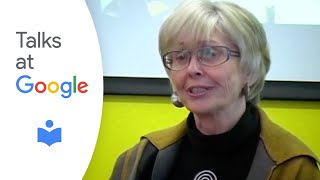
Transcript of a Talks at Google event (Jan 2008) featuring author Pamela McCorduck discussing her novel The Edge of Chaos, which explores complexity science, chaos theory, and their human implications. The talk combines explanation of complexity concepts (edge of chaos, emergence, agent-based modeling), readings from the novel (character scenes, erotic and interpersonal material), and a short audience Q&A about the Santa Fe Institute and the scope of complexity research.
Chapters
Lisa Hirsch. I'm Lisa Hirsch. I'm very happy to introduce Pamela McCorduck, whose novel the Edge of Chaos was published pretty recently. The Edge of Chaos deals with the science of complexity and how complexity affects the sciences, deals with chaos and the edge of chaos. Pamela has written about a number of subjects. Her most famous book is probably Machines who Think. She's written two other books on artificial intelligence with Edward Feigenbaum, who's at Stanford. She's written a book on art and computers. And this is her third novel. And without any Further ado, Pamela McCordick. Thank you. Okay.
Oh, thanks for coming today. Yes. The edge of chaos is a phrase that is used in complexity. There's a. The sciences of complexity. There's a certain, what shall I say? Controversy about it. There are some people who think, nah, that's nonsense. There are some people who think it's only a metaphor, but it's a very useful metaphor.
And.
And there are some people who think it's revealed truth. What can I tell you? I'm not a scientist. I arrived at the Santa Fe Institute, which is the mothership of complexity, in late 1991. I had just published a book on, as Lisa said, art and artificial intelligence. And I realized when I got to sfi, the Santa Fe Institute, that these people had the vocabulary, had the concepts, all the things I was struggling with trying to explain what this wonderful program that made art did. If I had only been there a year earlier, I would have had the words to use. So, you know, better late than never. What I was learning that long summer that I spent there was the. I won't say the end of reductionism, because reductionism has served science very, very well since the 18th century, at least. But what, thanks to the computer scientists, are able to do now, as you know, is look at whole systems and look at whole system talking to each other, reacting with each other, and they're dynamic and they're over time. This is quite different, of course, from classical reductionism. So here are the things I learned, and I was thrilled to learn them and practically have them tattooed on my arm these days. That complexity grows out of simplicity. Complexity is interaction, aggregation, adaptation by a system that maintains its coherence even though it adapts, et cetera, small causes, big results. And also, that's where I learned the Edge of Chaos. The notion of the edge of chaos is that systems appear in mostly two ways. On one side is frozen order. Things happen over and over and over again, and not much else happens. You can predict what's going to Happen and so on. On the other side is chaos. Nothing happens. Everything happens. It's a mess. But right on the edge of chaos, between frozen order and chaos, is a place where systems learn, systems do their adaptation. This is where complex adaptive systems exist. And can I tell you exactly where that border is? No, I cannot. And I don't think anybody can. But it's a very, very useful thing, a very, very useful concept for understanding how systems learn, how anybody learns, how anything learns. Okay? So I thought, could I embody all this stuff I was learning in a story? And I played around for a while, made some false starts. One 150 page false start which just went out. Gone, gone, baby, gone. And finally this novel began to take shape. And it is a novel, not a textbook, really. If you want to know about complexity, you gotta go read it or learn it from someplace other than a textbook. But I wanted to see if I could play around with these concepts and make a story out of them. But a novel, as you well know, addresses love. It addresses loss, it addresses life, death, all those things. And all those things are in this novel. What happens when you're writing a novel? Very different. Most of the books I've written have been nonfiction. My first two books were novels. And then I took a little detour, I thought, to write this history of artificial intelligence called Machines who Think. And that detour turned out to be, I don't know, a 25 year detour or something. I just found this wonderful field that I could keep turning over rocks and finding interesting things to write about. And it was a departure, in a way, to go back to writing novels. I had to reteach myself. How do you write a novel? It's not the same as you write nonfiction, just not the same at all. Anyway, the characters began to reveal themselves to me. And that sounds kind of odd, you know, I'm the author. I am God in this novel. I get to tell them what happens. No, it's not that way at all. You keep pushing and pushing and pushing on these characters and watching them interact with each other. And I didn't know until I wrote the last chapter how it would end. I had no idea. Just I was along for the ride. I wanted to cover a few other things. I wanted to cover the sciences of complexity. Of course, I'm myself an archaeologist. Mankay. I really wanted to be an archaeologist. Archaeologists when I was a kid. So this was an opportunity to have a character who would be an archaeologist. And of course, I had to do field work, right? I had to Go out and see how archaeologists behave. So I went on some digs in the Southwest. By that time, my husband and I have a second home in Santa Fe. So that wasn't too hard. One of the characters does a lot of securities trading. I hadn't a clue how that gets done. So I called a few friends in New York and said, hey, can you get me on the trading floors? And the answer was, yes, we can, but don't tell anybody. And so I would wander around the trading floors of some of the major banks in New York City, watching them trade and watching them go crazy as they do. And then I would often interview people later and ask them how they got into it, what kinds of things they do. And all this goes into the character. Oh, then there was something else I really wanted to do. I wanted to have a woman character. And the woman is a scientist. Her name is Judith. I wanted to have that woman not worried about, you know, can I have children in a career? It's not that those issues aren't important. They are are important. But at her stage in life, that's been settled. What I wanted to show was a woman who really wanted to sink her teeth into an intellectual issue of some substance and wrestle with it and take risks with it and perhaps fail and be willing to do that. So that's my Judith. Two thirds of the way through the book, I recognized that in a way, I was recreating the Theseus myth. Now, Theseus is a very interesting character in Greek mythology. He does all kinds of things, many of them reprehensible, but he's really an interesting guy. And as I was writing, I thought, oh, my goodness, where did that come from? Just bubbled up from reading years ago. One of Theseus's adventures, besides getting into the labyrinth and all that, is he falls in love with and marries a very beautiful young woman much younger than him, by the name of Phaedra. And Phaedra is fine until she meets Theseus son. And then things fall apart. Okay, well, there's the Theseus myth. What do you know? At the very end of the novel. And by that time, the novel was pretty much written. I thought, oh, wait a minute. Yeah, Theseus. But also, I've written the ice and. And Osiris myth, the Egyptian myth of the lovers and brother and sister who regenerate each other in the desert. You know, your subconscious does that. You can't just say, okay, I'll sit down and rewrite a myth. One of the earliest readers of the book said to me, oh, you know this is a spiritual quest. And I was astonished because, I mean, these people are bunny rabbits in and out of bed with each other like nobody's business. And then I thought about it and I thought, yes, he's right, it is a spiritual quest. But I didn't quite know how to focus that without pounding the reader over the head. Then last summer I took a course at St. John's College, which is in Santa Fe, on encounters with divine lovers. And this was a look at a theme that runs through many of the world's religions, that the erotic is the closest human beings can come to the divine. And once I saw that and I saw what was happening, I was able to add literally a sentence and a half, which focused that for me. That's how that took it. So I would like to read a few passages for you, and I'll probably start with some of this playful erotica. I have to give you a little background here. This is a scene that takes place at a dinner party. Most of the main characters are meeting each other for the first time at this dinner party. And one of the main characters, Judith, a scientist, is sitting across the table from another main character who she's met for the first time. Maloy Malloy is the securities trader, and on the one hand she's having a sort of a conversation with him and looking at him, but on the other hand, she's flashing back in her mind to something that's taken place a few months earlier. Her best friend, also a scientist, has told her that she's fatally ill. And Judith is just kind of digesting this. At the same time, she's having a dinner party. So this is Judith. She gazes at Maloy. What if this man, and not another what if Sophie weren't dying? What if, what if, what if in compensation for evading Sophie's corporation questions about Benito, she'd stopped in the middle of the trail and they were up on a trail picking mushrooms. She stopped in the middle of the trail and said to her good friend that autumn morning, Soph, did I ever tell you how I get through those mind numbing meetings where I consult? Okay, I'm at the conference table. Yellow pad, Montblanc pen, power suit, the whole works. Some weenies droning on about asset allocation. Me, I'm looking around for Target guy. Pretty soon I find him way buff in his perfectly tailored Brioni rich silk tie and very starched shirt. Target guys are almost all in the legal or the financial departments. They find the laundry from hell for that starch even better. If the shirt collar is just a tiny bit too tight. I'm telling you, this outfit does for me what fuck me heels and garter belts are supposed to do for the average guy. Well, no wonder it's all evolutionary biology, right? She puffed her chest, extended her arms, the so called broadside display, the looming effect striking fear into the hearts of enemies and lust into the loins of potential partners. Sophie was crouched down, her hands spread on the forest floor, pushing aside fallen pine needles, pretending not to listen too carefully. But the pause provoked her. Yeah, so I slip off my shoes, do a gentle belly flop onto that mirror finished table, wiggle down on my front like a grunt under enemy fire. Sophie was wrapped. The body English was too good to miss. Real careful past the water carafes, the stack of yellow pads, past the weenie still droning on. Nobody pays attention to me. Finally I reach Target Guy face to face.
Whoa.
He knows just what's coming. A who me? Smile and shyly drops his eyes. I reach over and loosen the tie first, then. Then the buttons. One, two, three. That starched shirt parts like opening a registered letter from the priciest law firm in the world. Like the top coming off a box from Harry Winston. I reach inside. Maybe the chest is smooth as a baby's ass. Maybe he's all yummy chest hair. It's always a surprise. Sophie was sitting back on her heels, eyes wide. Then I either drag him up on the table with me like this or I just slide down and straddle his lap. Bingo. A perfect plie topped off with a little shimmy. You are kidding me.
No.
You have no idea how boring meetings are in corporate America. Oh, you mean. Trust me, Soph, people see exactly and only what they expect to see. See, since they don't expect to see the wild thing in a boardroom, I may as well be invisible when we're all done. I boogie back down the tabletop to my chair. No one's even noticed. Target guy's all crisp, spruce and buttoned up again, a contented little smile on his face. The weenie drones on. We're moving 20% of assets into discount bonds for the following maturity. If the meeting's really long and boring, I find another guy and do it all over again. It passes the time. You know what I'm saying? Sophie had smiled, shook her head. I always knew you didn't consult for the money. At the dinner table, Maloy waits impassively for her to go on. Target Guy in his starched shirt, beautifully cut suit. I was at A Christmas party. And somebody said to me, you don't really do that at meetings, do you? Well, David, it's really boring. I mentioned that both these women are scientists, and one of them, particularly Judith, the protagonist, is really ambitious. She wants to crack a huge problem. And the problem is, how can you formally prove anything about what can be known in science? This I borrowed from my husband, bless his heart. He was doing research in this a few years ago. He then went on to do other things. He's doing quantum computing these days. But I thought, now that's really kind of a nifty thing, and I will give it to my character, Judith, to do so. Judith and Sophie, this is much later, are talking about this and that. Sophie by now is very ill. She's in bed, and she's kind of trying to urge her friend Judith not to be so starchy and stiff. Why doesn't she just try it out with Molloy and see if something might come of it? And Judith is very resistant to this, and she starts to explain why. Soph, you haven't seen this guy. One look, you'd get it. He's mega high maintenance. The women he chooses, beware. The guy who admires what you've done so much, he admires you into a professional train wreck. Sophie lifted an eyebrow. I've never met the problem myself. It never occurred to you why? Women in science freak everyone out. Crash the men's locker room bad enough. But our unforgivable sin is we will not serve. We don't exhibit ourselves like artists or athletes. We don't cure like doctors. We don't define. We defend the downtrodden like lawyers. We do it for ourselves alone. For a woman. Anything further off the grid? Outside the schema, the first and most famous to say I will not serve Lucifer. Soph, the fallen angel. Non serviam. Better to reign in hell than serve in heaven. Sophie stirred something to think about. Girlfriend wanting to be a vet was okay, but molecular biology? You're welcome. Look, this guy's finally a trophy hunter. Not the usual trophy, but it's still a trophy. Heaven, maybe, but not now. Not ever. I will not serve nobody's trophy. Hoping to bag a few myself, Judith dropped her friend's hand, jumped up, and walked right restlessly around the patio. Look what I'm trying to do, Soph. Spent my life aiming to be a master builder. I accept that the project will last beyond my lifetime. The structure could collapse into rubble anytime. A chance worth taking. It's the greatest adventure I could hope for. No false modesty here. This work is a damn cathedral Find prove impossibility resemblance results in science. The forever unknowable. Nail that and the whole map of science changes completely. Is fabulously enriched. My God. It's a problem to sink your fangs into. Win or lose. She was talking to herself in ways she wasn't ready to admit for herself. She spun back to Sophie. How many points from history for succumbing to a grand passion? No, ma'.
Am.
If anyone's going to gamble with my career at this stage of the game, it's me. Thanks. There's so much left to do. So she and Malloy manage to tear each other up all the way through the book. They really kind of make a mess of each other. And eventually, after a very trying evening. I don't know if any of you have been in some Santa Fe. There's a. In September there's something called the Burning of Zozobra. And it's kind of like a small Burning man event, except it precedes Burning man by about four decades, five decades at least. Started in the 1920s in Santa Fe. And it's very, a very, very strange thing. Anyway, these people get all messed up in burning in Zozobra, the burning effigy and on it goes. And they're both. Everybody's wiped out afterwards. And this is one time by now Maloya already has a new girlfriend and Sophie is dead, etc. Etc. They're both just at the absolute limits. And Maloy takes the attitude that, well, now you can tell me what was going on. Why were you so resistant? Why were you so stiff necked? Why did you do that to me? I'm over it. But why did you do it? And he starts by asking her about her former marriage. Judith earlier on, we find out, has married a man who is much older than she is. A very eminent mathematician. And you have probably all seen this. I certainly have. Being around academics that, you know, professors fall in love with their graduate students and one thing leads to another and so on, and there's often a wide age gap. And that's exactly what has happened with Judith. Eventually the marriage doesn't last. And this is what she's going to talk about because she wants to talk about applied mathematics versus pure mathematics. So she talks first about Jonathan, her ex husband. There was an inequality between us. It could never be overcome. I'm not cut out for the role of junior partner. Put it another way, I was very young and ambitious in those days. I could work 24,7 Never feel anything but exhilaration. I was so hungry to make my way. My name. Jonathan's reputation became, well, an ambiguous issue for me. I never took his name, but still, some people assumed he did the heavy lifting that nettled me. But I knew the that fact.
Facts.
I did my own. She stops, lost in recollection. Except it undermines you slightly. You need to know if people's perceptions have more truth than you're willing to admit. I get so touchy about that. I was. She searches, finds no words. Torn as she is between the past, the pain she'd felt then, and her shame for what had come after she'd left Jonathan to leave all that. She couldn't be a real scientist until she'd left Jonathan once and for all. And she goes on then something funny. I haven't put this into words before, but Jonathan and I had a fundamental difference about the nature of mathematics. Forgive me, Malloy. This isn't what you go on. He says it sounds idiotic. It didn't matter at first. But eventually he loved mathematics for its beauty. L' art pour lar. Applied math was tacky. Second rate. A craft, not an art. If something he'd done had a practical application, fine, but not important. Except to convince a funding agency that they should keep supporting his. His research. She feels disloyal, making him sound hypocritical. In that sense, he had been. It comes to her in the dark night that she's weary of apologizing to Jonathan. But I loved, she goes on, I loved applications to real world problems. For me, that's where real mathematical beauty lies. The map between the mathematics in my mind and the real world. The way an equation. The way an equation can illuminate the world. Like a good painting. You never see the world the same way again. One of the great flowerings of mathematics began under the arabs in the 9th century. They're the ones who saved civilization. Remember that conversation? He looks offended. Every word of it. Think of it. Mathematicians in a great arc from Spain to India, all speaking Arabic. Applied mathematicians, every one of them. Because it was a holy calling to find out what God has to teach us about the world. Mathematics is the very language of God. She drops her head, exhausted, knows she's babbling. Jonathan thought that any joy I took and the applied, the practical was a female flaw. Thought he could convert me, refine my mathematical taste. But he never did. None of this in words until now. She's chilled to the bone. Jonathan sounds like a real asshole. She starts automatically to defend Jonathan, realizes She's been relieved of that, dwells in the long silence gratefully.
Okay.
Thank you. So I forgot to note, if you.
Have questions about complexity, chaos, Santa Fe art, human computing, we have a.
We have the microphone after that.
Hi, thanks for sharing that with us. It seems to me that chaos science goes beyond applied math to being almost anti math and grows out of things that are just fundamentally descriptive and impossible to express in ordinary mathematics. I know that some of the people at Santa Fe Institute were the pioneers in doing those things and dealing with where's the next drop of water going to fall off the spigot? Or where's the next time. Does do the characters in your book go this far?
Well, you have opened Pandora's box of questions here. A lot of it isn't quite ready for mathematics yet. You're quite right. So what do they do instead? Mostly it's modeling, agent based modeling, that kind of thing. And they hope. Now this is from Stuart Kaufman. I would not dream of saying such a thing. They hope they. That eventually they will be able to invent the mathematics that describe the phenomena. But those mathematics have not been invented yet.
I'm an Australian, I read an Australian author, Sarah Dunno. Oh, sorry. I read an Australian author's novel. I think she's just a novelist, she doesn't have any novel.
Knowledge to contribute.
Sarah Douglas wrote a book called Threshold and the bad guys in the book are the mathematicians and I guess Oppenheimer and people like that. Is the novel an experiment? Thought experiment? And how far can we go? Are they bad guys?
You know, there are really no bad guys in this novel. This is a psychological novel. These are people struggling with the everyday stuff you struggle with. What are we here for? What does it mean to love? What does it mean to take risks? They're hoping to do the best that they can. And some of them, you know, I could tell you, as the author, I wanted to say. What are you doing? Don't do that. Don't. That's bad. Not bad in the sense of naughty so much as bad in the sense that it's bad for you. You're going to have a long time recovering from this if you ever do so. It's not a novel of good versus evil. It really is a novel of struggle, of human struggle. How do you get through life? And you know, for many people in the world, just getting through is tough enough. You'd like to do it with grace, you'd like to do it with aplomb. But most of all you. You just like to do it. And I used the character Sophie as an example of somebody who deeply regrets her life. She is devoted to her science. That's fine. So is her friend Judith. She realizes as she gets older that much of what she has done has been replaced, automated out. That her great breakthroughs can now be done, as she puts it, very caustically, by some junior college graduate punching a few buttons. And Judith kind of says, but somebody had to do it first. You were there. Aren't you proud of yourself? And she says, no, I'm not. If I had it to do over again, I'd have had more fun. So, like that. Did you want to ask him?
So I don't know how much interaction you've had with. Well, let me just ask the question. Can you compare, like, the people that you met at the Santa Fe Institute with, like, say, other scientists in other areas that might, say, be, I don't know, more respectable in some way? And also, what are the related areas that. What do you think attracts people to go there and what else do they get into? Like, related fields, that sort of thing?
Okay, well, you're looking at the ultimate bad girl. I love disrespectable scientists. You know that I spent 25 years hanging around with people in artificial intelligence. In fact, I think what drew me to the scientists at the Santa Fe Institute was very much the same thing that drew me to people in AI Namely, they're really working on the big problems, they're really working on the interesting problems. Yes, yes, I know quantum computing is very interesting. If only I understood it. But there is something so bold and courageous about people who want to do something new that my personality is just drawn to, to folks like that. And I love them, whether they fall on their face or not, just because their ambitions are so high. I've certainly known. Been very lucky to know many major researchers. And, you know, I think that's what draws me to scientists in the first place, is they're really pushing the borders, and that's a great place to be. It really is great. We all know people who do the same thing every day, and they're glad for the evenness of it, and they're glad not to be challenged by it. The world runs off that kind of thing. I mean, you don't want your airline pilot pushing the borders. But for scientists, for people who are really intellectually driven to find out what the next great thing is, they are a very, very stimulating company. What's nice about the Santa Fe Institute, and it was true, by the way, about artificial Intelligence in the early days, less so now. Now is it draws people from all fields. So I am as likely to sit down next to a biologist as to a geologist as to an archaeologist. And the whole notion of the institute was to ask how, what are the great laws that you can see across many fields? Now, I'm not telling you that all those laws have been teased out and nailed on the wall. This is a very young science. But what is it that all these things have in common? And the commonalities are beginning to take shape. And you can, I mentioned them. Systems that aggregate, adapt, et cetera, et cetera. Simplicity to complexity, especially in the first few years. I was lucky enough to be there when they were in a convent, an old adobe convent, and you would be throwing over the wires and stuff like that. It was nuts. But everybody's door was always open. So as a visitor there, I would sit myself down and I would read. And then when I didn't understand something, I could walk to the open door of the author of the paper I was reading and say, you know, I think I get it, but there are some things I need explaining. And people would drop everything and explain stuff to you because they were so excited about what they were doing. It was an extraordinary time. I don't think the institute is like that now. It can't be. It's much bigger. It's got its own building up on a hill. But the graduate students who come in to sit at the feet of the masters, they're just as excited as I was when I was there early. That's a very long winded answer to your question. We have a six second lag here.
It's actually somewhat less than that. Are there any other questions? If not, then thank you so much, Pamela McCorduck, for coming to Google.
Thank you for inviting me.
More from Guy


Cheryl Strauss Einhorn | The Human Edge: Smarter Decisions in the Age of AI | Talks at Google



Rachel Glennerster | Innovation and the Center for Global Development | Talks at Google

Rebecca Winthrop | Rethinking the Purpose of Education in the Age of AI | Talks at Google

Dr. Robert Wachter | A Giant Leap: How AI Is Transforming Healthcare... | Talks at Google



