The Feminine Mistake | Leslie Bennetts | Talks at Google
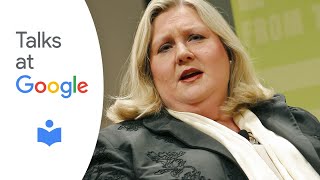
Leslie Bennetts (author of The Feminine Mistake) argues that many women who "opt out" of paid work to be full‑time homemakers underestimate the long‑term economic and personal costs. She introduces a "15‑year paradigm": the intense child‑rearing years are relatively short compared with a long adult life, so sacrificing a career can leave women financially vulnerable to divorce, widowhood, unemployment and difficulty reentering the workforce. Bennetts cites social‑science research showing working women are often happier and healthier than full‑time homemakers, and urges cultural and workplace changes (egalitarian marriage, shared childcare, family‑friendly policies) while encouraging women to keep careers when possible.
Questions this video answers
April 3
Women's standard of living drops by 36% when marriages end; men's standard of living goes up by 28%.
Two thirds
About 40% of those who reenter manage to get full‑time professional jobs.
Taking as little as three years out of the labor force can reduce earning power by nearly 40%.
Chapters
I have been doing some speaking in the last few weeks, quite a bit of it. My book was published on April 3, and one of the first speeches I gave was at Yale. And after I talked, a young woman came up to me and said, I'm.
A graduating senior, and I would like.
To tell you about a dream I had two nights ago. And she said, I dreamed that I.
Was standing inside a linen closet and.
Cleaning it out over and over again. And there was a small child with.
Me, and I guess he must have.
Been mine because I was stroking his head. And she said, outside the linen closet in the other room, the news was on. And I heard on the news that a classmate of mine from Yale was running for president. And she said, I stood there in the linen closet thinking we were in the same class at Yale, we were doing the same work, I got better grades than he did, and he's running for president, and I'm in the linen closet. And she woke up with a tremendous feeling of grief and loss because she really thought that this dream meant that.
She believed that she was going to.
Have to choose between meaningful work and a family. And the worst part of this dream was that she told her roommates about it. And instead of empathizing with her feelings of loss and apprehension about what she.
Was going to find when she began.
Her young adult life, her roommates jumped.
All over her and criticized her for.
Not valuing women's work or mothering. So it was kind of a double whammy.
I hear this a lot from young women who are getting a lot of.
Really negative messages in this culture that make them feel that they have to choose between having meaningful work and having families.
These negative messages, among others that I'm.
Going to talk about, are the reason, among the reasons that I wrote this book, one of the things that I'd like to really focus on is the reasons for women to stay in the workforce. There are so many messages that tell women that opting out is the solution to a lot of problems, and it's not. A couple of years ago, I had lunch with a friend in her mid-30s who has a very successful professional career, two children, one with significant medical issues. The minute we sat down, she said, I just can't do this anymore. The stress is driving me crazy. I can't juggle everything like this.
I'm going to ask my boss if.
I can cut back on my schedule to part time. This woman knew that I've always considered my own children. I have two who are both teenagers now, to be my Top priority. And I think she was expecting me to tell her that scaling back her career was a sensible solution to the problems that she was facing, which included, unfortunately, a lot of social pressure from the stay at home mothers in her children's school community, who were, in many cases, very disapproving of her as a working woman. To her surprise, I told her that I thought it was a terrible idea to put her career on the back burner, a mistake that could jeopardize her children's futures, and that she herself might regret for the rest of her life. Of course, I understood the stress she was going through. As any working mother with young children knows, trying to juggle a job and a family feels totally overwhelming at times. And I freely admit that when my.
Kids were little, I sometimes felt that.
My head was going to explode from the strain of being pulled in too many different directions at once. But I found myself encouraging my friend to take a longer view instead of focusing only on the stress of the moment. The truth is, and this is something, unfortunately, you don't know until you're older, the really hectic period when your children are young will pass relatively quickly. Kids grow up fast, and soon they're in school all day. If you have two children two or three years apart, which is the typical configuration of an American family these days, the really intensive period of hands on mothering lasts for 15 years or less. But we rarely think about what that means over the course of a lifetime. Women's lifespans are steadily increasing and many of us will live into our 80s and 90s. If women enter the workforce after graduating from college in their early 20s, they may have six or seven decades of living ahead of them. When you consider the most intense period of motherhood in that context, 15 years doesn't seem like that much out of 60 or 70 years.
And yet many women make life decisions.
That have irrevocable consequences based on this finite period of time. I ended up calling this the 15 year paradigm in my book the Feminine Mistake. That was a concept that grew out of my conversation that day with my friend at lunch. And the basic idea is that it doesn't make sense to compromise your entire future because of the needs of the moment when those needs will change relatively quickly. The problem is that too many women don't realize the ways in which they're compromising their futures until after it's too late. They don't realize it because they haven't been given enough information or the right kinds of information to make a thorough assessment of this issue. And unfortunately, a major reason for this information gap is the fact that the media, and I speak as somebody who has been a reporter for 35 years, have done a terrible job of covering the whole work family Question the stories about women who quit their jobs to stay home typically treat this decision as if it were merely a lifestyle choice. The message is that opting out enables you to solve the stress of the juggling act by devoting yourself to your children and forgetting about paid work. But these stories almost always ignore the economic risks that women take on when they become financially dependent on their partners. And unless you have a trust fund that is of a sufficient size that it can support you until you live to be 100, you are an economic dependent if you give up paid work. To the extent that money is mentioned at all in most coverage, it's usually in comments from mothers who say that it wouldn't make sense for them to keep their jobs because they would just be working to pay for the babysitter. Nobody ever seems to question this analysis, which is an extremely short sighted and misleading way to calculate the value of work. If you bought a car, you wouldn't feel as if it cost you the entire purchase price of the car to drive to work the first week you had it, or even the first year. You would consider the car as an investment whose cost and benefits had to be assessed over the long run. But many women don't realize that their careers also need to be assessed in a long term context. When you have young children, your child care costs are at their peak and your income is just starting to build. But over the years, your children go off to school, they're in school full time by the time they're five, and your child care costs quickly start to decline, whereas your income continues to grow. Within a relatively short span of time, your income has risen considerably and your child care costs have dwindled away to nothing. If you were to graph those lines, they'd be an X and your career was an investment you made in yourself. By the time your children are a little bit older, it's paying large dividends. But the media never seem to offer that kind of perspective in discussing these issues. They also fail to look beyond the immediate present by giving short shrift to the difficulties of opting back into the workforce after a timeout. Two thirds of the women who quit their jobs to stay home intend to return after their children are older, and these women are usually quoted as saying that they're smart and they have abilities and they're confident that they'll be able to come back when they want to. But the typical media coverage takes these statements at face value without pointing out what these women's chances really are or what kind of penalties they're going to pay for having taken a time out. Unfortunately, the result is that most women are staggeringly unprepared for the realities they encounter when they do try to rejoin the labor force. The barriers include ageism. For women, 40 is pretty much what 50 is for men in the workforce. Sexism, overt and quantifiable discrimination against mothers. There's a lot of research about that in my book, if you're interested. And equally egregious discrimination against workers who have taken a timeout, which is viewed very negatively by many, if not most employers, male and female. But by the time women realize they're up against such obstacles, it's too late to do anything about them. Over the last three or four years, as the media jumped on the opting out bandwagon, women have abandoned the labor force in growing numbers, reversing a long time trend of the last 30 years of increasing participation by women in the labor force. Now the figures are dropping. I've been a journalist for more than 35 years and I have interviewed thousands of women about their lives. I knew how many really important things were not being reported in all these cheerful, upbeat stories about stay at home moms. I finally became so exasperated that I decided to investigate these issues myself, and that was why I ended up writing the book. My goal was to provide women with a lot of information that they currently have typically do not have to close this information gap that I was speaking about. I saw the book as one stop shopping, a convenient way for women to get all the legal, financial, labor force, social science, child development, psychological and medical research, among other things that they should know about when they're considering these major life choices. I interviewed women all over the country from every kind of background from the ages of 17 to 80. No matter what their circumstances, the stay at home mothers had all shared one thing in common. They all, at least initially, believed that it was safe to depend on a husband to support them. The most common outcomes of that choice make it very clear that this is the classic feminine mistake. Women generally quit their jobs to stay home with the best of intentions, and our culture approves of them for doing so. American females grow up on a steady diet of fairy tales, from Cinderella to Sleeping Beauty to the Little Mermaid. By middle school they've graduated to chick lit, which is also about getting the guy. Meanwhile, boys are being Raised to understand that they need to take responsibility for their own lives, they recognize that they have to figure out a way to support themselves throughout adulthood. But girls often think they don't really have to get serious about a career because some Prince Charming will eventually come along and take care of them. Whether women realize it or not, and often they don't, many of their most important adult choices are influenced by these assumptions.
I found that the smarter and the.
More sophisticated a young woman is, the more likely she is to deny that she believes in Prince Charming. And yet, in the next breath, she will say that she plans to give up her career and stay home once she has kids and rely on her husband to support them. The expectation that a woman can drop out of the workforce and hand over the breadwinner's responsibility to someone else always remains as a permanent escape hatch, even though it may go unrecognized and unexamined. When young women first get married and have children, juggling work and family typically becomes difficult and stressful. As it did for my friend, it can seem very natural for a woman to give up her job, particularly if she perceives her husband as having greater earnings potential than she herself does. Often, high earning husbands will encourage their wives to quit working and take care of the home front. That arrangement certainly makes life easier for the husbands. But when women depend on a partner to support them, the truth is that they're setting themselves up to be blindsided by a lot of very difficult challenges that are likely to arise over the years. Approximately half of them will get divorced. Others will have to cope with a spouse's illness, incapacitation, or premature death. The average age of widowhood in America is only 55, and many women live for three or four decades beyond that, often without adequate financial resources. There's also unemployment to think about. In today's insecure labor market, many men lose their jobs at one point or another, which can have catastrophic effects for a family when the husband is the only breadwinner. If you add up all the risk factors, it becomes clear that the majority of women who give up their financial independence by dropping out of the workforce will eventually find themselves on the wrong side of the odds. Women typically act as if only a small minority of these stay at home moms are going to have bad luck. But in fact, it's probably 2/3 to 3/4, and it may be more than that in the 21st century. With the kind of conditions that we see playing out now, the consequences of this, not only for the mothers, but for their children, are Enormous. As one of the experts I quoted in my book put it, marriage is.
Not an equal economic partnership because women.
Assume nearly all of the economic risk. If a couple gets divorced, the husband walks away with the family's major asset, which is his career and his income earning potential. But if his wife has stayed home for any length of time, she will have a hard time getting a job and earning an adequate income. As a result, women's standard of living drops by 36% when their marriages end, whereas men's standard of living goes up by 28%. I've talked to so many women who used to live comfortable middle class lives or even wealthy ones until their husbands divorced them and cut off their credit cards. Many ended up losing their homes which had to be sold in order to split the proceeds. Others had to sell their houses to downsize their lifestyles. They very often couldn't find full time jobs with benefits and such. Women frequently end up without health insurance, unable even to go to a doctor. One woman I interviewed for my book used to have a lovely lifestyle in an affluent New Jersey suburb. But her husband became a hopeless alcoholic who flunked out of rehab about eight times and hasn't worked in years. He then got terminal cancer. The wife is working now for $13.50 an hour at a daycare center and living without medical insurance. Her teeth are rotting, but she can't afford to go to the dentist. She got her children health insurance through Medicaid, but she earns just a tiny bit too much to get coverage for herself because she's now a member of the working poor. She doesn't have enough money to go back to school to get credentials that would qualify her for a better job. And she is terrified about her future. As she and many other women have discovered, re entering the labor force after a timeout is much more difficult than most women ever anticipated. Less than three quarters of them succeed in returning to work at all. And of those only 40% manage to get full time professional jobs. Without them, they often cannot get the crucial benefits like health insurance. And the financial penalties of a time out are huge.
When women take as little as three.
Years out of the labor force, they lose nearly 40% of their earning power. Even now, women in their later years.
End up below the poverty line at.
Twice the rate of men. But what's really striking about that figure is that four out of five poor older women were not poor while their breadwinners were still around. These were women who had comfortable lives until something happened to their husbands. And those poverty rates are expected to increase substantially if women continue the current trend of dropping out of the labor force. So far, the things I've been talking about, like divorce and widowhood and unemployment, all fall into the bad news category. But there is an enormous amount of good news about women and work. And yet most people are as poorly informed about the good news as they are about the bad news. For more than three decades, the standard media story about working mothers has harped on the stress of the juggling act. There's no question that it can be stressful. But it's also true that women who have taken the time and made the effort to find meaningful work and build successful careers receive a huge array of benefits. And yet most women rarely talk about the rewards of their careers. One reason is that women are socialized not to brag. You almost never hear women talking about how successful they are or how much money they make. That's the male model. They tend to leave the boasting to the Donald Trumps of the world. But being successful is very gratifying. So is making money and being able to elevate your family's standard of living and your children's educational opportunities. Having your own financial independence and using it to enhance your life and those of your children children is satisfying and empowering, and yet many women are afraid to admit such things. If we talk about how much we enjoy our work, we're afraid our children will get the message that they're not as important as our careers. And for almost all of us, our children are the most important things in our lives. And yet working women have been made to feel that they're being selfish and greedy for working and they're putting their children second. Society is very quick to condemn working women for doing anything outside the home. This is a standard that is not applied to men. I know this from painful personal experience of late. Long before the Feminine Mistake was published on April 3, I was being pilloried in the blogosphere for months ahead of time just for writing it. This was all the evidence some people needed to conclude that I'm a bad mother and my kids are emotional basket cases. Since the book came out, a lot of of stay at home moms, all of whom preface their comments about my book by saying, well, I haven't read the book and I'm not going to read the book and nobody else should read the book. But I hate this book and I hate the person who wrote it. They go on to write things about me and my family. My 15 year old son came running out of his room the other day and said, hey, look at this one. There was some Amazon chat room. They have flooded the Amazon reader review site with things debating stay at home motherhood, but saying, I haven't read this book. I do not understand why Amazon posts reviews from people who say, I haven't read the book, but that's another subject. So my son comes out and he says, look at this one. This woman says, your he thought this was funny. This woman says, your children are scarred and dysfunctional. And I thought, you know, these stay at home moms who are all talking.
About, you know, the need for us.
To, to be home and love our children. What about my kids? I mean, did they ever occur, does it ever occur to them that today's Internet savvy teenagers are going to stumble across this thing by themselves? You know, it's just.
Baffling.
But judging from the things they've been saying about me, a lot of these women think I should be burned at the stake for suggesting that marriage alone may not be enough to sustain women or to insulate them from hardship throughout the course of a modern lifetime. If these women had actually read my book, they would discover the really amazing results of a lot of social science research comparing working women with stay at home mothers. It turns out that working women are considerably happier than stay at home mothers.
With far lower levels of depression and.
Far higher levels of some of the most crucial determinants of mental health, such as the feeling of having control over your own destiny. Moreover, when full time homemakers return to the labor force, their mental and emotional health improves significantly. What's even more striking is that working women are not only happier than full time homemakers, they're even healthier. Longitudinal studies have now shown that women who have jobs as well as families are in better health and are less likely to suffer from a variety of medical problems than homemakers. Contrary to all those negative stereotypes about the stress of the juggling act, it turns out that having multiple roles is actually good for women as it is for men.
And it gets better as they get older.
Children grow up fast, but when they.
Start leaving the nest, a working woman.
Still has decades of productive work ahead.
Of her and decades of earning a living. As one legal scholar I interviewed put.
It, motherhood is a temp job. Before you know it, your children are pushing you away and asserting their own.
Independence, which is as it should be. And it's at this point that working women really start to reap the rewards.
Of the choices they've made when their children were young. The working women I interviewed often felt quite overwhelmed by all their responsibilities, whereas the stay at home moms were very engaged with their children's lives and they felt very much needed.
If you only look at that moment.
In time, it's easy to conclude that the stay at home option is preferable. But as the years pass, there is a stunning role reversal. By the time their kids are teenagers.
The stay at home moms often feel lost and frightened.
Their kids don't need them to dance attendance 24, 7 anymore. And as teenagers, they start to resent the helicopter moms who can't stop hovering. The full time mothers have a lot more time on their hands, but they then discover that they can't find decent jobs. If you want to see someone who's really upset, talk to an educated woman who once earned a six figure income, gave up her job, stayed home, tried to find a new job after a timeout, and found that the best offer.
She could get was a $7 an.
Hour position at Starbucks as a barista. These women often enter a prolonged period of confusion, confusion and anxiety. Many cannot return to the careers they had when they were young. Others never got serious about a career in the first place, and they discover that they don't really have anything to go back to. They know they have to reinvent themselves, but this isn't easy. Entrepreneurial solutions sound like a good answer, but the failure rate is astronomical and for many, the revenues are negligible at this point in their lives. And many stay at home mothers see their own futures as very bleak. For those who are still married and being supported by their husbands, this may be merely depressing. But for those who have lost their breadwinners to divorce or death, it can be downright terrifying. The working moms present a remarkable contrast. By this time, it's clear that their kids have turned out fine. Their careers are thriving, they have promising opportunities ahead of them, and their futures are bright. They feel energized and optimistic about their lives. They have options, income and power, both in the world and in their marriages, which is no small thing. They are in control of their own lives. I found that statements like this, although they're based on research, these are not my opinions. These are all. Everything in my book is about facts. My book is not a polemic, it's a reported work. Nevertheless, these kinds of statements typically cause stay at home moms to become quite indignant because they firmly believe that the advantages that work gives the mother are bought at the expense of the children. They're absolutely convinced that it's better for kids if their mothers stay home. But judging from all available evidence which I cover in the book, this too is a myth. Social scientists have been studying the children of working mothers and the children of stay at home mothers for more than 40 years, trying to prove that one group does better than the other.
And all this research has consistently failed.
To show that there is any substantive difference. The kids of working mothers turn out just fine, and there is no data to suggest otherwise. What really matters in raising healthy children are other factors such as the parents consistent emotional availability, not whether the mother was sitting at home or in an office while the kids were in school all day. My children are now 15 and 18 and they leave the house at 7:30 every morning. Both my son and daughter are on the cross country and track teams. They have practice in the afternoon and they run seven miles every day after school. They get home at around quarter to seven at night. That is more than 11 hours out of the house every weekday. If I couldn't find a way to keep myself gainfully employed during that span of time, I would not be trying very hard. So if it's not really better for your children that you stay home with them, is it worth the personal sacrifices you'll have to make and the financial risks to your family? Both my reporting and a great deal of research by others make it very clear that economic dependency is an extremely high risk option for women. It's equally clear that meaningful work is one of the most important factors in determining a woman's health, happiness and range of options as her life goes on. But I hope it's also clear that my purpose here is not to condemn stay at home mothers. What I am trying to do is fill out the picture of what it really means over time when women give up paid work, because up until now we've only been getting half of the story. I'm also not trying to tell anyone else how to live their life. There is no one size fits all prescription for that. Figuring out how to be happy and productive and make the best use of.
Your individual talents is something that you.
Have to discover for yourself and basically you make it up as you go along. But one thing I can tell you.
About a woman's adult life from the.
Vantage point of somebody in her 50s is this work. For most of us who have been committed to doing something meaningful that we're good at, that we love, and that we've stayed with over the years and is crucial. It's crucial to our financial security, particularly when something happens to our Husbands or to their incomes. I have a lovely husband. We've been married for nearly 20 years. But he lost his job last year when the company he was working for folded. He went to work happy as a clam one day and during the day the announcement was made that the financial investor was pulling the plug and that was it. They were all out on the street. It was a tremendous shock.
He didn't find another full time job.
For six months because of my income. His unemployment was a temporary inconvenience for our family. If I'd been a stay at home mom, it would have been a catastrophe that would have compromised our ability even to keep our home, let alone to send our daughter to college in September. But work is more than a paycheck. It's crucial to our sense of identity, particularly after our children grow up. It's crucial to our ongoing intellectual and creative growth. It's crucial to our social lives which keep on expanding instead of contracting when.
Our kids leave home and we lose.
Their school communities as our social center, which they are for many stay at home mothers. It's crucial to our mental, emotional and even our physical health. And it's crucial to maintaining a hopeful sense of future opportunities and possibilities as you grow older. If you've been smart enough to choose work, you have a real passion for, and I cannot stress too highly the importance of that, it will nourish you for the rest of your life. Freud and the developmental psychologist Erik Erikson both defined work and love as the two essential components of a mature, healthy adult life. These days, too many women are voluntarily depriving themselves of many of the things.
They'Ll need to to sustain themselves over the long haul.
This isn't prudent and it isn't necessary.
I began this talk by telling you.
About the friend who wanted to scale back her career a couple of years ago. Our conversation that day made her rethink her choice and she decided to hang in there instead. She started working from home more often, but she did not cut down on her job responsibilities and she found that she was able to work from home and there wasn't problem with her boss. Recently I asked her how it was going. Her life is much more manageable now and she is a great deal happier. Her social environment is also changing. She's now 40, old enough to see the first big wave of divorces hit among the parents of her children's classmates. The stay at home mothers in her community are panicking, whereas my friend's career is sailing along and her kids are growing up Nicely. The other day we were talking about how close she had come to derailing her career. She said, that would have been the biggest mistake of my life. Thank God I didn't do it. So for those of you who are now in the middle of the maelstrom, one of the main things that I and a lot of older women would like to tell you is hang in there and don't give up. Things get a lot better and the wisdom of your choice will become more and more apparent as time goes by. It can take years for women who give up their careers to understand how much they've lost. But it also takes time to fully understand how many rewards there are for maintaining your own life and your own work instead of sacrificing everything to the roles of wife and mother. Nobody ever questions whether men should give up their careers in order to have children.
And nobody ever asks whether men can.
Be good fathers even though they work. Although two months ago, Oprah did a one hour show, the title of which.
Was can you still be a good.
Mother if you work? There is no good reason why women should be expected to make that kind of sacrifice. It's far better to take the long view, and you're likely to be very glad you did. Before I start taking questions, I would just like to add that there's a.
Whole section in my book which ranges.
Over a lot of topics about the role of men. Women in the 21st century really have to face the fact that they need to share the breadwinning in order to protect themselves. But the corollary to that is that they just cannot be expected to continue doing this notorious second shift of all the housework at home. And what this means is that men really have to step up to the plate if women are going to be sharing the breadwinning.
Men have got to share the childcare.
And the domestic duties.
Women have to insist that they do.
And men have to really accept this.
I think that a lot of people feel despair over the idea that women.
Get stuck with everything, so they might as well give up and go home. But in my book, I talk about.
Some of the really amazing research that.
Shows how much has changed in the last generation. Men are doing far more than they.
Used to, and an egalitarian model of.
Marriage works better for everybody and protects everybody better.
There's even amazing research that shows that when children.
You're not going to believe this.
It's truly astonishing.
When children do housework with their fathers.
Those children have lower rates of depression.
More friends, and do better in school.
So I'd like to put in a plug for egalitarian marriage, which is part of the solution, as is getting men to join forces with women to start.
Changing the corporate workplace in America, which.
Is extremely hostile to the needs of families.
And that really has to change. But it's not going to change until we all start trying to tackle it together. Thank you. And I would be delighted to take your questions.
Yes, thanks a lot. That was a really great talk. I'm not going to sound too informed right now, but I read an article about two years ago about a few companies having this initiative to allow some women to take about five years off.
That's a good question.
And their jobs would be held for them. And I know this is fairly new, but have you seen any more of this happening?
That's a very good question. I actually about 45 minutes ago a reporter called me from Newsweek and said she was doing a story about this.
And could I please speak to that.
There are a lot of people out.
There who are writing these perky little self help books that say if you.
Do these five things and here's how.
You prepare your resume, just leave out.
The dates, you'll be able to opt back in.
I wish that this were true. I have to, to tell you as a reporter, it isn't.
There are a few companies that are doing really innovative and forward looking things.
Yesterday I gave a speech for the.
Professional Business Women's Conference of California in San Francisco. And my co speaker for my session was a woman from Deloitte who talked.
About their extremely innovative and terrific program.
That is trying to design ways to, you know, make, to retain female workers in addition to male workers who, you know, are sick of the rigidity of.
Much of the corporate workplace.
And everybody when these subjects are discussed, says, oh well, look what Deloitte is doing. Ernst and Young has a program and they seem to think that, you know, something which right now constitutes tokenism of the most minuscule proportions means that these problems are solved in the workplace. But when you go out there, I mean as a reporter, my job is just to collect information. And you go out there and you talk to the employment recruiters and the management people, employers who are in hiring positions.
And over and over again what they.
Said to me was, I will not see these women, I will not interview them because I am not interested in somebody who's been out of the workforce for five or 10 or 15 years.
I want somebody who is doing it.
Now, who knows the people who are doing it now, whose skills aren't obsolete.
Who can hit the ground running?
I'm paying a lot of money for this person, and I'm not going to invest in.
Why should I invest in bringing this.
Person up to speed when there are younger, hungrier people with better skills? That is the reality right now. That needs to change. I certainly hope that it will change. There are companies who are starting to try to address this. It is also true that many men are fed up with the ways in which our workplace is structured in this country.
The way that our workplace is structured is essentially a product of the Industrial.
Revolution, which for the first time separated men and women. And the Victorians came up with something.
Called the separate system spheres ideology, which.
Many of you may have encountered when you took courses in college, in which men are out in the public sphere.
And they're doing the bread winning and.
Women are confined to the domestic life.
And this has made women extraordinarily vulnerable.
Fifty years ago, when women were able to count on relative stability, not only in marriage, when divorce was stigmatized, but when they didn't.
I mean, 100 years ago, women were living half as long as they are now, it was a pretty good bet.
If you figured, you know, you were going to die giving birth to your.
Fifth child when you were 41, that your husband would support you until you die. Now, you know, if you're going to live to be 100, it is a really terrible bet. A friend of mine gave me a.
Book party last weekend, and there were an unusual number of women in their 50s in the room.
All of them had been widowed.
And one of them that I started talking to had lost her husband when she was 52.
The other one had lost her husband. She was 32, and, you know, ranges in between. But a couple of them had mothers who were 100.
So women have to plan for this. And one of the really most urgent messages of my book is women have got to deal with the realities that exist right now and the companies that.
Are starting to work on this.
And you all can have an impact if you get involved with these issues and start to push this agenda forward, because it will benefit everybody. It will benefit men, women and children. But make no mistake about it, it is not the prevailing reality right now in the workforce.
So thanks for coming to speak. I actually had two questions. One is whether there is enough data out there to know whether if men take time off from work to care for children, what type of impact that has on their future careers. And I'm also wondering if there's some sort of Tipping point between, like, women taking one year off versus three years versus five years versus six months. Whether there's a difference there.
Sylvia Ann Hewlett has done at the center for Work Life Policy in New York, has done a lot of the work on this. The basic message is the longer you.
Take, the worse it gets. That's your general rule of thumb.
But, you know, in my book, I talk to women who had thought, you.
Know, after working for 20 years, that they would take one year out, for.
Example, to just to be with their.
Kids for a while and see how the other half lives.
You know, one of the women who is one of the major characters in.
My book was just stunned she could not get back.
I mean, you know, and then in the middle of being able not to.
Get back into the workforce, her vegan runner husband dropped out of a heart.
Attack at the age of 49, and she was really up a creek without a paddle. So, you know, it's a, as I said before, it's a huge risk. A lot of this boils down to.
Your tolerance for risk.
I would not gamble my family's security on a roll of the dice. I am not somebody who is drawn.
To those kind of odds in Las Vegas.
And yet I am constantly astonished that.
Women who wouldn't think of raising children.
Without baby proofing their homes and researching the safest kind of stroller to buy.
Are accepting odds that would make, you know, a hardened professional gambler quake in his boots.
I don't really understand this. I can only explain.
Explain it by surmising that they don't.
Really understand how high the risks are as far as men are concerned. You know, I think that. I don't know of studies that quantify that they may exist, but I think that it has been very, you know, much less common for men to take time out.
When my husband and I had our first child, we were both New York.
Times reporters and he put together all of his vacation time and comp time and all other kinds of time, and.
He took seven weeks off and we.
Both stayed home with our kid and he worked from home and, you know, his career has sailed along very nicely until that company shut down last year, but that was like 20 years later, so it was unrelated. So, you know, you can make, you know, compromises and negotiations to work these things out, but a lot of men are afraid to. So, you know, it's still not very common. The number of stay at home fathers has doubled in the last few years, but it's still minuscule.
It's like doubled From I think 2 to 4%.
And a friend of mine recently who had assumed that he was going to.
Be supported by his wife's pension when.
He was older, who now finds himself.
Being divorced by her, was complaining about.
How men get screwed too, basically was his message. And I said, well, you know, you made the feminine mistake.
It's not really a question of gender.
The person who gives up their earning.
Power to become dependent on somebody else.
Is the person who is vulnerable.
The person who has the income earning.
Potential is the person with power and options. And this holds true in lesbian couples, in gay male couples, and in couples where there's a stay at home father.
It's the same principle, no matter what.
The gender of the person who does it is.
Yeah.
So you just answered half my question, which was the other day at home, then if not the woman, the other half is then, well, who should presumably talk about this 15 year period, even if it's just to get the kids out of infancy, who should. Someone has to be at home before they get to school, who should do that?
You know, the whole, when you start.
Talking about childcare.
And I've experienced a lot of this in the last couple of months, you instantly start being accused by people of recommending that all children should be warehoused in substandard daycare facilities that are basically Dickensian and are going.
To destroy your kid.
The truth is that in this country most women have what the sociologists call patchwork childcare solutions.
A little bit of this and a little bit of that.
You know, a babysitter, maybe an hour or two of daycare, relatives, you know, just different things, things parents trading off different things that go to cover what your needs are. And those needs, as I said, change very rapidly. I don't have a prescription, but one of the studies, for example, that I cited in my book showed that although.
Childcare has received a very, very bad rap in this country and continues to.
With people really distorting the facts of studies that are done, as the New York Times recently did in a front page piece that was very artfully dissected.
A few days later by a Salon.com writer who was much more careful in looking at the study before writing about its conclusions.
More than 80% of the women in.
This country are happy with their childcare arrangements.
I can tell you how I did it. I had babysitter who was a wonderful person, who After 18 years, I still haven't found any flaws. She's a very close friend of mine. I've dedicated my book to her among in addition to my mother and my daughter. And she was a surrogate parent and she my husband and my babysitter and I traded off and very, you know, in the very beginning I have two kids and they're three years apart.
And in the very beginning I needed her full time.
But very quickly that began to go down because, you know, by the time kids are 2 years old, they're going into the toddler twos program, you know, for a couple of hours of this and a couple of hours of that. So, you know, how anybody should do it depends on where they live, what their resources are, what their extended family structure is. But I really have talked to, there.
Was one social worker that I interviewed.
Who had given up her career to stay home. And she said I had such a.
Negative view of daycare because everybody always.
Acts as if you're just a terrible.
Mother if you put your kid in daycare.
And when I finally decided to go back to work part time, I was so stunned. This daycare facility is such a loving, nurturing place.
My kids are thriving. If I had known how great, how.
Much great daycare is out there, I would have gone back to work a lot earlier. And I wish I had had. So, you know, everybody needs to investigate the options in their own community and you know, the availability of resource in their own personal network. But the bottom line for me is it is such nonsense to say that this can't be done. Millions of women have successfully had meaningful.
Careers, stable long term marriages and healthy, terrific children.
And yet somehow the message is being perpetrated in this culture that you can't do this. You know, millions of baby boomers have done it. We are happy campers now.
You know, we are in the clear sailing part of this. And our kids are old enough now that we look at them and say, God, they're fabulous.
And the secret little thing that is.
Hard for working mothers to admit because.
They get trashed so often is many.
Of us secretly believe, and a lot.
Of sociologists are beginning to show that the children of working mothers tend to be a lot more self sufficient and.
Resourceful than the children of stay at.
Home moms who often need to justify.
The choice that they have made by infantilizing their kids. I mean, when my kids were in.
Preschool, I started to wonder because I would see the stay at home moms having these, you know, gangly four year.
Olds with really long legs, but they.
Would still be strolling them in their.
Baby stroller to preschool, whereas the kids of the working mothers are Walking and running.
And that was kind of like a metaphor. It was the children of the working.
Mothers, you taught them to tie their.
Own shoe laces, but the children of the stay at home moms were still waiting for mom to tie their shoe laces. And these things carry over as you go through time. So I just, as I said, I, I can't stress enough the fact that this isn't rocket science. You figure out solutions. You know, you have crises. There's always times when the school nurse calls and says, you know, Nikki is throwing up and it's 11:30 in the morning and somebody has, you have to figure out a way to deal with it. You need backup, you need friends you can call, but you work it out.
It seems that that patchwork solution is a little bit resource dependent though. Like you had a flexible job. We could work from home a little.
Bit, but I was out of town a lot.
What about the women who can't afford the childcare, the nanny and don't have the flexible job so they can work from home? Is this a blanket solution for everyone that you're saying, working, working, yes, where a neither parent has to take significant time off that would hurt them in rejoining the workforce.
I think we really have to start raising girls to understand in this country that they need to take responsibility for their own lives.
Women have got to stop picking low paid professions and dropping in and out of the workforce.
They've got to earn enough money to.
Support themselves and their children, you know.
Because their lives may depend on it, their children's, you know, food and shelter.
May depend on it. So particularly for young women, I would encourage them to think really seriously about these issues. And you know, when you say, well, you can't afford it, you know, these are finite needs and if you stick.
With your work, you're going to be earning more and more and you're going.
To be paying less and less for whatever kind of childcare you have to have.
So, you know, my recommendation would be.
Make the sacrifice whatever it costs you for that period of time because you.
Will be really glad you did later on.
You have to work it out somehow because otherwise you make a much larger sacrifice than you ever anticipated and the costs catch up with you.
Hi, my name is Yolanda. I wanted to say thank you for writing this book. My both kids started daycare at three months of age, so it gives me courage to making decisions. My question is more from an international perspective. Do you think this is a US phenomenon or have you looked at this problem from more kind of global view.
Every every other western industrialized nation puts.
The United States to shame when it comes to family friendly policies.
Our situation is a national disgrace.
Our elected leaders pay lip service to.
Family values and do nothing about really changing things in the ways that families need them to change.
This will continue to be the case.
Until we all force change upon them.
Those who resist it.
And as I said, that doesn't happen.
When women are dropping out of the workforce to take care of things at home. They're not change agents because they've given up and gone home. The men then are not change agents because they have everything being taken care of at home.
And so nothing changes.
That's why progress on these issues has.
Stalled out in recent years. And compounding this problem is the fact that a lot of people are not.
Only needing to take care of their.
Children, they're needing to take care of an increasing population of aging, ailing parents. So the caretaking goes both ways. That's the main which is going to become bigger and bigger crisis in this country.
Governments rely, specifically in Europe, they rely on women that go back to the workforce. You know, contribution to 401ks, all the pension funds and everything. It's a big trend right now.
So I. Well, in America, you know, everybody relies on unpaid services by women, but those services leave women extremely vulnerable. So, you know, things really have to.
Start changing in the United States to.
Accommodate the fact that women have got.
To maintain their income earning capability. And I would encourage you all to.
Start speaking up wherever you go to work, you know, make an issue of these things.
I think people often don't realize that.
Institutions are not immutable. I mean they can change and one.
Person can make amazing, can have an.
Amazing impact if they try.
When I was 23 years old, I got my first newspaper job and it.
Was for what was then the largest afternoon newspaper in the country, the Philadelphia.
Bulletin, which was this venerable, you know.
150 year old newspaper where they'd done.
The same thing the same ways for generations.
And I was appalled as a young woman by how sexist a lot of the coverage was and by some of the features in the paper, like a.
Front page feature every day called Today's.
Joke, which tended towards the, you know, my mother in law, the battle axe.
And my wife, the ball and chain kind of old fashioned sexist jokes.
And one day I just got really irritated and I stormed into the executive editor's office, which was a rash thing to do because I was a lowly.
Novice and I spouted off about this.
And I said, the entire, you know.
Way this newspaper has of approaching news.
Is so sexist, I just can't believe it. And I gave him chapter and verse.
For a while and he was sort.
Of looking at me as if I had grown two heads. And when I finished, I had a moment of panic because I thought, well, maybe he's going to fire me now. But instead he said, there's a lot.
Of merit in what you're saying, so.
Why don't you try to draw up a list of guidelines that we could implement for a new code of non sexist coverage. I went back to my desk and I sat down for 10 minutes and I typed up a list of guidelines and I brought it to him and he said, gee, these look great.
We'll put them into practice immediately.
And I was like, huh?
And the entire culture of the newsroom.
Which was dominated by older men, did not start to change overnight.
But he started cracking the whip because I had opened his eyes and the.
Whole institution started to change. And I was this kid who went.
In and had a hissy fit and.
Spent 10 minutes typing up a list of guidelines.
So never underestimate the power of the.
Individual to have an impact.
Thank you.
We have time for one more question.
Okay.
Okay.
Hi.
My question is around stay at home motherhood as a status symbol. I grew up in a poor rural area of the Midwest and I literally didn't know anyone whose mother didn't work. So I always thought that was the norm until I moved to New York City after college and felt like that.
Was an eye opener, wasn't it?
Yeah. And felt that it was a symbol of affluence that women could stay home and something that they aspired to almost as a status symbol. So just wondering if you think that's grown over time and what's going on.
Absolutely.
That's a huge, huge trend. I live in New York City and you know, a lot of it is about the materialism in this culture. It's all about status toys. And my husband makes a seven figure income, or my husband makes an eight figure income and I don't have to work. And these women who say that don't seem to have any recognition that there are other reasons to work besides having a paycheck. But again, what you see over time, early in my book, there's a story about an event where a woman in New Canaan, which is a wealthy suburb in Connecticut, goes to something and it comes out that she has a job.
And these other women recoil and you.
Know, it's sort of like total Stepford out there. And they say nobody in New Canaan works. So I was fascinated by this story which somebody told me at a conference I was at. So I went out and talked to a lot of wives in New Canaan. And so many of them are really desperate and miserable. It's hard for them to admit that.
They will tell you initially that they.
Gave up their careers to stay home with their kids, but there's really all the research on the opting out phenomenon shows that there's what's called the preferred narrative, which is that if you ask.
Women why they quit their jobs to stay home, they'll say, because it was better for my children, I had to.
Stay home with them. But if you really do in depth interviews, and I found this and a bunch of other sociologists who have studied.
It have also found the same thing. What you really find is that the.
Real reasons were either they did never.
Got serious about a career, they didn't.
Have anything that they really liked, and having children provided a convenient excuse for.
Them to get out of something they.
Didn'T like, or they were encountering frustrations and obstacles in their careers. And again, leaving is an escape hatch for women. If they were guys, they would figure out a way to surmount those obstacles. They would persevere. But it's like there's this siren song in the background.
Oh, you can always bag it and go home. So they bag it and go home.
And I have to tell you, a lot of those women who, you know, feel that this is a status symbol later on. You know, the ones whose marriages are unhappy feel they have to have hang.
In there because they are.
It's like, you know, going back to Jane Austen's time. The man is the meal ticket. And women stay in miserable marriages with husbands who often are abusive or unfaithful or never home because they can't figure out a way to support themselves and they don't want to give up their, you know, Range Rovers or whatever and they end up incredibly unhappy. This one wife in New Canaan was.
Saying to me, you know, there are.
Lines around the block to get into the AA meetings, you know, every one of them. And there's all this substance abuse and there's so much misery here. And yet, you know, these women seem to think that, you know, having all of the material possessions is, you know, they thought it was going to be.
What made them happy.
And shopping as a full time life, you know, you know, it ends up being really empty for a lot of them. And then they get stranded when something happens again to their breadwinners because of the other factors that I've talked about. But that's a huge phenomenon right now.
And unfortunately, it becomes an aspirational model in other communities.
I mean, one of the African American women I interviewed for my book said, you know, black women have always worked. And so the aspirational model in the African American community is if your husband makes enough that you don't have to.
Work, then you get to stay home.
And the Wall Street Journal reported a couple of months ago that this whole opting out phenomenon used to be regarded.
As something that only privileged people did. Which is logical.
You'd say, you know, women who have.
The option of quitting work, you would think would be at the upper socioeconomic levels.
But the Wall Street Journal reported that this trend, the new figures show that.
This trend is much broader and deeper.
Than previously realized, and that it is.
Occurring at all socioeconomic levels. And I found this, you know, interviewing people who were working at minimum wage.
Jobs and whose husbands were at minimum wage jobs.
They will give it up at the first opportunity because there's this thing about.
You know, women get to stay home and have somebody else support them. And I was just always amazed by how much of an economic hit that.
These families were willing to take.
You know, they're really circumscribing their opportunities to educate their children, for example, so that the woman could stay home. And so it's very pervasive at all levels, not just among the rich, but as I said, over the long run, so many women, I mean, I couldn't possibly tell you how many women I have talked to over the years who have said to me, this is the.
Worst mistake I ever made.
Why didn't somebody tell me? So that's why I wrote the book, trying to put the information out there and make of it what you will, and I wish you all the best of luck.
More from Guy


Cheryl Strauss Einhorn | The Human Edge: Smarter Decisions in the Age of AI | Talks at Google



Rachel Glennerster | Innovation and the Center for Global Development | Talks at Google

Rebecca Winthrop | Rethinking the Purpose of Education in the Age of AI | Talks at Google

Dr. Robert Wachter | A Giant Leap: How AI Is Transforming Healthcare... | Talks at Google



