The First Word | Christine Kenneally | Talks at Google
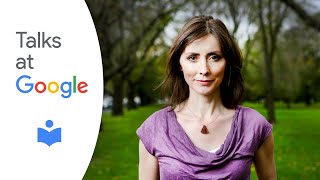
Christine Kenneally presents ideas from her book The First Word (about the origins and evolution of language). She surveys historical attempts to find the ‘‘first language,’’ explains why the topic was taboo in linguistics, and summarizes interdisciplinary evidence (paleoanthropology, genetics, comparative animal cognition, gesture, and experiments) that helps reconstruct language evolution. She argues language is composite — recent specializations (words, syntax, speech) built on older cognitive and social capacities — and offers a timeline and vivid metaphor (a constellated ‘‘word universe’’) to convey what it feels like to be a language animal.
Questions this video answers
About 60,000 words.
About 60,000 to 80,000 years ago.
Around 28,000 years ago.
Around 18,000 years ago.
Chapters
Hi, everyone, and welcome to today's Authors at Google event. It is my pleasure to introduce Christine Kenneally, who I should probably admit right now I met in a writing class four years ago. She holds a BA from the University of Melbourne and a PhD in linguistics from Cambridge. Her work has appeared in many publications, including the New Yorker, the New York Times, Slate.com and Salon.com and she's here today to talk about her new book, the first, the Search for the Origins of Language, which traces the evolution of language, attempting to answer the question, why can we talk Talk? While revealing the controversy surrounding the study of that same evolution. Writing about the book in Slate, Amanda Schaeffer said, quote, the book's wit and sophistication will appeal to anyone interested in talking about talk. Christine will be speaking and then take questions from the audience. If you do have a question, please wait for the microphone to arrive. I'll be passing it around after the event. She'll be signing books for anyone who's interested. So if you want to stick around and have your book signed, feel free to. And with that, please join me in welcoming Christine Keneally to Google.
Thanks, Ricky.
Thank you so much. It's really exciting to be here today. So, 20 years ago, I was an undergrad in linguistics at Melbourne University. And I remember in one of the very first lectures that I took, asking the lecturer, where did language come from? How did it begin? She said that many people had asked a version of that question throughout history, and that as long ago and as far away as ancient Egypt, there was a king called Psammetiches. He took two children and he isolated them in a hut, and he sent a shepherd to look after them. The shepherd was forbidden to speak to the children. And Psammetiches idea was that the very first human language would emerge naturally from these children in the same way that we. When you grow, the limbs emerge from your body.
And the shepherd reported back to the.
King that the first word the children spoke was bikos, which apparently is Phrygian for bread. So Simmenicus determined that Phrygian was the first human language. The experiment was repeated at least twice throughout history.
The last time by King James of Scotland.
He took another two children, sent them away and isolated them, and sent a nurse to look after them.
And.
And after a certain period of time, the nurse reported back that children were speaking really good Hebrew. So James determined that Hebrew was the very first human language. We know now that this could not have happened. Language is a fundamentally learned behavior. If you're not speaking to you will not speak.
You will not have language inside you at all.
It's not clear from the historical record where exactly the story was made up, whether the shepherd took pity on the children, whether the nurse just sort of said that the kids were speaking Hebrew.
To end the experiment.
But at the time, my lecturer said, mostly no one knows the answer to this question, and not even that. No one knows the answer to the question, but no one even really asked the question. It's just not a scientifically respectable question to ask. So I found out later that the answer that she gave me that day had been passed from teacher to student for more than 100 years. And this was largely because in 1866, the French linguistic Society banned any publications about the evolution of language. They said that it was this fundamentally speculative question, that there was no way we could know the answer, and that it was essentially a waste of time. The English Linguistic Society followed suit a few years later. That ban had a very powerful effect, and it was never officially lifted. But over time, it mutated into a kind of a taboo, which then, in.
The mid to late 20th century, became.
This discomfort and embarrassment. And that's pretty much where it was when I asked the question. So I left Melbourne, I went to Cambridge, I did a PhD in linguistics. And then after I finished that, I decided to become a reporter. And after a few years, I started asking the question again. Where did language come from? How did it begin? And also, what was it about this question that made it such a hot topic? Why was it a taboo for so long? So I'd like to read you just a few small passages throughout the talk today. And this first passage is from the introduction to the book. And it's really about what it means to ask that question, what's at stake.
In the popular imagination? Evolution is a clean arc from rock hammer through arrowhead to Pentium processor. It's an inevitable outcome of one of those vague principles of life. The superior somehow unfolds out of the inferior. Likewise, language evolution begins with the urgent grunting of a guy with a club, moves through a Mi Tarzan Eugene phase.
And ends finally with the epitome of.
Civilization, the whip crack enunciation of Sir Laurence Olivier as Hamlet. For a long time, the scientific account of language evolution wasn't that dissimilar to the popular version. Researchers sketched only a broad stroke picture in which the complex somehow arose from the simple. Some thought, for example, that prior to our current brilliance with words, there existed a proto language, a clever form of communication that distinguished us in crucial ways from our fellow primates. But how did this proto language and the systems that followed it arise? Did a single genetic mutation shape the destiny of man? Or was it a slow layering of change over countless generations that propelled us from grunt to nominative case and from screech to sonnet, not to mention haiku. The OED 6000 distinct languages and words like love, fuck, nothingness, Clydesdale and aquanaut. There are no easy answers. Of all the formidable obstacles to solving this mystery, the first lies in the nature of the spoken word. For all its power to wound and seduce, speech is our most ephemeral creation. It is little more than air. It exits the body as a series of puffs and dissipates quickly into the atmosphere. On the evolutionary timescale, bone can last long enough to leave an impression, enabling us to track, for example, the adaptations that shaped 150 million years of ichthyosaurs. We see now from the fossil evidence how these ocean dwellers changed over time, ballooning from a half meter into four meter monsters, lengthening their spectacular snouts and evolving fins and flukes from lizard bodies before vanishing from the earth forever.
But there are no verbs preserved in amber, no ossified nouns, and no prehistoric.
Shrieks forever spread eagled in the lava that took them by surprise. In the absence of petrified words, evidence of change in language related body parts offers a compelling clue to the course of language evolution. The brain, the tongue, the the larynx, the lungs, the nose and the uvula, that pendulous flap that swings in the throat of screaming Looney Tunes characters, all are intimately involved in speech production. But on the geologic timescale, soft tissue doesn't last much longer than a sound wave. It leaves traces only in very peculiar cases, like the skin of a 30,000 year old mammoth stalled in Siberian permafrost. For a long time, the closest we could get to language related fossils were the impressions left by the bones of distant ancestors. Scientists gained some useful information by interpreting cranial remnants, since skull size is an interesting, if indirect, measure of brain volume.
But the size of a skull or.
A femur only takes you so far. It doesn't tell you when the first word was uttered. Nor does it tell you if it was a noun like tiger, a verb.
Like eat, or an imperative, run.
Bones can't tell you who said the first word or who was listening. Did language begin as a soliloquy? Or is the fundamental nature of language to be communicative? A conversation requires at least two people. But how can someone invent Language at exactly the same time that someone else figured out how to decode it. Fossils cannot answer this question. Only very recently have scientists begun to work out how language evolved.
But in the same way that no.
Single fossil can provide an answer, no one researcher can solve this problem. There will be no Einstein of linguistic evolution, no single grand theory of the emergence of language. Unearthing the earliest origins of words and sentences requires the combined knowledge of half a dozen different disciplines, hundreds of intelligent, dedicated researchers, and a handful of visionary individuals. It was only four centuries ago that electricity was discovered. A century later, the principles of internal combustion were worked out and the engine was created. In the 20th century, we invented the computer, discovered DNA, split the atom, sent Voyager 1 into the outermost regions of the solar system, and unraveled the human genome. Now we're getting to the really hard stuff. Piecing together several million years of linguistic evolution without a single language fossil is not just a cross discipline, multidimensional treasure hunt. It's the hardest problem in science today. So I discovered when I began to ask the question again, that there'd been quite a revolution in the way that.
People were thinking about the topic and at least three really important things had happened. One was that Steve Pinker, who I believe spoke here recently, is a famous Harvard professor and current best selling author. He wrote a paper with another linguist who's now at Yale.
He's a graduate student at the time.
His name was Paul, Paul Bloom. And in this paper they basically defied Noam Chomsky, who you can think of as the king of cognitive science. Chomsky has dismissed the notion of language evolution for a very long time. He said that it was futile, that it was either too hard a problem to solve or too trivial a problem to solve. And Pinker and Bloom argued that it was a legitimate topic of study, and not just that it was legitimate, but that it would be a very fruitful topic of study. Now, this is not to suggest that there hadn't been some individuals studying it all along. There had been a few mavericks who were looking at the question in their own way, but it was perhaps only really now, when they became a little less isolated in their work and the field, they became known in this growing field. Obviously, technology has changed enormously, and we can do things now with language in the brain that weren't possible 20 years ago, that weren't even dreamed of 30 years ago.
We can use MRI to look at.
Language as someone's listening to it or as someone's producing it. But finally, the idea of Language itself has changed enormously. And it used to be that we thought of language as a singular, discrete thing. You either had it or you didn't. And that meant that you were human or you weren't.
And now people think of it more.
As a collection or a suite of abilities and predispositions. Some of these are more recently evolved, and some of them are old. And by old, I mean millions, tens of millions of years old, and even older than that. What that means when something is that old, is that often we share it with another animal because we've inherited it.
From a common ancestor.
So I want to step back from that arc for a second, just to give you a picture of this broad lineage that we come from and the.
Kinds of ancestors that we share with other animals.
So 6 million years ago, there was an animal that walked the Earth that was the, the common ancestor of humans and chimpanzees and bonobos. And we split off from each other. Around that time, 14 million years ago, there was an animal alive who became the progenitor of all the great apes. So that's humans, chimpanzees and bonobos, and also orangutans and gorillas. About 45 million years ago, there was an animal alive who became the grandparent of all the great apes and all the monkeys. So it's the primate grandparent. And around 70 million years ago, there was a creature who gave rise to human beings and mice.
So that's sort of how long back.
You can go in the mammal world alone. Within that 6 million year window, after we split off from chimpanzees, there were many, many animals that we're much more closely related to than we are to chimpanzees and bonobos today. And unfortunately, we're the only ones left. You'll probably all be familiar with the fossil, Lucy. Lucy is actually touring the United States right now. Lucy is the fossil of Australopithecus afarensis, a very small ape like creature. And she and her kind lived between.
3.6 and 2.9 million years ago.
Around two and a half million years ago, the first hominids arose. And that's when one of the first important tools in human history, the flake, was invented. Around 1 1/2 million years ago, there's a hominid called Homo heidelbergensis. That's kind of when they first appeared on the scene. And then sometime between 1.5 million years ago and 500,000 years ago, Homo heidelbergensis gave birth to three really important species. One of them is the direct ancestor of human beings. Another one is the Neanderthals. And another one is a creature called the Hobbit. The fossils of the Hobbit were discovered just a few years ago. The Hobbit's remains were found in an island of Indonesia. And. And the Hobbit is so called because at adulthood, the Hobbit only grows to about a meter in height. But otherwise they look very much like human beings. So the Hobbits and the Neanderthals and the humans are all really close cousins.
And the last Hobbit was thought to.
Die around 18,000 years ago. The last Neanderthal disappeared, we think, around 28,000 years ago. What this means is between 28,000 years ago and about 500,000 years ago, you had this kind of Lord of the Rings situation on the Earth. You have the robust ne, you have the ancestors of the humans, and you've got the Hobbits all roaming the earth at the same time. We don't know if humans and Hobbits ever crossed paths or if Neanderthals and Hobbits ever crossed paths. But we do know that humans and Neanderthals cross paths a number of times. There are lots of stories about what might have actually gone on between them, but none of them are very rich enough now to be very convincing, I think. So if we could examine a living Neanderthal or a Hobbit now, it would tell us a lot about language evolution and in fact, just about evolution, the evolution of our species in the last 500,000 years. The next best thing is that there are two teams right now trying to sequence the Neanderthal genome.
And that should tell us a lot.
About what's been going on for us in that time frame and also what's.
Been happening language wise.
The next best thing to that is to look at living animals and to see what kind of traits that we share with them that we might use for language. Now, it's not the case that if we find traits in common, it means that they're using those traits for language. It just means that we're using something that they also have. We're using it either as a platform for language or even possibly as a.
More direct cog in the language machine.
The question of language evolution was thought to be especially unanswerable with respect to other animals. It was thought that they had absolutely nothing to say to us on the subject. Because for a long time there's been this idea that human beings are just qualitatively different, that the mental life of animals is Completely separate from our mental life, and no one even applied the word cognition to them. And that's changed significantly in the last 10 to 20 years. And part of what's made language evolution a viable topic now is because this larger field of cognition and all of animal cognition, including humans, has developed a lot. If we start finding a lot of these traits, what it means is that we can start to time their appearance in this long lineage that eventually led to us, and that we can potentially start to sketch out a trajectory of language evolution by lining up when these traits appeared in this record that we share with many other animals. So I want to talk about some of these shared overlapping areas. I'm just going to talk. I'm going to mention a few of them in sort of very general detail, and then I'm going to talk about a few of them in particular. So there are a couple of traits that we have that seem to be completely integral to language as we understand it. There are words. So on average, an educated adult has about 60,000 words in their repertoire. The question is, do animals have anything.
Like that at all?
There's speech. Our faces do this really sophisticated dance when we speak, and we create a potentially infinite amount of words from this finite set of sounds. Do animals do anything like that at all? And there's syntax. When all else fails, people who want to reserve something as exclusively human will always fall back on syntax, our ability to manipulate structure and language. And this is with very, very good reason. However, it's always been said that animals.
Have nothing like syntax, that there's nothing.
Like that in the animal world. And it may be that that's changing a little bit. Some more general traits that are really important to language are obviously cognition, thinking. And so the question is, what kind of thinking do you have to be able to do to become a language animal? And so the flip side of that is, what kind of thinking can you do without having language? There's gesture, which is obviously part of human communication. The question is, is it part of language, or is it something else entirely? And there's more general behavior. So cooperation is really important to language. It doesn't matter how computationally sophisticated you are. If you can't participate in the really sophisticated give and take of conversation, language is just never going to get off the ground. And then, of course, there's the brain and there's genes, and all of these traits arise from the brain, and ultimately they arise from our genes. So what kind of role do these play in language and language evolution? So I want to talk about some of them in a little more detail. And I'm going to cut to the chase on the language specific or the language special properties of syntax and words and speech. These are all very special. This is what the science is telling us so far. And they all seem to be very recently evolved. But it does seem to be more the case than, rather than being sort of discrete properties of language or discrete properties of human mental life that they may sit more along a continuum which we're very much bunched up at one end of. So animals don't seem to have anything as complicated as syntax in their world. But there are a few examples of animal behavior that speak to this question of syntax. And one is the bonobo called Kanzi. Have any of you heard of Kanzi the bonobo? So Kanzi lives at the Great Ape Trust in Iowa, and Kanzi has been trained by a researcher called Sue Savageromba for many, many years now. Kanzi's the most famous. There are actually a number of bonobos and also chimpanzees at the Trust. And over time, Sue Savageromba has equipped Kanzi with the ability to manipulate elements of language, which is what you'd say if you wanted to be conservative about it, or you could just say that Kanzi actually speaks to the level of a three year old child, and that involves the ability to manipulate syntax up to the level of a three year old child. In the natural world, it's clear so far that bonobos don't seem to use anything like this activity with each other separate from humans. But when you bring an ape like the bonobo into a human world, when you enculturate them, they seem to be able to step up to the plate to some extent. As far as syntax is concerned, in the natural world, lots of animals, lots of monkeys have a cry called a warning cry. It's basically means there's a predator around and when one monkey makes the cry, all the other monkeys run away. There's a species that lives on the Ivory coast and in addition to their warning cry, they have a cry that sounds a bit like a boom. And when the boom cry precedes the warning cry, it kind of means heads up. It means don't run right now, but there's something going on that you need to pay attention to. So the boom, which is never really uttered by itself, seems to be acting like a kind of a modifier to the other cry. So there's a little bit of syntax there and perhaps an indication that animals in the natural environment can use Something like syntax. Words like syntax are really special to language. I think the best way to think about a word is not so much as a thing in itself, but as the nexus of a whole lot of information. So information about the sound of a word, information about the meaning of a word, information about the structural patterns that that word can enter into. And it does seem to be the.
Case that words are really special mental devices that we've come across fairly recently.
But Kanzi is a good counter example to this idea that animals don't have anything like words, because as I said, Kanzi can understand spoken English up to the level of a three year old child. Kanzi gets words at a very different end of the evolutionary spectrum. Dogs, most of us have this sort of day to day experience that our dog knows what we're talking about. And this is one of those great areas where science finally catches up with the rest of the world. So there was an experiment a few years ago with a dog, a border collie called Rico in Germany. Rico was a particularly smart dog. He knew lots of words for different objects. So the experimenters, I think they put five objects in a room, four of which were objects that Rico knew the word for, that he was familiar with. And one of them was something he'd never seen before. And then outside the room, they asked Rico to go and get the X, where X just was a word that Rico had never heard before. So Rico went into the room, saw the four objects that he knew, saw the one object that he didn't know, and Rico inferred that the strange word applied to the strange object, and he brought that out. So that's the kind of platform skill that you need to be able to have in order to get to language. And Rico obviously has it. Again, there's no suggestion that dog, dog communication involves words in any way. But it's clear that you don't have to be a fully linguistic creature to be able to manipulate parts of language in the natural world. There are some really interesting clues to the possibility of animal words that aren't words that have been learned from humans or acquired from humans. So dolphins have something called a signature whistle, and they seem to use it like a name. They use it constantly throughout their whole lives. They repeat it over and over, and it seems to act like a kind of an identifying whistle for themselves. Speech also is really important. You know, obviously most animals communicate vocally and obviously that is the lineage that we come from. But from what people have sort of looked at so far, it seems to be very recently evolved to the level that we've evolved it. And no animal seems to take discrete sounds and put them together to make.
Words in the way that we do.
So some other categories that show a bit more strong overlap. I want to mention a gene called FOXP2. There was a question for a long time that FOXP2 was the language gene, or at least a language gene. And it seems to be very important with the development of language and speech. Speech in normal development. It's the first gene where a language disorder has been isolated specifically to something going wrong with the gene. Most other language disorders, if they have a genetic component, there are multiple genes involved. So FOXP2 also has two specifically human mutations on it. And so when people discovered this just a few years ago, they got very excited about this idea that these two human mutations had happened very recently. And perhaps that suggests that there's been adaptation on the FOXP2 gene. And this is how we got to language. But it's also the case that FoxP2 is actually shared by all vertebrates. So the FoxP2 gene is shared by most other living animals that we're familiar with. And even dinosaurs had the FOXP2 gene. So I think it's a really great example of both what's unique about language and this incredible lineage, this biological framework that we have to have in order to get to language in the first place. Just yesterday, some scientists announced, scientists who were working on one of the Neanderthal genome projects, they announced that Neanderthals had exactly the same mutations that humans have. And it's really exciting news for a couple of reasons. One is it suggests strongly that Neanderthals might have actually spoken in a sophisticated way as we did. And it also, I think, is just a really nice counter to this ongoing narrative in this kind of science and history where you start off discovering a species like a Neanderthals, and you downgrade their mental abilities and their culture and their social complexity in comparison to humans. And then we just. We keep finding this kind of evidence which suggests that perhaps they were sophisticated as us in a number of ways. So, cognition thinking. A lot of the research done on cognition that's relevant to language evolution was done prior to this topic becoming reinvigorated again. And it's only once people started to feel like they could look at language evolution that they realized a lot of this research was relevant. So I'm just going to read to you a small section about a researcher called Diana Rees.
She works at a lab at the.
Coney Island Aquarium and she has worked with many animals, but she used to work with dolphins a fair bit.
Rhys's work with dolphins has provided evidence for the ability of non linguistic animals to generalize. Dolphins instinctively eat only live fish, so in captivity they must be taught to consume prey that is already dead. When Rhys fed dolphins, she had to cut each fish into three parts. A dolphin would happily eat the head and the middle, but it would eat the tail only if the fins were cut off.
If a dolphin misbehaved during feedings, Rhys.
Gave it a timeout. This involved getting up from where she knelt at the side of the pool, walking back about 20ft and looking at the dolphin, but not interacting with it in any way for a minute or so. It let her know something wasn't right, said Reese. One day, Reese accidentally let an untrimmed towel slip into the dolphin's food. The dolphin responded by swimming to the opposite side of the pool, rising out of the water in a vertical position and just looking at Reese for a minute or so.
This feels a lot like a timeout, thought Reece. She decided to test the dolphin, and a few days later she let an uncut fishtail slip through on purpose. The dolphin did the same thing.
Giving her another timeout, Rhys repeated the.
Experiment three additional times, each with the same result.
Dolphins are natural imitators, said Rhys, and imitation is an important part of the ability to learn. Dolphins are what Rhys calls contingency testers, forever probing and exploring objects. And they're extremely adept at recognizing and generating patterns. The intentions behind their actions can be as obvious as our own.
So in addition to that kind of general skill, Reese has done some work.
On self awareness in animals.
So one of the first really successful self awareness experiments was done, I believe in the 70s with a researcher named Gallop. He got some chimpanzees and he daubed a little bit of paint or some kind of marker on their head and then he gave them access to a mirror. And when the chimpanzees had access to the mirror, they would go up to the mirror and kind of examine the thing, the mark that had been placed upon them. A lot of animals won't do this at all. They will not recognize themselves in mirrors. And as with so much of this stuff, it used to be that it used to be said that animals didn't have any kind of self awareness at all. So some years later, Reese did that experiment with dolphins where she marked them and they gave them access to a mirror under the water. And they would go up to the.
Mirror and Orient themselves to it so.
That they could examine the mark that had been placed upon them. And just last year, in 2006, she did it with elephants, which are supposedly really good subjects for this experiment because they have these very long trunks with which they can examine themselves. So there's that kind of really fascinating general cognitive skill. I visited some crows in the course of researching this book. There's two very famous crows called Betty and Abel in a lab at Oxford. And these crows are New Caledonian crows, and they're known for using tools in the wild. So the researchers wanted to see if the crows could choose a tool that was appropriate for a task without going through a trial and error process with just sort of just looking at the tools and assessing them and picking the right one. So they got a little piece of meat, and they put it in a tiny little bucket with a handle on it. They dropped the bucket into a tube, and then they laid out two tools. One of them was a piece of wire with a hook on the end. And the hook was able to reach down the tube, sort of hook the.
Handle of the bucket and pull it out.
And there was just a very straight piece of wire which wouldn't do anything at all. So they set this up. Abel was the first to step up, and almost immediately he knocked away the hook, rendering the experiment completely useless, at least so the researchers thought. So Abel went off, and the researchers thought the experiment was over. Betty hopped up, took the piece of wire, which was a material that she'd never actually seen before, wedged it into.
A corner, fashioned a hook out of.
It, dropped the hook into the tube, pulled the bucket out, and got herself some meat. And this wasn't even part of the experimental model. It just happened that way. But they'd set it up so that at least that it could happen, and they could see this. So what that shows is this kind of creativity and innovation in the minds of these animals that are effectively non linguistic. Alex is an African grey parrot, another bird, who died actually quite recently. But Alex was trained for many, many.
Years by a researcher called Irene Pepperberg.
Alex knew the words for at least 50 different objects, and he knew seven colors by word, and he knew seven shapes by word. And he would manipulate them in a very sophisticated way in various experiments. He also understood the concept of none in relation to these words, in relation to experiments with shapes and in relation to numbers. He also understood the concept of zero, which was something he just recently acquired. And it's actually a very sophisticated concept for humans. So, lastly, I just want to Talk a little bit about gesture, which is a bit more directly language related than some of these other sort of general cognitive skills. So gesture used to be a very second class phenomenon. It was kind of ignored even in linguistics. And people thought that gesture was just merely supplementary to language, which was really what the big show was all about. But it seems people are thinking more these days that language and gesture and thought together are actually quite a complicated system. And gesture is also, so it turns out, extremely old. So there's been a lot of work recently on chimpanzee gestures. And chimpanzees gesture freely and flexibly, just like humans do. They have a very large repertoire of gestures that they use in a way that is very instantly familiar to most of us. Researchers call that the attention getter kind of works the same way for us as it does for them. There was another great experiment on orangutans.
In fact, that was published after my book came out.
So orangutans, I think these guys were in Scotland. So the setup was there were some orangutans, there was a table with food on it, and there was a researcher standing behind the food. The orangutans couldn't reach the food without the help of the researcher. And what they had to do was gesture in order to get help. So they used two strategies which are very familiar to human beings. Well, in certain experiments, in certain cases, the experimenter would pretend that they didn't understand what the orangutan was gesturing about at all. So they would just be completely blank. And what the orangutan would do is change gesture, which is something that we would do as well. So if they were pointing at the food and the researcher was just kind of pretending they didn't know what was going on, the orangutan would just change tack altogether in order to get their intended meaning across. Another thing they did, if the researcher pretended that they kind of knew what the orangutan wanted, but they weren't really sure, they couldn't really quite get it. The orangutan would just step up the pace and become a lot more emphatic about what they were doing. And that's something that you will find yourself doing at some point in the next week. We do it just as well as they do it. So one of the really important things that we learned from all of this is that instead of assuming that language licenses the ability to think, that actually many different animals have very sophisticated thinking abilities, what that means for language evolution is that these abilities probably preceded language itself. And so we, we bring a lot of this stuff in evolutionary terms to language before we've even evolved it. So then of course the really interesting question is what does language bring to the mix? Once you've evolved language, what does that actually give you apart from this incredibly sophisticated communicative device? So people think that tools made of three parts possibly came with language. Now in some senses this feels like it's just shifting the goalpost, but because it used to be that we said tools were a uniquely human thing, and then we found out that lots of animals use tools and then we discovered, well, so we decided, well, two part tools are a uniquely human thing. And then we discovered that animals use two part tools as well. Chimpanzees use a sort of hammer, an anvil, or a mortar and pestle kind of tool setup. So I think it's right to be a little suspicious of this idea. But there is possibly something legitimate in this notion that once you get to three part tools, you've actually got, you've crossed some kind of threshold of complexity. And then maybe from three part tools, it's really not that long to ipods or computers. Systems of thought like science. I think a much more global notion here. You just can't develop something like science without language. Animals don't have anything like this in their world. And I say that with confidence after years of sort of breaking down all these barriers about what animals scale actually can do. But I think science is pretty clearly human. And it's just one example of a very complicated system of thought that we have developed via language. Complicated kinship systems. Some animals have very complicated kinship systems, but some human groups have much more complicated systems than I think most of us are familiar with. It's said that a lot of Australian Aboriginal languages basically require when you're identifying a relative, that you're basically doing calculus. There are so many different relationships that you have to compute before you work out who the person is or in order to just identify that person. And I think concepts of time seem to come to some extent with language. We know that animals do have some concept of time. New Caledonian crows and orangutans have also been shown to plan for later use with tools. They'll hang onto a tool if they want to use it later. But a time period like a week depends on counting a whole lot of periods that you can't see all at once. And that seems to come with language. So a very general and broad picture for you today based on this kind of comparative evidence and a lot of genetic and paleoanthropological evidence involves just a few really important milestones. And one is that about 60 to 80,000 years ago, a band of modern humans left Africa and they colonized the world. And we are all the descendants of these people. We had to have language by then. Language has to be at least that old in its modern form. Before yesterday, I would have said 200,000 years ago or within the last 200,000 years ago, there were these mutations on the FOXP2 gene. That seems to have changed as of this week, which I think stretches it out to about 500,000 years. We had these really important changes. The fact that Neanderthals had them too doesn't mean they're not important for. For us. So I think you've got increasing levels of complexity with language in that time, with language and with speech, I should be really clear. FOXP2 is a speech and a language gene. So 6 million years ago, we were related to chimpanzees. They have quite complicated culture, they have social complexity, they have tool use. We can assume that our common ancestor also had all of those things. So there were at least symbols happening then, tools as symbols. And then I think you can even stretch that back further. 14 million years ago, we've got orangutans, or the common ancestor of orangutans are human beings. Gesturing. I'm not clear that orangutans use tools in the wild. I believe they do. So that's just a really sort of general picture for you. So as I was writing the book.
I would ask myself a lot.
What is language? Is it a code? Is language for communication?
Is language primarily for thinking?
But once I'd done most of this research, the question changed a lot for me. And instead of being a matter of defining language, it just became more about what does it feel like to be a language animal? What's it like to be a linguistic ape? So finally, I'd like to read you a section from the prelude of the book. Imagine all of your knowledge about language.
Whirling above your head instead of inside it.
Each word a star. At least 60,000 glittering specks of light hang in the air over your skull. Look closely at each star and you'll.
See that each is not a single point of light, but an intense cluster of all the things you know about that word. The rose star includes bits of knowledge such as how the word sounds when you say it and how it looks when you write it. Perhaps a small image of a rose floats there. All of these things help you connect rose, the word to the bloom of any rose shrub you come across.
You know that roses, like most flowers.
Are perfumed, delicate and short lived. This is physical knowledge.
When you raise one to your nose.
Your body has expectations about what's going to happen next. If the flower smells rotten, you feel shock as well as distaste. You also have linguistic knowledge. Rose has a special relationship with words like scent and fragrance.
They go together in a way that.
Concrete and fragrance do not. In the word constellation now twisting above your head, picture the connection between rose and scent as a filament running between the two stars. Other lines would run between rose and red and rose and flower and rose and nose. In fact, lines would connect rose in all sorts of words. Words with similar meanings, words that make similar sounds, words that are the same part of speech. If all the different things you know about rows and its connections with other words were embodied in your language universe, lines would rapidly proliferate. Try mapping out connections for other English words, including everything from the lousiest pun to the densest nugget of grammar. All the associations and the conjugations, the synonyms, homonyms and homophones, make them manifest. Now. Everywhere you look, fibres wind around words, tugging them together, pulling the entire assemblage tight. Some links might have especially significant relationships. The stronger the connection between words, the.
Thicker the thread will be. There are so many lines, you can.
Hardly see the words for the relationships between them. What began with a few threads is now a tangled language web.
It may seem as if the complicated.
Mass above you maps the world after all. The connections between words seem like the connections between physical objects. The language is not a replication of the physical world.
If you look closely, you'll see there.
Are holes in the web you have built. Places where the world of words does not correspond to the real world. Words align according to their own rules. And there is so much that happens in our daily lives for which there is no language.
There is no verb for the way.
An airplane's shadow ripples across the landscape.
No specific adjective to describe that single.
Unruly hair poking out of your eyebrow. Because language does not mimic the world, you can do things with it that are impossible. Under the laws of physics, you are a God. In language, you can create, destroy, rearrange, shove words around however you like. You can make up stories about things that never happened to people who never existed. You can push a camel through the eye of a needle. It's easy if camel and needle are words in language, mortality does not tick relentlessly. You can conceive of yourself as alive forever. Or you can imagine yourself dead and then alive again. You can live, die, live, die, live. Now imagine what it's like for the person next to you. Look over and visualize everything they know about language bristling above their head. No individual's language is ever exactly the same as another's. But assuming they also speak English, the basic size and shape of their word constellation are similar to yours. Perhaps they have stars that you don't like. Rexism, an early 20th century religious movement. Maybe the connections that run from their who and their whom are different from yours because dialects and idioms differ. Some words and grammatical rules aren't identical, even if you both speak English. But there is much that is the same between your language and theirs. Your rose style maps closely onto theirs, as do car and grill and Bombay and tens of thousands of other words. If threads ran from the words in your language network to the matching words in theirs, your heads would be simultaneously joined and dwarfed by the vast, complicated lattice you share. If you add a third and fourth.
Person, it's going to start to look.
As if your heads are plugged into a huge shining network consisting of billions of lines. Add some more speakers and the number of connections becomes uncountable.
After you've included everyone who speaks English.
Imagine the 410 million people in the.
World who speak Spanish.
Draw a different network for each of them individually and then join it up. Bring in Kurdish and Arabic at Basque, Urdu, and American Sign Language. Now add all the speakers of all the languages of the world.
Step back.
You can see that the whirling word universe above your own head is merely an atom in the linguistic matrix surrounding your entire species. Everyone who has language is connected, and anyone who is connected lives in two worlds. The physical realm, where their feet touch the earth, their ears capture sound waves, and their eyes see light. And the realm of language, where they ceaselessly arrange symbols in particular patterns so as to connect with other beings who also move the same symbols in the same patterns. For all the complexity of each world, one has primacy. The physical plane is the indispensable platform of the symbolic world. You articulate the abstract with the same throat, tongue, and lips that you use to eat, breathe, and taste. The buzz of your vocal cords when you speak resonates through all the bones of your body. Because the two worlds overlap so much, people get to interact with other beings on both planes, with their bodies, in the physical world and within the language matrix.
As I write these words here at.
The t Lounge on 7th Avenue, in Brooklyn. You, the reader, could be anywhere. Manhattan, London, Melbourne. I could be dead. It doesn't matter. In language, you and I are connected. When you access the vast global network of computers we call the Internet, you travel the world, find information and interact with people in a way that was never before possible. The creation of the Net was an awesome leap in technological evolution. Yet for all that it offers, it is the merest shadow of something much larger and much older. Language is the real information highway. The first virtual world language is the World Wide Web. And everyone is logged on. Thank you.
Were there questions?
Hi, could you wait for the microphone please?
I wonder if you know of any work done to sort of bridge the gap between like indigenous people who think it's obvious that animals can speak and science who is looking for ways to prove that they can or cannot. Sorry, if you know of anything that's any work that's been done.
I don't actually. You mean people actually addressing that kind of cultural understanding in some indigenous groups that animals do make meaning? Yeah.
Or maybe assessing claims made by Native Americans or Aborigines or something?
No, I don't. I mean, I think there's a parallel between just this sort of this day to day life experience we have. We interact with animals and we make meaning with them. And for a long time science has, if not said that that doesn't happen, sort of puts a really strong line like that is not the object of science. And so I think this, you know, you find these very rueful admissions in this kind of work as it goes along, but no one explicitly looking at that contrast.
It's really hard for me to imagine taking care of a small baby without having a language. So I'm wondering if anyone's looking into the co evolution of language itself with long term helpless babies that humans have.
I think where that comes into this field is this notion of motherese. So before we even start speaking to babies, or whenever we speak to babies, no matter how complicated the thing it is that we're saying we speak like this, there's lots of up and down in intonation, lots of goo goo goo and ga ga ga. And we do that really instinctively. And that's not a cultural phenomenon, that's a biological phenomenon. Everybody does that, doesn't matter what language they speak. So there's clearly something going on there that either with language, human beings involved motherese, which obviously is fatherese as well, men and women do it too, or that possibly there's sort of within these very broad windows which we haven't Got a lot of detail on yet this idea that perhaps that came first and those first words were potentially spoken between mother and child. And it's that really interesting dynamic between the sort of the forming plastic brain and the developed brain that you get language arising.
What I had in mind was more interactions between adults about the children.
Oh, could you tell me a bit more about that? I'm not sure.
I mean, it's hard to take care of a baby. You have to make, make arrangements when you get into disputes. And if you had no language, how would you ever.
Right. So when someone comes home from work, you have to say, well, the baby had the bottle, but they didn't have their banana, so you've got to feed them now. And. Right. You know, I don't know. It's an interesting idea. I think you would look at societies that are a little less kind of technologically developed than ours, where you've got family setups that people think have been around for a very long time. So you have these extended family relationships where the mother, sometimes the mother and the sisters are kind of equally responsible for a baby. So you've definitely got, in these human groups more than one person doing the job. But perhaps where it was just the mothers mainly looking after it or the women, then maybe there wasn't initially as much need for communication. I mean, other animals clearly do it. They raise their young without language, so it can be done. But I guess there is as much swapping around of the children.
Which makes me think of other things related to sort of children growing up. If you talk to educators and sort of specialists about young children, they have very specific stages. Well, when they're at this age, not just they'll be able to sit up or roll over, but they have these certain concepts. And you said, I forget if it was a dog or an ape that was manipulating language at the level of a three year old.
That's an ape, the bonobo. Yeah.
I wonder if the sort of the evolution of acquisition of language and knowledge in general in children would be helpful to study the origins of language.
Well, first of all, I think you have to be really clear that the developmental acquisition of language just is not a recapitulation of the evolutionary path of language because that went over obviously millions of years and there were these huge environmental factors involved. But I think the child's brain and the ways that they acquire language, it's very important to get to that. I think a really important idea about those. I mean, people talk about them as if they're also sort of inevitable in the child. But they result from this dynamic relationship between the parent and the child. The child's not going to go through those stages at all if there isn't a parent raising them in the way we raise our children and speaking to them as we do. So I think there's one researcher out there who's looking at life stages. These very. Humans apparently have four life stages. I can't remember them exactly. Infancy, childhood, adolescence, and then, I guess, adulthood, perhaps they. There's five. And that seems to be an area where we also differ from apes as well. So you would want to be able to at least explain the two in terms of each other, even if they didn't directly mesh.
And a related thought is that you mentioned time as sort of an important distinction. Possibly. And that is also in children with a really young child, you can at some point have a conversation about what's going on here right now. The bottle. But what's going on in another room or what went on yesterday or what might happen at a visit to grandma is much harder in that sort of.
Yes, yeah. And children acquire that in a somewhat predictable way as they grow up. A lot of the research on kids sort of parallels this research on animals. We used to think that there was nothing going on in the heads of children at all, as we also thought that was the case with animals. In cognitive science, the child's mind is just this sort of huge object of cognitive science right now. So I think we're finding more out about that kind of thing as well.
So in a lot of those cases you talked about with animals, there's a common story of there's a handler who worked with this animal for years, and they were able to see all these linguistic behaviors. So do you know in how many of those cases other people were able to communicate and see those same linguistic behaviors outside of the one handler?
Yeah, that's a really interesting question. And there's some very complicated. There's some very complicated issues there. And in fact, that's why the animal research has been considered kind of dodgy for a long time, particularly if the animal is only responding to one person. So there are places, plenty of experiments that I've looked at and that exist out there not even relevant to this particular topic, where they're very controlled experiments, and they've got nothing to do with the relationship between a human being and an animal. So you can feel really confident about a lot of the results on cognition and thinking in this particular species, because it's not about enculturation but there is this idea which is really fascinating called enculturation. And it describes the. The relationship between these human beings and these animals that they've been teaching for a very long time. And it seems to be the case that the animals have acquired these skills only because they actually have a real connection with the people. And in some ways it's just the same as human beings. If you have a human subject and you have no relationship with them and there's no understanding, you're not going to get any results whatsoever. So you're nodding your head. Oh, sure. Well, I'm just saying that. Sure, absolutely. And that's one of the things that we have with language, and that is an incredible skill that we have. But there's.
I'd like to see more of a distinction between enculturation and imprinting onto one person.
There's plenty of distinction in the literature, and I think there's loads of evidence to show that animal cognition is just not this sort of phenomenon of that kind of experimentation. But what I think is fascinating is that enculturation exists. I mean, people have kind of sort of just jumped from this idea that it's just one person to this notion of enculturation and then using it as a way to dismiss these experiments. I think what's really important about this enculturation stuff is it shows that the brains of these animals are plastic enough to actually engage in that very sophisticated way. So it's not an imaginary phenomena. It happens, but it is the case that it arises from a relationship and it arises from relationship with a human being. These animals don't do it with each other.
How does Dunstan baby talk fit in with your research? How does what Dunstan baby talks about?
What baby talk?
Dunston.
Dunston.
I think that's the name.
No.
There are five single syllabic words that newborns utter.
That.
No.
Are you saying there's evidence to show that children will inevitably utter these specific words?
Yes. Signifying whether they're hungry or tired or uncomfortable?
Yeah. You know, I don't think that's. I have two kids. I just don't think that's real. But I don't think it works in the same way language does. I don't think there are baby words at all that always signify the same meaning. But I think that certainly the children will make cries in a particular way which might indicate hunger over tiredness.
I just wanted to say that I have a kid and it did work.
It did work for you.
It did work for Me?
Yes.
Well, I think the skill of the parent is a really important factor in that too. It's the same with even dog communication. They say that dogs will make particular cries in particular ways and sometimes between a particular human and a particular dog or a child. That actually does work, but it's not the same as language. It doesn't work across the board.
I was just wondering, when you're talking about these experiments of being able to teach animals syntax or language or just even the use of tools, has there been any evidence of reintroducing these animals to the wild and having them teach other animals these skills?
There have been a few experiments. Not where they introduce the animals back into the wild. I think everyone's pretty confident that that would be a disaster. Disaster for the animals because while they've been busy acquiring all these human skills, they're not learning how to live in the natural environments. But within labs, people have tried to get them to talk to each other. And I think what's really interesting about this enculturation idea is they don't actually show that much motivation to talk to each other. It's the same with some animals and gesturing. Chimpanzees are said not to point in the wild, but chimpanzees in labs will point for things that they want in the way humans do. But they only point for the humans because they know humans will understand that gesture. There was one famous experiment about 20 years ago where very early on they tried to get two apes together and they were using sign language and they apparently just kind of shouted at each other in sign and they wouldn't listen. So that's part of that general behavioral thing like you have to be able to listen as well as produce language.
So is there a distinction made between communication like an alert sound or something and language? And if so, is there are people looking at other kinds of non verbal communication like honeybees, the way they dance, to tell where.
Sorry, what was the last thing?
The way honeybees dance to provide information to other bees.
Yeah. So there is a distinction between communication, language. Language is the system of words and syntax that we have, that we all acquire as children, that we acquire in this really miraculous way, but actually does take many years to learn as well. It's a really complex thing. And I guess what's sort of relevant to that question is that there used to be this really thick line drawn between communication and language on the other side. But by taking language and putting it in this evolutionary context, it makes it look more and more the case that if you don't communicate meaning, you can't even get to language in the first place. So you can't separate these things out. And then sort of the boundaries start getting even fuzzier and it looks like you bring that kind of communicative stuff into language. Even though we have these very complicated syntactic abilities at exactly the same time, we're communicating in these very ancient ways as well. So they work together rather than sort of separable in that way.
We have time for one more question.
Hi. I'm curious to know your perspective on how language is evolving with technology in this day and age of emoticons, instant messaging, such.
I think writing is evolving. I think writing is changing a lot because of technology and particularly because of this sort of computer way of conversing that we have. I don't think language as we understand it, as we speak it, is changing at all. But I think that people didn't even imagine that language would evolve in the future. People have thought that we've just hit a kind of steady state and it.
Doesn'T matter what we do technologically or.
Culturally, that language itself won't change at all. It's going to be good enough for the job, whatever the job is. And now I think people are beginning to wonder about. I don't think anyone has any ide, but I think people are beginning to wonder about language. In 100,000 years time, surely it will be another degree more complicated than ours and potentially not even translatable if we met someone from that far away.
Well, thank you so much, Christine.
Thank you, Ricky.
Thank you very much.
More from Guy


Cheryl Strauss Einhorn | The Human Edge: Smarter Decisions in the Age of AI | Talks at Google



Rachel Glennerster | Innovation and the Center for Global Development | Talks at Google

Rebecca Winthrop | Rethinking the Purpose of Education in the Age of AI | Talks at Google

Dr. Robert Wachter | A Giant Leap: How AI Is Transforming Healthcare... | Talks at Google



